Search:two men

Styles
All
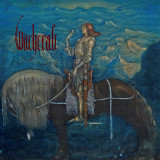
WITCHCRAFT - IDAG

Witchcraft

IDAG

12inchHPSLTD353
HEAVY PSYCH SOUNDS
23.05.2025

More than 20 years after their debut, Witchcraft's seventh album, 'IDAG,' is an awaited full accounting of who they are as a band. Those who have clamored for the return to an earlier sound rooted in '70s classic progressive and heavy rock will delight to the strut of "Irreligious Flamboyant Flame" while the eight-minute opening title-track is the heaviest the band have ever sounded, and a succession of interspersed acoustic-based pieces helps create a vision of a new, soulfully folkish doom taking shape as they continue to move inexorably forward. Founding guitarist/vocalist, Magnus Pelander, says of 'IDAG': "This album will reap souls and destroy wicked minds. And perhaps mend a couple of broken ones." These enigmatic few words from the Swedish band's main songwriter give clues as to the songs' intentions; a reference dropped to Coven's 1969 album, 'Witchcraft Destroys Minds and Reaps Souls.' Coven also had a folkish, proto-doomed take at that point in their history, and that multifaceted nature has been a part of Witchcraft all along. On one level, Magnus is winkingly telling you it's a Witchcraft record. The actual meaning of that becomes clear when you hear the album and find out just how much 'a Witchcraft record' can encompass. The storyline of Witchcraft's growth, from Pelander's starting the band in Örebro in 2000 in the wake of his prior outfit Norrsken's disbanding. A generational landmark of a 2004 self-titled debut helped spark a retroist movement that has become its own subgenre, but Witchcraft never stopped growing. 2005's 'Firewood' and 2007's 'The Alchemist' introduced more progressive sounds, and five years later, the pointedly modern 'Legend' established in 2012 that they had moved beyond the analog worship they had been a part of pioneering within the contemporary heavy rock and doom scene. In 2016, the 2LP 'Nucleus' introduced fuller-toned doom, and 2020's 'Black Metal' diverged into moody acoustic minimalism familiar to some fans from Pelander's early solo work, but different from anything Witchcraft had done prior. 'IDAG,' then, is the tie that draws all of this - more than two decades of exploring and growth - together. Whatever they've done in the past and whatever they'll do in the future, 'IDAG' feels like a nexus for defining who and what Witchcraft are. Even crazier, that might be the point of the thing. JJ Koczan

pre-order now23.05.2025

expected to be published on 23.05.2025

23,11 €
WITCHCRAFT - IDAG

Witchcraft

IDAG

12inchHPSLTDP353
HEAVY PSYCH SOUNDS
23.05.2025

Purple Vinyl, limited to 450 copies. More than 20 years after their debut, Witchcraft's seventh album, 'IDAG,' is an awaited full accounting of who they are as a band. Those who have clamored for the return to an earlier sound rooted in '70s classic progressive and heavy rock will delight to the strut of "Irreligious Flamboyant Flame" while the eight-minute opening title-track is the heaviest the band have ever sounded, and a succession of interspersed acoustic-based pieces helps create a vision of a new, soulfully folkish doom taking shape as they continue to move inexorably forward. Founding guitarist/vocalist, Magnus Pelander, says of 'IDAG': "This album will reap souls and destroy wicked minds. And perhaps mend a couple of broken ones." These enigmatic few words from the Swedish band's main songwriter give clues as to the songs' intentions; a reference dropped to Coven's 1969 album, 'Witchcraft Destroys Minds and Reaps Souls.' Coven also had a folkish, proto-doomed take at that point in their history, and that multifaceted nature has been a part of Witchcraft all along. On one level, Magnus is winkingly telling you it's a Witchcraft record. The actual meaning of that becomes clear when you hear the album and find out just how much 'a Witchcraft record' can encompass. The storyline of Witchcraft's growth, from Pelander's starting the band in Örebro in 2000 in the wake of his prior outfit Norrsken's disbanding. A generational landmark of a 2004 self-titled debut helped spark a retroist movement that has become its own subgenre, but Witchcraft never stopped growing. 2005's 'Firewood' and 2007's 'The Alchemist' introduced more progressive sounds, and five years later, the pointedly modern 'Legend' established in 2012 that they had moved beyond the analog worship they had been a part of pioneering within the contemporary heavy rock and doom scene. In 2016, the 2LP 'Nucleus' introduced fuller-toned doom, and 2020's 'Black Metal' diverged into moody acoustic minimalism familiar to some fans from Pelander's early solo work, but different from anything Witchcraft had done prior. 'IDAG,' then, is the tie that draws all of this - more than two decades of exploring and growth - together. Whatever they've done in the past and whatever they'll do in the future, 'IDAG' feels like a nexus for defining who and what Witchcraft are. Even crazier, that might be the point of the thing. JJ Koczan

pre-order now23.05.2025

expected to be published on 23.05.2025

23,11 €
MOSKITO - IDOLAR (TAPE)

In the vibrant streets of Tembisa, South Africa, amidst the sprawling urbanity connecting Johannesburg and Pretoria, the story of Moskito began. Formed in 2001 by Mahlubi "Shadow" Radebe and the late Zwelakhe "Malemon" Mtshali, the group first emerged as a powerhouse of pantsula dancers. However, their undeniable passion for music soon led them down a new path_ one that would cement their place in kwaito history. Spending countless hours on the street corners of their township, where they were born and raised, Shadow and Malemon danced and sang with an infectious energy that attracted crowds. It wasn't long before the duo decided to channel their talents into a kwaito group, and after adding friends Patrick Lwane and Menzi Dlodlo, Moskito was born. (Pantsula dancing emerged in the 1950s among Black South Africans in townships and continually evolved until it became intertwined with kwaito music culture. The stylized, rapid foot movements and characteristic low-dancing became associated with kwaito as it took over South African urban culture into the early 2000s.) With limited resources, the group displayed immense creativity, recording demos using two cassette decks and instrumental tracks from other artists. They would rap and sing over an instrumental playing on one deck while the second deck records their performance. Their determination paid off when they submitted their demo to Tammy Music Publishers, who were captivated by Moskito's style. "Kwaito was the thing `in' at the time. If you did music you did kwaito. We wanted to fit in and actually it was easy," says Radebe. "We didn't have engineers in the group, so the first time in a real studio was with Percy and Thami to record Idolar." That same year, the group released their debut album, Idolar, under Tammy Music. The album was an undeniable success reaching gold status selling over 25,000 units and earning them a devoted fan base across South Africa and neighboring countries like Botswana, Swaziland, Namibia and Zimbabwe. Moskito collaborated with industry legends such as Chilly Mthiya Tshabalala, who was known for his work with Thiza and Spoke "H." They drew inspiration from Thami Mdluli a.k.a Professor Rhythm, who had dominated the disco scene back in the 80s and 90s. Mdluli helped with musical arrangements and executive produced the album and signed on producer-engineer Percy Mudau, while Shadow and Malemon took pride in composing most of their songs. Like many of the rising kwaito artists of the time, they didn't have music production or engineering backgrounds so they required support from engineers together their ideas down on tape. They were inspired from South African kwaito icons like Trompies, Mdu, Mandoza, and Arthur Mafokate, alongside international heavyweights like Snoop Doggy Dogg, Dr. Dre, 2Pac, and R. Kelly, Moskito created a sound that was uniquely theirs_a perfect blend of local flavor and global influence.

pre-order now23.05.2025

expected to be published on 23.05.2025

14,08 €
Don Glori - Paper Can't Wrap Fire LP

Mr Bongo proudly presents the third album by Melbourne/Naarm multi-instrumentalist, Don Glori, entitled ‘Paper Can’t Wrap Fire’. A kaleidoscopic genre-surfing odyssey that brings together the worlds of jazz, soul and funk. Feeling both contemporary and classic, familiar yet novel, it’s an assured third release that sees an artist in full flight, showcasing their creative prowess and the uniqueness of their musical voice.

Steering in a new direction, Don Glori (aka Gordon Li) has delved headfirst into his songwriting with ‘Paper Can’t Wrap Fire’. Deftly showcasing his talents as a writer and bandleader, he brings with him a whole host of friends from the creative crossroads that is Naarm. It’s an album enriched with more soul, R&B, and funk-oriented songs than his previous jazz-rooted productions, yet there’s still plenty of jazz material for those familiar fans of Don's earlier works.

The album’s title is an old Chinese proverb, roughly translated as 'you can’t deny the truth'. This underlying thread is woven between the songs. “A lot of them are in some way about truth-seeking, observations and the masks you put on to deal with life (hence the cover art)”, Don mentions. Take, for instance, the sensational soul single 'Brown Eyes' featuring silky lead vocals by ML Hall. A dissection of the minority experience, and the power and comfort in building those communities. Elsewhere, 'Disaster' is a satirical take on the structures serving everyone but the artists, and 'Flicker' tackles notations of truth and clarity after introspection.

To marry that meaning with the level of musicianship on these tracks is what really stands out. Don has set out his stall here as an artist who can write songs that hit home in the heart, as much as they do in the head. It’s a journey infused with a glistening jazz finesse, layered with nourishing vocal harmonies and powered by an instantly relatable human soul.

Recorded over two hot summer days in Rolling Stock Studios in Collingwood, Naarm, the lineup of musicians is built up of Don's friends and family. Featuring the backbone team of Tim Cox, Al Kennedy, Joel Trigg, Robyn Cummins and Lachlan Thompson, who were part of Don's touring band before he relocated to London, and a stunning selection of vocalists in the form of ML Hall, Ruby Dargaville, Isadora Lauritz, and Bianca Kyriacou. Also gracing the album are trumpeter extraordinaire Audrey Powne, saxophonist Joshua Moshe, and Alcides Neto who sprinkles some Brazilian magic into the record.

Taking influence from artists including Azymuth, SAULT, Jordan Rakei and Lynda Dawn, as well as from London musical beacons such as NTS and Total Refreshment Centre, Don has run with this, leaned in and come out with a record truly unique to himself and his distinctive core, with no mask necessary.

out of Stock

Order now and we will order the item for you at our supplier.

Last In: 16 months ago
28,15 €
MOSKITO - IDOLAR LP

In the vibrant streets of Tembisa, South Africa, amidst the sprawling urbanity connecting Johannesburg and Pretoria, the story of Moskito began. Formed in 2001 by Mahlubi "Shadow" Radebe and the late Zwelakhe "Malemon" Mtshali, the group first emerged as a powerhouse of pantsula dancers. However, their undeniable passion for music soon led them down a new path_ one that would cement their place in kwaito history. Spending countless hours on the street corners of their township, where they were born and raised, Shadow and Malemon danced and sang with an infectious energy that attracted crowds. It wasn't long before the duo decided to channel their talents into a kwaito group, and after adding friends Patrick Lwane and Menzi Dlodlo, Moskito was born. (Pantsula dancing emerged in the 1950s among Black South Africans in townships and continually evolved until it became intertwined with kwaito music culture. The stylized, rapid foot movements and characteristic low-dancing became associated with kwaito as it took over South African urban culture into the early 2000s.) With limited resources, the group displayed immense creativity, recording demos using two cassette decks and instrumental tracks from other artists. They would rap and sing over an instrumental playing on one deck while the second deck records their performance. Their determination paid off when they submitted their demo to Tammy Music Publishers, who were captivated by Moskito's style. "Kwaito was the thing `in' at the time. If you did music you did kwaito. We wanted to fit in and actually it was easy," says Radebe. "We didn't have engineers in the group, so the first time in a real studio was with Percy and Thami to record Idolar." That same year, the group released their debut album, Idolar, under Tammy Music. The album was an undeniable success reaching gold status selling over 25,000 units and earning them a devoted fan base across South Africa and neighboring countries like Botswana, Swaziland, Namibia and Zimbabwe. Moskito collaborated with industry legends such as Chilly Mthiya Tshabalala, who was known for his work with Thiza and Spoke "H." They drew inspiration from Thami Mdluli a.k.a Professor Rhythm, who had dominated the disco scene back in the 80s and 90s. Mdluli helped with musical arrangements and executive produced the album and signed on producer-engineer Percy Mudau, while Shadow and Malemon took pride in composing most of their songs. Like many of the rising kwaito artists of the time, they didn't have music production or engineering backgrounds so they required support from engineers together their ideas down on tape. They were inspired from South African kwaito icons like Trompies, Mdu, Mandoza, and Arthur Mafokate, alongside international heavyweights like Snoop Doggy Dogg, Dr. Dre, 2Pac, and R. Kelly, Moskito created a sound that was uniquely theirs_a perfect blend of local flavor and global influence.

out of Stock

Order now and we will order the item for you at our supplier.

Last In: 16 months ago
22,27 €
Various - THE MALE BODY WILL BE NEXT PT1 (Tape)

In 2022, Osàre! Editions founder Elena Colombi approached artists and musicians with a prompt: Every body, everyone needs love to flourish. In her book The Will to Change, the eminent author and social activist, Bell Hooks, invites men to excavate their innermost selves, challenging the way that patriarchal society limits their capacity for intimacy, tenderness, care and emotion. As hooks lays out, feminist thought and work requires the collective participation of all genders in order to realise a liberated world. How can we imagine cross-gender solidarity through music and art? And how can we tell sonic stories that facilitate our full potential as desiring beings? These are the questions that The Male Body Will Be Next starts out from.

The title of the record draws connections between hooks' writing, a film by Rebecca Salvadori and Peter de Potter's stunning photo series of the same name. In de Potter and Salvadori's depictions, men's bodies appear as vulnerable, naked and exposed.

Divided into two parts, the first instalment of The Male Body Will Be Next hinges on colliding energies – the melding of club dance floors and haunting ambient textures, agile techno and noisy experimentation.

'The sun on my skin… it’s so warm and gentle,’ speak-sings Olivia Salvadori on ‘Su Di Te M’Infrango’, visualising utopias. Laurel Halo crafts a dreamscape spun from golden threads of synth and strings. Pensive and reflective, Ben Bertrand’s bass clarinet roams searchingly, its piercing tonality full of longing. Yet, in between these lucid, cinematic passages and spoken word, The Male Body Will Be Next finds space to dance together. Moving in fervent, rhythmic patterns, Sepehr’s ‘Divooneh’ pivots between tension and release. Filmmaker unleashes a wave of energy and The Spy delivers a potent take on vintage electro, the track title hinting at the double-bind of gendered expectations. Propelled between these eclectic styles, the record encapsulates the full spectrum of sonic expression.

out of Stock

Order now and we will order the item for you at our supplier.

Last In: 16 months ago
12,40 €
Steve Bicknell - Several Streams of Thought LP 2x12"

Steve Bicknell returns to KR3, once again unleashing his mastery of power electronics!
Following his two reinterpretations of last year's "JK Flesh Remixes" and four years after his solo EP "A Day In The Life" in 2021, Bicknell takes us deep into the realms of his sonic mysticism, marking a significant milestone in the fifth anniversary of the label.
Several Streams of Thought LP - is an unrelenting and immersive odyssey, presented through nine tracks, seven of which will be available on a double 12-inch vinyl, with two exclusive cuts in a limited 7-inch format.
The album hits hard, straight to the brain, with no warning, across sides A, B, and C. Each side is a raw, untamed techno experience, with Bicknell's unmistakable signature dominating throughout, delivering unwavering intensity and relentless impact.
However, on side D, a transformation takes place: a 15-minute soundscape that turns the embedded waves into breath - a blinding light emerging from the darkness. It's a moment of tribalism and evocative magic, offering a refreshing pause, a return to balance after the intensity of the shadows.
The 7-inch, available in a limited edition under the title "the eye of the invisible world", contains two tracks - one on side E and the other on side F.
The mystical sounds complete this dual experience: one part filled with dark, untamed energy, while the other brings a sense of mental lightness, emphasizing breathwork and emotional self-
healing.
S | B is back, stronger than ever!

out of Stock

Order now and we will order the item for you at our supplier.

Last In: 11 months ago
20,97 €
Thomas Newman - Skyfall LP 2x12"
  • Grand Bazaar, Istanbul
  • Voluntary Retirement
  • New Digs
  • Severine
  • Brave New World
  • Shanghai Drive
  • Jellyfish
  • Silhouette
  • Modigliani
  • Day Wasted
  • Quartermaster
  • Someone Usually Dies
  • Komodo Dragon
  • The Bloody Shot
  • Enjoying Death
  • The Chimera
  • Close Shave
  • Health & Safety
  • Granborough Road
  • Tennyson
  • Enquiry
  • Breadcrumbs
  • Skyfall
  • Kill Them First
  • Welcome To Scotland
  • She's Mine
  • The Moors
  • Deep Water
  • Mother
  • Adrenaline

Thomas Newman became the ninth composer in the James Bond series history. His score for the 2012 movie Skyfall won the BAFTA Award for Best Film Music. In 2013, it became one of two Bond scores to be nominated for the Academy Award for Best Original Score. Skyfall (2012) is the twenty-third spy film in the James Bond film series. It features Daniel Craig in his third performance as James Bond, and Javier Bardem as Raoul Silva, the film's villain. The movie was directed by Sam Mendes and centers on Bond investigating an attack on MI6. The attack is part of a plot by former MI6 agent Raoul Silva to humiliate, discredit and kill M as revenge against her for betraying him. The film sees the return of two recurring characters to the series after an absence of two films: Q, played by Ben Whishaw, and Moneypenny, played by Naomie Harris. Skyfall is the last film of the series for Judi Dench, who played M, a role that she had played in the previous six films. Skyfall is available as a limited edition of 1500 numbered copies on translucent red coloured vinyl. This 2LP package comes in a gatefold sleeve and includes a 4-page booklet.

pre-order now09.05.2025

expected to be published on 09.05.2025

43,91 €
Thomas Newmann - Skyfall OST 2x12"

Thomas Newman became the ninth composer in the James Bond series history. His score for Skyfall won the BAFTA Award for Best Film Music. In 2013, it became one of two Bond scores to be nominated for the Academy Award for Best Original Score. The other to be nominated was the score from The Spy Who Loved Me. Skyfall does not contain the title song performed by Adele.

Skyfall (2012) is the twenty-third spy film in the James Bond film series. It features Daniel Craig in his third performance as James Bond, and Javier Bardem as Raoul Silva, the film's villain. The movie was directed by Sam Mendes. The story centres on Bond investigating an attack on MI6. The attack is part of a plot by former MI6 agent Raoul Silva to humiliate, discredit and kill M as revenge against her for betraying him. The film sees the return of two recurring characters to the series after an absence of two films: Q, played by Ben Whishaw, and Moneypenny, played by Naomie Harris. Skyfall is the last film of the series for Judi Dench, who played M, a role that she had played in the previous six films.

The limited edition of Skyfall of 1.500 individually numbered copies is pressed on coloured (transparent & black mixed) vinyl. The package includes a big poster, a 4-page insert and 2 printed innersleeves. Both innersleeves have one hole in the middle to show James Bond on the labels. Don't forget to check the secret service inscriptions on the run out grooves.

pre-order now09.05.2025

expected to be published on 09.05.2025

48,70 €
JOHN MCKAY - SIXES AND SEVENS
  • ZEN AND THE ART OF NONSENSE
  • FUN ON THE FLOOR
  • THE BLESSED WEST
  • TAKEN FOR GRANTED
  • LOOKS CAN KILL
  • SACRED MEASURE
  • FLARE
  • BLACK FIVE
  • VIGILANTE
  • ZOR GABOR
  • TIGHTROPE

The Scream, Siouxsie & the Banshees' first album, was released late enough in the punk era to bear some claim as the first post-punk album, with only a minor traces of 'punk' (one lingering early song, "Carcass" comes to mind) and enough hints of what had come even earlier, Andy MacKay-like saxophone flourishes - to feel utterly new. Not to mention the effort producer Steve Lillywhite must have put into the album, his first fully-credited major label production. Siouxsie was clearly the focus of the band, with her unique vocal style and lyrics, but the real star, we've always known, was John McKay, who wrote most of the album's music (as well as singles like "Hong Kong Garden"), creating a wholly new guitar sound - harsh and brittle, yet melodically intoxicating . . . best articulated by a somewhat confounded Steve Albini years later ". . . only now people are trying to copy it, and even now nobody understands how that guitar player got all that pointless noise to stick together as songs". McKay's influence lives on; many of the most influential guitarists of the past four decades credit him as a major influence - Geordie from Killing Joke, Jim Reid of The Jesus And Mary Chain, U2's The Edge, Thurston Moore, Johnny Marr and even the two guitarists - The Cure's Robert Smith and Magazine's John McGeoch - who followed him in The Banshees. McKay's burgeoning status as the anti-guitar hero was halted when he and Banshees drummer Kenny Morris - at odds with Siouxsie and bassist Steve Severin - fled the band just after the start of a tour supporting the group's second album, Join Hands. It was a weekly music paper scandal, later the subject of a BBC documentary, and Siouxsie's vitriol working its way into the lyrics of a later Banshees b-side, "Drop Dead / Celebration". Aside from a solitary single on Marc Riley's In Tape label nearly a decade later, no music was heard from McKay again. So it comes as a major surprise to learn of a pile of excellent recordings made in the years just after he left The Banshees, unheard by all but a very few, some of which feature drummer Kenny Morris, plus Mick Allen from Rema Rema, Matthew Seligman of the Soft Boys and longer-term collaborator Graham Dowdall and John's wife Linda . . . the latter three of whom now all sadly deceased. Sixes And Sevens is an historic lost album. Brazenly genius and bearing fair claim as the lost treasure of the post-punk era, the album collects eleven studio tracks, carefully mastered from original tapes. It's a masterpiece which best speaks for itself.

pre-order now09.05.2025

expected to be published on 09.05.2025

24,79 €
The Wedding Present - Marc Riley Sessions Volume 5

The Scream, Siouxsie & the Banshees' first album, was released late enough in the punk era to bear some claim as the first post-punk album, with only a minor traces of 'punk' (one lingering early song, "Carcass" comes to mind) and enough hints of what had come even earlier, Andy MacKay-like saxophone flourishes - to feel utterly new. Not to mention the effort producer Steve Lillywhite must have put into the album, his first fully-credited major label production.
Siouxsie was clearly the focus of the band, with her unique vocal style and lyrics, but the real star, we've always known, was John McKay, who wrote most of the album's music (as well as singles like "Hong Kong Garden"), creating a wholly new guitar sound - harsh and brittle, yet melodically intoxicating . . . best articulated by a somewhat confounded Steve Albini years later ". . . only now people are trying to copy it, and even now nobody understands how that guitar player got all that pointless noise to stick together as songs". McKay's influence lives on; many of the most influential guitarists of the past four decades credit him as a major influence - Geordie from Killing Joke, Jim Reid of The Jesus And Mary Chain, U2's The Edge, Thurston Moore, Johnny Marr and even the two guitarists - The Cure's Robert Smith and Magazine's John McGeoch - who followed him in The Banshees.
McKay's burgeoning status as the anti-guitar hero was halted when he and Banshees drummer Kenny Morris - at odds with Siouxsie and bassist Steve Severin - fled the band just after the start of a tour supporting the group's second album, Join Hands. It was a weekly music paper scandal, later the subject of a BBC documentary, and Siouxsie's vitriol working its way into the lyrics of a later Banshees b-side, "Drop Dead / Celebration". Aside from a solitary single on Marc Riley's In Tape label nearly a decade later, no music was heard from McKay again. So it comes as a major surprise to learn of a pile of excellent recordings made in the years just after he left The Banshees, unheard by all but a very few, some of which feature drummer Kenny Morris, plus Mick Allen from Rema Rema, Matthew Seligman of the Soft Boys and longer-term collaborator Graham Dowdall and John's wife Linda . . . the latter three of whom now all sadly deceased.
Sixes And Sevens is an historic lost album. Brazenly genius and bearing fair claim as the lost treasure of the post-punk era, the album collects eleven studio tracks, carefully mastered from original tapes. It's a masterpiece which best speaks for itself. John McKay will be made available for a limited number of interviews . . . and yes, there are surprises in store.

pre-order now09.05.2025

expected to be published on 09.05.2025

21,81 €
ISAAC HAYES - HOT BUTTERED SINGLES VOLUME 2: 1972-1976 2x12"
  • A1: THEME FROM THE MEN (Instrumental)
  • A2: TYPE THANG
  • A3: ROLLING DOWN A MOUNTAINSIDE
  • A4: (IF LOVING YOU IS WRONG) I DON'T WANT TO BE RIGHT
  • A5: JOY PT 1
  • B1: JOY PT 2
  • B2: WONDERFUL
  • B3: SOMEONE MADE YOU FOR ME
  • B4: TITLE THEME
  • B5: HUNG UP ON MY BABY (Instrumental)
  • C1: CHOCOLATE CHIP
  • C2: CHOCOLATE CHIP (Instrumental)
  • C3: COME LIVE WITH ME
  • C4: BODY LANGUAGE
  • C5: DISCO CONNECTION
  • D1: ST. THOMAS SQUARE
  • D2: ROCK ME EASY BABY PT 1
  • D3: ROCK ME EASY BABY PT 2
  • D4: JUICY FRUIT (DISCO FREAK) PT 1
  • D5: JUICY FRUIT (DISCO FREAK) PT 2

The wonderfully favourable response to our first CD and double vinyl volume of the original A and B sides of the singles of the late great Isaac Hayes – as originally released on Stax’ Enterprise subsidiary between 1969 and 1972 – has forced us to bring forward, this month, the release of “Hot Buttered Singles 2” to cater for what Ace is sure will be just as great a level of popular demand.

This volume picks up where “Hot Buttered Singles Vol 1” left off with Hayes’ final 45 of 1972, and carries his seven inch story through to 1976 – by which time Stax was defunct, and Hayes’ was on his own Hot Buttered Soul label via ABC Records. It features eight US R&B chart hits including the much sampled ‘Hung Up On My Baby’ and ‘Chocolate Chip’, Hayes’ biggest hit of this period ‘Joy’ and the ever-popular 1976 instrumental ‘Disco Connection’, which finally gave Hayes’ his second UK Top 20 hit after ‘Shaft’.

All tracks match the original single edits, and wherever possible are taken from digital transfers of the original Enterprise singles masters. Where the original 45s came in two parts, they also do so here. And where original singles masters no longer exist, as was the case for two tracks, Ace’s engineers have re-created them beat for beat from the longer album versions. (Have fun guessing which two they were…)

pre-order now25.04.2025

expected to be published on 25.04.2025

32,35 €
Ibex Band - Stereo Instrumental Music LP 2x12"

The Ibex Band, with Giovanni Rico and Selam Woldemariam at the creative helm, provided the musical backbone for legends like Aster Aweke, Girma Beyene, Tilahun Gessesse, Mulatu Astatke, and Mahmoud Ahmed, including the iconic album Ere Mela Mela, shaping modern Ethiopian music as we know it today. This 1976 album (Ge’ez Year 1968) played a pivotal role in that legacy and has now resurfaced to set the record straight.

There’s a tendency to talk about the seventies as a golden age of Ethiopian music. There are good reasons for that, and just as good reasons against it. However, the notion of a golden past privileges the role of Western explorers and suggests that the pinnacle of Ethiopia’s musical culture is something only a foreigner can appreciate and unearth. It downplays the complexities of Ethiopia’s culture and history, creating an artificial divide between then and now. And it underestimates the constantly evolving sound that has followed.

The legendary musical outfit The Ibex Band, later metamorphosed into The Roha Band, has played a central role in defining the sound of many of the greatest stars on the music scene of Ethiopia from the mid-seventies onwards–but their golden output has never really waned. The story of the origins of the band that provided the musical backbone for greats such as Aster Aweke, Girma Beyene, Tilahun Gessesse, backing the solo career of group member Mahmoud Ahmed as well as backing Mulatu Astatke and many others has yet to be properly told.

Two misconceptions plague the image of Ethiopian music, one is that the music is pure because it is, by some notion, unexploited, the other is that it is all traditional. To begin with, a combination of political changes between the late sixties and the mid-nineties created an environment where only the most dedicated and skilled musicians struggled on and pursued a musical career against fierce odds. The whole Ibex Band, with Giovanni Rico and Selam “Selamino” Seyoum Woldermarian at the creative helm, are arguably the origo of the vibrant scene in the mid-seventies, and the said pair are foremost responsible for not only navigating the band through troubled times, but also modernizing the 6/8 chickchicka rhythm to a contemporary form. Giovanni laid the rhythmic foundation with heavy looped basslines that reinvented traditional melodies as dance music, and with Selamino’s innovative guitar work they influenced scores of musicians from Abegaz Kibrework Shiota to Henock Temesgen. Even Giovanni’s Fender bass and Selamino’s Gibson guitar inspired younger musicians in their choice of instruments. Not only in choice of instruments but also in sound–even as the digital revolution hit Ethiopian music, a lot of popular music still took its cue from the masters from Ibex and Roha.

Ibex emerged out of the ashes of the sixties group the Soul Echos band, adding Giovanni and Selamino to their ranks and taking their cues from a slew of influences, such as Motown and The Beatles, fused with traditional music. A tighter-knit unit than most bands at the time – Ibex has remained six to seven members throughout their whole career, compared to many bands that were as large as fifteen or sixteen men strong when Ibex set out. Their playing has been viciously focused, economical yet heavy. Just a year before the recording sessions of the album in your hands, Giovanni and Selamino made a contribution to the popular musical lexicon of Ethiopia that was simply defining the popular sound: their arrangement and recording of bandmate Mahmoud Ahmed’s solo effort and real commercial breakthrough tune and eponymous album, Ere Mela Mela, from 1975.

Selamino has never limited himself to being an adroit lead guitarist, but has always been a scholar of history, and as such he has probably contributed as much to modern Ethiopian music with his guitar playing and compositions as with a deepened understanding of modern or contemporary – Zemenawi – Ethiopian music. Selamino’s contributions serve as a metaphor for those of the whole band, at one and the same time creating and defining a new, danceable and updated sound anchored in Giovanni’s bass, whilst also elevating the broader scene through their support for others on the scene and on top of that, increasing the understanding of the music.

There is an understandable desire to romanticize the musical heyday Ibex and Roha were at the forefront of, because so much of the output is sorrowfully hard to come by. Ibex creativity was nothing short of ridiculously fierce compared to many of their Western contemporaries. Based on their sheer recorded output alone they could have usurped the title “hardest working in show business” from James Brown, recording more than 250 albums or 2500 songs in the seventies and eighties. Some only surface as cassettes today, others were never given full LP release, and some are simply impossible to find today. In the light of that, it’s nothing short of a miracle that the recording Stereo Instrumental Music from 1976 (Ge’ez Year 1968) has resurfaced. Unearthed in perfect condition on a chrome cassette, this is musical history comes alive–to set the future straight. Stereo Instrumental Music was recorded in collaboration with Karl-Gustav Lundgren, a Swedish national working for the Radio Voice of the Gospel. It took two sessions at the Ras Hotel ballroom in Addis Ababa. The Ibex Band was the first band in Ethiopia to employ a four-track recorder for their recording (the first available in the country, lent by Karl-Gustav). Later the same week, Giovanni and Selamino realized that, lengthwise, the recorded material fell short of what they wished for, so they recorded four more tracks in one more session on a single-track recorder. The Ras Hotel and Ghion Hotel, where the Ibex Band held musical residencies were to Ethiopia in general and Addis Ababa in particular what Motown was to the USA and Detroit a few years earlier – a hotbed of musical creativity and showmanship.

The most astonishing thing about Ethiopian music of the last half century is how tradition and modernity are intertwined. Because of this feature, it’s kind of hard to tell when there ever was or when we are in a “golden age”. So much of music from the past has been criminally neglected, but because of the hardships in the past, it would be an oversimplification to say that said past was a golden age. Probably, the golden age is what we are approaching, because for the first time both the past and future are accessible, and the monumental contributions from before can lay a firm foundation for a thriving music scene today. The Ibex Band stands firmly in the past, present and the future. That, if anything, is golden.

The detailed history of Stereo Instrumental Music is in many ways unique. To begin with, it couldn’t have been recorded earlier (there were no four-track recorders available) and it really couldn’t have been recorded afterwards either, at least not in the years directly following, because of the toll the musical scene took from the unfavorable political climate that followed when the nascent Derg regime and rival groups tried to assert themselves, the musical equipment lent from The Voice of Gospel Radio simply disappeared from Ethiopia when the radio station folded in 1977. Karl-Gustav Lundgren,
the Swedish foreign national who assisted during the recording, worked with the Ethiopian Evangelical Church Mekane Yesus at the time, recalls how they only had about fifteen minutes to get the microphones in place for the recording as to not alert neither the management at Ras Hotel nor the authorities and most importantly, to complete the recording before the curfew came into effect at midnight. In leaping to the opportunity to use previously unavailable equipment to push their sound forward and improvising to meet the logistical challenges, the Ibex Band displayed the very avant-gardism and adaptability that explains their longevity as a band through the years. The recording of Stereo Instrumental Music is from a given time in history, but it sounds as beyond time.
Much of the energy that burst out of the scene that Stereo Instrumental Music came out of dissipated or got sidetracked during the societal changes Ethiopia went through in the 1970s and 80s. Whilst leaders might have professed to be revolutionary, the work ethic of the Ibex Band can truly be described as that. They never called it quits, but adapted, toured extensively abroad in Africa, Europe, and the Middle East, and found ways to work even in the face of the curfew that curtailed a lot of musical life. They even played major arenas in the nineteen eighties, despite said curfew and restrictions. The whole extent of their legacy has never been told, but their music speaks louder than words, so therefore… tune in to the Ibex Band’s Stereo Instrumental Music.

out of Stock

Order now and we will order the item for you at our supplier.

Last In: 15 months ago
24,33 €
Rhiannon Giddens & Justin Robinson - What Did The Blackbird Say To The Crow
  • 1: Rain Crow
  • 2: Brown’s Dream
  • 3: Hook and Line
  • 4: Pumpkin Pie
  • 5: Duck’s Eyeball
  • 6: Ryestraw
  • 7: Little Brown Jug
  • 8: Going to Raleigh
  • 9: Country Waltz
  • 10: Molly Put the Kettle On
  • 11: Fly Around My Pretty Little Miss
  • 12: John Henry
  • 13: Love Somebody
  • 14: Ebenezer
  • 15: Old Joe Clark
  • 16: Old Molly Hare
  • 17: Marching Jaybird
  • 18: Walkin’ in the Parlor

Rhiannon Giddens reunites with her former Carolina Chocolate Drops bandmate Justin Robinson on What Did the Blackbird Say to the Crow, an album of North Carolina fiddle and banjo music. Produced by Giddens and Joseph "joebass" DeJarnette, the album features Giddens on banjo and Robinson on fiddle, with the duo playing eighteen of their favourite North Carolina tunes: a mix of instrumentals and tunes with words.

Many were learned from their late mentor, the legendary North Carolina Piedmont musician Joe Thompson; one is from another musical hero, the late Etta Baker, from whom they also learned by listening to recordings of her playing. Giddens and Robinson recorded the album outdoors and on location at Thompson’s and Baker’s North Carolina homes, as well as the former plantation Mill Prong House. They were accompanied by the sounds of nature, including two different broods of cicadas, which had not emerged simultaneously since 1803, creating a true once-in-a-lifetime soundscape. The duo, along with four other string musicians including the multi-instrumentalist Dirk Powell, will embark on the Rhiannon Giddens & The Old-Time Revue North America tour in April.

“With the assaults on reality going on in the world today, we wanted to offer another kind of record, like walking back onto a gravel or dirt road while a stampede goes the other way,” Giddens says. “With the cicada choir, this record could’ve only happened at a certain time in the last 120 years. We doubled down on place, time, realness, and old-fashioned front porch music. It’s a reminder that another way exists, with music made for your community’s enjoyment and for dancing–not solely for commercial purposes.

“What is the role of music in our society?” she wonders. “How do we de-couple it from unfettered capitalism, where music is a product and musicians are incidental? How do we use the tools and system that we have been bequeathed in a way that reminds us of other ways of being?” Robinson adds, "Recording this album felt like being back in the saddle. Just this time Joe is not here, and his fiddle is under my chin. The album is about home, the cicadas, the storms, the music, and the people who make it feel like home."

Thompson was one of the last musicians of his era and his community to carry on the southern Black string band tradition. He played a crucial role in the lives of Giddens and Robinson, who, along with their Carolina Chocolate Drops bandmate Dom Flemons, spent their formative years learning from Thompson in traditional apprentice/mentor relationships. His influence has guided all of their artistic journeys as well as their mission to keep the legacy of the Black string band tradition alive.

In further tribute to Giddens’ North Carolina roots, What Did the Blackbird Say to the Crow will arrive just a week before Biscuits & Banjos, the inaugural edition of her first festival, which highlights the deep roots and enduring legacy of Black music, art, and culture while fostering community and storytelling. The sold-out festival will feature a much-anticipated Carolina Chocolate Drops reunion, their first performance together in more than a decade.

pre-order now18.04.2025

expected to be published on 18.04.2025

32,35 €
Merzbow - Collection 001-010 (LP 10x1" Box + Book)
  • Collection 001 - 001 A 23:46
  • Collection 001 - 001 B 23:48
  • Collection 002 - 002 A 18:12
  • Collection 002 - 002 B 20:54
  • Collection 003 - 003 A 22:14
  • Collection 003 - 003 B1 09:33
  • Collection 003 - 003 B2 05:25
  • Collection 004 - 004 A 16:11
  • Collection 004 - 004 B1 07:08
  • Collection 004 - 004 B2 09:52
  • Collection 005 - 005 A1 08:38
  • Collection 005 - 005 A2 08:54
  • Collection 005 - 005 B1 07:14
  • Collection 005 - 005 B2 03:53
  • Collection 005 - 005 B3 03:57
  • Collection 005 - 005 B4 04:03
  • Collection 006 - 006 A1 17:35
  • Collection 006 - 006 A2 05:12
  • Collection 006 - 006 B 23:12
  • Collection 007 - Merzrock B1 + Dubbing 5 11:21
  • Collection 007 - Merzrock A1 + Anemic Pop 1 02:00
  • Collection 007 - Merzrock A1 + Anemic Pop 2 08:32
  • Collection 007 - E-Study #3-1 + Merzsolo 1 15:49
  • Collection 007 - E-Study #3-1 + Merzsolo 2 05:58
  • Collection 008 - Concrete Tape PH#1~ 05:19
  • Collection 008 - E8 A1 + 006 A1 06:03
  • Collection 008 - Merzsolo 10/6.81 A1 10:36
  • Collection 008 - E8 B2/Concrete Tape PH#1~ 06:28
  • Collection 008 - Sans Titre Merz 1 + Tape Loops 04:54
  • Collection 008 E6 A3 + Concrete Tape PH#1~ 06:46
  • Collection 008 - Merzsolo 10/6.81 A5 + Violin 03:21
  • Collection 009 - N.A.M.4 + E-8 06:11
  • Collection 009 - Telecom 1/3 + N.A.M.5 17:32
  • Collection 009 - E-3-1-1 11:24
  • Collection 009 - E-3-1-2 01:50
  • Collection 009 - Tape Loop + Noise 1 (Concrete Tapes) 02:39
  • Collection 009 - Tape Loop + Noise 2 (Concrete Tapes) 04:25
  • Collection 010 - 007 B1 + Ah Corps 11:47
  • Collection 010 - E3 B2 + Ah Corps 11:28
  • Collection 010 - N.A.M.6 With Radio & Tapes 22:47

Carrying on their longstanding dedication to the seminal output of Merzbow, Urashima returns with what is unquestionably their most ambitious release to date: “Collection 001-010”, a deluxe, 10 LP vinyl box set limited to 299 copies, gathering together the entirety of the project’s first ten releases, originally released in 1981. Encountering the band in its early incarnation of the duo of Masami Akita and Kiyoshi Mizutani, raw, exposed and bristling with energy, foreshadowing numerous trajectories they would follow over the coming years, these astounding full lengths - the majority of which have never been released on vinyl - come housed in a beautifully produced, deluxe wooden box, with each LP in its own individual sleeve reproducing the original artwork, and a LP-sized 32-page book containing reproductions of artworls and collages by Masami Akita, an interview conducted by Jim O'Rourke, and liner notes penned by Lasse Marhaug, Thurston Moore, and Akita himself, amounting to what is unquestionably one of the most historically significant releases we’re likely to encounter in 2025.

Deluxe Edition of 299 copies, remastered from the original analog tapes by Masami Akita, each LP comes in its individual sleeve reproducing the original artwork, also includes a LP-sized 32-page book. ** Since its founding during the late 2000s, the Italian imprint, Urashima, has become a definitive voice in the landscape of noise. Bringing forth beautiful limited edition releases, they’ve sculpted a singular vision of one of the most vibrant and revolutionary bodies of experimental sound to have graced the globe. Among the many projects that they have supported over the decades, there has been an undeniable dedication to the output of the seminal Japanese noise outfit, Merzbow, making a significant amount of the project’s out of print back catalog available across a range of formats. Now they return with what is arguably their most stunning and ambitious release dedicated to the project to date: “Collection 001-010”, gathering the entirety of Merzbow’s first ten releases, largely privately released by the band on cassette across 1981, in a deluxe, 10 LP vinyl box set. Representing what is effectively ground zero in Japanese noise and collectively amounting to some of the most sought after releases ever produced within that movement, Urashima’s truly beautiful collection comes fully remastered by Masami Akita himself from the original tapes, presenting all but a small number in their first ever vinyl pressings, with each LP housed in its own individual sleeve reproducing the original artwork, alongside a LP-sized 32-page book containing reproductions of artworks and collages by Masami Akita, an interview conducted by Jim O'Rourke, and liner notes penned by Lasse Marhaug, Thurston Moore and Akita himself. Towering with energy and groundbreaking creative vision, within the realms of noise and experimental music, releases don’t get more monumental or historically important than this!

Merzbow came roaring onto the Tokyo scene in 1979, and remains, to this day, one of the most prolific and aggressively forward-thinking projects in experimental music. Eventually becoming the solo vehicle for the efforts of Masami Akita, in its earliest incarnation the project was the duo of Akita and Kiyoshi Mizutani, taking their name from German artist Kurt Schwitters' pre-war architectural assemblage, The Cathedral of Erotic Misery or Merzbau, and quickly set out to challenge entrenched notions of what music could be. Embracing technology and the machine, even in its earliest iterations, Merzbow pushed toward new territories of the extreme, arriving at a space of pure, unadulterated sonic onslaught that has continued, for over 40 years, to set the pace for the entire genre of noise, and has remained one of the movement’s most important, definitive voices, continuously laying the groundwork for countless artists who have followed in its wake.

When dealing with historical gestures, there’s an invertible aura surrounding original line-ups and early statements, and rightfully so. It is often within a band’s debut that we catch the purest glimpse of the raw energy and creative ferment that made them what they are. This is certainly the case when regarding the coveted early releases of Merzbow, capturing the emergence of the project in its form as the duo of Masami Akita and Kiyoshi Mizutani as they helped set the blue print from the then emerging movement of Japanese noise. Over the course of its nearly five decades of activity, Merzbow has always been noted for how prolific and ambitious the project is. This was no less the case in the very beginning. While they were active for roughly two years prior, in 1981 alone they issued ten self-released cassettes numerically titled “Collection 001-010”, albums which have both individually and collectively become holy grails in the realms of noise, with only two - “Collection 007” and “Collection 009” - ever receiving vinyl reissues prior to now.

As Lasse Marhaug deftly articulates in the newly commissioned liner notes for “Collection 001-010”, despite having been recorded in different location across a span of time, the sum total of Merzbow’s first ten releases might be best regarded as a single release to be listened to in the same, durational sitting, with the material standing well apart from what most came to expect from Merzbow, while foreshadowing numerous trajectories the project would take over the coming years. Not only do these recordings feature a vast array of instrumentation - tapes, acoustic and electric guitar, violin, drums, voice, recorder, organ, found sounds, clarinet, homemade and prepared instruments, a vast arsenal of effects and electronics, and piano, to only begin to scratch the surface - the majority of which would disappear from the project’s active sources of sound generation over the subsequent years, but there is a slow pacing and raw sense of openness and exposure that reveals strong connections to the avant-garde improvisations of groups like AMM, Musica Elettronica Viva, and Gruppo di Improvvisazione Nuova Consonanza, the psychedelia of groups like Taj Mahal Travellers and Flower Traveling band (both of whom Akita mentions having seen in youth within his interview with Jim O’Rourke), and rock in general - albeit in fully abstracted forms - unspooling as brittle, pointillistic, textural, raw and abrasive forms, that occasionally flirts with unexpected tonal sensibilities. As Marhaug describes it in his excellent liner notes: «Sonically, “Collection” sounds more sparse and stripped. It’s dry sounding, up-front, no reverb, and there’s less heavy low-end grime and thin on the signature frequency sweeps. Viewed in a 1981 context, musically, it’s more akin to what the LAFMS (Los Angeles Free Music Society) pool of artists were doing at that time than what was happening in industrial music... There’s a strong playfulness throughout, like the sound objects are being explored for the first time, without neither restraint nor hurry. Events are allowed to be fully examined before the music moves on, or simply cuts off. To a large degree, the music on “Collection” feels acoustic in nature, although a Electro-Harmonix ring-modulator features prominently throughout.»

Easily described as a rarely encountered revelation into the original and earlier documented studio sound of Merzbow, “Collection 001-010” collectively amounts to an engrossing sonic journey in its own right, while also allowing for important, often overlooked connections drawn from numerous other creative wellsprings, notably free jazz, underground rock, the output of European and Japanese avant-garde music, as well as Dada, Fluxus, and Mail Art, much of which, beyond the illumination made possible by the sounds, Jim O’Rourke’s fantastic interview with Akita, published in the booklet, further explores, offering great insights into the origins of Merzbow and the thinking behind the project, as well as aspects of the earliest days of Japanese noise.

pre-order now18.04.2025

expected to be published on 18.04.2025

288,19 €
Enrico Sangiuliano - Transcendence EP

Techno tastemaker Enrico Sangiuliano returns to his influential NINETOZERO label with his bold new Transcendence EP featuring two very different but equally powerful sounds; one track is to dance to, the other one to listen to.

This new release caps off an impressive year for the Italian underground icon. Coming just a couple of months after his Interconnection EP and a packed season of headline shows, it marks yet another subtle evolution of his always hard-to-classify sound. The EP is a collaboration with psychedelic trance pioneers GMS, who have been making their mark since the 90s. The award-winning pair have had their music used in a trio of Tony Scott movies and have dropped several vital albums and EPs.

“GMS and I met many years ago in their studio in Ibiza and spontaneously cemented our relationship through our passion for sound”, says Enrico Sangiuliano. “They are a pillar of psytrance, and collaborating with them to interpret the concept of Transcendence was the perfect way for us to finally merge our creative visions. With this release, we transcend our individual musical paths to create something entirely new. We explore the theme of elevation, challenging ourselves to move beyond the tangible. Here, music becomes a portal, expanding consciousness and providing an escape from material reality. Together, we shaped our sounds to build an immersive experience, with a guiding voice to lead you through it. Transcendence is an invitation to let go, release mental constructs, and flow with the sound. It's a journey into a timeless realm where what you feel and who you are become one. To transcend is to connect with your deepest self—and beyond.”

Superb opener 'Transcendence' is a sleek and futuristic soundscape with dynamic drums that take you up amongst the stars. The smeared pads bring a cosmic atmosphere, the lush arps layer in plenty of trance-tinged emotion, and smart spoken words add a cinematic feel to this most escapist track. 'The Inner World' is then a suspenseful two-minute synthscape with wise spoken words that muse on inner strength. It is a rousing piece of emotional electronic grandeur.

The Transcendence EP is another strong statement from the forward-looking creative mind of Enrico Sangiuliano.

out of Stock

Order now and we will order the item for you at our supplier.

Last In: 16 days ago
19,12 €
Aaron Landsman / Norman Westberg - Night Keeper LP

Night Keeper is a collaborative album by New York City-based artist Aaron Landsman and former Swans guitarist Norman Westberg that is based on the former's eponymous play. Westberg recorded it together with performer Jehan O. Young for the Swiss Hallow Ground label, with Landsman serving as the record’s producer. The original piece was first performed in the Spring of 2023 at The Chocolate Factory Theater in Queens and filled the stark industrial space with spoken text, choreography, projections, and music in dim light and, occasionally, complete darkness. Westberg and Young afterwards brought it to the studio to record it as a two-part
album in whose course his textural sounds, based on loops and samples, set the stage for her soothing, sonorous vocal performance. »Night Keeper« is a performance inspired by sleeplessness and the wanderings of the human mind at night—about time and memory.
Westberg and Young elegantly capture its essence in these roughly 44 minutes with a somnambulic album, letting sound and meaning flow into each other. The initial spark for Night Keeper was a run of almost sleepless nights in different neighbourhoods of a city that is perpetually insomniac. Instead of trying to force himself to go back to sleep by any means necessary, Landsman started writing down his thoughts. As he explains in the liner notes—accompanying the music along with drawings made by audience members during the performances—he started listening to the particular way in which the voice in his head navigates time and language. Accordingly, the texts that Young reads on the record form a diverse collection of specific moments, imagining different speakers and evoking different
situations. Westberg complements, accentuates, and juxtaposes these with different means. Ominous drones, soaring melodies, rhythmic bass sounds: the guitarist, whose latest release for Hallow Ground was 2021’s First Man In The Moon with Polish double bassist Jacek Mazurkiewicz, conjures up distinct sound worlds in which Young can let Landsman’s scenes unfold to gripping effect.
Landsman makes it clear that »Night Keeper« was intended as an invitation to »stay up, look out the window, let what’s happening outside spark reveries or predictions« or even take it on a stroll through the neighbourhood—at night, of course. Much like the original piece, this album is then one dedicated to wandering around, both mentally and physically.

pre-order now11.04.2025

expected to be published on 11.04.2025

25,17 €
LORADENIZ - SUN SHONE

‘SUN SHONE’ is a multidisciplinary music and art project of Istanbul-born, Amsterdam-based Deniz Omeroglu AKA Loradeniz,. ‘SUN SHONE’ marks the arrival of her debut full-length album: eight tracks of ambient electronic music painted masterfully with a palette of synthesizers, effects, percussion and ethereal voice.

‘SUN SHONE’ was conceived in two parts: the first tracks coming spontaneously to life in the aftermath of heartbreak, with Omeroglu trusting the creative flow and using it as a method of self- healing. What was initially planned as an EP release grew into a full-length album as she spent one month consciously working on the perfect B-side to complement the music.

Omeroglu wrote, performed and produced everything on the album, drawing on her deep knowledge of music theory and production; in addition to studying classical piano in the Conservatory from an early age, she holds both a Bachelor’s degree in Composition Studies and a Masters degree in Sound Design.

Many of the compositions on ‘SUN SHONE’ centre around interplaying synth arpeggios, oscillators expertly tuned for an equal degree of menace and sweetness that balances on a knife-edge. This ambiguity is echoed lyrically across the record, with its recurring themes of love lost and memories revisited. From the spoken word of opener ‘Saint Odds’ and ‘Swimmer’ to the layered choral swells of ‘No Moon’ and the melodic hooks of ‘Brick House’, Omeroglu’s voice is central to ‘SUN SHONE’, employed with impressive versatility. At times, it feels simultaneously fragile and powerful, perhaps nowhere more so than in the yearning swells of “Cloud Sofa’, a healing lullaby for lost love that offers up one of the most delicate moments on the album. 


Whilst this may loosely be referred to as an ‘ambient’ album, Loradeniz’s knowledge of modern day production techniques and experience as both a sound designer and seasoned DJ (both in clubs and on radio) makes its presence felt throughout; echoes of Artificial Intelligence-era IDM appear in the dancing arpeggios and rhythmic pulses of ‘Sea Serpent’ and ‘Waterbear’, while the album closer ‘Aftersun’ could easily be imagined working as the euphoric last tune of a club set at sunrise. 


With her debut album, Loradeniz weaves together an impressive breadth of styles and sounds, all held seamlessly together by a feeling; a cathartic desire to bring out all the melancholia from within. The album opens with the words ‘The search of love continues in the face of great odds’ a suitable mantra for a record that manages to combine melancholy with intense rushes of positivity and hopes for the future.

out of Stock

Order now and we will order the item for you at our supplier.

Last In: 17 months ago
23,11 €
Dennis Brown - Tribulation Times

Dennis Brown has always been cited as Jamaica’s favourite singer. While Bob Marley set out to conquer the world, Dennis’s popularity on the island grew with every year. Overseas success also came Browns way with crossover hits like the massive ‘Money In My Pocket’. He will always be fondly remembered on the sound systems across the caribbean as the Crown Prince of Reggae.

Dennis Brown (b Dennis Emanuel Brown,1957, Kingston, Jamaica) began his illustrious career at the grand age of eleven like many of the other child singers at Coxsonne Dodds Studio One stable. His first hit in 1969 a cover of Van Dykes ‘No Man Is An Island’ still stands the tests of time and also its follow up cut ‘If I Follow My Heart’ as Reggae classics. The 1970’s saw Dennis build on his reputation by working with all the top Jamaican producers and
studio’s perfecting his sound. Lloyd Daley, Impact, Joe Gibbs, Aquarius and Derrick Harriott to name but a few. But it was his work with producer Winston ‘Niney’ Holness that he enjoyed the most success and many say recorded his best work for. Where many of the other producers stayed with the tried and tested Lovers Rock formula that did prove so popular with Dennis’s voice, producer Niney the Observer as he is fondly called, pushed him into a more roots led direction, over stark rhythms created by Niney’s studio band Soul Syndicate.

Two outstanding albums were put together ‘Just Dennis’ (1975) built on a collection of singles they had recorded together, ’Cassandra’, ’Westbound Train’, ’No More Will I Roam’ and ‘Conqueror’. The second 1977 set ‘Wolf and Leopards’ made up again of singles the prolific two had cut including, ‘Here I Come’ (a live favourite that Dennis always liked to start his set with) and ‘Children of Israel’ made these both strong roots era albums.

We have stayed with this period for our Dennis Brown album. Some of the above-mentioned cuts are present alongside the timeless crossover hit ‘Money In My Pocket’ (1979) produced by Niney but often credited as a Joe Gibbs production as it was released (and sweetened by adding Orchestration for the foreign market place) on his label. By the way this is the original Jamaican version (unsweetened) that you will find on this album a more truthful version in our humble opinion. His voice reigns supreme across these Niney produced cuts ‘Smile like An Angel’ ‘Silver Words’, ‘Play Girl’ and the fantastic ‘Poor Side Of Town’ (helped along by the great harmonies of the Heptones group), ‘Tribulation’ and ‘We Will Be Free’. Dennis Brown’s prolific catalogue of tunes that also found an outlet on his own DEB inprint (named after his initials) stands to show what a great artist he was and what a fine team he and Niney made when in the studio creating these magical moments. So sit back and enjoy a killer set of tunes compiled by Niney himself...Tribulation Times indeed and long may the records of the Crown Prince of Reggae Dennis Brown rule the world.....

out of Stock

Order now and we will order the item for you at our supplier.

Last In: 18 months ago
13,40 €
Damian Lazarus - Magickal LP 3x12"

Audio alchemist Damian Lazarus continues to redefine the boundaries of electronic music with his fifth studio album, ‘Magickal’.

Renowned for his unparalleled ability to craft transformative sonic journeys, Damian Lazarus is a master of rhythm, melody, and vibration—a true pioneer among his generation’s visionary artists. Damian’s broad depth of experience encompasses a variety of disciplines: tastemaker, selector, label owner, A&R and a Grammy-nominated artist in his own right - each informed by his unique ear for sound. He is chief wizard of the hugely influential and culture-defining Crosstown Rebels label, a globally renowned DJ with a penchant for exotic outdoor locations and a highly regarded recording artist with four albums and a plethora of solo cuts, collaborations and remixes in his sprawling discography.

With his fifth album, ‘Magickal’, Damian steps into his next evolutionary phase, combining his newly found sobriety with a more mature outlook while still pushing boundaries and creating unforgettable moments. At the root of it all is the magical power of togetherness and human connection that only music can facilitate. Driven by this core ethos, Damian continues on his mission to share his heartfelt music, taking the dance floor into unexplored realms of experience, facilitating moments of transcendence, bliss and pure, unadulterated magic.

Damian Lazarus, the avant-garde architect of spiritually nourishing sounds, is joined by a stellar lineup of collaborators on his latest excursion. It’s imaginative and mystical, rhythmically captivating and daring in its own way, as is typical of Damian’s approach. Taking consideration of his past, the album references his previous work to create a tapestry of compositions that tap into the energy of key moments from his discography. Drawing on his existing catalogue creates cohesive through lines and thematically serves as a continuation of previous stories. November’s single, ‘Sunrise Generation’, for instance, works as a companion to ‘Vermillion’, which was recorded by Damian with his band The Ancient Moons and vocalist Moses Sumney back in 2015. ‘Sunrise Generation’, featuring the beautiful vocals of Fink, was Damian’s first major release since his Grammy-nominated 2021 collaboration ‘Don’t Be Afraid’ with Diplo and Jungle, and continues to take inspiration from global gatherings at solstice and those moments of collective awe at sunrise.

Indeed, the album’s themes of mental elevation and psychedelic sonic journeys are evident throughout. Damian channels this energy through tracks like the soulful ‘So Low’, featuring the incredible Zoe Kypri, and the luminous ‘Searchin’, with Jem Cooke, whose collaboration with Damian dates back to ‘Flourish’ (2020) and lead single ‘Into The Sun’. Uplifting is the operative word here, as Damian aims straight for our hearts and inner selves, stripping away the layers to take us on a trip inwards, and out into the ether all at once. There’s a clear nod to Damian’s appreciation of amapiano when he teams up with Ghanaian interdisciplinary healer Jojo Abot on ‘Warrior Dance’. Old friend and inspirer Mathew Jonson brings his virtuoso touch to ‘Are You Dreaming?’, while TEED and A-Trak form an awesome alliance for ‘Falling Down’ with its heartrending vocals. ‘Alive’ features the Bloom Twins, and also additional production from acclaimed producer Mark Ralph, who incidentally worked on Damian’s debut album ‘Smoke The Monster Out’ in 2009 and forms another throughline to the past. ‘Alive’ blends pop sensibilities and song structure with Damian’s inimitable sound - and could become one of Damian’s biggest moments to date. ‘La Hija De Juan Simon’ delves into the Latin energy synonymous with vibrancy and self-expression as Damian teams up with acclaimed Spanish flamenco-influenced duo Mëstiza. On a solo tip, he rolls out with the eight-minute-plus soulful funk flex ‘Why Don’t U’.

In a suitably aligned instance of serendipity, the arrival of ‘Magickal’ comes at a pivotal period in Damian’s life, just as it has been with previous album concepts. Albums made and released during big shifts in his life speak to the correlation between growth, personal evolution, creativity, catharsis and sharing that process musically. The last album ‘Flourish’, for instance, was recorded and released in the space of a few months during the first summer of the global pandemic. As a result, there’s a kind of vulnerability in the music, a subtle story that’s being told with emotional touchpoints that will be relevant to anyone listening. The universal human experience and spectrum of emotions are things almost everyone can relate to. With the enhanced clarity of his sobriety, Damian’s compositions embody the uplifting nature of simply being alive, connected and unified in our love for music and one another.

Day Zero, Damian’s iconic annual festival, is intrinsically linked to ‘Magickal’. It’s the setting for his imagination when producing the music, it’s the launchpad for each year’s kaleidoscopic adventures around the world, and this year’s edition will be the backdrop to the release of ‘Magickal’. As the pinnacle of Damian’s annual experiences, Day Zero marks a vital milestone for his artistry, an extension of his inner realm, carefully curated and created for his global family of lovers and dancers to revel in the awe-inspiring beauty of Mother Nature. Central to the ethos of Day Zero is its sustainability practices and deep consideration for the locality within which it is held. Connections with local elders embolden its depth, cultivating a strongly aligned purpose with the ritual, customs and energy of the land and its people.

‘Magickal’ will be released in the same week as Day Zero, tying the two projects together in a neat dovetail. 12 years since it started, Day Zero continues to play a significant role in the music Damian makes, curates and plays. For him, it’s the epitome of his vision: a stunning natural setting, the very best party people from around the world, an unparalleled lineup of friends and family, high production values, eco-centric policies and music from another dimension. With these interdimensional transmissions, Damian channels his inner alchemist, which, in turn, permeates into the vibrational framework of ‘Magickal’.

Never one to adhere to convention, Damian has opted for a disruptive album release. ‘Magickal’ is to be kept under wraps and then announced and released on Crosstown Rebels on 8th January 2025, bypassing the modern trend of prolonged single drops and ‘tombstone’ album releases. ‘Magickal’ is the embodiment of Damian and his intentional, against-the-grain approach and reinforces the album as a complete artistic statement, offering listeners the full cohesive experience from the very beginning. This is a return to the album as the pinnacle moment and not the afterthought. Singles, edits and remixes will follow the ‘Magickal album’ release, and, of course, there will be a world tour to promote the album (including Glastonbury and Coachella) and a chance to present the album in exciting, innovative and unique ways.

Forever dreaming, a sincere student of magic, new and old, social sorcerer, lover of nature and master of musical wizardry, Damian Lazarus is a potent force. With ‘Magickal’, he reaffirms his place as one of electronic music’s most influential figures, taking listeners on a profound journey into sound, spirit, and connection.

out of Stock

Order now and we will order the item for you at our supplier.

Last In: 6 months ago
40,76 €
Soulox & Soeneido - FR023

Firstly, I want to thank Soulox & Soeneido for their patience because I have slept on their music for years haha

They have both been sending me music for a long time which I was pretty slack on checking (as a lot of people may have also noticed when sending me music, there's a huge backlog to get through and not enough hours in the day!) but it wasn't until Pete Dev/Null was in London for an event and we met up in person to record a mix for Blog To The Oldskool (our show on Jungletrain) that I realised what these two were capable of. Pete started the show with Lavish and I had to know what it was straight away, he told me it was by Soulox & Soeneido and I felt so bad that I had probably not bothered to check this tune if they had sent it to me, but I knew I had to have it!

I messaged Soen the next day asking about this tune and thankfully it was still available, one thing led to another and this release now exists. Big thanks to both of them for their wicked tunes, big up Comfort Zone on his quality remix of Lavish and a special mention to Jay Vaz (of Dreaming Vinyl) who did the design for the b-side of this release.

out of Stock

Order now and we will order the item for you at our supplier.

Last In: 18 months ago
17,02 €
Fleetwood Mac - Mirage LP 2x12"
  • Love in Store
  • Can’t Go Back
  • That’s Alright
  • Book of Love
  • Gypsy
  • Only over You
  • Empire State
  • Straight Back
  • Hold Me
  • Oh Diane
  • Eyes of the World
  • Wish You Were Here

If every significant artist has an underrated gem in its catalog, then Mirage is that album for Fleetwood Mac. An obvious return to relative simplicity after the dramatic tension of Rumours and experimental ambitions of Tusk, the 1982 album finds the band re-grouping after a brief hiatus and again climbing to the top of the charts. Extremely well-crafted, well-produced, and well-performed, the double-platinum effort distills the group’s hallmark strengths into a filler-free set that never runs short of addictive pop hooks or daft accents.

Sourced from the original analog master tapes, pressed at Fidelity Record Pressing in California, and housed in a Stoughton jacket, Mobile Fidelity’s numbered-edition 180g 45RPM 2LP set presents Mirage in reference sound for the first time. The efforts co-producers/engineers Ken Caillat and Richard Dashut went to capture the splintered albeit formidable band can be heard with stunning accuracy, range, depth, and detail.

Though Rumours understandably gets a permanent spot in the audiophile hall of fame, the smooth, clear, and dynamic sonics on Mirage confirm that the record that stood as Fleetwood Mac’s last effort for five years deserves a place in the same vaunted arena. The presence and imaging of Mick Fleetwood’s percussion alone on this reissue might have you wondering how this slice of soft-rock bliss has gone under-noticed for decades. Other prized aural aspects — separation, definition, impact, tonal balance — are also here in spades.

Like much surrounding Fleetwood Mac in the 1980s, arriving at Mirage was not easy. Caillat searched for studios located outside of Los Angeles on a mission to change up the vibe of the band’s prior recording sessions. Everyone settled on Le Chateau in France, where relations between some members remained icy — and cooperation with the producers strained. Battles with exhaustion, bitterness, and addiction further informed the proceedings at the 18th century complex in the French countryside, where even communal meals were allegedly eaten in silence.

Inevitably, the feelings that co-producer Lindsey Buckingham, Stevie Nicks, Christine McVie, and company harbored — as well as the situations in which they found themselves — drifted into the songwriting. In its rapid ascent to rock-star royalty status, Fleetwood Mac drifted apart, embarked on solo pursuits, and found it was lonely at the top. Emptiness, the illusion of dreams, the longing for love, the want to escape to bygone times of innocence and happiness: Such themes inform a majority of the narratives. Even if the lyrics regularly take a back seat to easygoing arrangements that allow Mirage to come on like a refreshing breeze on a sunny summer afternoon.

Home to three Top 25 singles in the U.S. and having occupied the pole position of the Top 200 album charts for five weeks, Mirage rightfully resonated with the mainstream and attracted listeners on both sides of the pond. And how, via a smart blend of sugary melodies, warm harmonies, interlaced notes, nimble rhythms, taut structures, and passionate vocals. Not to mention the presence of what arguably remains Nicks’ signature song, the biographical “Gypsy,” a meditation on the loss of her close friend Robin Anderson that teems with majesty, mystery, and mysticism — and which gets an assist from Buckingham’s shaded tack piano and richly strummed guitar chords.

Its ranking as an all-time classic aside, that No. 12 hit has plenty of company when it comes to brilliant pop turns on Mirage. On the subject of Nicks, the raspy singer gets a little bit country on “That’s Alright.” Its clip-clopping pace and two-stepping progression complement subtle vocal swells that emerge during the final verse of a tune that is ostensibly about leaving but still conveys forgiveness and grace. And what would a Fleetwood Mac record be without Nicks drawing on the tools of the supernatural — cards, dreams, wolves, and the like — on the twirling “Straight Back.”

Despite the potency of Nicks’ primary contributions, Mirage seemingly unfolds as a tight competition between Buckingham and McVie — and one that ultimately ends in a draw. Buckingham’s salvos include the contagious “Can’t Go Back,” a yearning to time-travel back to the past that’s complete with hall-of-mirrors backing vocals; “Oh Diane,” out-of- left-field ear candy sweetened with hiccupped vocals and salt-and-pepper-shaken grooves; the chiming “Eyes of the World”; and “Empire State,” a delightfully fluttering track whose high-range vocals, lap harp notes, and ringing xylophones hint at the galaxies of sound that would erupt on Tango in the Night.

Then there’s McVie. As elegant, understated, and coolheaded as she’s ever been on record, she pours her heart out on cuts that revolve around her inevitable split with Beach Boy Dennis Wilson. In the process, she punctuates Mirage with a characteristic not always associated with catchy pop music: emotional weight, and the sense of dreaded acceptance in the face of dreams deferred.

“I wish you were here/Holding me tight,” McVie sings over a delicate melody on the album-closing piano ballad “Wish You Were Here.” Though they hoped otherwise, for the members Fleetwood Mac, distance and separation were always close at hand. Believing otherwise, inviting nostalgia, and pretending everything was fine only amounts to a mirage.

pre-order now31.03.2025

expected to be published on 31.03.2025

88,19 €
Love Is A Drag - For Adult Listeners Only
  • A1: Lover Man
  • A2: He's Funny That Way
  • A3: My Man
  • A4: Bewitched
  • A5: Bill
  • A6: The Boy Next Door
  • B1: The Man I Love
  • B2: Mad About the Boy
  • B3: He's My Guy
  • B4: Jim
  • B5: Stranger in Paradise
  • B6: Can't Help Lovin' Dat Man

A once shocking 1962 LP of love songs…by men, for men. A long lost treasure featuring the cool & sophisticated vocals of Gene Howard and a cast of prime studio jazz musicians, performing a set of standards sung to a male suitor. Ahead of its time in every way. Decades ago, JD Doyle, renowned LGBT music historian and archivist, happened upon a copy of Love Is A Drag. Doyle would often play cuts from it on his radio show, Queer Music Heritage. He remained intrigued by the lack of either artist or producer credited on the album. A vague line of jacket text ambiguously announced, “For Adult Listeners Only - Sultry Stylings by a Most Unusual Vocalist.” And, the facts behind the album would have most likely remained unclear if it were not for one Murray Garrett Out of the blue, Murray Garrett contacted JD Doyle and wanted to talk about the album. According to Garrett, through his photography career, he had forged a friendship and partnership with prolific big band vocalist, Gene Howard. The two worked together on projects, eventually teaming with Jack Ames, founder of Edison International Records. When queried for ideas for a potential Edison International release, Garrett recalled a performance he had once seen in Greenwich Village - a performance of a man singing love songs to another man, in serious fashion, i.e., not at all campy or overly-dramatic. Gene Howard (straight and happily married!) agreed to sing on the record, accompanied by a who’s-who of Los Angeles A-list session men. Upon release, the record sold well in Hollywood, with Frank Sinatra, Liberace, and Bob Hope among its biggest advocates.

pre-order now28.03.2025

expected to be published on 28.03.2025

18,87 €
Various - Radar Keroxen Vol.5 (LP)

Yearly compilation series RADAR KEROXEN return with its fifth volume of themed based albums showcasing the talents and misfortunes of carefully selected musical projects based or connected with the Canary Islands.
With its first volume released in 2020 aiming to introduce and divulge adventurous Island based music, the Keroxen imprint now presents Vol.5 with a collection of tracks born out of an in-situ collective performance at the Keroxen Festival iconic venue - a massive disused gasoline tank near the harbour of Santa Cruz de Tenerife.
The Radar Drone Ensemble, as it was named for that night only, took advantage of the tank’s natural reverb to perform an improvised piece exploring the cavernous resonance corners inherent to the locale. The four artists then took a few months to compose a 9 track LP inspired by the site’s peculiar sound.
Gonçalo F. Cardoso kicks opens up the proceedings with two broody new tracks, in a style not heard since his 2015 album A Study of 21st Century Drone Acoustics. Doomed and menacing atmospherics brush shoulders with creepy and ethereal chants creating the perfect opening for this drone themed edition of Radar Keroxen. Eduardo Briganty (also from MINIATURa) follows with two equally deranged feedback based compositions letting his guitar riffs and distortions roam free. Afgan aka Mladen Kurajica (from GAF, Lagoss and Tupperwear) takes things further to an Angus MacLise inspired drone collage of mystic percussions, field recordings and electronic modular storms. Resonance aka Javier Perez wraps up the journey with his now trademark soothing synth compositions full of warm tones and blissful melodies.
The album comes, as always, wrapped into a dizzying post-tropical collage artwork by Pura Marquez.

out of Stock

Order now and we will order the item for you at our supplier.

Last In: 18 months ago
19,12 €
Modus Pitch - Re:Polyism

»Re:Polyism« is a track-by-track reinterpretation of Friedrich »Fritz« Brückner’s 2022 debut solo album as Modus Pitch, »Polyism,« through artists affiliated with Altin Village & Mine and/or former collaborators of the prolific Leipzig-based musician and producer. Each track from »Polyism« has been remixed or reworked by different artists such as Modeselektor, Angel Bat Dawid, Maya Shenfield or Mouse on Mars member and HJirok producer Andi Toma, but the album—mastered by Tim Roth a.k.a. Sin Maldita and released as a strictly limited vinyl LP with reimagined artwork by Carmen Orschinski—follows the original record’s tracklist. This makes »Re:Polyism« a veritable musical prism, refracting the creativity inherent to Brückner’s genre-transcending original works through other people’s artistic lenses to create an even more colourful end result.

First off are the Gebrüder Teichmann with their take on opener »Drive,« carefully adding more depth and uncanny sounds to the jazzy, drum-focused piece. Unsurprisingly, Modeselektor go a lot further with their remix »Rainbow,« turning the two-minute track into a dubstep-adjacent banger with infectious synth work that is twice as long and comes with a mind-melting breakdown. With their take on »Hilltop Jacuzzi,« Peaking Lights turn the blissful original into a piece that calls to mind experiments at the intersection of dub, ambient, and industrial music in the mid-1990s. Cloud Management radically transform the eerie »Compound Eye Dialogue« into a rhythmically charged mid-tempo post-krautrock epic, while the Seekers International’s »Jelly Roll Dub« of »Gelée Royale« uses the original’s lush textures to turn up the intensity even further.

On the flipside, Andi Thoma gives the intricate synth pop/breakcore fusion of »Suspender« a similarly dubwise treatment before venturing into gqom territory, pulling it out of the leftfield and straight onto the dancefloor—peak-time use only. Maya Shenfeld then brings her trademark modular synth work to »Outer Veil,« accentuating the focus on Hendrik Otremba’s uncanny spoken word performance even further. This sets the mood perfectly for vocal experimentalist Agnese Menguzzato working her singular magic. Under her hands and with her voice, the multi-layered ambient soundscapes of »Lava Fans« become even larger-than-life-like than before. When Angel Bat Dawid takes the menacing drones of »Iridescent Path« as a template for a trap-inspired beat over which she lets loose on the clarinet, that serves as both the ultimate counterpoint and perfect coda to »Re:Polyism.«

These nine reinterpretations of the highly diverse source material underline Brückner’s singular approach to music-making while also emphasising their makers’ idiosyncratic talents. This makes »Re:Polyism« more than simply a remix album—it’s a polylogue between visionary minds.

pre-order now28.03.2025

expected to be published on 28.03.2025

21,43 €
TRIO DA KALI - BAGOLA

Trio Da Kali

BAGOLA

12inchTDKONEV25
One World Records
28.03.2025
  • Bagola
  • Dadunkan
  • Cela Sigui
  • Tulunke
  • Orpaillage
  • Dissa
  • Wara
  • Nana Triban
  • Fakoly
  • Latege
  • Deme

In their new album Bagola, Trio Da Kali present newly composed songs accompanied on balafon and ngoniba, that provide a rich accompaniment to the spectacular voice of Hawa Kasse Mady Diabaté. She inherits her singing style from her father, the late Kasse Mady Diabaté, who was widely recognized as one of Africa"s all-time greatest singers and won a Grammy nomination in 2004. Hawa"s voice has an exquisite purity and expressiveness, with a wide emotional range. She is equally at home in the lively, 9/8 rhythms of the title track Bagola, a light-hearted critique of men in Malian society, to the soulful Orpaillage, a song that laments the destruction of land from gold-panning. Orpaillage was in fact composed on the spot in the studio, reflecting the creative chemistry between these three musicians. The musical director of the trio is balafon (xylophone) player Lassana Diabaté, born in Guinea into a well-known family of balafon musicians. His remarkable dexterity on the balafon earned him a place in Toumani Diabaté"s Symmetric Orchestra, and later on in the group Afrocubism (featuring Eliades Ochoa). He has collaborated with many musicians, including bluesman Taj Mahal on the album Kulanjan. With two balafons of 22 rosewood keys each, tuned to play chromatic scales, Lassana Diabaté achieves a perfect balance of rhythm, melody, harmony and virtuosic embellishment. David Harrington, leader of Kronos Quartet, compares him to none other than JS Bach. Underpinning the balafon with compulsive groove, is the large ngoniba, played with brilliant musicality by Madou Kouyaté (son of Bassekou Kouyaté and member of his group Ngoniba). Madou, the youngest member of Trio Da Kali, also adds rich harmonies with his deep breathy voice to the songs. Trio Da Kali were founded in 2013 under the initiative of the Aga Khan Music Programme, with the help of three-times Grammy-nominated music producer Lucy Durán. The Trio first rose to international fame with their sublime album Ladilikan (World Circuit Records 2017), featuring an unprecedented and multi-award-winning collaboration with Kronos Quartet, the legendary classical string quartet from San Francisco. Bagola is a showcase of Trio Da Kali"s entrancing and unique sound, only equaled by their magical performances on stage.

pre-order now28.03.2025

expected to be published on 28.03.2025

23,49 €
La Mont Zeno Theatre - Black Fairy
  • 01: Black Fairy Meets Johnny (Live)
  • 02: Please Give Me Some Magic (Live)
  • 03: Black Fairy Meets Black Bird (Live)
  • 04: Tell Them They Are Beautiful (Live)
  • 05: Travel To Afrika-Instrumental (Live)
  • 06: Black Fairy Meets Queen Mother (Live)
  • 07: Afrika's My Home (Live)
  • 08: Black Land Of The Nile (Live)
  • 09: Trip To America (Live)
  • 10: Go Down Moses (Live)
  • 11: Did You Feed My Cow (Live)
  • 12: The Streets Of Harlem (Live)
  • 13: Afrikan Children (Live)
  • 14: Black Men Can Be Beautiful (Live)
  • 15: Black Fairy (Live)
  • 16: Eulogy For Black Fairy (Live)
  • 17: Black Fairy Returns (Live)
  • 18: Hey, Black Child (Live)
  • 19: Johnny & Black Fairy (Live)

Black Fairy is a fairy tale, but not in the traditional sense. When writing this play, i did not want to re-create the types of fantasies which are so common in Childrens theater. There is no kind of magic that can relieve black children from the oppression that retards their development. However, i do feel giving them a better understanding of their heritage can help them achieve their true potential. And those of us who are concerned with their development should try to expose them to knowledge that gives them a positive sense of identity. Although i do feel a chldren's play should be entertaining, I also feel it should be educational. Also, because there are so few children's plays which reflect the black experience, I wanted to write a play that Black children could identify with.

"Black Fairy" is a musical drama about a black fairy who lacks pride in herself and feels she has to offer Black children. But when she meets Black Bird and Queen Mother (Who take her to ancient Egypt, East Afrika, a southern slave plantation and the streets of Harlem) she begins toget a better understanding of her heritage. Her journey through the past enables Black Fairy to meet Aesop, Brer Rabbit, Brer Fox, Uncle Remus, Stag-o-lee, Leadbelly and many other characters in Black folklore and Black history. At the end of her journey, Black fairy realizes that "Being Black is nothing to be ashamed of" and is then able to share her knowledge with other Black children. Even though Black Fairy doesn't completely resolve her dilemma, having a knowledge of her heritage does give her more confidence to cope with the future.

During ther summer of 1974 "Black Fairy" was performed for over four thousand children in Chicago. And, in April of 1975, it played to over two thousand children in Detroit at Mercy College.

"Black Fairy" is the only the first of many children's plays we hope to produce at the Better Boys Foundation. There is an Afrikan proverb which says: "Children are the reward of life". We at Better Boys Foundationm are dedicated to this belief, and feel that helping childrren to appreciate their heritage is one means of showing our concern for their development.

pre-order now28.03.2025

expected to be published on 28.03.2025

34,24 €
Peter Brötzmann / John Edwards / Steve Noble / Jason Adasiewicz - The Quartet LP 2x12"

It is a huge honour to announce the publication of Peter Brotzmann’s final concerts on OTOROKU. When we invited Peter to do a residency at Cafe OTO back in February 2023 we had no idea these would be his last ever shows and he played with such power it would have been hard for anyone present to believe he would never play publicly again.

Recorded over two nights this grouping of Jason Adasiewicz on vibraphone, John Edwards on bass and Steve Noble on drums feels especially resonant and personal to Cafe OTO. The first time Peter performed at the venue back in 2010 it was in a trio with John and Steve, (released as The Worse The Better kick starting our in-house record label) so it feels fitting that the last shows he ever played here should also have that trio at its core.

The quartet last played together at OTO back in 2013, (released as Mental Shake on OTOROKU), and Brotzmann humbly opened the return of the group saying, "it's a pleasure to be back” before launching straight into a long blast on the alto sax, swiftly met by the relentless energy and engagement of Adasiewicz, Edwards and Noble.

There are moments of tenderness to Brotzmann’s playing that feels specific to this small group - one that cuts across three generations - and in a space that’s come to feel like home. Of course, there is dizzying, forceful, singleminded playing, but even amongst a relentless chorus of cymbal splashes and busy vibraphone clusters the lyrical, spacious moments are savoured and held onto. As he remarked at the end of the group's first visit to OTO, “the Quartet is, for us, a great adventure.”

Peter clearly wanted to play to the end. Did he know these might be his last shows? We will never know. What is clear is he wanted to go out in style and on his terms. For anyone in the room at the time or listening to these recordings it’s clear he achieved that.

It was Peter’s wish that these recordings should be made public and he was due to finalise the cover design on the week he passed away. We would like to thank Peter’s family for working with us to fulfil Peter’s wishes to release this material but more than anything we would like to thank Peter himself for all the extraordinary memories, his generosity and all he has given the music. On a personal level for us, like so many, he meant a huge amount and we miss him deeply.

The Quartet will be released as a complete recording on 2CD and as a special edit version on 2LP. Both feature artwork by Peter Brotzmann and UNTIET and are complete with photographs by Dawid Laskowski.
OTOROKU will also release a special 4LP boxset edition, limited to 250 copies and only available direct from us. Pre-orders are on the website now and Cafe OTO members will receive a 20% discount.

out of Stock

Order now and we will order the item for you at our supplier.

Last In: 16 months ago
42,82 €
Pharoahe Monch - PTSD (Post Traumatic Stress Disorder) LP 2x12"

Pharoahe Monch is one of the most revered and influential emcees in the history of hip-hop, and 2024 marks the 10th anniversary of his fourth studio album "PTSD: Post Traumatic Stress Disorder".

In PTSD, Pharoahe Monch continues the story he began telling in his previous LP, "W.A.R. (We Are Renegades)" from 2011. The Queens emcee narrates, in both literal and metaphoric ways, about the trials and tribulations of an independent artist who is at war with the music industry and the struggle of the black male experience in America.

In 2012, during an interview with Shawn Setaro, host of the podcast The Cipher, the rapper explained the connections between the two projects, beyond their titles. “The W.A.R. album was like, I’m going to battle against the machine, I’m doing this independently. I’m putting some things out that I learned and I’m going to expose about the music industry. PTSD is the result of me doing that, where I am emotionally now. It’s similar to how someone comes back from war and is stricken by re-adjusting to a regular situation.”

Monch told MTV Hive that PTSD is “more mental, emotional and personal” because it came out of the depths of a period of depression. He also gave the internal and external factors that helped him create the album. “I was working on the title track, which took me to a point in between Internal Affairs and Desire, where I was heavily depressed. Through the waiting period, the industry period, and going through a lot emotionally. Then there was the physical problem with asthma. It was the worst. So I started off with that title track and my manager was like, ‘Yo, let’s really dive into that state and how you got to where you are now, and how this follows what people go through to get back to a so-called ‘normal’ situation’.”

The concept album follows a veteran through combat experience, his return home, relationship dissolution, drug addiction, painful depression, and, finally, a triumphant but realistically rendered decision to keep living and struggling.

pre-order now21.03.2025

expected to be published on 21.03.2025

34,24 €
FRANCESCO SOTGIU - Passing 2x12"

Francesco Sotgiu

Passing 2x12"

2x12inchMJC129005LP
Mono Jazz
21.03.2025
  • A1: CARAVAN (Tizol, Ellington) 5:50
  • A2: WISHES (F. Sotgiu) 3:05
  • A3: BALLAD FOR AISHA (Tyner) 5:11
  • A4: STRANATOLE (F. Sotgiu) 2:50
  • B1: BLACK BATS AND POLES (Walrath) 4:14
  • B2: 7TH STREET (F. Sotgiu) 4:48
  • B3: WISE ONE (Coltrane) 3:24
  • A1: AFRO BLUE (Santamaria) 3:37
  • A2: DUKE ELLINGTON’S SOUND OF LOVE (Miingus) 4:48
  • A3: TAKE FIVE (Desmond) 5:00
  • A4: LOTUS BLOSSOM (Strayhorn) 1:06
  • B1: PASSING (F. Sotgiu, L. Bonafede) 7:09
  • B2: CALM (F. Sotgiu) 4:35
  • B3: MY FOOLISH HEART (Washington, Young) 6:37

Francesco Sotgiu has forged a unique and very swinging project of songs. With a quintet consisting of Luigi Bonafede on piano, Emanuele Cisi and Riccardo Luppi on woodwinds, Salvatore Maiore on bass, Francesco on drums, and with special guest Paolo Fresu on trumpet to cap off this heartfelt collection. There is also a nice diversity of groups within this larger collection. A nice trio piece called “Calm” featuring Paolo Birro sitting in with Marco Micheli and Francesco. And one called “Lotus Blossom” where Francesco shows his considerable skills and soul on violin. But the bulk of the material is straight-ahead jazz and is totally swinging and soulful, proving that jazz has no borders and is a worldwide language to which Francesco has added to that tradition with this project and all the great voices he has included here. Bravo maestro.

This is the comment of Gil Goldstein, American accordion player who won 5 Grammys and collaborated with giants such as Gil Evans, Wayne Shorter, and Michel Petrucciani.

This record was recorded in the middle of the pandemic times, and most of the work for preparing this record took place via the telephone: the selection of the songs on paper, the exchange of ideas on arrangements, staff and instruments, a sort of “phone rehearsal” of the structure of the songs, with the choice of a solo; everything else, everything that will happen in the recording sessions, is the result of a controlled improvisation, a jam session masterfully captured in the studio through the use of well-positioned ribbon microphones.

This is why “Passing,” literally “passing” or “crossing”: because the musicians have gone through listening to these songs as teenagers, and find themselves today, as a mature meeting of old friends who create an informal game made of nostalgic fun, great personality, confrontation, and deep spirituality. In the classic “Caravan” by Ellington and Tizol or “Afro Blue” by Mongo Santamaria, Coltrane toning, the Latin accent of the rhythm section supports the interpretation of the theme and the interplay in the solos between the soprano and tenor saxophones by Cisi & Luppi, and the piano by Bonafede.

A certain elegance in the execution distinguishes pieces such as Duke Ellington’s “Sound of Love,” yet another tribute by Mingus to the Duke, with a calibrated solo on the double bass of Maiore and the flute by Luppi, the immortal “Take Five” by Paul Desmond, with the highlighted soprano by Cisi, “Wishes,” “7th Street,” and the eponymous “Passing,” all pieces composed by Sotgiu, characterized by the precise medium/fast drive of the drums and a certain “cinematic” taste of the main themes.

In songs such as “Black Bats and Poles,” composed by trumpeter Jack Walrath for the Mingus Orchestra, and in “Stranatole,” an original piece in which Sotgiu writes a theme of Monk’s influence and enjoys overturning the traditional “Anatole Jazz” structure, the quintet opts for an effective hard bop language, with exciting moments of dazzling virtuosity in Bonafede’s solo. While in Coltrane’s “Wise One” and McCoy Tyner’s “Ballad for Aisha,” we enter a modal, mystical, and ceremonial jazz, of a cosmic depth, which seems to hover in the sweet volume of the great hall of the recording studio. These are truly magnificent interpretations.

A special separate mention for two classics such as “My Foolish Heart” by Victor Young, performed in trio by Sotgiu, Maiore, and the unmistakable trumpet by Paolo Fresu, and the (unfortunately very short) “Lotus Blossom” by Billy Strayhorn and Duke Ellington, which in the piano-violin duo of Birro and Sotgiu, in a minute gives a suspended momentary magic, sums up the roots of African-American jazz music, and also referencing an old-fashioned Italian musical sensitivity, typical of Nino Rota’s music for Federico Fellini’s films.

pre-order now21.03.2025

expected to be published on 21.03.2025

26,47 €
Dieter Ilg - Motherland

Dieter Ilg

Motherland

12inchLP31459
JAZZLINE
21.03.2025

The internationally renowned double bassist and composer Dieter Ilg
releases his new work, 'Motherland'
As the album cover - featuring Ilg wearing a traditional Black Forest Bollenhut -
suggests, this project reflects his deep connection to his homeland and to Mother
Earth. Ilg is supported by his trio, as well as the master trumpeter Till Bronner, whose
trumpet and flugelhorn lend the compositions a unique atmosphere.
Having collaborated with numerous musicians such as Randy Brecker, Mike Stern,
Vince Mendoza, and many others, Dieter Ilg has released 25 albums as a leader or coleader, along with a series of recordings as a sideman. On 'Motherland', he reunites
with his long- standing trio, featuring German pianist Rainer Bohm and French
drummer Patrice Heral. This time, alongside their original works, they reinterpret two
classical pieces: Ilg's adaptation of Handel's "Minuet" from Water Music and his
rendition of "Glorious" from Alexander's Feast. For 16 years, Ilg, Bohm, and Heral have
journeyed together musically. The secret to their chemistry, according to Ilg, lies in
their openness to letting things unfold in the moment.
'Motherland' is both an homage to Ilg's roots and a reflection of the music and
experiences that have shaped the bassist, who hails from Offenburg in Germany's
Black Forest region. A standout track is "Schwarzwaldfahrt", in which Ilg transforms
the lighthearted melody of German pianist Horst Jankowski into a nostalgic
interpretation with an authentic second- line groove. Till Bronner delivers a stunning
trumpet solo on this piece, with Ilg commenting, "When Till plays, I know exactly
where we're headed. I can hear the path he's focusing on."
The album unfolds with remarkable diversity, ranging from harmonious, soothing
sounds to tender, fragile bass solos, rubato piano passages, and intricate stop-time
sequences. 'Motherland' is a work of profound depth, celebrating Ilg's heritage while
offering listeners an evocative and multifaceted musical journey.

pre-order now21.03.2025

expected to be published on 21.03.2025

28,70 €
Jp Harris - Jp Harris is a Trash Fire

JP’s historic restoration carpentry has continued to be a baseline for his relationship to music; the yin to his yang, the Burt to his Ernie, the Dolly to his Porter. It was through this concurrent line of work that he met another twice-initialed singer with a penchant for old Americana music, obscure film, and overly elaborate ethnic meal preparations: one JD McPherson. The two became fast friends and would eventually, through many twists, turns, false starts, and biblically-proportionate plagues, enter a modest studio in Nashville to record Harris’ latest album.

Over the course of nine months in 2023, they recorded a sometimes lush, sometimes sparse, and sometimes jarring country album of Harris’ originals, loudly and violently squelching any attempt to pigeon-hole a song into any subgenre of country music. Only albums by Lee Hazelwood and an obscure folk album Waylon Jennings made when his hair was still short were allowed to be mentioned in reference. Featuring the guest vocals of Erin Rae, The Watson Twins, Shovels & Rope, and producer JD McPherson himself, the record is equal parts satire, reflection, and apology to those that would listen.

In a musical landscape of period-correct reproduction, “outlaw” internet posturing, and flavor-of-the-month variants on country,

“JP Harris Is A Trash Fire” burns bright as a dumpster in a Walmart parking lot on a moonless night; some will fear it, some will gravitate to its acrid warmth, and most will have no idea what to make of the situation. Harris has been steadily elbowing the definitive boundaries of “country music” wider with every album, both sonically and lyrically, and his latest piece of self described “Avant-Country” is no exception.

pre-order now14.03.2025

expected to be published on 14.03.2025

31,72 €
Shawn Pittman - My Journey
  • Until The Time Is Right
  • Damage Is Done
  • Add It Up
  • Heartbreak In East Dallas
  • Blame It On Me
  • Tabletop
  • Low No More
  • Countin' Them Days
  • My Journey
  • Somebody Gonna Lose, Somebody Gonna Win
  • That's what Love Will Make You Do

Liner Notes Shawn Pittman 'My Journey' Since releasing my first album in
1998, I have been on a road with many twists and turns and some interesting
stops along the way - Like the title song of this album 'My Journey' reveals,
"if I played on the streets, or on the biggest stage..." I think of high points like
getting a standing ovation and an encore as the opening act at The Fillmore in
San Francisco
Opening up for B.B. King for two nights in Houston at The House of Blues. Playing the
Chicago Blues Festival and having hundreds of people standing in line for an
autographed CD. Playing with the Muddy Waters band at Antone's in Austin and doing
a duo with James Cotton. Being a guest front man with Double Trouble in Minneapolis
and many more special moments. There were also gigs where I played for tips on the
street (mainly 6th street in Austin) and played at a shark auction on a pier in Bordeaux
(the auctioneer would interrupt the song and speak in very fast French!). I played 3
nights a week on the Riverwalk in San Antonio for people throwing wadded up napkins
at me and yelling "Play something we've heard!"
During this journey you meet people along the way that can see something in you that
maybe you can't even see yourself. I have been fortunate enough to meet many
people like that that have encouraged me to continue to use the gift that God gave
me. Erkan Ozdemir is one of those people. We started doing tours together around
2011 and I have had the privilege of sharing the band stand with him many times in
Europe and even in the USA. He is a great bass player and has raised up some
amazing young men as well as musicians, Kenan and Levent. You may know them as
the Ozdemirs. I am kind of like the "American cousin" to them as I have seen them
grow up and felt like family. This is the second time we have teamed up on a record.
The first was 'Make it Right' with Levent on drums and Erkan on bass. We have a great
chemistry live and in the studio.
I think this album might just be my favorite one of them all! Hope you enjoy!

pre-order now14.03.2025

expected to be published on 14.03.2025

27,52 €
Solo Moderna - DAISM LP

Solo Moderna

DAISM LP

12inchSOLOMODERNA-DAISM
Galletas Calientes
11.03.2025

Eurorack tweaker, 8-bit master, king of carnival madness, Dutch producer Solo Moderna is back with his female alter ego singer Krage, for a perfect fusion of Afro-Latin and Caribbean rhythms with modern synth pop. Highly entertaining, Clever and unique blend of organic sounds, samples and vintage synths tweaking, "Daïsm" is a fun and enjoyable journey to the frontiers between electro, mento, dub, rocksteady, contemporary African rhythms and cumbia with a twist.

Certainly not your average tropical music. This new album is definitely a step up for the eccentric artist, as he's now reached the next level of mastering the fusion of genres and the art of blending organic sounds with electronic elements. Solo Moderna is one of the few “electro” artists you can immediately recognise when you hear one of his songs. In the creative process of “Daïsm”, Solo Moderna met his soulmate singer, Krage, who sings in a delightful mixture of English, French, Spanish and Jamaican Patois. Together, they found their very own way of expressing their love for nature and diversity through universal language.

out of Stock

Order now and we will order the item for you at our supplier.

Last In: 18 months ago
18,45 €
AFRO-CUBAN ALL STARS - A Toda Cuba Le Gusta
  • A1: Amor Verdadero
  • A2: Alto Songo
  • B1: Habana del Este
  • B2: A Toda Cuba le Gusta
  • C1: Fiesta de la Rumba
  • C2: Los Sito' Asere
  • C3: Pío Mentroso
  • D1: María Caracoles
  • D2: Clasiqueando con Rubén
  • D3: Elube Changó

'A Toda Cuba le Gusta', the classic debut album by the Afro-Cuban All Stars. The frst in a trilogy of extraordinary albums recorded by World Circuit in a single two-week session
at Havana's EGREM studios, 1996. The other albums, which share many of the same personnel, were 'Buena Vista Social Club' and 'Introducing Rubén González'. Remastered by Bernie Grundman from the original analogue tapes and now available
for the frst tme on double 180gm heavyweight vinyl, housed in a gatefold sleeve and presented alongside a 32 page booklet as part of World Circuit's classic album series. Plays at 45rpm.

out of Stock

Order now and we will order the item for you at our supplier.

33,57 €
Iro Aka - Aural

Iro Aka

Aural

12inchHVN067
Hivern Discs
28.02.2025

Iro Aka are back on Hivern Discs with two new EP's showcasing some of the most edgy and fast paced music they've released so far. Aural and Aural II are a deep dive into the Catalan's duo universe, a proper follow up of their album Planet Earth released back in 2023. This time focusing on mental sequences, ethereal pads and acid melodies.

out of Stock

Order now and we will order the item for you at our supplier.

Last In: 13 months ago
14,24 €
Iro Aka - Aural II

Iroaka.

Aural II

12inchHVN068
Hivern Discs
28.02.2025

Iro Aka are back on Hivern Discs with two new EP's showcasing some of the most edgy and fast paced music they've released so far. Aural and Aural II are a deep dive into the Catalan's duo universe, a proper follow up of their album Planet Earth released back in 2023. This time focusing on mental sequences, ethereal pads and acid melodies.

out of Stock

Order now and we will order the item for you at our supplier.

Last In: 10 months ago
14,24 €
Tózé Ferreira - Música de Baixa Fidelidade

Two records came out in 1988 that forever changed the perception of "experimental" or "serious" music produced in Portugal. These were "Plux Quba" by Nuno Canavarro and "Música de Baixa Fidelidade" by Tózé (António) Ferreira. Both were released by the same label - Ama Romanta -, an influential independent imprint closely linked to avantgarde pop band Pop Dell'Arte. Because those records appeared in what could be perceived as an "alternative pop" framework, they rescued this difficult music from Academia. It helps that Canavarro played in a successful new wave pop band (Street Kids) during the period 1980-83. By association, being a friend since 1976, António was in close contact with many of the musicians and bands that were part of the equally celebrated and detested Portuguese Rock Boom (roughly 79-82).

He was not a musician then but through his friendship with Canavarro, who had the means to acquire electronic equipment, António became involved with that equipment and shared Canavarro's passion for experimentation and curiosity for knowledge. They tried to get hold of as many technical magazines as possible and learn while testing ideas. In 1983, Street Kids were about to break up, young lives drafted into the Army and maybe, in Canavarro's case, a whole new passion for challenging music similar to his bandmate Nuno Rebelo, by then in the process of discovering a wide range of "other" music mainly through Jorge Lima Barreto. Barreto, who had started Telectu with Vítor Rua, possessed a huge book and record collection and, like Rua before them, Canavarro, Rebelo and Ferreira became fascinated by the pool of knowledge they now had access to by frequenting Barreto's house in Lisbon. He was roughly a decade older, had published several books and other writings throughout the 1970s, cultivated an anarchic stance and a penchant for cultural indoctrination. Rebelo was the first to be introduced via his contact with Rua (who had invited him to play in his other band GNR).

Overwhelmed, he felt the need to share his enthusiasm with friends and eventually took a few to the house in true pilgrimage fashion. To see the Light. Among the few he led there was even João Peste, founder of Ama Romanta. Canavarro and Ferreira preceded him.

Ferreira recalls an exciting learning process added to his experiments with Canavarro's array of synths such as the Korg Ms 20, Korg polysix, ARP Axxe, Roland SH-01, the Ensoniq Mirage sampler... He read in a magazine article about someone who had studied at the Institute of Sonology (then in Utrecht, Netherlands) and went there during a vacation trip in the Summer of 1983. He became excited by the prospect of studying at the Institute but money was a problem. Canavarro, on the other hand, was admitted there in the following year. Back in Portugal, Ferreira eventually abandoned his Chemical Engineering studies in Lisbon's Technical Institute in favour of a more focused music practice. He collaborated with Telectu during 1984 and 85 as a sort of technical engineer, implementing some recording solutions and background tapes and went to work at a thermoelectric power plant in Sines, hoping to make enough money to fund his musical studies. He did and proceeded with the paperwork for admission at the Institute of Sonology, now based in The Hague. António studied there in 1986-87 and the present album includes two compositions developed at the Institute: "More Adult Music" and "This Is Music, As It Was Expected", both featuring the voice of Rodney Waschka II. Among other activities and talents, Rodney is an expert in computer music and to António his voice sounded similar to Robert Ashley's, whose work he admired.

What happened at the Institute was a systematization of António's self-taught practice. Computer software, Musique Concrète, noise and silence, organisation of abstract ideas and sounds. The original notes on the back sleeve of the LP give some indication of process and thinking, but a more detailed account was given by António in the liner notes of the CD reissue in 2002, which are also included in this 2025 LP reissue.

The music sounds deep and detailed, despite the fact of António calling it low-fi ("Baixa Fidelidade"). It flows like an improvised performance where several musicians might be responding to each other, respectful of their mutual space. Drama occurs, as a natural emotional connection is sought by the listener. Piano, bells, drone, processed voices, even the clear narrative of Rodney Waschka II, contribute to create a sort of alternative perceptual reality. The sounds are almost tangible, more a part of the physical world than ethereal manifestations and thus it would not be correct to invoke "ambient music" as a selling point. But although "physical" and distinct, this music is still alien, more so in Portugal's 1988 environment. In March, helped by Canavarro, António set up a home studio and there he recorded the remaining material for this album: "Algumas Pessoas Olharam O Sul E Viram Deserto", "Um Som, Seguido De Uma Cena Negra E Malva" and "O Verão Nasceu Da Paixão De 1921".

"Música de Baixa Fidelidade" stands not only as a proof of great resilience but as one of those magnificent works of art coming from someone who balanced technical inclination and emotional sensibility. Because of that, Tózé Ferreira is able to decode the phantom world of sound for anyone who cares to experience the sensation of inhabiting a version of the Future. First ever vinyl reissue, reproduction of the original artwork with an additional insert. Made in collaboration with the artist and the support of Paulo Menezes (Plancton Music), who provided valuable assistance. Remastered by Taylor Deupree.

pre-order now21.02.2025

expected to be published on 21.02.2025

21,22 €
Loyle Carner - Not Waving, But Drowning LP

Loyle Carner will release his highly anticipated sophomore record, 'Not Waving, But Drowning' on 19 April via AMF Records.

'Not Waving, But Drowning' follows Loyle's BRIT (Best Male, Best Newcomer) and Mercury Prize nominated, top 20 debut 'Yesterday's Gone'. The bedrock of honest and raw sentimentality that you heard on 'Yesterday's Gone' left an inextinguishable mark on music in general and UK Hip Hop in particular, standing out as an ageless, bulletproof debut.

'Not Waving, But Drowning', Loyle's new album, gives yet more evidence - as if it were needed - of his razor-sharp flow and his unique storytelling ability. Yes, he can rap, but he allies that with the sensitivity of a poet, the observational skills of a novelist, and warmth of your best friend. The album opens with 'Dear Jean', a letter to his mother in which he's telling her that he has found the love of his life, 'a woman from the skies', and he's moving out.

It goes without saying that Loyle's music is hard to categorise, but what is even more impressive is that for someone who grew up listening to Mos Def, Biggie Smalls, Roots Manuva, and Wu Tang Clan, he doesn't sound like any of them. Although he might from time to time give lyrical nods to them, he's no imitator.

Loyle loves cooking. There are two tracks on this album named after chefs. The British-Israeli chef Yotam Ottolenghi, and the now deceased Italian chef Antonio Carluccio. 'Ottolenghi' the first single from the album was featured on the BBC Radio 1 B-list, BBC 6 Music A-list and has already been streamed over 5 million times.

Loyle refers to real life for everything, the title of 'Yesterday's Gone' came from a song of his step father, the title of his new album 'Not Waving, But Drowning' comes from a poem by his grandfather, which in turn came from a Stevie Smith poem. What you hear on the track 'Krispy' is real. He is pouring his heart out to his best friend Rebel Kleff after their relationship went downhill, he invites him on the track to say his piece but he doesn't turn up, so we get a flugel solo instead.

Loyle also has his own personal black consciousness movement. When he refers to his 'fathers' in the track 'Looking Back' he really is referring to two fathers. His biological father, a black man who he knows, but knows very little of, and his step father, a poet and musician who happens to be a white man but died a sudden unexpected death from epilepsy (SUDEP). With no real emotional ties to his biological father, but a deep connection with a deceased step-father, where does a young child turn He succinctly captures many of the great, unspoken, cultural and historical paradoxes of multicultural Britain on 'Looking Back'.

An album like this is hard to find. It is for those who like their Hip Hop to have soul, and their soul to have spirit. This is because it works on so many levels, but it is reflecting the personality of its creator. There are a host of collaborators here, Jorja Smith, Rebel Kleff, Kiko Bun, Kwes, Jordan Rakei, Sampha, Tom Misch and more, but none are overpowering. They blend righteously into place.
Loyle is not bitter with people who have let him down, or a society that lets so many down, but the combination of anger and love he has gives his voice the perfect blend of strength and vulnerability. This might be a coming of age album, but it's also a coming of ageless album. Loyle's 2019 Spring tour - which includes London's Roundhouse - sold out within 20 minutes of being on sale.

Not Waving, But Drowning


A rapper that raps about family is hard to find. The boys in the 'hood' tend not to be that interested in how much a 'brother' loves his mother, or how much he misses his dad, or even how much he misses his best friend. The boys in the 'hood' tend to be obsessed with the size of their cars, girls, bank accounts, and other personal 'possessions'. Loyle Carner's Mercury and BRIT Prize nominated debut 'Yesterday's Gone' (Released 2017), made it clear that he wasn't that kind of rapper. In fact, every time I talk to him about his work we talk about the world, and we tended to confuse ourselves by calling his work rap, poems, or songs, sometimes in the same sentence. They are in truth all of these things.


Here's some poetry.


Honestly I need them.

I hate them but I grieve them

I think I've finally found the reason

Trust

Like the fire needs the air.

I won't burn unless you're there.


'Not Waving, But Drowning', Loyle's forthcoming new album, gives us yet more evidence, (if it were needed), that he still has what rappers call, flow, but he hasn't lost any of his story telling qualities. Yes, the boy can rap, but a rapper with the sensitivity of a true poet, the observational skills of a novelist, and warmth of your best friend. The album opens with 'Dear Jean', a letter to his mother in which he's telling her that he has found the love of his life, (a woman from the skies), and he's moving out. He really loves the woman from the skies, but he still loves his mum, and so he reassures her that there is no competition, and tells her that 'She's not behind me or behind you, but beside we and beside two', his words. Or to put it another way, moving out without moving out. My words.


It goes without saying that Loyle's music is hard to categorise, but what is even more impressive is that for someone who grew up listening to Mos Def, Biggie Smalls, Roots Manuva, and Wu Tang Clan, he doesn't sound like any of them. Although he might from time to time give lyrical nods to them, he's no imitator. He says finding his own voice was something he always found easy. Although young, (in terms of a musical career), he has confidence in his own words and his own voice, and has never been tempted to sound like he's been hanging out in the USA, or rolling in 'Grime' on the mean streets of East London. And so when it comes to the creative process he doesn't simply find a beat to jump on and ride. Beats are important, but they are tenderly layered with samples, keyboards, or live drums, all imaginatively assembled for the laying on of words. Some tracks start with the idea, some with poetry, and some with a verse from a singer or some other melodic inspiration, but there is no formula.


Here's some poetry.


Don't hold any memories of us

Rather hold you everyday until the memories are dust

Yo we only caught the train

Cos you know I hate the bus


A prolific reader, who has dyslexia is hard to find. Add ADHD (Attention deficit hyperactivity disorder) to that and life should become even more difficult. To deal with your difficulties you devise coping strategies, which can differ from person to person. Loyle loves cooking. There are two tracks on this album named after chefs. The British-Israeli chef Ottolenghi, and the now deceased Italian chef Antonio Carluccio. Loyle describes himself as 'weird' because he is happy to read a cookbook as if he was reading a novel or a book of poetry. He has opened a cookery school for young adults not just because he loves food and wants to make more of it, but because it is one of the few things that can focus the ADHD mind. And when it comes to his other love, football, his approach is the same. Focus. He wanted to be a striker he says, up front scoring goals, but found his best position was in midfield because he was able to focus, check options, and see passes ahead of time, providing passes for other players just when they needed them. He says, 'You don't grow out of ADHD, you grow into it.' Loyle is also working with Levi's® on their music project where he is mentoring young musicians over a six month period, culminating at Liverpool Sound City festival.


More poetry.


When the going is tough

I wait till it falls on deaf ears

Hearsay

Without the boundaries of love


He also said, 'Ask most people and they will say that they love their mothers, but most are not going to rap about her'. On his first album Loyle's mum Jean wrote about the 'scribble of a boy' that growing up would take things apart to see how they worked. On this album she speaks with pride about a man who has found his place in the world.


Yes, poetry.


I'm still looking for the answers

Trying to find the right questions

Still waiting for my fathers

But can't break them in to sections


This poetry is serious. Loyle has his own personal black consciousness movement. He told me that he always felt safe at home, and being the darkest one in the family never meant a thing, but then when he had to face the outside world he felt hostility. It shook him up. Now he had to start asking questions, but what were the questions. This is serious. When he refers to his 'fathers' in the verse above taken from the track 'Looking Back' he really is referring to two fathers. His biological father, a black man who he knows, but knows very little of, and his step father, a poet and musician who happens to be a white man but died a sudden unexpected death from epilepsy (SUDEP). So to whom would a young black (or mixed race) kid turn He succinctly captures many of the great, unspoken, cultural and historical paradoxes of multicultural Britain when he says, 'My great grandfather could of owned my other one.' We are a people descended from enslaved people on one hand, and enslavers on the other, something we are still struggling to come to terms with, and this can be apparent in one family. A big book could have told you that, but here we get it in one line on the track, Looking Back.


Loyle refers to real life for everything. The album is peppered with captured moments that he records on his phone. These moments can range from conversations with taxi drivers, to capturing the moment when England scores a goal in the world cup. The title of 'Yesterday's Gone' came from a song of his step father, the title of his new album 'Not Waving but Drowning' comes from a poem by his grandfather, which in turn came from a Stevie Smith poem. What you hear on the track 'Krispy' is real. He is pouring his heart out to his best friend after their relationship went downhill, he invites him on the track to say his piece but he doesn't turn up, so we get a flugel solo instead. Yes people, this is real.


An album like this is hard to find. It is for those who like their Hip Hop to have soul, and their soul to have spirit, this is an album for those who have, (I'm sorry, I'm going to say it), emotional intelligence. This is because it works on so many levels, but it is reflecting the personality of its creator. There are a host of collaborators here, Jorja Smith, Rebel Kleff, Kiko Bun, Jordan Rakei, Sampha, Tom Misch and more, but none are overpowering. They blend righteously into place. Loyle is not bitter with people who have let him down, or the society that has let him down, but the combination of anger and love he has gives his voice the perfect blend of strength and vulnerability. This might be a coming of age album, but it's also a coming of ageless album. His first album worked, and this second album is a continuation of that work. Not creating a form, but being formless, as someone like Bruce Lee once said.

And here's some poetry from mum.


We talked long in to the darkest hours

Until we saw the burnished sky

And our eyes stung

As our words blurred and became thoughts

As we were silenced by the dawn

We clung to each other like sailors in a storm

out of Stock

Order now and we will order the item for you at our supplier.

Last In: 19 months ago
35,25 €
Walter Astral - Eclipse LP 2x12"

Walter Astral's debut album tells the story of Light, its journey through the day and catalyzes it in the Éclispe, a suspended moment when space and time stop to contemplate the universe.

Over the past two years, the two druids have transmuted light into sound in the form of a concept album that explores all facets of Walter Astral, from folk and techno to pop, drum & bass and psychedelic rock, always in the presence of their totem banjo.

Sound explores and is explored, to represent light; magic and the everyday, between digital and analog sounds expressing the natural and the supernatural, humans and the cosmos. Transposing the invisible, the presence of absence, the Eclipse, into silence and sound.

“Eclipse” questions the shadows hidden by light, and the glimmers hidden by shadows, the ambivalence of a state, its capacity to transform, to mutate. Like ancient alchemists, Walter Astral set to music the transitions of states, stars, humans and emotions.

out of Stock

Order now and we will order the item for you at our supplier.

Last In: 9 months ago
28,15 €
Items per Page:

Language