quête:two s tones

Genres
Tout
Chris Carter - Chemistry Lessons Volume 1

Das erste Album von Chris Carter seit 17 Jahren! Als Gründungsmitglied von Throbbing Gristle - gemeinsam mit Cosey Fanni Tutti, Peter 'Sleazy' Christopherson und Genesis Breyer P-Orridge -, spielte Chris Carter eine signifikante Rolle in der Entstehung elektronischer Musik, eine Reise, die Carter als Teil von Chris & Cosey und Carter Tutti respektive Carter Tutti Void und in seinen Soloarbeiten bis heute fortsetzt. Die Verknüpfung von traditioneller Musik und Elektronik sind jene Momente, die die Musik von CCCL Volume 1 an das Schaffen von Throbbing Gristle rückbinden.

pas en stock

Commandez maintenant et nous commanderons l'article pour vous chez notre fournisseur.

25,17

Last In: 8 years ago
Martina Bertoni - Electroacoustic Works for Halldorophone LP 2x12"

For her new and most radical album »Electroacoustic Works for Halldorophone«, Martina Bertoni used the electronic instrument at EMS Stockholm to create four pieces that are massive in scale and incredibly intimate, sonically restrained and emotionally overwhelming—almost ambient and always demanding your full attention.

Martina Bertoni returns to Karlrecords with »Electroacoustic Works for Halldorophone,« her most radical album yet. The foundation for the four electroacoustic pieces was laid during a residency at Stockholm’s legendary Elektronmusikstudion (EMS) that the Berlin-based cellist and composer used to explore the curious instrument, originally designed by Halldór Úlfarsson in 2008, as an algorithmic system in order to examine tunings and the mathematical relationships between Aiming to analyse and understand their interaction beyond the composer’s control, Bertoni sought to engage more deeply with the concepts of time, tuning, and, most importantly, control. Accordingly, her four »Electroacoustic Works for Halldorophone« seem both massive in scale and incredibly intimate, sonically restrained and emotionally overwhelming— almost ambient and always demanding your full attention.

While the halldorophone—famously used by Hildur Guðnadóttir for her »Joker« score—roughly resembles a cello and can be played like one, it is an electronic instrument. The vibration of its strings is being picked up, amplified, and then routed through a speaker. This creates a feedback loop that becomes increasingly complex depending on how much gain is added to individual strings. Úlfarsson gave Bertoni a carte blanche for how to handle the instrument, but she stresses that she relied on »minimal interventions—some string strumming and plucking« that set the interactions of different sounds and frequencies into motion. »I decided to not approach it like a cellist would,« she explains. »Instead I used it as a kind of generative organ by turning it into a feedback machine, with tuned feedback triggering more feedback depending on the tuning, which was based on tetraphonic scales that I could apply on the four main strings as well as the sympathetic group of strings.«

Bertoni recorded the material in the EMS studio, later composing and arranging the four complex pieces in her home in Berlin, after which they were mixed and mastered by Ciaran O’Shea. While this can be considered a compositional abstraction process, traces of her concrete work as a performer are firmly ingrained in the music. »The halldorophone doesn’t have a line output, just a double set of speakers, which is why I recorded all sounds with two microphones in the EMS studio,« she explains. »That’s why there’s plenty of breathing sounds here and there—label owner Thomas Herbst and I jokingly refer to the album as my ›chamber music record‹.« And indeed, there is a striking sense of intimacy to these four pieces throughout which individual sounds, harmonic frequencies, and even subtle rhythmic figures seem to move both on their own accord but also according to a underlying vision that steers their interplay.

Indeed, »Electroacoustic Works for Halldorophone« is an album built on and marked by contrasts. The soothing polylogue of single sounds in the higher register on opener »Omen in G« is counterpointed by massive bass drones, while the second piece, »Nominal in D,« plays a cunning game of repetition and difference by combining thick textures with all kinds of rhythmic elements. »Fades in C«—the longest of the four pieces, clocking in at 17 minutes—unlocks the emotional potentials of the sonic qualities of the halldorophone, sounding at once serene and anthemic, and »Organon in D« closes the album by underscoring how Bertoni’s unconventional approach allows her to seamlessly transform simple, quiet tones into complex, towering walls of sound.

pré-commande27.04.2026

il devrait être publié sur 27.04.2026

23,11
Amarante-Cerisier - Amarante-Cerisier

Amarante-Cerisier

Amarante-Cerisier

12inchOKRAïNA#19
Okraïna
30.04.2026

"What if, alongside the mainstream history of music, with careers and discographies spanning ten or fifty years from album to album, there was an underground, minority history, that of artists and projects with only one record? A flash, a burst of brilliance, a gem, but no follow-up, no repetitions, no decline.
"This will most likely be the case for this album by Amarante-Cerisier, a duo formed by Mauricio Amarante (RadikalSatan, Équipage, travelling companion of Canan Domurcakli and Austin Townsend) and Marine Debilly Cerisier (dancer, performer, writer, co-founder of alternative cultural venues in Marseille and Brussels), with these eight poetic songs in French having more in common with the visionary essence of certain songs from the early 1970s (Brigitte Fontaine-Areski, for example) than with the post-modernism of the ‘nouvelle chanson française’ of the1990s and 2000s.
"But – and this is undoubtedly no coincidence – this is also the case for two unique albums, which had no immediate follow-ups but which, 50 and 20 years after their release, inspired Mauricio and Marine's album and discreetly found their way into it:
"At the very end of the 1960s, Tchékov Minosa (Marine's grandfather) embarked on a journey to the East with his partner Brigitte de Saint-Preux, during which they were married ten times, in ten different traditions (in Kurdistan, among the Kuchi people of northern Afghanistan, among the Kalash people of north-eastern Pakistan, in Rajasthan,etc.). This three-year journey was documented in numerous articles in the European press, in documentaries, in a book... and on a double LP of traditional music recordings released in 1973 by Le Chant du Monde. And sampled today by Mauricio Amarante at the end of the track ‘Parfois’.
"In the early 2000s, Austin Townsend, a tall, bony figure, washed up on the banks of the Garonne River near Bordeaux, arriving from New Zealand. With a voice that was sometimes very Bob Dylan-esque, at other times buried in the gravelly depths of the low frequencies, he strung together contemporary blues songs on his only album, Introvenus (Potagers natures, 2007), beautifully accompanied in subtle tones on banjo and double bass by Mauricio and Cesar Amarante (alias Radikal Satan). Beyond this unique record, Mauricio played extensively with Austin in concert. And when his friend died in the spring of 2024, he received his guitar, used the instrument for some of the tracks on the upcoming Okraïna record, and decided to dedicate the album to him.
"In our conception of music, fleeting appearances, unexpected reunions, and timeless records outside the dictates of current musical trends thrill us more than overly well-planned career paths."

pré-commande30.04.2026

il devrait être publié sur 30.04.2026

23,32
cv313/Federsen - Altering Dimensions Part Two

Alt Dub boss Federsen once again joins forces with cv313 and Echospace Detroit to deliver a second instalment in their ‘Altering Dimension’ series, once again merging hazy textural sonics with delicate dub leaning aesthetics.

Detroit’s dub techno lineage continues to evolve as cv313, Stephen Hitchell of Echospace, teams up with Federsen for Altering Dimensions Part Two, another collaborative EP set to land on Federsen’s Alt Dub imprint.

A defining figure in the genre, cv313 has long shaped its language through seminal works like Seconds to Forever and the Dimensional Space LP, fusing enveloping atmospheres with tactile rhythmic structures. Alongside him here,

Federsen whose music can also be found on Echospace Detroit as well as Grayscale, Synchrophone, Lempuyang and Avant Roots, has carved out a distinct voice rooted in precision and analogue-rich depth. Altering Dimensions Part Two again captures the intersection of these two perspectives, linking Detroit’s enduring sonic heritage with a refined, forward-facing approach to dub techno.

‘First Dimension’ opens the release, laying down heavy doses of sub bass, bubbling percussion and ever evolving, murky dub echoes amidst a crisp, stripped-down rhythm section.

‘Second Dimension’ follows and leans into vacillating atmospherics, a swaying bottom end groove and hypnotic, subtle evolution that’s synonymous with the cv313 sound.

‘Third Dimension’ kicks off the b-side next, further embracing this introspective and immersive style as textural elements shift and mutate atop intricately modulating percussive hits, bubbling synth tones and weighty low-end percussion.

‘Fourth Dimension’ then concludes the release, reducing things down to bare bones of hypntic dub, embracing a beatless construction the composition relies on spatial depth, nuanced delays and an underlying tension that decays

pré-commande08.05.2026

il devrait être publié sur 08.05.2026

18,07
Ikesanko & Kombuto / Don Fe - King Tehuero

King Tehuero features four cuts, including two dub versions on the B-side by Don Fe, who also mixed and mastered the entire record.

The record opens with the Guitar Version. Guitar as a lead in sound system culture is far from the norm, giving the track a distinctive edge shaped by Andalusian tones and echoes of ancient Iberian lore.

The remaining cuts strip the guitar away, shifting the focus back to rhythm and low end. On the B-side, both dub versions explore deep, dark territory, with the second pushing further into bass-heavy, dubwise pressure.

[a] a1. King Tehuero [Guitar Version feat. Martincore]

[c] b1. King Tehuero [Don Fe Dub]
[d] b2. King Tehuero [Don Fe Dubwise Cut]

pré-commande08.05.2026

il devrait être publié sur 08.05.2026

15,92
Various - Tone DropOut Vol 13

Tone Dropout Records kick off the new year in emphatic style with a brand-new 6-track vinyl EP that stays true to the label’s unmistakable dancefloor-driven sound.

Packed with heavyweight grooves, acid lines, breaks, and bleeps, this release delivers six high-impact tracks designed for late-night systems and packed floors. The EP also marks an exciting moment for the label, welcoming two new artists into the Tone Dropout family while celebrating the return of long-standing contributors.

Joining the roster for the first time are KWAKE and Harry Light, both making a powerful debut on the label. They sit alongside Tone Dropout regulars SkyWave Transmissions and XOTR, while label co-owners DAWL and SWEEN reunite once again, delivering an acid-fuelled opener and a special bonus breaks track on Side B.

As always, the EP is overflowing with breaks, bleeps, acid, and raw rave energy.

Side A – The Head Side

Side A opens strong with DAWL and SWEEN at the helm, laying down a driving four-to-the-floor acid groover that would warm up any dancefloor with ease. It’s a statement opener — and a sign of much more to come from the duo throughout the year.

Next up, SkyWave Transmissions brings his trademark experience and finesse, delivering a tightly produced acid-bleep track that showcases depth, quality, and character. Following seamlessly is long-time collaborator XOTR, who rounds out the side with a pure slice of northern bleep excellence — unmistakably Sheffield in style and sound.

Side B

Side B introduces the first of the new Tone Dropout members, KWAKE. A long-time friend of the label, this marks his first official appearance, and he doesn’t disappoint. His track is a full-force breaks banger, capturing authentic rave energy and guaranteed to ignite the floor.

Next comes Harry Light, making an immediate impact with a pounding house-and-breaks hybrid. Impeccably produced and relentless in energy, the track lives up to its name perfectly — “POWER HOUSE.” Both newcomers arrive firing on all cylinders, delivering two massive dancefloor weapons back-to-back.

Closing out the EP, DAWL and SWEEN return with Tones Breaks 5, a three-minute breaks workout and the latest installment in the label’s breaks series. This track also serves as a respectful nod to one of their musical heroes, Frankie Bones, rounding off the release on a high.

Six tracks. All killers. No fillers.
In challenging times, this EP delivers exceptional value — a complete package of club-ready music pressed to vinyl and built for real dancefloors.

Another quality release from Tone Dropout Records.

En stock

Disponible en stock et prêt pour l'expédition

17,86
ICHISAN - EROTIKA / MIDNIGHT HOUSE

For almost two decades, Igor Škafar has honed a own unique sound. Warm and nostalgic, the Slovenian artist melts unctuous analogue tones with subtle percussive patterns. This palette is at the heart of Ichisan’s fifth appearance on Bordello A Parigi. An undulating and understated introduction ushers in “Erotika,” the cosmic gazing sounds of the 1970s and the turquoise waters of Balearic flowing as one. Swirling space synthlines are countered by punchy beats, fudgy basslines balanced by the gently rippling melody. The break offers new directions, drum patterns scatter before regrouping around those sunkissed scaling chords care of Škafar’s impeccable craftsmanship. The beats take on a disco snap for “Midnight House,” a smouldering snaking synthline unfurling itself to glorious heights. Bongos and toms support the sci-fi dipped keys of this seven-minute journey into the musical mind of Ichisan. Two tracks that offer a deep dive into the sounds of a truly singular artist.

pré-commande18.05.2026

il devrait être publié sur 18.05.2026

13,40
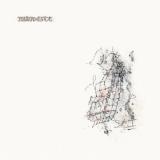
Judith Hamann & James Rushford - Midmeste LP

Australian composer-performers Judith Hamann and James Rushford have worked together in countless projects for two decades, perhaps most notably in Golden Fur, their trio with Sam Dunscombe. Black Truffle is pleased to announce Midmeste, their first work as a duo. Its title is Middle English for ‘the middlemost point’, alluding to how the piece builds on the points of overlap between the highly personalised musical languages Hamann and Rushford have developed in recent years. Performed on cello and a variety of pipe organs, Midmeste is a spacious, sometimes unsettling exploration of their shared interest in alternative tunings, psychoacoustic phenomena, the physical properties of their instruments, and the usually peripheral sounds generated by the performing body.

Beginning with a sequence of austerely vibrato-less harmonics from Hamann's cello, trailed by Rushford's whistling portative organ tones, the music soon expands into a slow-moving melodic wander, pausing at times to linger over an uncomfortable harmony or particularly resonant cello tone. Hamann and Rushford have long histories of engagement with pre-Classical European musical traditions, having in past projects performed and radically extended the work of Solage, Louis Couperin, Johann Conrad Beissell and other composers. Here they use a 15th century song by John Dunstaple, ‘O rosa bella’, which returns throughout the piece, distorted, aerated and splayed into new forms.

Developed while the two shared residencies at Akademie Schloss Solitude, Stuttgart in 2020 and La Becque on Lake Geneva in 2023, Midmeste integrates recordings made (at at the invitation of the Biennale Son) on the organ of the Basilica St Valere in Sion, Switzerland—the world’s oldest playable organ, built in the early 15th century. Played by both Rushford and Hamann, the instrument’s idiosyncratic features, including bellows pumped manually using massive wooden beams, are integrated into the music through amplification. Creaks and thumps locate the music physically both in the performers’ bodies and the specific site of its making. Moving through a series of distinct episodes across its forty-minute span, Midmeste makes space for near-silent duets of high harmonics and hissing air, moments where twittering high tones and rumbling sub-bass could be electronic, and static fields that unexpectedly blossom into almost Romantic harmonies.

Listeners familiar with Hamann and Rushford’s work will find many familiar features here: the stunningly rich cello tones, their patient sustain allowing heightened awareness of the inner life of sound and its interactions with the environment; the care with which acoustic space is activated, becoming at times a third instrumental voice; the attention to fragile, unstable sonorities that sometimes have a comic edge. A major work from two key figures in contemporary experimental music, Midmeste synthesises rigorous exploration of fundamental questions of sound and performance with an unapologetic embrace of beauty.

pré-commande22.05.2026

il devrait être publié sur 22.05.2026

22,06
ANTHONY JOSEPH - THE ARK LP 2x12"

Time To Get On Board A New Black Universal Express.

With each new recording Anthony Joseph presents an imaginative, personal vision of contemporary black culture, and The Ark is yet another compelling album by the award-winning Trinidadian poet and musician. This second part of a sequence of two albums launched with last year’s Rowing Up River To Get Our Names Back, finds Joseph giving full vent to his desire to explore many thought-provoking themes. However, there is a specific thread running through the glorious offering of sounds.

”I was especially interested in the idea of using Afrofuturism as a means of using the future in order to correct the wrongs of the past,” explains Joseph. “And so a lot of lyrics reimage or imagine an alternate black history. At the same time there are elements of autobiography.” The aforesaid cultural phenomenon, a view of the black experience through the prism of science fiction and ancient Egypt and Africa, as mapped out by visionaries from music and literature such as Sun Ra, Parliament-Funkadelic and Octavia E. Butler, has previously inspired Joseph. His 2006 novel The African Origins Of UFOs was a multi-hued work, and the new music shows how Joseph

has, much like all significant artists, gone on to broaden his conceptual palette, creating beguiling new stories and images set to startling rhythms and tones. Tracks such as ‘James’, with its taut, crisp bass and dubbed-up brass, and ‘Transposition Of Space (Glissant)’, a potent evocation of the influential Martiniquan theorist set in a haze of jazz guitar and ambient synthesizers, are marvels of text-sound painting.

As for ‘Baron Samedi’, shaped by a languid, almost wounded guitar line and slow rise of horns that frame Joseph’s journey to the ‘mountain of fire, almost touching the sky’ it is an epic blend of commanding vocal delivery and dramatic sonic tapestry.

Joseph led the Spasm band in the early 2000s and recorded well-received albums such as Bird Head Son and Time, in which songs were largely based on spirituals or chants enhanced by improvisation. But his musical curiosity has naturally led to collaborations, and the new work is produced by Dave Okumu, the prodigiously talented guitarist-vocalist-composer known as the leader of Mercury Music Prize-nominated The Invisible, and who was also a member of the seminal band Jade Fox.

Having first performed together at a show curated by influential saxophonist-flautist Shabaka Hutchings at the storied Total Refreshment Centre In London during lockdown, Joseph and Okumu struck up a rapport that further developed when the former guested on he latter’s album. With the connection made Joseph knew Okumu was the ideal producer for this latest project, which has a freewheeling, almost black psychedelic thing. After sifting through demos and loops the guitarist made on pro-tools the poet started to live with the music. Many months later words began to take shape. Joseph then went into the studio with Okumu’s band and set about creating a magnum opus. Boasting a stellar cast such as vocalist Eska Mtungwazi, trumpeter Byron Wallen and keyboardist Nick Ramm, The Ark is a highly intricate musical mosaic framed by simmering funk grooves, wily jazz improvisation and haunting dub effects. Through the use of many genres the music has simply become its own genre.

The Ark can be perceived as a vessel or means of transport to new worlds, along the lines of Sun Ra’s Ark or Funkadelic’s Mothership, and the material it contains is a unique blend of who Anthony Joseph is and how he sees the world and society in these stimulating, challenging times. “It balances the personal with the universal in a much more vulnerable, accessible way than on previous albums,” Joseph explains.

“It has become less about a personal experience and more about a collective, communal experience in which the artist is conduit, messenger, urban griot.”

pré-commande22.05.2026

il devrait être publié sur 22.05.2026

22,65
Vilhelm Bromander + Fredrik Rasten - Astral Twins

Maybe it was inevitable that Vilhelm Bromander and Fredrik Rasten would find each other. A symbiotic musical alliance of suggestive combinatory magic that stretches back to the interstitial two day space that separates their dates of birth and manifests here as the movement between ‘perfect’ or ‘just’ intonation and the ragged, psychoactive energy of the slippages from and towards that togetherness that render otherwise simple patterns or generally understood repetitions as wildly other and alive.

Astral Twins shares ‘twin’ works by each composer. The patiently unfolding real time retuning of Fredrik Rasten’s guitars on the a-side’s Sojourns and Vilhelm Bromander’s quickened steps and spry looping melodies on the flip’s Partially Dancing.

Both artists have history of going deep into the aesthetic and acoustic impact of intonation (how you think about what is ‘in tune’). Where their first LP (...for some reason that escapes us, 2019, Differ Records) shared a gorgeous set of sustained tone colour fields, this time they lean more explicitly into the folk music traditions of Scandinavia and further afield, whilst echoing the zoned minimalist atmosphere of Arthur Russell’s classic Instrumentals.

Recorded up close and in real time at Fylkingen’s soon-to-be-abandoned temporary location in Stockholm’s southern suburb of Bredäng, Astral Twins sings with the possibility that one plus one can equal more than two.

Fredrik Rasten:
 Sojourns explores the live retuning of guitar and double bass in a sequence of just intonation harmonies. A guitar ostinato runs throughout the piece where the retuning becomes an integral part of the composition. The slow pace reveals every detail in the transition from one harmonic arpeggio to another — how interfering waves emerge and disappear as the tonal interactions settle in electric clarity. The double bass shadows the guitar's process and comments with occasional pizzicato tones and register jumps, at times providing a low foundation for the sound and sometimes soaring together with the guitar. This is music that is deeply listening; experimental and at the same time humbly inviting many kinds of being with sound.

Vilhelm Bromander: 
As the title suggests, this song has a partially dancing character. The title also has a double meaning with reference to the partials and harmonics that dance together. The basic idea was to write music in just intonation that instead of being drone-based is reminiscent of a lightly dancing folk music, where the joyous feeling of just being in the music — “musicking" — is allowed to lead the way.

The double bass plays repeated overtone double stops in an open harmonic progression with subtle modulations that is inspired in equal parts by Steve Lacy's persistent repetition of phrases as east-asian khaen music. The guitars and mandolin have a freer role, with plucked retuned strings that enhance the bass's modulations and provide forward movement. The music invites to both melodic and spectral listening, suddenly halting so that other focal points can reveal themselves. For example, a chord sequence suddenly transitions to a more spectral part where Fredrik is playing a bowed guitar with a chain, several plucking guitars, voices, and pitch pipes. I wanted to make something ‘orchestral’ with just two people and no overdubs: a dance of overtones and open resonant strings, where we seamlessly take turns standing in the foreground.

pré-commande29.05.2026

il devrait être publié sur 29.05.2026

24,79
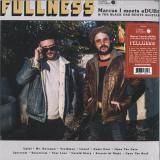
Marcus I meets aDUBta - FULLNESS LP

Marcus I meets aDUBta

FULLNESS LP

12inchFSPT2010
F-Spot Records
18.03.2026

There’s a special kind of feeling when everything falls into place - when the drums bounce easy, the bassline rolls steady, and a bright guitar line cuts through the warmth of tape. That feeling became the heart of the FULLNESS, from Marcus I meets aDUBta. The sound of FULLNESS is built on simple, living elements: real drums, deep bass, a warm sound, and melodies that leave space to breathe. It moves between Early Reggae, Rocksteady, and Roots - sometimes straight and solid, sometimes stretching out into Dub and Echo. With its voice, from singer and lyricist Marcus I, FULLNESS carries the message about gratitude, love, freedom, and the small moments of everyday life. While Marcus’s singing style nods to the great singers, he stays grounded in his own experience, which perfectly complements aDUBta’s production, giving him space to shine. This LP is a complete, warm, balanced, and uplifting experience from start to finish.

FULLNESS grew from a steady musical exchange between Marcus I and aDUBta - two people on different sides of the Alps (Marcus I in France and aDUBta in Germany), finding a shared rhythm. What began in early 2022 with a few Riddims sent back and forth soon turned into a regular flow of songs. Every week brought new ideas, new words, and new melodies. When they finally met in person at aDUBta’s Attic Roots Studio in Bavaria, Germany, it all fell naturally into place. Most of the instruments were played by aDUBta, and the whole LP was mixed live on his Tascam 388, keeping that raw, handmade feel. With several friends helping bring even more color into the music, aDUBta brought in Viti Sanchez to lend his expressive saxophone and horn lines, Michael Salvermoser with his warm trombone tones, and members of the Black Oak Roots Allstars - King HuHa and Jannis Klenke on bass and guitars, along with Morry 'Da Baron' (Dub Inc.) on bass. FULLNESS means the fullness of music, of life, of friendship, of gratitude. It’s what happens when music becomes more than a project - when it turns into a shared space where things just flow.

En stock

Disponible en stock et prêt pour l'expédition

25,42
Petre Inspirescu - Vin Ploile

Petre Inspirescu

Vin Ploile

2x12inchMULE192
Mule Musiq
17.03.2026

2026 Repress

since his first ep tips' on luciano's label cadenza in 2007 producer and dj petre inspirescu emerged into one of the key figures of the romanian electronic music scene.

so far he released music on labels such as vinyl club, lick my deck or amphia. together with his buddies rhadoo and raresh he also launched in 2007 the label (a:rpia:r) -  a platform where he, his two friends and many producers from romania and abroad released detailed grooving house and techno, that stands out with delicate structures and one-of-a-kind grooves.

both of his more dance floor oriented solo albums intr-o seara organica...' and gradina onirica for (a:rpia:r) are enlarged with melodies, sounds and harmonies that go beyond the usual characteristics of a dance album.

furthermore his love for classic musicians like mily alexejewitsch balakirev, alexander porfiryevich borodin or or nicolai andrejewitsch rimsky-korsakow can be felt in the album padurea de aur (opus 2 in re major) and two more eps that he released under the alias pensemble on the romanian label yojik concon in order to unite classical spheres with analogue electronic music production.

in february 2013 he also released his highly acclaimed fabric mix cd that only features dance floor leaning music produced by himself. with talking waters' he published in late 2014 his first 12inch on mule musiq that is now followed by the full-length album vin ploile' which he produced without the intention to entertain with easy to hook up rhythms, melodies and harmonies.

even tough he established himself as a internationally playing house dj that regularly performs at all major clubs, festivals and other party destinations around the globe: as a musician petre inspirescu always tries to enter new territories to explore with a heartfelt human touch the infinite space of sound.

for his latest album the man that originally comes from the eastern romanian town braila stepped away from his former experiments of melting classical spheres with electronic music. instead the 36-years old man from bucharest only used some piano, string and wind instrument elements and analogue electronics to arrange a gracefully deep ocean of sound.

all slow grooving tracks spread the atmosphere of live improvised sessions that are edited, tweaked and mixed to perfection. in-the-moment moods of strange and unusual analogue synth sounds groove in a fluid quality with subliminal bass shapes, latinate percussions, jazz rhythms and acoustic melodies.

together they create a gaseous kinetic atmosphere full of tangible rhythm patterns, delicate chords and ghostly modular synth pads - all mixed subtle to create space for the tones between the tones.

you can call it a hypnotic after hour album for after hours that are dedicated to a deep listening experience. you can tag his arrangements as brilliantly textured and musically super-charged ambient, which goes beyond the usual definition of the genre.

all nine suspenseful compositions seduce with a deep melodic sensibility, harmonic adventures and an overall rhythmic ambiance of freshness and laidback enthusiasm. together they represent a challenging auditory experience that will resonate in your mind long after the music has finished. 

En stock

Disponible en stock et prêt pour l'expédition

27,69
Hans Reichel - Dalbergia retusa LP 2x12" + DL

Black Truffle is thrilled to announce Dalbergia Retusa, an extensive double LP selection of the solo guitar music of Hans Reichel, compiled by Oren Ambarchi. Last heard on Black Truffle as one quarter of the joyously anarchic Bergisch-Brandenburgisches Quartett, Hans Reichel (1949-2011) is one of the great figures of experimental guitar music. Though perhaps lesser known than peers like Derek Bailey, Fred Frith and Keith Rowe, Reichel’s rethinking of the instrument was in some ways the most radical of all. Early on, he dispensed with existing guitars to build a series of his own that explored the use of additional strings and fretboards, moveable pickups, extra bridges, special capos, and other innovations documented in the extensive booklet accompanying this release.

Reichel was a long-term resident of Wuppertal, the small Western Germany city that became an unlikely centre of European free jazz in the late 1960s, also home to Peter Brötzmann and Peter Kowald. His solo debut Wichlinghauser Blues was an early entry into the FMP discography and began a relationship with the label that stretched into the 1990s; all the solo performances heard here were first released on FMP. As Reichel says in the charming archival interview with Markus Müller included here, he was ‘always a cuckoo’s egg at FMP’, a label that began as an outlet for roaring European free jazz. What strikes the listener right from the opening selection on Dalbergia Retusa—‘Return of the Knödler show’, from 1987’s The Dawn of Dachsman—is the extraordinary beauty of Reichel’s music, at once alien in the shimmering sonorities and unconventional pitch relationships made possible by his invented instruments, and deeply lyrical, even romantic in its harmonic content. Growing up in West Germany in the 1960s, Reichel’s formative influences were mainly British and American rock bands, a background that shines through in many of the pieces included here: ‘An old friend passes by’ is haunted by the ghost of Hendrix’s rhythm guitar, and the wild closer ‘Heimkehr der Holzböcke’, taken from a rare 1975 7” and the only piece to use overdubbing, layers errant hammer-on and slide tones over a Canned Heat boogie chug.

Reichel was an important source for the development of Oren Ambarchi’s own extended approach to the electric guitar. Appropriately enough, his selection opens with the very first piece by Reichel he ever heard, on a flexidisc included with a 1989 issue of Guitar Player magazine. Though Reichel collaborated with others extensively in many settings and also performed on violin and his other major contribution to instrument invention, the daxophone, his music for solo guitar remains at the core of his oeuvre. Focusing exclusively on solo pieces recorded between 1973 and 1988, the 23 pieces on Dalbergia Retusa showcase the range and consistency of Reichel’s work, allowing the listener to see how his performances developed hand-in-hand with his instrumental inventions. On a piece from his very first LP, played on an 11-string instrument (partly strung with piano strings and using a schnapps glass a slide), we hear his intensive exploration of fret-hammering to create zither-like, chiming tone, which Reichel would hone further in later years with a double fretboard guitar specifically designed to be hammered rather than fretted and picked. On a piece from 1979’s Death of the Rare Bird Ymir, Reichel uses two steel-string acoustic guitars at once, with beautiful results: ‘some even say too beautiful’, he jokes in the interview included here. Many of the pieces from the 1980s make use of varieties of the ‘pick behind the bridge guitar’, instruments of uncanny harmonic richness primarily designed to be played on the ‘wrong’ side of the bridge. At times the unexpected behaviour of attacks, resonance, and decay can almost seem electronic, conjuring up the technology-assisted work of Henry Kaiser or even Fennesz, but realised solely through Reichel’s unorthodox techniques on his invented instruments. Extensively illustrated with photos and Reichel’s own plans and drawings of his instruments, Dalbergia Retusa is an essential introduction to the unique world of Hans Reichel. Rarely has music been at once so strange and so beautiful.

En stock

Disponible en stock et prêt pour l'expédition

35,50
Oren Ambarchi & Will Guthrie - Cold Shoulder

Oren Ambarchi & Will Guthrie

Cold Shoulder

12inchRESLP043
Futura Resistenza
08.06.2026

Collaborating for more than two decades, Oren Ambarchi and Will Guthrie arrive at a place of expansive, intuitive interplay on "Cold Shoulder." Their musical dialogue, which previously moved through abstraction and volatile electro-acoustic experimentation, now unfolds with relaxed confidence, melding drifting Leslie tones, shimmering percussion, and fluid pulses that emerge and dissolve. It's a document of experience; music that feels freer, more direct, perhaps quietly fearless.

pré-commande08.06.2026

il devrait être publié sur 08.06.2026

24,33
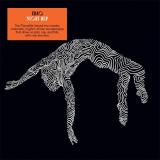
Ubaq - Night Wip

Ubaq

Night Wip

12inchKOS046
Komos
12.06.2026
  • 1: Intro
  • 2: Sciatiq
  • 3: Sakakinik
  • 4: Regarding Others Ft. Talin
  • 5: Flayosc Ft. Jules Regard
  • 6: Proud B - Pt1
  • 7: Proud B – Pt2
  • 8: From The Ending F. Mathieu Fabre

Growing together both personally and musically… That is indeed the good fortune of the musicians in the Marseille-based trio ubaq. We’re talking about bassist Antoine Carletto, guitarist Lucas Schemidt, and drummer Antoine Saussol, winners of the Rezzo springboard competition at Jazz à Vienne 2025. In their early twenties, they met in their late teens while still honing their musical skills. Nearly ten years later, they burst onto the scene, in perfect harmony, with their very first album, “Night WIP,” a follow-up to their EP, “20bis,” released in 2024. They owe their stylized stage name—written in lowercase with a “q”—to the ubac, that side of a mountain with very little sun exposure, where twilight reigns. “We liked that idea because we’re night owls,” says bassist Antoine Carletto. Hence the “night” for “nuit” and the “WIP” for “Work In Progress,” explains guitarist Lucas Shemidt. ubaq’s music is characterized by a nocturnal, melancholic heaviness, pierced by beams of light. “We love creating music that soothes us and highlights the precious nature of composing and playing in complete harmony,” says Antoine Carletto. “We cultivate complex tones, sometimes difficult to bear, whether they’re nostalgic or even verging on depression. But we manage to convey emotions without falling into clichés,” adds Antoine Saussol. Night and twilight serve as the perfect catalysts for this trio, which moves forward with perfect chemistry and harmony.

On this album, they feature the German-Armenian rapper and singer Talin, who is also based in Marseille. She appears on the track “Regarding Others,” where she chants that even though the year 2026 may see mothers weeping in every corner of the world, she still manages to smile. Thus, this track explores the three musicians’ relationship with the world and the necessity of looking at others. The unsettling “Sciatiq,” the haunting “Sakakinik,” and the ambivalence of “Flayosc”—the final track, on which the trio features trombonist Jules Regard—owe their titles to the musicians’ own observations and experiences. The multi-faceted track “Proud,” in two parts, is a tribute to Lucas Schemidt’s mother, who has since passed away. The presence of wind instruments—whether Jules Regard’s trombone or Mathieu Fabre’s saxophone on the intense track “From The Ending”—adds textures missing from the natural landscape depicted in “Night WIP.” This debut album captures the obsessions and introspective wanderings—sometimes anxious, sometimes enchanted—of a trio that cultivates melody as a pledge of warm fulfillment.

pré-commande12.06.2026

il devrait être publié sur 12.06.2026

24,58
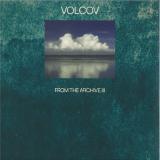
Various - From the Archive Vol. 3... compiled by Volcov LP 2x12"

Volcov, the Veronese founder of the Neroli record label, returns to the BBE fold with the third compilation in his majestic series 'From the Archives' and once again this new installment is another collection of overlooked gems and unreleased beauties that are set to entice the discerning listener. As with volumes 1 and 2, 'From the Archives volume 3' features cherry picked songs that focus on melodies and weave a thread between eras and genres. From the Archives volume 3 is a genre free journey into authentic grooves which features music from the enchanted tones of Carlo Nino & Friends, an exclusive from Collettivo Immaginario, uptempo moments from remix kings Kaidi Tatham and DJ Spinna as well as two unreleased songs from Fred P and J2 Fusion feat. Javonttee and DJ Genius. From The Archive 3 represents another accomplished work of love from Volcov aka Enrico Crivellaro, who has a long list of albums and compilations under his belt as well as being involved in productions, edits, releases and projects with artists such as Dego, Theo Parrish, Phil Asher, Gerald Mitchell, Domu, Kaidi Tatham, Kirk Degiorgio, Patrick Gibin, Lars Bartkuhn, Ian O’Brien and many more. From the Archive volume 3 is released as a vinyl double LP and a digital download and is a compilation in which the music lover will be guided hand in hand through a collection of unreleased and hard to find songs that shift effortlessly between jazz and house, broken beat, ambient and soul.

En stock

Disponible en stock et prêt pour l'expédition

32,35
Abul Mogard & Rafael Anton Irisarri - Where Light Pauses in the Silence of the Sun

In spring 2025, Abul Mogard and Rafael Anton Irisarri created the source material for their second album, Where Light Pauses in the Silence of the Sun, during a three-day residency at Morphine Raum in Berlin. Functioning as both recording studio and performance venue, the space has no stage, with the audience gathered around the performers. Working within an open framework, the duo reshaped the music each evening while recording the performances live to multitrack. Rotary speakers, modular synthesizers and bowed guitar formed the core of their sonic language, captured through a 1970s mixing console and microphones placed around the room.

Back in Mogard’s studio in Rome, the material was further crafted as motifs were stretched, fragments isolated, and tempos dissolved. Irisarri recorded additional guitar textures and treatments in New York, while passages recorded by Martina Bertoni and Andrea Burelli in Berlin reinforced the harmonic centres and brought breath, refinement and a new sensibility to their compositions. The process continued as Mogard’s layering and subtraction reassembled everyone’s parts into the final arrangement.

The album opens with “In the Eastern Wild,” building from a sparse outline into a monumental formation of low-frequency weight, its internal motion shaped by the rotating Leslie speaker. “Over the Domes” widens into a broader acoustic field, where sustained modular tones meet waves of softly plucked guitar. The music then turns inward with “A Blue Descent,” centred on Bertoni’s cello, whose growling timbre introduces a melancholic depth.

At the album’s centre, “In a Quiet Radiance” unfolds around a slow guitar ostinato, its luminous stillness opening into a more expansive and reflective state. Across its ten-minute span, Burelli’s violin lines and Bertoni’s lower cello phrases gradually surface, weaving through the harmonic field. Mogard brings Burelli’s processed voice to the fore, its emotive, operatic presence becoming one of the record’s pivotal moments. “Of Blessed Ages” suspends the sonic flow, shifting between parallel major and minor chords as lingering, slowly decaying melodies shape the music’s internal drift. The closing “Among Shadows” settles into a darker resonance as layered textures recede.

Mogard and Irisarri’s shared language balances restraint and maximalism. UK magazine Crack describes the music as “a tidal wave held in suspension,” while Dutch newspaper de Volkskrant writes, “What a colossal sound, and how this music strikes at the emotions.” Reflecting on the residency sessions, Irisarri recalls: “At moments I genuinely couldn’t tell if a sound was coming from me or from Abul. It stopped feeling like two people making decisions and began to feel like we were inside a system moving on its own."

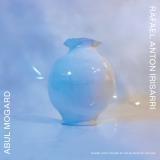
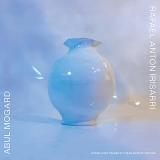
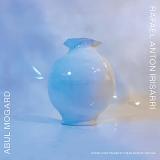
Marja de Sanctis’ cover artwork revisits the vessel sculpture from the duo’s first album, Impossibly Distant, Impossibly Close. There it appeared as raw, unfired clay. Here it has been fired in the kiln and finished with a glaze. Light gathers on its polished surface and spills into the surrounding space. As she explains, “I wanted to convey the idea of continuity within the duo, and the vessel became a kind of container for that idea. However, their music felt different this time, and with the collaboration of Martina and Andrea, I felt it should have a sleeker, softer, more glamorous look, very distant from the first raw appearance.” The transformation of the vessel from raw clay to fired form suggests a passage from immediacy toward permanence, mirroring the music’s gradual expansion.

pré-commande26.06.2026

il devrait être publié sur 26.06.2026

27,52
Abul Mogard & Rafael Anton Irisarri - Where Light Pauses in the Silence of the Sun

In spring 2025, Abul Mogard and Rafael Anton Irisarri created the source material for their second album, Where Light Pauses in the Silence of the Sun, during a three-day residency at Morphine Raum in Berlin. Functioning as both recording studio and performance venue, the space has no stage, with the audience gathered around the performers. Working within an open framework, the duo reshaped the music each evening while recording the performances live to multitrack. Rotary speakers, modular synthesizers and bowed guitar formed the core of their sonic language, captured through a 1970s mixing console and microphones placed around the room.

Back in Mogard’s studio in Rome, the material was further crafted as motifs were stretched, fragments isolated, and tempos dissolved. Irisarri recorded additional guitar textures and treatments in New York, while passages recorded by Martina Bertoni and Andrea Burelli in Berlin reinforced the harmonic centres and brought breath, refinement and a new sensibility to their compositions. The process continued as Mogard’s layering and subtraction reassembled everyone’s parts into the final arrangement.

The album opens with “In the Eastern Wild,” building from a sparse outline into a monumental formation of low-frequency weight, its internal motion shaped by the rotating Leslie speaker. “Over the Domes” widens into a broader acoustic field, where sustained modular tones meet waves of softly plucked guitar. The music then turns inward with “A Blue Descent,” centred on Bertoni’s cello, whose growling timbre introduces a melancholic depth.

At the album’s centre, “In a Quiet Radiance” unfolds around a slow guitar ostinato, its luminous stillness opening into a more expansive and reflective state. Across its ten-minute span, Burelli’s violin lines and Bertoni’s lower cello phrases gradually surface, weaving through the harmonic field. Mogard brings Burelli’s processed voice to the fore, its emotive, operatic presence becoming one of the record’s pivotal moments. “Of Blessed Ages” suspends the sonic flow, shifting between parallel major and minor chords as lingering, slowly decaying melodies shape the music’s internal drift. The closing “Among Shadows” settles into a darker resonance as layered textures recede.

Mogard and Irisarri’s shared language balances restraint and maximalism. UK magazine Crack describes the music as “a tidal wave held in suspension,” while Dutch newspaper de Volkskrant writes, “What a colossal sound, and how this music strikes at the emotions.” Reflecting on the residency sessions, Irisarri recalls: “At moments I genuinely couldn’t tell if a sound was coming from me or from Abul. It stopped feeling like two people making decisions and began to feel like we were inside a system moving on its own."

Marja de Sanctis’ cover artwork revisits the vessel sculpture from the duo’s first album, Impossibly Distant, Impossibly Close. There it appeared as raw, unfired clay. Here it has been fired in the kiln and finished with a glaze. Light gathers on its polished surface and spills into the surrounding space. As she explains, “I wanted to convey the idea of continuity within the duo, and the vessel became a kind of container for that idea. However, their music felt different this time, and with the collaboration of Martina and Andrea, I felt it should have a sleeker, softer, more glamorous look, very distant from the first raw appearance.” The transformation of the vessel from raw clay to fired form suggests a passage from immediacy toward permanence, mirroring the music’s gradual expansion.

pré-commande26.06.2026

il devrait être publié sur 26.06.2026

27,52
Abul Mogard & Rafael Anton Irisarri - Where Light Pauses in the Silence of the Sun

In spring 2025, Abul Mogard and Rafael Anton Irisarri created the source material for their second album, Where Light Pauses in the Silence of the Sun, during a three-day residency at Morphine Raum in Berlin. Functioning as both recording studio and performance venue, the space has no stage, with the audience gathered around the performers. Working within an open framework, the duo reshaped the music each evening while recording the performances live to multitrack. Rotary speakers, modular synthesizers and bowed guitar formed the core of their sonic language, captured through a 1970s mixing console and microphones placed around the room.

Back in Mogard’s studio in Rome, the material was further crafted as motifs were stretched, fragments isolated, and tempos dissolved. Irisarri recorded additional guitar textures and treatments in New York, while passages recorded by Martina Bertoni and Andrea Burelli in Berlin reinforced the harmonic centres and brought breath, refinement and a new sensibility to their compositions. The process continued as Mogard’s layering and subtraction reassembled everyone’s parts into the final arrangement.

The album opens with “In the Eastern Wild,” building from a sparse outline into a monumental formation of low-frequency weight, its internal motion shaped by the rotating Leslie speaker. “Over the Domes” widens into a broader acoustic field, where sustained modular tones meet waves of softly plucked guitar. The music then turns inward with “A Blue Descent,” centred on Bertoni’s cello, whose growling timbre introduces a melancholic depth.

At the album’s centre, “In a Quiet Radiance” unfolds around a slow guitar ostinato, its luminous stillness opening into a more expansive and reflective state. Across its ten-minute span, Burelli’s violin lines and Bertoni’s lower cello phrases gradually surface, weaving through the harmonic field. Mogard brings Burelli’s processed voice to the fore, its emotive, operatic presence becoming one of the record’s pivotal moments. “Of Blessed Ages” suspends the sonic flow, shifting between parallel major and minor chords as lingering, slowly decaying melodies shape the music’s internal drift. The closing “Among Shadows” settles into a darker resonance as layered textures recede.

Mogard and Irisarri’s shared language balances restraint and maximalism. UK magazine Crack describes the music as “a tidal wave held in suspension,” while Dutch newspaper de Volkskrant writes, “What a colossal sound, and how this music strikes at the emotions.” Reflecting on the residency sessions, Irisarri recalls: “At moments I genuinely couldn’t tell if a sound was coming from me or from Abul. It stopped feeling like two people making decisions and began to feel like we were inside a system moving on its own."

Marja de Sanctis’ cover artwork revisits the vessel sculpture from the duo’s first album, Impossibly Distant, Impossibly Close. There it appeared as raw, unfired clay. Here it has been fired in the kiln and finished with a glaze. Light gathers on its polished surface and spills into the surrounding space. As she explains, “I wanted to convey the idea of continuity within the duo, and the vessel became a kind of container for that idea. However, their music felt different this time, and with the collaboration of Martina and Andrea, I felt it should have a sleeker, softer, more glamorous look, very distant from the first raw appearance.” The transformation of the vessel from raw clay to fired form suggests a passage from immediacy toward permanence, mirroring the music’s gradual expansion.

pré-commande26.06.2026

il devrait être publié sur 26.06.2026

26,01
Sophie - Product LP

Sophie

Product LP

12inchNMBRS48P
Numbers
12.02.2026

To mark 10 years since SOPHIE’s game-changing singles collection PRODUCT, Numbers are celebrating with a special edition featuring 11 songs across Deluxe Vinyl and Compact Disc.

This anniversary release includes bonus tracks, track-by-track slide posters, and a SOPHIE PRODUCT Card. Physical editions are now available for pre-order and released on 11th July 2025.

SOPHIE classics ‘BIPP’, ‘LEMONADE’ and ‘VYZEE’ are joined by two immaculate PRODUCT-era songs ‘OOH’ and ‘GET HIGHER’ recorded and produced at the time, each with colourful single artwork completing the set.

‘OOH’ is one of SOPHIE's earliest productions that has been through several revisions since 2011. It was one of three original tracks that Numbers had signed when SOPHIE uploaded the song alongside 'BIPP' and 'ELLE' to her Soundcloud, and while it had been through several iterations and speed changes, this finalised version was completed by SOPHIE in 2019.

SOPHIE once described ‘OOH’ as “hi tech club dance pop”. Musically speaking, the earworm hook is carved out by her signature portamento-infused synths and candy-coated lyrics, a firm cult classic approved by AG Cook and Charli XCX. Initially titled 'MAKE RESPECT', the track was first performed live by SOPHIE in 2011 to a handful of lucky people at a beach afterparty surrounding Sonar Festival, Barcelona and later that year at Manhattan's New Museum. The vocal was recorded as the first track in the same one-day recording session as SOPHIE's debut single 'NOTHING MORE TO SAY', released on the Huntley & Palmers label, where Sophie's songwriting was performed by the London vocalist Jaide Green.

The genesis of the ‘OOH’ and ‘NOTHING MORE TO SAY’ recording session is lore-worthy in its own right: after watching Jaide Green perform live with Olly Murs during the sixth series of The X Factor in 2009, SOPHIE reached out and invited Jaide to record in her home bedroom studio.

‘GET HIGHER’ was born during joyous sessions in 2013, when SOPHIE’s beat was introduced to the vocalists Cassie Davis and Sean Mullins. The track feels like a visionary precursor to ‘Vroom Vroom’, and doesn't sound out of place next to the sub-clang intensity of SOPHIE’s ‘HARD’ and ‘MSMSMSM’. Striking a playful balance between blissed-out hyperpop and club-ready Atlanta trap, it showcases SOPHIE’s signature, laser sharp sound design. Originally released as a bonus track on the Japanese CD edition of PRODUCT, ‘GET HIGHER’ has remained a hidden gem.

A groundbreaking producer, songwriter and performer, SOPHIE's visionary approach reshaped the landscape of pop and electronic music. Emerging in the early 2010s, SOPHIE introduced a hyper-detailed, futuristic sound defined by metallic textures, elastic basslines, and an uncanny blend of synthetic and emotional tones. Collaborating with artists including Charli XCX, Madonna, Vince Staples and Arca, SOPHIE helped pioneer a new pop movement while challenging conventions around identity, genre and production. SOPHIE's work continues to resonate deeply, leaving a lasting impact on a generation of artists and listeners alike. Discography: PRODUCT (2015), OIL OF EVERY PEARL'S UN-INSIDES (2018), SOPHIE (released posthumously, 2024).

En stock

Disponible en stock et prêt pour l'expédition

26,01
Articles par page:
N/ABPM
Vinyl