In 1975 Phil Pratt first recording session with Keith Poppin at Channel One on Maxfield Avenue generated a spare, hypnotic re-working of 'Bad Mind Grudgeful' retitled 'Envious'. The seven inch single, "caused a sensation here and in Britain", was a Number One record in Jamaica and a big hit on the UK reggae market too. The acclaimed 'Envious' album followed. Keith Poppin continued to work with Phil Pratt on releases such as 'Who Are You', another big hit, and two years later, recorded his second album for Phil Pratt 'Pop Inn'. This classic collection, also created with a stellar line up of musicians at Channel One, was released in the UK only on the Burning Sounds subsidiary label Burning Rockers and consolidated Keith's reputation as one of Jamaica's foremost vocalists with his soulful and melodic voice. This re-issue of 'Pop Inn' is released on 180-gram vinyl including comprehensive sleeve notes
quête:two seven
CAR CRASH SET were one of the very few electropop acts coming out of New Zealand and have released several vinyls nationally between 1983 and 1986. Basically, the CAR CRASH SET consisted of synthesists/composers David Bulog and Nigel Russell and guitarist/producer Trevor Reekie, and was formed in late 1981, then still with Nick Jenkins on synths. They created such outstanding electropop songs with a Roland TR-606/808 and such lovely sequencing, – e.g. “Fall from Grace” is definitely a song that Anna will take with her into her grave – that it is indeed a shame that they didn’t receive more attention. Anyway, their 1983 12” ‘Two Songs’ (including “Outsider” and “Fall from Grace”) and the V/A ‘We’ll do our best’ LP (including CAR CRASH SET’s “Toys”) are at least highly collectible items amongst electropop connoisseurs and many people will be happy to see these tracks being available again as well as four previously unavailable demos from both their earliest and later days and seven more songs added to this CD version. CAR CRASH SET are currently recording again together though not only with the original Roland gear (“nothing else will do” as Dave once said): TR-606, Jupiter-4, MC-4, System 100m modular and System 104 sequencer as well as Nigel’s Korg MS20, Poly-61, Polysix and way more!
LP (3rd edition) features: limited edition of 317 copies, 180 grams yellow flame vinyl, A3 poster/revised lyrics sheet, sticker, revised hand-numbered double-sided postcard.
- Blues Run The Game
- Milk & Honey
- Soho
- It Ain't Me Babe
- East Virginia
- Geordie
- In Memory
- Love My True Love
- Let No Man Steal
- Ethusel
- Setting Of The Sun
- Boxful Of Treasures
- Who Knows Where Time One 1967
- Carnival
- Don't Seem To Know You
- Gerrard Street
- Motherless Children
- Moves Through The Fair
- Time Has Come
- Little Bit Of Rain
- Go Your Own Way My Love
- Seven Virgins
- Blue Tattoo
- Cradle Song
- Fotheringay
- Who Knows Where Time Two 1968
- Quiet Land Of Erin
Black Vinyl[31,05 €]
Dieses 2-CD bzw 2LP-Set mit dem Titel Early Home Recordings versammelt 27 alte Aufnahmen aus den 1960er Jahren (hauptsächlich 1966-67) der Vor-Fairport Convention Sandy Denny. Sorgfältig remastered, enthält dieses Paket ein exklusives neues Essay des Fairport Convention-Biographen Patrick Humphries - der Sandy persönlich kannte. Enthalten sind zwei verschiedene seltene Demos ihres Klassikers 'Who Knows Where the Time Goes' von 1967 (bevor sie ihn mit den Strawbs aufnahm) und ein weiteres von 1968. Sie hatte dieses unglaubliche Talent, diese unglaubliche Stimme - sie spielte 'Who Knows Where the Time Goes', und ich fiel fast vom Stuhl. - Linda Thompson. Außerdem gibt es eine Reihe von Liedern aus Sandys Feder, darunter 'Boxful Of Treasures', das später in den Song 'Fotheringay' umgeschrieben wurde (von Fairport Convention's What We Did On Our Holidays Album). Fotheringay" erscheint hier auch in Demoform. ,Sie muss neu bewertet werden. Sie hat eine Art von Song geschrieben, die heute nur noch sehr selten geschrieben wird - emotional, musikalisch interessant, wirklich gut gesungen - ernsthaftes Songwriting. Sie war dem Rest haushoch überlegen. Und das bleibt sie auch." - Ashley Hutchings (Gründer von Fairport Convention). Außerdem gibt es gefühlvolle Coverversionen von Jackson C. Frank, Fred Neil, Anne Briggs, Dylan und vielen traditionellen Folksongs. Die endgültige Sammlung von Dennys frühen Demos, die von ihrem Nachlass autorisiert wurden, mit Sandys Tochter Georgia Lucas' eigenen charmanten Zeichnungen ihrer Mutter, die zum ersten Mal auf einer offiziellen Denny-Veröffentlichung erscheinen, sowie bisher unveröffentlichten Bildern Sandys der 1960er Jahre. Linernotes von Reissue-Produzent Pat Thomas.
- A1: Zdenka Vuckovic - Ja Cu Prezivjeti (I Will Survive)
- A2: Gabi Novak - Pjesma Je Bila Zivot Moj
- A3: Krunoslav Slabinac - Juzni Vjetar
- A4: Arian - Do Posljednjeg Daha
- B1: Moni Kovacic - Be My Bear
- B2: Kim - Naivke
- B3: Rok Hotel - Disko
- B4: Grupa St - Superkazanova
- B5: Ivica Surjak - Julija
- C1: Vera Kapetanovic - Ne Gubi Vreme Sa Mnom
- C2: Milka Lenac - Zeljo Luda
- C3: Nano Prsa - Dzingis Kan
- C4: Dubravka Jusic - Stani Stani
- D1: Ljupka Dimitrovska - Robot (Version 1983)
- D2: Ana Sasso - Krenimo Niki
- D3: Elvira Voca - Drugo Vrijeme (The Second Time)
- D4: Opatijski Suveniri - Vamos A La Playa
- D5: Roman Butina - I'm Gonna Get Your Love
A collection of 18 rare disco tracks from Yugoslavia. Compiled by Leri Ahel & Zeljko Luketic from original master tapes. Fox & His Friends label owners Ahel & Luketic selected obscure 7'' singles, b-sides, out-of-print releases and digged deep into the vaults of Jugoton to tell the story of how disco infiltrated clubs and pop music. This compilation is vinyl counterpart to their pioneering research and work in two major exhibitions tracing roots, influences and social significance of disco in music, fashion and design held in 2015 in Klovicevi Dvori Museum and HDD Gallery in Zagreb. "Socialist Disco - Dancing Behind Yugoslavia's Velvet Curtain 1977-1987" double gatefold LP with extensive liner notes contains tunes from KIM Band, Gabi Novak, Arian, Ljupka Dimitrovska, Ana Sasso, Moni Kovacic, Milka Lenac, Rok Hotel, Ivica Surjak, Grupa ST, Nano Prsa and many more in various sub-genres including classical orchestrated disco, dance reworkings of international chart hits and synth-filled italo-disco stompers performed by Yugoslavian music stars, fashion models and even sports and football heroes. Disco, a vital Trojan horse (in local notion: a pop music you can dance to), stayed quite a long time In Yugoslavia, refusing to be silenced and refusing to jump into the bandwagon of expected. It was influenced by American and European disco sound, for example, by the Boney M, Amanda Lear or Love Machine, who all visited Yugoslavia and had live concerts. The producers and the big record companies like Jugoton, PGP RTB, Diskoton or ZKP RTVL, noted the hype in music and they constantly probed the market with limited run of seven inchers or special performances. Some artists were quite successful, but the rest were in the 7'' single empire which was free enough to experiment with all things disco had to offer - genre hybrids, use of electronics, sexual innuendo, bizarre lyrics and most importantly, great musicians and major composers having fun. The no-restrictions policy of disco was there to evade the rules and surely it did.
Blurb:
A confident, two track release, cut loud to a split 12” from Meat Beat Manifesto & ScanOne
Following on from featuring together on the Yellow Machines BLE-EP series.
Bleeps, Breaks, Space and Bass.
Meat Beat Manifesto's ‘Into The Sun’ kicks off pulsing techno and IDM spasms against evocative NASA samples, the track evolves into a frenzied and unstable tower of wonky jungle break edits and heavy sub sweeps threatening imminent collapse. Weaving the contrasting rhythms with a narrative of eerie analogue pads and incidental atmospherics, Jack Dangers delivers a striking and fresh piece reminiscent of mid 90s left field rave acts such early Plug, Bedouin Ascent, and Law & Auder crew, both in their worldly experimental stylings as well as their forward-leaning progressivism.
ScanOne’s track ‘Secondary Loop’ is a seven minute galactic adventure of a slightly less hectic pace, and a brighter array of scenery. With a firm thematic nod to that 89 / 90, pre-hardcore sound exemplified by the likes of 808 State, FSOL, and Orbital, the voyage is signposted by chunky, shuffling breaks, glowing invigorating rave pads and sparkling arpeggiated sequences, built for those peak dance moments, light and dark, sundown or sunrise.
No one has lived a life quite like Marcos Valle. He became an overnight international sensation, fled a military dictatorship, dodged the Vietnam war draft, had his music sung by Homer Simpson, made enemies with Marlon Brando, and became an unsuspecting fitness guru for multiple generations. But to truly understand the great Brazilian composer, arranger, singer and multi instrumentalist, one must listen to his music.
Lead Single (Life Is What It Is) : Between the release of his first album in 1962 and today, Marcos Valle has released twenty-two studio albums traversing definitive bossa nova, classic samba, iconic disco pop, psychedelic rock, nineties dance and orchestral music. He has also had his songs recorded by some of the all time greats, including Frank Sinatra, Sarah Vaughn, Sergio Mendes, Elis Regina, and (last but not least), Emma Button of the Spice Girls. He has also had his music sampled by Jay-Z, Kanye West, Pusha T and many more.
With his twenty-third studio album Túnel Acustico, Valle set out to bring it all together.
“I believe my music is many things. It goes in different directions. I have many different ways of writing music, sometimes it’s melodies and harmony, sometimes the groove is the focus. But all the music I have made over my sixty year career is unified. It is all natural and it is all sincere. And this is what I wanted to bring to my new album.”
A prominent feature of Valle’s career has been his dual residence between Brazil and the USA. Originally moving over in the mid-sixties on the back of bossa nova’s international proliferation, Valle toured with Sergio Mendes and became hugely in demand as a composer and arranger. But the Vietnam War loomed and the threat of being drafted saw him return to Brazil. He spent the following years in Rio writing music for TV and film, as well as four cult favourite albums in collaboration with some of Brazil’s most groundbreaking musicians including Milton Nascimento, Azymuth, Som Imaginario and O Terco.
By 1975, Brazil's military dictatorship was at its most oppressive, making living and working increasingly difficult. Valle moved back to the US where he would reside in LA, writing songs for, and collaborating with the likes of Eumir Deodato, Airto Moreira, Chicago, Sarah Vaughn and Leon Ware, amongst others.
Túnel Acústico features two songs originally conceived during Valle’s time on the West Coast: “Feels So Good”, a stirring two-step soul triumph written in 1979 with soul icon Leon Ware, and the sublime AOR disco track “Life Is What It Is”, composed around the same time, with percussionist Laudir De Oliveira from the group Chicago.
Built around an unfinished demo Marcos found on a shelf in his house 44 years after it was made, the “Feels So Good” demo was restored with the help of producer Daniel Maunick, who also utilised AI stem-separation to remove the placeholder vocal ad-libs. Valle added Portuguese lyrics to sit alongside Ware’s vocal hook, as well as extra keyboards and percussion.
Also written in late seventies LA, “Life Is What Is It” was co-penned by Laudir De Oliveira from the band Chicago and first released on the bands’ Chicago 13 album with lyrics by Robert Lamb. Another nod to his good times in LA, Valle recorded his own version for Túnel Acústico, upping the tempo and deepening the groove for a blast of irresistible summer soul.
On Túnel Acústico, Valle's core band features two members of the renowned Brazilian jazz-funk group Azymuth: Alex Malheiros on bass and Renato Massa on drums. The rhythm section is completed by percussionist Ian Moreira, with additional contributions from guitarist Paulinho Guitarra and trumpeter Jesse Sadoc.
The contemporarily composed music on Túnel Acústico features an impressive lineup of guest lyricists, including renowned Brazilian artists: Joyce Moreno (Bora Meu Vem), Céu (Nao Sei), and Moreno Veloso (Palavras Tão Gentis) as well as Valle's brother Paulo Sergio Valle (Tem Que Ser Feliz).
The album closes with "Thank You Burt (For Bacharach)", a tribute to the legendary composer who passed away in 2023.
Túnel Acústico will be released on 20th September 2024 via Far Out Recordings. Valle is set to tour Europe and America in support of the album.
What an unbelievable record. From the wild cover to the iconic breakbeats, Roots from Ian Carr’s Nucleus is one of the dopest albums we know. This is seriously thick, funky-prog jazz-rock heaven. Originally released on Vertigo in 1973, other than a couple of versions at the time for other territories, Roots was never re-pressed since so it’s gone on to become another one of those impossible to find records.
Maybe it was a little too out there for the time, but it’s aged very, very well indeed and this Be With re-issue, re-mastered from the original analogue tapes, shows off just why this deserves to be back in press.
Genius trumpeter and visionary composer Ian Carr was one of the most respected British musicians of his era. He was a true pioneer and saw the potential in fusing the worlds of jazz with rock, just as Miles Davis and The Tony Williams Lifetime did in the US. In late 1969, following the demise of the Rendell-Carr quintet, and tiring of British jazz, Carr assembled the legendary Nucleus. Regarding music as a continuous process, Nucleus refused to “recognise rigid boundaries” and worked on delivering what they saw as a “total musical experience”. We can get behind that.
Under bandleader Carr, Nucleus existed as a fluid line-up of inventive, skilled musicians. This constant evolution and revolution was all part of the continuous musical exploration and discovery that took jazz to new levels.
Working together with producer Fritz Fryer and engineer Roger Wake, the seven compositions by Carr, Brian Smith and Dave MacRae that make up Roots flirt with perfection, and Nucleus at that time made up of the cream of 1970s UK jazz with Brian Smith on tenor saxophones and flutes, Dave MacRae on piano and electric piano, Jocelyn Pitchen on guitar, Roger Sutton on bass, both Clive Thacker and Aureo De Souza on drums and percussion, Joy Yates delivering the vocals and of course Carr on trumpet.
The spellbinding title track immediately renders the album indispensable. Riding the illest of loping breakbeats, “Roots” is low-slung, doped-out heist-funk. An absolute monster. If it sounds familiar then that’s likely down to it being sampled by Madlib for Lootpack and Quasimoto’s “Loop Digga”, as well as by a whole host of beat manipulators. “Roots” conjures prime instrumental hip-hop / beat music, only 20 years ahead of its time. Truly, these are the roots. Through sinuous bass, twinkling keys and a hypnotic guitar riff, a smoky brass motif weaves its way into a gloriously deep haze around Carr’s solos. “Roots” is over 9 minutes long, but there’s not a single wasted second, not surprising given that this is a condensed version of an originally 40 minute long commissioned composition.
The soothing vocal fusion delight of “Images” follows. Meticulously constructed, with gorgeous flute work from Brian Smith, with Joy Yates’ silky vocals and Dave MacRae’s Rhodes never sounding better. The cool, driving “Caliban” closes out the first side. Originally the third movement in a four part commission to celebrate Shakespeare’s birthday it stands up on its own, all robust rhythms and blended brass. Keyboard colour and Carr’s trumpet are splashed across the funk drums and basslines (and there’s even some bamboo flute). This really is fusion: the elements of jazz and rock coming together in beautifully synthesis.
Side two opens in riotous fashion with the short, thrilling samba of “Wapatiti”. Next up, “Capricorn” forms a smoothed-out, jazzy constellation. Mellow and dreamy, its twinkling percussion and languid horns slowly build the vibe before head-nod drums and a killer bassline enter the fray. With a distinct heaviness that Black Sabbath would’ve envied, “Odokamona” is a venomous slice of riff-soaked jazz metal (yes, you read that right), elevated by Carr’s wah-wah horns.
The album closes with MacRae’s exceptionally cosmic “Southern Roots and Celebration”. Very much in conversation with Weather Report, it opens as a languorous, spiritual jazz of chiming keys and serene guitar that turns slowly, gorgeously into a mid-paced, brass-laced banger. It’s another sure-fire party starter and the sound of the band having a righteous blast, building an ecstatic chaos that ends with Yates screaming.
And of course we need to talk about Keith Davis’ cover for Roots. Perhaps the coolest record cover of all time? Certainly one of the most bonkers. Just your run-of-the-mill high-gloss, acid-tinged airbrush dystopian/utopian living-room party scene. Consider this your chemical flashback trigger warning.
Front-and-centre the hip-to-death green robot holds court with their giant ball of yellow barbwire wool, hooked up to… something(?) being teased out from under the stairs (probably best not to ask). A thoroughly zoned-out, long-legged Pop Art party-goer lounges half-plugged in to the painting behind her as a pair of legs flail into shot from the the top of the stairs opposite. We won’t even begin to guess what the chap’s up to in the middle, but the view out of the windows is rather nice, and someone’s already got the hoover out ready to tidy up. All of the Nucleus sleeves are something special, but this particular one? Crikey.
This Be With edition of Roots has been re-mastered from the original Vertigo master tapes, Simon Francis’ mastering working together with Pete Norman’s cut to weave their usual magic with these wonderful recordings. The crazy cover has been restored at Be With HQ as the finishing touch to this long overdue re-issue.
Rhetoric & Terror is Berlin-based Hemphill’s second album since leaving Liars back in 2016.
No stranger to reinventing his approach towards composition, Rhetoric & Terror feels like we are – perhaps for the first time – opening a doorway into Hemphill’s personal life, to his disparate sonic influences, his wide-ranging journeys through philosophy, and his own reflections on his role as an artist.
Like different thoughts and feelings emerging in a state of meditation, Hemphill invites you to pause on one ‘scene’ for a moment before moving onto the next. There’s space to get lost here – both emotionally and in the colour of the album’s wide-ranging textures.
With his wife Angelika Kaswalder on vocals throughout the album and multi-instrumentalist Morgan Henderson – a longtime friend of Hemphill’s since Henderson’s time in the post- hardcore band The Blood Brothers - adding woodwind, Nonpareils is no longer simply a solo project – and it’s apparent in this openness.
The name of the album – Rhetoric & Terror – describes this split that Hemphill is making from the conceptual nature of his first solo album (2018’s Scented Pictures), and the new direction that he – perhaps – hopes to continue taking. The title comes from a chapter in Giorgio Agamben’s book, “The Man Without Content”, where he describes the concepts of rhetoric and terror to describe two different types of writers: the rhetorician and the terrorist. The terrorist is a misologist who is only into the feeling; the rhetorician is committed to logic and form.
“With Rhetoric & Terror, I wanted to start with emotions and feeling. I was playing with my kids, listening to Cocteau Twins, I have a wonderful partner, and it seemed very contrary to any sort of growth to sequester myself from this life in order to get into character as a musician. Instead, I tried to remove the boundaries between my creative life and my. responsibilities and have it all be one fluid thing. All things at all times, and trust that this will guide my music rather than more intellectual concepts or limitations.”
Despite its catalysts being in philosophy and conceptual art, Hemphill has created an album that’s deeply “emotionally available”. It’s also helped him take a new stance on life that combines his life as a partner and parent in a kind of unity with his role as the artist. It’s plain to hear as a listener – Rhetoric & Terror, despite its intimidating name, is welcoming
and playful, even during its most intense moments.
Imaginative re-workings and improvisations by Andrew Tuttle of the late great Michael Chapman's unfinished instrumental album. Sonic explorations that bridge the Southern and Northern Hemisphere via the Caribbean, remote Northumberland and sub-tropical Australia. Navigating calm seas and turbulent waters of ambient corals, new-age pirates, waves of lapping banjos and drifting eroding guitars.
When Michael Chapman passed away in September of 2021, at the age of 80, he did so – as he spent much of his life – as both a pioneer and a legend. A veteran of the British blues/folk/jazz scene, Chapman emerged in 1966 and continued working throughout his life, always pushing the boundaries of his creations while collaborating with a slew of similarly heralded musicians along the way: Bert Jansch, Mick Ronson, Elton John, Thurston Moore, Steve Gunn; to name just a smattering of those he worked alongside over the years.
It's the latter of those – Brooklyn guitarist and songwriter Steve Gunn – who Chapman flourished alongside in recent years, the two collaborating on 50 and True North, two of Chapman’s final and finest records. It was through that friendship that Chapman’s music found Andrew Tuttle, the Brisbane-based multi-instrumentalist who has toured Australia several times alongside Gunn.
In the aftermath of Chapman’s passing, his partner Andru discovered Tuttle’s Fleeting Adventure LP, describing it as “one of the albums that kept me sane during that first brutal winter on my own.” The pair met in Australia shortly after, and before Andru had even made it back home to the north of England, Tuttle had begun working on the recordings she shared with him at that time. Those recordings were part of a project Chapman was working on at the time of his death, called Another Fish – what would have been a companion piece to his previously-released LP, simply called Fish.
Though Chapman had spent time in his local studio playing all the guitars, layering the different sounds and effects, he’d always intended to do much more work on the songs, however fate had its way and he never got to ribbon-bow those ideas and bring the album to its conclusion.
Though there was little intention in terms of how to finalise the project, Tuttle spent valuable time with those recordings. What materialised, eventually - with time, care, and diligent attention - is a two-disc set Another Tide, Another Fish, something both unusual and completely distinctive. The first disc, Another Tide is centred around Tuttle’s own work, which shaped all seven of Michael’s songs and ideas into new songs of their own, and the second disc which simply incorporates the recordings that Michael left behind.
“On all of the tracks I also ‘played along’ on banjo to the originals several times until I learned an approximation,” Tuttle continues. “This ended up resulting in a ‘hybrid’, where some works are easily identifiable to those who know Michael’s originals, and some took that inspiration to head altogether elsewhere. Each of the tracks, even where not obvious, does have at the very least a trace element sample of the original recordings so that it’s a true collaboration.”
What we’re left with is indeed a hybrid: part remix album, part cover album, both a solo work and a collaboration, of sorts. Inspired by Chapman’s original ideas and with new track titles directly referencing the numbered but otherwise untitled source material, Tuttle adds his own flashes of colours throughout, including editing, sampling, MIDI transposing and signal processing that twists these songs into beautiful new shapes. Perhaps Tuttle’s greatest achievement here then is that Another Tide sounds so effortlessly free of all this context.
Whether you know Michael’s, Andrew’s or even Andru’s story or not, these recordings will bristle with enchantment and intrigue, worlds are built, and while some thrive and grow, others fizzle out in a burst of light, such is the way. “It's been a long, long road but we got there and I think it's been more than worth it,” Andru says in the record’s liner notes. “I really hope you think the journey was worth it too.”
Guitars and effects by Michael Chapman recorded by Alex Warnes at Phoenix Studio, Brampton, Cumbria, 2017 Banjo, effects and edits by Andrew Tuttle at Bella Vista, Brisbane / Meanjin, 2023-2024
- A1: I'm Forrest... Forrest Gump
- A2: You're No Different
- A3: You Can't Sit Here
- A4: Run Forrest Run
- A5: Pray With Me
- A6: Crimson Gump
- A7: They're Sending Me To Vietnam
- A8: I Ran And Ran
- A9: I Had A Destiny
- A10: Washington Reunion
- A11: Jesus On The Main Line
- A12: That's My Boat
- B1: I Never Thanked You
- B2: Jenny Returns
- B3: Crusade
- B4: Forrest Meets Forrest
- B5: Wedding Guest
- B6: Where Heaven Ends
- B7: Jenny's Grave
- B8: I'll Be Right Here
- B9: Suite From Forrest Gump
Forrest Gump was the surprise hit of the 1994 summer movie season. The film traces the life of a half-wit through the major historical events of the 1950s, '60s, and '70s. It features Tom Hanks as the loveable Forrest Gump and Robin Wright (Claire Underwood in House Of Cards) as Forrest's insecure girlfriend Jenny.
Forrest Gump won six Academy Awards for Best Picture, Best Actor in a Leading Role, Best Director, Best Visual Effects, Best Adapted Screenplay, and Best Film Editing.
The film garnered for seven Golden Globe Award nominations, winning three of them, including Best Actor - Motion Picture Drama, Best Director - Motion Picture, and Best Motion Picture - Drama. The film was also nominated for six Saturn Awards and won two for Best Fantasy Film and Best Supporting Actor (Film. The film also won the Outstanding Achievement in Special Effects award at the 1995 BAFTA Film Awards.
Forrest Gump received numerous other awards such as one win from the Screen Actors Guild Awards in its first year for Tom Hanks in a total of four nominations.
The film was selected for preservation by the Library of Congress in the United States National Film Registry in 2011, being deemed culturally, historically, or aesthetically significant'. The movie has made multiple American Film Institute lists including the quote Mama always said life was like a box of chocolates. You never know what you're gonna get.' ranking 40th on 100 Years...100 Movie Quotes. The film ranked 240 on Empire's list of the 500 Greatest Movies Of All Time. The chain of restaurants, Bubba Gump Shrimp Company opened based on the film, and has opened many locations since its founding.
The score was composed and conducted by Alan Silvestri and was nominated for Best Original Score in the 67th Academy Awards.
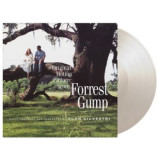
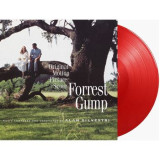
The legendary Score is now finally available on vinyl for the first time. The first pressing of 1.500 copies are pressed on 'Chocolate' coloured vinyl. You never know what you'rei
gonna get...
- A1: I'm Forrest... Forrest Gump
- A2: You're No Different
- A3: You Can't Sit Here
- A4: Run Forrest Run
- A5: Pray With Me
- A6: Crimson Gump
- A7: They're Sending Me To Vietnam
- A8: I Ran And Ran
- A9: I Had A Destiny
- A10: Washington Reunion
- A11: Jesus On The Main Line
- A12: That's My Boat
- B1: I Never Thanked You
- B2: Jenny Returns
- B3: Crusade
- B4: Forrest Meets Forrest
- B5: Wedding Guest
- B6: Where Heaven Ends
- B7: Jenny's Grave
- B8: I'll Be Right Here
- B9: Suite From Forrest Gump
Forrest Gump was the surprise hit of the 1994 summer movie season. The film traces the life of a half-wit through the major historical events of the 1950s, '60s, and '70s. It features Tom Hanks as the loveable Forrest Gump and Robin Wright (Claire Underwood in House Of Cards) as Forrest's insecure girlfriend Jenny.
Forrest Gump won six Academy Awards for Best Picture, Best Actor in a Leading Role, Best Director, Best Visual Effects, Best Adapted Screenplay, and Best Film Editing.
The film garnered for seven Golden Globe Award nominations, winning three of them, including Best Actor - Motion Picture Drama, Best Director - Motion Picture, and Best Motion Picture - Drama. The film was also nominated for six Saturn Awards and won two for Best Fantasy Film and Best Supporting Actor (Film. The film also won the Outstanding Achievement in Special Effects award at the 1995 BAFTA Film Awards.
Forrest Gump received numerous other awards such as one win from the Screen Actors Guild Awards in its first year for Tom Hanks in a total of four nominations.
The film was selected for preservation by the Library of Congress in the United States National Film Registry in 2011, being deemed culturally, historically, or aesthetically significant'. The movie has made multiple American Film Institute lists including the quote Mama always said life was like a box of chocolates. You never know what you're gonna get.' ranking 40th on 100 Years...100 Movie Quotes. The film ranked 240 on Empire's list of the 500 Greatest Movies Of All Time. The chain of restaurants, Bubba Gump Shrimp Company opened based on the film, and has opened many locations since its founding.
The score was composed and conducted by Alan Silvestri and was nominated for Best Original Score in the 67th Academy Awards.
The legendary Score is now finally available on vinyl for the first time. The first pressing of 1.500 copies are pressed on 'Chocolate' coloured vinyl. You never know what you'rei
gonna get...
- A1: I'm Forrest... Forrest Gump
- A2: You're No Different
- A3: You Can't Sit Here
- A4: Run Forrest Run
- A5: Pray With Me
- A6: Crimson Gump
- A7: They're Sending Me To Vietnam
- A8: I Ran And Ran
- A9: I Had A Destiny
- A10: Washington Reunion
- A11: Jesus On The Main Line
- A12: That's My Boat
- B1: I Never Thanked You
- B2: Jenny Returns
- B3: Crusade
- B4: Forrest Meets Forrest
- B5: Wedding Guest
- B6: Where Heaven Ends
- B7: Jenny's Grave
- B8: I'll Be Right Here
- B9: Suite From Forrest Gump
Forrest Gump was the surprise hit of the 1994 summer movie season. The film traces the life of a half-wit through the major historical events of the 1950s, '60s, and '70s. It features Tom Hanks as the loveable Forrest Gump and Robin Wright (Claire Underwood in House Of Cards) as Forrest's insecure girlfriend Jenny.
Forrest Gump won six Academy Awards for Best Picture, Best Actor in a Leading Role, Best Director, Best Visual Effects, Best Adapted Screenplay, and Best Film Editing.
The film garnered for seven Golden Globe Award nominations, winning three of them, including Best Actor - Motion Picture Drama, Best Director - Motion Picture, and Best Motion Picture - Drama. The film was also nominated for six Saturn Awards and won two for Best Fantasy Film and Best Supporting Actor (Film. The film also won the Outstanding Achievement in Special Effects award at the 1995 BAFTA Film Awards.
Forrest Gump received numerous other awards such as one win from the Screen Actors Guild Awards in its first year for Tom Hanks in a total of four nominations.
The film was selected for preservation by the Library of Congress in the United States National Film Registry in 2011, being deemed culturally, historically, or aesthetically significant'. The movie has made multiple American Film Institute lists including the quote Mama always said life was like a box of chocolates. You never know what you're gonna get.' ranking 40th on 100 Years...100 Movie Quotes. The film ranked 240 on Empire's list of the 500 Greatest Movies Of All Time. The chain of restaurants, Bubba Gump Shrimp Company opened based on the film, and has opened many locations since its founding.
The score was composed and conducted by Alan Silvestri and was nominated for Best Original Score in the 67th Academy Awards.
The legendary Score is now finally available on vinyl for the first time. The first pressing of 1.500 copies are pressed on 'Chocolate' coloured vinyl. You never know what you'rei
gonna get...
Rain and experimental music have had an interesting connection for decades. Under the umbrella of American film music promotion, Hanns Eisler was already looking for "Vierzehn Arten, den Regen zu beschreiben” (fourteen ways to describe the rain) in 1941. A good 20 years later, The Cascades interpreted the periodicity of rain as a rhythm of mourning. For the Beatles ("If the rain falls, they run and hide their heads"), the precipitation inspired the band to use backward running tapes. However, it seems that there has always been a lot of rainfall in popular music. In the early seventies, David Toop and Paul Burwell even had a band project with the great name Rain In The Face...
That was a long time ago and today, rain, which in the age of climate catastrophe mainly occurs as heavy rain or an enervating endless loop, has lost a great deal of its inspiring quality. Perhaps as a reminder of the musical quality of rain, but knowing full well that it can only be enjoyed in theory, Razen call their new album "Rain Without Rain". In the music of the Brussels collective led by the two multi-instrumentalists Brecht Ameel and Kim Delcour, it certainly pours down on the roofs. In fact, the album opens with the sound of pouring rain before we hear the sequence of an oscillator played through a guitar amp on the first track „Lazy, Lazy Eye“.
The album is the captivating result of an one-night mobile studio field recording in an abandoned pedestrian tunnel in the centre of Düsseldorf, and it is finding beauty with brutal(ist) means: recorder, oscillator, guitar amp and reverberation, two musicians and four microphones, early electronics versus Early Music. “Suicide meet Hildegard von Bingen”, as Stefan Schneider, who recorded the session, admits. “Ghostly occurrences”, he adds.
Brecht Ameel states: “We do put a lot of weight and care on acoustics. On some of our recordings, the room acts as another band member, or as the main ‘mixing board’. Most of the albums we have recorded so far are not mixed in the traditional sense: they are simply „captured”, and we let the room decide what is left on the tapes. The studio recordings, then, give us the possibility of bringing other elements to the fore; precision of interplay, or tiny variations in breathing.”
The group Razen exists since 2010 and has since released numerous records on labels such as KRAAK, Marionette and Hands In The Dark. "Rain Without Rain" is their debut on the Düsseldorf label TAL. If there has been an increased international interest in experimental music from Belgium in recent years, this is not least due to musician collectives such as Razen. In terms of its electro-folkloristic intensity and instrumentation, Razen's music is quite unique worldwide. What does Razen actually mean? “We took the word from a poem by Paul Van Ostaijen, not specifically because of its meaning but because of the way it looked on paper”, Ameel explains. “But the meaning goes in the direction of ‘thundering / raging / speeding’ … although we prefer playing with a strong notion of restraint, building our world from (and with) silence.”
Olaf Karnik, Köln 2024
- A1: Hosanna (Meridian)
- A2: First Born (Redeemed)
- A3: When Angels Speak Of Love
- A4: Doubleupptown (Larocque)
- A5: W-I-S (Above Every Other)
- A6: Pistol Poem (Leadbelly)
- A7: Whip Appeal (Pipn8Ez)
- A8: Seven Trumpets
- A9: Giz'aard ($Uckets)
- A10: Helpmeet (Iyadunni)
- B1: Flir2A
- B2: U&Me (Decemberseventeen)
- B3: Illbethere, 4Everandever
- B4: Alàáfía (Cita's World)
Original Cover[27,52 €]
Honour's debut album is a ligament stretching from Lagos to London and to New York, curling across the diaspora and brushing the darker hues of blues, hip-hop, free jazz, ambient, gospel with Christian mythology and Yoruba folklore. As cinematic as it is painterly, Alàáfíà is a meditation on themes of life, death and love that pulls inspiration from the unexpected poetic profundity of casual conversations, field recordings, literature, ephemera, or personal archives. The result is an impressionistic vision in Black and Blur that both exhausts and implicates language_substantiating a mythos proposed by Fred Moten that sublimates boundaries between everywhere and nowhere; history and the present; the individual and the universal. Alàáfíà delineates a gothic landscape cut by overdriven beats, swooping orchestral blasts, choral bursts and ear- splitting fuzz, where the fleshly and spiritual realms commune. Dedicated to Honour's late grandmother, the title track began to take form after their last embrace and remains steeped in her influence and spirit_a tape-saturated composition that starts in Lagos and ends in London's smoke-stained cityscape, the song's dream-like quality developed out of the artist's grief and PTSD coping with this loss. Beneath the stretched guitar drones and stuttering loops, their grandmother's shared faith bubbles to the surface. "When Angels Speak of Love," borrows its title from two works by Sun Ra and bell hooks, respectively. Sculpting echoes of praise music into disorienting spirals perforated with syrupy DJ Screw-inspired breaks and sharp splinters of melancholic guitar, "When Angels Speak of Love" engages a conceptual dialogue with the spirits of both late thinkers, folding them into Honour's pantheon of ancestral guides. The album's ninth track, "Giz Aard ($uckets)," is a dirge of regimented drums which anchor this somber melody as it whirls into a blizzard of heartache, uncertain if its consequence will be death or eternal joy. The album's sole lyrical offering, "Pistol Poem (Lead Belly)," begins with a darkly humorous bar, "He went thru hell and back/ came back/ 2 get the strap," that swells into a haunting allegory based on the life of Philip "Hot Sauce" Champion. A modern take on the Blues, Honour's lyrics reify the artist's status as a student of both literature and popular culture, crossbreeding the artist's clever wordplay with additional references to Richard Pryor, Robert Johnson, Kelly Rowland & Bryon Gysin. Setting core principles of hip-hop, R&B, jazz and gospel music to atemporal soundscapes and compositions, Honour crafts a record that marinates in its own knotty contradictions. The ghosts that sit on the artist's shoulders have never been more tangible than with this emotive debut.
On their seventh long player The Breaks - their second for Joyful Noise Recordings - SUUNS are lost in limbo. For some artists, being caught in flux may result in songs that are either naive, out of touch or both, simply as a consequence of being cut off from human civilization. But for SUUNS, a band who have grown more than comfortable in the oblique and the intermediate, it actually had the opposite effect. The Breaks marks the Montreal experimental rock outfit's most emotionally resonant and tonally rich collection of music to date. The trio of Ben Shemie, Joseph Yarmush and Liam O' Neill leans more zealously than ever into their pop instincts. Yet remarkably enough, with that same dauntless abandon, SUUNS have mined a more extreme sonic palette this time around, one that stretches far beyond their core fundamentals as a band. The Breaks finds Shemie, O'Neill and Yarmush gleefully experimenting with loops, synths, samples and MIDI-instruments like a post-millennial Tangerine Dream messing with downtempo triphop beats. O' Neill took point in the producer's chair for The Breaks, arranging, structuring and editing many of Shemie and Yarmush's ideas from sporadic rehearsal sessions into Pro Tools, reimagining the songs over and over during a two-year time frame. Forged between countless plane rides, road trips, van tours and text threads, The Breaks became a product of endurance and a lot of trial-and-error. It's a record forged in tight fissions of freedom, where spells of whispered intimacy - like on the stunning ballad "Doreen" - are allowed to branch out into the vast glacial dreamscapes of the album's majestic title track. It captures SUUNS at their most panoramic, curious and exuberant: a constant relay of being adrift and enlightened anew, geared up to eleven. And guess what: the wheels keep on spinning.
Mindgames' commitment to capturing the essence of golden era Jungle while infusing it with updated production techniques perfectly complements ASC's approach. On these two EP’s, ASC bridges the expansive soundscapes of his Spatial releases and the raw dynamism of his 2020 jungle trilogy for Samurai Music.
From the heads down launchpad of Shadow Of The Beast, to the deep stepping glide of Phaaze, and onto the epic scapes of Cells Interlinked, ASC writes a sonic manifesto of his mastery of deep jungle. Snowblind is a reverent nod to Photek’s fascination with space jazz, while Flux is a floating groove that snakes itself around one of the most infectious b lines you will hear anywhere.
Seven timeless entries in the Jungle story book that embody the spirit of the 90s while reshaping it’s framework into entrancing new forms.
Mindgames' commitment to capturing the essence of golden era Jungle while infusing it with updated production techniques perfectly complements ASC's approach. On these two EP’s, ASC bridges the expansive soundscapes of his Spatial releases and the raw dynamism of his 2020 jungle trilogy for Samurai Music.
From the heads down launchpad of Shadow Of The Beast, to the deep stepping glide of Phaaze, and onto the epic scapes of Cells Interlinked, ASC writes a sonic manifesto of his mastery of deep jungle. Snowblind is a reverent nod to Photek’s fascination with space jazz, while Flux is a floating groove that snakes itself around one of the most infectious b lines you will hear anywhere.
Seven timeless entries in the Jungle story book that embody the spirit of the 90s while reshaping it’s framework into entrancing new forms.
The vibrant label "Bunte Kuh" from Basel, Switzerland, releases brand new remixes of the track "JeBoDa" which was originally released on the label a year ago by the trio Dan Bay, Chill Sander & Between Machines, as well as "More Rooms" - a new original track from the artist trio.
A total of seven artists closely associated with the label reinterpret the catchy and intoxicating original, delivering inspiring remixes for the dancefloor. These new works span various genres, rooted in Down Tempo and Organic House, as well as Melodic House, Minimal, and Indie Dance.
Iorie enriches his remix, paving a vibrantly painted path to another dimension, full of love for detail. Kon Faber significantly increases the tempo, distilling the original down to its essence and adding splendid and powerful synths.
Focusing on the organic spirit of the original, Olivan carefully dresses his remix in a stylish framework of diverse layers and emotional depth. With minimal influences and gentle dub techno elements, Mira Vána crafts an immersive remix that captivates step by step, pleasantly dissolving the mind.
Hypnotically, Niju takes us on a special and completely ecstatic journey through his cosmos, enchanting body and mind with a magically rich remix. Niki Sadeki fuses the darker parts of the original with a unique spirit, creating an extraordinary piece through heartfelt arrangement and powerful instrumentation. Bīsu writes a psychedelic-tinged and completely new story with his remix, plunging the track into deep club waters that seem to separate the mind from the body.
With "More Rooms," Dan Bay, Chill Sander & Between Machines add a captivating and charismatic new track to the release. Organic elements merge with facets of the electronic, inviting an excursion into the night full of fluorescent elements and fairy-tale breaks whose aftereffects slowly but surely transform into unforeseen climaxes.
The remixes and the original will be released splitted on two digital EPs and then all together on vinyl.
- A1: Thats How It All Is (Feat Kevin Mark Trail)
- A2: Dumplings For Dinner (Feat Omar)
- A3: Long Road
- B1: No Crime To Try
- B2: Work It Out (Feat Ange Williams)
- C1: Clearer Skies (Feat Kevin Mark Trail)
- C2: Sherwood Ave (Kitchen Party)
- C3: Everything I Have To Give
- D1: That Love (Feat Louis Baker)
- D2: Some Kind Of Blockage
Black Vinyl[30,88 €]
The records is released in two options. Both hvae 180g vinyl records. The first version has two black vinyls and the second limited edition (numbered 100 pieces) has one turquoise vinyl and the other red.
Over the last three decades, Auckland, New Zealand, has given birth to several generations of musicians, DJs, and producers who operated within the interzone between jazz, blues, soul, funk, Latin music, hip-hop, house, boogie, and broken beat. Across two slow-cooked albums that sit at the intersection of machine funk and vivid live instrumentation, Odyssey (2016) and their forthcoming sophomore release Long Road (2024), After 'Ours - the group project of pianist and composer Michal Martyniuk and drummer, guitarist and producer Nick Williams - have comfortably located themselves within this antipodean tradition.
Born and raised in Auckland, Nick Williams grew up surrounded by music from a young age. At home, his mother, Mary Anne, a record collector and DJ with deep, diverse vinyl crates, kept his ear sharp. By the time he was eight years old, he was regularly joining his musician father on stages across Australia in his blues rock band Slippery Sam. In his early twenties, Nick began leading the eleven-piece Auckland Latin-dub-funk fusion big band Tangent, who performed regularly until the late 2000s.
Michal Martyniuk, on the other hand, grew up on the opposite side of the world in Szczecin, Poland. After playing classical music for twelve years and attending jazz school, he relocated to New Zealand with his family in his teens. While studying at Auckland University Jazz school, Michal came into the orbit of the legendary New Zealand saxophonist, composer, producer, and band leader Nathan Haines, who brought him into the same world as future collaborators like Tama Waipara, Batacada Sound Machine, Sola Rosa and Nick.
Inspired by the rich stories of jazz, neo-soul, electronica, and dance music from both sides of the Atlantic Ocean and the open-eared Auckland scene they emerged from, After 'Ours formed in 2011. Born out of a friendship cultivated through playing together at bars and nightclubs around town and home studio sessions. "Nick had family and work, so I had to wait all day," Michal says. "We'd come to the studio at 10 PM and go till 3 AM. That's how we came up with the name.
Session by session, After 'Ours revealed itself to be a creatively fertile meeting of minds. "We both have our angles, but it works well in the end," Nick reflects. "It takes the music to a place we can't get to by ourselves."
Between 2011 and 2016, they wrote and recorded Odyssey with a cast of musical collaborators that included KP, Sharlene Hector & Kevin Mark Trail (UK), Matt Nanai, Nathan Haines, Jakub Skowronski, Nick's partner Ange Williams (nee Saunders) and British producer Mike Patto from the lauded UK future jazz group Reel People. Influenced by the smooth yacht rock of Steely Dan and Donald Fagan, the warm midtempo bounce of A Tribe Called Quest and J Dilla, and the complex jazz/RnB bop of Robert Glasper, Odyssey was a labour of love that emphasised community, warm-hearted hospitality, and care.
Seven years on, they're finally ready to return with Long Road, an album that contains some of their best work yet. As well as reconnecting with past collaborators Kevin Mark Trail and Ange Williams, Long Road sees After 'Ours calling on assistance from Louis Baker, Jakarta-based saxophone player Kuba Skowroński, bassist Dan Antunovich, Los Angeles-based drummer Chris Bailey and the journeyman British soul artist Omar Lyefook.
Across ten songs that plot a stargazed course through their antipodean spin on UK broken beat, jazz, modern soul, and blues rock, Nick and Michal build on everything they learned while writing and recording Odyssey. In the process, they take their joyful musical visions to sublime new heights.
With a deep-rooted love for traditional Music, Zach Top is poised to
invigorate the country genre with his homage to classic sounds and
authentic storytelling
Zach embodies the spirit of 90's country legends, shaped by his upbringing in
Sunnyside, WA, listening to classic country music while driving around his
family's ranch tending to livestock.
At the age of seven, he formed a band with his siblings which set the stage for his
musical ambitions. Throughout his teenage years and early twenties, Zach honed
his craft by playing in various bluegrass bands before moving to Nashville in 2021
where he has been steadily making his mark as an artist to watch.
Zach just released two special holiday tracks and is set to join CMA Entertainer of
the Year, Lainey Wilson's "Country's Cool again" tour this year