Search:two thou

Styles
All
Various - Alien Parade Japan LP (2x12")

Alien Transistor present Alien Parade Japan, a joyous double-album compilation of groups from Japan’s indie-pop and avant-garde undergrounds, all of which feature brass or woodwind instruments as part of their line-up. Compiled by Markus Acher (Alien Transistor, The Notwist, Hochzeitskapelle) with plenty of support and help from his Spirit Fest bandmate, Saya (also of Tenniscoats), it features some familiar names – Tenniscoats, naturally, but also Zayaendo, Tori Kudo’s Maher Shalal Hash Baz – alongside lesser-known groups like Biobiopatata, Mitamurakandadan?, Kourakuen, sekifu, and Noah Lewis Mahlon’ Taits, amongst many others.

The collection of songs here rests upon a simple question, and an interesting parallel: Why do so many groups from Japan include brass and woodwind, and how closely does this echo the scene that Acher is involved with in Munich? The idea was formulated in Acher’s mind after one of his groups, Hochzeitskapelle, had been invited by Saya to Japan in 2019, to take part in the Alien Parade Japan tour. “Saya and her friends recommended a lot of music to me that I didn’t know of,” Acher recalls, “and I was surprised and excited to find so many Japanese bands who use brass and woodwind instruments.”

This approach was something Acher had been familiar with for a while, thanks to his experiences in Munich: “Until then I thought of the Munich scene, where Hochzeitskapelle come from, as being quite unique in having ex-punk and still-indie musicians form loud acoustic bands with many brass instruments and play a wild mixture of styles.” And indeed, that variety is reflected in the twenty-two songs on Alien Parade Japan, which flits from the pastoral melody of Maher Shalal Hash Baz’s “Crossin The Tama River”, through the tenderness of various sighhorns’s “people have called them flowers”, to the folksy lament of Gratin Carnival’s “Just Watching”.

Alien Parade Japan reaches further afield, too, drawing in some groups, like HOSE, Fuigo, and popo, that feature musicians like Toshihiro Koike, Masafumi Ezaki and Taku Unami, who may be better known for their experimental and improvised releases on labels like ftarri and Erstwhile. It also looks back to material recorded in the 1990s - the swinging slide guitars and sax/tuba duet of Strada’s “Swamp”, from 1998, and Compostela’s energetic, rousing “ghhgh”, from 1990. Both pieces were written by, and feature, saxophonist Kanji Nakao; Compostela’s membership also included late saxophonist Masami Shinoda, who was also part of such storied Japanese groups as Pungo, A-Musik, Orquestra Del Viento, Ché-SHIZU, and the fiery free jazz outfit, Seikatsu Kōjyō Iinkai.

Groups like Compostela help to draw some through-lines to the aesthetics of chindon’ya, a type of Japanese marching band made up of costumed street performers who advertise businesses; the music made by these bands is brash, spirited, and full of energy. Alien Parade Japan weaves all of this together – chindon’ya; jazz; indie-pop; psych-folk; big band – into one beautiful, big tapestry of gorgeous melody, sweetness, and melancholy, with plenty of creative fraying at its edges. “The collection is a very personal view of Japanese bands using brass and woodwind instruments,” Acher concludes: “it’s not a representative anthology, it’s mainly held together by my personal taste, experiences, and friendships.” But it’s also a wonderfully coherent collection of some of the most playful and elated music you’re likely to hear this year. As musician and writer David Grubbs says:

„Now it is confirmed: my favorite genre of music is Alien Parade Japan. Hopefully now people will know what I’m talking about when I gush about the unassailable brilliance of longtime favorites like Maher Shalal Hash Baz, Popo, Mitamurakandadan?, Hose, and Tenniscoats, presented here alongside others whose music I have only begun to search out. Please share in my gratitude and enjoyment of this lovingly assembled collection, one that I welcome into my home as I would a long-anticipated guest.“

out of Stock

Order now and we will order the item for you at our supplier.

26,51

Last In: 3 years ago
Various - Best Of  Various EP

The third instalment of the Best OF Various series sees Malta's Melchior Sultana return to Ten Lovers Music with an amazing new track called Spectres. Following that we have a special reprise of Secret Garden by Paul David Gillman Presents Red Earth Design, from England. The main mix of Secret Garden features on Paul's debut album (TLP004) of the same name, we thought this reprise was too good to remain unreleased. On to the AA side and we have two tracks back to back from Italy's ReeKee with his debut release on TLM, Here We Stay and Next To Me showcase his unique sound. We have been a fan for a while so great to have him on board. Finally someone who needs no introduction, from the USA, Detroit's very own Javonntte following up his TLM 7' release last month with this superb track called Satellites and Dreamers.

out of Stock

Order now and we will order the item for you at our supplier.

11,72

Last In: 2 years ago
EVARISTE - IL NE PENSE QU'A CA - 1967/1971 LP

Évariste is one of the rare specimens of artist-cum-scientists. Among his kind stand others like Pierre Schaeffer, a Polytechnique graduate (an engineer but also the father of musique concrète) and the eccentric Boby Lapointe (graduate of the École centrale and inventor of the Bibi-binaire system, patented in 1968). Évariste's songwriting, joyful and full of energy (albeit extremely critical), shrouds an original tragedy: born in 1943 among résistants, Joël Sternheimer (aka Évariste) grew up without a father, lost to Auschwitz. Although he makes little reference to Jewish culture in his music, his origins leave their mark: in 1974, he sings a Hebrew song on television. In 1966, the young Joël sports Princeton's colourful paraphernalia - that's because he's freshly returning from the US, where he was sent to pursue his research on "particle mass and the interpretation of observed regularities, such as the effects of a wave" (will understand who may). When he gets there the country's in the midst of the Vietnam War. With McNamara keen to find an alternative to the nuclear weapon and calling upon the country's biggest brains to undertake the task, there's a "fund shift" within the university - a diplomatic way to give notice to whoever may not be disposed to follow the government's scheme. Joël, who's under the supervision of a rebellious physician, is dismissed. He regardless keeps following the prestigious seminaries of the Institute for Advanced Study, chaired by Oppenheimer, inventor of the atomic bomb. Likely inspired by the hippie movement and music, Joël buys a guitar and starts playing in Washington Square - after all, Bob Dylan himself started there. He blithely skips Oppenheimer and receives a warm (though surprised) welcome from a crowd thoroughly unfamiliar with French. When the ageing physicist questions him about his decreasing attendance, Joël explains how drawn he is to music, and how he thinks it could help him in self-financing his research. Évariste recalls seeing the sickened man, his face torn by remorse, lighten up to his words and say: "What's keeping you - go for it! If I was still young that's exactly what I'd do." The student takes these words as a testimony from his professor - and it's enough to convince him . And so he takes the leap during the Christmas vacations he spends in Paris. A journalist friend he often sees around the Sorbonne introduces him to the artistic director of Disques AZ. The latter passes the tapes on to the label's boss, Lucien Morisse, also program manager on Europe N°1. Morisse is blown away - and signs him onto the label right away. Michel Colombier, arranger for Serge Gainsbourg and co-author of "Psyché Rock", with Pierre Henry, contributes some of his original ideas to the 7 inch "E=mc2": Évariste's preoccupation with the percussion sound on the track "Le calcul intégral" is that it goes "poom poom" and not "tock tock" - Colombier is aware of the issue and records Évariste's guitar like a percussion in an isolated booth. The organist Eddy Louis, who is to participate, in 1969, to the success of Claude Nougaro's "Paris mai", also appears on the record. It's 1966 and the Antoine phenomenon (signed on Vogue) storms through France. The two singers share similarities: Antoine is an engineer of the École centrale, gifted with a great originality in his song-writing. A godsend for the two labels who turn this resemblance into a commercial strategy, setting them out as rivals. To this day though, Évariste still denies what was little more than slushy tabloïd gossip. Success comes around swiftly and in 1967 Évariste launches into a second 7 inch, "Wo I nee", again arranged by Michel Colombier. Quantum mechanics fans finally get their anthem with "La Chasse Au Boson Intermédiaire" (or the "Intermediary Boson Pursuit"). To sum up what's a boson, say he's a close pal of the meson, photon and other gluons. A few months later, it's May 68 and everything's turned upside down. Évariste writes a series of songs inspired by the events, which he immediately submits to Lucien Morisse. When the man behind "Salut les copains", once married to Dalida, hears the song "La révolution" - a father and son dialogue - he can't take any more: AZ simply cannot release this. But there and then Lucien Morisse makes a gesture which will remain engraved in French music's history: sorry to be unable to officially stand by the singer, he encourages him to self-produce the record, but with his tacit support. He calls the pressing factory and asks they apply the same rate for Évariste as they would for AZ. The singer and his musicians use the same studio as for the previous record, all of them playing for free awaiting a return on investment. Évariste keeps singing at the Sorbonne with "Jussieu's gang" and "the young Renaud" he nicknames "le p'tit gavroche" (or "street urchin"). Renaud volunteers to type the lyrics of the song "La révolution" so that the chorus can be sung and recorded. A boy in the group is related to Wolinski and introduces them. The two get along so well that Wolinski ends up drawing the cover for the record "La révolution", for free. The self-released 7 inch "La révolution / La faute à Nanterre" is sold under the table and door-to-door for half the price of a standard record, on and around the boulevard Saint-Michel; and it runs out fast. In the end, there will be 6 releases of the record, and 25000 copies sold. When the theatre director Claude Confortès decides to adapt Wolinski's drawing series titled "Je ne veux pas mourir idiot" ("I don't want to die a fool"), he asks Évariste to write the original soundtrack. His friend, now cartoonist for Hara-Kiri Hebdo, often promotes him in accordance with a principle dear to him by virtue of which he gives a special place to his friends. Dominique Grange (writer of the song "Nous sommes les nouveaux partisans") soon joins the team. After 150 performances, Évariste leaves his place to Dominique Maurin (brother of Patrick Dewaere). Évariste composes the songs for Claude Confortès' next play, "Je ne pense qu'à ça" ("That's all I think about"), co-wrote with Wolinski in 1969. The comedians of the play record the songs on a 7 inch, with a cover signed, again, by Wolinski. In 1971, French television produces the documentary "Évariste et les 7 dimensions", but doesn't air it. Indeed, the scientific sub-comity of the programming comity (sic) censors the show. The given justification is that "Évariste dangerously mixed science with science-fiction, numerology and other non-scientific disciplines". The underlying motive might have been a will to censor the singer-mathematician's political discourse. In the documentary and among other things, Évariste discusses hierarchy, alienation and revolution. Half a century later the documentary remains invisible, though some excerpts resurfaced in 1992 in the cult show "L'oeil du cyclone", on Canal +. Though flourishing, Évariste's career is nearing its end. 1970 is the beginning of a decade in the course of which he is to make a decisive discovery in the musical and scientific domains. Following this breakthrough, he moves away from self-produced music and gaucho magazines to focus on science. He keeps Oppenheimer's encouraging words in mind, now freely pursuing his research thanks to the sales of his records. Joël realises that when decoding protein sequences, one finds musical sequences recognisable to humans. He names them "proteodies". If, when listening to a proteody, one responds by being so sensitive as to finding it beautiful, then it reveals a deficiency of the related protein - and this peculiar music may be the cure. We could trace back the music history in light of proteins lacking in a given artist, or within a public's majority. You always thought these hysterical groupies who'd throw their underwear with passion and faint in the pit had miraculously appeared because they had never heard anything as wonderful as the Beatles? Make no mistake! For Évariste, it all boils down to an intro's protein content. Indeed, the beginning of their first hit "Love Me Do" corresponds to dopamine, the neurotransmitter linked to compulsive buying. An intro like this could only unleash the fervour of groupies, victims of fashion and biology. Évariste's success is such that the income from his sales gives him the autonomy to which he had aspired when confiding to Oppenheimer. It made it possible for him to pursue his research without any institutional constraints. He now devotes himself to his proteodies, sat in the offices of the European University for Research, just around the corner from the Sorbonne he knew so well. Évariste is no more. Joël regained control of this strange and comical beast.

pre-order now15.07.2022

expected to be published on 15.07.2022

19,29
The Nightingales - In The Good Old Country Way

Classic Double Black Vinyl, DL card. The Nightingales' last original full-length for two decades stands as the final masterpiece postpunk album released before the C86 era. Back on vinyl for the first time in over 3 decades, the reissue is updated to include the whole of the 1985's 7" single "It's A Cracker" and "What A Carry On" 12" EP, plus a clutch of rare tracks never before released on vinyl and a bit of history from Robert Lloyd. Despondently anti-Thatcher and with an air of hopelessness, In The Good Old Country Way has the sense that time was allowed for experimentation and reflection during its creation. Expectations were high as The Nightingales released their sole Vindaloo album and possibly the most underrated album of the postpunk era. The opening number is heavy on the hoedown, not unlike records their pals The Mekons would release around the same time - a rootsy underlayment to songs of wit, energy and observation, adaptable both to lengthy groove-based observation and high-octane rants alike. Maria Smith's violin weaves in and out of songs, while the rhythm section of Pete Jenner (bass) and Ron Collins (drums) hold what might have been a disjointed mess, but it's multi-instrumentalist / arranger Pete Byrchmore who shares the spotlight with Lloyd. "It's A Cracker" stuns, not stylistically dissimilar to their recent records for the first ninety seconds, though featuring a bridge hinting at new developments in their sound which could be heard on the next Nightingales release, ‘What A Carry On’. A sublime record, it features the powerful title track in two version, one of the band's best songs, "Comfort And Joy", and the tenderly alienating "First My Job". "Lloyd's cracked it. A fucking good album." Mark E. Smith, The Fall.

pre-order now15.07.2022

expected to be published on 15.07.2022

30,67
Kirk Knuffke Trio - Gravity Without Airs LP 2x12"

The exemplary and well-travelled cornetist Kirk Knuffke presents a bold
new trio, with bassist Michael Bisio and pianist Matthew Shipp, on an
intimate and expansive double album
'Gravity Without Airs features' the three world- class musicians on Knuffke
compositions and in open form, creating a tour-de-force of poetry and verve. It's
available as a 2CD in deluxe 8-panel digipak and a 2LP in deluxe gatefold sleeve
with download card, the liner notes are by Francis Davis.
This is Knuffke's debut as a leader for TAO Forms. Accolades for the cornetist's
recent work as leader include NPR's Jazz Album of the Year laurel for 2017's
Cherryco, his homage to Don Cherry, a prime influence. DownBeat praised the
way that album showcased Knuffke's "nonchalant versatility and ebullient
melodic gifts," while esteemed critic Francis Davis called it "nothing short of
spectacular." Davis also wrote the liner notes for Gravity...noting the allure of
Knuffke's instrumental aplomb: "Kirk plays as if his cornet is a part of him - he
plays with it, not just on it."
On his guiding artistic impulse, Kirk Knuffke says: "I'm concerned with making
beautiful music. Beauty is always first, though not in a precious way. It can be in a
rough way, too." A prolific, lauded record- maker, 'Gravity Without Airs' fulfils his
poetic aims as well as any recording he has made. This work finds Knuffke in the
rare, even unique, trio format of cornet, piano and double-bass. His partners are
two ever- estimable pillars of creative music, and the work they've created
together here brims with melody and mystery, intimacy and dynamism.
"Rhythmically precise, New Orleans funky and full of grace, Kirk Knuffke's music is
a reflection of his multifaceted personality: part musical sage, part jazz
philosopher, a self-taught musician with wide interests, endless curiosity and an
abundance of good humour." - DownBeat

pre-order now15.07.2022

expected to be published on 15.07.2022

41,13
Gerardo Frisina - Soul Drum

For a prolific artist as Gerardo Frisina, almost two years without a new release from him seems like an eternity: this brand new 12" EP entitled 'Soul Drum' breaks the silence, giving us three new works composed by Gerardo, made up of four recordings if we consider the two versions of the title track.

This EP anticipates the full album already in the works, scheduled for release at the end of 2022.

Without losing his Latin trademark, Gerardo continues his research into hypnotic and pulsating rhythmic patterns in both acoustic and electronic form, which are now a fundamental stylistic element of his. As on his previous album 'Moving Ahead', the rhythmic style blends naturally with echoes of tribal voices, piano keys and wind instruments (trumpet, saxophone, flute), creating the 'Joyful Sound' (title of the forthcoming album) that reverberates on the surface. With an artist as meticulous as Gerardo Frisina, it is to be expected that even the simplest beat has been deeply thought out and chosen from a potentially infinite sound palette, and this can be heard perfectly in the depth of sound of the four tracks of this release.

"Soul Drum" is dedicated to the loving memory of bassist Enzo Frassi, who contributed to this EP - along with 'usual guests' Fabrizio Bernasconi, Gendrickson Mena, Alfonso Deidda and Ernesto Lopez.

out of Stock

Order now and we will order the item for you at our supplier.

18,07

Last In: 8 months ago
Alex Crispin - Alex Crispin LP

Alex Crispin

Alex Crispin LP

12inchCBDL-0012
Cobblers
11.07.2022

He might be vocalist in bands such as Brighton-based progressive act Diagonal and psychedelic outfit Baron, but when it comes to his solo work Alex Crispin has typically worked in more wordless fields. Last year the songwriter, vocalist and producer released a triptych of ambient albums, consisting of two older albums in 'Idle Worship' and 'Open Submission', as well as new meditative work in 'Resubmergency'. On his new self-titled album, however, Crispin re-emerges from the cavernous soundscapes to – for the first time – put his vocal and song writing stamp on a record under his own name. “I personally find it easier to create more guarded, moody music, but I was at a point where I wanted to embrace a more universal, intimate and open side to what I might say” Crispin says. “Over time I’d got over certain blocks or preoccupations and so wanted to create something accessible and open hearted, which became a big driver for this record.” Pointedly self-titled to reflect the newfound confidence in his song writing away from the collective of a band, the album’s nine tracks are a warm embrace amidst troubled times. Musically there’s nods to everything from tropicalia and Brazilian MPB, to 80’s dusk pop balladeers The Blue Nile and Paul Simon’s explorations into African music. Lyrically aware of the snowballing turbulence that surrounds us, Crispin in reaction tries to see hope and looks around at the relationships and connections in his life that provide him strength. He opens 'Invisible (To Us)' with the words “Before the world did end, there was just one moment when, everybody thought there might be time, to look around again, to laugh to cry to sing.” Elsewhere, 'Listen & Learn' strikes at the heart of other underlying themes of the record, of the rarity of people opening up, taking on new ideas and allowing change. It’s accompanied with a rich, maximal sound palette of flute and sax that play around each other as Crispin’s vocal chips in with gentle encouragement. “One of the main markers on the album that I was aware of from the start, was to let myself express joy and positivity in the music” he says. “I have come to greatly prize the power of accessibility and universality over artistic 'coolness or trend', much in the same way that so often for me, the greatest pieces of art humans make nowadays are things like Pixar movies, with their combination of undeniable human talent and craft, alongside genuinely moving and accessible themes.” Indeed, there is a cinematic feel to much of Crispin’s own music, something brought over from his ambient creations – although his self-titled album possesses a panorama all of its own. Something like 'When I Reach The Ocean' has a hazy, pastoral feel to it like something out of the Canterbury Folk scene; there’s space between the notes though, which in turn pushes the track out to a greater expanse than the comparatively soft-edged and modest sound palette used to create it. Similarly, the likes of 'Effert' revel in the space afforded to them - in the case of the aforementioned in particular, Crispin lets his voice take a back seat and creates an open wash of sound that he allows the guitar to probe and explore within. “In making any music I am definitely conscious of trying to put in only what is effective” Crispin says. “It is so easy to clutter tracks without realising it, just having the ability to add stuff can just become addictive as it’s so easy to do with recording setups now.” The album started coming together at the end of 2020, with Crispin getting most of the songs to a concrete state, before starting recording in May 2021 with Diagonal bandmates Luke Foster (drums) and Daniel Pomlett (Bass), who put down rhythm tracks. Jazz saxophonist Rob Milne then added parts which would become the glue that held the whole organic aesthetic of the album together. There’s no doubt that lockdown played a part in proceedings, with a kind of forced focus resulting in a need for joyful expression. However, Crispin and his partner also suffered a bereavement which led to her travelling for large periods of time. “It was a very intense and difficult time and I think some of the intensity of emotion of that situation coupled with being alone must have inevitably contributed to the work itself” he says. It's perhaps why when even in moments of sheer happiness, such as the 'Sabu’s' breezily euphoric opener, Crispin ponders: “No-one really cares beyond this moment, and even when it's here, it's never here”. It’s the first of several bittersweet moments on the record that give the album its weight. On this new LP, Crispin recognises that sadness doesn’t mean throwing out hope, and that even in moments of joy there’s still a path ahead of you to take.

pre-order now11.07.2022

expected to be published on 11.07.2022

23,32
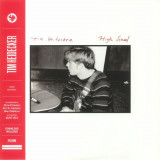
Tim Heidecker - High School

Produced by Heidecker, Drew Erickson, Eric D. Johnson and Mac DeMarco, High School sees Heidecker emerging as an increasingly playful and poignant story teller, infusing childhood tales with new gravity. In conjunction, he announces Tim Heidecker Live! Featuring Tim Heidecker and The Very Good Band, his first two-act tour of comedy and music. Since 2016, Tim Heidecker has chronicled the annals of adulthood on a series of supreme singer-songwriter albums. The crushing devastation of divorce and the existential malaise of middle-age, the minutiae of home ownership and the ritual of family vacation, child rearing and global warming: Heidecker has handled it all with humor and heart. But, there’s one pivotal lodestar of human development he has yet to mine that’s right, High School. First single “Buddy” is a composite of a few woebegone friends, which finds Heidecker reminiscing on the familiar tragedy of the adolescent stoner, manifesting the destiny of undiagnosed depression and parents who didn’t care much. The song itself is a jangly delight, but it’s hard not to mourn for “Buddy,” then re-count whatever blessings you may have. After initial and fruitful sessions with Jonathan Rado, Heidecker started recording tunes with DeMarco and Erickson, who had also worked on 2020’s collaboration with Weyes Blood, Fear of Death. At DeMarco’s studio, they added drum machines and synths and sidewinding solos to Heidecker’s big strummed chords. Johnson (Bonny Light Horseman, Fruit Bats) helped Heidecker finesse the tunes even more, making the music as rich as the feelings. Kurt Vile contributed to one song, as well. Through all those sessions, it slowly became clear: Heidecker was writing not only about the adventures and misadventures of life as a Pennsylvania teen in the early ’90s, but also how it felt to lose a juvenile sense of mystery and possibility as an adult. He was writing about high school and, really, the way it helped shape everything else. Back at Pennsylvania’s Allentown Central Catholic High School, Heidecker dreamed of making it with one of his many rock bands — Time and Other Things, Shaggy’s Beltbuckle, and (incredibly) The Pulsating Libidos. Two years shy of his graduating class’ 30th anniversary, Heidecker admits he had little of substance to say when he was 17, like all but the rarest of precocious minds. In college, though, he found the friends with whom he built his comedy career, largely apart from music and without much thought for his time back at Central Catholic. He was focused on his future. It is fitting, then, that as Heidecker has become such a delightful singer-songwriter and collaborator, he returns to the first scene of his time as a musician. Maybe he’s right — he didn’t have anything to say or sing about life back then. But across the earnest and amusing High School, he finds plenty to say about those weird and wonderful and ordinary times.

pre-order now08.07.2022

expected to be published on 08.07.2022

25,00
Famous - The Valley/England EP

Famous present their first vinyl release, a double EP comprising their lauded 2021 EP The Valley on side A, and their equally acclaimed 2019 debut England on side B. The Valley is an intense, engrossing body of work from a band firmly stepping into their own space, foregoing the easy route, whilst interrogating themselves and everything around them. References to Soundcloud rap stand side-by-side with Greek Tragician Euripedes, along with the white noise of endless Simpson’s repeats colliding with daydreams of settling down and one day owning a gilet. It’s both complex and accessible, the sound of a silver-lining appearing from a dark cloud. England presents a distinctively hyperbolic, mythic re-imagination of urban life; using theatricality and the emotional authority of art to navigate the chaos of anxiety. The music is, nonetheless, thoughtful and surprising, as shown by the six self- contained yet interconnected tracks that make the whole. Opener ‘England 2’ is a rumbling call to arms that ushers in the haywire ‘Surf’s Up!’. The heart of the record is the two-punch of tainted-pop cut ‘Forever’ and the skittish paranoia of ‘Jack’s House’. All that remains is the expansive, circling ‘2004’ before the most tender moment ‘My Crumpet’ closes the show. Famous live shows are intense brash affairs. Alternating between the pathetic showmanship of Vegas-era Elvis and the controlled experimentations of post punk, the band has built a reputation as one of the best live acts on the London underground circuit. Playing shows with Black Midi, Sports Team, Jockstrap and supporting Black Country, New Road on their full UK tour, Famous has undeniably placed itself at the centre of that new generation of English bands. 2022 sees the band playing major festival dates and venues across Europe, alongside supporting Los Bitchos on tour in France, in April.

pre-order now08.07.2022

expected to be published on 08.07.2022

23,32
Lieven Martens - Short stories - pleasant and/or rather sad

Tape


Edições CN label founder Lieven Martens (Dolphins Into The Future) joins the Dauw label with his new album Short stories - pleasant and/or rather sad. On Short stories, Martens continues his quest for unique sound collages based on recorded original work, field recordings and samples. He offers 3 pieces depicting their own narrative. But what's the narrative? Martens leaves his listener with only music and a few linguistic traces as guidelines.

(1) Romantic collection

I. Under the 4pm sun (smoke and deep green) II. Two white-tailed tropicbirds III. Waves breaking on black lava rocks IV. The distant lights of fishing boats at night

(2) Sonorities

20 memories of maximum 20 seconds – and an intermezzo.

(3) Madrigal: a Conversation in the Dark

In front of the house across my parents’ house. There are two statues. They’re bought in the local garden shop, on a budget. In their driveway strewn with gravel, they slyly talk at night.

Lieven Martens (Lieven Martens Moana, formerly Dolphins Into The Future) is a composer and observer. He makes a conceptual form of music – programme music - that travels beyond the pure description. His works are like narrative stills; encounters with objects and thoughts.
As a recording artist, the main focus lies on the music album, and the live concert. But other forms come into play too, like an operetta, music for carillon, music for a commercial, a few movie soundtracks, installation music, et al.
Since he never submitted his work for an art prize, he didn’t won any. But a few years back he received a grant from the Flemish Department of Culture.
Next to his music he writes to make an extra euro. He also writes a few emails every week too. In general, you know.
Martens runs Edições CN, a private press that is praised for its catalogue of original works by a list of internationally acclaimed artists. He also hosts an irregular radio show on We Are Various radio in Antwerp (previous programs for Lyl Radio, and Radio Centraal).

pre-order now07.07.2022

expected to be published on 07.07.2022

15,08
Corb Lund - Songs My Friends Wrote

Songs My Friends Wrote is an album I've been threatening to make for
years - It's a bunch of tracks that are my versions of a bunch of'songs my
friends wrote
I'm fortunate to count a lot of world class songwriters as good pals and I wanted
to shine a little light on some of my favorite examples of their work. In most
cases I've picked relatively obscure songs that have always spoken to me, even
though many of them won't be so familiar to people. The best part about
recording all these tunes was that they reminded me of all the people who I
haven't been able to hang out with for the past two years because of the plague
we've all been dealing with. All of these tunes bring a smile to my face and I hope
they do the same for you. - Corb Lund

pre-order now07.07.2022

expected to be published on 07.07.2022

33,57
Royal Blood - Typhoons LP

Royal Blood

Typhoons LP

12inch0190295089702
Warner UK
04.07.2022

After two UK #1 albums, 2 million album sales and an array of international acclaim, you might’ve thought you knew what to expect from Royal Blood. Those preconceptions were shattered when they released ‘Trouble’s Coming’ last summer. Hitting a melting pot of fiery rock riffs and danceable beats, they delivered something fresh, unexpected and yet entirely in tune with what they’d forged their reputation with.
The reaction was phenomenal, with highlights including 20 million streams, a premiere as Annie Mac’s Hottest Record and a run on Radio 1’s A-list and earned alternative radio support and media attention across the globe. In short, Royal Blood are primed to be bigger than ever before. That feat is set to be realised when they release their eagerly anticipated third album ‘Typhoons’ on April 30th via Warner Records.
When Mike Kerr and Ben Thatcher sat down to talk about making a new album, they knew what they wanted to achieve. It involved a conscious return to their roots, back when they had made music that was influenced by Daft Punk, Justice, and Philippe Zdar of Cassius. It also called for a similar back-to-basics approach to what had made their self-titled debut album so thrilling, visceral and original.
“We sort of stumbled on this sound, and it was immediately fun to play,” recalls Kerr. “That’s what sparked the creativity on the new album, the chasing of that feeling. It’s weird, though - if you think back to ‘Figure it Out’, it kind of contains the embryo of this album. We realised that we didn’t have to completely destroy what we’d created so far; we just had to shift it, change it. On paper, it’s a small reinvention. But when you hear it, it sounds so fresh.”

Those traits pulsate throughout the new single and title track. Kerr’s spiralling bass riff casts an hypnotic allure as it grows in intensity, while his vocals switch at will between a raw rock roar and a soulful falsetto. It’s underpinned by Thatcher’s thundering beats, his taut rhythms infused with groove-laden hi-hats.


After setting the tone with ‘Trouble’s Coming’, the album opens in breathless, take-no-prisoners style with the fierce metallic grooves of ‘Who Needs Friends’ hitting an early visceral peak. Royal Blood further reference their fresh array of influences by deploying vocodered vocals on ‘Million & One’ before dynamically switching between the biggest contrasts of their sound with ‘Limbo’. Already a fan favourite having been a regular during the duo’s 2019 shows, ‘Boilermaker’ lives up to its reputation and is more than matched by ‘Mad Visions’, which evokes a hyper-aggressive Prince. It ends with a final surprise in the shape of the stark piano ballad ‘All We Have Is Now’, a vulnerable and revealing reminder to live in the moment.

That song’s unguarded sentiments gives the album a redemptive finale. Whether directly or allusively, the album focuses on exploring the flipside of success that they’ve experienced. It comes from the realisation that success is much more complicated than it seems and that having the time to regain perspective is a precious commodity which becomes ever more elusive. The situation called for reflection and change, which Kerr addressed in Las Vegas. He downed an espresso martini and declared it to be his last drink, and soon discovered that his new-found sobriety would have a positive impact upon his creativity and life as a whole.

That new approach manifested itself in the duo’s decision to produce the majority of ‘Typhoons’ themselves. ‘Boilermaker’ was produced by Queens of the Stone Age frontman Josh Homme, the two bands having first connected when Royal Blood supported them on a huge North American tour. Meanwhile, the multiple Grammy Award winner Paul Epworth produced ‘Who Needs Friends’ and contributed additional production to ‘Trouble’s Coming’.

out of Stock

Order now and we will order the item for you at our supplier.

22,90

Last In: 3 years ago

Perry Blake - California LP 12"+7"

20th Anniversary edition pressed on Californian Sunburst vinyl with
newly designed artwork and bonus 7” featuring ‘Brown Eyes’ and the
previously unreleased ‘The Earth From Above’.
 ‘California’ was released in 2002 to massive critical acclaim and reached
a much wider audience across Europe. Features the hit singles ‘This
Life’ and ‘Ordinary Day’.
 The album features Glenn Garrett on bass, Neil Conti (David Bowie /
Prefab Sprout) on drums and Dickon Hinchcliffe (Tindersticks ) and Rick
Carter (The Sisters of Mercy) on keyboards.
 ‘California’ was mostly co-written with Italian composer Marco Sabiu,
who collaborated with and was mentored by the late, great Ennio
Morricone.
 Perry Blake, Sligo-born singer / songwriter, is one of music’s great
untapped resources. After his first three singles - taken from his debut
album - received Single Of The Week on Jo Wiley BBC Radio 1, Blake
moved to France, where he was met with critical acclaim with his next
four albums, touring Europe with Carla Bruni and writing two songs for
Francoise Hardy’s Platinum-selling album ‘Tant de belles choses’,
appearing on various TV shows in France as her special guest.
 You may very well wonder what to expect of an album with American
West Coast orientations from an Irishman who happens to be critically
acclaimed on the Continent but is largely ignored in Britain. Thankfully,
Blake lives up to his billing with apparent ease. His song writing is
evidently mature and melodic; he incorporates lush orchestral
arrangements with tender vocals; and combines pop-like hooks with a
deep sonic texture.
 ‘California’ is a thriving and absorbing collection of songs in which
orchestral arrangements strain with emotion, melodies thrive and bloom,
like The Verve at their peak, though far more fragile and balmy.
 ‘California’ is ether for the soul - a truly magnificent and touching
collection of frankly beautiful songs, which is up there with class of Bryan
Ferry, The Blue Nile and anyone else who can turn a night around.
 Blake’s glimpses of people living a state of mind is one of those great
escapes it’s very hard to get away from. His gift here is to take a
subdued, grown-up collection of songs but make them sound like they
deserve daytime radio.
 Radio - Radio 2 Jo Whiley session.

pre-order now01.07.2022

expected to be published on 01.07.2022

35,50
Otis Redding - Pain In My Heart

Soul icon Otis Redding made immeasurable contributions to the form. As a singer-

songwriter, producer, arranger and talent scout, Redding was responsible for some of the

music’s biggest and most lasting hits during the 1960s, though his death in an airplane crash

in 1967 brought his life and career to a tragically premature end. He was born Otis Redding

Junior in 1941 in the small town of Dawson, Georgia, the son of a sharecropper and preacher,

and moved to the city of Macon at the age of two, where he learned to sing at the Vineville

Baptist Church. After singing in the high school band, he performed weekly gospel songs on

radio station WIBB, winning local talent contests after being inspired by Little Richard and

Sam Cooke. Since his father became ill with tuberculosis, Redding began supporting the

family at the age of 15, working as a gas station attendant, a digger of water wells, and

occasionally by playing piano with pianist Gladys Williams at the Hillview Springs Social

Club. Then, in 1958, Redding had a repeat prize run at a talent contest held by broadcaster

Hamp Swain, bringing him first into a group called Pat T Cake and the Mighty Panthers, and

later into Little Richard’s band (during a time when Richard switched rock and roll for

gospel). Moving to Los Angeles in late 1960, debut single “She’s All Right” was issued on

the Trans World label (a subsidiary of Al Kavelin’s Lute Records), credited to The Shooters

featuring Otis; following the birth of their first child and his subsequent marriage to Zelma

Atwood, Redding recorded the popular “Shout Bamalam” for Macon’s Confederate Records

(who swiftly reissued it on the Orbit label since some radio stations objected to the original

label’s confederate flag logo, during a time of terrible racial segregation in the South).

Redding cut the movingly emotive “These Arms Of Mine” at Stax studios in Memphis in

1962, backed by Booker T and the MGs, which surfaced on the subsidiary Volt label in

October, reaching the charts some six months later (and eventually selling a reported 800,000

copies). Subsequent singles “What My Heart Needs” and “Pain In My Heart”/“Something Is

Worrying Me,” recorded in September 1963, formed the bulk of debut album, Pain In My

Heart, which was padded out by standard cover tunes of songs such as “I Need Your Lovin’,”

Ben E King’s “Stand By Me” and Little Richard’s “Lucille.” The album, which surfaced at

the start of 1964, reached the top 20 of the US R&B chart and also hit the Billboard Hot 100;

this edition has an alternate track listing that includes the Trans World debut single tracks

“She’s All Right” and “Getting’ Hip,” as well as “Mary Had A Little Lamb,” the B-side to

“That’s What My Heart Needs.” Carefully remastered, spinning at 45 rpm for enhanced qudio quality.

pre-order now30.06.2022

expected to be published on 30.06.2022

23,32
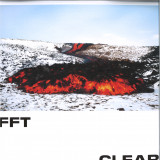
FFT - Clear LP

Fft

Clear LP

12inchNMBRS68
Numbers
27.06.2022

Numbers will release ‘Clear’, the debut album by FFT, on 24th June 2022.The result of three years of focused writing and programming by the London-based producer, ‘Clear’ is deeply psychedelic, defined by a mature sense of melody and structures crafted at a monumental scale.

Though FFT has previously released a handful of tracks under various names, it wasn’t until 2017’s ‘FFT1’ EP on theUncertainty Principle label that his production talents began to fuse into a distinct and personal style, especially evident in FFT’s‘Regional/Loss’ EP on The Trilogy Tapes in 2019, multiple releases on Bruk Records and2021’s ‘Disturb Roqe,’also released on Numbers.Through it all, FFT has mastered a complex sense of mood catalyzed by sound itself: He builds patches and presets from scratch, and feels these synths and software have their own objectives and reactions, creating a kind of compositional feedback loop.The result is an album that brings to mind a collision of electronic pioneers like Delia Derbyshire and Bernard Parmegiani, 2000’s braindance, the Max-imized wares of an OPN or Objekt and the rough rhythmatics of SND or Mika Vainio

The layering of sonic elements and intentions is starkly audible across these nine tracks.They can be seismically concussive and grandiose, but granular and fluid - echoing the Icelandic volcanic eruption that features in the artwork photography byGeorge Cowan. ‘Clear (Eight-Circuit Mix)’sets a euphoric tone immediately accelerated by the jagged sounds and vocal textures of ‘Redeemer’. ‘3 Sided’ channels hyper-urbanity from its almost entirely analogue palette, and by contrast ‘Disturb Roqe 2’is bracingly digital, gyrating in random cycles between clustered percussion, metallic splinters of audio and artificial vocal tics.

Opening side two, ‘You’ve Changed’ adheres to a more abrasive core, while ‘Heal’ and ‘Heal (Alt Mix)’evolved out of linked pieces in FFT’s live sets that grew into complete tracks in the months before Covid-19.The significant intensity of ‘Heal’ in particular was refined during strobe-heavy live performances and is the album at its most turbulent, the claustrophobia interrupted by dazzling arpeggios.The overall impact of 'Clear' is cinematic and precise, marking the arrival of an impressive electronic musician who is not new but has come into his own as a fully developed artist

out of Stock

Order now and we will order the item for you at our supplier.

20,13

Last In: 3 years ago
Matthew Stevens - Pittsburgh

He may not have known it before, but Toronto-born, New York-based
guitarist Matthew Stevens, prized for his forceful, distinctive electric
sound was an ideal candidate to make an album fully devoted to solo
acoustic guitar: the intimate, unadorned, straightforwardly titled
'Pittsburgh'
September 2020, Stevens was hunkering down in his wife's family's hometown of
Pittsburgh, while navigating his way through the crisis. He had with him a vintage
Martin 00-17, a small- body mahogany guitar. Practicing daily on the Martin, he
began generating a series of short song "starts" - ideas and sketches he thought
might lead somewhere. Then one rainy Pittsburgh day, Stevens' bike slid out from
under him and he broke his right elbow. Rather than getting derailed musically, he
became immersed in a creative process that led straight to 'Pittsburgh': a
document of those short song "starts" from the notebook, now hatched as
completed compositions. "Playing this music became a big part of my rehab,"
Stevens recalls.
As the album took shape, it became clear to Stevens that he was headed in the
direction of a wholly unaccompanied recital, with no overdubs or sound layering
of any kind. Just him and this special Martin, two Neumann U89 mics and enough
peace of mind across two separate sessions to make 'Pittsburgh' the triumph that
it is.
In addition to his extensive high-profile work with Esperanza Spalding (serving as
co- producer on 'Exposure' and '12 Little Spells'), Stevens is also a member,
songwriter and co-producer of Terri Lyne Carrington's GRAMMY-nominated Social
Science band. He has made vital contributions to groups led by Dave Douglas,
Linda May Han Oh, Christian Scott aTunde Adjuah, Ben Williams and more. With
tenor saxophonist Walter Smith III he co-leads the In Common collective. Stevens
has also amassed many credits beyond the jazz world, collaborating on
forthcoming releases by Anna B Savage, Jamila Woods, Tyler Armes
(Murdagang) and Berlin-based electronic artist Robag Wruhme.

pre-order now25.06.2022

expected to be published on 25.06.2022

28,15
Prophecy Of Doom - Acknowledge The Confusion Master

THE CULT 1990 DEBUT ALBUM OF INFLUENTIAL UK GRINDCORE FROM
PROPHECY OF DOOM - PRESENTED ON THE VINYL FORMAT WITH
COVER ARTWORK FROM THE ORIGINAL 1990 PRESSING.UK grind/death
veterans Prophecy Of Doom formed in Gloucestershire, 1988, with
bassist Martin Holt & vocalist Shrew Schroder uniting to embark upon a
journey to create something challenging & memorable to stand out in the
UK scene
After a few personnel changes whilst looking to establish a permanent recording
line-up after their 1988 demo & the 1989 EP, 'Calculated Mind Rape' (which had
brought the band to the attention of legendary DJ John Peel), the time had come
to create their debut full- length album. And so 'Acknowledge the Confusion
Master' came to be & was released in 1990 on the burgeoning Peaceville Records
& their then newly established sub- label, Deaf Records. A highly effective
concoction of blasting amid a titanic wall of raw grinding riffs & chaos propelled
Prophecy Of Doom to the forefront of the scene, also leading to two recording
sessions with John Peel & further enforcing Prophecy Of Doom's position on the
map of notable British grind acts.
As a further distinguishing factor, there was a great depth & consideration to the
themes of the album, perhaps in stark contrast to how the tracks were presented
sonically. Written by mainman/vocalist "Shrew", there with a strong philosophical
element to the lyrics, an exploration of awareness & intuition amid an era of
increasingly suppressed feelings & an urge to rise above mental restrictions.
This vinyl edition of 'Acknowledge the Confusion Master' contains cover artwork
from the 1990 release with printed inner sleeve containing lyrics & receives its
first vinyl pressing on Peaceville since that initial 1990 edition.

pre-order now25.06.2022

expected to be published on 25.06.2022

30,04
The KutiMangoes - Afrotropism LP

"The past 5 years we have taken our music all over the world: Europe, Asia, Africa besides our homeland Denmark, and even though we cannot speak with many of the people we meet, our music is a universal language that transcends borders. The meetings we have had (and continue to have) all over inspire us to create new music. But of course we are the composers of the music, so this is our representation of those meetings.

Our 3rd album is called AFROTROPISM. Tropism is a biological phenomenon that indicates growth of a plant in response to the environment; so when you see a plant turning for the sunlight, this is tropism. In other words, this is not so much about the plant's roots but more about how it reacts when it touches the air, feels sunlight or rain - in other words the outside world. So AFROTROPISM refers to the fact that we are drawn towards the African traditions, but we are "growing" our own music.

On our first two albums we have recorded extensively with African musicians, and AFROTROPISM is centered around The KutiMangoes (TKM) as a band. We are developing our artistic direction by going more in depth with how we can mix our inspirations with our own musical heritage. Our musical mission is (and has always been) to mix cultures and create our own sound.

With our background in jazz music, TKM counts virtuoso instrumentalists with a heartfelt intent and sound innovators with our horns, effect pedals, synthesizers, drums and percussion from all over the world. AFROTROPISM is a further and deeper development of our trademark bold sound that experiments with synthesizers, soundscapes and a bit of electronic effects without losing it's focus on groove, melody, atmosphere and musicianship."

The KutiMangoes, July 2019


About each track:

STRETCH TOWARDS THE SUN
This track opens up with a synthesizer groove that is inspired by the polyrhythmic grooves played by the balafon (a predecessor of the piano) from West Africa. Our rolling sequence could not be played on the balafon because of the key changes, but the basic idea comes from that instrument. Quick and light, we wanted to write a song where you can feel the sun coming out and feel the energy it's rays give. The combination of the programmed groove, the horn-arrangement, the huge percussion section and the live instruments makes for a sound that we have not heard before, and it illustrates what this album is all about (and what the track's title refers to): that we stretch towards the things that give us energy – and that although our roots are in Denmark, when we encounter a musical tradition as rich as in West Africa, it changes us and our music.

A SNAKE IS JUST A STRING
The first time we saw Mali-bluesman extraordinaire Vieux Farka Touré on stage was just after we had played at a huge festival in Burkina Faso, and we almost literally caught on fire. Their groove was so strong and insistent that we were mesmerized, and it inspired us to come up with the opening guitar part of this song. Basically a bluesy tune with some unusual chord changes and a crazy synthesizer solo by Johannes Buhl Andresen reminiscent of that fuzzy guitar-sound we love so much in the Mali blues. The title is an homage to the Nigerian writer Chinua Acheba, who in his masterpiece novel "Things Fall Apart" tells that in the village during the night, to ward off the fear of darkness, people would call dangerous animals by a different name: don't be afraid, a snake is just a string.

KEEP YOU SAFE
It is a basic human necessity to have a place where you can feel safe. But there are far too many people in our world that fear for their safety, their livelihood, their children, their relatives – and this is surely not a feeling that helps us to flourish as humans. With this song we are saying that we all need to make it a priority to help our fellow humans to feel safe. And of course, if our song can offer a feeling of safety and comfort for a short time to those who listen, we are truly thankful.

MONEY IS THE CURSE
This track is directly inspired by Fela Kuti's ability to create music that is both physical and political. Dance music with a serious message about our times. For the solo part we wanted a more melancholy, pensive feel (than the full-on baritone-trombone melody) and also wanted to experiment with some choppy, stuttering effects to make the horns sound desperate. Money is the curse because it can become the objective of our life; money is the curse because it changes the relationships we have with our fellow humans. Money is the curse.

THORNS TO FRUIT
This melody is inspired by the scales and developments of a traditional Bambara folk-song. We love the way these melodies constantly evolve with small developments and changes. We felt like an accompaniment that is really dry, sparse and earthy would fit well and then made a contrasting solo part. As a group we are interested in how to develop our improvisations together and create sonic landscapes that evoke a distinctive atmosphere – so here, we have no soloist, but a collection of synthesizer parts, saxophone lines and guitar-sounds that together create a dreamy and lush ambience.

SAND TO SOIL
We started out with a short ngoni riff played by our good friend and master musician Aboubacar Konaté. We then sampled it, built soundscapes and our own both meditative and pumping groove around it. We created a melody with both melancholy and joy, with afterthought and impulse and then the brilliant Aske Drasbæk added an emotive and blistering saxophone solo. The title refers to the contrasts in our humanism. As part of our human nature, we have a dark side that drives us (and each other) towards destruction – making the fertile soil into barren sand. The title is an encouragement to emphasize the opposite movement in our nature: to create life and help it flourish. We keep ourselves human by insisting that we must never forget this side of our nature no matter how tough, tiresome or trying it might be. Let's keep our focus on the light, the warmth, the positive energy – that can turn the cold stone into fertile ground.

out of Stock

Order now and we will order the item for you at our supplier.

16,43

Last In: 3 years ago
Ferkat Al Ard - Oghneya LP

Ferkat Al Ard

Oghneya LP

12inchHABIBI019-1
HABIBI FUNK RECORDS
22.06.2022

An absolutely legendary album from Lebanon by Issam Hajali’s group Ferkat Al Ard, “Oghneya” stands out as one of the great musical gems of the Arab world. A groundbreaking release from 1978 that represents the meeting point of Arab, jazz, folk and Brazilian styles with the talent of Ziad Rahbani, who did the albums arrangements. Filled with a variety of sounds and genres, from Baroque Pop to Psych-Folk to flashes of Bossa Nova, Tropicalia and MPB, “Oghneya” is like if Arthur Verocai took a trip to Beirut in the 70’s to record an album.

In 2015 we heard Ferkat Al Ard’s music for the first time, a Lebanese trio compromised of Issam Hajali, Toufic Farroukh and Elia Saba. It was a stunningly unique release that blends traditional Arabic elements, jazz and Brazilian rhythms hand in hand with poetic-yet-politically engaged lyrics. The band was active in the left-wing movement of Lebanon of the time and they communicated their political ideas candidly through their songwriting.

In our mind the idea was to see whether Issam was interested in re-releasing “Oghneya.” He was not opposed to it, but also made it clear that it was not his priority for a first project. He suggested we start with his first album, before Ferkat Al Ard was formed, “Mouasalat Ila Jacad El Ard,” which was recorded in 1977 in Paris together with his friend Roger Fakhr (whose work we have been privileged to re-release in the meantime as well.) “Mouasalat Ila Jacad El Ard” is melancholic, stripped-down, guitar-based folk intertwined with jazz-fused breaks, and the unique sound of the santour glistens through. While the music is very accessible, some song structures are rather atypical, neglecting common patterns of verse, hook, verse, hook. The lyrics mostly trace back to the poetic work of Palestinian author Samih El Kasem, with one song also written by Issam, who composed the music for the whole album.

We re-released Issam’s “Mouasalat Ila Jacad El Ard” in 2019 to a great reception, with positive reviews all over the place and an ongoing appreciation for the album. This meant it was time for us to undertake an “Oghneya” re-release again!

If you compare “Mouasalat Ila Jacad El Ard” and “Oghneya,” one apparent distinction is the strong Brazilian influence in the music. Issam Hajali explained that you can already hear traces of this influence on his debut, but it’s “Oghneya” where this musical relationship really peaks. Lebanon and Brazil have had a strong connection for nearly a century due to the continuous flow of immigrants from one country to the other. Today, Brazil has the largest Lebanese diaspora in the world, the “Brasilibanês”. The migratory route was not a one-way street, however, and some Lebanese returned to their home country, taking recordings of the music they learned to love in Brazil with them. They were followed by Brazilian musicians who visited primarily Beirut during the 1960’s and the first half of the 1970’s, just like many other musicians from around the world. In these years between the independence and the beginning of the civil war, Beirut became even more of a cultural center and regional hub than it already was.

Bossa Nova, at that time, was one of the defining sounds of Brazilian popular music. Issam Hajali remembers hearing it at a bar in Beirut’s Hamra district in 1974, which hosted musicians from Brazil playing the occasional gig. When Issam had returned from Paris in 1976 he got to know Ziad Rahbani, son of Fairouz, who had a shared passion with Issam for a lot of things, among them Brazilian music. Issam showed him some of the tracks he was working on, and Ziad agreed to help with arranging. The music that evolved from this cooperation between Ferkat Al Ard and Ziad Rahbani’s arrangement is, to put it lightly, outstanding. Issam’s singing is embedded into the uniquely beautiful string arrangements backed by the band’s poignant, swinging groove. The lyrics of the songs on “Oghneya” are based on poems by Mahmoud Darwish, Samih Al Qasem and Tawfiq Ziad, three pillars of Palestinian poetry within the last century, and their influence on “Oghneya” was itself a strong political statement during the Lebanese war.

“Oghneya” was eventually released in 1978 by the band themselves on cassette tapes. Finding a blank tape that fit the playing time proved to be impossible during the war so they needed to open up the case of each cassette to physically cut down the tape and customize it to the playing time. The album was well received, though some cultural critics deemed it too “occidental” in its sound. While the cassette was circulating, Ziad Rahbani started a label called Zida, together with Khatchik Mardirian. They decided to help the band with a re-release on vinyl in 1979, a year after “Oghneya” was originally released on cassette.

Sadly, there are two tracks from the original release of “Oghneya” that did not make it onto the reissue. “Ghfyara Ghaza” was replaced by the song “Juma’a 6 Hziran.” while “Huloul” was taken off without a replacement. This happened as a precondition from the band for this reissue to happen. We would have loved to include all tracks, but the decision ranged between having either a reissue like the one we put out or no reissue at all. Thus, an easy choice for us.

As always both vinyl and CD come with an extensive booklet with an interview with Issam as well as unseen photos from the recording sessions.

out of Stock

Order now and we will order the item for you at our supplier.

22,65

Last In: 3 years ago
Ron Trent Presents WARM - What Do The Stars Say To You LP

In 1990 Ronald Lee Trent Jr. was the teenage creator of Altered States – a raw, futuristic techno-not-techno anthem, which in retrospect was something of a stylistic anomaly for the young artist. Across subsequent years, with time spent in Chicago, New York and Detroit, came the development of his signature sound, and renown as a world class purveyor of deep, soul infused house/garage. This story has already been told, and on casual inspection, the well-worn platitude ‘house music legend’ is an old shoe that still fits. However, in fact, he’s actually so much more, and has been for quite a while. A genuine musician, songwriter, and ‘producer’ in the proper, old-school sense, the artist today has more in common with Quincy Jones than he does your average journeyman DJ track-hack.

To those in the know, these broader skills haven’t gone unnoticed, which is why on the highly collaborative, career-topping new LP ‘What Do The Stars Say To You’, it took little persuasion to recruit serious star power. Brazilian royalty Ivan Conti and Alex Malheriros from Azymuth, violin maestro Jean Luc Ponty, ambient hero Gigi Masin, hype band Khruangbin and more performed, whilst NY cornerstone François K provided mastering duties. At various points Ron himself played drums, percussion, keys, synths, piano, guitar and electronics.

Harking back to the 70s and 80s boom in adventurous, luxurious albums, WDTSSTY is a love letter to the longplayer, where rich musicality and a liquid smooth, silky flow make seemingly odd genre bedfellows acquiesce harmoniously. Each song its own high-fidelity odyssey, Trent incorporated a broad range of live instruments and electronics into a sophisticated, euphonic whole. Described by him as being “designed for harmonising with spirit, urban life and nature”, this is aural soul food, gently easing you into balmy nights, where everything is alright.

Originally wanting to be an architect, Trent’s views his approach to collaboration and music in general as having the same principles. A firm believer in the nourishing qualities of sound, he sees direct parallels between the two disciplines, being as the purpose of good architecture is to improve quality of life. “With WARM, through sound design, I built frameworks for the musicians, who furnished and occupied these structures beautifully, which was a big compliment for me”, he comments.

The conditions required for a good collab are more than simply structural though, as Trent expounds, “I’m a huge fan of everyone on the record, especially Jean Luc and Azymuth, who’re part of my DNA. Each track was made with that guest in mind – for example, when I started writing ‘Sphere’, I immediately thought ‘this IS Ponty’. I played the keys in his style, and did a guide violin solo using a synth, which he then re-did, amazingly. ‘Cool Water’ is based around Azymuth themes, so when I sent it to Ivan, he could immediately see himself in the piece; He got what I was going for straight away. For ‘Melt Into You’ I hit up Alex on Instagram, sent him the track, he liked it, and within 24 hours he’d sent back six different bass passes!”
“Conversely, Admira began with a sketch sent by Gigi and became something combining Jon Hassell-esque chords and the feel of ‘Aquamarine’ by Carlos Santana, which links back to Masin’s recurrent nautical theme”, he adds.

With community, history and the need for racial equality never far from Ron’s mind, ‘Flos Potentia’ translates from Spanish as flower power, but rather than promoting some hippy idyll, instead it refers to plants which drove the slave trade: tobacco, sugar and cotton. Joined by Khruangbin, together they propel Dinosaur L, Hi-Tension and afrobeat into an ethereal, clear-skyed stratosphere.
Aside from these esteemed guests, other key influences cited by Trent include ‘Gigolos Get Lonely Too’ by Prince, ‘Beyond’ by Herb Alpert, David Mancuso, Jan Hammer, Tangerine Dream, The Cars, Trevor Horn, Alan Parsons Project and pre-Kraftwerk incarnation Organization. A multitude of others are audible too, including George Bension, Vangelis, Loose Ends, Maze, Flora Purim, Weather Report, Atmosphere, Grace Jones, James Mason and Brass Construction.

On the subject of influences, although opposed to the fences erected by genre tags, to understand where Ron is coming from, and where he’s at, it’s important to acknowledge just how big the palette is from which he paints. Traversing jazz funk, quiet storm, sophisti-pop, new age, new wave, kosmische, Balearic, samba, afrobeat, Latin rock, soft rock and yacht rock, his deeply entrenched digger’s knowledge pays off in dividends.

out of Stock

Order now and we will order the item for you at our supplier.

24,79

Last In: 3 months ago
Items per Page:
N/ABPM
Vinyl