Collaboration between Kilbey (The Church) and Kearns (Cactus World News), compiling before unfinished recordigs from late 1990s up to 2016. Initially issued as a 500 run CD available by mail order only in 2016, this is the very first time being released through global distribution, packaged in deluxe gatefold sleeve and containing two unreleased bonus tracks. Kilbey's The Church have returned to a high-profile status with both current albums 'The Hypnogogue' & "Ezra..." being critically acclaimed globally. The two new bonus songs are tracks 11 and 12, which were recorded in 2022. Kilbey and Kearns dive deep into atmospheric soundscapes and vocals and mysterious, yet revealing lyrics as Speed of the Stars. Easy Action will be issuing Steve Kilbey's solo and collaboration albums over the coming years.
Поиск:two words
Все
ohn Fahey’s Takoma label is best known for pushing the envelope when it comes to acoustic guitar playing, but in 1967 it released a record that has become one of the true cult classics of the ‘60s free jazz movement. Charles Martin Simon was an aspiring writer whose artist wife died in 1965. When he tried to pick up the torch and become an artist using her art supplies, he was, in his words, “reduced to nothing,” and thus created an alter ego or “psyche fragmentation,” Charlie Nothing. Under that moniker he became most famous for creating “dingulators,” working guitar sculptures made from parts of American cars; in 1967, though, he recorded The Psychedelic Saxophone of Charlie Nothing/In Eternity with Brother Frederic, an album consisting of two separate saxophone improvisations accompanied only with gong, tabla, and ukelele. Its cover adorned by Nothing’s own hand-drawn art, this record has since become not only something of a “secret handshake” among free jazz fans, but also a classic of outsider art, fitting right next to your Moondog records if not in sound than in spirit. For its first ever reissue in any format, we’ve gone back to the original tapes to present an all-analog release of The Psychedelic Saxophone of Charlie Nothing/In Eternity with Brother Frederic on black vinyl with the original art intact, offering an unfiltered experience of this man’s cracked genius. A memorable look ‘n’ listen to say the least.
Emerald vinyl LP is for Indies only. Cassette is also for indies only. San Francisco Bay Area-based metal desconstructionists’ latest is both inspired by the loss of a bandmate and the legacy of Oakland A’s legend Vida Blue. Time is a slippery fish. Loss has inspired Mamaleek’s latest full-length album, titled Vida Blue. This marks the San Francisco Bay Area metal deconstructionists’ eighth album and their third as a full lineup. Tragedy struck in March of 2023 when the band lost a longtime friend and member, keyboardist Eric Livingston, leaving the group, which began as a duo of two brothers and later expanded to a five-piece, now with only four members. Despite this profound loss, Mamaleek persevered, performing as a quartet at various festivals, including the 2023 edition of Tilburg. The band returned to the studio to create new material that appropriately reflects their journey through loss and honors their fallen comrade. The resulting album draws inspiration from the legacy of Oakland A’s baseball legend Vida Blue, whose former team coincidentally announced its relocation to Las Vegas that same year. The band members themselves describe this poignant chapter in their own words: “Time is a slippery fish. Maybe only someone like Vida could grasp it. Although he’s left time behind, his image and that lefty heat remain in the memories of many. Eventually they’ll be forgotten, and hopefully replaced with even more exultant ones. This musical recording is a reflection on loss and its acceptance. We explore several examples for each song, including the loss of pride, of money, of glory, of country, of sanity, of a favorite sports team, of significant others, and, every day, one’s self. It also explores various associated moods fear, panic, reverence, stoicism, and steadfastness—to arrive at a resolution: Loss is only a test, the glue that holds and erodes each memory, the connection that binds and loosens us all, pitch by pitch, inning by inning. This is your celebration.” Vida Blue is a person, moment, and memory, together the crystallization of apocalypse: “unveiling,” “disclosure.”
Resonance is one of the most powerful forces this world has,
simply because there is no way to stop it. A drop of
condensed water separates itself from the concrete ceiling.
Propelled only by its own weight, it plummets down towards
a cacophony of naked bodies and §ailing arms to shatter on
a the forehead of an ecstatic dancer. And while all this is
happening, a voice resonates through the entire room,
making the walls shake and the crowd lose themselves even
further : “Move Your Body, Move Your Soul”. Narciss emerges
from a grimey basement in Berlin to bring us two heavy
utility dance§oor cuts on Actions Speak Louder Than Words,
his ¦rst Solo EP on Seelen. The title track is truly something
to behold. With a breakneck tempo, hard hitting percussions
and a legendary house vocal, it wields an absolutely
hypnotizing power that, before you know it, will make
everyone in attendance grind and juke till the early morning
hours. There is a palpapable vibe of mid 90s Detroit-Techno
but still it manages to cut out an identity for its own, with
razor sharp sound-design and a very uplifting attitude for its
genre. And while the tracks arrangement and sound-design is
very minimal, it is on Brennpunkt that Narciss really §exes
his trademark way of building tension with remarkably few
elements. Everything here is stripped down to its most
functional core. The synth-lead is simple yet menacing, the
kick-drum hits like a boxer, and you can be pretty sure that
the hihats will leave burns if you get too close to the record.
As is custom on this label, the B-side is dedicated to thereconstructive efforts of friends or family. This time the
mastermind of Manhigh and Grounded Theory, Mr. Henning
Baer, and Seelen’s very own Shaleen have both let their
actions speak. Henning Baer has taken on the title track in
his Remix and has transformed it into a true vintage electro
cut. A distorted synth and pad add heavy grit to the original’s
vocal, and the warehouse sized kickdrum will knock anyone
unprepared off their feet. Meanwhile Shaleen’s reinterpretation of Brennpunkt strips it down even further,
swirling the original’s elements into a groovy maelstrom.
This version rumbles, clicks and sneers, with sampled voices
from a Shakespeare play giving the whole ordeal a truly
macabre feeling. This is a tool for only the most darkest of
warehouses when the night is at its peak. So now, to
summarize this record : it is a call to action. And because of
this, it continues to resonate, even when the last track has
been played. And a resonance can never be stopped.
First reissue since its original release in 2014. Features by Sean Price, Guilty Simpson, Blu with production from DJ Premier, Illmind, Black Milk, Oh No & more.
The collaboration album from Brooklyn MCs Skyzoo and Torae is available once again after its original debut in 2014.
For years, fans of both Skyzoo and Torae asked the two to collaborate on a full-length LP, following the multiple singles they released together over the years. Classics such as the DJ Premier-produced "Get It Done" and "Click," and the !llmind-produced "Barrel Brothers" off Skyzoo's 2010 "Live from the Tape Deck" have been highly anticipated by their followers since 2006. The idea behind "Barrel Brothers" is what the people have asked for and come to know: the two wordsmiths for pure lyricism.
Skyzoo, known for his picturesque storytelling and jazz/orchestral background, and Torae, known for his gritty Coney Island depictions of life with a vintage yet modern lyrical approach, have briefly put their normal fortes to the side and crafted this album with one game plan in mind: lyrical exercise over hard New York City soundscapes. The current resurgence of NYC hip hop is the perfect grounds for two of its premier flag holders to continue doing what they never stopped doing in the first place: representing the city.
Pleasure Planet’s kaleidoscopic debut album has been a long time coming, but good things come to those who wait. Developed over years of late-night studio improvisations, ‘Pleasure Planet’ is an affectionate and colorful patchwork of the New York City-based trio’s knotted influences that’s suspended between the rave and the chill-out room, weaving glistening pads and chunky basslines into vocal earworms and warm, saturated rhythmic cycles. Bandmates Andrew Potter, Kim Ann Foxman and Brian Hersey enter into a lysergic dialog with their discrete personal musical histories, drawing inspiration from vintage EBM, ambient music and heady early ’90s West Coast rave sounds and launching these classic elements into a transcendent new sonic universe.
Celebrated DJ and producer Foxman was a lead singer of Hercules and Love Affair when she first ran into DC rave veteran Potter, and the two rapidly realized their musical interests overlapped. So when Potter was recording with his studiomate Hersey, a NYC underground club scene mainstay, and they needed to bring in a vocalist, the choice was simple. Working together was a refreshing, freeing experience for the three seasoned artists, and the more they experimented, the closer they became; Foxman ended up moving into the studio, and Pleasure Planet was manifested into existence. “We’re like family,” says Potter. “We’re always on the same page – we couldn’t make this music solo.”
For Foxman, the open-ended jam sessions provided her with a chance to try something new, a few steps from the dancefloor-forward DJ tracks she’s best known for producing. And as the trio pooled their adolescent rave memories, reflecting on them with more mature ears, they began to develop the signature sound that was first heard on the Throne Of Blood-released ‘Animals’ 12″. Pleasure Planet aren’t trying to re-capture the past, but suggest a poetic contemplation that layers their recollections and musical obsessions into a hypnotic sci-fi dream. Harnessing a self-described “Aladdin’s cave” of analog and digital gear that help galvanize the timeline, they bridge the gap between avant-pop and icy bleep techno, curving suggestive words through lattices of tightly-engineered electronics.
On ‘Endless’, Foxman’s voice is echoed into a glistening haze that hovers around ethereal pads and tense, electroid pulses. Slow-moving and evocative, it’s a track that capture the open endedness of post-rave euphoria, touching the afterparty but moving far beyond the material world. She’s more recognizable on ‘Alien’, the album’s most upfront track, singing in a glassy, upper-register coo over urgent bass bumps, taut guitars and florid electronic atmospheres. “Are you an alien, or are you an angel?” she asks, fractalizing the borders between genres. And the band’s sense of cosmic togetherness bubbles to the surface on ‘Saved by the Bells’, a meditative after-hours experiment that diminishes the pulsing beats for a moment to bring out a spectrum of interconnected, serpentine melodies.
Modular bleeps and echoing percussion anchor the swooning ‘Planet Love’, one of Pleasure Planet’s most recent compositions and one of the album’s most outwardly psychedelic cuts, while the urgent and anthemic ‘Go With Madness’ steps back towards the main stage, evaporating Foxman’s memorable calls into a thumping procession of analog drums and squelchy, acidic bass tweaks. But they save the best for last, tugging at the heartstrings with ‘Remember (In Dreams)’, a giddy spiral of blipping synth arpeggios and haunting, reverberated chorals. It’s the perfect way to conclude an album that cryptically gestures towards the vulnerability of friendship, celebrating the shared experiences that result in some of the most meaningful memories of all.
"Sun Racket" is the brand new album from legendary Boston trio Throwing Muses, consisting of Kristin Hersh, David Narcizo and Bernard Georges. The follow up to 2013's 'Purgatory/Paradise' is an outpouring of modal guitars, reverbed shapes, echoey drums and driving bass set behind Kristen Hersh's well-thumbed notebook of storylines. A ten-song opus of suitably wrought tales set against a wall of sound that's at once calm and ethereal before building into glorious cacophonous crescendos.
When Throwing Muses wrote their last album, they were shattered. Pieces were coming and going, elements repeating and charging the whole. "It sounded beautiful jumping around like that". Two-minute songs reappearing as twisted instrumentals or another song's bridge.
They mimicked the effect live which kept them on their toes. Whatever was happening was already over in other words. 'Sun Racket' is the opposite. It refused to do anything but sit still. It says, "sit here and deal". "All it asked of us was to comingle two completely disparate sonic vocabularies: one heavy noise, the other delicate music box.
Turns out we didn't have to do much. Sun Racket knew what it was doing and pushed us aside, which is always best. After thirty years of playing together, we trust each other implicitly but we trust the music more" - Kristin Hersh And so, they continue. Business unusual.
"A ground-breaking band who changed the face of alternative music rather than follow the rule book." MXDWN "Pioneers of the 80'/early 90's college rock sound" Pitchfork "One of America's finest guitar bands" - The Quietus.
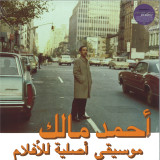
Habibi Funk is thrilled to share a second collection of deep grooves and unreleased songs from Algeria's Ahmed Malek, often compared to Italian heavyweight Ennio Morricone. Malek’s music effortlessly switches between thematic jazz, funk, reggae and Algerian folk – creating indelible soundscapes that intersect the musical innovations made in African jazz by Mulatu Astatke, Bembeya Jazz National along with some of Europe’s finest experimental composers like Piero Piccioni and Janko Nilovic. “Musique Originale de Films, Volume Deux” is out June 28th, 2024 via Habibi Funk.
Whenever an interview asks about a “memorable moment” in Habibi Funk label history, one we always reference is how we got in touch Ahmed Malek’s (22K Spotify Followers, 285K Spotify Monthly Listeners) music and subsequently his family. It all started with us coming across Ahmed Malek’s music on YouTube in 2012. We were mesmerized by how effortlessly the music would switch between jazz, funk and Algerian folk while counterweighting it with an undertone of melancholia. Musical perception is different for every person, but there is a chance that his music will touch you in one way or another. At the time, we had just started the Habibi Funk label and we felt Ahmed’s music might be a good fit for the sound we were trying to highlight. Fast forward three years: we had become captivated with the idea of reissuing some of Ahmed Malek’s music. We knew some people had tried to locate his family but, but with no success. In the end it was an incredible amount of luck that made it possible for you to read these words and listen to Ahmed’s music. We were on a DJ gig in Beirut playing old Arabic records and we mentioned our passion for Ahmed Malek’s music to a friend. She said she knew one person in Algier, and as much as it would be a shot in the dark, she could ask her if she had an idea of how to find Malek’s family. Two weeks went by before we heard back, and what we got was incredibly good news - her Algerian friend was the neighbor of Ahmed Malek’s daughter! We’re not spiritual people, but it felt like the universe wanted to see the release happen. We started to speak with Henya, Ahmed Malek’s daughter and she was more than happy with our idea. She assured us that her father would have loved the plan as well. She provided us with tons of awesome material, from great photos, to unseen video footage and unreleased tracks. Eventually we visited Henya in Algeria and we licensed some of her father’s music, first for one (Habibi 003), then for another (Habibi 005), then we eventually organized an exhibition in June/July 2019 – Planète Malek – Une Rétrospective – at the Musée Public National D’Art Moderne & Contemporain in Algiers, focusing on Ahmed Malek’s artistic life. We also produced a small movie about him that our friend Paloma Colombe shot and directed. “Musique Originale de Films, Volume Deux” is a deep collection of unreleased songs and stemmed grooves from the Algerian master, from jazz, funk, psych to reggae rhythms and Latin flavors, all under the sonic umbrella of “Planète Malek;” and to quote the maestro, “I didn’t choose music, music chose me.” Lead single is the subtlety funky “Thème Rythme Léger,” out May 3rd along with LP Pre-Order (coincided with Bandcamp Friday for a larger impact) a delicate sonic dance between flute, piano and Spanish guitar with a Bossainfluenced groove. The steady, swingin’ drum groove is cloudlike - definitely toe-tapping friendly so just grab a partner to feel the Rhythme Léger. Second single out May 17th is the reggae-infused “L’Empire Des Rêves” – a sultry sax melody weaves through a prismatic rocksteady thematic groove. 3rd and final single “Thème Djalti feat. Aïda Guéchoud” – is a true Western-inspired ode to his Italian counterpart Ennio Morricone. “Thème Djalti” features the haunting vocals of Aïda Guéchoud, and combines elements of baroque and Bossa-jazz in a timelessly thematic way that seems grandiose yet remains uniquely personal to your ears. Swelling strings, trumpet, fem vox, flute, and plucked guitar expertly arranged, feels like you’re riding a horse into the sunset. Focus track “La La La” is fiery afro-arab-funk of the highest order! Put on your dancing shoes as Ahmed cuts the rug and gets us grooving along. Sonically the cut sounds like if Ahmed ran into The JB’s and Fela Kuti at a Cymande concert. Driving guitar and organ solos vie over pulsating bass riffs and afro-funk drumming that’ll have you out on the dance floor in no time. As always, both vinyl and CD come with an extensive booklet featuring background and interviews with Ahmed compiled through found newspaper clippings and newsreels, also including unseen photos, scans and more. “Ahmed Malek: Musique Originale de Films, Volume Deux” will be out everywhere June 28th.
- A2: Over Again
- A3: Watching As I Fall
- A4: Nothing Makes Sense Anymore
- B1: About You (Feat. Blackbear)
- B2: Brooding (Instrumental)
- B3: Promises I Can't Keep
- B4: Crossing A Line
- C1: Hold It Together
- C2: Ghosts
- C3: Make It Up As I Go (Feat. K.flay)
- C4: Lift Off (Feat. Chino Moreno And Machine Gun Kelly)
- D1: I.o.u
- D2: Running From My Shadow (Feat. Grandson)
- D3: World's On Fire
- D4: Can't Hear You Now
- D5: Prove You Wrong
- D6: What The Words Meant
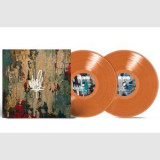
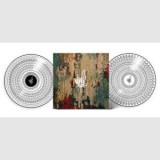
Post Traumatic is the deeply personal solo album by Linkin Park singer Mike Shinoda, released in the months months after the death of Linkin Park singer Chester Bennington was recorded. Originally released in June 2018, the 16-track album included the 3 songs from the Post Traumatic EP released released earlier this year, as well as the singles "Crossing A Line" and "Make It Up As I Go". This 18-track deluxe vinyl re-release of Post Traumatic includes two bonus songs: "Prove You Wrong" and "What The Words Meant"; tracks that were originally released as a limited edition 10" single and added to the digital album. Despite the title, Post Traumatic - which features collaborations with K.Flay, blackbear, Machine Gun Kelly, Deftones, Chino Moreno and grandson - is an album about healing. healing. The songs deal with Shinoda's experiences with loss and yet, thanks to their honesty and universally applicable thanks to their honesty and heart. universally applicable.
a a1 - Place To Start [Mike Shinoda]
[b] a2 - Over Again [Mike Shinoda]
[c] a3 - Watching As I Fall [Mike Shinoda]
[d] a4 - Nothing Makes Sense Anymore [Mike Shinoda]
[e] b1 - About You (feat. blackbear) [Mike Shinoda]
[f] b2 - Brooding (Instrumental) [Mike Shinoda]
[g] b3 - Promises I Can't Keep [Mike Shinoda]
[h] b4 - Crossing A Line [Mike Shinoda]
[i] c1 - Hold It Together [Mike Shinoda]
[j] c2 - Ghosts [Mike Shinoda]
[k] c3 - Make It Up As I Go (feat. K.Flay) [Mike Shinoda]
[l] c4 - Lift Off (feat. Chino Moreno and Machine Gun Kelly) [Mike Shinoda]
[m] d1 - I.O.U. [Mike Shinoda]
[n] d2 - Running From My Shadow (feat. grandson) [Mike Shinoda]
[o] d3 - World's On Fire [Mike Shinoda]
[p] d4 - Can't Hear You Now [Mike Shinoda]
[q] d5 - Prove You Wrong [Mike Shinoda]
[r] d6 - What The Words Meant [Mike Shinoda]
- A2: Over Again
- A3: Watching As I Fall
- A4: Nothing Makes Sense Anymore
- B1: About You (Feat. Blackbear)
- B2: Brooding (Instrumental)
- B3: Promises I Can't Keep
- B4: Crossing A Line
- C1: Hold It Together
- C2: Ghosts
- C3: Make It Up As I Go (Feat. K.flay)
- C4: Lift Off (Feat. Chino Moreno And Machine Gun Kelly)
- D1: I.o.u
- D2: Running From My Shadow (Feat. Grandson)
- D3: World's On Fire
- D4: Can't Hear You Now
- D5: Prove You Wrong
- D6: What The Words Meant
Post Traumatic is the deeply personal solo album by Linkin Park singer Mike Shinoda, released in the months months after the death of Linkin Park singer Chester Bennington was recorded. Originally released in June 2018, the 16-track album included the 3 songs from the Post Traumatic EP released released earlier this year, as well as the singles "Crossing A Line" and "Make It Up As I Go". This 18-track deluxe vinyl re-release of Post Traumatic includes two bonus songs: "Prove You Wrong" and "What The Words Meant"; tracks that were originally released as a limited edition 10" single and added to the digital album. Despite the title, Post Traumatic - which features collaborations with K.Flay, blackbear, Machine Gun Kelly, Deftones, Chino Moreno and grandson - is an album about healing. healing. The songs deal with Shinoda's experiences with loss and yet, thanks to their honesty and universally applicable thanks to their honesty and heart. universally applicable.
a a1 - Place To Start Mike Shinoda
[b] a2 - Over Again [Mike Shinoda]
[c] a3 - Watching As I Fall [Mike Shinoda]
[d] a4 - Nothing Makes Sense Anymore [Mike Shinoda]
[e] b1 - About You (feat. blackbear) [Mike Shinoda]
[f] b2 - Brooding (Instrumental) [Mike Shinoda]
[g] b3 - Promises I Can't Keep [Mike Shinoda]
[h] b4 - Crossing A Line [Mike Shinoda]
[i] c1 - Hold It Together [Mike Shinoda]
[j] c2 - Ghosts [Mike Shinoda]
[k] c3 - Make It Up As I Go (feat. K.Flay) [Mike Shinoda]
[l] c4 - Lift Off (feat. Chino Moreno and Machine Gun Kelly) [Mike Shinoda]
[m] d1 - I.O.U. [Mike Shinoda]
[n] d2 - Running From My Shadow (feat. grandson) [Mike Shinoda]
[o] d3 - World's On Fire [Mike Shinoda]
[p] d4 - Can't Hear You Now [Mike Shinoda]
[q] d5 - Prove You Wrong [Mike Shinoda]
[r] d6 - What The Words Meant [Mike Shinoda]
- A2: Over Again
- A3: Watching As I Fall
- A4: Nothing Makes Sense Anymore
- B1: About You (Feat. Blackbear)
- B2: Brooding (Instrumental)
- B3: Promises I Can't Keep
- B4: Crossing A Line
- C1: Hold It Together
- C2: Ghosts
- C3: Make It Up As I Go (Feat. K.flay)
- C4: Lift Off (Feat. Chino Moreno And Machine Gun Kelly)
- D1: I.o.u
- D2: Running From My Shadow (Feat. Grandson)
- D3: World's On Fire
- D4: Can't Hear You Now
- D5: Prove You Wrong
- D6: What The Words Meant
Post Traumatic is the deeply personal solo album by Linkin Park singer Mike Shinoda, released in the months months after the death of Linkin Park singer Chester Bennington was recorded. Originally released in June 2018, the 16-track album included the 3 songs from the Post Traumatic EP released released earlier this year, as well as the singles "Crossing A Line" and "Make It Up As I Go". This 18-track deluxe vinyl re-release of Post Traumatic includes two bonus songs: "Prove You Wrong" and "What The Words Meant"; tracks that were originally released as a limited edition 10" single and added to the digital album. Despite the title, Post Traumatic - which features collaborations with K.Flay, blackbear, Machine Gun Kelly, Deftones, Chino Moreno and grandson - is an album about healing. healing. The songs deal with Shinoda's experiences with loss and yet, thanks to their honesty and universally applicable thanks to their honesty and heart. universally applicable.
Two years after the release of the Polarius EP Inner Voices Of A Clown, Danny Wolfers returns to Altered Circuits, this time under his best-known alias Legowelt, for Ruins Of Cracktopolis: a collection of "hymns to survive the dystopian circus of today's techno scene" in the artist's own words. On Do You Know Who You Never Be, a short staccato lead and dark chords revolve around a monolithic kick drum pattern that takes care of the cadence and bass. A mysterious vocoder and a laser sequence that gets torn and twisted to the max join, but the track never loses its steady pace - it gets help from shakers so much mixed to the front they could be lifted from a B'more track.
Amidst the effervescing 303 lines and bold drum sequences of In A Trance Dance All Night" Wolfers finds a canvas for a stretched synthesizer jam with eighties breaking allure. This melody, together with the pads and vocal, are drenched in reverb - they float like mist ascending from the The Hague dunes. Throughout Ruins Of Cracktopolis, more vintage Dutch West Coast, the hiss-laden broken beat that guides the bass sequences and ominous blippy synth patterns switches to a 4/4 structure and back. These make for captivating shifts in pace while the minor progressions continue unfolding. Like Twin Peaks targets prime energy once the arpeggiator sequence present from the start lowers an octave. The track runs smooth like a pomade slick-back; it's only tempered slightly when the crunchy kick and tom change place for a moody chord sequence break. Even if these four tracks target the club, they are equally suited for - quoting Wolfers again - "leisurely home listening". Their greatest strengths are, as so often, their melodic aspects.
The artist is known to be a synthesizer aficionado, but his unique personal touch immediately shines through no matter which gear he works with. The machines never seem to dominate the composing process; quite the opposite: it's as if he isn't programming or registering as much as trying to teach them his take on electronic music.
*REMASTERED ROUGH TRADE 4 TRACK E.P LIMITED TO JUST 500 COPIES*
Everything on “Up Home!” is bigger, richer; the guitars are huge, as though they’re being played through the clouds, massive gusts of blue-green noise that move across the stereo spectrum like weather systems. “Baby Milk Snatcher” is built around face-flattening dub bass, with glinting piano and shards of guitar ricocheting through the song. “W.O.G.S.” is delirious to the point of expiration; “One Way Mirror” is their attempt at weird, lopsided ‘anti-funk’, the song’s melody crushed by avalanches of six-string interference. And the closing “Up” is AR Kane’s masterpiece, a disembodied thud pulsing at its heart as a six-note guitar melody spirals ever onward, Ayuli’s voice lost in its own reverie, hymning escapism via references to Jamaican political activist Marcus Garvey’s ‘black star line’.
• Jon Dale, lead review in Uncut Magazine
who grew up together in Stratford, East London. From the off the pair were outsiders in the culturally mixed (cockney/Irish/West Indian/Asian) milieu of the East End, with Alex and Rudy’s folks first generation immigrants from Nigeria and Malawi, respectively. The two of them quickly developed and fostered an innate and near-telepathic mutual understanding forged in musical, literary and
artistic exploration. Like a lot of second-generation immigrants, they were ferocious autodidacts in all kinds of areas, especially around music and literature. Diving deep into the music of afro-futurist luminaries such as Sun Ra, Miles Davis, Lee Perry and Hendrix, as well as devouring the explorations of lysergic noise and feedback from contemporaries like Sonic Youth and Butthole Surfers, they also thoroughly immersed themselves in the alternate literary realities of sci-fi and ancient history (the fascination with the arcane that gave the band their name), all to feed their voracious cultural thirsts and intellectual curiosity.
It was seeing the Cocteau Twins performing on Channel 4 show the Tube that spurred A.R. Kane into being - “They had no drummer. They used tapes and technology and Liz Fraser looked completely otherworldly with those big eyes. And the noise coming out of Robin’s guitar! That was the ‘Fuck! We could do that!
The duo debuted with the astonishing ‘When You’re Sad’ single for One Little Indian in
1986. Immediately dubbed a ‘black Jesus & Mary Chain’ by a press unsure of WHERE to put a black band clearly immersed in feedback and noise, what was immediately apparent for listeners was just how much more was going on here – a tapping of dub’s stealth and guile, a resonant umbilicus back to fusion and jazz, the music less a conjuration of past highs than a re-summoning of lost spirits.
The run of singles and EPs that followed picked up increasingly rapt reviews in the press, but it was the ‘Up Home EP’ released in 1988 on their new home, Rough Trade that really suggested something immense was about to break. SimonReynolds noted the EP was: Their most concentrated slab of iridescent awesomeness and a true pinnacle of an era that abounded with astounding
landmarks of guitar-reinvention, A.R. Kane at their most elixir-like.
If anything, the remastered ‘Up Home’ is even more dazzling, even more startling than it was when it first emerged, and listening now you again wonder not just about how many bands christened ‘shoegaze’ tried to emulate it, but how all of them fell so far short of its lambent, pellucid wonder. This
remains intrinsically experimental music but with none of the frowning orthodoxy those words imply. A.R. Kane, thanks to that second generation auto-didacticism were always supremely aware about the interstices of music and magic, but at the same time gloriously free in the way they explored that connection within their own sound, fascinated always with the creation of ‘perfect mistakes’ and the possibilities inherent in informed play.
Two Italians step into the Bordello. Both are armed. Their weapons of choice? The synthesizer sounds of italo, new beat and wave. LVCA and Otis have been raised on the sounds of their homeland, adopting its analogue sound while adapting it to their own style. The result is a brooding mix of addictive lines and vocoder fire.
“Ritmo Electronico” opens with a steel-edged snare driving smeared synths through the city dusk, robotic lyrics menace this sleazy neon-stained scene of cracked mirrorballs and flaring machines.
Listeners are pulled into the underbelly of A Promise In The Cold Night with the murky “Tanzen”. Alex Vincent’s words are shrouded in glitch, bright burbling bars and a clean clap offering a path of light to help the listener navigate their way. The true coldness of the night arrives with the stabbing keys of “Synthesised Emotion”. Through a haze of hi-hats, an electrical smoke of blacks and greys fizz with juddering volts as passions pour through cable and wire. That haze grows thick in the close. Through a mist of distortion, a “Sphere Of Light” penetrates. Pin-pricks of percussion are dowsed in aquatic tones before a syrup of static is poured across proceedings, lost vocals ghost in this fog of bending bodies and forms.
A kaleidoscopic sonic riot, Nandakke? is the hotly anticipated debut album from Japanese-Belgian duo Aili. Featuring 10 tracks of surreal electro-pop, joyful electronica, house music and more, Nandakke? is a euphoric album that sees Aili Maruyama and Orson Wouters more than fulfil the promise of their acclaimed debut EP.
Recorded over the course of six months in Orson's studio, packed full of vintage synths, Nandakke? captures the spontaneous spirit and creativity of those sessions. Exchanging riffs and rhythms, bouncing sounds and samples off each other, Aili and Orson would let the music take them where it wanted. The result,an album full of wild ideas and bold, playful experimentation.
More than anything an exhilarating feeling of discovery courses through Nandakke?, leaving you never sure where it will go next. One minute a pulsing electro-pop number featuring Aili's dad discussing his takoyaki (battered octopus) recipe, the next an explosive high energy workout song like Up & Down.
Certainly Aili was surprised to find herself singing in her own unique version of Japanese again.
"I thought that I was done with that after our debut EP, but apparently not as I speak even more Japanese on the album!" said Maruyama. "Every time we were in the studio these words would just tumble out. It's a complicated language but I just love to play with it.
"In many ways I'm an outsider, I left Tokyo aged 7, so there's a lot I notice as someone who is not a native speaker and it doesn't always make sense, there's a lot of mistakes in it.But in a way that sums up the whole philosophy of the album and how Orson and I work together."
That notion of duality, a sense of belonging but feeling apart, of being between two worlds and inventing your own captures the spirit of Nandakke?, itself a Japanese word that roughly translates to "Well, what was it?".
"It's something you say when you're looking for a word, like you know it but have forgotten how to say it. That's literally how I communicate with my dad the whole time," Maruyama explains. "The main feeling I have when I go to Japan is that I know the language, I can speak it, but part of me still feels like it doesn't have all the vocabulary. There's a gap there that nandakke has always filled for me. All the lyrics come from that place, that seven-year old trying to speak Japanese."
Whether Aili's singing about the language she invented with her father over the years to bridge the gap between them (Nandakke?), the idiosyncratic Japanese relationship to fashion (Fashion) or riffing on children's playground songs (Yubikiri) the result is a remarkable album that defies easy categorisation.
Bursting onto the Belgian scene in 2021 with their acclaimed debut EP, Dansu, its lead track spent 8 consecutive weeks at the #1 spot of Radio 1's VOX list and saw the band nominated for Studio Brussel's De Nieuwe Lichting ('New Generation') award. Since then Aili have appeared playing live on the Belgian TV show Roomies, been tipped by the likes of Rolling Stone, become regulars on tastemaker stations like KEXP and KCRW in the US and Nova in France, toured across Europe and, just recently, played their first sell out shows in Japan.
The Kaiju Project is a Japanese inspired jazz group formed by the half Japanese-Austrian pianist Aseo Friesacher. Their initial idea was to bring old folk songs into a new modern context, but in addition to their compositions, this group has found their very own musical direction: a perfect blend of traditional Japanese music and meditative-creative jazz.
Aseo’s composition style is clearly rooted in Jazz, but with the use of traditional Japanese melodic elements and sounds, the music becomes very storytelling and gets a beautiful and mystic character. Also some famous soundtracks from the Ghibli movies and songs by the Japanese singer Hibari Misora, that Aseo has arranged for the band, are included in their repertoire.
The bandleader has had the vision for a long time to create this unique fusion of traditional Japanese music and Jazz in order to bring together the eastern and the western world. In fact, the meaning lies his name A-se-o, “亜為欧“: living for Asia and Europe.
The band went through a couple of changes in their formation but finally resulted in a dream team, featuring two Japanese musicians who bring the authentic sound to the band: Waka Otsu as the vocalist and Fuefuki Kana on Japanese flutes and silver flute. Furthermore there is the highly accomplished and respected ECM artist, drummer and percussionist Joost Lijbaart and the virtuosic and talented bassist Johannes Fend, who make the group complete. So far the Kaiju Project has toured in the Netherlands where most of the band members are based, they have performed in Germany and recorded their first album.
"Listen to This." As the original working title for Bitches Brew, the instruction and invitation resonates to this day as the best way to approach a record that shattered conventions, altered music history, and, more than five decades after its original release, still sounds far ahead of its time. The aural Mount Rushmore of jazz fusion, Bitches Brew is rightly ranked by virtually every significant outlet among the 100 greatest albums ever made in any genre. Sewn together with vibrant colours, voodoo textures, and ethereal moods, the 1970 landmark emerges with supreme detail on Mobile Fidelity's definitive 180g 33RPM 2LP set.
Sourced from the original master tapes and pressed on 180g vinyl at RTI, this numbered-edition version of Bitches Brew joins the audiophile ranks of other essential Miles Davis sets reissued by Mobile Fidelity. Having established new possibilities for studio-recording techniques, the record can now be experienced to maximum degree by way of a pressing that widens and deepens the soundstage, opens up separation between instruments, and broadens the dynamic range. If ever a jazz album can be said to have gone to outer space and back, this is it.
Davis conceived Bitches Brew by having the musicians stand in a semi-circle, where he pointed at them with vague directions for tempo, solos, and cues. The collective improvisation and interplay spawned a galaxy of melodies and grooves later spliced together by producer Ted Macero. On this reissue, these creations take shape with utmost realism. Compositions stretch across black backgrounds and paint abstract canvasses on par with those of Axis: Bold As Love and Abraxas. Juxtaposed percussion, loose jams, and melodic segues explode with impressionistic verve.
And "verve" defines Bitches Brew. Gathering a Hall of Fame-worthy lineup of musicians and tweaking it according to his desires, Davis follows through on his idea to "put together the greatest rock and roll band you ever heard." Central to his proposition is the presence of two (and sometimes three) drummers and two bassists, a tactical move that thrusts rhythms into central focus. Akin to the futuristic album cover art, the drum-driven suites head toward distant universes and uncharted territories. At once hypnotizing and grooving, they chart maverick adventures with quixotic rock, funk, and R&B elements.
Conceptually, Davis described Bitches Brew as "a novel without words" and "an incredible journey of pain, joy, sorrow, hate, passion, and love." The vast psychedelic expanses of warped echoes, liquid reverb, and tape loops confirm such ambitious contrasts of light and dark, fear and hope. Yet the most absolute characteristic of this watershed effort lies in how it resists definitive interpretation and encourages free thought — the very principles with which Davis conceived the everlasting beauty and fascination that remain Bitches Brew.
Suffering can be a borderline experience, opening doors to the divine. Canadian black-metal-outfit GIVRE has dedicated its fourth album to this concept, well known throughout Christian history: On "Le Cloitre" (engl. "The Cloister") the band continues its exploration of the atoning side of pain and the austere aspects of faith through music that goes all the way from elegiac elegance to disturbing outbursts. Even the band deals with Christianity, through a historic lense, they should not be understood as religious band in any way!
The group was founded back in 2010 in Rouyn-Noranda by David Caron-Proulx (Composition, guitars, keys), Jean-Lou David (research, vocals), and Mathieu Garon (bass) when they were just 16 years old. They self-produced a demo album, then moved away from their hometowns. David is now a composer for film and mixed media and Jean-Lou is a writer and historian. In October 2020, ten years after their first collaborative endeavors, they reunited and recorded two more albums: "Le Pressoir mystique" and "Destin Messianique".
The creation of "Le Cloitre" was a lengthy process. While most recordings were made right after "Destin Messianique" in 2021, extensive work was done over an extended period of time to add layers and perfect the album's concept. Each of the six songs corresponds to a holy woman from Christian history. The lyrics are taken directly from their writings or hagiography (an idealized biography), delving into their connection to the divine through suffering. The words are sometimes rearranged, but they are all direct citations without anything new added to them, from the symbolic poetry of Hildegard Von Bingen (1098-1179) to the disturbing and factual depictions of Marthe Robin (1902-1981).
The compositions vary to reflect these different perspectives: sometimes dark and eerie, other times blissful or sorrowful. Therefore, a crucial addition to the album's atmosphere was the inclusion of female vocal performances. Additionally, samples from the French film "Le dialogue des Carmelites" from 1959 are incorporated. Excerpts of a piece by Hildegard von Bingen are used in the song dedicated to her. The album was recorded in the band members'home studios. Mixing and mastering were done by long-time-collaborator Gael Poisson-Lemay (Gris, Sombre Forets, Miserere Luminis), who also contributed guitars to the song about Marthe Robin. Vinyl mastering was done by Greg Chandler (Esoteric) at Priory Recording Studios.
Bill MacKay and Drag City are delirious with pride to announce the discovery of a new territory: Locust Land, a record which seeks to reflect the nerve-shredding consciousness run amok in our world today - and somehow allay it with sound. Bill"s music is a visceral crackling where it meets the air, and Locust Land can"t help but reflect its era more than any other in his discography. It"s been five years since the release of Fountain Fire - but in the interim, Bill has barely stopped moving, collaborating with artists across the spectrum, including cellist Katinka Kleijn, banjo player Nathan Bowles and keyboardist Cooper Crain. He"s also contributed to recordings by Steve Gunn, Ryley Walker, Bill Callahan & Bonnie Prince Billy (Blind Date Party), and Black Duck (on their self-titled record featuring Douglas McCombs and Charles Rumback). Forget five years - how"d he even get Locust Land squeezed out of his temporal lobes? Bill"s sense of music as art is constantly modulating - lifting off from where it is found and naturally migrating to some other place. Sometimes, that"s elsewhere - others, it"s simply to be found deeper inside the starting point. And so, the action of moving on informs the landscape of Locust Land. This manifests in several different ways. A restless energy and urgency is repeatedly felt - in the driving momentum of "Keeping in Time," "Glow Drift," and "When I Was Here" - while a dogged persistence radiates from the tone colors and percussion of "Oh, Pearl." Mating a dirge-like desolation with sparkling guitars, "Radiator" adds darkness and depth. The sense of searching, displacement and longing in vocal tracks "Keeping in Time," "Half of You," and "When I Was Here" speak literally to the tumult of current vibrations. Within the arrangements, there"s also departure from previous norms - in addition to the brilliant guitar work for which he is known, Bill plays a variety of keyboards, from piano to organ to synth, extending his music with the available voicings, while enriching the sound field without abandoning his signature brevity. For fans of his singing, and following in the recent tradition of Fountain Fire as well as his collaboration with Nathan Bowles, Keys, Locust Land expresses with an increased vocal presence - and heightened engagement, with Bill"s words and melodies drawing us closer. Also different: on his previous solo recordings, Bill played every sound. Here, he has invited other illustrious Chicagoans to join him: Sam Wagster (The Father Costume, Mute Duo) plays bass on three songs, two of which feature the percussion playing of Mikel Patrick Avery (Natural Information Society, Jeff Parker, etc.). Additionally, Janet Beveridge Bean (Eleventh Dream Day, Freakwater) adds otherworldly vocal textures to the elegiac "Neil"s Field." Whether played alone or with companions, this music projects the strength of a universal collective. Even with a piece that might earlier have passed for blissful pastorale, Bill displays some declamatory motives. The reverie which opens the album, "Phantasmic Fairy," embodies both transcendent and desperate moods, with Bill"s ineffable slide guitar playing afloat, with organs and synths, in a dream state suffused with a sense of foreboding - a requiem, perhaps for the days of unencumbered bandwidth? On the other side of the album, the strength to continue to hope appears in the lifting melodicism/exoticism of the album-closing title track, leaving the listener with the sense of having achieved a hard-won space - a place of personal contemplation and dissent, one that everyone on the planet deserves to visit every single day on earth. With cover art also by Bill MacKay (the third of his albums on Drag City to feature his work), Locust Land stands as a thoroughly personal statement from Bill to everyone everywhere.