The Path is the latest album from Belbury Poly (aka Ghost Box records founder Jim Jupp). This time round Jupp has recruited a full band roster to expand his own unique electronica. He is joined by occasional Belbury Poly collaborator Christopher Budd on Bass and Guitar, Jesse Chandler (of Midlake, Mercury Rev & Pneumatic Tubes) on flute, clarinet and keyboards, Max Saidi on drums plus narration from author and poet, Justin Hopper.
Musically it takes as its starting point a particular moment of early 1970s British film soundtracks by the likes of Roy Budd and Roger Webb; a soundworld of easy-going jazz and funky rhythms gently coloured with pastoral strings and flutes. The Path, however, is unmoored from time or place thanks to Hopper’s narrative style, Chandler’s rustic flutes and keys, Budd’s soulful psychedelic guitars and Jupp’s production and electronics. The co-writers were all chosen for their unique abilities and an
intuitive understanding of the ongoing Belbury Poly project. The spoken word elements form a loose, open-ended narrative; very much an album with spoken word rather than a spoken word album.
The Band and Album Recording:
Christopher Budd: Electric Bass, Double Bass, Guitars, Electric Sitar
Jesse Chandler: Piano, Synths, Mellotron, Flute, Clarinet
Justin Hopper: Narration
Jim Jupp: Electric Piano, Synths, Mellotron, Percussion, Sound Effects
Max Saidi: Drums, Percussion
The project came together over two years, beginning with a conversation between Hopper and Jupp during a walk on the Sussex South Downs. Originally, it was to tell the tale of an American academic unravelling while adrift in an alienating English landscape. From the beginning, the pair wanted on a narration integrated lyrically into the piece, rather than dropped on top. The words gradually became more film-noir and open to interpretation; occasionally a little tongue-in-cheek. The final
texts explore a folklore of alienation; the way we impact the landscape and it impacts us.
Belbury Poly:
Jim Jupp has released EPs, singles and seven albums on Ghost Box as Belbury Poly. It’s generally a solo project, but he calls on a floating roster of like-minded musicians to extend the sound beyond studio based electronica. He is also one half of The Belbury Circle along with Cate Brooks (of The Advisory Circle) - occasional collaborators with John Foxx. He has recorded library tracks for KPM, BMG and Lo-Editions. He’s remixed tracks for several artists including Beautify Junkyards,
John Foxx and Bill Ryder-Jones (The Coral) and co-written a song with Paul Weller for his 2020 album On Sunset.
quête:two words
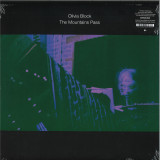
Black Truffle is pleased to announce The Mountains Pass, a major new work from Olivia Block. A key player in Chicago’s vibrant experimental music scene since the late 1990s, Block has developed an extensive body of work grounded in a personalised, at times emotive approach to the studio-based practices of the musique concrète tradition, while also encompassing improvisation, orchestral pieces, sound installations, and a sustained engagement with the piano. On The Mountains Pass, recorded by Greg Norman at Steve Albini’s Electrical Audio and meticulously edited and constructed over the course of three years, Block pushes into new terrain, introducing her singing voice and drums played by Jon Mueller into flowing assemblages that move seamlessly from ruminative organ tones and fragmented piano airs to explosions of sizzling synths and thundering percussion. Like many of Block’s past works, which include, for example, a sculptural installation using the sound of oyster beds, The Mountains Pass draws inspiration from nature and the animal world. Time spent in a particular mountain range in Northern New Mexico informs this suite of pieces, whose lyrics and titles refer particularly to animal life in the area. Beginning with bursts of white noise and delicate synthetic pops and squeaks, opener ‘Northward’ very soon reveals the special direction the album will take, as lyrical piano lines are joined by Block’s fragile voice, singing words written from the perspective of f2754, an endangered Mexican gray wolf who wandered more than five hundred miles from Arizona to New Mexico in 2022. The fragment of song quickly breaks off, leaving us with a ghostly electronic hum. ‘The Hermit’s Peak’ follows, one of two epic pieces at the album’s core. Beginning with chiming, almost harpsichord-like tones, it moves through episodes of spacious, ruminative piano, Jon Mueller’s sparkling cymbals, stuttering cut-up piano sounds, and a climax of keening organ and trumpet tones (performed by Thomas Madeja). Continuing the exploration of vintage keyboard and synth tones heard on Block’s Innocent Passage in the Territorial Sea (Room 40, 2021), the music sometimes suggests the great outer-limits works of 70s Italian prog figures like Franco Battiato or Arturo Stalteri in the languorous drift of synthesizer, organ, and piano tones and the meticulous yet organic flow of its construction. ‘Violet-Green’ opens the second side with another epic journey, its lyrical content concerning ‘a mysterious bird die-off and a forest fire’. Block’s crystalline voice and rich piano chords at times call up the restrained chamber songs of Janet Sherbourne, but fragmented and threaded through passages of woozy pitch-bent keyboards, hypnotic distant thuds, tinkling bells, and searing distorted synth tones. On ‘f2754’, the freedom of the roaming wolf surges through dense layers of rapid keyboard attacks and long organ tones over a propulsive drum performance straight out of Animal Magnetism-era Arnold Dreyblatt. This distinctive sound world is then reencountered in a darkened mirror image in the uneasy, metallic shimmer of the closing ‘Ungulates’, named in reference to a heard of elk roaming through the mountains. Like Battiato’s Clic or Gastr del Sol’s Upgrade & Afterlife, The Mountains Pass inhabits the underexplored terrain where the beauty of song coexists with a radical formal openness, illuminating the deep musicality and warmth that have been present in Block’s work all along.
We are delighted to bring you the first in the Ivan The Tolerable Archive Reissue Series, Autodidact!
Originally released on a 10” lathe cut by Ack Ack Ack Records in February 2018, this has now been remastered and repackaged, and will now be available on ltd edition khaki vinyl, with only 250 copies pressed. Here’s a bit about the record in Oli Heffernan’s aka Ivan The Tolerable own words-
“I recorded the bulk of this record over a weekend in January 2018, in the midst of a very minor breakdown that was to last for pretty much the entire year. I was living in a big house all on my own, smoking too much and not really seeing any people. Happy days indeed.
It was tracked in the back room of 97 Hambledon Road, Middlesbrough using two questionable microphones, a broken HH 100 amp, my friends drums and a Tascam DP08 (that wasn’t to see the year out, RIP 2009-2018) When I was done, Robbie came round and recorded a ton of violin drones through my amp and i remember feeling like I’d gone into a trance a few times, then Ben recorded his parts at home and sent them over. Mixed and mastered the same night - I released it myself a month later as a lathe cut 10”and then promptly moved on. I listened to the album for the first time in years to write this sleeve note and I think it is possibly the closest I’ve ever got to capturing the sound I hear in my head - I love how grubby and cavernous it sounds, claustrophobic and swirling - the track Autodidact I have recorded 4 more times since this version and I’ve never got that sound back. I’II keep trying.’’
“Oli Heffernan, June 2023’’
They were one of the few racially and sexually integrated bands on the scene. Vocalist Pauline Black wrote about sexism, racism, and social issues. Their debut release was the AA side of the Specials single 'Gangsters' in the summer of 1979, which just consisted of Neol Davies and John Bradbury (of The Specials) before quickly forming a full band by the end of the year. Releasing their follow up single On My Radio' which reached No. 6 in the UK charts. Their debut album 'Too Much Pressure' was released in February 1980 getting to No. 5 in the UK charts, which also included two further hit singles 'Three Minute Hero' and 'Missing Words'.
The Morning Papers Have Given Us the Vapours was made with the black watch bandmates and producers/engineers Rob Campanella (Brian Jonestown Massacre, The Tyde, The Warlocks) and Andy Creighton (The World Record, Parson Red Heads). Ben Eshbach, formerly of The Sugarplastic, arranged the strings. Kesha Rose guests on lead vocals on the second single, Oh Do Shut Up. And the great Lindsay Murray once again lends her beautiful backing vox to a number of tracks.
the black watch songwriter/frontman John Andrew Fredrick wrote the ten songs on this, his Los Angeles-based band's latest album, entirely unselfconsciously, with no set goal in mind other than to revel in the joy of songwriting, and, eventually, the luxury of recording his music with his more-than-accomplished band. The Morning Papers Have Given Us the Vapours, produced separately and together by Rob Campanella and Andy Creighton evinces the black watch's often stunning ability to, as Andy Gill once observed in The Independent, "find chaos in the calm, melody in the miasma."
Fredrick, who has also published four comedic novels and a book on the early films of Wes Anderson, jovially describes himself as "a recovering Anglophile--one who'll never, one hopes, fully recover." From his home studio in the Angeleno Heights district of L.A., he waxes eloquent about how being branded, as it were, as a too-ardent lover of British music, film, and literature has left him as bemused as has the tag "prolific" that is often affixed to reviews of his work.
"I just don't think it's all that interesting to note that we've made so many records. Looked at one way, it's a sort of deflection from talking about the timbre if not the quality of the individual songs. Though I know it can be intimidating for fans who've just discovered us--a sort of 'My goodness, where do I start with this band that has put out LPs since 1988?' I get it. I do. I picture someone standing at our slot at a bin at a record store becoming overwhelmed at the prospect of picking the 'wrong' title. And then walking away and not picking up anything from us!" Fredrick laughs. "What can you do indeed?"
He started his career as a songwriter as a result of an American Football injury that left him bedridden in the home he grew up in in Santa Barbara, California. The year The Beatles immortal double-album came out at Christmastime he broke his leg so badly that he had to be home-schooled for an entire year. His parents, ex-teachers themselves, refused to let him watch telly for more than an hour a day. He propped a Silvertone acoustic on top of the massive cast that screamed all the way up to his thigh from his toes, and began to write little melodies and lyrics that, doubtless, did not in the least mask his love for the Fabs, The White Album in especial.
And he read and read and read--histories of the American Revolution and Civil War, mostly, and as many Dickens novels as his mum and dad could bring him. "That year," Fredrick observes, "surely made me who I am today. Proof that intensely unfortunate-seeming events can prove most fortunate. As a sport-mad kid, it made me absolutely mental that I was exiled from the activities I loved most and the school teams I played on. What a blessing undisguised that injury was! Not that I'd like to experience anything like it ever again, mind you."
Fredrick can even recall a few of the melodies he wrote as boy ("Utterly trite, of course, completely jejune"); and in a way, The Morning Papers Have Given Us the Vapours showcases a kind of get-back-to-where-you-once-belonged sensibility. "I didn't intend, this time, to make an album per se. I write both songs and fiction in order to find out what happens, to find out what I might want to say," he notes. "Rob often asks me what a particular song is about; and I often reply that I either don't know, or would prefer that others say. Same thing goes for when people ask me where they should start with our discography. I never know what to say. Our LP from 2011, Led Zeppelin Five (remastered in 2021 for its tenth anniversary), has been our best seller, I think--but that may be because some stoned Zepheads thought their gods had perhaps put out a record they'd missed!"
Despite being deadly serious about music-making, TBW's been known to either whimsically or perversely title their albums. Examples: Jiggery-Pokery (an allusion to John Lennon assessing George Martin's productions), After the Gold Room (a pun on the Neil Young classic plus a local eastside L.A. watering hole), Sugarplum Fairy, Sugarplum Fairy (echoing Lennon's famous count-off to A Day in the Life), Fromthing Somethat (a garbled spoonerism/lyric while doing a vocal), Brilliant Failures (the 2020 release that, along with Fromthing Somethat, was named Album of the Year by venerable indie rock magazine The Big Takeover), and the aforementioned LZ5.
For the new LP, the band recruited longtime friends and allies Ben Eshbach (the Emmy-Award-winning frontman of The Sugarplastic) and Lindsay Murray (Gretchens Wheel) to compose and arrange strings and sing heaps of lovely backing vocals, respectively.
And the result? A collection of songs that Fredrick, in his quite-but-not-quite self-deprecatory way, might call another set of brilliant failures. "Every song, every LP we do, is a failure of sorts--no matter how powerful or beautiful or pleasing-to-us it turns out," John concludes. "I have often said that my aim is to write songs as good as anything on The Beatles... and I will never achieve my goal. And thus I'll have to keep at it, keep trying. And chin-chin to that!"
And now your attention's been brought to a band (or you've heard of them or heard a track or two down the years) that has been pegged by The L.A. Weekly as "a national treasure" as well as "the most criminally-neglected indie pop group imaginable."
So here's to the prospect of that ostensible neglect becoming as much of a thing of the past as John Andrew Fredrick's year-long stint in bed.
“The first full length LP by Joshua Massad and Dylan Aycock. Massad is a tabla player living in India and studying under Zakir Hussain. Massad and Aycock came together in Tulsa to record live at the legendary Church Studio which was founded by Leon Russell in the ’70s. Over a few nights they captured some moments in the studio before it came under new ownership and just before Joshua moved to India. “Aycock improvising on 12-string with Massad accompanying tabla and sitar. A flowing river of sound, a meeting of the minds. The little touches that Dylan’s brother Jesse Aycock adds (bits of synth) really sweeten the deal as well. Track two recorded in Leon Russell’s legendary Church Studio.” —Aquarium Drunkyard “Track one is an improvisation recorded at the home of Joshua Massad’s friend who he was house sitting for and invited me to come play. When I showed up the door was open and he was deep in practice so no words were spoken. I set up a mic and just started playing. We played for fortyfive minutes straight and the twenty mins of the first track was culled from that moment. We clicked immediately and that was the first time we ever played together. Joshua is studying and teaching in India now where he’s been since 2019.” —Dylan Golden Aycock
Coloured[29,83 €]
EIGHTEEN AND I LIKE IT… (MISC. COLOURED VINYL))if you survived trips 1-17 with one tiny speck of psychedelic sunshine intact, Brown Acid The 18th Trip will be your coming of age nightmare. Vintage underground '70s hard rock, coming at you from bizarre angles, local scene wasteland America when everybody was out for themselves and the drugs went bleak. The guitars kill, the attitude is twisted, even the sex is headed down the wrong road. Real people, no compromise, pure and potent. Get stoked, take the 18th Trip and know that the artists will get paid for pulverizing your soul! "People… are you ready?, 'cause the music now is getting so heavy"… Back Jack out of St. Louis, Missouri in 1974 launch our trip with "Bridge Waters Dynamite". It's an invocation to rock flashing on Mark Farner whooping up a Grand Funk crowd, then getting to the point quickly with berserk guitar assaults. Heavy riff with power chord stalks beneath as you take their advice… get loose and blow up the past. Smokin' Buku Band dropped my jaw with the audacious track "Hot Love" coming on like some fractured fever dream burlesque of Led Zep moves out of Hollywood in 1980. Swooping elongated vocals above, a total Zep chord move at the end of each verse. Writer/producer Steve Shauger aka Shag Stevens gets a brilliantly messed up sound quality here, the ideal polar opposite of slick. The extended guitar break is an epitome of serendipitously crude virtuosity, simply outrageous! Coming at you from way outta left field is "Moby Shark" by Atlantis, a hilarious and strange Baltimore pre-punk vibed dose of D.I.Y. meets hard rock. Lon Talbot is the mastermind, the flip side of this impossibly rare Mekon Records label single was featured in an obscure 1978 B-movie titled "The Alien Factor". Follow the lyrics closely, when the ominous jaws jaws jaws start coming after you you you… the song's big hook is so preposterously catchy the shark attack feels like good news. Inquiring minds should know that the band formerly known as Atlantis can now be found by searching for the Lon Talbot Group! Tommy Stuart and the Rubberband's "Peeking Through Your Window" from 1970 opens with a spooky organ riff, slips into a gushy fuzz/organ groove akin to "Mustache In Your Face” by Pretty. The singer creates downright creepy vibes, a stalker peeking through the girl's mind like a peeping Tom at the window up to no good. The lyrics evoke a disturbing scenario. Tommy Stuart also made a strange LP titled Hound Dog Man in 1977 and some terrific rare garage singles under the names Magnificent Seven and The Omen & Their Love in the mid '60s. Nothing better than an angry two chord guitar attack with cowbell to set the stage for this rant about getting "Ripped Off" by love. Taken from their rare 1977 LP on Dynamite Records, Chicago Triangle was Marvey Esparza, Dave Guereca, Jose 'Tarr' Perez and Robert Aguilera. They unleash such strong brain-scrubbing wah wah frenzy in the guitar break here that it seems to perversely mock it's own intensity! Like I said, Brown Acid the 18th Trip comes at you from all kinds of uncanny angles. Damnation of Adam Blessing out of Cleveland, Ohio unleashed a stone killer psychedelic hard rock classic "Cookbook" in the late '60s, this track "Nightmare" from 1973 has them cooking again at full power. A different singer, name change to Damnation and then Glory, unleashing a deadly dose of dark progressive heavy rock drama peaking when spooky 'oooo-wa-oooo' background vocals emerge during a bizarre spoken bit. It unfolds like a mini-epic and includes some remarkably brutal guitar and turbulent organ, too. "Swing your sword, all aboard… bid farewell to the dreamer" Dalquist exclaims. Cynical view of human nature, idealism is over, war is coming, it always does. Opens with a cold menacing riff and atmosphere reminiscent of "Synthezoid Heartbreak" by Maya. Mournful despondent vocals ride an insistent churning groove, gnarly guitar break moves into free noise territory. This rare track is from a local various artists benefit album titled Kangaroo Jam issued for the Waco Family Abuse Center in Texas circa 1980. The Pawnbrokers "Realize" is prime proto heavy rock emerging out of psychedelic garage roots in 1968 Fargo, North Dakota. Unusual arrangement, terrific sustain guitar tones like on the first Blue Cheer LP, even a rip on Hendrix "Manic Depression" with unison voice and guitar ascent near the end. They made three 45s and were active from '65 to '69. Hats off to Blake English, Kent Richey, Paul Rogne and Steve Harrison, you nailed it in just a hair over two minutes! As pure and creative as the original psychedelic garage hard rock gets. Parchment Farm from Union, Missouri gigged with the likes of ZZ Top and Foghat back in the day and unleashed the amazing "Songs Of The Dead" in 1971. Primitive riff/chord pattern dosed with some funky prog moves, sky turning black, 'is this heaven or hell' type disoriented confusion… may as well grab your guitar and sing songs to the dead. Robert 'Ace' Williams on bass, Paul Cockrum on guitar, Gary Reed on keys and Micky Waterman on drums, replacing Mike Dulany (R.I.P.) Cool that they use the Blue Cheer misspelling from Vincebus Eruptum for the band name! Ominous organ, thick minimalist fuzz riff, funky psychedelic wah wah flashes and freaky sex combine in one twisted dance titled "Rockin' Chair" by Brothers Of The Ghetto. Out of Chicago in 1975 with some Santana atmospherics and a delicious fuzz wah screamin' guitar break, the groove is highlighted by an off the wall vocal which sounds eerily detached in a subtly sleazy way. Rene Maxwell is the writer of this hard-rock boogie-down hybrid straight out of the twilight zone. It was issued on Ghetto, a subsidiary of the peculiar Kiderian label that released the Creme Soda LP. Now that your head is totally skewered, go Back Jack and play side one again! (Words by Paul Major)
Black[28,15 €]
EIGHTEEN AND I LIKE IT… (MISC. COLOURED VINYL))if you survived trips 1-17 with one tiny speck of psychedelic sunshine intact, Brown Acid The 18th Trip will be your coming of age nightmare. Vintage underground '70s hard rock, coming at you from bizarre angles, local scene wasteland America when everybody was out for themselves and the drugs went bleak. The guitars kill, the attitude is twisted, even the sex is headed down the wrong road. Real people, no compromise, pure and potent. Get stoked, take the 18th Trip and know that the artists will get paid for pulverizing your soul! "People… are you ready?, 'cause the music now is getting so heavy"… Back Jack out of St. Louis, Missouri in 1974 launch our trip with "Bridge Waters Dynamite". It's an invocation to rock flashing on Mark Farner whooping up a Grand Funk crowd, then getting to the point quickly with berserk guitar assaults. Heavy riff with power chord stalks beneath as you take their advice… get loose and blow up the past. Smokin' Buku Band dropped my jaw with the audacious track "Hot Love" coming on like some fractured fever dream burlesque of Led Zep moves out of Hollywood in 1980. Swooping elongated vocals above, a total Zep chord move at the end of each verse. Writer/producer Steve Shauger aka Shag Stevens gets a brilliantly messed up sound quality here, the ideal polar opposite of slick. The extended guitar break is an epitome of serendipitously crude virtuosity, simply outrageous! Coming at you from way outta left field is "Moby Shark" by Atlantis, a hilarious and strange Baltimore pre-punk vibed dose of D.I.Y. meets hard rock. Lon Talbot is the mastermind, the flip side of this impossibly rare Mekon Records label single was featured in an obscure 1978 B-movie titled "The Alien Factor". Follow the lyrics closely, when the ominous jaws jaws jaws start coming after you you you… the song's big hook is so preposterously catchy the shark attack feels like good news. Inquiring minds should know that the band formerly known as Atlantis can now be found by searching for the Lon Talbot Group! Tommy Stuart and the Rubberband's "Peeking Through Your Window" from 1970 opens with a spooky organ riff, slips into a gushy fuzz/organ groove akin to "Mustache In Your Face” by Pretty. The singer creates downright creepy vibes, a stalker peeking through the girl's mind like a peeping Tom at the window up to no good. The lyrics evoke a disturbing scenario. Tommy Stuart also made a strange LP titled Hound Dog Man in 1977 and some terrific rare garage singles under the names Magnificent Seven and The Omen & Their Love in the mid '60s. Nothing better than an angry two chord guitar attack with cowbell to set the stage for this rant about getting "Ripped Off" by love. Taken from their rare 1977 LP on Dynamite Records, Chicago Triangle was Marvey Esparza, Dave Guereca, Jose 'Tarr' Perez and Robert Aguilera. They unleash such strong brain-scrubbing wah wah frenzy in the guitar break here that it seems to perversely mock it's own intensity! Like I said, Brown Acid the 18th Trip comes at you from all kinds of uncanny angles. Damnation of Adam Blessing out of Cleveland, Ohio unleashed a stone killer psychedelic hard rock classic "Cookbook" in the late '60s, this track "Nightmare" from 1973 has them cooking again at full power. A different singer, name change to Damnation and then Glory, unleashing a deadly dose of dark progressive heavy rock drama peaking when spooky 'oooo-wa-oooo' background vocals emerge during a bizarre spoken bit. It unfolds like a mini-epic and includes some remarkably brutal guitar and turbulent organ, too. "Swing your sword, all aboard… bid farewell to the dreamer" Dalquist exclaims. Cynical view of human nature, idealism is over, war is coming, it always does. Opens with a cold menacing riff and atmosphere reminiscent of "Synthezoid Heartbreak" by Maya. Mournful despondent vocals ride an insistent churning groove, gnarly guitar break moves into free noise territory. This rare track is from a local various artists benefit album titled Kangaroo Jam issued for the Waco Family Abuse Center in Texas circa 1980. The Pawnbrokers "Realize" is prime proto heavy rock emerging out of psychedelic garage roots in 1968 Fargo, North Dakota. Unusual arrangement, terrific sustain guitar tones like on the first Blue Cheer LP, even a rip on Hendrix "Manic Depression" with unison voice and guitar ascent near the end. They made three 45s and were active from '65 to '69. Hats off to Blake English, Kent Richey, Paul Rogne and Steve Harrison, you nailed it in just a hair over two minutes! As pure and creative as the original psychedelic garage hard rock gets. Parchment Farm from Union, Missouri gigged with the likes of ZZ Top and Foghat back in the day and unleashed the amazing "Songs Of The Dead" in 1971. Primitive riff/chord pattern dosed with some funky prog moves, sky turning black, 'is this heaven or hell' type disoriented confusion… may as well grab your guitar and sing songs to the dead. Robert 'Ace' Williams on bass, Paul Cockrum on guitar, Gary Reed on keys and Micky Waterman on drums, replacing Mike Dulany (R.I.P.) Cool that they use the Blue Cheer misspelling from Vincebus Eruptum for the band name! Ominous organ, thick minimalist fuzz riff, funky psychedelic wah wah flashes and freaky sex combine in one twisted dance titled "Rockin' Chair" by Brothers Of The Ghetto. Out of Chicago in 1975 with some Santana atmospherics and a delicious fuzz wah screamin' guitar break, the groove is highlighted by an off the wall vocal which sounds eerily detached in a subtly sleazy way. Rene Maxwell is the writer of this hard-rock boogie-down hybrid straight out of the twilight zone. It was issued on Ghetto, a subsidiary of the peculiar Kiderian label that released the Creme Soda LP. Now that your head is totally skewered, go Back Jack and play side one again! (Words by Paul Major)
Advitam Aeternamour, Cléa Vincent's third album, will be released on 29 March 2024 by Midnight Special.
If the 90s gave us “French touch,” then the 2010s ushered in “French pop,” and it was in the midst of this revival that Cléa began her artistic journey. As early as the music video for
“Achète-le-moi” from her debut LP Retiens mon désir (2016), we witness the singer striking selfie-like poses with her French pop comrades (La Femme, Bertrand Burgalat), appearing pell-mell on screen in the form of their vinyl records. Since then, whether singing with Philippe Katerine or co-producing (and composing) Jeanne Balibar's D'ici là tout l'été (2023), Cléa Vincent has effortlessly carved out a niche for herself in the French pop scene. The advantage of being a “jack-of-all-trades” — Cléa is a writer, composer, and producer — is that her music casts a wide net. Both highly acclaimed in the indie circuit and “as seen on TV” (on Quotidien, among others), she has also enjoyed a stint as the host for web-TV show Sooo Pop, for which she regularly interviewed a plethora of French artists. Beyond France, the singer tours extensively. After a run of concerts in Europe, Asia, North and South America, it was her visit to Latin and Central America that inspired Tropi-cléa (2017-2020-2022). The three EPs bathed in a tropicalist glow do more than just dip their toes in the water; they mark a deep desire to escape in a post-lockdown world.
In between these projects emerged Cléa’s LP Nuits sans sommeil (2019). The album quickly became an instant classic and lives up to its name, since Clea never seems to stop — writing, composing, singing, or dancing. Mixed by Stephane ALF Briat, who has lent his magic touch to records by Phoenix, Bonnie Banane, Air, and Flavien Berger, Cléa Vincent's third LP Advitam Aeternamour proves once again that her music is in perpetual renewal. The artist takes risks both in her pursuit for innovative sounds and in the themes she tackles: coming out, incest, grief...and of course, she will always be a true romantic at heart; there’s no need to be ashamed of loving love. Cléa’s songs are full of “explicit lyrics,” but not in the typical sense: rather than ringing harsh and raw, her words are tinged with sweetness and melancholy, at the risk of shocking less sentimental listeners.
Written hand-in-hand with Raphaël Léger, her creative soulmate for the last ten years who also recorded and produced the album, Advitam Aeternamour features lyrics charged with Epinal and equinox imagery. On the poignantly sober title track, sudden flashes of light are padded by tinkling synthesizers swathed in the voices of an angelic choir, as also heard on “Nuit de Yalda.” Cléa offers a modern take on 90s house music (“C'est Ok”) and 2-step garage (“Free Demain”). Particularly influenced by The Beloved, she is not above dipping pop songs into the electronic melting pot to get them through the club door (“État Second,” where we “turn up the BPM”). And whether on “Shut down ma tête,” or “Douce Chavirée,” Cléa pushes the champagne cork down even further so that the party never stops. The bass gets louder, the rhythm intensifies — the melodies of these eternal hits are an invitation onto the dance floor, lit up by her smile.
As depicted in the soothing embrace that appears on the album artwork, the bright psychedelic hues are the perfect complement to her therapeutically inclined synthetic pop. Even if they tackle themes such as breakups, Cléa's songs, which are vitamin-packed and deep on the surface, are intended to heal and repair. “Se laisser partir,” with its light vocoder echoes, emulating the vocal shadow of a loved one, is an optimistic breakup song. Advitam Æternamour gives us life, from birth to grief — and in the middle, wild, beating passion. If her songs resonate with us, it's because Cléa speaks to us in her songs, as heard on the girl power anthem “Free demain,” where she addresses the listener as a friend (“put the pedal to the metal and you’ll take off for the stars”). When she shares the microphone with Jacques on “État Second,” enveloped by the sounds of unidentified musical objects, the complementary nature of the two artists is evident. The album is as much a tribute to the healing virtues of music as it is a self-portrait of Cléa inhabited by her art. Ad vitam æternam and with love.
Bruno Berle, the young songwriter and poet originally hailing from Maceió, the capital of Brazil’s Alagoas state, crafts songs that are simple, direct, and full of tender nuance. With his first album No Reino Dos Afetos (which translates to "In the Realm of Affections” and was released in 2022), Berle firmly established himself as a unique and important voice in the burgeoning scene of new Brazilian artists making a global impact, including peers like Ana Frango Elétrico, Tim Bernardes, Bala Desejo, Sessa and more. Now back with his second album, No Reino Dos Afetos 2, he stretches that further.
Bruno Berle’s music lives between two worlds – a traditional Brazilian folk talent steeped in history, and a contemporary, dreamy electronic pop; the result is songwriting that’s genre-bending, intentional, iconoclastic and consuming, spacious and sinewy and singular, a striking reflection of its composer while leaving space for the listener to settle in. The album follows Bruno’s relocation to São Paulo, and the songs are a reflection of his past and present. A rebuke of former categorizations of his work in Brazilian music scenes, and an idea of where his music can move, unfettered.
Berle’s music is purposeful in being a true portrait of himself, and a reflection of the music, art, and fashion scenes he personally moves through. Berle aims to provide an entrypoint for Black queer joy in his music, in his storytelling, in his presence and vision as a creative. For him, it feels subversive to be playing MPB laced with dubstep and lo-fi, a sort of intentional sacrilege, capturing a dialogue of modernity in traditional music.
Berle wrote most of the arrangements and co-produced his new album, Reino Dos Afetos 2 with longtime friend and musical partner Batata Boy, who is also from Maceió; the album was recorded in Rio de Janeiro, Maceió, and São Paulo, his new home, and picks up the conversation begun in 2022 on Berle’s debut album No Reino dos Afetos. Both records are the result of a nonlinear but coherent seven-year music creation process culminating in these albums, holding hands across space and time.
“Tirolirole,” the first single from the record, was released at the end of 2023; sun-soaked rhythms and soft voice coat the song, the lilting refrain of “Tirolirole” throughout – hushed, gentle, but somehow almost tactile, a golden-hour moment unlocked in the mind. “Tirolirole” is a triumphant future classic about the temporality of a blossoming love, with Bruno’s stunning vocal soaring over melodies which ebb and flow like the waters on the Atlantic shore. Of the track, Berle explains: “Despite ‘Tirolirole’ being an expression that evokes my childhood, just like the light words about nature, the harmony, and the poetry are epic, carrying a great hope for love.”
In fact, the guiding theme of No Reino dos Afetos 2 is a relationship, unfolding in the arc of a weekend. It traverses the innocence of an early young love, how that can be formative, can stretch on to take new shapes, or shape you. The album happens at the genesis of meeting someone and falling for them, before the relationship is thrown into overdrive – set in a big city, against a backdrop of major life changes, rising energy, the sound of São Paulo.
Something transcendental emerges in “Dizer Adeus,” with an arrangement that echoes a gospel atmosphere (evangelical and Catholic environments were pivotal to Berle’s upbringing). On “É Só Você Chegar,” piano and flute gracefully intertwine, a dance, while “Quando Penso” skews sparser, the voice-and-guitar minimalism somehow cultivating an entirely different shape – somehow both cozy and melancholy, with the background sound of a rainy day. Coupled with the lo-fi aspects that shape much of the album’s personality in the vocals and the production, No Reino Dos Afetos 2 is meticulously elaborated by Berle’s sonic alchemy, like on the mid-album instrumental “Sonho,” which feels like floating. “It’s the apex. It’s when lovers are sleeping together,” Berle explains of the feeling he wanted to encapsulate in the song.
On “Love Comes Back” Berle interprets Arthur Russell, the late Iowa musician who only reached greater visibility after he died in 1992. “His way of making music is similar to mine,” Berle explains. “He sings in a more fragile way, has more of an experimental way of recording, letting ‘chance’ appear in the final work.”
Even so, Berle doesn’t want his music to be buried in sentimentality – and the purposefulness of his craft serves as a sort of north star. The production, the arrangements, his restraint and intentionality in crafting his songs feel just as vital as their emotional cores. His songwriting is amorphous, fluid, an encompassing genre-bending movement in-and-of-itself, quietly daring. The songs are often in conversation with other works – drinking in fountains as diverse as the filmmaking of Ingmar Bergman, the poetry of Walt Whitman, the rhythm of Djavan, and the painting of Maxwell Alexandre. Musically he weaves together a rich tapestry of Brazilian folk, UK 2-step garage/dub, trip hop and sun soaked west coast songwriters; something akin to the worlds of Milton Nascimento, Arthur Russell, James Blake, Feist, and Sade colliding into one. But even then No Reino Dos Afetos 2 floats separately, a romanticism driven by a simplicity and intimacy, an open-ended possibility, Berle’s singularity as an artist at the helm of the ship.
Warehouse Find!
Toby Tobias coming through with the fresh raw s**t for Delusions! Two original tracks here absolutely loaded full of old school analogue machine funk and crazy dub tricknology. It's Burning builds around a beautiful chiming synth while a filtering acid bass line and 808 snares add a distinct bit of B-Boy to the mix. I Give You love heads for a more rugged house vibe complimenting the intense, loosely timed vocal hits perfectly. On the flip we have London Housing Trust bringing serious heat on their remix, jacking up the tempo but adding some decidedly tripped-out synth tweaks resulting in a show stopping reworking primed for freaking people out on the dancefloor. Finally we have that man Lauer working his magic on It's Burning, building up the track around some beautifully euphoric synth stabs and bassline. The perfect close to an EP in which it's very difficult to try and find words to justify. We think Toby Tobias has turned in some of his best ever work here and absolutely love this whole record so really hope you share the same admiration for the release as we do!
- The Sage
- Deathwill
- 죽음이두려울때까지
- 풀이
- Confluence Loop
- 나락
- Noise And Cries
As part of Subtext's 20th anniversary, Subtext presents the debut album from bela as a co-release with Unsound.
bela was based in Seoul when they began to develop the framework for 'Noise and Cries (굉음과울음)'.Chewed up by a society that's slow to embrace those who exist on the margins, they and their close friends became fixated on the concept of death. "I wanted to cry, I Wanted to die," they recall. "The precariousness of living in South Korea hits different. I thought, let's share what is killing us." bela refused to lose hope, so they inventoried the sounds, experiences and emotions that had formulated their identity and wondered how this might form a different sort of South Korean musical expression. They considered the guttural death metal growls and industrial music they heard when they began to interface with Western culture as a teenager, the idiosyncratic folk rhythms that rattled away in the background of state events, the evocative, euphoric drones that had offered them solace, and the heady, cybernetic maximalism that's come to define contemporary queer club music.If this was going to be an album about death, bela knew wouldn't it be preoccupied with loss, but rooted in a deep desire to regain the will to live.
'Noise and Cries (굉음과울음)' is the first time bela has recorded their voice, and they metamorphose it from moment to moment, embracing a precarious vulnerability. Opener 'The Sage' references Jungtaryeong, two well-known arias from the Korean Pansori tradition - a folk form that is usually performed by a drummer and a singer. Screaming, whispering and rasping, bela twists borrowed words from the original arias, repurposing them to highlight the hypocrisy and brutality of patriarchal wisdom.
These bellowed phrases contrast with an abrasive rhythm that bela based on the eatmore jangdan, an irregular, traditional beat that's been remoulded into a jerky, electro-acoustic call to action. Even if the gargled Korean wordplay can't be fully understood, the mood translate flawlessly. On 'Death Will I', they reassemble the damaged relationship between a queer child and their
FYEAR is a Montréal-based ensemble led by composer Jason Sharp and poet/writer Kaie Kellough that fuses spoken word into genre-bending compositions for electronics, two voices, two drummers, and processed saxophone, pedal steel guitar, and violins. FYEAR incorporates drone, out-jazz, post-classical, ambient metal, avant-rock, and modular synthesis in a sonic and stylistic palette the opposite of collage or pastiche: the FYEAR ensemble integrates a unique and unified sound/aesthetic while traversing adventurous and variegated terrain. Kellough’s poetic materiality conveys acute political-existential themes, alternating between declarative, meditative, and cut-up/semiotic manifestations. This self-titled debut album is a supremely innovative 40-minute multi-movement work; an ardent mission statement that mines the interzone where Saul Williams, Moor Mother/Irreversible Entanglements, Shabazz Palaces, Zulu, Angel Bat Dawid, Damon Locks/Black Monument Ensemble, Shabaka Hutchings, and Matana Roberts are all iconoclastic neighbours. FYEAR melds improvisation and composition, traditional notation and graphic scoring, electronic and acoustic instrumentation, lucid recitation and abstract vocalization, balancing intensive structure with an expansive sense of exploration. Through several years of collaboration, development, workshops, commissions and performances conducted by Sharp and Kellough, their wordsound practice has culminated in this nine-piece group which also features poet/writer/activist Tawhida Tanya Evanson (present director of the Banff Centre Spoken Word program) violinists Josh Zubot and Jesse Zubot (Tanya Tagaq, Darius Jones, Joshua Hyslop), pedal steel player Joe Grass (Tim Hecker, Patrick Watson), drummers Stefan Schneider (Bell Orchestre) and Tommy Crane (The Mingus Big Band, Aaron Parks), with live visual typographics from Kevin Yuen-Kit Lo, who also designs the album art. Propelled by the vocal interactions of Kellough and Evanson, FYEAR interrogates our present and future post-capitalist polycrisis, invoking collective anxieties, emotions, and critiques. FYEAR re-poetizes our constructed, manipulated social/conceptual realities, re-inscribing questions about the future by setting them to a wildly dynamic and evocative temporal soundtrack: Who does it belong to? How will it be shared? How do we project a collective future into the contested challenges of climate change, global migration, wealth gaps, safety/precarity, identity/affinity, segmentation / segregation, all our seemingly irreconcilable histories and forward visions for the world we dream to inhabit
"Days of the New (the Red album) is the third studio album by Days of the New, originally released in 2001. All songs were written and composed by Travis Meeks, who was the only original member left, making this a solo project. The album spawned two singles ""Hang on to This"" and ""Die Born"". The first peaked at #18 at the US Rock Chart. The last track, ""Dancing with the Wind"", contains an untitled hidden track. Days of the New (the Red album) is available on vinyl for the first time. This 2LP includes an insert. "
Days Of The New III by Days Of The New, released 4 April 2024, includes the following tracks: "Days in our Life", "Best of Life", "Where Are You?" and more.
This version of Days Of The New III comes as a 2xLP. This release comes with (a) Insert(s).
Once billed as "Europe's First Lady of Jazz," Rita Reys was a legend overseas during the second half of the 20th century, and certainly one of the top European jazz singers. Two Jazz People finds Reys sharing the spotlight with Swedish jazz pianist Bengt Hallberg's trio. Hallberg (1932-2013) played with bassist Thore Jederby, saxophonists Arne Domnérus and Lars Gullin, and during the 1950s, performed with leading visiting American players, including the Stan Getz, Lee Konitz, Clifford Brown, and Quincy Jones.
"Two Jazzy People" by Rita Reys includes the following tracks: "Don't Get Around Much Anymore", "I'm Glad There Is You", "You Stepped Out Of A Dream", "Love For Sale" and more.
In our 20th celebration year we welcome back Loz Goddard! It’s been quite a while since we last saw him on our label. With his standout debut collab release with Harry Wolfman in 2016 he has developed a unique mix of electronica, deep soundscapes and lush organic Deep House on labels such as “Oath”, “Razor N Tape”, “Church”, “Outplay” and “Apparel Music”. Now he finally returns with a mini album that features beautiful crafted ambient and electronica cuts paired with three upbeat tracks that will for sure shake the dance floors in and outdoors this summer! Enjoy!
In his own words, here are some insights on the influences and production process of these six pieces:
The release is named after a night in the White Hotel in Salford watching Skee Mask. At the time I had a bunch of unfinished ambient ideas as a result of making “Balloon Tree Road” (out on Oath). There were a lot of ideas I still loved that didn’t get finished for that release, so I set about finishing them late 2022 & early 2023 with the view to releasing an EP or ‘mini album’ that was again angled a bit more towards home-listening.
The more upbeat tracks are newer jams that I created in 2023. I wanted to include a few club-ready tracks on the record as well, so the release appeals to DJ’s as well as home listeners. I approached the production much like my past two records on Oath, with lots of live drum elements, some sampling and a mixing approach which keeps everything sound warm and organic. It’s rough round the edges - as has been the case with my productions of late - and offers a nice contrast to my DJ sets and radio shows at the moment, in which I am playing mostly Deep/Progressive House, Breaks & Techno. There’s some influence on the title track from the Deep & Lo-Fi House sound of artists like Baltra & Mall Grab, and I have taken influence from all the breaks I’ve been playing in DJ sets for ‘How’s This for a Vague Song Title’.
All tracks mastered by Salz Mastering in Cologne. Photography & Art by Break 3000.
Exactly two years after their debut album, the project formerly known as Weltschmerzen returns as Pain Palace. The project's new moniker resolves potential confusion with the eponymous record label, but it is a change in name only // the music remains ambiguous in genre but emotionally resolute, an amalgam of approaches bound by an awareness of the remorseful nature of the world.
This is a continuity in creed rather than sound. Apart from the occasional drums // peculiarly captivating in tempo and rhythm // Pain Palace do little to invoke their first album. Despite the similar setting of an intensive week-long recording session in rural Slovakia, the trio arrives at a place that is distinct even from all their earlier projects. From a viewpoint where the world's indifference is recognised as a landscape, the tracks are presented as seven distinct perspectives that range from brutalist chaos to tenderness but always remain compassionate.
This is best revealed in On the Height of Despair // the album's nearly ten-minute-long climax that seemingly borders on collage only to become an engulfing suite of severe movements. The music of Pain Palace stands apart from what Tomáš Pristiak, Matus Mordavsky and Dominik Suchy create either solo or in their respective bands (Tante Elze, Tittingur), and it is the 13th release by the wistful label Weltschmerzen.
- A1: Fela Kuti - International Thief Thief (I.t.t.) (Armonica & Moblack Extended Mix)
- A2: Fela Kuti - International Thief Thief (I.t.t.) (Armonica & Moblack Extended Dub)
- B1: Moblack, Emmanuel Jal & Henrik Schwarz - Chagu (Henrik Schwarz Extended Version)
- B2: Moblack, Emmanuel Jal & Henrik Schwarz - Chagu (Moblack Extended Version)
Repress!
These are the words of legendary Nigerian musician and activist Fela Kuti, words that remain as true as ever over two decades since his untimely death. A pioneer of the Nigerian revolution, his fight against police oppression remains an ongoing conversation in the country. Now, Defected pays tribute to the vital work of Fela with a special 12” release, as Armonica and MoBlack revisit Fela Kuti’s ‘International Thief Thief (I T. T.)’ as the fight against systemic corruption continues to be a pressing issue in Nigeria. The A-Side features Armonica & MoBlack’s flawlessly executed and ever respectful remix of the record where Fela called out and directly attacked former Nigerian president General Obasanjo and Moshood Abjola, the CEO of Nigeria’s biggest national telecommunications conglomerate I.T.T and Decca Records. Their homage to Fela brings a powerful and culturally relevant piece of music to the forefront of dance culture in 2020.
On the reverse side is ‘Chagu’, where a powerful and evocative spoken word narration is provided by South Sudanese-Canadian artist, actor, former child soldier and political activist Emmanuel Jal. A collaboration between Emmanuel, MoBlack and Henrik Schwarz, both producers provide their own version of ‘Chagu’, with MoBlack opting for a classic afro-house beat and hypnotic percussion, while Henrik’s signature crisp, harmonious composition makes for a guaranteed dancefloor weapon. Both visionary producers, Henrik and MoBlack’s versions are equally impactful, complementing the immediacy of Emmanuel’s lyrics.
- 01: In
- 02: The Big Idea (Feat. Lewis Parker)
- 03: Push
- 04: The Art Of Celebration
- 05: Tea Break
- 06: Chef Yg
- 07: Gringo Lingo (Feat. Red &Amp; Nico Suave)
- 08: I.c
- 09: What Eye See, Pt. 2 (Feat. Devise)
- 10: City Breaks
- 11: Liquid Love
- 12: Everything Is Alright
- 13: Dancing Shoes (Feat. Mr Thing)
- 14: Spit Fire (Feat. Kyza Smirnoff)
- 15: Out
First Word Records is proud to bring you 'The Essance' - the classic debut album by Essa (formerly known as Yungun), originally released in 2004, now released on vinyl & digital for the first time, 20 years on!
A lyricist, lawyer and a Londoner, legendary MC Essa has earned praise over the years from artists such as Nas and Mark Ronson, as well as performing and recording with legends like De La Soul, Wu-Tang Clan, Guru, Slum Village and Pharoahe Monch.
This 15-track album is considered one of the greats to emerge during UK Hip Hop's "golden era"; a vibrant time for the genre when artists such as Ty, Jehst, Roots Manuva, Klashnekoff, Skinnyman, Task Force, Doc Brown and Foreign Beggars were garnering huge fanbases, and an eco-system of shops like Deal Real, club nights like Kung Fu, labels like Lowlife, and stations like Itch FM were prevalent, while BBC 1Xtra was a mere infant.
'The Essance' includes production and features from luminaries such as Harry Love, Mr Thing, Lewis Parker, Kyza, Devise & Ben Grymm, to name a few.
Esteemed author Musa Okwonga says on the reissue liner notes "the most startling thing about 'The Essance' was its range. Yungun (Essa) was one of the few MCs who could perfectly walk the paths of hope and melancholy with equal ease, whose artist name belied the wisdom of his lyrics. Beyond that, his delivery was supremely self-assured, filled with a swagger he could always justify.
Yungun's gifts also extended to the stage, where he was one of the best young actors that many of his contemporaries had seen, and to languages, which saw him writing and rhyming in Spanish with a notable flourish. He was also someone who constantly walked between two worlds, excelling in one of the country's most competitive academic environments during the day and then delivering a soaring radio set by night. Raised in a vibrant vein of North London, endlessly curious about the world around him, Yungun's fine ear for music and passion for the variety of life made him someone who could reach all audiences.
'The Essance' is a beautifully-woven meditation on the human condition, one which takes you from the dancefloor to the summer afternoon barbecue to the bathroom mirror; yet it is also the opening statement of a unique career."
In the words of Essa himself "my key goal for this album was to span so many moods and styles that I couldn't be categorised, leaving me free to then go in whatever direction I chose. I was almost too successful with this – I would later struggle to pin down my own identity, both on and off the mic, as a rapper slash lawyer, of mixed-heritage, blessed to be able to enter many circles but feeling truly at home in none. As I write this, twenty years (plus a marriage and several children) on, I finally feel more at peace with being undefinable, and am getting better at bringing my full, authentic self into as many aspects of life as I can. I am grateful to be able to look both back and forward, with equal passion."
'The Essance' was followed with a collaborative album with DJ Mr Thing ('Grown Man Business'), then some years later on First Word with 'The Misadventures of a Middle Man' in 2014. There's also a forthcoming project in the works, due for release Summer 2024 with all-new material produced by Pitch 92. Both these releases also coincide with the 20th anniversary of the First Word label (named "label of the year" at the 2019 Worldwide Awards).
A timeless piece of work, 'The Essance' is true-skool boom bap through and through that stands up two full decades later, from the ethereal anthem 'Liquid Love', to the uptempo bounce of 'Dancing Shoes', to the grit of 'The Big Idea', to the thought provoking 'What Eye See Pt.2', to bangers like 'Push' or 'Spit Fire', this is an essential addition to the collection of any discerning hip hop head.
'The Essance' is due to be released on vinyl & digital worldwide on February 23rd 2024.
With 'Why Don't You Go Home' Fingier produces a monster Rhythm & Blues tune that will take you straight to the King and Federal R&B sound, and for the B side, 'Cocktail De Medianoche' is the perfect mix of Boogaloo and Northern Soul. Percussion, flute and horns will make this a Fingier favourite for lovers of Latin grooves and Uptempo Soul.
Diane Ward is singer from USA, who grew up singing Gospel in her local church. Music was always a big part of her life, and she has always had a deep interest in Rhythm & Blues and Jazz. She lived in Argentina for a couple of years, and one night Kevin saw her perform and instantly her voice blew his mind. In his words:
“She’s a proper R&B singer, she reminded me to Ruth Brown, MaryAnn Fisher or Lula Reed. She has that potent and obscure soundthat took me to those lately 50s early 60s Popcorn tracks”
With two monster tracks, calling this a ‘Double Sider’ wouldn’t be enough, both with that '60s sound we've come to expect from Fingier Records.