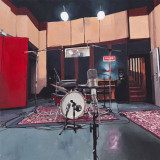
40 years after their last album ‘Secret’ was released in 1983, Classix Nouveaux are back with a brand new album entitled ‘Battle Cry’. Containing nine tracks including seven brand new compositions plus ‘Never Never Comes’ and ‘Interlude/Inside Outside’ which have been re-imagined for the 21st century. Featuring a very guitar-rock sound and also contains a couple of instrumentals which is something that the band used to do on their early albums. In the words of lead singer Sal Solo, this is how the album came about: “The reason this project came about after 40 years is really because of the fans. About 10 years ago, some of the Classix fans were making Facebook pages but it didn’t really come to our attention until a couple of years back. We realised these people are really dedicated and decided to give them a kind of birthday present. I said to the guys ‘Why don't we do a recording together and surprise the fans?’ Everybody said yes and so we did a quick remake of one of our old songs “Inside Outside” and to our surprise everyone's immediately talking about new material! We’d never thought about doing new Classix material - we thought it was over years ago. After a few weeks of agonising, we suddenly realised we could be as we are now. In the light of our increased experience and the fact that our fans are mature as well, we decided we would just make the music that we like today. It didn’t take a lot of persuasion to get everyone on board. It's the original line-up from the first two albums - what people consider the ‘classic’ line-up. We've all been in other bands, but somehow, we've all just seemed to gravitate back to Classix Nouveaux. It feels like a natural home. We hadn’t been in touch for many, many years and so this album is really what’s brought us back together.”
Поиск:two words
Все
Mostly known for his work as founder, vocalist and main songwriter for The Legendary Pink Dots, Edward Ka- Spel has long forged an equally prolific career as a solo artist given to sometimes exploring similar sonic realms as his group but clearly working at such a pace the need to channel ideas and songs in this capacity must be enforced. And just as well too, because Edward Ka-Spel is one of those rare and exceptional artists whose high workrate doesn’t betray a keen sense of quality control. Long known as somebody unafraid to venture wherever he pleases, his work has for a few decades now long traversed the more outward-bound or so-called ‘fringe’ areas of electronic music, psychedelia, hypnotic rock, kosmische sounds and the avant-garde. Heartily sewn into all of this is Edward’s fantastic grasp of spinning a twilight tale or spiralling deep into the mind’s recesses to craft a song from comparatively nimble melodies and words of Kafka-esque proportions. It’s a strikingly rich blend that’s always deserved far more attention than the cult audience it thankfully at least has.'Tales from the Trenches' is the second release by Edward for Lumberton Trading Company. Following on from the abstract-flavoured ‘Permission to Leave the Temple’ 10” released at the start of 2023, this LP collects eight tracks of a personal nature mostly pinned into place by some refined electro rhythms, molten cosmic textures, plaintive strings, introspective keys and a late night hue that sways effortlessly between the beautiful, haunted and even, a couple of times, a steam-pumped and sweat-ravaged dancefloor. Limited to 500 only, 'Tales from the Trenches' delivers exactly as the title indicates. Everything may at first feel ominous or sombre in tone, but there’s also a glimmer of hope laid bare in all its sun-drenched glory poking between the cracks.
T4T LUV NRG presents “Name It”, the latest album by Oakland’s Bored Lord, aka DJ Daria. The internationally beloved producer and DJ has created a truly stunning album of impeccably produced and mixed work, each song an enticing chapter in a complexly woven story about love. This album of uninhibited, hook-laden tracks conveys a narrative of love that is not only romantic and personal, but also communal and familial— a love that refuses to limit itself to just two people, but instead spills forth into the world, embracing everyone open to its power. With her emotive, tenacious album, Bored Lord reminds us that to truly allow yourself to be enveloped in desire, you have to endure the pain that comes alongside it. You have to adapt and stretch yourself in order to experience the immense growth love has to offer. You have to believe there's more to this world than suffering and isolation. You have to look within and accept whatever you find, even if it is ugly or difficult. Love is the peace you find amidst the chaos of living, and it doesn't just fall into your lap. You have to want it. You have to be ready for it. And if you are ready, you have to name it.
As a producer known in no small part for her edits, Bored Lord presents “Name It” as a work undeniable in its artistry, completely authentic in its messaging, and absent of the industrial notion of production. The songs on “Name It” have instant hooks and each is deeply inspired by the genres Bored Lord loves—broken beat, drum n’ bass, jungle, UK bass, Florida breaks and house among them—but rather than simply reproducing, these tracks expand each genre beautifully. Daria’s technique is decidedly hardcore, with samplers, romplers and a bone dry aesthetic, each song and sound all her own. In the artist's own words “I want the industry people to be confused while the ravers understand the very moment they press play. I want to challenge everyone to name it.” And we expect that indeed they will, play after play after play. Now, close your eyes and believe there is more, more, more….
Singer, songwriter and author Ali Sethi had been entranced by Jaar's music long before they began collaborating. He'd absorbed the sounds over a number of years, listening casually and taking in their subtleties in bars and rooftop parties across Lahore and London. "It felt familiar to me, that sense of adventure you have when you hear his music, like a tale that teases you and plays with your expectations as it unfolds," says Sethi. "In that sense it resembled the leisurely improvised ghazals and qawwalis I grew up hearing in Pakistan." So when the two were finally introduced by Indian visual artist Somnath Bhatt, a regular Jaar collaborator who also handled the album's artwork, Sethi was well prepared. He began to sketch out voice notes using loops snipped from Jaar's acclaimed 2020 album 'Telas', improvising vocalizations and seductive Urdu poems over Jaar's weightless, time-bending productions. Jaar was astonished by the result; "It was what 'Telas' had been missing," he explains.
Improvisation has been important to the Chilean artist for many years. Before he had even started making electronic music, Jaar jammed on accordion with friends on the street in New York City. It's at the core of his practice, "a moment in time," in his own words. 'Intiha', the opening track on the album, is the first they finished together, and positions Sethi's evocative phrases over Jaar's faded, metallic percussion. It's a perfect proof of concept, re- imagining the world of 'Telas' and augmenting it with a sense of ancestral melancholy and giddy euphoria that's truly transformational.
Sethi is best known globally for his attempts to revive the ghazal, an ancient poetic form that was taken by Sufi mystics from the Arab world to Persia and throughout the Indian subcontinent, where it captivated the royal court. It's been unfashionable in the last few decades, a mannered style associated with decadence, and Sethi offers it a new lease of life through his playfully revisionist covers and renditions. (His most popular single 'Pasoori' is a global phenomenon, one of the most Googled songs of 2022, with hundreds of millions of listeners tuning into its timeless message of forbidden love.) Sethi updates the ghazal form by using his years of training in raga music, lifting metaphors that reflect his journey as an out-of- place queer kid in Pakistan who became a US citizen and now lives in New York City.
Grafh is one of only a handful of rappers from the early 2000s NYC scene to successfully transition into the new underground movement. After releasing two solo LPs and collab albums with Flee Lord and DJ Shay (RIP) in the last four years, he recently dropped his highest profile project to date, Art of Words, entirely produced by the top emcee/producer in the game, 38 Spesh. The 10-track offering reaffirms Grafh is a force to be reckoned with on the mic. To add gas to the already blazing fire recruited an all-star guest line-up for the album that includes Conway The Machine, Rome Streetz, Bun B, Dave East, and Giggs.
- A1: From The Sun
- A2: Swim And Sleep (Like A Shark)
- A3: So Good At Being In Trouble
- A4: One At A Time
- A5: The Opposite Of Afternoon
- A6: No Need For A Leader
- A7: Monki
- A8: Dawn
- A9: Faded In The Morning
- A10: Secret Xtians
- B1: Swim And Sleep (Like A Shark)
- B2: Faded In The Morning
- B3: So Good At Being In Trouble
- B4: Swing Lo Magellan
- B5: Puttin' It Down
- B6: Two Generations Of Excess
- B7: Waves Of Confidence
Unknown Mortal Orchestra came to life in basements and bedrooms, the musical vision of Portlander-via-New Zealand Ruban Nielson that fused guitar-god riffs, choppy percussion, soul and funk. II, the sophomore album from UMO, emerged in an era rampant hedonism and isolationism and became the blueprint for everything Nielson has become renowned for. It was, and is, the solidification of Unknown Mortal Orchestra as an endlessly intriguing, brave and addictive band. Ten years on, it's back with an expanded edition. Written during a punishing, debauched touring schedule during which Nielson feared for both his sanity and health, II illustrates the emotional turmoil of life on the road, painting surrealist, cartoonish portraits of loneliness, love and despair. These conflicting themes are evident immediately; on the album's sleeve is an unnerving image of Janet Farrar, the famous British witch, Wiccan, author and teacher of witchcraft. The chilling refrain of opener "Into The Sun" sees Nielson deliver the line "Isolation can put a gun in your hand," softly, his words starkly intelligible above a warm, slow-burning melody that quickly brands itself onto your brain. His playful imagery ("I'm so lonely I've gotta eat my popcorn all alone") mirrors the melody, before a solo that borders on psychotropic ends II`s introduction. UMO is unafraid to dig deeper than the rest, their intoxicating, opiate groove bringing rock'n'roll's exaggerated myths to life. And as it unfolds, II does find Nielson reenergized. "One At A Time" and "Faded In The Morning" boast dizzying choruses and instrumentals; these crusty hunks could have been excavated from a lost 1960s treasure trove. "Monki" unravels over seven minutes like the yarn from a stoner's cardigan with an eye-frying pattern. "Dawn" is a minute of disconcerting noise that stands out between the nooks and crannies of the choruses, guitar solos, groove-heavy bass and drums that were recorded live by newly-recruited drummer Greg Rogove and Kody Nielson in a move away from the electronic percussion employed on album one. II closes with "Secret Xtians," a tender observational puzzle that fizzes to a satisfied end. In celebration of the album's 10th anniversary Nielson's complete collection from the II era is finally available in one compilation, and features the five acoustic tracks from the Blue EP as well as two additional B-sides. Unknown Mortal Orchestra was once Nielson's closeted concern. With an album that uses his singular musical imagination and extraordinary talent to parade his emotions with unyielding honesty, it is now a fully realized band operating at the peak of its powers ten years on.
Clear Marbled Vinyl[23,74 €]
To celebrate the 10th Anniversary of Major Arcana, Speedy Ortiz will release a remastered edition, on Carpark Records.
On their debut full-length, Western Massachusetts' Speedy Ortiz manages a bit of magic by conjuring the spirits of classic American indie rock, while twisting those ghosts into new shapes. It's easy to hear the influences of Helium, Jawbox, and Chavez on this album, as well as nods to their contemporaries including Grass is Green, Pile, and Roomrunner. Sweet vocal harmonies run up against gnarly distortion, aided by basic, chunky bass parts and heavy, fill-laden drums.
The album was recorded in a few days in November at Justin Pizzoferrato's (Dinosaur Jr., Chelsea Light Moving) studio, Sonelab, a huge space in an old factory in Easthampton, Mass. The sessions went from very early in the day until very late at night, with the band taking its time to experiment. Pizzoferrato's collection of old distortion pedals were utilized on both the record's guitars and vocals.
The theme of the occult and the supernatural runs deep through Major Arcana, inspired by singer-guitarist Sadie Dupuis' reading on black magic. Dupuis' sometimes knotty and abstract lyrics bring to mind fellow wordsmith Stephen Malkmus, while referencing horror film tropes, chemistry, and neuroscience. Major Arcana's literal translation is 'major mysteries,' a phrase from tarot cards. 'I don't write in a narrative way and am more concerned with use of language than meaning,' Dupuis says, 'so I like the open-endedness of the title and the way it invites interpretation.'
After too much time freelance writing and watching re-runs in a windowless Brooklyn basement, guitarist and songwriter Sadie Dupuis left New York City for the wilds of Northampton, MA in order to pursue a master's degree in poetry. In doing so, she began Speedy Ortiz, a self-recorded lo-fi project named after a minor character from the Love and Rockets comic series. Speedy Ortiz soon became something else entirely as bassist Darl Ferm, guitarist Matt Robidoux, and drummer Mike Falcone teamed up to form a full band, balancing abrasive noise with infectious earworms. The newly minted Speedy Ortiz quickly found an audience in the Boston DIY scene, playing frequently with their friends Pile, Grass is Green, Fat History Month, Sneeze, Krill, and Arvid Noe.
Almost immediately, the band recorded a two-song single, 'Taylor Swift' and 'Swim Fan,' with Paul Q. Kolderie (Pixies, Hole) and Justin Pizzoferrato (Chelsea Light Moving, Dinosaur Jr.), and self-released it in March of 2012. Shortly thereafter they spent a few weekends at the dingy yet atmospheric Sex Dungeon Studios in Philadelphia recording the Sports EP, a five-track, loosely conceptual 10' released that June on Exploding in Sound Records.
The creation of Major Arcana, their full-length debut, marks the evolution of Speedy Ortiz into a wholly collaborative effort. Darl leans toward basic, chunky parts, while Mike, a talented songwriter in his own right, helped arrange while also providing aggressive, boisterous drums. And Matt is a classically trained guitarist, but his experience in noise and experimental music comes through in his anti-melodic guitar solos, which counterbalance Sadie's angular, scalar guitar riffs and poppy vocals.
The end result is a band able to distill their influences and creative impulses into something at once dissonant and melodic, noisy yet undeniably pop.
- A1: Celloloop / More That Connects Us
- A2: Rain Gutter
- A3: Fourth Floor
- A4: Nairobi Traffic Light
- A5: Possibility / Kardio Loop (A)
- A6: Stonerella
- A7: Don't Kill It By Naming It
- A8: Insanely Alive
- A9: El Condor Pasa
- A10: Kardio Loop (B)
- B1: Can't Escape Into Space
- B2: Kardio Loop (C)
- B2: Celloloop / Stronger Than This
- B4: Im Treppenhaus (A)
- B5: Late For The Webinar
- B6: Kardio Loop (D)
- B7: Kantine
- B8: Ocean Walk
- B9: Give Me A Shadow
2023 Repress
Moon in Earthlight describes the phenomenon one can see in the first few days after a New Moon, when the slim crescent of the moon is completed into a full circle by a faint light that is not lit by sunlight but by the light reflected from Earth. It is also the apt title for the first album from an artist whose first love was astronomy. After 6 EPs over the course of 5 years, Wolfgang Tillmans now releases his first album, Moon in Earthlight, a singularly plural 53-minute piece comprised of 19 tracks.
Opening with more that connects us than divides us, 'Celloloop / More That Connects Us', a looped cello sets out a discursive path for a bright keyed melody to flirt with while the sounds of the organ and synthesizer build their supporting roles, all along a bouncing four-to-the-floor beat punctuated with bright electronic chimes and the rhythmic tempo of a shaker. The invitation is hard to resist as a yearning voice opens up to let us know he's left his "place in security." And, "you're shining … All the way down to this glittering place … you're shining." Where voices and laughter are then overheard in the background of another field recording sounding water dripping from a 'Rain Gutter' later caught by the soft, warm rhythmic bounce between two synth notes on 'Fourth Floor' where chime-like and percussive timbres resonate from the metal tine keys of the kalimba creating a meditative acuity, which Tillmans peppers with arpeggiated synth riffs.
A composition of multiplicities, Tillmans' album debut is a collage of sounds, field recordings, words, studio jam sessions and live recordings, voice, soundscapes, and instrumentation scored with audible space to breathe along the way. Keeping pace, the first 'Kardio Loop' is a vocal callisthenics contemplating 'the possibility of a happy life' and/or the propositional properties of its semantic constructions backed by the recording of a heartbeat from a cardiogram. This movement is gradually accompanied by a set of orchestral synth pads that build to a crescendo before the soft, twirling melody of 'Stonerella' carries us along a carousel-like melodic, pop, instrumental timed in the percussive clapping of pebbles.
Not knowing where one leaves off and the other begins is part of this album's enigma, as we move in and out of these aural spaces choreographed with the slightest, open hand, where we can float through 'Don't Kill It by Naming It' before dancing along 'Insanely Alive' all the while contemplating the inherent, fragile complexities of language and being.
This enigma also stems from the raw vulnerability of Tillmans' voice. Whether lyrically playful or introspective, it is always giving: intimately unfolding as in the surprising take on Simon & Garfunkel's 'El Condor Pasa' or shapeshifting in 'Can't Escape into Space' or fully naked as raw material expression in 'Kantine' and 'Ocean Walk'.
Whether it's Tillmans voice or voices overheard, a field recording or a pop synth melody, these sounds defy track listings, audibly held together as one of many in an aural space that becomes a reflective cycle that develops over the course of the album. The accumulative effect of which (reminiscent of the artist's installations), drives the singularity of each of the album's elements into a complete, unconsolidated whole. Like a phenomenon that marks time, Moon in Earthlight is the shadow and the reflection, fifty-three minutes in time.
Five groups, one mythical studio - documenting the emergence of a generation!
The initial postulate was simple: five groups, one emblematic studio and 24 hours for each to imagine and record two unreleased tracks with one objective - the will to document a French jazz scene in the midst of renewal.
In these last few years, several innovative currents have shaken up the world of jazz and attracted new fans. They have bubbled up from Los Angeles, impregnated with hip-hop culture (Kamasi Washington, Terrace Martin, Thundercat), or from London, tinged with African rhythms (Nubya Garcia, Kokoroko, Ezra Collective). Meanwhile, in France, a new scene is emerging, carrying with it more of a dancefloor-oriented sound influenced by electronic music - an obvious kinship with the French Touch explosion of the late 90s.
Historically, every movement has been assimilated to a certain neighbourhood, to specific clubs where late at night, young guns stayed up to imagine the jazz of tomorrow - the Cotton Club for the jazz of the 20s, Minton’s Playhouse in Harlem for Be-Bop, the Black Hawk in San Francisco for West Coast jazz, Birdland in New York for Hard-Bop or a lot more recently, the Total Refreshment Centre which has been the playing field for the new London scene.
In Paris too, this new sound is associated with actual venues, places which have allowed these groups to form, create a repertoire and forge an aesthetic - Le Baiser Salé for Monsieur Mâlâ, La Gare/Le Gore for Photon, La Pêche in Montreuil for Ishkero, La Petite Halle for Underground Canopy and also le Duc des Lombards and le 38 Riv’ for Alex Monfort; it’s in a live context that this music will always continue to evolve.
Keeping this “live” spirit, with all its spontaneity, was actually the guiding line for the elaboration of this Studio Pigalle compilation. Each take was recorded in the most organic way possible, bringing all the musicians together in the same room to limit post-production alterations before the final cut was assembled, in just one day, by studio in-house sound engineer, Felix Rémy.
A feeling of urgency permeates a record guided by an artistic production taking care to crystalise the essence of this artistically free-range generation whose childhoods were rocked just as much by Bill Evans and Roy Hargrove as by J Dilla and Jeff Mills. One of the two tracks recorded is geared towards the dancefloor, and the other, more cosmic/ambient gives freer rein to individual interpretation.
There were therefore many possible ways of interpreting these guidelines for the five formations which number among the most distinctive on the current French musical landscape, and the occasion, for some, to rummage through their archives! With Transe (Mbappé) and Da Verdere (Vella), Monsieur
Mâlâ present us with two unreleased tracks issued from the very first rehearsals of the quintet reworked especially for this compilation. “Seen the aesthetic range of this group, it all worked out very naturally in the studio”, recounts keyboardist Nicholas Vella “Recording like they did in the sixties with all the channels live and working with small imperfections was a very interesting task, even when it came to the mix, we had to make do with the takes we had... “
“Our group is very recent, and with this session, in just two tracks, we had the opportunity to present the entirety of our musical universe,” says Photons pianist Gauthier Toux. “All too often, we assimilate this fusion between jazz and dance music to computers and post-production modifications. For “Dessine”, we kept the first take, and we must have recorded just three or four for the other track with more of a techno bent. In one day, we understood that we could play our entire repertoire live, from A to Z”.
“When the Komos label offered me this project, it immediately spoke to me”, remembers Alex Monfort “Straight away, I thought of “Since I Met You”, a track with a nine/four time signature which really is reminiscent of a new- soul groove, but with this extra cosmic vibe! I wrote the words to the chorus and Nina Tonji placed her voice on the track, adding her own verses. For “Tonight”, the up-tempo track, I wanted to head off in more of a hybrid direction inspired by Kaytranada or the Black Radio series by Robert Glasper. A cross-over between jazz and hip-hop which really does represent my world, and I also tried to place vocals centre stage (Emcee Agora)”.
“We truly resonated with the way Antoine Rajon imagined this compilation and the recording session”, confide Warren Dongué and Jérémy Tallon from Underground Canopy. “When arriving in this studio we felt as if we had gone backtothe70s! Inkeepingwiththespiritofthisera,heknewhowtoletus keep our spontaneity, without recording in too many takes, and that’s how we like to work”.
“We managed to adhere to the themes of the compilation without changing our instrumentation, we wanted to remain faithful to the sound of Ishkero on these new compositions and take them somewhere else” – says drummer TaoEhrlich -“Withoutaddinganyelectronics.Thesessionwassupervisedin a truly subtle and benevolent manner. From a human perspective, it was also a wonderful experience”.
Whether turned towards hip-hop, ethnic or electronic music, the artists featured on this Studio Pigalle compilation represent the eclecticism of a new generation in the process of writing the first chapters of its history. Open to experimentation, these artists continue to hold high an immutable love for improvisation and creation in the moment... another definition of the word Jazz!
“A piece of music never truly comes to An end. Revisiting a theme illustrates this idea that life goes on.” These are the words of Wayne Shorter, uttered in 2018 upon the release of Emanon, his final opus. On this record, the octogenarian uses dusky hues to shade in the passions of his youth - drawing and science-fiction, as well as the causes he has defended all his life - the fight against ecological upheaval and structural racism. This sentiment did not fail to resonate with Julien Lourau, who has reached a stage in life where he has begun to look back over certain pages written by the man he has always considered one of the masters of his trade. Five years later, this Parisian native has also chosen to revisit his glory days, offering reworked versions of specific tracks composed by his titular elder throughout the 80s. “When I play this music, I find myself back in my teenage bedroom. These are my standards, and they remind me of autumn in Rambouillet.” At that time, after practising his scales, Julien would also play Dungeons & dragons, and immerse himself in SF as well as heroic fantasy - epic influences which are not without a certain connection to the dreamworlds Shorter conjured up, as another fan of landscapes beyond the grasp of reality.
This album features four themes taken from Atlantis, which came out in 1985, and two from Joy Ryder, released three years later. To these, he has added a composition penned at around the same time for Sportin’ Life, the penultimate LP by Weather Report. This is rounded off by a tune taken
from Native Dancer, the record which, ten years earlier, in 1975, brought together this saxophonist who learnt his trade alongside Art Blakey, before joining Miles’ second quintet, and Brazilian Milton Nascimento.
“Between Native Dancer and Atlantis, Shorter did not release anything under his own name, but he took the time and care to really perfect his writing. Upon his return, he injected a very Brazilian form of subtlety into his compositions, especially rhythmically. And from a harmonic point of view, these themes are extremely sophisticated, and reveal truly singular colours. In fact, he decided to display the score as if it constituted the liner notes of Atlantis.”
Julien Lourau is a fan of every Wayne Shorter era, from his Blue Note days, where Mr Gone defined the bases of a truly unique repertoire, all the way to his final quartet - a reference like no other. He decided to focus on this “highly electric” period, which is not necessarily Shorter’s best known, nor his most widely appreciated - despite being a unanimous reference, Shorter has nonetheless never had a direct descendent. In Lourau’s line of sight there lies a desire to focus on typically South American tonic accents which characterise this repertoire, twinned with the ambition to switch up their actual sound “by attempting to open up onto a production highly influenced by eighties fusion". However, he admits that modifying the structures of these most unique of worlds constituted a fresh challenge. “There’s this labyrinthine harmonic system where you’ve no idea how it holds together, but where it’s actually impossible to touch the slightest element without the whole edifice wavering. It is in fact a very difficult thing to achieve!”
In order to successfully transcribe all this creativity free of obstacles, Julien Lourau once again called upon the help of Mathieu Debordes. From January 2023 onwards, Mathieu endeavoured to break down all the musical elements, on paper, before creating any actual music. The record was therefore constructed on the faith of these scores, without necessarily transiting through a creative residency - just two live gigs, to make sure the setup worked. Besides Mathieu Debordes and his synthesisers, Julien Lourau has assembled an ad hoc team by his side. On the bass, according to the track, we can hear erstwhile companion Sylvain Daniel or a new acolyte on the fretless bass, Joan Eche Puig.
Stéphane Edouard, on percussion, even dives headfirst into an unlikely proto-rap of sorts, on Pearl On The Half Shell (where, on the original version, Bobby McFerrin adjusted his interventions in a rather madcap style). Aesthete and drummer Jim Hart as well as pianist Leo Jassef also figure on this release - both were present on previous project devoted to label
CTI. “At sixteen, I wanted to sound like Michael Brecker rather than Ben Webster - that was equated with modernity in those days”, adds Julien with a smile, as for him, all this rings out a little like a logical next step, a joyful immersion into the fountain of youth. And if, for this record, he plays the soprano more than ever, the saxophone Shorter set in his sights on, he never tries to replicate an unattainable ideal note by note. What would be the point?
“Wayne Shorter is not just a saxophonist’s saxophonist. In fact, I don’t know a single person who has risen to challenge of his solos. I have not done it myself either, but on the other hand, I have retained a lot of his phraseology. His way of approaching the instrument reveals a more evanescent language, a work on colour and shape. Keeping this in mind has allowed me to gravitate towards certain elements, that in hindsight, I find echoes of in my work, even in Groove Gang.” Shorter etches out these phrases, creating a groove within which Lourau had traced subtle punctuation, managing, from a highly written base, to create fresh apertures, promises of a great escape. Emblematic of this standpoint, his regal version of Ponte de Areia, originally a wonderful dialogue between Milton Nascimento and Wayne Shorter. Here, the Frenchman takes liberties with the original melodies, without ever growing distant from the original spirit, extending one section with delicacy, offering a rubato development and then a groove “like a little suite”. Julien Lourau also renews with an accomplice from last century, Magic Malik, who lends his high-pitched vocals to the track. Though they had not recorded together for more than twenty years, the two of them got on as if they had only ceased collaborating yesterday, everything flowed naturally. The track was wrapped up in just one take, much like other themes, such as opener Who Goes There where the flautist deploys smooth, enchanted and smoky wisps.
Fundamentally, reflecting of the sleeve which features a child playing with a ball, image that could symbolise the sun just as much as the moon, Julien Lourau manages to translate the ambiguous candour which characterizes Shorter’s work - solar and crepuscular at the same time, that of a visionary and poet definitively situated outside of all chronology, but with whom Julien shares surprising and ‘timely’ coincidences. Shorter was born August 25, 1933, the same day as Julien’s father, “if we take time zones into account”, and who died on Lourau’s birthday, March 2, 2023. Should we take this as a random fact? Or could we not see here the sign of a destiny connecting the agnostic Frenchman to the man who, as a fervent Buddhist, believed in the transmission of his spiritual flow ?
- A1: String Quartet No. 5 I
- A2: String Quartet No. 5 Ii
- A3: String Quartet No. 5 Iii
- A4: String Quartet No. 5 Iv
- A5: String Quartet No. 5 V
- B1: String Quartet No. 4 (Buczak) I
- B2: String Quartet No. 4 (Buczak) Ii
- B3: String Quartet No. 4 (Buczak) Iii
- C1: String Quartet No. 2 (Company) I
- C2: String Quartet No. 2 (Company) Ii
- C3: String Quartet No. 2 (Company) Iii
- C4: String Quartet No. 2 (Company) Iv
- D1: String Quartet No. 3 (Mishima) 1957 – Award Montage
- D2: String Quartet No. 3 (Mishima) November 25 – Ichigaya
- D3: String Quartet No. 3 (Mishima) 1934 – Grandmother And Kimitake
- D4: String Quartet No. 3 (Mishima) 1962 – Body Building
- D5: String Quartet No. 3 (Mishima) Blood Oath
- D6: String Quartet No. 3 (Mishima) Mishima/Closing
When Kronos plays a piece, they become fellow composers, true collaborators. Without them, we wouldn’t have the kind of string quartet playing that we find around us today. There are two kinds of string quartet playing: the ‘Before Kronos’ and the ‘After Kronos’.” – Philip Glass
‘Kronos Quartet has broken the boundaries of what string quartets can do.’ – New York Times
Nonesuch releases Kronos Quartet’s acclaimed album Kronos Quartet Performs Philip Glass on vinyl for the first time to coincide with Kronos Quartet: Five Decades, a year-long celebration marking the quartet’s 50th anniversary. Originally released in 1995, the album features David Harrington (violin), John Sherba, (violin), Hank Dutt (viola) and Joan Jeanrenaud (cello) performing Quartet No. 2 (Company) (1983), No. 3 (Mishima) (1985), No. 4 (Buczak) (1990), and No. 5 (1991), the first piece Glass wrote especially for Kronos. Recorded at Skywalker Sound in California, the album was produced by Judith Sherman, Kurt Munkacsi and Philip Glass. The cover art features Francesco Clemente’s painting The Four Corners (1985). At the time of the album’s release, the New York Times said, ‘It contains some of Glass's best music since Koyaanisqatsi. His ear for sumptuous string sonorities is undeniable,’ while the Washington Post called it ‘An ideal combination of composer and performers.’ It was a top 10 hit on Billboard’s Top Classical Albums, and spent 12 weeks on Billboard’s Classical chart.
In his original liner note, critic Mark Swed wrote, ‘Glass’ string quartets may contain his most intimate music. They are works through which a very public composer, perhaps the most important opera reformer of our age and a longstanding collaborator in large-scale music theater, holds up a mirror to himself and his way of composing. “In an odd way,” Glass explains, “string quartets have always functioned like that for composers. I don’t really know why, but it’s almost impossible to get away from it. It’s the way composers of the past have thought and that’s no less true for me. It’s almost as if we say we’re going to write a string quartet, we take a deep breath, and we wade in to try to write the most serious, significant piece that we can.” Glass says that as he sat down to write String Quartet No. 5, he had discovered that perhaps not taking a serious tone might be the most serious way to deal with it. “I was thinking that I had really gone beyond the need to write a serious string quartet and that I could write a quartet that is about musicality, which in a certain way is the most serious subject.”’
Glass’ first numbered quartet was written in 1966; however, he did not return to the string quartet medium until 1983, when he provided incidental music for a dramatization of Samuel Beckett’s prose poem, Company. During those 17 years, Glass had formed an ensemble and developed his style in a series of increasingly elaborate pieces for it. String Quartet No. 3 is also adapted to dramatic music, this time from his score to the 1985 Paul Schrader film, Mishima. It was with the music of Mishima that Kronos became associated with Glass, recording the string quartet sections of the soundtrack and subsequently working extensively with the composer on all five of his numbered quartets. Kronos also gave the first concert performances of Company and Mishima. String Quartet No. 4 was composed in remembrance of the artist Brian Buczak, who died of AIDS in 1988.
As Kronos’ anniversary season continues with further concerts around the world, Nonesuch will reissue Black Angels on vinyl on February 16. First released in 1990, the award-winning album includes George Crumb’s title piece, which inspired David Harrington to found the quartet. Called ‘an unusually elevated and searing Vietnam War protest’ by the New York Times, it sets a dark, powerful tone for this collection, which addresses the political/physical/spiritual consequences of war. Also featured are works by Charles Ives, István Márta, Thomas Tallis, and Dmitri Shostakovich. ‘Stylishly packaged, intelligently programmed, superbly recorded and brilliantly performed,’ proclaimed Gramophone. ‘In short, very much the sort of disc we’ve come to expect from the talented and imaginative Kronos Quartet.’ The Evening Standard included it among its ‘100 Definitive Classical Albums of the 20th Century’.
Born in Baltimore, Maryland, in 1937, Philip Glass is a graduate of the University of Chicago and the Juilliard School. By 1974, he had created a large collection of music for The Philip Glass Ensemble. The period culminated in the landmark opera, Einstein on the Beach. Since Einstein, Glass’s repertoire has grown to include music for opera, dance, theatre, orchestra, and film. His scores have received Academy Award nominations (including Kundun and The Hours, as well as Notes on a Scandal) and a Golden Globe (The Truman Show). Recent works include his memoir, Words Without Music, his first Piano Sonata, opera Circus Days and Nights, and Symphony No. 14. Glass received the Praemium Imperiale in 2012, the US National Medal of the Arts from President Barack Obama in 2016, and 41st Kennedy Center Honors in 2018.
Nonesuch’s relationship with Glass began in 1985, with the release of the score for Paul Schrader’s Mishima featuring Kronos Quartet. Over the years other Glass works on Nonesuch have included Einstein on the Beach (1993), Kronos Quartet Performs Philip Glass (1995), Music in Twelve Parts (1996), Glass Box (2008), as well as the soundtracks for Powaqqatsi (1988), Kundun (1997), Koyaanisqatsi (1998), and The Hours (2002), amongst others.
For 50 years, San Francisco’s Kronos Quartet – David Harrington (violin), John Sherba (violin), Hank Dutt (viola), and Paul Wiancko (cello) – has challenged and reimagined what a string quartet can be. Founded at a time when the form was largely centred on long-established, Western European traditions, Kronos has been at the forefront of revolutionizing the string quartet into a living art form that responds to the people and issues of our time. In the process, Kronos has become one of the most celebrated and influential groups of our era, performing thousands of concerts worldwide, releasing more than 70 recordings of extraordinary breadth and creativity, and collaborating with many of the world’s most accomplished composers and performers. Through its nonprofit organization, Kronos Performing Arts Association, Kronos has commissioned more than 1,000 works and arrangements for string quartet – including the Kronos Fifty for the Future library of free, educational repertoire. Kronos has received more than 40 awards, including three Grammy Awards and the Polar Music, Avery Fisher, and Edison Klassiek Oeuvre Prizes.
Kronos is prolific and wide-ranging on recordings. The ensemble’s expansive discography on Nonesuch includes three Grammy-winning albums: Terry Riley’s Sun Rings (2019), Landfall with Laurie Anderson (2018), and Alban Berg’s Lyric Suite featuring soprano Dawn Upshaw (2003); the 40th-anniversary boxed set Kronos Explorer Series; Nuevo (2002), a Grammy- and Latin Grammy–nominated celebration of Mexican culture; Pieces of Africa (1992), a showcase of African-born composers that simultaneously topped Billboard’s Classical and World Music charts; and Folk Songs (2017), Nonesuch’s 50th album with Kronos, which featured Sam Amidon, Olivia Chaney, Rhiannon Giddens, and Natalie Merchant singing traditional folk songs.
and Sebastian Kokus and the prolific Ulf Schütte, the Hamburg-based trio has tirelessly expanded upon its sound and extended its musical style. After 2022’s »S/T« documented the results of their first jam sessions as a newly-founded group, »V.A.« started even more modestly and became an even bigger undertaking. Originally conceived as a small one-off release, it grew into a full record which sees the group embracing dub music, collaborating with Peaking Lights’ Aaron Coyes and inviting other artists—No UFO’s, Seekers International, Coco Em—who reworked select tracks in true dub style. »V.A.« is marked by inconsistency, openness, and heterogeneity in the best sense of those words: ever-changing, constantly surprising and consistently in motion.
The starting point for »V.A.« was a Hamburg concert in December 2022 together with Coyes, who played a solo set as Peaking Lights. On the request of the event organiser, Cloud Management teamed up with him for a jam session after the gig, laying the foundation for a track that the group took to the studio before sending it to Coyes to record vocals for it. Another song quickly followed and even though the band initially intended to release »PST« and »0rten Pitch« as standalone 7” single, they soon decided to have others create versions of the two tunes to round them off in the form of a 12” EP. Once more though, one thing led to another and now »V.A.« collects five original pieces by Cloud Management as well as three—four on the digital version—remixes by other artists.
Collaborating with Leipzig-based Canadian producer No UFO’s, the Canadian Seekers International collective, and Kenyan multi-disciplinary artist Coco Em came about organically. As fans of their friend Konrad Jandavs’ work for labels such as Spectrum Spools, Root Strata and his own Nice Up International, Korf, Kokus and Schütte asked him for a remix and granted him full creative freedom for his take on »PST«. Jandavs also connected them with the prolific Richmond-based soundsystem worshippers, who present their take on the same track on this record as well as a version of »Electric CD.« Also this track appears three times on the record, having been re-rubbed by Emma Mbeki Nzioka, who was introduced to the the trio by its label Altin Village & Mine.
There isn’t really a common thread running through the rough digi-dub of No UFO’s take on »PST«, Seekers International’s traditionally-minded yet infinitely playful dub-psychedelia and Coco Em’s bass-heavy, percussive, pulsating take on »Electric CD.« However, as a group dedicated to staying in flux at all times, Cloud Management ended up embracing the creative differences between their own work and those of their respective collaborators. In calling it »V.A.,« they paid tribute to their somewhat loose, but conceptually consistent concept of giving various artists full creative licence over their own work. Neither a true album in the strict sense of the world nor just a compilation, »V.A.« is actually the essential Cloud Management record: ever-changing, constantly surprising, consistently in motion.
Malian and French pair Siraba unveil their much-anticipated self-titled debut LP on Damian Lazarus’ Secret Teachings label, a 10-track odyssey fusing Mali’s rich musical traditions with cutting-edge electronic music.
Malian hunter Boubacar Samake and Damien Vandesande, one half of the French electronic band dOP, have won plenty of plaudits for the early singles taken from their debut album as duo Siraba. Those singles, spanning across the summer months, have found the pair bring the traditional sound of the Wassoulou - a river valley of West Africa - to the electronic world after 20 years of friendship. The music comes with an important underlying message of love and respect and results in spellbinding tracks that move heart, body and soul, finding a perfect home on Secret Teachings - a left-of-centre alternative label to Lazarus’ celebrated and often more club- focused Crosstown Rebels. With the arrival of the full album, the pair exhibit and showcase the emotional breadth and depth of their music, with detailed explorations of organic textures and native sounds merged with future-focused ideas and concepts.
The title track opens with an atmospheric mix of spoken words and spine-tingling chords that bring rich Afro flavours, while ‘Dounoiia’ is a languid groove made from hand drums and pixelated synth leads that cast a fine spell. The slow-blooming ‘Bani’ brings rich Malian blues and melancholic horns, while ‘Komafly’ is a rich mix of acoustic strings and broken beats that transports you to a hot and dusty landscape. A vital component of the sounds of the Wassoulou, the indigenous stringed instrument the Ngoni features again on the rousing ‘Nanse’ as spiritual vocals sung in Bambara rouse the soul.
‘Djandjo’ is another rich infusion of Malian culture with simmering electronics to make for something both ancient sounding yet futuristic, and the hypnotic ‘Ngana Fôlly’ with its rich bass is a song ‘dedicated to those who fight for the well-being of their families, for unity... a song for the people who also fight a great disease, between life and death’. The sublime ‘Toro’ is a wavy groove perfect for sundown - a deep and inviting sound rich in soulful vocals and dreamy melodies, while ‘Tolonawoulile’ is driven by the intense strumming of the Ngoni with busy hand claps and hurried drums and last of all ‘Fo Te Mokobana’ sinks into a heart-warming slow groove with sweeping strings and Malian percussion all overlaid with impassioned vocals.
A rich listening experience, Siraba’s debut album is an immersive journey and absorbing dive into the minds of two artists breaking new grounds while spotlighting native traditions and musical techniques spanning hundreds of years.
- A1: You May Be Right (Glass Houses (1980))
- A2: Sometimes A Fantasy (Glass Houses (1980))
- A3: Don’t Ask Me Why (Glass Houses (1980))
- A4: It’s Still Rock And Roll To Me (Glass Houses (1980))
- A5: All For Leyna (Glass Houses (1980))
- B1: I Don’t Want To Be Alone (Glass Houses (1980))
- B2: Sleeping With The Television On (Glass Houses (1980))
- B3: C’etait Toi (You Were The One) (Glass Houses (1980))
- B4: Close To The Borderline (Glass Houses (1980))
- B5: Through The Long Night (Glass Houses (1980))
- A1: Allentown (The Nylon Curtain (1982))
- A2: Laura (The Nylon Curtain (1982))
- A3: Pressure (The Nylon Curtain (1982))
- A4: Goodnight Saigon (The Nylon Curtain (1982))
- B1: She’s Right On Time (The Nylon Curtain (1982))
- B2: A Room Of Our Own (The Nylon Curtain (1982))
- B3: Surprises (The Nylon Curtain (1982))
- B4: Scandinavian Skies (The Nylon Curtain (1982))
- B5: Where’s The Orchestra (The Nylon Curtain (1982))
- A1: Easy Money (An Innocent Man (1983))
- A2: An Innocent Man (An Innocent Man (1983))
- A3: The Longest Time (An Innocent Man (1983))
- A4: This Night (An Innocent Man (1983))
- A5: Tell Her About It (An Innocent Man (1983))
- B1: Uptown Girl (An Innocent Man (1983))
- B2: Careless Talk (An Innocent Man (1983))
- B3: Christie Lee (An Innocent Man (1983))
- B4: Leave A Tender Moment Alone (An Innocent Man (1983))
- B5: Keeping The Faith (An Innocent Man (1983))
- A1: Running On Ice (The Bridge (1986))
- A2: This Is The Time (The Bridge (1986))
- A3: Modern Woman (The Bridge (1986))
- A4: Baby Grand (Duet With Ray Charles) (The Bridge (1986))
- B1: Big Man On Mulberry Street (The Bridge (1986))
- B2: Temptation (The Bridge (1986))
- B3: Code Of Silence (The Bridge (1986))
- B4: Getting Closer (The Bridge (1986))
- A1: That’s Not Her Style (Storm Front (1989))
- A2: We Didn’t Start The Fire (Storm Front (1989))
- A3: The Downeaster ‘Alexa’ (Storm Front (1989))
- A4: I Go To Extremes (Storm Front (1989))
- A5: Shameless (Storm Front (1989))
- B1: Storm Front (Storm Front (1989))
- B2: Leningrad (Storm Front (1989))
- B3: State Of Grace (Storm Front (1989))
- B4: When In Rome (Storm Front (1989))
- B5: And So It Goes (Storm Front (1989))
- A1: No Man’s Land (River Of Dreams (1993))
- A2: The Great Wall Of China (River Of Dreams (1993))
- A3: Blonde Over Blue (River Of Dreams (1993))
- A4: A Minor Variation (River Of Dreams (1993))
- A5: Shades Of Grey (River Of Dreams (1993))
- B1: All About Soul (River Of Dreams (1993))
- B2: Lullabye (Goodnight, My Angel) (River Of Dreams (1993))
- B3: The River Of Dreams (River Of Dreams (1993))
- B4: Two Thousand Years (River Of Dreams (1993))
- B5: Famous Last Words (River Of Dreams (1993))
- A1: Reverie ("Villa D'este") (Fantasies & Delusions (2001))
- A2: Waltz #1 ("Nunley's Carousel") (Fantasies & Delusions (2001))
- B1: Aria ("Grand Canal") (Fantasies & Delusions (2001))
- B2: Invention In C Minor (Fantasies & Delusions (2001))
- B3: Soliloquy ("On A Separation") (Fantasies & Delusions (2001))
- C1: Suite For Piano ("Star-Crossed"): I. Innamorato (Fantasies & Delusions (2001))
- C2: Suite For Piano ("Star-Crossed"): Ii. Sorbetto (Fantasies & Delusions (2001))
- C3: Suite For Piano ("Star-Crossed"): Iii. Delusion (Fantasies & Delusions (2001))
- D1: Opus 5. Waltz #2 ("Steinway Hall") (Fantasies & Delusions (2001))
- D2: Opus 9. Waltz #3 ("For Lola") (Fantasies & Delusions (2001))
- D3: Opus 4. Fantasy ("Film Noir") (Fantasies & Delusions (2001))
- D4: Opus 10. Air ("Dublinesque") (Fantasies & Delusions (2001))
- A1: Allentown (Live From Long Island (1982))
- A2: My Life (Live From Long Island (1982))
- A3: Prelude/Angry Young Man (Live From Long Island (1982))
- B1: Piano Man (Live From Long Island (1982))
- B2: Don’t Ask Me Why (Live From Long Island (1982))
- B3: The Stranger (Live From Long Island (1982))
- C1: Scandinavian Skies (Live From Long Island (1982))
- C2: Movin’ Out (Anthony’s Song) (Live From Long Island (1982))
- C3: She’s Always A Woman (Live From Long Island (1982))
- C4: Pressure (Live From Long Island (1982))
- D1: Scenes From An Italian Restaurant (Live From Long Island (1982))
- D2: Just The Way You Are (Live From Long Island (1982))
- D3: Goodnight Saigon (Live From Long Island (1982))
- E1: Stilleto (Live From Long Island (1982))
- E2: Band Intro (Live From Long Island (1982))
- E3: Until The Night (Live From Long Island (1982))
- E4: It’s Still Rock N Roll To Me (Live From Long Island (1982))
- F1: Sometimes A Fantasy (Live From Long Island (1982))
- F2: Big Shot (Live From Long Island (1982))
- F3: You May Be Right (Live From Long Island (1982))
- F4: Only The Good Die Young (Live From Long Island (1982))
- F5: Souvenir (Live From Long Island (1982))
Today we announce The Vinyl Collection, Vol. 2, an 11-LP boxset to follow 2021’s Vol. 1, which includes the remainder of Billy’s catalogue: Glass Houses, The Nylon Curtain, An Innocent Man, The Bridge, Storm Front, River of Dreams. It exclusively features Fantasies & Delusions & Live from Long Island on vinyl for the first time. The boxset includes a 60+ page booklet that highlights the era through photos, quotes, and an essay by Rob Tannenbaum. All albums remastered from original sources at Sterling Sound.
The last twelve months have been a whirlwind for Henry Counsell and Louis Curran, the men who make up Joy (Anonymous). Having established themselves during the Covid-19 era by playing impromptu meet-ups on London’s South Bank, they have graduated to bigger venues, travelled to far-flung locales and recorded their second album, Cult Classics, while maintaining the spontaneous energy and irrepressible joy that made their name. Their music revels in the euphoria of being alive and all the feelings, good or bad, that come with it. It invites us into a community, draws us close and promises the night of our lives.
Recorded over the course of a year, the blueprint for Cult Classics was laid down over a two-week span at Imogen Heap’s Round House in east London. Joy (Anonymous) invited friends old and new to visit - they’d record live instruments in jam sessions upstairs and then retreat to a second room to flip and loop and generally mess with the sounds, moulding them into sizzling dance tracks. “Loads of people were coming up to me like ‘I thought this was going to be a dance record?’” Louis says, remembering the quietly beautiful music they’d be recording. “I’d be like, don’t worry about that, just keep playing.” He’d send it back to people later and they’d be floored - “That was my bit and you’ve made it... jungle!”
It was an organic and creatively fulfilling approach, one that didn’t allow any of the music to get stale or stagnate. As they built the tracks from the sounds they’d collected, Joy (Anonymous) would weave the new songs into their famously improvised live sets, testing them, refining them, taking note of the audiences’ reactions. In a year punctuated by a lot of travel, they’d also incorporate the voices of people they met along the way - “Beazley’s Poem”, which opens the record, features the words of a man who was working security at a Fred Again show at New York’s Terminal Five. “He was basically doing the opposite of his job and being a hype man, climbing on the fence and ramping up the crowd - we ended up hanging out with him - like, who’s this legend?” Louis explains. “He just speaks really amazingly about his life, all these amazing thoughts and opinions - he started jumping on the mic when we were playing, preaching these amazing messages to the crowd, like that we all need to be nicer to each other. The first time we played the record in its entirety, he introduced us and that’s the recording we’ve used.”
Joy (Anonymous) remain dedicated to the spirit of spontaneity. They shut a street down with a surprise waterside party in New York. On a trip to Copenhagen they played an impromptu set in a cafe, which turned into a house party and a night-long good time. In Lithuania, they ended up playing in a decommissioned prison. It’s harder, perhaps, to keep that spirit alive now that they are operating more within the confines of the music industry but they will keep lugging their kit to wherever the party calls for as long as they can. “I think if we lose that, we’ve kind of lost what makes us us,” Henry says.
Bursting with multi-genre reference points and disparate influences, Cult Classics is very much a dance album. The samples we made ourselves or we took from music that is quite different to dance music, but we definitely wanted to shout out a lot of the dance influences that we love,” Henry says. They listened to a lot of Daft Punk and Basement Jaxx as well as The Prodigy (“more rage stuff”), taking songwriting tips from their dance forebears, but also recording bits that felt more like jazz and motown (see: A Place I Belong and the lovely album closer, You’re In Or You’re Out). Emir Taha’s gentle classical guitar runs like a thread throughout Cult Classics, washing into the undertones of the record, tying it all together.
The album follows the beat of a night out, from frenetic, sweaty movement to the gentler winding down as the dawn breaks. At times it is euphoric, celebratory and pure, whirling fun, at others it seeks the joy in the darker emotions that life throws our way. 404 is designed to encapsulate everything about the Joy (Anonymous) journey so far. Skittering beats and ghostly vocals give way to vibrating house chords: sirens blare as we approach a dubstep drop. It’s dramatic and wild, ratcheting up, seeming to settle then hitting you with an intense and frantic breakdown before the ghostly vocal returns to lull us back into the world. It has the feel of a hungry cat playing with a mouse, toying with it before letting it get away.
What sounds like someone playing the spoons on playful, housey How We End Up Here is actually Louis’ restless habit of clicking his rings on everything, one of a myriad of calling cards and easter eggs that day one fans will recognise. They rework Miley Cyrus and Swae Lee’s Party Up The Street into a French-electro-inspired future classic, adding a note of melancholy to a tune that you can imagine hearing blaring from every car on a summer drive. The lyrics on Cult Classic are generally reassuring, inspirational, originally drawn from Henry in stream-of-consciousness freestyles. You’re fine the way you are, they seem to say - the repeated “No need to try” of A Place I Belong, the assurance that “It’s in me all the time” on In Me All The Time. Even the summery but regretful Did You Wrong hints at the growth that is possible from less than ideal behaviour. For Joy (Anonymous), joy isn’t about just being “happy” all the time - it’s about relishing every element of your being.
The name ‘Joy (Anonymous)’ is taken from the work Henry did with Alcoholics Anonymous groups: it is a way to build a community around sharing joy. Their impromptu live sets are known as ‘meetings’; they encourage fans to share moments of joy to their website. They care deeply about the scene they’ve come up in and are determined not to leave it behind. Every show is another chance to reach out and connect with people who love to come together and revel in music as loud as it can go.
Support slots for Fred Again and The Streets, wild B2Bs with Fred and Skrillex, and a set at Four Tet’s Finsbury Park all-dayer this summer have given the duo the opportunity to live out childhood dreams and introduced their infectious live shows to new audiences at huge venues.
With an album as assured and joyful as Cult Classics on the horizon (and a killer collab with The Blessed Madonna coming up), they’re only going to reach higher heights. But the essence of Joy (Anonymous) remains on the South Bank. Between shows at Ally Pally in September, they dragged their camping chairs and gear back down to the banks of the Thames: and it just felt right.
- A1: You May Be Right (Glass Houses (1980))
- A2: Sometimes A Fantasy (Glass Houses (1980))
- A3: Don’t Ask Me Why (Glass Houses (1980))
- A4: It’s Still Rock And Roll To Me (Glass Houses (1980))
- A5: All For Leyna (Glass Houses (1980))
- B1: I Don’t Want To Be Alone (Glass Houses (1980))
- B2: Sleeping With The Television On (Glass Houses (1980))
- B3: C’etait Toi (You Were The One) (Glass Houses (1980))
- B4: Close To The Borderline (Glass Houses (1980))
- B5: Through The Long Night (Glass Houses (1980))
- A1: Allentown (The Nylon Curtain (1982))
- A2: Laura (The Nylon Curtain (1982))
- A3: Pressure (The Nylon Curtain (1982))
- A4: Goodnight Saigon (The Nylon Curtain (1982))
- B1: She’s Right On Time (The Nylon Curtain (1982))
- B2: A Room Of Our Own (The Nylon Curtain (1982))
- B3: Surprises (The Nylon Curtain (1982))
- B4: Scandinavian Skies (The Nylon Curtain (1982))
- B5: Where’s The Orchestra (The Nylon Curtain (1982))
- A1: Easy Money (An Innocent Man (1983))
- A2: An Innocent Man (An Innocent Man (1983))
- A3: The Longest Time (An Innocent Man (1983))
- A4: This Night (An Innocent Man (1983))
- A5: Tell Her About It (An Innocent Man (1983))
- B3: Christie Lee (An Innocent Man (1983))
- B4: Leave A Tender Moment Alone (An Innocent Man (1983))
- B5: Keeping The Faith (An Innocent Man (1983))
- A1: Running On Ice (The Bridge (1986))
- A2: This Is The Time (The Bridge (1986))
- A3: Modern Woman (The Bridge (1986))
- A4: Baby Grand (Duet With Ray Charles) (The Bridge (1986))
- B1: Big Man On Mulberry Street (The Bridge (1986))
- B2: Temptation (The Bridge (1986))
- B3: Code Of Silence (The Bridge (1986))
- B4: Getting Closer (The Bridge (1986))
- A1: That’s Not Her Style (Storm Front (1989))
- A2: We Didn’t Start The Fire (Storm Front (1989))
- A3: The Downeaster ‘Alexa’ (Storm Front (1989))
- A4: I Go To Extremes (Storm Front (1989))
- A5: Shameless (Storm Front (1989))
- B1: Storm Front (Storm Front (1989))
- B2: Leningrad (Storm Front (1989))
- B3: State Of Grace (Storm Front (1989))
- B4: When In Rome (Storm Front (1989))
- B5: And So It Goes (Storm Front (1989))
- A1: No Man’s Land (River Of Dreams (1993))
- A2: The Great Wall Of China (River Of Dreams (1993))
- A3: Blonde Over Blue (River Of Dreams (1993))
- A4: A Minor Variation (River Of Dreams (1993))
- A5: Shades Of Grey (River Of Dreams (1993))
- B1: Uptown Girl (An Innocent Man (1983))
- B1: All About Soul (River Of Dreams (1993))
- B2: Lullabye (Goodnight, My Angel) (River Of Dreams (1993))
- B3: The River Of Dreams (River Of Dreams (1993))
- B4: Two Thousand Years (River Of Dreams (1993))
- B5: Famous Last Words (River Of Dreams (1993))
- A1: Reverie ("Villa D'este") (Fantasies & Delusions (2001))
- A2: Waltz #1 ("Nunley's Carousel") (Fantasies & Delusions (2001))
- B1: Aria ("Grand Canal") (Fantasies & Delusions (2001))
- B2: Invention In C Minor (Fantasies & Delusions (2001))
- B3: Soliloquy ("On A Separation") (Fantasies & Delusions (2001))
- C1: Suite For Piano ("Star-Crossed"): I. Innamorato (Fantasies & Delusions (2001))
- C2: Suite For Piano ("Star-Crossed"): Ii. Sorbetto (Fantasies & Delusions (2001))
- C3: Suite For Piano ("Star-Crossed"): Iii. Delusion (Fantasies & Delusions (2001))
- D1: Opus 5. Waltz #2 ("Steinway Hall") (Fantasies & Delusions (2001))
- D2: Opus 9. Waltz #3 ("For Lola") (Fantasies & Delusions (2001))
- D3: Opus 4. Fantasy ("Film Noir") (Fantasies & Delusions (2001))
- D4: Opus 10. Air ("Dublinesque") (Fantasies & Delusions (2001))
- A1: Allentown (Live From Long Island (1982))
- A2: My Life (Live From Long Island (1982))
- A3: Prelude/Angry Young Man (Live From Long Island (1982))
- B1: Piano Man (Live From Long Island (1982))
- B2: Don’t Ask Me Why (Live From Long Island (1982))
- B3: The Stranger (Live From Long Island (1982))
- C1: Scandinavian Skies (Live From Long Island (1982))
- C2: Movin’ Out (Anthony’s Song) (Live From Long Island (1982))
- C3: She’s Always A Woman (Live From Long Island (1982))
- B2: Careless Talk (An Innocent Man (1983))
- C4: Pressure (Live From Long Island (1982))
- D1: Scenes From An Italian Restaurant (Live From Long Island (1982))
- D2: Just The Way You Are (Live From Long Island (1982))
- D3: Goodnight Saigon (Live From Long Island (1982))
- E1: Stilleto (Live From Long Island (1982))
- E2: Band Intro (Live From Long Island (1982))
- E3: Until The Night (Live From Long Island (1982))
- E4: It’s Still Rock N Roll To Me (Live From Long Island (1982))
- F1: Sometimes A Fantasy (Live From Long Island (1982))
- F2: Big Shot (Live From Long Island (1982))
- F3: You May Be Right (Live From Long Island (1982))
- F4: Only The Good Die Young (Live From Long Island (1982))
- F5: Souvenir (Live From Long Island (1982))
"The Vinyl Collection, Volume 2" vereint Billy Joels monumental erfolgreiche Alben aus dem späteren Teil seiner Karriere: "Glass Houses" (1980), "The Nylon Curtain" (1982), "An Innocent Man" (1983), "The Bridge" (1986) und "Storm Front" (1989), "River of Dreams" (1993). Außerdem gibt es 2 Titel zum ersten Mal auf Vinyl: die Doppel-LP "Fantasies & Delusions" und die 3er-LP "Live from Long Island" aus dem Jahr 1982. Alle Songs stammen von den Original-Album-Mastern, Zudem ist ein über 60-seitiges Booklet mit Billys persönlichen Anmerkungen und einem Essay von Rob Tannenbaum enthalten
Swiss vocal acrobat Andreas Schaerer and Finnish
guitarist Kalle Kalima have some things in common. As
artists, each is essentially in a category completely of his
own. Both are musicians who can always conjure
something special from their chosen instruments. Both are
known on the international jazz scene for the completely
distinctive and original ways their music constantly crosses
genres.
Both have played together for several years in the quartet,
A Novel Of Anomaly. And now they have recorded a first
album together in which the focus is on the two of them.
However, for this ‘evolution’ (as the album title has it), they
have also involved - and drawn inspiration from - a
musician whom they both admire, Tim Lefebvre. The
American bassist has worked with many pop and jazz
stars, notably Sting, Elvis Costello, David Bowie, Mark
Guiliana, Wayne Krantz... Lefebvre’s involvement in the
Michael Wollny Trio’s breakthrough was, incidentally,
anything but tangential. In other words, his playing is at
home in practically every context.
Listeners familiar with Schaerer’s and Kalima’s previous
work may find ‘Evolution’ somewhat surprising. “An album
is such a different platform from playing live on stage,”
explains Schaerer. “Over the course of our many
recordings, we have become increasingly aware quite how
differently one has to play.” That awareness has also
resulted in a particularly careful focus on the postproduction phase of ‘Evolution’.
With ‘Evolution’, Schaerer, Kalima and Lefebvre have redrawn the roadmap for the production of a jazz album.
New avenues are constantly opening up in these complex
but also catchy songs which are just made for repeated
listening... and, of course, listening to the album is also a
reminder that it will all sound completely different again
when heard live.
Jake Muir's latest set of soft-focus, sensual electro-concrète, dissolves X-rated gay sleaze flick soundtracks into a shimmering suite of subdued orchestral flourishes and surreal cosmic psychedelia.
Back in 2020, Muir put together a 90-minute mix for Honey Soundsystem, blending tracks from Kelman Duran, DJ Olive, Daniel Lanois and Terre Thaemlitz with obliquely camp dialog samples from vintage gay porn. The idea was to represent queer sexuality in a looser, more experimental manner, grazing the super-sensory pleasure of the bathhouse experience and the illicit joy of cruising without getting too self-serious while doing it. The mix was so popular that Muir followed it up with a weightless sequel two years later, and began developing the concept into a proper album, using more samples of music and dialogue, eventually performing the piece at the esteemed GRM as part of their FOCUS #4 concerts alongside work by Eliane Radigue, Folke Rabe and Chris Watson.
Bathhouse Blues is split into two side-long pieces that wash and ripple with nervous tension and discreet salaciousness. Opening with a familiar theatre sting, there are echoes here of kosmische and experimental electronics on 'Cruisin’ 87', fashioned into puddles of syrupy, back-room ambience. Occasionally we hear lascivious words thru the fog, men mumbling to each other before sex. "That's beautiful," a voice mutters over a dusky cricket chirp on 'Pipe Dream'. "It is," another replies.
Muir's sonic treatment is suitably explicit, like a 1950s Hollywood jump-cut to a train going into a tunnel; he takes the whole-body, mutual release of queer sex and interprets it with heady gestures, peppering jazzy rhythmic frostings into basins of skewered drone and gurgling synths. His sound is coloured by the pleasure of physical touch, a mussy flux of high frequency scrapes and caresses juxtaposed with woozy, dubbed-out fondles and thrusts. Who said the GRM was buttoned up?
Run-D.M.C. leaves no doubt about its intent on King of Rock. The New York trio's hard-hitting sophomore album begins with a statement of purpose ("Rock the House") that serves as a stereophonic primer for the title track, a hybrid warning-anthem-theme song that swarms with justified boasts, heavy metal riffs, booming beats, cowbell accents, and dance-worthy grooves. The back-to-back tunes set the tone for a 1985 record that largely established the blueprint for the hip-hop that would follow for the next two decades – and which helped make rap a mainstream currency via the previously off-limits channels of radio, TV, and the national stage. "It's not Michael Jackson/And this is not Thriller," the group broadcasts early on in the record. Truer words – and music recorded with such honesty, pride, rawness, and integrity – have seldom been committed to tape.
Bill Seaman is a musician, media artist and media researcher int the field of interactive and generative music (he calls this recombinant music). He has been working on a series of works that combine elements of ambient, noise, experimental, new classical and more. He describes these works as being alt.genre. He has recorded five solo albums (on Eilean Rec. and Fluid Audio) and a numerous of collaborative albums with some music artists such as Craig Tattersall, John Supko, Offthesky, Rutger Zuydervelt, Stephen Vitiello, between others. Seaman has also often created video works to accompany a number of his solo and collaborative pieces. Seaman is self-taught as a musician and composer, and is a Professor in the Music Department at Duke as well as Art, Arth History & Visual Studies.
Since releasing a track on the RND034873349921 compilation on the Pause_2 label in 2001, Tim Diagram has released over thirty-five albums as a solo artist or as part of collaboration projects. he has appeared on many well-respected labels, such as; False Industries, Static Caravan, Nomadic Kids Republic, Fluid Audio, Time Released Sound, Chemical Tapes – to name but a few. Tim runs the Handstitched* label in the UK which specialises in bespoke, handmade packaging for the more electro-acoustic and drone-like elements of his and other artists work, and he is involved in audio-visual commissions, including art gallery installations and music videos for a global clothing brand. As well as Maps and Diagrams, Tim also records music under the Atlantis name and works in collaboration with Genoveva Kachurkova as Bluhm, with Charles Sage as Hessien, alongside Rob Lyon as Somme & with Arbee under the name Emba.
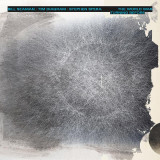
Stephen Spera is a New York based artist working in sound, photography, and plastic arts. His works have been released on some labels such as Handstitched, Tesselate, and Editions Vaché. In 2020 he began a series of collaborations with Bill Seaman, as the two artists admired each other’s work and found much in common. Their work together was graced with an ease which kept them composing an album- “Architectures of Light” -which was released on Britain’s Handstitched label. The project was very well-received. The two stay in touch and kept working, joined now by Tim Martin whose work as Maps and Diagrams was long-admired by Stephen and Bill. They too found instant understanding of each other’s work, and “ The World was turning Before” is the result of their collaboration. The three artists possess an almost uncanny communication that enables them to work whilst still enjoying each other’s individual voice, and this trio has come together so well that, in Spera’s words, “We no longer know who played what…”