Deviation Records is pleased to present you their latest and exiting collaboration with the Mieruba Label Team.
The Super Biton has existed since the 60s, like Ségou, its orchestra, the Super Biton has always remained behind what was done in Bamako and in the big cities of Africa. The Ségou orchestra developed and incorporated amplified instruments that mingle with brass, in particular electric guitars, symbols of modernity at the time. It opens up to Cuban music, and congas and bongos complement the sound of the orchestra. The group drew a unique sound from it, a perfect balance between tradition and the modern. There are about fifteen artits on stage, singers, guitarists drummer and percussionists. The Super Biton has for years been the best known and most sought-after orchestra of Mali outsid the country's borders, the Super Biton transcends the only Bambara heritage with its repertoire. Ségou is crossroads between Bambara, Fulani, Mandingo and Somono cultures and Biton has drawn on all these traditions to creat a repertoire extremely rich in rhythms and words. Some musicians completed their training in Cuba. They play "bambara jazz", incorporating a lot of
brass instruments such as saxophone, trumpet, clarinet. The compositions are modern and sophisticated.
Mieruba Art Center is a place dedicated to the transmission and safeguarding of Malian musical heritage through musical exchange between the older and newer generation - Artist residences, music lessons, rehearsals, Workshops, Masterclasses - and so on. Just as happy former musicians of Mali, the members of Super Biton give lessons on site. It is also the office of the Mieruba-ML label in the same place where Deviation Records is collaboration for the second time on the album - After the « Lost Maestros Collection » - with the
support of La Manufacture de Vinyles. Phil of Deviation Records tells: "I am very enthusiastic at the idea of offering you these two volumes of the History of the Super Biton of Ségou, Clique of Super Heroes of sound,
a source of inspiration for generations of musicians, DJs and also griots and storytellers of great renown! This double LP compiles the first Chapter of the rich Afro-Jazz-Folk Collection whose tapes have been remastered by Monsieur Jonin and cut at the MB Mastering Studio in Aubervilliers .The gatefold artwork is conceived by
Ewwanuelle Collage and formatted by Bertrand Tondeur, Graphic designer of Les Mouches. All that’sleft to say is that i hope that you enjoy listening to the final result !"
Поиск:u bert
Все
Trio of Nils Økland, Sigbjørn Apeland and Øyvind Skarbø - apart from the unusual instrumentation of violin or Hardanger fiddle, harmonium and drums, is the empathy displayed by the group as a whole; the hyper-sensitivity with which each individual member appears to respond to the contributions of the others in the pursuit of a collective goal, however obscure or unknowable that goal might be. Such extreme alertness to subtle changes of mood and nuance, and to the evolving sound-world of each, totally improvised, performance is rare in music of any type. 1982 have made it their signature. And because 1982 have so singularly created their own identity and sound, they can do anything they like. Normal conventions of style and genre, format and duration cease to matter: it is all 1982 music, anchored in the strong personalities of the three players and their respect for the primacy of the group as an entity in itself. Thus they can record as a trio - as on the group’s first two albums, ‘1982’ (from 2009) and ‘Pintura’ (their Hubro debut, from 2011) - or with guests, as in the acclaimed '1982 + BJ Cole' (from 2012), and the collaboration with composer Stian Omenås and a quintet of wind players for ‘1982: A/B’ (from 2014). There was also the unique ‘message in a bottle’ intervention of ‘The Bottlemail Project’, begun in 2011, whereby 15 copies of a new recording were ‘distributed’ via USB sticks enclosed in bottles and released into the open sea from Bergen and various worldwide locations. The new album, ‘1982: Chromola’, as well as marking the group's tenth anniversary, represents a return to the essential identity of the trio playing alone, without guests. Recorded at Sandviken church in Bergen on the day following an evening concert, the album uses material from both occasions, engineered once again by Davide Bertolini, who worked on the band’s four previous recordings. As an album it is remarkable for many things, but perhaps most notably for the role of Sigbjorn Apeland, who plays pipe organ on all but one of the seven tracks rather than harmonium, which features only in the closing, seventh, piece.
- A1: Ke Ke Ke Ke Ke Ya
- A2: Talk To Tapestries
- A3: The World Is Round
- A4: The Old Man Carrying A Black Bag Is In Their Garden
- A5: Chihuahua Talking Dog
- A6: St Mar
- A7: Meshes Over Morning
- A8: Offerings
- A9: Sang Sang
- B1: Shaking Johnny
- B2: The Tattoo Breathes
- B3: Little Red Sports Car (From Psycho Boys) (From Psycho Boys)
- B4: Commit To Fire
- B5: Authoress
BERTIE MARSHALL is a writer/ performer. He is also an acclaimed memoirist, most well known for his book ‘Berlin Bromley’ (2006) about his transformation from Bertie, an anxious, androgynous, depressed teenager, into Berlin, a teenager who would reject suburban values and become a founding member of punk’s ‘Bromley Contingent’, alongside Siouxsie Sioux, Steven Severin and Billy Idol.
October 29th sees Upset The Rhythm release ‘Exhibit’ by Bertie Marshall, collecting for the first time his songs and spoken word tracks from this fertile period of the 80s-90s.
He’s currently working on ‘Looking: Backwards To Go Forwards’, picking up from where ‘Berlin Bromley’ left off. His other books include the debut novel ‘Psychoboys’ (1997), ‘Nowhere Slow’ (2014), ‘From Sleepwalking to Sleepwalking’ (2016), ‘Wild - re write’ (2017), ‘The Peeler’ (2018) and ‘Pete’s Underpants’ (2019). In 2015 the British Library purchased his writing archive.
From 1980-83, Bertie was the frontman for post-punk boundary-pushers Behaviour Red - they released one single (favourably played by John Peel), did a mini-tour and broke up. At various times Behaviour Red featured Noel Blanden of Normil Hawaiians and fine artist Nicola Tyson. Their sound was characterised by looseness and freedom, boasting at times tribal drumming, streams of vocals, dazed guitars and feedback. Bertie continued sketching out atmospheric compositions afterwards too, walking a tightrope between bewildered pop and gothic folk. Central to everything is Bertie’s commanding voice; heartfelt, impassioned and masterfully leading you through the story.
Bertie became interested in spoken word and performance poetry in the 90s, which then led him into writing and performing in his own plays and devised theatre pieces. He did regular readings and performances in NYC and began writing books inspired by the visceral talents of Acker & Burroughs. Having lived in Berlin, San Francisco, and Brittany, Bertie now lives in London.
Stargazing from the sands of the Niterói beach, Tempos Futuros is low-end-led Brazilian futurism from one of Brazil’s most prolific and influential bassmen. As one third of legendary trio Azymuth, Alex Malheiros has pioneered a unique fusion of space-funk, samba and jazz since the early seventies. His playing can be heard on the records of Jorge Ben, Milton Nascimento, Roberto Carlos, Marcos Valle, and Mark Murphy (to name a few), and he’s performed and toured with everyone from Stevie Wonder to Chick Corea.
Written and recorded in Niterói, Brazil, overlooking Guanabara and the beaches, mountains and forests of Rio de Janeiro, Tempos Futuros has deep roots in Brazilian soil. The rhythms of Malheiros’ homeland have always permeated his music. But just like the Oscar Niemeyer designed Niterói Contemporary Art Museum which stands spaceship-like over the water, Tempos Futuros - while inspired by terrestrial forms, reaches out, deep into the great unknown.
Produced by acclaimed London-based producer Daniel Maunick, who has worked with Marcos Valle, Azymuth, Terry Callier, and Ivan Conti, the funk comes full circle. Daniel’s father Jean-Paul “Bluey” Maunick and Alex Malheiros shared a reciprocal stream of influence throughout the 80s, between London and Rio; Azymuth and Incognito; brit-funk and samba-funk. But just as with Azymuth’s music, you can also hear the influence of stateside jazz-funk masters like Roy Ayers, Weather Report, Lonnie Liston Smith, Mtume and Pleasure.
Tempos Futuros features Alex’s daughter, a Brazilian star in her own right, vocalist Sabrina Malheiros, Brazilian percussion master Sidinho Moreira, London based saxophonist Sean Khan, Marcos Valle’s go-to drummer Massa, and Brazilian keyboard player Dudu Viana. Featuring the late Azymuth keyboard maestro Jose Roberto Bertami on Fender Rhodes, the title track “Tempos Futuros” was originally recorded as a demo in 1995. On this finished version, Alex Malheiros used Bertami’s original keyboard take, explaining the posthumous release.
Reunited after some fourteen years, following the historic success of their first collaboration Raising Sand (2007), which reached #2 on the UK album chart, generated multi-platinum sales, and earned six Grammy Awards including Album and Record of the Year.
Like its predecessor, Raise The Roof was produced by T Bone Burnett, who worked with Plant and Krauss to expand their collaboration in thrilling new directions, accompanied by drummer Jay Bellerose, guitarists Marc Ribot, David Hidalgo, Bill Frisell, and Buddy Miller, bassists Dennis Crouch and Viktor Krauss, along with pedal steel guitarist Russ Pahl among others.
The album features twelve new recordings of songs by legends and unsung heroes including Merle Haggard, Allen Toussaint, The Everly Brothers, Anne Briggs, Geeshie Wiley, Bert Jansch and more. Other highlights include a Plant-Burnett original, “High and Lonesome,” and the Lucinda Williams classic “Can’t Let Go”.
Reunited after some fourteen years, following the historic success of their first collaboration Raising Sand (2007), which reached #2 on the UK album chart, generated multi-platinum sales, and earned six Grammy Awards including Album and Record of the Year.
Like its predecessor, Raise The Roof was produced by T Bone Burnett, who worked with Plant and Krauss to expand their collaboration in thrilling new directions, accompanied by drummer Jay Bellerose, guitarists Marc Ribot, David Hidalgo, Bill Frisell, and Buddy Miller, bassists Dennis Crouch and Viktor Krauss, along with pedal steel guitarist Russ Pahl among others.
The album features twelve new recordings of songs by legends and unsung heroes including Merle Haggard, Allen Toussaint, The Everly Brothers, Anne Briggs, Geeshie Wiley, Bert Jansch and more. Other highlights include a Plant-Burnett original, “High and Lonesome,” and the Lucinda Williams classic “Can’t Let Go,”.
Reunited after some fourteen years, following the historic success of their first collaboration Raising Sand (2007), which reached #2 on the UK album chart, generated multi-platinum sales, and earned six Grammy Awards including Album and Record of the Year.
Like its predecessor, Raise The Roof was produced by T Bone Burnett, who worked with Plant and Krauss to expand their collaboration in thrilling new directions, accompanied by drummer Jay Bellerose, guitarists Marc Ribot, David Hidalgo, Bill Frisell, and Buddy Miller, bassists Dennis Crouch and Viktor Krauss, along with pedal steel guitarist Russ Pahl among others.
The album features twelve new recordings of songs by legends and unsung heroes including Merle Haggard, Allen Toussaint, The Everly Brothers, Anne Briggs, Geeshie Wiley, Bert Jansch and more. Other highlights include a Plant-Burnett original, “High and Lonesome,” and the Lucinda Williams classic “Can’t Let Go,”.
- A1: Tomaga - Dub Divers
- A2: Zzmmyyhh - Ypy
- A3: Kuzaliwa Upya - Hieroglyphic Being
- A4: Hilal - Tarek Yamani
- A5: Vaguement (Haddadi) - Alan Strani
- B1: And The Ashes Of Our Burning Souls Will Fly Away - Ben Bertrand
- B2: Schein Davon - Conny Frischauf
- B3: Sitt-Il Muhanna - Aya Metwalli
- B4: Zumayyah (Remix) - Joakim
- C1: Yā Mal (Midaf ) - Poul Rovsing Olsen (Archive)
- C2: Zumayyah - Poul Rovsing Olsen (Archive)
- C3: Haddadi - Poul Rovsing Olsen (Archive)
- D1: Bahrï - Poul Rovsing Olsen (Archive)
2LP + 258p book[44,08 €]
New FLEE publication focused on Arabian Gulf's pearl divers, their culture through their soundscape, traditional songs & rhythms. Including archival recordings and reinterpretations by moderns electronic artists such as Joakim, Tomaga, Ben Bertrand, Conny Frischauf, Hieroglyphic Being .....
Available as 2LP, black vinyls & 2LP+258p book (English & Arabic text) bundle.
The pearls of the Gulf have stoked the imagination and desire of people around the world for centuries, their magnificence matched only by the courage of the divers who found them. This project aims to honor the memory of these valiant free-divers, their culture and their music by the means of a 2XLP compilation with undisclosed original recordings of pearl divers and inspired modern-day compositions by artists like Tomaga, YPY, Ben Betrand, Tarek Yamani or Hieroglyphic Being. Along with that record, a 258 pages long book in Arabic and English is available featuring contributions from regional experts and artists to contextualize the tremendously rich theme that is pearling and its music.
- 1: Sound Check
- 2: You Can’t Have Your Cake And Ego Too
- 3: Ai
- 4: Dependency
- 5: You Always Said
- 6: Program
- 7: See
- 8: Rushed Rain
Singer/songwriter and guitarist Jayan Bertrand, bassist Josh Ewers, electronic drummer Josue Vargas and guitarist Dion Kerr have coined new genre “Caribbean Jazzgaze” to describe their wholly unique combination of jazz, shoegaze, rock, hip-hop, and Afro-Caribbean rhythms that is Seafoam Walls.Seafoam Walls caught the attention of cultish music and art communities around South Florida with a soundtrack befitting of their dark tropical paradise, and have remained a Miami secret since 2016. Bandleader Jayan began his journey as a musician listening to metal and classic rock. His first formal lessons after a year of self-taught practice came from a family friend and talented jazz guitarist, Bemol Telfort. Although jazz wasn’t his first love but opened his heart to explorations of free improvisation which led to an introduction to Dion, Josh, and Josue — all active members on South Florida’s jazz scene. Seafoam Walls released their first EP, titled R-E-F-L-E-C-T in 2018 and ROOT in 2019 via Bandcamp. The band recently attracted international rock n roll consciousness following a secret all-ages matinee in the gardens of North Miami’s Centre for Subtropical Affairs with DC hardcore photographer Susie J (Teen Idles, Minor Threat, et al.) and Sonic Youth’s Thurston Moore front row centre. The Miami indie band completed the eight-track album entitled XVI earlier this year. Norwegian sound artist Lasse Marhaug mastered the work, and the band will stream three singles through the summer and autumn months before releasing the complete album at the end of 2021 on seafoam-green coloured vinyl via Daydream Library Series.
- A1: Ennio Morricone - Mio Caro Assassino (From Mio Caro Assassino/My Dear Killer (1971)
- A2: Bruno Nicolai - La Notte Che Evelyn Uscì Dalla Tomba (Feat Edda Dell'orso - Long Version - From La Notte Che Evelyn Uscì Dalla Tomba/The Night Evelyn Came Out Of The Grave (1971)
- A3: Bruno Nicolai - La Dama Rossa Uccide Sette Volte (Edit - From La Dama Rossa Uccide Sette Volte/The Red Queen Kills Seven Times (1972)
- A4: Stelvio Cipriani - Tribal Shake (From Reazione A Catena/A Bay Of Blood (1971)
- A5: Stelvio Cipriani - Il Sesso Del Diavolo (Finale) (Finale)
- A6: Stelvio Cipriani - Deviation-M1 (From Deviation (1971)
- B1: Riz Ortolani - L'etrusco Uccide Ancora (Titoli) (Titoli)
- B2: Daniele Patucchi - Giallo In Tensione (From Frankenstein '80 (1972)
- B3: Ennio Morricone - Ansimando (Feat Edda Dell'orso - From Macchie Solari/Autopsy (1975)
- B4: Manuel De Sica - Black Dream (From Mystery Tour (1985)
- B5: Paolo Gatti & Alfonso Zenga - Cerro Torre (From Cesare Maestri Il Ragno Delle Dolomiti (1980)
- B6: Berto Pisano - Greta (From La Morte Ha Sorriso All'assassino/Death Smiles On A Murderer (1973)
- B7: Sante Maria Romitelli - Bambola Sensuale (From La Rossa Dalla Pelle Che Scotta/The Sensuous Doll (1972)
- C1: Adolfo Waitzman - Languidamente (From Pensione Paura/Hotel Fear (1978)
- C2: Nico Fidenco - Il Demonio In Convento (From Immagini Di Un Convento/Images In A Convent (1979)
- C3: Ettore De Carolis - Flavour Of Death (From Il Cavaliere, La Morte E Il Diavolo (1983)
- C4: Marcello Giombini - Un Gioco Per Eveline-M11 (From Un Gioco Per Eveline (1971)
- C5: Carlo Maria Cordio - Absurd (From Rosso Sangue/Absurd (1981)
- C6: Stelvio Cipriani - Devil Dance (Performed By Goblin - From Un'ombra Nell'ombra/Ring Of Darkness (1979)
- C7: Daniele Patucchi - E Tanta Paura-M2 (From E Tanta Paura/Plot Of Fear (1976)
- C8: Marcello Giombini - Orinoco Prigioniere Del Sesso-M19 (From Orinoco: Prigioniere Del Sesso (1980)
- D1: Franco Micalizzi - Bargain With The Devil #3 (From Chi Sei?/Beyond The Door (1974)
- D2: Stefano Liberati - The Prophecy (Version A - From I Pensieri Dell'occhio (1978)
- D3: Luigi Ceccarelli - Walking Through The Shadows (From Difendimi Dalla Notte (1981)
- D4: Daniele Patucchi - Minaccia Sulla Citta (From Belve Feroci/Wild Beasts (1984)
Red vinyl[63,49 €]
PAURA explores the horror repertoire from the precious CAM Sugar archives taking us on a hypnotic journey into the labyrinths of fear, through the different variations that Italian horror took on from the esoteric and supernatural to the slasher films of the early 1970s; to reinterpretations of Romantic literature and gothic fiction to the splatter films of the ‘80s; and from witchcraft to metropolitan horror. This is not a real “best of” but an eclectic menu full of mysterious voices, childlike lullabies, sweet melodies, obsessive music boxes, obstinate harpsichords, crazy distortions and threatening synthesizers, conceived as a succession of sequences, as if a film edit. The new collection includes some of the most creative music ever written and strives to do justice not only to some of the best known composers in this genre, but also to many great unsung composers: From celebrated composers like Ennio Morricone, Riz Ortolani & Stelvio Cipriani to long-forgotten personalities who fed the industrial backbone of Italian cinema such as Daniele Patucchi, Marcelo Giombini & Berto Pisano. The collection includes 6 previously unreleased tracks plus 3 tracks released on vinyl for the first time and 5 tracks available commercially for the first time (originally released only as a limited promo item).
- A1: Low Country Blues
- A2: I Feel So Bad
- A3: The Sky Is Crying
- A4: Brother Booze
- A5: Mean Black Snake
- B1: Nobody In Town
- B2: Somebody Will Know Someday
- B3: Window Of My Eyes
- B4: Stranger
- B5: Blues Is A Bad Habit
- C1: One Scotch, One Bourbon, One Beer
- C2: More Than I Could Ask For
- C3: The Devil Made Religion
- C4: Dancing Bear
- C5: Just For Fun
- D1: Rambling On My Mind
- D2: Just Can't Quit You
- D3: Five Long Years
- D4: Once In A Liftime
Ten years after of the passing of Dutch blues singer Harry Muskee on
September 26th 2011, the Cuby + Blizzards Foundation presents the very
last encore of the legendary blues band.
Internationally Cuby is best known for The Window Of My Eyes, which, apart
from being a national chart hit in Netherlands, was also featured in the
soundtrack of the George Clooney film “The American”.
Sound engineer Ed Roose delved into his archives and came up with a memorable live album. One more time Grolloo Blues with Harry ‘Cuby’ Muskee, whom
we miss but who shall never be forgotten.
National blues lovers cherish his body of work, which is now complete.
Harry Muskee - Vocals Erwin Java - Guitar Helmig van der Vegt - Piano & Organ Herman Deinum - Bass Guitar Hans Lafaille - Drums Horns: Mikl s F rst Bert
Pfeiffer Peter van Soest Wouter Schueler
- “Bertha”
- “Me And My Uncle”
- “Mr. Charlie”
- “Loser”
- “Beat It On Down The Line”
- “Sugaree”
- “Jack Straw”
- “Next Time You See Me”
- “Tennessee Jed”
- “El Paso”
- “Big Railroad Blues”
- “Casey Jones”
- “Good Lovin’”
- “Brokedown Palace”
- “Playing In The Band”
- “Run Rudolph Run”
- “Deal”
- “Sugar Magnolia”
- “Comes A Time”
- “Truckin’”
- “Drums”
- “The Other One”
- “Sitting On Top Of The World”
- “The Other One, Pt. 2”
- “Not Fade Away, Pt. 1”
- “Goin’ Down Road Feeling Bad”
- “Not Fade Away, Pt. 2”
- “One More Saturday Night”
From the first show the Grateful Dead played in St. Louis in 1968 – when “St. Stephen” made its debut – local fans knew the Gateway City’s rich musical heritage had a unique way of coaxing the best out of the band. One of the shortest-lived iterations of the Grateful Dead was the band that existed December 1971 through March 1972. Jerry, Bob, Phil, Bill, Pigpen, and Keith formed a formidable version of the Dead that only played a few shows together before Donna Jean joined as vocalist, and before Pigpen would depart the stage for good in June 1972. What this sextet lacked in quantity of shows it made up for with creativeness, power, and inspiration.
When Pigpen re-joined the Dead on December 1, 1971, after a few months off during which Keith had joined as piano player, the band was now an unstoppably powerful live juggernaut it hadn't been since the height of the Primal Dead era in late 1968-1969. Widely considered one of the best shows from the Pigpen-Keith era of the Grateful Dead, December 10, 1971 in St. Louis has it all: Pigpen singing lead on four songs including an 18 minute version of Good Lovin' and a very rare performance of Run Rudolph Run; a deep dive into the Dead's psychedelic recent past with a monster version of The Other One; plus plenty of the new material from earlier in 1971 like Bertha, Loser, Sugaree, and Playing In The Band. They also hit upon much of the music that would appear the following year on Europe '72, such as Jack Straw, Tennessee Jed, Mr. Charlie, and One More Saturday Night. And no Dead show of this vintage would be complete without the "hits": Truckin', Sugar Magnolia, and Casey Jones all make appearances. This is truly one of the deepest, most dynamic, exciting, and accessible live shows in the entire Grateful Dead canon.
Ben Bertrand weaves transverse waves into otherworldly compositions. He embodies the singular motion of these melodic and harmonic forms in order to draft new sonic possibilities freed from the laws of the physical plane. Pulsating at the kernel of Ben Bertrand’s musical universe are vivid dreams generating the fabric of these tapestries. Dokkaebi is deeply familiar yet refreshingly unknown, like a comforting whisper from your subconscious. It gently drifts into perception, glistening like the sun sparkling off a glacier gliding along the edge of your vision.
Deep listening to these tonal sculptures is enriching. By opening oneself to their deliberate unfolding, you will discover new principles for sound organization far afield from common modes of operation. The gradual, rhythmic progression of his compositions are ever-shifting grains, which upon thoughtful contemplation, reveal astonishing worlds. Bertrand’s music is constructed from blueprints drafted with honest intentions aspiring to bring humans closer to a sense of wonder.
Ben Bertrand welcomes each listener to discover his music anew from their own perspectives. It is infinitely in time with your time. These are the ripples in the wake of successive revolutions of universal evolution. Dokkaebi is an example of musical expressions adapting to the contours of the human psyche through gentle reflection of multiplicity. They are sounds reshaping themselves to suit the contours of each individual’s subconscious—sonic entities projected simultaneously as molecular and holistic.
Dokkaebi is an oceanic expression softly set in motion by honest aims that echo and grow. Ben Bertrand beckons you to listen up and look in. There is great reward in this generous flow.
Ben Bertrand was accompanied by Christina Vantzou, Geoffrey Burton, Indré Jurgeleviciuté, Echo Collective: Margaret Hermant & Neil Leiter, Otto Lindholm.
New Yorker Singer-Songwriter entdeckt den Westcoast-Sound. Das 2019 erschienene Album "The Unseen In Between" etablierte den amerikanischen Musiker Steve Gunn als einen Großmeister des US-Songwritings - mit seinem neuen Album "Other You" unterstreicht er nun diesen Anspruch. Gunn, der ursprünglich aus Pennsylvania stammt und mittlerweile in Brooklyn lebt, ist für die Aufnahmen zu seinem neuen Album an die Westküste gereist. Das passt perfekt, denn seine Musik ist der ideale Soundtrack für Roadtrips von der Ostküste an die Westküste des Landes. Sein fein destillierter Sound lässt sich dabei zwischen Roots Rock, Americana, Folk und Jazz treiben. Steve Gunn ist Traditionalist und Suchender zugleich. Zumeist geht er nur mit losen Ideen ins Studio, bei denen er am Anfang nie so genau weiß, wo sie ihn am Ende hinführen werden. Ähnlich gestaltete sich das auch dieses Mal. Sein sechstes Studioalbum "Other You" nahm Steve Gunn zusammen mit Produzentenlegende Rob Schnapf (Beck, Elliott Smith, Kurt Vile) in dessen Mant Studios in Los Angeles Ende 2020 und Anfang 2021 auf. Schnapf hat großen Anteil an der Entstehung dieses Albums. Er schüttelte nicht nur das Soundbett auf, sondern mischte auch Steve Gunns Stimme in den Vordergrund, um den poetischen Lyrics des Songwriters die richtige Bühne zu bieten. Mit Hilfe von befreundeten Musikern wie Juliana Barwick, Mary Lattimore, Bridget St. John, Jeff Parker, Bill MacKay, Ben Bertrand und dem Schlagzeuger Ryan Sawyer (TV On The Radio, Thurston Moore, Gang Gang Dance) entstand mit "Other You" ein Album, mit dem Steve Gunn nicht nur die Grenzen von Genres auslotet, sondern auch seine eigenen.
COLOURED CLEAR VINYL[26,85 €]
New Yorker Singer-Songwriter entdeckt den Westcoast-Sound. Das 2019 erschienene Album "The Unseen In Between" etablierte den amerikanischen Musiker Steve Gunn als einen Großmeister des US-Songwritings - mit seinem neuen Album "Other You" unterstreicht er nun diesen Anspruch. Gunn, der ursprünglich aus Pennsylvania stammt und mittlerweile in Brooklyn lebt, ist für die Aufnahmen zu seinem neuen Album an die Westküste gereist. Das passt perfekt, denn seine Musik ist der ideale Soundtrack für Roadtrips von der Ostküste an die Westküste des Landes. Sein fein destillierter Sound lässt sich dabei zwischen Roots Rock, Americana, Folk und Jazz treiben. Steve Gunn ist Traditionalist und Suchender zugleich. Zumeist geht er nur mit losen Ideen ins Studio, bei denen er am Anfang nie so genau weiß, wo sie ihn am Ende hinführen werden. Ähnlich gestaltete sich das auch dieses Mal. Sein sechstes Studioalbum "Other You" nahm Steve Gunn zusammen mit Produzentenlegende Rob Schnapf (Beck, Elliott Smith, Kurt Vile) in dessen Mant Studios in Los Angeles Ende 2020 und Anfang 2021 auf. Schnapf hat großen Anteil an der Entstehung dieses Albums. Er schüttelte nicht nur das Soundbett auf, sondern mischte auch Steve Gunns Stimme in den Vordergrund, um den poetischen Lyrics des Songwriters die richtige Bühne zu bieten. Mit Hilfe von befreundeten Musikern wie Juliana Barwick, Mary Lattimore, Bridget St. John, Jeff Parker, Bill MacKay, Ben Bertrand und dem Schlagzeuger Ryan Sawyer (TV On The Radio, Thurston Moore, Gang Gang Dance) entstand mit "Other You" ein Album, mit dem Steve Gunn nicht nur die Grenzen von Genres auslotet, sondern auch seine eigenen.
- A1: Ryan James Ford - Eq 10Mg Base
- A2: Lada (Dasha Rush & Lars Hemmerling) - Kassi
- A3: Cosmin Trg - Sourde
- B1: Heidi Sabertooth - Innergaze
- B2: Henning Baer - Nightwing Microlight
- B3: Setaoc Mass - Silent Tension
- C1: Truncate - Basic
- C2: Shlomi Aber - Terrified
- C3: Hemka - Culture
- D1: Bertrand - Midsummer Dream
- D2: Adriana Lopez - Chaos Transition
Berlins herausragende Technoterrestrial Ellen Allien bringt uns die letzte Ausgabe der Mammut-Compilation-Serie We Are Not Alone, insgesamt drei Teile mit jeweils 11 Tracks. Jede der Compilations enthält brandneue Sounds von Künstler*innen, die entweder bereits auf der legendären Veranstaltungsreihe gespielt haben oder zukünftig auf We Are Not Alone-Partys auftreten werden. Hier kommt das Abschlusskapitel, schnallen wir uns an für ein freakiges Finale...
Ryan James Ford - EQ 10MG Base - Kybernetische Assimilatoren dringen in die Exosphäre der Erde ein.
LADA (Dasha Rush & Lars Hemmerling) - Kassi - Dichter kosmischer Minimalismus
Cosmin TRG - Sourde - Unorthodoxe Renegaten-Snares
Heidi Sabertooth - Innergaze - Introspektive Präzision eines Lasers
Henning Baer - Nightwing Microlight - Donnernde kataklysmische Vibrationen
Setaoc Mass - Silent Tension – Urzeitliche, rituelle Praktiken
Truncate - Basic – Straff, Athmosphärisch und druckvoll
Shlomi Aber - Terrified - Schauriger Technoterror!
Hemka - Culture - Der Traum von einer wilden Fahrt durch die Nacht
Bertrand. - Midsummer Dream – Raue Beats und fluffige Pads
Adriana Lopez - Chaos Transition – Fehlfunktion, Schmelze, Supergau
- A1: Alessandro Alessandroni, Sandro Brugnolini - American Sound
- A2: Ennio Morricone - Colpi Di Piume E Tempesta
- A3: Luigi Zito - Dolce Notte
- A4: Sandro Brugnolini, Teimar, Massimo Guantini - Scorrevole
- A5: Berto Pisano - Il Caso Bebawi
- B1: Tito Schipa Jr, Giovanni Tommaso - Policeman
- B2: Sandro Brugnolini, Teimar, Massimo Guantini - Evanescenze Iridescenti
- B3: Alessandro Alessandroni, Sandro Brugnolini - Vortice
- B4: Massimo Guantini - Wild Morning
- B5: Sandro Brugnolini, Teimar, Massimo Guantini - Discotime
- B6: Armando Trovaioli - Macchina Damore
A collection of rare tracks for the very first time on vinyl. A series of 70s and early 80s musical sketches used for advertisement, tv series and movies. A who’s who of the italian golden age of soundtrack and libraries era, featuring outstanding numbers by Maestro Morricone, Alessandroni, Brugnolini and the likes.
- A1: Pas Perdus
- A2: Tsom
- A3: Aux Cyclades Electronique
- A4: Ma Rencontre
- A5: Ile De Beton
- B1: Attention Amiante
- B2: Chaque Jour
- B3: 14H
- B4: Nonza
- B5: Ok Skorpios
- B6: Gris Metal
- C1: Des Yeux Roses
- C2: L'observatoire
- C3: Le Pays Imaginaire
- C4: Coeur Inapaise
- C5: Serpentine
- C6: Les Amplis De Mayence
- D1: (Come Potrei) Scordare (Come Potrei)
- D2: Vision Of Love
- D3: Biscarosse
- D4: Kim
- D5: Haute Volupte
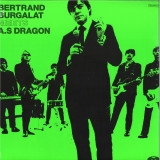
Bertrand Burgalat's first album 'The Sssound of Mmmusic', also known as TSOM, is released in an expanded reissue, twenty-one years after its first publication, on June 12th 2021 for the Record Store Day. Bertrand Burgalat combines lush arrangements, dreamy atmospheres and pop culture with class and humor.
In 2000, Bertrand Burgalat decided to evolve openly by releasing his first solo album 'The Sssound of Mmmusic' which had been in the works since the creation of the label 5 years earlier. This album, a true melancholic and sensual sonorama, reveals the very essence of Burgalat's art, fragile, nuanced, with a rare humility. Dotted with banjos and club bass, cascades of synthetic strings and soprano saxophone, geisha choirs and unblocked beats, 'The Sssound of Mmmusic' appears as a contrasting work where opposites unite in perfect alchemy.
Accompanied by previously unreleased tracks for the first time on vinyl, the album features songs like 'Gris métal' with a text by Michel Houellebecq, 'Vision of Love' his cover of Mariah Carey, or 'Kim' five minutes of intoxicating music.
KAMA Kollektiv ist eine multinationale Gruppe um die junge finnische Sängerin und Trompeterin Kirsi-Marja "Kiki" Harju. Das Wort KAMA ist finnisch für "Dinge" oder "Zeug", und es beschreibt, worum es in der Musik der Band geht: die kleinen Dinge des Lebens, die oft so leicht übersehen werden. Kiki erzählt Geschichten - einige auf Finnisch, einige auf Englisch - über Liebe und Verwandlung, Wälder und Tiere, kleine alltägliche Freuden und eine mystische, romantische Sicht auf die Natur. Die Musik ist eine hypnotisierende Mischung aus Jazz, nordischem Folk und Indie-Pop. Sie nimmt die Zuhörer mit auf eine Reise in märchenhafte Länder und intensive Gefühle. Die Band ist in Amsterdam beheimatet, aber Kikis Songs sind voller Erinnerungen an die wunderschönen Landschaften, dunklen Wälder und den eisigen Frost ihrer Heimat Finnland. Der Titel des ersten Albums des KAMA Kollektiv ist KOTI, ein finnisches Wort für "Zuhause".
Limited coloured marbled vinyl edition of this album
Sam Cooke is considered one of the „fathers“ of soul. Already as a child he performs together with his
siblings. His first successes came with the band The Soul Stirrers. His first hit was as a solo artist with You
Send Me. Cook wrote his own songs and founded his own label, which signed musicians such as Bobby
Womack and Johnnie Taylor. He himself celebrates his greatest successes at RCA with world hits such as
Cupid, Bring It On Home To Me and Wonderful World. The last proves to be an evergreen until today;
whether in the jeans advertising of Levi‘s or through successful cover versions of Herman‘s Hermits, Bryan
Ferry or Otis Redding.
At the age of only 33, Sam Cooke dies. The motel manager Bertha Franklin shoots him in the Hacienda
Motel in Los Angeles and later claims self-defense. The exact circumstances of his death remain unclear
to this day. Posthumously, Sam Cooke receives all the major awards. A small excerpt: He is part of the
Rock and Roll and the Songwriters Hall of Fame, he was also awarded the Grammy Lifetime Achievement
Award. Rolling Stone magazine lists him 16th among the 100 greatest musicians of all time and fourth
among the best singers of all time. What A Wonderful World...
- A1: Bertha (Live At The Fillmore East, New York, Ny, April 27, 1971)
- A2: Mama Tried (Live At The Fillmore East, New York, Ny, April 26, 1971)
- A3: Big Railroad Blues (Live At The Fillmore East, New York, Ny, April 5, 1971)
- A4: Playing In The Band (Live At The Fillmore East, New York, Ny, April 6, 1971)
- B1: The Other One (Live At The Fillmore East, New York, Ny, April 28, 1971)
- C1: Me & My Uncle (Live At The Fillmore East, New York, Ny, April 29, 1971)
- C2: Big Boss Man (Live At The Fillmore East, New York, Ny, April 26, 1971)
- C3: Me & Bobby Mcgee (Live At The Fillmore East, New York, Ny, April 27, 1971)
- C4: Johnny B. Goode (Live At The Fillmore East, New York, Ny, March 24, 1971)
- D1: Wharf Rat (Live At The Fillmore East, New York, Ny, April 26, 1971)
- D2: Not Fade Away / Goin’ Down The Road Feeling Bad (Live At The Fillmore East, New York, Ny, April 5, 1971)
Celebrating the 50th Anniversary of Grateful Dead’s first album to be certified Gold, this 2021 Remaster pressed onto 180g Black vinyl features all newly remastered tracks, remastered by GRAMMY ® Award winning engineer, David Glasser with Plangent Process Speed Correction.
Originally released in 1971, this is the American rock band’s second live album, known by fans as Skull and Roses due to the iconic cover art. The album was originally released without a title after the band initially submitted the album name “Skull Fuck”, but the band, fans and almost everyone who knows the Grateful Dead fondly refers to the album as Skull and Roses.
The album was their first album to be certified Gold in the US by the RIAA and is their second best-selling album. Pressed here onto 180g black vinyl, this remaster transports the listener back to the Dead’s residency at The Fillmore East, New York and, as with the first release, features three tracks previously unreleased on the studio album, “Bertha, “Playing In The Band” and “Wharf Rat”.
[a] a1. Bertha (Live at The Fillmore East, New York, NY, April 27, 1971) [2021 Remaster]
[b] a2. Mama Tried (Live at The Fillmore East, New York, NY, April 26, 1971) [2021 Remaster]
[c] a3. Big Railroad Blues (Live at The Fillmore East, New York, NY, April 5, 1971) [2021 Remaster]
[d] a4. Playing in the Band (Live at The Fillmore East, New York, NY, April 6, 1971) [2021 Remaster]
[e] b1. The Other One (Live at The Fillmore East, New York, NY, April 28, 1971) [2021 Remaster]
[f] c1. Me & My Uncle (Live at The Fillmore East, New York, NY, April 29, 1971) [2021 Remaster]
[g] c2. Big Boss Man (Live at The Fillmore East, New York, NY, April 26, 1971) [2021 Remaster]
[h] c3. Me & Bobby McGee (Live at The Fillmore East, New York, NY, April 27, 1971) [2021 Remaster]
[i] c4. Johnny B. Goode (Live at The Fillmore East, New York, NY, March 24, 1971) [2021 Remaster]
[j] d1. Wharf Rat (Live at The Fillmore East, New York, NY, April 26, 1971) [2021 Remaster]
[k] d2. Not Fade Away / Goin’ Down the Road Feeling Bad (Live at The Fillmore East, New York, NY, April 5, 1971) [2021 Remaster]
- A1: (Theme From) The Monkees
- A2: Saturday’s Child
- A3: I Wanna Be Free
- A4: Tomorrow’s Gonna Be Another Day
- A5: Papa Gene’s Blues
- A6: Take A Giant’s Step
- B1: Last Train To Clarksville
- B2: This Just Doesn’t Seem To Be My Day
- B3: Let’s Dance On
- B4: Sweet Young Thing
- B5: Gonna Buy Me A Do
- C1: The Monkees (Radio Spot)
- C2: (Theme From) The Monkees (Tv Version)
- C3: This Just Doesn’t Seem To Be My Day (Tv Version)
- C4: All The King’s Horses (Mono Tv Version)
- C5: I Wanna Be Free (Fast Version)
- C6: You Just May Be The One
- C7: Take A Giant Step (Mono Tv Version)
- D1: (Theme From) The Monkees (Second Version)
- D2: Saturday’s Child (Mono Tv Version)
- D3: I Don’t Think You Know Me (2014 Remix)
- D4: So Goes Love (2020 Remix)
- D5: I Can’t Get Her Off My Mind (2014 Remix)
- D6: (I Prithee) Do Not Ask For Love
- D7: I Wanna Be Free (Demo – Take 5)
The Monkees, one of the most recognizable names in the annals of pop music history, are an American rock and pop band originally active between 1966 and 1971, with reunion albums and tours in the decades that followed. The original line up was Micky Dolenz, Michael Nesmith, Peter Tork and Davy Jones. The group was conceived in 1965 by TV producers Bob Rafelson and Bert Schneider specifically for the sitcom series The Monkees, which aired from 1966 to 1968. The music was originally supervised by record producer Don Kirschner, backed by the songwriting duo of Tommy Boyce and Bobby Hart.
The Monkees self-titled debut and second albums were meant to be a soundtrack to the first season of the TV show, to cash in on the audience.Their first single, “Last Train To Clarksville” b/w “Take A Giant Step,” was released in August 1966, just weeks prior to the TV broadcast debut. In conjunction with the first broadcast of the TV show on September 12, 1966, NBC and Columbia had a major hit. The first long-playing album, The Monkees, was released a month later; it spent 13 weeks at #1 and stayed on the Billboard charts for 78 weeks.
The Monkees have sold more than 75 million records worldwide making them one of the biggest selling groups of all time with international hits, including “Last Train to Clarksville,” “Pleasant Valley Sunday,” “Daydream Believer,” and “I’m A Believer.” ROG is reissuing their iconic debut album as a deluxe 2LP set with bonus tracks (several of which are unreleased mixes) and are having lacquers cut from the analog tapes for the first time since 1966—creating THE DEFINITIVE version of this album since original release!
[n] c3. This Just Doesn’t Seem to Be My Day (TV Version) [Mono]
[p] c5. I Wanna Be Free (Fast Version) [Mono TV Mix]
[q] c6. You Just May Be The One [Mono TV Version]
[x] d6. (I Prithee) Do Not Ask For Love [2020 Remix]
- A1: Flash
- A2: Retrouvailles
- A3: Parallèles
- A4: Du Haut Du 33E Étage
- A5: Spectacle Du Monde
- B1: L'attente
- B2: Sans Accolades
- B3: L'homme Idéal
- B4: La Chanson Européenne
- C1: E Pericoloso Sporgersi
- C2: Vous Êtes Ici
- C3: Correspondance
- C4: J'ai Adoré Cette Journée
- C5: Rêve Capital
- D1: L'homme Idéal (Yuksek Radio Edit)
- D2: L'attente (Version Instrumentale)
- D3: Du Haut Du 33E Étage (Charles Dollé Cover)
- D4: L'homme Idéal (Yuksek Extended)
Bertrand Burgalat's new album, RÊVE CAPITAL, will be released on Friday June 11, 2021 by Tricatel.
How many of Burgalat's songs have accompanied difficult afternoons, happy evenings and lonely mornings? The list is long. And it gets longer with this album, each track of which widens the rift between the plates of space and time.
Jean-Pierre Montal
Burgalat makes crackle what we like most in his universe: the reality of things and their discrepancy, the intimate and the universal.
Stéphane Lerouge
A long awaited new start for the Italian-born, Berlin based DJ & producer Bertrand. is set to be marked on 7th of June along with a 12′ vinyl only release on Future Déjà Vu. ”Bohr Model” summons new horizons in Bertrand.’s sound with an abundance of heady uppers & forward pushing dance anthems. The techno-electro mini-album is his first EP since 2019 and boldly highlights an advancement of Bertrand.’s production style and refined musical visions. The diverse take on captivating club tracks demolish the conventional means of dance music creating an audible narrative right at the intersection of edge-cutting sound and classical dancefloor weaponry.
- 01: Il Vuoto - Seq. 1 (Night Jazz Per Vibrafono)
- 02: Il Vuoto - Seq. 2 (Night Jazz Per Sax Baritono)
- 03: Il Vuoto - Seq. 3 (Swing Per Sax Baritono)
- 04: Estasi
- 05: Il Vuoto - Seq. 4 (Cordovox In 6/8)
- 06: Evasione
- 07: Il Vuoto - Seq. 5 (Sud-America - Ritmico Per Voce Maschile)
- 08: Frenesia
- 09: Il Vuoto - Seq. 6 (Twist)
- 10: Il Vuoto - Seq. 7 (Blues Per Organo)
Four Flies is proud and excited to present the first full-album release of the long-forgotten soundtrack composed by Armando Trovajoli for Piero Vivarelli's 1964 movie Il Vuoto.
Rightly considered by many to be a key figure, if not the key figure, in the history of Italian jazz, Trovajoli was responsible for fostering an appreciation and understanding of jazz among the generation of music listeners and musicians raised under Mussolini and Fascist nationalism. His outstanding work as a pianist, composer and conductor contributed immensely to the popularization of the genre among the general public and to the reduction of institutional bias against it.
The collaboration between Trovajoli and Vivarelli did not happen by chance. The latter, now regarded as one of Italy's "kings of the B's" for his work in the 'exotic-erotic' genre (Il dio serpente, Codice d'amore orientale, etc.), was a great music expert, a skilled talent scout for the Italian music industry, and a true lover of jazz.
Most of Trovajoli's score for Il vuoto has a refined smoothness that is clearly reminiscent of cool jazz – many tracks on the soundtrack are performed by a sextet featuring Trovajoli himself on piano, Carlo Zoffoli on vibraphone, Gino Marinacci on baritone sax and flute, Enzo Grillini on electric guitar, Berto Pisano on double bass, and Sergio Conti on drums and percussion. At the same time, Trovajoli explores other jazz styles or sub-styles in faster, more rhythm-oriented tracks influenced by bossa nova, samba, and even rock'n'roll, where instruments like drums and percussion, electric guitar, or flute take center stage.
This stylistic variety demonstrates both the maestro's versatility as a composer and the fine skills of the musicians who performed on the soundtrack. Like Trovajoli, they were all pioneers of Italian jazz and played in Italy's very first 'institutional' jazz orchestra: the Orchestra di Musica Leggera of the RAI (the Italian public broadcasting company), formed under Trovajoli's leadership in 1956 and credited as "his orchestra" in public performances and in the album The Beat Generation (RCA Italiana, 1960).
By making available for the first time ever almost all of the music recorded by Trovajoli for Il vuoto, this LP fills an important gap in the maestro's discography. Most importantly, it offers further insight not only into the history of Italian jazz, but also into the penetration of the genre into Italian film music, which was possible thanks to Trovajoli's mastery as a composer and to the virtuosity of the pioneering musicians who performed in his orchestra.
** 140gr Vinyl // limited edition // introduction text written by the artist on the back cover// die-cut hole in the rear // printed in cmyk **
"Ayni is the immersive debut ep of Sara Berts, producer and composer based in Turin, who self-described the record as a gift from the plants and for the plants.
The field recordings flowing through the whole record come from the Peruvian Amazon forest, where she spent 3 months in 2019 while seeking personal healing.
All the other sounds come from the Buchla Easel and were recorded in Italy during the suspended time of the 2020 strict lockdown.
Two different times and spaces linked together through isolation and uncertain feelings for the future.
However, Ayni doesn't contain any element of darkness but is inspired by a sense of redemption and healing arising from these events.
A tense but positive attitude flows through all the tracks of the ep, giving back a feeling of harmony and peace.
A thoroughly immersive record that deserves a deep listening to explore and appreciate all the different shades of sound and emotion it contains."
2LP on crystal clear vinyl. In these trying times, where intimacy and closeness are fraught with danger, Dans Dans (Dance Dance) brings you the sound of connection, communication, passion and togetherness.
In these trying times, where intimacy and closeness are fraught with danger, Dans Dans (Dance Dance) brings you the sound of connection, communication, passion and togetherness.
Dans Dans unites the talents of three of Belgium's most prolific music makers in Bert Dockx (Flying Horseman), Fred 'Lyenn' Jacques (Lyenn, Lanegan band) and Steven Cassiers (Dez Mona, DAAU). An utterly unique musical collective, the trio are set to release new album 'Zink' on the 23rd April via Ghent based independent, Unday Records.
From jazz, psychedelic blues and ecstatic noir soundtracks to spacey rock 'n' roll, Dans Dans cut their teeth on the cool jazz cafe scene in Flanders, Brussels with their sensational live performances and have since gone on to become a mainstay on the flourishing Belgian musical landscape.
Releasing their self-produced, eponymous debut album back in 2012, their highly distinctive, intuitive mix of musical styles and their ever-imaginative live shows caught the attention of discerning music lovers, journalists and promoters. A relatively unknown tour de force outside the Benelux region, Dans Dans have built a solid fan base since their inception with limited edition runs of early releases becoming collector's items among vinyl enthusiasts.
Well-received appearances at Cactus Festival, North Sea Jazz and Pukkelpop, as well as Gent Jazz, Ljubljana Jazz and Jazz Middelheim have confirmed their reputation as one of the most unique and exciting bands to come out of Belgium. In recent years, the group has been touring throughout Europe, garnering enthusiastic reactions beyond the Belgian borders as well. There's a case to be made that Dans Dans even played a key role in breaking down the wall between the Belgian jazz scene and the pop/rock circuit (years before pop journalists began referring to a New Wave of Belgian Jazz).
Opening with the moody noir rhythms of 'Cinder Bay', Dans Dans look to construct their own musical universe across 'Zink'. 'Naiad' unfolds into a devastating explosion of heavy feedback and wild, crashing drums before subtle electronica and baroque art-rock collide on 'Anemone' giving a good indication of Dans Dans' eclecticism. There's unquestionably a deep, underlying filmic beauty to the music, an evolving darkness and a perpetual sense of dread and paranoia. Elsewhere, 'Ravine' is intoxicating, provocative and uncompromising while the beatific 'Shell Star' is an infectious exploration of hypnotic grooves, atmospheric sounds and mind-bending melodies.
Producer Christine Verschorren (Philippe Catherine, Ivan Paduart) accentuates the music's wondrous fluidity throughout 'Zink'; the intriguing interplay; the subtle ties; the deep layering. Musical styles and influences are being blended organically and sublimated into what can only be called Dans Dans-music. "This is no fusion, no rock or jazz or ambient. This is the sound of the searching, intuitive human; of a timeless, mysterious dream; of the heart, the gut and the soul," says Dockx.
Songwriter and fingerstyle guitarist, Jason McNiff releases his 7th full length album, Dust Of Yesterday, on April 16th. Produced and engineered by Roger Askew (Joe Strummer, Wilko Johnson, Christy Moore) the album was recorded throughout the summer and autumn of 2020 in Roger's home studio in Eastbourne, UK. It features McNiff's signature acoustic guitar work throughout with significant contributions from Beth Porter (of Eliza Carthy's band) on cello and Basia Bartz (most London based folk bands) on violin.
His first album since leaving London - McNiff is now based in Hastings - Dust of Yesterday is an elegy on moving away from a beloved place and a lament for lost youth. We are treated to a musical tour of McNiff's life to date, from his 8-year residency as a Flamenco guitarist in a Spanish bar in Waterloo (Damaged Woman) to hopping the northbound train from King's Cross, hiding in the lavatory up to Nottingham (A Load Along). All the songs on Dust of Yesterday, in one way or another, speak of the past. But it is not bleary-eyed nostalgia.
"I read somewhere that it is possible to literally change the past and I became very interested in this idea. It so happened around the same time that I discovered the Greek/Egyptian poet, Cavafy. In his poems he would talk about the past, but the memory is not a thing of the past, but something that is still part of him in the present. I could relate to that. "
Musically, Jason is influenced by the British acoustic guitarists (Jansch, Graham, Wizz Jones) and the great folk/rock troubadours of the 60s and 70s. He loves Mark Knopfler in the early days; the English teacher turned reluctant rock star, singing about Leeds and Newcastle and sounding like JJ Cale. For McNiff, the lyrics are central, and he has been especially captivated by those considered poets and writers as well as musicians. He loves literature and cites Hemingway, Chekhov and the aforementioned Cavafy, as major influences in his work. ( He has 'translated' Hemingway's 'For Whom the Bell Tolls' into a song on a previous album, 'Nobody's Son')
Jason McNiff was born in Bradford, Yorkshire in 1974 to an Irish father and Polish mother. Academically gifted, he did well at school and went to the University of Nottingham to study French and Russian. He fell in with the Folk & Blues scene in that city before moving to London in the mid-nineties to do another degree in English Lit. He was just in time to catch the Bert Jansch residency at the 12 Bar club. For 6 months, every Wednesday night, McNiff would be in the front row of Soho's tiny club learning fingerstyle from the master. He would later sign his first record deal with Snowstorm Records, a label run by Bert's brother-in-law and found himself opening for Bert on numerous occasions.
There followed a string of albums on various labels, including 2003's Nobody's Son (Americana UK album of the year) and 2011's April Cruel (nominated for best alt-country album at the Independent Music Awards in the US.)
cello player and electronic artist martina bertoni's new album "music for empty flats" delivers masterfully crafted experimental ambient / drone for fans of hildur guðnadóttir, giulio aldinucci or lawrence english.
martina bertoni is a berlin based cellist and composer. she started playing the cello at a very young age. classically trained, bertoni's career soon developed around experimental and film music where her cello has been featured in numerous records, soundtracks for awarded movies and tv series and collaborations, among others with blixa bargeld and teho teardo with whom she recorded several albums and performed at many prestigious festivals all around the globe.
the core of her solo work is based on deconstructing the relationship with her own instrument by combining acoustic sound, repetition, analog and digital synthesis. after the eps "in a paradise you would be happy" (2018) and "the green ep" (2019) she released her critically acclaimed full length album "all the ghosts are gone" with the reykjavík based label falk in january 2020.
on her new album she continues to explore the sonic possibilities of her instrument which she uses as sound source - sounds which are then processed, adding reverb, feedback and sub-bass frequencies and thus crafting sonic sculptures, rich of atmospheres and frictions.
"the inspiration for the title "music for empty flats" comes from a fraction of time during last winter, while i was visiting iceland. i had the strange opportunity to spend lots of time listening to music, alone in a brand new but unoccupied - therefore completely naked - empty flat in the suburbs of reykjavík. it was christmas, it was constantly dark, outside there was snow, inside there was this strange dystopian empty space in which i could listen to my favourite pieces of music in complete solitude. this is when i started sketching the new record." says bertoni.
the resulting seven new tracks deliver masterfully crafted experimental ambient / drone, dense and intense but fragile and sensitive at the same time. A more than impressive new artistic statement by martina bertoni, recommended not only for fans of hildur guðnadóttir, giulio aldinucci or lawrence english!
- A1: Ryuichi Sakamoto - First Coronation
- A2: Ryuichi Sakamoto - Open The Door
- A3: Ryuichi Sakamoto - Where Is Armo?
- A4: Ryuichi Sakamoto - Picking Up Brides
- A5: Ryuichi Sakamoto - The Last Emperor: Theme Variation 1
- A6: Ryuichi Sakamoto - Rain (I Want A Divorce)
- A7: Ryuichi Sakamoto - The Baby (Was Born Dead)
- A8: Ryuichi Sakamoto - The Last Emperor: Theme Variation 2
- A9: Ryuichi Sakamoto - The Last Emperor
- B1: David Byrne - Main Title Theme (The Last Emperor)
- B2: David Byrne - Picking A Bride
- B3: David Byrne - Bed
- B4: David Byrne - Wind, Rain And Water
- B5: David Byrne - Paper Emperor
- B6: Cong Su - Lunch
- B7: The Red Guard Accordion Band - Red Guard
- B8: The Ball Orchestra Of Vienna - The Emperor’s Waltz
- B9: The Girls Red Guard Dancers - The Red Guard Dance
The Last Emperor is a lavish historical epic directed by the great Italian filmmaker Bernardo Bertolucci and starring John Lone, Joan Chen, and Peter O’Toole. The film tells the life story of Pu Yi, the last monarch of the Chinese Qing dynasty prior to the republican revolution in 1911. The score for The Last Emperor was created by an unlikely trio: Ryuichi Sakamoto, David Byrne, and Cong Su. The soundtrack is a theme-filled exploration of the sounds and musical traditions of Imperial China, filtered through some very contemporary sensibilities. Sakamoto’s contribution comprises nine cues and is focused around his main theme: a beautiful, lyrical melody for the full orchestra. It’s soft, wistful, and introspective, but becomes increasingly dramatic. Byrne contributes five cues, and the first one is the most recognisable, as it’s the main title theme playing over the film’s stylish opening credits sequence. It emerges from a set of evocative Chinese percussion items, with the melody being carried by a gorgeous, lilting erhu. It’s traditional and wholly steeped in Chinese classical music, but it has a real emotional weight that will connect with westerners. Cong Su’s contribution to the soundtrack album comprises just one cue – “Lunch” – but there is much more of his music in the film; Su was basically responsible for writing all the period-specific Chinese source music one hears in and around the imperial palace during Pu Yi’s childhood. All in all, Sakamoto, Byrne and Cong Su deliver an excellent score.
Due to the Covid-19 pandemic, De Nor had no choice but to free all its prisoners - even the jazz ones - and shut its gates. But the red beacon shall shine again! Until such a time, we asked some of the artists who were booked to play there this summer to submit a piece for this new publication in lieu of their cancelled performance. This compilation lp contains tracks by Lori Goldston, Hiele, Agnes Hvizdalek, Nubots, Justine Grillet, Thurston Moore, Sami Bergold, Possessed Factory, Stacks, David Edren, Aaron Dilloway & Lucrecia Dalt, Ka Baird, Ben Bertrand, Miaux, Lorie Bevins, and C.O.P. and is housed in a deluxe dye cut linnen sleeve and comes with an insert and a mini Nor cut out made by Gerard Herman. De Nor is a sculpture-pavillion in the grounds of the Middelheim Museum conceived and designed by Dennis Tyfus and FVWW Architecten. In peace time it hosts concerts, lectures, and various presentations throughoutthe summer.
Mats Gustafsson - Flute, baritone sax, live electronics, Johan Berthling - Electric bass, Andreas Werliin - Drums with Goran Kajfes - Quartertone trumpet, Mats Aleklint - Trombone, sousaphone, horn arrangements. Fire! tracking new paths and reaching new levels of excellence, still honoring their 12 year old vow of presenting a fresh approach to improvised music. Their debut album, You Liked Me Five Minutes Ago, was released in 2009 to wide international acclaim. "The basic strategy of pairing the expressive energy of free jazz with a sturdy sense of groove has yielded something potent and self-contained" (New York Times). Between this and Defeat there's been five albums, including collaborations with Jim O'Rourke (Unreleased?, 2011) and Oren Ambarchi (In The Mouth A Hand, 2012). No two Fire! records sound the same, but with Defeat they have taken their biggest leap so far, with Gustafsson giving the flute a prominent place in the sound image, a surprising and most successful move, his both expressive and ornamental approach given ample room to breathe, especially on the two long tracks bookending the album. In places more subdued than on previous efforts, but with the distinctive bass figures and hypnotic mood fully intact. There are some lively stretches with guests Goran Kajfes and Mats Aleklint, bringing to mind their big band offshoot Fire! Orchestra, albeit on a smaller scale. For over 20 years we have made a habit of releasing music that is beyond easy classification, in later years typified by Hedvig Mollestad, Elephant9 and Krokofant, but cemented by Fire! and their exploratory curiosity and deep love of music in general. We, and many others, have tried to compare the trio to other groups, but listening to Defeat we realize how futile this is. Given the above there's no doubt there are many influences at play, but the resulting brew is in a class by itself.
Harry Bertoia's Glowing Sounds LP contains three versions of the same composition, each transferred at different tape speeds in accordance with the artist's instructions. This is the third LP to be released from Bertoia's extensive tape archive and it's the first, of many, to be released using instructions left behind by the artist himself.
Bertoia wrote the concept for this Glowing Sounds LP on a note in 1975 and slipped it into the master tape case where it sat unread for 45 years. The idea was simple, transfer the original recording at its original speed and two slower speeds. Bertoia noticed that the results, however, were profound.
Recorded on January 20, 1975 using two large gongs, Glowing Sounds is one of the most powerfully minimal recordings yet discovered in Bertoia's collection. The artist's note left with the tape indicated that it was recorded at a speed of 15 IPS (inches per second) but slowing it down to speeds of 7.5 IPS and 3.25 IPS were quite effective for enhanced playback. Side A features the original 15 IPS recording and the 50% slower 7.5 IPS recording. Side B features a 20 minute, ultra-slow version at 3.25 IPS.
Long, deep drones and powerful overtones define the sound of this recording. Comparison of the three speeds provides a revealing magnification of Bertoia's gongs, overtones and the artist's inventive approach to performance, composition and recording.
Bio:
Harry Bertoia first gained some artistic visibility in the early 1940s, then came into prominence with his sculptural, ergonomic chairs, produced by Knoll Furniture beginning in 1952, which quickly became classics of modernist furniture. Inspired by the resonant sounds emanating from metals as he worked them and encouraged by his brother Oreste, whose passion was music, Harry restored a fieldstone "Pennsylvania Dutch" barn as the home for this experiment in sounding sculptures which he had begun in the late 1950s. Bertoia was an obsessive composer and relentless experimenter, often working late into the night and accumulating hundreds of tapes of his best performances; Oreste, too, would explore and record the sculptures' sounds during his annual visits to his brother's home in rural Pennsylvania.
Harry Bertoia's recently dismantled Sonambient barn collection was an attentive listener's paradise full of warm, expressive instruments that were gorgeous visually and audibly. Nothing could prepare you, even on return visits, for the overwhelming experience of entering the spacious wood and plaster interior where gongs, some of them giant, hung among the ranks of standing sculptures of various metals. Over nearly twenty years of adding, culling and rearranging, Bertoia carefully selected nearly 100 harmonious pieces ranging in height from under a foot to more than fifteen feet. He considered this barn a full experience, sights and sounds comprising not a collection of works, but one piece unto itself. It was here, deep in the woods, that his Sonambient recording work took place.
Learning by experimentation was common for Bertoia and he mastered the art of tape recording, turning the Sonambient barn into a sound studio with four overhead microphones hanging from the rafters in a square formation. He would experiment with overdubbing by performing along to previous recordings, sometimes backwards, constantly improving his methods while also honing his performance skills. Bertoia was a careful editor of his own work and only chosen recordings remained, each with a date and carefully considered observations written on a note included with each tape. Through these pieces of paper a the artist's logic can be uncovered, a careful approach to composition, ideas, feelings and forms. The story of Sonambient barn collection will slowly be told through the release of recordings from the archive as well as installations and performances built from Bertoia's own recordings, lectures and a book.
Score by Oscar, Golden Globe and BAFTA nominees Dustin O'Halloran and Volker Bertelmann (aka Hauschka) (‘Lion’, ‘The Art of Racing in the Rain’, ‘The Current War’).
“A unique score… quite striking, and I can’t wait to hear more” - collider
“A healthy dose of moving string parts and engaging synth and electronic passages” - vehlinggo
- A4: How Does It Feel To Feel
- A1: How Does It Feel To Feel
- A2: Sylvette
- A3: Life Is Just Beginning
- A5: I Am The Walker
- A6: Ostrich Man
- A7: Sweet Helen
- B1: Midway Down
- B2: The Girls Are Naked
- B3: Bony Moronie
- B4: Mercy, Mercy, Mercy
- B5: For All That I Am
- B6: Uncle Bert
• The Creation was formed in 1966 from beat combo The Mark Four, and was quickly signed to a production deal with Shel Talmy, The Who’s producer. The first release was the urgent “Making Time”, which featured guitarist Eddie Phillips playing his guitar with a violin bow, two years before Jimmy Page started doing so.
• Alongside the “We Are Paintermen” LP, “How Does It Feel To Feel” rounds up the remainder of the recordings they made with Shel Talmy. This LP features the 2016 stereo mixes of Creation classics “How Does It Feel To Feel” (both the UK and US versions), “Life Is Just Beginning” and “Sylvette”. The last 60s lineup of The Creation, which featured future Face and Rolling Stone Ron Wood, is represented by all four sides of their two single releases.
• Pressed on 140 gram clear vinyl, the inner sleeve features 60s photos of The Creation from the collection of designer Phil Smee.
a A1. How Does It Feel To Feel UK version
[d] A4. How Does It Feel To Feel [US version]
A folk/bluegrass troubadour from Vermont who delves into shape-note traditions and Appalachian ballads and makes it all beguilingly his own. His guitar lines have the fancy fingerwork of a crack banjo player and his banjo lines have the tugging suspensions of a jazzer.’ – Guardian
‘Amidon is a rare Americana artist whose … signature banjo-strewn style … and disparate mix of influences play into a sound that is at once archaically rootsy and savvily refined.’ – Wall Street Journal
Sam Amidon considers his new self-titled album the fullest realization to date of his artistic vision. It comprises his radical reworkings of nine mostly traditional folk songs, performed with his band of longtime friends and collaborators. Amidon produced the record, applying the sonic universe of his 2017 The Following Mountain to these beloved tunes, many of which he first learned as a child. ‘Pretty Polly,’ for example, was one of the first traditional tunes he learned to play, and ‘Time Has Made A Change’ is a song that his parents – singers who were on the 1977 Nonesuch recording Rivers of Delight with the Word of Mouth Chorus – sang around the house when he was young. Amidon will perform two concerts at Kings Place in London on October 3. A limited number of tickets will be available in the venue, as well as tickets to stream the event from home. Further details are available here.
Amidon and his frequent band of multi-instrumentalist Shahzad Ismaily and drummer Chris Vatalaro were joined in the studio by Belgian guitarist Bert Cools (who played on his last EP), as well as Amidon’s wife, Beth Orton, who adds vocals on three songs. Acoustic bassist Ruth Goller and saxophonist and labelmate Sam Gendel also play on the album, which was mixed by Leo Abrahams. Sam Amidon was mostly recorded live in the studio. Amidon arranged the songs, which are traditional tunes, with the exception of Taj Mahal’s ‘Light Rain Blues’, Harkins Frye’s ‘Time Has Made A Change’, and ‘Hallelujah’, which is an 1835 William Walker shape-note tune using earlier words by Charles Wesley, found in the Sacred Harp collection of early American folk-hymns.
Sam Amidon is Amidon’s fifth recording on Nonesuch and follows the 2019 EP Fatal Flower Garden (A Tribute to Harry Smith). Additional recordings include his 2017 album The Following Mountain and Kronos Quartet’s Folk Songs the same year, on which he was a featured singer along with Rhiannon Giddens, Natalie Merchant, and Olivia Chaney; Lily-O in 2014; and his label debut, Bright Sunny South, in 2013.
resh imprint Caldeira open their account with the first vinyl retrospective of Swiss composer Louis Crelier, whose FM sorcery and LinnDrum drama takes the listener away to an imaginary Africa.
Standing proud amid the sound waves, Caldeira emerges with a singular mission; to bring us music with hidden depth. Whether it’s a reissue or retrospective, archival or original, each release reflects the Michelin-grade tastebuds of label founder Camille Bertin AKA Plastic Bamboo.
Operating out of the shadow of Les Puces, the Saint-Ouen digger, DJ and producer has turned those in the know onto a wealth of zouk, boogie, proto-house and Balearic bombs over the past couple of years, but it seems he’s saved something truly special for this first release.
Rich with FM synthesis, infectious rhythms and evocative motifs, Rester Partir transports us to a fantasised Africa, found onstage at a Lausanne Theatre in 1985. Scoring a story about a 19th Century French missionary’s trip to Timbuktu, Swiss composer Louis Crelier created his own sonic landscape, capturing the exoticism and otherness of an imaginary Mali. Though the hypnotic rhythms and cascading mallets conjure images of the continent, the queasy keys, dubby idents and synthetic sonatas suggest something more interplanetary - picture James T. Kirk and Spock beaming down into the ochre dust of a ruined city.
Aided and abetted by a selection of ambient interludes, jazzy diversions and polyrhythmic excerpts from Crelier’s film work, as well as the exceptionally Balearic Deep In The Dale from TV series Alpine Academy, the largely unreleased compositions on Rester Partir finally break the fourth wall to find the wider audience they deserve.
Words by Patrick Ryder
"This second series of Konduko reissues continues with the rare and in demand Street Talk. Noel Williams (aka King Sporty) again shows the breadth of his talent, recording reggae, funk, soul and disco in the space of a few years with groundbreaking results.
Back recording at Miami's legendary Quadradial Studios, alongside master engineer Paul Speck, Williams created a synth-assisted, beat-programmed bomb, adding Jeanette Williams and Betty Wright's vocals and Bert Bailey's (The Ex-tras) blazing guitar, Street Talk heralds the dawn of the computer funk called electro boogie.
The inclusion of Benji "The Mad Bomber" for some South Beach rapping showed Williams' encompassing new music styles that led to his music being heavily sampled and revered at the birth of Miami Bass.
This all comes together and out the other side in the panoramic Discomix by Rune Lindbaek. A legend of the Norwegian sound that has conquered far and wide, Rune is one of the elder statesmen, from setting up his own long standing Drum Island label, to releasing with Noid, Repap and recent edit excursions on Norsk Tripping. His psychedelic dub wonderland is an all-together outer-body experience where vocal and rap soundclash deep, deep in the echo chamber.
Two years in the making, Future Ruins, TOM And His Computer’s debut album, will be released on Trentemøller’s In My Room label in October 20th. As a 20 year veteran of the Copenhagen music scene, Thomas Bertelsen has been releasing music under the sobriquet of TOM And His Computer for five years, merging the newest technologies with the old, while squeezing fresh sounds out of equipment that’s not only obsolete, sometimes it’s barely functioning at all. “I switch back and forth between the digital and the analog worlds. I’ll utilize old guitar pedals as well as the newest software,” says Thomas Bertelsen, producer behind TOM And His Computer. “It’s never about the gear, though, but rather finding that one little sound that can trigger an idea for an entire track.” Future Ruins was also co-produced and mixed by Trentemøller. While previous offerings have taken listeners to the outer boundaries of what can be considered “electronic music,” including nods to dark wave, dream pop, krautrock and modern psych rock, Future Ruins presents those influences in a new way and represents a great leap forward for the Copenhagen based producer.
The result is a genre-less collection of songs showcasing TOM’s obsession with propelling sounds of the past into the present, and future, combining noise and edginess with his “commitment to fresh ideas with a clear sense of melodies,” according to Clash Magazine. “My tastes are eclectic and I like to flirt with many different sub genres,” says TOM. “The aim was to combine various styles while trying to maintain a common denominator,” which committing to a full-length offered as an opportunity.
A very welcome reissue of this amazing LP. Beautiful deep Brazilian music that soothes the soul.. Tip!!
The self-titled debut by the duo Jaime & Nair is a revelation of all sorts. Released in 1974 on CID under the influence of albums like "Clube Da Esquina" it is an expressive album full of charm through a gesture of swing. It shows an overall dreamy lullaby vibe with subtle touches of Brazilian folk and features well-known artists such as Wilson Das Neves, Orlandivo or José Roberto Bertrami as studio musicians. The outstanding and largely hailed song 'Sob O Mar' brings us back to a pure Brazilian soft-bossanova-beat adorned by luscious orchestral arrangements. It became a popular DJ tune for those in the know after being comped in the fantastic "High Jazz" series in the early 2000s, gaining this album grail status among collectors worldwide. An essential addition to any serious Brazilian music collection.


![Grateful Dead - Grateful Dead (Skull & Roses) [Live] [2021 Remaster]](https://www.deejay.de/images/l/3/1/977131.jpg)