For over 20 years Gosub has brought us his brand of classic electro cuts, so it was really interesting to see his techno mind in action on “Cosmic Cannibals”. Though out this release Gosub drapes soul across the Detroit fueled 808/909 foundation though out this vinyl release.
Starting with “The Depth Charge” a dark dimensional warping bass and a synth that cuts through the darkness sounding like if Charlie Parker designed a synth a definite for repeat. Full 909 in effect on “The Way Home II” with heavy toms an high Ph acid lines provoke the listener to pay further attention to the details in this track.
On the B-Side “The Ratio” which features New York’s Preston Fulwood on vocals and keys brings in the funk infused to Gosub’s more familiar electro beats we find really rewarding. This track is brings the funk and jazz while Preston’s vocals make you want to sing and find your own soul. The ending’s dark vocoder reminds the listener that “This is just your virtual reality”. Preston & Gosub makes you want more of this future sound. Lastly, “Omni Presence” grounds us again with low swung 303 baselines grinding against a straight 4 on the floor beat while supporting synths carry on with their own conversation. Be warned.
We hope you enjoy this analog recording.
Buscar:u key
Marillion released its studio album debut, Script for a Jester’s Tear, in March 1983. The record was certified platinum in the band’s native U.K. where it reached number seven on the Albums Chart and spawned two Top 40 singles: He Knows You Know (#35) and Garden Party (#16).
Originally produced by Nick Tauber, Script for a Jester’s Tear is the only Marillion album to feature Fish (vocals), Steve Rothery (guitar), Pete Trewavas (bass), Mark Kelly (keyboards) and Mick Pointer (drums). Script For A Jester’s Tear (2020 Stereo Remix) opens with a newly remixed stereo version of Script for a Jester’s Tear by Andy Bradfield and Avril Mackintosh and features the singles Garden Party and He Knows You Know.
Golden Earring were active for 50 years from 1961 until 2021. Their final line-up still included two founding members George Kooymans (vocals and guitar) and Rinus Gerritsen (bass, keyboard) along with Barry Hay (vocals, guitar, flute and saxophone), a member since 1968, and Cesar Zuiderwijk (drums), a member since 1970. They have had over 40 hits and 30 albums, many achieving either gold or platinum status in their home country, The Netherlands. They are best known for their 1973 hit single “Radar Love” and their 1982 single “Twilight Zone”.
To The Hilt was released in 1976 and is considered to be one of their most complex albums. More than half of the songs are over 7 minutes long and musically the songs are very diverse. It is the last record that features Robert Jan Stips on keyboards. This reissue will come with a gatefold sleeve.
The album is available as a limited edition of 1500 individually numbered copies on silver coloured vinyl, and includes an insert.
Singer, guitarist, flautist (and practitioner of the double tin whistle), John is
also a member of celebrated traditional group Skipper’s Alley and is joined
here by bandmate Ultan O’Brien (also of Slow Moving Clouds).
Also contributing to the record are singer Consuelo Breschi of the duo Varo,
sean n s singer Saileog N Ceannabh in, Phil Christie (O Emperor / The Bonk) on
keyboards, and drummer & composer Ross Chaney who created many of the
Tascam tape-loop drones that bind the album together.
The record was produced, engineered and mixed by Brendan Jenkinson (Villagers / Cloud Castle Lake) who also joins in on a host of instruments for the record. It was recorded and mixed at Oxford Lane and Sonic Studios, Dublin. The
material John Francis Flynn has chosen to record includes songs learned from
recordings of Shirley Collins, Frank Harte and settled Traveller Paddy Quilligan,
two songs written by activist and folk revivalist Ewan MacColl, and a West Indies halyard shanty published by “Last Working Shantyman” Stan Hugill, alongside in-studio improvisations and tunes picked up by John along the way
From boundary-pushing koto musicians to experimental jazz virtuosi,
Japanese music has long embraced all things avant-garde.
This Rough Guide highlights some of today’s key innovators whose individualism challenges the conformist perception of Japan.
A unique insight into the richness and diversity of the vibrant underground Japanese scene, which draws on myriad influences from free jazz and electronica to Zen budhism. Pioneering artists who push the boundaries of Japanese music, whilst at the same time paying respect to their musical heritage. Featuring tracks by free-spirited Koto players Michiyo Yagi, Karin, as well as koto/guitar duo tsuMGuito.
Compiled by the renowned radio presenter, journalist, and Japanese music expert Paul Fisher.
Debut physical release on RCA Records from Irish singer/rapper Jessica Smith, aka BIIG PIIG. This is a 6 track EP released on limited 12" vinyl, having been released digitally to critical acclaim in May this year. Key supporters include Annie Mac, Clara Amfo, Jack Saunders, Zane Lowe. Strong radio support across R1, 6Music, Apple Music, Capital, ILR network. Video rotation across MTV, Tik-Tok and Vevo. Online/social media activity. Focus track 'American Beauty' is streaming well and featuring across multiple playlists. Ads, features, interviews and reviews across all press. Upcoming UK tour supports to Jungle and Glass Animals. Poster campaign/database mailout.
WOLF Music welcomes Amsterdam’s Retromigration to the family with a five-track summertime sizzler, ready-made for hazy parkside sunsets and beach jaunts alike.
Hotly tipped and rarely skipped, Retromigration has been lighting up the scene with a string of killer releases over the past 18 months on labels like Healthy Scratch, Ltd, W/Lbl, GLBDOM and Ravanelli Disco Club.
Flexin’ that signature chopped and looped style across the EP, the A side is a double dose of house joints via ‘Bloom Street’ and ‘Brining It’, the former a bumpin’ New York nodding cut, the latter an synth heavy roller.
Flip it to find a more jazz-tinged affair but with its feet still firmly in the house domain. ‘Free Spirit’ channels a groove that could last forever, with a bass and keys combo that riffs away any creeping anxieties, before Arthur Dudley joins for ‘One Night With Colin’ a late night, smoked out, jazz joint trip.
‘Slick Walkin’' closes out the EP – a lesson in how to make samples dance any which way you want them to, as piano melodies flicker over a double nice bassline and tasty synth touches.
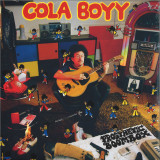
There’s liberation on the dance floor in the songs of Matthew Urango – glimpses of revolution that glimmer beneath the disco ball. “I want my music to bring people together,” says the Californian pop innovator, best known as Cola Boyy. “Because standing together is our best chance at fighting this shit show.” The shit show in question is a broken, brutal system the acclaimed multi-instrumentalist has witnessed up-close. Urango was born with spina bifida and scoliosis in Oxnard, California: a town in which almost 30,000 are estimated to live in poverty. Prosthetic Boombox, his eagerly awaited debut album, might at first glance seem a joyous confetti-burst of pop eclecticism, engineered to sound like “scanning between stations on a car radio, landing on all these different sounds and styles” as Urango puts it. Dig deeper, though, and you’ll discover a simmering sense of rebellion. “The working class are injured, struggling to pay rent and struggling to put food on the table,” he says. “I want to represent that.” Prosthetic Boombox
achieves that goal in a thrilling flurry of inventive indie, funk and soul: take Urango’s car radio analogy, place it in a time-travelling Delorean with Prince in the passenger seat, and you’re half-way there.
Look no closer than Prosthetic Boombox’s euphoric opener, the Avalanches-assisted ‘Don’t Forget Your Neighbourhood.’ The track – which Urango says mixes “the Beach Boys, French disco, house keys and ragtime piano, kinda like the Cheers soundtrack!” – ends with lyrics urging listeners to “fight for your town with your fist closed, strike it and make it more than just a memory.” It’s a reminder that the working classes need to “turn our fists against our oppressors instead of each other,” he explains. After that emphatic introduction comes a horn-laced funk wig-out titled ‘Mailbox’ – a song that gives Dua Lipa’s Future Nostalgia a run for its Studio 54-themed money, featuring rising Londoner JGrrey. Elsewhere, ‘Song for the Mister’ ventures into smooth R&B territory, before ‘Roses’ – a collaboration with Myd of Ed Banger fame – offers a bouquet of bustling disco guitars and infinite bisous of Connan Mockasin’s band drops in on the immaculate ‘Go the Mile’. Urango saves his most introspective moment for the album’s starry closer. ‘Kid Born in Space’, a cosmic collaboration with MGMT frontman Andrew VanWyngarden, sees the artist reflect on what he once had to overcome as a disabled person of colour. “I see them looking down on my dreams of being,” he sings tenderly. “I hear them making fun of my voice, but I keep on moving forward, I refuse to live in anyone else’s shadow.” Prosthetic Boombox, on this subject, is more than an album title – it’s a statement of intent.
“The message of my music is that our class is exploited, oppressed and murdered on the daily. That’s not right, and the system that enables that deserves to be wiped off the face of the earth,” he says. “The only way that happens is if we’re united. That’s the point of my music – to relate to people and unite them.” And what unites more than raucous, irresistibly danceable pop? Prosthetic Boombox is a riot of joyous grooves and catchy hooks for good reason. “I want to reach and spread my message to as many people as possible. You can’t do that if you’re some obscure motherfucker, you know?” he laughs. Don’t bet on him being an “obscure motherfucker” for long.
- A1: Intro - (Produced By Domingo)
- A2: We Need To Talk About Kevin - (Produced By Jack Cliff)
- A3: High Noon - Feat. Masta Ace, Rah Digga, Wordsworth & Fatlip - (Produced By Wounded Buffalo Beats)
- A4: Imperfections - (Produced By Hank Venture)
- A5: Take It Back - Feat. Craig G & Edo. G - (Produced By Roccwell)
- A6: The Struggle - Feat. Guilty Simpson, Micall Parknsun & El Da Sensei - (Produced By Jl Beats)
- A7: Dog Food - Feat Dixie Daye - (Produced By Plastic The Funky Mulatto)
- B1: Anyone Home (Interlude) - (Produced By Lax The Monk)
- B2: It's Always Sunny In Croydon - Feat. Boodah, Cracker Jon, The Strange Neighbour & Jay Purpose - (Produced By Jl Beats)
- B3: Legends Never Die - Feat. A.g. - (Produced By Wounded Buffalo Beats)
- B4: I Can't Resist Hearing... (Produced By Keynotez)
- B5: Feed The Foxes - Feat. Boodah - (Produced By Lax The Monk)
- B6: Bloody Marvellous - Feat. Keith Murray - (Produced By Jl Beats)
- B7: Outro - (Produced By Domingo)
Certain Sound Records are pleased to announce the release of the brand-new album from Montener The Menace – Anyone Home?
Anyone Home is the hotly anticipated follow-up to “I Have a Hidden Hobby” and is comprised of 14 superb tracks featuring an ensemble of legendary figures from both the US and UK Hip Hop scenes with appearances by Masta Ace, Rah Digga, Craig G, Keith Murray, Edo.G, Micall Parknsun, Cracker John, AG & Guilty Simpson to name just a few.
Production is handled by such heavyweights as Domingo, Roccwell, Keynotez and all cuts are provided by the legendary JabbaThaKut.
The album campaign was launched with the release of 3 excellent singles – High Noon, The Struggle and Take it Back all of which were met with extremely positive reviews from blogs and magazines alike, in addition to this acclaim the tracks have received airplay on a global scale via stations such as Shade45 and Itch FM.
Montener showcases his massive progression as an artist since his previous release with great confidence while still maintaining his trademark sense of humour that fans have come to love and adore. He demonstrates great diversity throughout by being able to touch on some difficult subjects such as suicide and mental health and parenthood as well as his more traditional upbeat content.
“Its gonna make a great impact on the scene, just what we need, when we need it most.” – Skinnyman
- A1: Peach Of Immortality
- A2: Umbrella Spinner
- A3: Dialogue Between A Grandmaster Of The Knights Hospitaller & A Genoese Sea-Captain
- A4: Vulning
- A5: Lathe Of Heaven
- A6: Sirin
- A5: Nowhere Much Narrower
- A6: Charioteers
- A7: Milk Street
- B1: Magic Mountain
- B2: Ophir
- B3: Paradigm & Places
- B4: Threadneedle
- B5: Ferae
- B6: Forest Of Materials
Black Truffle is pleased to present Sylva Sylvarum, an epic new work from Ora Clementi, the collaborative project of crys cole and James Rushford. Primarily conceived and recorded over several months together in Melbourne, Sylva Sylvarum is a stunning step forward from the mumbled, creaking sound world of the duo’s debut, Cover You Will Softer Me (Penultimate Press, 2014). From the opening ‘Peach of Immortality’, which takes an unpredictable journey from layers of chiming bells, vocal harmonies and lush synth pads to a desolate landscape of half-animal, half-digital wooshes and cries, it is immediately clear that cole and Rushford are working here with an entirely unique sound palette. Throughout the record’s four sides, we hear a large array of carefully detailed synthesizer sounds (many of them recorded at the remarkable Melbourne Electronic Sound Studio), sparse drum machine hits, wind instruments and field recordings of animals, often with a twistedly late 80s/early 90s flavour that at various points calls up New Age references, Robert Ashley’s later operas or the thinned-out textures of early digital GRM.
Threaded through this distinctive array of sounds are the two musicians’ voices, sometimes singing, sometimes speaking through varying degrees of manipulation. A guiding thread through the pair’s collaboration, beginning with their initial experiments with lip-readings, the presence of these two voices – cole’s crisp and sibilant, Rushford’s rich and low – reinforces the sense that the music is immersed in itself, less performed by two people than occurring between them. On Sylva Sylvarum, these voices first come to the forefront on the third piece, ‘Dialogue Between a Grandmaster of the Knights Hospitaller and a Genoese Sea Captain’, where in unison they intone fragments of a description of an imaginary space taken from a 17th century utopian text. The two voices resurface periodically thereafter, most stunningly in the unexpected turn into cushiony dream pop on ‘Magic Mountain’. At other points, the subtle manipulation of pitch and intonation in the close-miked vocal performances filters the recitations through a fog of abstraction that climaxes with the almost incomprehensible alternating syllables of the side-long closer ‘Forest of Materials’. Like the album’s title, these textual elements are drawn from various literary descriptions of utopias, a theme that also informed the pair’s musical approach. Far from anything dryly illustrative, utopia figures into Sylva Sylvarum as an invitation to inhabit otherworldly spaces that, like the empirical details that proliferate in these literary utopias, are grounded in mundane reality but shot through with the eldritch. Admirably framed by the abstracted digital topographies of Sabrina Ratté’s artwork, the uncanny sweep of the album’s fifteen pieces is expansive enough to take in stretches of crackling austerity, warped microtonal keyboard etudes and moments of stunning beauty, the latter most strikingly when cole and Rushford are joined by Callum G’Froerer on trumpet and Joe O’Connor on trombone for a series of dream-like moments moving from growling overtones to poignant lyricism.
Presented in a deluxe gatefold sleeve with stunning artwork by Sabrina Ratté and pressed on mint green vinyl. Mixed and mastered by Joe Talia at Good Mixture, Berlin.
- 1: Low On Love
- 2: I Will Avenge You (Feat. Ryan Scott)
- 3: You Didn't Know
- 4: I Wish (Feat. Cory Wong, Justin Stanton & Michael League)
- 5: True Minds
- 6: Between Me & You
- 7: Good Stuff
- 8: Feels Like This
- 9: Slow Burn (Feat. Jacob Collier)
- 10: Charlemagne (Feat. Alan Hampton)
- 1: Never Mine
- 2: Response To Criticism (Feat. Roosevelt Collier)
- 3: Halfway (Feat. Laura Perrudin)
- 4: Heather's Letters To Her Mother (Feat. David Crosby, Michelle Willis, & Mike "Maz" Maher)
Since making her debut with the 2011 album Weightless, singer/songwriter/multi-instrumentalist Becca Stevens has tested the limits of musical identity, mining everything from jazz to Irish folk to indie-rock in her striving for complete and authentic expression. In her latest musical endeavor—the five-track EP WONDERBLOOM and a soon-to-follow full-length of the same name—the North Carolina-bred, Brooklyn-based artist again defies all expectation, this time dreaming up a groove-heavy, dance-ready sound infused with elements of pop and funk and R&B. But despite its brighter textures and uptempo rhythms, WONDERBLOOM finds Stevens achieving a profound complexity in her lyrics, ultimately redefining what’s possible in creating music that elevates and edifies. Centered on the captivating vocal presence she’s showcased as a member of David Crosby’s Lighthouse Band, WONDERBLOOM telegraphs an unabashed joy that Stevens partly attributes to the project’s production. In a bold new turn for her musical career, Stevens co-produced and co-engineered WONDERBLOOM alongside Nic Hard (Snarky Puppy, Ghost-Note, The Church), overseeing every aspect of the recording and claiming a sense of agency that had long eluded her in the studio. “Nic and I were truly working as equals and trusting each other to get the job done, and it was an incredibly empowering experience for me,” she says. In another major departure, Stevens purposely brought a communal sensibility to the making of WONDERBLOOM —an undertaking that resulted in more than 40 musicians contributing to the album, including Vulfpeck guitarist Cory Wong, Jacob Collier, and all of her Lighthouse bandmates (i.e., keyboardist Michelle Willis, Snarky Puppy bandleader Michael League, and David Crosby himself).
Dissolution Sessions' is the first release by art punk rockers The Imbeciles since their well received eponymously named debut album earlier this year. The six-track EP
features a new band line up - and a different sound. 'We've slimmed down from a meandering, vegan, six member prog rock combo, to a tight-knit, guitar-led, steakeating 4-piece,' says lead Imbecile, Butch Dante. 'The guitar sound is fuzzy punk beast-master AF, and we like it.'
The band had originally gone into the studio earlier this year to record a radio session for 6Music. That ended up being cancelled because of the pandemic crisis. 'We
were there anyway so we started riffing on some new songs and everything came together real fast,' continues Butch. The result is three new songs and three new
versions of tracks that first appeared on the album. 'The music is still weird; but everything just gets to the point faster,' he adds. "You can hear that energy in 'Yes I
Am'; it's the sound of a band having fun being creative again after a difficult year.'
That particular new track is a Foo fighters/STP/Stooges-style banger, but played on Imbeciles terms - one note leads and guitar scrapes, with off beat stabs and a pop
punk drum track that pulls the whole together. And the overall vibe of the EP is a NSFW hybrid of 1979 London punk (Skids and Ruts), with second guitar stolen from
eighties Echo and Bunnymen and a leavening of Bauhaus art rock.
'Sunday Leaguer' was inspired by Butch's love of English football. The song is both a banging punk celebration of the beautiful game, and a lament to the gaping hole left
in peoples' lives when Coronavirus forced the cancellation of all football in March. As well as the Premier League, MotD and other football staples, the song also
celebrates the unsung legends of amateur Sunday League football. Dante, a Crystal Palace fan, enlists Palace's Holmesdale Fanatics on the track, who are heard chanting
'Eagles', while the video for the song pays tribute to the club's mascot, Keya, who sadly passed away this summer.
Charlie Conkers makes his debut on the EP as the band's drummer. 'He's young, good looking, and talented. It's quite annoying, actually,' Butch says. New lead guitarist
Stan Moseley makes a sideways move into the band from his previous role as The Imbecile's chief engineer and co-producer - the producer role now being occupied by
music legend, Youth, with whom the band has just started working on a new album, to be released in 2021.
'Having Youth involved as producer and co-writer is the most dope thing that has ever happened to the band,' says lead singer and bass player Kip Larson. 'Everyone is in
a super positive, hyper creative place right now and we can't wait to see what we come up with.'
So what about the name, Dissolution Sessions? Was it a nod to the pandemic, or a reference to the band breaking up and reforming again with its new members?
Neither, according to Butch. 'Kip was super hung over at the session. too many Dos Equis, yo. Hence: Dissolution Sessions.'
"Emotional Rescue and HMV Record Shop (Japan) present the 2nd DISCO REGGAE LOVERS with the music of Haile Maskel and his 101 Band and their cult Jamaica meets America reggae disco bomb Crazy Kind Of Feeling, in it's super rare 7" Mix.
Heralding from the furtive 60's Trenchtown, Jamaica, Michael Ashley aka Haile Maskel grew up around music, recording his first sessions with friend Bob Marley, alongside the likes of Peter Tosh, Robbie Shakespeare and Carlton Barrett.
Working with Lee Perry, he joined Light Of Saba, while touring with Dennis Brown and Sugar Minott led him overseas, settling in Los Angeles in 1983 and soon launching his Opulence (Sound) label.
The label's in house project, Maskel's 101 Band mixed a conscious message in love song, crafted around a boogie discodub. Coming as 7" and 12" (ERC101) releases, here the single is presented alongside the true dub version.
Dub Take 2 was discovered when the original master tapes were recently unearthed and while the recent 12" reissue featured an "instrumental alternative mix", Dub Take 1, this 7" includes a real dub version, cutting and dropping back and forth between drums, bass, key, vocals and horns in a cool excursion for the heads."
Emotional Rescue and HMV Record Shop (Japan) present Red Cloud and their roots disco rarity I Want To Be Free, with it's even scarcer dub version Freedom, together on 7" for the first time as part of the DISCO REGGAE LOVERS series.
This Brixton based band appeared on Emotional Rescue last summer with their Double Talk / Dubble Dub 12" (ERC102) rightly shining a light on their underrated output. Releasing on Tuff Gong, Red Stripe and Dancefloor the band released two albums and numerous singles of warm, rock-soul touched British roots sound system shakers.
I Want To Free / Freedom only appeared on the B-side of their super rare debut 12". While the A side's Double Talk was 'inna Lovers Disco style', here they keep the groove but explore the righteous stance of Pan African-Caribbean culture of the time, with a call for equality and fairness.
Centred around the writing of Keith Drummond and drummer / producer Specs Bifirimbi, plus support from founder Floyd Lloyd Seivright, it is in the dub version, Freedom, that the interplay of keys and drum and bass shine, a rock-reggae-disco bomb.
Emotional Rescue and HMV Record Shop (Japan) end their DISCO REGGAE LOVERS 7" series with reggae legend Sugar Minott and this utterly unique UK soul-boogie rarity, I Remember Mama.
Reggae star, vocalist, producer and sound system operator, Kingston JA born Minott released over 50 albums and hundreds of singles for the likes of Studio One, Wackies, Suffering Heights and his own Black Roots label.
His distinctive soulful voice pioneered the Dancehall style and following his UK hit "Hard Time Pressure" he moved to London in 1980, adopting the rising Lovers Rock sound. On a visit to Wackies' offices in Soho he met Steve Parr, who had recently opened a studio next door.
Keyboard player for the likes of Desmond Dekker and Geno Washington, Parr moved into composition, mixing, sound engineering and production, before setting up the Sound Design Studio in Dean Street.
Principally a studio, the meeting with Minott hatched the idea to create a label to showcase their capabilities. Produced by Parr, he played all the instruments except the distinctive sax by friend Andy MacDonald.
With Minott's heartfelt lyrics, this marriage created a one-off, a ground-breaking synthesised 4/4 rhythm track with funk groove and soulful vocals. Released on 7" and 12", the versions noticeably differ and is the perfect closing to the DISCO REGGAE LOVERS series.
Exclusive vocal c/w instrumental mixes of Betty Lou Landreth’s ‘I Can’t Stop’ on this lead-single for the forthcoming Backatcha re-release of Betty Lou Landreth's in-demand 1979 album, "Betty Lou” (cat# BK037 – to be announced). Expanded to a double album, it features the original studio recordings along with bonus material and alternative takes. The late Betty Lou Landreth had already paid her singing dues long before she walked into Studio A at Detroit’s Superdisc, touring with the USO and performing with R&B and Jazz players on the live circuit.
‘I Can’t Stop’ producers Joel Palmer and Charlie Gabriel recruited some of Motor City’s top fellow musicians for the session, including Gabriel’s longtime friend and housemate, trumpeter Marcus Belgrave, arranger Travis Biggs, drummer J.C. Heard, Motown Funk Brothers’ pianist Joe Hunter and trumpeters Herbie Wilson and John Wilson, keys player Emmanuel Riggins, bassist Hubie Crawford, the Body sisters and many more.
"We just got together to cook up a gumbo. Detroit, New Orleans, funk, jazz, torch, country and some great, great musicians to bring the flavours together."
Joel Palmer, 2021.
A deep dive into the one of most collectable jazz catalogues in the world, a selection of some of the rarest and most sought-after recordings from the 60s and 70s, a time when British jazz began to find its own identity. Drawn from the iconic labels of Decca, Deram, Argo, EMI Columbia/Lansdowne Series, Fontana, Mercury, & Philips. A figure in British modern jazz for over half a century, Don Rendell was both active protagonist and key witness to the main developments in the music from its rise out of tiny clubs and back rooms on up to the most prestigious national stages. From his earliest performances in London’s West End and his work of the 50s and 60s — most not ably with the Don Rendell-Ian Carr Quintet — to the lower profile work of the 70s and 80s, his quite assurance and consistent performance marked him out as a highly respected figure among his peers. He is one of a handful of British artists to feature on Blue Note Records and appeared on some of the most distinctive and characterful British jazz albums by the likes of Michael Garrick, Stan Tracey, Amancio D’Silva, and Neil Ardley. Even though Rendell eschewed much of the free and electric fusion styles that came to the fore in the late 60s, in the main sticking to an acoustic sound with melody and rhythm at its heart, he similarly bridled at any notion that he was merely a ‘bopper’, a description he positively hated. In many ways, Space Walk was as much a valedictory as transitionary album for Rendell. It was his last for Denis Preston, the fabled producer behind Lansdowne Studios, described by Neil Ardley as a ‘rare Diaghilev like figure’ who steered many of the key figures of the British jazz scene into the studio when nobody else would record them. It was also Rendell’s final project for EMI Columbia and his last as a leader for a major record label. After Space Walk, Rendell would record for smaller, independent labels like Spotlite. But as much as the album is a farewell to one chapter, it also marked the way forward to the next..
Tonnon produced the album with longtime collaborator, and The Beths’ guitarist and producer, Jonathan Pearce. Tonnon wrote the bulk of the songs during an extensive period of touring after the release of Successor - a period where Tonnon performed with Nadia Reid in Europe, The Veils in the USA, and The Chills, The Phoenix Foundation and Don McGlashan in New Zealand. The pair workshopped songs between tours, often recording new parts as the live versions developed.
Tonnon and Pearce recorded between 2017 and 2020, and in that time, Tonnon’s practise evolved heavily. He incorporated new technology into his set, including the Wellington-designed Synthstrom Deluge, which allowed him to adapt his set for new performance environments;Art Galleries, Museums, even New Zealand Fashion Week. He took that technology further when he collaborated with the Otago Museum on the immersive show for Planetariums, A Synthesized Universe, which travelled to Arts Festivals around New Zealand in 2019.
Creating a music video for ‘Old Images,’ which explored a lost passenger train network, Tonnon came to the idea for a new experience-based show called Rail Land. It took audiences on railways to reach distant community halls around Aotearoa. The show saw Tonnon combine historical research and spoken word narrative, with the immersive lighting and musical technology he developed for A Synthesized Universe. In March, Rail Land finished a three-night run at Auckland Arts Festival, cementing Tonnon’s move to the concept show.
Over time, Tonnon and Pearce’s production moved further from the traditional rhythm sections that powered songs like Successor’s ‘Water Underground.’ In their place came off kilter electronic rhythms, like the beat in ‘Two Free Hands,’ and textures that blur lines between organic and synthesized sound. Guitars are set against synthesizers, and drums against drum machines in ‘Entertainment’ and ‘Peacetime Orders,’ which Tonnon also used in his soundtrack for RNZ’s 80s spy-themed podcast The Service. In ‘Leave Love Out Of This,’ a ballad starts with a piano and a string quartet, but ends in a wall of electronic sound.
The constant has been Tonnon’s lyrics. Whether singing about evolution and the future of work in ‘Two Free Hands,’ the television industry in ‘Entertainment,’ or environmental disaster and regulatory failure in ‘Mataura Paper Mill,’ Tonnon has followed a distinct approach to subject matter, description and phrasing that have seen him longlisted for the APRA Silver Scroll three times.
Tonnon’s explorations of local government and civic infrastructure in his work - an unusual preoccupation for a songwriter, have taken new meaning in his adopted home of Whanganui, where last year, he was elected by councillors as Whanganui District Council’s representative for public transport.
After Tonnon moved to Whanganui, and Pearce toured almost constantly after the success of The Beths’ first album, the pair conducted their collaboration over distance, but with key sessions at Pearce’s Karangahape Road studio, including drums and bass with long time band members Stuart Harwood and David Flyger, a string quartet led by Charmian Keay and arranged by Matthew Bodman, and additional drums with The Beths’ Tristan Deck.
As Leave Love Out Of This is released, Tonnon and Pearce find themselves in very different places to where they started, working on Auckland’s Karangahape Road, close to the venues like Wine Cellar and Whammy Bar where they regularly performed. Back in New Zealand since Covid, Pearce has had to adjust to being in one of Aotearoa’s best-known bands, while Tonnon, when not working on conceptual shows, wrestles with how to restore civic infrastructure to a post industrial city in the regions.
Created over a life-altering period of, Leave Love Out Of This is the culmination of years of experimentation and development - with new technology, new sounds, and new ways of creating, and performing music.
Am 16. Juli veröffentlicht Fantasy Records “Layla Revisited (Live At LOCKN’)” der Tedeschi Trucks
Band - eine einmalige Live-Aufnahme des Derek & The Dominos-Albums “Layla and Other Assorted Love
Songs”, das mit Special Guest Trey Anastasio aufgeführt wird. Aufgenommen am 24. August 2019 auf
dem LOCKN’ Festival in Arrington, VA, fängt Layla Revisited die Tedeschi Trucks Band in ihrer besten
Form ein, wobei Anastasio die perfekte Ergänzung von Gitarrist Derek Trucks und Gitarristin/Sängerin
Susan Tedeschi darstellt.
Der Auftritt von Layla kam für die Fans völlig überraschend. Ursprünglich nur als ”Tedeschi Trucks Band
featuring Trey Anastasio” angekündigt, erwähnten die Künstler nichts von der Musik, die sie im Vorfeld
fleißig geprobt und geplant hatten. Aber die Verbindungen zwischen der Band und dem Album sind tief
in das Gewebe ihrer Existenz eingewoben. Angetrieben von zwei der größten Gitarristen des zwanzigsten
Jahrhunderts, Eric Clapton und Duane Allman, wurde Layla and Other Assorted Love Songs zufällig am
9. November 1970 veröffentlicht, dem Tag, an dem Susan Tedeschi geboren wurde. Später waren Chris
und Debbie Trucks solche Fans des Albums, dass sie inspiriert wurden, ihren erstgeborenen Sohn Derek zu
nennen. Jahrzehnte später war Trucks fünfzehn Jahre lang Mitglied der Allman Brothers Band und tourte
ausgiebig mit Clapton. Die Verbindung zwischen der Musik und den Interpreten ist so tief, dass sich dieses
Album fast schon vorherbestimmt anfühlt.