Wilson Tanner return to dry land with Legends, a wine-soaked agricultural fantasy, made among the grapevines at Manon Farm in South Australia. Where their earlier works settled into the sun-struck torpor of a suburban Perth backyard (69) or drifted off-course on a riverboat on Port Phillip Bay (ii), Legends trades salt air for vineyard sweat, the scrape of boots on dry earth and workers’ radios humming with the summer test cricket season.
Through this agricultural haze an image of a working vineyard emerges - ducks, dogs and plovers intrude; tractors and quads fly-by; stainless steel gleams at the edges. Recorded without mains power, the Manon demos overflow with farmyard ingenuity. Wind, brass, balalaika, balloon, pipe and synth are trained onto the staff with wire, tape and string.
A caricature of Australian viticulture, Legends is packed to the horns with the mythology and manure of natural wine. Swigging and belching in camaraderie, Wilson Tanner press their surroundings into something raw and unfiltered, letting bum notes, leftovers and sediment linger in the bottle. A cornucopia of biodynamic sounds.
Suche:u man
Respected Swedish drummer and composer Dennis Egberth introduces new sextet in his first album with 577 Records.
"If you love the era in which electronic elements began to enter contemporary jazz, you’ll love what Sweden’s Dennis Egberth has been creating. The esteemed drummer/composer introduces us to his hand-chosen ensemble, The Dennis Egberth Dynasty, in the artist’s first album with 577 Records. The self-titled release highlights his creativity, painting a hypnotic soundscape that soothes the soul.
Experimental wizard Dennis Egberth is known for his distinguished approach to experimental music, free improv, and alternative pop, as well as his fascinating skills in blending cosmic composition and chilled ambient and electronic sounds. He presents floating melodies of irresistible bass lines and long, modal buildups that come alive with exploding lyricism. His new record highlights his compositional roots and was inspired by the evolution of electronics in this genre during the late ‘60s and ‘70s.
Egberth fused his talents with those of Fredrik Ljungkvist on tenor sax and clarinet, Niklas Barnö on trumpet, Alexander Zethson on Wurlitzer, Linus Hillborg on electronics, and double bassist Joe Williamson, forming an unforgettable sextet. Together, they’re more like a thriving ecosystem than anything else. Each member brings critical elements from their dynamic roles in the Swedish and European creative music scene and contributes them to the manifestation of a higher wave of sound unlike any other."
Tenor saxaphone and clarinet by Fredrik Ljungkvist.
Trumpet by Niklas Barnö.
Wurlitzer by Alex Zethson.
Electronics by Linus Hillborg.
Double bass by Joe Williamson.
Drums by Dennis Egberth.
Recorded by Niclas Lindström on December 14, 2023 at Atlantis Studio, Stockholm, Sweden.
Mixed by Anders af Klintberg.
Mastering by Kristofer Göransson.
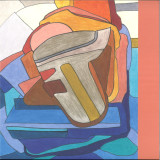
Cover painting by MiHee Kim Magee.
Graphic design by Mark Smith.
All music by Dennis Egberth.
This record was made with support from the Swedish Arts Council.
The voyage of Captain Barbatus D. Wreckords across The New World continues with an episode on Nexus Island, where the pirates reveal the secrets of The World Government yet again!
For the third chapter of the Barbatus series, the odyssey is musically delivered by Pontiff Ordric, a.k.a. Mayank Saraiya. It is a great pleasure, to present one of the many monikers of a talented Indo-Ukrainian artist, and fellow pirate of the Barbatus ship, who also is behind the mix/master helm of the Barbatus label.
The engineer-DJ-producer tells his tale through a blend of syncopated, electro inspired, beats and proto-trance synths that are riddled with tributes to the sound of the 80's.
"Grey Hoodie is the 1st official album of the young producer and DJ Pentola, born in Apulia and based in Milan. Grey Hoodie is a mixture of electronic vibes inspired by the UK sound from 90s and 2000s. Broken-Beat, UK Garage, Jungle, Deep-House are the ingredients of these 8 tracks in which you can also recognize a post-Dilla flavor, all embellished by the presence of jazz musicians like Stefano De Santis, G-Foxxx and Stefano Nardon, and the singer Aljiaa. Anyone could write a good review of this album just by listening to the snippets that compose it and realize the conceptuality of the work that aims to achieve different goals, including that of being the album made with the greatest passion possible and with the greatest spirit of aggregation. Grey Hoodie is Pentola's sonic refuge, the place where the artist feels most at ease, where he manages to bring together the harmonies of jazz with the percussions and grooves of modern electronic music with that "touch" inspired by J Dilla, leader of Detroit's underground hip-hop scene in the mid-1990s."
"Dylan Hayes' album debut LP, We Don't Own, We Create, released on Futurepast, is a sonic trip balancing club functionality with experimentation. The two-discs project is a bold statement of artistic intent-where minimalism, industrial textures, and introspective loopy moods collide.
As the result of 8 years of research and experimentation, We Don't Own, We Create is an electronic sci-fi odyssey, unfolding across eight tracks balancing structure with unpredictability. Co-produced and mixed by Davy Vandegaer, this album is also the story of a friendship rooted in a shared vision-crafting a signature 'futurepast' sound where old-school techno aesthetics meet fresh, yet edgy, sonic treatments. The first disc unfolds like a waking dream. My Ikigai sets the tone with pulsating, introspective club energy, blending loopy synths and a growling bass. Plastic World plunges into eerie depths, weaving spectral vocals and fragmented rhythms. Silent Reverie in To Memory drifts through textured atmospheres and layered percussive echoes. Remind Me Ridley twists hypnotic techno into a dense, mantra-like piece-its reverbs and delays build an intensity conjuring into a foggy, shifting auditive illusion.
The second disc marks the awakening, shaking off the haze with Beautiful Struggle, where abrasive loops, industrial bass surges, and dissonant synth layers build tension. Echoes of Fate condenses the album's ethos, unleashing pulsating stabs and humming rhythms that slice through the mix with razor-sharp precision. The eponymous We Don't Own, We Create is an electronic ode to the creative process, where haunting vocal loops weave through deep, trippy synth lines, blurring the boundaries between organic and synthetic. Closing on Mizze, the journey dissolves into pure introspection, fading into the ether.
The record balances four club-driven tracks and four experimental pieces, crafting a distorted, explorative soundscape-an immersive journey where dance music meets dark, avant-garde sound design."
2025 Repress
Mutual Rytm welcome back Swiss DJ/producer Chlär for a bustling, high-octane return as he unveils his latest six-track EP, 'Intrinsic Drive'.
Swiss artist and mastering engineer Chlär's last outing on Mutual Rytm, his 'Optimized Grooves' EP, was a standout success that made an impact far and wide across the techno realm. It was another big step for the fast-rising producer, who is also a dexterous DJ that plays across three and even four decks in the club. A craftsman of sounds, his take on techno is full throttle and has come on labels like Iceland's NIX and Stranger's Self Reflektion imprint. Always looking to improve his sounds, he hits a perfect sweet spot with a fresh and visionary approach across six fresh productions with his 'Intrinsic Drive' EP, again showcasing exemplary creative progression in his ever-impressing production skills.
Up first is 'Dopamine Rush', a quickened techno pumper with synths peeling off the straight-ahead drums and locking you into a state of hypnosis. The title track 'Intrinsic Drive' is a tightly woven mix of drums, hits and bass that never lets up, while the supple rhythm is overlaid with alien sound designs to up the intensity. 'For Marco' takes a heavier path with darkened and more weighty kick drums under eerie synth loops. There is a real swing in the drums of 'Steady Pace' as the crisp hits and vocal fragments all up the ante, before 'Greedy Man' delivers a tough panel beater with skewed synths and an industrial undertone. Digital bonus 'May I Dance?' rounds things out with raw textures and unhinged loops that take you to the heart of a strobe-lit dance floor, shaping up another
mighty fine statement of intent from the ever more vital Swiss native.
Dompe presents French Collection 2: A journey through funky house, disco house and French house
After the successful first part of his French Collection, Dompe sets new standards with the sequel and brings a breath of fresh air to the house scene. French Collection 2 skillfully combines the pulsating rhythms of funky house, the nostalgic vibes of disco house and the iconic melodies of French house - all with Dompe's unique style.
This album is a musical homage to the golden years of 90's house, combined with modern, funky grooves that will conquer any dancefloor. Dompe proves once again that he is a master of the genre, making the perfect connections between driving basslines, smooth funk guitars and catchy vocals. Every track on French Collection 2 is designed to evoke nostalgic memories as well as inspire today's dance-loving generation.
Dompe manages to preserve the spirit of the classic 90's house scene while adding a modern twist. French Collection 2 is a must for all fans of the genre - and for anyone who simply wants to experience the funk and energy of a great house album.
The first release to document the solo cello work of musician and composer Lucy Railton, the 40-minute composition Blue Veil recorded at Église du Saint-Esprit in Paris invites listeners into the realm of precision-tuned states of resonance: states made manifest through Railton's careful traversal of her cello's most subtle acoustic characteristics as they harmonically interlock with mind's embodied modalities of attention and imagination. Blue Veil arises out of, is sustained in and finally dissolves back into Railton's momentary presence with her intimate connection to the cello, a way of hearing that allows for a deeper engagement with harmonic resonance, one that opens a space for immediate encounters of mind and sound. Railton's exploratory practice of harmonic perception emerges from a focus on the physical qualities of intervallic and chordal sounds, their textural qualities, degrees of friction, and inner pulsations. Composing in the moment guided by resonances within the cello's body, her own, and their shared vibrational space, Railton moves through Blue Veil by giving sounds what they ask for: sounds of pure texture manifesting as a move through temporal transparency, sounds of rough texture marking regions of dimensionally dense space. Railton's creative and highly refined use of just intonation harmony deforms sound's inner movements in ways that suggest a mode of listening that actively supplies imagery of sounds implied or completely absent rather than merely savouring those fully present. This active mode of "listening-with", playfully and semi-metaphorically referred to by Railton as "sing-along music", allows listening to reflexively participate in the music's movement as it gradually passes through richly saturated domains of harmonic imagination. And just as the precision-tuned tones of Blue Veil lose their individuality when fusing multifaceted uniformity, listening's structures of reference and recognition dissolve into nameless waves of intensity, continuously unfolding themselves upon and merging with the listener. Blue Veil is the result of a deep exploration of the inner worlds of tuning, an undertaking in turn informed by and emerging out of Railton's realisations of the music of Catherine Lamb and Ellen Arkbro, her collaborative work with Kali Malone and Stephen O'Malley as well as her interpretive practice in performing the work of Maryanne Amacher, Morton Feldman and others.
Remix EP of Viken Arman's album "Alone Together" released last year. Featuring remixes from Acid Pauli, Session Victim and Mano Le Tough.
Session Victim brings their signature blend of groove and warmth to "You With Me." This remix transforms the track into a rhythmic journey, balancing soulful elements with crisp percussive textures, all while keeping the essence of Viken's original track. Acid Pauli combines You With Me and Lonely Raver with his characteristic trippy soundscapes and surreal layers. This rework takes listeners on a psychedelic patchwork of samples and modular rhythm, creating a very unique remix full of experimentation. Mano Le Tough crafts a reflective and emotive spin on "Vibrations." With lush synths and a steady groove, this remix captures an intimate dancefloor experience, blending Viken's analog sound with Mano’s penchant for stirring, dynamic builds. This club mix by Mano Le Tough ramps up the energy of "Vibrations" for peak-time dancefloor impact. Pulsating basslines, intricate drum work, and a driving momentum redefine the track, transforming it into an infectious anthem that demands movement.
fabric Records has enlisted Turkish-Italian DJ and producer Carlita for the next instalment of its prestigious mix compilation series, ‘fabric presents’. Set for full release on April 11, fabric presents Carlita will showcase her meticulous curation, featuring two new original tracks.
The double vinyl sampler features eight full length tracks taken from Carlita’s mix. Her two exclusives ‘Raf’ and ‘Stop Now’ are cut to A1 and C1 respectively.
The two black vinyl plates are 140g and are packaged in black inners, inside a matt printed reverse board printed sleeve. The vinyl package accompanies the CD, digital download and streaming of fabric presents Carlita mixed compilation across all major platforms on 11th April 2025.
The announcement of Carlita’s mix arrives alongside the release of the first single, “Raf,” a collaboration with Toronto producer Andre Zimmer, out now via fabric Records. “Raf” is a high-energy fusion of classic house and rave influences, crafted with the dancefloor in mind. The track pairs infectious, soulful vocal elements with punchy synth stabs and rolling breakbeats, all anchored by a deep, groovy tech-house bassline. “Raf,” along with an additional original from Carlita, “Stop Now,” is nestled among storied house and techno juggernauts such as Butch, Alex Metric, and Paco Osuna, as well as rising underground producers Prunk, Toman, Alinka, and more.
Beyond the club and festival circuit, Carlita is a leading figure at the intersection of music and fashion. She’s been featured in British Vogue and on the cover of Vogue Italia, performed at exclusive events for Louis Vuitton, Versace, and Fendi, and curated performances featuring The Blessed Madonna and Heron Preston at her own multi-sensory Senza Fine parties. Most recently, she collaborated with Audemars Piguet to mark the release of her debut album, Sentimental.
Carlita (real name Carla Frayman) comes from a background of musical mastery, having played classical cello for the Royal Academy of Music in London in her earlier years (after learning to play piano at age 3). Since her earliest memories, Frayman has never stopped developing her musical talent, picking up more instruments, learning music theory, and after university, saving up enough money to pursue it full time. She hasn’t stopped chasing her dreams and is now playing high-profile DJ slots (check out her Cercle set at Cinecittà in Rome), and has quickly risen as a producer with her phenomenal debut album Sentimental on Ninja Tune last year, as well as remixes for Disclosure and RÜFÜS DU SOL.
Coming up, Carlita be performing at festivals and clubs in Puerto Rico, Switzerland, Germany, and many more. On April 12, celebrating her fabric presents release, Carlita will be taking over Room 2 at fabric alongside Jennifer Loveless, Tommy Gold, and Pedrose.
Burnski's agenda-setting garage label Instinct is back with killer new beats from Mance. 'Atmos101' gets things underway with sparking melodies zipping about the stereo field over chunky drums and with a filthy bassline. There is more of a throwback feel to the dusty drum loops of 'Stone Cold, Baby' complete with great vocal samples and spiralling pads. 'All Night' shows another look again with dry, stripped-back beats and big hits under warped synth stabs and more brain-melting bass. 'I Can't Help It' shuts down with silky pads work and soulful vocals.
A.LM.A joins Fresh Tunez. The mind behind 22recordings, and he does not disappoint. A fiendish record from the Barcelona man, laying down 5 tracks of signature moods, dripping in attitude and guaranteed to captivate the dancefloor. Pow!
Zara is the first album of Parus ethno-ambient project from Belarus that combines pagan songs that are sang by ethnographer and folk singer Hanna Silivonchyk on various dialects of Belarusian language and mixture of synthesizers and field recordings that where reordered in national parks of the country by electroacoustic music composer - Anton Anishchanka. The songs where collected during ethnographic expeditions in remote territories by Belarusian ethnographers in different periods of time
"What I choose to sing from the vast amount of authentic material are songs that
somehow feel like mine for all sorts of reasons, but that I love to be inside." - Hanna Silivonchyk
"Soniejka" is a summer song from the Dnepr river region, which sings about the readiness to meet life in any of its manifestations, about acceptance and love. "Zara" is also from the Dnepr river region, depicting the main Indo-European mythological story of the heavenly love between the Moon and the Dawn and their melting.
"Ruzovyja cviaty" is a lyrical song from Dzvina river region, romantic and touching, which sings about the very beginning of love between two people. And the song "Oj luhom idu" is a spring song from the territory of modern Poland, from Podlasie region, which tells about the life of a married woman, about the fate that may befall her and how it can be experienced. All of them are about one's own feeling of the present time, one's life, about personal life
experience, but at the same time - about universal human contents and meanings that exist outside of time.
The multi-media project Kraftwerk was started in Düsseldorf, Germany 1970 by Ralf Hütter and Florian Schneider. They set up their electronic Kling Klang Studio where they conceived and produced all Kraftwerk albums.
Kraftwerk created the soundtrack for the digital age of the 21st century. AUTOBAHN 1974, RADIO-ACTIVITY 1975, TRANS EUROPE EXPRESS 1977, THE MAN-MACHINE 1978, COMPUTER WORLD 1981, TECHNO POP 1986, THE MIX 1991, TOUR DE FRANCE 2003. Their compositions, using innovative techniques, electronic sounds and synthetic voices combined with computerised rhythms, had a major musical influence on Electro, Hip Hop, Techno and Synth-Pop.
180 G. BLACK VINYL WITH LINER NOTES IN CREOLE, FRENCH, ENGLISH
Originally released in 1979, "Spiritual Sound" lives up to its name, a soaring, triumphant album, six tracks of spirit magic from Guadeloupe.
Telluric, intense, terribly alive, the gwoka drums of Guadeloupe carry the identity of a painful and fervent island. Marked forever by the crime of slavery, Guadeloupe's créolité cherishes the ka drums and their natural environment: the low-pitched boula drum with male goatskin, the high-pitched soloist makè drum with female goatskin, the chacha, ti bwa, triangle, calabash and other percussion instruments that surround them, and the voices - the fiery, proud, timbred, urgent voices of the gwoka.
This album is also a legend for its voices: in his then dazzling youth, singer Lukuber Séjor was one of the first gwoka artists to largely feminize the chorus of répondè, who converse with his text delivered in a straight and powerful voice.
And everything here sets new standards. In 1979, Mizik Filamonik - Spiritual Sound proclaimed a spiritual patriotism of ferocious intensity. The album by Lukuber Séjor - whose spelling alone is a battle - sets out to give Guadeloupe the intangible weapons of self-respect and self-knowledge, through a singular practice of traditional music.
The genesis of gwoka music is less straightforward than one might imagine... The drums performed the servile task of accompanying the work of slaves in the fields and during the “corvées” imposed by the administration, before being freely practiced by the common people after the abolition of 1848. At the heart of the conviviality of the Guadeloupeans furthest from the cities - geographically and socially - the gwoka drums come out for carnival, funeral wakes and neighborhood celebrations, but also during strikes, fits of anger and armed vigils of the riots and revolts that have punctuated the island's history. For generations, governors of the colony and then the prefects of the overseas department of Guadeloupe have been viewing the gwoka as a potential for turbulence and a threat to public order.
But as the Beatlesmania, “chanson engagée” and rock revolutions unfolded in Europe, young people turned to the drums of mizik a vié nèg (“bad negro music”, in Creole), which Guadeloupeans had learned to despise by following the “assimilation” process advocated by the school system and most of the political class. At the end of the sixties, in a Guadeloupe mourning the deadly repression of the May 1967 social movement, they played traditional music, refusing to wrap it up in tourist prettiness and madras folk costumes. Instinctively, they played a rough and contemporary gwoka, led by the incendiary Guy Konkèt. This was the era of decisive 45 rpm records such as Robert Loyson's Kann a la richès, which brought to light the fieriest words of union rallies.
At his home in Sainte-Anne, Lukuber Séjor played with flautist Olivier Vamur and his brother Claude Vamur, who cobbled together a drum kit from tin crockery and became, a few years later, the most influential drummer in Kassav'.
These were the years of the Bumidom program, when young Guadeloupeans were encouraged to emigrate to mainland France. At the age of twenty, Lukuber Séjor embarked on the liner Irpinia, disembarking at Le Havre and taking the train to the Gare Saint-Lazare - the route taken by thousands of young West Indians who went on to study or looked for work, all the while trying to maintain a link with their homeland. In this case, it's at the Antony university residence, where Lukuber played the drum and participated in a thousand gwoka updates and aggiornamentos, while exile reinforced the need for a spiritual link with the native land.
In 1978, Guy Konkèt played at the Salle Wagram, a historic event for West Indian music. After serving as répondè - i.e. backing vocalist - on one of his home-recorded albums, Lukuber joined his live band. Little by little, he became one of the key artists on a circuit parallel to French show business. At a student party in Caen, he met a young woman from Martinique who, at the time, was more motivated by her ambitions as a visual artist than by her vocation as a musician. Her name was Jocelyne Béroard and, a few years before she plunged into the Kassav' adventure and became the greatest West Indian singer of her generation, she designed the cover of Lukuber Séjor's LP.
This ambition was obvious and imposed its will. A more or less regular band was formed, with Roger Raspail, Rudy Mompière and Éric Danquin on ka drums, Claude Vamur on ti bwa, Olivier Vamur and Françoise Lancréot on flutes and Annick Noël on keyboards. Lukuber Séjor is set on wanting to extend the gwoka palette to other instruments, as the jazz-rock revolution opens a thousand new doors. Annick Noël will play a wide range of timbres and textures on electric piano and synthesizer. Another novelty: the répondè are two men and two women, Roger Raspail, Olivier Vamur, Françoise Lancréot and Maryann Mathéus ...
Mizik Filamonik - Spiritual Sound is a self-production in which the singer and leader sank all his savings, allowing him no more than a single day in the studio. The first side is more of a musical manifesto, with the first two tracks, Éritage and Penn é plézi, being instrumentals. The third, Son, forcefully celebrates the need for Guadeloupeans to connect with the gwoka. In fact, Jocelyne Béroard's cover shows a tambouyé in the shadow of a cloudy sky, against which a radiant sun is rising and whose light will soon flood the entire landscape. The silhouette and face of this man strongly evoke the immense Vélo, master of the ka, rejected at the time on the fringes of society.
The second side of the LP is surprising. Formally, three tracks are explicitly linked like the three parts of a triptych. Primyé voyaj evokes the appalling tribulation of Africans deported as slaves to Guadeloupe; dézyèm voyaj speaks of the Bumidom program and the economic, political and social forces driving young Guadeloupeans towards the mirage of prosperity in France; twazyèm voyaj closes the cycle with the emigrants' return from Europe after years away from their island...
This gwoka, obsessed with the need to save Guadeloupe spiritually, appeals far beyond the politicized audience. Mizik Filamonik - Spiritual Sound instantly became a classic, although Lukuber Séjor never really made a career for himself as a musician.
After all, the album was released in 1980, with no promotional resources in France or Guadeloupe - and therefore no concerts. The thirty-two-year-old author, composer and performer made his own third trip back to Guadeloupe. He set up a small woodworking business, which he lost in Hurricane Hugo in 1989. His other activity, teaching in a medical-educational institute, became the core of his professional life. He continued to be an active campaigner - a campaigner for the Creole language, a campaigner for the reawakening of identity, a campaigner for special education, a campaigner for a thousand causes that he ignited with his generous and perceptive enthusiasm, such as the defense of breadfruit fries...
The echoes of his 1979 album have not died down. Of course, the use of Penn é plézi as the theme tune for Radio Guadeloupe's funeral notices from 1980 to 1992 kept him in the collective memory, but he continues to sing and compose sporadically, as with his all-female
vocal group Vwapoulouéka... Still convinced that music is a means of liberating the spirit, he continues the journey of a young man eager to deploy the power of Creole music and language.
Bertrand Dicale
2025 Re-press of this classic EP by Marcello Giordani! This one was originally released on vinyl back in 2006 on our now defunct sub-label “Players Paradise” and was one of the first ever releases by Marcello Giordani who went on to become a household name in the scene and a man of many successes. Currently he is making waves with his “Italo Deviance Music” label and productions under his alias “I/D”.
Get in these three fine cuts again in a superb re-mastered quality. From the Italo inspired “Narcos” to the deeper and darker B-side Disco gems “Change Position” and “Prova 2”. We are sure these tracks will rock your dance floors again this spring and summer. Enjoy!
All tracks re-mastered by Salz Mastering in Cologne.
2025 Repress
The Colombian producer whose name is on everyone's lips, figure of the underground in his native land, Felipe Gordon makes a sensational debut on our beloved label SKYLAX RECORDS ! His fabulous Django Mango EP mixes his house music obssessions with his love for Latin & jazz music. Adept of analog equipment and eminent musician, he gives us a real work of art to store alongside Nuyorican souls legends (master at work in mind). Kicking off the release, the title song django mango takes us through the swirls of the alleys of bogota, a bit as if moodymann had paid for a first class round trip in bogota , a laid-back title that can be enjoyed at any time of the day. a clever mix of funky bassline & a light piano that almost reminds us of the masters of the buena vista social club (without the vocals!) in house mode. A masterpiece in itself. on A2, we can hear this mixture again the perfect fusion between the golden-age house aesthetics and the cultural sounds of South America all complemented by a superb vocal during the break "our names are nick names wich won't reflect where we came from" a statement in itself ! The b-side from the outset gives us perhaps one of the best songs of the ep, the brilliant dakar, a subtle mix of rhodes, swaying bass and African children's chants. And to end, D, Fuck Off All Your Trouble, is an ode to the resilience of the motor city in the purest style of the 313. A brillant debut !Skylax 4 Ever
- A1: Ponta Preta - Get On My Ride
- A2: Premier Metro - Autopilote
- A3: Little Animal - For You
- A4: Roland Decembre - 40 Jours, 40 Nuits (Thinking About You)
- A5: Giraud & Surmely - City Of Love
- A6: Charlotte Fever - Nu.e
- B1: Sleepy Soul - Smile
- B2: Anoraak & Kimchii - Own The Night
- B3: Palavas - Don't Deny
- B4: Maxime Cartier - Camminando
- B5: Tonton Al - Agora Vamos Todos Dançar
- B6: Street Player - Waves
Between the shows of their international tour "Transatlantic Tour" and the studio sessions for their third album, the duo Bon Entendeur continues their sonic journey in search of new musical concepts, like the Decade Mixtape released last January: a one-hour dive into the music and historical facts that marked the 70s.
Their label BE Records is also an illustration of this. Each year, the duo unearths up-and-coming nuggets and brings them together in an annual compilation of 12 unreleased tracks. The first two releases were a great success: more than 2,000 vinyls sold and nearly 6 million listens on the platforms.
The third compilation will bring together all of Bon Entendeur's favourites, with a focus on many new French pop releases.