Two house staples from the minds of Soulfuric founders Brian Tappert and Marc Pomeroy appear on wax alongside remixes from DJ Fudge and Micky More & Andy Tee. Brian Tappert and Marc Pomeroy’s impact on house as a genre is undisputed, nurturing the Soulfuric label from cult favourite to renowned powerhouse through their tireless commitment to creating and reinvigorating classics. Collectively the two have released under many monikers including Jazz-N-Groove, Urban Blues Project and Soulsearcher - the name associated with Defected Record’s debut and UK top 10 hit ‘Can’t Get Enough’. Now ‘Feelin’ Love’ by Marc Pomeroy’s Soulsearcher project and Urban Blues Project’s ‘Your Heaven (I Can Feel It)’ are spotlighted by this special vinyl release. On the A, longstanding French selector DJ Fudge’s 2023 remix of ‘Feelin’ Love’ features alongside the original Club Mix from 20 years prior. Next up, Groove Culture’s Micky More & Andy Tee’s celebrated remix of an Urban Blues Project classic, ‘Your Heaven (I Can Feel It)’ featuring Pearl Mae appears with the 1996 original.
Cerca:u man
Delving deep into the shadowy realms of filmic soundscapes, Pheeks latest EP is a masterful blend of darkness and texture. Drawing heavy inspiration from moody cinema and the raw, gritty undertones of lofi elements, this collection manages to capture and amplify fond sound textures, seamlessly integrating them within techno structures. At its core, there is an unmistakable cinematic ambiance, an aura that paints a picture of suspense and mystery. But don’t let the atmospheric subtleties fool you. Beneath the misty veneer lies a pulsating heart of energy, with layers that rhythmically surge and ebb. It is a sonic journey that is as intricate as it is evocative, showcasing Pheeks prowess in both craft and creativity. Prepare to immerse yourself in a world where each track tells its own enigmatic tale.
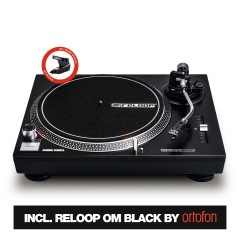
Features
NEW in the MK2 version:
Newly developed top panel and reinforced housing construction
Reworked metallic buttons with improved feel & tactile response
Precision Pitch with selectable ranges of +/-8 %
Superior finish in deep black metallic
Quartz-driven DJ turntable with direct drive
Perfect for beginners
USB audio output for digitizing your records easily
Precise motor control with 2 speeds selectable (33 1/3 & 45 rpm)
Precision-engineered, die-cast aluminium platter with stable rotation
Statically balanced s-shaped tone arm with hydraulic lift and anti-skating - mechanism
Universal connection for pick-up systems (SME)
Extendible needle illumination
Built-in phono pre-amplifier (no grounding necessary)
Switchable phono and line level output
Shock-absorbing feet for vibration isolation
Sturdy, heavy construction with optimized damping features
Prepared for dust cover (available as optional accessory)
Incl. platter, OM Black pick-up system (by Ortofon), headshell, slipmat, counterweight, power cord, operating instruction manual
Technical Data
Turntable:
Type: direct drive turntable
Drive: quartz-driven direct drive
Motor: 8-pol., 2-phase, brushless DC motor
Turntable speeds: 2 speeds, manual (33 1/3, 45 RPM)
Starting torque: > 1kg/cm
Brake time: 50 dB (DIN-B)
Brake system: electronic brake
Platter:
Material: aluminium die-cast
Diameter: 332 mm
Tone arm:
Type: universal, statically balanced, s-shaped
Effective length: 230.5 mm
Overhang: 16 mm
Tracking angle error: < 3°
Applicable pick-up weight: 3.5 – 8.5 g (incl. headshell 13 – 18 g)
Anti-skating range: 0 - 7 g
Connections:
1x PHONO/LINE out (gold-plated)
General:
Power supply: AC 115/230 V, 60/50 Hz (US/EU)
Power consumption: 13 W
Dimensions: 450 (w) x 352 (d) x 144 (h) mm
Weight: appr. 6.76 kg
- A1: Ali Bawa -Yansama
- A2: Napo De Mi Amor - Kissakpiou
- A3: Alognon Degbevi & Les Vétérans Jazz - Baba Na Mi
- A4: Mamo Lagbema - Fati Waka
- B1: Koffi Ottytana Bebli - Doka
- B2: Gregoire Lawani - Habie
- B3: Deg Dos - The End Of All
- B4: Tomede Ehue - Bella Bellow
- C1: Mawuli Decker - Hlomede
- C2: Palete Wawa - Assini
- D1: Akofa Akoussah - Sumga Na Bacci
- D2: Roger Damawuzan - Miziqui
- D3: Agboti – Agaza Gbona
A treasure-trove of rare and unusual recordings mostly recorded in Lomé during the 70’s and 80’s . A fusion of traditional
voodoo chants, raw soul and even Electro Funk . Includes biographies and rare photos
Finding these tracks and their rights holders hasn’t become any easier even after few trips all over this west African country bordered by Ghana , Benin & Burkina Faso. After 8 years, We , at Hot Casa Records with the kind help of Roger Damawuzan decided to select thirteen tracks, a snapshot of some hundreds of rare and often forgotten tapes from the most prolific, professional and exciting phase of the country’s recording history included international stars like Akofa Akoussah, Gregoire Lawani to Roger Damawuzan compared as the James Brown from Lomé to forgotten tapes and brilliant songs in Mina, Kabyié and Fon language.
Many of the tracks featured here are peppered with innovation and experimentation highlighting how diverse, the music scene in Togo was at the time even if the political context influenced their creation. Many of the original albums these tracks are taken from high prices online due to their rarity and so it’s with great pleasure that we present a selection here that evokes a golden boomtime in Togolese music history.
On Gift n Curse Principle, Jnn Aprl puts forth her own signature interpretation of “techno”, relying on her art school drop out sensibilities and analog ear. After spending the better portion of the last decade immersing herself in the heartland of electronic music, The Seoul by way of Chicago by way of Detroit by way of Seoul again producer and DJ is proud to present the debut of her new EP as well as her new label, Rene Koala.
Find on the record a set of tracks spanning the gamut, made with the assistance of a MPC 1000, a Prophet Synth, vocal effect and some grit. For the dancers and for the artist alike, each song represents a journey. 'Gift n Curse Principle' employs a minimal beat with raw intention. ‘Freedom Bondage’ taps into a low frequency and steady modulation, emulating a heartbeat. All tracks ask to be heard in their entirety.
This EP was made with support from Piranhahead of Rustbelt Studios and Bill Skibbe of Third Man Records.
c A3. 323 Ear To Ear
[d] A4. DLASM [Don’t Let Anyone Stop Me]
Oro Azul‘s debut offering, ‘Water Seeds,’ takes us through 4 shades of an aquatic garden. Dembow floats underneath the waves while woodblock melodies bubble up through the weeds. Sub bass shifts the tide. Some sounds are moss-like, a protective balm. Other tones come through as minerals and metals, shining in the refracted light from above.
A collaboration between Ultima Esuna and Michael Red, the music of Oro Azul took shape over the course of a year of purposeful and transformative studio sessions. This release follows the pair’s solo releases on DJ Python’s Worldwide Unlimited, Nervous Horizon, and Isla.
repressed !
Regular Offcial Authorised Vinyl Version, Original Soundtrack, 350g Sleeve, Black Inner, Sticker, 12 140g Vinyl - The first ever OFFICIAL vinyl release of the soundtrack for Mamoru Oshii's legendary science fiction anime film GHOST IN THE SHELL (1995). - LP cut from the original master reels at Emil Berliner Studios, official Ghost in the Shell artwork
We Release Whatever The Fuck We Want Records is thrilled and honored to announce the first ever official vinyl pressing of the soundtrack for Mamoru Oshii's critically acclaimed and all around legendary science fiction anime film GHOST IN THE SHELL (1995), adapted from Masamune Shirow's groundbreaking manga series of the same name. Cut from the original master reels at Emil Berliner Studios (formerly the in-house recording department of renowned classical record label Deutsche Grammophon), the album comes as a LP accompanied by a bonus one-sided 7 housed in official Ghost in the Shell artwork sleeve with silver gilt printing and a Japanese obi, and contains extensive 24-page liner notes. The haunting score is composed by Kenji Kawai, one of Japan's most celebrated soundtrack composers, alongside Joe Hisaishi and Ryichi Sakamoto, whose work includes Hideo Nakata's Ring (1998) and Ring 2 (1999), Death Note (2006), Hong Kong films Seven Swords by Tsui Hark (2005) and Ip Man by Wilson Yip (2008), and countless others. Kawai's compositions see ancient harmonies and percussions uncannily mesh with synthesized sounds of the modern world to convey a sumptuous balance between folklore tradition and futuristic outlook. For its iconic main theme 'Making of Cyborg", Kawai had a choir chant a wedding song in ancient Japanese following Bulgarian folk harmonies, setting the standard for a time
Repress!
Cerrone steps up for a new single, cut loud and proud on either side of a 12 inch on his own Malligator Préférence label. In the words of the main man himself…
“I composed ‘For You’ with the desire to get back to all the musical sensations I've experienced in 50 years; to translate all that makes the universe, emotion and sensuality about Disco Music. To do so, I chose to record with real musicians (pianist, string and brass sections, etc.) that were playing live, while taking the best of nowadays's recording and production techniques. I really made this creation which is a musical voyage For You. Enjoy!” - Marc Cerrone
A necessary agitator in the city, Bruno Trigo Gonçalves signs, while Phoebe, some of the most desirable sound infusions of the moment. The founder of Troublemaker Records, collaborator of Rádio Quântica, resident DJ at the “mina” party and also one of the faces behind the Planeta Manas space, has multiplied himself in live performances and brought a handful of news in recent years. “If I was simple in my mind, everything would be fine”, under Rotten Fresh label and “Love is Patient, Love is Kind, Love Will Make you Lose your Mind” by Sweet Love Making, a label that he jointly owns with Bleid , demonstrate Phoebe's bird's-eye view. This vision includes allusions to different languages of dance music, ambient music and other personal cosmologies that define him as an absolutely free producer.
- Horse Meat Disco “BOOOOOOM”
- Alison Swing - “hot tracks!”
- FYI Chris - “bangin - love all these tunes <3”
- Nikola Baytala - “JENSEN INTERCEPTOR REMIX !!! AFTERNOON BLAZE !!!HYPEZONE 5000 !!! BASS IN YOUR FACE !!! DISCOS EXTENDES KILLIN IT !!! SUBWOOFER ALERT !!! ”
- Turbojazz - “Supa cool EP!”
- Daniel ( Happy Endings) “Simply brilliant, every single track.”
- Nita Aviance“oof, Go is just naaaassssttttyyyy! very excited to bring this one to the floor. the whole EP goes off, really, FAB release. thank you for sending!”
In 1967, Disperú commissioned trumpeter Toño Reyes to form a band and record an album with a series of songs that reflected the latest tropical music trends, in his own inimitable style. “Mister Boogaloo” combines the influences received from the likes of Mexican drummer Leo Acosta and the emerging Nuyorican boogaloo scene. First time reissue, including its original striking psychedelic artwork and remastered sound. In the few years that the Disperú record label was operative, it managed to open its doors to emerging artists, who were often ignored by the major labels but would go on to leave their mark on Peruvian popular music. In 1967, Disperú commissioned trumpeter Toño Reyes to form a band he called Toño y sus Sicodélicos. During the recording sessions for this album they performed a series of songs that reflected the latest tropical music trends, in his inimitable style. Instrumentals such as 'Mr. Boogaloo', 'El Guayacol', 'La Anticuchera', 'La Peinadora' and 'La Fiesta es Mañana' are versions that follow the lines traced by the Mexican composer and drummer Leo Acosta. In the early sixties, based in Los Angeles, Acosta played with the orchestras of Harry James, Sammy Davis Jr, Tony Bennett, Herb Alpert, and Dámaso Pérez Prado. Mid-decade, Acosta turned to the novel sounds of boogaloo, which immediately caught the attention of young South Americans. The song 'Borinque Bella' is another cover version, originally recorded by The TNT Band, based in New York. Another noteworthy influence on the album is the blind Venezuelan organist Tulio Enrique León, who performed cumbias and guarachas enhanced by his Hammond organ, as is the case of 'Chin chin'. Songs in vogue at the time complete the album. The best known is perhaps 'Es la Lluvia que cae', popularized in Spanish in 1967 by Los Iracundos. ‘Tequila' and 'No te bote', by The Champs and
Sonora Matancera, respectively, were also classics on Lima's radio stations. 'Las hojas secas', by the Mexicans Los Zignos, was so popular that it was even covered by Peruvian rock groups such as Los Steivos and Los 007. The success reaped by Toño y sus Sicodélicos took them straight to another record company, and the group’s records were also re-released in neighboring countries, always with striking psychedelic cover illustrations. First time reissue!
microCastle’s first offering of 2024 welcomes Adrian Roman back to the label for his second artist showcase. Hailing from Spain, Adrian Roman first rose to prominence in 2021 with a string of superlative releases which redefined his sound, resulting in an aesthetic that was both cutting edge and effortlessly cool. F, nmully formed within the creative confines of his Castello studio, Adrian’s first microCastle project, 2022’s‘ Disturbing the Perception’ succeeded in showcasing his inventive approach to composition, while remaining club-effective, and in turn earning play from Aera, Fideles and Jimi Jules, amongst others. Moving forward the next eighteen months have proved to be impactful for the young Spaniard, recording standout projects for AZZUR and Sum Over Histories, releases which continued to build on his creative acumen, while remaining in the playlists of underground tastemakers Ame and Dixon. With 2024 beginning with Adrian’s latest Sum Over Histories vehicle ‘Oratorical Ability’, the Spaniard now makes a welcome return to microCastle with a six-track showcase entitled ‘This Is What I Was For A Moment’.
From the opening monochromes of ‘Le Sabbat’ Adrian’s craftsmanship reveals itself across this slow-burning piece, one where grating growls, granular flares and panoramic arps ultimately set the pace for the groove-centric ‘Customized Reality’. It’s here where Adrian puts a greater focus on the dancefloor, marrying hopeful vocal phrasing and silky chord stabs for a rejuvenating experience, while a drum-driven drop ultimately charts the course for a finale of deconstructed sonics and post-rave bliss. The haywire electricity of ‘Faces of Belmez’ finds the Spaniard once again flexing his creative muscles, as corrugated bleeps and cataclysmic rhythms provide a vast sense of space, creating the ultimate backdrop for distorted synths to propel choppy rhythms into dark underground passages, and perhaps onto some of the world’s most adventurous dancefloors.
The collection’s midway point is marked by the hypno-architecture of ‘Mind Design’. Trickling reverberations and long sighs of tonal tension wade through its pulsating framework, with frayed effects and thumping rhythms submerged beneath a buzzing panoramic glow. Played by Ame and sitting as one of the project's most enigmatic tracks is ‘TAGDI’ (They Are Gonna Do It). Tinted with contemplative synths and guttural vocals, Adrian’s unique emotionality peaks here, as he crafts a low-slung, slow-building dystopian romance, all while weaving in cerebral manipulations for an unforgettable ride. The mist breaks instantly on the collection’s final piece, as your thrusted into the muscular grooves of ‘Fear Track’. Horrifying vocal stabs strike, leaving the gauzy purple skies of ‘TAGDI’ behind for a more robust romp, one where anabolic bassline, retro-arps and off kilter percussion bring the release to a feverish peak. A fitting conclusion to a diverse collection of music, one where Adrian creates a journey that speaks to the complexities of life against an immersive and challenging backdrop.
Artwork: Maurcio Seidel
Another EP from the vaults of West Coast rave scene specialists, Michael Kandel and Tom Chasteen. A side has two versions of a fast passed dancefloor oriented production tactfully presenting woven layers of rhythmic elements underneath dubbed out effects, “Crazy Jane” possibly channeling moments of Debbie Harris' “Heart of Glass” on LSD. B side gets more aggressive on many levels with a bit of a downtempo Gabber feel to it, raging synths and generous cymbal action all around, 3 versions, one of them featuring samples from Jimmy Stewart's 1946 monologue in “It's A Wonderful Life”, another one with very non-western elements mixed in, and finally Juan Ramos bringing a very dancefloor friendly version with a slight Euro-Dance late Hi-NRG edge to it.
"Recorded in Heaven".
- A1: Sungu Lubuka - Petelo Vicka Et Son Nzazi
- A2: Mfuur Ma - Groupe Minzoto Ya Zaïre
- A3: M.b.t's Sound - M.b.t's
- A4: Musique Tshiluba - Abeti Et Les Redoutables
- B1: Lalia - Trio Bydoli
- B2: Adeito - Tabu Ley Et L'orchestre Afrisa
- B3: Ngantsie Soul - Les Bantous De La Capitale
- C1: Nganga - Les Frères Soki Et L'orchestre Bella-Bella
- C2: Tembe Na Tembe Ya Nini - Orchestre Celi Bitshou
- C3: Lolo Soulfire - Lolo Et L'orchestre O.k. Jazz
- D1: Femme Ne Pleure Pas - Zaiko Langa Langa
- D2: Kiwita Kumunani - Orchestre O.k. Jazz
- D3: Fiancée Laya - G.o. Malebo
- D4: Ah! Congo - Orchestre National Du Congo
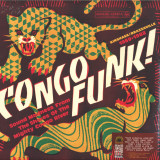
The making of Congo Funk!, our long-awaited journey to the musical heart of the African continent, took the Analog Africa Team on two journeys to Kinshasa and one to Brazzaville. Selected meticulously from around 2000 songs and boiled down to 14, this compilation aims to showcase the many facets of the funky, hypnotic and schizophrenic tunes emanating from the two Congolese capitals nestled on the banks of the Congo River.
On its south shore, the city of Kinshasa – capital of Democratic Republic of the Congo, the country formerly known as Zaïre – is often seen as Africa’s musical Mecca, the city that spawned such immortal bands as African Jazz, O.K. Jazz and African Fiesta, and the place to which aspiring musicians from throughout the continent would go to make a name for themselves.
But the city of Brazzaville on the north shore of the river – capital of the Congo Republic – played an equally important role in spreading Congolese sounds continentally. In addition to producing legendary bands such as Les Bantous de la Capital, it was the powerful transmitters of Radio Brazzaville that allowed the unmistakable groove of Congolese Rumba to be heard as far away as Nairobi, Yaoundé, Luanda and Lusaka thus turning the electric guitar into the continent’s most important instrument!
Although the musical landscape of these cities had been defined by a core group of bands in the late 1950s, the modernisation of Congolese music has been steadily evolving until the events surrounding the Muhammad Ali vs George Foreman boxing match marked a turning point. The promoter of that event known as “Rumble In The Jungle” was none other than the notorious Don King who needed 10 millions dollars to get Ali and Foreman into a boxing ring. The only candidate willing to put this kind of cash on the table was Mobutu Sese Seko, President of the Democratic Republic of the Congo.
Mobutu - the megalomaniac dictator who got to power with the support of the United States and Belgium in exchange for unlimited and affordable access to the riches of the country - had a soft spot for music and it doesn’t come as a surprise that he agreed to a three-day live music festival being organised prior to the “Rumble”. Zaïre 74 - as the festival was dubbed - was meant to hype the boxing match and many stars were invited.
Although a myriads of artists flocked in for the occasion, it was the performance of James Brown on Zairian soil that caused havoc among the younger generation, inspiring hundreds of would-be musicians to take up their electric guitars and reverbs cranked to the max in search of a new sound in which hyperactive Rumba was blended with elements of psych and funk. While the results were very different from the popular music of the three Musketeers - as Tabu Ley, Franco and Verckys were known - they weren’t a complete break with tradition.
These new sounds emerged at a time when the Congolese record industry – previously dominated by European major labels – was experiencing a period of decline due to rising production costs and needed a radical change. The void was filled by dozens of entrepreneurs willing to take chances on smaller scale releases. It was the beginning of a golden age for Congolese independent record labels, and the best of them – Cover N°1, Mondenge, Editions Moninga, Super Contact – preserved the work of some of the region’s finest artists, while launching a generation of younger musicians into the spotlight.
The movement was greatly helped by legendary radio shows but it was the dynamic productions of Télé-Zaïre that set the dynamite on fire. Legend has it that TV shows were so huge that president Mobutu himself ordered RTV du Zaïre to put on daily concerts since it halted criminal activities for the duration of the evening.
Congo Funk! is the story of these sounds and labels, but most of all it is the story of two cities, separated by water but united by an indestructible groove. The fourteen songs on this double LP showcase the many facets of the Congolese capitals, and highlight the bands and artists, famous and obscure, who pushed Rumba to new heights and ultimately influenced the musical landscape of the entire continent and beyond.
DJ Support: Danny Krivit, Craig Charles (BBC Radio 6 Music), Hallex M, Jazzanova, Delite Radio, Mi Soul, Pointblank, Totally Wired Radio, XFM, Radio Solar, Tony Minvielle, Simon Phillips, Chris Phillips (Jazz FM), KCRW DJs, Ian Friday, Aroop Roy, Samantha Badd (Café Del Mar), Mr. V, Simon Harrison (Basic Soul), Greame Park, Mike Fossati, Timo Mass, Deli G, Servino (Horse Meat Disco), Hyenah.
‘Badly Written Songs’ is, of course, a tongue-in-cheek title. It comprises a carefully structured and well-produced array of songwriting, topped and tailed with live instrumentation, commanding vocal performances and high-end production: the result of years of sound engineering and music production experience. Since the last album, Ross Hillard has continually honed his skills whilst earnestly crafting this sophomore long player. As well as developing a range of audio plugins, Ross also manages recording sessions at his own Paddocks Recording Studios: huge live spaces boast cutting-edge technology, integrated with distinguished analogue kit. The studio is complemented by a collection of prized microphones, together with a fully-restored vintage Raindirk mixing desk.
The opening track and first single from this album is the positively-anthemic gem entitled ‘Good Morning Sunshine’. It tells a forward-looking story promoting the merits of getting back into the driving seat of life. It’s propelled further by superb jazz-inspired drums and live horns that build up to an exhilarating crescendo. Featuring the vocal talents of Sophia Marshall, the story she paints is supported by a wonderful, darkly humorous cartoon video. An animated cadaver hilariously acts out her notions of positive living.
Other tracks also destined for a single release include: ‘Loving You’. It’s a song written around love lost. A bouncing house composition lays the foundations for Sophia Marshall's beautiful vocal that narrates the many facets to be found in loving another person. ‘Better’ again echoes jazz-inspired drums behind Sophia's vocals, drawing attention to how so many people are lost on their devices, missing out on the awesome world around them. A catchy chorus chants the notion behind this song, i.e., that you ‘could be better!’ This single is also supported by another fantastic video featuring the same comical, deceased character introduced through the ‘Good Morning Sunshine’ video.
In Zeiten, in denen Alle Mainstream sind, ist es nicht leicht ein Underground-Musiker zu sein. Vor allem, wenn man davon leben wollen muss. Der Leipziger Musiker Josen Bach ist so einer. Seit Jahren erfolgreich unter dem Radar!
Er verdient seine Brötchen als Schlagzeuger, als Theatermusiker und jetzt neu: Als Bandleader seiner eigenen Band DIE QUITTUNG. „Einfrieren“, so lautet der Titel des am 24.11. erscheinenden Albums, ist bereits das zweite Album von DIE QUITTUNG, allerdings das erste auf dem Berliner Label staatsakt.
Die Produktion für „Einfrieren“ ging während der Pandemie los und ist nun endlich pfannenfertig gemischt und gemastert. Selbstverständlich wird sein neues Label nun alles dafür tun, DIE QUITTUNG so breit wie möglich im Mainstream zu etablieren! Bald ist es vorbei mit dem Untergrundlegendenstatus. Nur noch mit Sonnenbrille zum Bäcker.
- A1: Sam Hankins - Song For My Father (Feat The Ho-Dads)
- A2: Jolly George - Idella (Feat His Combo)
- A3: The Sounds Of Time - Kool Tool
- A4: Leo Valentine Trio - Behind The Outhouse
- A5: The Rhythm Rogues - Give Me Some Lovin&Apos;
- B1: The Soul Merchants - Ain&Apos;T Gonna Go For That
- B2: Eddie Gough - I`m Coming Home Baby (Feat Traditions)
- B3: Sunday Social - Soul Break
- B4: Tom Hurley Combo - Feeling The Soul
- B5: Bobby Mann - Mercy Mercy Mercy
The Hammond organ was first manufactured in 1935. In 1954, the now famous Hammond B3 model was introduced with additional harmonic percussion feature. When the company went out of business in 1985, around two million of various models of the Hammond organ have been produced.
The Hammond B3 was originally marketed to churches as a lower-cost alternative to the wind-driven pipe organ. It quickly became popular with professional jazz musicians in organ trios. Jimmy Smith's use of the Hammond B3 inspired a generation of organ players, and its use became more widespread in the 1960s and 1970s in rhythm and blues, rock, reggae, and progressive rock.
This collection is centered on the exciting and dynamic sounds of the Hammond B3 organ!