Indiana Jones never dug this deep.
Church – the brainchild of Joe Washington – were a band both lucky and cursed to come up in the seventies. Lucky, because they rode a wave of community activism, uplifting messages and a moment when music truly mattered. Cursed, because those same times meant their tight, heartfelt output went overlooked.
Mid-sixties to circa 1980 soul and funk were extraordinarily rich. The era’s big releases have aged like fine wine, yet countless hidden gems remain buried. Church’s only single was one of them. Their hypnotic 1976 release “How Long” b/w “Da Da Song” arrived the same year as Stevie Wonder’s Songs in the Key of Life, Marvin Gaye’s I Want You, Diana Ross’s Diana, and at a time when Black mainstream music was shifting toward disco. Church, however, sounded like Sly & The Family Stone in an alternate timeline — gritty, focused, stripped of additives.
“Da Da Song” is pure grits and gravy: furious, tight drums and lyrics that sound like both a plea to DJs to play their record and an insistence to keep the party alive, noticed or not. It cooks from start to finish in just two and a half minutes.
“How Long” is its own universe. Where “Da Da Song” is skeletal, “How Long” blends key strands of Black music in under three minutes: touches of spiritual jazz with a Gary Bartz-like sax, gospel-blues undertones, and echoes of the era’s flower-power-tinged Black creativity — The Undisputed Truth, The Family Stone, even the poetic freedom of Nikki Giovanni. The lyrics are a timeless plea for love.
Church formed in the Bay Area in the early seventies, shaped by the movement, culture and activism of the time. Joseph Washington, based in San Jose, never chased a music career — for him, music was a way to bring people together. Before Church, he led a backing band called Wash, then added gospel singer Linda Williams (née Stephens) and New York–born Joel Como on xylophone to complete the group.
They rehearsed in Joe’s garage, spread through word of mouth and played every gig they could: Black colleges, opening slots for The Whispers, neighbourhood house parties. Some members studied at Nairobi Junior College in East Palo Alto, then a hotbed of Black community activism, with revolution in the air and messages woven naturally into the music.
This single is a message from that era, resurfacing at last — ready to be sampled just as another Joe Washington track, “Look Me in the Eyes”, was on Drake and J. Cole’s “First Person Shooter”. These rare, spirited tunes are begging for new life through samplers, again and again.
Cerca:u stone
Coyote are back with another typically carefully curated collection of Baleraic re-edits and revisions via the reliable (and hush-hush) Magic Wand imprint. The Nottingham twosome kick things off themselves with 'Carpenter', a dubby and bass-heavy extension of a dreamy, folksy number (all jangling acoustic guitar, stoned male lead vocals and gentle hand percussion), before we're treated to the 'Pointless edit' of 'Six Blade Scalpel' - a languid, bass-heavy revision of a late 70s blues/soft-rock number crafted by Bedmo Disco's Sell By Dave. There's an Americana/neo-folk feel to Andy Kidd's sublime extension of Dan England's 'I Don't Feel That Way', while YZ's edit of 'Sapelo' is a horizontal, Rhodes-laden, spoken word-sporting ambient delight.
Repress!
Rhythm On The Loose “Break Of Dawn” is quite simply one of House Music’s all time classics.
Producer Geoff Hibbert was inspired by seeing dawn break on an Italian coast line to
draw inspiration from Moby’s anthemic “Go” and disco gem “Let No Man Put Asunder” by First Choice to create his loving homage to the UK Rave scene.
Network set up a label “The One After D” to release a limited edition press of the instant classic to create demand.
One of the first copies was picked up by Kevin Saunderson and his relentless playing of the track helped fuel interest in the USA.
The first release on Network in 1991 established the track as iconic. That original mix is here and still sounds as fresh as ever. Perfect in fact.
The 12” also contains remastered versions of the 1995 remixes by Rhythm On The Loose, Strike and Stonebridge.
Taken from Network’s extensive back catalogue and a re-issue of a timely classic that is always in-demand.
- A1: Finnebassen - If You Only Knew
- A2: Cassius - The Sound Of Violence (Franco Cinelli Remix)
- B1: Kiko - World Cup
- B2: Reckless - Still In The Groove (Def Offenders Remix)
- C1: Phil Fuldner - Lights Off (Vocal Version)
- C2: Aril Brikha - Winter
- D1: Sia - The Girl You Lost To Cocaine (Stonebridge Vocal)
- D2: Liquid - Closer (Lp Mix)
After ten years 12 Inch Lovers has become a household name not only because of their parties but also because of the fantastic vinyl samplers they released over the past few years, which were sold out in no time and have become true collector's items.
They now continue in the same vein and once again bring a fresh and contemporary mix of hard to find, original house classics or even classics that never had a vinyl release.
These samplers should therefore not be missing from any 12 Inch Lovers collection.
Sampler 5 begins with the breakthrough record from Norwegian producer "Finnebassen". "If You Only Knew" was a big hit for him in 2012, the record was best known for that hypnotic Aaliyah sample used throughout the entire track. A2 brings the very rare remix of this uber classic "The Sound Of Violence" by "Cassius". The "Franco Cinelli" remix is a very successful approach to this classic.
On B1 we find a real anthem. "World Cup" by "Kiko" is a delightful classic from 1999 but to this day it is impossible to imagine today's DJ sets without it. B2 then brings the delicious "Still In The Groove" from "Reckless", of course in that famous "Def Offenders" remix.
"Phil Fuldner" is still very active as a DJ and producer today. You can find his dreamy "Lights Off" from 2010 on C1. And speaking of dreams. "Winter" by "Aril Brikha" is another incredible classic that should definitely not be missed in your collection.
On D1 we find the Australian and headstrong singer "Sia" with her classic "The Girl You Lost On Cocaine", but in that fantastic and hard to find "Stonebridge Vocal" mix.
Last on Sampler 5 we dive back into the nineties with the memorable club classic "Closer" by "Liquid" on D2.
Part 1[34,66 €]
We're excited to announce 2 stone cold classics from Theo Parrish on Peacefrog - First Floor Part 1 and First Floor Part 2.
Originally released in 1998 "First Floor” is Detroit/Chicago auteur Theo Parrish’s debut album. Released on vinyl in two parts for maximum playability; the raw bluesy, soulful offbeat grooves have long since buried themselves deep under the skin of the house community.
Showcasing Theo’s innovative use of drum programming and effects its uniquely loose but taut knit of minimalist elements worked to maximal, hypnotic effect have solidified its reputation as a contemporary classic and served as a corner stone for Theo’s truly legendary status.
"First Floor” is one of those albums that has transcended generic borders to influence heads of all stripes with its unmistakable soul-nuzzling texture and groove. Essential.
We're excited to announce 2 stone cold classics from Theo Parrish on Peacefrog - First Floor Part 1 and First Floor Part 2.
Originally released in 1998 "First Floor” is Detroit/Chicago auteur Theo Parrish’s debut album. Released on vinyl in two parts for maximum playability; the raw bluesy, soulful offbeat grooves have long since buried themselves deep under the skin of the house community.
Showcasing Theo’s innovative use of drum programming and effects its uniquely loose but taut knit of minimalist elements worked to maximal, hypnotic effect have solidified its reputation as a contemporary classic and served as a corner stone for Theo’s truly legendary status.
"First Floor” is one of those albums that has transcended generic borders to influence heads of all stripes with its unmistakable soul-nuzzling texture and groove. Essential.
- A1: Design - Premonition
- A2: Vision - Lucifer’s Friend
- A3: Richard Bone - Alien Girl
- A4: John Howard - I Tune Into You
- A5: Ian North - We’re Not Lonely
- A6: Selwin Image - The Unknown
- B1: Harry Kakoulli - I’m On A Rocket
- B2: Rich Wilde - The Lady Wants To Be Alone
- B3: Billy London - Woman
- B4: Alan Burnham - Science Fiction
- B5: The Microbes - Computer
- B6: The Goo-Q - I’m A Computer
- C1: Gerry & The Holograms - Gerry & The Holograms
- C2: The Warlord - The Ultimate Warlord
- C3: Die Marinas - Fred From Jupiter
- C4: Dee Jay Bert & Eagle - I Am Your Master
- C5: Peta Lily & Michael Process - I Am A Time Bomb
- C6: Sole Sister - It’s Not What You Are But How
- D1: Alasdair Riddell - Do You Read Me?
- D2: Karel Fialka - Armband (The Mystery Song)
- D3: John Springate - My Life
- D4: Idncandescent Luminaire - Famous Names
- D5: Disco Volante - No Motion
- D6: Dream Unit - A Drop In The Ocean
2025 REPRESS ON TRANSPARENT GREEN VINYL
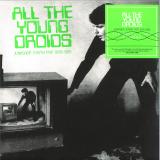
Compiled by Philip King “And then came the rise of synth pop : blokes with dodgy haircuts hunched over keyboard-operated machines stuffed with wires and do-it-yourself tone oscillators making sounds like a brood of geese passing gas in a wind tunnel. Whoopee! This is the way the ‘70s ended : not with a blood-curdling bang bang but with a cheap, synthesized, emasculating whimper.” NICK KENT, NME. All The Young Droids: Junkshop Synth Pop 1978-1985 is a new compilation that charts the underbelly of the epoch-defining sound of the synthesiser in 80s popular music. Compiled by Philip King (previously seen compiling All The Young Droogs, Glitterbest and Boobs - The Junkshop Glam Discotheque), the music here connects the dots between DIY synth enthusiasts grappling with new, cheap synthesisers at the tail-end of punk and wannabe, jobbing songwriters enthral to the new music pioneered by Gary Numan, Depeche Mode and Daniel Miller’s Mute Records. Featuring rare tracks of auto-didactic progressive pop music, proto-techno punk, shoot-for-the-stars-land-in-the-gutter chart flops and heralded, underground synth classics, School Daze paints a picture of beautiful failure. Complete with extensive sleeve notes written by King and never before seen imagery, all 24 tracks were remastered by RPM in-house engineer Simon Murphy, many from vinyl copies due to lost master tapes. The story told on All The Young Droids is one of the dawning opportunity presented by both the emergence to the market of cheaper analog synthesisers and the distribution networks plus indie labels that exploded with the advent of punk music in 1976. While the music that sprouted out all over the globe in the wake of these factors was decried as fake, plastic, a refutation of punk’s guitar-led revolution, it’s telling that much of the music on All The Young Droids.. was created in bedrooms, ramshackle studios and home-made set ups with often borrowed equipment. In the era of record labels jumping to capitalise on the success of The Sex Pistols, The Clash (both on major labels, of course) these artists struggled to stand out from a new gold-rush with next to no budget or PR team. With radio and labels desperate for the new Yazoo, what resulted was a testament to necessity being the mother of invention. At the time, the synthesiser was the music of the future, a shiny new machine that could paint like an orchestra with a single finger and a 4-track. In the hands of Manchester avant-pranksters Gerry & The Holograms it’s a pulsing, sardonic weapon.. the only instrument on the Messthetics classic lampooning of New Wave fashion. In Hamburg, a 16 year old Andreas Dorau used it to write and record (with his female classmates on vocals) a global smash in Fred Vom Jupiter (later licensed to Mute Records). The hard-to-find English version (Fred From Jupiter, natch) is included here. Many artists with alreadystoried careers caught the bug and recorded synthesiser-fuelled peons to space, computers, the future and, of course, love-interests. Harry Kakoulli, late of Squeeze, recorded a solo album in 1979 that included the incredible power-synth-pop smash-that-never-smashed I’m On A Rocket. Similarly, Ian North of Neo and American Power Pop stalwarts Milk ’n’ Cookies bought a Korg MS20 and used a tape machine to record We’re Not Lonely, an absolute lost-classic of minimal synth pop. We’re Not Lonely also features on the Junkshop Synth Pop sampler 7” twinned with John Howard unreleased track You Will See, released April 12th 2025. There are plenty of compilation debuts in evidence. Sole Sister were a mysterious trio who were featured on the Scaling Triangles compilation of female-fronted, queer-adjacent post-punk / underground music that also featured The Petticoats. Selwin Image were from San Francisco and featured members of the recently defunct power pop/punk group The Pushups. Their stupidly catchy The Unknown fizzes with New Wave energy - think XTC to Sparks but remains unreleased until now. Dream Unit’s A Drop In The Ocean is an early synth wave cut, positively teaming with Joy Division instrumentation, previously only released on a long-forgotten and super rare, self-released EP. Incandescent Luminaire’s Famous Names belies an archetypal struggle of a small-town trying to make it in a cruel industry but is a thrilling New Romantic-Synth Wave cross over with a OMD gloominess that’s a joy to hear. Feminist Minimal Wave track I Am A Time Bomb by performance artist Peta Lilly and Michael Chance is a revelation destined for new found cult status. It was released on 7” and lost until now. The flipside to the subterranean, never-made-it synth pop mentioned above are the ambitious, even fruity attempts at success that have a perennial elegance to their confidence. New Jersey-ite Billy London (real name Ed Barth) tried to cash in on the synth boom with Woman, released by a major label, a lurching new wave track built on the Louie Louie rhythm and a wonderfully camp Lou Reedstyle sleazy vocal before exploding in the synthesised chorus. The song bombed but with a chorus like this, you have to wonder why? Ex-Glitter Band member John Springate’s My Life is truly epic, with doomed chord progressions and massive sounding drums turning into at least 3 different songs in the course of the track. Before you wonder what’s going on the song resolves with a glorious return to the main refrain. The dry-ice-dressed dance floor is well catered for too. Design’s Premonition and Vision’s Lucifer’s Friend are stone-cold minimal synth bangers, well loved but given a new lease of life here. The Warlord’s The Ultimate Warlord was released in 1978, a homespun proto Hi NRG banger that was later re-recorded by The Immortals in Canada who had a club hit with it. One-man- band Disco Volante’s No Motion was re-issued by Synth wave label Medical in 2012 but makes its first vinyl compilation appearance here. Close your eyes and you can imagine what Lawrence of Felt would have sounded like with some cheap Korgs a little earlier in his career. Gibraltar-based trio The Microbes imagined a computer programming people to dance - how prescient - and ended up with a propulsive, robo-funk track with splendid rubbery bass playing over a tectonic drum machine. Previously picked up by Belgian label Stroom TV, Dee Jay Bert & Eagle’s heavily Euro-accented I Am Your Master demands the listener to “come to paradise!” In a frankly terrifying manner. All The Young Droids is the first compilation to peel away from the narrative that dour, Minimal Synth and Cold Wave were the only musical children of the first rush of synth pop. Philip King and School Daze Records describe a much more complicated world: along with the austere, Brutalist children of Daniel Miller (who produced Alan Burnham’s Bowie-Low-influenced Science Fiction here) was a plethora of desperate cash-ins, accidental mainstream hits, ambitious pop dramas and major label punts that went nowhere. Crucially, the compilation blurs the line between junk and treasure. What if the two things are interchangeable. What if it’s all science fiction?
- A1: Overture
- A2: Cosmic Perspective
- A3: The Origin (Interlude)
- A4: Alluptoyou
- B1: Ya Own Way
- B2: Use Ya Mind (Twentyfourseven)
- B3: Enter Her Abode (Interlude)
- B4: Vague//Recalibrate
- C1: Transmissionnn
- C2: Prelude 2 Purification
- C3: Lather
- C4: Where Ever U R
- D1: Searchin I (4 That Familiar Feelin)
- D2: Searchin Ii (4 Sumthn New)
- D3: Searchin Iii (4 Nothin Else)
- D4: Guess It's All Over
Originally released in 1971, this classic album was the second studio album from the legendary American singer/songwriter Carole King. It is the 81st best selling album of all time, with over 10 million copies sold and is also ranked by Rolling Stone as 25th on the list of the Top 500 greatest albums of all time. A 12 track standard black vinyl, with download code insert (replaces previous version which had a mastering issue). Marketing.
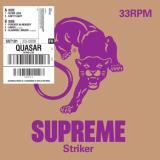
SUPREME STRIKER proudly presents its very first release, SST101 — Quasar “Ritmo Love EP”. This marks the beginning of a new chapter, an exclusive imprint born from the Skylax universe, with a striking visual identity crafted by the legendary studio H5 (Daft Punk, Air, Logorama), delivering an exclusive design destined for collectors. Quasar, the DJ and producer from Russia who already made waves on Mellah #3 under the alias Arash & Quasar, now delivers a true masterpiece of italo-disco infused with 80s nostalgia and modern precision.
The journey starts on Side A with “Ritmo Love,” a dazzling homage to the golden era of italo and new wave, where pulsating basslines and shimmering synths make for an instant classic. It is followed by “Easy Flight,” an uplifting and elegant trip that fuses hi-NRG energy with a deep house sensibility, crafted for nocturnal dancefloors. On the B side, “Forever in Memory” dives into a melancholic yet powerful soundscape, bridging the legacy of synth-pop with a strong club-oriented vision. Things escalate further with his collaborator Salimjan on the hypnotic and dramatic “Urkus,” and finally reach a cosmic climax with “Alhamdu Limusik,” a mystical blend of tribal rhythm and soaring electronics that closes the record with transcendence.
SUPREME STRIKER launches with a statement: this is not just another label, but a new frontier where disco, house and techno are reimagined by artists capable of pushing boundaries. With H5’s exclusive artwork, each release is conceived as a true collector’s piece. Quasar’s “Ritmo Love EP” is a bombshell—an electrifying piece of vinyl designed to delight the most discerning dancefloors and a foundation stone for what promises to be a legendary catalog.
Vinyl only.
For true diggers and devoted believers.
- 1: Call The Doctor
- 2: Hubcap
- 3: Little Mouth
- 4Anonymous 2:29
- 5: Stay Where You Are
- 6: Good Things
- 7: I Wanna Be Your Joey Ramone
- 8: Taking Me Home
- 9: Taste Test
- 10: My Stuff
- 11: I'm Not Waiting
- 12: Heart Attack
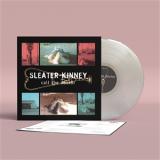
Sleater-Kinney feiern das 30-jährige Jubiläum ihres zweiten Albums ,Call the Doctor" mit einer neuen Vinyl-Ausgabe auf "Northern Light"-farbenem Vinyl. Sleater-Kinney ist eine gefeierte amerikanische Rockband, die 1994 in Olympia, Washington, gegründet wurde. Die Kernbesetzung der Band besteht aus Corin Tucker (Gesang und Gitarre), Carrie Brownstein (Gitarre und Gesang) und Janet Weiss (Schlagzeug). Sleater-Kinney waren bekannt für ihre feministische, linksgerichtete Politik und waren ein fester Bestandteil der Riot-Grrrl- und Indie-Rock-Szene im pazifischen Nordwesten. Call the Doctor ist Sleater-Kinneys zweites Studioalbum. Es wurde von John Goodmanson produziert und ursprünglich am 25. März 1996 bei Chainsaw Records veröffentlicht. Das Album wird oft als Sleater-Kinneys erstes richtiges Album angesehen, da Tucker und die Co-Sängerin und Gitarristin Carrie Brownstein zum Zeitpunkt der Aufnahmen ihre früheren Bands, Heavens to Betsy und Excuse 17, verlassen hatten. Die Besetzung bestand aus Corin Tucker (Gesang, Gitarre), Carrie Brownstein (Gitarre, Gesang) und Lora Macfarlane (Schlagzeug, Gesang). Call the Doctor landete 1996 auf Platz drei der ,Pazz & Jop"-Kritikerumfrage von The Village Voice. 2010 wurde das Album von der Redaktion des Rolling Stone auf Platz 49 der Liste der 100 besten Alben der Neunziger gewählt. ,Sleater-Kinney ist Amerikas beste Rockband" - Greil Marcus, Time (2001). ,Tauscht Sexarbeiterinnen-Rollenspiele, Puppenteile, Gender-Bending und andere gängige Female-Rock-Klischees gegen Geschichten vom alltäglichen Kampf ... Sleater-Kinney beweist, dass Punk immer noch neue Wege bietet, Nein zu sagen" - Johnny Ray Huston, SPIN
- A1: I Missed The Target Again (Radio Edit) 3.40
- A2: It's Gonna Rain 4.06
- A3: Hang On In There 3.59
- A4: Shine A Light 4.26
- A5: The Lord Will Make A Way 4.56
- B1: There Will Be Peace In The Valley 3.26
- B2: 1963 5.20
- B3: Reach Down And Touch Heaven For Me 2.48
- B4: Love Breakthrough 3.46
- B5: In God's Hands We Rest Untroubled 4.58
- A1: My God Has A Telephone 3.25
- B1: God's Gonna Use Me Anyway 4.02
Soul Music legend Candi Staton returns to her down-home Alabama roots on her 32nd album, Back to My Roots. The twelve-track Americana set features an array of Staton-penned originals and some well-chosen covers.
"These songs represent my roots," Staton adds as she reflects on her many trials and triumphs. "Even the new songs on some level represent something I've experienced and that's what real soul music is about." Back to My Roots was produced by Staton with her second eldest son, Marcus Williams, a professional drummer who has toured with the likes of Peabo Bryson, Isaac Hayes, and Tyler Perry. They brought in Mark Nevers of Lambchop fame, who produced three of Staton’s prior Americana albums for Honest Jon’s and Thirty Tigers, to sweeten certain tracks. “Some of the first songs I ever heard were songs like `Peace in the Valley’ and `It’s Gonna Rain,’” says Staton. “The new songs or cover songs are tracks that remind me of that era when I was growing up as a child and evolving as a young woman. That’s why I named the album Back to My Roots because I’m going back to the roots that made me who I am.”
Staton received the Americana Music Association UK’s highest honour, the International Lifetime Achievement Award, at the UK Americana Music Awards ceremony at Hackney Church in London last year for her southern soul work that stretches from her 1969 Muscle Shoals hits to her more recent collaborations with the likes of Americana kings Jason Isbell and John Paul White.
The album opens with a mid-tempo Bonnie Raitt-styled contemporary blues “I Missed the Target Again” that finds Harry Connick Jr.’s longtime guitarist Jonathan DuBose Jr. (aka the Prophesying Guitarist) showing off his skills that set the tone for the song and the album.
Staton’s older sister, Maggie Staton Peebles (who alongside Staton was a member of the Jewel Gospel Trio in the 1950s), joins her for two duets. The first, “It’s Gonna Rain,” features just a drum, steel guitar and vocals. “My mother used to sing that song to us all the time when I was a child,” Staton recalls. “It’s a really soulful kind of song I wanted to revisit.” They then take turns leading Thomas Dorsey 1939 gem “There Will Be Peace in the Valley” that Elvis Presley popularized in the 1950s.
“Hang on in There” is a new, mid-tempo song that has an old school gospel flavour and features vocals from veteran bluesman, Larry McCray.
While in Europe in 2023 for her farewell concert tour that took her to the Glastonbury Festival and Love Supreme, Staton and her British band, PUSH, went into a London studio to record a new version of The Rolling Stones’ 1972 gem, “Shine A Light.” “I love the way that came out,” Staton says. “We put a big choir on it and put our own twist on it.”
From there, Staton revives another Thomas Dorsey classic, “The Lord Will Make a Way Somehow,” with a bluesy vibe. When Al Green started recording gospel in the early 1980s, he re-introduced this song into the culture.
“God’s Gonna Use Me Anyway” is a new mid-tempo blues with subtle Caribbean influences.
The mood takes a turn on “1963.” It’s a poignant, spoken-word reflection on September 15, 1963, when four black girls were killed in the Birmingham Church bombing. “I was in the city that day and I remember the chaos and horror after the bombing,” Staton recalls. “Just thinking of how racism and hatred caused those men to kill those girls was so emotional for me that I could only do it in one take.”
It's a perfect segue into "Reach Down and Touch Heaven," a haunting, plea for divine intervention into the affairs of mankind. "That's straight Baptist," she says. "I used to be a church pianist back in the 1960s. I've never played piano on one of my records before so that's a unique song for me because I’m finally playing on one of my records. The message of that song is about the homeless. It came to me when a homeless person on the street asked me for $5. When God touches your heart to help somebody else that’s heaven to God’s hears. So, when we reach into our purse or wallet to help someone, we’re touching heaven."
Staton offers love as an antidote to hate on the bouncy, Motown-styled, “Love Breakthrough.”
Her publicist brought Aaron Frazer & the Flying Stars of Brooklyn NY’s 2017 cut “My God Has a Telephone” to Staton’s attention. She shifts the track from a retro 1960s groove to more of a 1980s Malaco Records arrangement, a subtle but distinct variation. Staton brought in her longtime friend and STAX Records legend, William Bell (“I Forgot to Be Your Lover” and “Trying to Love Two”), to add raspy seasoning to the track.
The album closes with the wistful, “In God’s Hands We Rest Untroubled,” that was originally written and recorded by the late country star, Lari White, who died in 2017 at the age of 52. “Lari sent me that song to consider at least ten years ago and I always loved it,” Staton says. “The record label didn’t want it on the album or something, so I just held it.”
Staton says, “I grew up hearing a lot of these old songs when they were new songs. I toured with the Jewel Gospel Trio in the 1950s and we got to know people like Mahalia Jackson, Sam Cooke and others who sang these types of songs. So, I’m sort of paying tribute to them and the influence they had on me by refreshing these songs and making new songs in the old style.”’
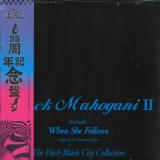
Released in limited numbers in tandem with Black Mahogani back in 2004 and never repressed. Black Mahogani II was a departure from Kenny Dixon Jr's usual house based music and featured cuts from Kenny Dixon Jr's late night jazz band sessions
The centrepiece is the eighteen minute 'When She Follows', a deep jazz session skittering live drum rolls into an electric Fender Rhodes, loping acoustic bass and distant saxophone all wrapped up in an amorphous vocal that drifts ever onwards like some epic detroit techno cut replayed by Gil Scott Heron's band in 1970. Incredible music.
'Rectify' follows in a similar mode, jazz in a detroit techno framework, while the final two tracks 'Dirty Little Bonus Beats' and 'When She (Reprise)' are revisions of the main cut, the former altering the bassline, adding vocal sighs and more rhythmic drums, while the latter shifts up the tempo with a wigged out techno synth element.
Stone, cold.
DJ Stepmom is an LA-based producer and DJ originally from Minneapolis, and one half of the electro-funk duo King Pari (Stones Throw/PPU). His sound leans heavily on vintage drum machines, guitar pedals, and thrift-store keyboards, shaping a style that's as raw as it is playful. On his release 'Don't Give It Your All Cuz You Might Need Some Later', DJ Stepmom threads deep house foundations with soulful vocal features, weaving in a wink of P-Funk eccentricity. The result is a melodic, groove-heavy trip that feels both nostalgic and refreshingly offbeat.
Axel Karakasis returns to Remain with his new 12" EP Stave Off.
Delivering four powerful techno cuts, this release captures his signature sound, precise, driving, and built for the dancefloor.
A solid addition to the Remain series, REMAIN018 once again underlines Axel's consistency and his timeless yet forward-thinking approach to modern techno.
- A1: Judie Tsuke - Shoot From The Heart
- A2: Sally Townes - Neon Castles
- A3: Suse Millemann - Patterns
- A4: Tessa Stivar - Thin Air
- A5: Skyway - Romeo
- B1: Karen Ghee - Get Free
- B2: Amy Levin - Good To You
- B3: Rainbow Boogie Band - Once In A Lifetime Touch
- B4: Susan Smith - Flight
- B5: Susan Smith - Right Before My Eyes
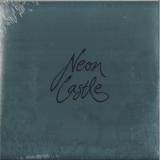
Neon Castle hones in on a fleeting sub-genre of early to mid-’80s folk-rock. For a brief moment, glistening slide guitar, fretless bass, satin floating over drum machines intertwined with ethereal female voices, conjuring a sound at once familiar and otherworldly—pop structures touched by myth. Some songs sway with the warmth of open ranch-land, crystal visions beneath thundering skies; others shimmer with candlelit mysticism, as if born in a pagan stone tower, crafted with the very staff Kate Bush might have wielded. Together, these pieces reveal a singular cloth.
Compiled by Charles Bals—now in his third collaboration with Smiling C—Neon Castle affirms his rare gift for storytelling through sound. Each track unfolds like a scene from an imagined film: castles glowing with noble gas, kingdoms awash in purple haze, white horses roaming free, hair cascading to the waist. The collection sketches a realm both new and upon a time, a world where fantasy takes shape through music. With Neon Castle, attentive listening becomes narrative.