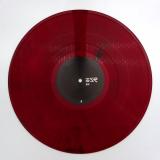
Solid Red Vinyl Edition - 10@ Mini album. Originally release in 2025 in a painfully limited 2x7" + Book edition.
"Dream of the Egg" is the debut solo album by Tomo Katsurada, known for his work with the Japanese psychedelic band Kikagaku Moyo. This project is a unique fusion of music and visual art, inspired by the Japanese 1920s children's book “Yume No Tamago (Dream of the Egg)”. It reveals a deeply personal journey, reflecting Tomo's dreams and the numerous rebirths experienced in 2024—a year marked by profound new beginnings in every facet of his life.
This mini album was driven by a passion for raw and immediate expression. Every song was crafted and recorded with only the materials available to him at the time, embracing an organic and handmade atmosphere. By eschewing rhythm clicks and standard instrumental tunings, a spontaneous sound emerged, capturing the essence of both uncertainty and immediacy. Adding to this distinctive sonic landscape, guest musician Jonny Nash (UK) contributed ethereal guitar sounds on the first and final tracks, enriching the record's dream-like quality.
The journey begins with the opening track, "Moshimo," which means "If..." in Japanese. Here, Jonny's guitar weaves seamlessly with the vocal melody, creating a harmonious dialogue. The first half of the album concludes with "Zen Bungalow" a cover of Gabriel Yared's “Bungalow Zen” from the soundtrack of the film “Betty Blue 37°2 Le Matin”. This particular track is his partner’s favourite song to listen to every morning and left a profound impression on him. One day, he heard a song in his dream that combined both of these tracks and loved how they blended together. This experience inspired him to create a new arrangement, "Zen Bungalow," which has become a central piece of the “Dream of the Egg” album.
The third track serves as an interlude, printed on a flexi disk attached to the middle of a picture book. This interlude transitions the listener into"Inner Garden," a bittersweet folk song that explores themes of love. The EP's narrative spans 20 minutes, culminating in the final title track “Dream of the Egg”. This piece features a delicate session between Tomo & Jonny, combining cello and guitar to create a spectrum of tones that evoke the imagery of a rainbow. The focus on smooth dynamics and meticulous play reflects an intent to convey a sense of physical trembling. This track sounds like the beginning of a new dream; as if the egg of one’s dream is about to hatch, bringing a sense of anticipation and wonder to the listener. Throughout the album, a variety of instruments come into play, drifting between notes and embracing the beauty of imperfection. By incorporating free-form sounds in a highly technological age, the record aims to reconnect listeners with the tangible, human-made quality of sound.
Special Thanks
Jonny Nash – Guitar
Buscar:unc
Portuguese techno force Lewis Fautzi debuts under his own name on Mutual Rytm with ‘Beneath The Surface’. Hailing from Barcelos, Portuguese maestro Lewis Fautzi has carved out a formidable reputation through a run of uncompromising releases and a sound rooted in tension, precision and raw power - exemplified by his recent outing on the agenda-setting Hayes Collective. He has previously established his fierce, potent sound on Soma, PoleGroup, Mord, and a number of other influential labels, while also heading up Faut Section. Having previously appeared on Mutual Rytm’s Federation Of Rytm III compilation under his Non Cyclic alias, he now steps out on SHDW’s label with a six-tracker busting full of impactful techno cuts. The heavily-requested ‘Beneath The Surface’ opens the EP with menacing low-end and tightly coiled pressure that's released through simmering valves and hissing synths. ‘The Hollow Cycle’ brings a loopy, tunnelling groove with a snaking lead and snaking metallic percussion, while ‘Inner Mechanism’ keeps things dark, deep and driving with a backlit glow that pulls you in. ‘Nonlinear Form’ is streamlined deep techno that fizzes with texture, spraying chords and a rumbling sub-bass, while closer ‘Anamorph’ rides meticulously designed broken beats with an ever-present sense of bass-driven foreboding. For digital purchasers, sparse and eerie bonus ‘Surface’ slams down with industrial weight and real warehouse grit, shaping up another weighty offering for the label.
- A1: La Montée
- A2: Holiday
- A3: Maybe
- A4: Freefalling
- A5: Amiante
- A6: Chevauchée
- B1: Peace (In Every Garden)
- B2: Tripping (The Right Way)
- B3: Summer Of Love
- B4: Fly
- B5: Dreaming
- B6: Pléiade
- B7: Starlight
After a critically acclaimed trilogy of albums and a 10-year hiatus, Romain Turzi, the underground pope of uncompromising French music, returns to the helm to compose and produce his new opus “Drop!”. He is joined on vocals by his longtime friend Oliver Gage, whose autobiographical and melancholic writing brings to life an intimate and redemptive musical epic, woven with oblique pop songs and club tracks that reconcile punks and dancers.
An album of diverse influences, it draws on the masters of film music (Goblin, Angelo Badalamenti), the titans of electronic and techno music (808 State, Dopplereffekt), the hedonistic spirit of ’80s Brit rock (Happy Mondays, The Stone Roses), the finely crafted melodies of timeless folk singers (Woody Guthrie, Neil Young), and the sonic power of My Bloody Valentine or the productions of Andrew Weatherall.
A record born of friendship and fearless creative freedom, “Drop!” is an invitation to escape the heaviness of the present and brush against a form of utterly necessary ecstasy.
Assemble Music welcomes XDB for his first appearance on the label. Born and based in Germany with Greek roots, XDB (Kosta Athanassiadis) has been deeply involved in electronic music since the early 1990s. Known for his broad musical vision and refusal to be boxed into a single style, XDB has built a reputation through both his carefully curated DJ sets and hardware-driven productions. His sound draws from raw Detroit traditions, dub techno and deep house, favouring analog textures and stripped-back machine funk. On this three-track EP, XDB explores the darker edges of house and techno, blending classic Detroit influences with raw analog production to deliver a focused and uncompromising statement. With releases on respected imprints such as Sistrum, Ferox and Dial Records, this debut on Assemble Music feels perfectly placed and essential.
16 years after debuting, Coyote's hush-hush Magic Wand imprint continues to be one of the most reliable sources of Balearic-minded re-edits and reworks. Their latest is suitably mysterious - a single-sided missive released with no information about either the uncredited scalpel fiend behind it or the source material. What we can tell you is that 'Suntrip' is undeniably ace, with our shadowy editor delivering an extended, lightly dubbed-out take on what sounds like a mid-1980s big studio number: the kind of off-beat pop-not-pop record that Balearic heads love. Think synth marimba lines, fretless bass, effects-laden drums, glassy-eyed male lead vocals, glistening guitars, nods to dub and lashings
- A1: Michael Andrews - Something Bad’s Better Than Nothin’
- A2: Kevin John Agosti - The Reason
- A3: Ron Eliran - Sky Dust Drifter
- A4: Sunburst - Special Lady
- A5: Virgil Charles Mashburn - Why Should It Be
- B1: Randy Ream - Divorce Song
- B2: Ray Daly - Leave Me Alone
- B3: Richard David Spano - After So Long
- B4: Kerry - Stargazer
- B5: Black Water - All Night Company
2026 Repress

An anthology born out of isolation and deep introspection, Sky Dust Drifter is a cosmic medley of sun-soaked AOR, psychedelic folk, and soft rock. This soundtrack was driven by the lonesome cowboy, a lockdown savior leaving me adrift in desert winds and dimly lit country bars.
Long-distance trades and masked meetups yielded a collection of private press LPs and 45s from ten different artists spanning 1973 to 1980. This seemingly random stack of records revealed songs living entangled in themes of hard luck, heartache, and the inevitable loneliness of existence. Adorned in cracked leather and chrome, this album is an aimless wander from the soil to the stars.
Featuring an unreleased English version of the compilation’s title track “Sky Dust Drifter” (originally released only in Hebrew), the record shifts from laconic afterthoughts to bold proclamations. From Michael Andrews’ blue-eyed soul assertion “Something Bad’s Better Than Nothin’,” to the searing electric guitars and bold synths of Sunburst’s “Special Lady,” Sky Dust Drifter thrives on solitude in a universe of unconditional self-rule where loneliness is not darkness but rather a blazing light of autonomy.
- A1: Roberta Vandervort - Stumbler
- A2: Roberta Vandervort - Walk Softly
- A3: Roberta Vandervort - Let Me Love You That Much
- A4: Roberta Vandervort - Hey Now
- A5: Roberta Vandervort - Child
- B1: Sally Townes - Real To You
- B2: Sally Townes - Bright Eyes
- B3: Sally Townes - Slow Burning Candle
- B4: Sally Townes - Maybe More
- B5: Sally Townes - Neon Castles
2026 Repress
To enter the world of Sally Townes and Roberta Vandervort is to be swept away into a dimension of unique sound. Embellishments of smoldering jazz funk, seductive soft rock, breezy AOR, and misty folk, all paint a picture of the worlds which they inhabited; from the endless flat expanse of Dallas, the hot and humid bustle of a Bourbon Street night club, to the late night buzz of a Los Angeles studio session.
While Sally Townes and Roberta Vandervort never crossed paths in our reality, their supernatural union on this compilation feels like the meeting of old, yet familiar friends, set in a parallel dimension with lives intertwined. The songs feel like old friends, too — a comforting time capsule of the popular sounds of the era, yet offering something completely new. Bridged by the striking similarities in their musical confidence, vocal conviction, and boundless creativity, both women encapsulate an uncompromising passion for living, loving, and creating on their own terms.
- A1: Return Of The Knödler Show 2 52
- A2: The Frogs Of Miwa - Cho (1) 4 52
- A3: Waiting (I) 5 38
- A4: An Old Friend Passes By 3 46
- A5: Coco Bolo Strip (1) 5 25
- B1: Peace And Pipe Utopia 3 14
- B2: Unidentified Dancing Object 1 44
- B3: The Call (I) 2 41
- B4: Wenn Das Rohr Dommelt 4 03
- B5: Mariahilf (Live Version) 3 36
- B6: Watching The Shades (I) 2 59
- B7: Playing The Table Music (Ii) 2 43
- C1: Could Be Nice Too 5 29
- C2: Ox Of Inner Depth 4 51
- C3: Ymir Shows Up 3 58
- C4: Could Be Nice 5 24
- C5: Playing The Table Music (I) 4 23
- D1: Coco Bolo Strip (Ii) 4 52
- D2: Locusts Looking Like Men 5 55
- D3: Waiting (Ii) ︎ 3 36
- D4: No Stove 2 29
- D5: An Old Friend Passes By Again 3 00
- D6: Heimkehr Der Holzböcke 3 16
Black Truffle is thrilled to announce Dalbergia Retusa, an extensive double LP selection of the solo guitar music of Hans Reichel, compiled by Oren Ambarchi. Last heard on Black Truffle as one quarter of the joyously anarchic Bergisch-Brandenburgisches Quartett, Hans Reichel (1949-2011) is one of the great figures of experimental guitar music. Though perhaps lesser known than peers like Derek Bailey, Fred Frith and Keith Rowe, Reichel’s rethinking of the instrument was in some ways the most radical of all. Early on, he dispensed with existing guitars to build a series of his own that explored the use of additional strings and fretboards, moveable pickups, extra bridges, special capos, and other innovations documented in the extensive booklet accompanying this release.
Reichel was a long-term resident of Wuppertal, the small Western Germany city that became an unlikely centre of European free jazz in the late 1960s, also home to Peter Brötzmann and Peter Kowald. His solo debut Wichlinghauser Blues was an early entry into the FMP discography and began a relationship with the label that stretched into the 1990s; all the solo performances heard here were first released on FMP. As Reichel says in the charming archival interview with Markus Müller included here, he was ‘always a cuckoo’s egg at FMP’, a label that began as an outlet for roaring European free jazz. What strikes the listener right from the opening selection on Dalbergia Retusa—‘Return of the Knödler show’, from 1987’s The Dawn of Dachsman—is the extraordinary beauty of Reichel’s music, at once alien in the shimmering sonorities and unconventional pitch relationships made possible by his invented instruments, and deeply lyrical, even romantic in its harmonic content. Growing up in West Germany in the 1960s, Reichel’s formative influences were mainly British and American rock bands, a background that shines through in many of the pieces included here: ‘An old friend passes by’ is haunted by the ghost of Hendrix’s rhythm guitar, and the wild closer ‘Heimkehr der Holzböcke’, taken from a rare 1975 7” and the only piece to use overdubbing, layers errant hammer-on and slide tones over a Canned Heat boogie chug.
Reichel was an important source for the development of Oren Ambarchi’s own extended approach to the electric guitar. Appropriately enough, his selection opens with the very first piece by Reichel he ever heard, on a flexidisc included with a 1989 issue of Guitar Player magazine. Though Reichel collaborated with others extensively in many settings and also performed on violin and his other major contribution to instrument invention, the daxophone, his music for solo guitar remains at the core of his oeuvre. Focusing exclusively on solo pieces recorded between 1973 and 1988, the 23 pieces on Dalbergia Retusa showcase the range and consistency of Reichel’s work, allowing the listener to see how his performances developed hand-in-hand with his instrumental inventions. On a piece from his very first LP, played on an 11-string instrument (partly strung with piano strings and using a schnapps glass a slide), we hear his intensive exploration of fret-hammering to create zither-like, chiming tone, which Reichel would hone further in later years with a double fretboard guitar specifically designed to be hammered rather than fretted and picked. On a piece from 1979’s Death of the Rare Bird Ymir, Reichel uses two steel-string acoustic guitars at once, with beautiful results: ‘some even say too beautiful’, he jokes in the interview included here. Many of the pieces from the 1980s make use of varieties of the ‘pick behind the bridge guitar’, instruments of uncanny harmonic richness primarily designed to be played on the ‘wrong’ side of the bridge. At times the unexpected behaviour of attacks, resonance, and decay can almost seem electronic, conjuring up the technology-assisted work of Henry Kaiser or even Fennesz, but realised solely through Reichel’s unorthodox techniques on his invented instruments. Extensively illustrated with photos and Reichel’s own plans and drawings of his instruments, Dalbergia Retusa is an essential introduction to the unique world of Hans Reichel. Rarely has music been at once so strange and so beautiful.
The second vinyl release on Platz fur Tanz continues the narrative of techno's past and future. Experienced artists reinterpret the shadowy vibe of dancefloors around the world, giving it new form and depth.
The record opens with a track by Swedish techno futurist Lakej, featuring his signature sound of machinery on a working factory floor. The music immediately transports you into the industrial atmosphere of a rave.
This time, the Italian-born, Berlin-based artist VSK takes us on a journey through the emotional waves of deep techno. A slightly jazzy groove makes this track perfect for peak time dancefloors.
Latvian producer Ksenia Kamikaza stays true to her style, transporting us into a world of visualized melodies and rhythms. The bassline sets the groove, while the unhurried rhythm allows you to fully surrender to the dance.
Liza Aikin brings an uncompromising Berlin vibrations to the release, reminding us how a true rave should sound. Her style is not heavy but persistent. Liza never stops experimenting, and this track will be a highlight of any DJ set.
Another Latvian electronic talent closes the release. Igors Vorobjovs blends the best of electro and techno in his track. Nervous rhythms and loud sounds stir the emotions, while the raw, untamed resonance will leave no true connoisseur of feral techno indifferent.
DISPLACES represents Fabris' most personal musical journey to date, inspired by the concept of hyperobjects and cartographic practices. The album sculpts a high-dimensional phased time-space composed of concrete materials and digital archetypes in a state of constant displacement. It delves into the symbolic and philosophical realms of mapping as one of the greatest sense-making mechanisms for life, in dialogue with object-oriented environments, superimposition and non-locality applied to cosmic, temporal, and emotional memory.
The sonic ecosystem expands on the image of navigating a path through a set of places, from the microcosm of quanta to the macro force of dark matter, from underwater depths to overland terrains, encapsulating the cyclical flow between birth and death, both in ecological and anthropological sense. The intersection of these shifting states is explored through the extensive processing of the langspil, Iceland's only traditional instrument, intertwined with manipulated field recordings of biophonies and geophonies captured across Icelandic and Venetian territories. These recordings form the backdrop for a meditative process that relocate familiar objects into unfamiliar realms, reflecting on the transformative power of self-reflection while encapsulating the fragmentation and entanglement found in nature and the human state. The record plunges the listener into a disconcerting and physical soundscape, as a “ghostly spectrality that comes in and out of phase with normalized human spacetime,” evoking sensations of suffocation and release as each layer continuously unfolds the palimpsest of the enclosed labyrinth.
“Extraction of the I” embodies a subatomic reaction—erupting as a molecular force that rises, only to re-submerge with a solitary exhale underwater. In this mutated dark space, beluga whales breathe into "Xanadu Phasing," creating a pulsating tension that releases only to unveil a frozen landscape.
In “Barricading the Ice Sheets” the glacial material morphs into a liquid tunnel of digital artifacts, building a wall of noise that shatters into scattered fragments of ice, resembling bird calls from another world.
A moment of stasis is offered with the appearance of an asymmetrical loop in Monolith I, evoking a primitive rite before an unknown force emerges.
The physical intensity of subsonic material in "A Quake in Being" interrupts the hieratic tone, detuning into polluted sonic matter sourced from relics of the First World War in the Venetian Prealps. The geography of this place reconciles with the original homeland in "The Map is the Territory," blending negative space with anthropogenic elements and exploited sounds of the langspil.
The burning density of "Wolf-Rayet" projects into the void, echoing the residual sounds of a local church as relics of fossilized religions. Wolf tones are the remains in Monolith II, introducing the final track, "Topography of Extinction," where evolving psilocin textures invite the listener to uncover deeper layers of meaning and dislocation.
- Uncanny Valley Girl
- Björk's Alarm Clock
- Awhile Ago, Alone
- Last Night In The Kitchen
- Nowhere Faster
- You Against You
- Formerly Fresh
- So It Goes
Wir denken gerne, dass unser Leben zu Geschichten geformt werden kann - klare Bögen, verständliche Bedeutungen, aber das Leben lässt sich nicht in Schubladen stecken. Stattdessen geht es unverblümt und ohne Entschuldigung weiter, ohne Rücksicht auf unser Ordnungsgefühl. El Ten Elevens ,Nowhere Faster", das 16. Album des Duos, entstand in diesem Unbehagen. In acht Tracks geht es nicht nur um das Nichts, sondern auch um Geschwindigkeit - diese seltsame Dringlichkeit, die uns vorantreibt, auch wenn das Ziel unklar bleibt. Das 33-minütige Album verlangsamt sich gerade so lange, um die schwierigen Fragen zu stellen: Wovor laufen wir weg und was glauben wir, überholen zu können? ,Nowhere Faster" entstand während der längsten Pause, die Kristian Dunn und Tim Fogarty in ihren 23 gemeinsamen Jahren von Tourneen und Aufnahmen gemacht haben, obwohl ,Pause" eigentlich nicht ganz richtig ist. Dunn ist bekannt dafür, dass er immer kreativ am Werk ist, und das hat er auch hier nicht aufgegeben. Stattdessen fing er an, nicht nur für einen, sondern für zwei Schlagzeuger zu schreiben, was Fogarty vor eine der größten Herausforderungen seiner Karriere stellte. Das Album ist auch eine Premiere für die Band, da es durchgehend echte Streicher und Klavier einbindet und damit die Klangpalette eines ihrer vielschichtigsten Werke noch erweitert. Nowhere Faster ist kein Rückzug in Nostalgie. El Ten Eleven setzt weiterhin auf Risiko und Neuerfindung. Das Album konzentriert sich weiterhin auf Fogartys treibendes Schlagzeugspiel und Dunn's bassgetriebene Experimente: Die ersten vier Tracks (,Seite A") zeichnen sich durch E-Bass aus, während die zweite Hälfte (,Seite B") zu akustischem Bass wechselt, der durch Pedale verarbeitet wird und so die emotionale Schwere des Albums subtil verändert. Letztendlich ist ,Nowhere Faster" ein Album über das Abrechnen - über Zeit, Ausdauer und die Ungewissheit, wie lange eine Band oder ein Leben dauern kann. Wir alle tasten uns an die Endlichkeit heran. Die Frage ist nicht, ob wir dort ankommen, sondern was wir auf dem Weg dorthin hören wollen. Zu welcher Musik werden wir tanzen, wenn sich der Boden unter uns zu verschieben beginnt? Wenn schon nichts anderes, dann vielleicht zu etwas, das wie ,Nowhere Faster" klingt.
2026 Repress
Deadbeat & Tikiman's occasional collaborative performances have since blown the minds of many audiences
Deadbeat. Tikiman. Infinity. Dub. A quadrangle of such obvious statement and perfect musical inference may very well never have been uttered for those of the wholly weeded out persuasion. Indeed, when the great book of Dub music is written the names Scott Monteith and Paul St Hilaire will undoubtedly figure highly in its chapters devoted to recent years. Monteith, the last great prodigal son of the doctrine handed down from the Blue Mount of Lord Scratch and King Tubby, St Hilaire the undisputed voice of a generation, those fanatical warrior monks, followers of the most Holy House of Ernestus and Von Oswald incarnate.
Having developed a fast friendship from their very first meeting in Montreal at the premier Micro Mutek event a decade ago, Deadbeat and Tikiman's occasional collaborative performances have since blown the minds of audiences from Berlin to Tokyo and many points in between. No great surprise then that their first album length venture is a Tour de Force of Dub music of the highest order.
Nearly a year in the making, the genetic code of Deadbeat's Infinity Dubs series gets shot through with a Dreader than Dread Kingstonian logic, hi hats dropping back from the three to the one, Tikiman at his most militant, poetic, fierce, and flowing. These are the recordings of two lions uncaged, and none who bare witness shall escape their fiery judgement.
If music is truly eternal, here be two voices which shall echo in infinity with all the weight, reverence, and dire power unleashed with every tectonic bass hit, and every whimsical turn of phrase. And if these eight burnt offerings are any indication of what happens when these two sit down for a session of smoke and reasoning, here's hoping they choose to do it frequently. Dub without end. Ad Infinitum.
2026 Repress

Akusmi is the project moniker of French-born, London based composer, multi-instrumentalist and producer Pascal Bideau, who signs to the new Tonal Union imprint for the release of his album 'Fleeting Future.' With its hallucinatory, genre-defying blend of minimalism, cosmic jazz and Fourth World influences, and in its quest for optimism in the face of unknown and limitless possibility. 'Fleeting Future' stands apart as an inventive and inspirational debut.
The creation of the album's richly colourful and multi-layered sound world was originally inspired by Bideau's journey to Indonesia, where he immersed himself in traditional Gamelan and gong music. Many of the themes, motifs and melodies on 'Fleeting Future' seed from the 'Slendro' scale, one of the essential tuning systems used in Gamelan. However it is not musical scales, but scales as in the size or extent of things that most fascinates Bideau, specifically he explains; "the compelling way things dramatically change when you shift from any given scale to another."
The album connects directly to nature and the wider world in its evocation of perceptive shifts and transitions from microscopic to macro scale, as evidenced by the opening title track 'Fleeting Future', on which a simple dotted saxophone line morphs and billows into synths, brass and strings, indicating the musical voyage that lies ahead. Like the start of a journey or adventure it is full of anticipation, its arborescent growth conveying the optimism of the unknown and of limitless possibility. The album centrepiece 'Neo Tokyo' is a vibrating, ebullient mass of colliding elements which feels like zooming in to the electron level, as it teeters on the edge of chaos. The title is a reference to Katsuhiro Otomo's Akira, a dizzying work of art set in a sprawling futuristic metropolis.
'Yurikamome', meanwhile, is an imaginary soundtrack inspired by Bideau's yearning to visit Japan which he fuels by watching Youtube videos of drives and rides through Japanese landscapes and cities. "It's amazing" he adds, "that we have the ability to access almost anywhere in the world and see what it's like, that people document it and upload it. It's never going to be any replacement for the real thing, but with places that really touch you, it works." The track is named after a Japanese monorail train line which rides from Shinbashi to Toyosu, a last journey that feels like a new beginning.
'Fleeting Future' was composed and recorded by Bideau between 2017 and 2019 in his North London studio and features additional contributions recorded in Berlin by Florian Juncker (trombone), Ruth Velten (saxophone) and regular collaborator Daniel Brandt of Brandt Brauer Frick (drums / electronic percussion). Having been living through uncertain times, one thing that keeps spiralling into the unknown is the future, about which Bideau leaves us with a final thought:
"The future is fascinating: It is constantly readjusting to new events. I feel we left a linear approach to the future to enter an arborescent one where all the data and information we have about what could happen is exponentially ever-growing. Following a branch might allow you to glimpse into what it may become, but the evolution of the whole picture might very well render the prediction totally obsolete, and even meaningless. In that sense, there is not one future but innumerable ones all cancelling each other. That's what makes it fleeting."
The fifth release on SAMMLER is shaped by an intense year and a period of transformation. Created as a way of processing lived experiences, the EP pushes the sonic boundaries of the project further while staying rooted in its hypnotic foundation.
On the A-side, ""Obion"" is stripped down and direct. A weighty beat meets a sharp, distinctive lead, building tension through reduction. ""Seno"" unfolds through a constant interplay of elements. Shimmering percussion and spacious textures create a glistening, almost cosmic atmosphere.
The B-side dives deeper into mood and movement. ""Riba"" revolves around a looping chord sequence that evokes an underwater sensation while maintaining steady drive. ""Dana"" closes the record with depth and presence, combining atmospheric pads with a stomping beat designed for full dancefloor impact.
SAMMLER 05 captures a refined yet uncompromising sound - immersive, focused and forward-moving.
dreamy Watercolor vinyl[31,89 €]
Laufey’s deluxe album, A Matter of Time: The Final Hour, is the closing chapter of her beautiful, critically acclaimed, and GRAMMY® Award-winning third album, A Matter of Time.
With four new songs, this 19-track deluxe album is an introspection about learning to live with one’s anxieties — embracing uncertainty, accepting the passage of time, and finding calm after the storm.
Laputa, a title taken from the fantastical floating island of Gulliver's Travels is aptly named as 'The album that never landed' for, apart from a limited touchdown in Japan, Laputa was never released. This mystical world is a summation of Yokota's journey so far, a complex and at times challenging work but immeasurably rewarding. Beguiling and bewitching in equal measure.
Over fifteen undulating sonic fugue states, he guides listeners round a liminal world, made up of familiar materials but formed in a way defying all laws of perspective and physics. Background murmurings give way to almost uncomfortably foregrounded chattering, and one perceived soundstage segues into another impossible tableau of sonic apparitions, some recognisable in form, but all boldly decontextualised and arranged in expertly cluttered amalgams.
Laputa's obscurity was a prime reason Lo Recordings decided on the Skintone retrospective. Falling as it did between The Boy and the Tree on The Leaf Label and our own debut of Symbol. It was something of an audio crime that the album had never been properly explored and discovered. Lo Recordings hope Laputa can now ascend to its rightful place... hovering above us.
Âsan’s second EP Go Nuclear is an eruption. This four-track follow-up stands as the aftermath — the exhale after prolonged internal pressure.
Side A unfolds inward. Two tracks built for the mind — hypnotic, immersive, almost dissociative in their pull. The opening piece, Picktooth, is a slow-burning ascent. It builds in increments — pressure accumulating in cycles.The impact feels intangible rather than physical. Gradual pressure and tension that keeps rising, rhythm locking you into a state that feels almost uncomfortable, but controlled.
Valvula Records returns with its third EP, reinforcing its identity through a powerful release that brings together Swedish and Brazilian artists in a compelling convergence of contemporary Techno. The project highlights the creative strength of artists who are actively shaping Raw and Hypnotic Techno with personality, consistency, and a clear artistic vision.
Alexander Johansson and Mattias Fridell deliver an intense and precisely crafted collaboration, reflecting the maturity of a partnership built on deep, impactful productions. Brankelo continues to expand his international presence following recent releases on the renowned Planet Rhythm, contributing a track driven by raw energy and sonic intensity.
Sev Dah maintains his distinctive contemporary groove, offering an exclusive track that adds tension and movement to the EP. Alvinho L. Noise and Steel Force join forces on a hypnotic, driving track powered by a solid and immersive groove, reinforcing the EP's raw and uncompromising character.
Designed for the dancefloor, DJs, and true Techno enthusiasts, this release marks another strong step forward for Valvula Records in building an authentic and relevant catalog.
A delve into the murky avenues of sonic territories, exploring off-grid zones & askew worlds – Daisy Moon leans harder into her 4/4 vision in this dancefloor-ready EP – the first release for Off-Kilter.
Each track pulses along to its own singular logic, with Daisy’s distinctive voice and vocal manipulations playfully drizzled throughout, marking an elegant collision of her sonic worlds.
Spirit Princess is a breakneck peak-time explosion – club-ready and bouncy with a pulsing bassline fit to burst from the subs of any system underpinning waves of textured ambience, nagging synths and granular gusts of found sound.
Fuelled with late night techno energy, Grain Pip offers a heads down counterpoint to the title track, while the B side serves up different energies again. Perhaps the most playful track on the record – The Stuff – demonstrates Daisy’s cheekier side as a producer and person, as inspired by a summer of fun with friends on festival dancefloors: a house banger stuffed with melodic stabs, pitched vocals and swung hats, made for the joys and follies of the 3am dancefloor. Drop Cycle rounds things off with a trippy, rolling excursion of delays and warped synths.
Dizzying sonics and relentless dancefloor energy with razor-sharp precision and uncompromising force.
Pete Blaker returns to RNT with 2 glorious long-play sides of edit mastery. On side A, Miami Sax is a bit of funky 80s fusion for the jazz Uncs, teased out and looped up to dizzying perfection, with the blissful soul of Must Be Love on the flip, for the disco spinners . Both extended loopy journeys of dancefloor euphoria, already getting big support from Harvey, Hunee and company!
- A1: Ita Ayelala
- A2: Yanga
- B1: Kwanini
- B2: Nakupenda
- C1: Summerskin
- C2: Vanguard Drive
- D1: Cruisin Kruga
- D2: Dala What We Must
Marking twenty years since South African producer and DJ Esa Williams left Cape Town, Dala What We Must is a deeply personal and expansive debut LP, an exploration of movement, memory, and sound shaped by two decades of creative evolution.
Co-created with collaborator and multi-instrumentalist Robin G. Breeze, the album deftly combines field recordings, layered instrumentation, and emotionally resonant compositions into a nuanced, globally influenced body of work. It also stands as Esa’s most collaborative release to date, featuring contributions from musicians across London, Oaxaca, Nairobi, and Cape Town, each adding their own creative energy to a project built on openness, trust, and shared experience.
The album draws inspiration from Esa’s recent ventures into documentary scoring and soundtracking, with projects like Cursed (Audible) and The Invisible Hand teaching him to listen differently, to honour space, to serve the story. That sensibility permeates the album, resulting in music that breathes, lingers, and listens as much as it speaks.
The title, Dala What We Must, is a South African call to action: a reminder to do what’s necessary, even in uncertainty. Finalised in the months leading up to Esa’s transition into fatherhood, the record carries a sense of grounding, care, and quiet transformation.
Dala What We Must is a sonic reflection of journey and community, a deeply collaborative project rooted in connection and guided by intention.
- A1: Kwanini
- A2: Ita Ayelala
- A3: Yanga
- A4: Nakupenda
- B1: Summerskin
- B2: Cruisin Kruga
- B3: Vanguard Drive
- B4: Dala What We Must
Marking twenty years since South African producer and DJ Esa Williams left Cape Town, Dala What We Must is a deeply personal and expansive debut LP, an exploration of movement, memory, and sound shaped by two decades of creative evolution. Co-created with collaborator and multi-instrumentalist Robin G. Breeze, the album deftly combines field recordings, layered instrumentation, and emotionally resonant compositions into a nuanced, globally influenced body of work. It also stands as Esa’s most collaborative release to date, featuring contributions from musicians across London, Oaxaca, Nairobi, and Cape Town, each adding their own creative energy to a project built on openness, trust, and shared experience. The album draws inspiration from Esa’s recent ventures into documentary scoring and soundtracking, with projects like Cursed (Audible) and The Invisible Hand teaching him to listen differently, to honour space, to serve the story. That sensibility permeates the album, resulting in music that breathes, lingers, and listens as much as it speaks.
The title, Dala What We Must, is a South African call to action: a reminder to do what’s necessary, even in uncertainty. Finalised in the months leading up to Esa’s transition into fatherhood, the record carries a sense of grounding, care, and quiet transformation. Dala What We Must is a sonic reflection of journey and community, a deeply collaborative project rooted in connection and guided by intention.
- 1: The Maker
- 2: Writhe And Coil
- 3: Plague Of Flies
- 4: May Your Memory Rot
- 5: Violent Obsession
- 6: No Savior
- 7: Blade Between The Teeth
- 8: Two Empty Caskets
- 9: Survive Or Die
- 10: Hell Is Home
Florida deathcore heavyweights Bodysnatcher return with their most punishing and purposeful statement to date. ‘Hell Is Here, Hell Is Home’, out April 10, is not an escape record, it is a confrontation. Brutal, unrelenting, and emotionally unfiltered, the album captures a band fully locked into its identity while sharpening every weapon in its arsenal. True to their roots, Bodysnatcher deliver a sound steeped in suffocating grooves, bone-crushing breakdowns, and feral intensity. ‘Hell Is Here, Hell Is Home’ pushes beyond pure aggression. The record explores cycles of trauma, self-destruction, survival, and the uncomfortable truth that for many, suffering is not a phase, it is a place.
This is deathcore grounded in lived experience, written from inside the fire rather than in hindsight. Across the album, Bodysnatcher balance sonic violence with a disciplined sense of control. Downtuned riffs grind with oppressive weight, drums hit with mechanical precision, and vocals swing between outright hostility and grim reflection. Each track feels deliberate, built not just to hit hard, but to linger. With this release, Bodysnatcher continue to cement their position as one of modern deathcore’s most uncompromising voices. ‘Hell Is Here, Hell Is Home’ is a record built for the pit, rooted in truth, unflinching and heavy in every sense, delivered with absolute conviction.
- 1: Ny Uap
- 2: High In The Underground
- 3: The Other Side
- 4: You Are The Jet
- 5: Loneliest Part
- 6: Tiger On Glass
- 7: Hanging On A Dream
- 8: Half Moon Pendant
- 9: Temporary Buzz
- 10: When The Light Has Gone
Supported by the legendary Don Letts on BBC Radio, this is the limited 1st edition with Screen Printed sleeve. The 4 track vinyl contains the full version of 'Angels & Rebels' plus a bonus version of 'Change The World' on the A-Side. GAUDI provides 2 uncorrupted remixes on the B-side.
Raw. Deep. Unstoppable.
Born from a transatlantic collaboration, this vinyl delivers soulful house music in all its
shades. Jazzy chords collide with African roots, creating a warm, driving and
uncompromising sound. Four carefully crafted club bangers for every hour of the night
— hypnotic, uplifting, and impossible to let go.
Suburban Architecture continue their series of sought after 4 track EP releases with their 8th offering, 'Purpose'. This latest release is the most stylistically varied of the duo's releases to date, drawing on inspiration from a multitude of styles which emerged during Drum & Bass's mid to late 90s golden years.
The E.P opens with title track 'Purpose', clashing Jazz influenced instrumentation with deep atmospherics and sharp, angular drum programming, not to forget a tone-setting vocal sample. 'Tones' meanwhile puts the drums at the forefront: Lush keys, melancholy horns and subtle, shifting synth lines underpin an unconventional drum track, packed with rattling percussion and raw energy.
Over on the flip 'Focus' goes harder and darker. Eery synths, atmospherics and a driving drum track set the scene for an explosive second half drum switch. 'Stairways' closes out the EP, marrying uplifting atmosphere with live instrumentation in a style which will appeal to fans of 4hero and the like.
DJ support – Jamie Jones, Seth Troxler Damian Lazarus, Marco Corola, Joseph Capriati, The Martinez Brothers and Rey Colino
S.A.M. returns to Up The Stuss this summer with the third release in the UTSOFF series, delivering a potent double-header that’s been rattling dancefl oors for months. Titled ‘Hit You With My Phone’, the release arrives on 4th July and features two dynamic cuts that further cement the Danish talent’s place in the label’s core family.
A mainstay in Chris Stussy’s recent sets and one of the most talked-about IDs in recent months, title track ‘Hit You With My Phone’ is pure dancefloor dynamite — a helter-skelter ride through organised chaos, laced with warped vocals, frenetic percussion and a relentless groove that grabs you and doesn’t let go. It’s bold, it’s unpredictable, and it’s quickly become one of the most commanding tracks in the Dutch label boss’s arsenal.
On the flip, ‘Got Me Down’ offers a skippy contrast — a low-slung groover that channels tension and release with tightly wound drums and rolling bass, keeping things locked for deeper moments on the floor.
Marking S.A.M.’s third outing on Up The Stuss following their collaborative ‘Get Together’ project with Stussy and the solo ‘Check It Out’ EP, ‘Hit You With My Phone’ sees them explore new ground while staying true to the raw, club-focused ethos of the label. As the UTSOFF series continues to shine a light on uncompromising, forward-facing club music, this latest instalment delivers two cuts built for impact and ready to cause damage.
For the next Respect The Craft Enterprises release, the myth, the legend — Santos — joins forces with Tripmastaz for a powerful combo EP.
Showcasing what both artists do best, the release delivers raw house and garage beatz, driven by complex, detailed layers of production, and topped with crispy, loud, club-focused mastering.
Designed with the dancefloor in mind yet rich in character, this vinyl EP represents a true meeting of minds — uncompromising, high-energy, and rooted in craftsmanship.
Rolando’s back in the game with Syncrophone Remixes Vol.2—flipping DJ Qu’s “Undescribed3,” Detect Audio’s “Synchronize,” and Anthony Shake Shakir’s “Arise.” Three exclusive remixes, pure underground techno for real heads. Detroit spirit, cop this 12” before it disappears!
DJ Feedbacks :
Honey Dijon : DJ Qu is the one for me. Will def support!
Raresh (ar:pi:ar) : super! thanks
Truncate : Thanks!
The Advent : Smooth bgrooves on here.. 3 - Anthony 'Shake' Shakir - Arise (Rolando Remix)
Anika Kunst (Symbolism / RSPX) : Cool release. Arise rmx is beautiful. Thanks!!
Harvey Sutherland (MCDE / PPU / Voltaire Records) : DJ Qu flip for me, thanks!
Scott Grooves : The Shake is the one
Satoshi Tomiie (Abstract Architecture) : Wooow hot hot hot
Roman Fluegel (Roman Fluegel, Dial, Cocoon, Playhouse, Robert Johnson) : The Remix for Shake is the one for me.
Erol Alkan (Phantasy Sound) : Downloading Thanks!
Enrica Falqui (ERIS, Plexus 4) : I like it!
Daniel Avery (Phantasy / Fabric) : Awesome
Laurent Garnier : cool release
Elisa Bee : Only love for Rolando, thanks x
Slam (Soma) : Brilliant - thanx
San Proper (Perlon / Rush Hour / Proper's Cult) : Totally what i needed to hear, Rolando remixing Shake & Q, my heroes lined up. I will enjoy playing all 3 mixes. One Love.
Axel Boman (Studio Barnhus) : killer remixes!
Terry Farley : DJ Qu mix my fave - heads down LETS GURN
D'Julz (Bass Culture) : great work !
gilbr (Dj Gilb'R / Chateau Flight (Versatile)) : Like the Shakir remix thanks for sending
Ben Sims : Now downloading... will check asap!
Lea Lisa (Phonica Records / Folklor Club) : mental, really good one
Dj Deep (Deeply Rooted) : Super nice package! Dj Qu's Undescribed3 remix for me here! Thank you
Mike Shannon (Cynosure) : Rrrrreeeeemix!! Thx
Efdemin (Dial) : Wonderful remix package!
Inland (Inland) : Hellooo. These are great. Qu and Shake versions both killer! Thanks
Kai Alce (Real Soon) : DJ QU remix bangin
Uncertain (RSPX, WRKTRX, Suara) : remix 1 for me
Harri (Sub Club) : very nice all three will play and support
Blasha & Allatt (Meat Free) : Thank you!
Marcel Dettmann : thx
Richie Hawtin (M_Nus) : downloaded for r hawtin
Luke Solomon (Classic / Freaks / Music For Freaks) : all killer
Luke Slater : Thanks Ro!
Ame (Innervisions) : thanks
Felix Dickinson (Futureboogie, Rush Hour, Cynic) : I like this
Geir Aspenes (G-Ha (Sunkissed)) : Thank u
Alienata (about blank) : Very nice remixes, all of them, thx!
Nat Wendell (Depth of My Soul, Courtesy of Balance, Love & Loops) : Dope remixes!
Dave Clarke (white noise radio) : Not my sound, but please keep them coming !
Following a triumphant first release, Archivio Records returns with another slab of golden era UK Techno House from a true master of the sound: Mark Ambrose
This versatile three track EP made up of 2 previously unheard and unreleased lost DAT productions, paired with a monstrous modern creation, from a man known for his uniquely trippy and boundary pushing take on the genre, presents the listener with a smorgasbord of peak time Tech House, hypnotic Techno and emotive Acid House.
The A side Mountain Storm is nothing short of an epic, instantly recognizable future classic! Punchy, percussion laden drums set the tone upfront, before a titanic, rumbling bassline blows the doors clean off! Disorienting vocals drift in and out before an eerily familiar string arrives by special delivery directly from the State of 808, building the tension required to set the stage for the main event: a haunting, poignant and highly relevant monologue for the times we find ourselves in today, delivered by a renowned, yet uncredited Jamaican poet.
B1 Get On Down takes the listener to the middle of the dancefloor, mid-set at a Techno-leaning after hours. Think Christian AB in a mischievous mood…
Obscure, industrial, fizzing drums start the show, followed by a stomping yet playful bass line, hip hop vocals urging you to get busy on the floor swirl around you, before a piercing arpeggio sends the listener to the cosmos, as the track peaks.
B2 Deep Sea couldn’t have a more appropriate name if it tried. A chugging, melancholy, submarine journey to the bottom of the Atlantic, presented at a lower BPM, making it equally perfect for the very beginning or very end of a set.
The Brooklyn-based record store proves their record label is no one hit wonder with this outstanding release from the Crayon Records head honcho. Unmissable.
Centered around the driving lead cut ‘Retrospective’, the EP delivers hypnotic floor-focused techno marked by meticulous sound design with its two accompanying versions — ‘Retrospective (Intro Version)’ and ‘Retrospective (Intro Tool)’ expanding the record’s functional range, while staying aligned with the Klockworks ethos of timeless,
uncompromising music built for the dancefloor.
“We’re excited to collaborate with Ben on this EP for his wonderful Klockworks label,” the duo states,“…an imprint that stands for precision, and music that holds its weight over time. Working on this EP we focused on stripping everything back to the core, letting the deepness of the dark groove and tension do the talking.
Afterimages is the debut vinyl LP from experimental musician Urner. Across ten compositions, the album unfolds as an adventurous ambient record, inventively constructed yet warmly immersive. Speculative pasts and emergent futures intertwine through gestural manipulation and improvisatory sampling. The sound sources of Afterimages include Sanukite lithophone tones, VGM soundfonts, uncanny PCM loops, modular synthesis, and the artist’s voice, all converging into a shifting, tactile sound world. In a thriving experimental scene filled with fresh voices, Urner’s world proves surprisingly addictive.
The LP is released by adventurous electronic music label topo2 on April 3, 2026. The record is pressed on 180 grams of ICCS-certified bio-vinyl and housed in a heavy full-colour sleeve. Mastering is done by Ike Zwanikken and artwork by Rohan Chaurasia.
Emerging from a shared love of long-form storytelling and hypnotic groove, Techfui presents a stunning double album from Ada Kaleh and Wareika, a cross-continental dialogue between two singular visions of deep and micro house.
Romanian composer and sound alchemist Ada Kaleh channels his signature world of organic textures, dub-soaked spaces and slowly evolving rhythms, known from his forward-thinking work on R&S, Apollo and his own Ada Kaleh Romania imprint. His part of the productions unfolds like a ritual: subtle, detailed and endlessly spiralling, built for dancers who like to disappear inside the groove.
On the other side, trio Wareika bring their unique blend of live jazz sensibility, meditative dub and electronic body music, honed over years of improvisation and boundary-blurring club performances. Their contributions lean into fluid polyrhythms, elastic basslines and shimmering harmonies, tracks that feel alive, breathing and in constant motion.
The journey is expanded by a heavyweight remix cast: minimal house icon Thomas Melchior, Techfui founder and Bahrain mainstay Salah Sadeq, whose deep house productions are crafted to move both heart and floor, and the elusive studio force DUST. Each rework dials the hypnosis in further, stretching time and space without ever losing the warmth of the original material.
True to Techfuis ethos of bringing family, friends and fresh talent together to create honest, unconventional art, this double album is not just a collection of tracks, but a deep, carefully produced listening experience, timeless deep house and micro house for late nights, early mornings and every hazy moment in between.
Delsin is pleased to announce an extensive compilation series combing through the catalogue of landmark Dutch techno label Djax-Up-Beats. The series, curated by Rush Hour co-founder Christiaan Macdonald, launches with a look at the label's legacy in the development of acid music through the 90s. In total, this first entry in the Djax-Up-Beats 1990-2005 series comprises 20 tracks, presented as a main triple-vinyl album plus two additional 12" EPs. This second additional EP brings two fourteen (!) minutes long journies by Acid Junkies feat. The Doctor and by Purple Plejade, an early outing by Thomas P. Heckmann and Holger Wick. Crucially, every track featured on the series has been carefully mastered by Johanz Westerman, bringing the best out of tracks that often had very little post-production treatment before they were originally pressed to wax. With five more, equally extensive, volumes to come in this series, Djax-Up-Beats 1990-2005 is a thorough exploration of a true totem of techno culture - a renegade label that operated on its own terms and carried surprises and slammers in equal measure.
¡NO PASARAN! is the extension to Extrawelt's DYSTORTION, from brooding tension to playful relief, the album took listeners on a six-year-crafted exploration. Their next EP picks up where this epic chapter left off and is clearly related. It's a hypnotic dive into shadow and dream, darkness and melancholy with subtle flashes of light.
The title track of the EP, already known from the album (D1 - Extrawelt - ¡No Pasaran!) carries a commanding presence, pulses with a rolling, insistent bassline that anchors shifting rhythmic currents and evolving sonic layers. Between tension and release, shadows and melody, it's a track that moves like a living entity.
Arctic Dead Run hits like a surge of raw energy. Acid lines roll relentlessly, building tension that feels alive. Then a melody sneaks in - soft, almost fragile - cutting through the intensity, until hi-hats erupt and the groove snaps into full focus. Maximal yet controlled, every element finds its place.
Clipping Me Softly dissolves the pressure with a dark, playful groove. Precise rhythms meet spacious pads, opening into a dreamlike state where night slowly gives way to warmth and light.
A focused and uncompromising continuation of Extrawelt's sonic language: Dense grooves, acid pressure, and dreamlike relief collide in a release built for deep listening and late-night floors.
A guitar stands alone in Wedding, that metropolitan biotope in the western center of Berlin, caught in constant transformation between idyll and abyss. It lets its gaze wander, unsettled, almost shy, until it encounters a trumpet, with which it begins a cautious, then ever more intimate pas de deux.
Welcome to the second studio album by the Berlin-based band Conic Rose.
The album title Wedding is no coincidence. The story of Conic Rose is closely intertwined with the Berlin neighborhood that gives the record its name. The band's studio is located here, and both studio albums were created in the immediate vicinity of the small river Panke. This place settles over the music like a warming patina. The album feels as though the musicians and the neighborhood have invited one another to get to know each other. Not least because Wedding also means marriage. These marriages between a band and an urban landscape, a fading past and an emerging future, fear and hope - unfold in every single song on Wedding.
For their second album, Conic Rose repositioned themselves completely. Not in terms of personnel, but in the question of how to move forward. Conic Rose still sound like Conic Rose; their distinctive blend of cinematic jazz, ambient textures and guitar-led contemporary music remains untouched. And yet Wedding is, in many ways, the conceptual counterpart to their debut album Heller Tag. Where the debut documented movement within an urban setting, Wedding describes a state of being. Behind every piece seems to hover a large question mark.The group opens up its palette, allowing more influences, becoming at once more subtle, more profound, more filigree. It is less about definition than about the spaces in between. The most immediately striking difference from the previous album is the strong presence of the guitar. In Bertram Burkert's playing, many voices seem to converge. His yearning openness forms an equal counterpoint to Döben's trumpet and flugelhorn. Blurred and layered sounds occasionally make the ground seem to slip away beneath one's feet, while Döben's gliding lines create both closeness and distance. Together, the band express in a deeply subtle way a sense of life that corresponds precisely to our time. Something lurks in the background, omnipresent yet still unnameable. Conic Rose need no words to convey this feeling of uncertainty with remarkable eloquence. Perhaps this has something to do with Wedding being a place of confrontational introspection, but Conic Rose confront the escape from escape itself. With the recording and release of Wedding, this process is far from complete. The seed only begins to grow in the listener's ear. With every listen and the echo it leaves behind in memory, the studio bud continues to bloom. The album is merely the point of departure. What ultimately matters is what it sets in motion within those who encounter it.
Dutch composer and pianist Xavier Boot, also known as XA4, joins Philip Glass for the second release on the New York-based record label Orange Mountain Music, owned by Philip Glass.
“Xavier is really a wonderful pianist, and I am thrilled by how he now tackles my compositions, with that elegant electronica touch.” – Philip Glass
The Sea Above features not only Glass compositions but also several original pieces by Xavier: “I recorded this album inspired by all the musical influences I’ve experienced in my life, including classical, electronic (club) music, ambient, minimal, and even Indonesian music. The title track of the album is inspired by Philip Glass’s composition Mad Rush. He told me that he wrote this piece for an event with the Dalai Lama, where it was unclear when the Dalai Lama would arrive. That’s why Mad Rush was composed to last either five minutes or an hour. I tried to convey this idea of timelessness in my music, embodying this endless portal of time and space, which was also scientifically described by Albert Einstein. Another track on the album, Train I, is a reworking from Philip Glass’s opera Einstein on the Beach. You can experience the music on this album as a kind of journey, a trip where you are energetically drawn in at the beginning and later enter more of a fantasy world where dreams and unconscious elements of your mind can emerge.”
Credits:
Tracks 1 & 3 are original compositions by Philip Glass remixed by XA4
Tracks 2 & 9 remixed by XA4 and Jaro.
Tracks 4, 5, 6, 8,10 are original compositions by XA4
Track 7 is composed by XA4 and Tenzin Choegyal.
Vocals track 1: Julia Rosenhart.
Remix, production and playing: XA4.
Piano arrangement track 3: Michael Riesman and XA4.
Remix, production track 2 & 9: XA4 and Jaro.
Production assistance track 3: Jaro.
Mixing: Studio Karakterbak.
Mastering: Laura de Rover.
Cover foto: Angelina Nikolayeva.
Graphic design: Yesser Khalefa
- A1: No Problem
- A2: Dangerous Bees
- A3: Pas Contente Feat Roger Damawuzan
- A4: Meva
- A5: Happiness
- B1: Ata Calling
- B2: Wrong Road
- B3: No Way To Go
- B4: Djin Ku Djin
- B5: Think Positive
Repress of the 1 st album of the fresh Afro funk sensation ! Recorded on analog equipment in Lyon in 2014 !
Peter Solo is a singer and composer born in Aného-Glidji, Togo, the birthplace of the Guin tribe and a major site of the Voodoo culture. He was raised with this tradition’s values of respect for all forms of life and the environment. With his new band, Vaudou Game, Peter Solo claims, and spreads this spiritual and musical heritage. Chants are at the heart of the Voodoo practice, but for times immemorial, harmonic instruments have never accompanied them. No balafon, no kora - only the “skins” support the singers. However, in 2012, Peter, along with his band based in Lyon, France, decided to explore and codify the musical scales that are found in sacred or profane songs of Beninese and Togolese Voodoo so they can be played easily on modern instruments. Peter composed the album Apiafo, using the two main musical scales of this tradition. The first musical scale on Apiafo leans towards raw Funk with a sound similar to the famous 70’s bands, L’Orchestre Poly Rythmo De Cotonou and El Rego. Funk, is the skeletal structure of this record, and provided the opportunity for Peter to invite his uncle, Roger Damawuzan - the famous pioneer of the 70s Soul scene - on two tracks. Their collaboration on “Pas Contente” is a highlight on this 100% analog album. Apiafo was entirely recorded, mixed and mastered with old tapes and vintage instruments. The second scale, which had never before been transposed for instruments, evokes deeper feelings and a sacred ambiance. The moving song Ata, an invocation to a supreme divinity is another highlight of this record. Even if some can recognize similarities between this scale and Ethiopian scales, they are in fact different. Peter, the only African band member, introduced the other musicians to the universal values of Voodoo and he taught them his native language. On the recording of Apiafo and during their live performances, the musicians all sing and answer Peter in the Mina language. The strive for authenticity, the analog sound and vintage looks don’t mean that Vaudou Game is looking backwards. This is Togolese funk, born in the post-colonial era but that never before explored its ancient roots so deeply and proudly.
Antoine RAJON