FIMIANI is an Italian music digger, passionate DJ and producer with an unmistakable House, Soul and American influences from black music, funk, soul and disco.
FIMIANI is one of the best DJs in the TOY TONICS camp.
His track “Disco Music” is a hit. Played by DJs like Palms Trax, Folamour, Louie Vega of Masters at Work, Horse Meat Disco, Seth Troxler, Mousse T. and many others.
Combining the original NYC house sound from the 1990ies with the best of Italian Disco history. Turning it all into a very contemporary flow of afro-american and Italian music based on funk, soul, melodies and rhythm. Just listen to his 2 EPs he did on Toy Tonics and you understand. All played live with musicans (no samples) this sounds like the best organic house tracks you can get at the moment.
Fimiani lands a major milestone with his remix of John Julius Knight’s Find a Friend (Sulfuric Trax), hitting number 1 on the Overall & House chart via Traxsource.
Check also FIMIANI’s edits of extremely rare Italian disco on his own imprint Caffè Corretto edits. Under the name BPLAN.
Search:under 19
Incl. Remixes by Red Axes, Roman Flügel & Abe Duque
What does it mean to exist in sound?
It does not begin with a beat, but with a choice. With the moment when someone decides not merely to inhabit the space, but to shape it – and in doing so, makes themselves visible.
Roman Flügel stands as a constant in the background. Not as an authority, but as a collective consciousness. Since the 1990s, he has moved through club music like a seeker, never content with the first answer. House, techno, experimentation – these are not genres, but states of being. His remix thinks, hesitates, opens, strikes like a surging acid wave, warping reality and demanding true presence.
New York taught him that club music is never neutral. It is body, friction, attitude. Abe Duque’s remix carries a strangely enchanting relentlessness, a resistance to smoothness – as if the dancefloor were a place where freedom is not claimed, but fought for.
Red Axes do not enter this space; they conjure it. Their sound is raw, repetitive, circular, as if deliberately refusing linearity. House, dub, and acid elements become material for a movement that is more trance than structure. Their remix does not ask where it is going; it asks why one should ever stand still.
And then there is Tim Paris. Not at the center, but as a narrator. As someone who knows that the voice is an attitude. “That Boy” is not a pose, but a mirror, ironic, direct, vulnerable. Paris moves between new wave house and club, always aware that identity is never fixed, but formed in the moment.
This remix record is not a gathering of names. It is a situation, four perspectives on the same question:
What does it mean to exist in sound?
Yet sound alone does not tell the full story: like music, the visual is a space to be shaped, felt, and deciphered. The cover of Tim Paris feat. Foremost Poets – That Boy, created by Konstantin Fürchtegott Kipfmüller, a visual artist at the Hochschule für Gestaltung in Offenbach under Heiner Blum, embodies this principle. Drawing inspiration from the urban environment, Kipfmüller transforms traces of decay, weather, and time into abstract narratives that, like the music of Tim Paris, Roman Flügel, Abe Duque and Red Axes, unfold meaning layer by layer. The result is no mere adornment, but a mirror of the sonic landscape: every line, every surface an echo of the question of what it means to exist – fully, in the moment, in sound.
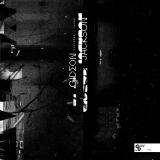
Sushitech's first release for 2026 marks a landmark project from London based tech house pioneer Gideon Jackson.
Tokinowa : Seven, from the Japanese meaning “a circle of time” reflects the seven year period which these tracks were produced, 1999 – 2005. The release is a retrospective journey into the raw and warm sound of a producer who helped shape the London underground sound in the early 2000's and went on inspire generations that followed.
Pressed as a special triple 180g gatefold collectors edition, Tokinowa : Seven welcomes us into Gideon Jackson's world of art and vision, featuring original photography by Gideon himself paired with artwork by Sushitech's in-house designer Jeremy.
Sushitech's first release for 2026 marks a landmark project from London based tech house pioneer Gideon Jackson.
Tokinowa : Seven, from the Japanese meaning “a circle of time” reflects the seven year period which these tracks were produced, 1999 – 2005. The release is a retrospective journey into the raw and warm sound of a producer who helped shape the London underground sound in the early 2000's and went on inspire generations that followed.
Pressed as a special triple 180g gatefold collectors edition, Tokinowa : Seven welcomes us into Gideon Jackson's world of art and vision, featuring original photography by Gideon himself paired with artwork by Sushitech's in-house designer Jeremy.
- A1: Yarom Lalou (3 45)
- A2: Pellucidar (3 26)
- A3: Neoplastie (2 02)
- A4: Opium (1 49)
- A5: Echreman (2 35)
- A6: Ovan (Iii) (2 31)
- A7: Bio Berim (2 39)
- A8: Be Mafu (2 59)
- A9: Gutta Percha (Ii) (1 11)
- A10: Tibetan Cowboy (3 25)
- B1: Glassy Stare (3 22)
- B2: Atal Matal Toutoule (2 33)
- B3: Apnee (2 26)
- B4: Baby Sex (2 12)
- B5: Yek! (2 21)
- B6: Alternative Fresh (0 47)
- B7: Divane (0 58)
- B8: Djostodjou (3 48)
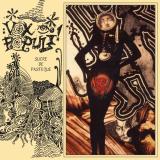
Dark Entries does as they often do once more here and revives a cult gem with Sucre De Pasteque, a 1986 standout from legendary French industrial outsiders Vox Populi! Formed in Paris in 1981, the group fused musique concrete, early industrial grit and Persian instrumentation into a sound that felt improvised yet eerily deliberate. This reissue captures the band at their most curious and unbound: psychedelic dirges, cosmic drones, hypnotic chants and broken machine-funk all dissolve into one disorienting, deeply fried trip. Bleak but never heavy-handed, the album embodies the anarchic imagination of the 80s DIY cassette underground. Archival photos and notes from the band add extra context.
- A1: Intro Girl Under The Grey Cloud
- A2: I Will Overcome
- A3: Beware . The South London Lover Boy
- A4: The Whatsapp Shakespeare
- B1: Winter Woman
- B2: Click Clack Symphony Feat Hans Zimmer
- B3: I Know You´re Hurting
- B4: Life Boat
- C1: I Hate The Way I Look Today
- C2: Goodbye Henry Feat Al Green
- C3: Nightingale Lane
- C4: Skin & Bones
- D1: Where Is My Husband!
- D2: Fields Feat Grandad Michael
- D3: Joy Feat Amma & Absolutely
- D4: Happier Times Ahead
- D5: Fin
Four-time GRAMMY Award-nominated global superstar RAYE, is releasing her highly anticipated sophomore album THIS MUSIC MAY CONTAIN HOPE. The album, set in 4 “seasons” with each side of the vinyl being a different season, takes listeners on a sonic journey that begins with darkness and ends with light.
“Music is medicine. I’ve always said that, and I guess I’m in the process of making medicine for myself that I can share with the world. I want us all to say to ourselves that it’s going to be all right, and I’m going to have faith in the seeds that I’ve planted beneath the snow. I wanted to create something that is a hug or bed or soft place for that person who needs it.”
RAYE recently kicked off her massive 51-date sold-out arena tour THIS TOUR MAY CONTAIN NEW MUSIC includes arena dates across Europe and the UK — including six sold-out nights at The O2 — before heading to North America with stops at iconic venues such as Radio City Music Hall (April 15 and 16th) and the Greek Theatre (May 12 and 13th). Additionally, RAYE will be a special guest on Bruno Mars’ The Romantic Tour for 27 stadium shows across the US this summer.
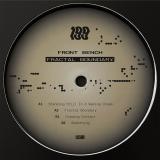
199’s co-founder Front Bench delivers four sparkling dancefloor cuts on ‘Fractal Boundary’, the label’s debut vinyl offering. The London-based producer, who has emerged in glimpses throughout 199’s digital release series, raises hairs from the outset with ‘Standing Still In A Waking Dream’. A thundering kick/clap pattern beats along purposefully under a string-like riff that twangs like an elastic band, the track rising and falling with operatic intensity, before ‘Fractal Boundary’ - the EP’s title track - restores some order. A slight syncopation gives the drums a laidback shrug while looping synth melodies dance in wistful circles.
On the other side, ‘Drawing Contact’ is a rolling cascade of layered synth lines, crashing softly over one another and creating a broody, melancholic tension above warbling bass tones and warm, fuzzy percussion. ‘Something’ brings the EP to a cozy end. A cluster of sparse, crisp drum sounds go to work with a metronomic vocal chop keeping the pace, while an urgent bassline pushes and pulls between lullaby-soft synth hooks.
- A1: C’est Loin
- A2: Là Où Tu Veux (Deixa A Gira Girá)
- A3: Pas Tant De D'chichi Ponpon
- A4: Assez
- A5: Le Soleil En Haut
- A6: Tout L’or
- B1: Désillusion
- B2: Attends-Moi
- B3: O Sapo
- B4: Horssaison
- B5: Presque Rien
- B6: Vou Festejar
For his sixth solo album, Ezéchiel Pailhès returns with a new collection of songs infused by a sunny wandering spirit.
Within each of the twelve songs on SOL is a thread of melancholic happiness that has permeated much of Pailhès’ music and songwriting. He addresses love, the passing of time, hope, lost illusions, fleeting moments of grace, the temptation of forgetting, a need to escape, and desire. All this is
insulated by understated orchestrations that blend acoustic and electronic instrumentation with deft confidence.
The Portuguese and Brazilian concept of saudade—a form of melancholic longing and nostalgia— pervades, thanks in part to Pailhès decision to record the album in Rio de Janiero and to reinterpret some of the finest works of Música Popular Brasileira (MPB). In particular, he revisits a handful of
lesser known classics from the mid-century samba and bossa nova era—originally written or performed by talents including Vinícius de Moraes, João Gilberto, Tom Zé, Dorival Caymmi, João Donato, Os Tincoãs, and Ataulfo Alves.
The shift from Brazilian Portuguese to French and the decision to adapt rather than perform a straightforward cover versions, allows Pailhès to invent a form of prosody and euphony (the musicality and harmonious combination of words) that feels vibrant and unlike anything else in today’s French
chanson landscape.
“Some lyrics are simple translations from Portuguese, in what I’d call an expanded version. For others, I started from a single word or a single phrase and embroidered an entirely new text that carried me elsewhere,” explains Pailhès. “I allowed myself great interpretive freedom, while preserving the humanist dimension of the original songs. I’ve always been deeply moved by the way Brazilians transfigure reality through heightened emotion. I love this visceral and spontaneous country, which always seems to live through emotion. And above all, I love its music both popular and unifying,
bringing together all social classes. In that sense, it’s very political music, but even more so utopian, made by the people and for the people.”
On this new album, however, the French artist was keen to avoid cliché. Each song is therefore built around a carefully balanced interplay between Pailhès’ piano and synthesizers, alongside restrained arrangements of percussion, brass, bass, and cavaquinho (a small four-string plucked guitar). These parts were recorded in Rio de Janeiro with two musicians who regularly perform alongside the legendary Caetano Veloso—Kainã Do Jêje and Alberto Continentino—joined by Thomas Harres, Antônio Neves, Eduardo Neves, and Gabriel Loddo.
Since the 1960s, France and Brazil have shared a long-standing cultural and musical relationship. Some Brazilian artists, most famously Gilberto Gil, took refuge in France during the dictatorship years (1964–1985). But above all, French chanson quickly fell in love with the richness and ingenuity of
bossa nova and samba, translating and reinventing them in the language of Molière. Throughout the 1960s and 1970s, albums and hits by Henri Salvador, Georges Moustaki, Pierre Barouh, Pierre Vassiliu, and Claude Nougaro all drew from the MPB repertoire.
Fifty years later, with SOL, Ezéchiel Pailhès reinvents this rich Franco-Brazilian musical legacy, bringing to it a personality and modernity that stand confidently alongside those of his forbears.

- 1: Eureka 378-B
- 2: Brain Of The Firm
- 3: Rotation I
- 4: Playing And Reality
- 5: Rotation Ii
- 6: First Galactic Utopia
- 7: Rotation Iii
- 8: Before The Law
- 9: After The Last Sky
- 10: A City Yet To Come
- 11: Second Galactic Utopia
- 12: Demand To Be Taken To Heaven Alive!
WHITE VINYL[23,49 €]
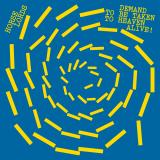
Die Musik auf Horse Lords' "Demand to Be Taken to Heaven Alive!" wirkt zugleich unglaublich detailliert und zutiefst menschlich. Die zwölf versammelten Stücke sind vielschichtig, verflochten, tonal und rhythmisch komplex - moiré-artige Muster aus Interaktion und Verzahnung, die sich sowohl körperlich als auch geistig entfalten, voller klanglicher Gänge mit einem unausweichlichen Groove. Künstler sind nicht notwendigerweise Wissenschaftler, Logiker oder spirituelle Führer, doch durch ihr persönliches Verständnis von Ordnung und Erfahrung eröffnen sie einen unmittelbaren Zugang zu gesteigerten Zuständen von Materialität und Immaterialität. Horse Lords wurden 2010 in Baltimore gegründet; sie gingen aus einer anderen Gruppe namens Teeth Mountain hervor und starteten als Trio mit Gitarrist Owen Gardner, Bassist Max Eilbacher und Schlagzeuger Sam Haberman, bevor der Altsaxofonist Andrew Bernstein zum Kernensemble hinzustieß. Obwohl das Quartett aus einer fruchtbaren Noise- und Experimental-Rock-Szene hervorgegangen ist - einem legendären Umfeld für Künstler und Außenseiter, das viele einflussreiche Bands hervorgebracht hat (Lungfish, Matmos) - war ihr Ansatz über sechs Alben, zahlreiche Kollaborationen und als gefeierte Liveband weit vielseitiger, als es die punktierten Rhythmen instrumentaler elektrischer Rockmusik vermuten lassen. Für dieses Projekt wird die Band durch Bassklarinettistin Madison Greenstone, Posaunist Weston Olencki und - erstmals bei Horse Lords - durch Gesang von Nina Guo und Evelyn Saylor ergänzt. Der Entstehungsprozess von "D2BT2HA!" brachte geografische Hürden mit sich, da die vier Mitglieder seit 2021 in unterschiedlichen Städten leben. Nach sechzehn Jahren als funktionierende Band übersteigt ihre gemeinsame Sprache jedoch jeden Ort. Die aus Deutschland stammenden Gardner, Eilbacher und Bernstein trafen sich in Berlin für die Aufnahmen, während Haberman die Schlagzeugparts in Baltimore erarbeitete. Beim Hören würde man dies nicht unbedingt erkennen, und gemeinsames, räumlich getrenntes Arbeiten ist heutzutage ohnehin keine Seltenheit mehr. Die Band merkt an, dass "es wichtiger war, den Konzepten und Visionen der jeweils anderen zu vertrauen, als Abschnitte immer wieder zu spielen, um zu überprüfen, ob die Musik funktioniert - obwohl dieses Vertrauen nur durch sehr enges gemeinsames Arbeiten möglich wurde". Obwohl "D2BT2HA!" nicht im engeren Sinne eine Suite ist, beeinflusst und durchdringt sich die Musik in komplexen Verknüpfungen selbst. Horse Lords erklären: "Uns gefällt die Vorstellung von Kunst als Werkzeug zur Perspektivveränderung - dass man Ideen rotieren kann und sie aus einem anderen Blickpunkt sehen/hören/fühlen kann." Oder, wie es der Swami Satchidananda Saraswati zugeschriebene Satz ausdrückt: "Understanding is standing under where you are already standing." Das Eröffnungsstück ,Eureka 378-B" ist ein Arrangement von sakraler Harfenmusik aus dem 19. Jahrhundert, getragen vom Gesang von Guo und Saylor; seine Melodie entfaltet sich weit und setzt einen tonalen Startpunkt für vieles, was folgt. Dazu kommen die kurzen "Rotations", die Fragmente aus anderen Stücken isolieren. Offensichtlich tragen die Titel der Stücke einiges an Bedeutung, und "D2BT2HA!" bildet da keine Ausnahme - Transzendenz und Erhebung sind der Musik inhärent, und wenn jede Kunst politisch ist, so sind die Tendenzen von Horse Lords optimistisch und gemeinschaftsorientiert. Transformation und Neubetrachtung sind nicht nur kompositorische Strategien, sondern eine philosophische Haltung, was sich in Titeln wie ,A City Yet To Come", dem Titeltrack oder utopischen Bezügen zeigt. Wie sie selbst sagen: "Wir versuchen Musik zu machen, die den Status quo herausfordert und dem Hörer einen Weg zur Befreiung eröffnet. Das Studium und die Erforschung von Klang und Musik hat eine spirituelle und ekstatische Dimension, und wir haben große Ehrfurcht vor ihrer Wirkung auf den Einzelnen und die Welt." "D2BT2HA!" enthält unzählige klangliche und konzeptuelle Schichten, doch angesichts der unverkennbaren Kraft und Menschlichkeit der Musik ist der Prozess, sie zu entschlüsseln, begeisternd und zutiefst lohnend. Selten ist eine Platte, die einen so unmittelbar packt und zugleich bei jedem Hören vollkommen neu erscheint.
- 1: When Hamlet Left Town 0:32
- 2: Radio Four 05:45
- 3 34: E 03:34
- 4: Solid Ground 0:25
- 5: Arc 04:37
- 6: Aelita 03:12
- 7: All Tomorrows Past Part Ii 04:26
- 8: Interlude 03:26
- 9: Henry & The Ghosts 03:22
- 1: Space Minor 03:22
- 2: Loop D 03:36
- 3: Tomorrows Past Part I 0:11
- 4: Modest Farewell 03:5
- 5: Nordlead 03:3
- 6: Momo 03:12
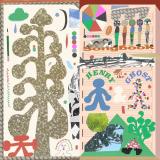
On his new album, Micha Acher rearranged compositions for bands such as Tied & Tickled Trio and Ms. John Soda from previous years.
Why are we interested in ghosts? What fascinates us about the eerie? According to cultural theorist Mark Fisher, the allure that the eerie possesses is not captured by the idea that we „enjoy what scares us“. It has, rather, to do with a fascination for the outside. For that which lies beyond standard perception, cognition or experience, as he writes in his book „The Weird and the Eerie“.
In fact, also none of the 15 pieces from Henry and the Ghost is really scary. On the contrary, they all feel strangely familiar. Like revenants or doppelgängers, which in fact they are. They have all been released before. But in a different form. In different line-ups. With different band projects such as Tied & Tickled Trio, The Notwist or the Alien Ensemble.
With the „Songbook“, Micha Acher's aim was, as he says, to find out how the familiar pieces sound in a chamber music instrumentation. Therefore he met with Theresa Loibl (bass clarinet, piano), Timm Kornelius (bassoon), Markus Rom (guitar, banjo, electronics) and Simon Popp (drums, percussion) in his living room for a musical séance in the summer of 2022. The séance lasted two days. Afterwards, Markus Rom (Oh No Noh), added some haunting electronical ideas.
The mood of most of the pieces is melancholic. There are surprising twists and siren-like melodies. Just as ghost stories should be. However, most of the songs sound very light-footed. With their feet in pop, folk, jazz and classical music. Pieces such as „Johanna“ with its wheezing harmonium and spooky piano, or the dreamy „Modest Farewell“ on the other hand have a cinematic flair. Immediately faces and scenes arise in the mind. But at the beginning, there is „Hamlet“. It starts with ghostly electronics and merges into a calm, almost classical guitar piece. Could it be that the ghost of Hamlet's father is hiding between the strings?
„34E“ begins with a banjo. Then the deep humming of Micha Achers sousaphone and the other brass instruments kick in. In the slow, solemn „Aelita“, the sousaphone starts a dialogue with a children's piano. With the banjo and the other wind instruments acting as mediators. The title of „All Tomorrow's Past“ brings Velvet Undergrounds „All Tomorrow's Parties“ to mind. Another ghost from the past. What connects the two pieces is free-floating percussion, which accompanies the sumptuous melodies.
„Arc“ takes us on an exhilarating voyage at sea, with the sousaphone providing powerful propulsion. Towards the end, things get quite turbulent. With the clarinet stirring up the water, before the sea calms down again. „Henry and the Ghost“ is characterised by a ghostly mood change between major and minor. In „Radio Four“ the banjo with its stoic chords keeps the lively brass section in check. „Solid Ground“ is imbued with melancholy. „Space Minor“ takes us into outer space, with the power of sousaphone and percussion.
„Tomorrows“ is filled with cautious optimism. And the concluding „Nordlead“ turns out to be a revenant of the instrumental „N.L.“ from The Notwist's legendary album „Shrink“ from 1998. In the new version, the piece sounds like a distant echo. One that also brings to mind how Micha Acher's music has evolved. Which new worlds he explored and opened up since the nineties. And yet Acher's signature is recognisable in every single note of this fascinating „Songbook“.
In Lande’s words: “It’s a daydreaming song about wanting a life of excitement and adventure rather than a dull and ordinary life - one where people underestimate you and belittle you. And where you’re forced to buy into capitalism and become a pathetic, losing player in a game that you hate. I’d rather escape and live in a queer space fantasy and be brave.”
Available on limited turquoise vinyl and digipack CD
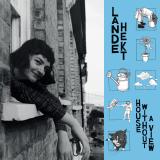
It is with both pride and excitement that we announce the reissue of ‘House Without A View’, the out-of-print second album by singer-songwriter Lande Hekt – the first of a three-part reissue series on Circuitry, with ‘Going To Hell’ and ‘Gigantic Disappointment’ (first time physically) to follow in the coming months.
With a new album ‘Lucky Now’ released on Tapete in January, supported by an extensive spring UK tour (dates below), Lande’s contemporary twist on the classic C86 indie sound - with a queer feminist punk identity lyrically explicit throughout – is drawing in an ever-growing audience of devotees, such is the consistent quality of her songwriting, and the personality within.
The opening track of the album is ‘Half With You’ which “is about growing into yourself as a queer person, and enjoying who you are after not enjoying it for so long,” says Lande. ‘Cut My Hair’ is about how her relationship with her gender has changed over the last few years, becoming more comfortable in herself and understanding more about what makes her happy. “It’s also about how easy it is to not talk to people when you’re struggling, which is something I did for a long time,” admits Lande.
The title track of ‘House Without a View’ deals with childhood trauma and how events of our formative years “affect us so much into our adult lives and are intrinsic to our personalities and the way we cope (or don’t) with life and relationships,” says Lande. Although there’s darkness and sadness within the record, there’s also some shining beacons of positivity and a light-hearted side, albeit with a side of frustration. ‘Lola’ was written about Lande’s cat shortly after she came to live with her and her girlfriend. “She’s the first pet I’ve ever had and I wasn’t quite ready for how hard it would be to not be able to verbally communicate with her. I worried constantly that she was depressed because all she did was sleep, but my girlfriend assured me that that was regular cat behaviour.”
APRIL 2026 DATES: 4th Cardiff/5th Trowbridge/6th Penryn/7th Portsmouth/9th Ramsgate/10th Cambridge/11th Norwich/12th Nottingham/13th York/19th London/20th Brighton/21st Bristol/22nd Exeter/23rd Manchester/24th Sheffield/25th Oxford
Ricardo Villalobos runs wild on Mohammad Reza Mortazavi’s Persian tombak hand drum actions, expanding a 4 min kernel of inspiration into 24 minutes of mesmerising polyrhythmic traction. From an original ‘Swamp’’ piece that practically recalls Ricardo’s style of slinky minimal techno sorcery to begin with, the Chilean-German maverick derives a more driving tract of rough hewn rhythmic grit bound to hypnotise ‘floors for the duration. Accentuating the undulating bass and dialling up the volume whilst retaining the frictional grind of the original, Villalobos gets right inside the groove with typically obsessive tekkerz, plucking out additional string
motifs and tempering the flow with signature, taut but sinuous, loosey goosey flex that cross-pollinates cultures and gets right under the skin of the thing.
Ricardo Villalobos (b. 1970, Chile) is a pioneering figure in minimal techno, celebrated for his hypnotic and groovy approach to rhythm. Raised in Germany after his family fled Pinochet’s regime, Villalobos was drawn early to percussion - he began playing congas and bongos at eleven, developing a tactile relationship to rhythm that would later inform his distinctive production style. Immersed in both Latin American folk traditions and the emerging house and techno scenes of late-80s Europe, he began DJing and producing in the early 1990s, quickly achieving cult status within global club culture. Mohammad Reza Mortazavi (b. 1979, Iran) is a virtuoso percussionist known for his groundbreaking work with the tombak and daf, traditional Persian drums that he has radically redefined through new playing techniques. Mortazavi began playing the tombak at the age of six. By nine, he had already outpaced his teacher and won Iran’s national tombak competition - a distinction he would earn six more times. By his early twenties, he was widely regarded as one of the foremost players of the instruments. Since then, his music has continued to evolve, embracing new forms beyond tradition.
Warehouse Find!
Introducing Red D, the Belgian DJ and producer, one half of FCL (alongside San Soda), long standing club promoter (since 1992), owner of We Play House and general all round good guy. With releases on Ferrispark and Delusions Of Grandeur (with MCDE), remixes on Eskimo, regular sets at the likes of Panorama Bar and an RA Mix under his belt you could say things are falling into place nicely. On top of all this his FCL project continues to go from strength to strength with a new
EP dropping soon on Kai 'KZR' Alce's highly regarded NDATL label. When he sent over two originals for Freerange it was love at first listen as the simple, warm beats and emotive chord stabs of title track Chez oozed from the speakers. This sounded to me like house music in it's purest form, from the days when the focus was on a feeling rather than complex sounds or technological
trickery. And the proof is in the pudding with this one as you can feel the dance floor go into some kind of collective bubble of love whenever you play it. The second original follows drawing you into a false sense of security with familiar 707 beats and gentle pads before taking a left turn. Appropriately titled Into Darkness the blissful vibes of the intro begin to fall away as the
track reaches a breakdown and we're treated to the rudest of Chi-Town basslines taking us down a somewhat less wholesome path. Flipping over we're treated to two Jacob Korn remixes, one of each of the originals and if the A side is the good cop, we can trust the Uncanny Valley regular to deliver some pure badness on the flip. His Remix of Chez is clearly inspired by his studio hardware as you can hear the improvised and 'live'
sounding arrangement, the machines taking on a life of their own as things twist and turn in a spontaneous and unpredictable way. A rattling white noise pulse drives the rhythm whilst bubbling synths add some lightness to the pummeling
kick. Into Darkness gets the Korn treatment next and here he puts it right through the sonic mangler, tape saturation distorting the mix to within an inch of it's life. Jacob puts the focus on the bassline of the original, keeping things simple at
first before winding in layers of Juno chords and the bleepiest of synth lines resulting in the finest of raw, bassment house jams.
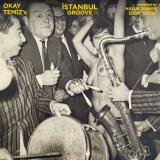
A raw, groove-driven selection of previously overlooked 1990s recordings by legendary Turkish jazz impresario Okay Temiz, compiled here for the first time.
As the story goes, throughout the 1990s, Okay Temiz roamed the nights of İstanbul in search of rhythm — moving through its far corners, from the seedy underbelly to gypsy neighborhoods, from the outskirts of the city to smoke-filled taverns where cigarette haze turns into a living cloud atlas — capturing a largely unknown and maverick period of his work.
Compiled by long-time producers Haluk Damar and Erinç Güzel, the album brings together Turkish folk textures, İstanbul tavern sound, spiritual jazz, raw street groove, and flashes of Turkish psychedelia — with moments shaped by Temiz’s own distinctive vocals. The result is a deep, percussive, and highly playable set.
Positioned between global jazz, rare groove, and dancefloor material, İstanbul Groove is a strong crossover release with appeal across both listening and DJ set contexts.
- A1: 1 Umbrella
- A2: One Of Those
- A3: Code
- A4: Baller Blockin
- A5: The Blueprint
- A6: Off Top (Feat. Larry June)
- A7: No Gimmicks (Feat. Daboii)
- B1: Pretty
- B2: Type Of Time
- B3: N.e.w.s. (Feat. Lingo & Dooder)
- B4: Change My Ways
- B5: Foreign Whip Swinger (Feat. Rexx Life Raj)
- B6: For The Night (Feat. Larry June & 1100 Himself)
- B7: Run The City
- B8: Real Nigga Diary
1 Umbrella represents a watershed moment for modern Bay Area hip-hop, effectively serving as the region's "Avengers" assembly designed to consolidate the Northern California sound. For years, the local scene has been bisected by the distinct "mob music" bounce of Oakland and the melodic, trauma-drenched "pain music" of San Francisco; this collective is the first major commercial force to deliberately fuse these competing energies into a single, dominant infrastructure. The roster is a calculated cross-Bay alliance that balances opposing sonic weights: Lil Bean and Lil Yee anchor the group with the emotive, auto-tune-heavy melodies that define the current SF landscape, while Zaybang cuts through that introspection with his signature high-octane aggression.
Balancing the scales are ALLBLACK and 22nd Jim, who inject the classic East Bay attitude-ALLBLACK delivering the motivational, sports-heavy "player" lineage of the region, contrasted against Jim's nonchalant, rhythmic flow. Backed by the powerhouse infrastructure of EMPIRE and united under tracks like "Baller Blockin" and the unification anthem "The Blueprint," the group is attempting to solve the fragmentation that has historically plagued the Bay's independent market. By synchronizing their movement with the arrival of Super Bowl LX, 1 Umbrella is positioning itself not merely as a rap group, but as the official cultural ambassadors for the region, betting that a unified front can finally command the national spotlight that often eludes the West Coast's independent giants.
Part 1[12,40 €]
A Lisbon classic by now, Paraiso (a label, a radio show, a party and now also a documentary) is back for its 19th release with a pairing who's no stranger to the label or the portuguese techno underground: lucky for us, head honcho Shcuro got back in the studio with techno legend in the making Vil to make Repercussions part 2 - and they invited iconic Spanish producer Annie Hall (Delsin, CPU) as a remixer. The record opens with a tour de force, the relentless yet perfectly in control, mutanting and experimental yet elegant and timeless 'Motorik'. In it, you can hear echoes of Detroit groove sense, but also a generous splash of dub sonics seamlessly merging into pure peak time, closed eyes, layers of ear-candy hypnotizing you type of stuff. Things strip back a little in 'Emergence Dub' - still immersive fast techno ammunition, but there is a playful, experimental and sometimes ravey spirit to it, with a wonky mutating key, vocal pads and cheeky percussion working together to create a stunning modern dance piece. Side B is inaugurated by 'Origins', a deep bow to dub traditions with delay-drenched stabs and a bouncy bassline for days. An energetic yet dreamy piece with spoken word samples that will have your heart melt, it perfectly mirrors the duo's influences in a beautiful closing original. Annie Hall steps in for the remix, taking A2 'Emergence Dub' into Breaks geographies, with a talking bassline fit for an electro banger, and the ever-present pads sending us off in zen mode after a delightful ride.
- B1: Ore-Se-Rere (Nigerian Juju Hilife)
- B2: The Gathering
- B3: Spiritual Blessing
- A1: Elevation
- A2: Greeting To Saud (Brother Mccoy Tyner)
Elevation, released in 1974 on Impulse! Records, finds saxophonist Pharoah Sanders expanding his spiritual jazz vision on an album that balances ecstatic expression with focused ensemble interplay. Produced by Ed Michel and recorded in 1973 across two live performances and a studio session, Elevation features a dynamic ensemble including Joe Bonner on piano, Calvin Hill on bass, and Michael Carvin on drums.
The album’s open forms, modal grooves, and spiritual themes underscore Sanders’s ongoing search for transcendence and cultural affirmation through sound. With chant-like melodies, circular motifs, and immersive rhythmic textures, pieces like “The Gathering” and the title track reflect a more meditative and exploratory side of Sanders’s aesthetic. Elevation comes towards the end of Sanders’ tenure on Impulse!— a cohesive and spiritually resonant statement that bridges the raw fire of earlier albums with a deeper, more spacious sound.
The album’s open forms, modal grooves, and spiritual themes underscore Sanders’ ongoing search for transcendence and cultural affirmation through sound. With chant-like melodies, circular motifs, and immersive rhythmic textures, pieces like “The Gathering” and the title track reflect a more meditative and exploratory side of Sanders’s aesthetic. Elevation marks the culmination of his Impulse! discography — a cohesive and spiritually resonant final studio statement that bridges the raw fire of earlier albums with a deeper, more spacious sound.
The Verve Vault series is always mastered from analog tapes and pressed on 180g vinyl at Optimal.
a A1. Elevation 18:26
b A2. Greeting To Saud (Brother McCoy Tyner) 4:15
[c] B1. Ore-Se-Rere (Nigerian Juju HiLife) [6:20]
[d] B2. The Gathering [14:09]
[e] B3. Spiritual Blessing [6:20]
[a] A1. Elevation [18:26]
[b] A2. Greeting To Saud (Brother McCoy Tyner) [4:15]
[c] B1. Ore-Se-Rere (Nigerian Juju HiLife) [6:20]
[d] B2. The Gathering [14:09]
[e] B3. Spiritual Blessing [6:20]
[a] A1. Elevation [18:26]
[b] A2. Greeting To Saud (Brother McCoy Tyner) [4:15]
[c] B1. Ore-Se-Rere (Nigerian Juju HiLife) [6:20]
[d] B2. The Gathering [14:09]
[e] B3. Spiritual Blessing [6:20]
[a] A1. Elevation [18:26]
[b] A2. Greeting To Saud (Brother McCoy Tyner) [4:15]
[c] B1. Ore-Se-Rere (Nigerian Juju HiLife) [6:20]
[d] B2. The Gathering [14:09]
[e] B3. Spiritual Blessing [6:20]
[a] A1 | Elevation [18 26]
[b] A2 | Greeting To Saud (Brother McCoy Tyner) [4 15]
[c] B1 | Ore-Se-Rere (Nigerian Juju HiLife) [6 20]
[d] B2 | The Gathering [14 09]
[e] B3 | Spiritual Blessing [6 20]
300 pages, 175 x 129mm paperback book w/ french flaps.
DINTE mint their short run book publishing imprint, The End books, with this vast collection of flyers for dances, clashes and blues parties from across the UK between the early 1970s and mid 1990s. Comes complete with intro by David Katz (People Funny Boy: The Genius of Lee 'Scratch' Perry, Solid Foundation: An Oral History of Reggae) and outro by Kevin Le Gendre (Don't Stop the Carnival: Black British Music, Children of the Ghetto: Black Music in Britain). Colour scans sit alongside scuzzy photocopies amassed over several years with the assistance of multiple archivists. The material presented in A Night to Remember is not just valuable musical history, but the story of a community and a culture that revolutionised sound culture in the UK.
"The flyers collected in A Night To Remember speak to the burgeoning sound system underground that flourished in Britain in the 1970s, 80s and early 90s. There are held events on hallowed ground as well as lesser-known sets. Flyers for house parties remind that shebeens remained an important feature of social life in black communities and the many sound clash and cup clash events emphasise the rivalry and camaraderie that has always been at the heart of the culture, as friends go head-to-head with their dub plates, vying for that definitive crown. Dances featuring guest appearances by name-brand artists such as Sugar Minott, Lone Ranger, Barrington Levy and Admiral Bailey, as well as sound systems such as Jack Ruby, King Jammies, Ray Symbolic, Arrows, Black Scorpio and Metro Media remind how closely the local sound systems remained to their Jamaican roots, even as sounds such as Saxon, Unity, Java and Diamonds carved out a distinctly British niche. All hail the enduring sound systems of Britain – long may they reign!" — David Katz
Originally released in 1993 on Full Motion Records, Tranvision by Optical Phase is a cult Italian progressive house / trance record from the early ’90s underground.
Produced during the golden era of Italian progressive, the track captures the hypnotic and melodic sound that defined many European dancefloors of the time, driven by atmospheric pads, rolling rhythms and uplifting synth progressions.
Long sought-after by DJs and collectors, the record has become increasingly hard to find in its original pressing.
Now finally back on vinyl, making this early ’90s Italian progressive gem available again for a new generation of DJs and collectors.