Stay What You Are is the breakout third studio album by the American alternative rock band Saves The Day. Produced by Rob Schnapf (Elliot Smith, Beck, The Vines) in early 2001 it's a record that remains incredibly influential within the emo and rock scene to
this day, showcasing the band's signature blend of upbeat catchy melodies, with dark lyrical undertones. Features the standout singles 'At Your Funeral' and 'Freakish'.
Originally released on July 10th 2001, the album saw Saves The Day crack the Billboard 200 at the same time other that emo acts like Jimmy Eat World and Dashboard Confessional were enjoying mainstream success.
This new pressing comes on double 10" splatter vinyl, packaged in a hand-numbered gatefold sleeve with lyrics and accompanying insert; released via Hassle Records for the UK/EU in conjunction with Vagrant Records to celebrate their 25th Anniversary.
Поиск:under fire records
Все
Death Is Not The End launch sub-label 333 with a first-time vinyl reissue for the late Devon Russell's Darker Than Blue LP - put together as a tribute to the great Curtis Mayfield. First issued in 1993 but featuring material originally recorded as far back as 1979, the collection includes a cast of prominent players across it's 10 tracks - featuring musical contributions from Sly Dunbar, Aston "Family Man" Barrett, Earl "Wire" Lindo, Dean Fraser, Bobby Ellis, Leroy "Horsemouth" Wallace, Prince Lincoln Thompson and many others - plus production & arrangment from Earl "Chinna" Smith, Sly Dunbar & King Tubby's Firehouse Crew alongside Russell himself. Limited to 333 copies.
"The concept for Darker Than Blue dates back to 1979. Returning from South Amerrica with my partner (in duo Lloyd & Devon) Lloyd Robinson, we did "Red Bum Ball" which had been a massive hit in the 60's. It was around this time that Earl Chinna Smith (of The Wailers and Soul Syndicate fame) approached me with the idea of re-making some Curtis Mayfield songs. "Darker Than Blue" was the first track we did, followed by "Move On Up" in 1981, both of which received great reviews.
On returning to Jamaica from a UK tour in 1986, my good friend King Tubby had taken on five men from my school of music, from which the Firehouse Crew were born. Within 3 years they had matured to become Jamaica's No.1 instrumental band, winning the Rockers award. Then in the spring of 1990, together we managed to record the album "Money, Sex & Violence", during a tour of the UK & France, on which we did Mayfield's "Give Me Your Love". The track was played to Steve Barrow who suggested we do more Curtis tracks.
Sly Dunbar and I have known each other for as long as I can remember. We grew up in the same hood and used to jam regularly in our youth. I told Sly about the further Mayfield tracks I wanted to do and he agreed that it would be a good idea. So Sly, myself and The Firehouse Crew went to work at the Leggo Studios in Kingston, Jamaica and created the remaining tracks for the Darker Than Blue LP, a tribute to Curtis Mayfield.
We grew up on the sounds of Curtis Mayfield and The Impressions. Everyone in Jamaica loved them. His death was a terrible thing, but while there is life, there is hope."
- Devon Russell, 1994.
333, under license from Prestige Elite Records Ltd.
- A1: Roll Tape
- A2: Gimme Some Sugar
- A3: Daddy's Diddies
- A4: Gotta Dig It To Dig It
- A5: No Credit For This
- A6: Roadtrip
- A7: On Your Face
- B1: That's The Way Of The World
- B2: Imagination
- B3: In The Basement
- B4: Business
- C1: Look B4U Leap
- C2: Around The House
- C3: Funky Sci Fi
- C4: Mini Mugg
- C5: Chicago Independent
- D1: Surround Stereo
- D2: Black Gold
- D3: Denim Groove
- D4: Notes From Dad
- D5: Rubie & Charles
- D6: Greatness
- D7: Step On Step
Black Vinyl[26,26 €]
Chicago-born composer, producer and arranger Charles Stepney is known to some for his work with Earth, Wind & Fire, Deniece Williams, and Ramsey Lewis, or for his work with Chess Records in the 1960s, where he was an essential creative force behind seminal recordings by Rotary Connection, Minnie Riperton, Marlena Shaw, Muddy Waters, Howlin Wolf, Terry Callier, The Dells, The Emotions, and many many more. In the decades since his untimely death in 1976, the presence of his name in liner notes and on vinyl labels has become a seal of quality for record collectors, music historians, and aficionados, while his sound has been used by countless samplers in the hip-hop world including Kanye West, A Tribe Called Quest, The Fugees, MF Doom, and Madlib. But in comparison to the post-mortem renown of his sound, or the music he created and the artists he supported while he was alive, Stepney is a greatly under-appreciated figure... a genius relegated to the shadows.
Blue Vinyl
2019 saw Firescope release a seminal album, The Lonely Machine by Britain’s John Shima. The world has become a very different place since then. The pandemic, economic turmoil and global crises prevail. It is amidst such uncertainty that Shima returns with a new collection to combat the savagery of our times, enter Empty Lands.
Dauby basslines and silken strings introduce “Component”, saturated snares giving ballast as Shima’s signature style immediately comes to the fore. A throbbing kick and orbiting notes are peppered with hi-hats for “Neglected”, a sonorous stratum synergising beautifully. Shima is a student of techno. His appreciation and knowledge of the sound is central to the album as he composes within the traditions of the UK and US canon while exploring new plains. The influence of “bleep” is woven into the tapestry of pieces like “Depart” and “Mettle” with the minimalism of the 90s genre reimagined through new textures. “Sayaka” flows with a different current. Rhythms are understated, lapping against undulating keys as dawn rises. Harmony and melody are cornerstones of record, the gentle ebbs and flows of key and drum merging. Inspiration arises from home as well. The steady pulse and metallic tang of “Projection” recalling the industry of Sheffield and the pioneering electronics that sprouted from that rust red earth.
Track titles, and the album name itself, suggest periods of challenge and difficulty. “Paralysis”, “Desolate”, “Empty Lands”. Words that conjure certain feelings and responses. Shima’s music is a counterbalance to these emotions. Positive compositions of subtle shifts, complementary percussion and welcoming warmth acting as a tonic to the negativity that swirls; the ten audio works on offer acting as a balm to soothe the soul in these troubled time
Matthew Doty didn't set out to write a solo album. His first batch of weightless and brightly lit material under the name Deserta began to take shape in 2017. Shortly after finding out he was going to be a father, Doty started working on a batch of songs inspired by the joy and the unknown of the world he was about to enter. That inspiration is the sonic and emotional backbone of debut album Black Aura My Sun.
Like a hot air balloon headed straight for the stratosphere, Deserta reveals yet another side of the songwriting Doty has spent decades refining. As experimental as it is enthralling, Black Aura My Sun applies the vapor-trailed production values and sublime dynamics of Doty's previous group projects (including post-rock band Saxon Shore and the synth-laced post-punk of Midnight Faces) to a shoegaze-y sound that splits the difference between Slowdive and Sigur Rós.
Doty began finding his own musical voice in the early '00s with the sky-piercing efforts of Saxon Shore. While it was initially a collaboration with Josh Tillman (a.k.a. Father John Misty), Doty was Saxon Shore's only consistent member over the course of five acclaimed records. His responsibility spilled over into everything from booking shows to the songs themselves. He was never completely alone in his pursuit of post-rock perfection, however, so Deserta is very much a new endeavor: a trial-by-fire that was written, recorded, and mixed in total solitude.
Deserta expands and contracts, with chords that drift like clouds, drums that drag and dissipate, and hooks that hang in the air for what feels like forever. That doesn't mean Black Aura My Sun is a subtle or soft record. It actually whips up quite a racket and is particularly heavy when piped through a pair of headphones.
Deserta is Doty's main creative outlet right now and a one-way ticket to another dimension entirely.
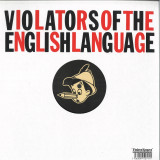
Emanating from a ‘prehistoric’ existence near the end of the last millennium, Andy Votel and his slightly older college mates were once best recognised in Mancunian clubs and bars as teenage vinyl nerds and bum-fluffed battle rappers under the collective name Violators Of The English Language (which in acronymic form explains Andy’s own exotic pen-name).
As steadfast supporters of the 1980s / 90s Brit-core rap scene coming out of London, the multicultural Violators’ Mancunian accents were perhaps a bridge-too-far to secure dream job contracts for humble labels like Kold Sweat and Music Of Life. An unlikely constructive meeting with Gang Starr’s DJ Premier (while Andy helped out at a radio station), plus playing warm up DJ sets for countless US rap heroes might have temporarily added inspirational fuel to the fire, but after an active period combining graffiti, rapping, scratching, obsessive record digging and beat making into their daily operations, adulthood eventually began to rear its unwelcome head.
A decade later, Andy Votel and his digging skills would begin to provide direct sample material for the likes of Madlib, Mos Def, Jay Z, Nas, Dr Dre, Ghostface Killa and Action Bronson, amongst others, and the Violators’ black book of breakbeats and catalogue numbers soon began to feed a same-butdifferent rap beast.
For a project that has taken thirty years, it would be totally inadequate to call the formation of Hypocritical Beatdown Records a lockdown-project. There’s a deep history and psychology in these records by Violators Of The English Language and their spin-off groups Magnets (Rap Group) and ProVerbs, that combines stage-fright, loss, pride, creative-schizophrenia, racial inequality, surrealism, personal politics, brotherhood, artistic-constipation, better judgment, love, anti-love, soul searching and much more.
As well as Andy Votel taking care of both production and part of the microphone duties, some might recognise fellow MC and solo recording artist Figure Of Speech as a prominent voice here. The trio of Magnets (Rap Group) sees Andy also joined by local B-Girl legend Jeni Chan aka Penny Chew, and rapper and DJ Benjamin Hatton who has previously recorded with Kid Acne, The Mongrels and Sheffield’s Invisible Spies’ long-running squadron. Widely respected visual artist Rick Myers (now living in Massachusetts) also contributed scratches for many of these recordings via file sharing and custom dub-plates to keep the Violators’ authentic line-up intact, as well as galvanising the crew’s semi-reluctant art-school roots.
Extra production credits for the label also go to Sean Canty from Demdike Stare, and the late great Dan Dwayre aka Black Lodge (Mo Wax) who sadly passed away during the completion of these recordings. The members of Violators Of The English Language who you’ve not yet heard of will quickly make themselves known as the needle drops on this long-mooted debut vinyl release.
Re-mastered from the original master tapes.
180 gr vinyl pressed by Optimal in Germany using the Metal Mothers from Pallas.
Facsimile reissue using the original photo by Jean-Pierre Leloir.
Double insert using an original color photo by JP Leloir.
Each record has been visually checked to prevent defects.
Recorded October 22, 1958, Olympia hall, Paris.
Original LP issue: Brunswick 87 903.
“They’d been living in Europe for months. They’d appeared in Cannes and at Knokke (…) yet the only thing missing was the consecration that a great concert in Paris would bring. They won that last battle with astounding brio, in front of an audience of connoisseurs. There were many there who thought modern jazz had never been so well- served in Paris.” (Jazz Magazine). Hard bop had arrived! Hallelujah! On its first French appearance, in July ‘58 at the Cannes Festival – the first and only Cannes jazz festival – the Donald Byrd Quintet had brought the house down. Yet four of its five members were relatively unknown in France… The French knew that the leader had replaced Kenny Dorham in the Jazz Messengers, that Doug Watkins was the Messengers’ bassist, and that pianist Walter Davis Jr. was still only 18 when he’d played with Charlie Parker. As for Art Taylor, even if his name meant something to fans, it was still difficult for people to have a more precise idea of his musical qualities. Only Bobby Jaspar was well-known to Paris audiences, and the tour marked the return of the prodigal son, the musician who’d decided, after setting the Club St. Germain on fire, to try his luck in the States early in 1956 – J.J. Johnson had hired him, and then Miles Davis (for a short spell) before Donald Byrd brought him into the group he was taking to Europe. This new tour would climax at the Olympia theatre during one of the “Jazz Wednesdays” that were organised there, ever since the Jazz At Carnegie Hall” tour – Zoot Sims, JJ. Johnson, Lee Konitz, Phineas Newborn – had inaugurated the series a little earlier. Byrd and his band took pains not to disappoint a Paris audience they knew to be particularly fickle, and they astutely varied the public’s pleasures throughout the evening. The complicity that united the rhythm section – Walter Davis Jr., Doug Watkins and Art Taylor – was much in evidence on Ray’s Idea; mistrusting the traps of the spectacular at all costs, Donald Byrd, producing brilliant inventions on the trumpet, took the lion’s share of the honours on a theme that was then much in fashion, Dear Old Stockholm, adapted from a Swedish traditional song; on Flute Blues, Bobby Jaspar proved he was still a specialist on that instrument, and Paul’s Pal showed that, on tenor, the playing of Sonny Rollins hadn’t gone unnoticed. It must be said that it didn’t have much effect on the discreet lyricism underlying the choruses he played during his “St. Germain” period. The Olympia spectators weren’t sparing in their applause for the five musicians. How else could they have reacted, faced with the fire the band showed during a tune like The Blues Walk? It wouldn’t take much for us to applaud, too, even if it is fifty-five years later…
Text – Alain Tercinet
New pressing of the old RSD LP , now on black vinyl. An essential vinyl release of the Throwing Muses’ mainstay’s 2016’s CD and essay book that featured stories from “her life's most perception-altering junctures” (NPR). “As memoirs, her albums are so intensely personal... as art, they’re arguments for the value of unapologetic individuality” Pitchfork. “This music reminds you how alone you are; it consoles you through its insolubility, comforts you by jabbing you in the chest and letting you know how complex the struggle is, how inaccessible we are to each other but just how universal our pain can be.” The Wire. This sonically rich and fragmented record references to Hersh’s past material and sees her perform on guitar, bass, drums, piano, horns and cello. There’s a mysticism and sense of life wonderment throughout ‘Wyatt At The Coyote Palace’ that also has death as a central theme rather than the contemplation of death itself it’s reaching the end of something and beginning a new life. Tracklist: Side A. 1 Bright 2 Bubble Net 3 In Stitches 4 Secret Codes 5 Green Screen 6 Hemmingway's Tell. Side B. 7 Detox 8 Wonderland 9 Day 3 10 Diving Bell 11 Killing Two Birds 12 Guadalupe. Side C. 13 American Copper 14 August 15 Some Dumb Runaway 16 From the Plane 17 Sun Blown 18 Elysian Fields. Side D. 19 Soma Gone Slapstick 20 Cooties 21 Christmas Underground 22 Between Piety and Desire 23 Shaky Blue Can 24 Shotgun
Eugene Lamont Johnson a.k.a E Lamont Johnson or Lamont Johnson holds the distinction of being the first internationally recognized fretless bassist in R&B music. Born April 20th 1955 in Highland Park, Michigan. Lamont rose to prominence as a session musician on Gloster Williams &The King Vision’s 1977 gospel album project “Together” (Gospel Roots -5005). In the same year Lamont featured as part of the celebrated Detroit based band Brainstorm their best-selling 1977 album “Stormin’” for Tabu Records. Brainstorm was initially formed during 1975 by bandleader and saxophonist Charles ‘Chuck’ Overton, and included lead vocalist Belita Woods, Lamont Johnson on Fretless bass, Renell Gonsalves on drums, Trenita ‘Treaty’ Womack on percussion, flute and backing vocals, Bob Ross (a.k.a Professor RJ Ross) on keyboards, Gerald ‘Jerry’ Kent on guitar, Jeryl Bright on trombone and ‘Leaping’ Larry Sims on trumpet and flugelhorn. The album was recorded during 1976 and released the following year. It contained the disco hit “Loving Is Really My Game” the popular “Wake Up And Be Somebody” and the radio hit “This Must Be Heaven” a beautifully crafted ballad featuring the lead vocals of Lamont which still receives continued airplay to this day. Lamont did not feature on the band’s two subsequent album projects “Journey To The Light” (Tabu 35327) in 1978 and “Funky Entertainment” (Tabu 35749) in 1979.
The year1978 was to prove to be one of the most prolific of Lamont’s recording career, playing bass on three studio albums. Firstly, on Hamilton Bohannon’s “On My Way” (Mercury SRM-i-3710), Jimmy McKee’s “First Time Out” (Champion- 8083N5) and Keith Barrows “Physical Attraction” (Columbia JC-35597) albums respectively. The final project of that year would be Lamont’s own album project “Music Of The Sun” (Tabu-35455) featuring Lamont on both bass guitar and vocals, the album also spawned two lead 45’s “Sister Fine/Yours Truly, Discreetly” and “Hey Girl/Differently”.
During 1979 Lamont would feature as a guest bassist on a further two studio album projects, firstly the self-titled debut album of fellow Detroit musicians Chapter 8 (Ariola 50056) followed by another self-titled album “Nightflyte” (Ariola 50060) who’s line-up included Howard Johnson prior to him embarking on a solo career. During 1980 Lamont began work on a second solo album for Tabu. Two lead 45 singles were recorded “Rock You Baby/Something More” (Tabu ZS9-5521) followed by the album’s title song “Rhumba” backed with the modern soul favourite “Masta Luva” (ZS9-5525) for whatever reason CBS/Tabu decided to shelve the remainder of the project. Later recording projects to feature Lamont instrumental talents were Was Not Was ‘s “Tell Me I’m Dreaming and Robert Lowe’s “Double Dip” jazz funk album. Later solo CD album projects from Lamont, “This Must Be Heaven” arrived in 2004 and “Amore’ Dance” in 2001 both on his own Allee Records Label. From the mid 70’s through to the present day, Lamont has been a notable electric bass instructor in the Detroit area and beyond. As well as the previously mentioned projects, Lamont and many of his prot’eg’es work can be found on many other world renown artists recording projects the most notable being, Earth Wind & Fire, The Dramatics, Anita Baker, Lady Gaga, Alicia Keys, Phyllis Hyman, Beyonce, Howard Johnson, David T. Walker, Aretha Franklyn, Stevie Wonder, Herbie Hancock, George Duke, The Temptations, The Winans amongst others.
Fast forward to the present and Soul Junction have licensed two previously unissued dance orientated Lamont Johnson produced compositions for this 45sinlge release with more to come. Under the project/artists name of “Lamont Johnson & Eugene” the recordings feature several different local Detroit musicians and vocalists. The a-side is a male vocally led early 90’s mid-tempo feel good dance number. While the b-side in contrast is a more synthesized bass driven 80’s female dancer which should appeal to the Boogie crowd,
Enjoy.
F.B.I…Funky Business Incorporated under the direction of Root Jackson, described as the Godfather of Britfunk with his 9-piece band. They caused a sensation on the British Funk scene in the 1970s. Regulars at Ronnie Scott s, the band also supported KOOL & THE GANG and THE TEMPTATIONS and toured with BEN E. KING.
This self-titled debut album was originally released in 1976 on Tony Visconti’s Good Earth label. Root Jackson first reissued the album (in a new sleeve) on his own Kongo Dance label in 1992, Kongo also first releasing “There’s Nothing Like This” by his nephew Omar. It was in 2001 Soul Brother Records reissued the album again (in it’s original sleeve) on both LP and CD.
F.B.I.’s rhythmic, soulful sound has drawn comparisons to the early EARTH, WIND & FIRE and has influenced generations of British R&B artists including INCOGNITO,
BRAND NEW HEAVIES and SOUL II SOUL. Due to demand, the LP is back again on Soul Brother. It contains the rare groove classic “Talkin About Love” a multi paced track that is still very in demand today and a great version of 'Love Love Love' which was made famous by Donny Hathaway.
Dean Fertita has been at the heart of American rock ‘n’ roll for almost two decades, from his role as an invaluable member of Queens of the Stone Age and The Dead Weather, touring keyboardist with The Raconteurs, and backing musician on records by Jack White, Karen O, Iggy Pop, Brendan Benson, The Kills, Beck, and more. While his own music had been the focus in his role as lead singer, guitarist, and founder of The Waxwings and on recordings as Hello=Fire, Fertita began TROPICAL GOTHCLUB with no clear mission for a solo album under his own name. In early 2020, the TN-based musician put up a small A-frame in his backyard to use as a writing and recording space while stuck at home during the looming pandemic. With rare time on his hands, Fertita set to work recording demos of the many musical ideas he had accumulated over the years, building upon songs and fragments written during different stages of his busy career. Fertita then enlisted his old friend Dave Feeny – a veteran Detroit musician and owner of The Tempermill recording studios in Ferndale, MI – to help develop the recordings even further, pushing the original demos in deliberate new directions to create a showcase for his wide-ranging songcraft and visionary imagination.
Deron Miller gives his life to the riff. Unrestrained by industry expectations and genre limitations, the boundlessly prolific guitarist and voice behind multiple beloved projects is best known as the founder, frontman, and songwriter in CKY. His authentic and effortlessly hooky heavy rock obsession returns with 96 BITTER BEINGS. Reinvigorated and ready to rumble all over again, Miller roars back with the same reverence for riffage that made underground hits out of CKY anthems like “Flesh Into Gear,” “Escape from Hellview,” and “Disengage the Simulator” from 1998 till 2011.
The familiar warmth, feel, groove, and unapologetic honesty which drove the song “96 Quite Bitter Beings” to 54 million streams (on Spotify alone) permeates the pair of albums unleashed by 96BB.
A successful crowdfunding campaign saw Miller, guitarist Kenneth Hunter, bassist Shaun Luera and Shaun’s brother, drummer Tim, conjure up 2018’s Camp Pain in limited release. North American and European touring followed, wrapping up shortly before the COVID-19 shutdowns.
“After CKY and a short break, I decided to continue, without changing the sound,” Miller explains. “Because that’s what I do. It’s what I love to do and what people say I do well. All of the guys who got in the band with me are great musicians. And each of them is hungry. They have priorities and ambitions about being in a rock band, no matter the grim state of pop music out there. If we can bring rock and metal back to the mainstream, in some way, that’s the dream.”
In 2022, 96 BITTER BEINGS unleash the long-awaited Synergy Restored, 11 songs of relentless power and vibe. Four-on-the-floor, fuzzy and visceral, proper rock n’ roll made by an actual band, rather than a bunch of overprocessed samples and otherwise stale shenanigans. Songs like “Vaudeville’s Revenge,” “90 Car Pile-Up,” and “Wish Me Dead” offer vivid reminders of the truth-telling prowess of guitars, bass, and drums. Miller is on fire, weaponizing the same knack for memorable musical epiphanies behind projects like Foreign Objects, World Under Blood, and CKY.
Miller co-founded Foreign Objects and later Camp Kill Yourself (a name born of his love of VHS slasher classics) in West Chester, Pennsylvania, in the ‘90s. Written by Miller, 1999’s Volume 1 appealed to metalheads, skaters, stoners, and punks. The album led to a stint on Warped Tour and a deal with Island Def Jam Music Group, which issued Infiltrate•Destroy•Rebuild• in 2002. Axl Rose chose CKY to support the ill-fated Chinese Democracy tour, and they also played with Metallica.
An Answer Can Be Found followed in 2005, producing the Billboard Mainstream Rock Top 40 single “Familiar Realm.” Extensive touring with Avenged Sevenfold and the like-minded Clutch followed. Carver City, in 2009, would prove to be Miller’s last album with the group he created and led. Across the four albums, Miller indulged his love of everything from ‘80s thrash metal to doom, as CKY blended high-octane ruckus with occasional bursts of Moog synths and cinematic storytelling.
Miller never stopped creating, with a handful of full albums written and released, a foray into horror movies, and parenting three children with his wife, scream queen actress Felissa Rose. Like Galactic Prey, the most recent Foreign Objects album, the 96BB records were recorded and produced by Miller and Hunter at Manifest Productions. Camp Pain was explicitly made for diehard fans who supported the creation of both albums through 96BB’s Indiegogo campaign. Synergy Restored was always intended for wider release, which it sees now via Nuclear Blast.
“I want my work taken seriously. I thank God every day that I was never overexposed, or even exposed enough commercially, to where I’m resigned to a specific moment,” Miller says. “I would rather have my self-respect, the respect of the audience, and a dedicated cult following.”
“Every time I go out, I see Nirvana, Metallica, and Misfits t-shirts. These kids may not know the music, but at least they are displaying a visual interest,” he adds. “Corporations spend millions of dollars promoting certain styles of music, but history proves that true rock will always sneak in.”
LIMITED EDITION picture disc from the iconic Juice Recordings!
Oh Gosh… Don’t leave it too long to get your hands on this eye-catching picture disc as stock is extremely limited!
A supplementary addition to the recent Juice / Splash compilation, this collector’s item piece is the ideal companion piece for all vinyl completists. Don’t miss you chance to own the full audio collection on vinyl.
Undercover Agent has raided his original studio recordings to find exclusive cuts for this beautiful slice of wax. Cut to heavy weight vinyl, features 4 tracks from the incredible Juice Records back catalogue, all remastered for optimal listener experience.
Opening with a brand new 2022 remix, B-Key reworks of one of the labels biggest releases Oh Gosh! Which has gained widespread support throughout summer 2022 events. While being brand new, retains the original jungle flavours from back in the day.
Under his M.T.S alias, Undercover Agent has included the in-demand original version of Assembly Line from 1995. A massive bassline finished with stripped back drum work and heavily dubbed out samples remastered for this picture disc make for a sure fire winner.
On the B-side we’re presented with a never before released 96 Dub Mix of ‘Dream’ sourced from original studio DAT recordings.
Finally, the wobbly bass tones of the high value Undercover Agents own remix of Hypnosis rounds out this beautifully curated collectors item.
First vinyl single off the debut album from La Pambelé!
Bogotá's La Pambelé steps into the ring for their debut release on Names You Can Trust, and with it, they've joined a storied history in Colombia's prized salsa tradition. This new generation of talented musicians have come out for the 1st round with fire, grit and determination. Brass, keys, percussion and lyrics blast at you from all angles, evocative of the way the orchestra's namesake, the legendary Palenque boxer, used his flashing fists within the squared circle.
Featuring a full album of original compositions that have been faithfully recorded and mixed under the guidance of Mario Galeano Toro (Frente Cumbiero) and Daniel Michel at Mambo Negro Records, the approach is a return to the roots of salsa dura that continues to thrive in Colombia's deep musical training grounds. The promising future of the genre shines in the capable hands of La Pambelé and its players, and this introduction is sure to help vault the group from up-and-comer to title contender status.
Gelb's semi-surreal observations lace things together perfectly.” UNCUT. Filled with loud and lucky abandon; heady steady and direct singalongs for the heart in constant turmoil. Giant Sand’s esoteric journey to ‘Heartbreak Pass’ is an exotic journey through hails of Youngian guitars, off-the-cuff jazz piano rounds and beautiful alt-country yearning. While containing only new songs for this album, this feels like a greatest hits and as such is a perfect entry point for Giant Sand neophytes. Fire Records give ‘Heartbreak Pass’ a long overdue repress on white vinyl, with new liner notes and updated artwork. There’s a roll of the tongue, a couplet and some convolution underpinning Giant Sand’s 2015 opus ‘Heartbreak Pass’. So the story goes, so legend has it, a mere 30 years into their career, almost ten years ago, Giant Sand were regrouped and, for a fleeting second, someone made sense of it all (the words, the genre swapping sound, the roll call of friends and accomplices, the majesty of polar opposites attracting). On ‘Heartbreak Pass’ the result from this lengthy travelogue is a memoir filled with trinkets exchanged along the way. Sure, the Arizona desert is there, gritty and unforgiving but Howe's one-man-band is joined by a throng of well-wishers, this time around including Steve Shelley (Sonic Youth), Grant-Lee Phillips and Ilse DeLange (Common Linnets), The Voices Of Praise Choir, oft-time collaborator John Parish, Grandaddy’s Jason Lytle, Maggie Bjorklund on pedal steel, Italian singer/songwriter Vinicio Capossela and many more. It’s an album that travels far and shows its road weariness in places but it’s a celebration in all its ragged glory. In his original sleevenotes Howe pondered the fact that “The album is roughly broken into three volumes - loud and lucky abandon; heady steady and direct (Gelb's vision of Americana); and the heart in constant turmoil and something about a transponder.” He summarised: “I can't recommend it, nor do I regret it. It's been one life split into two.”
Tracks: A1 Heaventually A2 Texting Feist A3 Hurtin' Habit A4 Transponder A5 Song So Wrong A6 Every Now And Then A7 Man On A String B1 Home Sweat Home B2 Eye Opening B3 Pen To Paper B4 House In Order B5 Gypsy Candle B6 Done
Released on gold vinyl, ‘The Coincidentalist’ and ‘Dust Bowl’ are two discs of Howe Gelb filled with randomness and happenstance, a typical treasure trove spanning all genres from alt country to Cohen-esque grandeur. They traverse, unflinchingly, his chameleon-like repertoire. This deluxe re-issue includes ‘Dust Bowl’ on vinyl for the very first time, with the records housed in a gatefold sleeve featuring updated artwork and liner notes. ‘The Coincidentalist’, originally released in 2013, features a raft of friends and collaborators including Bonnie Prince Billy, Andrew Bird, M. Ward, Steve Shelley, and Jason Lytle of Grandaddy with John Parrish on mixing duties. Ever the focal point of Giant Sand and Gelb releases, the Arizona Desert serves as a key inspiration for the record, animating the barren landscape with stories of those that have navigated them. Praise for the release was not short, with AllMusic proclaiming that it’s “one of Gelb's most realized efforts; despite its relaxed, airy presentation, it's musically and lyrically provocative, as poetic, strange, and mysterious as the desert itself." The accompanying collection ‘Dust Bowl’ is a personal sketchbook of songs, a more stripped back set than it’s counterpart. Featuring everything from the country blues of ‘Porch Banjo’ and ‘John Deere’, to off-kilter piano ballads like ‘The Old Overrated’ and ‘Reality Or Not’ and the deconstructed desert pop on ‘Forever And A Day’ and the fragile ‘Man On A String’. ‘Dust Bowl’ is an insider’s view of Howe’s songwriting craft, a unique insight into the man himself. “‘Dust Bowl’ was primarily for fans that have followed me for a while. ‘The Coincidentalist’ is for the friends of the fans.” Howe told Under The Radar. While Nightlife magazine reported that; “Without warning, the Giant Sand frontman and polymorphous countryman dropped this compilation of house recordings via Bandcamp… At a time when so much harmless, soulless folk resonates, Howe Gelb is a mandatory point of reference for any fan of the genre.”
Written and recorded in the midst of a dizzying stretch in which nearly everything about the way the band lived and worked was turned on its head, Motel Radio's "The Garden" is indeed a work of relentless hope. The songs are profoundly vulnerable here, and the performances are warm and breezy, calling to mind everything from Andy Shauf and Cass McCombs to Beck and Tame Impala with an easygoing demeanor that belies the deep emotional work underpinning them. Motel Radio generated early buzz in their adopted hometown of New Orleans on the strength of their 2015 debut EP, Days & Nights, which helped land them dates with the likes of Kurt Vile and Drive-By Truckers in addition to festival slots at Firefly, Jazz Fest, and more. The band followed it up with the similarly well-received Desert Surf Films in 2016 and their first full-length, Siesta Del Sol, in 2019, touring the country on a seemingly endless loop as they built up their devoted following one night at a time. Since then, the band had set a goal of becoming more self-sufficient and learning to record on their own, and when it came time to cut The Garden, they dove in headfirst, cutting half the collection in an old fishing camp south of New Orleans with the help of engineer Ross Farbe (Video Age, Esther Rose) and the other half fully remotely while engineering themselves. "There was this real creative freedom that came with working remotely and learning how to run the sessions on our own," explains co-lead singer Ian Wellman. "Synths, samples, beats, plug-ins; suddenly these whole new worlds of sound were at our fingertips and the possibilities were limitless." That creative liberation is easy to hear on The Garden, which opens with the mesmerizing "Wise." Like much of the album, it's a gentle meditation on finding joy and fulfillment, on spreading love and positivity. "I've gotta open my eyes," co-lead singer Winston Triolo sings over dreamy guitars and a hypnotic digital drum loop. "I only get one life, well now how can I live it wise?" The airy "Outta Sight" celebrates the simple pleasures of letting go and being present, while the washed-out "Sweet Daze" revels in the warmth of human connection, and propulsive "Happiness Pie" looks for ways to share the comfort and contentment that comes with self-acceptance. On The Garden, they've realized there's no sweeter garden than the one you grow yourself.
- A1: Rock This Mother
- A2: Talk To Me Girl
- A3: You Can Find Me
- A4: Check This Out
- A5: Jesus Going To Clean House
- A6: Hope You Understood
- A7: Is It What You Want
- A8: Love Is Everlasting
- A9: This Is Hip-Hop Art
- A10: Opposite Of Love
- A11: Do You Know What I Mean
- B1: Saving All My Love For You
- B2: Look Out Here I Come
- B3: Girl You Always Talking
- B4: Have A Great Day
- B5: Take My Hand
- B6: I Need Your Love
- B7: Your Town
- B8: Talk Around Town
- B9: Booty Head/Take A Little Walk
- B10: I Love My Mama
- B11: I Never Found Anyone Like You
Vinyl LP[23,49 €]
As the sun sets on a quaint East Nashville house, a young man bares a piece of his soul. Facing the camera, sporting a silky suit jacket/shirt/slacks/fingerless gloves ensemble that announces "singer" before he's even opened his mouth, Lee Tracy Johnson settles onto his stage, the front yard. He sways to the dirge-like drum machine pulse of a synth-soaked slow jam, extends his arms as if gaining his balance, and croons in affecting, fragile earnest, "I need your love… oh baby…"
Dogs in the yard next door begin barking. A mysterious cardboard robot figure, beamed in from galaxies unknown and affixed to a tree, is less vocal. Lee doesn't acknowledge either's presence. He's busy feeling it, arms and hands gesticulating. His voice rises in falsetto over the now-quiet dogs, over the ambient noise from the street that seeps into the handheld camcorder's microphone, over the recording of his own voice played back from a boombox off-camera. After six minutes the single, continuous shot ends. In this intimate creative universe there are no re-takes. There are many more music videos to shoot, and as Lee later puts it, "The first time you do it is actually the best. Because you can never get that again. You expressing yourself from within."
"I Need Your Love" dates from a lost heyday. From some time in the '80s or early '90s, when Lee Tracy (as he was known in performance) and his music partner/producer/manager Isaac Manning committed hours upon hours of their sonic and visual ideas to tape. Embracing drum machines and synthesizers – electronics that made their personal futurism palpable – they recorded exclusively at home, live in a room into a simple cassette deck. Soul, funk, electro and new wave informed their songs, yet Lee and Isaac eschewed the confinement of conventional categories and genres, preferring to let experimentation guide them.
"Anytime somebody put out a new record they had the same instruments or the same sound," explains Isaac. "So I basically wanted to find something that's really gonna stand out away from all of the rest of 'em." Their ethos meant that every idea they came up with was at least worth trying: echoed out half-rapped exhortations over frantic techno-style beats, gospel synth soul, modal electro-funk, oddball pop reinterpretations, emo AOR balladry, nods to Prince and the Fat Boys, or arrangements that might collapse mid-song into a mess of arcade game-ish blips before rallying to reach the finish line. All of it conjoined by consistent tape hiss, and most vitally, Lee's chameleonic voice, which managed to wildly shape shift and still evoke something sincere – whether toggling between falsetto and tenor exalting Jesus's return, or punctuating a melismatic romantic adlib with a succinct, "We all know how it feels to be alone."
"People think we went to a studio," says Isaac derisively. "We never went to no studio. We didn't have the money to go to no studio! We did this stuff at home. I shot videos in my front yard with whatever we could to get things together." Sometimes Isaac would just put on an instrumental record, be it "Planet Rock" or "Don't Cry For Me Argentina" (from Evita), press "record," and let Lee improvise over it, yielding peculiar love songs, would-be patriotic anthems, or Elvis Presley or Marilyn Monroe tributes. Technical limitations and a lack of professional polish never dissuaded them. They believed they were onto something.
"That struggle," Isaac says, "made that sound sound good to me."
In the parlance of modern music criticism Lee and Isaac's dizzying DIY efforts would inevitably be described as "outsider." But "outsider" carries the burden of untold additional layers of meaning if you're Black and from the South, creating on a budget, and trying to get someone, anyone within the country music capital of the world to take your vision seriously. "What category should we put it in?" Isaac asks rhetorically. "I don't know. All I know is feeling. I ain't gonna name it nothing. It's music. If it grabs your soul and touch your heart that's what it basically is supposed to do."
=
Born in 1963, the baby boy of nine siblings, Lee Tracy spent his earliest years living amidst the shotgun houses on Nashville's south side. "We was poor, man!" he says, recalling the outhouse his family used for a bathroom and the blocks of ice they kept in the kitchen to chill perishables. "But I actually don't think I really realized I was in poverty until I got grown and started thinking about it." Lee's mom worked at the Holiday Inn; his dad did whatever he had to do, from selling fruit from a horse drawn cart to bootlegging. "We didn't have much," Lee continues, "but my mother and my father got us the things we needed, the clothes on our back." By the end of the decade with the city's urban renewal programs razing entire neighborhoods to accommodate construction of the Interstate, the family moved to Edgehill Projects. Lee remembers music and art as a constant source of inspiration for he and his brothers and sisters – especially after seeing the Jackson 5 perform on Ed Sullivan. "As a small child I just knew that was what I wanted to do."
His older brother Don began musically mentoring him, introducing Lee to a variety of instruments and sounds. "He would never play one particular type of music, like R&B," says Lee. "I was surrounded by jazz, hard rock and roll, easy listening, gospel, reggae, country music; I mean I was a sponge absorbing all of that." Lee taught himself to play drums by beating on cardboard boxes, gaining a rep around the way for his timekeeping, and his singing voice. Emulating his favorites, Earth Wind & Fire and Cameo, he formed groups with other kids with era-evocative band names like Concept and TNT Connection, and emerged as the leader of disciplined rehearsals. "I made them practice," says Lee. "We practiced and practiced and practiced. Because I wanted that perfection." By high school the most accomplished of these bands would take top prize in a prominent local talent show. It was a big moment for Lee, and he felt ready to take things to the next level. But his band-mates had other ideas.
"I don't know what happened," he says, still miffed at the memory. "It must have blew they mind after we won and people started showing notice, because it's like everybody quit! I was like, where the hell did everybody go?" Lee had always made a point of interrogating prospective musicians about their intentions before joining his groups: were they really serious or just looking for a way to pick up girls? Now he understood even more the importance of finding a collaborator just as committed to the music as he was.
=
Isaac Manning had spent much of his life immersed in music and the arts – singing in the church choir with his family on Nashville's north side, writing, painting, dancing, and working various gigs within the entertainment industry. After serving in the armed forces, in the early '70s he ran The Teenage Place, a music and performance venue that catered to the local youth. But he was forced out of town when word of one of his recreational routines created a stir beyond the safe haven of his bohemian circles.
"I was growing marijuana," Isaac explains. "It wasn't no business, I was smoking it myself… I would put marijuana in scrambled eggs, cornbread and stuff." His weed use originated as a form of self-medication to combat severe tooth pain. But when he began sharing it with some of the other young people he hung out with, some of who just so happened to be the kids of Nashville politicians, the cops came calling. "When I got busted," he remembers, "they were talking about how they were gonna get rid of me because they didn't want me saying nothing about they children because of the politics and stuff. So I got my family, took two raggedy cars, and left Nashville and went to Vegas."
Out in the desert, Isaac happened to meet Chubby Checker of "The Twist" fame while the singer was gigging at The Flamingo. Impressed by Isaac's zeal, Checker invited him to go on the road with him as his tour manager/roadie/valet. The experience gave Isaac a window into a part of the entertainment world he'd never encountered – a glimpse of what a true pop act's audience looked like. "Chubby Checker, none of his shows were played for Black folks," he remembers. "All his gigs were done at high-class white people areas." Returning home after a few years with Chubby, Isaac was properly motivated to make it in Music City. He began writing songs and scouting around Nashville for local talent anywhere he could find it with an expressed goal: "Find someone who can deliver your songs the way you want 'em delivered and make people feel what you want them to feel."
One day while walking through Edgehill Projects Isaac heard someone playing the drums in a way that made him stop and take notice. "The music was so tight, just the drums made me feel like, oh I'm-a find this person," he recalls. "So I circled through the projects until I found who it was.
"That's how I met him – Lee Tracy. When I found him and he started singing and stuff, I said, ohhh, this is somebody different."
=
Theirs was a true complementary partnership: young Lee possessed the raw talent, the older Isaac the belief. "He's really the only one besides my brother and my family that really seen the potential in me," says Lee. "He made me see that I could do it."
Isaac long being a night owl, his house also made for a fertile collaborative environment – a space where there always seemed to be a new piece of his visual art on display: paintings, illustrations, and dolls and figures (including an enigmatic cardboard robot). Lee and Issac would hang out together and talk, listen to music, conjure ideas, and smoke the herb Isaac had resumed growing in his yard. "It got to where I could trust him, he could trust me," Isaac says of their bond. They also worked together for hours on drawings, spreading larges rolls of paper on the walls and sketching faces with abstract patterns and imagery: alien-like beings, tri-horned horse heads, inverted Janus-like characters where one visage blurred into the other.
Soon it became apparent that they didn't need other collaborators; self-sufficiency was the natural way forward. At Isaac's behest Lee, already fed up with dealing with band musicians, began playing around with a poly-sonic Yamaha keyboard at the local music store. "It had everything on it – trumpet, bass, drums, organ," remembers Lee. "And that's when I started recording my own stuff."
The technology afforded Lee the flexibility and independence he craved, setting him on a path other bedroom musicians and producers around the world were simultaneously following through the '80s into the early '90s. Saving up money from day jobs, he eventually supplemented the Yamaha Isaac had gotten him with Roland and Casio drum machines and a Moog. Lee was living in an apartment in Hillside at that point caring for his dad, who'd been partially paralyzed since early in life. In the evenings up in his second floor room, the music put him in a zone where he could tune out everything and lose himself in his ideas.
"Oh I loved it," he recalls. "I would really experiment with the instruments and use a lot of different sound effects. I was looking for something nobody else had. I wanted something totally different. And once I found the sound I was looking for, I would just smoke me a good joint and just let it go, hit the record button." More potent a creative stimulant than even Isaac's weed was the holistic flow and spontaneity of recording. Between sessions at Isaac's place and Lee's apartment, their volume of output quickly ballooned.
"We was always recording," says Lee. "That's why we have so much music. Even when I went to Isaac's and we start creating, I get home, my mind is racing, I gotta start creating, creating, creating. I remember there were times when I took a 90-minute tape from front to back and just filled it up."
"We never practiced," says Isaac. "See, that was just so odd about the whole thing. I could relate to him, and tell him about the songs I had ideas for and everything and stuff. And then he would bring it back or whatever, and we'd get together and put it down." Once the taskmaster hell bent on rehearsing, Lee had flipped a full 180. Perfection was no longer an aspiration, but the enemy of inspiration.
"I seen where practicing and practicing got me," says Lee. "A lot of musicians you get to playing and they gotta stop, they have to analyze the music. But while you analyzing you losing a lot of the greatness of what you creating. Stop analyzing what you play, just play! And it'll all take shape."
=
"I hope you understood the beginning of the record because this was invented from a dream I had today… (You tell me, I'll tell you, we'll figure it out together)" – Lee Tracy and Isaac Manning, "Hope You Understand"
Lee lets loose a maniacal cackle when he acknowledges that the material that he and Isaac recorded was by anyone's estimation pretty out there. It's the same laugh that commences "Hope You Understand" – a chaotic transmission that encapsulates the duality at the heart of their music: a stated desire to reach people and a compulsion to go as leftfield as they saw fit.
"We just did it," says Lee. "We cut the music on and cut loose. I don't sit around and write. I do it by listening, get a feeling, play the music, and the lyrics and stuff just come out of me."
The approach proved adaptable to interpreting other artists' material. While recording a cover of Whitney Houston's pop ballad "Saving All My Love For You," Lee played Whitney's version in his headphones as he laid down his own vocals – partially following the lyrics, partially using them as a departure point. The end result is barely recognizable compared with the original, Lee and Isaac having switched up the time signature and reinvented the melody along the way towards morphing a slick mainstream radio standard into something that sounds solely their own.
"I really used that song to get me started," says Lee. "Then I said, well I need something else, something is missing. Something just came over me. That's when I came up with 'Is It What You Want.'"
The song would become the centerpiece of Lee and Isaac's repertoire. Pushed along by a percolating metronomic Rhythm King style beat somewhere between a military march and a samba, "Is It What You Want" finds Lee pleading the sincerity of his commitment to a potential love interest embellished by vocal tics and hiccups subtlely reminiscent of his childhood hero MJ. Absent chord changes, only synth riffs gliding in and out like apparitions, the song achieves a lingering lo-fi power that leaves you feeling like it's still playing, somewhere, even after the fade out.
"I don't know, it's like a real spiritual song," Lee reflects. "But it's not just spiritual. To me the more I listen to it it's like about everything that you do in your everyday life, period. Is it what you want? Do you want a car or you don't want a car? Do you want Jesus or do you want the Devil? It's basically asking you the question. Can't nobody answer the question but you yourself."
In 1989 Lee won a lawsuit stemming from injuries sustained from a fight he'd gotten into. He took part of the settlement money and with Isaac pressed up "Saving All My Love For You" b/w "Is It What You Want" as a 45 single. Isaac christened the label One Chance Records. "Because that's all we wanted," he says with a laugh, "one chance."
Isaac sent the record out to radio stations and major labels, hoping for it to make enough noise to get picked up nationally. But the response he and Lee were hoping for never materialized. According to Isaac the closest the single got to getting played on the radio is when a disk jock from a local station made a highly unusual announcement on air: "The dude said on the radio, 107.5 – 'We are not gonna play 'Is It What You Want.' We cracked up! Wow, that's deep.
"It was a whole racist thing that was going on," he reflects. "So we just looked over and kept on going. That was it. That was about the way it goes… If you were Black and you were living in Nashville and stuff, that's the way you got treated." Isaac already knew as much from all the times he'd brought he and Lee's tapes (even their cache of country music tunes) over to Music Row to try to drum up interest to no avail.
"Isaac, he really worked his ass off," says Lee. "He probably been to every record place down on Music Row." Nashville's famed recording and music business corridor wasn't but a few blocks from where Lee grew up. Close enough, he remembers, for him to ride his bike along its back alleys and stumble upon the occasional random treasure, like a discarded box of harmonicas. Getting in through the front door, however, still felt a world away.
"I just don't think at the time our music fell into a category for them," he concedes. "It was before its time."
=
Lee stopped making music some time in the latter part of the '90s, around the time his mom passed away and life became increasingly tough to manage. "When my mother died I had a nervous breakdown," he says, "So I shut down for a long time. I was in such a sadness frame of mind. That's why nobody seen me. I had just disappeared off the map." He fell out of touch with Isaac, and in an indication of just how bad things had gotten for him, lost track of all the recordings they'd made together. Music became a distant memory.
Fortunately, Isaac kept the faith. In a self-published collection of his poetry – paeans to some of his favorite entertainment and public figures entitled Friends and Dick Clark – he'd written that he believed "music has a life of its own." But his prescience and presence of mind were truly manifested in the fact that he kept an archive of he and Lee's work. As perfectly imperfect as "Is It What You Want" now sounds in a post-Personal Space world, Lee and Isaac's lone official release was in fact just a taste. The bulk of the Is It What You Want album is culled from the pair's essentially unheard home recordings – complete songs, half-realized experiments, Isaac's blue monologues and pronouncements et al – compiled, mixed and programmed in the loose and impulsive creative spirit of their regular get-togethers from decades ago. The rest of us, it seems, may have finally caught up to them.
On the prospect of at long last reaching a wider audience, Isaac says simply, "I been trying for a long time, it feels good." Ever the survivor, he adds, "The only way I know how to make it to the top is to keep climbing. If one leg break on the ladder, hey, you gotta fix it and keep on going… That's where I be at. I'll kill death to make it out there."
For Lee it all feels akin to a personal resurrection: "It's like I was in a tomb and the tomb was opened and I'm back… Man, it feels so great. I feel like I'm gonna jump out of my skin." Success at this stage of his life, he realizes, probably means something different than what it did back when he was singing and dancing in Isaac's front yard. "What I really mean by 'making it,'" he explains isn't just the music being heard but, "the story being told."
Occasionally Lee will pull up "Is It What You Want" on YouTube on his phone, put on his headphones, and listen. He remembers the first time he heard his recorded voice. How surreal it was, how he thought to himself, "Is that really me?" What would he say to that younger version of himself now?
"I would probably tell myself, hang in there, don't give up. Keep striving for the goal. And everything will work out."
Despite what's printed on the record label, sometimes you do get more than one chance.
"Since 2004, ALTER BRIDGE has been one of the most consistent bands to successfully represent the rock and metal communities with their driving melodies, blazing guitar riffs and topical lyrics that resonate with fans around the globe. Their seventh album, Pawns & Kings, continues that trend with 10 unforgettable new additions to their catalog. Coming off the launch of what was shaping up to be one of the band’s pinnacle moments with Walk The Sky (#1 US Billboard Top Albums, #1 US Current Rock and Hard Music, #4 UK Official Charts, #1 UK Independent and Rock/Metal, #5 Official German Album Charts), everything came to a halt as the world would forever be changed due to the events of a global pandemic. The time the members of ALTER BRIDGE spent apart sparked a new fire and heaviness when the quartet comprised of Myles Kennedy on vocals/guitars, Mark Tremonti on guitars/vocals, Brian Marshall on bass and Scott Phillips on drums would reconvene for what would eventually become Pawns & Kings. Teaming with longtime producer and collaborator Michael “Elvis” Baskette, the album shines with massive, menacing arena-ready production while emerging as another sonic testament to the seasoned Kennedy/Tremonti songwriting dream-team. The band deliver three epic anthems, including two that clock in at over six minutes – the reflective and absolutely epic title track “Pawns & Kings”, grim-riffed, progressive influenced “Sin After Sin”, and the emotive eight-and-a-half minute journey “Fable Of The Silent Son.” “Silver Tongue” is backed by a punishing intro riff that gives way to one of the band’s most infectious choruses as Myles Kennedy sings, “Truth of a crime. You can’t outrun. Under the spell of my silver tongue,” while tracks like “Holiday” and “Season Of Promise” ebb and flow within the trademark multi-faceted metallic rock attack that has enchanted ALTER BRIDGE fans for a generation. Songs like “This Is War,” “Dead Among The Living” and “Last Man Standing” showcase the heavier side of a band firing on all cylinders, with soaring leads, hair-raising vocals and introspective lyricism abound. Mark Tremonti helms lead vocal duties on the uplifting track “Stay” – an interchanging of skills that first debuted on the band’s fourth album, Fortress, and continues to this day. Nearly 20 years into their celebrated career, one thing is for sure – Pawns & Kings offers a musical snapshot of a band that shows no signs of slowing down and continues to push itself creatively for the whole world to see. before peaking with a frenetic, metallic bridge-breakdown and piercing solo worthy of rock legend.
Heady with hooks and unforgettable melodies, gliding on deeply danceable grooves, always with Air Waves’ innate compassion, concision and uncanny pop sense shining throughout. A masterpiece that’s beautifully simple, instantly accessible and entirely addictive. Featuring Cass Mccombs, Skyler Skjelset (Fleet Foxes, Beach House), Luke Temple, Brian Betancourt (Hospitality, Sam Evian), Rina Mushonga, Frankie Cosmos, Lispector, David Christian, Ethan Sass, and Ben Florencio. ‘The Dance’ has waited three years to see the light of day and it comes to us now, blinking, smiling in the widening light of 2022 feeling more needed and necessary but also more joyous than ever before. It’s both a snapshot of these songs as they were recorded but crucially, in the intervening time those songs have had additional arrangements crafted by Nicole, created remotely and virtually, with a few like-minded collaborators. The result is simultaneously Air Waves freshest, most spontaneous yet finessed album yet. Nicole Schneit released their first independent album in 2009 under the Air Waves moniker, a name inspired by a Guided By Voices song - subsequent albums like 2010’s ‘Dungeon Dots’ (which featured a guest vocal from fellow Brooklynite Sharon Van Etten), 2015’s ‘Parting Glances’ and 2017’s stunning ‘Warrior’ crystallised Schneit’s vision of loose-but-focused, convivial but startling pop. ‘The Dance’ continues that trajectory but finds Schneit opening up their music to a more fluid sense of space and movement, while keeping their lyrical eye between the personal and the political, from the specific to the universal with a haiku-like directness and suggestion. You won’t find a better soundtrack for the solidarity, strength, romance and movement we all need right now than ‘The Dance’ - Air Waves’ best album yet // “There is a rawness, both musical and emotional, proving that the simplest ways to communicate feelings are sometimes the most effective” Pitchfork // “More varied and ambitious than ever” Stereogum // Track List A1 The Roof (feat. Luke Temple & Rina Mushonga) A2 The Dance A3 Star Earring (feat. Lispector) A4 Alien (feat. Cass McCombs) B1 Black Metal Demon (feat. Frankie Cosmos & Merce Lemon) B2 Treehouse B3 Wait B4 The Light B5 Peer Peer