Sailing beyond the boundaries of electronic music, Purelink embrace liquidity on their second album, washing live instrumentation and exposed vocals over their patented cascade of dubbed ambience and ebbing rhythmic experimentation. Since 2020, Tommy Paslaski (aka Concave Reflection), Ben Paulson (aka kindtree) and Akeem Asani (aka Millia) have channeled their most euphoric musical whims into the Purelink project. Drifting between brittle '90s drum 'n bass and dub techno on their cult debut 12" 'Bliss / Swivel' and vaporizing Windy City jazz and post-rock motifs with muggy soundscapes on 2023's critically revered first full-length 'Signs', the trio have managed to define a painterly signature sound that's reflective but not reverent. Sure, Purelink's music can be graceful and bucolic, but it's powered by their innate devotion to the dancefloor's soundsystem.
'Faith' illustrates a period of upheaval for the three friends; relocating from Chicago to New York City, they found themselves surrounded by new scenery and fresh inspirations that permeated their compositions as they adapted to the change. On their previous records, the production process was relatively simple, just three laptops jacked into an interface in Paslaski's living room. Here, they augment the intermixed electronics with acoustic and electric timbres, opening up space for vocal contributions from Hyperdub luminary Loraine James and poet Angelina Nonaj. "Always time for rest," James ponders candidly on 'Rookie', "we settle." Her voice floats like smoke over the trio's familiar pattering rhythms and light-headed synths, now enhanced by capsized guitar motifs and subtle bass plucks.
On 'First Iota' meanwhile, Nonaj's deadpan narration grounds Purelink's dissociated echoes, sub swells and delicate improvisations. "Not everything beautiful has to be real," Nonaj repeats as organic and digital sounds sublime into a lysergic haze. And the softly propulsive 4/4 thuds that steered 'Signs' haven't disappeared entirely, either. On 'Kite Scene' a heartbeat-like pulse underpins Purelink's balmy pads and acidic synths, tactfully disrupted by hollow live percussion, and 'Yoke' muffles its chugging, broken beat sequences with swaddled trance hallucinations, gesturing cautiously towards euphoria. Each element falls into place on the album's final track, 'Circle of Dust', when Paslaski, Paulson and Asani find a fertile middle ground, ornamenting the kinetic, reverberating beats with evaporating whispers, evocative instrumental scrapes and hopeful, ecstatic harmonies.
Suche:under the ground
- A1: The Harmony Society - Bus Stop Boogie
- A2: The Joe Tatton Trio - Bang Bang Boogalo
- A3: Ivan Von Engelberger's Asteroid - Lunartics
- A4: Earl Dawkins - Secret Universe
- A5: The Magnificent Tape Band - Heading Towards Catastrophe (Instrumental)
- B1: The Disarrays - Help Me
- B2: The Mandatory Eight - The Hardest Day
- B3: The Sorcerers - In Pursuit Of Shai Hulud
- B4: The Magnificent Tape Band - When I Saw You (Instrumental)
- B5: The Disarrays - Anaesthise Me
ATA Records is pleased to announce the release of Early Works 2: Funk, Soul & Afro Rarities From The Archive, a compilation of tracks recorded in the fledgling days of the label paired with some rediscovered treasures from more recent years. While the majority of the album is previously unreleased material several tracks have appeared on different formats.
This is a rare chance for listeners to experience the birth of the ATA's enduring concept and recording techniques from the comfort of their own home.
In 2020 label founder and musician Neil Innes decided to destroy the studio he had spent 14-years building, destroy it and rebuild it from the ground up.
Once the studio began to take shape again and Innes was finally able to take a breath he began rooting through the label's archives, pulling out reels that had been propping up tables, holding open doors and generally lurking in nooks and crannies for years.
His trip down memory uncovered a wealth of dusty musical treasures and also got him thinking about tracks from newer artists, nuggets to compliment the archive gold.
Along with the first airings of tracks by The Harmony Society, The Disarrays this 11track comp includes appearances by studio favourites: The Magnificent Tape Band, The Sorcerers, The Mandatory Eight, Ivan Von Engleberger's Asteroid and long time collaborator Chris Dawkins (recording under Earl Dawkins).Also on the comp is Joe Tatton's Bang Bang Boogaloo, previously only released on 7 inch and greatly desired by record diggers everywhere.
- Laugh
- Living Machine
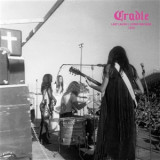
Cradle was a late-60s/early-70s Detroit rock band that evolved from the groundbreaking all woman rock group The Pleasure Seekers, led by the Quatro sisters-Patti, Nancy, Suzi, and Arlene, By the final lineup of The Pleasure Seekers, Nancy Rogers had joined as drummer, bringing a new thunderous presence with her double bass drum kit and playing a key role in the group's transfornation into their heavier sound under the new moniker, Cradle. With raw, intricate instrumentation and powerful dual vocals-Suzi's Joplin-esque edge and Nancy Quatro's Robert Plant-like wail-the band delivered socially relevant hard rock with grit and attitude. Touring extensively, they shared stages with legends like Mountain. Ten Years After, Jeff Beck, Santana, and Jefferson Airplane, cementing their place in Detroit's hard rock movement. Despite theit undeniable talent and determination. Cradle faced industry roadblocks, disbanding in 1973. But today, their music sounds better than, ever-and their legacy serves as an important chapter! in music history, helping pave the way for women in heavy rock.
THE INFINITE STREAM TO ETERNITY LAYS IN THE UNDERSTANDING OF THE WHIRLING ASCENT TO PERFECTION’
Jon Tye, aka Ocean Moon is a man who truly needs no introduction. For the last 30 plus years, the founder of LO RECORDINGS has consistently been a part of some of the most seminal and groundbreaking sonic excursions of our time — MLO, Seahawks, Cherry Garcia, and Brain Machine, to name a few.
After his recent album for Music From Memory, ‘Ways To The Deep Meadow’, Ocean Moon now sets his controls for the heart of the sun and takes the listener on an epic journey into a world of vibration, wild oscillations, molecular transformation and altered states of consciousness.
Inspired by the kaleidoscopic majesty of 4 Hero, Terre Thaemlitz, and Alice Coltrane combined with the the wonders of the cosmos, 'SHIMMERING STATES' is an electronic symphony that feels like a magical sonic voyage into deep space.
- If I Knew What I Know Now
- Out Of Reach
- Get A Life
- Resurrection
- Allergy
- Sniffing Glue
- Ordinary Girl
- The World Is Wrong
- Citizen
- Scarred For Life
- Voice Of The People
- Punk Police
LTD EDITION[25,42 €]
Best of' albums are invariably repackaged collections of old recordings, so Vice Squad's `Punk Rockers' is a breath of fresh air The songs have been lovingly recorded and remastered, keeping all the original fire and adding decades of experience gained from punishing tours and continuous songwriting Beki is the original architect of the songs and the Vice Squad name, and she is the sole surviving member of the original lineup to have continued as a full-time musician Vice Squad are 100% DIY and record everything in their home studio with guitarist/riffmaster Paul Rooney engineering and mixing. There is nothing sloppy here; the whole album is concise and intelligent with lightning-speed diction, passion, and intent. The glorious `If I Knew What I Know Now' and `The World Is Wrong' are examples of Vice Squad's ability to write instantly catchy, witty songs, and the more gut-wrenching material from their last album, `Battle of Britain', showcases some enormous riffs and a voice that is a million decibels from Beki's untried teen vocals. The album opens with the deliciously effervescent `If I Knew What I Know Now', followed by the sparkling old-school tongue-twister `Out of Reach'. Next up is the visceral `Get A Life', an angry anti-suicide note to the desperate, originally the title track from their 1998 comeback album. This is followed by a shimmering version of Vice Squad's old-school classic `Resurrection'. While the treatment of the old songs remains true to the original teenage renditions, the upgraded versions pack more of a punch with detuned guitars and growling bass. The tribal tom-toms of `Allergy' underpin just over two minutes of punk protest about the delights of pollution and asthma. Then comes the sublime `Sniffing Glue', a near-perfect punk love song that would be a huge hit if not for its subject matter. `Ordinary Girl' is punk-pop perfection brimming with hook lines and harmonies, warmly mocking the life that could have been chosen instead of the grindstone at the sharp end of the music industry. `The World Is Wrong' is anthemic, joyous, and wonderfully contrary, and one would expect nothing less from a band that has soldiered on and grown through the decades. It's always great when bands lead by example. In these increasingly tough times where our survival is threatened by the gargantuan greed of a few individuals, it's important to continuously stick two fingers up to the grabbers and spoilers. 'The World Is Wrong' does just that in an impassioned, melodic, and optimistic style. 'Hold your head up, stand your ground, and don't let the bastards grind you down.' Then we roar into the final single Beki wrote with original and now sadly deceased guitarist Dave Bateman, `Citizen', and continue with another teenage opus, the quite brutal `Scarred For Life'. `Voice of the People' is a bulldozer of a song, all swagger and ballsy riffs, and the chorus, `Freedom of speech is against the law; now we're all criminals,' snarls its derision at red-handed red tape. `Punk Police' sneers over a catchy-as-COVID guitar riff, and the lyrics, `Regulation cut, you must measure up, down on the street, PR companies, monied families, running the scene,' call out the hierarchies that now permeate Punk. Baritone guitars add extra darkness to one of the first-ever animal rights songs, `Humane', and I'm struck by how relevant the older songs are. Chocks away, and the awesome 'Spitfire' takes flight like Motörhead on extra amphetamines. Merlin engines fade into `Born In A War', the second in the triumvirate of conflict-themed songs, an absolute stonker with huge muscular riffs and lyrics that roar pure outrage. Then comes the ominous Last Rockers, with all the angst of the original plus added depth and resonance. Beki: ' "Last Rockers" is a typically depressive adolescent song about nuclear war and being too young to die but too late to live. I believed Punks were the `Last Rockers', the final youth cult before the Apocalypse. I was obsessed with punk, and all I wanted to do was sing in a band and be part of the movement, so I would often romanticise the idea of punk in my lyrics.'
- 1: If I Knew What I Know Now
- 2: Out Of Reach
- 3: Get A Life
- 4: Resurrection
- 5: Allergy
- 6: Sniffing Glue
- 7: Ordinary Girl
- 8: The World Is Wrong
- 9: Citizen
- 10: Scarred For Life
- 11: Voice Of The People
- 12: Punk Police
- 13: Humane
- 14: Spitfire
- 15: Born In A War
- 16: Last Rockers
Vice Squad are 100% DIY and record everything in their home studio with guitarist/riffmaster Paul Rooney engineering and mixing. There is nothing sloppy here; the whole album is concise and intelligent with lightning-speed diction, passion, and intent. The glorious ‘If I Knew What I Know Now’ and ‘The World Is Wrong’ are examples of Vice Squad’s ability to write instantly catchy, witty songs, and the more gut-wrenching material from their last album, ‘Battle of Britain’, showcases some enormous riffs and a voice that is a million decibels from Beki's untried teen vocals. The album opens with the deliciously effervescent ‘If I Knew What I Know Now’, followed by the sparkling old-school tongue-twister ‘Out of Reach’. Next up is the visceral ‘Get A Life’, an angry anti-suicide note to the desperate, originally the title track from their 1998 comeback album. This is followed by a shimmering version of Vice Squad's old-school classic ‘Resurrection’. While the treatment of the old songs remains true to the original teenage renditions, the upgraded versions pack more of a punch with detuned guitars and growling bass. The tribal tom-toms of ‘Allergy’ underpin just over two minutes of punk protest about the delights of pollution and asthma. Then comes the sublime ‘Sniffing Glue’, a near-perfect punk love song that would be a huge hit if not for its subject matter. ‘Ordinary Girl’ is punk-pop perfection brimming with hook lines and harmonies, warmly mocking the life that could have been chosen instead of the grindstone at the sharp end of the music industry. ‘The World Is Wrong’ is anthemic, joyous, and wonderfully contrary, and one would expect nothing less from a band that has soldiered on and grown through the decades. It’s always great when bands lead by example. In these increasingly tough times where our survival is threatened by the gargantuan greed of a few individuals, it's important to continuously stick two fingers up to the grabbers and spoilers. 'The World Is Wrong' does just that in an impassioned, melodic, and optimistic style. 'Hold your head up, stand your ground, and don't let the bastards grind you down.' Then we roar into the final single Beki wrote with original and now sadly deceased guitarist Dave Bateman, ‘Citizen’, and continue with another teenage opus, the quite brutal ‘Scarred For Life’. ‘Voice of the People’ is a bulldozer of a song, all swagger and ballsy riffs, and the chorus, ‘Freedom of speech is against the law; now we’re all criminals,’ snarls its derision at red-handed red tape. ‘Punk Police’ sneers over a catchy-as-COVID guitar riff, and the lyrics, ‘Regulation cut, you must measure up, down on the street, PR companies, monied families, running the scene,’ call out the hierarchies that now permeate Punk. Baritone guitars add extra darkness to one of the first-ever animal rights songs, ‘Humane’, and I’m struck by how relevant the older songs are. Chocks away, and the awesome ’Spitfire’ takes flight like Motörhead on extra amphetamines. Merlin engines fade into ‘Born In A War’, the second in the triumvirate of conflict-themed songs, an absolute stonker with huge muscular riffs and lyrics that roar pure outrage. Then comes the ominous Last Rockers, with all the angst of the original plus added depth and resonance. Beki: ' "Last Rockers" is a typically depressive adolescent song about nuclear war and being too young to die but too late to live. I believed Punks were the ‘Last Rockers’, the final youth cult before the Apocalypse. I was obsessed with punk, and all I wanted to do was sing in a band and be part of the movement, so I would often romanticise the idea of punk in my lyrics.' The four bonus CD tracks kick off with ‘Coward’, another teen Bateman/Bond composition. ‘No You Don’t’ is just over two minutes of vocal acrobatics over a Dexedrine-driven Devo-esque chord sequence, and the frantically brilliant ‘I Dare To Breathe’ from ‘Battle of Britain’ continues the aural assault. Then the final sombre entreaty of ‘You Can’t Buy Back The Dead’ warns us that ‘Enough’s never enough; absolute power will corrupt; the war machine still rumbles on’ before fading into the future.
The official soundtrack to Jean-Cosme Delaloye's documentary about the life and career of Detroit techno pioneer Carl Craig, Desire: The Carl Craig Story is set for release on digital platforms on 20th June 2025, with 2x12” Vinyl and CD editions to follow on 18th July 2025.
The collection, coming via his prolific and seminal Planet E Communications, features music from across Craig’s vast catalog, including several tracks that have never previously seen full digital release. Its selections span his many aliases and projects, offering a rare glimpse into the full scope of his groundbreaking career. rare glimpse into the full scope of his groundbreaking career.
Among the rare and remastered tracks featured is No More Words - originally released in 1991, newly reissued on vinyl and available digitally for the first time. A foundational track in the Detroit techno canon, No More Words captures the emotive synths and tight grooves of Craig’s sound that would soon resonate across dance floors worldwide. Its reissue marks a moment of reflection on the genre’s roots and evolution.
Another remastered track from Craig’s extensive archive is The Truth, a deep cut from Craig’s discography under his Designer Music alias, now widely available for the first time a quarter-century after its original release. The film’s end credits are scored by the contemplative Meditation 4, an ambient production previously only available on Craig's 2013 Masterpiece compilation CD for Ministry of Sound.
Iconic remixes such as his Grammy-nominated rework of Junior Boys’ Like A Child is included alongside lesser-known but equally epic remixes such as his sublime 2012 mix of Slam’s Azure, which is employed for the film’s title credits and had previously only seen a limited release. Also featured across the soundtrack’s multiple formats are iconic Carl Craig productions under his 69, Psyche/BFC and Innerzone Orchestra aliases, and collaborations with Moritz von Oswald and Francesco Tristano. Oswald and Francesco Tristano.
The soundtrack serves as a companion to the new documentary directed by Jean-Cosme Delaloye and produced by Sovereign Films, which follows Carl’s journey from Detroit’s middle-class roots to global stardom, set against the city’s decline and recovery. The film explores his work at the intersection of music, art, and culture, from his collaborations with Bottega Veneta to his Party/After-Party installation, acquired by the Detroit Institute of Arts and exhibited at MOCA Los Angeles. MOCA Los Angeles.
Featuring interviews with Gilles Peterson, Roni Size, Laurent Garnier, DJ Minx, Kenny Larkin, Moritz von Oswald, and James Lavelle, Desire highlights Carl’s championing of Detroit’s Black creative excellence and the often-overlooked African-American roots of electronic music.
Motel d'amour - A Lost Electro-Funk Gem from the NDW Era Resurfaces
When we first collaborated with Collage member Markus Kammann on the EP project "Mit den Puppen tanzen" at the end of last year, we never imagined what would follow: Kammann approached us with a completely unreleased full-length album by his former band. Upon receiving the first three preview tracks, we were floored. One of them was "Nachtcafé" - a track that kicks off with a funky bassline layered over the punchy rhythm of a Roland TR-808. Add shimmering synths and Katrin A. Kunze's sharp, distinctive vocals, and we instantly knew we were hearing something special.
For a label dedicated to rediscovering lost treasures, this was exactly what we'd been searching for. The next two tracks - "Rendezvous" and "Casanova" - were just as compelling. When Kammann sent us the full album, we realized we were holding an electro-funk grail from the late golden days of the German Neue Deutsche Welle (NDW). We were listening to "Motel d'amour".
"Motel d'amour" is a concept album, offering a sharp, vibrant perspective from a confident, intelligent, and radiant young woman eager to experience nightlife, love, and music. Kunze's lyrics paint vivid scenes of flirtation ("Nachtcafé", "Rendezvous"), encounters with men ("Casanova"), the pulse of nightlife ("Die Nacht ist noch jung"), love ("Rotes Licht für rote Liebe"), one-night stands ("Motel d'amour"), and more. Rarely has a German album from that era captured emotional nuance and social dynamics so insightfully. Without veering into the overly personal, Kunze's direct, daring lyrical style was groundbreaking at the time - and remains refreshingly bold today.
While German listeners will fully appreciate the lyrical depth, the music speaks volumes on its own. Kunze's words are masterfully complemented by the production of Markus Kammann and Jürgen Grah. As heard on the in-demand "Mit den Puppen tanzen", their creativity seemed boundless. Each track is tightly composed, catchy, and full of character. While many German bands at the time leaned into rock, Kammann drew from the deep grooves of Earth, Wind & Fire, The Isley Brothers, Brothers Johnson, The Commodores, and the electro-futurism of Afrika Bambaataa's "Planet Rock" and "Looking for the Perfect Beat". The result: tracks with unmistakable electro-funk flair, powered by the classic 808 drum sound.
Though primarily rooted in funk and electro, the album retains flashes of NDW aesthetics - "Wir haben getanzt heut' Nacht" being a prime example. The instrumentation is a dream list for vintage gear lovers: Yamaha keyboards, Roland Juno-60, vocoder, Micromoog, Hohner D6 Clavinet, Fender bass, and a Telecaster guitar all feature prominently.
Recorded in 1985 at the high-profile Delta Studio by Richard Rossbach, the album attracted interest from Polydor. However, the label proposed using the compositions for a solo project with singer Inga Humpe (of Neonbabies), who was already signed to their roster. This would have required replacing Kunze as the vocalist, an idea the group firmly rejected. As a result, "Motel d'amour" was shelved, and Kammann, Grah, and Kunze moved on to form Cold End.
The album cover features a rare archival photo of Katrin A. Kunze - rediscovered by Kammann and now finally seeing the light of day, 40 years later.
We believe Motel d'amour deserves recognition alongside cult German classics like P!OFF?, 1. Futurologischer Congress' "Wer spricht?", Ami Marie's "Verrückt nach Glück", the funkier cuts of Cosa Rosa, or Piet Klocke's groove classic "Heute ist nicht sonst". It's a record that fits into adventurous DJ sets but also rewards a full, start-to-finish listen.
A note on audio quality: Sadly, the original master tapes were lost. The tracks were restored from a vintage TDK cassette. Thanks to modern digital tools, we were able to remaster them to a high standard - but in some songs light distortions remain. We appreciate your understanding and hope you enjoy this lost and undiscovered gem.
Motel d'amour - A Lost Electro-Funk Gem from the NDW Era Resurfaces
When we first collaborated with Collage member Markus Kammann on the EP project "Mit den Puppen tanzen" at the end of last year, we never imagined what would follow: Kammann approached us with a completely unreleased full-length album by his former band. Upon receiving the first three preview tracks, we were floored. One of them was "Nachtcafé" - a track that kicks off with a funky bassline layered over the punchy rhythm of a Roland TR-808. Add shimmering synths and Katrin A. Kunze's sharp, distinctive vocals, and we instantly knew we were hearing something special.
For a label dedicated to rediscovering lost treasures, this was exactly what we'd been searching for. The next two tracks - "Rendezvous" and "Casanova" - were just as compelling. When Kammann sent us the full album, we realized we were holding an electro-funk grail from the late golden days of the German Neue Deutsche Welle (NDW). We were listening to "Motel d'amour".
"Motel d'amour" is a concept album, offering a sharp, vibrant perspective from a confident, intelligent, and radiant young woman eager to experience nightlife, love, and music. Kunze's lyrics paint vivid scenes of flirtation ("Nachtcafé", "Rendezvous"), encounters with men ("Casanova"), the pulse of nightlife ("Die Nacht ist noch jung"), love ("Rotes Licht für rote Liebe"), one-night stands ("Motel d'amour"), and more. Rarely has a German album from that era captured emotional nuance and social dynamics so insightfully. Without veering into the overly personal, Kunze's direct, daring lyrical style was groundbreaking at the time - and remains refreshingly bold today.
While German listeners will fully appreciate the lyrical depth, the music speaks volumes on its own. Kunze's words are masterfully complemented by the production of Markus Kammann and Jürgen Grah. As heard on the in-demand "Mit den Puppen tanzen", their creativity seemed boundless. Each track is tightly composed, catchy, and full of character. While many German bands at the time leaned into rock, Kammann drew from the deep grooves of Earth, Wind & Fire, The Isley Brothers, Brothers Johnson, The Commodores, and the electro-futurism of Afrika Bambaataa's "Planet Rock" and "Looking for the Perfect Beat". The result: tracks with unmistakable electro-funk flair, powered by the classic 808 drum sound.
Though primarily rooted in funk and electro, the album retains flashes of NDW aesthetics - "Wir haben getanzt heut' Nacht" being a prime example. The instrumentation is a dream list for vintage gear lovers: Yamaha keyboards, Roland Juno-60, vocoder, Micromoog, Hohner D6 Clavinet, Fender bass, and a Telecaster guitar all feature prominently.
Recorded in 1985 at the high-profile Delta Studio by Richard Rossbach, the album attracted interest from Polydor. However, the label proposed using the compositions for a solo project with singer Inga Humpe (of Neonbabies), who was already signed to their roster. This would have required replacing Kunze as the vocalist, an idea the group firmly rejected. As a result, "Motel d'amour" was shelved, and Kammann, Grah, and Kunze moved on to form Cold End.
The album cover features a rare archival photo of Katrin A. Kunze - rediscovered by Kammann and now finally seeing the light of day, 40 years later.
We believe Motel d'amour deserves recognition alongside cult German classics like P!OFF?, 1. Futurologischer Congress' "Wer spricht?", Ami Marie's "Verrückt nach Glück", the funkier cuts of Cosa Rosa, or Piet Klocke's groove classic "Heute ist nicht sonst". It's a record that fits into adventurous DJ sets but also rewards a full, start-to-finish listen.
A note on audio quality: Sadly, the original master tapes were lost. The tracks were restored from a vintage TDK cassette. Thanks to modern digital tools, we were able to remaster them to a high standard - but in some songs light distortions remain. We appreciate your understanding and hope you enjoy this lost and undiscovered gem.
- Gulch
- Evergreen
- Indelible
- Specific Resonance
- Cascading Crescent
- Pining For Ever
- Flickering Stillness
- Wantering Mind
Pelican has always been a band that's not just from Chicago, but distinctly of Chicago. Formed in 2000 by guitarists Trevor Shelley de Brauw and Laurent Schroeder-Lebec alongside brothers Bryan and Larry Herweg on bass and drums respectively, Pelican's foundation was built upon the rule-free, genre-agnostic scene synonymous with the Fireside Bowl. "The `90s in Chicago was a free-for-all. Everyone was just coming from a place of pure creativity," says Shelley de Brauw. With Schroeder-Lebec returning to the band following Dallas Thomas' departure in 2022, this reunified version of Pelican allowed the band to tap back into the spirit of their formative era and build something distinctly new with Flickering Resonance. While longtime Pelican fans will recognize the album as an update to the band's ethos_one that's been constantly evolving since their very first EP_their new partnership with Run For Cover Records emphasizes something that's always been implicit to the Pelican formula. These songs take as much inspiration from titanic `90s post-hardcore, space-rock, and emo as they do traditional metal, showing that though Godflesh and Goatsnake records occupied the shelves of Pelican's songwriters, so too did Quicksand, Christie Front Drive, and Hum. "A lot of people didn't hear it at first," says Schroeder-Lebec. "I was like, well, I guess the metal world is where we fit. But now, we're more willing to acknowledge all the suits we're wearing."On Flickering Resonance, Pelican doesn't attempt to reinvent itself as much as emphasize the elements that were so often overlooked. Though Pelican's thick sonic backbone remains intact, the songs on Flickering Resonance show a more humanistic side of the band. Tracks like "Evergreen" and "Indelible" tease Pelican's doom-metal roots, but these songs feel equally, ebullient and truthful, playing like Texas Is The Reason songs transmuted into a post-rock landscape. Recorded with longtime musical compatriot Sanford Parker, who recorded their first EP, Pelican begins this new chapter of their career with an album that's neither full reinvention nor back-to-roots revivalism. After so much time apart, and with so much life having been lived between the original Pelican lineup's last recording sessions together, the band approached it with renewed vigor and a more communal spirit."There was more room for openness and critique with the understanding that we're all trying to craft the best song possible and that every suggestion is valid until it's proven invalid," says Shelley de Brauw. That process allowed everyone to embrace the material with a shared vision. "We didn't move forward unless we all wanted to move forward, and that felt like real community building," says Schroeder-Lebec of this unified approach. "I went from seeing it as my art and my craft to our craft that we were shaping together."In doing so, Pelican allowed themselves to look at their music less as a means of hard-earned catharsis and more as an appreciation for the glimmers of joy that occur even in the bleakest landscapes. Songs like "Cascading Crescent" and "Indelible" don't languish in what's been lost, these tracks see the band embracing what remains in their hands instead of lamenting what's slipped through their fingers. It's a concept that's mirrored in the artwork of Christian Degn that graces the cover of Flickering Resonance. It's a piece built off the concept of flame meditation, and how the smallest flames can often bring about the biggest transformations. A song like "Flickering Stillness" exemplifies this feeling through its sonic expanse, putting the band's sonic density and hyper-focused clarity on display, but with an emphasis on the profound human connections that have kept Pelican going all these years. "When Laurent left and we were able to carry it through, there became a real sense of gratitude for the fact we still have this artistic outlet and a community of people who want to be a part of it" That feeling of deep, grounded appreciation isn't just one that's within the band members, it's expressed in every track on Flickering Resonance. Because at the very core of Pelican, are four individuals who have grown both separately and together, and always will.Like a distant light faintly glowing in the darkest night, Flickering Resonance is a reminder of all that has passed us by, but also all that is still to come.
- Beyond Compare
- Step On Up
- Meant To Be
- Possibilities
- Things
- That's Fate
- Adventure
- The Summer Of Love
- Stars Don't Lie
- Lemonade Sunset
- Magnificent
- Blame It On Your Smile
Legendary indie travellers Half Japanese return with their new album Adventure. The prolific outsider combo, helmed by the ever-optimistic Jad Fair, delivers a heartwarming set of upbeat sonnets celebrating the power of love, affection, and maturity. More than 50 years since Jad and his brother David emerged from their lo-fi bedroom in Uniontown, Maryland, USA, Adventure takes the latest incarnation of the band down new and more refined avenues. Recorded in London at Vacant TV and produced by Jason Willett and Jad, Adventure presents a more pristine and polished canvas for Jad to expand upon. The addition of Euan Hinshelwood to the sonic palette, with saxophone, harmonica, and piano, creates a smoother backdrop for the band's less lubricated sound. Lemonade Sunset is an ode to the world of wonder, a spacious overture built with melancholy in mind but relishing the positivity of life. By contrast, Step On Up revolves around a glorious rising piano motif that hints at Steely Dan if they were high on energy drinks and spinach rather than their usual tipple. It's a light-hearted evocation of the good times. Magnificent is a homage to living in the present tense, powered by the bittersweet saxophone, with a glorious piano-led sub-melody offsetting Jad's positivity: "magnificently magnificent," no less. Elsewhere, ringing percussion and sharp arrangements provide Jad with a sturdy and far reaching soundtrack to lament over. Adventure sees Half Japanese covering new ground, with Jad's considered soliloquies set in a sumptuous setting. The lineup for Half Japanese on Adventure includes Jason Willett (bass, keyboards), Gilles-Vincent Rieder (drums, percussion), John Sluggett (guitar, piano, bass), Mick Hobbs (guitar), Euan Hinshelwood (guitar, saxophone, piano, harmonica), and Jad Fair (vocals, percussion). Sadly, longstanding member Mick Hobbs passed away last year. "Absurdly underrated art-rockers" - Record Collector. * "Fair's ability to bang out music behind him is matched perhaps only by Mark E Smith" - The Wire.
Recorded live in one session at age 18, this album helped launch Tania Maria's career as an acclaimed Brazilian jazz artist, celebrated for her virtuoso combination of piano and vocals. Produced by Romeo Nunes (Meirelles e Os Copa 5, Rio 65 Trio, Elis Regina, Elza Soares), the album features the pioneering Edison Machado, who transformed samba and was instrumental in the development of Bossa Nova through his groundbreaking "samba no prato" (samba on the cymbals) technique. His work helped shape the sounds of Jobim, Getz, and Milton Nascimento. On guitar is the legendary Neco, who played on over 500 albums. Initially self-taught, he later studied under maestros Guerra Peixe and Moacir Santos. He collaborated with icons like Elis Regina and Chico Buarque, and was a member of Os Ipanemas, Os Catedráticos, and Os Gatos. His solo work includes Velvet Bossa Nova (1966), which became an acid jazz favorite. The album features compositions by Caetano Veloso and Marcos Valle,alongside early samba classics.
Blending Brazilian rhythms with elements of samba, bossanova, and jazz fusion,it captures the early development of Tania Maria's signature style. Born in São Luís, Brazil in 1948,Tania Maria began playing piano at age seven. She learned samba, jazz, and chorinho through her father's weekend jam sessions. Leading her own band by age13, she performed across the region while collecting records from influential artists. Though she earned a law degree and started a family,her passion for musicu ltimately won out—she left law to pursue music full-time.
- A1: Da Doo Ron Ron (Alt. Ver.)
- A2: Uptown
- A3: He's A Rebel
- A4: There's No Other (Like My Baby)
- A5: He's Sure The Boy I Love
- A6: Please Hurt Me
- A7: Another Country, Another Town
- A8: Oh, Yeah, Maybe, Baby
- A9: Gee Whiz Look At His Eyes (Twist)
- B1: Then He Kissed Me (Alt. Ver.)
- B2: He Hit Me (It Felt Like A Kiss)
- B3: Walkin' Along
- B4: I Love You Eddie
- B5: Frankenstein Twist
- B6: What A Nice Way To Turn Seventeen
- B7: No One Ever Tells You
- B8: On Broadway
Girl groups have come and gone over the years, but the Crystals’ name, along with the Ronettes, has become synonymous with the groundbreaking early-Sixties wave promoted by producer Phil Spector. As well as including some of their early recordings, the songs featured here on this 180g Vinyl set retain their period charm thanks to what one critic called the Crystals’ ‘sweet-butstreetwise vocal magic.’ File the music under Brill Building, GirlGroup Pop or whatever you choose, it wears its half a century of history lightly
- A1: Sister Hell
- A2: Prelmnlrl
- A3: It Wasn't Me
- A4: Of Toes, Yark
- A5: Keeps Repeating
- A6: Sports Car
- A7: Burning Up
- B1: What Time Is It?
- B2: Change Your Mind
- B3: Mr. Whitey Tighty
- B4: Cold Cold Cold Ground
- B5: Choke
Originally released in 1989 on the band’s own Thwart Productions label, Tangle was the first vinyl release from Thinking Fellers Union Local 282. Coming after their debut cassette, Wormed, By Leonard, it shows the band leapfrogging stylistically into a more mature phase of their patented surreal compositional modus operandi. Tracks like the opener, "Sister Hell," foreshadow the band's later evolutionary mutations and was a minor hit in the underground circuit at the time. The rest of the album is a sleek maelstrom of crackpot dissonance, noise-rock power balladry, schizo-telepathic improv and some of the finest underground music of the era. In short, Tangle is a template and Proclamation of Intent that presages TFUL's classic 90s releases. Originally produced by their longtime engineer and thaumaturge, Greg Freeman, this reissue is impeccably remastered from the original master tapes by Mark Gergis. New and contemporary artwork ties a saucy bow around this astonishing reissue.
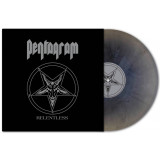
Die Anfang der 1970er Jahre gegründete US-Band ist einer der beständigsten Underground-Acts in der Geschichte des Heavy Metal. Beeinfl usst von britischen Bands wie The Groundhogs und Black Sabbath, hat ihre eigene Art von Doom Metal später wiederum andere Bands wie Paradise Lost oder Cathedral beeinfl usst. Obwohl sich die Besetzung der Band im Laufe der Jahre mehrfach änderte, ist Sänger Bobby Liebling immer noch am Ruder, und Pentagram gilt heute als echte Kultband mit einer generationsübergreifenden Fangemeinde.
LDF (Lello Di Franco) makes a powerful return to Skylax, this time teaming up with Detroit's own Javonntte. Following his stellar release with Gari Romalis, LDF delivers a release that is pure gold for fans of the original Detroit sound. If you appreciate the styles of Moodymann, Theo Parrish, or Omar S, this record is bound to resonate deeply. The EP opens with "Disco One (All Night Long)," a groove-heavy track that embodies the essence of classic Detroit house. It pulses with soulful basslines and infectious rhythms, setting a hypnotic tone that's perfect for late-night sessions. "Saved" ventures into Chicago acid territory, a tribute to the raw, driving energy of classic acid house. With its punchy 303 basslines and tight, snappy percussion, it channels the best of Chicago's underground with a fresh, modern edge. "After Midnight" offers a smooth, after-hours vibe, balancing deep, jazzy chords with a pulsating rhythm that keeps the energy simmering. It's a track that brings warmth and intimacy, ideal for closing sets or introspective moments. "Martha" is a lush, emotionally rich track that embodies LDF's Italian roots while staying grounded in Detroit's heritage. With warm melodies and a rolling bassline, it delivers a balance between soulful warmth and a classic dancefloor feel. "Love Anthem" is a heartfelt groove, merging lush pads and laid-back percussion with a sense of nostalgic euphoria. It's a track that brings people together, a true love letter to house music. "People From Mars" pays homage to Omar S, with its stripped-down, gritty approach. The track has a rough, analog feel, capturing the raw energy and spirit of Detroit's underground. Finally, "The Dirty Digital Show" closes the EP on an intense note, with a driving rhythm and futuristic soundscapes. As an Italian DJ and producer from Naples, LDF brings his decades of experience—starting from his early inspirations in house and techno in 1993—into this record. Also, as co-owner of Frole Records and co-founder of Basic Frame Distribution, his knowledge of the scene is profound, and it's reflected in each meticulously crafted track. This release is a testament to the timelessness and diversity of house music.
Artwork done by legendary french cult designer H5 (Daft Punk, Air, Etienne de Crecy …)
- All I Really Want
- You Oughta Know
- Perfect
- Hand In My Pocket
- Right Through You
- Forgiven
- You Learn
- Head Over Feet
- Mary Jane
- Ironic
- Not The Doctor
- Wake Up
When Alanis Morissette took direct aim at an ex who wronged her on the eviscerating “You Oughta Know” in 1995, everything about the Top 10 song communicated it wasn’t the usual narrative about love gone south. Or the typical wounded singer wallowing in self pity. Morissette, and both the lead single from and her entire American major-label debut — the profoundly personal Jagged Little Pill — represented a sea change. They kickstarted a movement, one whose impact continues to echo throughout the mainstream nearly three decades later.
Ranked the 69th Greatest Album of All Time by Rolling Stone, included on the Rock and Roll Hall of Fame’s list of 200 Definitive Albums, and featured in several books about essential albums, Jagged Little Pill remains more than a blockbuster that has sold more than 17 million copies in the U.S. and 33 million units worldwide. It’s a statement, an attitude, a soundtrack for anyone seeking inspiration, an outlet, or permission to be themselves.
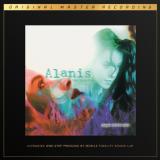
Sourced from the original master tapes, pressed at Fidelity Record Pressing on MoFi SuperVinyl, and strictly limited to 4,000 numbered copies, Mobile Fidelity’s UltraDisc One-Step 180g 45RPM 2LP box set of Jagged Little Pill presents the landmark effort in audiophile-grade sound for the first time. A key part of the record’s appeal and accessibility — Glen Ballard’s smooth production, touches that help Morissette’s exposed-nerve fare seem more accessible and melodic — comes through on this special 30th anniversary edition with an openness, presence, and dynamic explosiveness that make the vocalist’s songs that much more real and visceral.
The singer’s distinctive mezzo-soprano deliveries — the octave-rippling highs, dark-hued lows, dramatic crescendos, belted choruses, wispy reflections, occasional yodels — resonate with full-range ardor and depth. As crucial as anything on the record, Morissette’s confessional words take center stage like never before. Ditto the instrumentation and atmospherics that form the magnetic backgrounds of the songs. Key in on the contributions from Red Hot Chili Peppers Dave Navarro and Flea on “You Oughta Know” to Tom Petty & the Heartbreakers' co-founder Benmont Tench’s organ playing on six tracks.
The deluxe packaging of Mobile Fidelity’s Jagged Little Pill UD1S set underscores the work’s distinguished status. Housed in a slipcase, the LPs come in special foil-stamped jackets with faithful-to-the-original graphics that illuminate the splendor of the recording. Benefitting from an ultra-low noise floor, superior groove definition, and dead-quiet surfaces, this UD1S reissue is for listeners who prize sound quality and desire to engage themselves in everything involved with the album, including the now-iconic cover art that juxtaposes two portraits of the then-21-year-old singer-songwriter and features typewriter font.
That script — which suggests a raw, blood-on-the-floor document created without modern aids like spell check or language correction — hints at the heightened level of unvarnished intimacy, honesty, and catharsis Morissette offers throughout Jagged Little Pill. Named after a phrase uttered on the astute “You Learn,” the album explores the frank emotions, inherent contradictions, and wishful desires people feel everyday but are often too afraid to express. Morissette displays no such fear or shyness.
Akin to a woman reading from a diary, Morissette leaves nothing to the imagination as she skewers hypocrisy during the poignant “Forgiven,” seeks recompense on the vengeful “You Oughta Know,” and spills her guts on the soul-purging “All I Really Want.” For all the anger and bile ascribed to the singer and record, Jagged Little Pill is incredibly healthy and upbeat. Morissette uses the catchy pop-rock frameworks and moody ambience to suss out situations, to learn, to give hope. There’s the clever yearning of “Hand in My Pocket”; wry contrarianism of “Ironic”; kind-heartedness of “Hand over Feet”; the live-and-let-live spirit of “You Learn” – all positive and amiable.
Throughout Jagged Little Pill, the ever-approachable Morissette connects with listeners who recognize themselves in her — and has an intelligent conversation with anyone who wants to participate. It seemed almost everyone did. In addition to the mammoth sales that make the effort the 17th-best-selling album in American history, Jagged Little Pill collected four Grammy Awards, two American Music Awards, three Billboard Music Awards, and eight Juno Awards. In 2018, the record became the basis for a musical that netted 15 Tony nominations on Broadway.
Ironic? Anything but. Jagged Little Pill transcends generations, gender, and trends. As Morissette sings on the opening “All I Really Want,”, the album represents “deliverance” — “a place to find common ground.”
With a clutch of EPs under his belt spanning a wealth of pallets, Henzo narrows the focus on his debut studio album “The Poems We Write For Ourselves” - a culmination of persistent iterations over several years, distilling his sonic milieu into something that feels decidedly his own. The album proper is coupled with a debut live performance which reinterprets the tracks and splices them with omitted material from the time of writing - recorded in full in the intimate confines of Manchester’s growingly infamous Stage and Radio basement. Honing his craft in the shadows of Lancashire, Poems is an expansive reflection of the producer’s time spent away committing to the scope of an LP.
A thread of stratified sound design weaves throughout the record, but with a discerning dancefloor proclivity mostly prevalent. Cold opener “Noggin” riffs on noughties Raster-Noton a la Byetone rebuilt with fractal tear out DnB, with closer “Indulgence” following suit on a puckered plod of Dub Techno ambience. More club-focussed moments come in the form of “Rustica Slump” and “Blue Will...”, the former’s sickly sweet vocals resolved by the latter’s stoic UKG/Techno rudeness. “A Bouquet of Clumsy Words” channels mechanical shuffle with a stripped back 2/4 pulse whilst maintaining a firmly FWD>>energy alongside “Plant Your Roots In Me” on a similar vector - swapping out a straight kick pattern for a bludgeoning 808 assault on an early Hessle-indebted tip.
“Take Stock, Touch Grass” harks to golden era ClekClekBoom and Night Slugs with a bare bones kick and vocal motif, updating the formula with a tweaking lead line that places it firmly in the contemporary space. “Swell:Shrink” sings from the same sheet with a shrieking, space age wobble doing the heavy lifting, knocking the pace back to a shoulder-lean swagger on a slow fast conundrum Henzo has shown his flair for on previous releases.
The outliers to Henzo’s more known approach, “Worm Grunting” with Belfast’s Emby, an amalgamation of halfest time DnB and illest mannered Road Rap, plus “The Rest Is The Mess You Leave”, a starkly anti-retro Ghettotek endeavour, give grounds to the LP. Clearly rooted in the comfortable universe of the dancefloor, these tracks expand the producer’s realm into loftier heights as he graduates into long play land.
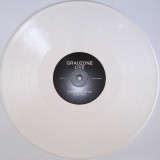
WRWTFWW Records is very happy to release Swiss cult band Grauzone’s recording of their April 12th 1980 live show at Gaskessel in their hometown of Bern. The 9-track album, documenting the very beginnings of the group, is available as a limited edition white vinyl LP in heavy 350gsm sleeve with special artwork by band member Stephan Eicher.
Experience the early Grauzone days, live from Bern, Switzerland, with a concert recorded at legendary local venue Gaskessel, with Martin Eicher on guitar and vocals, Christian G.T. Trüssel on bass, Marco Repetto on drums, Stephan Eicher on synth, and Claudine Chirac on saxophone. The performance is a true time capsule of the early 80s underground, showcasing the punk side of Grauzone with renditions of songs that were never officially released, as well as future fan-favorite “Moskau”. A piece of Swiss music history, This limited release is a must have for all Grauzone fans and DIY archivists.
About Grauzone:
The pioneering band from Bern (Switzerland) had a short-lived but highly-regarded career which birthed a cult discography that still fascinates and resonates today. Consisting of core members Martin Eicher, Stephan Eicher, and Marco Repetto, and on-and-off participants Christian GT Trüssel, Claudine Chirac, and Ingrid Berney, the elusive group broke new grounds in the early 80s, experimenting with punk and industrial music, early techno sounds, minimalism, new wave, pop, and various electronics. With an innovative and polished approach to design, visuals, performance, and all around style and philosophy on top of their superb music, the constantly transforming unit developed a whole experience - the Grauzone experience: wild and unpredictable, yet sophisticated and cohesive, or as Swiss music historian Lurker Grand would call it, "an Art band with a Punk attitude".
Completely rejecting the music industry rules and refusing to play the game of promotion, touring, release schedules, and TV appearances even though they had a multi-platinum international hit with the song "Eisbär", the band quickly disintegrated in full convention-defying glory, leaving behind an inspiring music legacy for the world to discover and discover again, one generation after the other.
Stephan Eicher went on to be, arguably, the most successful Swiss musician ever, with an international career extending from pop chanson to experimental escapades and collaborations with Moondog, artists Sophie Calle and Sylvie Fleury, and author Martin Suter among many other luminaries. Marco Repetto flourished as a techno and ambient producer, releasing multiple projects including releases on Aphex Twin’s Rephlex label.