A tribute to one of the greatest songwriters & artists of our time! Features newly recorded covers from Keith Richards, Joan Jett and the Blackhearts, Rufus Wainwright, Lucinda Williams, Maxim Ludwig & Angel Olsen, Rickie Lee Jones, Mary Gauthier, Bobby Rush, Automatic, The Afghan Whigs, and Rosanne Cash. Special Record Store Day Edition pressed on Silver Nugget vinyl and housed in a silver laminated jacket Booklet features liner notes by compilation producer & former Lou Reed publicist Bill Bentley, featuring photos by Mick Rock and Timothy Greenfield-Sanders. "To me, Lou stood out. The real deal! Something important to American music and to ALL MUSIC! I miss him and his dog." - Keith Richards "Lou seemed fearless to me, like he'd rather die than be a people-pleaser. I took inspiration from that." - Rosanne Cash "Lou Reed is my earliest influence, my introduction to punk rock, and the soundtrack to the beginning of my romance with Maxim." - Angel Olsen "Lou Reed has been gone now for many years. He's one of the few people whom I miss as much now as when he left. There are so many instances where I wonder what he would say or what he would think. His general aura would always lend something really unique to the room. Thank God he left his great music and recordings. His personality is sorely missed. Love you, Lou." - Rufus Wainwright // It goes without saying that the legendary Lou Reed was a true rock 'n' roll pioneer. From The Velvet Underground's debut in 1967 all the way through the end of his days, Reed sang truth from his heart. He lived life to the limit-and then some. The Power of the Heart is a tribute to Reed's freedom of expression with covers spanning his ground-breaking years with the Velvets into his majestic solo career. Each track is a glorious extension of the Rock 'n' Roll Animal's soul, ever adventurous and avant-garde. The Power of the Heart: A Tribute to Lou Reed kicks off with a legend in his own right, Keith Richards, reimagining the Velvets' classic, "I'm Waiting for the Man." Richards' rendition instantly invites you on board this unforgettable ride. In stark contrast, "Perfect Day" is somehow even more melancholy than the original given the Rufus Wainwright treatment, featuring sparse fingerpicking and gentle harmonies. Joan Jett and the Blackhearts deliver a version of "I'm So Free" that would have even Lou rockin' in his grave. It's thrilling to hear these songs reinterpreted and sung by such heavyweights; you can even hear as Lucinda Williams channels the spirit of Lou with her take on "Legendary Hearts." Other notable tracks include a punk-drunk, loved-up duet by real-life lovers Angel Olsen & Maxim Ludwig with "I Can't Stand It," and Rickie Lee Jones' reimagining of "Walk on the Wild Side," both whimsical and enticing with her whispery vocals, stripped-down percussion, and a piano fit for a late-night lounge. This tribute album truly defies genre, but its throughline, in the end, is its heart: a deeply thoughtful collection of songs that shaped a generation, each paying homage to a man whose body of work still sings.
Search:under the ground
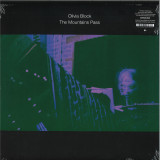
Black Truffle is pleased to announce The Mountains Pass, a major new work from Olivia Block. A key player in Chicago’s vibrant experimental music scene since the late 1990s, Block has developed an extensive body of work grounded in a personalised, at times emotive approach to the studio-based practices of the musique concrète tradition, while also encompassing improvisation, orchestral pieces, sound installations, and a sustained engagement with the piano. On The Mountains Pass, recorded by Greg Norman at Steve Albini’s Electrical Audio and meticulously edited and constructed over the course of three years, Block pushes into new terrain, introducing her singing voice and drums played by Jon Mueller into flowing assemblages that move seamlessly from ruminative organ tones and fragmented piano airs to explosions of sizzling synths and thundering percussion. Like many of Block’s past works, which include, for example, a sculptural installation using the sound of oyster beds, The Mountains Pass draws inspiration from nature and the animal world. Time spent in a particular mountain range in Northern New Mexico informs this suite of pieces, whose lyrics and titles refer particularly to animal life in the area. Beginning with bursts of white noise and delicate synthetic pops and squeaks, opener ‘Northward’ very soon reveals the special direction the album will take, as lyrical piano lines are joined by Block’s fragile voice, singing words written from the perspective of f2754, an endangered Mexican gray wolf who wandered more than five hundred miles from Arizona to New Mexico in 2022. The fragment of song quickly breaks off, leaving us with a ghostly electronic hum. ‘The Hermit’s Peak’ follows, one of two epic pieces at the album’s core. Beginning with chiming, almost harpsichord-like tones, it moves through episodes of spacious, ruminative piano, Jon Mueller’s sparkling cymbals, stuttering cut-up piano sounds, and a climax of keening organ and trumpet tones (performed by Thomas Madeja). Continuing the exploration of vintage keyboard and synth tones heard on Block’s Innocent Passage in the Territorial Sea (Room 40, 2021), the music sometimes suggests the great outer-limits works of 70s Italian prog figures like Franco Battiato or Arturo Stalteri in the languorous drift of synthesizer, organ, and piano tones and the meticulous yet organic flow of its construction. ‘Violet-Green’ opens the second side with another epic journey, its lyrical content concerning ‘a mysterious bird die-off and a forest fire’. Block’s crystalline voice and rich piano chords at times call up the restrained chamber songs of Janet Sherbourne, but fragmented and threaded through passages of woozy pitch-bent keyboards, hypnotic distant thuds, tinkling bells, and searing distorted synth tones. On ‘f2754’, the freedom of the roaming wolf surges through dense layers of rapid keyboard attacks and long organ tones over a propulsive drum performance straight out of Animal Magnetism-era Arnold Dreyblatt. This distinctive sound world is then reencountered in a darkened mirror image in the uneasy, metallic shimmer of the closing ‘Ungulates’, named in reference to a heard of elk roaming through the mountains. Like Battiato’s Clic or Gastr del Sol’s Upgrade & Afterlife, The Mountains Pass inhabits the underexplored terrain where the beauty of song coexists with a radical formal openness, illuminating the deep musicality and warmth that have been present in Block’s work all along.
Ever since their auspicious beginnings, more than a decade ago, Laughing Bastards have giddily delighted in impurity. Initially a reeds-guitar-bass trio modeled after the classic Jimmy Giuffre 3, the band has remained truthful to its original spirit. Saxophone player Michel Mast and guitarist Jan-Sebastiaan Degeyter have remained its core, but the band went through several permutations, first welcoming Eline Duerinck (cello) and Marcos Della Rocha (for Unanimal in 2019) and solidifying its present-day line-up with bassist Cyrille Obermüller.
Bastards. It's kind of a rude word to throw around carelessly, but there has always been that element of being irregular, being too stubborn to comply with what is expected, that has set them apart. This is nowhere more evident than in the material contributed by Degeyter, who wrote more than half of the album's compositions. A talented illustrator and designer (he created a few of their striking album covers) as well as a versatile guitarist, Degeyter always manages to add a strong visual component to his material. In combination with his knack for pulling exotic influences into the band's overall sound, it leads to a playful, cinematic eccentricity.
"Tigraman" and "Black Spoon" are examples of this. Both are infused with an Ethiopian-tinged sound, but while the first one develops the catchy throbbing of a trance-like soul/rock tune, the second exudes the lush cadence of Golden Age Ethio jazz, the kind that gets under your skin with those sensual, irrepressible rhythms. They are a nice match with the increasing drama of the Slavic-tinged "Red Lemon", the slow, dreamy flow of the Jamaican dance hall-inspired "Sand", a strong feature for Duerinck, and "Dosi", that shows Obermüller's knack for propulsive melody.
The synesthete in Degeyter gets free reign in "Calliope", chamber jazz in which sweeping sax and cello are kept grounded by guitar, bass and drums. Mast's odd meter-song "Fetish" is another showcase for the band's effortless dancing and some gorgeous tenor schmooze. Della Rocha's "Turquoise" starts off in brooding, contemplative way and keeps simmering on a low, glowing fire. To top it off, there are a few covers that remind you of the band's origins. A new take on Giuffre's rootsy "The Train and the River" stresses their loose flexibility with an Americana style somewhat reminiscent of Charlie Haden, while Carla Bley's evergreen "Vashkar" gets a carefully constructed makeover to close out the album with grace.
On their latest album, Laughing Bastards prove they are a quintessential Belgian band - soaking up sounds and influences from all over the place while maintaining a tight unity - with an international appeal. Combining jazz and chamber music with ideas from pop music and multi-colored strains does not only give their music an iridescent edge, but also keeps the interplay fresh and inspired, something to return to while waiting to see them live on stage.
- Postcards From Heaven
- Coming For Christine
- One Man
- The Arms Of Morpheus
- Morning Glory
- She Knows It
- Still Recall
- What Am I Looking For
- First Kiss Of Love
- I Want It All
- The Long Road
- Postcards From Heaven
- Coming For Christine
- One Man
- The Arms Of Morpheus
- Morning Glory
- She Knows It
- Still Recall
- What Am I Looking For
- First Kiss Of Love
- I Want It All
- The Long Road
In 1993 American guitarist / producer Charles Normal was traveling in Europe with Guns n' Roses. When they arrived in Norway, Charles arranged a meeting with the Oslo based underground band Sister Rain. There was an immediate kinship between the two bands, and the next day members of both bands went into a recording studio and wrote a song together. The result was the genesis of The Merchants of Venus, a band formed by Normal, Guns' keyboardist Dizzy Reed, and Sister Rain members Aslak Nygren and Rune Annaniassen. Normal stayed in Oslo while Guns n' Roses continued on their tour, and eventually negotiated a contract with Warner Music for a full album release. Recording commenced in Hollywood, California in late '93, but was brought to a sudden halt when the Northridge Earthquake destroyed their studio and master tapes on January 17, 1994. Warner flew the band back to the safer environs of Oslo where the entire album was rebuilt from the ground up. The result became Wish Across the Land. Now 30 years later, the album is remastered and released on vinyl for the first time, and features unreleased bonus material.
‘Landmass’ Turtle’s first artist album since 2017’s ‘Human’. To be released on 24 March 2023, it is his third official album having also released the acclaimed ‘Who Knows’ EP in 2013.
‘Landmass’ is a beautiful body of work that flows naturally as one piece of music and is inspired by the sparse surroundings of Jon’s studio in Argyll, Scotland, an area he moved to to try and escape the noise of the city and a move that has directly impacted on his creative process.
Jon Cooper… “Since I started producing music I have never gone into a track with any preconceived ideas, I let the music develop in its own way so my direct surroundings have always played a huge part in how it sounds and the hustle of the city was something I felt I needed to get away from. This was a cathartic experience in making it - it's a real outpouring of love for the Scottish countryside and the beauty I’m lucky enough to live in and see every day!”
Jon’s musical journey is one of experimentation and passion. A regular of the electronic scene in Glasgow in the late 90's/early 2000’s, he started to experiment with DJing and music production more for his mates entertainment than with any aspiration of a career as one of the most understated electronic artists Scotland has produced.
Once again, Six Organs of Admittance showcases the intricate tangle of fingers on the fretboard and flash of lens flare slicing the air, as the future arcs 360 degrees around to become a part of the past as well. Oscillations in this glass bowl ripple outward eternally, but are rooted on the ground where all the creatures are moving and communing; humans too. An intimate cosmic expression, file under: rural-industrial psych, ecosystem goth.
- Saylo
- Can't Take The Hood To Heaven
- Attack Of The Dreadlocks (Feat. Rae Khalil)
- Lynn's Lullaby (Interlude)
- Brownskin Cinnamon
- Grey Seas (Feat. Reaper Mook)
- Cowboy Leather (Feat.pink Siifu)
- Overseas Sam
- Bullets From A Butterfly
- Pearly Gates Playlist
- Things Grandma Told Me
- Bygones
- Lagonda (Feat. Goya Gumbani)
- The Card Players (Feat. Jayellz)
- When I Met Rose
Forest Green Vinyl[27,31 €]
Seafood Sam is a futuristic artifact. If that description might sound confusing at first, it matches the eclectic dualities found in true originals. With his effortless cool and timeless style, the North Long Beach native defies convention and exact comparison. He's a virtuosic rapper, a stop-you-in-your tracks singer, and a symphonic producer. Welcome to the lavish life of a laid-back transcontinental man of mystery, rolling in old school Cadillacs, eating caviar with a blade in his pocket, and making plays in vintage Pelle Pelle gear. A blaxploitation icon for the Instagram age, blessed with the bars of a `90s legend and 23rd century swagger. Seafood Sam is a true hero of modernity. On his full-length album debut for up-and-coming label drink sum wtr (Kari Faux, Deem Spencer, Aja Monet) debut, Standing on Giant Shoulders, Sam splits the difference between Snoop Dogg and D' Angelo, Curren$y and David Ruffin. The songs reveal a forward-thinking sensibility rooted in ancestral soul. He creates spiritual hymns for the streets that tap into universal ideals and irrepressible groove. In an era plagued by short-term thinking, his ambitions reveal a crate-digging depth of music history and a meticulous ear for detail. The giant shoulders in the album's title refer to James Brown, Bobby Brown, and Miles Davis - the holy trinity who inspired Sam's process. From the Godfather of Soul, Sam took a perfectionist's rigor and focus. The example of Bobby Brown lent an unshakeable confidence and self-belief. While the constant artistic left turns of the trumpeter that birthed Ccool offered an aspirational archetype. The story starts in the glory days of Long Beach hip-hop. As a young child, the G-Funk era soundtracked rides in Sam's father's car. Some of his earliest memories are trying to memorize Snoop's verse on "Nuthin' But a "G" Thang." Beyond gangsta rap, the LBC has historically doubled as a capital of lowrider soul and carwash oldies. At any intersection, you could hear Dogg Food or Brenton Wood, Warren G or Barbara Lynn. This too was absorbed via osmosis. It also just so happened that the art of performance was always in Sam's blood. So at family functions, he and his sister supplied entertainment by singing karaoke renditions of The Isley Brothers. While his Harlem Shake remains a thing of local lore. Long Beach is a culturally diverse mecca of skate parks and gang life, street fashion and tricky dance moves. This is the place that raised Sam on a diet of Wu-Tang and Nelly Furtado, Lil Bow Wow and Allen Iverson. He was the middle ground between his two older brothers: one who gangbanged, the other who graduated with a master's degree from UC-Santa Barbara. But it wasn't until the end of high school that Sam started to take rap seriously. Alongside long-time collaborators like Huey Briss and Reaper Mook, Sam's name began to make waves on the northside of the city, but he was partially distracted by a modeling career that paid the bills and took him all to way to walk in Paris' fashion week. The first turning point arrived with 2018's "Ramsey," a self-produced, slick-talk anthem with over 10,000,000 streams across all platforms. With each subsequent release, Sam showcased his peerless consistency, building buzz both online and in the city streets. Spin hailed his "smooth and unhurried cadences and understated lyricism_ that sounds like nothing else in Long Beach." Clash raved about Sam's "evolution as an artist, cruising through nostalgic production with slick, witty rhymes." The culmination arrives with Standing on Giant Shoulders. It's the evidence of a master, a young sensei in the model of Quincy Jones. All rhymes, singing, production, and arrangements were handled by Sam - with an assist from his close Long Beach kinsman Tom Kendall from the group Soular System. It's hard-edged and lyrical enough for disciples of Larry June and Roc Marciano, but orchestral and melodic enough for fans of Anderson .Paak and H.E.R.
Reissue of early Japanese house outing by Junichi Soma, Shuji Wada and Katsuya Sayo. Comes with insert with liner notes.
All musical movements require a spark to set them alight; in the case of Japanese house music, that spark was provided by the forward-thinking resident DJs of The Bank in Roppongi, Tokyo. In 1989, to celebrate the ground-breaking club’s first birthday, the venue released a 12” EP featuring first-time productions from three of its DJs, Junichi Soma, Shuji Wada and Strong Katsuya AKS Katsuya Sayo.
Widely considered to be one of the first ever EP of house music produced in Japan, 1st Unit was never officially released. Instead, 500 of the 1000 copies pressed were given away at The Bank’s first birthday party, with the rest initially being sold not in local record stores, but rather the venue’s own in-house shop. Three decades on, the 12” is finally set to get its first worldwide release via Rush Hour’s Store JPN Series.
The record has its roots in The Bank’s willingness to give its ever-changing roster of DJs a free hand to play what they liked – at the time a rarity in Tokyo nightclubs, whose musical offerings usually revolved around strictly defined playlists. At The Bank in 1989, it was not only common to hear European body music and the kind of post-disco New York productions associated with Larry Levan’s sets at the Paradise Garage, but also acid house – something not offered at the time by other clubs in the city.
This cutting-edge blend of sounds, combined with the venue’s unique decor (it was modeled on the inside of a London bank, complete with a cashier’s window to take entrance fees), made The Bank a go-to spot for young party-goers, celebrities and forward-thinking Japanese musicians (Ryuichi Sakamoto was reportedly a weekly visitor).
When it came to celebrating the club’s birthday by cutting a unique record, it made sense for The Bank’s owners to turn to three of their most exciting resident DJs, who were assisted by Heigo Tani and Jun Ebi. The collective name, 1st Unit, was chosen to reflect the fact that all three resident DJs were debutants with no previous studio experience.
As this reissue proves, the music remains timeless, magical, and authentic to the sound of American house productions of the period – albeit with occasional twists,. Katsuya Sano’s EP opener, ‘I Need Love’, sounds like a twist on Larry Heard productions of the period – all jacking TR-909 drums, undulating analogue bass, dreamy JUNO synthesizer chords and evocative vocal samples.
The influence of Chicago acid house is also evident on Junichi Souma’s ‘Ubnormal Life’, whose unusual title contains what he says was an intentional misspelling. Driven forwards by restless drum machine handclaps, sweet chords and rising and falling melodic motifs, the track is an energetic and uplifting treat.
Perhaps the most influential of the three tracks at the time – within Japan at least – was Shuji Wada’s similarly misspelled ‘Endless Load’. Deeper and more melodic with a more expansive arrangement, the track’s combination of marimba-style lead lines, tribal drum patterns, dreamy chords and jazz-funk influenced bass offered a loose blueprint for the more successful and better-known Japanese deep house tracks that followed.
Hello and welcome to Cult Value, the new album from Manchester-based band Oort Clod, released by Safe Suburban Home in the UK and Repeating Cloud in the US this April. We are very excited to introduce this mercurial and unique collection of songs. The album includes garage stompers such as “#7”, off-kilter indie whining like the title track “Cult Value”, perfect indie pop songs like ‘Car Talk’ and much more. Featuring members of Unpaid Intern, the Hipshakes, Jeuce and the Early Mornings, Oort Clod was originally conceived by songwriter Patrick Glen as a fluid project with shifting members. Over the course of pandemic-era practices above the empty Peer Hat pub (the epicentre of DIY music making in Manchester) the current line-up solidified. In 2021 Oort Clod released a split E.P. with fellow Manchester band Priceless Bodies, pursuing a darker and more experimental sound. The EP received international airplay including BBC6 Music and KSFX. After playing gigs with bands like Porridge Radio, Jeffrey Lewis, and Garden Centre and even more practices above the Peer Hat, Oort Clod have mounted up once more to make Cult Value. The album’s sound is hard to pin down but it is Oort Clod’s most accessible and complete work so far. The band finds common ground in the alternative rock bands of the 1980s and 1990s, the post-punk and indie bands on Flying Nun Records and trashy compilations of post-British Invasion 60s garage gems like Nuggets. All of which come through, warped by Oort Clod’s particular sensibility, on this record made at Delicious Clam studios in Sheffield under the watchful eye of Ed Crisp. You’ll even get their cover of ? &the Mysterians “96 Tears”—rated the best ever cover of the song by the Blanketing Covers podcast, beating Jonathan Richman, Aretha Franklin, the Stranglers and Suicide (this actually exists, honestly). So there you have it the short and sweet lowdown on the new album Cult Value by Oort Clod. We hope you enjoy listening to it as much as they did making it and spread the good word as you see fit. Good luck in your endeavours and take care.
Stomping Grounds is happy to announce George Heerds return to the label with the Acid Garden EP, this time marking his debut under his new solo project - George Heerd. Drawing inspiration from the golden era of UK tech house while adding modern touches, George crafts an EP that reminisces about the early 2000s while embracing a contemporary twist.
DUBFIRE INVITES CHRIS LIEBING, TRUNCATE, CARL CRAIG, DRUMCELL, NADIA STRUIWIGH & MORE TO HIS REMIX ALBUM
EVOLV is a visionary window into the mind of Dubfire, the journey of the ‘hybrid’ being and its evolution. Last year in October, an 11-track debut album was released on his long-standing SCI+TEC imprint. And now, just over a year later, Grammy award winning producer Dubfire returns to that sonic discourse, drafting in an impressive array of names to re-interpret the material, and accompanied by Dubfire's new audio-visual EVOLV show which picked up where the critically acclaimed electronic performance experience HYBRID had left off.
The eclectic package will include such notables as Glaskin, Arjun Vagale, Nadia Struiwigh, Mathimidori (dub alias of Mathias Kaden), Maral, Decka, DEAS, Carl Craig, Truncate, Drumcell, Chris Liebing, and Luke Slater as L.B. Dub Corp who have all given the original music in their own unique style.
With a career spanning over 3 decades, Dubfire has achieved global success as an artist with relentless drive, talent, and intuition. Pioneering commercial notoriety came initially as one half of the Grammy Award-winning (2001) duo Deep Dish, before embarking on a truly groundbreaking solo career in 2007. A career filled with timeless tracks include his early works, ‘RibCage’ (2007), ‘Emissions' (2007), ‘Roadkill’ (2007) and the highly acclaimed ‘Grindhouse’ (2009) remix from Radio Slave which led to a host of other notable projects over the years.
Collaborative work highlights include projects with Miss Kitten, Luke Slater, Flug, and Oliver Huntemann, as well as co-producing two songs on Underworld’s Barking album. A true artist, he has always been heavily invested in exploring performance technology, unveiled to wide praise with his HYBRID live show. A two-year world tour commenced in 2015 and was followed by his retrospective album, A Decade Of Dubfire (2017), a celebration of his immense output during the first 10 years of solo artist stardom. EVOLV is Dubfire’s debut solo artist album.
This album was the first from a man who quite simply changed the face of music. Originally released on Chess Records in Chicago in 1957, it underlined the value that the company placed on him. They realised that they had a star on their hands, and they were most certainly right. Hard to credit, but this ground breaking album was never issued at the time in England, though Chuck's second album 'One Dozen Berrys', was. Both albums are extremely collectable on both sides of the Atlantic and together command high prices for they represent the very best of his early material, the songs that he is best remembered for. This is certainly one to love andtreasure.
tapetopia 006 In 1983, some more subdued sounds began to waft from the GDR punk underground into the second half of the ’80s. At five to the end of time, it was perpetually striking midnight and the occasional punk band would mix a little laudanum into their potential for aggression. Portents in this vein preceded a dark wave whose foamy crest would break on fog walls of dry ice. Especially in Leipzig and East Berlin, a chain-rattling zeitgeist produced bands that drew from a dark well. Many of these bands arose from the still hot or already cold ashes of punk. The two founding fathers of Neuntage Alt, René Glofke and Taymur Streng (nicknamed “Strangler”), knew each other from the East Berlin punk scene. The third man aboard, Mike Sauer, played drums in the early 1980s for Sendeschluß, a punk band that, lost in thought somewhere in the no-man’s land between punk and post-punk, faded away in 1984. Punk was no longer the order of the day, but it was a form of expression among many and easy to combine. Glofke and Streng found common ground in experimental set-ups with such otherworldly names as Medusa Brahma or Die zeitweilige Erscheinung.
From this far-flung point of departure, a short tunnel led straight into the black light of Neuntage Alt, the coldest star in the low-hanging sky above East Berlin. Neuntage Alt appeared at the end of 1986, during the last blackout phase of the GDR, on the threshold between the underground and the so-called “other bands” – a scene that used the non-socio-critical approach of German Wutwave (“anger wave”) in order to be allowed to perform publicly. In the context of this scene, Neuntage Alt did not belong to the inner circle. Moreover, the band’s subcultural base was initially in Mahlsdorf, on the south-eastern edge of East Berlin. This was where the DIY sound studio of amplitude apostle and great modulator Taymur Streng was situated. Strangler held the position of house electrician and keyboard god in various projects. One of them had the bland alias Mahlsdorfer Wohnstuben Orchester, behind which the avant-garde court chapel of the bungalow studio was concealed. There Taymur also conspired with the East Berlin underground band Ornament & Verbrechen (tapetopia #001). Ronald Lippok of Ornament & Verbrechen remembers how once, at the opening of a joint session, he and his brother Robert attended Taymur’s engaging slide show of his collection of test patterns. Afterwards, they created a piece with the psychedelic title “Das sentimentale UfO”, which sheds an iridescent light on the bizarre atmosphere in the studio. Taymur’s obsession with technology was legendary. The home studio was also his living space; a circuit, a machine park of screwed and soldered equipment, a single keyboard orgy. His own creations were also based on circuit diagrams found in the radio amateur magazine “Funkamateur”. Its somewhat clueless subtitle “Praktische Elektronik Für Alle” (Practical Electronics for All)
- A1: Operation Overlord
- A2: Rage
- A3: Kill Ratio
- A4: March Of The Stroggs
- A5: The Underworld
- B1: Quad Machine
- B2: Big Gun
- B3: Descent Into Cerberon
- B4: Climb (Composed By Jer Sypult)
- C1: Gravity Well
- C2: Counter Attack
- C3: Stealth Frag
- C4: Crashed Up Again
- C5: Adrenaline Junkie
- D1: Etf
- D2: Complex 13
- D3: Pressure Point I
- D4: Pressure Point Ii
- D5: Ground Zero
Laced Records, id Software and Bethesda proudly present the music of seminal 1997 first-person shooter Quake II on vinyl.
19 specially remastered tracks by Sonic Mayhem and Jer Sypult will be pressed onto heavyweight discs. Sleeve artwork is by id Software, with Jason Williford providing character illustrations.
The bulk of the soundtrack was created by Sascha Dikiciyan aka Sonic Mayhem — his first game project among an enviably long credits list. Having caught id Software’s ear with an unofficial Quake album (alongside production partner Dave Valencia), Sonic Mayhem and id Software went on to develop Quake II’s trademark aggro-industrial metal sound, inspired in part by Metallica. The killer riffs, repeated for effect, urge players forward through the Strogg city and beyond, a trail of gibs in their wake. Jer Sypult’s “Climb” complements the selection with its driving industrial groove.
Second in a series of reissues from Pierre Jaubert’s Parisound studio archive on Strut Record IS Lafayette Afro Rock Band's elusive funk/Afro original album, 'Soul Makossa' originally released in 1973. Transparent blue colored LP
In 1971, an undocumented seven-member Afro-American ensemble known as the Bobby Boyd Congress made a transformative journey from the United States to France. Bandleader Frank Abel recollects, "We sensed that the soul and funk market was saturated back home, and our original plan was a brief 6-month stint in Paris. Surprisingly, we ended up staying for a decade." Upon lead singer Bobby Boyd's return to the U.S., the group rebranded as Ice and crossed paths with independent producer Pierre Jaubert, a seasoned studio professional with credits on groundbreaking recordings alongside Charles Mingus, John Lee Hooker, and Archie Shepp, among others.
Drawing inspiration from Motown's work ethic, Jaubert initiated regular rehearsals with Ice. He recalled, "I didn't want to mimic Berry, but with seven talented musicians collaborating daily, something unique emerged." The band, residing in Paris and immersed in the African-dominated Barbesse district, began infusing African elements into their music frequently performing with Paris-dwelling Camaroonian and legendary composer Manu Dibango.
Rechristening themselves Lafayette Afro Rock Band, the group's musical direction shifted towards predominantly instrumental compositions, characterized by a weightier, more intricate Afro-funk sound. Their debut recording under this new moniker, 'Soul Makossa,' made a powerful impact with a dynamic rendition of Dibango's classic, coupled with the intense break of 'Hihache' and the contagious 'Nicky.' Initially released by Musidisc in France and later in the U.S. via Editions Makossa, the album omitted the title track due to publishing clearance issues.
Despite modest sales upon its initial release, the album's enduring influence became evident as hip-hop culture surged in the '80s, establishing it as a primary source for samples and riffs. The iconic 'Hihache' break found fame in Biz Markie's 'Nobody Beats The Biz,' and tracks from the album were lifted by LL Cool J, The Beatnuts, Kruder & Dorfmeister, and numerous others.
Black vinyl[22,27 €]
First in a series of reissues from Pierre Jaubert’s Parisound studio archive on Strut Record IS Lafayette Afro Rock Band's elusive funk/Afro original album, 'Malik,' originally released in 1974. Transparent blue colored LP
In 1971, an undocumented seven-member Afro-American ensemble known as the Bobby Boyd Congress made a transformative journey from the United States to France. Bandleader Frank Abel recollects, "We sensed that the soul and funk market was saturated back home, and our original plan was a brief 6-month stint in Paris. Surprisingly, we ended up staying for a decade." Upon lead singer Bobby Boyd's return to the U.S., the group rebranded as Ice and crossed paths with independent producer Pierre Jaubert, a seasoned studio professional with credits on groundbreaking recordings alongside Charles Mingus, John Lee Hooker, and Archie Shepp, among others.
Drawing inspiration from Motown's work ethic, Jaubert initiated regular rehearsals with Ice. He recalled, "I didn't want to mimic Berry, but with seven talented musicians collaborating daily, something unique emerged." The band, residing in Paris and immersed in the African-dominated Barbesse district, began infusing African elements into their music frequently performing with Paris-dwelling Camaroonian and legendary composer Manu Dibango.
Under the new moniker Lafayette Afro Rock Band, the group's music transitioned to predominantly instrumental compositions, featuring a denser Afro-funk sound. Their inaugural recording with the new name, 'Soul Makossa,' included a compelling rendition of Dibango's classic and the impactful break in 'Hihache.' The subsequent release a year later, 'Malik,' refined their sound with the percussive Afro party jam 'Conga,' the atmospheric vocoder and piano-led piece 'Djungi,' and the robust funk of 'Darkest Light.' Despite a limited impact upon its initial release, 'Malik' found appreciation as hip-hop culture flourished in the '80s, establishing itself as a rich source of samples and riffs. 'Conga' was featured in the 'Ultimate Breaks And Beats' series, while the opening horn line from 'Darkest Light' became a pivotal hip-hop motif, employed by Jay-Z, Public Enemy, Wreckx 'N' Effect, and many others
Miles Davis' boundlessly influential On the Corner was so far ahead of its time upon release in 1972, the jazz cognoscenti rejected its groundbreaking concoction as middling in nature. Yet time has a way of righting wrongs and shifting views by adding needed context and perspective to visionary ideas, music, and approaches — the likes of which fill Davis' boldest and most controversial — undertaking. Designed to bring the focus back on the groove and bottom-end frequencies, the funk-loaded On the Corner revolutionized jazz. It also set new standards for record production, presaging remixing and electronica by more than a decade. And the work has never sounded more thrilling thanks to this very special pressing.
Sourced from the original master tapes and pressed on MoFi SuperVinyl, Mobile Fidelity's numbered-edition 180g 33RPM SuperVinyl LP of On the Corner exposes the internal mechanisms, free-associated playing, and then-unmatched studio techniques in vivid fashion. The low end, crucial to every composition here, is both heard and felt, with locked-in bass lines and low-range percussion conveyed as taut, solid, and visceral passages. You can discern the multiple layers of rhythm Davis employed on complex tracks such as "Black Satin," as On the Corner stands as his first effort to use overdubbing and multiple tape machines. As a pioneer, Davis likely would’ve loved MoFi’s groundbreaking SuperVinyl profile that features the lowest-possible analogue noise floor as well as pristine transparency, dead-quiet surfaces, and superb groove definition.
New degrees of spaciousness and airiness — equally important to the musique concrete arrangements — give the impression Davis and Co.'s creations float in space. Instruments are portrayed in three-dimensional manners, rhythmic loops retain tonal purity, and horn solos skitter across an extra-wide soundstage that takes listeners into Columbia's Studio E. Mobile Fidelity's SuperVinyl LP captures Teo Macero's innovative production — and the trumpeter's cutting-edge aural collages — in definitive fashion.
Heavily inspired by Sly and the Family Stone, On the Corner portrays street vibes and remains Davis' Blackest-sounding record. The conscious attempt to connect with youthful audiences tapped into rock and funk is evident not only on the colorful cartoon cover art depicting hot-pants and zoot-suit revelers, but in the music's emphasis of recurring drum and bass grooves. Distinct from Davis' earlier fusion experiments, the record's long-misunderstood set dials back improvisation in favor of beats, loops, and atmospherics that generate trance-like effects. While Davis utilizes his band for core duties — Chick Corea and Herbie Hancock prominently figure — he also relies on an all-star cast of side-men for concentrated soloing and additional support.
With rhythm providing the basic foundation, other notes fall into place, with their positioning steered by Macero and Davis' editing-room techniques. Looking to the manipulation-based work of Karlheinze Stockhausen and teaming with Stockhausen disciple Paul Buckmaster, Davis re-imagines what grooves constituted and could accomplish throughout On the Corner. The shapes of the songs become completely transformed as they progress. Faint melodies, spacey chords, chunky riffs, wah-wah fills, and repeated motifs bounce in and out of a sonic funhouse that wouldn't be out of place at a Harlem block party.
Exotic, intrepid, and filled with Davis' "jungle sound," On the Corner remains daringly hip more than four decades later.
DRIFT. Is British-Italian producer Nathalia Bruno, releasing music under the guise since 2015. Her 'techno-pop' EPs 'Black Devotion' and 'Genderland' released with Avant! records were the first explorations in finding the sound of DRIFT. but as the name suggests, is in constant flux. In 2020 'Symbiosis' the debut record was released on Hamburg's Tapete Records, an assemblage of lo-fi futurism reflecting on the breakdown of communication and interaction Nathalia felt was increasing around her. Channelling classic industrial electronica, haunting melodies, using samples, field recordings and curated sound as a 'canvas to rewire the vision of the future as colourful and old, ceremonial and rust beaten. A shrine like ornament and clinical machine language plaited together.'. In 2022 DRIFT. Self released 'The nature of things', a 30 minute piece entitled 'CTRL/ Algorhythm of love' written and produced for designer Mona Cordes' 'Cellusion' show for London fashion week. "_a journey into the dark heart of the dancefloor. The glimmering bass-heavy trance of its opening section could be classic Underworld, while its ambient center is genuinely Eno-esque. And then it all kicks off again as a Berlin school style banger. It's terrific" says Electronic Sound Magazine. This year, 2023 will give birth to DRIFT.'s second album released with God Unknown records '11 points In Time' written for and based on disappeared artist Rosi Crucci, compiled of sounds/field recordings recorded onto cassettes found in the attic of the home she last lived at, interpreted into song using some of her poetry and journal entries of what was happening in the world around her, attempting to finally give Rosi a voice. PRESS Louder Than War album review 'Symbiosis' (2020) "...blends passion with precision to create a tapestry of machine-made sounds that are bursting with ideas and filled with emotion. "We live in times where nothing means nothing," she sings on Visualise The Invisible. "And nothing is true." Never more so than now...Over the course of its ten tracks, Symbiosis draws from pretty much every strand of electronic music throughout its 50-year history" Shindig Magazine review 'Symbiosis' 2020 "A brilliant, fascinating album" Post Punk Magazine review 'Symbiosis' 2020 "is an exercise in disjointed meditation, a trip through the doors of the spirit lodge and inner workings of the human psyche." Pop Matters Review 'Symbiosis' 2020 "...One track in particular, "In Orbit", speaks to this new disturbing unknown we are creating. A distorted, three-note death knell drives it as repeated knocking seems to come from a dank tunnel. If it sounds bleak, it's likely also to be therapeutic and finds common ground with the entrancing industrial thud of Throbbing Gristle or Third Eye Foundation..."
The norwegian group Boastein was founded by Are Storstein and Øistein Boassen in 1970. Boastein's debut album "Jeg har min egen luke" became something of a holy grail within alternative music in Norway. This is DIY rock from the anarchist basement with a sound and lyrics that was quite groundbraking when it came out. It was also one of the very first independent releases in Norway. The album can be described as free and progressive underground rock filled with dark humor, political sting and a good amount of weirdness. The record was first released in 399 copies in 1977.
"For his fourth full length album, we see the proficiency of instrumentalist and composer Prins Emanuel in full bloom as he turns head deep into the techniques he established on the preceding outing of Diagonal Musik. Here, he revisit what he refers to as a diagonal approach in composing; i.e. starting at one point and then moving to the farthest point in the process, as a way for him to connect the dots somewhere in the middle, or - like I previously described it for the liner notes of that album - “something akin to drawing only shadows and then finishing with the contours”.
And in the tradition of great sequels, this is a much larger and intricate production. While relying on the guitar as a formative backbone to many songs, the layering of brass and woodwinds houses these compositions in bold and sharply lit structures. Mallets and percussion adds an air of momentum but also grounds these tracks in earthy hues.
Thawed and gracious, Diagonal Musik II in essence creates a space that bridges the various paths of Prins Emanuel’s musical universe. At once post-minimalist and avant garde in nature while also peeking through the door at both IDM and folk music, the lingering sensation is that of a well balanced palate that doesn’t break under the presence of repetition. Enveloped in a fourth world approach to jazz and incorporating the more contemplative side of post punk or art pop, there is a story hidden in here that gives cause to the appropriation of these influences.
The inherent warmth of certain instruments play their part in this story. Emanuel often builds on the notion of ‘organic music’ but broadens the definition via subtle electronic enhancements that sit naturally alongside their acoustic counterparts. Take for instance the voice emulator sequence that opens “Kadens Tre” and is dashed on by guitar slides and flute drills to roll further down a hill of staccato percussion. A few tracks in, the lines are so blurred it becomes a natural state until the harsh and eerie sample loops of closing track “Östan Vind” finally breaks the spell. ”


