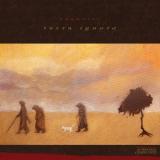
Gap Mangione's monumentally influential Diana In The Autumn Wind. AKA BEWITH200LP. And, without question, Be With's White Whale.
They said it could never be done. And with good reason.
We've spent the past 12 years trying to license this legendary 1968 recording from Gap and, after much work, it's finally here. Remarkably, this is the first ever vinyl reissue of Gap Mangione's Diana In The Autumn Wind, produced with the full and extensive participation of Gap. An exceedingly rare album, it's been coveted by funk, soul, jazz and hip-hop sample fiends for decades.
It's unarguably *the* most sought after album for J Dilla / Madlib sample collectors. It has also been brilliantly sampled by A Tribe Called Quest, Large Professor, Ghostface Killah, Kendrick Lamar and Talib Kweli.
But this record is so much more than a sample-spotters curio. It's solid gold throughout. Bursting with killer funky-jazz grooves and tracks adorned with warm electric piano, the release is notable for featuring some extremely significant players at the very outset of their careers; Tony Levin, at 21, whose superb playing on both acoustic and electric bass was the harmonic mainstay of the trio and Steve Gadd, at 23, one of the greatest drummers of his generation.
With acceptable copies of this holy grail changing hands for $400, to call this reissue "much-needed" underplays just how vital it is. Gap's story is told in his words alongside rare photos across a sumptuously designed 2-page insert and, to augment this deluxe edition further, its all wrapped up in a beautiful, no-expense-spared luxury tip-on sleeve, as per the original hens-teeth release. And, while we're talking packaging, just take a look at that cover - a work of art in and of itself.
The tracks are short but complex, with that extraordinary rhythm section backing the beautiful piano, organ and electric piano work of Gap. It's like the best ever library funk breaks record you never heard - but all your favourite golden age rap producers were all over it, long ago. It's a stunning blend of the vibrant, driving music of the Gap Mangione Trio coupled with the sensitive composition and superb orchestration of Gap's legendary brother, Chuck Mangione, who helmed an amalgam of seemingly disparate elements – rock, big band jazz, solo improvisation and "classical" music - into a spectacularly cohesive whole that has aged wonderfully well. As Gap himself notes in the liners, "with this group I was able to explore and add new and exciting elements from rock, Brazilian and then-current pop music."
Opener "Boy With Toys" triumphantly swaggers out the gate, all big band horns, flutes and dextrous organ work. The synthesis of everything going on is nothing short of stunning. When one wise YouTube commentator called this tune "old school superhero music", Gap agreed. Rap luminaries did, too, amongst them Talib Kweli, who rapped over DJ Scratch's chopped up intro for "Shock Body" on his Quality album back in 2002.
You've barely recovered from that incredibly affecting opener when you get hit over the head with the exquisite title-track. And now you see how two of the greatest beats of all time emerged from one single track produced nearly 50 years earlier. Unforgettably utilised by Dilla for Slum Village's heartbreakingly good "Fall In Love" and then Madlib for his "Official" beat for Dilla to rap over, on the Jaylib record. Regardless of the records it went on to spawn, this is just a staggering tune in its own right. Be beguiled by the flutes and the flutter tonguing, the counter-melody from the trombones, the soprano sax solo. All of it. Simply beautiful.
The questing organ and horn workout "Long Hair Soulful" deserves a lot more attention, overshadowed somewhat by the opening two monsters but no less fantastic. It swings, it grooves and Gadd and Levin truly cook. Up next, Gap's wonderfully percussive, mellifluously piano-heavy cover of "Yesterday" by some fellas called The Beatles. It's a subtly arresting gem. "The XIth Commandment" is damn fine, with thick, gorgeous electric piano and snappy drum work underpinning chaotic soundtracky horns. To close out the side, "St. Thomas" showcases the "fourth" member of the Gap Mangione Trio, conga drummer Dhui Mandingo. Having performed with the Trio since 1965, Dhui‘s African-based and jazz-latin-influenced style amazed listeners and its way to hear why.
Opening the B-Side, standard "You're Nobody Till Somebody Loves You" breezes along in the late-night jazz club fashion before things get super deep with the outstanding and - up to now - un-sampled "Pond With Swans". It's simply heavenly, and how its moody, melancholic intro has yet to be pilfered is anybody's guess. It oscillates between gentle, sombre movements and bombastic grooves, equally hypnotic and joyous. The rendition of "You Are My Sunshine" is yet another showcase for Gap's virtuoso playing and Gadd's mastery of the pocket. Indeed Gadd's drumming on "Free Again" is nothing short of neck-SNAPPING! Ghostface took it for not one but two "Iron's Theme" tracks across his seminal Supreme Clientele. It's got that Galt MacDermot "Coffee Cold" feel. Suuuuuper cool. The frantic "Dream On Little Dreamer" hurtles along and must've surely had the whole room absolutely swinging from the chandeliers back in Rochester in the late 60s. The album closes with the magnificent Graduate Medley, featuring memorable renditions of "Scarborough Fair", "The Sounds of Silence" and "Mrs. Robinson". The warm electric piano lines of the former were sampled by The Ummah (Dilla again!) for Tribe's "Pad & Pen" from their reappraised final album, The Love Movement, as well as by Large Professor on his much-loved "The LP (For My People)".
Under the watchful eye - and extremely attentive ears - of Gap Mangione himself, the audio for Diana In The Autumn Wind has been carefully remastered by Be With regular Simon Francis, with a few much needed tweaks here and there, according to the artist's wishes. At the prestigious Abbey Road Studios, Cicely Balston's expert skills have made sure nothing is lost in the cut whilst the records have been pressed to the highest possible standard at the always stellar Record Industry in Holland. The artwork restoration has taken place here at Be With HQ and has that drop-dead gorgeous cover artwork popping like new. Buy on sight!
Buscar:under the influence
- 1: Urn Burial
- 2: The Redness In The West
- 3: The Third Migration
- 4: They Came Like Swallows
- 5: The Living Theater
- 6: The Oceans Are Crying
- 7: Insight
Black Vinyl[30,67 €]
They Came Like Swallows is the first album-length collaboration between Thurston Moore and Kramer (now officially Bonner Kramer), two giants of alternative/ experimental music. The accomplishments and influence of these two artists in the world of independent music cannot be overstated and the result of their artistic union is a startlingly cohesive statement that burns through landscapes of primitive outsider rock, avant-garde composition, progressive ambient and further locales boldly and beautifully unnamable. “Kramer and I reconnected in Miami, Florida, a few years back, many many years after each of us had departed NYC on separate life adventures. It was only a matter of time before Kramer and I started making plans to record together and with his irrepressible due diligence he quickly set up a mobile recording contraption in the pad I was decamped in, the Florida sunshine flowing through the palm leaves, lithe lizards skittering across the windowsills, and we just went for it.
Kramer had the idea to cover a Joy Division tune, a left turn from the improvisations we had been tracking, though wholly in keeping with both our sensibilities of light and dark unifying in transcendent songwriting, both of us devotees of 'the song' as well as 'the freedom.’ What transpired is They Came Like Swallows, a session we immediately felt should exist as a prayer to the war-torn souls of the families of Palestine continually decimated by the brutality of genocide. We agreed beyond words to offer our music as a sonic activism and as a beneficent energy. This album is our duo exchange for human dignity, it is our soul music for any semblance of a peaceful planet.” ~ Thurston Moore “For the first time in our nearly 45 years of friendship, we had identical time windows open to make a record together,” recounts Kramer. After all this time not a moment is wasted as the duo immediately taps into the heightened core of improvisational tension across these seven offerings. Volcanic opener “Urn Burial” notches a similar historic union (John Cale and Terry Riley) to meet the circumstances of the moment, with swirling mists of organ and pounding toms over guitar that thickens the atmosphere with jagged, grimy dissonance.
Solemn strings open the second track, “The Redness In The West,” with Kramer’s cello and viola in dueling bow beneath the high tension drive and sustain of Thurston’s electric guitar, tapping out a Morse code of tension that mounts endlessly into a fog of inevitable war by the end. Moore and Kramer’s sense of experimentalism is in free and full grandeur throughout They Came Like Swallows, though the duo keep a strong and constant sideways eye on melody, composition and architecture, to the ends that any strict lines between song and improvisation are blurred beyond qualification.
As if to punctuate this point, Swallows closes with a nightwork cover of Joy Division’s “Insight,” a doleful coda that breathes out with a solemn inner grace under Thurston’s instantly stylistically recognizable guitar melodies as they weave into he and Kramer’s unison voices. As the lone vocal piece and only traditional ‘song’ form on the album, “Insight” is unique to this set and as a closing statement draws connective lines back to the kind of dynamic, electrified melodicism that wove deep, melancholy patterns into the untamed fire of Sonic Youth’s Sister and Daydream Nation. In the album’s final moments, the two voices repeat the lyric “I’m not afraid anymore” as mantra, underscoring the heavy, unsettled themes and methods that preceded it. Kramer describes the creative process of They Came Like Swallows: “I had composed and recorded a few pieces at my home studio over the course of a couple weeks. Thurston was spending the winter in South Florida, so I flew down and spent a few days recording his guitar parts in his home there. Watching him spontaneously compose his parts was pretty astonishing, to say the least. Once we'd finished working on those pieces, we began improvising and following wherever the music pointed us, and another few pieces were born. We got straight to it, without anything driving us other than the joy of finally working together.
My personal goal was to remain present and catch as many surprises as I could from Thurston's guitar work, and there were plenty during those few days. We had a fucking blast.” Thurston’s contributions here will be readily familiar to any acolytes of his other works, the through-line between his inspired playing, cradled in Kramer’s meticulous, solid arrangements. “If I had to make this record again, I'd do it all exactly the same way,” Kramer says. “It’s like jazz, you don't think about it. You just do it. It was miraculous, and you don't fuck with a miracle.”
They Came Like Swallows is the first album-length collaboration between Thurston Moore and Kramer (now officially Bonner Kramer), two giants of alternative/ experimental music. The accomplishments and influence of these two artists in the world of independent music cannot be overstated and the result of their artistic union is a startlingly cohesive statement that burns through landscapes of primitive outsider rock, avant-garde composition, progressive ambient and further locales boldly and beautifully unnamable. “Kramer and I reconnected in Miami, Florida, a few years back, many many years after each of us had departed NYC on separate life adventures. It was only a matter of time before Kramer and I started making plans to record together and with his irrepressible due diligence he quickly set up a mobile recording contraption in the pad I was decamped in, the Florida sunshine flowing through the palm leaves, lithe lizards skittering across the windowsills, and we just went for it.
Kramer had the idea to cover a Joy Division tune, a left turn from the improvisations we had been tracking, though wholly in keeping with both our sensibilities of light and dark unifying in transcendent songwriting, both of us devotees of 'the song' as well as 'the freedom.’ What transpired is They Came Like Swallows, a session we immediately felt should exist as a prayer to the war-torn souls of the families of Palestine continually decimated by the brutality of genocide. We agreed beyond words to offer our music as a sonic activism and as a beneficent energy. This album is our duo exchange for human dignity, it is our soul music for any semblance of a peaceful planet.” ~ Thurston Moore “For the first time in our nearly 45 years of friendship, we had identical time windows open to make a record together,” recounts Kramer. After all this time not a moment is wasted as the duo immediately taps into the heightened core of improvisational tension across these seven offerings. Volcanic opener “Urn Burial” notches a similar historic union (John Cale and Terry Riley) to meet the circumstances of the moment, with swirling mists of organ and pounding toms over guitar that thickens the atmosphere with jagged, grimy dissonance.
Solemn strings open the second track, “The Redness In The West,” with Kramer’s cello and viola in dueling bow beneath the high tension drive and sustain of Thurston’s electric guitar, tapping out a Morse code of tension that mounts endlessly into a fog of inevitable war by the end. Moore and Kramer’s sense of experimentalism is in free and full grandeur throughout They Came Like Swallows, though the duo keep a strong and constant sideways eye on melody, composition and architecture, to the ends that any strict lines between song and improvisation are blurred beyond qualification.
As if to punctuate this point, Swallows closes with a nightwork cover of Joy Division’s “Insight,” a doleful coda that breathes out with a solemn inner grace under Thurston’s instantly stylistically recognizable guitar melodies as they weave into he and Kramer’s unison voices. As the lone vocal piece and only traditional ‘song’ form on the album, “Insight” is unique to this set and as a closing statement draws connective lines back to the kind of dynamic, electrified melodicism that wove deep, melancholy patterns into the untamed fire of Sonic Youth’s Sister and Daydream Nation. In the album’s final moments, the two voices repeat the lyric “I’m not afraid anymore” as mantra, underscoring the heavy, unsettled themes and methods that preceded it. Kramer describes the creative process of They Came Like Swallows: “I had composed and recorded a few pieces at my home studio over the course of a couple weeks. Thurston was spending the winter in South Florida, so I flew down and spent a few days recording his guitar parts in his home there. Watching him spontaneously compose his parts was pretty astonishing, to say the least. Once we'd finished working on those pieces, we began improvising and following wherever the music pointed us, and another few pieces were born. We got straight to it, without anything driving us other than the joy of finally working together.
My personal goal was to remain present and catch as many surprises as I could from Thurston's guitar work, and there were plenty during those few days. We had a fucking blast.” Thurston’s contributions here will be readily familiar to any acolytes of his other works, the through-line between his inspired playing, cradled in Kramer’s meticulous, solid arrangements. “If I had to make this record again, I'd do it all exactly the same way,” Kramer says. “It’s like jazz, you don't think about it. You just do it. It was miraculous, and you don't fuck with a miracle.”
Presenting the remarkable second album by the Chinese musician, DJ and creative chef Yu Su. An evolution from her 2021 debut LP and two track single released last year, Foundry radiates a fresh, fully-fledged and far-reaching sound.
The nucleus of Foundry began with material penned for live performance at MUTEK in 2025, alongside a move to London which brought about new shifts in perspective. Searching for a style that was true both to her roots and progression as an artist, Yu ventured in a post-orientalist direction, and came upon a language of ‘in-between music’.
Mixing the eclectic influence of her DJ sets with genre-defying collaborators and newfound taste for minimal and ambient techno, a dusky, dub-inflected character began to emerge. This broad palette reiterates Yu’s prior form in making connections across disciplines, which have not only consisted of music, but also multisensory endeavors which incorporate taste and smell.
With cover art featuring hammered metalwork by the artist Brendan Ratzlaff, for Yu the foundry represents a nexus of creation; a shared workspace where collaborators combined their materials and skills. With the input of Seefeel, Dip In The Pool, and Memotone, together their broad spectrum of aural elements underwent a chemical transformation, and were forged into something new.
Well-designed, ergonomic yet occasionally amorphous, the effect is that of meticulous freedom, both controlled and free flowing. Using immersive sound design, Yu creates inspiring spaces to revel in, which are warm yet steeped in shadow, with flashes of silvery light.
Featuring Yu in with duet Miyako Koda of cult Japanese art pop duo Dip In The Pool, the record kicks off in swirling but poised fashion with ‘A Jewel’. The dusky, reverberant underwater minimalism of ‘Sunless’ follows, which features British composer Memotone, and was influenced by Chris Marker’s 1983 film Sans Soleil.
The dubby, sunkissed affirmation on ‘Cul De Sac’ leads to the thumping acid stomp of ‘Foundry’, and onto the hazy glow of ‘One Place After Another’, featuring lauded soundheads Seefeel, where Yu’s voice is joined by Sarah Peacock’s, alongside Mark Clifford’s seductively gauzy fuzz guitar.
Venturing into more ominous territory is the liminal ambient dub of ‘Wanli’, followed by the rich textured flutter of ‘Os Cionn’, which translates from Gaelic as ‘above’. The album ends with the reflective, processional pulse of ‘Ripe Fruits’, which was inspired by Frederic Leighton’s 1892 oil painting The Garden of the Hesperides.
The LP’s visual was art directed by Lucas Dupuy, whose approach perfectly encapsulates Yu’s spatial sonics: “We both think in layers”, she comments. “Not linear layering, but horizontal layering, like weaving metallic threads, where a bigger picture of a grainy sphere will occur at the end.”
Mastered by Miles
Art by Lucas Dupuy & Brendan Ratzlaff
- A1: Organ Yn Dy Geg
- A2: Fix Idris
- A3: Crys Ti
- A4: Blerwytirhwng?
- B1: Pam V?
- B2: God! Sho Me Magic
- B3: Sali Mali
- B4: Focus Pocus/ Debiel
The vinyl version of this release compiles the tracks from their two earliest EPs originally released by Ankst whilst the 22 track CD features further unreleased & unheard bonus tracks from this early era.
Super Furry Animals also recently announced additional festival dates to follow their sold out Supacabra Tour dates including stops in Llangollen, Bristol, York, Glasgow and London (their first since late 2016. See full 2026 dates below.
Holding the world record for the longest ever EP title the first EP -Llanfairpwllgwyngyllgogerychwyndrobwllantysiliogogogochynygofod (In Space), was released in 1995, followed in the same year by Moog Droog, with both EPs making up the eight-song track listing of the vinyl version of Precreation Percolation.
Later that year, with a record deal on the table and future classics such as God! Show Me Magic and Hangin’ With Howard Marks already making up the SFA’s set list, the band’s path following “two years of chaos” (including a legendary 1993 debut ‘gig’ at Bangor University’s Banana Lounge, lasting all of five minutes due to technical and chemical misadventure) was set. In the album’s liner notes, singer, Gruff Rhys writes: “It would have been the best gig ever, had we not daisy chained so many synthesizers together, that it resulted in a terminal systems failure.”
By summer they’d joined Oasis, Primal Scream and The Jesus and Mary Chain in the Creation Records family, leading to a huge London signing party that saw members of the band famously thrown out of.
The term of intriguing genre experimentation, spanning long-form electro, blissed out instrumentals and expansive prog-influenced rock, heard across much of Precreation Percolation was subsequently refined and channeled into their thrilling, 1996 debut album, Fuzzy Logic and their untamed live performances.
While consciously and frequently referring to the unheard, untold and unforeseen as a naturally nostalgia-resistant band, Super Furry Animals look ahead to reconvening with fans to celebrate their shared history as the Supercabra Tour gets underway.
(the vinyl comes with a copy of the CD in a slim card wallet)
Oliver Koletzki Releases Twelfth Studio Album 12
The beautifully crafted twelve-track opus is out now via Stil vor Talent.
Berlin-based artist, DJ, producer and Stil vor Talent co-founder Oliver Koletzki today releases his twelfth studio album, “12” — a deeply considered, emotionally rich long-player that marks the next chapter in a career spanning more than two decades at the forefront of electronic music. The album is out now on Stil vor Talent in digital formats and as a 2x12” gatefold vinyl.
Serving as both a milestone and a manifesto, “12” distils Koletzki’s evolving sound into its most refined form yet. Across twelve tracks, the album explores atmosphere, restraint and emotional clarity, balancing slow-burning club energy with introspective storytelling. It’s a record shaped by experience, patience and an unwavering attention to detail; qualities that have long defined Koletzki’s output as both an artist and a label curator.
The journey begins with album opener “Petrichor”, a quietly powerful introduction built around wistful organ chords that gradually unfold into a warm, hypnotic groove. Acting as the album’s emotional threshold, the track sets the tone for what follows: music that rewards immersion, thrives on nuance and unfolds with deliberate pace. From there, 12 moves seamlessly between introspective moments and more direct dance floor statements, always guided by Koletzki’s unmistakable melodic sensibility.
Singles released in the lead-up to the album offered carefully sequenced glimpses into its breadth. December’s “Trip With Me”, a collaboration with Frida Darko, brought playful energy and sharp modern club dynamics, while January’s “I Don’t Need Your Love” delivered a confident, emotionally charged statement rooted in Koletzki’s introspective yet club-ready DNA. February’s “Petrichor” revealed the album’s cinematic depth, followed by “Schnapsidee” in March — a track that leans into groove, character and subtle eccentricity.
Elsewhere on the album, tracks like “Logic”, “It’s All Gone” and “Tick Tick” showcase Koletzki’s ability to create tension and release through finely balanced arrangements, while “La Hora de Mosquitos” and “Calle Sur” hint at the global influences that continue to shape his sound. The closing stretch — from “About the Fox and a Tiger” through “What Remains” to “Voice or Noise” (with Frida Darko) — brings the album to a reflective, yet characteristically playful conclusion.
As a whole, “12” feels purposeful and cohesive, guided by a clear narrative arc rather than fleeting trends. It reflects the maturity of an artist with nothing left to prove, yet still driven by curiosity and a desire to evolve. Much like Koletzki’s previous albums, “12” stands as a self-contained world, inviting listeners to step inside and stay.
Released on Stil vor Talent, the album also reinforces the label’s ethos of artistic freedom, quality and long-term vision. Now over 20 years strong, the imprint continues to shape contemporary electronic music while remaining deeply rooted in underground culture: a balance Koletzki himself has embodied throughout his career.
No-one could have predicted the success of The 88, the first album from Minuit
(minwee), or how warmly it would be received. Equally no-one could have predicted that the band would return to the live arena a decade after their final fling or consider pressing their debut on vinyl for the first time.
Formed in Nelson, NZ in 1997, the trio cut their teeth playing regularly around the South Island’s underground club and festival scene. After a hiatus overseas, they began recording The 88 in 2002 in Ryan’s home studio. The lyrics were influenced by their travels around Europe and Ruth's time working for the UN in Kosovo and East Timor; the beats by The Prodigy, Portishead and the UK’s trip-hop and breakbeat scenes.
Signed to indie label Tardus, their tunes were eagerly picked up by the bNet student radio network, which then ballooned into high rotates on TV station C4, helped along by Alyx Duncan’s stunning video for Except You. A busy summer playing live every weekend for three months and seemingly universal praise from the music press led to them swiftly gaining gold sales.
Now 22 years later, with live shows looming, the trio have decided to revisit their debut, completing two previously unfinished tracks from the period to add a bonus to this inaugural vinyl release.
- A1: Bluebell
- A2: Japan Greatly (Feat. Reek0 And S.i)
- A3: Turn Me On
- A4: Dinero (Feat. P Wavey)
- A5: Down 4 (Feat. Osquello)
- A6: Strike A Pose (Feat. Camille Munn)
- B1: Longest Road (Feat. Pk)
- B2: Komodo
- B3: Somebody Jump (Feat. Reek0)
- B4: Wonderluv
- B5: Tek Control (Feat. Liam Bailey)
- B6: Guiding Star (Feat. Reek0)
East London producer and DJ IZCO announces his debut solo studio album ‘POWERSCROFT’, set for release on 1st May via Brownswood Recordings. The album’s first single, ‘Strike a Pose’ featuring the vocals of Camille Munn offers an early glimpse into the project. To celebrate the release, he will go on a run of UK dates from March to May, culminating at London’s Jazz Cafe.
Named after the road where he grew up, ‘POWERSCROFT’ marks a defining new chapter for an artist who has spent the past decade shaping the sound of UK dance music. Drawing from jungle, broken beat, grime, garage, soul and dub, the album channels the energy of the dancefloor while remaining deeply rooted in memory, instinct and identity. It captures what it feels like to be inside IZCO’s world, where thoughts, memories and influences collide.
Hailing from East London, IZCO is a producer and DJ spearheading a new generation that is bringing soul back to the dancefloor. Shaped by the rich musical heritage of his hometown, he has developed a sound that feels familiar yet forward-looking, diverse yet distinctly his own. That sound has taken him across the globe, from New York to Tokyo, alongside standout sets at We Out Here, Outlook and Glastonbury.
IZCO began his journey making grime beats for local rappers including Capo Lee, Novelist and Reek0, before becoming a key figure in the UK’s evolving garage and dance music landscape. In 2018, he launched his long-running Rinse FM show and released his debut EP Tek 5, earning early underground acclaim. His production credits include PinkPantheress’ breakout track ‘Passion’, created alongside Jkarri, as well as collaborations and remixes for artists such as Katy B and Greentea Peng.
Beyond his solo work, IZCO is a label head, promoter and co-founder of the Brighter Days Family, a collective built on community, craft and cooperation. With ‘POWERSCROFT’, he steps fully into the spotlight, presenting his most personal and fully realised body of work to date. “This album is about channeling my true musical personality and character,” he says. “I’m marking a new chapter by paying tribute to my foundations.”
- A1: What's Goin On In Brazil
- A2: The Mysterious Man
- A3: Flying Carousel
- A4: Double Trouble Theme (Bossanova)
- A5: A Guy With It's Pretty Girls
- A6: Double Trouble Theme (Jazz)
- B1: Hear It Tonight
- B2: Double Trouble Theme (Samba)
- B3: Mississipi Dream
- B4: Quica Theme
- B5: The Mysterious Man
- B6: Flute Rhythm
- B7: Double Trouble Theme
This expanded edition presents the soundtrack with previously unreleased material not included on the original vinyl release, offering a more complete overview of Micalizzi’s work. The package is further enhanced by an 8-page full-color booklet featuring original artwork, extensive liner notes on the film, direction, and score by journalist Fabio Babini, as well as a personal contribution from Franco Micalizzi himself.
Composed by Maestro Franco Micalizzi for the cult 1984 film Non C’è Due Senza Quattro, starring the iconic duo Bud Spencer & Terence Hill in a rare fourfold role, this soundtrack captures the playful spirit and global flair of the film.
Micalizzi delivers a vibrant and rhythm-driven score, infused with warm Latin influences, breezy melodies, and an unmistakable sense of lightness. The result is a richly entertaining listening experience that perfectly mirrors the film’s humor, energy, and escapist charm.
A joyful and sun-soaked addition to any collection, this release stands as both a nostalgic tribute and a testament to Micalizzi’s enduring legacy in Italian cinema soundtracks—best enjoyed, perhaps, with a well-mixed cocktail in hand.
©℗ 1984 – Beat Records Company. Reissued by Holy Basil Records under license by Beat Records.
Repress!
Kirk Degiorgio’s influence on electronic music cannot be overstated, having been responsible for producing some of the most emotive and soulful machine music dating right back to the early 90’s. As a leading figure in UK techno his As One, Elegy and Future/Past output on labels such as B12, R&S and his own Applied Rhythmic Technology (A.R.T.) have rightly become revered classics and helped shape ambient techno and what would come to be known as IDM/Future Electronica. His connection with Cyphon co-founder Jamie Odell also dates back to the turn of the millennium when Kirk invited Jamie to play keys on his 21st Century Soul LP released on Ubiquity and subsequently releasing an EP together under the name Super Aloof on Exceptional.
Coming in hot on Berlin's Toy Tonics label: a new EP by the talented duo ALMA NEGRA!
Founded in 2013, Alma Negra is a Swiss collective centered around the brother duo Dersu and Diego Figueira, whose diverse roots in Switzerland and Cape Verde inform their sound. The project was launched with the ambitious vision to explore the world's diverse rhythms and drive musical innovation by mixing different styles. Their work is anchored in a process of digging and sampling, skillfully blending traditional sounds-from Fela Kuti-influenced Nigerian afrobeat and Angolan Lamento to Caribbean Zouk and the Maloya sound of Réunion-into a contemporary dance music context.
The Figueira brothers' eclectic DJ sets embody this ethos, peppering disco and house with salsa, samba, jazz, and Afro-Caribbean carnival rhythms, all under their guiding motto: "As long as it's Funky."
Since 2014, Alma Negra has made an important contribution to intercultural exchange in their hometown of Basel. Their international presence began in 2015 with their first shows abroad in countries like France, the Netherlands, and Portugal. From 2016 to 2019, their reach expanded significantly, with performances in major hubs like London, Paris, and Berlin, as well as Istanbul, Tel Aviv, and Tunisia. Highlights from this period include sets at the Montreux Jazz Festival, Dimensions Croatia, and Fuse Club in Brussels. Their standing is further cemented by releases on respected labels like Heist Recordings, Sofrito, and Basic Fingers, alongside remixes from an elite group of peers, including Soulphiction, Kuniyuki, and Yuksek.
Parallel to their studio and DJ work, the project expanded into the Alma Negra Live Band, formed with jazz musicians from Basel. While the band is currently on hiatus, this collaboration made live instrumentation increasingly central to their productions, creating a dynamic they feel is essential for any dancefloor. The live band has performed in cities like London and Hamburg and has led to collaborations with artists such as French singer Pat Kalla and jazz trumpeter Bodo Maier.
2026 Repress
The Architects of Shadows explores the volatile undercurrents shaping today's polarized world, where extremes on all sides vie for influence and control. Against a backdrop of rising nationalism, digital echo chambers, and deepening distrust, each track captures a stage in the gradual radicalization of society. Through dark, immersive soundscapes, the album delves into how unseen architects exploit fear, amplify division, and pull the strings of public sentiment, leading society toward ideological extremes. The Architects of Shadows invites listeners to confront the forces behind the fracturing of Western societies in an era marked by profound political and cultural polarization.
Geoglyph is the new duo project by Alohn and Khey Mysterio, a convergence of two deeply singular practices into a single subterranean signal. Their debut album arrives as the eighth reference on Organic Signs, not as a collection of tracks but as a carved artifact: six inscriptions pressed into vinyl, mapping a sonic territory where time, rhythm and texture are no longer linear, but layered like geological memory.
Through Geoglyph, Alohn and Khey Mysterio convey a message from below, or beyond. A pulse engraved from forgotten times in the basement of reality, reactivated by abyssal basses, vibrating layers and fractured textures. Exhumed from the subterranean strata where psychedelic dub, mineral techno and fractal dubstep fuse into raw energy, their music becomes a point of contact: every beat, every silence, every oscillation acting as a coordinate toward another perception. What unfolds is not simply sound design, but an invocation, rhythms as sigils, timbre as gnosis, signals that seem to arrive already charged with intention.
Across the album, Alohn’s guitar notes fall like cascades through the mix, dissolving at times into controlled feedback and crystallizing into melodic fragments that hover between tension and release. These organic gestures are interwoven with Khey Mysterio’s dense low-end architectures and rhythmic frameworks, creating a constantly shifting terrain: from weightless transmissions and ritualistic voices to moments of overwhelming propulsion where the music suddenly breaks open with tectonic force. The record moves fluidly between meditative suspension and explosive motion, never settling into a single state for long.
A strong undercurrent of what has come to be known as “druidstep” runs through the album, a term coined within the 95 Open Tabs universe to describe a form of dubstep untethered from genre convention, rooted instead in bass as ritual, in groove as invocation. Here it meets dub-techno pulse, psychedelic echoes and high-velocity 4×4 pressure, drawing subtle influence from underground bass cultures without ever becoming referential. The result is a body of work that feels both ancient and forward-leaning, cyclical rather than linear: a living geoglyph that reveals different meanings depending on how (and where) it is read.
As the final movement accelerates into its closing phase, the album releases its energy outward, with frequencies stretched toward their limits, leaving behind the trace of a completed ceremony. In this sense, Geoglyph’s debut stands as a defining moment within the Organic Signs continuum: a record that unfolds rather than explains, offering an experience to be entered, absorbed, and carried. With this release, the label continues to explore new sonic spaces, evolving and expanding while giving deeper meaning to its own essence. A message from beneath the surface, waiting for those willing to tune in.
Más de este género
Steve O’Sullivan returns under his Bluetrain alias, channeling the essence of dub into groovy,
endlessly cycling patterns shaped by submerged chords and tectonic low-end pressure. The influence of Mike Ink’s monolithic Studio One era is unmistakable, where reduction becomes
propulsion and each delay-trail etches its own pulse into the haze. Limited colourec vinyl.
Steve O’Sullivan returns under his Bluetrain alias, channeling the essence of dub into groovy,
endlessly cycling patterns shaped by submerged chords and tectonic low-end pressure. The influence of Mike Ink’s monolithic Studio One era is unmistakable, where reduction becomes
propulsion and each delay-trail etches its own pulse into the haze. Limited colourec vinyl.
Osaka's renowned record shop and club, Compufunk Records, proudly announces the relaunch of its label. A.I. Soul released in 2010, featured remixes by Mark Flash (Underground Resistance) and DJ 3000 (Motech). Now the updated Version 2.0 by DJ Compufunk includes four original tracks, pressed on vinyl. The release represents an evolution of DJ Compufunk's signature sound, blending jungle and Detroit techno influences with deep electronic grooves and emotional sequencing. Compufunk Records continues to push forward its vision of evolving Osaka's electronic dance music scene and connecting global audiences through the spirit of sound.
"Late '80s and early '90s electronic music has had a steering influence on the Altered Circuits catalog curation, so we are delighted to present an EP by one of the pioneers of that era: Olivier Abbeloos. His 40 years of experience as a producer and DJ translate into a Discogs profile so extensive it reveals his real name alone can be (mis)spelled in 20 different ways. "1993-1994: Rare & Unreleased 1" features five tracks produced under three different aliases, all sourced from the artist's DAT tapes vault, dating back to the prolific two-year period referenced in its title. ALT024 opens with two "Conga Squad" tracks. "Combo" is a high-energy cut driven by a savory staccato chord progression, and "Substitute" works a similar, yet more restrained dynamic, that is, until a boisterous vocal sample enters. The quirky bass lines and moody synth work of "Under The Ground", the first "Holographic Hallucination" inclusion, concludes the A-side. Its twilight atmospherics fit right in amid the B-movie horror electro trending on contemporary dancefloors. The flip opens with "Psychosky", which caters slightly more to a slow-burner vibe and sets the stage for extensive piano work. "Dj Flavour", composed under the "Warp Factor One" alias, closes the EP. Here, the Latin-tinged percussion that runs as a subtle thread throughout the release takes the spotlight, while funky basslines and manipulated vocals add layers of detail. It is the only track on the EP that was already released in 1994, appearing as part of a - by the standards of that era - obscure and very limited 300-copy pressing. Those times sure have changed, but the music still sounds as fresh as ever."
Extinction Burst! is the new invocation in album-form by Guttersnipe, Leeds’ premier and pre-eminent XFCER (XFCER: Xenofeminist crisis-energy rock)* duo. Slamming at full speed to multi-dimensional oblivion, Extinction Burst! is the most full, hidefinition lurid dream-mare yet spewed out by Uroceras Gigas & Tipula Confusa. Engineered and mixed by Ross Halden at Hohm Studio in Bradford and mastered by Rashad Becker, Extinction Burst! follows 2018’s My Mother The Vent, which garnered universal critical adoration. Nevertheless, this long-awaited follow up is more extreme: it is wildness beyond reason, splitting new tears in the reality gauze, ultimate hallucination through sound ecstasy. 2026’s Guttersnipe are evolved, mutated by 8 years of touring together and with the labyrinthine network of groups both Guttersnipe members are involved with - Tristwch Y Fenywod, Nape Neck, Petronn Sphene, Yexxen to name a few. On Extinction Burst!, as with previous material, the duo are heavily augmented with technology. Tipula Confusa's drum kit triggers chasm-causing synth pulses with thumping low end attack.. Strafing from all over the stereo field the constant shatter of the cymbals and toms feel like Sunny Murray or Rashied Ali in full flight during a John Coltrane session in 1967. Uroceras Gigas’s guitar + synth storm is by-now similarly an instantly recognised tool kit in underground music. Switching from screeching guitar atonality to intricate riffs from the black metal/Voivod hinterland to ultra-distorted synth meltdown, it’s an utterly overwhelming, essential and vital pouring-out of the full emotional spectrum. Both artists vocalise, ecstatic and primal, drawn out or yelped in pain or pleasure or panic. Alive On Tuesday begins with some of the only space on Extinction Burst! Digital crackles and tight-delays blow out into a fullthrottled death-dive into sweet opaqueness, offset by the duo’s vocals. There’s a popular believe that Guttersnipe is chaos, but over 9 mins here the group are clinical in their control of the simulated entropy. Mincing while the Maelstrom Churns’s guitar is modulated into jagged atonal atonement, duetting with the virtuoso drum patterns before it thuds into gear at quadruple the speed. Threads Of Radical Unaliveness veers close to the extreme Metal influences with blast beats and guttural vocalisations until the track exhausts itself into unaliveness. Keep Honking summons a demonic digital panic, with the duo reincarnating in real time as haunted versions of themselves, almost translating the lurid, ultra vivid, simultaneous hell+heaven of being alive in this dimension. Primordial Invagination harnesses No Wave’s dissension of normality before the structured collapse of Skra¨ckblandad Fo¨rtjusning, in which Tipula Confusa’s accelerating drums simulate a bouncing barrel of brimstone descending into a primordial gunky ooze, a respite in the middle before the record splutters to a stuttering finale, both members’ vocals out there in the neon realness, alive with crisis energy. There is nothing on this cursed earth like Guttersnipe. For over 10 years they have whirled in a wiggliness both woebegone and wonderstruck on a mission of radical mutant exaltation using rock music weaponry loaded with a queer hysterical ammunition to rupture the fabric of the known Rock universe and unleash a tendril-soft hallucinatory violence; thrumming with the bracing vividness of insect bodies, crazed with alien synaesthetic emotions, harnessing jagged excoriating illogic as a face meltingly snazzy affront to redundant macho mediocrity with the hope to break minds, squeeze hearts, explode pelvises and maybe even reset the parameters of reality. Addendum: xenofeminist : proposing and creating a world defined not only by sexual/gender equality, queer empowerment and the toppling of the racist heteropatriarchal hegemony and it’s tyranny of phallogocentric signifiers, but a philosophy of radical queerness that explodes the basic notion of embodied existence itself beyond even the human, where we see bacteria, invertebrates, reptiles, marine life, animalia in general, inanimate objects, quantum phenomena and as yet inarticulated bodies and minds as social and political equals that may inspire and inform our concepts of self, feeling and meaning as we labour to build a collective reality that doesn’t completely suck!! crisis energy : a term borrowed from the weird fiction author china mieville to describe a type of extreme concentration of power which emerges when a system or organism is pushed to it’s absolute limit; the point of rupture, chaos, entropic overload, just before it all breaks apart. rock : Rock ’n’ Roll, rock music, the devil’s music, sex, guitar, drums, voice, rhythm, riffs!
- A1: Intuition, Nimbus (5:34)
- A2: Alignment, Orbits (7:46)
- B1: Impatience, Magma (11:15)
- B2: Persistence, Buds (8:27)
Caterina Barbieri & Bendik Giske's At Source resounds music as wellspring, that which is essential and unknowable, and yet utterly primary. It finds two acclaimed composer-musicians building a world together in self-contained collaboration between analogue synthesis and an extended approach to the saxophone that conjures its own universe of sound. It is at once intimate and cosmic, drawing on the challenges and possibilities of their artistic exchange, tearing down technique to access all the expansive possibilities of their sonic meeting point.
At Source is a document of the world of sound to be conjured when two artists strive for something together, discovering the expansions and limitations of performance by bodies and machines. It is not an exercise in assimilation, but in productive exchange and creative confrontation. It does not draw on outside energies or influences, but grapples with what there is to find in their respective playing. "It also reflects how natural the collaboration was," says Barbieri, "a meeting at the source which was spontaneous, graceful and natural".
Barbieri and Giske first met and were enthralled by one another's performances at Kunsthaus Glarus in 2019, a meeting that spurred conversations on the power of transitions as a compositional force. Giske later contributed a rework of Fantas for Fantas Variations (Editions Mego, 2021), an ambitious undertaking to rescore Barbieri’s work for his saxophone and voice, a challenge Giske had started undertaking two years prior as an ongoing practice of transcription. “The request came as a proof of aligned ideas”, says Giske.
Their new collaborative project then started during an artistic residency in Milan’s ICA in 2021, by invitation of swiss artist and curator Jan Vorisek, as the world was emerging from lockdown. This meeting, and the preceding closure of sites for cultural exchange, made their work together 'feel like springtime' says Barbieri. Giske, who was on the brink of releasing his sophomore album, Cracks, then joined Barbieri's light-years tour, which functioned as an inaugural incarnation of her newborn label and platform through a series of multi-artist curated shows with appearances of Lyra Pramuk, Nkisi, MFO, among other artists.
Through the tour, they continued to develop material live, and this release, laid down in the studio, is true to that ever-evolving process of creation, where live feedback stays essential to the vitality of this collaborative effort. The tracks are each named with two evocative words that contain the two poles of their sound. Theirs is both abstract and cosmic, in the synth as machine undermined by Barbieri's naturalistic playing, and in Giske's continuous exploration of the symbiosis between his instrument, voice, and body. These binaries, of body and machine, posed various challenges, notably in how the stepped patterns Barbieri uses were near-impossible to translate for Giske's body to perform, and other times where mathematical resolutions were needed to sync their playing. Explains Giske: "It forced me to go to the core of what I am and what I have to offer”. Barbieri says that it "explores the liminality between the machine and the human, and the vulnerability in this process".
At Source is testament to two divergent practices finding a whole cosmos in which to convene; music is crystalised and made utterly enveloping through the focused and critical work of two musicians working at their peak. The versions here are, temptingly, "just one of many versions" of this abundant source material Giske explains. Like the best collaborations, At Source is more than the sum of its parts – bringing more to the feast than the simple combination of two musicians, promising versions upon versions of the exquisite material captured here.
- A1: Unfelt Loss
- A2: So Easy To Love
- A3: Teardrops (Classic Hell On Earth)
- A4: Whiplash
- A5: Morning Doctor
- B1: Cherry Blossoms In Leschi
- B2: Southward Equinox
- B3: Velvet Rope
- B4: Backward Path
- B5: Don’t Remind Me
- C1: Season Of The Wish C2. The Last Resort
- C3: Two Rivers
- C4: A Little Game
- C5: Lilies Of The Field
- D1: Lifelong Sellout
- D2: Out Of My Mind
- D3: Golden Era
- D4: Sweet Routine
For two decades, Gun Outfit has been a band defined less by genre than by continuity, patience, and a commitment to making music that reflects their lived experience.
Formed in Olympia, Washington in 2006 but long since rooted in Los Angeles, the group has evolved from a raw duo into a quietly formidable five-piece, their sound growing from scrappy post-punk beginnings into something spacious yet intimate, and always underpinned by an experimental edge.
On Process & Reality, Gun Outfit return with their most ambitious and immersive work to-date, a sprawling 80-minute double album shaped by time, environment, and philosophy. Recorded over the course of a single month in the late summer of 2020, on an 80-acre ranch in Pine Flat, California, while a massive forest fire burned less than ten miles away, the seeds of these songs were stark and strange.
Its title, Process & Reality, draws from the central work of philosopher Alfred North Whitehead, whose philosophy places intuition, experience, creativity, and relationality at the center of existence.
The band’s current lineup reflects both longevity and openness. Sharp and Keith remain the band’s primary architects, joined by longtime drummer Daniel Swire, multi-instrumentalist Henry Barnes, and bassist Kayla Cohen. Additional collaborators include Chris Cohen, Warren Lee, and Danny Sasaki all of whom add further depth, leaving subtle fingerprints across the album.
Musically, the album expands the band’s palette without abandoning its core sensibility. Dulcimer, autoharp, sitar, melodica, keyboards, homemade electronics, and a wide range of acoustic and electric textures appear throughout. The sound is mellow yet expansive, songs move between fragility and hefty atmospheric passages.
Influences surface obliquely rather than overtly. Elements of reggae and dub inform the production’s spatial sensibility. Echoes of long-form European jam bands coexist with sharp post-punk. British folk traditions, American country, and classic West Coast songwriting drift in and out of focus; the band is never afraid to lead or follow.