A home, a house, has countless frequencies. Each room, each corner feels different. Swings differently. And as you grow older, you realize which corner is yours. But yeah, it takes time…
It certainly marks the end of an era when the house one called home as a kid no longer exists. This home, it was the starting point of so many journeys. Of one big, ongoing journey. And so it feels good, soothing, reassuring to at least return to a spot nearby – to that (proverbial) hill from where you can see it. Feel the vibe that made you.
Andi Haberl’s debut solo album as Sun is sort of dedicated to that house. It’s a journey leading to that hill overlooking everything that made him. It’s not about nostalgia, not about actually returning to a specific place. Instead, it’s about finding a personal frequency, an overlapping of sounds and samples, an open space that mirrors and extends whatever frequencies felt right at different points in time.
“To me, the results feel like Gold Panda/Four Tet meets Steve Reich meets Krautrock meets film scores. I just really wanted to create moods that touch me – and ideally others, too.”
Talking about his first solo album, Haberl recalls many stages: early compositions that ended up on Alien Ensemble’s albums, early DIY/home studio/multi-instrumentalist inspirations (Le Millipede), new technologies that came and went, even a set of wildly convincing arrangements (done with Cico Beck’s crucial input) that ultimately became stepping stones for yet another round of DIY takes. “It was a long, recurring process, and the songs went through so many different versions,” he says, talking about phases of growth (“I added more and more equipment over time”) and pruning, “cleaning up my music a bit.” Tending towards instruments that open up space, and slowly falling in love with sampling, he certainly didn’t rush things once it was time for interior design decisions ;)
“During this whole process I got to learn so much about my own taste, how I prefer to listen to the pieces, which musical elements really matter to me… and what my own voice is. For example, that acoustic elements are most important to me: the banjo, piano, drums, my voice, glockenspiel, trumpet, melodica. Anything that opens up some space.”
Every journey begins with a search: “Missing” with its plucked chords opens like a sunrise over pastoral plains, gently leading the way towards the intricate, playful explosion that occurs once a certain amount of energy (“Sun”) hits dirt and other surfaces: things grow, clot and curdle into new shapes, like new buds; layers of sound move forward, drenched in Spring’s new light. Relying on samples to ask for precipitation (“Rain On Me”), robotic “Low” goes from barren to bass-heavy after its midway shift in pace, full of loops plucked from the shade.
Towards the album’s midpoint, things are suddenly reversed: “Cluster” has that backwards pull, you can’t tell what’s what, yet everything is perfectly locked in, as the pace increases once again. And before the title song shimmers with densified cheering (to eventually stand tall like early Lymbyc Systym), “Beside Me” swipes you off your feet with its booming bass drum. The beat returns once again (“Daydream”), full of searching voices underneath, and at “Dawnday,” we can finally catch a melancholy view of the house. Voices hum. It’s the score moment of the album. Everything makes sense now. A happy end of sorts?
“I want to take people on a journey. A personal journey, too, because when my parents split up and sold the house I grew up in, I felt a bit like the ground had fallen out from under my feet. But I have dedicated the album title and the accompanying piece to this house… so I can keep it in good memory.”
“I Can See Our House From Here” has been a long time coming. It’s been a long journey. Homeward-bound. Leading to a place that’s really Haberl’s – his sound. His frequencies.
Known as a long-time member of The Notwist and various other bands/projects (Alien Ensemble, AMEO, jersey, Ditty etc.), Berlin-based drummer/composer Andi Haberl has also worked with My Brightest Diamond, Till Brönner, Owen Pallet, and Kurt Rosenwinkel, to name a few. “I Can See Our House From Here” is his first solo offering.
Search:under the surface
Tangential Music is pleased to present the new album from veteran Spanish DJ and producer, Dj Toner (aka Antonio Herrera). Alongside his co-writer/arranger Daniel Molina and with guests that include the legendary Blue Note Records innovator Erik Truffaz and Grammy winning flautist and saxophonist Jorge Pardo, he has created a 10 track collection of slow-burning instrumentals that straddle the worlds of hip hop, jazz and electronica.
With a personal, precision tooled approach to his craft, the Andalusian has offered up an album of finely modelled downbeat moods.
At first glance, ‘Out Side’ is made up of recognisably superior hip hop instrumentals but if you listen carefully, and with patience, one can hear a craftsman at work. A wooden box is just a box until you look closer. The hidden joints, the perfect lining up of the grain, the years of artisanal graft and laser-focussed attention to detail that go into making something that has nothing present, that doesn’t deserve to be there. This is how Dj Toner operates.
The two singles that preempt the album’s release reveal different sides of his craft. ‘Camina’ struts with tough intentions. Soundtrack-y in an exploitation police drama manner, the get-out-of-my-way drum break and tension-filled chords suggest the bad cop, Erik Truffaz’s piercing lyrical trumpet lines, the good. The Afro-jazz horns led second release ‘Surprise’ is an altogether more playful, sunbaked affair. Sensual and slow-burning, there’s still an edge but it’s too hot to quarrel.
Dj Toner’s minimalist attitude to creation is shared with his co-composer Molina - an individual’s contribution may be cut to the bone, leaving just its aura or tone. The echo of a piano, a single blast of tuneful wind from a flute, a perfectly positioned drum hit.
Since the Wu-Tang Clan’s RZA began applying his beatmaking prowess to movie soundtracks, the hip hop instrumental has been acknowledged as something to listen to, as much as being used as a DJ tool or backing for an MC. Dj Toner’s instrumentals can, therefore, be seen as soundtracks. Soundtracks to his life and craft, vignettes of his environment in both the urban sprawl and the wider and slower spaces of “el campo”.
The sweet-tempered jazz-blues of ‘La Rimosa’ is a gentle welcome to the album. A simple, laid back groove with the most romantic of piano hooks that one could imagine Common dropping rhymes on. You’re kept on your toes with the odd purposeful moment of discordant interruption but the tender heart of the composition is never far away.
‘O’Beat’ hints at John Coltrane with the sparse but full-sounding upright bass before a head-snap break leads into a curious piano groove, a vintage organ swirls into a psychedelic fractal, whilst the bluesy female vocal snippets add the spice, that zing in the Granadan gazpacho.
The flamenco guitar driven ‘Flama’ is an excellent example of intricate sample placement and musicality. Old school (school yard) scratch interludes, sweet piano hooks, a minimalist but knife sharp flute contribution from Jorge Pardo, and the crunchiest of drums taking us for an intriguing walk round the corner.
We’ve mentioned them before but it’s on ‘Sweetband’ that we can feel that Wu-Tang dread hanging off its shoulders. A brooding orchestral number with powerful horns and a cavernous piano hit. The title of the piece is in stark contrast to the dark shadows of the tune.
Erik Truffaz returns in fine form on the super lethargic jazz-funk-hop of ‘The Day’. His instantly identifiable muted trumpet sound paints dazzling colours over the more earthy tones of the filtered down keys as a rubbery upright bass keeps the forward momentum. Dj Toner’s ‘Blessed Are The Weird People’ album, was rated in Jazz Magazine as one of the 20 jazz albums of 2021, so he isn’t some dilettante when it comes to playing with the complex hues of jazz but he does like to strip it to its bare essentials.
‘Fanega’ sees a gorgeous flute contribution from Jorge Pardo. An eerie boom-bap groove with sprinkles of electronic pulses and washed out chords is the canvas on which the award-winning multi-instrumentalist evokes the heat shimmer of the savannah.
‘Esperanza’ translates as ‘hope’ in English and this lovely slow, swinging jazzy groove really does provoke feelings of positivity and belief. Sublime vibraphone and another stunning trumpet offering from Erik Truffaz, take us on a journey of warm days and possibilities, the shuffling drums and sweet chord patterns are nicely finished off by a tranquil horn chorus towards its unhurried end.
‘Under Beat’ ends on a beefy boom-bap groove with a liquid funk bassline, elegant synth strings and old school scratching. Again, there’s that undisputable soundtrack edge, action and motion, the smell of the city.
There you have it, 10 tracks that go beyond the surface, deep into the dedicated craft of Dj Toner. Decades of experience and collaboration purified and refined into beat-heavy emotions, listen closely or crank it up, it’s down to you!
Released only eight months after his exhilarating debut, Bruce Springsteen's The Wild, the Innocent & the E Street Shuffle contains rousing dispatches from the boardwalk, the street, the beach, and the bedroom. It explodes with energy, dares to dream, teases with humour, crackles with tragedy, clings to hope, and overflows with discovery, youthfulness, and personality. It features an unforgettable cast of characters — corner boys, teenage hustlers, doomed lovers, jazz men, junk men, factory girls, fortune tellers, alley cats, pimps, escorts, and more — illuminated by vivid colour, breathtaking detail, and poetic action.
Musically, the heartfelt 1973 record is inhabited by sympathetic vignettes and cinematic arrangements steeped in rock 'n' roll, soul, jazz, and R&B. It finds the New Jersey native looking beyond the parameters of his preceding record and seeking to move on from environments he knows well (and chronicles here) by rushing headlong toward unknown territories, adventures, and people. Underpinned by the singer-guitarist's ambitious poetic enterprise and will to succeed, The Wild, the Innocent & the E Street Shuffle is the album on which Springsteen becomes the Boss.
Mastered on Mobile Fidelity's renowned mastering system, pressed at RTI on MoFi SuperVinyl, and strictly limited to 7,500 numbered copies, Mobile Fidelity's UltraDisc One-Step 180g 33RPM LP set is the definitive-sounding version of Springsteen's sophomore record. Benefitting from SuperVinyl’s nearly non-existent noise floor, superb groove definition, and dead-quiet surfaces, The Wild, the Innocent & the E Street Shuffle plays with a clarity, energy, presence, and openness that complement the expressiveness, dynamics, and scope of the seven restless songs that comprise a work Rolling Stone ranked the 345th Greatest Album of All Time.
Beyond the audiophile sonics that practically place you behind the console at 914 Sound Studios — listen to the separation between the instruments, natural decay of the notes, interplay within the widescreen soundstaging, and nothing-to-lose youthfulness of Springsteen’s voice — this reissue takes seriously this record’s influential merit by presenting it in packaging that underlines its status. Tucked in a beautiful slipcase, the LP is housed in a special foil-stamped jacket with faithful-to-the-original graphics. This reissue is made for listeners who prize sound quality and who want to engage themselves in everything involved with the invigorating set that busted Springsteen loose from the club circuit and landed him on the radio
Determined to liberate anyone within earshot and unafraid to come on strong, The Wild, the Innocent & the E Street Shuffle serves as the debut of the E Street Band — not only heard but seen for the first time by most of the public courtesy of the back-cover photograph. This is where saxophonist Clarence Clemons, organist-accordionist Danny Federici, and pianist David Sancious step out of the shadows — and drummer Vini Lopez and bassist Garry Tallent again stoke a fiery rhythmic engine that helps drive the untamed, reimagined big-band swing of “Kitty’s Back,” breathless R&B thrust of “Rosalita (Come Out Tonight),” and carefree dance steps of the funky “The E Street Shuffle.”
Of course, the main attraction remains a then-24-year-old visionary on the precipice of becoming a sensation and turning a then-bloated rock scene on its head. Recorded over three months while Springsteen and company were busy touring his debut LP, The Wild, the Innocent & the E Street Shuffle reflects the high-octane approach the vocalist embraced onstage and drifts away from the label-dictated acoustic-based frameworks of his debut. The set also witnesses Springsteen deepening his observational skills, with narratives such as the romantically tinged “4th of July, Asbury Park (Sandy)” and redemptive epic “Incident on 57th Street” mirroring changes taking place in the singer’s own life, small towns, and America at large.
A thrilling collision of memories, reflections, and composites — Sandy, Rosalita, and the latter’s parents are all based on actual people Springsteen knew, as is the community depicted in the opening track — the aptly titled The Wild, the Innocent & the E Street Shuffle resonates decades on due to its truths, authenticity, and spirit. Those characteristics — as well as the fact that many of its lengthy songs come on as the equivalent of sweaty, feverish soul revue that won’t stop until you’ve been exhausted — also explain how this now-iconic album triumphed over the reservations of industry “experts” that both demanded Springsteen re-record it and instructed deejays not to play it.
Yet there’d be no stopping a record that saw the past, present, and future, a band whose will would not be denied, and a phenomenon who was born to run. A never-ending invitation to act real cool and stay up all night, The Wild, the Innocent & the E Street Shuffle always feels alright.
Some songs are so ingrained in our consciousness that they are immediately identifiable upon hearing one or two notes. Featuring one of the most indelible riffs ever played, Foghat's air-guitar anthem "Slow Ride" is such a tune. The hit single turned the British band into stars and catapulted 1975's Fool for the City up the charts. And what a ride it is.
We hear a lot of yearning today about the good-old, glory days of rock and roll, the simple kind that just locked into a good beat, turned out a raunchy groove, and simply kicked you in the butt. The no-pretense type meant for kicking back, letting loose, and surrendering to the melody. Bare-bones music that doesn't need image or looks as a crutch.
Well, this is it, friends, classic meat-and-potatoes 70s rock that comes with killer slide-guitar solos, crunchy leads, driving rhythms, and soaring vocals. No need for any further instructions or explanations. The pact between artist and audience is understood. Here, the band trusts that you know what to do and is ready to rock out with anyone in earshot.
Pressed at Fidelity Record Pressing, Mobile Fidelity's remaster of this Foghat gem bring to the surface the band's marble-solid sturdiness and bluesy structures like never before. Bass notes are thicker and richer, the dual guitars bite and snap, and Lonesome Dave Peverett's singing comes across with realistic grit. This LP invites you to hear and feel the energy Foghat brings to the boogie-infused title track, great cover of the Righteous Brothers' "My Babe," and, of course, the everlasting "Slow Ride."
repressed !
10 Year anniversary edition, recut and remastered from the analogue tape masters from Bazza's Alchemy Mastering in London; focusing and enriching every finite detail. This EP features 2 new pieces of sonic meditation residing somewhere between space and time, somewhere in the cosmos.
With the title track, "Beyond Starlit Sky", vaporous atmospheres emerge from the distance, while ghostly apparitions and analog modulations rise to the surface of a truly hypnotizing rhythm, submerging the mind deep into an analog world. With the "Live" version a mixture of themes from "Fading Lights" and "Beyond Starlit Sky" find an engaging syncopation, resting somewhere in the ether. Those who loved Echospace's "The Coldest Season" on Modern Love will have plenty to adore here, timeless in all senses of the word.
NAKID presents the first album in years from Max Loderbauer (Sun Electric) and Tobias Freund’s cult Non Standard Institute. Delving deep into the aether with a double LP - almost an hour and a half in length - featuring ruined, vaporous and engrossing ambient variations on a theme.
Planing axes between iridescent new age ambient, sublime folk and avant-classical, to miasmic drone and plangent shoegaze; ‘A Day or Two’ charts the Non Standard Institute’s first actions in 6 years and serves as a compelling reminder of their intuitive work in abundance. Expanding and contracting their sound across 18 parts, they arc from heaving, oddly-tuned drones to smoggy, surreal soundscapes, bringing a wealth of fine-tuned instincts to the table. With Max Loderbauer’s 35+ years as Berlin ambient pioneer with Sun Electric, jams with Villalobos, and roles in Vladislav Delay Quintet and the Moritz von Oswald Trio, he’s matched by Freund’s 40 years of deep engineering expertise embedded in the experimental industrial and techno trenches.
The melancholy, Satie-laced piano meditations that grounded 2018's '5863' are gone, and the human touch that's been present since their very first collaborations is placed under the microscope, enhanced by their use of the Haken Continuum Fingerboard, a gestural synth that was developed to open up new modes of playing. Loderbauer's experience with the piano helps him make the most of the instrument's touch-sensitive 3D surface, while Freund uses two multi-channel loopers, piping the sounds through his arsenal of pedals.
The 18 tracks are billed as "unplanned atmospheres" that arc from sombre, drone-heavy material to humid, tape-saturated imaginary-island jams such as 'Listening To Cells' and 'Are You One Of Them'. On the latter, the duo work patiently, letting dusted string plucks tumble across each other while warbling pads hum below, bending like flutes. On 'Unlikely Events', anxious didgeridoo-like wails are ruptured by environmental rattles, before ominous voices lead us into a pocket of industrialised resonance. In time, the skies open up and the sounds morph into pastoral song, the drone blurring into hopeful pads almost as lucid and eloquent as AFX's 'SAW Vol. II', with sonorous synths that float over formless strings. Reflective, cinematic arrangements for flute and silvery ambient give way to diffusions of denser, resonant polychromatics and pucker up in outernational, alien ambient impulses recalling Connor Camburn jamming with dirashe folk pipes.
The Space Lady began her odyssey on the streets of San Francisco in the late 70s, playing versions of contemporary pop music an accordion and dressed flamboyantly, transmitting messages of peace and harmony.
Following the theft of her accordion, The Space Lady invested in a then-new Casio keyboard, birthing an otherworldly new dimension to popular song that has captured the imaginations of the underground and its lead exponents ever since, with the likes of John Maus, Erol Alkan and Kutmah being devotees.
Of her early street sets, only one recording was made, self-released originally on cassette and then transferred to a home-made CD. "The Space Lady's Greatest Hits"(LSSN021) features the best of these recordings - mostly covers but with some originals - pressed on vinyl for the first time and features archival photographs and liner notes from The Space Lady herself. 'Greatest Hits' contains The Space Lady's personal favourites; her haunting take on The Electric Prunes' 'I Had Too Much To Dream (Last Night),' a frantic 'Ballroom Blitz' amidst other reconstructed pop music. Included are also 4 originals that easily match for the Pop canon. Following the release of this archive, The Space Lady will be issuing new material and travelling the world to present her message outside the United States for the first time.
In the mid 90s The Space Lady packed away her Casio synth and silenced her distinctive voice, retiring from the streets of San Francisco. Now, more than 30 years after her initial forays on Haight Ashbury, she has surfaced with the first ever official release of her timeless, startling music and, even more remarkably, has re-started her live career. Now in Colorado, The Space Lady continues to spread her message of peace, harmony and love.
VINYL LP: Edition of 500, black Vinyl. Gatfold Poster and printed insert with Download Card.
It's hard to believe it's been four years since the debut release of The Goalie's Anxiety at the Penalty's kick excellent debut "Ways of Hearing." But growth takes time and rather than rush a follow-up album to market to capitalize on their newfound success, the group opted to take their time and focus their efforts at their own pace. It paid off.On their much anticipated sophomore album, ambition is key. The name of the album itself "The Iliad and the Odyssey and the Goalie's Anxiety at the Penalty Kick" spans a glorious 71 characters and is bound to swallow the screen of whatever device that attempts to display the text. The essence of the album is built upon delicate, pleading vocals that sit atop stirring dynamic movements that seem to move between small and vulnerable to full-on symphonies that are bursting with emotion. "The Iliad and the Odyssey and the Goalie's Anxiety at the Penalty Kick" will be released by veteran indie label Count Your Lucky Stars on April 25th, 2024 (an homage to their first released single of the album) during the dead time when the cold end of winter is transitioning to a hopeful and promising spring- an apt metaphor that seems to encompass the heart of the album.
Irresistible Brazilian blues reggae from the heart of the Amazon rainforest. A psychedelic guarana induced trip and ode to the fading indigenous cultures and shifting hegemony in Brazil. This one-off release by Manaus native Natacha Fink was originally written in 1986 as the lead track on NOSSA MUSICA - a compilation celebrating regional music from the Amazon. Emerging out of the dictatorship, Natacha and her fellow artists rejected the aesthetic standards driven by internal colonialism and sought out new ways to express themselves away from the styles of the dominant Rio-São Paulo axis. What surfaced was a melodic blend of genres, with Natacha’s haunting vocals and playful lyrics gliding over an arrangement of guitars and double bass. Vocal backing is led by Torrinho, well known for his layered composition style, whose song ‘Porto de Lenha’ is recognised throughout Amazonas as an unofficial anthem. Hidden within the Amazon, Pirarublue lies in that wonderful space between innocence and honesty. Proudly exploring cultural and ecological spaces through a refreshing, ghostly infectious groove. For fans of Gal Costa, Elis Regina, Chico César, Jorge Ben Jor and Joni Mitchell.
Accompanying Natacha’s beguiling single is the field recording “Unseen Songlines” by artist and academic Nimalan Yoganathan. The composition immerses the listener in the soundscapes of Mamori Lake, a remote village inside the Brazilian Amazon. Nimalan explores the ambiguous perception of sounds emanating from the dense rainforest and deep beneath the Amazon River, where we hear the sounds but cannot see their sources: an acousmatic concert performed by the rainforest itself. Processed field recordings of birds and frogs, as well as underwater hydrophone recordings of dolphins and fish subtly weave throughout electroacoustic textures and beats. The listener is invited to hone in on the musical subtleties hidden throughout the environment. The compositional methods employed in this piece draw on the concepts of sonic rupture, presence, absence and memory found in the dub music tradition.
This limited edition 7” by Sticky Buttons puts these two outlying works together for a unique listening experience, combining the human and more-than-human experience of life at the heart of Brazil. Both uniquely Amazonian but with a universal appeal.
HIGHLIGHTS We are happy to present here two Tropical versions of massive disco hits that retain all the party spirit of the originals. 'Da Ya Think I'm Sexy' (Rod Stewart) by La Cumbia Moderna de Soledad is a playful mix of the old and the modern that guarantees some dancefloor heat each time the needle hits the surface of the vinyl, and the Machuca Cumbia rendition of Bee Gees 'Stayin' Alive' becomes a dancefloor winner full of hypnotic percussions and guitars. A perfect follow-up to the acclaimed previous singles in our 'Tropical 45s series' that so far has included recordings by the likes of Jimmy Salcedo or Sebastiao Tapajos/Pedro Dos Santos. DESCRIPTION Few melodies have been played so many times on radio, movies or TV commercials as these two compositions from the golden age of mainstream disco music. Top international hits and iconic milestones of an era, both songs are immediately recognizable after just a few chords by almost anyone on this planet. These two compelling tropical versions retain all the party spirit of the originals, guaranteeing some dancefloor heat each time the needle hits the surface of the vinyl. A perfect follow-up to the acclaimed previous singles in our 'Tropical 45s series' that so far has included recordings by the likes of Jimmy Salcedo or Sebastiao Tapajos/Pedro Dos Santos. In the rendition of Rod Stewart's 'Da Ya Think I'm Sexy' we find a playful mix of the old and the modern made by Pedro "Ramayá" Beltrán, signed under his project La Cumbia Moderna de Soledad; a group from Barranquilla, Colombia, that recorded a set of songs that exudes both tradition and innovation. Machuca Cumbia, a Colombian studio band under the direction of "Cachaco" Brando, add some unexpected cumbia arrangements to the Bee Gees 'Stayin' Alive ', resulting a dancefloor winner full of hypnotic percussions and guitars that, at times, even recall other genres such as surf.
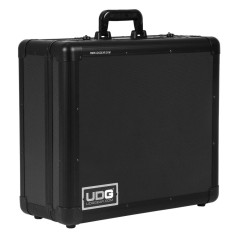
We, at UDG have further fined-tuned already a great design concept of our flight case into one specially for the most discerning DJ/producer. Constructed from aluminum thus providing an extremely stable structure with lighter weight compared to traditional flight cases. The inner sides are protected with pick & pluck foam that consists of two separate layers, each allowing user to create individualized adapted compartments. The pick & pluck foam allow you to pluck out any desired shape you require for various-sized DJ-controllers and providing the additional option of creating another slot underneath the controller for laptop or cable storage. This pick & pluck foam creating an easy, do-it-yourself customized system of case interiors.
The UDG Ultimate Pick Foam Flight Cases are designed to keep your gear protected from accidental damage when you transport it to and from gigs. They’re compact and lightweight yet tough enough to keep your gear safe.
EAN 8718969212229
Color Silver
Weight 4,55 kg / 10.01 lbs
Outer Dimensions (W x H x D) 49 x 42.3 x 21 cm | 19.3 x 16.6 x 8.3 inch
Inner Dimensions (W x H x D) 48 x 41.3 x 20 cm | 18.9 x 16.2 x 7.9 inch
Material Aluminum
Protection Corrosion resistant aluminium profiles with strong rounded corners
Fully-lined with high density foam protective padding & foam on lid
Two side strong butterfly lock & solid metal hinges
Rubber feet at the bottom for support in standing
Extra's Lighter weight than traditional flight cases
Black Diamond finishing surface
Ergonomic & sturdy carry handle
Pick & pluck foam with two separate layers
Replacement pick & pluck foam is available to purchase
Rear cable access hole with cover
Fits Technics SL-1200MK7, SL-1200MK6, SL-1200 MK5, SL-1200 MK4, SL-1200 MK3, SL-1200 MK2, SL-1200GR, SL-1200GAE,
Denon VL12 Prime,
Pioneer PLX-1000, PLX-500,
Reloop RP-8000 MK2, RP-8000 Straight, RP-8000, Reloop RP-1000M, RP-1000 MK2, RP-2000 MK2, RP-2000 USB MK2, RP-4000 MK2, RP-7000, RP-7000 MK2, RP-7000 MK2 GLD, RP-7000 MK2 Silver,
Audio Technica LP120-USB, LP120XUSB, LP1240-USBXP, LP1240-USB, LP140XP, LP3, LP5, LP7, LPW40WN,
Stanton STR8-150 M2, ST-150 M2, T.52, T.55 USB, T.62 M2, T.92 M2 USB,
Mixars STA, LTA,
Vestax PDX-3000, PDX-3000Mix, PDX-3000MKII,
or similar size turntable
London-born-and-raised DJ and producer Parris has announced his new EP Passionfruit, which is to be released on 22nd March 2024 via his own co-founded label can you feel the sun. Following his stand-out 2021 album Soaked In Indigo Moonlight, described as a “masterful” take on the pop genre (Crack Magazine), Passionfruit continues Parris’ affinity for polyrhythms and bouncing synths, but diving deeper into his love for clubbing and UK soundsystems, the result is a heady house compilation.
Each track on the EP is in contention with the one before it, a counterpoint to a sonic argument; melodic bubbly pop against heavy drum and bass, morning rays of sunlight against dark and swampy rhythms. Where the title track “Passionfruit” was described by Parris as imagining the “early morning of a set with the sunrise coming through the shutters”, the very next track “Slipping, Falling, Crawling” is much like the title suggests: a sludgy, percussion-heavy track which has fun with creating melody from the beat itself, stripped back and raw intent.
“Why Can’t Rabbits Wear Cowboy Boots” and “Underwater Fantasy” are almost alternate universe club classics. “WCRWCB” takes a club-formed structure, and uses it to explore the limits polyrhythms, layering chaotically over eachother, and building through the first half of the track, until it peaks with the introduction of an explosive bassline. “Underwater Fantasy” on the surface is the straightest-sounding track to come from Parris, but the disco-style vocals fight with the beat, pushing and pulling at eachother.
Parris (aka Dwayne Parris-Robinson) has dedicated himself to club culture from an early age, never missing a week at FWD>> (the club night where a generation of bass and techno DJs made their names), and was constantly tuning into Rinse FM. Immersing himself into the distinct sound of London built the foundations of the productions we hear today, with grime and drum & bass bubbling alongside slick pop references.
Emotional Rescue dives back into one of its specialties, the formative years of Post Punk and Dub influenced music, presenting the, to date, unheralded Skinbat Scramble. The rarity of the unknown, the discovery of rich, lost music, it is a delight to release a compilation of the band's previously unreleased recordings. A snapshot of time, a journey that covers several decades of friendship but is concentrated here on the fertile 80's scene.
Forged around the friendship of Mark Eason and Fergus Crockford, but with ever changing line-ups, flowing in and out during misspent youths, self-taught playing, falling in and out of bands, travelling that well-worn journey from Home Counties boredom to the excitement of a rough edged London, taking in as music as possible, from Motown on to the The Velvet Underground, The Rolling Stones, Bowie, Pink Floyd, Gong and Fripp & Eno, before Dr Feelgood, Eddie & The Hotrods and a dose of John Peel led to discovering Dub and Punk and witnessing that short-lived burst of creativity at the Roxy Club, Marquee or Vortex and exploring back to early Rock'n'Roll, Rockabilly and old Surf'n'Soul, alongside the likes of Wire and Suicide.
As the Post-Punk sounds mixed simultaneously with Two-Tone, local Art College gave way to university and the early struggles of finding a way in the late 70s / early 80s of Thatcher's Britain. Music was central, Skinbat Scramble finally appearing, morphing from numerous teen bands, early studio excursions of tape loops and effects leading to the first recording sessions in 1981.
The slower tempos, introspection, open structures, and shimmering experimentation of Post Punk were pivotal. John Foxx's early Ultravox, Siouxsies' "Lord's Prayer" period and The Electric Chairs seminal "So Many Ways", influenced to a freer future. PIL, ACR, Section 25 and Pink Military let imaginations briefly roam.
'Far out and weird', those first recordings made at Leeds Uni's Fine Arts Dept utilized Revoxes, Tandberg, MiniMoog and even a borrowed drummer. This was followed up with completed sessions at Elephant Studios in London, forming the basis of this compilation.
The tight scattergun rhythms on opener Submit, in both Vocal and short Dub mix, bely an unreleased band. Taught and crisp, it's like a song you've heard propelling open-minded, leftfield dancefloors for years.
The writing, musicianship and studio mastery displayed on North By Northwest and Skiddadle should not be music unreleased for almost 40 years. In North Dub and closer, Pixie Boot Dub their understanding of the opportunities of dub Reggae are clearly apparent, ethereal music wormholes for late night smokers.
However, it is in Basement Voltaire that the band step out time. Recorded in 1986 this is a 9-minute proto-techno wonder that mixes all their psychedelic meets punk youth in a crescendo of crashing claps and rolling toms that is of a time and so far ahead of its time.
And that was that, after 6 gigs, including a couple at the infamous St Martins, to an audience total you can fit on one hand, the band's first incantation closed and the master tapes were stored for several decades, waiting for "The Psychedelic Pirates" to finally surface.
"Direct from Sandy’s tape archive, these DIY bedroom demos feature his layered harmonies, harpsichord and guitar - all recorded during his time with the Millennium. Though unreleased and hidden away at the time they were recorded, these demos finally get their due on coloured vinyl! Includes new liner notes & photos! The CD has 7 bonus tracks!
Sandy seemed to be in the eye of the kaleidoscopic tornado that was swirling and twirling around L.A. … so why didn’t these songs surface all those years ago? It certainly wasn’t for lack of talent, nor was it disinterest. In fact, it was quite the opposite. While in the Millennium, Sandy continued to write and record his own songs. After signing a publishing deal with Four Star Music, his new publisher did place a few of his songs - “Rag Doll Boy,” recorded by Thee Prophets and The Naked Truth; Terry Black recorded a version of “Wishing Star,” and “These Are The Children” and “Goodbye Yesterday” made an appearance on Tommy Roe’s sixth album, Phantasy.
But for all of the songs he composed and recorded on his reel-to-reel tape machine in his small, Sunset Strip apartment, it seemed as if Four Star Music wasn’t truly interested in promoting his songs. But in truth, it was an under-the-table handshake between Curt Boettcher and Four Star Music that squashed all hope of other artists hearing and recording Sandy’s songs.
The songs on this album are a few of many compositions Sandy wrote and recorded between 1966 and 1968. With only one or two exceptions, every instrument, lead vocal and layered harmony is his, and as you will hear, it’s really no wonder that Curt had them hidden away. Taken from the original reel-to-reel tapes, dive into Sandy Salisbury’s sparkling world of sunshine pop."
Original[31,89 €]
Midwestless is the fifth and newest album from St. Louis, Missouri rock failures The Conformists. Once again recorded with Steve Albini at the majestic Electrical Audio, this album marks their first recorded output as a trio. Formed in November of 1996 deep within a basement bedroom somewhere between the corn fields and strip malls of Southern Illinois, The Conformists began as four teenagers with a desire to create Ugly Rock Music. Eventually, they grew up and now dabble in moments which could even be described as quite beautiful and melodic. Elsewhere, elements of insistent repetition with an initial appearance of stasis reveal — with multiple listens — intricate details under the surface.
Miles Davis' boundlessly influential On the Corner was so far ahead of its time upon release in 1972, the jazz cognoscenti rejected its groundbreaking concoction as middling in nature. Yet time has a way of righting wrongs and shifting views by adding needed context and perspective to visionary ideas, music, and approaches — the likes of which fill Davis' boldest and most controversial — undertaking. Designed to bring the focus back on the groove and bottom-end frequencies, the funk-loaded On the Corner revolutionized jazz. It also set new standards for record production, presaging remixing and electronica by more than a decade. And the work has never sounded more thrilling thanks to this very special pressing.
Sourced from the original master tapes and pressed on MoFi SuperVinyl, Mobile Fidelity's numbered-edition 180g 33RPM SuperVinyl LP of On the Corner exposes the internal mechanisms, free-associated playing, and then-unmatched studio techniques in vivid fashion. The low end, crucial to every composition here, is both heard and felt, with locked-in bass lines and low-range percussion conveyed as taut, solid, and visceral passages. You can discern the multiple layers of rhythm Davis employed on complex tracks such as "Black Satin," as On the Corner stands as his first effort to use overdubbing and multiple tape machines. As a pioneer, Davis likely would’ve loved MoFi’s groundbreaking SuperVinyl profile that features the lowest-possible analogue noise floor as well as pristine transparency, dead-quiet surfaces, and superb groove definition.
New degrees of spaciousness and airiness — equally important to the musique concrete arrangements — give the impression Davis and Co.'s creations float in space. Instruments are portrayed in three-dimensional manners, rhythmic loops retain tonal purity, and horn solos skitter across an extra-wide soundstage that takes listeners into Columbia's Studio E. Mobile Fidelity's SuperVinyl LP captures Teo Macero's innovative production — and the trumpeter's cutting-edge aural collages — in definitive fashion.
Heavily inspired by Sly and the Family Stone, On the Corner portrays street vibes and remains Davis' Blackest-sounding record. The conscious attempt to connect with youthful audiences tapped into rock and funk is evident not only on the colorful cartoon cover art depicting hot-pants and zoot-suit revelers, but in the music's emphasis of recurring drum and bass grooves. Distinct from Davis' earlier fusion experiments, the record's long-misunderstood set dials back improvisation in favor of beats, loops, and atmospherics that generate trance-like effects. While Davis utilizes his band for core duties — Chick Corea and Herbie Hancock prominently figure — he also relies on an all-star cast of side-men for concentrated soloing and additional support.
With rhythm providing the basic foundation, other notes fall into place, with their positioning steered by Macero and Davis' editing-room techniques. Looking to the manipulation-based work of Karlheinze Stockhausen and teaming with Stockhausen disciple Paul Buckmaster, Davis re-imagines what grooves constituted and could accomplish throughout On the Corner. The shapes of the songs become completely transformed as they progress. Faint melodies, spacey chords, chunky riffs, wah-wah fills, and repeated motifs bounce in and out of a sonic funhouse that wouldn't be out of place at a Harlem block party.
Exotic, intrepid, and filled with Davis' "jungle sound," On the Corner remains daringly hip more than four decades later.
Whitney Houston’s self-titled debut album has few parallels. Viewed solely through the lens of sales numbers, Whitney Houston is a watershed statement on par with the most commercially successful and culturally dominant LPs ever released. Having sold more than 14 million copies in the U.S. and upwards of 25 million units worldwide, the 1985 LP became the equivalent of the television show or blockbuster film that everyone collectively experiences and discusses. Nearly four decades later, it’s lost none of its appeal or magnetism — and its artistic significance and historical import have only grown.
Sourced from the original master tapes, pressed at RTI on MoFi SuperVinyl, and strictly limited to 4,000 numbered copies, Mobile Fidelity's 180g SuperVinyl LP of Whitney Houston presents the breakthrough in audiophile sound for the first time. The signature traits Houston exhibits on every song — her three-octave range, radiant warmth, personal conviction, impossibly controlled register — come across with exceptional clarity, focus, and presence. Free of artificial ceilings and constricted dynamics, this reissue plays with an openness, airiness, and balance that put the singer’s once-in-a-lifetime instrument and immortal artistry into proper perspective.
It does the same for the songs’ cascading melodies and captivating arrangements. Individually produced by one of four renowned industry veterans — Kashif, Micheal Masser, Jermaine Jackson, and Narada Michael Walden — each composition feels grander, closer, more genuine. A vocal spectacular, Whitney Houston benefits from the high-end characteristics of SuperVinyl, which include a nearly inaudible noise floor, superb groove definition, and dead-quiet surfaces. This is how an album that changed the direction of popular music — opening previously inaccessible doors for Black artists; bringing smooth-singing vocalists back into the mainstream; kickstarting a movement that soon included several “divas” who would command the charts through the early 21st century — should look and sound.
Though Houston’s seemingly effortless performances suggest otherwise, creating the record Rolling Stone ranks as the 257th Greatest Album of All Time wasn’t easy. Nearly 18 months were required to identify songs suitable for a still-unknown singer who did not fit into the conventional frameworks of the mid ‘80s. Confident, powerful, and prodigiously talented, Houston would forge her own parameters with Whitney Houston. In the process, she obliterated the stubborn lines between R&B and pop, Black and white radio. She dared to reimagine who could be a superstar and then went out and defined the role. Recorded for nearly $400,000 and released on Valentine’s Day, the LP exceeded the wildest expectations of those most closely associated with it — save for Houston and her family.
Having made her first public appearance at the age of 11 singing at a Baptist church, Houston understood pressure and knew her way around, inside, and through a song. The invaluable guidance and support she received from her mother, Cissy, an accomplished gospel vocalist who backed Aretha Franklin and Elvis Presley, are on display throughout Whitney Houston. They arrive in the types of authoritativeness, discipline, and diction rare for even most seasoned veterans — and unheard-of for a 21-year-old newcomer. Houston brings a soulful elegance, understated glamour, and in-the-moment rapture to every note. Moving up, down, or staying in the middle of the vocal ladder; channelling softness or sweetness; showing restraint or increasing the volume, she is a marvel of emotionalism, a dynamo who can seamlessly transition from one mood to another within a verse.
Though the 10-track LP largely concerns itself with the ballad tradition, Houston covers the bases, getting into an R&B groove on the fleet “Thinking About You,” turning up the heat on the duet “Take Good Care of My Heart,” and investing the contagious dance-pop confection “How Will I Know” with all the anxiety, hope, energy, and enthusiasm its lyrics demand. Featuring her mom on background vocals and Houston’s pitch-perfect tone, uncanny precision, and skyscraper highs (no AutoTune here, friends), the synth-based anthem propelled Whitney Houston into the stratosphere, the vocalist into regular MTV rotation, and the term “crossover” into popular parlance. The double-platinum single reached No. 1 on the Hot 100, Hot R&B, and Adult Contemporary charts — a trifecta that foreshadowed accomplishments that would ultimately crown Houston as the most-awarded female artist of all time.
Whitney Houston became the first album by a Black female performer to top the Billboard charts. It remained there for 14 non-consecutive weeks en route to claiming the title of the best-selling LP of 1986. It stands as the first debut and first album by a solo female artist to spawn three No. Hits, as well as the first album by a Black female artist to top the year-end charts in Australia and Canada. These are just a handful of the accolades — along with four Grammy nominations — that surround a set that also contains the unforgettable ballad “Saving All My Love,” string-accompanied “Greatest Love of All,” and sensual “You Give Good Love.”
As TIME observed in an article written two years after the album took the world by storm: “This is infectious, can't-sit-down music, and her performance dares the listener not to smile right back.” We’re still smiling.
Indies Maroon Vinyl[23,74 €]
New solo album from Seth Avett of the Avett Brothers (his first in 5 years), featuring songs written by lauded folk singer Greg Brown, whose songs have also been performed and recorded by Joan Baez, Willie Nelson, Lucinda Williams, Carlos Santana, Ani DiFranco, Gillian Welch, Mary Chapin Carpenter, and more. For those who may need reminding, Greg Brown is the ultimate songwriter's songwriter. Over a forty-plus-year career, he's occupied the same rarefied air as Loudon Wainwright III and John Prine - a keen-eyed poet and diarist of the human condition. And he's done it mostly on his own. “This is a man who put forty records out because he had to,” Avett says. “He made his own record label. He played the coffee shops, the bars, the little theaters. He built it. He's a world-class artist who did it all under the radar, which is just mind-blowing to me.” As Avett's new solo record makes clear, this collection is an expression of admiration and gratitude for one of his heroes. But it's also a reflection of his own artistry and ability as an interpreter. Though Brown's songs have been a part of his listening diet for decades, Avett gained a more profound appreciation once he put his own voice behind them. And though on the surface it's a covers record, it dovetails seamlessly with the most recent Avett Brothers album The Third Gleam and Seth's solo outing IV, which find him in equally stripped-down settings exploring the light and shadows of his own personal stories.
As a composer Martijn Comes has a special interest in timbral music and various musical traditions, with an emphasis on the electro-acoustic history. His works for the carillon were performed live at festivals like Le Guess Who and Rewire. He also released several solo-albums and collaborated with a wide range of contemporary artists like Frans de Waard, Lukas Simonis, Nicoleta Chatzopoulou and Hessel Veldman, with whom he co-produced the album EPoX, published by Bedouin Records in 2020.
Veldman is a veteran of the Dutch musical avant-garde and published several legendary cassettes on his label EXART in the early 80’s. His experimental soundscapes are laced with industrial elements, creating a hypnotic, dark undercurrent of sounds. Besides operating under his moniker Y Create, he was a member of the improvisation group Gorgonzola Legs and kept working intensively with Fluxus artist and Dutch underground cult-figure Willem de Ridder. The home-taping era shaped his free approach to music. His diverse musical practices have been traversing several decades by now and he continues to play music according to his own insights and intuitions.
Because of the emotional and poetic weight of the pieces, reverend Tom de Haan was consulted for this collaborative album. It was the start of a musical exploration and a search for peace, balance and above all freedom. Reaching out to a distant world, a place to come to terms with ourselves. A journey full of obstacles and setbacks. Sometimes persistently moving forward, sometimes doubtful. 'Are there Gods among us or inside us?' The music as a manifest, the expression of an inner struggle.
Throughout the chapters of this album layers of sound and distant voices arise and seem to float on the surface before they disappear again. Swaying on the gentle waves, running ashore, we find ourselves in unknown places. Manifest Exodus is an album for deep listening in the vein of Lustmord, Lawrence English or Rafael Anton Irisarri. It contains 4 rich, immersive pieces with austere drones, ambience, intense sonic textures and an incredible sense of detail to create a multi-layered escape to a better world.
dog-rose is an exploration of musical articulation and vocalization. Its themes can be felt gnawing at the surface of the world: people's clumsy everyday intimacies, the neverending pursuit of self-knowledge, God. Of foremost interest was the unreliability of memory as a tool through which we experience life, yielding an attempt to dismantle it into its minute elements.
"I arrived at a combination of diary entries in the form of field recordings, various, mostly acoustic, instruments through which I invoke different modes of memory // its associative functions, and my own voice, more an agent of introspection than any conventional vocal. The lyrics were originally written as pop-songs, but committed to the form of contemporary music they appear as field recordings made to be sung. They are field-songs."
"To me, musicmaking is a dialogue with sounds where I seek to understand their character and how to handle them. This is a performative process and admittedly also a projection – what I am actually discussing is myself. The recording took place at a remote cabin in the forests of Tribeč. Most of my work is created in isolation, regardless of the social distancing and lockdowns of the outside world."
Tomas Pristiak is a member of Tante Elze, Pain Palace (FKA Weltschmerzen), and dog-rose is his first solo album and the 11th release by contemplative label Weltschmerzen.
Felix Machtelinckx is a singer, composer, producer and lyricist from Belgium. Featuring an array of film scores, dance soundtracks, pop, folk and electronic music, Felix's music resonates with a familiar, almost nostalgic patina, applied with a distinctly crooked touch. Through artistic collaboration, coaching and production, Felix has cut a dash in the pop and indie cult scenes of Belgium, especially with his band Tin Fingers, who are feted as one of the most promising indie acts of the moment. Night Scenes, Felix’s solo debut is, in contrast to his other work, more humble and less traditional, roughly hewn from a series of ambient soundscapes, earthy textures and playful structures. Felix’s voice, normally the flagship of his music, becomes more of a distant memory, an indistinct emotion feathered throughout the music. Many lyrics are improvised, sometimes unintelligible, conjuring haunted, uncertain undertones. Similarly, the album is innately peripatetic to the core, being created, written and recorded in Lithuania, Belgium, France, mastered in the US, and finally released in the UK. In the first instance, some of the tracks were created for the contemporary dance piece Doggy Rugburn by Brandon Lagaert of Kaiho and Peeping Tom; others were created enigmatically for a film that never surfaced; while the remainder are the product of more personal work and research. As Felix began to collect and review these disparate parts, the concept of a unified album began to evolve. With 'night' featuring as a suitably dark leitmotif, or backdrop to a series of emotionally fraught 'scenes', each track depicts a form of trauma, locked within the confines of the mind. Felix observes: "Imagine yourself in a dusty old room unable to sleep. Emotions, fears and other demons haunt your mind. This in-between state makes your mind reach for other worlds. This is Night Scenes." For the most part, Night Scenes was created using a variety of old, and rare, analogue equipment. With almost no digital editing, the record was primarily mixed through a vintage cassette desk, giving it a nostalgic character with a noisy undertone. Felix fully embraced the synergy of his emotional themes and retrograde gear, enthusing: "A lot of textures were created on an old Soviet synthesizer that causes a blackout when you hit the lowest note on the keyboard. The dysfunctionality of the synths was often used to create rhythm and texture." This unnerving ability Night Scenes has to comfort and confound the listener is summed up by Jordan Hudson, House Of Media producer, and music podcaster, when he concludes: "Some songs on the album have this sort of fleeting comfort and tonality, which dissolves into a subtle rhythmic/structural or modulated disarray the moment I settle into them - this really fits with my experience of the night .. This record is a winner, and will be something I'll listen to a lot from here on
- A1: Niche News
- A2: 1954: Godzilla Attacks Tokyo - Reconstruction
- A3: 1966: Godzilla Attacks Tokai - Government's Decision
- A4: 1996: Godzilla Attacks Osaka
- A5: Superior Officer Miyagawa's Demise
- A6: Main Title
- A7: Scout
- A8: Special G Task Force
- A9: Unfortunate Disaster
- A10: G Confirmation I
- A11: Test Preparation
- A12: Black Hole Gun Engaged
- A13: The Late Night Abnormality
- A14: Dumping The Egg
- A15: Identification Tag
- A16: Cell Division
- A17: Meganulon
- A18: Kiriko And Jun
- A19: G Confirmation Ii
- A20: The Griffon Mobilizes
- B1: Godzilla Surfaces
- B2: Transmitter Installed
- B3: Dimension Tide
- B4: Submerged Shibuya
- B5: The Underwater Search In Shibuya - Godzilla In The Trench
- B6: Leading
- B7: Fight Of The Meganula
- B8: Starting The Dimension Tide
- B9: Godzilla X Meganula
- B10: The Dimension Tide Fires
- B11: Immortal Godzilla
- B12: Larval Growth
- B13: Megaguirus Is Born
- B14: Ultra-High Frequency
- B15: The Ultimate Combat Form
- B16: Godzilla To Tokyo
- C1: Godzilla Lands In Odaiba
- C2: Godzilla X Megaguirus I
- C3: The Effect Of Ultra-High Frequency
- C4: Godzilla X Megaguirus Ii
- C5: Godzilla X Megaguirus Iii
- C6: Godzilla X Megaguirus Iv
- C7: Program Restored - Conclusion
- C8: The Falling Dimension Tide
- C9: Kiriko's Decision - Lock On
- C10: Dimension Tide X Godzilla
- C11: A Moment Of Victory
- C12: End Credits
Godzilla returns once more to face the combined might of Japan's most extraordinary scientists in the second picture of the Millennium-era: GODZILLA VS. MEGAGUIRUS. Looking for new ways to defeat the Big G, the JSDF invent an incredible new weapon called Dimension Tide, which creates a miniature black hole that will transport Godzilla far away from Earth. However, a byproduct of weapon testing leads to thousands of winged insects invading Tokyo and attacking Godzilla. The Big G fights back, but their new queen appears, now kaiju-sized due to Godzilla's atomic breath. A thrilling battle then occurs as Godzilla goes head-to-head with Megaguirus while the JSDF frantically works to disappear both monsters forever.
GODZILLA VS. MEGAGUIRUS saw the introduction of composer Michiru Oshima into the franchise with a fantastic score that built on previous Toho musical traditions with a view to the future. While using music composed by the great Akira Ifukube for two sequences, Oshima also unveiled her own theme for Godzilla. First heard in a slow and foreboding mode, it's quickly unleashed in gigantic low tones, as terrifying and inevitable as the Big G himself. Soaring heroic material represents the JSDF and their advanced Griffon aircraft, while powerful brass is used for the threat of Megaguirus. Cementing Oshima's reputation as a great composer, GODZILLA VS. MEGAGUIRUS is a classic of kaiju musical mayhem. - Charlie Brigden
Composed by Michiru Oshima
Artwork by Attack Peter
Manufactured in Czech Republic
Disastroid's latest outing, Garden Creatures, is a record about the darkness in the hidden corners of suburban landscapes - sinister overgrown gardens, secret collections kept in basements, the crime just beneath the surface, the pervasive loneliness under a veneer of normalcy. Accordingly, it's a dark and atmospheric record, trading the stripped-down approach of 2020's Mortal Fools for a thicker, heavier, and more layered sound. Legendary producer Billy Anderson (Sleep, Melvins, Neurosis) builds mixes that range from dark and dreamy to a thick, sludgy crunch, slowly puling the listener through a range of sounds and textures, making sure things stay interesting. Singer/guitarist Enver Koneya's vocals are soulful and sometimes haunting, drifting above Disastroid's characteristically off-kilter, grunge-influenced riffs.
The brand new EP "Wellental" by Extrawelt on Traum is herewith reveled to the fans. Their new 3 track vinyl 12" gives a nod to the mayhem and urgency of techno all finely tuned. Straightforward in its brilliance and simplicity, yet carefully measured with a maturity that speaks the language of Extrawelt´s minimalism.
We attest: a unique techno track for the dance-floor on the a side, a trippy track on b1 and a very musical one as B2.
What happens within these 3 tracks is nothing short of alchemy, traversing all sorts of grounds without ever losing the plot. It’s due to the duo’s keen grasp of sound design—they always exchange ideas, on an expansive set of hardware, so no matter what tunnel they’re traveling down head-first, the sounds are always pristine, filled with unexpected details.
The EP opens with the title track "Wellental" which translates as "wave trough". Wave trough valley refers in particular to the points of maximum negative deflection in a traveling wave. In contrast, the points of maximum positive deflection are called wave crests. Musically this converts in a way that, although the title track "Wellental" has a lot of forceful steady forward motion and zig zag sequences cutting into it, it also has that "hanging time" feeling that adds unpredictability and tension to the track. You can defiantly sense that Detroit theme in a post Detroit interpretation here.
The flip-side starts with "Unter Wasser" which is illustrated by urgent uptempo beats that can push it on the dance floor and dreamy, surreal soundscapes on the other hand that account for that great under water feel. The track sounds a bit like the "Deep End" film soundtrack from CAN in that respect.
The B2 track is called "Samtstrand" and there is a reason for this since the track is very gentle and brushes over a surface with velvet hands but in contrast to that, the Extrawelt beats are kicking out the jams here! So this song has a twin drive going!
NYC speed rockers PONS are wound up and hot for skronk on The Liquid Self, a golden spiral into insanity at sea surfacing on cassette and streaming October 6, 2023. Besieged by a lighthouse panopticon of pummeling, engine-room percussion, The Liquid Self rises higher than the tides of destiny. These eleven songs churn like a gluttonous maelstrom consuming everything in its path. The Liquid Self chums indie rock’s murky waters with bloody chunks of Lightning Bolt, Van Halen and King Crimson to lure PONS’ mythical and unhinged rock ‘n roll creation to the surface. Harpoons in hand, the dual drums and guitar trio swing, shuffle and strut across oceanic horizons of playful, unhinged garage-prog-pop inhabited by a cast of unreliable narrators; bottom feeders carrying the entire ocean’s weight on their polyrhythms.
On the single “Coral King,” PONS usurp noise rock’s old guard while pledging fealty to the dystopia under the sea with a foamy, froth-mouthed manic industrial scuzz-prog rant seething with sludgy, dissonant bile oozing from every sour note. Furious violin-fuzz riffs and a chorus of lost souls lead the procession at this brutal coronation of the damned.
“Sinking Feeling” hangs ten with bright and beachy major chords anchored by fleet-flippered guitar solos breaching the surf like suppertime at SeaWorld. Chaos reigns on “Queen Conch,” soaking the splash zone with misty waves of undulating percussion and tsunami force sheets of six-string shredding. Barbed post-punk rager “Hooks” swallows the bait whole—and it turns out PONS fish with dynamite.
Warehouse find!
With '100% Dope' we find Central Processing Unit bringing up their hundredth catalogue number, and you'd struggle to find a more fitting artist to ring in a century of releases for the label than Cygnus. The one born Phillip Washington has been with CPU since the very beginning, his 2012 LP 'Newmark Phase' representing the first record ever released on the imprint. That album's combination of textured techno and grizzly Drexciyan electro set the tone for CPU perfectly, and it's no surprise that Cygnus has returned to the Sheffield imprint several times down the years.
While '100% Dope' is an expert demonstration of what Cygnus and CPU do, this EP also shows just how much both artist and label have grown over the past nine years. At its heart '100% Dope' is a set of prime machine-funk from a master of the form, but these are also some of the most daring and innovative tracks that Cygnus has ever produced.
Take opening cut 'Bad RGB Controller'. In the undulating synth lines we have a ghost of grime as well as Drexciyan drive, and as such the track reminds one as much of Mr. Mitch or Last Japan as it does, say, Dopplereffekt. Furthermore, 'Bad RGB Controller' shifts gear around the halfway mark into a highwire electronica mode which has the wit and spark of prime Bogdan Raczynski. Entries like 'Float Back To The Surface' are similarly unpredictable. There's some lovely industrial techno bite to this one - the snare drum will echo in your head long after the party's died down - but Cygnus periodically pulls out the rug from underneath us with passages of impressionistic texture that almost border on sound art.
'Float Back To The Surface' is one of a trio of vocoder-led jams here. On 'Throwing Shade' we hear I-F and Egyptian Lover, with Cygnus' vocals clattering around like pronouncements from some funked-out robot overlord atop hissing-piston drums. Then there's the enticingly-titled 'CPU Records'. 'CPU Records' delivers all the crisp electro snap we've come to expect from a record emblazoned with that signature black-and-white artwork, yet this thing is also widescreen and cinematic in ways that demonstrate the maturation of the Cygnus sound. With a wicked vocoder vocal that celebrates the label's many achievements, 'CPU Records' is a victory lap tune if ever we've heard one.
Central Processing Unit keep it 100 on for this new EP. '100% Dope' by Cygnus is CPU's 100th catalogue number, and the Texan producer delivers on the promise of the record's title with a collection of brilliantly unique electro joints.
Culled from three 1985 gigs in the UK during a transitional and transcendent time in the band’s story, Sonic Youth’s The Walls Have Ears appeared / disappeared as a 2LP set in 1986, not just a live album but an artful tapestry full of live experimentation with songs, between-song tape segues, darkness, humor and audio verité. It’s now issued for the first time officially under the band’s auspices.
The ’85 shows were the second time the band appeared on UK soil, Brits now getting juiced to the mythos of the emerging guitar-slinging American independent underground; an art / punk band from NYC sporting casual attitudes and tees sporting Bruce Springsteen, Madonna, and Prince made some good press copy on top of their bludgeoning stage appearance. Paul Smith of the newly-founded Blast First label acted as an overseas diplomatic envoy for Sonic Youth through their SST years as well as issuing their classic 1988 Daydream Nation outside the USA. However the Smith-produced ‘bootleg’ of their ’85 UK gigs surfaced much to everyone’s surprise, just before EVOL was to be released. It turned out to be a marker of the group’s dissatisfaction that ultimately led to the release’s deletion, and the band and Smith parting ways after Daydream.
In this 2LP set brimming with primitive classics like ‘The Burning Spear,’ ‘Death Valley 69,’ and ‘I’m Insane’ (uncredited on sleeve), segues and live guitar changes ooze together threaded by Madonna tapes and vocal loops off the board (somewhat a necessity for distraction until the band had a full fledged stage crew to prepare guitars). The first two sides of Walls are massive, cavernous, with newly-drafted drummer Steve Shelley. SY tear it up especially on one trash-fi excerpt of ‘Blood On Brighton Beach’ (actually ‘Making The Nature Scene’) from a legendary outdoor gig November 8th where Thurston Moore, Kim Gordon and Lee Ranaldo’s guitars treble-blast dissonant shockwaves over the black-stoned beach of Quadrophenia fame.
The record’s second slab spotlights an April 1985 at London’s Hammersmith Palais and was one of the final appearances live of Bob Bert on drums, again featuring some molten takes on ‘Brother James,’ ‘Flower’ (listed as ‘The Word (E.V.O.L.)’), and others. This document remains an essential representation of some lean and mean years of the quartet’s throttling march out into the world. (by Brian Turner)
Culled from three 1985 gigs in the UK during a transitional and transcendent time in the band’s story, Sonic Youth’s The Walls Have Ears appeared / disappeared as a 2LP set in 1986, not just a live album but an artful tapestry full of live experimentation with songs, between-song tape segues, darkness, humor and audio verité. It’s now issued for the first time officially under the band’s auspices.
The ’85 shows were the second time the band appeared on UK soil, Brits now getting juiced to the mythos of the emerging guitar-slinging American independent underground; an art / punk band from NYC sporting casual attitudes and tees sporting Bruce Springsteen, Madonna, and Prince made some good press copy on top of their bludgeoning stage appearance. Paul Smith of the newly-founded Blast First label acted as an overseas diplomatic envoy for Sonic Youth through their SST years as well as issuing their classic 1988 Daydream Nation outside the USA. However the Smith-produced ‘bootleg’ of their ’85 UK gigs surfaced much to everyone’s surprise, just before EVOL was to be released. It turned out to be a marker of the group’s dissatisfaction that ultimately led to the release’s deletion, and the band and Smith parting ways after Daydream.
In this 2LP set brimming with primitive classics like ‘The Burning Spear,’ ‘Death Valley 69,’ and ‘I’m Insane’ (uncredited on sleeve), segues and live guitar changes ooze together threaded by Madonna tapes and vocal loops off the board (somewhat a necessity for distraction until the band had a full fledged stage crew to prepare guitars). The first two sides of Walls are massive, cavernous, with newly-drafted drummer Steve Shelley. SY tear it up especially on one trash-fi excerpt of ‘Blood On Brighton Beach’ (actually ‘Making The Nature Scene’) from a legendary outdoor gig November 8th where Thurston Moore, Kim Gordon and Lee Ranaldo’s guitars treble-blast dissonant shockwaves over the black-stoned beach of Quadrophenia fame.
The record’s second slab spotlights an April 1985 at London’s Hammersmith Palais and was one of the final appearances live of Bob Bert on drums, again featuring some molten takes on ‘Brother James,’ ‘Flower’ (listed as ‘The Word (E.V.O.L.)’), and others. This document remains an essential representation of some lean and mean years of the quartet’s throttling march out into the world. (by Brian Turner)
Excessive Mobility, the second long player from the Norwegian industrial/ avant garde cult-band Munch (released 1990) was a document of movement further into their own world of droning soundscapes and theatrical approach, but also showed a more contemporary jazz detailed universe that was already lurking under the surface. Remastered by Lars Årdal of Munch.
"The Dive is a 2023 scuba-diving movie, starring Sophie Lowe (Medieval) and Louisa Krause (Billions), with much of the footage – underwater and topside – shot in the popular diving destination of Malta. Directed by Maximilian Erlenwein and written by Erlenwein with Joachim Heden, The Dive focuses on two sisters, Drew and May, whose dive together off the rocky shoreline is abruptly cut short when a landslide above water sends a cascade of boulders down on top of them, leaving May trapped down at 28m by the debris. With dangerously low levels of oxygen and cold temperatures, it is up to her sister to fight for her life. The score to The Dive is composed by Volker Bertelmann & Raffael Seyfried. Bertelmann is a German composer who is also known under the name Hauschka. In 2022, he won an Academy Award and BAFTA for his work on All Quiet on the Western Front. For the soundtrack for The Dive, he teamed up with Raffael Seyfried, who previously scored the acclaimed 2018 drama series Patrick Melrose. The Dive is available as a limited edition on turquoise coloured vinyl."
Dive by Various Artists, released 25 January 2024, includes the following tracks: "Do You Hear That", "Go To The Surface", "Ship", "Are You OK" and more.
This version of Dive comes as a 1xLP.
The vinyl is pressed as a turquoise disc.
Sign Libra's third album Hidden Beauty is an intimate voyage through feminine nature, guided by the arts of subtext, musical collage, and mysterious allusions. Elegantly arranged, enigmatic, and mischievous, Hidden Beauty seeks to "release the invisible and bring fragility to the surface." From the rainforests of Closer to the Equator (Sounds of the Dawn, 2016 / Antinote, 2018) to the surreal lunar landscape of Sea to Sea (RVNG Intl., 2020), Agata Melnikova, the Latvian musician behind the Sign Libra symbol, has developed a signature blend of evocative composition with lyricless, ethereal vocalizing. Hidden Beauty attends to a closer space than her first two albums, a playfully layered pastiche of refined references, drawing musical inspiration from the assortment of Erik Satie, the early work of Mylène Farmer and Laurent Boutonnat, and 90s R&B. The first inklings of Hidden Beauty arrived in 2019, with the basic contours of the album sculpted in 2020 and early 2021. Like Sea to Sea, Hidden Beauty was invented as a solitary creative effort, but this time under uniquely hermetic impositions. Tethered to the world only by screen, the artist sought inspiration from an unlikely array of activities: new, unorthodox approaches at composing, learning French, a virtual pedagogical practice, and plenty of jubilant dancing in her flat, sunglasses on, to 90s dance music. Hidden Beauty moves inward from the distant spaciousness of Sea to Sea in favor of a "chamber-like" sound, reflecting the intimate environs of its creation. Balancing the New Age balletic resonance of Closer to the Equator and the cosmic-dancerly tracks of Sea to Sea, Hidden Beauty combines deft, postmodern arrangements with popular, contemporary suggestions. The reverb drenching her previous recordings is sponged up in the songs of Hidden Beauty, giving the exercises contained within a feeling of presence, and closeness. And always Agata's crystalline vocal furnishings, less a lead vocal than a first instrument, the ever-returning counterpoint in a beatific swirl. The other hidden elements of this work are plenty, and perhaps best left concealed for the listener's enjoyment. Or perhaps they are hidden in plain sight and sound, depending on what the puzzle pieces reveal to your imagination. Sign Libra's Hidden Beauty will be released in vinyl, Japanese import CD, and digital editions on November 3, 2023. A portion of the proceeds from this release will benefit Coral Guardian, a non-governmental organization working internationally and with local communities to protect coral ecosystems.
ASA
Arturo Lanz Saverio Evangelista AtomTM
are the last three futurists on earth.
»Radial« is the result of a vivid creative merge between Esplendor Geométrico and AtomTM. A transparent diamond formed by a heavy implosion. Its underlying massive mechanics are covered by a crystal surface made to cut reality in half. Just one letter short of “radical”, this album is no less than exactly that – an orgy of powerful, blunt repetition and hyperbolic simplicity, a profound evocation of nothingness and its surroundings.
Repress!
10 years since the consumerist musings of Tesco, Matthew Herbert reanimates his Wishmountain project and heads deep underground to find the source material for Stonework: 1000 metres down.
Like many of Herbert’s projects, Wishmountain releases revolve around specific, material sound palettes, and for this latest album he’s drawn from a sample library created as a commission for the Stone Techno festival, which took place at the UNESCO World Heritage Zollverein mine in Essen, Germany. Working with sound recordist Lorenzo Dal Ri, Herbert and Dan Pollard captured a varied and wide variety of hits, tones, textures and one-shots from the frozen-in-time remnants of the Ruhr region’s coal-mining industry and from specific materials in the nearby Ruhr Museum and Mineralien-Museum. A sample library created by Matthew and Dan of the recordings was also used for the Stone Techno series, from which tracks have been commissioned by the likes of Luke Slater, Megan Leber, Ben Sims and KiNK drawing from the same sounds heard on this album.
These stone-cast sounds lend themselves to the Wishmountain framework – skeletal, quasi-industrial techno with an angular impulse and a subtle swing. Much like the breakthrough hit, 1996’s ‘Radio’ (made using samples of a broken radio), the limitations on the source material sharpen the focus of the music. What started out as a practical hardware restriction in the early 90s became a purposeful way of working for Herbert – one which carried through the 1999 album Wishmountainisdead to 2012’s Tesco with its sampling of the British supermarket chain’s 10 most popular products.
Musically, Stonework is consistent terrain for Wishmountain – austere and forbidding in one sense, playful and irreverent in another. But from a club music perspective, which Wishmountain absolutely is, it offers DJs a variety of rhythmic formations within the tool-like minimalism of the arrangements, opening up intriguing possibilities for mixing into, out of, or somewhere in between. For every 4/4 thrust and jerk there is a fractured, snaking meditation pivoting around other time signatures.
Crystal clear in its creative intention and simultaneously successful as surface-level club music, Stonework: 1000 Metres Down is a natural continuation for one of Herbert’s most celebrated, albeit intermittent, aliases.
On Natura Morta, Sven Wunder is exploring art as a bridge between nature and the human ability to judge and observe in eleven musical compositions with brightly colored textures and an emphasis on vibrant melodies.
Throughout human history, we have depicted the world we live in through art. By reworking what we see in the world, the simplest things have helped us understand the beauty of nature and to evaluate the material world that we have created around us, as a window to a constantly changing reality, through our own perception. It is that absolute reality that appears in the seam of human and nature and that can be revealed through art.
Still life painting, also referred to as Natura Morta (”dead nature”) in Italian, stretches back to ancient times. Some of the earliest works, found in Pompeii, depict commonplace objects such as fresh autumn fruits alongside man-made objects such as a small amphora and a small terracotta heap with dried fruits. These two-thousand-year-old paintings give a snapshot of Roman life, and also creates a link to time and space. A slice of life has been created by binding the earth’s pigments with extracts of oil, made from nuts and seeds, painted with brushes, made from a variety of fibers, such as trees and hair from animals. While life wanes with each brushstroke, by shifting reality into the past, art exists to make us come alive, being a living image of a dead thing, a surface and a symbol with symbolic powers of its own. Still life works celebrate material and ephemeral pleasures by returning to nature as the ultimate source for our standards in art as well as in life itself.
Natura Morta collects pieces from a continuous variety of melodies — supported by a decisive rhythm section — creating a musical kaleidoscope of ever-changing colors. Sven Wunder brings life into this rich assortment of musical implications by fusing and combining melodic instruments with each other in a setting that spans from a classical to a modern idiom. The author evokes this panoramic portrait by articulating an instrumental dialog between a chamber orchestra and a jazz ensemble. The result is a musical celebration of material pleasures that also serves as a reminder of the brevity of human life. This album was produced with financial support from the Swedish Arts Council.
As one of the most influential rock groups in the late eighties, Living Colour proved that blending Hard Rock with Funk, Soul, Rap and Punk can be a very successful undertaking. Their debut Vivid (1988) took some time to build up steam, but eventually turned heads worldwide as the sheer quality of this album inevitably rose to the surface. A combination of intelligent lyrics dealing with personal emotions and social/political issues, laid on top of eleven groovy and diverse songs enriched by Vernon Reid’s monster riffs is what makes Vivid a highly powerful album. Vivid spawned the hits “Glamour Boys” and “Cult Of Personality”, which was awarded a Grammy for Best Hard Rock Performance in 1989.
Available as a limited edition of 1000 individually numbered copies on
transparent pink coloured vinyl. The package includes an insert.
Van Halen did more than announce to the world the earthshaking arrival of a revolutionary guitarist. Performed by an enterprising California quartet that took its name from two of its principal members, the 1978 debut ripped headlines away from punk, injected fresh energy into a then-moribund rock 'n' roll scene, reimagined how heavy music and throwback pop could coexist, and invited everyone to experience the top-down pleasures of a beach-front Saturday night every day of the week no matter where they lived. Painstakingly restored by Mobile Fidelity Sound Lab, and the first of a multi-album series in an exciting partnership between the famous reissue label and Van Halen, Van Halen delivers feel-good thrills and hormonally charged desires like never before.
Limited to 12,000 numbered copies, pressed on dead-quiet MoFi SuperVinyl at RTI, and mastered from the original analogue master tapes, Mobile Fidelity's ultra-hi-fi UltraDisc One-Step 180g 45RPM 2LP collector's edition pays tribute to the record's merit and allows fans to experience Van Halen's original blend of raw power, Hollywood flair, and vaudeville fun for generations to come. Playing with reference-setting sonics that elevate a 10-times-platinum landmark whose importance cannot be quantitatively measured, this definitive version provides a clear, clean, transparent, balanced, and turn-the-volume-up-to-11 view of an album that birthed entirely new styles. Since MoFi's unique SuperVinyl compound allows you to crank the decibels to your wildest desires without risking noise-floor interference, prepare to not only hear but feel Van Halen in your chest, no fifth-row concert seat necessary.
The premium packaging and gorgeous presentation of the UD1S Van Halen pressing befit its extremely select status. Housed in a deluxe box, it features special foil-stamped jackets and faithful-to-the-original graphics that illuminate the splendor of the recording. No expense has been spared. Aurally and visually, this UD1S reissue exists as a curatorial artefact meant to be preserved, touched, and examined. It is made for discerning listeners that prize sound quality and production, and who desire to fully immerse themselves in the art – and everything involved with the album, from the iconic cover art to the meticulous finishes and, yes, of course, Eddie Van Halen's pioneering fretwork and his brother Alex's double-bass percussion.
Indeed, could a piece of music that transformed how countless guitarists approached their instrument be more fittingly named than "Eruption"? Likely not, and in just 102 seconds, Eddie Van Halen rewrote, reimagined, and reconfigured a vocabulary last significantly updated a decade earlier by fellow six-string wizard Jimi Hendrix. Akin to the Washington State legend, Eddie Van Halen developed his own techniques and tones all the while making his seismic accomplishments seem effortless. Devoid of the pretence, ego, and showiness that infected many of his imitators, the Dutch native sticks to a straightforward approach that underlines the authority, prowess, and visionary scope of his playing and then-unheard-of finger-tapping skills. Throughout Van Halen, he establishes himself as an instant idol – a savant whose otherworldly combination of breadth, poise, feel, speed, force, and melody seems beamed in from another galaxy.
As does nearly every song on the record, whose cohesiveness and dynamic put into perspective the advanced chemistry and one-for-all spirit the youthful band had out of the gates. Having paid its dues for years in bars and clubs – going as far as recording a 24-track demo for Kiss bassist Gene Simmons at Village Recorders only to be spurned by management companies that felt its music wouldn't go anywhere – Van Halen finally got a deserved break when Warner Bros. executives signed the group in 1977. The subsequent recording sessions further testify on behalf of the band's synergy and alignment. Completed in just a few weeks with producer Ted Templeman, Van Halen was primarily cut live in the studio with minimal overdubs and edits. The explosiveness, energy, and electricity remain definitive, and as heard on this UD1S set, put the group on a private stage – humming amplifiers, Frankenstrat guitar, bright spotlights, sweaty headbands, and then some.
Van Halen yielded just one hit in the form of a Top 40 single (a breathless cover of the Kinks' "You Really Got Me") but practically every song on the revered LP has become a staple. Named the 202nd Greatest Album of All Time by Rolling Stone and considered by countless experts as one of the best debuts in history, the record displays what can happen with four distinct talents gel and strive for the same purposes. In Van Halen's case, the latter almost always involved partying, freedom, sex, and, in the immortal words of singer David Lee Roth, living "life like there's no tomorrow." The celebration manifests from the opening notes of the strutting "Runnin' with the Devil" – announced with the blare of droning car horns, Michael Anthony's robust bass line, and Alex Van Halen's thumping drumming – and continues through the conclusion of the white-hot "On Fire," goosed by Eddie Van Halen's race-track-ready lines, Roth's flamboyant deliveries, and the rhythm section's cat-like pounce.
Picking out individual highlights on Van Halen is akin to trying to count all the stars in a clear nighttime desert sky: There are far too many to identify, once you see one you notice another dozen you didn't spot before, and the cluster is best enjoyed as a whole. What's evident over repeat listens is the sheer diversity, a fact that's often overlooked: The high harmonies and background funk of "Jamie's Cryin'"; the insistent cane-and-a-tophat shuffle and doo-wop shoo-bop vocal break on "I'm the One"; the throwback acoustic blues that spreads into fast-paced, single-entendre wildfire on the Roth-led standout interpretation of John Brim's "Ice Cream Man." Like the man says, on Van Halen, all the flavours are guaranteed to satisfy.
More About Mobile Fidelity UltraDisc One-Step and Why It Is Superior
Instead of utilizing the industry-standard three-step lacquer process, Mobile Fidelity Sound Lab's new UltraDisc One-Step (UD1S) uses only one step, bypassing two processes of generational loss. While three-step processing is designed for optimum yield and efficiency, UD1S is created for the ultimate in sound quality. Just as Mobile Fidelity pioneered the UHQR (Ultra High-Quality Record) with JVC in the 1980s, UD1S again represents another state-of-the-art advance in the record-manufacturing process. MFSL engineers begin with the original master recordings, painstakingly transfer them to DSD 256, and meticulously cut a set of lacquers. These lacquers are used to create a very fragile, pristine UD1S stamper called a "convert." Delicate "converts" are then formed into the actual record stampers, producing a final product that literally and figuratively brings you closer to the music. By skipping the additional steps of pulling another positive and an additional negative, as done in the three-step process used in standard pressings, UD1S produces a final LP with the lowest noise floor possible today. The removal of the additional two steps of generational loss in the plating process reveals tremendous amounts of extra musical detail and dynamics, which are otherwise lost due to the standard copying process. Every conceivable aspect of vinyl production is optimized to produce the most perfect record album available today.
MoFi SuperVinyl
Developed by NEOTECH and RTI, MoFi SuperVinyl is the most exacting-to-specification vinyl compound ever devised. Analogue lovers have never seen (or heard) anything like it. Extraordinarily expensive and extremely painstaking to produce, the special proprietary compound addresses two specific areas of improvement: noise floor reduction and enhanced groove definition. The vinyl composition features a new carbonless dye (hold the disc up to the light and see) and produces the world's quietest surfaces. This high-definition formula also allows for the creation of cleaner grooves that are indistinguishable from the original lacquer. MoFi SuperVinyl provides the closest approximation of what the label's engineers hear in the mastering lab.
Repress!
On 22nd October, the Nottingham-raised and highly-praised musician/DJ/producer Matt Cutler, AKA Lone, presents his 8th album – and first in 5 years – ‘Always Inside Your Head’. It marks two major changes, with both a new label and new approach – featuring vocalists for the first time.
This deeply textural and ethereal artwork is situated high above the clouds, amidst the heavens, occupying a stratospheric state where swathes of synthesized vapour and azure rays sound like a literal breath of fresh air.
A varied selection of music influenced the record, but two main influences were Cocteau Twins and My Bloody Valentine. “I wanted to approach a range of different styles, but attack them from their angle in a way, so for example on 'Inlove2' I tried to imagine what a Balearic / acid house tune might sound like if it were produced by Kevin Shields”, comments Lone.
Another key example of Cutler’s strange but successful combination of elements is the halcyon bliss of ‘Echo Paths’, where his trademark fat drums and love for hip hop meet double-time pan pipes, dub effects and dream pop, mixed into a wonderfully lysergic concoction.
This rarefied auditory stratus was previously evident in tracks like ‘Alpha Wheel 4 (Ambient Mix)’ from ‘DJ Kicks’, ‘Under Cherry Blossoms (Minds Eye Reprise)’ from ‘Ambivert Tools, Vol. 2’, ‘Pulsar’ (from ‘Ambivert 4’), and ‘How Can You Tell’ (from ‘Abraxas’), but is now more fully-fledged, broader in scope and even more celestial.
In addition to the above, the LP exists somewhere between trip hop on Mo' Wax, 90s Warp, intelligent drum & bass and ambient house. There are heavier forays too, like ‘Mouth Of God’, where darker clouds emerge, but are pierced like acid lightning with fierce, tearing tech-step bass.
Although still firmly rooted in club culture – here Lone shows a definite leaning towards a song-based sound, with several tracks edging towards the same crossover space as the nineties hits which also inspired him – particularly William Orbit’s production on Madonna's 'Frozen', and Olive's 'You're Not Alone'. This is especially evident on the bright, spacious brilliance of 'Hidden By Horizons', where vocals and synths swirl around one another, with crisp breakbeats and reggae rolls pushing purposefully through the ether.
Despite initially seeming almost entirely sunny of disposition, upon deeper immersion there’s lot more beneath the album’s surface, both in its deep pools of immiscible layered elements, and also thematically. When recording Cutler kept in mind a loose narrative based on birth, death, and our existence in-between.
He then extended this idea to reach what may happen after death, which is reflected in the sequencing: By penultimate track ‘Undaunted’ the life reflected in this longplayer has come to an end, which is then followed by 'Coming In To Being And Passing Away' – an afterlife epilogue, which evokes a transition from this world to the next.
Seven Steps to Heaven arrived at a crucial junction in Miles Davis' career. Recorded at two separate locations in spring 1963, it served as Davis' first release in more than a year – a layoff that was then unprecedented for the jazz visionary who had issued at least one LP a year since debuting in the early '50s. Equally notable, Seven Steps to Heaven marks the point at which the core of Davis' Second Great Quintet started to assemble. The twice Grammy-nominated effort is also Davis' final studio record to blend standards with originals. And it happens to be one of the expressive, well-played albums in the jazz canon.
Sourced from the original master tapes, pressed at RTI, and housed in a Stoughton gatefold jacket, Mobile Fidelity's 180g SuperVinyl LP of Seven Steps to Heaven adds yet another step (or more) towards the bliss suggested by the album title. Playing with standout clarity, detail, tone, and balance, this audiophile reissue pulls back the curtain on the instrumentalists. Afforded the tremendous advantages of SuperVinyl – including a nearly inaudible noise floor, dead-quiet surfaces, and superb groove definition – this numbered-edition version presents Davis and Co. amid a wide, deep soundstage whose dimensions and solidity help bring the record's historical importance and musical merit into focus. Warm, organic, and present, the SuperVinyl LP of Seven Steps to Heaven is what great-sounding hi-fi is all about.
And there's nary a passage on this 1963 landmark that isn't great. That Davis manages to make it feel so cohesive and seamless is a testament to the inspired performances and engaging compositions. Davis didn't draw it up the way it unfolded. No matter. He held trump cards that stayed up his sleeve for the next three decades: A drive to be nothing less than superb, a refusal to settle for mediocrity, and standards to which nearly no other composer or player could match. "The toughest critic I got, and the only one I worry about, is myself," Davis wrote in the liner notes. "The music has to get past me."
Davis' demanding approach partly explains why he switched up his band between the first and second sessions – and underscores how fast his mind was racing with new ideas. Seven Steps to Heaven acts as the stable bridge between the transitional period that followed the dissolution of his First Great Quintet and formation of the Second; without it, Davis perhaps doesn't invite then-23-year-old Herbie Hancock and a still-teenage Tony Williams into the fold. The trumpeter not only got his men – he preserved in amber for the only time (well, magnetic tape anyway) the chemistry and vibe he achieved with pianist Victor Feldman, drummer Frank Butler, tenor saxophonist George Coleman, and bassist Ron Carter.
That line-up gels for half of the six songs on Seven Steps to Heaven. Captured in Los Angeles April '63, the quintet stretches out on a luxurious reading of the late '20s New Orleans staple "Basin Street Blues"; lays on the romance for a candlelit stroll through the '40s standard "I Fall in Love Too Easily"; and explores the rounded contours and melodic crevices of the early blues "Baby Won't You Please Come Home." The performances are refined, elegant, emotional; the band lets the feelings linger and gives the listener time to absorb the colours and textures.
A month later, Davis returned to New York City with Coleman and Carter, and partnered them with Hancock and Williams. Tellingly, the quintet tried its collective hand at the title track and "Joshua" – Feldman-penned songs already recorded in Los Angeles – as well as the yearning "So Near, So Far." Those are the tunes that comprise the other piece of Seven Steps to Heaven, with the revised quintet's liquid pulse, articulate dynamics, and timing shifts a harbinger of things to come.
It's also worth mentioning that the interpretations of the bounding "Seven Steps to Heaven" – a showcase for Davis' trumpet – and interlocking "Joshua" netted considerable radio airplay and attracted the attention of other contemporaries who covered the songs. Keeping Carter and Williams as the rhythmic engine, and Hancock as the anchor between solo flights and structural motifs, Davis would soon soon welcome Wayne Shorter into the family and transform jazz. Again. The aptly – and, in hindsight, perhaps prophetically titled Seven Steps to Heaven – is how he got there.
Sourced from the Original Master Tapes and Presented in Audiophile Sound for the First Time: Mobile Fidelity’s Numbered-Edition 180g SuperVinyl LP Plays with Riveting Detail
Three decades before he released The Philosophy of Modern Song — an insightful book devoted to 66 tunes that both impacted his career and the music world at large — Bob Dylan issued Good As I Been to You. The under-heralded 1992 album, Dylan’s first solo acoustic album in nearly 30 years and first all-covers effort in nearly 20 years, can be seen as a prophetic prelude to what has become the Nobel Laureate’s celebrated late-career arc. It’s also an absorbing continuation of the custom Dylan has embraced since he first picked up a guitar.
Sourced from the original master tapes, pressed at RTI, and housed in a Stoughton jacket, Mobile Fidelity's numbered-edition 180g SuperVinyl LP of Good As I Been to You reveals the immediacy, detail, and stripped-down nature of recording sessions that took place in Dylan’s garage studio in California. Simple, raw, and unplugged, the record presents Dylan in peak form — and showcases a diversity of vocal phrasing, soulful chording, harmonica accents, and close-up ambience that on this reissue emerge like never before. As the first-ever audiophile edition of this almost-lost classic, this LP also benefits from SuperVinyl’s extraordinary properties: a nearly inaudible noise floor, superb groove definition, and dead-quiet surfaces among them.
Recorded and mixed by Micajah Ryan, and supervised by Debbie Gold, Good As I Been to You took shape at Dylan’s home shortly after the singer-songwriter completed sessions in Chicago with a full band. Unaccompanied, he again gravitated to existing works — in this case, traditional folk music — and, with Gold serving as a trusted advisor, performed the songs in multiple keys and tempos until he arrived at what he desired. That careful, determined albeit loose, organic approach emanates from this reissue, on which each note, movement, and space come across more directly, fully, and immediately than on the original formats. It helps draw a through-line to Another Side of Bob Dylan (1964) as well as the similarly themed follow-up, World Gone Wrong (1993) and immersive old-world storytelling of Tempest (2012) and Rough and Rowdy Ways (2020).
Well before Dylan made those renowned 21st century LPs, however, he needed to find a way out of a funk that — save for his 1989 collaboration with Daniel Lanois, Oh Mercy — followed him for years. As author Clinton Heylin reported Dylan admitting in 1997: “My influences have not changed — and any time they have done, the music goes off to a wrong place. That’s why I recorded two LPs of old songs, so I could personally get back to the music that’s true for me.”
Truth: Few, if any, concepts better encapsulate Good As I Been to You. It resonates with the same originality, honesty, resolve, and age- and time-defying relevance as the seminal Anthology of American Folk Music that fired Dylan’s imagination as a kid in small-town Minnesota and, later, per Greil Marcus’ That Old Weird America book, informed Dylan and the Band’s Basement Tapes sessions. This record also contains the type of music Dylan was playing during his acoustic sets at his period Never Ending Tour shows; within a year of the record’s release, Dylan would play half the album’s songs live.
As for those songs: Rife with strange mystery, common circumstance, and epic adventure, the stories appeal to our base instincts. Their themes — jealousy, temptation, sacrifice, love, revenge, identity, opportunity — operate on a fundamentally human level immune to trends, generations, or eras. They’re ancient and modern, serious and comical, open and disguised, simple and multi-layered. They talk of vengeance and justice (“Frankie & Albert”; “Jim Jones”), romance and tenderness (“Tomorrow Night,” “Froggie Went a Courtin’”), the troubled and trouble-free (“Hard Times,” “Sittin’ on Top of the World”). They lend voice to lovers scorned and freed (“Blackjack Davey”), the used and users (“Diamond Joe”), the powerful and powerless (“Arthur McBride,” “Canadee-I-O”), the followed and followers (“Little Maggie”). And akin to much of Dylan’s finest output, things are not always what they appear to be.
Spanning country, folk, sea shanty, bluegrass, and blues motifs, Good As I Been to You re-confirms Dylan’s position as an elite interpreter and sculptor — not of just structure but emotion. Dylan delivers the tunes as if he’s known them forever. He plays with a subtle sense of mischievousness and retains a largely upbeat demeanour; his eyes seemingly twinkle as he sings and picks. His guitar serves as the guidepost for shuffles, boogies, ballads, and mess-arounds while his innate feel for each specific arrangement and melody helps inform pacing, tone, attack.
Like a great author, he understands the importance of adhering to concision, luring an audience, holding their attention, and maximizing the impact of details, actions, and unexpected turns. Though already coarse and ragged, his voice feels ideal for the subject matter and his phrasing — from the clever ways he stretches syllables to underline meanings on the surprise twists of “Canadee-I-O” to the sheer delight he gets from singing “rowdy-dow-dow” on the protest song “Arthur McBride” — outstanding.