Deluxe audiophile 2LP pressing of 'Bucharest 1994', the first joint
performance of Romanian-German jazz pianist Eugen Cicero and
Romanian bassist Decebal Badila, a congenial duo that worked together
successfully until Cicero's early death in 1997
Eugen Cicero - critics reverently called him the man with the "golden hands". For
over 30 years, his name stood for pianistic virtuosity, phenomenal sense of
rhythm and imaginative ingenuity. He masterfully connected works from the
Baroque, Classical and Romantic periods with sophisticated harmonic sequences
from jazz and an infectious rhythm - no one who had attempted such symbioses
before him achieved a similarly inspired and technically accomplished result.
With 'Bucharest 1994', In+Out Records now presents a very special live event by
this man who has created something unique in his mediation between classical
music and jazz standards. This is the first concert with exceptional bassist
Decebal Badila, which laid under lock and key for 28 years. Already at a young
age, Badila adored the music of his older compatriot and was already very
familiar with Cicero's repertoire before their first meeting, which can impressively
be heard on the recordings.
'Bucharest 1994' contains both entertaining, technically demanding and
documentarily indispensable material from the early work of a rising virtuoso
musician and the late work of an exceptional artist whom the jazz world lost far
too early.
quête:under the world
Ali Farka Touré trekked the world, bringing his beloved Malian music to the masses. Dubbed "the African John Lee Hooker," one could hear strong connections between the two; both employed a bluesy style of play with gritty textures that elicit calm and fury in equal measure. While the influence of Black blues music prevailed, Touré created a West African blend of 'desert blues' that garnered Grammy awards and widespread reverence. Though he transcended in 2006, Ali's musical legacy lives on through his son, Vieux aka "the Hendrix of the Sahara," an accomplished guitarist and champion of Malian music in his own right. On Ali, his collaborative album with Khruangbin, Vieux pays homage to his father by recreating some of his most resonant work, putting new twists on it while maintaining the original's integrity. The result is a rightful ode to a legend. Ali isn't just a greatest hits compilation. It's a lullaby, a remembrance of Ali's life through known highlights and B-sides from his catalog. It is a testament to what happens when creativity is approached through open arms and open hearts. "To me, music is magic, it is spontaneous, it is the energy between people," Vieux says. "I think Khruangbin understands this very well." The genesis of the album dates back to 2019, when Khruangbin, coming off their breakthrough album Con Todo el Mundo, was beginning to playto bigger crowds. The record was finished in 2021, as a global pandemic shuttered businesses and forced us to take stock of what Earth was becoming. Indirectly, Ali captures this as a moment of peace within a raging storm, a conversation between past and present without allegiance to suffering. Now, given Khruangbin's reach as a unit with legions of fans (including the likes of Jay-Z and Paul McCartney), they're poised to bring Malian music to broader groups of listeners. Ali is a masterful work in which the love surrounding it is just as vital as the music itself, driving it to unforeseen places; Vieux and Khruangbin are spreading the good word to a completely new generation. "I hope it takes them somewhere new, or puts them in a place they haven't felt or heard," Lee says. "It is about the love of new friendship and making something beautiful together," Vieux continues. "It is about pouring your love into something old to make it new again. In the end and in a word it is love, that's all."
Recorded when Johnny Walker was touring Worldwide with Veteran Jazz Star Lionel Hampton in 1982 and originally released on his own Private Press label: Walk On Productions.
This neglected underground classic LP has been off the radar since then except for the appearance of "Dipping" on the Kev Beadle – Private Collection (Independent Jazz Sounds From The Seventies And Eighties) compilation on BBE Records.
Almost unknown and unjustly negected, it's a funk drenched jazz journey with some crunchy fat beats laid down by the excellent rhythm section complementing Johnny Walkers cool horn stylings.
Reminiscent of the albums of that early Jazz Dance era by Tom Browne and Rahmlee but with less of a commercial edge and wholly instrumental this is Funky Jazz that has not dated and sounds like it was fresh out of the studio in 2022.
Funk all the way on "Dipping" and "Dirkie" while "Arrival" is one for the Jazz Dancers.
Noodles Groove chronicle has releases going back to the 90's and is recongised as one of UK garage music most influential producers, his recent works is a collaboration with follower producer Dubchild. The duo also work under the alias"nu agenda"creating their own style of hybrid house, and have support from various stations such as Rinse fm, 1xtra, SWU, NTS, Mode, Worldwide radio and Reprezent. Lets now get to "selector selection vol.1" out on DPR recordings label owned by Noodles Groove chronicles we have three tracks "helikopter" "your turn" "my thing" all individual but weighty. The volume series is all about what you may have missed or slighty over looked.Talior made so you'll never miss a good track and it's been selected for your listening pleasure.
Ryuichi Sakamoto, Daniel Lanois, Loscil, K Leimer, Deaf Center, Tangerine Dream, Arvo Pärt Wake is a distillation and reflection of the work of three Portland musicians thrown, like the rest of the world, into forced isolation by the continually-mutating curse of a natural world in disequilibrium. The product of involuntarily inward-looking emotional landscapes, Wake emerged sounding surprisingly expansive and confident. The trio uses a variety of instruments –including harp, fretless bass, piano, and a variety of synthesizers– to conjure sparkling panoramas of the imagination that are deep-pooled and impressionistic, bracing yet comforting. Mike Grabarak and Joshua Ward have performed together for years as a duo under the moniker of Location Services, while Derek Hunter Wilson has primarily worked as a solo composer in the classical realm. For the Points Of No Return compilation, Beacon Sound's 50th release and a benefit for the Beirut Musicians Fund, they recorded a collaborative piece entitled "Interdependence In Solitude" that was so promising the label offered to release an album if they continued down the path they had started upon. The resulting eight songs are simply mesmerizing. Made during a period of change and upheaval in the world and society where many people were disconnected from others, the album is the product of a collage-like dialogue built on trust and patience. While the musicians couldn’t physically be together for much of this time, they began sending musical ideas to one another in a conversational back-and-forth that acted as an anchor of stability – something they found they could turn to and depend on when things felt uncertain elsewhere. This comfort zone led to some transcendent moments of experimentation. “Delicate Need”, for example, features recordings of exaggerated pizzicato that were sampled and then run back through processing effects, which were then subsequently performed live over the original track. As things became less risky on the Covid front, they would occasionally meet for backyard rehearsals. Indeed, a recording of one of these rehearsals became the basis for the opening track “Photo Aware”. Wake will be available later this summer as a limited edition LP, with design work by Berlin-based Studio Bernhardt. The cover painting was created by Portland artist Nate Ethington. Highlights: – Derek was invited by the artist Gregory Euclide (Bon Iver, Erased Tapes) to participate in his label project, Thesis, along with artists such as Benoit Pioulard, Loscil, and Julianna Barwick. – Derek‘s first and second albums as a solo artist were released by Beacon Sound (Travelogue, 2017; Steel, Wood, & Air, 2019). – Location Services likewise released their 2019 album Reincorporate on the label. – The artists plan to tour together in 2023. Cascadia release shows TBA. Bios: Location Services is the Portland-based project of multi-instrumentalist Mike Grabarek (Magic Fades) and harpist Joshua Ward. They’ve released music on Beacon Sound and Beer On The Rug. They perform both written and improvised music. Derek Hunter Wilson is a composer and multi-instrumentalist based in Portland. He has released two solo albums on Beacon Sound and has also collaborated with visual artist Gregory Euclide for his Thesis Project label, resulting in a split 10" with Spanish musician Rauelsson. He has additionally collaborated with poets Zachary Schomburg and Brandi Katherine Herrera for several sound and performance pieces. He has performed live on the West Coast and in Berlin, sharing the stage with artists such as Colleen, Amulets, and Liima.
Vessels promise an escape from responsibilities towards the landscape, they facilitate our avoidance of conscientiously feeling our attachment to the mainland. The visual nothingness of deep water and clean horizons fools the brain and delivers a treacherous feeling of independence.
We ignore the truths expressed by landscapes, so we mould them into urban projects for our strange desires. We clean up the irrationalities by which nature constructs itself. Then we look up to the skies, where the abstractions we have to draw in our minds should reside and inspire us.
We peer into the various shades of blue above the waters, the emptiness guarantees possibilities of our abstractions becoming realities. The apathetic stare into neat, straight horizons transforms our ancestral landscape into dirt and danger, when looking back to it.
To be on a ship under quarantine, is an upside down experience, for the promised escape has turned into a forced paralysis. The Lima flag (? - ? ?, in morse code), presented on the outer sleeve of this record, indirectly demands of all passengers to stay aboard and contemplate their escape from the land they now desire to return to.
These four piano pieces could be considered as a classical sonata (allegroadagio-scherzo-rondo). In a recital they are accompanied by four video pieces by artist Karl Van Welden. We picked the videos out of his extensive archive, choosing images intuitively while listening to the piano music. The theme of ships relating to quarantine thus came unannounced but of course, we were in the middle of the pandemic at the time.
Solastalgia was already waiting as a title for the new album before march 2020. I first came across the word in Underland, a book by Robert Macfarlane (2019). He defines the word as "The unhappiness of people whose landscapes are being transformed about them by forces beyond their control". These forces and this unhappiness are, I believe, what constitutes the modern human. Solastalgia, about the music We haven't found them yet, the words to talk to each other about the worrying signs of climate change. Feeling worried when walking on autumn leaves in the beginning of August should be completely normal. But how do we communicate about it? We don't want to be just the next hysterical doomer.
With this music I try to focus on the climate pain itself, gently inviting the listener to investigate their latent feelings of unease and growing concerns about the environment. As in real life, we circumvent the real issues because they are just too big, there are no words, no expressions yet.
This album tries, in four different attempts, to carve out a path towards communicating about a deeper pain that eventually will connect us all. My general method is to start with a comforting melody, full of fake nostalgia, which, after changing gear to autodestruct mode, morphs into a painful question mark.
The first part sets off with an idyllic melody, accompanied by repeated notes, as a far, muted echo of an alarm. The melody starts to explain itself painfully into a dissonant whirlwind in the high register, sounding not unlike Ravel's Gaspard de la Nuit bravura. In the second piece a warm Beatles like melody (And I love her) gets confronted with the weird hippie mantra of a later Lennon song War is over, if you want it. Sentences get reduced to syllables and result in lonely notes that crash and shiver under the burden of too much meaning. Like Shostakovich's latest work, the Sonata for viola and piano.
The descending melody of Bach's Erbarme dich, Mein Gott is echoed in the upper and lower voicings of the third piece, juxtaposed to a typical, threatening Ennio Morricone Western dotted rhythm accompaniment. This rhythm eventually evolves into citing the 1972 Captain Beefheart early ecological warning song Blabber and Smoke (there's a big pane/pain in your window, it's gonna hang you all,... dangle you all). Towards the middle of the piece, the music explodes and the three layers get dispersed all over the keyboard in a virtuosic maelstrom towards another painful question mark. The bitter answer is going back to business with a barely noticeable citation of the first notes of the RZA's Liquid Swords album.
The final piece is some kind of mantra, the same 7/4 pulse all throughout the piece. The dampers of all A's and B's on the keyboard are released by the middle pedal, thus sustaining an ever present resonance. Melodic cells alternate in shifting quantifications with small, bell like percussive cluster playing. While composing this piece an image crept up: walking out of the church on Sunday morning, tolling bells enthusiastically moderating the churchgoers' small talk in the local dialect. Apparently I have tried to evoke this kind of conversation, but injecting it with fictitious alarming conversation topics, the contemporary.
Frederik Croene (August '22)
White Vinyl[43,07 €]
Tradition and experimentation are two familiar territories that C"mon Tigre, a duo who find their identity by working with musicians from all over the world, can balance between very well. As they did for their debut album (2014), they have put together a multicolored collective for their second record Racines (2019) and now their third album Scenario. Sailing from the Mediterranean basin and being guided by the fascination for Africa and the Middle East, C"mon Tigre give rise to a personal language, made up of mixtures with jazz, afrojazz, the rhythmics of hip hop, funk, club music. All without ever confining their songs to one style, but pushing the exploration as much as possible, into a dimension that every journey worthy of this name should encompass. With the musicians they work with, the exchange and experimentation continue till the end, the songs can take different directions at any time. The result is a mixed, cosmopolitan record, which escapes from any label for the affirmation of a free attitude. It led C"mon Tigre to seek a connection with dancefloor culture, even if considered only as an evocation to revisit in a personal way. This cinematic imagery pushed C"mon Tigre to translate their musical wandering into a visual form, as they already did in the past with animated videos made with the painter Gianluigi Toccafondo and 3d artist Sic Est for "Underground Lovers" and "Behold The Man", two tracks from the previous record. Now the will to merge music and images is even greater: Scenario is also released in a colored vinyl + book version, including a volume to browse through with a wide selection of photo taken by Paolo Pellegrin. Paolo has spent the last 30 years documenting the world. He lives and testifies to issues regarding living conditions, poverty, sufferance and violence, always implementing an anthropological approach. A subjective but detached gaze, which is both a reflection and an analysis, that coincides with an attitude of openness, respect, and interest in the times of history, an odyssey between human and inhuman. Scenario wants to tell about what defines us as human beings: joy, connection, anger, sense of belonging, pain, anguish, violence, dignity. These are tales of someone observing with stretched ears.
Black Vinyl[28,53 €]
Tradition and experimentation are two familiar territories that C"mon Tigre, a duo who find their identity by working with musicians from all over the world, can balance between very well. As they did for their debut album (2014), they have put together a multicolored collective for their second record Racines (2019) and now their third album Scenario. Sailing from the Mediterranean basin and being guided by the fascination for Africa and the Middle East, C"mon Tigre give rise to a personal language, made up of mixtures with jazz, afrojazz, the rhythmics of hip hop, funk, club music. All without ever confining their songs to one style, but pushing the exploration as much as possible, into a dimension that every journey worthy of this name should encompass. With the musicians they work with, the exchange and experimentation continue till the end, the songs can take different directions at any time. The result is a mixed, cosmopolitan record, which escapes from any label for the affirmation of a free attitude. It led C"mon Tigre to seek a connection with dancefloor culture, even if considered only as an evocation to revisit in a personal way. This cinematic imagery pushed C"mon Tigre to translate their musical wandering into a visual form, as they already did in the past with animated videos made with the painter Gianluigi Toccafondo and 3d artist Sic Est for "Underground Lovers" and "Behold The Man", two tracks from the previous record. Now the will to merge music and images is even greater: Scenario is also released in a colored vinyl + book version, including a volume to browse through with a wide selection of photo taken by Paolo Pellegrin. Paolo has spent the last 30 years documenting the world. He lives and testifies to issues regarding living conditions, poverty, sufferance and violence, always implementing an anthropological approach. A subjective but detached gaze, which is both a reflection and an analysis, that coincides with an attitude of openness, respect, and interest in the times of history, an odyssey between human and inhuman. Scenario wants to tell about what defines us as human beings: joy, connection, anger, sense of belonging, pain, anguish, violence, dignity. These are tales of someone observing with stretched ears.
- A1: In And Out
- A2: Isola Natale
- A3: Black Cat
- A4: Lament For Miss Baker
- A5: Goodbye Jungle Telegraph
- B1: Tramp
- B2: Why (Am I Treated So Bad)
- B3: A Kind Of Love In
- B4: Break It Up
- B5: Season Of The Witch
- C1: A Day In The Life
- C2: George Bruno Money
- C3: Far Horizon
- C4: John Brown’s Body
- D1: Red Beans And Rice
- D2: Bumpin’ On Sunset
- D3: If You Live
- D4: Definitely What
- E1: Tropic Of Capricorn
- E2: Czechoslovakia
- E3: Take Me To The Water
- E4: A Word About Colour
- F1: Light My Fire
- F2: Indian Rope Man
- G1: Ellis Island
- G2: In Search Of The Sun
- G3: Finally Found You Out
- G4: Looking In The Eye Of The World
- H1: Vauxhall To Lambeth Bridge
- H2: All Blues
- H3: I’ve Got Life
- H4: Save The Country
- I1: I Wanna Take You Higher
- I2: Pavane
- I3: No Time To Live
- I4: Maiden Voyage
- J1: Listen Here
- J2: Just You Just Me
- F3: When I Was A Young Girl
- F4: Flesh Failures (Let The Sunshine In)
The ground- breaking, unique jazz/R&B/pop group Brian Auger & The Trinity were formed from the ashes of Long John Baldry’s and Brian Auger’s previous group bandThe Steampacket, an R&B Revue collective, which also featured a then barely known Rod Stewart and Julie Driscoll.
Adding the UKs then greatest soul/pop singer Julie Driscoll to this new collective meant that not only did the band have a unique, beautiful voice and face to front the group – Driscoll also embodied everything about the 1960s fashionable It Girl; her sound, her clothes, hair styles and make up assured that nearly as many column inches were dedicated to her stylish demeanour as much as the band’s genre bending music.
The group were the one of the first too to intentionally set out to break down musical barriers – Brian himself specifically stated in the sleeve notes for 1968s ‘Definitely What!’ album that his concept “lies along a straight line drawn between pop and jazz and aims at the ‘fusion’ of both elements”. ‘Fusion’ at that time was not even a recognised musical term, reinforcing Auger’s credentials as an originator and innovator.
“Back then the jazz audiences were purists. They really looked down on rock and pop,” he explains. “I had people cross the road when they saw me coming, I was persona non grata at Ronnie Scotts because of themusic we were doing and the clothes we were wearing”.
Happily – audiences of the time didn’t take the same dismissive approach, Julie Driscoll, Brian Auger & The Trinity toured the US and had exploded onto American TV screens as guests of The Monkees, and also scored hits across Europe's pop charts via the singles ‘This Wheels On Fire’ & ‘Save Me’ – but simultaneously appeared on the UK’s ‘Top Of The Pops’ in the same month as headlining major European Jazz Festivals – a feat no other act has equalled since.
Between 1967 and ’70, Brian Auger experienced a four year run of unprecedented creativity – 1967’s Open with Julie Driscoll, 1968’s Definitely What!, 1969’s Streetnoise again with Driscoll and 1970’s Befour – taking the Hammond Organ in new directions with their thrilling fusion of club R&B, jazz and psychedelic cool, engaging both the underground and the mainstream, and bringing the group chart success in the UK and Europe. “I look back on my years with The Trinity as aperiod of discovery,” Auger concludes. “I didn’t know what would happen or where it would take me but we were breaking down barriers and going someplace new.”
King Britt “The Multi-Genre Maestro, Brian Auger is every producer and DJ’s secret weapon. A hero who deserves his flower now”
DJ Format “I have more Brian Auger records in my collection than any other British artist, which says more about my love of his music than words ever could"
FOR FANS OF:
Jimmy Smith, Aretha Franklin, The Spencer Davis
Group, Nina Simone, Georgie Fame, Traffic. Sly &
The Family Stone, Jimmy McGriff.
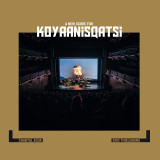
Dark-folk songwriter Chantal Acda and beyond drums-percussion musician extraordinaire Eric Thielemans propose a new score for Koyaanisqatsi, re-actualising the incredibly beautiful, raw, rhythmic and touching images of this 80-ties cinematographic masterpiece. Slow deep electric waves, lonely synths in sonic desert landscapes, rhythmic pulses, transporting drums and bells, and deeply longing sounds and voices make up the audible fundamentals of this imagined, neo shamanic, ritualistic music to accompany the Earth as it keeps on supporting our post human frenetics even today. This release contains a selection of the musical material scored for a live performance together with the screening of the movie. The live performance premiered on Film Festival Gent and Vooruit in the fall of 2022.
Currently based in Belgium, Dutch-born Chantal Acda (b. 1978) has worked under the Sleepingdog moniker since 2006, making three acclaimed albums that closed on the 'With Our Heads in the Clouds and Our Hearts in the Fields' (2010) album for which she collaborated with Adam Wiltzie (Stars of the Lid, A Winged Victory For The Sullen). They toured the UK and Benelux with Low in 2011. After all this, it was time for her first real solo record. Playing in various formations (Isbells, True Bypass, Marble Sounds) had made her conscious of the patterns that we all, as humans, share in. So, she sought out kindred spirits with whom she might record an album filled with freedom and intensity, and who were conscious of the patterns we so often fall back on. Nils Frahm was the first of these to cross her path. The inventive German pianist and producer is an intense and adventurous performer and was a perfect match for it. Acda also experienced a direct bond with Peter Broderick, a multi-instrumentalist known from his solo work (on labels such as Bella Union and Erased Tapes) and from his work with, among others, Efterklang. Cellist extraordinaire Gyda Valtysdottir from Icelandic group Múm had previously worked with Chantal as a member of the Sleepingdog live band. And lastly, Shahzad Ismaily stumbled into this picture by chance, but when Acda and he found themselves in the same room they formed an instant rapport. After this first record, 3 other solorecords followed. Chantal kept on searching for a deeper connection with the outside world and recorded "The Sparkle In Our Flaws" (2015) and "Bounce Back" (2017). She also released some live recordings with her band and also Bill Frisell, a highly respected jazz guitarist.(2018). These records were released on the German label Glitterhouse. Chantal and her band toured with these records in Europe. In 2019 Chantal created her first music/theatre performance P_wawau for Oerol Festival, The Netherlands. She worked with Valgeir Sigurdson (Björk, Bonnie Prince Billy,...) and singers from Het Nederlands Kamerkoor. As a result of this, she released the recorded music: Puwawau (2019). In 2021 Chantal released her most recent album Saturday Moon. (2021) For this album she worked with her band (Eric Thielemans, Alan Gevaert, Gaetan Vandewoude and Niels Van Heertum) but also with Bill Frisell, Shahzad Ismaily and Mimi and Alan Sparhawk (Low). Saturday Moon was very well received, internationally, by the press.
Eric Thielemans is a drummer and percussionist. Travelling across music scenes and disciplines, Thielemans navigates by means of his own compass. Most known for his resonant solo works like a Snare is a Bell, Sprang, Aural Mist and Bata Baba Loka and many collaborations with musicians in the experimental music scene, as well as the Jazz scene, and indie folk/pop/rock scenes Thielemans keeps on pushing the borders and expanding conscious aural spaces and territories. Recently, Thielemans has collaborated with PVT - a trio together with Mika Vainio & Charlemagne Palestine (album released April 2020) , PAT - a new trio together with Oren Ambarchi and Charlemagne Palestine, A new duo together with Oren Ambarchi, Billy Hart ("Talking about the Weather"), Chantal Acda ("The Sparkle in our Flaws", "Bounce Back", "Puwawau", "Saturday Moon"), Marshall Allen (Sun Ra), Tape Cuts Tape, Distance Light & Sky, Jozef Dumoulin, Trevor Dunn, Shahzad Ismaily, Vaast Colson, Nico Dockx, and many more. Currently Thielemans is working on r-e-s-o-n-a-n-c-e , a culminative work that encompasses and brings to the surface the underlying currents within his life in and with music. Withing r-e-s-o-n-a-n-c-e he investigates the everyday magic through conversations, writing and score writing to invite as many souls as possible to experience and co create the magic in the everyday.
WRWTFWW Records couldn't be happier to announce the release of Yutaka Hirose’s never-heard before 11-track collection TRACE: Sound Design Works 1986-1989, available on double LP and double CD, with liner notes from the artist.
TRACE is a collection of 11 unreleased tracks produced by Yutaka Hirose between 1986 and 1989, during the Sound Process Design sessions, right after the release of his classic Soundscape series album Nova. Sound Process Design was Satoshi Ashikawa's label, home of the Wave Notation trilogy (Hiroshi Yoshimura’s Music For Nine Postcards, Satsuki Shibano's Erik Satie 1866-1925 and Satoshi Ashikawa's Still Way). Following Wave Notation, Sound Process Design worked with museums, cafes and bars to create site-specific soundscapes, starting with the sound design of the Kushiro Museum. Yutaka Hirose was called to work on these projects.
Rather than simply providing pre-recorded compositions, Hirose sought to create a "sound scenery". To achieve this, he participated in the conception of the space and paid particular attention to the accidental combination of sounds by placing the speakers, using a multi-sound source, and following the concept of "sculpturing time through sound".
The composer explains: "sculpturing time through sound means that time, the space itself, the sound played in it, and the audience all become one sculpture. It is close to the idea of a Japanese tea ceremony where you use all of your 5 (or 6) senses to taste the tea."
TRACE: Sound Design Works 1986-1989 is divided into two parts. The Reflection segment is based on an ambient soundscape. It narrates "a sleep that starts with the sound of water droplets at dawn and slowly disappears into darkness" and feels like a natural and soothing progression of Nova. It was played in entrance halls, at events, in cafes and bars. The Voice from Past Technology segment expresses the dream world born out of that sleep and is based on what Yukata Hirose calls hardcore ambient, environmental music with a noise approach. It was played in museums and science centers.
All in all, TRACE is a crucial addition to every Japanese environmental music fan’s collection, alongside Midori Takada’s Through The Looking Glass, Hiroshi Yoshimura’s Green, Satoshi Ashikawa’s Still Way, Motohiko Hamase’s Notes of Forestry, Inoyamaland’s Danzindan-Pojidon, and Yutaka Hirose’s very own Nova.
Anita Clark’s new Motte album, »Cold + Liquid«, builds glacial atmospheres, frozen moods and isolated impressions. Portraying New Zealand through socio-geological sound, breathing in Christchurch cultures and locales, the album embodies an artistic simulation of the Kiwi environment. Motte borrows from an array of sound sources to create an immense entity, with each piece situated precisely along the path. »Cold + Liquid« offers this rich sensory experience, transporting the listener into a world of Clark’s imagination.
As a master violinist, Clark is a favorite of the NZ music scene. She’s been employed by Nadia Reid, Marlon Williams, Lawrence Arabia and Maryrose Crook of The Renderers for her skills. Currently, she plays with The Phoenix Foundation, Luke Buda and Don McGlashan and The Others. Her skillful reach across genres fuels her popularity both with the rock under and overground, and she has also built a rich CV of film soundtracks and contemporary dance compositions.
With such a powerful musical force behind it, Cold + Liquid germinated as a result of a prolonged silence. Clark was suffering from vocal cord paralysis, leaving her with a culminating sense of frustration which could only be released through songwriting . The album’s early life was purely instrumental. But as she prepared for the studio and was searching old voice memos hoping to find vocal tracks, her voice returned. A fervent week followed, where she reimagined the entire album, now with singing. She aimed to make something colossal, and set about finding the right textures to add. A friend who works at Oamaru Freezing Works gave her field recordings of the temperature control room, a vast cold space of isolated machinery, where ice grows and dissolves in ever-evolving sculptures. Getting her hands on shortwave/longwave radios, she incorporated frequency sweeps. Another friend provided her with the mechanical drones underneath the deck of a cement cargo ship, as it lay docked in Lyttelton Harbor. Still more sources came from Sign of the Bellbird, an historic environmental site in South Christchurch, where Clark and Thomas Lambert recorded bellbirds, rolling boulders, snapping sticks, thrown dirt and the papery sound of the native harakeke plant.
While violin dominates the first Motte album, Clark sought to expand instrumentation. She was gifted a handmade Pūrerehua puoro, a traditional Māori instrument that sounds similar to the whirling and hovering of a moth (which is “motte” in German). A reacquaintance to the guitar occurred after developing an alter ego project entitled 'Sex Den,' with sleazy noir-esque guitar riffs in response to a failed rumour from a local drug-addled dive bar. Guitar and synth allowed for a broader songwriting palette along with a sometimes Dadaist approach to lyric writing. These new tools accent the extreme ambiences of »Cold + Liquid«, while additional work was provided by Ben Woods on synth and bowed guitar.
Finally it’s here! After many years, the repress arrived. This time how it was supposed to be. With new cover artwork and newly mixed songs. It's a rare but exhilarating occasion when you put on a new LP and are utterly blown away by what you hear. Every now and then, music makes you feel magically alive -- makes you want to jump around, pound your fist in the air, and shout "Oh, yeah!" Listening to Grand Fury, the second major release by Los Angeles quartet the Bellrays, is such an experience. Imagine the Funhouse-era Stooges fronted by a female R&B singer instead of Iggy Pop, and you'll have a vague understanding of what the Bellrays call "maximum rock 'n' soul". Although they've drawn comparisons to the Stooges or the MC5 fronted by Tina Turner, Etta James, or Aretha Franklin, the Bellrays rightly point out that soul was an important element in those Detroit-area punks' sounds. So, in some ways, the Bellrays are just bringing out an element of early punk music that was there all along. Nonetheless, the resulting sound is startlingly unique. Lead singer Lisa Kekaula has also sung jazz, and it's obvious she has technical skill, but she tears into these songs with a venom and passion that is pure rock 'n' roll. Bandmates Tony Fate, Bob Vennum, and Ray Chin provide a raw, blues-edged backing that is loose enough to allow Kekaula considerable room to go wild. And does she ever. With her raucous voice and the aggressive songs penned by guitarist Fate, Kekaula makes you believe she'd sooner spit in your face than look at you. "I'm stuck inside a moment / Can't find my way out / And time keeps draggin' on" she sings on "Fire on the Moon", but the confident way she spits out the words makes you believe she could claw her way out of anything. Likewise, Kekaula's indictment of "Stupid Fuckin' People" is so fierce it's almost scary. When she snarls, "Stupid fuckin' people always get in my way / Want to ruin my piece of the world" you know you'd better get out of her way. The only time this sonic assault slows down is on "Have a Little Faith in Me", a sexy soul number that Janis Joplin would have been proud to sing. While Kekaula's amazing voice and charisma are key to the Bellrays' sound, the rest of the band has to be commended for rocking so hard without drowning out that fierce set of pipes. With all the over-produced pap dominating the airwaves, hearing a band this raw and raucous is a dream come true.
On the occasion of Christian Muthspiel's 60th birthday, In+Out Records is
releasing the album 'Simple Songs' for the first time on vinyl - limited to
999 copies worldwide and personally hand-signed by the jubilarian
Aside from Werner Pirchner's "Himmelblau", the nine duos which Christian
Muthspiel composed especially for this album form a cycle of duets in the mood
set by the first track, "Pas de deux tranquille". Muthspiel is featured on trombone,
piano, e- piano and once even on the recorder, alongside Steve Swallow, whose
distinctive sound on the bass guitar is perfectly suited for this project.
Overdubs, loops and other electronic effects were intentionally avoided in order to
focus on the pure quality of the playing. The underlying principle for all of the
compositions on this album was to keep it simple, both in terms of composition
and sound; to seek refinement in simplicity and to follow the natural, consistent
development of one small musical cell per song. The progression of keys, modes
and tempos from one piece to another also played an important role.
The liner notes to this album are by the Austrian writer Christoph Ransmayr, who
writes very pictorially: "When I hear the Simple Songs that Christian Muthspiel has
composed and then he and his companion Steve Swallow have made twirl and
soar and float, I am sometimes transported to a riverbank in summer, where the
branches of a wild elder tree, stones and grasses become the neck and body of a
bass guitar or the tuning slide and bell of a trombone played with thrilling ease."
"It's the same as it ever was," Disco Doom sing on the opening - and title -
track of their brand new album Mt Surreal – but it's a lyric that never quite
rings true
While there's definitely a path from these eight new songs to the hearts and
minds of those waiting to hear them, it's never linear, never as straightforward as
just putting one foot in front of the other. Disco Doom is, as always, led by the
band's core of Anita Rufer and Gabriele De Mario, and the pair began working on a
new album back in 2018, with the final version we hear today worked on from
2019 until late 2021, the story taking many twists and turns along the way.
Releasing music together for some twenty years, such longevity has earned the
band a legendary status in Switzerland, as well as a reputation for making
incredibly forward- thinking rock music. Since the release of 2014's "Numerals",
the Zurich- based band have toured the EU/ UK with both Built To Spill and The
Breeders, had their music featured in the end credits of HBO's Animals, and have
also released a critically acclaimed album under their J&L Defer alter-ego.
True to its name, Mt. Surreal is truly that – a strange and peculiar journey that'll
wrap you up deep inside its intoxicating world, where lyrics leap out at odd
moments, where a hook grabs just when the whole thing threatens to combust.
"Mt. Surreal is a feeling we can't describe properly and one that's constantly
changing. It is a longing for what we can not yet describe," the band say of the
new album.
repress
They call her ’The Rose of the Nile’, ‘The Queen of the Nile’, ‘The Daughter of the Nile’ or even ‘The 4th Pyramid of Egypt’ since she’s known as the greatest Egyptian singer of all times. Om Kalsoum’s mythical life story of a poor peasant girl who grew up to become the face of Egypt is a 20th-century fairytale. Almost half a decade after her death the power of her music and singing is still moving the hearts of millions of people worldwide. At the end of her overwhelming career she was introduced to the young but brilliant composer Baligh Hamdy who wrote this 30 minutes lasting monument for her in 1969. In the footsteps of Mohamed Abdel Wahab, the godfather of Egyptian modern music, Baligh Hamdy refreshed the classical Egyptian orchestra sound with the addition of stylish instruments like electric guitar (Omar Khorshid), organ (Hany Mehanna), accordeon and horns that were adapted to the eastern tonal system. The studio version of this immortal “Alf Leila we Leila” must undeniably be archived under the best recordings ever made in music history!
The master of all things creepy, Widow slithers back with his sophomore DDD release. 'Spooky Stories' will take you down the dark rabbit hole into a world of scares, spirits and suspense.
Widow's sound is characterised by a brilliant use of negative space, it's often what's not there as much as what is. Haunting atmospherics, deep bass, minimal drums and cheeky samples complete the picture.
Any fan of Deep, Dark & Dangerous will know many of these tracks from livestreams and shows. We see you hiding under the bed covers.
"Kontakt Audio and Infinite Fog Productions proudly present the 25-th anniversary reissue of the one of most unique albums on avantgarde/neoclassic music – Ihor Tsymbrovsky – Come, Angel.
Recorded in 1995 in Ukraine and released in 1996 just as a small run on cassette on Polish label Koka Records, the album without any promotion little by little became legendary and madly wanted by many fans all around the world. And from the first seconds, you can hear why it is so. Pretty hard to explain what songs play Ihor, moreover that would be senseless. “Come, Angel” is one of those albums which are so unique that takes you in a vacuum of verbal forms in an attempt to describe the record. In a few words, this is definitely very intimate and deeply emotional music with an absolutely incredible voice. The first associations could forward you to Antony Hegarty from Antony And The Johnsons, Marc Almond, Arthur Russell, Baby Dee, Bjork. Experienced listener familiar with these great artist knows that all of them are inimitable and Ihor Tsymbrovsky is totally inimitable as well.
In 2016 well-known German label Offen Music published 3 tracks from the album “Come, Angel” which brought a lot of attention to Ihor’s music. This time we’re excited to announce the first full album reissue on CD, Double vinyl, and tapes. Beside the full version of the album, you’ll find an exclusive bonus song from the cult compilation “Music The World Does Not See” – Nefryt Records 2000.
~
“For me, music is a certain way of cultural survival. Here I do not set myself theoretical problems or experiments.
The connotations of life are important: rhythms, melodies, their connection with language, poetry, real life, virtual or imaginary space. It is very important to me how the recitation of work sounds, how consonant and vowel sounds dissolve in singing, how they combine musically. I understand sound space as a field of my interpretations, preferences, priorities, and I do not use direct imitation. If I hear a melody or a musical phrase, and it is fixed in my memory, later I extract it in my own interpretation, as already formed by this field. In art, the goal is in the work itself, not outside it. For me, the expression “To be is to create a new reality” is another winged reality.” – Ihor Tsymbrovsky
~~
“Tsymbrovsky – an architect, musician, a poet, an artist; one of the most underestimated musicians in Ukraine’s artistic world. Many critics pulled their hair out trying to get to the bottom of Tsymbrovsky’s music. It has been inspired by jazz, minimal, modern, ethnic, and meditation music. Tsymbrovsky is not a virtuoso, however, he creates whole worlds with his astonishing falsetto. Although Cymbrovsky’s music is simple it is made of many elements. Filled with magic and unusual sensitivity and warmth it can be therapeutic for the listener. This is that kind of music, which can be listened to many times – in a different way each time.” – Koka Records.
~~~
“Igor Tsymbrovsky’s only album “Come Angel” (1995) still remains perhaps the most bizarre phenomenon in Ukrainian music since independence. The story of its author is a vivid example of cultural amnesia. In the pre-Internet era, Tsymbrovsky was a prominent figure in the Ukrainian underground, performed on the “Red Route”, went on tour in Germany. However, he left a minimum of evidence of his activity and became a silent legend for a few. We talked to Igor to find out where he came from and where he was going.
The album “Come Angel” is eight compositions performed with a falsetto to the accompaniment of a piano. (Tsymbrovsky’s falsetto is a legacy of the Lviv Dudaryk choir, where he sang as a child.) It would seem that it could be easier. But, despite such ascetic tools, Tsymbrovsky managed to create a phenomenon unique to Ukrainian culture. Some people compare him to Benjamin Clementine and Anthony Hegarty, but no comparison will be exhaustive. The lyrics of the songs attract special attention: two of them were written by Tsymbrovsky himself, the others demonstrate his remarkable literary knowledge. Here and Guillaume Apollinaire, and Mikhaijl Semenko, and even less obvious poets, such as Mykola Vorobyov or Jozsef Attila.
The young performer’s first performance took place in 1987 in the club of the Forestry Institute. It is quite symbolic that this room used to be a Jesuit church because such a chamber environment suits his songs about angels much better than the noise of big festivals. However, there were also many festivals in Tsymbrovsky’s career: in 1989, Chorna Rada and Chervona Ruta, in 1991, Kharkiv’s Nova Scena and Ukrainian Nights in Gdansk, Alternativa in Lviv. Ihor calls his first performances musical performances and notes that they sounded completely different. Unfortunately, we will never know exactly how.” – Amnesia
~~~~
“The magicians at Dusseldorf’s Offen Music pluck a madly beguiling pearl of late-night songcraft by Ukraine’s Ihor Tsymbrovsky to follow their vital releases by Toresch and Rex Ilusivii. Come Angel was first recorded in Lviv, Ukraine, in 1995, and issued on cassette by Poland’s Koka Records in 1996. There appears to be no prior mention of the release or artist on the internet and quite how it came into of Offen Music possession is not disclosed, and that only ratchets the record’s enigma to astonishing degrees once you’ve heard the music. In a quivering, high register, androgynous trill, Ihor Tsymbrovsky beckons heavenly beings in the remarkable A-side Come, Angel against a swirling backdrop of phasing, subtly delayed organ. It was recorded in one take (this is the 2nd version), and, if we’re not mistaken, you can hear the keys being pressed rhythmically in the background, which seems to be the song’s only tangible connection to this mortal world as Ihor vaults octaves high and close-in-the-mix with the sort of alien, dreamlike vocal that requires pinching oneself to make sure you’re awake. Spellbinding is definitely the word. On the other side he (we’re assured it is a ‘he’ in the promo text) sets two poems by Mykola Vorobyov and Mykhal Semenko, respectively, to emphatic piano keys, this time more shy of FX save for some delay, placing that willowing, avian vocal at a dreamy arms reach in Roses for the Poet, and with a sort of liturgical dark jazz feel, sorta like Lewis repenting his sins as a castrato monk, in the spare atmosphere in By the Sea. This is gold-seal business, we tell ya. Clock the clips and clear some swooning room.” – Boomkat
credits:
Music By – Ihor Tsymbrovsky
Lyrics By: Ihor Tsymbrovsky (tracks: C2, D1)
Atilla Joszef (tracks: B1)
Mychajl Semenko (tracks: B2, C1,C3, D2)
Mykoła Worobjow (tracks: A1,A2)
Engineer – Edward Hryhorjew
Remastering – Ihor Tsymbrovsky"
- A1: Laboratorija - Jugoton Express
- A2: Laboratorija - Devica 69
- A3: D'boys - Zaba
- A4: Beograd - Sanjas Li U Boji
- A5: Data - Neka Ti Se Dese Prave Stvari
- A6: Brazil - Gdje Nema Te
- B1: Denis & Denis - Jugoton Express
- B2: Denis & Denis - Ti I Ja
- B3: Du Du A - Romance
- B4: The Master Scratch Band - Pocket
- B5: U Skripcu - Noc Ca, Ca, Ca
- B6: Parlament - Kad Je Kraj Blizu
- C1: Dorian Gray - Jugoton Express
- C2: Dorian Gray - Tonemo U Mrak
- C3: Hc Andersen - Palcica
- C4: Sladana & Neutral Design - Neko Je Tu (Sa Mnom U Sobi) (Sa Mnom U Sobi)
- C5: Amila - Vodi Me Iz Ovog Grada
- C6: Tuzne Usi - Ti Me Uci
- C7: Zana - On
- D1: Oliver Mandic - Jugoton Express
- D2: Oliver Mandic - Dode Mi Da Vrisnem Tvoje Ime
- D3: Hc Andersen - Snjezna Kraljica
- D4: Dubravka - Harakiri
- D5: Milka Lenac - Ponocni Express
- D6: Nicky - Radio Video
- D7: Mladen Kusec - Tonkica Palonkica Frrrrrrr
Synthetic Music From Yugoslavia 1980-1989
"The galloping technical progress in the second half of the last century dominated all spheres of daily life, art and culture. In the music industry machines took over the role of classical instruments and did not stop at RnR, punk nor industrial music. No one could resist the challenge, but also the prevailing trends in the 80s. The music industry was influenced by the electronic virus globally, not sparing even the remotest corners of the planet, producing bands like Depeche Mode, New Order, Soft Cell or lesser known ones like Liquid Liquid, Section 25, The Wake as well as the pioneers of the electronic music Silver Apples, Pierre Henry,etc .
What was going on in the music industry of former Yugoslavia and at Jugoton, the biggest YU music label at that time? The all over answer is given by a new release of Everland Music: Electronic Jugoton - Synthetic music from Yugoslavia 1964. - 1989. Vol. 1
Electronic Jugoton is the first part of two double albums, where the second part will even go back to pre-electronic music from 1964. Both double albums were initially released by Croatia Records (ex-Jugoton) in 2014 on a 2CD set with no less than two and a half hours of material (47 songs, 35 performers), showing the contemporary trend of Jugoton at that time towards avant-garde and provocative directions in electronic music. This untimely compilation is released for the first time on vinyl now on two double LPs, housed in gatefold sleeves by Everland Music, where part 2 will be released in 2023.
The brave and insightful creators of the compilation Electronic Jugoton, veteran crate diggers Višeslav Laboš and Zeljko Luketić, have excelled at reconstructing the musical past of electronic music in Yugoslavia from 1964 – 1989. Jugoton's extensive research included the most exciting and progressive moments of pop and disco music, early rap, electronic responses of new wave, RnR, post punk and industrial bands to the current trend of the 80s, but also pioneers of avant-garde electronic music.
Electronic Jugoton part 1 is officially opened by the band Laboratorija with the song Devica 69, which opens a window to a completely new and experimental world in former Yugoslavia.Laboš and Luketić have boldly chosen the material without reservations, suggesting that for the first time in one place we have a section of forgotten, unique underground bands like Beograd, Data, Brazil, The Master Scratch band, DU DU A and beyond.
Besides the excellent underground bands, we find popular performers of the time performing less well-known songs: Denis & Denis, Oliver Mandić, Slađana & Neutral Design.
Electronic Jugoton part 2 is partly dedicated to unique electronic music in the performance of important Yugoslav punk, new wave, RnR and industrial bands: Zana, Pekinška patka, Električni orgazam and Borghesia, while the second part of the material is focused on avant-garde early electronic music in Yugoslavia, where the works of composers Igor Savin, Branimir Sakac, Igor Kuljerić and Miroslav Miletić were presented. Luketić and Laboš rescued the obscure electronic tune Elektra by Zdenka Kovačiček, who was at that time Jugoslovska Soul and funk diva.
The uniqueness and quality of this compilation are also audio stories for children, which were extremely fertile ground for an experimentation with electronic sounds, as they should be highly imaginative to attract the attention of the childrens. Electronic Jugoton is also the first compilation in which the listener will find fragments of interviews with actors from the time gave for Jugoton Express. This was a series of promo vinyls printed in extremely small quantities in the 80's and intended to be exclusively for radio stations. An average of 30 minutes of promotion material and interviews with musicians were available for the first time through this compilation.
The value of this compilation is time and priceless. The only question is whether you will be fast enough to catch your copy of the limited double vinyl editions!"