In the sweltering North-Eastern Brazilian state of Pernambuco lies the coastal city of Recife, where Amaro Freitas is pioneering the new sound of Brazilian jazz. For the prodigious young pianist, the spirit of his hometown runs deep. From the Afro-Brazilian maracatu born on the sugar plantations of slavery, to the high intensity carnival rhythms of frevo and baião, Amaro's heavily percussive approach to jazz is as indebted to these Pernambuco traditions as it is to Coltrane, Parker and Monk.
As with many of the greats before him, Amaro began playing piano in church aged 12, under the instruction of his father, leader of the church band. As his natural talents became obvious, the young prodigy quickly outgrew his father's instruction. He won a place at the prestigious Conservatório Pernambucano de Música but had to drop out as his family could not spare the money for the bus fare. Undeterred, Amaro gigged in bands at weddings and worked in a call centre to fund his tuition. The transformative moment came at age 15 when Amaro stumbled across a DVD of Chick Corea concert, 'he completely blew my mind, I'd never seen anything like it but I knew that's what I wanted to do with a piano'.
Despite not actually owning a piano, Amaro devoted himself to studying day and night - he would practice on imaginary keys in his bedroom, until eventually striking a deal with a local restaurant to practice before opening hours. By the age of 22 Amaro was one of the most sought-after musicians in Recife and resident pianist at the legendary jazz bar Mingus. It was during this time he met and begun collaborating with bassist Jean Elton and the pair went in search of a drummer. 'We kept hearing about this crazy kid who was playing in 7/8 or 6/4, we knew we had to meet him'. Hugo Medeiros joined, and the Amaro Freitas Trio was born.
'I want to show the simplicity of music, to break the stigma that the piano is for a particular social class. Yes, it's a difficult instrument, which many people do not have access to, but with it you can express everything.'
Following his critically acclaimed debut album Sangue Negro (black blood), the title of his sophomore release Rasif is a colloquial spelling of Amaro's home town. A love letter to his native northeast, Amaro explores its traditional rhythms through the jazz idiom, employing complex mathematical patterns reminiscent of some of the most challenging works by fellow Brazilian masters Hermeto Pascoal, Egberto Gismonti and Moacir Santos.
Preferring to see the piano as a though it were a drum with 88 unique tones, Amaro's intelligence and emotion intertwine on every track, from album opener 'Dona Eni': a scorching reconstruction of the baião rhythmic structure, played in seven measures instead of two, to the serene homage to the coastal reef and its ecosystems on the title track 'Rasif'. 'Aurora' is a suite of three parts, representing the sun's journey from the light and soft of the rise, to the aggressive dissonance at its midday zenith and descending chromatic cadences as the sun sets.
Due for an Autumn release on Far Out Recordings, Rasif sees Amaro Freitas take a deserved step onto the world stage. Having already made a name for himself in Brazil, Amaro and his phenomenal band will embark on their first European tour later this year.
Amaro Freitas - Piano
Hugo Medeiros - Drums & Percussion
Jean Elton - Double Bass
Henrique Albino - Baritone Sax, Flutes & Clarinet
All compositions by Amaro Freitas
Produced by Amaro Freitas
Recorded by Bruno Giorgi @ Carranca Studio, Recife, Brazil
Mixed and mastered by Bruno Giorgi @ Quarto Studio, Rio de Janeiro, Brazil
Executive producer and management: Laercio Costa
Cerca:under the world
A girl stands at an arcade machine, her eyes fixed on the glowing screen with her back turned on the world. She seems to be alone, somehow lost and yet at one with herself. The cover art (by Carmen Alt-Chaplin) for Peter Zirbs' debut album as a solo artist conveys escapism - being totally immersed in another reality, in the virtual world. His equally futuristic and retro-futuristic aesthetic is permeated with melancholy. What if we really don't exist
Peter Zirbs himself also knows how to escape: how to hunker down in the studio, hide from the outside and lose himself in the music. He emphasizes that such an escape is healing, leading to the world of the romantic. The Viennese musician and producer has always felt most comfortable straddling genres, whether techno and rock in previous band projects, or now as a solo artist combining post-minimalist dramatic synth/piano ("Firmament") with modern wave pop ("Are You Reality") and poignant ballad-kitsch ("Dreamescape"). Here there are subtle changes in emphasis gracing otherwise repetitive harmonies; there a true appreciation of pop. Ten songs - five with lyrics, five without - some threatening, some heartbreaking, all stirring. They project a world - sometimes concrete, sometimes abstract - in which can be found beauty and disquiet, love and fear, failure and perseverance. A world one is happy to get lost in while the cinema in one's head tells its own stories. (by Manuel Fronhofer)
As part of the Viennese rave and techno scene of the 1990s, multi-instrumentalist and electronic producer Peter Zirbs has released music under several pseudonyms, produced and remixed various artists, and scored a range of experimental films. He has broken down genre boundaries over the years with the variety of his output. The circle closes now. In 2018 Peter Zirbs finally steps into the spotlight as a solo artist.
"What If We Do not Exist" by Peter Zirbs is released on 19th October 2018 by Fabrique Records. Guest vocalists include Monika Heidemann (Heidemann, The Phenomenal Handclap Band, The Juan MacLean / DFA Records), Tom Walkden (Wolventrix) and Gerard McNeice.
If you're going to call your band audiobooks, you'd
better have some good stories to tell. Stories that
should move you and stories to make you move.
Stories about real life and surreal life and all that
weirdness that you just glimpsed out of the corner
of your eye. Luckily, audiobooks really do.
The London-based duo have developed a unique
ability to conjure up magical aural snapshots that
wallop you like bong hits.
Each of their discombobulating observations comes
stretched out over a series of discomfiting
oscillations, like messages from the spirit world or
pulp fictions found in a box at the end of your road
or a crackling pop broadcast from a far-away
galaxy.
'One to definitely get under the skin... a thing of
exotic beauty' - DJ Mag (8/10)
David Holmes was drawn to DIE HEXEN by their 'magical sensibility that has both shades of dark and light, which is something that always appeals to me in music'. After featuring in his edition of the famed Late Night Tales compilation with a take on the original suicide song 'Gloomy Sunday', DIE HEXEN returns to expand upon their dark ambient journey towards transcendence with an eagerly awaited debut album.
DIE HEXEN's genre eschewing synth driven compositions draw inspiration from the disturbing beauty of Hieronymus Bosch's artwork and several brushes with death, evoking a spirit who traverses realms of the underworld to bring forth knowledge of an Ancient past and in doing so, to reveal the not so distant future.
The Garden of Unearthly Delights transports the listener through strange visions of darkness, beauty, creation, destruction, death & rebirth. An exorcism of body, gender, tribe towards a place of ultimate transcendence.
Somewhat of a polymath, DIE HEXEN has already shown their prowess with live performances part music/part performance art spectacle, as an avant-garde filmmaker and as an award-winning multi-instrumentalist, sound designer and film scorer.
DIE HEXEN's divergent interests from Japanese Butoh theatre to Wiccanism, Shamanism, celestial mysticism and time travel informs their method, as they explain themself; 'The compositions I write are not written, at least not by me. They appear to me as audio/visual hallucinations. I can hear, visualise, and feel the whole composition before me. My hands know instinctively what notes to play and like a stream of consciousness, voices emerge. Having suffered severe head trauma that resulted in a heightening of the senses, the theme of death is an increasingly present theme in my work. With this, my perception of death and what is beyond changes as I contort between this world and the next physically and mentally, musically and visually. Working with music or film, my vision is one. The calling to express these auditory hallucinations is inevitable'.
Marti Caine's infamous Point Of View is a groovy blend of slow-mo funk, dark disco and precise pop. Originally released on BBC Records in 1981, it has attracted a considerable cult following this century. The odd charity shop score aside, it has been impossible to find a copy for less than eye-watering sums (often selling for over £200) and, as such, it's an honour to present the first officially licensed vinyl reissue of this sublime record. Featuring expert liner notes written by Bill Brewster - perhaps the record's most notable champion - this lovingly curated release is limited to just 500 copies.
Marti Caine was a popular UK TV entertainer in the late 1970s onwards and Point Of View presented her with an opportunity to proceed in a hip direction by working with British R&B heavyweight Barry Blue. His legendary reputation was secured with a string of great records, among them the first three Heatwave albums, the Balearic hit "Afro Dizzi Act" by Cry Cisco and the cult smash "Breakin' In" by Javaroo. However, despite the array of talent working on the album, Point Of View sank without trace at the time. It's something that Blue attributes to the bizarre way BBC Records worked, and he entertainingly expands upon this within the liner notes.
Musically, the highlights are many and memorable. Its most notorious track is the sublime soul stepper "Love The Way You Love Me", the reason most people covet this album so profoundly. However, from the dark dubby disco of "Snowbird City" to the moody ballad "Love Is Running Through Me", the lesser heralded tracks are nothing short of exquisite. Indeed, the chugging elegance of sleazy disco opener "Can I Speak To The World Please" showcases a string-drenched strutting-funk that would've been enviable the world over. It's that good.
The outlandish artwork - presenting a striking, green-eyed Marti treating a tiger to a headlock - has been faithfully restored and is arguably worth the price of admission alone. With access to the original tape transfers, Simon Francis' sensitive mastering elevates the sound throughout and, as ever, it has been pressed at a reassuringly weighty 180g. Sadly, Marti died of lymphatic cancer at the tragically early age of 50 in 1995, so is not here to experience what we hope will be a long overdue reappraisal of the hitherto underheard genius of Marti Caine, the singer
Leifur James will release his debut album in October through Late Night Tales' artist label Night Time Stories.
A Louder Silence is the London-based producer and multi-instrumentalist's first proper release; his two earlier singles feature on the record, after gaining support from Gilles Peterson's Worldwide FM with a live airing and interview in 2017, plus continued backing from XLR8R, Stamp the Wax, and BBC Radio 6 Music DJ's.
The album is both spacious and thought-provoking, energetic yet restrained, brimming with nuanced electronic instrumentals, dubby synths, and jazz breaks — creating an array of rich textures, complemented occasionally by James' own soulful vocals.
While James' early unreleased work was singularly electronic, A Louder Silence focuses on analog synths and warm acoustic instruments, all played by his own hand. It's the product of a two-year spell in James' home studio, with additional live drums recorded with Jim Macrae at London's Old Paradise Audio.
James' rich musical influences are laced through the release. Encouraged by his mother, a classically trained pianist, he learned to play the cello and developed adeep understanding of rhythm and melody that informs his approach to writing electronic music. James playsthe piano he grew up listening to in 'Mumma Don't Tell' and samples an indefinable percussive element to drive forward 'Suns Of Gold.' 'Night and Day' sees cello plucks and long melodic strokes interlink with a grooving synth line. He also field records the atmospheric Moroccan sea in 'Red Sea.' Inspiration stems from the experimentation of modern day electronic producers, fused with the Jazz, Classical, Blues, and Soul music that soundtracked his youth.
Central to the album is the idea of space. James recalls the early advice of his uncle, a jazz guitarist, who features on 'Uncle Blue': 'I remember him saying to me: "What goes in comes out' James says. 'Every detail should be a worthy detail; sometimes nothing is better than something.' Moments of blissful, structured intensity are juxtaposed with stillness and near silence — dark and light; loud and quiet. This also forms the foundation for the album title: A Louder Silence reflects the dichotomy of finding pockets of stillness in a noisy world.
The result is 10 distinct tracks delivered as one coherent and well-structured long-player debut, set for release on LP, CD, and digital, on 5th October 2018.
Live dates follow a debut live show earlier this year at the Jazz Café with Yazz Ahmed, including an album launch at London's Ghost Notes in October.
Quest, transit, chaos, mutation, transfiguration, ascension and illumination. These are some of the steps followed in the journey of life that are embodied on each track of the album Adonai. The solo debut of the multi-instrumentalist composer Marco Paul condenses a career of more than ten years, in which, the search for the truth of oneself and authentic sound has traveled and nurtured from different genres and cultures. Adonai is an odyssey that combines sounds and images of the earthly and oneiric worlds: an audiovisual work that opens several windows to the different perceptions of the facts that make up the life of the human being.
After 9 years of constant international touring, 6 albums and more than 400 live performances with the bands Sour Soul, Ratbot and Funk My Jesus, as well as the conception and musicalization of the award-winning short films "Undermine" and "24K All You Need Is Gold", Marco Paul decided to retire to an island in the Caribbean, where he found and refined his sound. Thus, between 2014 and 2016 he created the music for Adonai, a work produced by Aitor Etxebarria under the label of Forbidden Colours.
The recording includes guest musicians from different countries such as Aitor Etxebarria (synthesizer, electronic magic) and Hibai Etxebarria (double bass) from the Basque Country; Michael Alan Hams (drums and percussion) and Joe D'Etienne (trumpet) from the United States; and Fatima Gozlan from Hungary (Ney and Derbake).
The consummation of the work is a mid length film created in 2018. It consists of 5 chapters directed by 5 different directors.
The audiovisual journey begins with the conception of the philosophical "Filius", an alchemical symbol that represents the inner child, which transforms the experiences of life into the soul's gold. Later, in "Sylvian" (title that refers to the brain fissure that contains the auditory cortex), by listening to the subtle message that surrounds us, our consciousness and perception expand. Then, in "Tiamat", the pristine chaos that gave birth to the gods, embodies chaos, the confusion generated by the multiple voices: on one hand the moral and imposed precepts, on the other hand, the inner voice that seeks the liberation of the infinite possibilities. In "Hawa", through the recognition of the power of solitude and introspection self-reflective awareness is reached. Finally "Adonai" is the ascension to enlightenment: the further connection with the absolute. As an encore (only available in vinyl) "Teurári" is a gift: a tiny flower where all the points of the universe merge.
Since 2008 Düsseldorf based producer and live wizard Stefan Schwander deeply concentrates on his always evolving electronic venture named Harmonious Thelonious. It besprinkles the world with fractional musical structures in the spirits of American minimal music, in order to immingle them with African rhythm patterns. Exceptional hypnotic opiates, enlarged with twisted harmonies and tricky rhythm archetypes. All heavy danceable!
After five magnetic albums for labels like Emotional Response and his old home base Italic as well as a highly acclaimed string of EPs for in-demand platforms like Asafa, Diskant, Disk, Kontra-Muzik, Meakusma, The Trilogy Tapes or Versatile Records, he now produced a heavy arresting 'Petrolia' LP for Marmo Music - a label that is not new to Harmonious Thelonious. Already on the label's second release Tru West: 'The DOWC part 2' his 'Sunset Liturgy' fingerprints are audible with a moving remix. Now he delivers six epic tunes that only partly dance the familiar Harmonious Thelonious dance. There are deeply traces from Africa and Arabia. There is the polyrhythmic witchery that makes his music special. But in contrast his new tunes are more mental then his former ones. They have a menacing industrial feel but yet continue to be enlarged with the enchanting spirits of the land of the Sahara. Furthermore, there is a slight manic touch arising from nervous electronic and foremost organic melodies. The live played jittery is coming from the Berlin based experimental musician Ghazi Barakat, also known under monikers like Pharoah Chromium or Crème de Hassan for mind shredding ambient, drone, experimental, noise, industrial, free jazz and free improvisation music from beyond. For Harmonious Thelonious Barakat, who also produced together with Marmo Music artist Günther Schickert the collaboration album 'OXTLR' in 2014, tuned his wind instruments Rauschpfeife and Kangling elflock-stricken the Master Musicians of Jajouka way. And instead of giving them a prominent lead position, Schwander deeply implements his tones into his propulsive creations to evoke a modern rhythmic meltdown of Occident versus Orient spheres that exhale a deeply absorbing soul.
A record, who's psychedelic energy fits perfect into the Marmo Music cosmos - a world where the progressiveness of the 70ties continues to live in the current to disband all white bread musical norms for the energy of music without classes. Dancers of the world, unite!
- Spectral Decay' is a collection of musical reflections about the paradoxical contemporary state of humankind, whereas its own technological, social, cultural and economical development seems to entrench the possible points of a structura downfall. The narrative of - Spectral Decay' starts with heavy, mesmerizing industrial vibes. Due to the notable sound design techniques of Japanese artist Tetsumasa, his hefty piece - Nex' evolves into a harsh but still amazingly cinematical music sculpture.
Subsequent mid-tempo composition - Onzour Shayatini' by Meer dynamically follows the dark, experimental path of drone and noisy structures. Violent accents smoothly lead to the deconstruction of drum & bass patterns and turn into strident 90s metal riffs. The track progressively penetrates obscure subterranean abysses and becomes a perfect introduction to the next theme by Yuji Kondo - - Hades'. In Greek mythology Hades was the ancient god of the underground kingdoms, darkness, death and metals. Therefore, Kondo's music piece turns into an infernal portrayal of the underworld where tenebrous layers of bass frequencies, raw textures and Drexciyan sounds build up an enormous and lasting tension.
Side B begins with the track - Anthropocene' produced by Arboretum co-founder - Mogano. The whole composition refers to the present geological epoch we live in, characterized by environmental pollutions, depletion of fossil fuels and accelerated urbaniza- tion of the world. It is a deeply conceptual soundscape of a powerful system, that incorporates both - the destructive forces of technology and the infinite energy of the whole universe, that interweave in a devilish dance of post-techno, breakbeat and dub tones.
Thereafter, ~Raw in his piece - Poly Bios' pictures the interference of human structures in the nature. Creating a mosaic from indus- trial and tribal, organic sounds, he tells a mystical story of fear, hope, escape and primeval instincts.
The narration concludes with an atmospheric composition of NWRMNTC - solo project of Ana Quiroga from experimental ambient duet LCC. - Beyond' is a boundless, spectral reflection on collective human consciousness, where haunting vocals evoke a recon- dite, ineffable pain, leaving the listeners in a profoundly meditative state.
Laura Polan´ska
To be released on World Mental Health Day, part of the album's proceeds will be donated to a UK-based mental health charity. 'I often wonder how sadness moves through people,' Emika says, 'through time, through stories and history, and if it's something that becomes us rather than coming from us.'
% of album sales will be donated to charity Help Musicians UK
emikarecords. com Invites fans to anonymously share their experiences of depression and create a waterfall of comments inspired by the song Wash It All Away
Studio video promoting the album via Soundcloud, Autumn
Live / DJ video, promoting the album with Beatport, Autumn
Live streaming of the album from Emika's studio via FB, Insta, YT, September.
Bookings by Christopher at Melt Bookings. Team chose to give fans time to listen to the album first, shows starting early 2019, special album show with live band and dome visuals planned in the Berlin Planetarium Feb 2019. A few promo shows summer / fall 2018.
Boiler Room live show as part of Open Dance Floor series tbc
* Given its years of manifestation behind the scenes of other projects, Falling In Love With Sadness reflects a renewed understanding of Emika's own genealogy, kindred lineage and its connection to modernity. Marking a drastic departure from the menacing, stripped-down qualities of albums past, Dva and Drei, Emika has surfaced with a new upwelling of sound gracing the bittersweet, melancholic and sanguine.
* With the interplay of myriad genres both rhythmically and melodically intertwining between spacey, dub tinged Promises, lush synth pop hooks on Escape and the title track's soulful electro, a full spectrum of musicology remains primary to the ever-evolving chroma of Emika's umbrous sound.
* Further characterised by the breathy sibilance and sultry tones of Emika's noirish, vocal aesthetic, the album navigates through the morose and trappings of misanthropy by illuminating a narrative of emotional resilience and recovery.
* Co-produced with Robert Witschakowski of The Exaltics, and continuing her collaboration with guitarist Chris Lockington (as heard on Drei and Dva), Falling In Love With Sadness provides a fifth solo album for Emika, but moreover, defines itself as an overture for her future works.
tim jones, also known as Preacherman and recorded under midi man, ironing Board Band and t.j. hustler. he made one very rare lp, and two even rarer cD's. these tracks are from the cD's. he was a salesman for iBm in Las Vegas, where he sold selectric t ypewriters and then word processors during the day and at night he would perform in the Las Vegas lounges. he was somewhat of an engineer and adapted a hammond B3 organ to play a moog synth with some of the organ keys, (some still played the organ),
and he adapted the organ's foot controlled bass levers to play two moog synth bass pedals (a failed item moog made for a few years.) thinking he wasn't much of a live performer he had a wooden puppet made that he named t.j hustler, and together with the puppet, he would engage in long philosophical soliloquies, (some of which are featured on this album).if you meet tim, he is not someone who stops talking. in fact he even created a little book called universal Philosophy. he has a lot to say about everything. currently he lives with his 103 year old mother in
Oakland. there he infrequently plays shows on his casio where he fashions himself a live Karaoke performer, who comes complete with 5 wireless mics and P.a. and a list of about a 100 songs he can play. his invented organ contraption and puppet are in storage in Las Vegas, and he seems intensely
uninterested in getting them out, as 'the kids these days want to hear the sounds the casio makes.'
Moritz Simon Geist, media artist and robotic musician, publishes his first record. It is the world's first techno record played entirely by self-made futuristic robots. This is the 4-track EP to the following full-length album out 16. Nov. 2018. All of the sounds on his records are played by robots: small motors that beat on metal, futuristic 3D-printed robo-kalimbas, salvaged parts from old hard drives that click and cut. It took Geist several years to build, tweak, test and play all his DIY robotic instruments. His 'Sonic Robots' try to push the boundaries of the imaginable. He did so already in 2012 with his well-known oversized 808 robot - an iconic drum machine gotten real, 4 by 2 meter, filled with robotic parts which play the instruments live and in front of the audience. Now, Moritz Simon Geist goes even further to discover the unknown and futuristic world of techno robotics. For this quest he teamed up with the berlinian sound wizards from Mouse On Mars and dug deep in the history of mechanical music and experiments of early electronic music.
On the 4-track EP 'The Material Turn' Moritz Simon Geist turns materials into sounds. The opener 'Entropy' is a bassy club-track, played by futuristic bass-kalimbas, a psychedelic pattern of tonal glasses and pneumatic hi-hat patterns. It is core piece to this EP and is also featured in the main video. Even without a visual part, listening to his music, a sound world opens up which is unheard before: in definition, reference and organic nature. Geist: 'When you listen to robots playing, you realize, that they sound precise, but in contrast to digital sounds they transport an immense organic feeling. No beat is like the other, everything is played with actual acoustic physicality and thus actual error. On the same time, the repetitive nature of the robots make it perfect for playing electronic music. Its industrial and organic at the same time.' The second track 'Under Deconstruction' is a metal-on-metal slammer with a heavy beat played on a big sheets of metal. 'I often try to compose a track around one instrument', explains Geist, 'letting the sounds take a lot of room so they can stand out.' The B-side starts with 'Supercharged' - a heavy drone, reminding of the darked sides of music concrete. Here, tuned air fans, and a metallic percussion robot create the texture. 'Detok' closed the EP with an up-tempo club track, featuring complex rhythmic textures and well defined robotic percussion elements. What Moritz Simon Geist came up with is a stunning record of what is possible today - to explore the sound of mechanics that keep on filling our world. Geist creates a smashing soundtrack for both the precise automation and physical fragility that shapes today's society.
Another release from the UMX label with this 4 banging tracks from artists from the USA , with on side Natural Nate with 2 energetic electo breaks tracks that will keep your neighbours out their sleep , on side B is Mike devious with some slower electro but o so strong .
Be sure to get this one for your collection ( limited amount of copies 150 )
Greg Belson is a veteran DJ and one of the premiere collectors of soul music worldwide. He's known as the go to authoritarian for Gospel Soul music, is the compiler of the Divine Disco series on Cultures of Soul and presents his radio broadcast Divine Chord Gospel Show on LA's creative hub.
and Paulo Fulci is a DJ and producer out of Bristol UK. His work as part of the Situation edit crew has been released and supported as part of the underground for many years....he now spends his days slangin' records, whilst honing his disco scalpel skills in the late twilight hours.Following on from their incendiary slab of two sided gospel goodness 'Born Again' & 'Soul Revival', the Divine Situation duo have crafted the next lot of bangin' spiritualized dancefloor destroyers for your record box.
Here we have an EP catering for several sides to your night. The lead off cut is the flat out roof raiser 'The Problem Solver'.....then it's boogified territory with 'Brand New Feelin', before they close out with the end of 'nighter, 'Try Love'.
Once again, Moton bringin' the heavyweight platters that matter!
From the inheritor of John Coltrane's mouthpiece a re-integration of deep South African jazz roots with the Black Atlantic spiritual jazz continuum.
Celebration's release trumpeted the emerging dawn of South Africa's epochal changes. Sainted and blessed, Bheki Mseleku appeared as the herald of a new era, a prophet of rebirth and reconnection. This is a work signalling transition and change, and a sign of a South African music that was properly reconnected with global currents - a music that could journey far beyond the stifling combination of exile and oppression in which it had been bound.
Recognising Bheki as a kindred spirit to her late husband, Alice gave him the saxophone mouthpiece that John Coltrane had used during the recording of A Love Supreme. Coltrane was a permanent touchstone for the pianist, one of the few who Bheki felt had the same esoteric and spiritual focus as himself: 'the only musicians I know of who were deeply into this were Coltrane, and Pharoah and Sun Ra', he told an interviewer in 1992.
While the idioms of post-Coltrane spirit jazz are certainly to the fore on Celebration, they are energised by a swift and original musical vision, quite specific to Bheki's music, in which whole musical systems - the marabi and mbhaqanga jazz of the townships, American jazz, European classical, and more - are seamlessly mended together by the pianist's quicksilver musical sensibility and legendary technical ability.
Celebration was originally released on compact disc and cassette in the middle of 1992 by World Circuit. It was Bheki's first statement under his own name, and the first recorded presentation of his personal musical vision. This vision had been tempered across two decades which had combined intense professional playing with profound personal trials in both the spiritual and earthly domains, all set against the greater backdrop of South African political turmoil and exile in Europe.
The band brought together musicians hailing from three signally important points within the interconnected, communicating spaces of the Black Atlantic continuum - North America, post-colonial Britain, and southern Africa. With them, Mseleku created the first major South African-led musical statement to be produced after the sufferance of exile was ended. The ultimate and most egregious remnant of the centuries-long colonial era, apartheid, was finally being dismantled as they played. At this critical point, Mseleku's musical spirit work, channelled from a higher source, spoke of a time to come where all divisions might be transcended by a greater unity.
The Strictly Rhythm imprint is legendary and is instantly recognisable by connoisseurs worldwide. It's a label that has contributed time and time again to dance music culture across it's almost 30 year lifespan. Countless classics passed through the NYC offices of Mark Finkelstein and Gladys Pizarro and this brand new 'Strictly Classics' series looks to celebrate this cornerstone dance label and it's immense catalogue by going back to the archives and presenting some double-header action for diehard fans and newcomers alike. That's right, the 'proper' mixes, reissued from source and remastered to the highest spec, each track spread across one side of a 12" for optimal sonic playback.
Number 3 in the series kicks off on a proper old-school tip with CLS' mammoth 'Can You Feel It' from 1991, a collaboration between Todd Terry and Benji Candelerio CLS made a huge and lasting impression with this euphoric and anthemic slab of dancefloor madness. Instantly recognisable from it's ravey riff and funky drum programming, file this one under 'rave classic'! Over on the flip side we have South Street Player's smoothed out '(Who) Keeps Changing Your Mind', a rolling and deep jam from Roland Clark and George Morel that came out in 1993. This one's some lights down, honest to god soulful house music, skipping garage drums and that organ driven groove offer the perfect vehicle for Clark's gorgeous vox to soar over. Yet another set of absolutely essential SR cuts from the archive!
Remastered with love by Optimum mastering, Bristol from original master sources. Made in conjunction with Strictly Rhythm 2018.
Pyramids. Jagged Teeth Pushing Through Immaculate Skies. The Ever-changing Light. The Expansive Sense Of Freedom. The Wide Open Spaces. The Textured Landscape Seen From Above. Mountains. Watchful And Immobile For Thousands Of Years, Weathering Seasons, Transcending Change.
It's December 2016. I've Left The London Madness To Hit The Reset Button And Compose New Music In A Tiny Village In The Swiss Alps. I'm Over 10,000 Feet High, It's Minus 15 Degrees And The Snow Is Scintillating Under A Rich Blue Sky. I Turn Around And Suddenly This Gigantic Pyramid-shaped Peak Is Towering Over Me, Staring Me In The Face. Mind Blown. Senses Overwhelmed. Perspective. Lightbulb Moment. I Have My Album Concept.
I Wanted To Put Into Sound My Cathartic Experiences Of The Mountains. Every Track Title Was Chosen Before Composing. The Title Would Be A Catalyst For Visual Memories, Narrative And Overall Vibes. I Continued Developing The Tracks On Occasional Trips To Switzerland, But Mainly Back In The Gritty Habitat Of London's Hackney Wick. The Urban-nature Contrast Had An Impact On The Music Too.
I Use A Lot Of Found Sound, Stuff I Have Collected Over The Years, And A Lot Of Resampled Guitar Sounds And Textures. I Love Imperfections In Sound. Detuned Synths. Distortions And Glitches. Rhythmic Flutters And Percussive Frenzy. 'manual' Cut-ups. I Love Moving To House And Disco And Getting Lost In The More Melodic Side Of Techno. I Love Polyrhythms And Melodic Counterpoints. I Love The Energy And Rawness Of A Live Rock Band. I Channel All This To Create My Own Sonic Palette.
Artwork By Jimmy Turrell, Graphic Artist And Video Director Who Combines A Love Of Handmade Collage, Drawing, Screen Printing And Painting Alongside Digital Techniques. He Has Worked For Universal Music, Nike, Lexus, Levis, Mtv, The New Yorker, Intro, Capitol Records, The New York Times, Green Peace, Beck, The Prodigy/xl Recordings, Channel 4, The Guardian, Gq, The Times, La Times, Newsweek, Getty Images, Adidas, Sony Music, New York Magazine, Wired, Glastonbury Festival, And Vanity Fair Amongst Others.
The Debut Album 'pyramids' Comes Out Worldwide On Limited Double, Green Vinyl (including Download Code).
'The U.K. Singles Volume One: 1972-1978' presents ELO's early output of hits and b-sides as originally experienced by the band's fans in their native U.K. This collector's box set features 15 groundbreaking 45 RPM singles plus 1978's "The ELO EP," each fully recreated from their original releases more than four decades ago.
All of the music on 'The U.K. Singles Volume One: 1972-1978' was remastered from the analogue source tapes while each of the 16 7" vinyl discs in the collection features detailed reproductions of the original sleeves and labels from the 1970s. Nine of these singles - including "Roll Over Beethoven," "Evil Woman," "Livin' Thing," "Telephone Line" and "Mr. Blue Sky" - reached the Top 10 of the British charts and remain among the world's most enduring classic rock songs. On rock radio and beyond, ELO's hits continue to permeate pop culture. In 2017, "Livin' Thing" was featured in a widely-seen advertisement for Volkswagen while "Mr. Blue Sky" underscored a pivotal scene in the Marvel Studios blockbuster Guardians Of The Galaxy Vol. 2.
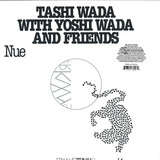
Composer Tashi Wada has performed for years with his father Yoshi Wada—artist, composer, and early member of the Fluxus movement. However, they have rarely appeared together in studio settings. Nue, the fourteenth entry in RVNG Intl.'s intergenerational FRKWYS series, finally brings Tashi and Yoshi, along with an eclectic group of close friends and extended family, together on tape.
Nue draws on aspects of Tashi's background for his widest vision to date—among them the minimalist bagpipe music of Yoshi, who co-composed three of the tracks, the psychoacoustic and perceptual explorations of his mentor, composer James Tenney, and reimagined forms of ancient and devotional music. The album, however, is not a tribute to the past or a recapitulation of familiar sounds. Instead, Nue is an intertwining of people and ideas as a means of growing, of looking inward to move outward, and of looking back to move forward.
To achieve this growth, Tashi assembled a core group of fellow travelers, including Yoshi, composer Julia Holter, producer Cole MGN, and percussionist Corey Fogel, to give life to this multifaceted suite. As an experience, Nue subtly navigates the interactions, intimacy and spaciousness of this group.
The album's title itself is a nod to Tashi's abiding interest in duality and the unknown: nue is a mythological Japanese chimera with the face of a monkey, the legs of a tiger, and a snake for a tail, a composite form, at once disturbing and otherworldly. But, as the composer points out, nue is also French for naked—stripped of complexity, bare and exposed, but also raw and essential.
From the doubling of tones—and the world of harmonic nuances such an action produces—to the rich interplay between individual musicians, all baring their own personalities and experiences through shared performance, Tashi's compositions allow space for these elements to join and grow. The multipartite creature that is an ensemble melds in the simplicity and purity of the music itself.
As explained by Tashi, each part was written with an individual in mind, not simply an instrument. And each individual performer makes their mark, from Holter's vocal performances on the cresting, oceanic 'Mutable Signs' and 'Ondine' with guest vocalists Simone Forti, Jessika Kenney and Laura Steenberge, to Fogel's resonant, precise percussion on 'Bottom of the Sky.' Producer Cole MGN, who has worked extensively with artists like Beck and Ariel Pink, helped to create a world of sound with minimal yet multi-dimensional materials. Like many of its influences, Nue uses deceivingly simple means to create complex, coherent worlds and narratives.
Tashi notes the influence of legendary Brazilian writer Clarice Lispector, whose work looked inward, investigating memory and emotion and dream, to understand the often overwhelming world outside the self. Like Lispector's classic novel Near to the Wild Heart, Nue cleaves these archetypal dualities—world/self, old/new, complex/simple—to create a work that allows them to coalesce into something singular.
As Tashi states in his liner notes: 'My desire was to create something both old and new sounding—ancient and futuristic—and ultimately something of its own world and other. Nue is a vision, an endless night of dreams, and a personal history of sorts, full of joys and demons.'
An Invitation To Disappear is the debut LP by British electronic musician Inland aka Ed Davenport - and his first release for A-TON. Based on his soundtrack for a video installation by conceptual artist Julian Charrière, Davenport has recast the material and field recordings into eight tracks of rhythmically intricate electronics and spectral, ambient techno, inspired by Charrière's visually striking, 76-minute tracking shot through a palm plantation toward a totemic soundsystem on full blast.
Both the album and original soundtrack were created in response to the 200th anniversary of the eruption of Indonesia's Tambora volcano in 1815, which plunged the world into darkness and caused a series of extreme weather conditions. At the time, the natural climate change crisis resulted in numerous global famines and is known throughout the northern hemisphere as 'The Year Without Summer', with global communities forced to adapt to sudden radical changes in temperature and weather.
An Invitation To Disappear offers a contemporary parallel, leading viewers - and listeners - down a seemingly endless direct path of gridded palms from dawn to dusk; a bio-commercial monoculture where ancient jungle once flourished. Light flickers between rows of fruit-laden trees and a distant fire burns in the undergrowth where the border between natural image and computer simulation breaks down. At the same time, formerly incoherent rumblings of sub-frequencies begin to transform into the contours of rhythm. This is reflected sonically in eight perspectives on the lush, synthetic jungle, made of myriad buzzing fauna, morphing melody and colossal bassweight. All paths lead toward an apocalyptic dancefloor, though speeds vary widely; rhythms dissolve from straight to broken, synth tempos operate by their own internal clocks (and logic). Juxtaposing industrial agriculture with rave culture, the album explores the industrialization and refinement of nature, and the new strange forms emerging from the synthetic grids of both.
As Inland, Davenport has previously contributed soundtracks to other installations by the Swiss-born Charrière, whose artistic practice focuses on bridging environmental science and cultural history, often taking place in remote geophysical locations, including ice fields, volcanos and radioactive sites.
Julian Charrière is a French-Swiss artist based in Berlin. A former student of Olafur Eliasson at the Institut für Raumexperimente, Charrière's art explores post-romantic constructions of nature, staging tensions between deep or geological timescales and those relating to mankind. His work has previously been shown across the globe, including at the main exhibition of the Venice Biennale in 2017, a solo show at Kunsthalle Mainz this past Spring and an upcoming solo show at the Berlinische Galerie opening September 26.
Inland (real name Ed Davenport) is a British producer, DJ and founder of Counterchange Records based in Berlin. Known for his detailed and explorative house and techno releases on his own label, Infrastructure, Naïf and more, Davenport has recently gravitated toward the contemporary art world, finding inspiration in the cross-pollination between Berlin's art and music scenes. Previous sound design collaborations with Charrière have been exhibited in institutions such as the Musée des Beaux-Arts de Lausanne in 2014 and Thyssen- Bornemisza Contemporary in Vienna in 2017.
The gallery version of An Invitation To Disappear premiered this past April at the Kunsthalle Mainz and will be on display at the Berlinische Galerie as part of Charrière's solo exhibition As We Used to Float, opening September 26, 2018. The LP will premier live together with the video installation during a special presentation in Berghain the same day for Berlin Art Week.