Will probably ship earlier than the 14th. Up until Raising Hell, the rap juggernaut we know as Run-DMC was still in its building and breaking-down- doors phase. In 1986 that changed, and in a dramatic way. With their third long-player, the group had reached the mountaintop. It was THE record that proved hip-hop wasn't a fad. Raising Hell marked an important and significant new era for the group. Leaving producer Larry Smith for up-and- coming sonic innovator Rick Rubin (still co-produced by Run's brother Russell Simmons), they began to fully transition not only their own sound, but the sound of the entire genre. Less live playing - with some exceptions - and a slicker, tighter sonic attack. Musical aesthetics aside, though, at their core they stayed true to the essence of hip-hop: two turntables and a microphone, or two. It's impossible to talk about the album without its worldwide smash, 'Walk This Way,' which hit #4 on the Billboard pop charts and saw the group digging in the rock crates to summon Aerosmith in the flesh, combining Steven Tyler's and Joe Perry's musicianship with the group's own take on the '70s classic. The song's video cemented Run-DMC as legit MTV idols, and both groups rode its wave to new heights. Beyond 'Walk This Way,' the platter is full to the hilt with undeniable classic singles: 'You Be Illin''; 'It's Tricky'; 'Peter Piper' and the fashion-world shifting 'My Adidas.' Each song was new proof that Run-DMC's sound was indeed new, but still familiar, and full of the energy, charisma and innovation that drew fans to their first two LPs. Aside from the singles, the reason the album stands up so well is the fact that there is virtually no filler. 'Proud To Be Black' remains a pioneering and underrated cut when people talk about 'conscious' hip-hop. And to make sure they never lost the streets that gave them their start, 'Hit It Run,' 'Son Of Byford,' 'Is It Live' and 'Perfection' all bring it back to the group's early days in the park. Besides the triple platinum status the album achieved, it was more than just a pop smash. It signaled a new era for rap music, and it was
the no-turning- back point for the entire genre. This was the beginning of what we now call the Golden Era, and it still sounds as fresh today as it did three decades ago.
Search:under the world
Denovali presents the new album of the prestigious Swedish pianist and composer Matti Bye. Matti is well-known for his regular performances at various silent film festivals and screenings worldwide, where you can see him perform solo and with artists such as Lau Nau. Bye has been involved in several collaborations, including Hydras Dream, where he recorded and released an album with Anna von Hausswolff. Additionally, Matti is recognized for his scores in projects like ”Young Royals," ”Tove," „The Hundred-Year-Old Man Who Climbed Out of the Window and Disappeared,“ and "A Traves de tu Mirada” among many others.
Matti Bye's third album, "Capri Clouds", moves through the element of the air and further into space. A lone piano sounds, echoes - sometimes like a waltz. We have the sound of the wind with us and the sound of the sea below us as we fly, and above we hear the stars and planets spinning. A piano from the past, as if Satie met space - as if Spiritualized and Satie talked to each other across timeand space.These songs go straight to the heart and to the senses, and create images in your head. Stories from your own memory bank, as well as new visions – music to lean into, meditatively and hopefully longing. But there is also an undertone of something dark and desolate. Musically, Matti Bye moves within the realm of neo-classicism, but he is also approaching romanticism. References to composers suchas Schubert and Beethoven are to be found here, as well as to post-romantic bands such as Kraftwerk and The Cure. In this third album of a trilogy – the first was "Bethanien", the second "The Forgotten Land" – Bye continues his musical journey. Here we encounter a brighter and lighter production. Anders af Klintberg has brought "Capri Clouds" up from the underworld and the dreamscape, towards clouds and skies.
- 1: Thrash (Party Starter)
- 2: Smack Talk
- 3: Trouble
- 4: Signal
- 5: Energy
- 6: Blind
- 7: Pain
- 8: 4Evr
ISOxo & Knock2 have been building towards the release of the forthcoming 4EVR album since the duo sold-out an historic four (4) consecutive headline performances at the Shrine Expo Hall in Los Angeles in November 2023. At the beginning of the year, the duo announced their Coachella debut and a select number of “ISOKNOCK 4EVR” headline events in Seattle (2X WAMU Theater) and Brooklyn (Under The K Bridge) – selling out 10,000 tickets per market in a matter of days. ISOKNOCK also will be headlining the North Coast Music Festival in Chicago. ISOKNOCK debuted at Coachella to a packed-out Sahara Tent with intricate, multi-tiered, live production from Production Club. Many of the songs from the forthcoming 4EVR album were first teased at this performance. Each of the subsequent ISOKNOCK shows in Seattle and Brooklyn had unique production – with special guest cade clair popping out in Seattle to perform forthcoming album focus track “4EVR”. In April 2024, Knock2 and RL Grime co-headlined Ultra Music Festival with a special back-to-back DJ set. During this performance, ISOxo popped out for a special guest appearance and the trio debuted the collaboration “SMACK TALK” to the roaring crowd. In support of the 4EVR album, ISOKNOCK will be producing a narrative short film that embodies the tagline of the album – “Pain is Temporary, ISOKNOCK is "4EVR” On the eve of their highly-anticipated collaborative album 4evr, ISOxo & Knock2 will present the 4EVR Gallery – a tribute to the DIY ethos, uncompromising vision, and longstanding partnership of the two artists who are pushing the boundaries of dance music and reshaping it in their own image. From their humblest beginnings in San Diego to dominating the world’s most prestigious festival stage at Coachella, the 4EVR GALLERY will give fans a rare opportunity to share space with artifacts of history-in-the-making.
- A1: Sinus Wave 35 555 Hz
- A2: Sinus Wave 71 111 Hz
- A3: Sinus Wave 142 222 Hz
- A4: Sinus Wave 284 444 Hz
- A5: Sinus Wave 568 888 Hz
- A6: Sinus Wave 137 777 Hz
- A7: Sinus Wave 275 555 Hz
- A8: Sinus Wave 4551 111 Hz
- A9: Sinus Wave 9102 222 Hz
- B1: Sinus Wave 53 333 Hz
- B2: Sinus Wave 106 666 Hz
- B3: Sinus Wave 213 333 Hz
- B4: Sinus Wave 426 666 Hz
- B5: Sinus Wave 853 333 Hz
- B6: Sinus Wave 1706 666 Hz
- B7: Sinus Wave 3413 333 Hz
- B8: Sinus Wave 6826 666 Hz
- B9: Sinus Wave 13653 333 Hz
- C1: Bass Sweep Sinus Wave 142 222 Hz - 17.777 Hz Log
- C2: Bass Sweep Triangle Wave 142 222 Hz - 17.777 Hz Log
- C3: Bass Sweep Saw Wave 142 222 Hz - 17.777 Hz Log
- C4: Bass Sweep Square Wave 142 222 Hz - 17.777 Hz Log
- C5: Bass Sweep Pulse 142 222 Hz - 17.777 Hz Log
- C6: Bass Sweep Smooth Saw Wave 142 222 Hz - 17.777 Hz Log
- C7: Bass Sweep Smooth Square Wave 142 222 Hz - 17.777 Hz Log
- C8: Bass Sweep Smooth Pulse Wave 142 222 Hz - 17.777 Hz Log
- D1: Sweep Grid 1/2
- D2: Sweep Grid 1/3
- D3: Sweep Grid 1/4
- D4: Sweep Grid 1/5
- D5: Sweep Grid 1/6
- D6: Sweep Grid 1/7
- D7: Sweep Grid 1/8
- D8: Sweep Grid 1/16
- E1: Eisler - Run In Groove
- E2: Eisler - Run In Groove
- E3: Eisler - Run In Groove
- E4: Eisler - Run In Groove
- E5: Eisler - Run In Groove
- E6: Eisler - Run In Groove
- E7: Eisler - Run In Groove
- E8: Eisler - Run In Groove
- F1: Eisler Tonal Loop
- F2: Eisler Tonal Loop
- F3: Eisler Tonal Loop
- F4: Eisler Tonal Loop
- F5: Eisler Tonal Loop
- F6: Eisler Tonal Loop
- F7: Eisler Tonal Loop
- F8: Eisler Tonal Loop
- G1: Drum Pattern
- G2: Drum Pattern
- G3: Drum Pattern
- G4: Drum Pattern
- G5: Drum Pattern
- G6: Drum Pattern
- G7: Drum Pattern
- G8: Drum Pattern
- H1: Drum Pattern
- H2: Drum Pattern
- H3: Drum Pattern
- H4: Drum Pattern
- H5: Drum Pattern
- H6: Drum Pattern
- H7: Drum Pattern
- H8: Drum Pattern
- I1: Sonar
- I2: Sonar
- I3: Sonar
- I4: Sonar
- I5: Sonar
- I6: Sonar
- I7: Sonar
- I8: Sonar
- J1: Ping
- J2: Ping
- J3: Ping
- J4: Ping
- J5: Ping
- J6: Ping
- J7: Ping
- J8: Ping
- K1: Hi Surface
- K2: Hi Surface
- K3: Hi Surface
- K4: Hi Surface
- K5: Hi Surface
- K6: Hi Surface
- K7: Hi Surface
- K8: Hi Surface
- L1: Surface Tonal
- L2: Surface Tonal
- L3: Surface Tonal
- L4: Surface Tonal
- L5: Surface Tonal
- L6: Surface Tonal
- L7: Surface Tonal
- L8: Surface Tonal
- M1: Shepard
- M2: Shepard
- M3: Shepard
- M4: Shepard
- M5: Shepard
- M6: Shepard
NOTON and The Vinyl Factory are pleased to announce the release of the new edition of Carsten Nicolai’s ∞ (Endless Loop Color Edition), under his alias Noto.
This new limited edition box set celebrates Carsten Nicolai’s beloved interactive installation, bausatz noto, currently featured at The Vinyl Factory: Reverb exhibition at 180 Studios.
The exhibition features an expanded version of Nicolai’s artwork bausatz noto (1998) – an interactive piece centered around four Technics SL-1210 turntables and a selection of colored vinyl records. Visitors are invited to select and play the records, each of which has been cut with 9 or 8 unique locked grooves on each side. As Nicolai explains, “the different colors indicate different sound material, from the very abstract to the graphic” that users can loop and layer to create infinite permutations and combinations.
Previously released as a sold-out signed edition with a hardback book, this 2024 box set edition brings the installation into your own space. Comprised of twelve 10” colored vinyl records, each featuring 18 or 16 unique locked grooves (9 or 8 per side), the concept remains the same: Nicolai provides the tools to build your own soundscapes.
The records are sleeved in twelve custom-made archive folders, housed in a handmade box with artwork. Limited to 1000 copies worldwide.
Lacquers created by Lupo / Calyx Mastering
Coloured[25,17 €]
Ben Lukas Boysen’s new album, Alta Ripa, signifies a seismic shift in his artistic journey. It revisits the foundational impulses of his youth, shaped amidst the serene beauty of rural Germany—a bucolic backdrop where his creative palette flourished. However, it was his move to Berlin in the early 2000s that electrified his sound, infusing it with the city’s pulsating energy and diverse cultural influences. Alta Ripa captures this transformative experience, blending the introspective melodies of his rural beginnings with the bold, experimental tones born from Berlin’s vibrant electronic music scene. This album is a testament to Boysen’s evolution, showcasing how geographical shifts can profoundly shape artistic expression.
Boysen’s fourth studio album under his own name, Alta Ripa is a nod to his beginnings as much as a hint to his future, and as a work, it’s almost contradictory in its boldness and humility. He invites the listener on a journey of self-discovery; both for himself and for them, describing the music as “something the 15-year-old in me would have liked to hear but only the grown-up version of myself can write.”
His last two albums involved working closely with other musicians, including cellist Anne Müller, flugelhorn player Steffen Zimmer, and drummer Achim Färber. However, inspired in part by a recent return to live performance, Alta Ripa sees Boysen circling back to his passion for pure computer music.
For Boysen, the return to his youthful musical language marks a major turning point in his career. It represents a departure from his roots in classical music – his mother was an opera singer and his father an actor with an appreciation for Wagner, Arvo Pärt, Keith Jarrett, and Stockhausen. Although these are still important influences, Alta Ripa encapsulates a new, exploratory interplay between Boysen’s careful craft and his ability to let go of some of the process.
The album’s title comes from the original Roman name of the town that Boysen grew up in, Altrip, where he lived until his early twenties. This formative period is central to the ideas behind this album, from Boysen’s parental ‘schooling’ in classical music through to his sonic journeys through drum and bass, Aphex Twin, and Autechre — all of which changed his idea of what music could be. The extreme energy of tracks like ‘Acperience 1’ by Hardfloor, ‘Tracks & Fragment’ by Cari Lekebusch, ‘Focus2 Implan’ by Jiri.Ceiver, and ‘Low On Ice’ by Alec Empire are also pivotal influences.
For Boysen, this time of his musical development also involved knocking down the pillars that he previously thought had carried his world. A key moment for Boysen was being given a precious (pre-internet) club cassette at school that featured artists like Source Direct, Photek and Goldie. Excited by this new discovery, he introduced his father to the song ‘Dred Bass’ by Dead Dred. After the song finished, Boysen Sr. turned off the tape and proclaimed it was “the end of all music”. This heated exchange sparked a new, and more mature dialogue between the two that involved them sharing and discussing music on a regular basis.
Boysen’s classical and jazz music upbringing might not be easily noticeable from the electronic palette that he uses. But it can be found in its bones; the structure of the tracks and their dynamic shifts. On Alta Ripa, he intentionally embraces a spirit of controlled chaos, churning out sonic ideas to see what sticks.
One of Brian Eno’s Oblique Strategy cards contains the phrase “gardening, not architecture”, and the trajectory of Boysen’s creative path reflects this metaphor. In much of his previous work he followed a sort of Brutalist architect’s approach; here, he was fully responsible for the tracks’ austere structures and planned them with deliberate care. But by sacrificing some of that control on Alta Ripa, he sets the right conditions for a dark and unpredictable, organic growth. It’s a push forward into a new world.
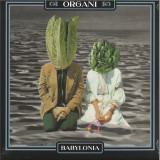
Well-versed in vintage vernaculars, Oakland-based producer/musician Mike Walti is about to return with his sophomore offering under the Organi moniker – as new album “Babylonia” follows 2020’s “Parlez-vous Français?,” a landmark in vibe acquisition ever since.
Wyldwood Studios is a portal. It’s a secret gateway to analog spheres. Cross the threshold and you’ll feel the difference: you can pick any ol’ time, any place, any tongue or vibe, in fact. Hit the dancefloor in 1967, feel that plushy loveseat in the early 70s. It’s a welcoming place where better, saner vibes are still within reach. Fueled, at least in part, by those long-classic 12”s on the walls – just imagine the sepia-tinted countenance of Melody Nelson alongside actual Birkin sans wig, right next to Shadow’s immortal crate diggers, forever blurred –, and channeled through ancient time travel devices such as the MCI 416B only to arrive on classic 2-inch tape (MM1000 aka Ol’ Bessy), it’s a haven for all things organic, for all things imbued with that warm élan. Built and run by Oakland’s own Mike Walti, countless artists from many different genres have felt that flair, creating sonic spheres and moving back and forth along the malleable axis that is space-time. Capturing magic.
Emerging from this unique portal back in 2020, Walti’s aka Organi’s first studio album was a stunning answer to its titular question – “Parlez-vous Français?” It was a soothing, somewhat psychedelic trip so magnétique and alluring that it immediately brought back those bits of Franglais you never knew you remembered. Whereas the debut LP indeed felt like a spontané voyage to the French Riviera ca. 1968, its follow-up “Babylonia” is so much more than linguistic confusion and ancient Akkadian Rhythms. Using that hidden portal near Alameda’s finest port to access all kinds of remote regions and sonic spheres, it’s super tight and feels, well, decent, even though, just like the ol’ Babylon, it’s full of surprising tongues and dreams, schemes and melodies.
“Where do we go from here?,” someone asks in opening “Organii-“ – all majestically cinematic boom bap, buoyant bass, sick strings. A fittingly massive opener that feels like cracking open a cold one after long weeks at work (that ecstatic “ahhhh”), it perfectly sets the tone for another half hour of pure time traveling, globe-spanning bliss. Whereas that certain prédilection pour all things French makes “La Rockette” so tempting and tantalizing (think MalMalNonBien), the sophomore album’s Berlin-based guest singer Nana Lacrima soon takes us elsewhere: title track “Babylonia” spins ever so softly, like a magic lantern, with images of dreamier Stones Throw funksters or Savath y Savalas looming over the steady flow of an arrangement that washes you clean like an ancient, unpolluted River Euphrates or Brazil’s actual Amazon. A sexy Portuguese-flavored anthem, occasional guest singer Alix Koliha also enters the scene to add yet another layer of French chic to this Brazilian landscape. Next, we’re back at the Riviera, but the “Italiano” version of it, splendido sunsets and bell towers in the distance, the ragazze laughing and shaking it up, perhaps even some Portofino Gin so you can really feel that “me ne batto il belin,” as your fingers align form some half-serious “ma che vuoi?”
Tim Maia-penned “Padre Cicero” (1970) deals with the stunning transformation of the titular hero – “De reverendo a lutador,” and what a soaring, sensual hook –, and Organi’s take on Elephant Memory’s “Old Man Willow” (now an “Old Man Waltz”) perfectly underlines what Walti’s Wyldwood endeavor is all about: Easy-Going Experimental Dream Pop, fueled by Gainsbourg, Broadcast, Stereolab, etc.
Later on, even though something seems to be tres complique in “Remembering Anna,” it all sounds carefree like a spontaneous Friday afternoon with a bottle of fine wine. Right before the outro, key album guest Yea-Ming Chen (of Yea-Ming & The Rumors) returns to the mic, adding her dark and dusky trademark timbre to melancholy anthem “Pictures Of Your Face”. Reminiscent of Nico and Trish (rip & rip), it’s a track that’s both dark and strangely propelling, hypnotic and hip-shaking.
A third generation Bay Area native, Mike Walti aka Organi has been running Wyldwood Studios in Oakland CA for some 15+ years (recording artists like Tommy Guerrero, Spelling, Why?, Latyrx, Del, Dan The Automator, and Big Freedia, to name but a few). A multi-instrumentalist who’s obviously in love with the 60s/70s, he loves to work with analog equipment (“We just love us some analog!” “Just listen to those relays purr…”). Recorded and mixed by Mike Walti at Wyldwood, “Babylonia” will be released on vinyl/digital by Alien Transistor.
Sweetheart is the first Cassie Ramone album in ten years, a crowning glory for a singular artist who has forged a unique path through the underground. Breaking out in the late 00s with the revered Vivian Girls, to her current status as a traveler on the
heartworn highway, Cassie Ramone has survived and thrived. Sweetheart is Ramone's greatest recorded statement to date:
focused songwriting shot through with American tragedies, distorted guitars and tear-stained fretboards. Recorded with
collaborator Dylan White in Richmond, VA in the latter's Valley Structures barn studio between December 2023 and March
2024, Sweetheart is Ramone's songwriting rendered direct but with a sweeping cinematic quality. Smeared with reverb and
scintillating like stars in the pitch black night, these songs fulfill the promise of Ramone's songwriting prowess.
Ranging from heart-stealers like I'm Going Home or Joy to the World to the riotous guitar scree of the titular Sweetheart,
Ramone's songwriting here is raw and direct, bolstered by White's perfectly balanced instrumentation. White's work on
Sweetheart blows up Ramone's songs to epic proportions, with waves of shoegazed guitars crashing and cresting with
emotion. As a result, Sweetheart fits effortlessly in with the best of Ramone's work with Vivian Girls and The Babies. With the
emotional vulnerability at its core, Sweetheart is Cassie Ramone emerging as one of the most honest and vital songwriters of
the underground.
Sweetheart, released on White and Ramone's new CD-R Records, builds on Cassie Ramone's legacy as a DIY pioneer. With Vivian Girls, Ramone and her bandmates forged a distinctive sound from 80s Punk, Shoegaze and 60s Girl Groups, delivering it with a dedication to world-building and Do It Yourself pragmatism. CD-Records and this first release are a continuation of Ramone's mission to maintain creative and aesthetic control over her art, communicating directly and honestly. Sweetheart may
also be the best record of her career.
Released on Cassie Ramone and Dylan White's label CD-R Records
It’s abundantly clear from the first bars of their 5th studio album Through Other Reflection, that this is, and could only ever be, The Soundcarriers. From the enchanting vocal duets of folk-bidden Chanteuses Leonore Wheatley and Dorian Conway; to the precise bass lines of Paul Isherwood and the limber, jazz-cool, Hal Blaine-esque drums of his his co-songwriter Adam Cann; from the fairy-like flutes, 60s-garage guitars and organ sounds pilfered from the archives of exotica - listening to the Soundcarriers resembles a rediscovery of all the most prized, esoteric corners of the 1960s, all bundled up, warped and refracted through the quartet’s astutely modern cultural lens. Channelling Tropicalia, Middle Eastern psychedelic Jazz/Funk, The French Library sounds of Nino Nardini, and a whole host of lavish obscurites beside, Through Other Reflection delivers another sonic adventure from one of the most unique and distinctive voices of British Psychedelia. After an 8 year wait for their album 4 - 2022’s Wilds - it thankfully didn’t take so long for the follow-up this time round. In many ways, this feels like a companion to Wilds; recording again at their Nottingham warehouse studio, Through Other Reflection retains that same organic glow, all the passions and imperfections of a tightly clipped unit jamming out these living, breathing pop-art nuggets as if straight onto the acetate.”We wanted to keep an air of spontaneity with this album and not get too bogged with the recording process”, explains Cann, “It was more a case of getting the songs as tightly written and arranged as possible first so we could get them down quickly in the studio. It always takes longer than you think” Less packed with strident pop hooks as its predecessor however, the music of Through… has been given extra licence to breathe, stretch out, and wander more uncharted terrains. While gleaming psych-pop of tracks like ‘The City Was’, or ‘Already Over’ confidently carry on from where they left off, from the album’s 2nd track ‘Always’, the trip becomes a little less predictable. Starting out as a smoky Procol Harum-meets-French-Psych organ ballad, the music drifts, as if of its own accord into an eerie, garage trance that lingers, cycles, and hypnotises, growing ever stranger, reaching ever-further away from its point of conception. And almost every track on Through Other Reflections holds that outer-body moment, where the band fix themselves on a limber, lysergic groove, lose all grip on time and reality, and melt themselves away into a liquid state of blind euphoria. There are sequences on this record that feel more like rituals than songs, built upon a single hypnotic rhythm which, like the centre of a vortex, pulling everything under its beatific command. Take the finale to ‘What We Found’ for instance, sounding like a ghostly march across the psychedelic moors, or ‘Feel The Way’, where a single athletic drum-loop rises and rises, growing ever more urgent and suspenseful underneath its frantic harpsichords and rasping flutes. Full of such rich stylisms as these, The Soundcarriers showcase themselves as abstract storytellers par excellence by virtue of their textures and arrangements alone. Resembling Romantic composer Maurice Ravel, but if he had just a four-piece rock band at his disposal, Through Other Reflects is rich with detail; there’s shakers, rattles, clarinets, booming drums; there’s synthesiser swarms, chiming xylophones, vintage organs and experimental Cluster & Eno-esque ambiences. Within all this nuance the music flows like some undisclosed narrative swathed in a magnetic secrecy. “It almost comes across like a story in some ways”, says Cann of the album, “the music is quite sectional with elements of exotica and cinematic type layers, it's a good balance of grooves, tunes and weirdness”. No more is this “epic cinematic feel” heard more proudly than on short instrumental ‘Sonya’s Lament” - its innate, hauntological atmospheres befitting a Peter Strickland soundtrack, or the classics of Lex Baxter, the so-called ‘Founder of Exotica’ himself. On the other hand, providing a greasier undercurrent to all these bucolic sounds is a leaning towards a more “direct” lyricism referencing more “external concerns. Laying down the first tracks for the album in the wintry gloom of pre-lockdown 2020, and drawing inspiration from time spent in Berlin, Through Other Reflections returns to some of the post-apocalyptic futurism explored in 2014’s Entropicalia - a loose concept album inspired by J.G Ballard’s The Drowned World. “The songs explore a disillusionment with the way things are going particularly after 40 years of neoliberalism”, says Cann, “They follow that folk-song tradition of wanting to escape to an imagined time, but here it’s more urban than pastoral. The first couple of ideas I came up with when doing some music in Berlin and had some time to wander aimlessly. And think the atmosphere seeped in, particularly on The City Was and Already Over. He continues, “One aspect of the title, ‘Through Other Reflections’ is about synthesis and layers of influence. How things can be filtered through other things and change the perspective. This is something you get in cities as well.” Though, as with everything The Soundcarriers make, “It can mean anything. It also just sounds kind of cool.”
- A1: International Girl's Not Here
- A2: The Crescents
- A3: From Behind Bandages
- A4: Don't Remember Leaving
- A5: The Night I Was A Booby Prize
- B1: Arturo's Attitude
- B2: And Then The Walls Fell
- B3: Compulsion
- B4: Live From Rotten Towers
- B5: Still My World
RSD 2024
First time ever release on vinyl format. 180 GRAM BLACK VINYL. After The Sabres of Paradise split in 1995 Andrew Weatherall underwent one of many reinventions. He began working with Keith Tenniswood as Two Lone Swordsmen which released several records on the Warp label, set up a new electronic imprint under the Rotters Golf Club banner and fully explored new DJ personas departing from his house-based sets into dub, electronica and rockabilly. Renowned for unconventional sets where he’d raise the roof dropping an unexpected but exactly right track into the mix, he’d push the audience to new heights by introducing them to music they’d never even thought of exploring. The experiments went down especially well in Japan where he’d tour playing solo sets as well as performing alongside pioneers like Underworld, Adrian Sherwood and The Orb. In 2003 his new label, Rotters Golf Club, was approached by the Italian fashion house Emigliano Zegna to create some music to help launch their first foray into Japan. Andrew always had a keen eye for quality and agreed to provide some music. At the time it wasn’t envisaged as an album. He’d just grabbed some tracks he and Keith had been working on, polished them up and swapped them for a small advance and a large raid on their Bond Street store. He then let them get on with the release and turned his attention to the next TLS album proper. This was Double Gone Chapel where rock and psychobilly were mixed in with electronica and controversially Andrew added his own vocals. The Zegna album ‘Still My World’ was sidelined by a live band and a whole new direction. Andrew’s untimely death refocused attention on his historical recordings and ‘Still My World’, previously only released on CD in Japan, now sees the light of day in the rest of the world.
"This is the time that we, who have benefitted from the Last Poets shouldbe able to say, 'it's the Last Poets. It's them we should be honouring, because we did not honour them for so many years_"
KRS One wasn't just addressing the hip hop fraternity when he uttered
those words by way of introducing the video for Invocation - a poem
written thirty years ago, around the time of the Last Poets' last significant comeback. He was speaking to everyone who's been affected by the word, sound and power issuing from the most revolutionary poetry ever witnessed, and that the Last Poets had introduced to the world outside of Harlem at the dawn of the seventies.
In 2018 the two remaining Last Poets, Abiodun Oyewole and Umar Bin
Hassan, embarked on another memorable return with an album -
Understand What Black Is - that earned favourable comparison with theirseminal works of the past, whilst showcasing their undimmed passion andlyrical brilliance in an entirely new setting - that of reggae music. Trackslike Rain Of Terror ("America is a terrorist") and How Many Bullets demonstrated that they'd lost none of their fire or anger, and their essential raison d'etre remained the same.
"The Last Poets' mission was to pull the people out of the rubble o f their lives," wrote their biographer Kim Green. "They knew, deep down that poetry could save the people - that if black people could see and hear themselves and their struggles through the spoken word, they would be moved to change."
Several years later and the follow-up is now with us. The project started when Tony Allen, the Nigerian master drummer whose unique polyrhythms had driven much of Fela Kuti's best work, dropped by Prince Fatty's Brighton studio and laid down a selection of drum patterns to die for. That was back in 2019, but then the pandemic struck. Once it had passed, the label booked a studio in Brooklyn, where the two Poets voiced four tracks apiece and breathed fresh energy, fire and outrage into some of the most enduring landmarks of their career. Abiodun, who was one of the original Last Poets who'd gathered in East Harlem's Mount Morris Park to celebrate Malcolm X's birthday in May 1968, chose four poems that first appeared on the group's 1970 debut album, called simply The Last Poets. He'd written When The Revolution Comes aged twenty, whilst living in Jamaica, Queens. "We were getting ready for a revolution," he told Green. "There wasn't any question about whether there was going to be one or not. The truth was many of us still saw ourselves as "niggers" and slaves. This was a mindset that had to change if there was ever to be Black Power." He and writer Amiri Baraka were deep in conversation one day when Baraka became distracted by a pretty girl walking by. "You're a gash man," Abiodun told him. The poem inspired by that incident, Gash Man, is revisited on the new album, and exposes the heartless nature of sexual acts shorn of intimacy or affection. "Instead of the vagina being the entrance to heaven," he says, "it too often becomes a gash, an injury, a wound_" Two Little Boys meanwhile, was inspired after seeing two young boys aged around 11 or 12 "stuffing chicken and cornbread down their tasteless mouths, trying to revive shrinking lungs and a wasted mind." They'd walked into Sylvia's soul food restaurant in Harlem, ordered big meals, then bolted them down and run out the door. No one chased after them, knowing that they probably hadn't eaten in days. Fifty years later and children are still going hungry in major cities across America and elsewhere. Abiodun's poem hasn't lost any relevance at all, and neither has New York, New York, The Big Apple. "Although this was written in 1968, New York hasn't changed a bit," he admits, except "today, people just mistake her sickness for fashion." Umar is originally from Akron, Ohio, but had arrived in Harlem in early 1969 after seeing Abiodun and the other Last Poets at a Black Arts Festival in Cleveland. That's where he first witnessed what Amiri Baraka once called "the rhythmic animation of word, poem, image as word- music" - a creative force that redefined the concept of performance poetry and stripped it bare until it became a howl of rage, hurt and anger, saved from destruction by mockery and love for humanity. When Umar's father, who was a musician, was jailed for armed robbery he took to the streets from an early age where he shined shoes and raised whatever money he could to help feed his eight brothers and sisters. By the time he saw the Last Poets he'd joined the Black United Front and was ready to join the struggle. Once in Harlem, Abiodun asked him what he'd learnt in the few weeks since he'd got there. "Niggers are scared of revolution," Umar replied. "Write it down" urged Abiodun. That poem still gives off searing heat more than fifty years later. In Umar's own words, "it became a prayer, a call to arms, a spiritual pond to bathe and cleanse in because niggers are not just vile and disgusting and shiftless. Niggers are human beings lost in someone else's system of values and morals." And there you have it. It's not just race or religion that hold us back, but an economic system that keeps millions in poverty and living in fear - a system born from political choice and that's now become so entrenched, so bloated on its own success that it's put mankind in mortal danger. It was many black people's acceptance of the status quo that inspired Just Because, which like Niggers Are Scared Of Revolution, was included on that seminal first album. Along with their revolutionary rhetoric, it was the Last Poets' use of the "n word" that proved so shocking, but it would be wrong to suggest that they reclaimed it, since it never belonged to black people in the first place. There's never any hiding place when it comes to the Last Poets. They use words like weapons, and that force all who listen to decide who they are and where they stand. Umar's two remaining tracks find him revisiting poems first unleashed on the Poets' second album This Is Madness! Abiodun had left for North Carolina by then where he became more deeply enmeshed in revolutionary activities and spent almost four years in jail for armed robbery after attempting to seize funds related to the Klu Klux Klan. Meanwhile, the 21 year old Umar was squatting in Brooklyn and had developed close ties with the Dar-ul Islam Movement. A longing for purity and time-honoured spiritual values underpins Related to What, whilst This Is Madness is a call for freedom "by any means necessary," and that paints a feverish landscape peopled by prominent black leaders but that quickly descends into chaos. "All my dreams have been turned into psychedelic nightmares," he wails, over a groove now powered by Tony Allen's ferocious drumming. Those sessions lasted just two days, and we can only imagine the atmosphere in that room as the hip hop godfathers exchanged the conga drums of Harlem for the explosive sounds of authentic Afrobeat. Once they'd finished, the recordings and momentum returned to Prince Fatty's studio, since relocated from Brighton to SE London. This was stage three of the project, and who better to fill out the rhythm tracks than two key musicians from Seun Anikulapo Kuti's band Egypt 80? Enter guitarist Akinola Adio Oyebola and bassist Kunle Justice, who upon hearing Allen's trademark grooves exclaimed, "oh, the Father_ we are home!" Such joy and enthusiasm resulted in the perfect fusion of Nigerian Afrobeat and revolutionary poetry, but the vision for the album wasn't yet complete. He wanted to create a new kind of soundscape - one that reunited the Poets with the progressive jazz movement they'd once shared with musicians like Sun Ra and Pharoah Sanders. It was at that point they recruited exciting jazz talents based in the UK like Joe Armon Jones from Mercury Prize winners Ezra Collective, also widely acclaimed producer/remixer and keyboard player Kaidi Tatham, who's been likened to Herbie Hancock, and British jazz legend Courtney Pine, whose genius on the saxophone and influence on the UK's now vibrant jazz scene is beyond question. The instrumental tracks on Africanism are in many ways as revelatory and exciting as the Last Poets' own. It's important to remember that the kaleidoscope of styles and influences we're presented with here aren't the result of sampling but were played "live" by musicians responding to sounds made by other musicians. That's where the magic comes from, aided by Prince Fatty's peerless mixing which allows us to hear everything with such clarity. Music fans today have grown accustomed to listening to all kinds of different genres. Their tastes have never been so broad or all- encompassing, and so the music on this new Last Poets' album is as groundbreaking as their lyrics, and perfectly suited to the era that we're now living in. John Masouri
Prepare for Another Groundbreaking Release From the Proteges of Skylax Records, the Maestros Behind the Acclaimed "Sting the Floor" and "Love Is Growing" EPs. Already Making Waves Among International DJs, Their Third Installment, "Madness Operator," Takes a Bold Detour While Maintaining the Signature Style That Has Captivated Audiences Worldwide. the Ep Kicks Off With the Monumental "Under Track," a Minimalist Masterpiece That Harkens Back to the Glory Days of Early '90s Chicago. Its Simplicity Is a Stroke of Genius, Resonating With the Raw Energy That Defined the Chicago Sound. "The Wanderer" on A2 Delves Deeper Into the Same Chicagoan Style but With Added Intricacies, Showcasing the Versatility and Maturity of Madness Operator's Sonic Palette. Flipping to the B-Side, "Café Barge at 7 Am" Emerges as a Masterpiece of Silky Deep House, Effortlessly Weaving a Sonic Tapestry That Immerses the Listener in a Serene, Early-Morning Atmosphere. Closing the Ep With a Flourish, "Baby Baby" Effortlessly Melds Disco and Jackin' House, Delivering a Hybrid Sound That Is Both Nostalgic and Forward-thinking."Madness Operator" Ep Is a Monumental Offering That Solidifies the Status of These Proteges as Pioneers in the Electronic Music Realm. From the Sheer Genius of "Undertrack" to the Captivating Diversity of the B-Side, This Ep Is a Testament to the Evolving Brilliance of Skylax Records' Rising Stars. Dive Into the Madness &Ndash; It's an Experience You Won't Forget. Available Now, Exclusively on Skylax Records....
- Cold Outside
- Nick Of Time
- Lonely One
- It's My Time
- Left Unsaid
- Try Try Try
- Hall Of Mirrors
- Much Too Much
- Your Kinda Thing
- New Questions
- Kill City
- I'm Not Gonna Do It
- Don't Wanna Play
- Nashville Nights
- Today I Shot The Devil
- Tell Me Things
- Live With Me
- Just Another Day
The Fluid are arguably the great unsung band from the fertile underground rock scene of the late '80s and early '90s. The Denver five-piece - John Robinson (vocals), James Clower (guitar), Matt Bischoff (bass), Garrett Shavlik (drums), and the dear departed Ricky Kulwicki (guitar) - fused the fire of '80s hardcore with crunching Detroit protopunk, '60s garage rock, and '70s rock swagger. Think MC5, Faces, '70s Stones, all cranked up and really high on Sex Pistols and Black Flag singles. Rising from the ashes of early-'80s Denver bands Frantix (whose "My Dad's a Fuckin' Alcoholic" is a true gem of American punk) and White Trash, The Fluid were the first non-Seattle band to sign to Sub Pop, and Clear Black Paper was the second full-length album the label ever released. The label honchos were fans of Frantix, and happily got involved with The Fluid when the opportunity arose via the label's European licensing partner, Glitterhouse. Witnessing The Fluid's dominant live presence helped - a particularly fiery early show at Seattle's Central Tavern featured The Fluid, Mudhoney, Mother Love Bone, and Soundgarden all trying to outdo one another on stage. The band fit right in on Sub Pop's nascent roster of acts who, wherever they stood on the spectrum of punk/rock/metal, shared a commitment to thunderous riffs and explosive live shows. Legendary for their ferocious stage presence, The Fluid toured all over the US and Europe, holding their own and then some on bills with Mudhoney, Nirvana, Soundgarden, Dinosaur Jr., and other powerhouses of the era. From 1986 to 1993, The Fluid put out four albums and a number of EPs and singles, including a split 7" with Nirvana in 1991, before doing one album for a major label and promptly disbanding. Yet, while their partners-in-crime bulldozed into the mainstream, The Fluid remained something of a cult band, their audience confined to those who got hip during the band's existence, and crate diggers who nabbed original vinyl or CDs, which had quickly become rarities after selling through their original runs. Why? Record industry machinations? The fickle finger of pop culture? Being from Denver, not Seattle? Who the hell knows_ and who cares! The point is the band ripped, and the world deserves to hear them again. The Fluid took influences they shared with their contemporaries and ran in their own direction, focused on ass-shaking grooves more than misanthropic sludge. Rock anthems like "Cold Outside" sit alongside Stooge-oid rhythmic poundings ("Black Glove"), bluesy romps ("Leave It"), the occasional grungy dirge ("Wasted Time"), and raw punk bangers ("Is It Day I'm Seeing?" from the seminal 1988 Sub Pop 200 compilation). The band wasn't shy about their inspiration, either: scattered through their catalog are covers of The Troggs, The Rolling Stones, MC5, Iggy Pop and James Williamson, and Rare Earth. The Fluid stand out as champions of a feral, urgent, exuberant approach to rock 'n roll. As it turns out, that wasn't a recipe for stardom in the era of hyper-slick pop, boomer dinosaurs crying tears in heaven, and hair-metal power-ballads. But someone had to do it. To set things right, Sub Pop, The Fluid, and producer Jack Endino (Nirvana, Soundgarden, High on Fire, Mudhoney) teamed up to refresh and reissue The Fluid's entire indie-label catalog: their 1986 debut, Punch N Judy; 1988's Clear Black Paper; 1989's Roadmouth; the 1990 Glue EP (produced by Butch Vig, of Nevermind fame); and a treasure trove of rarities and previously unreleased material. All the music has been remastered from original tapes by Endino and JJ Golden, and the bulk of it has been meticulously remixed by Endino and the band, righting some sonic quirks that diminished the impact of the original records. Now, with their definitive material sounding better than ever, it's high time The Fluid get their due.
- You
- Goin' Away
- Saccharine Rejection
- Mouse Trap
- Turn Away
- Static Cling
- Preacher Man Blues
- My Future
- Madhouse
- 13: Th Nite
- Graveyard Tramps
The Fluid are arguably the great unsung band from the fertile underground rock scene of the late '80s and early '90s. The Denver five-piece - John Robinson (vocals), James Clower (guitar), Matt Bischoff (bass), Garrett Shavlik (drums), and the dear departed Ricky Kulwicki (guitar) - fused the fire of '80s hardcore with crunching Detroit protopunk, '60s garage rock, and '70s rock swagger. Think MC5, Faces, '70s Stones, all cranked up and really high on Sex Pistols and Black Flag singles. Rising from the ashes of early-'80s Denver bands Frantix (whose "My Dad's a Fuckin' Alcoholic" is a true gem of American punk) and White Trash, The Fluid were the first non-Seattle band to sign to Sub Pop, and Clear Black Paper was the second full-length album the label ever released. The label honchos were fans of Frantix, and happily got involved with The Fluid when the opportunity arose via the label's European licensing partner, Glitterhouse. Witnessing The Fluid's dominant live presence helped - a particularly fiery early show at Seattle's Central Tavern featured The Fluid, Mudhoney, Mother Love Bone, and Soundgarden all trying to outdo one another on stage. The band fit right in on Sub Pop's nascent roster of acts who, wherever they stood on the spectrum of punk/rock/metal, shared a commitment to thunderous riffs and explosive live shows. Legendary for their ferocious stage presence, The Fluid toured all over the US and Europe, holding their own and then some on bills with Mudhoney, Nirvana, Soundgarden, Dinosaur Jr., and other powerhouses of the era. From 1986 to 1993, The Fluid put out four albums and a number of EPs and singles, including a split 7" with Nirvana in 1991, before doing one album for a major label and promptly disbanding. Yet, while their partners-in-crime bulldozed into the mainstream, The Fluid remained something of a cult band, their audience confined to those who got hip during the band's existence, and crate diggers who nabbed original vinyl or CDs, which had quickly become rarities after selling through their original runs. Why? Record industry machinations? The fickle finger of pop culture? Being from Denver, not Seattle? Who the hell knows_ and who cares! The point is the band ripped, and the world deserves to hear them again. The Fluid took influences they shared with their contemporaries and ran in their own direction, focused on ass-shaking grooves more than misanthropic sludge. Rock anthems like "Cold Outside" sit alongside Stooge-oid rhythmic poundings ("Black Glove"), bluesy romps ("Leave It"), the occasional grungy dirge ("Wasted Time"), and raw punk bangers ("Is It Day I'm Seeing?" from the seminal 1988 Sub Pop 200 compilation). The band wasn't shy about their inspiration, either: scattered through their catalog are covers of The Troggs, The Rolling Stones, MC5, Iggy Pop and James Williamson, and Rare Earth. The Fluid stand out as champions of a feral, urgent, exuberant approach to rock 'n roll. As it turns out, that wasn't a recipe for stardom in the era of hyper-slick pop, boomer dinosaurs crying tears in heaven, and hair-metal power-ballads. But someone had to do it. To set things right, Sub Pop, The Fluid, and producer Jack Endino (Nirvana, Soundgarden, High on Fire, Mudhoney) teamed up to refresh and reissue The Fluid's entire indie-label catalog: their 1986 debut, Punch N Judy; 1988's Clear Black Paper; 1989's Roadmouth; the 1990 Glue EP (produced by Butch Vig, of Nevermind fame); and a treasure trove of rarities and previously unreleased material. All the music has been remastered from original tapes by Endino and JJ Golden, and the bulk of it has been meticulously remixed by Endino and the band, righting some sonic quirks that diminished the impact of the original records. Now, with their definitive material sounding better than ever, it's high time The Fluid get their due.
Cinthie steps up to Aus Music's 200 series with Rave Baby EP.
The popular underground mainstay offers three effective and emotive house weapons Cinthie has been at the heart of the European underground for many years. The Berlin-based artist heads up her cultured 803 Crystal Grooves label and the well-respected Elevate.Berlin recordstore. She has a vast vinyl collection and a deep understanding of house that makes her a favourite all around the world. She has long been a key part of the Aus family and has recently branched out into playing live, all while continuing to serve up timeless sounds that range from rave-ready to deep and driving.
This EP is the third in a run of four releases from different artists to mark the 200th outing of Will
Saul's influential Aus Music. It is an era-defining label that has platformed some of the scene's
brightest stars way before they broke out. Since launching in 2006, the label has remained dedicated to releasing club-ready music with a cultured edge from deep and melodic house to the earliest bass-driven post-dubstep fusions.
Cinthie pushes herself into a more ravey fast-paced direction with her lead single 'Rave Baby'. The well swung kicks are full of warmth as a nimble bassline phrase gets hands in the air and crisp percussion cuts up the beats. It's peak-time fun that completely takes off with the raved-up piano stabs and a steamy female vocal. 'I Warned You Baby' sinks into a deeper groove that harks back to 90s New Jersey with diffuse chords, Nu Groove style vocals and punchy drum programming full of good vibes. Closer 'What's Poppin'' is passionate house music with depth and drive. Raw percussion, turbo-charged retro stabs and another standout bassline make it a high-class weapon.
- A1: Kim Blackburn- Lizards In Love
- A2: The Kiwi Animal- Woman & Man Have Balance
- A3: Rupert- Soul Brothers
- A4: Stiff Herbert- I Could Hit The Ceiling
- A5: Drone- Nothing Dominant
- A6: Norma O'malley- Some Tame Gazelle
- B1: The Headless Chickens- Throwback
- B2: Blam Blam Blam- Respect
- B3: Roger Knox- Whole Weird World
- B4: Tom Ludvigson & Graeme Gash- Ulläng Jnr
- B5: Ballare- Dancing
2024 Re-Edition
Strangelove's personal Inventory of NZ 1980's odd pop; 'Kiwi Animals' recasts the local charts in a parallel universe of misfit melodics, gonzo-tronics & strange waves. Channelling South Pacific voodoo and edge of world melancholia, the album highlights electronic tangents from iconic NZ groups Blam Blam Blam & Headless Chickens. It dredges the cassette revelations of art avante-gardists' Drone & Kim Blackburn, alongside bittersweet moments from Rupert & Norma O'Malley. There's the infectious minimal wave of Ballare and a reprised electro-boogie dance suite (?!) from Tom Ludvigson & Graeme Gash. The furthest depths of Flying Nun's catalog are also plundered- a brilliant earworm from Stiff Herbert and a mysterious "Roger" Knox birthday promo. Mining disparate seams of a local indie label awakening, the various tangents of 'Kiwi Animals' congeal with a future/primitive sensibility and an underlying Antipodean mischievousness…
- 1: Peach Blossom Paradise
- 2: Demon Cicadas In The Night
- 3: The Cold Curve
- 4: Saying Yes To Everything
- 5: Lighthouse
- 6: Revisionist Mystery
- 7: The Meander
- 8: The Wheel Of Persuasion
- 9: Another Tomorrow
- 10: Common Exotic
Prairiewolf make easy listening music for an age of fracture. They almost do it in spite of themselves. No one can seriously question the head music bona fides of the members of this Colorado-based trio.
Guitarist Stefan Beck has already assembled a formidable discography of jewel-toned guitar zone-outs under his Golden Brown moniker. And keyboardist and guitarist Jeremy Erwin and bassist Tyler Wilcox have both made their reputations as chroniclers of the vast world of out-music. Erwin helms the indispensable Heat Warps blog, a performance-by-performance archive of Miles Davis’s labyrinthine electric period. And Wilcox has been covering the ragged edges of psychedelia and experimental rock at Aquarium Drunkard and other publications, not to mention his own virtual basement for heads, the great bootleg blog Doom and Gloom from the Tomb.
These guys come by it honestly. And yet, given their backgrounds, Prairiewolf’s self-titled debut last spring was remarkably free of face-melters, brown acid blowouts, and ascendant spiritual jazz odysseys. Instead, they dropped a record of beautiful, elegant, low-key cosmic groovers that sounded like the piped-in background music to a resort hotel on Jupiter. It was an unlikely psychedelia, brocaded with mid-twentieth century sonic threading from the hi-fi era: vintage synthesizers, smears of spaghetti western, luxe tropical details, the faint schmaltz of space age pop. Imagine something like a Harmonia residency in the airport lounge. And yet somehow it all worked brilliantly. Prairiewolf became last summer’s cool-down standard. After a year woodshedding around Colorado’s Front Range region, the Prairiewolf boys have fired up their trusty Korg SR-120 drum machine for another outstanding collection of suborbital exotica. The appropriately titled Deep Time operates in its own chronology, unspooling at its unhurried pace. All its incongruous period and stylistic references—the new age pulses, Hawaiian steel, shaggy hippie rambles, lysergic guitar spirals, and orchestral synthesizer flourishes—float atop the album’s own singular temporality. Deep Time makes its own time.
From the moment Beck folds his slide guitar, origami-like, into a sound resembling the call of gulls on the tranquil album opener, “Peach Blossom Paradise,” there is a sense of departure from everyday life. The shimmering “Lighthouse” has a similar sunbaked nonchalance, like an afternoon passed day-drinking in a seaside bar. That they named their lush, kaleidoscopic downtempo track “The Meander” pretty much says it all. The ranging, propulsive “Saying Yes to Everything” seems like a nod in the direction of Rose City Band’s brand of wookie krautrock. And the motorik noir of “Demon Cicadas in the Night” also goes hard. Beck and Erwin’s intertwined guitar jam on the eerie album standout “The Cold Curve” evolves into something that sounds like primitive computer music. A genteel bassline from Wilcox on another album highlight, “Revisionist Mystery,” sets the stage for a loopy space jazz turn from guest clarinettist Matt Loewen of Rayonism. The title of post-rock cowboy tune “Another Tomorrow” might refer to the alternative future that so many critics heard in the music of Prairiewolf’s first album. Or it might simply refer to the persistence of time, however deep. Either way,
I’m thankful for the way Prairiewolf make each of their tunes a little oasis or sanctuary, each subsisting according to its own crystalline little logic for a few minutes. It is no simple task to filter out the omnipresent anger and anxiety of everyday life these days. But Prairiewolf are out here making it seem easy.
Brent S. Sirota
- A1: Solar Wind 06 23
- A2: White Dwarf 03 48
- B1: Waveform Cascades 04 30
- B2: Dance Of The Celestial Druids 04 40
- C1: The Freak Show 04 41
- C2: Implosive Regions 04 58
- D1: Lonely Journey Of The Comet Bopp 04 38
- D2: Crossing Of The Sun-Ra Nebula 05 05
- E1: Scattering Pulsars 05 09
- E2: Alien Vessel Distress Call 06 57
- F1: Flux 07
2024 Repress
In early 2023, Tresor Records will reissue the sole output from Shifted Phases entitled The Cosmic Memoirs Of The Late
Great Rupert J. Rosinthrope. Initially released in 2002, soon after James Stinson passed away, this LP plays a mysterious and
compelling role in the Drexciya journey. While other records of Drexciya and related projects have received numerous reprints
and editions, The Cosmic Memoirs... has remained out of print since its release. This rarity leaves it more open to
interpretation with its place in the Drexciyan storm series, as it became increasingly hard to find and underexplored.
Track titles Solar Wind, White Dwarf, and Lonely Journey of the Comet Bopp reveal a focus on cosmic realms, suggesting a link
with the Drexciya LP Grava 4 that moves from the underwater to the galactic. As it launches with mechanical blows on a
precise orbit, each repetition entrenches the gravitational pull in the galaxy of Shifted Phases. In many places, it sounds like
the readout of frequencies harvested from outer space, pockmarked with packet loss from the millions of kilometres distance
travelled.
The music is hard to contain, intuitively restless in motion through its unfolding universe and achingly resonant. It shapeshifts
across aectedly melodic sequences such as in Lonely Journey..., to the sparse, hard-hitting timbres found in Alien Vessel
Distress Call and the mangled reverse vocals in The Freak Show, somewhat reminiscent of another Drexciya side-project, Glass
Domain. The mythology of Drexciya is evident in how keenly James Stinson and Gerald Donald created their imaginary worlds.
In Crossing Of The Sun-Ra Nebula, there is an undisputable reference to another Afro-futurist who delved deep into a galaxy of
their own making.
This reissue does not merely close the loop on Tresor's reissue series of the Drexciya catalogue but brings Shifted Phases to
fresh ears more than other records. Accompanied by newly commissioned artwork from Matthew Angelo Harrison, the 3xLP
vinyl reissue also features the tracks Crossing Of The Sun-Ra Nebula and Alien Vessel Distress Call, which were previously only
on the original CD release.
- When Did I Lay Down And Die
- Cherryade
- Little Piggies
- Let It Burn
- This Is Forever
- Don't Be A Can't (All Your Life)
- A Simple Song
- It's A Scream
- Bad Energy
- Boxes Squares Etc
- Dear Universe
- I'm Alright (Dear Universe Reprise)
- Bad Scenes At The Eyelid Cinema
- Remedy
- Inaction Man
- Man You've Got To Help Yourself
"_Syd Barrett fronting Queens Of The Stone Age- surefooted, inventive and buzzing with surprises." - The Guardian "A refreshingly bold alt-rock sound." Alfitude NJ White - aka WHITEY - explodes out of the shadows with the announcement of his highly anticipated double LP MENTAL RADIO, out on 3rd October 2024. Pulling in influences from across decades of sound and putting it through the Whitey blender to create something musically fresh, MENTAL RADIO is an album that in turn is furious, raw, amused, politically razor sharp and poignant... a satirical take on 21st Century life, a musical pop art collage. As an individual, Whitey prefers to speak via his work, and has eluded all interviews for well over a decade - leading one journalist to describe him as 'the musical equivalent of Bigfoot'. Despite this elusive stance, his music continues to rack up many millions of plays and draw fans from all ages across the globe. Across a string of acclaimed albums, Whitey's music has made its mark, from rock'n'roll clubs to electronic dance floors, fashion catwalks to movie soundtracks, television to computer games, from Breaking Bad and the Sopranos to Grand Theft Auto. Whitey has built a strange home in the shadows between mainstream entertainment and the vanishing underground, an outsider who celebrates his outsider ethos in his work- and yet whose music is embraced by both popular and alternative culture. Whitey is a prominent spokesperson for independent music - his viral letter about 'fair fees for artists' was shared 500,000+ times; and made Newsweek, The Times, BBC Worldwide and the front editorial of Music Week. Whitey's back catalogue has previously received praise from the likes of The Independent, The Guardian, Record Collector, Uncut and Rock Sound to name a few. Available as a Double Vinyl LP, CD and cassette through NO! LABEL, published globally by Mute Song and repped for live by William Morris Entertainment- this is set to be a benchmark album of 2024. Housed in a Gatefold Sleeve (Gloss Finish plus Silver Foil Trim) Including two Printed Inner Sleeves (Gloss Finish).