The 1st album released in August 2021 attracted attention in the overseas scene, and labels from various countries such as Italy, Argentina, US and Poland. More release realized. Only half a year after that, they completed the remarkable 2nd album. Based on the royal road doom sound and the music with the blues feeling derived from 70's, the band ensemble with more euphoric feeling gets a lot of attention. A full lineup of songs such as "Devastator", which freely grooves from a side-beating beat to double bass, and "Agua De Vida", which enhances smoke and trip feeling under the direction of Mr. Okazaki. In the mellow "Underneath the Sky" and "Running In my Vein", the taste that has withered moderately is impressive. With the help of an effectively crafted album composition, it can be argued that they have reached the next level in this work. Don't miss the further leap of "Tokyo samurai doom" !!
'Malombo music is an indigenous kind of music. If you listen to it, you can feel that it can heal you, if you’ve got something wrong. It’s healing music.'
Lucky Ranku
"Lucas ‘Lucky’ Madumetja Ranku (1941-2016) was one of the greatest African guitarists of his generation. He first made his name with the Malombo Jazz Makers – the successor group to the legendary Malombo Jazzmen, formed in Mamelodi township by guitarist Philip Tabane, drummer Julian Bahula and flautist Abbey Cindi. When Tabane left the Jazzmen in 1965, Bahula and Cindi called on Lucky to replace him, and the Malombo Jazz Makers were born. Building on the popularity and success of the original Malombo Jazzmen, the Malombo Jazz Makers become immensely popular, touring widely, winning numerous jazz competitions, and recording two successful albums for the Gallo label.
The deep and hypnotic Down Lucky’s Way was their third album. Recorded in 1969, it was the first Malombo Jazz Makers album to feature additional instruments, and the first to feature Abbey Cindi on soprano saxophone as well as flute. But more than anything else, Down Lucky’s Way is a transfixing showcase for Lucky Ranku’s sui generis guitar virtuosity. Quite different from their previous recordings, the album shifted the Jazz Makers’ sound toward hypnotic, extended compositions, layered by organ bass and guitar overdubs. Of all the Malombo Jazz Makers recordings, Down Lucky’s Way is the deepest of mood, and the richest of vision.
However, through one of the erasures that are ubiquitous in South African musical history under apartheid, it seems that the record may not ever have been properly issued. Original copies are outrageously rare – only a few are known among collectors. When we asked Lucky about the album, he was unaware it had ever been released, and had never seen a copy. Perhaps it was pulled; perhaps it was pulped; perhaps Gallo simply took their eye off the ball. Nobody knows, but it is not impossible that the apartheid authorities were involved, for by 1969, the Malombo Jazz Makers were well known to them.
Julian Bahula’s introduction of malopo drums to the music of the original Malombo Jazzmen was a moment of crucial political and cultural radicalism for South African jazz. Traditionally used by BaPedi people for healing, the malopo drums of Malombo music re-centered jazz
around indigenous sounds and culture, and over the next decade, the Malombo Jazz Makers became deeply involved in political opposition to apartheid. Their recovery of indigenous sounds made them the musical standard bearer for the Black Consciousness movement, and they toured South Africa clandestinely with the writer and anti-apartheid activist Steve Biko. They also broke apartheid laws by playing with the white rock group Freedom’s Children, sometimes appearing on stage in masks or made up with UV paint to avoid detection by the authorities; they appeared regularly at the rule-bending Free People’s Concerts organized by David Marks, where Marks’ clever exploitation of a loophole – mixed audiences were prohibited from attending ticketed concerts where anyone was being paid, but the law said nothing about private functions played by artists for free – meant people could come together in defiance of apartheid laws. The notorious Special Branch would raid their concerts; Lucky remembered police storming an auditorium, throwing smoke bombs.
Eventually the political situation became too dangerous, and the band were being actively sought by the police. Though Abbey Cindi remained in South Africa, both Julian Bahula and Lucky Ranku went into political exile in the UK, where Bahula founded the group Jabula with Lucky and former members of Cymande, Steve Scipio and Michael ‘Bami’ Rose. With Jabula, Julian and Lucky worked tirelessly for the anti-apartheid movement, raising funds and awareness all over Europe and in the US. They played with Dudu Pukwana’s Spear in the joint formation Jabula-Spear, and worked together in Bahula’s Jazz Afrika formation, and Bahula organized the first Concert for Mandela in 1984 (it was Jabula that supplied the chorus for The Special A.K.A.’s hit single ‘Nelson Mandela’). Lucky also played and recorded with Chris McGregor’s South African Exiles Thunderbolt group. After the fall of apartheid, they both remained living and working in the UK. In 2012 the South African government awarded Julian Bahula the Gold Order of Ikhamanga for his cultural work during the struggle against apartheid.
Until his death in 2016, Lucky continued to play with countless groups and musicians. putting together the band Township Express with Pinise Saul, and leading his own African Jazz Allstars. The influence of his playing on the international perception of South African township music was immense, and he was held in the highest regard by his peers – ‘Lucky was a guitarist who could bring any house down’, said Michael ‘Bami’ Rose.
But despite his continuous presence on the UK live circuit over four decades, Lucky Ranku never recorded an album as leader. And so as well as restoring an important lost piece of South African musical heritage, Down Lucky’s Way is a precious opportunity to hear one of Africa’s foremost guitarists stretching out, in focus and in his element."
First issue since 1969 of the Malombo Jazz Maker’s unknown third album.
Liner notes featuring interviews with Julian Bahula and Lucky Ranku.
Fully licensed from Julian Bahula.
Original, unreleased session recordings from Seth Lakeman featuring Ethan Johns, Jeremy Stacey, John Smith, Nick Pini and Alex Hart. Recorded in just 10 days in late 2020 at the Bert Jansch Studio in Frome.
Originally released in 1962. Recorded July 24, 1962 at the 3rd International Jazz Festival D'Antibes/Juan-Les-Pins, this is classic 1960s Dizzy. It's smooth and swinging without losing any of his patented power. Produced by Quincy Jones, and featuring piano and arrangements from Argentinian master Lalo Schifrin, Gillespie shines here alongside underrated reed man Leo Wright. A great early '60s Dizzy group absolutely slaying live to a receptive audience.
"As long as you come to my garden", the sixth release in the cherished Die Schachtel’s series “Decay Music” as well as the debut of the duo Damāvand (Gianluca Ceccarini and Alessandro CIccarelli) on the prestigious Italian label, is a tribute to the Armenian troubadour Sayat Nova, through his lyrics and freely inspired by the cult movie about his life The Color of the Pomegranates (Nřan guynə, 1968, USSR) directed by Sergei Parajanov. The feature film tells the life of the poet, who lived in the 17th Century, from childhood in the royal court, to retirement until his death in the monastery of Haghpat, through a series of episodes, static like paintings that do not tell but show, evoke, they suggest through metaphors, analogies, surrealist flair, dreamlike landscapes, liturgical pauses.
The six tracks are inspired by the dreamlike imagery contained in the movie, weaving sound textures ranging from ambient to noise, to references to the musical tradition of the Middle East.
Gianluca Ceccarini and Alessandro Ciccarelli alternate, without fixed roles, with analog synths, drones, amplified common objects, generative music, audio samples from the film and acoustic instruments such as the tar - a stringed instrument of Persian origin, the trombone and the cornet. In addition, two of the songs on the album contain Sayat Nova’s poems recited in Persian by Nahid Rezashateri.
The sound materials are revealed gradually like episodes, evoking the visual suggestions staged by Parajanov in the movie. As long as you come to my garden is intended as an imaginative journey to distant spaces and indefinite archaic times.
DAMĀVAND is a musical project by Gianluca Ceccarini (electronics, electroacoustic objects, tar) and Alessandro Ciccarelli (electronics, electroacoustic objects, trombone, cornet)
Gianluca Ceccarini, guitarist, electroacoustic experimenter, luthier specialized in the restoration and construction of plucked musical instruments for early music. In 2021 his first album Starving Night was released for the netlabel Laverna and in 2022 the Sarab Label published a CD version. He also works in photographic research, video-art, graphics and independent publishing with the Sarab collective.
Alessandro Ciccarelli is an author who ranges between different languages: photography, video, sound. He is involved in several collective research projects in the musical and theatrical fields. His solo records are released under the nom de plume Elnath Project. The latest work, after six years of silence, from Italian berlin-based composer, performer and publisher (Black Letter Press) Claudio Rocchetti, and a welcomed return on the Die Schachtel imprint after the brilliant Another Piece of teenage wildlife (2008), Labirinto verticale (Vertical Maze) takes its origin from the four years long collaboration of Rocchetti with the Parma-based Fondazione Lenz, a contemporary theatre research collective/organization.
The first album of the polish band Kristen was released by Gusstaff Rec. only in a limited edition of CD and on cassette in 2000.Kristen were one of the first who creatively transferred to Poland the fascination of the American independent guitar scene, such phenomena as math-rock, post-rock or whatever we call it.Today, they are often referred to as "one of the most important Polish alternative bands" or "the best band in the country from the circles of broadly understood independent music".The decision to reissue the debut, but for the first time on vinyl, was on the one hand dictated by the more and more frequent questions from fans, and on the other the publisher's conviction that this album has not grown old and should finally be released as it should be.
Originally released as part of Perc's Greed Dance 12" in late 2021 Resistor has since taken on a life of it's own, receiving plays & support from I Hate Models, Randomer, Somniac One, Cera Khin, Umwelt, New Frames, Cassie Raptor, Ghost In The Machine and of course Perc himself. Now Resistor returns with three brand new remixes, each taking the original mix to entirely new places.
First up is UK underground hero and Skuxx Records main man Tassid delivering a festival slaying slice of sub heavy UK techno which has been Perc's closing track at his gigs, including at Awakenings in April, from the moment he heard it. Next Jensen Interceptor takes a completely differed approach dropping subtle elements of the original mix of 'Resistor' and a sprinkling of science fiction samples over a hard jackin' groove sitting perfectly between techno and electro.
Finally Berlin based Wallis, shows why she is leading the new school of French producers with a gritty industrial groove, with just the slightest hint of 'Resistor's infamous lead lines breaking through the dirt, to round off a diverse, yet satisfying remix collection.
out of Stock
Last delivered 2 years ago available to reorder, subject to availability
Standing in a Greyhound Bus station, wearing a Sylvester t-shirt and huge duct-tape-covered glasses, Baltimore ’s Dan Deacon doesn't invoke the image of a composer to the other bus riders. The two suitcases he loads under the bus, which accompany him from city to city, hold the sweat-and-grime-soaked electronics that he uses to craft his raging, maxed-out party music and light show. After 12 tours and 300+ shows in little over 2 years, the gear is beaten and battered, but the show and the energy it produces is anything but.
Dan Deacon has garnered a reputation in the underground as an intense performer and classic showman. The table top full of pedals, a sine wave generator, vocoder and casio blasting through the PA, joined by a makeshift light board with various bulbs and green skull strobe light, make his all out dance-til-you-drop performance a complete experience.
But it isn't all fancy feet and bouncy beats. Deacon is a classically trained composer with a Masters degree in electro-acoustic composition. He has released 7 albums from 2003 to 2006, but those self-produced recordings do not contain the vocal-based experimental pop that he has fine-tuned in live performance. His latest full length, Spiderman of the Rings is the first album bridging the gap between party performer and genuine composer. A mixture of his live show dance anthems, intricate instrumentals and humorous monologues, 'Spiderman of the Rings' establishes Dan Deacon as a new type of entertainer in the contemporary underground.
Tommy Prine’s debut album is not only a long-awaited introduction but a testimony to Prine’s twenties and the loss, love, and growth that has defined them. Co-produced by close friend and kindred musical spirit, Ruston Kelly, and beloved Nashville engineer and producer, Gena Johnson, the album is rich and dynamic, from cathartic jams to nostalgic storytelling. The son of late songwriting legend, John Prine, Tommy Prine grew up in Nashville surrounded by music, art and writing. As a child, he thought all parents were musicians, as his father “going to work” meant performing shows for adoring fans and writing songs. Tommy learned to play guitar by watching his father play, copying the ways his fingers moved and inadvertently developing his own singular style. Summers spent in his mother’s homeland of Ireland lent their own inspiration too and ten straight years camping at Bonnaroo introduced Prine to a swath of music not belonging under the greater Americana umbrella and his musical tastes grew to become decidedly eclectic, spanning John Mayer, Outkast, Bon Iver, the Strokes and more. In a way, what makes Prine’s own music so special is how he’s navigated life and creativity apart from his family’s name—as he once said, on stage, to a disorderly request for one of his dad’s songs, “You’re not about to get an hour of John Prine Junior.” It wasn’t until Prine reached his mid-twenties, though, that he considered a career of his own in music and began to share with others the songs he wrote in private. It took a long while for Prine to even share the songs he’d been writing about the triumphs and tragedies of his life, only recently deciding to let his friends and now-collaborators Ruston Kelly and Gena Johnson hear what he’d been putting together. This Far South is an emotionally complex but universally accessible debut that sonically brings together a colorful patchwork of musical influences and lyrically explores existential questions and emotional experiences.
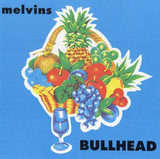
**BACK IN PRINT ON SINGLE LP**After three albums filled for the most part with quick song bursts and the occasional longer track, the eight-song long Bullhead found the Melvins stretching out a bit more at points, this time allowing the heavily stoned tempos plenty of time to really sprawl all over the place. There are fewer sudden shifts between fast and slow moments as well, and a lot more pure lava-flow beat-over-head feedback sludge and noise. It's not all ten mph deliberation, though - "Zodiac" shows the trio at full speed and blasting aside anything that might be so foolish as to get in its way, not to mention one unhinged Osbourne vocal lead. If grunge was achieving breakthrough status in Seattle, it was being perfected in its rawest sense on this album. Opening cut "Boris" does all this in excelsis - the band's longest recorded song at this point, nearly ten minutes long, it practically drips from the bongwater of eight million potheads, with Osbourne invoking his own brand of demons over the deep crawl of the music. Osbourne here really has got the dramatic, theatrical Ozzy Osbourne attitude down, with the occasional double-tracked vocals adding to the off-kilter intensity of the performances. Crover again shows his worth on the drums - he plays things slow most of the time but, crucially, never once sloppily - while Black keeps the bass going, however relatively unheard under Osbourne's guitar attack. "It's Shoved" is the not-so-secret highlight of Bullhead, Crover's brisker drum work and Black's sharp bass playing heralding a wild lead-guitar melody and a great ensemble performance. However, efforts like "Anaconda," with its slowly uncoiling power, and the intense "If I Had an Exorcism," which gets all the more wired and wound up as it goes (Black's bass here is some of her best), are no slouches. (All Music)
zake's fruitful contributions as an artist to his own Past Inside The Present label continues on this new album Deep Into The Unknown We Shall Endlessly Roam. It is an assemblage of arrangements made using archaic tape machines such as a Sony M-570V microcassette voice recorder and obsolete VSC Soundpacer, all on analogue tape. Of course that lends the music a misty, grainy quality that defines much of zake's ambient. Here his loops and found sounds meld and melt to create vast open spaces that are pregnant with emotion and tension. It's another magical work of ambient art that, says the artist, "is dedicated to those who continue to yearn for greater understanding."
out of Stock
Last delivered 3 years ago available to reorder, subject to availability
Past Inside the Present's 'Pulse' series is an investigation into ambient tech and beat-driven ambient sounds. Who better for the job on this second edition than master craftsmen ASC and Joachim Spieth? ASC opens up with 'Tidal Disruption Event', an understated, underwater rhythm with jittery percussive patterns and bright shards of melodic light piercing through the mix as more coarse soundwaves break over the top. Spieth's 'Subtle' is just as artful and delicate a mix of persuasive rhythm and melodic beauty. A classy Nitechord remix closes out this fascinating EP.
out of Stock
Last delivered 4 months ago available to reorder, subject to availability
KNTXT signs hotly-tipped techno artist Indira Paganotto for a new EP that showcases her unique sound across four compelling tracks.
Indira's father was a DJ in the iconic Goa scene in India in the 90s, so she grew up surrounded by colourful, emotive techno and psytrance. She has brought that to her own DJ sets and productions ever since she moved to Madrid to pursue her career. Now Indira is coming out with her best EP to date.
“I got to know Indira Paganotto when we opened up for demo submissions earlier this year,'' says KNTXT label boss Charlotte de Witte. “She immediately caught my attention with her unique take on psy/techno music. It feels very good to have her on board and I'm curious to see what the future holds for her.”
Indira adds, "I understand music as a state of trance where each track develops a journey and a story. Himalaya EP is the reflection of everything I learned since my childhood until today, the heritage and passion for Psytrance, the experiences in India, the connection with nature, as well as the feeling of freedom and strength like the gallop of a horse, the synths of Goa music, the love and the truth, which is what fills my life. Thank you Charlotte for understanding my language in such a true way. Ours is a real connection in such a sincere mental embrace, and I am proud to be part of your KNTXT family and to be able to show everyone who I am."
The EP ́s opening track, 'Takeshi', is a slick techno roller that is rippled with psychedelic melodies and bright acid lines. They bleep and squeak up top to create a hypnotic effect as the drums march on. 'Sultans Of Mountains' contains intense psychedelic synths waning about the mix. The drums are stripped back and urgent, and crashing hits and smart filters bring real tension as this one unfolds in an arresting fashion. On the other hand, 'Himalaya' has a deep and sleek techno atmosphere where astral pads and heavenly vocal coos make for a cinematic sound that will cast a real spell on the crowd. Last, but certainly not least we have the edgy and heavily textured 'Cobra' with its unrelenting drums, slapping hits and futuristic, psytrance-tinged melodies all designed to mess with your mind.
This is an EP packed with fresh techno, straight from the breakout star Indira Paganotto.
out of Stock
Last delivered 3 months ago available to reorder, subject to availability
Producer & musician Handshaking continues the legacy of Finnish electronic music with the upcoming album ‘There was a chance’, due for release on May 19th of 2023.
Handshaking is a familiar name in the Helsinki underground scene and has become known for surprise-filled and versatile DJ gigs and energetic live performances.
Handshaking’s 2020 debut LP Garden Clogs was a long-awaited work for the electronic and dance music audience. The limited 200 vinyl edition sold out during the release weekend. Image Magazine said the “Handshaking’s debut album is of the highest quality in terms of production value, which competes with peers like Yaeji, Peggy Gou and Jaakko Eino Kalevi”.
Handshaking releases via PME Records, which is the biggest independent label in Finland, representing artists like ALMA, Babel and AHO. Founded in 2012, the label has almost 30 artists in its roster with a wide variety of genres.
out of Stock
Last delivered 3 years ago available to reorder, subject to availability
Wirski’s debut on MISBHV Recordings offers a nuanced narrative operating in its own genre of Eastern European rough-edged club melancholy.
MISBHV004 opens with Inside The Dark Echo – a claustrophobic, stifling, relentless, sensual dance with desire. Darkroom complexity with heavy surface tension built on an EBM undercurrent flirt with subtle psychedelia and traces of acid that slowly firm up their multi-layered grip through its running time of six and a half minutes.
Warszawa paints a stripped-back, tantalizing picture. Opening with a brutalist, militant drum programming and surprisingly spacious, warm bassline, its rigid rhythm, tightened up by a repetitive, cold breath mantra eventually opens up to bright, shimmering synth flickers evoking olibanum – the sacred scent of altar candles. Warszawa is looking at the multilayered melody of its landscape – from eerie Soc-realist blockhouses, through neon-lit, seedy strip clubs of the 90s to opulent sacral architecture.
Warm Waters Of Eternity subtly weave a cinematic, Carpenteresque soundscape with a sense of overpowering, ecstatic innocent euphoria that invokes a dream of an early 1990s rave deep in the dark woods of Poland.
out of Stock
Last delivered 3 years ago available to reorder, subject to availability
First time reissue of mega rare 1972 psych-folk album from Venezuela.
180g LP.
One of the most obscure records ever released in Venezuela that was originally distributed in tiny quantities as a promo-only album.
A magic blend of protest songwriting, with a strong environmentalist statement, and folky pop with psych ingredients —such as the use of sitar sounds— recorded by the collective of artists “Una Luz”, and “El Zigui” who was once described as the local Bob Dylan.
The late ‘60s was a short period of time, long enough to turn the world upside down.
Music, paying attention to the ancient Greeks who said that changes in society are also reflected in it, also undergoes violent transformations in its structure. The turbulent joy of rock and roll and twist gives way to the meditative sounds of the waves of the sea contained in surf to finally welcome music of soft and delicate harmonies with songs full of references in their lyrics to the state of society and their relationships with the environment.
On the other hand, in Venezuela, although the expansive wave of May 68 had not reached it, a certain degree of dissatisfaction began to be perceived, especially through the music of a singer-songwriter from the countryside of Venezuela known as Ali Primera, El Cantor del Pueblo. Thanks to a scholarship from the German government, he studied for a few years in that country, and it was there that he recorded his first album, with songs whose lyrics reflect the essence of authors such as Bob Dylan and Atahualpa Yupanqui. And Ali Primera becomes one of the greatest influences of our artist: El Zigui.
Guillermo Sánchez Corao —known as El Zigui for some strange reason— was born in the Venezuelan city of Maracay, capital of the State of Aragua, on January 13, 1948. From a very young age he began to study guitar playing and, already in his teens, we can find him as part of the duo El Zigui & Franklin together with Franklin Laudelino Mejías, another young man with a great musical pedigree.
It is during his bohemian phase as a troubadour, in the surroundings of the Ateneo de Caracas, when his music caught the attention of producer Mario Tepedino, the most important youth music producer at the time. Mario takes him to his TV show “2001 Juvenil”. With the incorporation of other musicians such as Rubén "Micho" Correa —who would later become a great arranger and record producer— he created the group El Zigui y Una Luz, which would later be joined by musicians such as Carlos "Nene" Quintero and Alfredo Padilla, members of the amazing Grupo Pan. Later on, another outstanding singer would also join Una Luz: Guillermo Carrasco.
With this formation they made it into a recording studio in 1972 where they managed to record, in just 30 hours, a long-playing album of which only 60 copies were pressed and has therefore gained cult status among collectors. As expected, the strong content of the lyrics was not supported by the media, making the promotion of the album impossible to accomplish. However, it was with the help of Mario Tepedino that they made it to television, with appearances on “2001 Juvenil” and “Antesala Lunar”, a show that was especially produced for the broadcast of the arrival of man on the Moon.
That was probably one of the main reasons for El Zigui to move to Canada and then France until 1978 when he returns to Venezuela. He would then join bands like Xabañón, Fogón and De Vuelta al Futuro, a 12-member super group. The former members of Una Luz had become well known musicians in the country, especially Guillermo Carrasco who was one of the greatest ballad artists in the ‘80s and targeted by the biggest record companies at the time. El Zigui died in a traffic accident on June 22, 1999. If he had lived through these crazy times... where would he have gone?
In a world of endless, bottomless content, to find something that stands out from the crowd is a rare thing. But it’s something that 7ebra manage without breaking a sweat. Based in Malmö, twin sisters Inez and Ella Johansson deal in sparkling indie-rock that’s pretty without being soft, sweet without losing its edge and catchy without being cheap. With Inez on guitar and vocals and Ella on keys, organ and Mellotron, their minimal set-up makes a virtue of simplicity – with a sliver of guitar fuzz, and organ lines snaking around stark, striking vocals, augmented by shivering harmonies, they don’t need a lot to make music that’s colourful, kaleidoscopic, and effortlessly original.
7ebra debuted in 2022 with the double-single “I Have A Lot To Say”/ “If I Ask Her”, two helpings of psych-tinged, street-smart rock and roll, and the music scene around them wasn’t slow to notice. They opened for the Future Islands and the Dandy Warhols, were picked out by Apple Music’s Matt Wilkinson as a Hidden Gem of 2022 and were booked for prestigious showcases SXSW and Eurosonic. With a packed schedule of shows across Europe and the UK already planned for 2023, their world looks set to get a lot bigger – something that their debut album Bird Hour makes certain. The record is a warm, elegant introduction to the sound 7ebra have crafted. The songs are full of personality and character, but also retain a little bit of enigma, a sense of keeping something secret to themselves. To unwrap that elusiveness is a daunting task, but one the listener can’t resist leaping into.
Ella and Inez’s parents played in bands as they were growing up, so picking up music was a natural thing for them. The origins of 7ebra start with Inez whiling away the hours playing guitar in her bedroom. “I learned by playing covers by myself in my room”, she says. “Ella didn’t do that as much, but we sometimes played and sang together, country songs”. Eventually she would start writing her own. Ella wasn’t involved originally (“we did play together a few times”, she says, “and it just went to shit laughs. We fought a lot”), and Inez was originally reluctant: “I was a bit unsure whether I wanted to be in a band with my sister. Because you get clumped together all the time, when you’re twins”. But Ella was keen to join, and eventually persuaded Inez to let her join for a show. It went – so well that producer Tore Johansson (The Cardigans, Franz Ferdinand), saw it and asked if they’d like to record with him. That changed things, says Ella: “It made us think there might be something in this music”. As a duo, 7ebra were in flight. “In the end, it’s kind of a nice thing too being sisters in a band”, Inez says. “It doesn’t bother me anymore. It just made sense to play together”.
On the album that they eventually came up with, the talent that caught Johansson’s eye is immediately obvious. Opener “Secretly Bad” has a way of walking along your nerves, an eerie echo of a hymn in Inez’s vocal backed by a swirl of woozy blend of guitars and organ. That’s followed up by “I Like To Pretend”, an easily charming song that has a sleepy brightness about it, like morning sunlight breaking through a window. They take a couple of different genres for a whirl on Bird Hour – they’re tense and snappy on “If I Ask Her”, breezy and cocky on “Lighter Better”, and there’s even a couple of droplets of blues and folk in the mix, in the raw intensity of the emotions in the slower songs, the vulnerability and aching of songs like “Lean” and “Stripey Horsey”. The record has a way of sweeping you along in its mood and tones, fuelled in part by the band’s use of repetition, sometimes fast and fevered, sometimes crawling and hypnotic. The duo’s musical input blends perfectly, with Inez’s guitar and vocals forming the core, and Ella drawing in the detail with keys, organ, and harmonies, to really bring out the vivid nature of the songs. Indie rock that’s melodic and sweet, but with enough shadow mixed in to make it really compelling.
On Bird Hour, what strikes you first about 7ebra’s sound is how fully formed it is, how much they’ve carved out their own sonic territory, perfected by trial and error in the studio with Johansson. “Tore wanted us to try everything possible”, says Ella. “We had moments where things weren’t working. But that was necessary in order to find the good stuff”. 7ebra’s signature might be found in the deft way they deal with emotion – unafraid of being open, but a little too clever to make things too clear cut: “You can’t take yourself that seriously. It’s too emotional to take it seriously, to start hating yourself. But at the same time, it is quite serious”, says Ella. Another trademark is the simplicity – a 7ebra song has just enough to make it work, and nothing more. “I think it was important for me that our voices were at the centre of the songs”, says Inez, “that all the little melodies have their place, and don’t get overwhelmed. With lyrics, I sometimes come up with something, and just feel ‘there’s no need to add more to this’. Sometimes a line works by itself. You don’t have to add a bunch of lyrics”. Finally, the album’s themes are ones that will resonate with most people that have set foot on this planet. “I guess it’s about trying to understand yourself, in relation to others. Just life. ‘Why am I not good at this, why is this thing happening to me, why is this thing so hard, why am I so stupid?’”, laughs Ella.
7ebra haven’t been around for very long – but a handful of songs and their fizzing live shows have stirred up the biggest buzz in Scandinavian music in quite a while. Their debut album justifies it all. It showcases the magic they’re capable of conjuring up, and hints at even more to come in the future. But from where they are right now, they’ve made something very special. Bird Hour takes all that promise and turns it into something concrete, in the form of one of the year’s best rock debuts.
DARKTHRONE'S LEGENDARY 1989 DEMO, INCLUDING ADDITIONAL
TRACKS FROM BOOTLEG TV 1989, PLUS ADDITIONAL RARE REHEARSAL
TRACKS FROM 1990 - PRESENTED ON BLACK VINYL.
Longstanding Norwegian band Darkthrone started in 1986, originally
under the name of 'Black Death', before their final infamous moniker was introduced Although becoming known the world over as a black metal band crucial to the legacy of the genre, Darkthrone began more as an extreme metal band utilising element of thrash, death & doom metal into their early compositions.
'Cromlech' was Darkthrone's final demo release before a deal was inked with Peaceville Records. The demo was recorded in 1989 with the line- up of Gylve Nagell (Drums), Ted Skjellum (Guitars/vocals), Ivar Enger (Guitars) & Dag Nilsen (Bass); a line-up which would remain in place for the revered 'Soulside Journey' & 'A Blaze
In The Northern Sky' albums.As well as the iconic 'Cromlech' demo itself containing tracks which would go on to form part of the 'Soulside Journey' debut - this release also contains additional tracks from the Bootleg TV Oslo recordings in 1989, including a cover of Celtic Frost's 'Visual Aggression'.
Finally, this edition of 'Cromlech' also includes a trio of instrumental tracks from a rehearsal tape originally made for Peaceville founder Paul "Hammy" Halmshaw, sent to him in 1990.
This edition of 'Cromlech' is presented on vinyl format with printed inner sleeve & includes the original 'Cromlech' art/logo
Kevin Basko released more albums in 2019 than most artists do in their
entire career - The New Jersey indie rocker released handfuls of records
in the first seven years under the moniker Rubber Band Gun -- not to
mention producing, engineering, and performing with everyone from Eric
Slick to the Lemon Twigs
But when Basko's friend and collaborator Jonathan Rado of Foxygen quipped that
he should release 25 albums in a single year, the Rubber Band Gun 25 sprang to
life. And at the heart of that diverse collection of records is Cashes Out (out now
via Earth Libraries), a record that not only stands as the first vinyl release for the
project, but also showcases the dazzling and dizzying heights that Rubber Band
Gun psych-tinged bedroom rock can reach.
Recorded entirely in 2021, "Perfect Worlds," the newest album by San
Francisco's mysterious lo-fi pop legend Tony Jay, delivers an intimate
record of thirteen dreamy, assured arrangements.Fresh off the heels of
"Hey There Flower," "Perfect Worlds" marks Tony Jay's first album with
Slumberland Records and further cements Tony Jay's status as dejected
crooner of the quotidian par excellence
Drawing inspiration from failed relationships, lack of sleep, a bicycle injury, and
depression, Tony Jay pairs catchy melodies and hushed vocals with ethereal
instrumental tracks. Headed by Michael Ramos, the former drummer of April
Magazine, and current member of Flowertown, Al Harper, and Sad Eyed Beatniks,
Tony Jay began recording in 2006 and added a live band in 2017. "Perfect
Worlds," recorded in Ramos's bedroom and mastered by Mikey Young, features
Kelsey Faber, Alexis Harper, and Cameron Baker, with guest vocals by Karina Gill
(Cindy, Flowertown, Sad Eyed Beatniks).
Studded with instant classics, Tony Jay's new album encapsulates the isolation
and loneliness of the past few years. "In a perfect world I'd find a place down in
the basement," begins the title track, and the refrain repeats, "You just can't
escape it." Interspersed with otherworldly instrumental tracks that call to mind a
machine struggling to work underwater and whale mating calls combined with
droning synth, horns, chimes, this album also provides space for listeners to
make new worlds of their own. Our times may be inescapable, but we're fortunate
to be able to wall ourselves in with fantasies of our own creation alongside
"Perfect Worlds.
In a world of endless, bottomless content, to find something that stands out from the crowd is a rare thing. But it’s something that 7ebra manage without breaking a sweat. Based in Malmö, twin sisters Inez and Ella Johansson deal in sparkling indie-rock that’s pretty without being soft, sweet without losing its edge and catchy without being cheap. With Inez on guitar and vocals and Ella on keys, organ and Mellotron, their minimal set-up makes a virtue of simplicity – with a sliver of guitar fuzz, and organ lines snaking around stark, striking vocals, augmented by shivering harmonies, they don’t need a lot to make music that’s colourful, kaleidoscopic, and effortlessly original.
7ebra debuted in 2022 with the double-single “I Have A Lot To Say”/ “If I Ask Her”, two helpings of psych-tinged, street-smart rock and roll, and the music scene around them wasn’t slow to notice. They opened for the Future Islands and the Dandy Warhols, were picked out by Apple Music’s Matt Wilkinson as a Hidden Gem of 2022 and were booked for prestigious showcases SXSW and Eurosonic. With a packed schedule of shows across Europe and the UK already planned for 2023, their world looks set to get a lot bigger – something that their debut album Bird Hour makes certain. The record is a warm, elegant introduction to the sound 7ebra have crafted. The songs are full of personality and character, but also retain a little bit of enigma, a sense of keeping something secret to themselves. To unwrap that elusiveness is a daunting task, but one the listener can’t resist leaping into.
Ella and Inez’s parents played in bands as they were growing up, so picking up music was a natural thing for them. The origins of 7ebra start with Inez whiling away the hours playing guitar in her bedroom. “I learned by playing covers by myself in my room”, she says. “Ella didn’t do that as much, but we sometimes played and sang together, country songs”. Eventually she would start writing her own. Ella wasn’t involved originally (“we did play together a few times”, she says, “and it just went to shit laughs. We fought a lot”), and Inez was originally reluctant: “I was a bit unsure whether I wanted to be in a band with my sister. Because you get clumped together all the time, when you’re twins”. But Ella was keen to join, and eventually persuaded Inez to let her join for a show. It went – so well that producer Tore Johansson (The Cardigans, Franz Ferdinand), saw it and asked if they’d like to record with him. That changed things, says Ella: “It made us think there might be something in this music”. As a duo, 7ebra were in flight. “In the end, it’s kind of a nice thing too being sisters in a band”, Inez says. “It doesn’t bother me anymore. It just made sense to play together”.
On the album that they eventually came up with, the talent that caught Johansson’s eye is immediately obvious. Opener “Secretly Bad” has a way of walking along your nerves, an eerie echo of a hymn in Inez’s vocal backed by a swirl of woozy blend of guitars and organ. That’s followed up by “I Like To Pretend”, an easily charming song that has a sleepy brightness about it, like morning sunlight breaking through a window. They take a couple of different genres for a whirl on Bird Hour – they’re tense and snappy on “If I Ask Her”, breezy and cocky on “Lighter Better”, and there’s even a couple of droplets of blues and folk in the mix, in the raw intensity of the emotions in the slower songs, the vulnerability and aching of songs like “Lean” and “Stripey Horsey”. The record has a way of sweeping you along in its mood and tones, fuelled in part by the band’s use of repetition, sometimes fast and fevered, sometimes crawling and hypnotic. The duo’s musical input blends perfectly, with Inez’s guitar and vocals forming the core, and Ella drawing in the detail with keys, organ, and harmonies, to really bring out the vivid nature of the songs. Indie rock that’s melodic and sweet, but with enough shadow mixed in to make it really compelling.
On Bird Hour, what strikes you first about 7ebra’s sound is how fully formed it is, how much they’ve carved out their own sonic territory, perfected by trial and error in the studio with Johansson. “Tore wanted us to try everything possible”, says Ella. “We had moments where things weren’t working. But that was necessary in order to find the good stuff”. 7ebra’s signature might be found in the deft way they deal with emotion – unafraid of being open, but a little too clever to make things too clear cut: “You can’t take yourself that seriously. It’s too emotional to take it seriously, to start hating yourself. But at the same time, it is quite serious”, says Ella. Another trademark is the simplicity – a 7ebra song has just enough to make it work, and nothing more. “I think it was important for me that our voices were at the centre of the songs”, says Inez, “that all the little melodies have their place, and don’t get overwhelmed. With lyrics, I sometimes come up with something, and just feel ‘there’s no need to add more to this’. Sometimes a line works by itself. You don’t have to add a bunch of lyrics”. Finally, the album’s themes are ones that will resonate with most people that have set foot on this planet. “I guess it’s about trying to understand yourself, in relation to others. Just life. ‘Why am I not good at this, why is this thing happening to me, why is this thing so hard, why am I so stupid?’”, laughs Ella.
7ebra haven’t been around for very long – but a handful of songs and their fizzing live shows have stirred up the biggest buzz in Scandinavian music in quite a while. Their debut album justifies it all. It showcases the magic they’re capable of conjuring up, and hints at even more to come in the future. But from where they are right now, they’ve made something very special. Bird Hour takes all that promise and turns it into something concrete, in the form of one of the year’s best rock debuts.
Erik K Skodvin's alter persona “Svarte Greiner” re-appears with another chapter in his “zen music for disturbed souls” series, channeling both spiritual distress and meditation in a live recording from the bunkers of a bombed out brewery.
The first piece, entitled “Devolving Trust” is recorded live in the bunkers of Schneider Brewery in Berlin, 2018. Erik explains : “I was invited to use the vast old cellars located underneath the site for a performance / installation. Wet and hollow with a dark past and long reverb, it was a perfect location to channel a cello and electro-acoustic improvisation in the spirit of my two long-form, meditative albums Black Tie & Moss Garden. As a 30 minute piece, it was left looping in the room for hours after it ended as an echo of the performance, allowing people to walk around and soak up the sounds and empty hallways alone.
I am usually not into the idea of releasing a live recording, as there are so many factors that are lost in the translation from being present and listening to it in another space. The eyes, ears and body can often see beyond small mistakes once a live performance unfolds in front of you. The details are usually lost in translating it to a pure recording. I made an exception for this as I feel it translates the live feeling in a way I like. Very personal and full of small mistakes it creates its own life. Also, as an improvisation, I am very happy with it, and have been listening to it on and off since a few years. With this in mind I decided I want it to be another document in my ongoing series of longform, atmospheric pieces following the aforementioned two albums.
The second track simply called “Devolve” is mostly constructed out of fragments from the performance as a sort of minimal, reversed echo, further tunnelling into the unknown. These pieces has given me calmness, reflection and escape from the madness escalating outside of our doors. I hope it can do the same for you”.
out of Stock
Last delivered 12 months ago available to reorder, subject to availability
Vladislav Delay presents the third EP in his "Hide Behind The Silence" series with five 10" releases coming throughout 2023. Intuitive and raw music, momentary and reflective, released on Ripatti's own label "Rajaton".
--
Stillness is a myth. Consider concepts such as ”still water”, or ”still air” for that matter. Go to a restaurant, ask them for a glass of still water, hold it against the light and see where we’re at. Even though the water itself has been captured and imprisoned in the glass, it never stops breathing. It’s filled with tiny particles, dancing. Everything can be explained on a molecular level, but since we’re not scientists – and even if you happen to be – it’s the natural world of perception that moves me.
Still air is very similar. A hot summer’s day with zero wind feels completely still. It’s the closest I have felt to complete stillness. Or for a more urban adaptation, imagine the same vibe inside a normal apartment. In those moments, revelations and mind- blowing experiences can be had with experiments in stillness.
Try this: Just sit down for a minute on a sunny day, making sure there’s enough natural light. Do absolutely nothing. Try not to breathe for a bit. (If you need a mental anchor, you can play Cage’s 4’33” in your head but nothing else.) Watch the tiny dots of dust dancing :..’ ̈.:; ́ ́*°.,’:,. ̈ ̈ ̈ ̈:,.’
The movement is crazy, but the feeling of stillness comes from witnessing how subtle it is. In (perceived) complete stillness, every act of microscopic mobility seems to speak volumes. Yet, it feels both reassuring and oddly threatening that the stillness is never complete. What if we would need absolute stillness? Or is it just enough that we can perceive something as such? Extremes attract, so for both water and air, extraordinary movement is equally fascinating. That is also a luxury item of sorts. For us to enjoy a very ”loud” body of water or air, we need to be safe, in enough control of the situation. So when you are, it’s worthwhile to pay attention and take it all in.
A rapid flowing free with extreme strength and just barely in control. Look at that water go! No still water on this one, only ”sparkling”. A windy day when birds seem surprised how hard it is to fly, but in the end they make it. Trees bend but don’t break. The wind shows you its movement but doesn’t hurt you. It feels friendly, like a big clumsy dog that doesn’t quite understand its size.
It’s beautiful to be a guest of the elements, but not at the mercy of them. A new kind of dialogue forms.
out of Stock
Last delivered 3 years ago available to reorder, subject to availability
Under the production moniker of Material Things, 12th Isle co-founder Stewart Brown unveils a part debut album part compendium of musical collaborations spanning from 2015-2020. Some recordings began as long, one-take improvisations (How's Life, Peckham) spliced together and revisited years later. Others were based upon chance opportunities to record with musicians operating a long way from the parameters of 12th Isle.
Cult private-press loner folk guitarist Bob Theil, whose 1982 album So Far counts as one of the Scottish greats of the era, is at the heart of 'Westway'. Synth and guitar fragments recorded by the pair in Stewart's family home one summer form a low-key conclusion to the collection, whilst London based percussionist Pike Ogilvy brings an array of drum sounds and natural percussion to 'No Direction'. Regular 12th Isle affiliate Vague Imaginaires also features heavily, contributing synth work on Grenoble and his own extended digi bonus remix of 'How's Life'.
As a collection, the 8 tracks show a studious, concise vision and combine influences from minimalism, concrete and avant-garde jazz and techno yet also embrace friendship, experimentation and curiosity whilst capturing 5 years of the artists own personal life. Some of the tracks have been circulating in various versions for a number of years now, with DJ support from Bake, Ivan Smagghe, Optimo, Lena Willikens, Huntley & Palmers, Orpheu The Wizard and, of course, 12th Isle.
out of Stock
Last delivered 3 years ago available to reorder, subject to availability
Black vinyl pressing 2022! "Funny to think there was a time not so long ago when Stiff Richards was a name that required explanation - but not to you, of course, o punk connoisseur. This is your territory, after all. Music is your oxygen and the sound of the underground is your clarion call. You can explain the distinction between 'Know Your Product' and 'No, You're Product'. Hey, you're probably pretty good-looking too. You know your shit, either way. So no wonder you're drawn to this relative holy grail of modern garage rock - the 2017 self-titled debut album by the aforementioned Stiff Richards. Originally released on their own Stiff Records (and again by Legless in 2020), it lays down all the elements that made last year's mighty 'State of Mind' LP such an instant classic. OK, we've established you know the drill, but let's recap: scintillating Aus-punk that recalls the heroic high-speed riffs of their countrymen The Saints and Radio Birdman. It sounds like Royal Headache covering Motörhead, or maybe the other way around. It's a full-on riot in 30 minutes - the rawest of rock'n'roll bleeding into the grimiest of power chords with hooks for days. You already know you're gonna love it. Whether going full-throttle and aiming straight for the nerve receptors that get your head a-nodding and your toes a-tapping - like on sub-three-minute highlight 'Strung Out' - or sludgin' their way through groovier cuts like 'Bustin' Out', they're never less than a treat that's guaranteed to get your serotonin flowing and your speakers up to 11 (or beyond). As a certain similarly-named record label once said, if it ain't Stiff, it ain't worth a fuck. Frightfully rude, but that's rock music for you, I suppose. Get it in your ears." - Will Fitzpatrick.
The distinctive rolling grooves, growling basslines and blasting horns of Snakehips Etcetera combined to present Nucleus's most energetic record. First released on Vertigo in 1975, original copies of Snakehips Etcetera are now very tricky to score. Like all the Nucleus records, it’s aged ridiculously well and this Be With re-issue, re-mastered from the original analogue tapes, shows off just why this deserves to be back in press.
Genius trumpeter and visionary composer Ian Carr was one of the most respected British musicians of his era. He was a true pioneer and saw the potential in fusing the worlds of jazz with rock, just as Miles Davis and The Tony Williams Lifetime did in the US. In late 1969, following the demise of the Rendell-Carr quintet, and tiring of British jazz, Carr assembled the legendary Nucleus. Regarding music as a continuous process, Nucleus refused to “recognise rigid boundaries” and worked on delivering what they saw as a “total musical experience”. We can get behind that.
Under bandleader Carr, Nucleus existed as a fluid line-up of inventive, skilled musicians. This constant evolution and revolution was all part of the continuous musical exploration and discovery that took jazz to new levels. And the music has kept relevant. To steal a line from a review of our re-issue of Roots, when it comes to anything Nucleus “it’s basically already hip-hop”
With all restraint out the window, 1975's pimped-up Snakehips Etcetera is the outrageous - in both cover art and sound - follow-up to the brooding Under The Sun. It's perhaps not one for the jazz purists! It finds Nucleus pared down to a core group of six, with Carr, Bob Bertles (sax), Ken Shaw (guitar), Geoff Castle (keys), Roger Sutton (bass) and Roger Sellers (drums) comprising the collective. Snakehips Etcetera reflects a period where the compositions start to become a little more direct and less-cerebral in comparison to some of Nucleus' previous releases. And why would we begrudge them some fun? This one rocks, swings and funks with no little soul. And more than a little jazzy sleaze. Clearly, they were having a good time.
The album has a real live, jamming feel to it, no surprise given the extent to which they were touring at the time. The band is tight and grooving throughout, none more so than on Bob Bertles's effervescent opener, "Rat’s Bag". So darn funky it stings, it's an infectious gem full of punchy clean lines over a killer bassline from Sutton. The thick, driving jazz-rock of "Alive And Kicking" is exactly that. It has a very improvisational feel, but an inspired one at that and features a wailing guitar solo from Ken Shaw that simply slays. The funky "Rachel’s Tune" is amazing, bringing you back to Canterbury days with its fuzzed-out organ solos to close out Side A.
Opening up Side B, the cool psychedelic title track unfolds slowly and sensually over its ten-plus minutes. A stoned soul stew of sorts, each member of the crew gets their chance to shine over Sellers's steady drums. The melodic funk fusion of "Pussyfoot" pairs Carr with Bertles on ace solo flute for a bright, springy melody. This one really gleams over shuffling drums. Changing the pace to close out this memorable set, the particularly cool "Heyday" is a reflective, sober tune which reinforces the sumptuous Nucleus palette, the acoustic guitar and bass high in the mix to make the neck snap, the horns elegantly blasting to help you swoon.
This Be With edition of Snakehips Etcetera has been re-mastered from the original Vertigo master tapes, Simon Francis’ mastering working together with Cicely Balston's cut at AIR Studios to weave their usual magic with these wonderful recordings. The striking, lascivious sleeve has been restored in all its seductive/ridiculous beauty.
out of Stock
Last delivered 3 years ago available to reorder, subject to availability
Tribal dubby breakbeat project originally released in 1991 by Manchester born drummer Morgan King, brought back 30 years later with a remastered release.
Guaranteed anthem for the introspective dancefloors, with heavy dubbed out breakbeat rhythms under trance inducing didgeridoo sounds. A side takes you on trip spanning over 12 minutes starting with faster paced floor action that gracefully fades into a half tempo section – two for one – flipping over to the the B side with two more versions of “Older Brother from the Rock”, the Tribal Om Mix and the Om Beats - something for everyone. Seriously remastered and re-cut for maximum dancefloor presence. Huge on proper sound systems.
out of Stock
Last delivered 74 days ago available to reorder, subject to availability
Mattias Petersson debuts on the Swiss label Hallow Ground with »Triangular Progressions,« a suite in nine parts written entirely in the SuperCollider environment using additive synthesis. The starting point for the evocative piece is a magic number triangle that Petersson invented during his early composition studies and which has been an obsession of the artist for over twenty years, previously forming the foundation of many other of his works. By exploring the harmonic progressions found hiding within the triangle, »Triangular Progressions« at once emits a sense of introspective calm that fosters deep listening and evokes a whole spectrum of emotions, mediating between the abstract and the visceral.
The Stockholm-based Petersson, also known under the moniker Codespira1 and for his long-term collaboration with violinist George Kentros as There Are No More Four Seasons, has been active as a composer of computer music as well as an artist in the realms of live coding and modular synthesis for over two decades. Originally trained as a classical pianist, he also holds a diploma in electro-acoustic composition from the Royal College of Music in Stockholm, where he currently works as an associate professor. Besides his activities as a musician and teacher, Petersson is pursuing a PhD in composition at the Luleå University of Technology. Researching modular systems comprising both human and non-human modules, he is part of the GEMM))) Gesture Embodiment and Machines in Music cluster.
»Triangular Progressions« can be considered a perfect synthesis of Petersson’s academic interests and aesthetic ideas, combining a mathematical approach with artistic rigour. The magic number triangle highlights the beauty of symmetrical properties. By exploring its idiosyncrasies, the composer manages to translate them into engaging sounds. The lush melodies and harmonies of the music at times call to mind the intimate organ and drone works by label mates Kali Malone and Maria W Horn while also maintaining a unique signature sound. The addition of pure sinusoidal waves enables a deep listening exploration of the counterpoint between melodic and harmonic rhythms, chord structures and spectral harmonies that Petersson extrapolates from those magic numbers.
Foyer Red’s debut LP, Yarn the Hours Away, plays out as a collection of short stories, each with its environment and protagonist(s) meticulously crafted by the band, with lead singer, vocalist, and clarinetist Elana Riordan at the helm. Foyer Red’s debut EP, Zigzag Wombat, showcased their playfully chaotic arrangements, which bridge art-punk, math rock, and sweetly sung indie with a dash of the zoomies.
The band synthesizes their homespun take on magical realist indie rock that was centered on their EP with their varied musical influences; taking cues from the otherworldly melodies of Cate Le Bon, Yucky Duster’s jangle-filled crayon rock, and the organized chaos of Deerhoof’s iconic polyrhythms. The songs that makeup Yarn the Hours Away are fantastical, surrealist stories that hinge on contemporary, post-digital life.
The lead single “Etc” captures this dynamic perfectly. Anchored by Eric Jaso’s hypnotizing bass line, the song unfolds with off-kilter call-and-response vocals between Riordan and Kristina Moore, their stilted deliveries bouncing around the mix. The track is searching but discontent with the algorithmic and claustrophobic realities of daily life: singer/guitarist Mitch Myers throws the song for a loop singing, “gathering information / will set you free once you’ve reached / 37 percent / of the database.” While there’s paranoia and cynicism undergirding the lyrics, the song itself is a thrilling and playful listen.
The songs on Yarn the Hours Away are uniformly exciting and compelling; each track feels distinct and sometimes even in direct conflict. The peppy opener “Plumbers Unite!” belies its themes of gamification of our daily lives and delves into the science fiction and fantasy songwriting of Foyer Red’s debut EP. Centered around a relentless rhythm section, their dueling vocals never abate; Moore and Riordan’s honey-sweet but getting more frantic as the song progresses, while Myers’ erratic talk-singing culminates in one final frustrated scream. Juxtapose this with “Gorgeous,” a lovely song about Riordan and drummer Marco Ocampo’s relationship that sees the band slowing their pace into a blissful sway. Riordan coos and sighs over the track while recalling “Marco-isms”; botched colloquialisms that Ocampo uses.
“Gorgeous” shares little in common with “Pocket,” a loose lamentation on late capitalism that touches on time travel and human evolution. Moore and Riordan’s exclamations are chopped up and used as rhythm instruments, layered over the intricately frenetic guitars of Myers and Moore. Foyer Red thrives on these extremes and contradictions. Where their first release was self-recorded, this LP found them in Figure8 Studios with a deadline. “It was really liberating,” says Jaso. “We're all just kind of throwing in our own voices and challenging each other to make the songs better.”
Yarn the Hours Away comes from a lyric on the closer “Toy Wagon.” The song that first marked the time Moore and the rest of the band worked together, a promising spark of a thrilling collaboration to come. “It harkens back to all of us coming together and spending the hours together in music,” says Moore. “There are few moments where you get to relax and exhale,” adds Riordan. “It's what happened when the five of us got together and started writing. We just wrote all of these out there songs and we didn't see a reason to dial that back. Its natural form is in its chaos and layered craziness.”
Nucleus's Elastic Rock is undisputedly a milestone in Jazz-Rock. A beautiful and vital debut album, it was first released on Vertigo in 1970. Original copies are now very tricky to score and, like all the Nucleus records, it’s aged ridiculously well. This Be With re-issue, re-mastered from the original analogue tapes, shows off just why this deserves to be back in press.
Genius trumpeter and visionary composer Ian Carr was one of the most respected British musicians of his era. He was a true pioneer and saw the potential in fusing the worlds of jazz with rock, just as Miles Davis and The Tony Williams Lifetime did in the US. In late 1969, following the demise of the Rendell-Carr quintet, and tiring of British jazz, Carr assembled the legendary Nucleus. Regarding music as a continuous process, Nucleus refused to “recognise rigid boundaries” and worked on delivering what they saw as a “total musical experience”. We can get behind that.
Under bandleader Carr, Nucleus existed as a fluid line-up of inventive, skilled musicians. This constant evolution and revolution was all part of the continuous musical exploration and discovery that took jazz to new levels. And the music has kept relevant. To steal a line from a review of our re-issue of Roots, when it comes to anything Nucleus “it’s basically already hip-hop”.
The very title Elastic Rock could be regarded as the group's MO, describing a melting point between their rock and jazz impulses. Indeed, housed in a memorable gatefold jacket designed by Roger Dean, the die cut molten teardrop shape on the front sleeve opens to reveal a fiery volcanic crater. On the back, Dean's drawing has Carr with saxophonist Brian Smith, guitarist Chris Spedding, drummer John Marshall, bassist Jeff Clyne and sax, oboe and pianist Karl Jenkins in a circle, the central core of a movement and the basis for its activity.
Recorded over four days in January 1970, Elastic Rock didn't sound like any other British jazz album. Exploding out the gate, "1916" opens with Marshall's frantic pounding before melancholic horns enter. The smooth title track, "Elastic Rock" is just a gorgeous electric blues track. Light drums, gentle melodic horns, piano and a solid bassline serve as the perfect bed for Spedding's graceful bluesy guitar melodies. The serene "Striation", a Clyne and Spedding collaboration, is led by bowed bass and is the epitome of calm before the late night laid back vibe of "Taranaki" breezes along sweetly and smoothly with great trumpet and tenor.
The truly emotional "Twisted Track" is elegant with horns, while guitar is gently played with drums and bass. Initially deeply soothing, it gradually builds with various solos and duets. "Crude Blues (Part 1)" features an excellent oboe part by Jenkins with laconic guitar helping out. "Part 2" is livelier, with a heavy backbeat and great wind parts. "1916 (Battle Of Boogaloo)" features a steady bassline and great call and response parts from the horn section.
The highly-charged centrepiece of the record, the mesmeric epic "Torrid Zone" features an hypnotic bassline and hi-hat with some of the ensemble's best soloing. Brilliantly encapsulating the jazz fusion aesthetic so desired by the group, the rhythm section is rock-influenced but magically retains a laid-back jazz vibe. Just perfection. Spacey jazz in the style of In a Silent Way, the semi-ambient "Stonescape" features smooth, muted brass, warm, smokey keys and a barely-there rhythm section. Heavenly.
The bubbling, fragile restraint of "Earth Mother" partially utilises the "Torrid Zone" bassline but takes the energy in a different direction with Marshall's frenetic drumming and Spedding's unpredictable riffing. Next comes the very idiosyncratic drum solo track by Marshall in the appropriately-titled "Speaking for Myself, Personally, in My Own Opinion, I Think." The album closes with the raucous "Persephones Jive", a track that ends the album frantically, riotously, just as it began.
This Be With edition of Elastic Rock has been re-mastered from the original Vertigo master tapes, Simon Francis’ mastering working together with Cicely Balston's cut at AIR Studios to weave their usual magic with these wonderful recordings. The stunning die-cut gatefold sleeve has been restored in all its molten glory.
out of Stock
Last delivered 3 years ago available to reorder, subject to availability
Their masterpiece? With breaks for dayyyyyys and an almost ambient, heavy jazz atmosphere throughout, *this* is the apex of British jazz-rock fusion. We'll Talk About It Later was first released on Vertigo in 1971 and original copies are now very tricky to score. Like all the Nucleus records, it’s aged ridiculously well and this Be With re-issue, re-mastered from the original analogue tapes, shows off just why this deserves to be back in press.
Genius trumpeter and visionary composer Ian Carr was one of the most respected British musicians of his era. He was a true pioneer and saw the potential in fusing the worlds of jazz with rock, just as Miles Davis and The Tony Williams Lifetime did in the US. In late 1969, following the demise of the Rendell-Carr quintet, and tiring of British jazz, Carr assembled the legendary Nucleus. Regarding music as a continuous process, Nucleus refused to “recognise rigid boundaries” and worked on delivering what they saw as a “total musical experience”. We can get behind that.
Under bandleader Carr, Nucleus existed as a fluid line-up of inventive, skilled musicians. This constant evolution and revolution was all part of the continuous musical exploration and discovery that took jazz to new levels. And the music has kept relevant. To steal a line from a review of our re-issue of Roots, when it comes to anything Nucleus “it’s basically already hip-hop”.
We'll Talk About It Later is arguably Nucleus's best album. Not only that, it's in the top 5 of all fusion albums. By the time Nucleus entered Trident Studios in September 1970 to record Elastic Rock's successor, they had already won a best group award at the Montreux Jazz Festival. Once again presented in a Roger Dean designed die-cut gatefold sleeve it continued to demonstrate the chemistry and interplay that worked so brilliantly on Elastic Rock; Carr's sumptuous trumpet and flügelhorn lines, Karl Jenkins's funk-filled electric keyboards, Chris Spedding's wah-wah guitar, Brian Smith's sax and the rhythmic foundation of drummer John Marshall and bassist Jeff Clyne.
The group work and insane musicianship Nucleus were famed for is in evidence from the off. The intensely funky "Song for the Bearded Lady" is absolute FIRE, blasting out the speakers to leave listeners floored. Counterpoint riffing segues into a spacious groove and a Carr trumpet solo demonstrating the influence of electric Miles from the period. The stop-start funk of "Sun Child" would appeal to Soft Machine devotees whilst the genuinely touching "Lullaby for a Lonely Child" is a lovely downtempo ballad. Featuring an understated, reflective horn line from Carr and Smith and atmospheric, shimmering bouzouki from Spedding, there's an exotic flavour which contributes to the bliss. The ominous, sleazy title track retains a swaggering menace and is not the only track to lend a sort of heavy stoner rock atmosphere. The guitars and bass are deep and low throughout, conjuring heavy psych moments to go with the actual jazz and even funk. To say this album was in conversation with Bitches Brew would not be overstating the sheer brain-frying brilliance.
The Weather Report-adjacent "Oasis" opens Side B, a colossal track featuring nearly 10 minutes of steadily building melodic horns, keys and choppy guitar riffs. So ace, it could easily go on for another 10. Mesmeric. Spedding adds unique vocals to the undeniable groove of "Ballad of Joe Pimp" whilst saxophonist Smith's duet with drummer Marshall at the conclusion of "Easter 1916" - inspired by the Yeats poem about the Irish nationalist uprising in Dublin - adopts the wildness of the most incendiary free jazz.
This Be With edition of We'll Talk About It Later has been re-mastered from the original Vertigo master tapes, Simon Francis’ mastering working together with Cicely Balston's cut at AIR Studios to weave their usual magic with these wonderful recordings. The stunning die-cut sleeve has been restored with the original gatefold window pane depicting the Irish uprising in 1916. Incredible, timeless, guaranteed spine-chills.
out of Stock
Last delivered 3 years ago available to reorder, subject to availability
What a record! The outstanding Solar Plexus, the much-loved third album from Ian Carr and Nucleus, was first released on Vertigo in 1971. Inevitably, original copies are now very tricky to score and, like all the Nucleus records, it’s aged ridiculously well. This Be With re-issue, re-mastered from the original analogue tapes, shows off just why this deserves to be back in press.
Genius trumpeter and visionary composer Ian Carr was one of the most respected British musicians of his era. He was a true pioneer and saw the potential in fusing the worlds of jazz with rock, just as Miles Davis and The Tony Williams Lifetime did in the US. In late 1969, following the demise of the Rendell-Carr quintet, and tiring of British jazz, Carr assembled the legendary Nucleus. Regarding music as a continuous process, Nucleus refused to “recognise rigid boundaries” and worked on delivering what they saw as a “total musical experience”. We can get behind that.
Under bandleader Carr, Nucleus existed as a fluid line-up of inventive, skilled musicians. This constant evolution and revolution was all part of the continuous musical exploration and discovery that took jazz to new levels. And the music has kept relevant. To steal a line from a review of our re-issue of Roots, when it comes to anything Nucleus “it’s basically already hip-hop”.
We'll let Ian describe this one: "I wrote Solar Plexus' last year with the help of an Arts Council grant. It is based on two short themes which are stated at the beginning (Elements I & I1). The first theme is angular and has a slow, crab-like movement: the second theme is direct, simple and diatonic. CHANGING TIME and SPIRIT LEVEL explore the first theme and BEDROCK DEADLOCK and TORSO explore the second one. SNAKEHIPS DREAM tries to fuse both themes. (The title is a reference to the famous dancer 'Snakehips' Johnson)."
Solar Plexus features the same lineup as Elastic Rock and We'll Talk About It Later, but they're augmented by six guests, three of which play brass. Carr himself had almost full control of the writing and it does feel very different to the previous albums. It's more of a jazz record loosely based on a rock foundation rather than jazz fusion jamming.
The haunting synth-and-bass soundscape "Elements I and II" opens the album in dramatic, experimental fashion. It gives way to the bright, funky feel-good jazz of "Changing Times". An elegant onslaught of horns, courtesy of guests Kenny Wheeler and Harry Beckett, ride a solid groove for the duration. How the brass refrains have eluded samplers is beyond us. The melancholic "Bedrock Deadlock" features the brooding majesty of Jenkins' oboe and Clyne's mournful, skittering double bass. Wah wah guitar, drums and funky percussion then take over before the horns ride us out over frenetic beats. The dark, angular "Spirit Level" is a real highlight, by turns harmonic and beautiful then dissonant and wayward. Wonky jazz with no apparent structure or melodic bones. Regardless, it represents a great showcase for each virtuoso performer.
The breezy soul of "Torso" feels like a breath of fresh air, skipping along in the uptempo style with guitar, horns, drums and bass. A track which truly sounds scintillating, featuring sax solos, fantastic propulsive interplay from all the group around the halfway stage before Marshall gets his chance to really shine in closing out with a polyrhythmic drum solo. Final track "Snakehips' Dream" stretches cooly out over 15 minutes to round out a spellbinding album. An epic, suave groove, it's a relaxing piece with warm electric keys, laconic guitar and languorous horns. Truly sophisticated soulful jazz. An absolute masterclass. We could easily listen to this all day long.
This Be With edition of Solar Plexus has been re-mastered from the original Vertigo master tapes, Simon Francis’ mastering working together with Cicely Balston's cut at AIR Studios to weave their usual magic with these wonderful recordings. The stunning gatefold sleeve has been restored to complete this sensational package.
out of Stock
Last delivered 3 years ago available to reorder, subject to availability
Italian techno sensation Alignment is back with a fifth EP Close Your Eyes on Charlotte de Witte’s KNTXT label out on Friday 31st March.
Close Your Eyes is four tracks of thrilling all-out industrial assault from the Barcelona-based artist.
Title track ‘Close Your Eyes’ rips into a slamming turbo-charged beat accompanied by metal textures and warehouse atmospherics. Next up, ‘Deep Space’ is pure evocative melodrama, riding on a wave of ghostly vocals and piercing synth stabs. ‘Dance For Me’ ups the ante with a trance-tinged roller underscored by slamming bass, before ‘Fight For A New World’ closes out the EP with an epic journey to euphoria.
“I really thought of the Close Your Eyes EP as a travel in my current dreams and maybe a bit of my nightmares as well.” Alignment explains. “For this EP, I tried to combine the “original” Alignment influences with a touch of the new hard techno sounds.”
Charlotte de Witte adds: “Alignment is back, and his 5th release on the label is an absolute killer! I’ve been playing these tracks all over the world for the past couple of months and they don’t disappoint. I’m very excited to finally put them out there and have Alignment on board again!”
Italian-born artist Alignment, whose real name is Francesco Pierfelici, has emerged as an unstoppable force in the techno world in recent years. He has had an outstanding array of vital productions - with four previous EPs on Charlotte de Witte’s KNTXT label, including 2022’s acclaimed Attack - and his sound helps carry forward the diversity and musical
identity the label stands for. Describing his style as “a journey to the dark corners of one’s inner self”, Alignment’s industrial techno is reminiscent of an endless post-apocalyptic warehouse rave.
‘Close Your Eyes’ is another exhilarating offering from the new school techno giant. An EP you won’t want to miss.
out of Stock
Last delivered 28 days ago available to reorder, subject to availability
Slovenia multimedia, electronic and rock group Borghesia formed back in 1982 from members of an underground theatre group that was known as FV-112/15. They also ran their own alternative club and had an illicit, illegal aesthetic based around anything taboo, banned or prohibited in the country at the time, much like the likes of Front 242 and Nitizer Ebb. Rugged City was an album first released in 1988 and only in Yugoslavia. It collects the best tunes from previous albums Escorts And Models and No Hope No Fear and is a perfect overview of their powerful mutant sound.
After the release of 'Right Here' in Summer 22, Fava returns with his debut LP "Lifetracks". With plenty of releases and memorable performances under his belt, Fava is taking the next step with this 16 track album.
Fava is a true SUNANDBASS veteran and family member; always one to bring positive energy and raw entertainment to his sets.
Each of the 16 tracks on "Lifetracks" tells its own story, inspired by Fava's life, the pandemic, politics, nature, and the daily emotional rollercoaster that is life. The album features collaborations with top DJs and producers, offering a musical snapshot of significant moments, places, and relationships that have shaped Fava's journey
out of Stock
Last delivered 23 months ago available to reorder, subject to availability
‘Where is Agartha? What is the specific region in which it lies? Along what road, through what civilizations, must one walk in order to reach it?.’ Saint-Yves d’Alveydre in 1886
Agartha, the debut full-length album by Japanese producer Wata Igarashi, is a mysterious, divine thing. Named for the mythical secret kingdom, understood as a complex maze of underground tunnels, perhaps designed by Martians who colonised the Earth tens of thousands of years ago, it’s a similarly mystical, perhaps even cosmic trip – but this time, exploring an inner, deeply personal cosmos. Beautifully detailed and bustling with rich incident, it takes Igarashi’s music to new places, which still retaining his unique sonic imprimatur; in this respect, it’s perfectly at home with Kompakt, a label that’s always encouraged artists to make the visionary music they need to create, to take risks and make sideways steps into uncharted territory.
An eloquent producer and DJ, Igarashi has been releasing techno for eleven years now, appearing on such imprints as The Bunker NY, Delsin, Midgar, and Time To Express; he has also self-released his productions via his WIP net label. Throughout, Igarashi has consistently explored his unique approach to techno and electronic music, one that’s eloquent and poised, even when it shifts into more psychedelic terrain; he’s a master at balancing the sensual and the functional, and he has an unerring ear for the right texture, the right tone, at the right time. He brings all of this into Agartha, his most thorough-going expression of self to date.
For Agartha, Igarashi had a strong concept he wanted to explore. Visualising specific scenes from an imaginary film based on the titular secret kingdom, he created soundtracks for those scenes, spending time during the pandemic in his studio, working away carefully at the ten tracks here. Given his background in creating music for television and advertisements, Igarashi is well-placed to explore the marriage of the sonic and the visual in such intimate ways, but freed from commercial concerns, he let his imagination run riot. He also drew on a rich palette of musical influences – techno is in there, of course, but you can also hear the smoky, improvised jazz of the likes of Miles Davis (to whom the album’s title is an indirect nod), and the minimalism and systems music of Steve Reich.
The latter is particularly pronounced on the gorgeous, beatless drift of “Floating Against Time”, where an arpeggiated sequence lingers, lovingly, around your ears for nine blissful minutes, coasting across swooning drones and waves of ambient noise. “Ceremony Of The Dead”, originally composed as part of a Sony 360 Reality Audio spatial sound concert, is a deep pass into systems composition, with various patterns overlaid and interlocking, before a wordless vocal rises from the depths, a gorgeous counterpoint to the swarming textures that gather across the track. On the other hand, tracks like “Burning” and “Subterranean Life” nudge toward Fourth World territory, painting deluxe dreamscapes of uncertain provenance; the title cut is an abstract drift-world, Igarashi painting an alien tableau dotted by shape-shifting creatures.
Agartha’s conceptual framework means that everything on the album sits perfectly together; listening to it in one sitting is a dizzying, lush experience. Its imaginings of inner landscapes recall, in some respects, the nautical, aqueous mythologies of the Drexciyan universe, though from different perspectives. But the result is Igarashi’s own creation, a deluxe, enchanting trip through the visionary Agartha of this unique producer’s cinematic mind’s-eye.
Wo liegt Agartha? In welcher spezifischen Region liegt es? Auf welchem Weg, durch welche Zivilisationen muss man gehen, um dorthin zu gelangen?'
Saint-Yves d'Alveydre im Jahr 1886
Agartha, das Debütalbum des japanischen Produzenten Wata Igarashi, ist ein geheimnisvolles, göttliches Ding. Benannt nach dem mythischen, geheimen Königreich, das als ein komplexes Labyrinth unterirdischer Tunnel verstanden wird, die vielleicht von Marsmenschen angelegt wurden, die vor Zehntausenden von Jahren die Erde kolonisierten, ist es eine ähnlich mystische, vielleicht sogar kosmische Reise - aber dieses Mal erforscht es einen inneren, zutiefst persönlichen Kosmos. Wunderschön detailliert und voller reichhaltiger Begebenheiten, führt es Igarashis Musik an neue Orte, die dennoch seine einzigartige klangliche Handschrift bewahren. In dieser Hinsicht hat es bei Kompakt ein perfektes Zuhause gefunden - einem Label, das Künstler immer ermutigt hat, jene visionäre Musik zu machen, Risiken einzugehen und seitwärts Schritte in unbekanntes Terrain zu tun.
Der eloquente Produzent und DJ Igarashi veröffentlicht seit elf Jahren Techno auf Labels wie The Bunker NY, Delsin, Figure und Time To Express; außerdem hat er einige Produktionen über sein Label WIP net selbst veröffentlicht. Dabei hat Igarashi stets seinen einzigartigen Ansatz für Techno und elektronische Musik verfolgt, der kontrolliert und ausgeglichen ist, selbst wenn er sich in psychedelisches Terrain begibt; er ist ein Meister der Balance zwischen dem Sinnlichen und dem Funktionalen und hat ein untrügliches Gespür für die richtige Textur, den richtigen Ton zur richtigen Zeit. All das bringt er in Agartha ein, dem bisher umfangreichsten Ausdruck seiner selbst.
Für Agartha hatte Igarashi ein starkes Konzept, das er erforschen wollte. Er stellte sich bestimmte Szenen eines imaginären Films vor, der auf dem titelgebenden geheimen Königreich basiert, und schuf Soundtracks für diese Szenen. Während der Pandemie verbrachte er Zeit in seinem Studio und arbeitete sorgfältig an den zehn Tracks. Mit seinem Hintergrund als Komponist von Fernseh- und Werbemusik ist Igarashi prädestiniert dafür, die Verbindung von Klang und Bild auf solch intime Weise zu erforschen, aber frei von kommerziellem Dünkel ließ er seiner Fantasie freien Lauf. Er schöpfte auch aus einer reichen Palette musikalischer Einflüsse - Techno ist natürlich dabei, aber man hört auch den rauchigen, improvisierten Jazz von Miles Davis (an den der Titel des Albums eine indirekte Anspielung ist) und den Minimalismus und die Systemmusik von Steve Reich.
Letzteres ist besonders ausgeprägt in dem wunderschönen, beatlosen "Floating Against Time", wo eine arpeggierte Sequenz neun Minuten lang liebevoll um die Ohren fliegt und über schwelende Drones und Wellen von Umgebungsgeräuschen gleitet. "Ceremony Of The Dead", ursprünglich als Teil eines Sony 360 Reality Audio-Raumklangkonzerts komponiert, ist ein tiefes Eintauchen in eine Systemkomposition, bei der sich verschiedene Muster überlagern und ineinander greifen, bevor sich ein wortloser Gesang aus der Tiefe erhebt, ein wunderschöner Kontrapunkt zu den wimmelnden Texturen, die sich über den Track legen. Andererseits bewegen sich Tracks wie "Burning" und "Subterranean Life" in Richtung der Vierten Welt und malen luxuriöse Traumlandschaften ungewisser Herkunft; der Titeltrack ist eine abstrakte Scheinwelt, in der Igarashi ein außerirdisches Tableau malt, das von formwandelnden Kreaturen übersät ist.
Der konzeptionelle Rahmen von Agartha ermöglicht, dass alles auf dem Album perfekt zusammenpasst; es in einem Zug durchzuhören ist eine schwindelerregende, opulente Erfahrung. Wata's Vorstellungen von inneren Landschaften erinnern in gewisser Hinsicht an die nautischen, wässrigen Mythologien des drexciyanischen Universums, wenn auch aus einer anderen Perspektiven betrachtet. Aber das Ergebnis ist Igarashis ureigene Schöpfung, ein luxuriöser, bezaubernder Trip durch das visionäre Agartha dieses einzigartigen Produzenten mit seinem cineastischen Blick.
out of Stock
Last delivered 13 months ago available to reorder, subject to availability
Kundan Lal is a highly understated artist. Little is known about his background, though some refer to him as Kunsaf Halil, his personal life remains largely a mystery.
Gathering a cult following amongst people like Den Sorte Skole or DJ Marcelle with his previous releases, he is now set to sail new shores. There is a sense of wanderlust as he opens his box of field recordings, collected on his many travels. From the buzzing streets of Alexandria, early sunday markets in Tafraoute or a crackling bonfire down by the banks of the river Ganges. Each track takes you places.
Kundan's second album is a captivating blend of dubby beats, collages, and exotic instrumentation. Drawing from classic tools like the Roland 808, SC7 and the famous Space Echo, Kundan has created a unique and minimalistic sound that is sure to captivate listeners. At once nostalgic and experimental, "Power of Ra" is a must-listen for both electronic music purists and fans of adventurous soundscapes.
Compelled to work from home on his computer during lockdown, Kundan dusted his pawnshop e-piano, downloaded some orchestral soundkits and started to digitize almost forgotten field recordings. The "Power of Ra“ came to him.
“Illgrimage” is a good example of his approach. Combining atmospheric soundscapes with swirling strings, trombones and pianos. Echoes of birds and children playing in the streets. A small town filled with life and a theremin leading the way while you hear the faint yet powerful words of Greta Thunberg saying: "Imagine...“
“Raqaqa,” a powerful orchestral journey with a hip-hop edge. Tinkling chimes add a groovy vibe, while lush layers of wind instruments weave a masterful soundscape. It’s the slow-burning intensity of this track that pulls you in.
"Nasi Chip" is a signature song that exemplifies Kundan Lal’s musical prowess. An engaging beat coupled with chopped up vocals, 8-bit synth melodies and an arpeggiated piano provide an energetic atmosphere that is both cunning and unique.
”Cen" lures you into the egyptian realm. A Harmonium slithers serpent like around a pounding beat.Horns gently swaying to the rhythm of the desert.
It is hard to put your finger on his style or genre. You can feel Kundan Lal‘s DIY spirit in his production, carving his own ethnic genre. For enthusiasts of Roberto Musci or Muslimgauze, this avant-garde album is one for your collection. Keep your senses open and let the Power of Ra pass you to another world.
out of Stock
Last delivered 16 months ago available to reorder, subject to availability
Utrecht based producer Böhm is back with his second batch of heat on MOS Recordings. Right after two recent drops on Steffi's Dolly imprint and the London based EYA Records, Böhm delivers yet again a brilliant take on the deeper side of house music, smoothly blending the iconic MOS strings with drifting bass lines and a spark of idm bleep techno.
out of Stock
Last delivered 88 days ago available to reorder, subject to availability