Tropical Horses has been a figure of the Parisian underground for a little decade. After almost mistakenly seducing young talent runners who had only understood his music at its brightest, the boy released the very dark "Mirador" on Anywave in 2016, a hybrid between malevolent pop, walls of sound and assumed madness.
Since then, this great loner has never stopped rising to the hard, alone with his loopers, in intense and rough concerts while finely mixing extra-western grooves and melodies to his art. From these 5 years of maturation and opening results Fever, haunted, joyful and overpowering record.
Stefan Schwanders Repeat Orchestra presents “Infamous Lost Tracks”, an album appearing out of the blue, coming from spheres where time, space and Zeitgeist are nothing more than words.
With the Repeat Orchestra Schwander (who of course also is Harmonious Thelonious, A Rocket In Dub, Antonelli and a lot more) found a unique way of channeling deep House Music, a minimalistic setup and an idea of creating enjoyable music into amazing tracks that sound so effortless and natural. From first track "Call And Response" on it’s obvious that the main thing that this album is about is the groove, sometimes euphoric, sometimes quite unobtrusive but always irresistible, build from massive basslines, complex rhythms and the masterfully performed interplay of repetition and modulation. Warm harmonies, multilayered (at times quite unusual ("Nightdubbing")) melodies and subtle arrangements complete these Infamous Lost Tracks and their very own formular between Düsseldorf, Chicago and Lagos. There’s nothing harsh in this music, no aggression, still it’s far from being tame or tranquil: The pumping energy of "A Means To An End" or the sublime liquid shuffle of "Less Sensational" show the swing and kick inside these works that are made for delight but not to please.
And “Monks In A Club” is the most brilliant example of dancefloor understatement that you’ll ever hear in your life. Reduction, elegance and the right kind of mania concentrated into some minutes of pure club heaven. Handclaps, nonchalance & madness. An essential singularity and the swan song to the Repeat Orchestra, there will be no more of it. Get It And Smile.
out of Stock
Last delivered 20 months ago available to reorder, subject to availability
New album by the Berlin-based musician, composer and producer MIDORI HIRANO aka MIMICOF, entirely recorded using the EMS SYNTHI100 at Electronic Studio Radio Belgrade during an artist residency: contemporary electronic music / ambient for the advanced listener.
Midori Hirano is a Japanese musician, composer and producer based in Berlin. She started learning the piano as a child and later studied classical piano at university. Therefore the music she releases under her own name is based on the use of piano, but yet experimental and an eclectic mixture of modern digital sounds with subtle electronic processing and field recordings. So far, Hirano released 7 solo albums under her civilian name on labels such as Sonic Pieces and DAUW.
Under the moniker MimiCof she explores the realm of more experimental music and detailed rhythmic patterns, combined with an idea of drawing melodic shapes and harmonies. As MimiCof she performed at prestigious festivals and events such as CTM, Heroines of Sound Festival, Boiler Room Berlin and L.E.V. Festival, and was selected by Frank Bretschneider for the first volume of the "Sichten" compilation series on his raster label.
Besides producing her own works, Hirano has composed music for dance performances, video installations and films which have been screened at Berlin International Film Festival, Krakow Film Festival, SXSW Film Festival and HongKong International Film Festival (among others) and remixed tracks by artists including Rival Consoles, Foam And Sand aka Robot Koch, Liars and Pascal Schumacher.
While the last MimiCof album "Moon Synch" (2017, Alien Transistor) was recorded on the Buchla analogue modular Synthesizer at EMS Elektronmusikstudion in Stockholm, her latest effort "Distant Symphony" (the 4th as MimiCof) was created on a different synthesizer: the EMS SYNTHI 100 Synthesizer at Radio Belgrade. All sounds from this instrument were recorded as single sound samples at first, then mixed and modified into three long pieces of music, so that the audience can experience the machine's uniqueness and versatility of sound. Hirano understands this work as a gesture of respect for the SYNTHI 100's character: though a vintage instrument, it has never lost the beauty of its modern sound.
out of Stock
Last delivered 4 years ago available to reorder, subject to availability
"It takes time and lace, to make a French Mademoiselles" the adventure of this chic and sexy duo begins with these words!
THE FRENCH MADEMOISELLES, an artistic collectif run by two females singing :Miss K.T (for Katia, french native) & Miss L (for Lexie, American native). It is an interactive musical journey and quest that allows all women to understand how French women have created this spontaneous elegance and balance of life that allows them to maintain their professional and private lives simultaneously. Pop and Groovy 12 titles album... Bubble gum pop made in Paris ! Always with this cynical 60's vintage French movie atmosphere with a taste of Jacqueline Taïeb « 7 :AM » which cult singer brings their name… Recorded in Paris and mixed in London... This first album has been produced by renowned sound engineer of Elvis Costello, Shirley Bassey or The Pretenders. Already seduced 200.000
fans on internet with their digital singles and sexy and funny videos… Enjoy some "fresh air" from France with The French Mademoiselles.
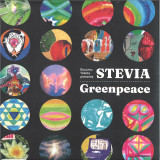
In 1997 and 1998, the late great Japanese composer, producer, and DJ Susumu Yokota released two of the most eclectic albums of his decades-long career, Fruits of The Room and Greenpeace. Recorded under his Stevia alias for Tokyo Techno pioneer DJ Miku’s Newstage Records/NS-COM, they were Yokota-san’s homage to the foundational days of club music in Japan.
This year, Glossy Mistakes are proud to present the first official vinyl editions of Fruits of The Room and Greenpeace, originally released on CD during the golden days of the format. Packaged in reimagined cover artwork created by the celebrated Japanese visual artist Masaho Anotani, these two albums perfectly capture the diversity at the heart of Yokota-san’s oeuvre. Across Greenpeace sees Yokota-san conjuring up a heady concoction of dusty loops, sampledelic breaks, kraut-rock and psychedelic downbeat. A remarkable listening experience based on the inspired era of a genius.
When Yokota-san wrote and produced the music on Fruits of The Room and Greenpeace in 1997, he was reflecting on the broader culture that surrounded dance music in Japan in the early to mid-nineties. It was an era when the psychedelic culture of late sixties America, the afterglow of UK acid house/rave, the new age movement and cyberpunk dovetailed together. Within DJ Miku and Yokota-san’s social circles, the thinking of Timothy Leary, Ram Dass, Allen Ginsberg, Jack Kerouac and William S. Burroughs electrified the air.
By 1996, the moment, brilliant and blinding as it was, was over. “We all felt that the rave scene fizzled out,” DJ Miku says. As he puts it, there was a collective feeling around him that it had all become too much. From the calm that followed, DJ Miku, Yokota-san and their open-eared peers made the decision to switch tracks and start from scratch. DJ Miku believes that with his Stevia releases, Fruits of The Room and Greenpeace, Yokota-san wanted to express the sweet and sour nature of the passing of those wild early days and his wish for true peace. “At the time, we saw eye-to-eye, with an implicit understanding of each other,” he explains. “Even now, twenty-five years later, I am confident it was like that.”
out of Stock
Last delivered 3 years ago available to reorder, subject to availability
Music became an escape for Greta during lockdown, and her new songs tell us about the feelings of love and longing that became an essential part of the pandemic for the German, Copenhagen based singer-songwriter. The songs follow last year’s successful debut album ‘Ardent Spring’ and together they make up her new album ‘Forever We’ll Be Dancing’, which will be released on February 4th 2022
Like so many of us, Greta spent most of last year trapped inside her apartment. While some have been making puzzles or knitting sweaters Greta has been writing songs about love, euphoria and longing; longing for the clubs of Berlin, longing for social contact and trying to find a way out of an emotional darkness.
During the Corona lockdown, Greta found herself in a romantic symbiosis with her husband and though the isolation brought them closer, it was also a challenging time where Greta’s husband struggled with depression.
»Music became my escape and if I needed to take a break and connect with myself, I could disappear into my computer and write a lot of songs. That was a good thing. Difficult, but good. It’s extremely hard to be close to someone who’s in pain when you have to carry them because they’re not able to carry themselves. In that sense, lockdown has been a good thing. My husband needed me and because of the lockdown I didn’t have to worry about missing out on anything. I feel that I’ve reached a deeper understanding of his feelings because we’ve had time to talk about them«, Greta says.
»Zwei Herzen«
The bubble of love and depression became a source of strength and personal growth, but it also caused Greta to miss the world outside and her family in the small German town Husum. Because of this, Greta wanted to fulfill a wish she had kept for a long time – she wanted to write songs in her native tongue, German. This is why multiple of her songs carry titles such as ‘Nicht Allein’, ‘Genug’ and ‘Drei’.
»I’ve been crazy homesick and that has definitely inspired the album. I have not written in German before, so for me this was a way of connecting with my roots. I can listen to German with Danish ears now, because I’ve lived here for so long now, and it allowed me to use the language differently and more rhythmically«.
The groundbreaking 2015 PlayStation® 4 game Everybody’s Gone to the Rapture tells the story of the inhabitants of a remote English valley who are caught up in world-shattering events beyond their control or understanding. Made by The Chinese Room - the studio responsible for the hauntingly beautiful Dear Esther - this tale of how people respond in the face of grave adversity is a non-linear, open-world experience that pushes innovative interactive storytelling to the next level. This story begins with the end of the world. The game has already won GameSpot’s Best of E3 and was nominated for Best in Show and Best PS4 game by IGN.
The soundtrack features the music by Jessica Curry, who is also joint Studio Head of the developer The Chinese Room. The music was recorded at the famedAIR Studios in London and features solo vocal performances by renowned Welsh soprano Elin Manahan Thomas, ethereal choir, and a tragically beautiful orchestral accompaniment. With her compelling soundtrack, Curry took home the BAFTA Games Award for Best Music.
Everybody’s Gone To The Rapture is available as a 2LP limited edition of 500 individually numbered copies on translucent red coloured vinyl and includes a
4-page booklet.
"bit by bit" is the first full-length release from Toronto-based singer-songwriter Evan J Cartwright. This self produced album from the go-to drummer/collaborator (The Weather Station, U.S. Girls, Brodie West) presents a highly singular songwriting vision that combines existential lyrics with masterful musicianship. Steeped in jazz melodicism, Cartwright’s trumpet-like phrasing mixed with contemporary composition presents an eclectic art song performed by an artist that could perhaps be best described as a post-modern Chet Baker. Deep poetic observations on love and time paint an affecting picture of an artist reflecting on life’s universal truths. Visual in nature, "bit by bit" places its audience within a world of musical leitmotifs extracted from field recordings of bells and birdsong. Collected during years of touring, these sounds evoke extant spaces beyond that which the music inhabits. The use of this source material in its unaltered form evokes the feeling of a technicolour European film at one moment and then, as the extrapolated melodies are meticulously translated into electronic tone bank sequences, a modernist setting the next. One carillon melody is used as the basis for a wealth of the album’s musical material before its origin is finally revealed by the chiming of bells in the last seconds of the album. The result is a fragment of space between the constructed world of the musical compositions and the candid world of documentation, inviting the listener to ponder whether those two worlds are distinct or whether the songs and music are not simply “field recordings” themselves. Throughout "bit by bit" Cartwright drops staggering revelations hiding in plain prose that often involve the contemplation of time. In I Don’t Know he states “if I only trusted time / then I would wish it all away” and nearing the album’s end he opens impossibly blue with the phrase “the impossible truth of time”, playfully inserting a pregnant pause before the word time. A drummer’s fixation, to be certain, the album’s recurring theme of time is eclipsed only by Cartwright’s contemplation of human relationships. Here he elaborates on some of the album’s subjects: “Many of the lyrics circle, and try to give a name to the illegible space between human beings. “i DON’t know” celebrates the fact that we will never truly understand what love is. Its message is one of assurance. It says that we can never really touch love, and that is ok. “and you’ve got nobuddy” refers to life’s great tragedy: that we are unable to read each others’ experiences, and in reaction to this, we separate ourselves.” The entirety of "bit by bit" is a continuous work. There is seldom a clear demarcation of where one piece ends and another begins and when this does occur, it is done crudely, as if someone is flipping through a series of broadcasted channels. At times words are sliced right out of their lines and replaced by pure tones. This is both a comical interpretation of censorship and a reminder that there are things in life that will forever remain unseen and illegible. In fact, this statement lies at the centre of the LP and although hidden beauty does reveal itself through repeated listenings, "bit by bit’s" eccentric world remains just out of reach — an imaginary second story room viewed from a crowded city street.
Pan Daijing's exhibition-performance Tissues premiered in the Tanks at the Tate Modern in autumn 2019. A five-act immersion in performance, sound, movement, space, and most of all emotion in its most distilled and conflicted states, Tissues engaged with the conventions of opera and tragedy to present a searing representation of the embattled human psyche in space and time. While the ambitious multi-sensory artwork made use of the range of Daijing's artistic capabilities, music, particularly the voice, was at its formal and emotional core. The vinyl and digital release of Tissues on PAN serves as a record of that work, in the form of an hour-long audio excerpt: an invaluable archival document from Daijing's expansive live practice. Tissues is both a solitary work and a formal study in relation. Composed, directed, designed, written, and performed by Daijing (alongside a cast of twelve dancers and opera singers), the work_its libretto written in a mixture of old and modern Chinese_lingers inside a single human perspective. Daijing conjures states that are by turns delicate and severe, the tension between opposing modes animating the work as it unfolds. And yet, for all its interiority, Tissues foregrounds an intimate relationship with its audience through details like its engulfing visual landscape and its rattling, confrontational narrative arcs. Daijing uses the opera form as a prism through which to question the boundaries of music itself: perhaps, she proposes, music is much more than simply what is heard. It is in the relationship between voice and electronics that this limit is most clearly breached. Across the four acts gathered in this documentation, a counter-tenor, a soprano, a mezzo-soprano, and the artist herself voice a mixture of stunning laments and cries over an instrumental landscape, built out from industrial texture. Meant to be heard in a single listen, rather than track by track, the work unfolds through tender hollows and agitated peaks. At its crescendo, the operatic vocals melt away and the synthesizers themselves seem to howl with grief. Daijing uncovers an essential, sometimes painful, music in all that surrounds us, inviting something like catharsis but also a greater understanding of the thing she and her cast conjure and draw close. A tissue, after all, is both a disposable object one uses to wipe away a tear, and the building block of our fleshy human forms. Daijing reaches and excavates the roiling core of what it is to be alive and full of feeling. Music from Tissues, an opera of five acts at Tate Modern, London on Oct 2nd, 4th and 5th, 2019 Composed, written, produced and directed by Pan Daijing. Performed by Anna Davidson, soprano ; Marie Gailey, mezzo soprano, Steve Katona, countertenor and Pan Daijing, additional vocals. The recording is mixed by James Ginzburg , Jan Urbiks and Pan Daijing, mastered by Rashad Becker. *2xLP comes in a gatefold cover, and includes an obi strip and a booklet containing images from the performance & liner notes, as well as a postcard granting access to exclusive video documentation*
out of Stock
Last delivered 2 years ago available to reorder, subject to availability
Bobby Oroza puts his desire for the profound on wax with his sophomore album Get On The Otherside. Musically, he has updated the formula we were introduced to on the first record. But lyrically, songs are bravely rooted in the more complicated, ubiquitous inner tangles of life like self-examination and coming to terms with the vastness of the human experience. With Coronavirus bringing the world to a halt, Bobby-a father and husband-had to do something. No tours to play or studio time to fill, Bobby found himself back in the construction yard, doing blue-collar work to provide for his family. "I was super grateful for the work-a lot of my colleagues didn't have an option like that," Bobby admits. More than a few personal hardships forced him to acknowledge and work through some brutal truths. And what came of it? Well, for one, this new record Get On The Otherside which pretty well describes what Bobby's been through: He had to demolish his ego, his old ways of thinking, and his tried approaches to anchor into a refreshed perspective with new understandings. As Bobby tells it, "I had to do some real self-searching, come to terms with what was wrong, and how much of it I was responsible for." So how does this translate to the new album? Moments of clarity as to where the real value in life lies on "I Got Love," encouraging numbers like the title track "The Otherside", and declarations of self actualization on "My Place, My Time." Even the more straightforward love songs are outside the box lyrically like "Sweet Agony" and "Loving Body." If you have never had the pleasure of catching one of Bobby's live shows you may have no idea that he is a maverick on the guitar. He lets us in on a little of that on "Passing Things" with a solo that possesses the same restrained and space that his lyrics do. As we'd expect, the songwriting still has that raw, direct edge to it. But an evolution has taken place. There are new points of view on familiar territory which in Bobby's words "For me to love, I needed to take a bigger view of love. One with less ego and more empathy" really hold true. The result is a record with Bobby's new found humility on full display and a message of encouragement to anyone who is struggling and can't see a way out. It still may be hard to nail down and define Bobby and his sound. He's no one thing more than the other. But what he's showing us now, on Get On The Otherside, is that we can also label him a soulful, philosophical optimist. Someone who can say a lot with a little, and who wants us all to know that it's us that has to do the hard lifting to truly live a life in love-both with the world and with yourself.
out of Stock
Last delivered 4 years ago available to reorder, subject to availability
The project "Records Without Conception" shows toğrul's process of finding his sound. The album is not based on a concept, a statement or an overriding mood. The tracks are rather to be understood as portraits from protracted explorations of basic patterns in electronic genres and modular sound synthesis. The results are a not self- contained body of work, but rather discussions of various demands on sound and music that were experienced by the artist himself between the years 2018 and 2021. With his debut album, the German and Azerbaijan based producer wants to capture the process of this artistic searching and finding.
Surreal constructions of contrasting sounds evolve between the grids of genres. An experimental style and contemporary references across Contemporary RnB, Electro, Glitch and IDM form a sound logic of its own, which is additionally grounded by the singers Alice Dlugosch & Mariama Ceesay in two independent tracks.
out of Stock
Last delivered 4 years ago available to reorder, subject to availability
The Mankunku Quartet's 1968 album 'Yakhal' Inkomo’ clocks in at just over 30 minutes of jazz perfection. This compact, and to-the-point, album would sit comfortably in amongst some of the best works in the catalogues of any of the quintessential jazz labels such as Blue Note, Prestige and Impulse. 'Yakhal' Inkomo’, however, was originally released on the South African record label World Record Co., which resulted in it becoming an elusive and sought-after piece for jazz collectors. First press copies sometimes fetch as much as £1,000 on the collectors' market. It has been long regarded as one of the finest South African jazz albums and DJ / broadcaster Gilles Peterson cemented this when he included it in his "best of genre" focussed radio show, 'The 20 - South African Jazz'.
Tenor saxophonist Winston "Mankunku" Ngozi recorded the session on 23rd July 1968 at the Manley van Niekerk Studios, in Johannesburg. It was recorded by Dave Challen and produced by Ray Nkwe. The session is built up of two original works by Mankunku on the A-side, 'Yakhal' Inkomo' & 'Dedication (To Daddy Trane and Brother Shorter)', and on the B-side, the Horace Silver composition 'Doodlin', and a John Coltrane number 'Bessie's Blues'. What is striking is how the Mankunku-penned compositions not only hold their own next to Silver and Coltrane but they are, arguably, the better tracks on the record - a testament to the beautiful writing and playing of Mankunku.
'Yakhal' Inkomo' features the great musicians; Agrippa Magwaza on bass, drummer Early Mabuza, and pianist Lionel Pillay. Pillay was of Indian descent, making this a mixed-race group, thus the very recording of the album was an act of resistance as it broke the apartheid restrictions of the time. The title of 'Yakhal’ Inkomo' means “the bellow of the bull”, the Black audience would have understood this as coded community symbolism and an act of protest but it escaped the attention of the white government.
For this edition, we have enlisted the services of Abbey Road Studios mastering, and lacquer-cutting engineer Miles Showell to cut a special half-speed master from the audio taken off the original master tapes. Miles has previously worked on our Arthur Verocai, Marcos Valle and Ian Carr re-issues, and once again we are blown away by the richness and clarity of Miles' work. We have also presented it as a replica copy using the cover artwork and labels from the primary World Record Co. original version.
On the sleeve notes, Ray Nkwe the producer and the President of the Jazz Appreciation Society of South Africa writes "This is the LP that every jazz fan has been waiting for" and Ray was not wrong, it's a stone-cold timeless jazz classic.
• Half-speed mastering at Abbey Road Studios
• Repressed with an OBI strip as well as a deluxe tip-on sleeve
• One of the finest South African jazz albums
• "This is the LP that every jazz fan has been waiting for" Ray Nkwe
On textstar+ Jan Jelinek brings together the material from the CMYK series, four EPs he released between 1999 and 2002 under the pseudonym farben (the German word for both colours and paints), on a vinyl double LP for the first time. The selection of tracks has been remastered from the original tapes, joined by two additional pieces that appeared on compilations during the same period.
A Polaroid. Still life with tangled leads and consumer electronics, late twentieth century. Black and various shades of dirty white are the dominant non-colours. The image’s spatial depth remains diffuse, the links between its elements speculative. A note stuck to the wall (a legend, perhaps, or an all-explaining blueprint in text form?) is impossible to decipher. You can’t see what connects the picture’s signs. You have to hear it.
farben says: Every sound is a text. A bearer of meaning in search of a reader. Hoping the ideas inscribed in its autonomous existence will be understood as intended. While its beauty lies precisely in misunderstanding, in reading the coded message a new way every time. A thousand colours of sound, a thousand different ways to hear, to see, to understand.
On textstar+ Jan Jelinek brings together the material from the CMYK series, four EPs he released between 1999 and 2002 under the pseudonym farben (the German word for both colours and paints), on a vinyl double LP for the first time. The selection of tracks has been remastered from the original tapes, joined by two additional pieces that appeared on compilations during the same period. Another new element is the Polaroid, showing the origins of a world: Jelinek’s home studio in Berlin at the time.
farben says: Move your body! The project has its roots in Jelinek’s love of house as a reductionist vision of soul. Of four to the floor as a proposition that can be accessed anywhere. Of electronic dance music as a realm of possibility that can be continually expanded. farben was written as contemporary house music. As a text about excitement and euphoria. The arrangements were made directly while recording to DAT, on a twelve-channel mixing desk. Several track titles suggest a link to live concerts, coupled with the context of machine music and bedroom recording. Others affirm pop music’s most extravagant stock phrases about various states of love.
Jelinek produced the tracks with the aim of making music for dancefloors. An idea that failed very productively. In the locations to which it was originally addressed, the project barely figured. But people did listen, and they listened all the more closely to this music that opened up new acoustic and associative scope for house. farben is the opposite of genre: a music spawning new terms (clicks & cuts, micro-house) that never manage to fully capture it.
farben says: Signifiers. The four CMYK EPs are designed as a network of references that cannot be missed but that can also never be precisely deciphered. The vectors of sound, word and image point to Isaac Hayes and Ornette Coleman, to Detroit and the first generation of the Red Army Faction, to Karl Marx and Friedrich Engels. So multifarious that they are distorted to the point of recognition. Overall we hear sonic docufictions whose appealing vagueness derives precisely from this oscillation between clarity and ambiguity, which is also the source of their poetry: the lyricism of the pure circulation of signs.
The artwork is based on photographs of former Red Army Faction members, broken down into the four colours of the CMYK model. The motifs dissolve into individual dots of a single colour, so close to the faces that their expressions are only hinted at. Taken together, the individual colours compose a new whole out of fragmentary material, defying definition and thus maintaining their vibrancy. The same occurs on the level of sound. The sampler Jelinek used for these tracks had to be fed with floppy disks, imposing a memory limit of 1.44 megabytes per audio quotation from soul or jazz records. As a necessary consequence of this, the individual references, like the dots of colour, are dissolved into details and abstractions. They appear as splinters that recombine in new ways to create new meanings. The joy of collapsing metaphors.
farben says: New departures. Even two decades after its original release, textstar+ does not come across as an epitaph to the modern era. Instead, it appears as a euphoric affirmation of the utopias of the twentieth century, translated into new sound texts via the aesthetic strategies of abstraction, collage, networking and speculation. 1.44 megabytes of history, one thousand signifiers, one album. From “Live ...” to “... Love”.
Arno Raffeiner, 2021
out of Stock
Last delivered 12 months ago available to reorder, subject to availability
Having been extensively road-tested this past year by DJs including Daniel Avery, HAAi and Gerd Janson, Highdive arrives with tangible anticipation. The work of less-than-shadowy figures Gramrcy and John Loveless, the pair have passed lockdown and beyond remixing artists such as WH Lung, Discovery Zone and Ghost Culture. Debuting their first original material, closely following Gramrcy’s recent appearance on Loveless’s own Hot Concept imprint, Highdive is a long-anticipated explosion of energy.
Built around a sonic-boom breakdown, glossy rave chords and pounding post-punk drums, Highdive feels immediately at home on Phantasy. Having worked closely alongside founder Erol Alkan in recent years to shape the imprint's diverse output, Loveless' collaboration with the Peach Discs founder nods to the electro landscape of the label's earliest days. Having never left dance floors since, Gramrcy & John Loveless take a golden opportunity to plunge dancers into the sublime and the ridiculous.
While a stripped-down ‘Beats Mix’ sees the pair adopt a less-maximal approach, leave it to Schacke to stretch Highdive into hardcore rave heaven. The already-influential Copenhagen artist underscores his refreshing funk in the ‘fast-techno’ scene through which he has risen, turning the screws and upping the tempo with intense but elastic results.
out of Stock
Last delivered 3 years ago available to reorder, subject to availability
Over the course of eight studio albums, Mary Gauthier has firmly planted herself as a truth teller, a songwriter unafraid to dive into the emotional core of her chosen subject. Her poignant songs move people deeply and often evoke an emotive response. It is one of the many things that connect her so deeply to her fans, and why they love her. On Dark Enough To See The Stars, she mourns the loss of dear friends that include John Prine, Nancy Griffith and David Olney, but Gauthier takes a slightly different course by offering an optimistic side of herself with songs that celebrate the joy of new love and personal contentment. With The Band-inspired opening track “Fall Apart World”, the tender and thoughtful “About Time” and the eternally grateful “Thank God For You”, it’s evident that with Gauthier’s life experience she takes nothing for granted. She also looks at love from a different perspective in remembrance of her departed colleagues and mentors with songs such as “How Could You Be Gone” and “’Til I See You Again”. The title track, co-written with Beth Nielsen Chapman, is a realization that through loss and darkness there can be a beautiful sense of clarity and an understanding about what truly matters.
Federico Albanese is a composer born in Milan, Italy in 1982, and currently based in Berlin. His musical versatility is a natural gift that pushes him to explore music in all its facets. Albanese's compositions are airy and cinematic, blending classical music, electronics and psychedelia. Federico started studying piano and clarinet as a child before becoming fascinated by rock music. As a teenager he studied bass and became a self-taught guitarist and soon became one of the leading figures of Milan's underground scene, performing in several bands. Influenced by black music, folk, electronic, modern and contemporary classical music his skills as a composer soon emerged, He worked for 5 years as prop man in several film sets. This experience made him understand the power of the connection between music and images and helped him to develop his personal musical path. In 2007 Albanese met singer and songwriter Jessica Einaudi and together they founded the avant-garde duo ""La Blanche Alchimie"". Composing songs with Jessica he rediscovered his love for the piano, which from that moment on, became his main instrument. Since then Federico has scored several films, short films and documentaries, including a documentary on a project commissioned by Ermenegildo Zegna in the National Museum of XXI Century Arts in Rome. In February 2014, Federico Albanese will release his debut album entitled ""The Houseboat and the Moon"". He found a place, an imaginary place, where, whenever he wanted to, he could jump on and just float away. On this moving shelter, traveling across memories and imagination, lulled by water and led by the moon, Federico wrote the 13 compositions of his debut. He recorded all of the piano parts with a 1969 German tape recorder, the Uher Royal Deluxe, which allowed him to catch all of the tiny hidden shades, the imperfections, the noises of the piano and its surrounding space. Federico melts this rarefied sound with electronics, live recordings, strings, and homemade instruments. The result is a combination of contrasts and colors with a variety of atmospheres that wonderfully represents Federico's musical universe. Vinyl: thick gatefold covers, 180g vinyl,free download.
First time on vinyl for this album. Proto Jazz-Punk multi-genre splatter album, released on CD in 1993, My Wife Doesn’t Understand Me is available on vinyl for the first time as a double LP, playing at 45rpm for superior sound quality. The accompanying download includes radio edits of live favourite 6-8-1 (The Burn-Up) and Blue Funk, plus Ructions (60s Stereo Mix) and Qualm-Free Zone. A statement of intent from the off, this is an album first and foremost. No singles, a piece of work to be listened to as a whole - from short shards of humorous observation (Cover Versions), politics (Margaret Thatcher We Still Hate You), straight-as-a-die covers (A Taste Of Honey and Jean-Pierre) to the closing Musique Concrete of the title track, prisoners were never taken. Terry Edwards and The Scapegoats look forward to the vinyl edition of My Wife Doesn’t Understand Me to bemuse, baffle and delight once again as it did on it’s release when Acid House was on it’s way out and Britpop was on it’s way in.
19 tracks by Croteam’s in-house composer, Guest appearances by Nine Inch Nails guitarist Robin Finck and the band Undercode, Translucent yellow discs, Original artwork by Tom J Manning
Japanese artist Yama Warashi releases new album "Crispy Moon" via PRAH Recordings. The first material to come out of her relocation to London is a bold advancement of her sound. Much of the move and Yoshino's experiences of being in the capital have made their way into the themes of the record. There are new contributing members, including Cathy Lucas of Vanishing Twin (with whom Yama toured with in 2021), Aletta Verwoerd on drums and Mermaid Chunky's Moina Walker on sax. Compared to the more lo-fi, homespun feel of early releases such as Moon Zero and Moon Egg, there's larger brush strokes at play, a bigger sound and an understated but self-assured grandeur.
"Queen Of Nowhere" is the result of the photographic works by Kourtney Roy and the musician Dayve Samek (Trance Farmers) initiated by IIKKI, between November 2021 and March 2022.
The man behind the name Trance Farmers is Dayve Samek, a wanderer from Los Angeles to Louisiana, and his music has picked up just about every influence it can along the way. He has recorded his first album in 2014 on Leaving Records (Stones Throw Records). Not sure how to classify his music ranges, but something between sweaty, garage-born ballads brush shoulders with drifter anthems and gasoline drenched doo wop with at some points some beats close from the past Anticon works should make the point.
The Canadian photographer Kourtney Roy was born in Northern Ontario in 1981. Intrigued by the possibility of creating a tragic mythology of the self, she conjures an intimate universe pervaded by both wonder and mystery. Her photographer’s eye is drawn to places and settings whose lyrical qualities underscore the sublime banality of everyday life.
Roy’s studies in photography, at Emily Carr University of Art and Design in Vancouver and later at the Ecole Nationale Supérieure des Beaux-Arts in Paris, inspired her to develop her finicky aesthetic, which lends itself particularly well to both glossy paper and film. Roy works extensively as an independent photographer/filmmaker in the art world. Instilled with a dark sense of humor, taking their clues as much from the grotesque nature of seemingly placid settings as from the tensions simmering just under the surface, her photographs have garnered many prizes, including the Prix Picto in 2007, The Emily Award in Canada in 2012 and the Prix Carte Blanche PMU/Le Bal in 2013 and the Pernod Ricard Carte Blanche in 2018.
Fine Art Book, Ltd. to 700 copies:
Hardcover book printed on Arctic G-Snow 150g/m2 // 132 pages, 24cm x 22cm, 95 photos // Logo, slot and circle embossed // Hand-numbered, hand-stamped
To say that Aretha Franklin was one of the greatest American artists of all time is an understatement. Her multi-octave voice moved millions around the world during an unrivalled career that spanned six decades and garnered the singer-songwriter every achievement and honour imaginable. Franklin has sold more than 75 million records worldwide making her one of the biggest selling music artists of all time.
Amazing Grace, a live album originally released in 1972 is Franklin’s best-selling album of all time. To celebrate the 50th anniversary of the album, Rhino will be releasing a limited edition 2LP white vinyl. Featuring the title track ‘Amazing Grace’ as well as ‘Climbing Higher Mountains’.
Nathan Hose, known more commonly as N8NOFACE, has built a heavy history behind his name. Known for his previous work with Crime Killz and a string of solo mixtapes, EP’s and collab projects, he comes out swinging to close out 2021 with “Homicide”.
For Fans of: Screamers, Le Shok, Suicide, Xiu Xiu, Atari Teenage Riot
Both a full-length album of all new material and his debut Blackhouse release, N8 shows up with a catalog of raging synth-punk jams, knocked out with only a synthesizer, a computer, and the true-life humility and humanity only he can deliver. The dose of reality that lives within N8NOFACE’s lyrics resonate with a population of people who have stayed true to themselves all the while feeling disenfranchised. People needing an outlet and something raw and new over a year and a half long pandemic (and counting) is the allure behind N8NOFACE, and this record is sure to deliver that and more.
Southern California. A Jekyll-and-Hyde atmosphere of glitz and glamour, with a seedy dark side that lays as an unspoken wasteland in the streets. There’s a thriving underground that has always existed among the Southwest United States. It’s a melting pot of the punk, metal, and hip-hop scenes, skateboarding, art, underground fashion, and custom car cultures. It’s also a hotbed for some real-life shit, to say the least. Crime, drugs, homelessness, porn, and shady activity is part of the life; proof that the city is not only wide awake at night, but it burns white hot. With all the musings one would need to inspire nothing less than a prolific output, when it comes to Long Beach-by- way-of-Tucson synth-punk dynamo N8NOFACE, calling him prolific is an understatement.
Born into a musical family, as a child Charlie Hickey would obsessively
watch videos of his parents on tour in their old band Uma, learning all the
lyrics that he loved but didn’t understand. This introduction to music sowed a
seed and Hickey was soon writing songs of his own, playing on the guitars
that lay around him and singing about the little details of his school days. He
continued throughout his teen years, his songs becoming an outlet for the
growing anxieties that Hickey now understands to be Obsessive Compulsive
Disorder.
This journey has led to ‘Nervous At Night’, Hickey’s debut album which is
released via Phoebe Bridgers’ Saddest Factory Records. Where 2021’s
‘Count The Stairs’ EP was an attempt to capture the rawness of his
performance, ‘Nervous At Night’ comes alive within its production, Hickey
and producer Marshall Vore leaning into their perfectionist tendencies to find
the best version of each track. “He’s always interested in how you can push
things further but also reigns them in when necessary,” Hickey says. “I think
that’s the true hallmark of a good producer.”
Hickey calls it a pop record but admits that sonically it moves in many
directions, an amalgamation of his love for the folk singers of yesteryear and
more contemporary peers, from Taylor Swift and The 1975 to the Californian
songwriter and producer Blake Mills. This shifting of styles - from the album’s
quiet heavy-hearted ballads to its more gleaming, hook-led tracks - mirrors
its overarching theme: life’s graceless passage between teenage years and
adulthood.
And so we have ‘Planet With Water’, a plaintive love song that bristles with
nostalgia, Hickey singing of phone calls after school, of hearing a neighbour’s
TV through the wall. Elsewhere, ‘Mid Air’ holds a similar weight, Hickey
singing of “spinning in mid-air, waiting for somewhere to land, or some face
to show up” as the song flourishes around his voice, delicately accompanied
by guest turns from fellow LA musicians Harrison Whitford, Christian Lee
Hutson and Mason Stoops.
‘Nervous At Night’ comes alive in its juxtapositions, chronicling the constant
push and pull of life, both its stagnancy and motion. Chiefly though, this is an
album about connection, how even through those struggles we rely on the
people around us to keep moving forwards. “I’d like to write songs that are
for everyone, that let people into my inner world while also hopefully making
people feel less alone on their own. I hope that these songs can be there for
somebody the way my favorite songs have been for me.”
Collaborated with MUNA on track ‘Seeing Things’.
2022 live shows include The Great Escape and SXSW, as well as shows in
London, NY and LA’s Troubadour. Recent US tour with Samia.
LP available on opaque yellow vinyl.
With their duo debut, Dean Spunt and John Wiese invite you to experience
the frenzy of percussive space and discreet sound found inside ‘The Echoing
Shell’.
This is the first official collaboration between the two veteran music-makers,
though their connection goes back to 1999. As John recalls, “Dean was in a
high school arts program at CalArts. A friend and I were recording the first
Sissy Spacek demo in the design studios there, and taking a tape to my car
over and over again to check the mix. Dean was walking through the parking
lot with a Locust shirt on, we said hello, and he immediately got into a car
with two strangers to ‘listen to a tape’.”
The tape-listening ended well, apparently. Dean and John became friends
and fellow travellers in LA circles and beyond: in 2005, John did a remix for
Dean’s first band, Wives; in 2007, Dean played percussion with Sissy
Spacek’s 13-Tet Los Angeles; John toured with No Age several times and
collaborated live with them in 2010.
Under the Sissy Spacek name as well as his own, John’s recordings for his
own Helicopter label and many others kicked things off for him around the
end of the century; since then, he’s been constantly engaged in solos and
collaborations on record, performances, and installations around the world.
In addition to Dean’s ever-growing discography with No Age, he curates his
own label, Post Present Medium. In 2018, Radical Documents released
Dean’s solo debut ‘EE Head’, which explored concrète and experimental
techniques in a four-part, album length piece.
‘The Echoing Shell’ is born of Dean and John’s shared understanding, using
John’s process common to Sissy Spacek: elaborate sound-collage works
using source material originating from punk, hardcore and improvised music.
A series of impositions, tape manipulation and edits recompose the material,
cracking open the crust of the source, freeing its implied guts to steam forth
in gushes of extreme noise. On ‘The Echoing Shell’, this is as often noise as
it is extreme intimacy, seeming at times to be sourced from within Dean’s
drumkit, at other times appearing to emanate from the capsules of
microphones and the circuits of the signal path itself.
One may read these collaged sounds as abstraction, but there is a unique
language conveyed in their assembly, forming something like word-shapes
and meaning. And intention: the two side-long pieces, comprised of many
short sections, form a linear whole, creating alternately ripping and
discriminating music - and meaning - in the process.
‘The Echoing Shell’ is a fantastic conception in contemporary musique
concrète, combining incendiary post-rock power, dry humour and astonishing
depth of field. Whether projecting the sound through headphones, ear buds,
bookshelf speakers or your own personal amp stack, crank up ‘The Echoing
Shell’.
The debut album of Zasky & Smith, producers of New Blade Runners Of Dub. Built on the legacy of Zasky' s internationally known Dub Reggae Band Dubblestandart, New Blade Runners Of Dub blend Jed Smith's, LA native, composer/producer's new school visions of sound & Zasky's European shaped Dub Reggae background in a unique way. Call it Europe & America in a unity reconfiguring rhythm driven music for new generations: The Los Angeles based music group, combining cutting edge rhythm productions and up 2 the time sonic visions. It is a collaboration of international known musicians from the US, Europe, England & Jamaica. Altered concepts for new generations who identify through a new understanding of art, communication and therefor ultimately for the politics, that will shape their world. This is music for the 21st century. Decoding what lays ahead.
After the Bend is the second album from Louisville based Flanger Magazine, and the follow up to FM’s 2018 debut, Breslin. Whereas Breslin was the solo creation of Christopher Bush, an album noted for “an astute synthesis of ‘library music’ and solo acoustic guitar,” and “a seamless blend into the uncluttered and airier side of classic 1970’s giallo,” After the Bend is an ensemble affair. An ecosystem, a perfect mutualism bodies forth—of strings, outdoor recordings, electronics, reeds, and percussion—featuring new FM players Anna Krippenstapel (Frekons (Freakwater + Mekons), The Other Years), Jim Marlowe (Equipment Pointed Ankh, Tropical Trash, Sapat), Eric Lanham and Benjamin Zoeller (both from Caboladies). The various combos perform with both a distinguished efficacy and unhurried Sunday drift—charged and beautiful, pulsating and pleasing. The production is subtle and tasteful. Mutating past the old saws of bounded individualism, a strange form of tentacular life accrues, cyborgian-fungral-tangles of the more-than-human variety.
Robert Beatty’s cover art of otherworldly and interconnected river-scape gradients, coupled with song titles like “Reservoir,” “Falls Fountain Removed,” and “Sympathies for the River,” cue and clue the listener toward a river as a singular multitude analogue for the album. Interstitial gaps, clearings and openings give rise and merge into an accumulated flow from the tributaries of spirited improvisational performance, palimpsestic song cycles, and high fidelity studio production. The composite sound-image of After the Bend refuses to put both oars down into any one of the eddies of the folk, sound, chamber, electronic, or jazz idioms, and instead glides along the currents found within the slipstreams between.
Gathering samples, a River Doctor Limnologist inspecting the properties of After the Bend might note the specter of Leroy Jenkin’s free-violin heat-light deepin the water’s thermal stratification. Or mortgage the late-Maestro’s time with Gruppo di Improvvisazione Nuova Consonanza to pay down the growing river heat budget. Or take one’s dirty buckets to the banks of the 19th laundromat where Walt Dickerson plays his vibraphone parts from Divine Gemini with dowsing rods. Or excavate the bedrock in the drainage basin, noting skeletal remains of a Shostakovich string quartet attempting to tune up a Kentucky Fiddle’s subsequent influence on the chemical composition of the water. Or consult the historical revisionist reenactment troupe’s episode of Fishing with John (Fahey) in which Codona, The Sea Ensemble and Nuno Canavarro guest host as their fleet of paddle boats churn river water into a regal lager, and all the fish get drunk in their quest for the leaner enamel Hosianna Mantra GPS coordinates of the Fattened Herb.
Bush and Marlowe recorded and produced the album at End of an Ear Studios, located in the Portland neighborhood, in the west end of the city of Louisville, bordering the Ohio River, between Kentucky’s Upper South and the Indiana’s Midwest, during the first year of the global pandemic, amidst the planet’s sixth great extinction event. As good a time to be alive as any other. (by Kris Abplanalp)
RIYL: Velvet Underground, Lou Reed, Nick Cave, Patti Smith, Leonard Cohen, Iggy Pop, Radiohead & Tom Waits. "If you have never heard the Doctors of Madness, you should. Musically they are the Velvet Underground, New York Dolls with shades of glam, hippie, prog and punk all rolled into one, yet are still totally original. Vastly underrated, they should have been huge. Pure genius" Vic Reeves…. The DOM are “the missing link between David Bowie & The Sex Pistols” (The Guardian May 2017). Exploding onto the music scene in 1975 with their theatrical, William Burroughs-inspired Sci-fi nightmare, they were misunderstood by many, but those who knew understood the importance of the band’s dangerous, uncompromising approach to lyrics, to music and to performance. Among the many fans of the band were acts as diverse as The Damned, Vic Reeves, Joe Elliott of Def Leppard, Spiritualized, Julian Cope, The Adverts, The Skids and Simple Minds. The Sex Pistols supported them, so did The Jam & Joy Division. They were the first to combine the avant-garde approach of The Velvet Underground with a distinctly European aesthetic. The blue hair, exotic stage-names, the lyrical themes of urban decay, political propaganda, mind control and madness were all taken up by the punk bands who followed in their wake. The DOM were trailblazers, pioneers, adventurers…pushing the boundaries of rock music and theatre to see how far it would go before it bust. What happened after them was due, in no small part, to what they achieved in 3 short years. They may not have been Jesus Christ, but they were, arguably, John the Baptist!!! Now, 40 years after they imploded, they are back…with an album seething with lyrical anger and passion. It is the most potent and incisive musical dissection of modern life and contemporary politics released the decade. With tracks titles like “So Many ways To Hurt You”, “Sour Hour”, “Make It Stop!” and the ground-breaking sonic assault of the title track “Dark Times”, Richard “Kid” Strange proves once again that he has his finger firmly on the pulse of our times, just as he had when he founded the band in 1974. Produced by John Leckie (Radiohead, Stone Roses, Pink Floyd), the new album, Dark Times, features contributions from Joe Elliott (Def Leppard), Sarah Jane Morris (Communards), Terry Edwards (PJ Harvey, Nick Cave etc), Steve ‘Boltz’ Bolton (The Who, Scott Walker) and the young protest singer Lily Bud, alongside the current thrilling and thunderous DOM rhythm section of Susumu Ukei (bass guitar) & Mackii Ukei (drums) of the Japanese extreme glam-metal band Sister Paul, and Dylan O Bates (violin and keyboards). Julian Cope, another rock star who, like Strange, found the confines of music too tight for his ambition, his energy and his imagination, was blown away when he first heard the songs, declaring, “These Dark Times are enormously informing: the RULES OF THE FUTURE are indeed being forged right now”. Top producer Martyn Ware (Human League/Heaven 17) said the album “…reminds me of Iggy Pop’s Kill City album – love it.” and Biba Kopf (The Wire) declared, “Still listening to new DOM album with immense interest and pleasure”. The first single, Make It Stop!, is an impassioned howl against the global drift to right wing extremism and persecution of minorities, and is already a live showstopper for the band. It features the thrilling cross-generational combination of Def Leppard’s Joe Elliott and Lily Bud on backing vocals. In the period since the last DOM gig in 1978, Richard has written a memoir, collaborated on a cantata with internationally celebrated composer Gavin Bryars, worked as an actor on films with Tim Burton, Martin Scorsese, Harmony Korine & Jack Nicholson, toured the world in a Russian version of Hamlet with James Nesbitt as his grave-digging co-star, played Glastonbury, sung baritone in the British premiere of Frank Zappa’s200 Motels at the Royal Festival Hall, directed a multi-media evening celebrating the life and work of William Burroughs, won Best Art Film Prize at the Portobello Film Festival last year, had his own live talk show, worked with Tom Waits and Marianne Faithfull on the William Burroughs/Robert Wilson stage play The Black Rider, curated events for the Tate Gallery, and sung Walt Disney songs with Jarvis Cocker.
Stars of the Lids, Tim Hecker, Brian Eno, Manuel. Duo Consists of Jonas Munk (aka Manual) and Jason Kolb (guitarist from Auburn Lull). 4th album, 2nd for Felte and first one since 2012. Initially on blue vinyl. Past press by Pitchfork, XLR8R, Impose. Past project Releases on Morr Music, Darla, and more. Billow Observatory is the project of trans-Atlantic duo Jonas Munk (Denmark) and Jason Kolb (Michigan). Initially planned as a small sideproject from their main work in Manual and Auburn Lull respectively, the two quickly realized their collaborative experiments merited more time and attention. Using heavily treated cavernous guitars, subtle synths, and crackling radio transmissions, their self-titled debut was released in 2012 as a double LP and established Billow Observatory as purveyors of unhurried, highly detailed ambient immersion. The release pair of II: Plains/Patterns in 2017, and III: Chroma/Contour in 2019, on Munk's own Azure Vista Records, introduced a subtle underpinning of rhythm, pulse, and stutter among the washes, expanding their sound with a hint of understated electronica. Marking 10 years since debuting on Felte, 2022 sees the release of Stareside, their most forcefully elegant undertaking to date. A record of swaying quarantine temperament, Stareside's 9 tracks thread the needle between hope and hopelessness - daydreaming whilst watching the world go mad in the blink of an eye. Not shy of overt rhythm, soaring motifs, and daunting undercurrents, Stateside veers wildly in new directions, yet keeps one hand near the record bin of comforting nostalgia (think early Warp Records, Jon Hassel, and Conny Plank to name a few).
The story of 'Get Tragic' can be traced way back to the relentless gigging off the back of their 2014 self-produced and self-titled record, when the heels finally fell off of Blood Red Shoes at the end of that same year. A near-decade of incessant road time and a non-stop pace of life finally took its toll, with the band stopping only to quickly hammer out 'another ten songs' to release as their next record, before ploughing straight back into touring. The pair exhausted themselves to the point of collapse. 'We didn't, at any point, have a breather,' says Steven Ansel (drums and vocals), 'We probably didn't see each other for about 10 days a year, tops, for six or seven years.' Understandably, such incessant close proximity led to implosion. 'We got the to the end of the fourth record and were like, 'F**k you, I never want to see you again','Steven adds, half-laughing, half-sighing.
Having embraced the wide wired world of modular synthesis, Prince of Queens aka Felipe Quiroz has already proved fit and formidable in dialing in the necessary sonic component of his current stargazing outfit Combo Chimbita. His first two solo records on NYCT have only added to an already wide-ranging electronic fluency, yet have also brought a flare and understanding of dance music foundation that in combination is rarely matched.
For his next release, Prince of Queens teams up with the voice of El Julius, his Colombian countryman and New York neighbor. As a seasoned member of Names You Can Trust alumni, Bulla En El Barrio, El Julius helps to bridge the classic with the contemporary. "Rompe Cadenas" is a traditional arrangement with poignant lyrics, but it's still funneled through the unpredictability of POQ's machinery. It's a modern day reinterpretation of sound system cumbia at its heart, and just a further example of the breadth of POQ's production possibilities. Much of that potential is realized on the second track of this double-sided release, "Acidosa." Like his earlier releases, POQ's quintessential future leanings are on display here with all of his remarkable synthesis. It's worth the trip alone. Just imagine a wild and hypnotic meeting of cumbia and pitched-down acid and off we go.
out of Stock
Last delivered 4 years ago available to reorder, subject to availability
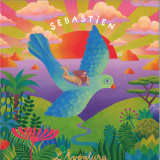
L'Aventura arose from the Brazilian heat and the French romanticism. This is the history of Sebastien Tellier's fantasy childhood in Brazil, arranged by the local cult figure Arthur Verocai. A wild mixture of love, dreams, sun and landscapes.
"For this album I wanted to rewrite my childhood. I chose to place this adventure in Brazil, land of splendour and joy, with an eternal childish soul." Sebastien Tellier
The recording produced by the artist took place between Paris and Rio de Janeiro during the year 2013. These adventures brought him into Jean-Michel Jarre's, Bernard Estardy's, and Philippe Zdar's (Cassius/Phoenix) studios. Zdar who knows so well how to make the French music sound internationally sublimates the ten tracks of this album, in halfway between the elegancy and the required level of a maestro and the immediacy of a popular song.
This sixth opus was composed and writed by Sebastien Tellier. For the first time of his career, all the lyrics are written in French. Gainsbourg is not far, like a tutelary figure, Christophe as a springboard, who lets him more space to express himself, and Lucio Battisti, the Italian made him understand that singing in his native language was possible.
L'Aventura is a record of shores stretching in an everlasting restart. Naive art carried by an openheart and childish vision of the creation, close to his classic Sexuality (2008).
out of Stock
Last delivered 4 years ago available to reorder, subject to availability
‘Wax Limousine’ is the third solo album from London’s Wesley Gonzalez. Set for release on 18th March via Moshi Moshi Records, the record is the follow up to last year’s critically acclaimed ‘Appalling Human’ and finds the indie stalwart delivering his most personal album to date, via a collection of 12 irresistible pop songs. The announcement arrives alongside the title track, which received its first play from Marc Riley on 6Music and its accompanying video, the second to be revealed from the record following ‘Greater Expectations’, released earlier this year. In support of the release, Gonzalez heads out on tour this November, headlining Electrowerkz on 25th and supporting Young Knives across the country (full dates below).
With its truly eclectic range of musical influences drawing on Gonzalez’s ever developing sonic palette, the album’s uplifting sound juxtaposes its themes, documenting the end of a long-term relationship and the overwhelming experience of dealing with a family member’s cancer diagnosis and subsequent treatment. ‘Wax Limousine’ navigates these hurdles with a razor-sharp wit and often brutally perceptive self-awareness, nowhere more so than on the new single. Inspired by both 'Faithless' by Scritti Politti and Aretha Franklin, it is Gonzalez’s version of an 80’s gospel song and, as he explains, written at a crucial point over the last 12 months
“This was written right after the breakup and cancer diagnosis. It was that early stage of a breakup where you can't really understand what went wrong for you or for your ex. There was resentment for the extreme change I had suddenly found myself in, and I was asking what it really was I did wrong. The title Wax Limousine came from old phrases like "as useless as an ashtray on a motorbike". I was trying to express how useless I felt within every situation that had just arrived at my doorstep.”
Wesley Gonzalez first made a name for himself as the leader of Let's Wrestle, whose tuneful and eccentric punk earned critical accolades and a devoted audience with three albums, including 2011’s Steve Albini produced ‘Nursing Home’. Gonzalez wasted little time forging his own path and quickly assembled a live band for his solo work, expanding upon the guitar-driven music of his former band, with an interesting concoction of classic 70’s pop, soul, and indie rock. Gonzalez released his debut solo record ‘Excellent Musician’ in 2017, then the follow up ‘Appalling Human’ in June 2020 through Moshi Moshi Records.
Just over a decade ago, Japanese indie-pop duo Tenniscoats recorded »Papa's Ear« (2012) and »Tan-Tan Therapy« (2007), two albums made with musical and production help from Swedish post-rock/folk trio Tape. Originally released on Häpna, they are beautiful documents of the exploratory music made by a close-knit collective of musicians, fully at ease with each other, playing songs written by Tenniscoats and arranging them in gentle and generous ways. Released during a particularly productive time for Tenniscoats – during the late ‘00s and early ‘10s, they would also collaborate with Jad Fair, The Pastels, Secai and Pastacas – they have, however, never been available on vinyl. In collaboration with Alien Transistor, Morr Music is now reissuing these albums both digitally and on double vinyl, with extra tracks.
This reissue mini-series starts with »Papa’s Ear«. The second album from this expanded line-up of Tenniscoats, you can hear the musicians are immediately comfortable in each other’s presence, and they’ve almost intuitively understood what they can offer to one another. Saya and Ueno of Tenniscoats bring their magical, gentle folk-pop sensibility, and their winning way with straightforward, yet lush melodies. Johan Berthling, along with fellow Tape member Tomas Hallonsten, plus guests Fredrik Ljungkvist, Lars Skoglund, Andreas Söderstrom and Andreas Werlin, all generous and creative presences in the Swedish jazz underground, shades in the songs with endlessly inventive arrangements, highlighting the warmth and curiosity at the core of the Tenniscoats’ aesthetic – sometimes taking the songs in unexpected directions, other times pillowing the melodies with the softest of brushstrokes and the kindest of tones.
»Papa’s Ear« includes some of Tenniscoats’ most memorable songs. »Papaya« is a lustrous dreamland of a song, with the Swedish musicians singing ‘pa-pa-ya’ as an enchanted tattoo, while Saya’s piano and melodica clank and huff out, further expanding the song’s horizon. It’s followed by the spindly and mysterious »Sappolondon«, where drums and double-bass shuffle and pulse under weeping accordion and bittersweet clarinet. Saya’s voice sighs into the frame while the musicians breathe lungfuls of sweet drones and flick glittering countermelodies across the song’s surface. It reminds a little of the wild kindness of Movietone, or the regal charm of Carla Bley’s compositions.
Elsewhere, you can hear Tape and their friends embracing the freedom offered by the songs of Tenniscoats: see, for example, the glistening electronics in »På floden«, like a keyboard conducting a music box on a distant planet; or the descending phrase for winds on »Sabaku«, dovetailing beautifully into a creek of moon-lit texturology. The double-LP ends with two extra tracks, drawn from the 2008 Tenniscoats/Tape split single, also released by Häpna., »Lutie Lutie« is a sweet delight, driven by a clacking drum machine, the Tenniscoats duo joined by Hallonsten on glockenspiel and synthesizer, and special guest, Japanese indie-pop legend Kazumi Nikaido, as choir. »Come Maddalena« rounds off the set, a brooding cover of an Ennio Morricone tune, the music by Tape, the vocals by Tenniscoats and Nikaido. Open-hearted and full of puckish spirit, »Papa’s Ear« is an album of great tenderness and warm friendship.
Famed free jazz concert registration of an early New Direction for the Art performance. Recorded in 1971. Old-style Gatefold LP, with rare photographs & extensive liner notes by Alan Cummings.
The performance by Takayanagi Masayuki New Direction for the Art at the Gen’yasai festival on August 14, 1971 was an intense, bruising collision between the radical, anti-establishment politics of the period in Japan and the febrile avant-garde music that had begun to emerge a few years before. The ferocious performance that you can hear here was received with outright hostility by the audience, who responded first with catcalls and later with showers of debris that were hurled at the performers. Takayanagi though described the group’s performance to jazz magazine Swing Journal as a success, “an authentic and realistic depiction of the situation”.
In 1962, Takayanagi, bassist Kanai Hideto and painter Kageyama Isamu went on to form an AACM-style musicians’ collective called the New Century Music Research Institute. Every Friday, members gathered at Gin-Paris, a chanson bar in the fashionable Ginza district of Tokyo, to push the outer limits of jazz creativity.
But the pivotal moment for his music was the creation a new trio version of his New Directions group in August 1969, with the free bassist Yoshizawa Motoharu and a young drummer Toyozumi (Sabu) Yoshisaburō. Experiments eventually led to the creation of two basic frameworks for improvisation that Takayagi referred to as Mass Projection and Gradually Projection.
“La Grima” (tears), the piece that was played at the Gen’yasai festival, is a mass projection and listening to it, you can get a clear sense of what Takayanagi was aiming at. Mass projection involves a dense, speedy and chaotic colouring in of space that destroys the listener’s perception of time, and thus of musical development.
The ferocity of the performance of “La Grima” at the Gen’yasai Festival in Sanrizuka on August 14, 1971 was consciously grounded by Takayanagi in a particular historical moment, ripe with conflict and violence. A month after the festival, on September 16, three policemen would die during struggles at the site. This was the context that the three-day Gen’yasai Festival existed within. The line-up reflected the radical politics of the movement, with leading free jazz musicians like Takayanagi, Abe Kaoru, and Takagi Mototeru appearing alongside radical ur-punkers Zuno Keisatsu, heavy electric blues bands like Blues Creation, and Haino Keiji’s scream-jazz unit Lost Aaraaff.
New Direction for the Arts trio topped the bill on the opening day, playing an aggressive, uncompromising “mass projection” set of polyphonic improvisation. Alongside drummer Hiroshi Yamazaki and saxophonist Kenji Mori, Takayanagi soloed hard and continuously for forty minutes. This was performance as precisely calibrated metaphor: three musicians responding to the demands of the moment with instinctive force and fury, untethered by rules, leaderless yet not rudderless (the direction part of the group’s name was no accident). The piece was entitled La Grima – tears - and the fusion between the palpable anger of the performance and hopeless sadness of its title were also perfectly apt for the situation. This was a fight that the state was always going to win. Yet, by all accounts, the band’s set went down like a fart at a funeral. The band were showered with catcalls and debris throughout, and by chants of “go home” when the music finally came to an end.
However, looking back at the event in the year-end issue of Japan’s leading jazz magazine, Swing Journal, Takayanagi was surprisingly upbeat: New Directions brought a solid political consciousness to our performance and succeeded in an authentic and realistic depiction of the situation. But journalism revealed its superficiality in its inability to penetrate the core of the music. I don’t know much about anyone else, but we at least left behind a competent record.
It’s a fascinating statement in many ways. Perhaps on one-hand it can be read as stubborn, solipsistic and self-justifying, yet in conjunction with his statement in 1971 there are points that guide us towards an understanding of just what Takayanagi intended with his performance at the festival. As Kitazato Yoshiyuki has argued, it becomes an almost religious act, directed at the earth deities of the land. A union of anger, sorrow and malevolence that can be placed nowhere effective, all it can do is find expression and channeling. The forcible land seizures at Narita, the eviction of farmers from land that had been in families for generations, the destruction of communities: none of this can be prevented, not least by an artistic action. All that can be done is an attempt to mark the land itself, to soak it with the combined force of emotions and the volume of the performances, to bury something there that cannot be drowned out, even by the coming roar of jet engines.
On their third album »Constant Connection«, West Australian-based Erasers create hypnotic compositions of synth, guitar and voice, evoking the vast expanse of their native landscape and the shrouded emotions behind the senses. Comprising of vocalist, synth player Rebecca Orchard and Rupert Thomas on guitar and synths, Erasers have developed their earthly kosmische music into an open language based on drone, variation in repetition and minimal song structures. Based in Perth, regarded one of the most isolated cities in the world, Orchard and Thomas’s music has brewed in the city’s vibrant DIY/Outsider community and evolved into a meditation on landscape, power, the shadow-world of human emotions and stream of consciousness. »Constant Connection«, with its waves of sound and chant-like vocals evokes a trance that suggests an infinity just beyond the senses.
At the heart of each Erasers composition is the interplay between the instrumentation, played with stoic restraint and recorded directly with minimal effects and the transcendental states induced in the listener. It’s a magic that is performed in plain sight and all the more powerful for it. The recognisable vibrato of Fender Rhodes keyboards and simple drum machine loops, the subtle strands of analog synth melodies that snake in and out of the ear, above all the towering encantations of Rebecca Orchard’s undeniably Australian-accented hymns; all of this is presented with minimal ostentation and yet it instantly engenders a dream state, hints at an infinity beyond the material.
Shades of John Cale’s 70s work with Nico, early 70s German synthesists Kluster and even fellow Australians Fabulous Diamonds can be seen as stylistic touchstones for Constant Connection. Where Nico hinted at the macabre and gothic, Rebecca Orchard’s similarly gliding vocal is more zoned in to a kind of oceanic openness, with words becoming chants and spells that suggested themselves to the singer during recording sessions. It’s this hidden hand of improvisatory, automatic writing that lends a sense of expanse to the music. On opener I Understand, while the lyrics might hint at discontent the emotional spectrum it opens up is far more rich and complex, as layered as the waves of droning chords that are the bedrock of each Erasers track. The title track talks of flow, continuum and balance, the protagonist in the song seemingly weightless, gently pulled through a walking reality that borders on dream. In Erasers’ world, it seems, the borders between reality and dream, consciousness and sub-consciousness are blurred and eroded.
On Constant Connection, Erasers’ music might be deeply evocative of landscape but it’s never clear which one. The vast, open terrain that surrounds Perth is dusty, burned by the sun into desert and Constant Connection feels like the product of the heat and relative isolation, the altered states these elements can create. But it’s these altered states of mind that appear to be the real landscape described by Erasers. It’s a landscape that’s hazy, in-and-out of focus, with emotional undertows pushing and pulling you into a weightlessness. On album closer Easy To See the band dispense with percussion all together, field recordings of the water at the edge of their native city ushering in two duetting synths. Orchard’s vocal undulates with the flow, viewing both the geographical and psychological landscape from the perspective of a consciousness not bound by bodies and from a timescale measured in millennia. The album ends as it begins, with field recordings of the real world that the music seeps out from, temporarily, before regressing back into the other realm it feels like it belongs to.
Between these two recorded hints of reality, Erasers manifest a deeply sensual dreamscape that constantly feels like it’s dissolving at its seams. A desert psychedelia emanating from a real world that might not be that real in the first place.
The Line Is A Curve is about letting go. The core of the record is that the pressures we face do not always have to be heavy burdens, but can be reframed; the more pressure a person is under, the greater the possibility for release.
The album plays like a chronicle of pressures - the mind-numbing pursuit of a comfortable life, the eternal striving for more, the pressures of the city, the country, the times. The pressures of maintaining relationships, of battling illness, addiction, poor mental health, the vacuous life of our online selves. As we move through these chronicles though, the mood brightens. The musicality becomes more expansive as the lyrical horizon broadens and we glimpse coastlines, high streets, scrap yards, train stations in the rain; the entire album begins to let go. We encounter the contributions of artists who I love and admire, guest vocalists and instrumentalists, and so we defeat the sense of isolation felt in the opening track with a sense of deeply connected community. More Pressure, the penultimate song, is the essence of the whole album and the epiphany that leads to Grace, which is a prayer, a surrendering; ‘Please move me, please move through me, please unscrew me, please loosen me up.’ But once we get to the end of Grace, and the album, we loop back to the start – to ‘Kiss off the day with a mute mouth. Pass the commute like I can die faster than you.’ Because no matter how much a person grapples with, realises, deeply understands, about life and their place in it, we still wake up in the morning back to square one. Life isn’t solved the minute you figure something out about it. It’s a daily operation to increase your resilience, cultivate a deeper acceptance, let go of what’s chasing you and lean in to the pressures. It’s cyclical, as I believe all things are. And instead of trying to fight the cycles, this album asks us to surrender to them. To let go.
These general themes, of acceptance, resilience, surrender are also about where I’m at in my personal life, in my journey towards a greater acceptance of myself as an artist and as a human being. Being more honest with the world and my community about who I am and letting go of some heavy heavy shame, which is a glorious thing.
This album has a beautiful heart, there is so much love running through it and I can’t wait for people to experience it.