pre-order now09.10.2026
expected to be published on 09.10.2026
12,56 €
expected to be published on 09.10.2026
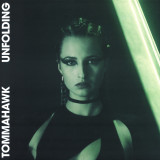
I’m thrilled to welcome Tommahawk to the Electric Ballroom family. Tomma is a standout among the new wave of DJs and producers from Germany, carrying forward the rich tradition of classic Techno. From the moment I heard Unfolding and its stunning choir melody, I was hooked. Remixing this gem was an absolute pleasure.
On Stock and ready to ship

A duo album by guitarist Kazuma Fujimoto and pianist Masaki Hayashi
A sonic dialogue between two artists creating a trend in Japan's quiet music scene.
This acoustic duo, characterized by tranquil, ever-changing tones, has been mastered for vinyl and will be released on vinyl! "Unfolding in Time," a duo album
by guitarist Kazuma Fujimoto and pianist Masaki Hayashi, has been mastered and released!
Time when listening to music is a strange thing; it doesn't progress linearly. Sometimes it passes by in the blink of an eye, and other times it feels as if time has
stopped. Rather than simply playing a song, Kazuma Fujimoto's guitar and Masaki Hayashi's piano manipulate time, slowly enveloping the listener in the resulting
space. This music never ceases to captivate, no matter the situation. This seems to be the ideal form of duo performance, the ultimate expression.
expected to be published on 30.01.2026

Unfolding ist Jessica Moss' meditativstes und klagendstes Soloalbum und vielleicht das erste in der jahrzehntelangen Diskografie der Violinistin und Komponistin aus Montreal, das man zu Recht als Ambient bezeichnen kann. Die ehemalige Mitglied von Silver Mt Zion und Black Ox Orkestar schöpft aus Postklassik, Drone, Minimalismus, Industrial/Metal, Power Electronics, Klezmer und anderen Folk-Traditionen. Es handelt sich hierbei nicht um abstrakte Ambient-Musik; vielschichtige Violinenmelodien, elektroakustische Bearbeitungen, intermittierende Stimmen und Percussion von Tony Buck, dem Schlagzeuger von The Necks, bringen zutiefst emotionale, genreübergreifende Kompositionen hervor, die von einem Geist der Suche und Beschwörung geleitet sind und sich in einer vorherrschenden Atmosphäre von Beschwörung und trauernder Zurückhaltung entfalten. Die Untrennbarkeit von Persönlichem und Politischem hat sich für Moss in den letzten zwei Jahren immer stärker herauskristallisiert. Als Kernmitglied der Montrealer Sektion von Musicians For Palestine hat sie mehrere Benefizkonzerte mitorganisiert und gespielt und im Frühjahr 2024 das Soloalbum For UNRWA veröffentlicht (das über 800 Unterstützer fand und Tausende von Dollar einbrachte). Später im selben Jahr zerbrach ihre langjährige Fernbeziehung aufgrund politischer Differenzen. In enger Zusammenarbeit mit dem Produzenten Radwan Ghazi Moumneh (Jerusalem In My Heart) entstanden ,Unfolding" in den letzten zwölf Monaten, dem zweiten Jahr des Völkermords in Palästina, als direkte Reaktion auf unser kollektives Miterleben, unsere kollektive Trauer, als Portal zur kollektiven Trauer, als Suchscheinwerfer durch unsere inneren Wettersysteme, auf der Suche nach einander in der Dunkelheit. Moss bewegte sich bereits in Richtung einer erhöhten Fragilität und einem tiefen Zuhören, ihre Musik wurde zunehmend langatmig und zeremoniell. Trotz der stark gesunkenen finanziellen Rentabilität von Tourneen wurde ihre Hingabe, Raum zu schaffen, Verflechtungen herzustellen und eine Verbindung zu einem intimen Live-Publikum aufzubauen, zu ihrem kreativen Leitstern, ihre Solo-Praxis wurde durch ihr Engagement und die Kommunikation in diesen Räumen geprägt. Die jüngsten politischen und persönlichen Umwälzungen haben diese ritualisierten, reparativen musikalischen Prozesse nur noch verstärkt. Die beiden langen Stücke auf der ersten Seite von Unfolding verkörpern diese Sensibilität. ,Washing Machine" verwebt Schichten von Streicherdrones und Filigranarbeit, sanft verzerrt durch Verzerrerpedale und Verstärkung, wobei unentzifferbare, ausgeblasene Sprechstimmen den Mix zeitweise als fragmentarische Palimpseste verhüllter Rezitationen und unbeschreiblicher Gefühle umhüllen. Der Ursprung des Stücks liegt in einer Telefonaufnahme einer europäischen Waschmaschine, die Moss aufnahm, als sie neben ihr saß, mit gebrochenem Herzen auf dem Badezimmerboden, und Trost fand, indem sie eine Melodie zu den mechanischen Obertönen der Waschmaschine summte, die ihren Zyklus durchlief. Das Herzstück des Albums, ,One, Now", beginnt als zarte Anrufung mit Basspuls, Glockenspiel und Glocken, gezupften Saiten und traurigen Lead-Violinenlinien, die von jüdischen und arabischen Modi beeinflusst sind. Umgebungsgeräusche, Feldaufnahmen und wortlose Gesänge werden hinzugefügt, während sich Violinenmelodien überlagern und zu einer hypnotisierenden Drone-Landschaft verschmelzen: eine halb improvisierte, lebendige Komposition, die durch Tony Bucks pinselstrichartiges Schlagzeugspiel und Moumnehs ,Schrei in die Leere" am Ende noch weiter belebt wird. Die zweite Seite ist ein vierteiliges Werk mit dem Titel ,no one / no where / no one is free / until all are free", das sich durch Umgebungsgeräusche, elegische postklassische Streicher und verzerrte harmonische Drones zu einem Höhepunkt aus liturgischer Orgel, rituellen Glocken und schimmernden elektronischen Spuren entwickelt, der die Bühne bereitet für den letzten Song des Albums: die erschütternde Chor-Komposition ,until all are free", eine weltliche Hymne, die aus Jessicas mehrspurigen Gesangsaufnahmen besteht (die sie aber gerne mit anderen im Konzert singen würde). Unfolding ist ,einem freien Palästina in unserer Lebenszeit" gewidmet. Danke fürs Zuhören.
expected to be published on 07.11.2025

expected to be published on 29.11.2024

How wild did things get in 1967? So wild that a label (Audio Fidelity) not particularly known for its hipness put out a record with an insert to send away for “psychedelic ornaments” so you, too, could throw an acid party! And the back cover offered “instructions” referencing everybody from Emmett Grogan of the Diggers to Albert Hofmann, the discoverer of LSD. But perhaps the most amazing thing about this album was that, despite its almost comical (though well- informed) attempt to cash in on the psychedelic craze, How to Blow Your Mind and Have a Freak-Out Party wound up being a charming and even entrancing psych-pop gem of a record, albeit one with its requisite share of Eastern-influenced mumbo-jumbo. For its first-ever American vinyl reissue, we’re pressing up just 500 copies in “orange sunshine” vinyl, complete with the insert (you can try sending it in, but don’t get your hopes up). Groovy, man!
expected to be published on 15.11.2024

Ihr perfekt harmonierendes Duo setzt auf starke Kontraste und lebt von Empathie und intensivem Austausch. – Deutschlandfunk
Nachdem sie bereits bei mehreren Aufnahmen von Louis Sclavis für ECM zusammengearbeitet hatten,
darunter das letzte Album des Klarinettisten, betitelt Characters On A Wall, konzentrierten sich Sclavis
und der Pianist Benjamin Moussay in den letzten Jahren zunehmend auf ihre Duo-Kommunikation und
spielten in dieser Konstellation ausgedehnte und vielbeachtete Konzerte in ganz Europa. Mit einem Programm, das zu zwei Dritteln aus der Feder des Pianisten und zu einem Drittel aus der des Klarinettisten
stammt, erschafft das französische Duo eine Welt der kammermusikalischen Konversation, in der sich
lyrische Kontemplation und skurriler Erfindungsreichtum in einer fröhlichen, konzentrierten Zusammenarbeit abwechseln. Nachdenklich hüllt das Duo heikle Themen in warme Improvisationen, die nie überstürzt,
sondern geduldig das geschriebene Material mit seltener Kreativität und in fließenden Dialogen erkunden.
Unfolding wurde in den Studios La Buissonne, Südfrankreich im März 2024 aufgenommen und von Manfred
Eicher produziert.
expected to be published on 08.11.2024

Vilhelm Bromander is a much in demand bass player with a unique voice as a musician and composer. The debut album of his Unfolding Orchestra features a 13-piece ensemble, performing three extended, stellar compositions by Bromander. This is a important artistic statement in the history of Swedish free jazz, performed by some of the most urgent voices from the current scene of jazz- and improvised music, together with the otherworldly voice of dhrupad singer Marianne Svašek.
Now available as limited LP edition on dark green vinyl.
expected to be published on 14.06.2024

Order now and we will order the item for you at our supplier.

expected to be published on 20.10.2023

It's a sparkling Spiritual Jazz album, featuring three extended, stellar compositions by Bromander, performed by some of the most urgent voices from the Swedish scene of jazz- and improvised music, together with the otherworldly voice of dhrupad singer Marianne Svase. Published by Thanatosis produktion, the album is released on LP, CD and digitally.
expected to be published on 13.10.2023

Michal Wolski is known for his esoteric, tripped-out and planetary style of techno and the Unfolding EP on Naarm-based label Southern Lights does not disappoint, with ‘Unfolding’ and ‘Elastic’ delivering a heady blend of modular synth reverberations and striking drum patterns.
Remix collaborators Polygonia and Rrose both deliver first-class interpretations of the original tracks, revealing two diverse talents that are at the height of their sonic powers.
Mastered & Cut by Tim Xavier at Manmade Mastering, Berlin
Artwork by Craig McWhinney
Order now and we will order the item for you at our supplier.

Die junge Britin Hannah Peel ist eine hochtalentierte und erstaunlich vielseitige bildende Künstlerin und Emmy-nominierte Komponistin elektronischer Musik, moderner symphonischer Musik sowie von Film- und TV-Musik. „The Unfolding“ ist ihre außergewöhnliche Zusammenarbeit mit dem Paraorchestra, einem in Bristol ansässigen Orchester professioneller behinderter und nicht behinderter Musiker, die über einen Zeitraum von drei Jahren entstand.
Das Ergebnis ist eine stimmungsvolle, zukunftsweisende Mischung analoger und digitaler Klänge, die einen über die Grenzen von elektronischer Musik, Jazz und Klassik hinweg tragen.
expected to be published on 01.04.2022

On Stock and ready to ship

Order now and we will order the item for you at our supplier.

4th album from Dutch electronic duo Tangent .
Limited Edition 180gm Orange vinyl LP w/DL of full CD tracklisting.
Previous coverage from Arctic Drones, Collective Zine, Igloomag, Soundblab
Approaching Complexity is the fourth album from Netherlands based ambient-beats duo Tangent.
This follow-up to 2016s Collapsing Horizons finds the duo expanding their sound by adding reoccurring expressive piano themes to their composite of skyward ambience and unfolding beat formations.
The album is said by the duo of Ralph van Reijendam and Robbert Kok to be 'about the transition from basic forms to complex struc- tures which are often seen in nature during the transi- tioning of seasons.' They add that 'Life awakens from hibernation and evolves from being introverted to becoming extroverted, even building upon the remnants of previous cycles and evolving into new realms.'
Approaching Complexity for Tangent is all about their evolution as progression has been a clearly defined constant in their output as a whole. Each work effort- lessly transitioning unto its predecessor.
OTHER TITLES FROM TANGENT
- MD248 / Collapsing Horizons / LP
Order now and we will order the item for you at our supplier.

Musique Plastique (Visible Cloaks, Pedro) rescue a nearly lost soundtrack to a Belgian avant-theatrical work from the 80s. For fans of Nuno Canavarro, Roberto Musci and Vito Ricci.
Order now and we will order the item for you at our supplier.

Das HER DAMIT Tonarchiv zeichnet den Sound des Festivals auf und startet die Archivierung mit einer vierteiligen Serie. Auf der Logoseite vertont Bleak den nächtlichen Bunkerfloor mit - Poly Invaders und - Lovecraf Function , zwei effektiven Techno-Workouts aus nachdrücklichen Percussions gepaart mit atmosphärischem Tiefgang. Oliver Deutschmann zeigt mit seinem Ambient-Track - The Source den Bunkerfloor im Morgennebel, während sich die freundlich treibende Techno- Exkursion - Space Unfolding über dem aufheizten Betonfloor aufblättert. Ein Moment, bei dem sich Ausgeschlafene wie Durchgefeierte einig sind.
#HER DAMIT Tonarchiv aims to document the sound of the HER DAMIT festival and kicks things off with a four-part vinyl series. Located on the logo side is Bleak who scores the nightly bunker floor with Poly Invaders' and Lovecraf Function - two highly effective techno workouts made of punchy percussions tied up with atmospheric depth.
On the info side of the record Oliver Deutschmann's The Source' portraits the bunker floor filled with morning fog, while his friendly techno driver Space Unfolding' evolves upon the heated concrete dancefloor.
A moment where the breakfast and all-nighter crew sing from the same hymn sheet.
Order now and we will order the item for you at our supplier.

Blumoog music is proud to present its new release of 4 tracks of great musical thickness. This time, Blumoog music has selected quality and passion. We introduce a character like Aubrey Metroplex, Ferox, Outsgun and more...) with a classical song of his repertoire : low crushing bag and psychadelic; you will go to cosmic dimension. It's Gotshell time, colombian artist, who is pointing to into historical labels like Blueprint, Missile. His song is terrifying and powerful, not for the weak of heart. It's time for Frankie Serious(Blumoog music,Switch Off rec.,The Zone rec.), artist from Rome. With his very high production quality, he proposes with a powerful killer song; excellent for dancefloors but at the same time wonderful for a mental journey. Unchained Souls goes to end this ep of a large thickness; a mysterious duo whom we'll sure speak about. They propose a dark psychadelic selection which will take you inside the deep abyss of your mind... Blumoog music is always near you with soul and passion for the electronics music.....good listening
Order now and we will order the item for you at our supplier.
For its second outing, Sonum invites Matteo Point, whose Acid People EP expands the label's catalogue with four cuts navigating the space between acid house, progressive textures and analogue-driven club music.
The title track, "Acid People," sets the tone with tightly wound 303 sequences, sparse drums and a hypnotic sense of momentum, landing somewhere between functional peak-time tool and late-night trip. "Fresh Morgen" follows with a rolling low end before gradually unfolding into darker, more melodic territory, recalling the subtle tension of late-'90s European underground records.
On the B-side, "Musika Progressiva" revisits progressive house without falling into nostalgia, reshaping familiar motifs through a contemporary lens while maintaining its analogue warmth. Closing cut "Vvvaneggg" shifts towards Detroit-inspired rhythms and understated machine funk, offering a stripped-back groove built for patient selectors.
Across four tracks, Matteo Point delivers a collection that feels both immediate and enduring—club-focused without sacrificing character. With Acid People EP, Sonum continues to carve out its own space, championing records that draw equally from the past and the future of underground dance music.
The item is already on it's way to us and is expected to be shipped from 29.09.2026.

Four transmissions tuned somewhere between deep-psy, tribal techno and spatial ambience. Built for late-night systems and inward journeys, moving through dense sonic textures, low-end pressure and evolving atmospheres.
“Contact” drops you straight into the wormhole: driving techno architecture fused with goa-leaning psychedelia. Layered percussive detail and richly sculpted atmospheres spiral around a hypnotic groove designed for locked eyes and smoke-filled rooms at unreasonable hours.
“Lifeforms” operates with an organic sense of motion. Its groove stretches and contracts like a living system, driven by a supple bassline and rhythmic interplay that feels ritualistic rather than mechanical. Resonant synth work and texture mutates across the stereo field like microscopic organisms coming into focus.
“Deepfield” unfolds within deep psy-trance territory, shaped with restraint and intention. Shimmering harmonics move through a saturated haze into a slow-burning progression that carries a faint melancholy woven through a slowly evolving tonal structure. Meditative yet still built to pull bodies forward.
“Neurobloom” dissolves the propulsion into an evolving ambient soundscape. Ethnic-inflected motifs drift through blooming synth layers, crystalline atmospheres, and gradually unfolding sonic nuances. A controlled descent in that liminal zone where audio starts functioning as a living environment.
expected to be published on 30.09.2026
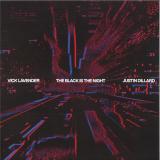
Forbidden Dance Records returns with its 13th release to the city where the label's journey first began: Chicago.
For The Black Is The Night EP, longtime Chicago house figure Vick Lavender joins forces with multi-instrumentalist Justin Dillard for three deeply musical downtempo cuts, bringing together the language of Chicago house with jazz, soul and live instrumentation.
Born and raised on Chicago's West Side, Dillard is a pianist, Hammond organist, percussionist, composer and arranger whose musical path has crossed with figures such as Branford Marsalis, Ornette Coleman, Roscoe Mitchell and the late Von Freeman. His musicianship has also become an integral part of Lavender's richly organic productions over the years.
Across three tracks, Lavender and Dillard slow down the tempo without losing the pulse. Warm keys, live instrumentation and loose percussion unfolding through the kind of deep, soulful arrangements that have long defined their work together.
A return to Chicago, but from a different angle.
The item is already on it's way to us and is expected to be shipped from 30.09.2026.

"Surface Noise Isn’t A Crime" continues NOREPRESS’ exploration of texture, pressure, and imperfect sound as core elements of underground electronic music. Across four tracks, the release moves through Deep Tech House, Dub Techno, Electro, and Breakbeat without settling into fixed genre boundaries, balancing functionality with experimentation throughout.
A1. Tvardovsky feat. Andrey Zverev – Flute Meditation opens the record with a dense, slowly unfolding trip built on dub space, electro tension, and hypnotic Tech House movement. Organic flute phrases drift through layered percussion, evolving bass pressure, and spacious analog textures, creating a strange collision of futurism and nostalgia. The track resists obvious peak-time formulas, choosing gradual transformation over immediate impact and rewarding deeper immersion with every transition.
A2. Osman Öz – Regrets moves into softer territory without losing rhythmic weight. Warm breakbeat structures, airy melodic fragments, and fluid low-end movement give the track a calm but persistent momentum. Osman Öz keeps the arrangement restrained and precise, allowing groove and atmosphere to carry the emotional core of the composition naturally.
On the B-side, Kirill Matveev appears under his Natural Piece Of Aloe alias with two contrasting interpretations of the project’s dub-informed language.
B1. Salto Mortale is playful, unstable, and constantly mutating. Rhythms stretch and reorganize themselves around shifting tonal fragments, while the arrangement moves with the loose unpredictability of an improvisation session. Despite its complexity, the track never loses control, maintaining a strong forward pull through every unexpected turn.
Closing the record, B2. Columbo Beat, Kirill Matveev - Sundub pushes deeper into darker territory. Acid sequences slice through heavy dub atmospheres while rugged drums and saturated low-end pressure drive the track forward with raw physical energy. Distortion, space, and movement interact continuously, turning the track into a hypnotic late-night tool designed for more adventurous dancefloors.
"Surface Noise Isn’t A Crime" captures NOREPRESS at its most confident: raw textures, deep space, broken edges, and timeless club influences reconstructed into a modern dub-driven framework.
NOREPRESS is a division of MixCult Records
On Stock and ready to ship
Long time label collaborator and dub maestro Havantepe is back on Berg Audio with yet another journey into the deeper, more atmospheric shades of techno, unfolding across four timeless tracks. This release marks the highly awaited come back of the imprint’s “Monument” series, featuring a full cover designed by Juli Jah.
expected to be published on 01.10.2026

Sublime frequencies from the golden era of ambient electronica.
Plumbing hidden depths beneath a deceptively tranquil surface, MLO's mid-90s masterpiece Io is an overlooked gem from a golden era for ambient electronic music. Originally released in 1994, Jon Tye and Pete Smith's collaborative album responded to the growing chill-out movement by leaning into classical and avant-garde influences from Satie, Debussy and Cage through to Soft Machine, Incredible String Band and Eno. Recorded across various studios stacked with classic and rare synths, Io was patiently composed into slowly unfolding suites punctuated with ripples of arrhythmic interference to arrive at a purist vision of true ambient.
The next instalment in Forever Records' ongoing reissue series shines a light back on this landmark piece of UK electronica with the first official reissue since its original edition on Rising High. As well as the original double LP pressing and a new CD digipak version, there will also be a uniquely numbered, limited edition housed in a gatefold sleeve that comes with a bonus 10" featuring two previously unreleased versions of the album's opening cut, 'Wimborne'.
Press response to Io:
"Not so much ambient, more environmental music, Io lets you bring as much (or as little) of your surroundings in as suits your mood. Every listen can be different. Interactive ambient at last.”
IO is pure ambience. Relying on motif as opposed to melody, MLO have produced a truly evocative album.
Peter McIntyre, Mixmag, UK 1994.
"MLO's influences range from the likes of Eric Satie and the intellectual salon music of his era to the more predictable reference point of dubby, modern techno, though they feel, perhaps rather contentiously, that "ambient music can exist in isolation from the rest of the dance music arena". Can it? Take a trip to Io, and find out."
Generator Magazine, UK 1994.
"If you like your ambient deep and moody with long chords that creep along at approximately the speed of drying paint then check out MLO’s Io."
Mixology, UK 1994.
"MLO set the controls for the heart of headspace for their first full album release. Io is top grade ambient brain… Ace album…"
Select, UK 1994.
expected to be published on 02.10.2026

Sublime frequencies from the golden era of ambient electronica.
Plumbing hidden depths beneath a deceptively tranquil surface, MLO's mid-90s masterpiece Io is an overlooked gem from a golden era for ambient electronic music. Originally released in 1994, Jon Tye and Pete Smith's collaborative album responded to the growing chill-out movement by leaning into classical and avant-garde influences from Satie, Debussy and Cage through to Soft Machine, Incredible String Band and Eno. Recorded across various studios stacked with classic and rare synths, Io was patiently composed into slowly unfolding suites punctuated with ripples of arrhythmic interference to arrive at a purist vision of true ambient.
The next instalment in Forever Records' ongoing reissue series shines a light back on this landmark piece of UK electronica with the first official reissue since its original edition on Rising High. As well as the original double LP pressing and a new CD digipak version, there will also be a uniquely numbered, limited edition housed in a gatefold sleeve that comes with a bonus 10" featuring two previously unreleased versions of the album's opening cut, 'Wimborne'.
Press response to Io:
"Not so much ambient, more environmental music, Io lets you bring as much (or as little) of your surroundings in as suits your mood. Every listen can be different. Interactive ambient at last.”
IO is pure ambience. Relying on motif as opposed to melody, MLO have produced a truly evocative album.
Peter McIntyre, Mixmag, UK 1994.
"MLO's influences range from the likes of Eric Satie and the intellectual salon music of his era to the more predictable reference point of dubby, modern techno, though they feel, perhaps rather contentiously, that "ambient music can exist in isolation from the rest of the dance music arena". Can it? Take a trip to Io, and find out."
Generator Magazine, UK 1994.
"If you like your ambient deep and moody with long chords that creep along at approximately the speed of drying paint then check out MLO’s Io."
Mixology, UK 1994.
"MLO set the controls for the heart of headspace for their first full album release. Io is top grade ambient brain… Ace album…"
Select, UK 1994.
expected to be published on 02.10.2026

Across the past decade, KAS has established herself as a unique voice in experimental electronic music, a composer and synthesist whose work dissolves the boundaries between ambient electronica, contemporary classical, composition, and immersive sound design. Her new album “Ruin: It’s Not Just Music” arrives with a distinctive gravitational pull. The record moves with greater physical force, placing rhythm and impact at the centre of its architecture, revealing a more confrontational and embodied dimension of KAS’s musical language.
The first single “Ruin” arrives May 22nd, with the full album released October 2nd via SOMEONE SPECIAL the new label co-founded by KAS.
Where much of KAS’s earlier work explored harmonic environments, the forthcoming album is built around tension and release. Inspired by the sound of drum and bass, breakbeats fracture through dense fields of synthesis, percussive patterns and her signature melodic fragments – motions that feel closer to the kinetic language of club music than the meditative spaces often associated with her past catalogue. The result is a body of work that feels both recognisably hers and newly charged, music that moves through the body as insistently as it engages the mind.
For listeners who first encountered KAS through the glowing synthesis of “Ears” (2016) or the intricate experimental pop of “The Kid” (2017), this direction may feel initially surprising, yet the shift has been quietly unfolding across the past several years. KAS’s practice has steadily expanded beyond the expectations placed upon experimental electronic artists, moving between orchestral composition, audiovisual installations, film scoring, and large-scale commissions while retaining the unmistakable sonic signature that defines her work.
The 2022 albums “I Could Be Your Dog / I Could Be Your Moon” (2022) and “Let’s Turn It Into Sound” (2022) explored a deeply immersive approach to composition, expanded her reputation and instinct for constructing detailed sonic ecosystems while continuing to blur the lines between experimental electronics and contemporary pop structures. KAS’s most recent output has continued to widen that field including the rhythm oriented electronic album “Gush” (2025) and her return to more orchestral roots with “Thoughts on the Future” (2025). Together these releases underscored the breadth of her practice.
Her prolific collaborators and creative partners have ranged from Patti Smith and Suzanne Ciani to Danny Elfman, Tycho, Glass Beams, RY X, Caribou, Four Tet, Reggie Watts, and Max Richter, while her compositions have appeared in projects with Apple, Chanel, Meow Wolf, the BBC Orchestra, and major film and television productions.
On “Ruin: It’s Not Just Music”, that vocabulary becomes more kinetic than ever before. The record draws energy from jungle, drum and bass, and dance-floor focused electronic music while retaining the intricate synthesis and tonal curiosity that have defined KAS’s work from the beginning. The result is a record that feels equally at home within club culture, contemporary composition, and the experimental spaces that have long championed her artistry.
On May 27th KAS will present a major performance at London’s Barbican Centre alongside the London Contemporary Orchestra, marking the ten-year anniversary of her landmark album Ears. The evening will trace the arc of her creative evolution while also introducing material from the new album.
expected to be published on 02.10.2026

Jen Cardini & Shonky revive their 20 year old anthem August In Paris with remixes from Kasra V, Jennifer Loveless and Jump Source.
Originally released on Mobilee Records in 2006, Jen Cardini and Shonky’s record ‘August In Paris’ remains a defining statement from the minimal era. Ahead of its time upon release, the record distilled the genre to its essentials, bleeps, hypnotic grooves and impactful vocals, unfolding with the kind of restraint that continues to resonate two decades on.
To mark its 20th anniversary, ‘August In Paris’ returns with three distinctive reinterpretations from Kasra V, Jennifer Loveless and Jump Source plus a re-release of the original coming out on Jen Cardini’s formidable label Correspondant. As well as this Jen Cardini and Shonky will be playing an All Night Long set at Paris nightlife institution Rex Club on 29th August. Look out for merch on the night too.
Speaking about the project Jen Cardini discussed: “It is crazy to think this was two decades ago and that Shonky and I are still touring and sharing our love for music. For the anniversary, we decided to bring this special track to light again’.’
Each remix approaches the source material from a different perspective while preserving the essence of the original.
UK DJ and producer Kasra V leans further into the track’s skeletal framework, blending his signature sultry sonics into this hypnotic chunky groove to produce something entirely new but familiar.
Jennifer Loveless, an unearthed gem when it comes to production, strips things back even further, delivering a rough and tough uncompromising club version primed for sweaty dark dancefloors, it perfectly encapsulates the original without overshadowing it.
Closing the EP, Montreal duo Jump Source, Priori and Patrick Holland, take the record into more left of centre territory. Their version stretches the original into a warped, slow-burning electro excursion, perfectly suited to the blurred edges of the after-hours.
expected to be published on 02.10.2026
Waking Dreams returns with “Fantasies,” a four-track excursion by Aline Umber and AGELESS that explores the hypnotic facets of deep house. Featuring the label’s most sought-after ID, the title track finally receives its official release, unfolding as a meditative yet driving cut built on understated percussion and an airtight groove. Lush chords douse the track’s atmosphere, while dubby synth stabs and a spoken-word vocal cut through the arrangement, deepening its hypnotic pull and transfixing the listener. Dan Ghenacia takes things deeper with his electro-tinged rework, expanding on the original’s addictive groove with angular drumwork, adding further club functionality and sharpening it into a darker, more introspective counterpoint. Two additional originals round out the collaborative EP with brighter, kinetic energy.
expected to be published on 03.10.2026

Rio de Janeiro producer, composer and multi-instrumentalist Fabio Santanna returns with Copa Astral, an eight-track journey through modern Brazilian boogie, disco and Balearic grooves. Released by Rio’s Onda Boa, a label founded by Joutro Mundo, the album captures the warmth of the city's sunlit days and the cinematic glow of its nights, blending lush synths, live horns, percussion and rich vocal arrangements into an unmistakably Brazilian sound.
Opening with the slow-burning title track, introduced by the unmistakable cry of a cuíca, Copa Astral sets the mood before unfolding into the rolling grooves of "Ponto de Areia" and the Afro-Brazilian pulse of "Odoya Beat". Elsewhere, "Nesse Tempo" drifts into dreamy nostalgia, while side B moves effortlessly through the carefree boogie of "Jabuticaba", inspired by Brazil's beloved fruit; the warm, enveloping feeling of longing in "Senti Saudade"; the seaside romance of "À Beira Mar"; before closing with "Cantagalo", a heartfelt tribute to the neighbourhoods, memories and spirit that continue to shape Santanna's music.
Inspired as much by Rio's beaches as its neon-lit avenues, Santanna draws from Brazilian boogie, 1980s cinema, vintage record sleeves and classics such as Junior Mendes' Copacabana Sadia, filtering those influences through the city's unique rhythm. Produced at his Copacabana studio with live brass, percussion and vocal harmonies, Copa Astral is both timeless and contemporary - an album equally at home on the dancefloor, by the ocean or during a late-night drive along the coast.
On Stock and ready to ship

"Cinematic Visionaries Calibro 35 and Noir Master James Ellroy Pay Homage to L.A. with a Pure Crime-Funk Original Soundtrack. Out October 9" There are collaborations that feel inevitable like they were waiting to happen in some shadowed corner of culture. The union between Italian cinematic funk visionaries Calibro 35 and internationally acclaimed master of noir fiction and New York Times bestselling author James Ellroy is undoubtedly one of them. When Calibro 35 were invited to compose the original soundtrack for Francesco Zippel's documentary Ellroy vs L.A., they didn't simply write music for film. They stepped directly into Ellroy's universe the most dangerous corners of American crime fiction and discovered, to no one's surprise, that its darkness felt strangely familiar. The result is Ellroy vs L.A., the band's new album out October 9 on Record Kicks. Twelve brand new tracks of cinematic crime funk, psychedelia, and hypnotic groove that don't accompany Ellroy's world so much as inhabit it. The soundtrack's move through Ellroy's fictional and real-world mythologies with deliberate precision. Stylistically, the album finds Calibro 35 in their most natural yet most cinematic state: crime funk, psychedelia, and hypnotic groove pushed into darker, more narrative-driven territory by the weight of Ellroy's world. From the gloomy, suspense-laden groove of the opener Black Dahlia to the evocative closing piece Moonlight Sonative, the album unfolds as a complete cinematic arc, showcasing Calibro 35 at their very best. L.A. Confidential delivers a super-suspenseful, thrilling tension that feels like a chase through neon-lit streets, while Riots erupts into explosive cinematic funk, capturing chaos and urban unrest in full force. LSD on Sunset Boulevard drifts into a hazy, instrumental soul journey psychedelic, warm, and disorienting, like a late-night hallucination of the city itself. The Big Nowhere (Part I & II) expands the narrative into a slow-burning, atmospheric descent, unfolding like a two-act crime saga. Welcome to the Land of Vacation and Probation hits with kick-ass, uptempo crime-funk madness, urgent and relentless in its propulsion, while White Jazz is a mood of suspended, noir-infused jazz tension cool, shadowy, and unresolved. Together, the tracks map Los Angeles as a fractured yet hypnotic landscape suspended between glamour and violence, beauty and decay, myth and reality Born in Milan in 2007 with the mission of excavating the golden age of Italian film music Morricone, Piccioni, Trovajoli, Calibro 35 have spent nearly two decades transforming that initial obsession into a singular artistic language. Their work bridges vintage Italian soundtracks with contemporary jazz and cinematic funk, earning them a global following rare for an Italian instrumental act. Their music has been sampled by Dr. Dre (Compton, "One Shot One Kill" feat. Snoop Dogg), Jay-Z ("Picasso Baby"), and Damon Albarn's The Child of Lov. Rolling Stone described them as "the most fascinating, retro-maniac and genuine thing that has happened to Italy in the past few years," while Far Out Magazine called them "one of the most skilful and innovative instrumental outfits on the planet right now." The band (Enrico Gabrielli, Massimo Martellotta, Fabio Rondanini, and Tommaso Colliva) continue to evolve without losing their core identity. In 2025 they released the critically acclaimed Exploration, further expanding their sonic universe, and were invited to perform at the closing ceremony of the Winter Olympic Games at the Arena di Verona, confirming their growing international stature. With Ellroy vs L.A., Calibro 35 don't just compose a soundtrack they translate a mythology into rhythm, tension, and groove. Between fiction and reality, they find a city that never truly sleeps, only pulses in darkness. Press play, and Los Angeles begins to unfold in sound.
expected to be published on 09.10.2026

SMOKY WHITE VINYL[22,27 €]
With Lost Lost Lost, Pratt & Moody gather the defining moments of their journey and package it with fresh soul gold into one cohesive, slow- burning statement. What began as a series of cult 7” vinyl releases – often mistaken online for forgotten soul classics from another era – now finds its natural home in album form. Written and recorded with Timmion’s trusted house band Cold Diamond & Mink, the record captures the duo’s unmistakable chemistry: emotionally rich songwriting wrapped in warm, analog textures that blur past and present.
From the velvet sway of “Addictive Touch” to the cinematic tension of “You Bring Me Joy” and the beat ballad ache of “Hard Way To Live,” the album moves effortlessly between bedroom-soul intimacy and widescreen drama. “Hang Tight” opens with a blissful piano figure that nods to gospel-tinged 1970s soul before unfolding into a full-bodied groove, while “Hooked On Your Love” glows with golden-age group soul harmony sweetness. Across both sides, Pratt’s finely tuned vocals and Moody’s expressive guitar work anchor songs that feel timeless rather than nostalgic.
At its core, Lost Lost Lost is an album steeped in atmosphere – lush downtempo moments sit alongside sweet harmony-driven soul, cinematic builds dissolve into dark restrained grooves. Analog string synthesizers, vibraphone accents, tremolo guitar, and deep-pocket rhythms create emotional tension without excess. Pratt & Moody’s strength lies in their melodic instinct: songs that feel big without being pompous or losing their human quality. The result is a record that feels cohesive, immersive, and that real thing – reaffirming the duo as key architects of the contemporary lowrider soul revival.
expected to be published on 09.10.2026

With Lost Lost Lost, Pratt & Moody gather the defining moments of their journey and package it with fresh soul gold into one cohesive, slow- burning statement. What began as a series of cult 7” vinyl releases – often mistaken online for forgotten soul classics from another era – now finds its natural home in album form. Written and recorded with Timmion’s trusted house band Cold Diamond & Mink, the record captures the duo’s unmistakable chemistry: emotionally rich songwriting wrapped in warm, analog textures that blur past and present.
From the velvet sway of “Addictive Touch” to the cinematic tension of “You Bring Me Joy” and the beat ballad ache of “Hard Way To Live,” the album moves effortlessly between bedroom-soul intimacy and widescreen drama. “Hang Tight” opens with a blissful piano figure that nods to gospel-tinged 1970s soul before unfolding into a full-bodied groove, while “Hooked On Your Love” glows with golden-age group soul harmony sweetness. Across both sides, Pratt’s finely tuned vocals and Moody’s expressive guitar work anchor songs that feel timeless rather than nostalgic.
At its core, Lost Lost Lost is an album steeped in atmosphere – lush downtempo moments sit alongside sweet harmony-driven soul, cinematic builds dissolve into dark restrained grooves. Analog string synthesizers, vibraphone accents, tremolo guitar, and deep-pocket rhythms create emotional tension without excess. Pratt & Moody’s strength lies in their melodic instinct: songs that feel big without being pompous or losing their human quality. The result is a record that feels cohesive, immersive, and that real thing – reaffirming the duo as key architects of the contemporary lowrider soul revival.
expected to be published on 09.10.2026
Acclaimed, Swedish composer, producer and live artist Sebastian Mullaert, and Georgian electronic artist Tamarma (Tamara Davitashvili), are set to release the deeply personal and genre-fluid album ‘Holds the Sky’ on the 25th September via Awesome Soundwave, the label curated by Christopher Coe and Carl Cox.
Spanning ambient, experimental and alternative electronic forms, alongside a set of dancefloor-oriented reworks that expand the project’s sonic spectrum, at its core, the album is the result of an unusual artistic convergence that traces back to 2020. Tamarma entered Mullaert’s successful In Bloom mentorship programme on a scholarship, and over a year-long deep exploration of album creation, her work revealed a rare clarity and emotional depth.
One piece in particular became the catalyst. Developed further through Mullaert’s 4 step studio process, it unfolded into a full length album collaboration. What began as a single composition has since grown into an album that documents an organic and intuitive exchange between two distinct artistic voices.
The result is less a collection of tracks than a continuous unfolding; a dialogue shaped by trust, listening and shared curiosity. Rather than aiming for a fixed genre position, the album operates as a living process: a meeting point between tradition and experimentation, between voice and synthesis, between two artists allowing something larger to emerge through their collaboration.
With compositions such as the chiming ‘Being Colours’ and hypnotic ‘Holds The Sky,’ Mullaert and Tamarma have created a body of work that resists easy categorization. The album moves through intimate, meditative passages and more rhythmically driven moments, always anchored in a sense of presence and emotional immediacy. The flickering beats of ‘Winnow’ and ambient manifestations of ‘Lost In Dimension’ and ‘Field of Us’ add a sense of tranquillity, stillness and convergence.
Tamarma’s voice carries both a personal and cultural depth throughout the album, while remaining fluid and responsive to the moment. The result is a sound that feels both intimate and spatial, where voice, texture and atmosphere are closely connected. Her Georgian musical heritage combined with Mullaert’s open-ended electronic exploration, allows something beautiful to emerge, shaped by listening, space and a sense of something larger than either artist alone.
Widely celebrated in the electronic music community, Mullaert has spent the last three decades moving beyond the boundaries of electronic music, from shaping the sound of cult duo Minilogue to creating the fully improvised global platform, Circle of Live, which has seen him perform and collaborate with artists such as Mathew Jonson, Âme, Amp Fiddler, Aurora Halal, Speedy J, Sam Barker, Dorisburg, Move D, Sleep D, Kuniyuki, Pantha du Prince, Leafar Legov, Wayne Snow, Laurence Guy, VRIL, Neel and Erika.
Initially making a name for himself in the world of techno, his performances have moved fluidly between environments, from underground spaces including Berghain’s Panorama Bar to festivals around the world, and venues including the Barbican, London, where he has appeared alongside artists including Joep Beving, Laura Misch and JakoJako. Platforms such as ARTE have featured his performances, placing his work within a broader European cultural context, while support from Resident Advisor and Boiler Room reflect his continued presence within the core of electronic music culture. He has received a Swedish Grammy and the P3 Guld award from Swedish National Radio.
His 2020 album ‘Natthall,’ developed in collaboration with Tonhalle Orchestra Zürich and performed with Subchamber Ensemble, saw Mullaert enter the world of contemporary composition, and merged electronics with chamber music and improvisation. The album was later named among the top post classical releases of the year by BBC Music Magazine.
A new documentary film by Ableton, set for release this summer, captures Mullaert’s Circle of Live project through a performance at Brighton Dome in the UK, featuring Mullaert and electronic artists Clark and Rival Consoles. The film offers a rare insight into the inner workings of collective improvisation at a high artistic level, further cementing Mullaert’s role as a leading voice in contemporary live electronic practice.
Tamara's background is rooted in the landscapes and traditions of Georgia. Raised near the Caucasus Mountains, classically trained in piano and shaped by years as a jazz vocalist, her work carries traces of Georgian polyphonic singing and a strong connection to nature and place. Her transition into electronic music is not stylistic but transformational; a recontextualisation of heritage into new sonic forms.
‘Holds The Sky’ will be available on vinyl and digitally on the 25th September via Awesome Soundwave. The digital release includes three exclusive album track reworks from Mullaert.
expected to be published on 09.10.2026

Athens-based multi-instrumentalist, songwriter and producer Raphael Meleteas presents "Someone Else", the title track and first single from his forthcoming debut album of the same name.
Written, arranged, performed, recorded and mixed entirely by Meleteas, the recording reflects an organic approach to songwriting, where warm analogue textures, cinematic arrangements and carefully layered instrumentation take precedence over studio polish. Every instrument heard on the track is performed by Meleteas himself.
Drawing from the rich tradition of orchestral pop, cinematic music and library recordings of the late 1960s and 1970s, Someone Else balances intimate songwriting with understated orchestration, creating a sound that feels timeless while remaining unmistakably personal.
Recorded in Athens, Greece, the single introduces the atmosphere that defines the forthcoming album: melodic, reflective and rich in subtle detail, unfolding naturally through live performance rather than digital construction.
"Someone Else" offers the first glimpse of Raphael Meleteas' debut album, also titled Someone Else, which will be released by Veego Records in September 2026.
expected to be published on 09.10.2026
On Oath's latest, the imprint keeps the jazz-fuelled atmospheres going with 'Seven Dogs', an EP that serves up an astonishing excursion through deeply hypnotic melodies and idiosyncratic grooves, courtesy of an iconic link-up between Rteph88 aka Robin Taylor-Firth and Steve Cobby.
Taylor-Firth and Cobby are musicians whose careers are so richly storied, broad-ranging, and impactful that it's difficult to summarise their output and impact in so few words. Both Taylor-Firth and Cobby firmly established themselves in the 90s, being involved in some of the era's most prominent and celebrated groups and for releasing some truly era-defining records. As such, their discographies reach far and wide, from house and techno cuts through to downtempo, drum'n'bass and leftfield, there is little that is left uncovered, and this spirit remains with them both as they continue to explore the outer parameters of their sounds.
Taylor-Firth, a songwriter, arranger, and producer, is perhaps best known for his long association with Warp Records and its sublabel Nucleus, and for his work as a member of Nightmares on Wax, where his signature keyboard playing style became a staple of the group's legendary sound. Alongside this, he has hundreds of songwriting and arranging credits on a dizzying array of records, and was a member of house music group Anon and Pio Bo alongside Richard Barratt - to name but a few selected highlights of his extraordinary career. Cobby's career is distinguished by his multitude of releases under a variety of aliases, along with his helming of a number of imprints, including Pork Recordings and his most recent label Déclassé. Experimenting with a wide variety of genres and sounds, perhaps his best-known work was with the duo Fila Brazillia alongside Dave McSherry, who released a plethora of immersive and innovative records in the 90s and beyond.
'Seven Dogs' represents a shared passion, vision, and musicality, two languages borne of similar spaces but reaching through time, space, and existence in creating a richly veiled musical experience that draws from lifetimes spent within the nucleus of music's soul. The EP speaks of the present as such as the past and indeed future, hinting with motifs that feel right at home within sun-kissed skies and within the walls of the chill out rooms. 'Early Doors', the EP's opener, displays the core fundamentals of the unfolding experience, namely the intrinsic relationship between keys and drums and how they express tone and mood. The piano gently caresses, ethereally floating with space to grow, as the drums lightly swing into life, providing an engrossing and rhythmically diverse groove that nods as much as it dives. The title track lands next and leads with a more driving feel. Sonically, the track leads with an oozing bass sequence that worms through the mid range before retreating under an array of compelling piano chords. The drums once again provide a strong backbone, allowing the melodic elements up top to fully express themselves - in a myriad of ways, murmuring and clamouring all at once.
'Visiting Hobo' brings the groove down a few notches. Slightly sombre in its delivery, the piano and bass interchange above a sparse yet hard-hitting groove, with as much emphasis placed on the emptiness as on the melodically full sections. The piano has a certain tonality here, with the notes containing a large amount of textural reverb that helps the track feel alive, almost growing out of the speakers. Wrapping things up is 'Titled', which begins with the keys and an array of whimsical features. The drums allow themselves time to grow into being, but when they do, they simmer within an enriching melange. It's a fitting end to a record that abounds with sonic consideration, environmental and emotive feeling, where two technicians bring their best and serve up four tracks of such sublimeness and thoughtfulness. One to drift deep within, on those hot summer days….
expected to be published on 16.10.2026

Corps Perdu emerges from Lamin Fofana’s ongoing practice of creating immersive and multisensory sound environments, informed and inspired by the historically rich texts of scholars and poets working in the tradition of Black Studies. The words of W.E.B. Du Bois, Sylvia Wynter, Dionne Brand, Fred Moten, Édouard Glissant, Suzanne Césaire and Aimé Césaire are transmuted and circulated as sound, offered to listeners through radio, live events, albums and installations. Fofana honours his sources with an audible historical awareness, yet his sounds always simultaneously open out into the turbulent uncertainties of the present.
The music we hear on the album Corps Perdu was previewed within a series of collective reading and listening sessions carried out in Paris, Barcelona, Tunis and New York City, where voices from the audience read aloud fragments from a body of texts Fofana had selected. The spontaneous unfolding of close reading and listening, mixed live by Fofana in these collective listening experiences, speaks to the open-ended quality of Corps Perdu. The album, now published, is but one iteration of this ongoing inquiry into the relationship between sound and text.
Corps Perdu presents an introspective journey with no return, and as such is full of omens of all kinds. Across ten tracks Lamin Fofana creates a sibling or companion to the transformation he initiated in his previous album Works in Metal, building a narrative that takes us into Krakatoa prior to its eruption, and lets us listen to Césaire’s ‘flying seed dreaming very loudly’. The album’s track titles and narrative arc hum in and out and alongside Césaire’s poetry, mainly Césaire’s 1950 collection Corps Perdu, in which the ten poems are accompanied by engravings by Picasso merging fragments of bodies and plants—a collaboration that emerged from their first encounter two years earlier, at the Communist-led World Congress of Intellectuals for Peace, in Wroclaw, Poland.
The music on Corps Perdu labours intuitive hand-held melodies through dense processing. There are many rhythms throughout, though these never surrender to the density of the dancefloor grooves we’ve heard Fofana craft on previous albums (think of the ‘Obscure Light’ pair from Works in Metal for example). Instead, Fofana gently releases the clenched hands Césaire’s Corps Perdu begins with: ‘Among me, from myself, to myself, outside any constellation, clenched in my hands only, the rare hiccup of an ultimate raving spasm, keep vibrating word’. The album carries through sound the scattering and liquid fragmentation that shape the desperate metamorphosis of a ‘lost body’.
expected to be published on 16.10.2026
Originally released by Umor Rex on cassette in 2018, Rafael Anton Irisarri’s Sirimiri is now available on vinyl for the first time, newly remastered for this edition. This LP marks the fourth and final installment in a series of four reissues released throughout 2026 to celebrate the 20th anniversary of Umor Rex.
It is a fitting way to close such a special anniversary year. Rafael is not only an artist who has released three albums on Umor Rex, but someone who has been part of the label’s history for more than a decade. His sensibility and way of listening have complemented and nourished the label throughout the years, while his mastering work has helped shape the sound of many of our releases. A close friend, and an essential part of what Umor Rex is today.
Sirimiri roughly translates as “drizzle” in Basque, and we can’t think of a better word to describe its content. The album consists of four long-form pieces, each shaped through different processes and with its own distinct identity, in which Irisarri seeks to blend subjective time with the listening experience through loops, repetition, and subsequence-based sound. Following Eno, nothing happens in quite the same way twice: perception is constantly shifting, and nothing stays in one place for long. The desolation and despair—in a strangely positive way—that we heard in The Shameless Years (Umor Rex, 2017) and later in FAÇADISMS (Black Knoll, 2024) are present here, but the impression is more concrete, unfolding through rawer, less rhetorical landscapes. If The Shameless Years existed somewhere between beauty and active tragedy, this record travels through the beauty and melancholy of an observing eye—a quiet, rebellious insurrection.
Written, produced, mixed & mastered by Rafael Anton Irisarri at Black Knoll Studio, NY. Carl Hultgren: Guitars on “Sonder”, Taylor Jordan: Electric Piano on “Mountain Stream”. Design by Daniel Castrejón.
expected to be published on 16.10.2026

Label head Len Faki joins forces with Icelandic dub techno pioneer Exos for Infinity In Loop, a joint exploration into cavernous depths and shifting tonal landscapes.
Two versions of the title track fill the entire A-side, each unfolding with patient intent. Drifting across icy atmospheres and static hums, Infinity In Loop’s first incarnation slowly builds into a mesmerizing, minimalistic loop—punctuated by delicate percussion and a faint, comforting sprinkle of melodic warmth amidst the arctic chill. The second iteration leans more into a classic 90s dub techno framework, launching straight into a steady pulse anchored by echoing chord pairs and crisp, high-energy percussion.
On the B-side, the duo shifts towards raw, dancefloor-driven territory. Aurora delivers impressive tension with dry, jacking rhythms, snappy percussion, and haunting vocal fragments cut up to drive the groove forward. Closing out the EP, Circuit Flux pairs sub-heavy low-end with unpredictable rave energy. Nostalgic 90s vocal cues, pitched-up hooks, and fidgety FX swell and recede over staunch synths—creating a dynamic, deeply layered track that constantly shifts between space and peak-time momentum.
expected to be published on 16.10.2026
2026 Repress
Rhythm by Nature is back with Somefink Old, Somefink New, a three-tracker from seasoned producer Grant Dell that bridges past and present: sketches first laid down in the mid-2000s rediscovered and reworked alongside a brand-new cut, forming a dialogue between memory and renewal.
The EP opens with Feel Me?, a deep tech construction driven by a heavy low-end, its groove unfolding patiently while flashes of disco glimmer through the framework. On Light of Day, Dell shifts into full deep house territory — spacey pads and floating strings suspended across open structures until acidic stabs break through, twisting the track into brighter, playful directions. Closing with Death Disco in Dub, Dell channels the hallmarks of his Tribalation project: dub-infused atmospherics, light percussion and echo-drenched fragments circling around a hypnotic core, equally suited to open or dissolve a night.
With Somefink Old, Somefink New, Rhythm by Nature traces the arc of an artist deeply embedded in the underground, reuniting past forms with present gestures in a release that reaffirms the label’s consistency in quality and commitment to timeless club music.
On Stock and ready to ship
