For the 10th Shaw Cuts release, Lazarus and Farron join forces on their new collaboration project Pollaar, defying Pai Mei and his alliance with the ruling Manchurian Court who aim to quash the revolutionary rebels. Crane and tiger techniques vs. the seemingly invincible versatile villain and his squad.
The story begins when Pai Mei and his entourage raid the shaolin temple where the rebels have found refuge. Only a few rebels and students escape the attack, among them, Hung Hsi-Kuan. "Haslam" and its blasting drum patterns paired with bright sounding synth fragments help Hung Hsi-Kuan and his copartners to safety. They finally find a safe haven with a traveling opera group. Along the way, Hung encounters the fair Ying Chun, herself a master of the crane technique. They fall in love and have a son, Wen-Ting. Hung could not forget though, and dedicates himself to mastering the art of the tiger style for the next ten years, to finally compete against Pai Mei. The superiority of Pai Mei in the following clash is accentuated by the vigorous drum punches and spacial undertone of "Bonucci Unit". But Pai Mei spares the wounded Hung's life, letting him go. While Ying Chun teaches her son the crane style, Hung devotes himself to relentless tiger style training for seven more years, to challenge Pai Mei once again.
"P-9" and its forceful breakbeat punches, energizing pads and resonant percussion, sets the tone of the duel resulting in Pai Mei's victory and Hung's death. Wen-Ting vows vengeance and continues to tirelessly perfecting his crane style while still dedicated to learning the tiger style. Both combined is the only way to defeat Pai Mei. One year later, Wen-Ting is ready and embarks on the journey to Pai Mei's temple. The menacing and gritty atmosphere of "Compound" and its spellbinding groove filled with abstract machine sounds pushes Wen-Ting to his limit. The white-bearded master has been vanquished, but is he gone forever? Judge for yourself...
Cerca:uni son
For Patrick Flegel, Cindy Lee is more than just a recording music project. It is the culmination of a lifelong exploration of art, the electric guitar, queer identity and gender expression. "Singers like Patsy Cline and The Supremes carried me through the hardest times of my life," explains Flegel, "and also provided the soundtrack to the best times."
Following the dissolution of Canadian experimental indie band Women, Flegel would delve deeper into songwriting that bends further toward high atmospherics and bracing melodies – a unique space where splendor naturally collides with experimentation. Delivering moments of sheer beauty through somber reflections on longing and loneliness, Cindy Lee is something to hold onto in a world of disorder.
What's Tonight To Eternity, Cindy Lee's fifth long-form offering, showcases the project's most entrancing strengths: ethereal snowdrift pop and sly nods toward classic girl-group motifs. Recorded at Flegel's Realistik Studios in Toronto and featuring younger brother Andrew Flegel on drums, the album travels hand in hand with a spectral guide.
Flegel found inspiration for Cindy Lee in the form of Karen Carpenter, drawing on the singer / drummer's early recordings as well as her look and style. "I found a deep interest and comfort in Karen's story, which is a cautionary tale about the monstrosity of show business, stardom at a young age and being a misfit looking for connection. The darkness and victimizing tabloid sensationalism she suffered is easily tempered and overwhelmed by her earnest output, her artistry, her tireless work ethic. Something utterly unique and magical takes shape in the negative space, out of exclusion. What I relate to in her has to do with what is hidden, what is unknown."
What's Tonight To Eternity remains a mix of pop culture indoctrination, pain and suffering, hopes and dreams, fierce confrontations and wide-open confessional blurs. Closing with the song "Heavy Metal" (dedicated to the memory of former Women bandmate Chris Reimer) and adorned by Andrea Lukic's Journal of Smack artwork, the album continues the bold and rewarding path on which Cindy Lee has embarked.
At home, in the islands of Cabo Verde, there was grog, or grogu, a strong sugarcane moonshine not dissimilar to Colombian aguardiente, copiously consumed at Funaná parties. In the diaspora, in Europe, there was leite quente (hot milk). "I can still remember the taste of the first leite quente I drank in Lisbon," says Antonino Furtado Gomes, Pilon's drummer and current band leader.
Synthesize the Soul, Ostinato Records' second compilation, revealed chapter one of the Cabo Verde cultural story in Europe, zooming in on visionaries like Paulino Vieira who made Lisbon the headquarters spearheading the musical revolution taking place within Cape Verdean emigre communities across Europe in the 1980's. Musicians from across the diaspora would eagerly travel to the Portuguese capital to record.
Grupo Pilon represents the second chapter of the Krioulu diaspora story. In smaller pockets, second generation musicians were independently contributing to one of the most lush periods of cultural innovation by immigrants in Europe. In Luxembourg, in 1986, a group of teenagers formed the largely unknown (outside of Cape Verdean circles) but consistently brilliant band named after the blunt instrument used in the islands to pound corn for Cabo Verde's national dish, cachupa.
With only five members, Pilon combined searing estilo Krioulu drumming and the hybrid ColaZouk style with blissful synth work and rugged guitar licks, creating a stripped-down, addictive sound that masterfully straddled two worlds, a seductive electro-Funaná carnival born from the first few sips of hot milk.
The band drew from the inspiring political changes of the day: the release of Nelson Mandela in South Africa and the fall of the Berlin Wall. The right to democracy became a constant theme in Pilon's songs.
With access to better opportunities than their parents' generation, Pilon's roster were part time musicians. Music was not part of their academic upbringing nor a full-time gig. Their rhythm and style were wonderfully imperfect, made out of rawer skills and inexperience. Pilon did not follow the templates established by revered Cabo Verde bands. Keyboard player Emilio Borges played off beat and the band preferred arranging their songs to start from the beat normally heard in the middle of a composition rather than the beginning.
These two elements made Pilon's music simple, unique, and inimitable. From 1997-2015, a lack of concerts and professional musicians proved near fatal. Today, Antonino and what remain of the original quintet are slowly piecing back together the puzzle of their once mighty outfit from an unlikely pocket of Europe. In it's heyday in the 90's, Pilon serenaded audiences in Paris, Lyon, Marseille, Lisbon, Rotterdam and Frankfurt, securing their reputation as a respected and unifying cultural force.
This LP, drawing from the six most powerful songs from Pilon's three-album catalog, is the serving of still fresh leite quente to spice the summer and maybe even fuel the next generation of musicians in the Krioulu corners of Europe.
'IMB12001' shipping to You in a designed Uni Cover with a Sticker of the Label "The Inbeciles" on it!
This is the music for our times; our darkening times. The Imbeciles are making the soundtrack for the world we really live in, which is set to become increasingly angry, unhappy, unfair, and messed up. “The world is slowly imploding.” That’s the warning from The Imbeciles, and the message behind its first album. The idea of what to do emerged like a surprise attack.
“I don’t even know where it came from… it ambushed us,” says Butch Dante, of the band’s forthcoming self-titled debut album. “To us it looks like mankind will endgame itself in this millennium, and probably within the next 100 or 200 years. The Imbeciles as harbingers of that fall. We’re pointing out that the world is imploding, for many reasons — environmental, political, technological, and ultimately because human beings themselves forgot how to be humane, how to be kind.”
“Saying we are political would infer that we have some faith in the political system. We don’t. Or that we have answers, a solution to prevent this coming slow apocalypse. But we don’t. We are sitting at the side of an innocent-looking pool saying: hey, you’re drowning but you don’t even know it. And we’re giving you some music to listen to as you go down.”
Inspired by the likes of Wire, Devo, Gang Of Four, but utterly unique, a new form of avant-garde art punk, against greed and mendacity. The band’s forthcoming album was recorded deep down at Sonic Ranch on the Texas/Mexico border. All analogue, in seven days. Produced by Calvin Voltz.
Latest single “D.I.E.” is “a lament for the end of the world. With references to global endgames. They’re grim. All self-inflicted. The chorus is epic when played live. It’s incredibly passionate. People really get into it.” And now it’s been remixed.
Red Rack'em's take on is wonderfully curveball as one might expect; homing in on one unique part of the vocal and making it the fullcrum, from which his psychedelic, deep-house, hardcore jazzathon is then able to blossom and unravel before your very eyes. Atmospheric, experimental and hooky too - clever business from the Bergerac boss.
Next up we have the amazing Oliver Ho and his Broken English Club. Here we witness a more flagrant and faithful use of stems, and through layering both the band's parts, and instruments of his own design - he transforms 'D.I.E.' into a towering slab of dark and raw, industrial EBM.
Samuel Rohrer CONTINUAL DECENTERING With his Arjunamusic label and a growing catalog of categorydefying releases, Samuel Rohrer continues to quietly, yet confidently, make a name for himself as a genuinely unique Gigure within the European electronic music realm. In the current era, talk of blurring boundaries between musical genres and attitudes is more the rule than the exception, but not always something done with any degree of success. Rohrer is one of those rare alchemical explorers to have truly created a hybrid which is all his own, one that does not just exist to melt distinctions for its own sake, but is a natural result of years of experimentation with both the determination of electronic music and the ludic spirit of ‘free improvisation.’ On his newest offering, Continual Decentering, this vision is applied to a set of mostly in real time (live) performed explorations. In keeping with his many years’ worth of fruitful collaborations, the tonal palette on this new record is one that is expectedly rich for those familiar with his work, yet still surprising in terms of how exactly the differing tonal colors come together. Representative tracks like Spondee and The Fringe are brimming with dub pulses, noir shivers and blooming timbral variations that are in many places carefully isolated / focused and in other places blended together in vivid fusions. In terms of the emotional atmosphere created here, the pensive and questioning tone hearkens back to the ‘wide open’ state of electronic music in the mid-late 1990s, yet with a greater clarity and maturity of vision that makes this music feel like a possible answer to aesthetic questions being raised at that time. As with Rohrer’s most recent solo work, like the Range of Regularity LP, Continual Decentering showcases the artist’s skill in turning the drum kit into a lead instrument. While the term “lead instrument” denotes a kind of exuberant “Glash,” or a clear separation from the rest of the voices in an ensemble, we can take the term to mean something different throughout this listening program of 13 short vignettes: that is to say, everything else within the audible environment exists to complement the character of the percussive playing rather than to stand apart from it. It helps that Rohrer has, in fact, developed a unique and complex hybrid system in which drum hits trigger modular synthesizer processes, the use of which makes for an incredibly fluid response time between distinct sonic events. In contrast to the previous Range... LP, this new offering is propelled less by interlacing threads of intensity and more by a shared sense of deep listening. As displayed on pieces like All Too Human, there is a profound sense of attention to silences or thoughtful pauses that maybe hints at another crucial aspect of Rohrer’s style: over the course of this program, we tend to hear the player not only playing but listening, an activity which makes perfect sense given the sense of instrumental dialogue already mentioned. All of the above come together to give Continual Decentering a “live”-ness that will easily translate from recorded document to dynamic performance.
"Mr Bongo" is proud to present three unique reworks of Kit Sebastian.
Each of the producers featured in this package created their own
interpretation of the 'lo-fi-hi-fi’ originals and have taken the duo’s
sound into bold new directions. When it came to choosing who should remix Kit Sebastian, Natureboy Flako (Flako/Dario Rojo Guerra) was a producer at the top of our list.
Keeping true to the original, whilst leaving his own stamp on the
track, his mix adds break-beat drums and middle-Eastern guitar riffs
that transform the track into a more cinematic piece. It sounds to us
like the music from an exotica dive-bar scene in a David Lynch film -
which of course, is a very good thing.
Producer and DJ Baris K, who was behind the awesome 'İstanbul 70'
series (re-edits of classic Turkish gems), takes ‘Durma’ in a very
different direction. Totally reconstructing the track, his remix has
flipped the original and totally run wild.
The results are an epic left-field electronic workout. By bringing the spoken-word vocals to the forefront and giving the track a darker industrial vibe, it wouldn't sound out of place bouncing around the walls of a Berlin basement club at 5am on a Sunday morning.
The paring of Kit Sebastian and Halal Cool J grew after DJing together
at the alternative Great Escape party at the Mr Bongo HQ in May 2019.
They share a love for dusty old psychedelic Turkish records. Halal Cool J (aka Aly Jamal/Don Leisure) has released records on First World and is a co-member of Darkhouse Family with Earl Jeffers.
For his interpretation he has delivered a mix-tape-collage with a hip-hop aesthetic, and rather than focusing on remixing a specific song, he has cut and paste his favourite elements of tracks taken off the band’s 'Mantra Moderne’ album. Available in 2 limited-edition, hand-numbered sleeve designs.
When Elena Colombi launched the Osàre! Editions label in the autumn of 2019, she explained that the label would become home to bold, daring, future-facing music rooted in experimentation and free-spirited musical abandon. These are all descriptions that could apply to the label’s latest release, a retrospective album of little-known works by Greek musician and producer Thanasis Zlatanos.
Many will not have heard of Zlatanos, or Nekropolis, the band he fronted alongside dear friend and regular collaborator Trygve Mathiesen, yet the music he made during the 1980s was otherworldly, intergalactic and undoubtedly alluring. These songs and instrumentals made extensive use of analogue synthesizers and lo-fi drum machines, as well as Zlatanos’s trusted Gibson Les Paul guitar and his own distinctive voice.
Stylistically, the musician and producer refused to settle on a specific sound, preferring instead to create inspired, often mind-altering pieces that join the dots between wave music, skewed leftfield pop, ambient, prototype electronic and Madedonian folk music. Operating for much of the period from a crumbling house earmarked for demolition, Zlatanos kept up a daily music-making vigil that resulted in a vast vault of music, most of which has remained unissued since the 1980s.
The breadth of and width of Zlatanos’s distinctive approach is laid bare on Retrospective, a compilation album prepared by Colombi and the artist himself that draws on tracks from his numerous albums, those by Nekropolis – whose sophomore set “The New Europeans” was banned in Norway – and his epic archive of previously unheard material.
The artist’s singular but wide-ranging musical vision is free for all to see across the 13 tracks stretched across the vinyl version of the album (digital buyers also get a further four superb cuts). It veers attractively from the ghostly, traditional-meets-futuristic new age electronica of “The Crystal Sight (Excerpt)” and the doom-laden coldwave throb of “Master Chameleon”, to the undulating, soft-touch creepiness of “Surreal Moment”, the Vocoder-laden operatic poignancy of “The New Barbarians” and the squally guitar solos and effects-laden electronics of “The Light”.
Words from the artist___:
"I live in the Internet. Visits from outer space make me compose. I breathe here. I am the master chameleon, the psychedelic clown. I am not here anymore, neither in the picture, nor the reflection. Our bed is a boat that takes us tomorrow without us.
Here is an album of dreams and digital emotions. Analogue recordings made with a Prophet, a Moog Rogue, a tape recorder and a Gibson Les Paul guitar.
As far as I can remember I have always been in a recording studio. I listen to, understand and live my life through songs and music. I have worked alone and with friends such as Trygve Mathiesen. Although I am a guitarist, I continue to work with synthesizers on music that blends elements of Macedonian folk music, recordings from the streets and embryonic electronic sounds.
Some of my albums have been critically acclaimed, others banned by radio stations. For years I worked on endless recording sessions in a crumbling house that should have been torn down. The music on this retrospective compilation was recorded at various points between 1982 and the present day. Some of the compositions first appeared on previous albums, while others have never been released before. They were sat on tapes waiting for a saviour. Now that saviour has arrived and they can be free.
For further proof of Zlatanos’s unique sonic approach, check the startling contrast between the bass-laden slacker pop headiness of “No Expectations” and the spacey ambience of “The Dead Don’t Remember”. Considered together, the selected pieces and those elsewhere on Retrospective forms a snapshot of a genuinely unique and visionary musician, composer and producer. It’s a celebration of someone whose work has previously been overlooked."
For its second vinyl release, Eternal Ocean is proud to present ‘Static Flow’: the debut EP of Timo Bürgler AKA Awo Ojiji. Creating his own unique sonic world, Awo Ojiji has delivered a four track body of work that feels at once fresh and familiar. Opening the EP, ‘Lifeforms’ swings out of left field with an off kilter swagger sure to inspire more than a few unique dancefloor experiences. On the interior comes ‘Grainhive’, a groover that strikes a deep and rare balance of emotive texture and raw bassline energy. Flipping over, we find ‘Laura’s Lodge’, perhaps the most oblique tune of the bunch, where slick and expertly crafted percussion compliments the alien sound design that rides out the tune into its own dimension. Closing the record, ‘Swarm Align’ invites the dancer on a journey inwards, deftly maneuvering through a myriad of sonic waypoints until finally finding its way home, to be filed straight away under ‘Deep/Last Song’. Based in Graz, Austria, and having honed his skills alone and through close involvement with the disko404 family, Awo Ojiji steps up in offerance of a unique and personal statement. Taking influence from the current climate and deep history of electronic music and finding a space that is honest and genuine, this is music for the body, mind and soul.
- A1: The Explosions - Hip Drop
- A2: Aaron Neville - Hercules
- A3: Bo Dollis & The Wild Magnolia Mardi Gras Indian Band - Handa Wanda
- A4: The Meters - Handclapping Song
- B1: Eddie Bo - Check Your Bucket
- B2: Professor Longhair - Big Chief
- B3: Cyril Nevilille - Tell Me What's On Your Mind
- B4: Lee Dorsey And Betty Harris - Love Lots Of Lovin
- C1: Mary Jane Hooper - I've Got Reasons
- C2: Lee Dorsey - Who's Gonna Help Brother Get Further
- C3: Huey Piano Smith & His Clowns - Free Single And Disengaged
- C4: Eddie Bo - Hook'n'sling (Pt Ii)
- D1: The Gaturs - Gator Bait
- D2: Danny White - Natural Soul Brother
- D3: Ernie K Doe - Here Come The Girls
- D4: Dr John - Mama Roux
- E1: Allen Toussaint - Get Out Of My Life Woman
- E2: The Explosions - Garden Of Four Trees
- E3: Robert Parker - Hip-Huggin
- E4: Chuck Carbo - Can I Be Your Squeeze
- F1: Gentleman June Gardner - It's Gonna Rain
- F2: Marilyn Barbarin - Reborn
- F3: The Meters - Just Kissed My Baby
- F4: Sonny Jones - Sissy Walk (Pt Ii)
Album features Ernie K Doe’s ‘Here Come The Girls’, The Meters, Eddie Bo, Professor Longhair, Lee Dorsey, Wild Magnolias and more.
This is the definitive collection of New Orleans Funk featuring acknowledged masters next to some of the earlier artists who shaped the meaning of funk. The album is also filled with many rare, sought after and undiscovered funk tracks. It covers the period from the emergence of New Orleans Funk in the early 1960's through to the mid-seventies.
The record is an essential part of anyone in any way interested in Funk's record collection. It has some vital ingredients in it that you can't find elsewhere. With the sound of the New Orleans Funeral March Bands, Mardi Gras Indian Tribes and Saturday Night Fish Fries all as inspiration New Orleans Funk developed into a unique sound.
New Orleans is a port town. Originally owned by the French, this was where many slaves were brought from the West Indies. Many of these slaves came from Haiti and brought with them the religion of Voodoo and its drums and music. It became one of the first parts of America to develop a strong African-American culture leading to the invention of Jazz in the early 1900's.
A main feature of Jazz in New Orleans were the Jazz Funeral Marching bands. Solemn Brass bands accompanying a coffin would, on burial, be joined by a second line of drummers and dancers which would turn the event into a celebration of the spirit cutting free from earth. This African tradition is strong in New Orleans and still goes on to this day. The backline drums play a syncopated style that is neither on the beat nor the off-beat. It is these rhythms that are the basis of New Orleans Funk.
The album comes with a booklet presenting a historical explanation to how and why this music came about, and with lots of information about the people involved.
Reviews: "A Perfect Primer For Funk Fans" Q (Top 5 albums of the year). "Probably the finest compilation that Soul Jazz has released. Essential" Time Out.
On October 4th Erased Tapes present Handfuls of Night — the highly anticipated follow-up to Penguin Cafe’s much applauded 2017 album The Imperfect Sea — inspired by the Antarctic, Arthur Jeffes’ journey following in Scott’s footsteps and our penguin friends that reside there. Using gut-stringed violins, viola, cello, bass, percussion, upright and grand pianos, synthesiser, harmonium and more, Arthur Jeffes and his cohorts have crafted a vivid series of panoramic sonic landscapes, that are as rich in cerebral poignancy as they are in emotional depth.
Bookended by the atmospheric ambient piano pieces ‘Winter Sun’ and ‘Midnight Sun’, the album traverses glacial minimalism with ease, combining their signature contemporary classical panoramas, such as the melancholic yet upbeat lead track ‘At the Top of the Hill, They Stood...’ and the colossal cinematic piece ‘Chapter’, with the crystalline folktronica on ‘Pythagorus on the Line Again’ — a re-visiting and continuation of the Penguin Cafe Orchestra’s 1993 Union Cafe song on the principles of harmonics.
Andras’Joyful is a cornucopic vision rooted in the decay of dance music from one of Australia’s most distinct yet understated voices. Cutting a path through an overgrowth of nostalgia around 70's acid folk and 90's acid house, Joyful is an invitation to till a n old garden in a glistening new light.
A thirteen year old Andrew Wilson sits in the back of his parents’ sedan, driving down the coast from Melbourne. Headphones covering his awkwardly aged ears and connected to a jam-packed mp3 player, he experiences an intense synchronicity when the car careens over a mountain crest in the Otway Ranges right as the track in his ears peaks. A momentary vision of a “first rave rush,” in which Australia’s lauded party history dances tellingly with this dreamer’s destiny.
Not so much later but perhaps more worldly and certainly more aware, Wilson returns home from touring, now a “veteran” of the dance world, to realize a different synchronicity in his record collection. Finding Ian Van Dahl nestled next to John Fahey, William Orbit spine-to-spine with Shira Small, the harmony between folk music of the early 70's and dance music from the 90s becomes perfectly audible in unimaginable ways.
Through an afterglow from both summers of love seeped in shared sonic soil, on Joyful, Wilson cultivates melodic drama and tenderness, memorable hooks and rapturous arpeggios; sentimental strings summon both joyful aspirations and the shadows of faded dreams. Using folk songs as fodder—lyrics, samples, note progressions—each entry of Wilson’s debut album under his Andras moniker is a return to a different springtime of the mind.
Many artists working in Australia can relate to the feeling of “not quite being there,” as Wilson describes it. Always a couple years behind trend. Turning up at the party as it’s winding down. Fearing that in many ways the culture is looking backwards, confirming the narrow outlook of a parochialism that many have worked tirelessly to disprove. Using this disconnect as an invitation to dream another dream, Joyful becomes the soundtrack of early teen Andrew’s fantasy of Utopic parties past, specifically the late discovery of a bygone warehouse rave scene, as well as a return to a guileless chapter of personal history as heard through plain, sane, and simple folk melodies. Joyful is a homecoming, a testament to the evolving euphoria of a flower garden rooted in earth’s tender rot, of birds and bees flying free but not without a changing landscape in sight.
Andras’Joyful is available on LP and digital formats on January 31, 2020 via Beats In Space. On behalf of Andras, a portion of proceeds from this release will benefit the Invasive Species Council on the recommendation of Tim Low, author of the book Feral Future and Where Song Began.
Portuguese artist Armando Mendes makes a huge statement with his debut album 'Parallel Universe', which was written and recorded over two and half years between LA, London and Berlin with legends including Robert Owens,Ithaka from the N.W.A. crew and Defected's Jinadu.
Armando Mendes is one of Portugal's most assured artists. His rich and musical sound is informed by jazz and funk and he has played all over the world from Russia to Australia, all while picking up more than 80,000 monthly plays on Spotify for his music. His tremendous debut album ranges across the electronic music spectrum from downbeat and jazzy to deep house and electronica.
Ithaka is the guest on the album opener 'This Life's All We Got,' which is a lush downbeat song with pensive lyrics. Late night jazz house stylings define 'Things U Do 2 Me' while 'Acid Yardies' looks to the club with its serrated 303s and dub wise drums. Chicago vocal royalty Robert Owens lends his heartfelt and buttery tones to the perfectly deep 'No Regrets' and after an acid and piano ambient fusion on 'MS20 Interlude' there is more rich, spiritual and jazzy house ('Parallel Universe,' ' Khun Pui - Mae Nam' and 'The Melody Inside') as well as more synth laden and electronic grooves to get dance floors moving ('One Night in Bangkok').
The majestic, percussive and colourful 'Tropical Affair' is just that, then things get tender and introspective on the gorgeous 'Electric 88' before a radio edit of the classy pop house that is 'The Melody Inside' feat. Jinadu closes things out in emotional fashion. This is a widescreen musical journey that makes a lasting impact from an artist who is looking set for big things.
Etruria Beat boss Luca Agnelli returns to the label as he unveils four fresh originals in the form of ‘Dangerous’. A leading name within Italy’s techno landscape and beyond, DJ, producer and label owner Luca Agnelli’s musical journey continues to surge with releases and remixes via the likes of Drumcode, Soma and his own Etruria Beat imprint.
Having played a series of stand-out shows to close the year including Universe82 festival (Valencia), Duel (Naples), Die Rakete (Nuremberg) and Steam (Athens), not to mention a breathtaking performance from the top of Torre Del Cassero in his home region of Tuscany, early 2020 sees a welcome return to home turf as the Etruria Beat boss steps out to reveal his latest EP ‘Dangerous’, comprised of four commanding productions.
Title track ‘Dangerous’ unveils a high-octane ride through escalating synths, resounding kicks and menacing low- end tones, whilst ‘High Gravity’ utilises further infectious lead line work and slick, metallic drum licks. Next, ‘End Of Time’ sees the introduction of soaring melodies alongside off-kilter sonics and tripped-out vocal snippets, before closing proceedings with ‘Acidulous’, a driving acid-led effort that snakes through both tough and more melodic territories in impressive fashion.
The project of Trimolo was setup more or less in 1984. The group won a price at a band contest 1987 where they stepped up from a basement band to a highly asked live band in the upcoming years between 1987 and 1992.
After winning the price they earned their first studio experience and the first two songs published on an LP – the Rock Feierwerk 1987 Sampler. The year after they released their debut LP that is a master piece.
The sound of Trimolo is a melting pot of all 4 musicians that is not divisible from each other. All of them giving a unique sound that blends different styles together to one. Trimolo sometimes sounds like a jazz record but with influences that can sound like a Caribbean or an oriental or a classical record.
The original press of the debut album is nowadays high in demand and a collectors item that has been sold recently for more than 200€. Back in the days it was pressed in a tiny number and was only sold on concerts around the Bavarian capital Munich.
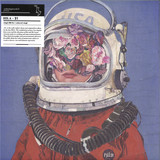
"21" is the well-crafted, sharp and original first album by the duo HILA, composed by American cellist Artyom Manukyan (who already worked with Kamasi Washington, Daedalus, Flying Lotus, Run DMC, Gretchen Parlato, Raphael Saadiq, Clive Lowe Mark...) and french producer Dawatile.
The combination of jazz, Los Angeles beat-scene and the vibrations of 80s and 90s Soviet Armenia make it a striking and unprecedented fusion. These kind of nostalgic and unconventional references forcefully shake the codes of mainstream culture to create a sincere, raw and intimate expression.
"HILA" was born from a spontaneous and intense creative impulse between Artyom Manukyan, a Los Angeles-based Armenian celloist and his partner in crime, David Kiledjian aka Dawatile, a French multi-instrumentist of Armenian descent. This project is proving to be a true master stroke given that it only took 21 days for the duo to make it a reality.
"HILA" was made in less a moon cycle but captivates and electrifies audiences upon its first outings. "H.I.L.A" colors the warmth of the Californian "High" with Armenian vibes. The artists chose this name for their creation since both have a close and valuable connection to these locales. This journey began in 2007, on the day Dawatile went to Yerevan, the capital of this small country in the Caucasus mountain to realize a first fusion project centered around local folkloric music genres.
There he was introduced to local musicians including the Armenian Navy Band, one of the country's foremost groups in which Artyom played the bass and cello. In this context, he also met many musicians such as Tigran Hamasyan and Norayr Kartashyan. This will be the beginning of connections between Lyon, Yerevan and Los Angeles. The following year, the two artists will be be seen performing next to Taylor Mc Ferrin at the Jazz à Vienne festival. More recently, they partnered up again when the cellist, who had freshly relocated in California, invited Dawatile to produce his album. As soon as the studio’s threshold was crossed, they decided to postpone this record and create a joint project: Hay (as the Armenians call themselves) / High In Los Angeles. HILA was born at the end of these 21 days of intense creation. The association of Artyom Manukyan and Dawatile is the combination of two visions, two versions of Armenia, two personalities, the reunion of the Eastern and Western blocs.
One grew up nurtured by the sounds of hip-hop and jazz in Europe and the other by art music and Russian-influenced 1980s Armenian folkloric music before moving to L. A., Ca. The cornerstone of it all, the glue that unites everything : Armenia and music. They generate a new identity synthesizing two perceptions, their complicity transcending these cultural discrepencies. To achieve this, they will scour through images of Artyom’s childhood, within the popular culture of Soviet Armenia. Together, they revisit this decidedly retro vibe, based on the work of Caucasian groups inspired by African American music. This background is rehashed and fused with ancestral Armenian sounds. The DNA of the album "21" is molded by these dear influences.
We can also hear the ancestral sounds of Armenia, a country at the edges of both Europe and Asia. The presence on two tracks of Armenian music Master Norayr Kartashyan, infuses the languor of past melodies and traditions. These purposeful anachronistic sounds offer a fantastic depth to this powerful opus. Listening to the album, one can appreciate the successful fusion of styles and influences. Those combinations, however, manage to preserve individual identities only to enhance the art through an adamant musical dialogue.
Being driven by the urge to transpose Armenian musical traditions into a unique universe, the daring artists, offer an innovative combination by blending, for the first time, these ancestral sounds with the world of Los Angeles beat-scene and jazz. An invention largely fueled by the magic strings of Artyom and maestro Miguel Atwood-Ferguson, a pillar of the genre in Los Angeles combined. These associations resonate with a triumphant equilibrium. HILA is musical uncharted territory in which Artyom's cello strings intertwine to ignite the harmonies of keyboards, the machines, the vocals and electronic layers Dawatile pieced together. HILA plays the soundtrack of an adventure set between Armenia around the end of the Soviet era and a mysterious near future.
Artyom Manukyan grew up in Armenia in the 90s. At the time, he studied Russian classical music while learning jazz with assistance by his father, a music journalist. Being an unconditional music lover, he went on to sharpen his skills at the prestigious Berkelee College of Music. Subsequently, he’s been lucky enough to travel the world touring with numerous acts and mainly with the Armenian Navy Band. The group has fostered alacritous success honored by a BBC Award as a crowning achievement. He moved on 10 years ago and made his way to L.A. with his cello on his back. In the City of Angels, he quickly became a popular figure of the jazz and hip-hop scenes thanks to his first album "Citizen". He’s accompanied prestigious musicians such as Kamasi Washington, Melody Gardot, Daedalus, Flying Lotus, Run DMC, Gretchen Parlato, Raphael Saadiq, Clive Lowe Mark, or Vulfpeck. He released his solo album on the cello, "Alone" in October 2019.
Dawatile is a bold producer and multi-instrumentist as well as a passionate and resolute musician molded by jazz. As a versatile artist, he handles and juggles the saxophone, the keys, the bass and composition. Simultaneously, Dawatile produces cross-over projects and soundtracks for the movie industry. He, as well, has had the opportunity to be a part of many tours, including with his electro hip-hop band, Fowatile and more recently with the "Future Kreyol" trio, Dowdelin. Being the ever workaholic, he has under his belt a string of prestigious collaborations with the likes of Talib Kweli, Foreign Beggars, Roy Ayers, Tigran Hamasyan, Mathieu Boogaerts, Voodoo Game and Piers Faccini. His taste for developing new musical recipes and his know-how in production make him a much sought-after album producer. In concert, the HILA duo offers a sober, precise and rhythmic performance. "21" is an aerial and lively album taking the audience on an at times joyous and sometimes melancholic dreamlike journey. The magic of "HILA" operates at the speed of light and positions it already as an avoidable group.
Wah Wah 45's are proud to present "Cages", the third album from southern soul boys The Milk. Having released "Favourite Worry", their critically acclaimed sophomore album and first for independent label Wah Wah 45's, in 2015, the band are able to trace the seeds of the latest LP back to their recording sessions with producer Paul Butler (Andrew Bird, Michael Kiwanuka, Nick Waterhouse) almost five years ago, blending elements of soul, funk and rock together to create their own unique sound, inspired by some of their favourite artists such as Bill Withers, Traffic and the Isley Brothers.
"I can't wait to hear you write songs that look outward" - these words from Paul subconsciously had a lasting impression on the band. To atone for more inward-looking sentiments on "Favourite Worry", there had to be a shift in perspective. During the formative stages of the new album The Milk started pursuing a Nichiren Buddhist practice. The values and principles they discovered during this have informed every aspect of the record.
"We wanted to write an album that looked outside of the walls, to people, society and the environment - embracing real freedom in musical expression by utilising more complex rhythmic structures, extended harmony and dissonance to paint an original and authentic-sounding record" explains If their debut, "Tales from the Thames Delta", was inspired by hedonism and "Favourite Worry" by introspection, "Cages" is an impassioned conversation with the world. Racism and division are all on the rise. British society is being pulled apart by forces that seek to divide us and rip the compassion and empathy from our minds and hearts. We have become distracted from the more urgent challenges of boundless consumerism, climate change, and the mental health emergency reeking havoc on our streets.
We are the birds in the cage, tied by cheap thrills and fake news to a limited world vision that is no longer fit for purpose. The good news? We can all choose to challenge this view. "Cages" is equal parts the dark black shadow of how far we've fallen and the blazing sunlight whose rays of hope can still change the world. Four life-long friends, Ricky Nunn (vocals), Mitch Ayling (drums) Luke Ayling (bass) and Dan Le Gresley (guitar) formed their first band when they were still at school in Essex, playing countless working men's clubs, and finally became The Milk.
The band have built up a following of dedicated fans around the UK, which has resulted in them selling out venues such as Scala, Koko and Shepherds Bush Empire. Keen to get back on the road where they feel most at home and where the guys really shine, the band offer up a compelling set of diverse styles, matched with an ability to effortlessly intertwine songs together, gives their music a continuous feel to it. Since signing to Wah Wah 45's, the band released their second album "Favourite Worry", which became one of BBC 6 Music's albums of the year, sold out London's Union Chapel, toured with the Fun Lovin' Criminals and completed a sell-out UK tour climaxing at London's KOKO in Camden town. ... More live dates coming very soon!
Matasuna Records starts the new year 2020 with a brilliant release, featuring two contemporary tracks by Paris based Afrobeat band Batunga & The Subprimes, available for the first time on vinyl.
Batunga & The Subprimes was founded in Paris in 2009 by musicians from different backgrounds, united by the will to mix traditional African music with other elements (Latin, Jazz, Second Line and even Rock) and to bring this explosive mix on the streets & on stage. After many shows all over Europe and beyond, their first official album Man in the Field was published in 2017, followed by their EP Let dem In in late 2019. Matasuna has chosen two extraordinary cuts of these self-released albums to release them on vinyl for the first time.
Gates Of Ouantou from their EP is a great tune that sets the bar for contemporary Afrobeat and has all the ingredients for a timeless classic: the arrangement, the instrumentation and the interplay of the seven musicians in the song are excellent and will immediately draw you into its spell. A real gem and great tune!
Man in the Field on flipside is a cut of their first official album. Unusual is the use of a banjo in an Afrobeat song but not surprising that this fits in very well and also shows that classical structures can be broken up and developed in a new approach/context. Another great piece of this extraordinary band that has been operating under the radar - until now!
When was the last time EDMX served you what you expected? Maybe you drop the needle down in anticipation of some slick boogie-inflected synth pop and get walloped in the face with hellfire techno. Perhaps you were itching for body-popping electro and got cerebrally hijacked by pagan coldwave.
On this latest magnum opus, his first on Queen Nanny. Ed Upton is in the mood to get down low in every sense of the word. On the frequency range, this is a record dripping with lard-fed bass at every turn. The arrangements too are devilishly low in channel count – raw riddims with just a few key ingredients to do the necessary damage. Then there are the tempos, which predominantly set cruise control at 90 BPM and glide.
It’s not hard to tell where EDMX’s inspiration has sparked from on this album – in the spirit of celebrating the compatability of oddball sonics from all corners of the globe, he’s patched his sound into a specific vibe and struck gold with some of the most distinctive riddims you’re likely to hear all year.
Visible Spectrum is the newly launched creative playground of Yuri Boselie, also known as Cinnaman. Since donning the Cinnaman alias nearly two decades ago, he’s become a well known figure of the Amsterdam nightlife scene with long running residencies at the city's most lauded clubbing institutions like Club 11, Trouw and most recently De School. Next to his DJ sets, he's made early moves in label curation with A&R work for Rush Hour and Kindred Spirits offshoot Nod Navigators, and with his own Beat Dimensions compilations in the late 00s. With Visible Spectrum — defined as the electromagnetic frequencies visible by the human eye — a new chapter is born. It is an outlet for electronic music in the widest sense. Each sleeve will have its own unique screen printed artwork by Marilyn Sonneveld.
The first EP comes from Mor Elian, the Berlin based artist and owner of the Fever AM label. Here she offers the loose and hypnotic rhythms of 'Clairvoyant Frog' which is deep and atmospheric, like some sort of primordial techno soup. 'Shoshana's Roses' then picks up the pace with layers of rumbling drums, wooden hits and snaking synths taking you into a steamy, humid jungle before closer 'Planet Kismet' is a much quicker and more urgent bit of enchanting break-beat techno with pummeling minimal drums and warped synths and perc getting you under their sci-fi spell. A fascinating first outing that sets a high standard from the off.
- non-gatefold sleeve without 7"
Rush Hour announces their second artist compilation Patchwork, curated by one of the label’s most loved family members, Sassy J. The Swiss DJ is the very embodiment of passion and long-standing dedication to the craft of the DJing, but also to the community surrounding the music that she lives and breathes. For the past fourteen years Sassy J has run the Patchwork night in her native Bern and in London, with guests ranging from Theo Parrish and Little Dragon to Floating Points and MF Doom invited to share their respective musical visions. Her collaborative approach stands out in a DJ world that is too often weighted in favour of promoting the individual. This compilation grows out that unique sensitivity, foregrounding a theory of curation that centres on long-term bonds, articulated through Sassy J’s personal relationships with the contributing artists.
Patchwork speaks to the grass roots values that Sassy J espouses, showcasing music by many of the artists that have joined her throughout the years in clubs, on the radio, and at home. It is an expression of Sassy J’s individual musical path that casts its gaze firmly in the future: Patchwork is made up almost entirely of new and unreleased songs that are exclusive to this collection. Patchwork captures a sound that has continued to evolve in its restless search for new musical directions. Across thirteen tracks we find forward thinking electronic music rubbing elbows with cosmic jazz and deep percussion workouts from Brazil and beyond.
There are irresistible calls to the dancefloor: 2000 Black’s UK boogie and the syncopated rhythms of WaH-chU-kU nod to the West London sound, whilst the early rave of Nu Era and Aardvarck’s sub-rattling techno channel the grittier edges of the club experience. We find machine music imbued with humanity in Larry Heard’s deep house classic “Survivor” and in Ron Trent’s WARM project, whose gentle breeze points to a different side of the legendary producer. Patchwork also opens a more immersive listening space in which the radical indie soul of Georgia Anne Muldrow, the ambient spiritual jazz of bandleader Carlos Niño & Friends, and the lament for the Amazon rainforest by Azymuth’s drummer Ivan Conti can channel the overall spirit of group interplay and solidarity. Patchwork also includes Sassy J’s collaboration with veteran producer Alex Attias, marking her own place in a universe that is held together by her singular thread.
"This is the compilation of the year!" - DJ Spinna