Cerca:uni son
- A1: Infinite Nuggets
- A2: Fun Is Always Brilliant
- A3: Employee
- A4: Springfield Library Haunting
- A5: Drumming On A Tree With Fm
- A6: Potatoes In The Basement Bin
- A7: Fungal Free 2023
- A8: Green Stuff
- B1: Architecture Days
- B2: Munchies And A Pen
- B3: Guildford Awkward
- B4: No Pavement Story
- B5: Worst Jobs In History
- B6: Unfinished Rock ‘N’ Roll Tattoo
- B7: A Bit Of Paper
- B8: So Inspired, So Done In
8-page lyric / drawing booklet, glossy poster, download card (inc. mp3s), white inner paper bags, sticker on cover.
After 7 strange years of relative silence, and 13 years of being a band, Dog Chocolate have returned with ‘So Inspired, So Done In’. Their fourth album is their most focused, cohesive and song-y yet. They still sound like a bin full of wasps, but now the bin has double-cream or a Viennetta or something at the bottom. While many of the 16 songs on here barely make it past the 3-minute mark, each one is bursting with all the textures and colours of an office cupboard: full of old sweets, fluorescent markers, and multiple ways to fix paper together.
Thematically, a lot of ground is covered, with songs tackling subject matter as diverse as overheard conversations, healing fungal toenails, the Rogerian concept of the Actualising Tendency, bronze age living conditions, dreaming songs into being and human-plant relations. Work (and anti-work) is a recurring theme, as is artistic inspiration and burnout. Dog Chocolate revel in the mundane and incidental, to explore bigger, existential questions. Recorded and mixed by POZI’s Toby Burroughs and mastered by Sofia Lopes, ‘So Inspired, So Done In’ charts a long and confusing period in the band’s collective life, marked by major life changes, losses and shifts, colouring the band’s trademark frantic, daft and anxious energy with a contemplative glaze. Dog Chocolate continue to investigate their internal and external landscapes with playful curiosity, frustration, silliness and empathy.
Pre/history of the band: In the early 2000’s Andrew (vocals), Rob (guitar, vocals) and Matthew (guitar, vocals) played together as teenagers in South-East London-based maximalist, costumed surrealist punk band Yeborobo. They met drummer Jonathan playing with his instrument-swapping masked band Limn at art space Utrophia in Deptford. Later, when both bands had split, Dog Chocolate formed with a shared desire to make a band that was simpler than their theatrical past: small amps and light guitars, no more than 2 drums at any one time, a keyboard no longer than a ruler and a shared ethos… “it’s about giving a shit, but at the same time not giving a shit, but not ‘whatever’, not giving up never!”. The band floated the term “pencilcase punk” to describe their jumbled, colourful, dense and instant music.
Dog Chocolate built on this early scrappiness, bedding into their sound over several albums. Their first “Or” (2014) was a split with Ravioli Me Away, soon followed by “Snack Fans” (2016) and “Moody Balloon Baby” (2018). Along the way they played gigs with bands as wide ranging as Deerhoof, No Age, Dry Cleaning, Palm, Daniel Wakeford, Shopping and Pozi.
With a tendency to converse with each other both lyrically and musically cultivated over many years, the members of Dog Chocolate bounce off each other, respectfully disagree, try to make each other laugh and share some of their most vulnerable feelings with each other. ‘So Inspired, So Done In’ is their own unique offering during these unsteady times: a language of friendship translated into songs.
Debut by a new string trio of Pelt and Elkhorn veterans with the wild card contributions of Kaily Schenker, creating a new variant of supremely pleasing acoustic-psychedelic-drone-Americana etc. “Lullaby>Summer Field” is an aptly named gentle rise, with Sheppard’s fingerpicked 12 string snaking through waves of elongated fiddle and cello. “Triode>Freedom” follows a darker minor-key ostinato with Gangloff’s keening melody over the top. “Freedom>Universal Blues” starts as a dirge and builds to a transition into the traditional “The Squirrel is a Pretty Thing,” with Kaily Schenker’s droning harmonium and vocal delivering a riveting, epic version of what’s usually cast as a short “kids”/folk-tale song (e.g. Peggy Seeger’s version). Originally this album was released by the band in an instantly sold-out edition of 100 for sale at their shows. This updated version includes a new insert by Kaily, a new cut by John Golden and a thick pressing from Smashed in Chicago.
- A1: Bobby Hebb - "Hard Hard Promises
- B1: Alice Clark - "Hard Hard Promises
The Song “Hard, Hard Promises” showcased on this latest Soul Direction release, showcases Bobby Hebb’s song writing talents and brings together the album only release performed by
Alice Clark and the Unreleased demo version sung by Bobby Hebb himself. Incidentally the studio dub was entitled “Hard Heart Promises”. We don’t know if he ever intended to release the song himself, but it showcases his talent as a songwriter and a singer. After a few conversations with Universal Licensing, they graciously allowed Soul Direction to release this version and with the consent of Bobby Hebb’s Publishing Company. To both these, we are extremely grateful. Thank you for your continued support.
Impatience is thrilled to present Leaving Memory, the latest album-length work by Piper Spray and Lena Tsibizova. Leaving Memory is a searing distillation of the duo’s ouevre - it’s eleven prismatic electronic seances combining for a mind warping wormhole with it’s own internal (il)llogic, where pop, ambient, and industrial music convene beneath a rugged HD of digital processing and brain fog. Equally rosy with nostalgia as it is ominously forward looking, Leaving Memory defies easy categorization and makes for an astounding, confounding listen.
By turns violently abrasive and disarmingly touching, Piper and Lena deploy sounds that fracture and disintegrate, burn up and explode, synthetic supernovas that give the record an unmistakable, inimitable texture. Song structures often abide by their own blueprint - heading in one direction before making an abrupt dive elsewhere. Bursts of vibrant colour lurk below layers of grayscale noise. Unidentifiable voices deliver secret messages from the murk. When rhythm’s emerge they ground the tracks to some unknown terrain and invigorate.
Lame Line veers towards the sweeter end of their spectrum, a hazy plaintive repetition increasingly lashed with friction, before Exit erupts with clanging rhythm and shards of distortion. Diagnosis is an almost sweet alt-pop song, Lena’s vocals yearning beneath a dubby shuffle, while Keeper Of The Void’s possessed incantations open up to a ripping, fried climax. Beryl Grey releases the pressure gauge, a gently lilting drift arpeggiating as the sun sets, and Lost Cars sweats through claustrophobic drones and bird song before the clouds part on a serene scene. Leaving Memory closes with Shin, offering a genuinely sweet resolution and a gentle landing back down to earth of either footsteps or fireworks, swelling synthesized horns and woodwinds, a kiss on the cheek for making it out the other side.
On Leaving Memory, Piper Spray & Lena Tsibizova share their uniquely discordant take on freaky music for unsettled minds, an intensely energized set that offers a deeply evocative, unimaginable otherworld for adventurous ears.
Piper Spray and Lena Tsibizova have been producing music together since 2020. Leaving Memory is the first to be presented in the LP format. Piper has previously released music via Orange Milk, Hausu Mountain and Gost Zvuk, as well as his own Singapore Sling Tapes label. Lena works predominantly as a photographer, and together Piper and Lena have released music via radio.syg.ma and Kartaskvazhin. Both make music as part of Air Krew, who have released music on the Echotourist and Motion Ward labels. They’re both currently based nowhere.
Leaving Memory was written, produced and mixed by Piper Spray and Lena Tsibizova, and mastered by Sergey Podluzhniy. Cover photo by Lena Tsibizova, design and layout by Justin Sloane.
French artist Trypheme debuts on Impatience with “Odd Balade”, a darkly-hued collection of songs drawn from human delicacy and dreamworld mythology.
“Odd Balade” is Trypheme’s most ambitious and boldest record to date - both lyrically and musically. The album’s thirteen tracks resist rigid genre boundaries and flutter from medieval folk realms, sprawling synths, gothic 80s wave, leftfield pop, haunted vocals, mutant electronica to reverbed guitars - all reflected through her own shadowy prism. Especially album closer “A Walk In The Vercors” evokes a soothing serenity that echoes the sonic balm of Julee Cruise.
Trypheme’s musical repertoire trends heavily electronic and somewhat abstracted, but on “Odd Balade”, the artist slips into the role of the modern troubadour with a shift to a more poetically and personal songwriting that is infused with symbolism and dreamlike fantasies. The connective tissue of the album is the audacity to love and the vulnerability that ensues. As intimate and introspective as the lyrics are, the themes remain universal and human to the core: the fear of losing a loved one, the melancholia of leaving places and t“the fear of losing a loved one, the melancholia of leaving places and the cycles of life. The record was largely composed in Chars, stirred by the French village’s eerie atmosphere and frequent trips to the seaside in Brittany, where Trypheme resides. Drawing inspiration from the rugged terrain of the seaside landscapes, the writings of Allen Ginsberg and Mark Fisher and the hyperrealist art of Scott Prior, Trypheme uses her songs to depict life with broad strokes of rhythm.
On “Odd Balade” Trypheme consolidates herself as a gifted, nimble songwriter, masterly producer and subtly powerful vocalist. The record combines her skill for crafting lush, alien sound worlds and efficient, alluring arrangements with stealthily devastating songs. Belin’s voice becomes a key ingredient, appearing on eleven of Odd Balade’s thirteen tracks, by turns heavily manipulated, sampled and replayed as a form of percussion, or basically bare.
“Odd Balade” is the manifestation of Trypheme’s roving artistic practice, a ceremonial-grade sacrament cast in a rich nocturnal glow. Pairing the mundane with the mythic, the album stays true to its core: odd and strangely familiar.
RIYL - Riding off into the sunset to an unknown destination, hauntology, present, tales told by the fireside, hot summer rain, adventures, to feel a warm presence when you are walking in the forest or in the mountain, coastal landscapes, sailor’s stories, slow motion, vitesse, heavy blossoms, colors, the warmth of the sun, the tenderness of the moon, getting lost in unfamiliar streets, city’s lights, motorway rest area by night, magic numbers, rendez-vous, picnic, serendipity, poetry, the smell of old records and old books.
Tiphaine Belin has been releasing music as Trypheme since 2016. Odd Balade was written and produced by Belin, and mixed by Belin and Abel Roux. It was mastered by Amir Shoat. Cover art photography is by Ariane Kiks, with art direction by Ariane Kiks in collaboration with Mathilde Chaize.
- A1: El Nuevo Montuno Llego
- A2: Llamé A Chango
- A3: Monina Y Ramon 4:00
- A4: Balanceate 6:50
- B1: Triste Arrabal
- B2: Me Queda Un Guaguanco
- B3: Dichoso 3:30
- B4: Oye Tu Son Borinquen
Roberto y su Nuevo Montuno recorded their first album, “El Nuevo Montuno Llegó” (1970), when Roberto Berríos was just 22 years old. This was also the debut release on Haddock’s own Uniart label. Berríos remembers that they did the recording in two sessions, splitting it up into four tracks per visit. The engineer was the famed Pedro “Pedrito” Henríquez, who recorded El Gran Combo, Roberto Roena and many others. The band had a mix of tasty, powerful originals, from Tony Cintrón’s title track that announced the band had arrived, ‘El Nuevo Montuno Llegó,’ to Quique Dávila’s mournful ‘Triste Arrabal.’ Then there was the hit Santería themed tune, ‘Llamé a Changó,’ which was a song that Quique Dávila brought to the band, but had been originally composed by Carlos Pinto, though Quique was given the credit. Dávila also composed ‘Me Queda Un Guaguancó,’ which is Roberto’s favorite song on the record (as well as a fan favorite), with Papo sounding like his friend Héctor Lavoe, and Quique Dávila’s proud manifesto declaring that Puerto Rico now had its own son montuno, ‘Oye Tu Son, Borinquen,’ featuring the pianist’s tasty but brief solo. The cover versions came from the group’s earliest period when most of their repertoire consisted of renditions of beloved but lesser known tunes, and include Louie Ramírez’s ‘Balancéate’ (a favorite of Roberto’s from Ray Barretto’s songbook), Bobby Valentín’s ‘Monina y Ramón’ (recorded during his stint with Willie Rosario), and a bolero indelibly sung by Cheo Feliciano when he was with the Joe Cuba Sextet, ‘Dichoso,’ written by Joe Cuba’s talented pianist, Nick Jiménez. Some of the arranging was done by Cintrón and some by Dávila, though Quique had some help from his old friend from El Combo Moderno, Freddie Miranda, who at that time was with Roberto Roena’s Apollo Sound. Roberto says that the arrangements of the cover tunes were made specifically to be different and more contemporary sounding than the originals. “El Nuevo Montuno Llegó” has become a legendary salsa dura classic from Puerto Rico and we are thrilled to present this first legitimately licensed and remastered vinyl reissue. It includes detailed liner notes that reveal the untold story of the band and their debut album, and rare photos.
Nachdem Ásgeir jahrelang mit Übersetzern wie John Grant zusammengearbeitet und die Poesie seines Vaters, Einar Georg Einarsson, vertont hat, betritt er nun neues Terrain: Zum ersten Mal in seiner langen und gefeierten Karriere hat er die Texte komplett selbst verfasst.
Ásgeir wird seit Langem für seinen detailreichen Folk-Pop, die opulente Produktion und sein sehnsüchtiges, gefühlvolles Falsett gefeiert. „Julia“ markiert eine Wende – nicht nur hin zu lyrischer Eigenständigkeit, sondern auch zu kathartischer Direktheit, mit Songs, die nicht nur meisterhaft vorgetragen, sondern auch durchlebt wirken. „Das war irgendwie das erste Mal, dass ich die Texte völlig allein geschrieben habe“, erzählt er. „Es war beängstigend. Ich versuche immer noch, mich darin zu finden. Aber ich habe versucht, mich zu öffnen, und habe in diesem Prozess viel gelernt. Es war auf jeden Fall therapeutisch für mich.“
Dieses neue Gefühl der Verletzlichkeit zieht sich durch die zehn Stücke des Albums, die über einen Zeitraum von fast zwei Jahren geschrieben und aufgenommen wurden. Viele der Songs entstanden zunächst auf der Gitarre, wobei Ásgeir auf Schlichtheit setzte und Melodie, Klarheit und Bedeutung in den Vordergrund stellte. Die Produktion, gemeinsam mit seinem langjährigen Weggefährten Guðm. „Kiddi“ Kristinn Jónsson entwickelt, bleibt organisch und zurückhaltend – und gibt so Ásgeirs Stimme, und vor allem seiner Stimme als Songwriter, den nötigen Raum.
Der aus Nashville stammende Cellist Nathaniel Smith, den Ásgeir als „Zauberer“ beschreibt, steuert hier und im gesamten Album atmosphärische Klangteppiche bei. Mit improvisierten Melodien verleiht er den Stücken Leben und Tiefe – auf eine Weise, die Ásgeir sich zuvor nicht vorgestellt hatte.
There’s an alternate reality where everyone makes a living wage and the cleanest buses you’ve ever seen arrive every other minute. Where the most intense songs are about confessing your love to a crush at the apple orchard, and where gentle feelings and chaotic energy are inseparable best friends. This is the timeline where Cootie Catcher is right at home. This Toronto based four-piece exudes both vulnerability and unbridled excitement, creating a sound that hypercharges the open-hearted tenderness of twee pop with spiraling synths and giddy electronics. New album Something We All Got is the clearest and most vibrant reading of Cootie Catcher’s vision yet, with songs of sweetness, nervousness, and expectancy that beam out unguarded.
After releasing music made primarily in basement recording environments, Something We All Got is the band’s first flirtation with studio recording. The edges are still sharp, however, with some parts assembled from time-honored lo-fi methods and fun, personally-sourced samples seeping into the production. The sound is explosive and upbeat, with euphoric guitars, bubbly synth lines, speedy drums both played and programmed, and all other manner of sound constantly colliding. Cootie Catcher has three songwriters, Sophia Chavez, Anita Fowl, and Nolan Jakupovski, all of whom have distinctive voices but still manage to overlap in their writing on shared concerns like navigating the lines of romantic and platonic relationships, their city’s social scenes, and struggles in both the microcosmic experience of playing in a band and the zoomed-out challenges of living through late-stage capitalism.
Joy still touches every surface of Something We All Got. “Quarter Note Rock” bounces around the room in a fit of jangling guitar chords, scratched samples, and interplay between breakbeat loops and somersaulting live drums. It’s a blast of positivity even with lyrics about how disappointing it can be to meet your heroes. A smiling electro pop instrumental supports lyrics about having to step painfully away from an almost realized love on “Gingham Dress,” a song that subverts themes of domesticity as a backdrop for the dashed wilt of hopeless devotion.
Cootie Catcher rolls down hills and jumps through flaming hoops throughout Something We All Got without ever dumbing down the visceral emotions that drive these songs. There’s a palpable tension between the band’s exhilarating sonics and the raw, often uneasy sentiments expressed, but it’s an integral part of what makes them unique. Rather than hide behind the kind of calculated vagueness that plagues so much of the indie rock landscape in the time of cursed algorithms, Cootie Catcher runs full-speed toward every confusion and excitement, fearlessly direct and embracing the reality they’re in.
- A1: Night Birdy
- A2: Indian Summer
- A3: Feel Like A Grass, Touch Of Grass
- A4: In The Flash
- B1: Wordless
- B2: Sunrise Sunset -Naked Version
- B3: Tonight, I’m Yours
- B4: Everyday, Under The Blue Blue Sky
MariMari’s debut album “Mimitomesoshiteecho”, originally released in 1997, is finally getting its long awaited analog reissue.
Known for being fully backed by members of Fishmans, this work centers on MariMari’s vocals, which combine transparency and fragility, layered with
the floating, organic ensemble reminiscent of the Fishmans sound a truly unique album that deserves recognition across generations.
For this reissue, UK cutting engineer Dave Turner, who also handled the latest Fishmans reissues, took charge of the cutting process.
The original master’s charm has been maximized while optimizing the sound for today’s listening environments, bringing the album back to life with a
fresh sonic image.
“From Birmingham and centred around the extraordinary songwriting talent of James and Patrick Roberts – initially as The Sea Urchins and since 1993 as Delta – they’ve only just got round to releasing their debut album, Slippin’ Out. It is a work of some beauty”. 9/10 NME ALBUM OF THE MONTH, 2000
“It’s classicist for sure, shot through with the influence of The Beatles, Byrds and Buffalo Springfield. In James’ downright beautiful closing ballad ‘I Want You’ one can also discern the school of ambitious English balladry that peaked in about 1968: The Casuals, Love Affair, Barry Ryan. The impression of accomplished old-schoolery is only furthered by the dizzying string arrangements penned by Louis Clark Jnr, son and namesake of the one-time orchestral chief of Electric Light Orchestra” – Mojo lead review, 2000
Having ended the 90s with the spirited ‘Laughing Mostly’ compilation of singles and demos (Guardian Album Of The Week) Delta finally released their debut studio album of twelve songs in the summer of 2000 on the Dishy Recordings label. Accepting that this might be their sole studio album the band threw everything at these recordings allowing it to exist in its own sphere, unbothered by their contemporary generation and disregarding the idea of even releasing a single.
Recorded at DEP International there was a notable difference to the scruffier, looser charm of their 1990s recordings, a tighter focus developed by having the experienced Lenny Franchi mixing the LP with them. Lenny had been working with a number of Island artists including My Bloody Valentine and Tricky so knew his way around a desk. There was also the question of budget (a few months passed between recording and mixing whilst funds were raised) so every day counted. Ultimately though you can hear the joy in the recordings, even amongst the melancholy and angst. As James recently recalled in an interview in Shindig! Magazine: “It was such a big deal for us. It’s one of my fondest memories doing that record. Everyone was happy. If there’s anything that I’d stand by, I think it would be that”
Louis Clark Jr joined the band towards the end of the ‘90s and brought a classically-trained element to the recordings particularly with his string arrangements. For ‘Cuckoo’, ‘I Want You’ and the prophetic ‘We Come Back’ Louis brought in eight players from the Birmingham Conservatoire; the baroque style is partly why the record often receives comparisons to Love’s ‘Forever Changes’.
On release ‘Slippin’ Out’ was a big favourite with writers at the NME, Mojo and The Guardian again and before long the band were signed to Mercury/Universal for their second studio album ‘Hard Light’, a far more expensive and expansive love affair. It was a temporary palatial home where things quietly fell apart again, but that’s another chapter.
“If long-term memory is nothing more than selective editing and only pop’s most weighty visceral works are built to last then it’s quite possible that in 50 years the Britpop era will be best recollected for the two bands it ostracised. Earlier this year we met Shack and thought their story of mercurial brilliance indicated the biggest music biz oversight of the 90s. We were wrong because we hadn’t met Delta yet. This is richer and more engrossing than anything by Shack”
Bettye Swann possessed one of the most emotive voices in soul music’s cannon but her recording career was that of a shooting-star; it blazed at the start, then illumined brightly before abruptly dissipating, all in just eleven years. In 1975 she ceased recording, moved to Las Vegas and retired her Bettye Swann persona.
The Louisianan Betty Jean Champion had relocated to Los Angeles as a young woman where in around 1964 she was introduced to Al Scott, owner of Money Records. It was her fourth Money 45 “Make Me Yours” that propelled Swann into the stratosphere. One of the defining songs of the era, it was her pathway to Capitol Records with whom she signed in 1968.
By 1972 Bettye was at Atlantic Records. The initial Atlantic 45 “Victim Of A Foolish Heart” b/w “Cold Day In Hell” recorded at Fame with Mickey Buckins and Rick Hall, made for a promising debut reaching #16 on the Billboard chart. It was followed by Bettye’s version of Merle Haggard’s “Today I Started Loving You Again” and “Til I Get It Right”, a gentle country-soul labour. “I’m Not That Easy To Lose” also dates from those sessions.
In an attempt to broaden her appeal Atlantic sent Swann to Sigma Sound in Philadelphia where she cut Phil Hurtt’s’ and Tony Bell’s “Kiss My Love Goodbye”, “Time To Say Goodbye” and “When The Game is Played On You”. Her fortunes continued to wane so Swann was next placed with Nashville producer Brad Shapiro. The results were artistically stellar and included three unissued gemstones in The Isley’s “This Old Heart of Mine”, a definitive version of Maxine Weldon’s “I Want Sunday Back Again”, and “Either You Love Me Or Leave Me”.
- The Silver Key
- The Crosshair
- Rooftop
- The Child In You
- Return Of The Reapers
- The Trickster
- I Lit A Light
- The Rifleman's Wedding
- As I Dive
- Beginning Of The End
- Shared Fate
With `The devil's door' And Also The Trees, one true original Post-Punk/New Wave band, presents a quiet storm of an album. At times filmic, poetic and intense with an undercurrent of dark psychedelia. It completes a trilogy of works `The Bone Carver', `Mother-of-pearl Moon' and now `The devil's door' created by the current line-up. Here there are signature `And also the trees' poetic lyrics, orchestral guitar and soundtrack influenced songs inspired by newsreel, oil paintings and folklore. But with this work we have the addition of some surprising instruments that skew the album towards a world where John Barry meets Bela Bartok. And also the trees (AATT) formed during the original post-punk era in rural Worcestershire, an environment that has provided a constant inspiration to a group whose music has often explored the dark underbelly as well as the beauty of the British countryside. They are renowned for their captivating live performances, a unique style of mandolin-like electric guitar, evocative lyrics and dark jazz rhythms - not to mention a creative independence fiercely preserved for over four decades. Back then AATT immediately caught the attention of Robert Smith of The Cure, who invited them to tour with his group on several occasions. Smith was also involved with their early recordings alongside his bandmate Lol Tolhurst, who produced their first records. This longterm friendship and mutual respect was further solidified when AATT were invited to perform at the Robert Smith curated 2018 Meltdown festival in London. This July AATT appear as The Cure's special guests at the Nimes festival. Founded by singer Simon Jones and his guitarist brother Justin, AATT have maintained a continuous presence on the post-punk, and alternative rock scenes worldwide, with a solid fanbase e.g. in Germany.
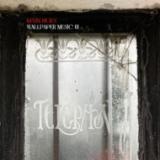
Pink Must is the duo project by Brooklyn based sound artists and musicians Mari 'More Eaze' Rubio and Lynn Avery. This self titled album is the debut release under the Pink Must umbrella.
Based on a long-standing artistic chemistry and shared love of genre-defying sounds, Pink Must started off as a remote grunge collaboration, with demos shared long-distance between New York and Texas. Over time, and especially since uniting in Brooklyn in 2023, the project evolved into its own animated soundspace, connecting raw imperfect textures with classic songwriting and a playful approach to both track instrumentation and lyrics.
The duo's production blends richness, glitches, and dissonant layers with drum and string arrangements in ways that subtly hint at influences like Stina Nordenstam and PJ Harvey. The record is tangled yet direct: fictional sketches of various situations, songs about love, change, decay, and even Mari's dog, Keith—all wrapped in signature guitar dreams and deadpan vocal lines.
From out of nowhere comes a unique collaborative album from Edvard Graham Lewis (WIRE) & Mark Spybey (ZOVIET FRANCE). Mixing lush electronic rhythms, sonic collage, ambient soundscapes and manipulated field recordings, these six compositions form an album with a strong identity. That this is such a vital and fertile partnership should come as no surprise. After all, both men have made careers out of creating confidently questing musics. Lewis with Wire, He Said, Hox, Dome etc. and Spybey with Dead Voices on Air, Beehatch, Altered Statesmen, Zoviet France and so on. This new album however, is something different again: experimental, yet tightly focused, and not averse to the groove or the sly hook. The pair met via an appearance on a podcast in November 2022, hosted by cEvin Key of Skinny Puppy. They hit it off immediately. “We did a live chat with Graham - which I think, went on for about three days” jokes Spybey. It was Spybey who first broached the idea of collaboration. “It was a bit like shy bairns get nowt: I just said ‘maybe we should make something together.’” And so, with no plan other than to see what might develop, the duo began to assemble the compositions at long distance. Indeed, Lewis and Spybey only met in the real world after the album had been completed. “Mark sent half a dozen tracks in a stereo mix,” says Lewis. “And I looked at the ’topography’, to see where the spaces might be. So then I’d add to those areas. But then, when do you take it away? Sometimes you let it drop off a cliff, land in the shingle, and it gets washed out to sea again.” The process moved at a pace. “Almost everything each of us brought, ending up being incorporated in some way.” Says Spybey. “We didn’t really go down any cul-de-sacs.” As Lewis observes “We have such a sympathetic tone.” Full of inventive sonics that draw on both men’s previous work, ‘Lewis/Spybey’ offers up a richly detailed soundworld
Synthpop, minimal wave, post-punk, goth, new romantic - fans and critics alike have dug deeply into their vintage thesauruses to describe the beguiling work of Nation of Language. And if you can't precisely define the band, that's the point. Frontman Ian Richard Devaney has become prodigious in expanding what synthesizer-driven music can evoke, such that his output is as much an extrasensory journey as it is an all-too-human destination. With that experience in mind, he wrote the band's fourth album - the spectral, spacious Dance Called Memory - in the most humble of ways: chipping away at melancholia by sitting around and strumming his guitar. Nation of Language's first two albums, Introduction, Presence (2020), and A Way Forward (2021), came as pandemic godsends: gorgeous, relatable soundtracks to our collective doldrums. But it was their last LP, Strange Disciple (2023), that catapulted the group from cultural standouts to critical darlings, with the album being named Rough Trade's Album of the Year. With that release, Pitchfork wrote that the band "are learning what it means to get bigger and better." This is Devaney's calling: soulfully translating individual despair into a comforting, collective mourning. The single "Now That You're Gone," which radiates and reverberates with a devastating wistfulness, was inspired by witnessing his godfather's tragic death from ALS, and his parents' role as caretakers for this ailing friend. At its heart, the song is a reflection of how friends can be there for each other, and also highlights a theme throughout the record: the pain and lost promise of friendships that fall apart. On Dance Called Memory, the band once again collaborated with friend and Strange Disciple producer Nick Millhiser (LCD Soundsystem, Holy Ghost!). "What's so great about Nick is his ability to make us feel like we don't need to do what might be expected of us," says synth player Aidan Noell, who, along with bassist Alex MacKay, rounds out the Nation of Language lineup. They imbued Dance Called Memory with a shifted palette - sampling chopped-up drum breaks on "I'm Not Ready for the Change" for a touch of Loveless-era My Bloody Valentine or smashing all of the percussion of "In Another Life" through a synthesizer to cast a shade of early-2000s electronic music. Ultimately, the hope was to weave raw vulnerability and humanity into a synth-heavy album. "There is a dichotomy between the Kraftwerk school of thought and the Brian Eno school of thought, each of which I've been drawn to at different points. I've read about how Kraftwerk wanted to remove all the humanity from their music, but Eno often spoke about wanting to make synthesized music that felt distinctly human," Devaney says. "As much as Kraftwerk is a sonically foundational influence, with this record I leaned much more towards the Eno school of thought. In this era quickly being defined by the rise of AI supplanting human creators I'm focusing more on the human condition, and I need the underlying music to support that_ Instead of hopelessness, I want to leave the listener with a feeling of us really seeing one another, that our individual struggles can actually unite us in empathy."
"Western Massachusetts band Landowner play abrasively-clean minimalist punk. Singer Dan Shaw started Landowner in 2016, writing and recording the project's debut Impressive Almanac with a practice amp and a laptop drum machine. Shaw's initial concept was a made-up genre called “weak d-beat”, meant to sound intentionally absurd “as if Antelope were reading the sheet music of Discharge”. When Shaw joined with his current bandmates in 2017, they translated these early experiments in restraint, minimalism, and caricatured hardcore as a live band. This provided Landowner with its own unique set of blueprints: the guitars “slap hard” without using any distortion or effects, the rhythm section is tight, fast, and repetitious, and the song structures make space for lyrics that reflect on the global systems and dark absurdities our lives are tangled in. Comparisons could be made to The Fall, Lungfish, or Uranium Club, but across their five albums, they make it clear: Landowner just sound like Landowner.
Assumption is the band's fifth album. Sonically, it captures the vibrancy and intensity of their live performances. The album title “Assumption” encapsulates the album's multi-layered themes. We make assumptions, taking in information online through an overload of decontextualized snippets and headlines, and then quickly form conclusions, or we allow artificial intelligence to do the thinking for us. Assumption is the sound of a band that established its own musical identity and has reached a place of tightness with an ease gained from years of playing together, sounding mechanically precise and at the same time fully human. It may be the band's most cohesive and fully realized work to date."
- A1: Illegal
- A2: Illegal + Anitta
- A3: Illegal + Seventeen
- A4: Illegal + Nia Archives
- A5: Girl Like Me
- A6: Girl Like Me + Oklou
- A7: Girl Like Me + Kaytranada
- B1: Tonight
- B2: Tonight + Jade
- B3: Tonight + Basement Jaxx
- B4: Tonight + Joe Goddard
- B5: Stars
- B6: Stars + Yves
- B7: Stars + Dj Caio Prince + Adame Dj
- C1: Noises
- C2: Noises + Jt
- C3: Noises + Mochakk
- C4: Nice To Know You
- C5: Nice To Know You + Sugababes
- C6: Nice To Know You + Loukeman + Leod
- C7: Nice To Know You + Sega Bodega
- D1: Stateside
- D2: Stateside + Kylie Mingoue
- D3: Stateside + Bladee
- D4: Stateside + Zara Larsson
- D5: Stateside + Groove Armada
- D6: Romeo
- D7: Romeo + Ravyn Lenae
- D8: Romeo + Rachel Chinouriri
- D9: Romeo + Kilimanjaro
PinkPantheress announces a suite of physical products available to pre-order now.
Fancy Some More? sees PinkPantheress bring together an international spectrum of artists, delivering 22 remixes. Remixes come from artists including Anitta, Bladee, JADE, JT, Kylie Minogue, Oklou, Rachel Chinouriri, Ravyn Lenae, Yves, and Zara Larsson; genre-defining groups and collectives such as Basement Jaxx, Groove Armada, SEVENTEEN (THE 8, MINGYU, VERNON.), and Sugababes; and acclaimed producers and DJs including Adame DJ, DJ Caio Prince, Joe Goddard, Kaytranada, Kilimanjaro, Leod, Loukeman, Mochakk, Nia Archives, and Sega Bodega. Each track offers a new perspective to the signature PinkPantheress sound, expanding the Fancy That universe.
Released in May this year and written and produced by PinkPantheress, Fancy That was created alongside aksel arvid, Count Baldor, phil, Oscar Scheller, The Dare and others, bringing together a collective of creative minds to shape her latest sonic evolution. As she steps into her fun and kitsch-y era, rooted in British culture, the 9-track project showcases her signature vocals and genre-blurring sound.
- A1: Single Version
- B1: Reimagined Version
Dharmacide is a Spanish band known for their eclectic fusion of genres, blending elements of shoegaze and dreampop music. Their sound is marked by intricate guitar riffs, powerful drumming, and deep, emotive vocals that create a unique atmosphere under the influence of today's bands like Diiv, Warpaint or Beach House but also by classic artists like Cocteau Twins, Nick Cave and the Bad Seeds or Tom Waits. The band, with members of Alcalá Norte and Depresión Sonora, has made a huge impact on various stages, performing at renowned venues and festivals, including iconic spots in their home country as well as internationally, earning praise for their high-energy performances and thoughtful compositions. Their latest singles have been produced, mixed and mastered by Mark Gardener from Ride. 'The Cigs, The Light, The Coffee and Crying' is the first single taken from their awaited soon-coming second album in which we find a powerful reverb-laden riff with a solo vocal melody in the middle of the chaos until breaking into a powerful chorus.
Franky Wah returns to Crosstown Rebels and reunites with Kuuda on ‘Light Years’.
Dropping on 13th February 2026, the two-tracker sees the acclaimed UK producer continue his collaborative journey alongside the impressive Brighton-based collective for both his and their second appearance on Damian Lazarus’ revered imprint.
Having made a splash with his impactful label debut last summer, Franky Wah returns to Damian Lazarus’ Crosstown Rebels imprint with ‘Light Years’, a two-track EP that explores emotion and movement with measured confidence. The release sees the Yorkshire-born producer further embed himself within the Crosstown universe, delivering a project built on patience, progression, and feeling, where every moment earns its weight.
The EP opens with the title track, a wide-screen, hypnotic solo burner that balances uplifting melodic energy with weighty, driving grooves. Built for long moments on the floor, the track unfolds, allowing atmosphere and tension to do the heavy lifting while maintaining a clear sense of momentum throughout. On the flip, Franky reunites with longtime collaborators, producer-songwriter-vocalist trio Kuuda, for their second outing alongside him on Crosstown Rebels with ‘House In My Veins’. Continuing a partnership rooted in shared musical language and emotional depth, the Brighton-based trio is central to the track, bringing drive, earworm vocals, and a distinctive identity, woven seamlessly throughout Franky’s cinematic production - grounding expansive moments with human connection.
Following heavy support from Pete Tong on his Crosstown Rebels debut, and a recent invitation to host Tong’s flagship BBC R1 show at the start of 2026, Franky continues to assert himself as an artist equally at home in club culture’s most intimate spaces and its widest-reaching platforms. Meanwhile, Kuuda continue their impressive start to 2026, hot on the heels of their recent collaboration with Hot Since 82 on Bedrock. This latest partnership delivers a focused yet expressive statement, music designed to breathe, to move, and to resonate long after the lights come up.