From Quinteros’ early rockabilly singles to his San Fran folk rock with the Au-Go Go’s, this collection highlights his Brent singles along with unissued material, acetates, demos & outtakes! Includes a booklet with liner notes & an interview with Eddie!
Eddie Quinteros was one precocious kid. Before he was old enough to drive, he was singing on live TV and flying to Hawai’i to rock out at stadium gigs. When his contemporaries were still in high school, he was hitting the charts with a tune he wrote himself, playing on an Alan Freed package tour, and making multiple appearances on American Bandstand. And before the San Francisco singer/guitarist was out of his teens, he’d already been screwed over by a shifty manager and sworn off the music business.
Along the way, Quinteros cut a handful of jumping singles showing that if he’d had the right breaks, he could have altered history. Ritchie Valens wouldn’t have been the era’s only Chicano rock ‘n’ roll hero. Quinteros’ Southern rockabilly influences are audible in his early singles, but they’re filtered through the more citified point of view of a San Francisco teen. And in the mid ‘60s, he reinvented himself as the frontman for the Au Go-Go’s, turning out a chiming, folk-rock flavored sound more in line with labelmates and fellow S.F.’ers the Beau Brummels.
All of Ed’s recorded output only amounted to a handful of 45s, but this collection sets things straight for posterity, featuring demos, unreleased tracks, live recordings, and acetates.
Поиск:unis
Все
Alice Taylor was a popular session singer who sang background vocals for several local Philly groups including The Delfonics during the height of the Philly Soul boom of the early to mid-1970’s.
In 1974 Alice under the auspice of producer Emanuel ‘Manny’ Campbell Jr and fellow Philadelphian musician/composer Charles R. Bowen entered the famed Sound Room Studios in Upper Dardy PA, to record a session of her own. This session yielded two songs. The more commercial pop soul orientated “(I’m In Love With A) Rock ‘n’ Roll Singin’ Superstar”. A song which took influences from other popular songs of the time that mentioned one’s love for Rock ‘n’ Roll singers and taking road trips to L.A (Los Angeles) in an attempt to cash in. Although the elongated song title may at first be a tad off-putting the recording showcases Alice’s vocal talents to the full and in itself is a very good record. The second song “Sounds Ridiculous” is based around the theme of a girl falling in love with a guy who spends most of his time daydreaming rather than getting a regular 9-5 job. An excellent record that should find favour with 70’s/crossover soul fans alike.
Manny Campbell Jr used some of Philadelphia’s finest musicians on Alice’s session, notably session drummer Earl Young, reputedly the first exponent of the hi-hat cymbal a style of drumming used extensively throughout the disco period. Young had honed his skills during the 1960’s with his band The Volcanos, recording sessions for the Arctic and Harthon Record Labels. The Volcanos later became The Moods before morphing into The Trammps who Young recorded on his Golden Fleece Label with the group recording several further disco hits for Buddah Records prior to their worldwide hit “Disco Inferno” for Atlantic Records. Young’s strumming can be found on many other Philadelphia International, Sal Soul and MFSB recordings. The string and horn arrangements on the session were provided by another MFSB (Mother Father Sister Brother) pool of musician’s member, Don Renaldo.
“I’m In Love With A) Rock ’n’ Roll Superstar/Sounds Ridiculous” came out in November of 1975 as an initial pressing run of 500 copies for promotional use which sadly were not of the best quality with some background noise being present in the introduction on both sides of the single, a possible detrimental factor in the release gaining any significant airplay. It’s was the second and final release on Emandolynn Music’s short lived, Stage-Art label. The first release being another of Manny Campbell’s acts The Nu-Rons & Co “Disco Hustle/Can’t Do Enough Girl” (Stage-Art 1001). Sadly, Alice Taylor passed away sometime during the 1980’s. Soul Junction through its ongoing relationship with Emandolynn Music have taken the opportunity to license these now very sort after Alice Taylor songs, which have been remastered to remove the aforementioned sound problems present on the original release. Which are now presented to you as a 3 track EP which also includes a previously unissued alternative mix of “(I’m In Love With A) Rock ’n’ Roll Singin’ Superstar, a recent master tape discovery.
Die 'Bleeders' EP ist die erste gemeinsame Veröffentlichung der US-Shooting-Stars Black Veil Brides auf Spinefarm Records. Die EP enthält den Titeltrack (ein Black Veil Brides-Original, das eine Vision ihrer Vergangenheit und Zukunft entfesselt) sowie eine liebevolle Interpretation von Sweeney Todd's 'My Friends' und eine getreue Coverversion eines U2-Klassikers (das passend betitelte 'Sunday Bloody Sunday').
'Bleeders' bietet einen Vorgeschmack auf das, was Black Veil Brides' bisher eindringlichste, theatralischste und unerbittlichste Ära werden wird. Sie kombinieren eine einzigartige Identität mit einem unstillbaren kreativen Durst. Sie sind ein Objekt der Hingabe für diejenigen, die ihre Hymnen unisono singen, eine vielfältige BVB Armee, die niemals kapituliert.
Für Fans von: Bad Omens, Ice Nine Kills, ERRA, Falling In Reverse, Fit For A King, Motionless In White, Pierce The Veil, I Prevail, Bring Me The Horizon, Of Mice and Me
- Ltd. Col. 12": (Red Vinyl)
Die 'Bleeders' EP ist die erste gemeinsame Veröffentlichung der US-Shooting-Stars Black Veil Brides auf Spinefarm Records. Die EP enthält den Titeltrack (ein Black Veil Brides-Original, das eine Vision ihrer Vergangenheit und Zukunft entfesselt) sowie eine liebevolle Interpretation von Sweeney Todd's 'My Friends' und eine getreue Coverversion eines U2-Klassikers (das passend betitelte 'Sunday Bloody Sunday').
'Bleeders' bietet einen Vorgeschmack auf das, was Black Veil Brides' bisher eindringlichste, theatralischste und unerbittlichste Ära werden wird. Sie kombinieren eine einzigartige Identität mit einem unstillbaren kreativen Durst. Sie sind ein Objekt der Hingabe für diejenigen, die ihre Hymnen unisono singen, eine vielfältige BVB Armee, die niemals kapituliert.
Previously unissued from 1978 this is the follow up release to the very successful "Those Passing Words" single The Ellis Hall Group.
"Music, Sweet Music" sounds like a perfect little song with lovely summer vibes, a bit of vocal scatting and lovely organ licks from the multi talented Ellis Hall.
We love the feel of this one that sounds like The Crusaders/Blackbyrds, and Stevie Wonder rolled into 2:38 of soulful pleasure.
Flip it over and "Forward Motion" kicks off with some pretty generic 70's horn play, boom, rasping drums and melodies kick in with some fun interplay between Ellis , Patty Unitas and Pat Thomas on the background vox.
The full line up from these recordings are:
Ellis Hall Jr (Keyboards/Vocals)
Patty Unitas (Vocals)
Pat Thomas (Vocals)
David Fuller (Drums/Vocals)
Michael Thompson (Guitar)
Stanley Benders (Percussion)
- Introduction
- Directions
- The Mask
- It’s About That Time
- Bitches Brew
- The Theme
- Paraphernalia
- Footprints
- Directions
- The Mask
- It’s About That Time
- Bitches Brew
- The Theme
- Spanish Key (Encore)
- The Theme
- Directions
- The Mask
- It’s About That Time
- I Fall In Love Too Easily
- Sanctuary
- Bitches Brew
- The Theme
- Fillmore West, April 11, 1970
- Miles Runs The Voodoo Down
- Directions
- The Mask
- It’s About That Time
- I Fall In Love Too Easily
- Sanctuary
- Bitches Brew
- Willie Nelson
- The Theme
These are four historic performances from the Fillmore East and West in 1970, at a time when Miles Davis was single-handedly bringing Jazz into the commercial Rock era. In their unedited form, all selections are previously unissued. The searing white heat of these concerts, originally issued in severely edited form, are now made whole. This set includes several bonus tracks like Wayne Shorter's “Paraphernalia” and “Footprints”, an early version of “Miles Runs The Voodoo Down” plus a rare encore performance of Bitches Brew’s “Spanish Key”.
The visionary Bill Graham had booked Miles on a bill with The Grateful Dead at the Fillmore West and with fellow Columbia artist Laura Nyro in June 1970. The latter recordings are the earliest documented live performances of Miles’s band when he hired two keyboardists--Chick Corea and Keith Jarrett, along with saxophonist Steve Grossman who had replaced Wayne Shorter. The rest of the rhythm section--keyboardist Corea, bassist Dave Holland, drummer Jack DeJohnette and percussionist Airto Moreira--were in the backbone of this band throughout this explosive period.
Curated by Carlos Santana, this set features fascinating firsthand accounts and profound insight into a seismic shift in American society, music, and culture. In a rare, in-depth interview, Miles--while listening to the concert playback--was “so excited about the music that he wanted every set, every note made available to the public...”
Larry Heard's Alleviated Records label shirt in Heather grey with the classic varsity style logo in blue/black silk screen. Heavy Cotton Adult T-Shirt Size S: White / Heather Grey Unisex 100% jersey cotton (180g/m²) from ethical and sustainable sources Measurements S: chest: 46 cm, back: 72 cm Measurements M: chest: 51 cm, back: 74 cm Measurements L: chest: 56 cm, back: 77 cm Measurements XL: chest: 61 cm, back: 79 cm Measurements XXL: chest: 67 cm, back: 81 cm
Lebanon oud master Rabih Abou-Khalil's stunning 1996 album 'Arabian
Waltz' is appearing here on vinyl for the first time."Arabian Waltz is the
pinnacle of Rabih Abou-Khalil's achievement as a composer and arranger
It is a sublime fusion of jazz, Middle Eastern traditional music, and Western
classical. In addition to Abou-Khalil on oud (the Arabic lute), Michel Godard on the
tuba and the serpent (the tuba's antique kinsman), and Nabil Khaiat on frame
drums, the album also features the Balanescu String Quartet instead of the usual
trumpet or sax. The presence of the Balanescu might seem to pose a dilemma
for the composer: traditional Middle Eastern music uses no harmony but a string
quartet is all about harmony. Abou- Khalil achieves a compromise by generally
writing the string parts in unison (or in octaves), in effect using the quartet as a
single voice, but also letting the quartet split up to play parts in unison with the
other instruments or to provide ornamentation. Without surrendering jazziness at
all, the presence of the strings makes possible a wondrous atmosphere, almost
as if one is listening to the soundtrack of a classy movie set in Beirut or
Damascus during the '40s. This feeling is greatest on "Dreams of a Dying City"
with its brooding tuba and cello motifs and grave, repeated rhythms. "The Pain
After" starts with an impressive tuba solo that turns into a long interlude for tuba
and string quartet; sad, slow music that sounds like one of Beethoven 's late
quartets. Then Abou- Khalil finally enters on oud, bringing a sustained note of
wistfulness. Fortunately, beside the darker numbers lie the propulsive drama of
"Arabian Waltz" and the bobbing and weaving quirkiness of "Ornette Never
Sleeps." Abou- Khalil is known for experimenting with the possibilities his guest
musicians bring to his style. In this case, the guests have inspired the host to
reach a new height and maybe even a new style. This recording suits every fan of
world music, jazz, classical, or just good music." - Kurt Keefner
2024 Repress
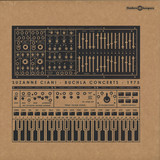
Finders Keepers invite you to witness the incredible first ever Buchla synthesiser concerts/demonstrations providing a distinctive feminine alternative to The Silver Apples Of The Moon if they had ever been presented in phonographic form. This is history in the remaking.
This spring Finders Keepers Records are proud to release an archival project that not only redefines musical history but boasts genuine claim to the overused buzzwords such as pioneering, maverick, experimental, groundbreaking and esoteric, while questioning social politics and the evolution of music technology as we've come to understand it. To describe this records as a game-changer is an understatement. This record represents a musical revolution, a scientific benchmark and a trophy in the cabinet of counter culture creativity. This record is a triumphant yardstick in the synthesiser space race and the untold story of the first woman on the proverbial moon. While pondering the early accolades of this record it's daunting to learn that this record was in fact not a record at all... It was a manifesto and a gateway to a new world, that somehow never quite opened. If the unfamiliar, modernistic, melodic, pulses, tones and harmonics found on this 1975 live presentation/grant application/educational demonstration had been placed in a phonographic context alongside the promoted work of Morton Subotnick, Walter Carlos or Tomita then the name Suzanne Ciani and her influence would have already radically changed the shape, sound and gender of our record collections. Hopefully there is still chance.
In short, Suzanne was a self-imposed twenty-year-old employee of the Buchla modular synthesiser company, San Francisco's neck and neck contender to New York's Moog. Buchla was run by a community of festival freaks and academic acid eaters whose roots in new age lifestyles and the reinvention of art and music replaced the business acumen enjoyed by its likeminded East Coasters. In the eyes of the consumer the creative refusal to adopt rudimentary facets like a piano keyboard controller rendered the Buchla synthesiser the more obscure stubborn sister of the synth marathon, steering these incredible units away from the mainstream into the homes and studios of free music aficionados, art house composers and die-hard revolutionaries. Championed and semi-showcased by composer Morton Subotnick on his albums The Bull and Silver Apples Of The Moon, Buchla's versatility began to open the minds of a new generation, but the high-end design features and no-compromise modus operandi was often confused with incompatibility and, in the pulsating shadow of Moog's marketing, the revolution would not be televised nor patronised. Suzanne Ciani, as one of the very few female composers on the frontline (and also providing the back line) did not lose faith.
These concerts' are the epitome of rare music technology historic documents, performed by a real musician whose skills and academic education in classical composition already outweighed her male synthesiser contemporaries of twice her age. At the very start of her fragile career these recordings are nothing short of sacrificial ode to her mentor and machine, sonic pickets of the revolution and love letters to an absolutely genuine vision of and 'alternative' musical future. In denouncing her own precocious polymathmatic past in a bid to persuade the world to sing from a new hymn sheet, Suzanne Ciani created a bi-product of never before heard music that would render the pigeon holes ambient' and futuristic' utterly inadequate. Providing nothing short of an entirely different feminine take on the experimental records' of Morton Subotnick and proving to a small, judgmental audience and jury the true versatility of one of the most radical and idiosyncratic musical instruments of the 20th century. These recordings have not been heard since then.
The importance of these genuinely lost pieces of electronic musics puzzle almost eclipses the glaring detail of Suzanne's gender as a distinct minority in an almost exclusively male dominated, faceless, coldly scientific landscape. Those familiar with Suzanne's work, a vast vault of previously unpublished non-records', will already know how the creative politics in her art of being' simultaneously reshaped the worlds of synth design, advertising and film composition before anyone had even dropped a stylus in her groove. Needless to say this record, finally commanding the archival format of choice, courtesy of the Ciani and Finders Keepers longstanding unison, was not the last first' with which this hugely important composer would gift society, and the future of a wide range of exciting evolving creative disciplines.
You have found a holy grail of electronic music and a female musical pioneer who was too proactive to take the trophies. With the light of Buchla and Ciani's initial flame Finders Keepers continues to take a torch through the vaults of this lesser-celebrated music legacy shining a beam on these non-records' that evaded the limelight for almost half a century. You can't write history when you are too busy making it. With fresh ink in the bottomless well, let's start at the beginning. Again. You, are invited!
The album opens with a 13 minute improvisation titled “The Time Is Now For Change”. As Ranelin , Belgrave, and Harrison exchange flurries of notes and squeaks over improvised chaos from the rhythm section, the group builds to a spiritual high that calls to mind the best Albert Ayler recordings. Bebop lines and unison phrases occasionally rise to the surface, offering a glimmer of familiarity in what is largely a harsh soundscape. Yet what sets Ranelin (and indeed, all of his Tribe contemporaries) apart from the larger free and spiritual jazz scene at the time is their sense of rhythm. Even as Harrison evokes sounds that would make a Meditations era Coltrane blush, the drums stay in time, and the looping bass and piano riffs take on an almost hypnotic quality, repeating quietly under a whirlwind of sound.
Later tracks see the ensemble veer into soul jazz, and jazz-funk, with “Black Destiny” perfectly highlighting the group’s ability to meld the avant-garde with grooves that you won’t be able to stop yourself from tapping your foot to. Members of the Tribe were well known for their appreciation of African American popular music, and the influence of groups such as Sly And The Family Stone is clear in the song’s edgy rhythms and dense sound.
This double LP reissue also contains alternate versions and outtakes that are so good you’ll be wondering why they were originally left out! With modern remastering, three bonus tracks, and an obi-strip, you don’t want to miss the definitive version of Phil Ranelin’s The Time Is Now! "
DJ Support: Kerri Chandler, Prunk, M-High, Archie Hamilton, Mr.V, Alexi Delano, Laurent Garnier, Okain, Mystic Bill
Dutch House maestro Dennis Quin makes a welcome return to PIV this July with his ‘Treat You Right’ EP, comprising four originals, one of which features LA’s Cheshy on vocals. Over the past ten years Amsterdam’s Dennis Quin has moved from strength to strength and has become globally revered and respected for his raw and powerful productions, racking up releases on Cécille, Ibadan, Dungeon Meat, Eastenderz and of course the leading light of his hometown scene, PIV, where he returns with his latest EP.
Up first on the package is the original mix of title-cut ‘Treat You Right’ which sees Dennis team up with Los Angeles based Cheshy, delivering a composition that personifies the quintessential House sound, crisp 909 drums, fluttering stab sequences and a bumpy bass hook run in unison with Cheshy’s soulful vocal stylings, cinematic strings and shimmering synth lines. ‘Impressions’ follows next and showcases a different aesthetic with a swinging low-slung rhythm section, jazzy leads, marimba lines and bouncy subs to create a more Parisian deep house feel.
Further showcasing Quin’s dynamism as a producer ‘Touched’ then shifts up gears to a saturated skippy drum groove, vacillating synth stabs, a heavy dose of low-end drive and hypnotic vocal chants. Lastly to round out the release, Dennis offers up a ‘Classy Dub’ of the title-track, as the name would suggest stripping out a large portion of the vocals and reshaping the structure of some of the original elements and stirring some additional jazzy elements into the mix.
Repress!
** Now available on vinyl* Steve Reich remains one of the most important figures in
20th century music. Though he studied at the prestigious
arts institutions Julliard and Mills College, by the mid-
1960s Reich set about dismantling the very orthodoxy that
he had been trained in. Forming a new musical language
based on repetitive processes, Reich became established
as part of the so-called 'Big Four' of New York minimalists
(along with La Monte Young, Terry Riley and Philip
Glass). Reich's influence can easily be seen today in both
the classical world and contemporary pop music.
'Four Organs' is the ultimate minimalist composition.
Performed by Reich, Glass, Art Murphy and Steve Chambers,
four identical Farfisa organs strike a single chord and
gradually lengthen each note to produce polyrhythms between
the players. Anchored by Jon Gibson's stoicallysteady
pulse on maracas, the piece deconstructs its opening
burst to a sustained mass of sound - stretching the tones to
create (in Reich's words) 'slow-motion music.'
Inspired by Reich's early training on drums, 'Phase Patterns'
treats the keyboards like tuned percussion instruments:
a basic rhythm pattern is played in unison and almost imperceptibly increases tempo to move out-of-sync.
Each progressive cycle emphasizes unique figures that are
not generated by an individual alone, but rather emerge
from the communal expression of the group.
Originally released on Shandar in 1971, Four Organs /
Phase Patterns is one of most highly regarded avant-garde
recordings in the past 45 years. This CD release features
cover photography by artist Michael Snow and is recommended
for fans of Neu!, Glenn Branca and Tim Hecker.
Steve Reich remains one of the most important figures in 20th century music. As part of the so-called "Big Four" of New York minimalists (along with La Monte Young, Terry Riley and Philip Glass), Reich influenced both the classical world and contemporary pop music.
Back in print ! Steve Reich remains one of the most important figures in 20th century music. Though he studied at the prestigious arts institutions Julliard and Mills College, by the mid-1960s Reich set about dismantling the very orthodoxy that he had been trained in. Forming a new musical language based on repetitive processes, Reich became established as part of the so-called "Big Four" of New York minimalists (along with La Monte Young, Terry Riley and Philip Glass). Reich's influence can easily be seen today in both the classical world and contemporary pop music."Four Organs" is the ultimate minimalist composition. Performed by Reich, Glass, Art Murphy and Steve Chambers, four identical Farfisa organs strike a single chord and gradually lengthen each note to produce polyrhythms between the players. Anchored by Jon Gibson's stoically-steady pulse on maracas, the piece deconstructs its opening burst to a sustained mass of sound – stretching the tones to create (in Reich's words) "slow-motion music."
Inspired by Reich's early training on drums, "Phase Patterns" treats the keyboards like tuned percussion instruments: a basic rhythm pattern is played in unison and almost imperceptibly increases tempo to move out-of-sync. Each progressive cycle emphasizes unique figures that are not generated by an individual alone, but rather emerge from the communal expression of the group. Originally released on Shandar in 1971, Four Organs / Phase Patterns is one of the most highly regarded avant-garde recordings of the past 50 years. This first-time vinyl reissue features cover photography by artist Michael Snow and is recommended for fans of Neu!, Glenn Branca and Tim Hecker.
Lumberjacks In Hell is the Amsterdam based label run by Marcel Vogel that was established in 2010 and has long been a great source of leftfield club tunes. Having worked with a variety of international artists like Jamie 3:26, Philou Louzolo, Rayko, Karizma and Giovanni Damico, LJIH proudly presents its first release in two and half years from Lu/Lu & LYMA with ‘Hotmoltenlava’.
Production duo Lucas van Ee and Tjerk Lammers are collaborators extraordinaire, brothers speaking in code and working in unison, a hive mind of ideas and creativity that was always bound to erupt like a Vulcano. Lu/Lu & LYMA is a side project of the Amsterdam based LIKEMINDS, and together they share a studio together on the outskirts of the city. Both Artists are heavily involved in the local
Across the seven tracks of ‘Hotmoltenlava’, the music serves as a captivating odyssey of electrifying new house anthems that seamlessly combine the pulsating production rhythms of Lu/Lu with the sultry tones of LYMA. Prepare to be transported to euphoric heights as ‘Hotmoltenlava’ marks a triumphant return for Lumberjacks In Hell spearheaded by the visionary Marcel Vogel, propelling it into a stratosphere all of its own.
Gallegos, first name Oliver - deals in feelings rather than genres. The productions on his debut effort for RS INTL channel a 90’s rave euphoria. Luscious pads swirl amidst pitched down jungle drums, celestial strings and philosophical vocal snippets that evoke ecstatic joy.
It’s no mean feat to induce a feeling of elation without the means of a synthetic intervention - but Ollie seems to have cracked the code - taking us there with harmony, texture and rhythm alone - nothing synthetic here: this is alchemy at play... The EP - which in all honesty feels more like a mini album - is a real journey across 5 songs and 29 minutes. It’s about equally split between driving rhythmic compositions created with movement in mind, and pensive ambient detours that are more sonic meditations than anything else. The album reaches its most dizzying heights when these two elements come together in unison for the title track, “Memories You’ve Memorised'' - a widely road-tested future classic which blends scattered Juno chords, arpeggiated church organ and 80s vocal samples to a tear-jerking crescendo.
Memories You’ve Memorised elevates Oliver Gallegos to the top tier of modern electronic composition. There’s comparisons to be made to Primal Scream, Underworld and even Aphex Twin - but after all is said and done, we’re witnessing the coming of age of a future pioneer.
1982, Brussels: The former au pair for Rick Wakeman of Yes and two of her teenage friends are at the doorstep of Les Disques Du Crepuscule, ready to cut an album with Gilles Martin. Living on busking wages and next door to Tuxedomoon, their work results in a contemporary bossanova record that would provide a missing link between Antonio Carlos Jobim and Kraftwerk. Camino Del Sol was issued and promptly forgotten, with Isabelle Antena moving toward jazz in Asia and the others returning to France. Twenty years later, it was findable only as a VG+ LP with a sticker price of $4.99. Intrigued by the striking cover's sunlit patio furniture emptiness basking in the south of France, we scooped up Camino Del Sol and grouped the extant Antena recordings from that exceptional period by session. Numero Group's definitive 2LP reissue of the original five-song mini-LP adds the group's first 12" (a cover of Jobim's "Girl From Ipanema," naturally), the Seaside Weekend 12", compilation tracks, and two previously unissued cuts, recasting this short-lived combo's forward-thinking milemarker as a modern-day masterstroke. 2x150g LP in a 2-pocket gatefold tip-on jacket with 2 printed inner sleeves.
Bassist, bandleader and composer Orlando le Fleming continues to make music that crosses genres as readily as he crosses the Atlantic - after 20 years in New York City, he"s back in his native UK, forging new pathways and renewing old partnerships. His love for the acoustic tradition continues unabated alongside his deep affection for the robust, muscular electric fusion that emerged in the 1980s. Old London friends Tom Cawley (piano/keys) and James Maddren (drums) completed the rhythm section: new acquaintance Nathaniel Facey was picked from the ranks of the UK"s brightest young saxophone players: NYC stalwart Philip Dizack flew in from the US to play trumpet. Orlando"s old schoolfriend Chris Martin contributes a starkly sincere vocal performance, singing words from a poem by Persian poet Rumi, in unison with Orlando"s daughter Nadia.
- A1: Back On Top Again
- A2: Another Love Lay Over Feat Shirley Diamond
- A3: I Lost My Baby On Face Book Feat Donnie Mckisic
- A4: Keep It On The Hush Hush
- A5: Get In Touch With Me
- B1: What Happened To The 0-0 Wee
- B2: Can I Still Be Your Friend
- B3: I'd Be A Fool 2 Fool Around With You
- B4: I Put A Claim On That Thing
In the history of Black American soul music many recording artists have been called “Legends” some deservedly and perhaps some not so deserving of this current over used accolade? I might be a tad biased here, perhaps? but in my book one James Howard McCelland a.k.a Jesse James has surely earned the right to be called a “Legend” this octogenarian performer has weathered many storms and shifts in musical trends and styles over the years but like the trouper that he is albeit in lower keys these days he still manages time and time again to come up with the goods! “Back On Top Again” is Jesse James latest production album, a project filled with recent and current recordings in a southern soul style that has likened in passing by several respected soul scribes to the Malaco Sound I’ll let the record buying public make their own minds up on that one, I’m sure veteran DJ Bob Jones won’t mind me using his quote below:
The album also features two of Jesse’s friend’s with Donnie McKisic providing the rapping and additional backing vocals on the upbeat “I Lost My Baby On Face Book” and Shirley Diamond who you may recall from Soul Junction’s recent 45 release “You Don’t Know Who You Sleeping With” (SJ1021) returning with another excellent Diamond & James duet “Another Love Lay Over” as a further foot note the featured song “I’d Be A Fool 2 Fool Around On You” is an excellent cover version of what was a previously unissued Harvey Scales song until Soul Junction released it as the flipside their thirteenth 45 single release way back in 2011.
Album Sleeve Notes:
At the dawn of the 1960’s a young aspiring soul singer from Richmond, California by the name of James H. McClelland was honing his performing skills in several local nightclubs. At one particular show the compere struggled to pronounce the young performer’s surname and to hide his embarrassment he hurriedly introduced him as ‘Jesse James’, which became Jesse’s Stage name to the present day.
Jesse’s big break came through his aunt who at that time just happened to be dating West Coast Blues and R&B Legend Jimmy McCracklin. The aunt suggested to McCracklin the he should take a listen to her talented nephew, suitably impressed McCracklin produced Jesse on a song he’d written “I Will Go” for the local Shirley label. The release is credited to Jesse James & The Royal Aces a bunch of local musicians that Jesse had grown up with which included Slyvester Stewart a.k.a Mr “Dance To The Music” himself Sly Stone” on guitar. “I Will Go” was quite a popular record locally and led to a further four Jesse James releases on Shirley culminating in Jesse’s most sought-after record the delightful “Are You Gonna Leave Me”in 1966. The following year Jesse recorded the minor hit “Believe In Me Baby” released by the local ‘Hit’ label before being picked up by 20th Century for national distribution. While signed to 20th Century Jesse recorded a self-titled album and three other 45 singles before leaving the label.
Following a solitary 45 release for the Uni Label in 1969 Jesse formed his own Production and Publishing company ‘South Richmond Music’ releasing 45’s on his own label logo’s Zea and Zay before returning to 20th Century for a second time during 1974, releasing two 45 singles of which the sublime “If You Want A Love Affair” reaching #92 in the Billboard R&B charts in 1975, a song that would later receive worldwide acclaimed and is now regarded as Jesse’s signature tune. Ron Carson had been the producer on the later 20th Century releases and it was he that placed one of Jesse’s songs “The Same Thing Happens” on the Happy Fox label’s blaxploitation album “Black Fist”.
Into the 1980’s Jesse leased some of his songs for release on the Atlanta Georgia, Midtown label, a solitary release on the Moonlite Hope Music label (a lead single for a proposed album that never materialised) followed before Jesse joined Max Kidd’s Washington based TTED label. The TTED imprint was to yield Jesse’s biggest hit record “I Can Do Bad By Myself” reaching #61 in the R&B Charts. Following TTED Jesse formed Gunsmoke records releasing “Love On The Side” in 1988, from there on Jesse has continued to regularly release numerous studio albums though the 90’s into the new millennium and on to the present day.
Now well into his seventh decade as a performer this most resilient and enduring performer, has never been one to let the grass grow under his feet. He still performs live shows and is actively writing, producing and recording fresh new material. Soul Junction have now gathered together some of Jesse’s most recent and new recordings to form this album project which is aptly titled “Back On Top Again” Ride on Jesse James!