Sourcing influences from 90s Tech, house, trance and breaks Aiden Francis' pure passion for underground electronic music radiates through his music and DJ sets. Effortlessly drifting between different sounds and aesthetics, Aiden has managed to break himself free from the constraints of genre so that his true creative prowess can be flexed in full.
The lack of constraint overflows into Aiden's DJ sets, providing highly energetic experiences that flows through a unity of sounds, cultures and voices. This varied approach to DJing has found Aiden's name appear on high-quality events across Manchester and the UK, having played along Eris Drew at The Loft, taking the reins for High Hoops Pride Weekender at The White Hotel featuring on the lineup alongside D.Tiffany and Fafi Abdel Nour and regular intimate sets at Eastern Bloc.
Suche:unit 4
Limited Edition RED Vinyl – 100 units Hand numbered
Omid's parents were Iranian but he spent his childhood in Putney, London. He grew up listening to rock music, and listed Jimi Hendrix, Neil Young and the Cure among his favourite artists – after Robert Smith became a fan Omid would later remix various Cure songs. He learnt to play guitar and formed a rock band, but after hearing hardcore records played on pirate music stations he began making his own tracks on basic equipment that he had bought. Beginning in 1995, his early house and techno singles were released on his own Alola and Disclosure labels under the names of 16B and Phaser, but they soon attracted the attention of big-name DJs such as Derrick Carter, François Kevorkian and Sasha, and he signed to Sven Väth's Eye Q label to release his debut album Sounds from Another Room in March 1998, which was described by the Independent on Sunday as "avant-garde" and by Muzik as "quite breathtaking".
Although he started out as a producer, Omid gradually moved into DJing, at the request of friends who asked him to play records at parties. He secured a regular spot playing the Elements club night run by Hooj Choons record label boss Red Jerry. In October 2001 Omid released The Witch/Which Equation under the alias of the Sixteen Million Dollar Man.Inspired by Prince initially releasing his Planet Earth album as a covermount with a British newspaper, Omid released his third studio album Like 3 Ears and 1 Eye (Part 1) in a similar manner as a covermount with the November 2007 issue of DJ Mag.
Omid also formed the SOS collective of DJs, consisting of him, Desyn Masiello and Demi. The trio secured a residency at London's Ministry of Sound nightclub, and were asked to produce the club's first mix CD in 2010
Following up his score for the japanese Netflix Anime series “Carole & Tuesday”, Mocky returns to album mode with his new orchestral opus “Overtones For The Omniverse”. Just days before the first Covid lockdowns, Mocky brought a 16 person orchestra comprising of his usual who’s who of underground talent into LA’s Barefoot Studios (and into the same room where Stevie Wonder recorded “Songs in the Key of Life”) to record a pile of scores he had come up with during his previous year’s sabbatical in Portugal. The result is a stunning orchestral album recorded in 36 hours in one or two takes straight off the written page. Shunning the “possible perfection” of today's recording techniques, Mocky looked back as a way to find an alternate future.
According to Mocky:
“We had to do it quick with no rehearsal to capture that big open sound of people working together in a room - in all its imperfect glory. In the imperfections you find the humanity. And in today’s tech driven spaces you have to fight to preserve a space for humanity. I felt a deep desire to create a sonic trajectory path for us to follow as we ascend and evolve our understanding of love and what it means to be human. This is the inspiration for „Overtones for the Omniverse“”.
The album runs the gamut from Steve Reich infused minimalism overlaid with Dorothy Ashby style harp runs (“Overtures”) to atonal analogue synth sounds over Martin Denny style percussion (“Bora!”). There's a classic Mocky crooning number that gives a Jim Henson-esque take on the state of “Humans” and the album as a whole captures Mocky's skill of bringing together the joyful energy of a unique cast of LA collaborators.
Featuring:
Randal Fisher / Flute, Vicky Farewell / Piano, Vocals, Harry Foster / Bass, Vibraphone, Tubular Bells, Vocals Joey Dosik / Organ and Glockenspiel, Vocals, Guilermo E. Brown aka Pw / Percussion, Vocals, Jhan Lee Aponte (TossTones) / Percussion, Vocals, Timpani, Paul Cartwright / Violin, Molly Rogers / Viola, Gabe Noel / Cello, Contrabass, Liza Wallace / Harp, Coco O. / Vocals, Mocky / Compositions, Drums, Vocals, Roland Sh-1000
O for the O Choir :
Nia Andrews, Leslie Feist, Moses Sumney, Durand Bernarr, Eddie Chacon
Recorded at Barefoot Studios, Los Angeles March 6 + 7, 2020.
All songs written by Dominic “Mocky” Salole and published by Heavy Sheet Music/Warner Chappell except "Wishful Thinking" written by Dominic “Mocky” Salole and Matt Corby and "Bora!" written by Dominic “Mocky” Salole, Guillermo Brown, Aponte Poro.
Produced by Mocky, Justin Stanley and Renaud Letang. Mixed by Renaud Letang at Ferber Studios Paris
Mastered by Emilie Daelemans. Cover artwork by Rand Sevilla. Photo by Vice Cooler.
ABOUT MOCKY
Performer, producer, songwriter, composer and multi-instrumentalist, Dominic "Mocky" Salole came to prominence in the Berlin electronic scene of the mid 2000s, releasing three acclaimed solo albums, co-writing and producing classics like Jamie Lidell's "Multiply" and Feist's "The Reminder" and making waves on stage with close collaborators (and fellow Canadians) Peaches, Feist and Chilly Gonzales.
In 2009, his music took a jazz-inflected turn to the acoustic with the release of "Saskamodie" and in 2011, after work in Big Sur on Feist's "Metals", Mocky relocated to Los Angeles, where he quickly established himself as a co-writer with uncommon credentials and eccentric working methods collaborating with L.A.’s brightest breakthrough artists like Kelela, Joey Dosik, Vulfpeck or Moses Sumney.
Whilst in L.A. songs he has written have been sung by Mary J. Blige, Jill Scott and many more and he has collaborated with artists as diverse as Mali’s Bassekou Kouyate and the GZA. His monthly rooftops gigs at the ACE Hotel breathed new life into the LA live scene and Mocky channeled those new creative energies into his fifth full length album "Key Change" and four digital mixtapes/EPs "The Moxtapes" Vol. I-IV.
After co-producing and co-writing Feist's "Pleasure", Kelela's "Take Me Apart" and Joey Dosik's "Inside Voice", in 2018 Mocky released two albums: "Music Save Me (One More Time)" - a collection of the best of Japan-only/unreleased gems and favorites from his so far digital only "Moxtapes" series and "A Day At United", an instrumental jazz album, recorded in a single day in the legendary LA recording studio United Recording.
In 2019 Mocky delved into soundtrack work by collaborating with legendary Anime director Shinichiro Watanabe (Cowboy Bebop) on the first two seasons of the breakthrough show “Carole and Tuesday” (Netflix) for which he won Best Score at the Anime Awards 2020.
The one arm keyboard luminary is well known in the entertainment circle of Western Jamaica. Born on the 2nd of March 1954, the accomplished singer and musician hails from Hayes, Clarendon. In 1969 he went to live in Kingston until 1973. Ancel's first effort in a recording studio was inside the popular Randy's in downtown Kingston. He did a single called 'Riding On' on the Musical Barber label out of Mandeville.
In 1977 he joined a group called Solid Foundation and stayed with them for two years. After that he moved to Montego Bay to sing with Stamma and the Sounds of Mobay, with who he appeared on Reggae Sunsplash festival in 1980.
Johnny made the move for the United States in 1982, and formed his first own band 'Uprisers' in Pittsburgh city.
One of the things he likes to talk about is how he once reunited the famed Clarendonians with Peter Austin and Ernest Wilson. Both pioneer icons were at irreconcilable odds with each other for quite some time. When he came back to Jamaica in 1985, he invited Ernest Wilson to do back-up vocals for him. For the same studio session, he also invited Peter Austin for the same back-up duties, and that was how the reunion came about. Inside famous Aquarius studio, there was Burning Spear's personal Band called Burning. The songs recorded there were 'Moving Out' and 'True Love' with top musicians : Tony Green on the saxophone, Bobby Ellis on the trumpet, Dwight Pinkney on the guitar, Calvin on percussion, Nelson Miller on the drums and Maurice Gordon on bass. This was not the first time Ancel was working with Peter Austin. When the split came in the ranks of the Clarendonians, Ancel was asked to fill the breach. He thus teamed up with Peter Austin and their first single together was entitled 'Out Of Sight'. They later entered the annual Jamaica Festival Song competition in 1975. Their entry was entitled 'Paradise On Earth' which Ancel said was quite popular. However, it was not popular enough to prevent the late Roman Stewart from copping the award with 'Hooray Festival'.
After the release of 'Moving Out', Johnny moved to Miami and continued his career as a solo artist, singing with different local bands. He did a number of singles, notably were 'Faith, Patience and Love' and 'Stand Back' for a producer called Jolly in Miami. In 1988 Powell formed his second band Benja, a band which gained increasing popularity in the time in South Florida. They have performed on several festivals, played in most major clubs and were a big success in Andros Island in the Bahamas for an audience who not necessarily consider Reggae their prime choice of music.
The saddest part of his life was when he lost his left hand to what doctors termed as a cancerous situation in 1977. This did not, however, stop him from learning how to play keyboards. Initially he was taught by the late Bobby Vaugh in Montego Bay and also got further teaching from jamaican saxophinist Reuben Alexander.
Now approaching 70 years old, Ancel is still very active in his music. In previous years he performed at the Marcus Garvey Celebration and is currently working with the “Synergy Band” at Royalton Hotel in Negril under the stage name “Ancel P.” Let the one arm keyboard luminary life and music live eternally !
Produced by Ancel "Johnny" Powell & Patricia Wallace
Engineer: Melvin Williams
Recorded at Aquarius Studio (Kingston, JA) in 1985
Bass: Maurice Gordon
Drums: Nelson Miller
Guitar: Dwight Pinkney
Saxophone: Tony Green
Trumpet: Bobby Ellis
Percussion: Calvin
Keyboards: Winston Wright
Backing vocals: Ernest Wilson & Peter Austin from the Clarendonians
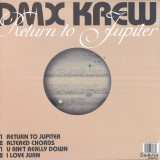
DMX Krew announces his return to Peggy Gou's Gudu Records with a new four-track EP, sharing the dreamy, Detroit-inspired title track, ‘Return to Jupiter’.
The full EP - out 14th April 2023 - will be his second release for the label and Gudu’s first release of 2023, set to be the label’s busiest year yet.
Ed DMX made his debut for Gudu with 2019’s Don’t You Wanna Play? EP, becoming the first artist to release on the label outside Peggy herself. Ed and Gudu have retained a regular working relationship ever since: he mastered Indonesian crate-digger Dea’s ‘Glazer Drum’ release for Gudu, contributed a pair of remixes to the reissue of Riff’s South African electro curio ‘Jacks Jive’, and now returns to the label with Return to Jupiter, a new original four-track EP.
Ed has been one of electronic music’s most respected faces for over 25 years. Debuting in the mid-1990s, he released his first decade of music almost exclusively through Grant Wilson-Claridge and Aphex Twin’s Rephlex label and his own Breakin’ imprint, but recent years have seen him ply his trade across a who’s who of dance music’s most respected underground labels: including Hypercolour, Balkan Vinyl, Central Processing Unit and, of course, Gudu.
Inspired by the futurist funk and vivid synthesiser epics of classic Detroit, ‘Return to Jupiter’ is dripping with richness and colour, driven by the sort of thick analogue basslines and distinctive melodies that have come to define Ed’s catalogue. The EP’s title track sets the tone for what’s to follow, introducing a language of sorts for the record - before ‘Altered Chords’ turns the funk up to 11, ‘U Ain’t Down’ aims its distorted kicks and wiggy, manipulated lead straight at peak time dancefloors, and ‘I Love Juan’ closes the EP on a star-gazing tip.
Founded by Peggy Gou in 2019, Gudu releases music from a global roster of artists, including DMX Krew, Maurice Fulton, Hiver, Dea, Mogwaa, Brain de Palma, Dukwa, JRMS and Peggy herself (including the hits ‘Starry Night’, ‘I Go’ and ‘Nabi’). 2023 will see Gudu’s busiest year to date, with new releases scheduled from the current roster and some exciting new faces.
repress
Tribute to the Soul brother of Benin with Rare Afro- Funk and Digital Soul songs from the Maestro .
Following the tremendous «!Dans le Tchink System «!reissue album, we wanted to celebrate the legacy of one the greatest singer from Cotonou .
Owhaaou ! is an original 4 tracks 12 inch vinyl taken from the extremely obscure , futuristic and now expensive record «!Metamorphose!» released in 1985, recorded on 24 analog tracks channel with an incredible backing band such as Hilaire Penda on bass, Daniel Bentho from Poly Rythmo de Cotonou to name a few .
The B side is a Dj friendly Edit of the dance floor burner «! Zemidjan «! recorded in 1991 . A composition done to pay tribute to the Taxi moto of Cotonou .The last track «!Mi Tchinker!» is a typical Stanislas Tohon hit with a mix of Tchink Rhythm , Soul and funky melodies .
Stanislas Tohon aka Papy Grande was born in the “Country of the kings” (Benin), in Abomey , December 30 th 1955. He’s “Chevalier de la legion d’honneur” in Benin for his brilliant musical career .The famous soul singer from Cotonou started his musical career at this age of 9, played with the greatest such as Gnonnas Pedro and recorded almost 35 albums.
Influenced by the traditional “Tchingoume“ music , he invented his own rhythm called “Tchink Système”, a mix of soul and Beninese traditional rhythm .
Sang in Fon, his native language from Benin, this EP is a soulful call for Peace respect and unity in Africa, a real definition of Afro Soul music!
Sadly died in February 26 th 2019 in Paris, this Ep is a tribute.
Remastered by The Carvery (UK), officially licensed and strictly limited to 1000 copies.
- A1: Kalush - Stefania (Kalush Orchestra)
- A2: Måneskin - Zitti E Buoni
- A3: Duncan Laurence - Arcade
- A4: Netta - Toy
- A5: Salvador Sobral - Amar Pelos Dois
- A6: Loreen - Euphoria
- A7: Lena - Satellite
- B1: Lordi - Hard Rock Hallelujah
- B2: Helena Paparizou - My Number One
- B3: Charlotte Nilsson - Take Me To Your Heaven
- B4: Katrina & The Waves - Love Shine A Light
- B5: Eimear Quinn - The Voice
- B6: Secret Garden - Nocturne
- B7: Paul Harrington & Charlie Mcgettigan - Rock ‘N Roll Kids
- C1: Linda Martin - Why Me?
- C2: Johnny Logan - Hold Me Now
- C3: Sandra Kim - J’aime La Vie
- C4: Bobbysocks - Let It Swing
- C5: Nicole - Ein Bisschen Frieden
- C6: Bucks Fizz - Making Your Mind Up
- C7: Milk And Honey - Hallelujah
- D1: Brotherhood Of Man - Save Your Kisses For Me
- D2: Teach-In - Ding-A-Dong
- D3: Vicky Leandros - Après Toi
- D4: Lenny Kuhr - De Troubadour
- D5: Sandie Shaw - Puppet On A String
- D6: France Gall - Poupée De Cire, Poupée De Son
Eurovison Collected compiles many winners of the Eurovision Song Contest, an annual competition organized by member countries of the European Union. The double album contains the #1 hit songs from earlier winners such as France Gall “Poupée De Cire, Poupée De Son” (France, 1965), Sandie Shaw “Puppet On A String” (United Kingdom,
1967), Sandra Kim “J’aime La Vie” (Belgium, 1986), Johnny Logan “Hold Me Now” (Ireland, 1987), Katrina & The Waves “Love Shine A Light (United Kingdom, 1997), Lordi “Hard Rock Hallelujah” (Finland,
2006), Loreen “Euphoria” (Sweden, 2012), Duncan Laurence “Arcade” (The Netherlands, 2019) and recent winners Måneskin “Zitti e Buoni” (Italy, 2021) and Kalush Orchestra “Stefania” (Ukraine, 2022).
Repress!
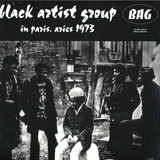
Outstanding free jazz session recorded in 1973 in Paris by Chicago outfit BAG.
It was Lester Bowie, trumpeter with the Art Ensemble of Chicago, who suggested that the Black Artists' Group (BAG) should head for Paris. In 1972 several members of BAG took his advice and flew to France for an extended stay. The following year a concert featuring saxophonist Oliver Lake, trumpeters Baikida Carroll and Floyd LeFlore, drummer Charles Bobo Shaw and trombonist Joseph Bowie (Lester's younger brother) was recorded and subsequently issued as In Paris, Aries 1973, a strictly limited edition LP on the group's own label.
Since the formation of Black Artists' Group in 1968, the home of this multidisciplinary arts collective had been St Louis, Missouri, the city where the Bowie brothers had grown up. It was there that Lester Bowie had started to investigate the expanding horizons of jazz before moving, in 1966, to Chicago where he joined the recently established Association for the Advancement of Creative Musicians (AACM). His close friend Oliver Lake visited Bowie, attended AACM concerts and meetings and was inspired not only by their artistic vision and integrity but also by their efficient organisation. In Chicago musicians were making things happen for themselves, taking control of their own destinies and giving shape to their lives as creative artists.
In June 1969, the Art Ensemble of Chicago had taken their music to France. During the preceding decade Paris had established a reputation for audiences that were unusually well-informed and open-minded, receptive to the uncompromising music of black American innovators such as Cecil Taylor, Ornette Coleman, Albert Ayler and Sun Ra. The city that had nurtured not only Cubism and Surrealism, but also Jean-Luc Godard and contemporary cinema's Nouvelle Vague was well prepared for the sonic collage forms and stylistic dislocations of the Art Ensemble. During that same month violinist Leroy Jenkins, trumpeter Leo Smith and saxophonist Anthony Braxton also arrived in Paris, three further emissaries from the AACM.
The adventure of collective improvisation resonated with the Parisian zeitgeist. Enthusiastic audiences attended their concerts and coverage in the media. In Paris, Aries 1973 offers an isolated and fascinating glimpse into that phase of the group's existence. The album is dedicated to the memory of Kada Kayan, a bassist who had hoped to make the trip from St Louis to France but, tragically, had grown ill and died. His absence adds special poignancy to the sound of the bass when it appears on this recording, played by Baikida Carroll. Listeners keen to hear Kayan himself in the company of Lake, Bowie, Shaw, LeFlore and Carroll should seek out Red, Black and Green by the 10-piece Solidarity Unit, Inc. That album, recorded on 18th September 1970 and dedicated to Jimi Hendrix, who died on that day, features an earlier version of Shaw's composition 'Something to Play On.'
In Paris, Aries 1973 reveals BAG's musical affinities with the Art Ensemble of Chicago. Both groups preserved an independently minded approach to the notion of free jazz and a carefully filtered awareness of pan-African musical practices, while their creative interest in space, mobile structure, chance occurrences and simultaneity also suggests parallels with the concerns of leading experimental composers working at that time. These performances in Paris of Shaw's 'Something to Play On' and Lake's 'Re-Cre-A-Tion,' plus two collective compositions/improvisations, display the dedication to structural fluency and sensitivity to coloration that accompanied BAG's unorthodox group dynamics and their unconventional instrumental combinations. In this case the musicians embrace congas, log drums, marimbas, woodblocks, cowbells and gongs. This is not a showcase for solos, but a shape-shifting and multi-centred statement of togetherness, quest and discovery. Removed from BAG's original multidisciplinary context the music still exudes an exhilarating spirit of collaborative exploration and shared excitement.
Clear Vinyl
French composer Lucie Antunes is broadening her sonic horizons with second album “Carnaval”. Following the resounding critical success of 2019’s “Sergei”, the Perpignan-born, classically-trained drummer and percussionist releases an ebullient, electronically-oriented followup that is designed for the dancefloor. Antunes unites the pop world with the avant-garde, with a crossover appeal that traverses genres and borders with ease. “Carnaval” also sees Léonie Pernet come on board as producer, who brings frisson to these eleven tracks whilst helping to augment the grooves. Using and manipulating the human voice for the first time, Antunes was inspired in part by the American composer Meredith Monk, to use her voice as percussive instrument, conveying meaning with nonverbal phrases and phonemes. ‘Carnaval’ is more coquettish, curious and creative than anything she’s yet done, imbuing the listener with the cerebral mischief of Laurie Anderson on ‘It’s Amazing’—an opening track which more than fulfills its titular promise.
- A1: Israelites
- A2: It Mek
- A3: Fu Man Chu
- A4: (Where Did It Go) The Song We Used To
- A5: Beautiful And Dangerous
- A6: King Of Ska
- A7: Intensified '68
- B1: You Can Get It If You Really Want
- B2: Unity
- B3: Live And Learn
- B4: Rudy Got Soul
- B5: Get Up Adina
- B6: Generosity
- B7: Pretty Africa
- C1: 007
- C2: The First For A Long Time
- C3: Rude Boy Train
- C4: Honour Your Mother And Father
- C5: It Pays
- C6: Problem
- C7: Wise Man
- D1: Sing A Little Song
- D2: Mother Pepper
- D3: Mount Zion
- D4: Licking Stick
- D5: Young Generation
- D6: Pickney Gal
- D7: Jamaica Ska (With The Specials)
Der ursprüngliche King of Reggae, Desmond Dekker, brachte den Sound Jamaikas durch eine Reihe internationaler Hits in die ganze Welt, wobei seine Musik zwischen 1967 und 1975 nicht weniger als sieben Mal die britischen Pop-Charts zierte. Zu dieser unglaublichen
Reihe von Hits gehörten '007', 'It Mek', 'Pickney Gal', You Can Get It If You Really Want", Sing A Little Song" und die erste in Jamaika produzierte Aufnahme, die die britische 7"-Single-Liste anführte, Israelites".
Alle diese unverzichtbaren Aufnahmen sind auf der "The Essential
Artist Collection" enthalten, die auch das Beste aus seinem übrigen Schaffen umfasst, wobei fast jeder Titel ein großer jamaikanischer Bestseller ist.
Die Sammlung ist sowohl als Doppel-Vinyl-LP mit 28 Titeln als auch als 2CD-Set mit 50 Titeln erhältlich. Die Sammlung ist die neueste in Trojan Records' neuer, stilvoll gestalteter "Essential Artist"-Serie, die die populärsten und einflussreichsten Aufnahmen von von einigen der berühmtesten jamaikanischen Interpreten enthält. Und wie diese hervorragende Zusammenstellung beweist, waren nur wenige Reggae-Künstler waren einflussreicher und gefeierter als der legendäre Desmond Dekker.
(Note: Same tracklist on A & B Sides)
Across 8 concise vignettes, Chantal Michelle alchemizes acoustic instrumentation with a spectrum of layered feedback and field sounds, depicting fractured beauty amongst a precarious reality.
Chantal’s work is characterized by intoxicating juxtaposition and enriched with an array of source material to construct immersive narrative. Much of the work here was recorded during her time in New York City, perhaps a pre-requisite to the heightened tension at play.
Opening with lucid choral vocals, a mysteriously seductive anaesthesia disseminates before evaporating into surging feedback, vocals dissolving as quickly as they appeared.
It’s this oscillation between states that permeates throughout the work. Whether it’s the esoteric rumbling of acoustic drones, or the radiant fusion of distorted chords amongst the warming sounds of tropical atmospheres, moments of serenity are conjured up in a space so bliss that their endings incite an immediate nostalgia. Fleeting melodies are pierced by shattering cries of feedback; gossamer tones engulfed in saturated noise.
Amongst the instrumentation, buzzing field sounds tremor with hyperreal peculiarity and hallucinations shape noise into sounds of the familiar; the rumbling of an overheard aeroplane or the whirring of distant grasshoppers. Similarly, recurring motifs elicit a false sense of security in their subliminal familiarity, soon exposed as echoes, a reverberation of what was left behind.
At the approaching climax, the blissful onset anaesthesia has worn off, interrupted by a powerful chorus of deep, gothic synthesis that fuels post-apocalyptic fever dreams, an unnerving and mesmerising symphony. The unresolved tension leaves us in a state of delirium, questioning if the tranquillity we experienced was ever really there.
Chantal was immersed in Fleur Jaeggy’s The Water Statues whilst recording, and its imprint is woven into the sonic fabric of Broken to Echoes; a sublime liminal dream-state, pervaded by haunting visions. It’s a view of the world captured from inside the enclosure of a cell membrane. Through translucent mesh, we see the billowing tension of our surroundings, protected only by the most delicate walls.
Chantal Michelle is a sound artist, musician, and composer based between the United States and Europe. She works with acoustic instrumentation, synthesis, field recordings, and voice to form densely textured aural landscapes. Her work is characterized by tension, disparate sounds, and non-linear arrangements. It has been realized as multichannel installations, live performances, and recorded material.
She has released three albums to date: Pulse, Puls-ar, Procession (Dinzu Artefacts, 2022), Night Blindness (Quiet Time, 2021) and the collaborative Aunis (Injazero, 2019), all to critical acclaim. The Wire called Night Blindness “a dynamic and engrossing narrative,” and Aunis received praise in The Guardian as “a virtually unprecedented palette of synth sounds.”
Limited Whirlpool Blue Vinyl! Auckland, New Zealand post-punk group Guardian Singles return to Trouble In Mind for their follow-up to 2021's debut with "Feed Me To The Doves", a ten-track socio-political burner addressing our collective spiritual chaos that pulls influence from across the history of punk & permeates it into something decidedly Aotearoan & uniquely their own in ways that are both personal & universal. "Feed Me To The Doves" is the first album to feature the current, long-standing lineup of Thom Burton (guitar, vocals), Fiona Campbell (drums), Yolanda Fagan (bass), and Durham Fenwick (lead guitar). The band has been playing live together now for a few years & it shows. The songs herein vary from the deeply personal, to sketches or postcards, as Burton says "_scribbled while watching the dregs of a delirious culture war play out through broken smartphones and praline vape clouds." Expertly recorded at Neil Finn's Roundhead Studios in Auckland by engineer Steven Marr, who Burton says had a "great sense of being able to keep the urgency of the songs while adding lushness and keeping things sounding like they're about to break at any second". Marr helped turn the album's scrappy beginnings into something more cohesive and beautiful.
- A1: What You Been On
- A2: Cap (Feat. Offset)
- A3: Poppin (Feat. Lil Pump & Smokepurpp)
- A4: Houdini (Feat. Swarmz & Tion Wayne)
- A5: Bad Lil Vibe (Feat. Jeremih)
- A6: How It Feel
- A7: Wake Up Call (Feat. Trippie Redd)
- A8: Killa Killa (Feat. Aiyana Lee)
- B1: Domain
- B2: Down Like That (Feat. Rick Ross, Lil Baby & S-X)
- B3: Undefeated
- B4: Millions
- B5: Complicated
- B6: Tides (Feat. Aj Tracey & Rich The Kid)
- B7: Night To Remember (Feat. Randolph & S-X)
- B8: Poppin (Feat. Lil Pump, Smokepurpp & Crypt) (Remix)
KSI’s first official full length album Dissimulation was an international smash debuting in the TOP 10 in 11 countries! Jam packed with top level features including Offset, Lil Pump, Trippie Redd, Lil Baby, Rick Ross, Smokepurpp, Jeremih, Rich The Kid, S-X, AJ Tracey, and many more. A limited pressing of 1,500 vinyl units have been made and will be released on 14 April.
KSI recently scored not one but TWO KO’s in his second boxing event! KSI is currently a TOP 5 artist in all of the UK, as well as one of the biggest YouTube personalities in the world. KSI launched the highly successful sports drink PRIME with LOGAN PAUL, which just recently became the OFFICIAL SPORTS DRINK of the UFC.
Everything eventually turns to dust. Everyone knows this, but few want to acknowledge that our time on this mortal coil is fleeting, preferring to remain in stasis, in hopes that "the end" will pass them by. Chicago trio FACS (guitarist Brian Case, bassist Alianna Kalaba & drummer Noah Leger) have been perfecting their brand of intense, cathartic post-punk over the course of four ever-evolving albums, beginning with 2017's "Negative Houses" thru 2021's landmark "Present Tense', which saw the trio dig deep into the gaping maw of a black hole & pulling back whatever debris they could grasp onto. Their newest "Still Life In Decay" comes as an addendum to the last album - a "post-event review" if you will. "Still Life In Decay" starts with a squall of white noise before collapsing into the band already locked into "Constellation"s lumbering groove, with Case's guitar a ghostly presence, appearing & disappearing in washes of gauzy feedback throughout the track. FACS have never been more locked in as a unit, and "Still Life In Decay" is a decidedly more focused effort. The apocalyptic chaos that defined their previous album "Present Tense" is waved away in favor of an examination of events with cumbrous clarity. FACS are a heavy band, but they don't necessarily FEEL like one (see side two's "Still Life", where Case's fluttering, melodic guitar lines are buoyed by the insistent, underlying pulse of the bass & drums). As a rhythm section, Kalaba & Leger dance & twist around each other like a double helix, forming the DNA of what makes FACS special. Collectively they approach rhythm from outside the groove as opposed to inside it, creating a lattice where Case weaves guitar lines like creeping vines, which makes the moments on "Still Life In Decay" where the band DOES lock in even more powerful. When the guitar punctures the lock-step swing of "When You Say", it hits like a hammer. Case utilizes his lyrics like a person suffering from anterograde amnesia; repeating phrases & holding onto old memories in a desperate attempt to avoid the slide into oblivion. Freeform poetic missives touching on themes of resignation, cynicism, class warfare, and a search for identity & meaning in a crumbling society; A primal desire to hold onto anything in a post-pandemic barrage of sensory overload. The album is a decidedly local affair; recorded once again at Chicago's famed Electrical Audio by renowned engineer Sanford Parker & mixed at his Hypercube Studio in Chicago's Ravenswood neighborhood & mastered by Matthew Barnhart at Chicago Mastering Service.
The 2013 action-adventure game The Last Of Us was originally published in 2013 by Sony Computer Entertainment and was developed by Naughty Dog. The game is played in a third-person perspective and its player controls Joel, a smuggler who is escorting the teenager Ellie across a post-apocalyptic America. The game received critical acclaim, with praise for its narrative, gameplay, visuals, sound design, characterization, depiction of female characters. The Last Of Us became one of the best-selling video grames, selling over 1.3 million units in its first week. The game won multiple Game of the Year awards and has been cited as one of the greatest video games ever made.
The Last Of Us also received acclaim for its score, which was made by composer Gustavo Santaolalla. Santaolalla is also known for his work on Brokeback Mountain and Babel, for which he both won the Academy Award for Best Original Score. The Argentinian composer also created the music for the series Jane The Virgin and Netflix’ Making A Murderer. His soundtrack to The Last Of Us was his first in the video game industry. In 2020, he also returned to compose the music to the sequel, The Last Of Us Part II.
The Last Of Us is available on black vinyl. This 2LP is housed in a deluxe gatefold sleeve, includes printed innersleeves and an