Ultimo Tango (Milan) & Glossy Mistakes (Madrid) are thrilled to announce the release of "Tribal Organic: Deep Dive into European Percussions 79-90", a compilation of otherworldly percussion-driven tracks, digging deep into this unknown realm of a past era.
Compiled by Luca Fiore and Glossy Mario, the album takes listeners on a rhythmic journey through the diverse sounds of Europe from 1979 to 1990. This collaboration between two like-minded labels highlights forgotten recordings from across Europe, including works by artists from France, Spain, Germany, Italy, Austria, the Netherlands...
Opening with the ethereal “Rainforest” by British female duo Ova, this collection weaves together nine tracks from artists who were deeply influenced by global percussion traditions. With hints of jazz, new age, gamelan, and West African rhythms, these tracks feature instruments like congas, tablas, and shekeres, and reflect a shared fascination with the organic beat of the drum.
From the industrial-meets-African grooves of Jean-Michel Bertrand’s “Engines”, to the hypnotic accordion and tribal chants of Cuco Pérez’s “Calabó Bambú”, the compilation offers a cross-cultural listening experience that is both meditative and invigorating. Despite creating these works in isolation during the last years of the Cold War, each artist was inspired by a borderless world of sound. The compilation pays homage to these nomadic musicians who respected the traditions they drew from, while contributing their own experimental takes on percussion-led music.
In Tribal Organic, Glossy Mario and Luca Fiore have unearthed a treasure trove of rhythm-driven tracks that blur the lines between nations, genres, and cultures. This compilation offers more than just music; it’s a listening experience that is both spiritual and grounded—bold, exploratory, and deeply rooted in the beat of the Earth
Поиск:unknown artis
Все
The Invisible Road: Original Recordings, 1985–1990 compiles an unheard, previously unreleased body of recordings by Sussan Deyhim and Richard Horowitz, dissidents from diametric backgrounds who met during the heady days of Downtown New York in the 1980s. This collection reveals the creative and life partners’ radical shared vision of avant-garde pop in all of its boundary pushing freedom, combining Deyhim’s singular approach to vocalization, Horowitz’s invention of new musical languages, and touchstones of traditional music from around the world, creating a new music that ultimately retains a voice entirely its own. Despite their difference in backgrounds and respective journeys, at the time of their meeting in the early 1980s in New York City, Sussan Deyhim and Richard Horowitz were both products of the search for freedom and understanding (and resultant awakenings) that swept the globe and helped culturally define the late 1960s and 70s. Deyhim, born and raised in Tehran, spent her teens dancing with Iran’s Pars National Ballet company, performing weekly on Iranian national television, and travelling her home country studying with master folk musicians and dancers, before relocating to Belgium and joining Maurice Béjart’s prestigious Béjart Ballet of the 20th Century. Horowitz, born and raised in Buffalo, New York, had spent much of the decade before abroad, first departing for Paris under the shadows of the Vietnam War, where he studied piano, Eastern philosophy, and became entrenched the city’s free jazz scene, playing with the likes of Steve Lacy, Anthony Braxton, and Alan Silva, before embarking south to Morocco where his friendship with Paul Bowles helped cultivate a deep passion for the country’s musical traditions and a shift in his musical practice.
The pair met by chance sometime in 1981 at Noise New York, a small studio on West 34th Street founded by the musician and recording engineer, Frank Eaton, as a utopian creative laboratory that beckoned artists and bands like Arthur Russell, Christian Marclay, Liquid Liquid and Butthole Surfers into its orbit. Both artists had recently relocated to the city, Horowitz having recently released his debut album, Oblique Sequences (Solo Nai Improvisations), on the legendary Paris based imprint Shandar, and fallen in with members of New York avant-garde like La Monte Young, Jon Hassell, David Byrne, and Brian Eno, and Deyhim having begun to more actively incorporate singing into her practice, notably recording a vocal score for choreography she was doing at La MaMa Experimental Theatre.
Initially bonding over a cassette tape of field recordings made by Paul Bowles that had been given to mutual friend and writer Brian Cullman (seeking answers for Ornette Coleman’s question “what is the sound of sound”), their earliest collaboration was documented on Horowitz’s 1981 album, Eros In Arabia, with Deyhim contributing vocals to the track “Queen Of Saba.” Over the coming years, their deep connection would routinely gravitate them into the studio, culminating in the body of recordings that would appear on their 1986 album for Crammed Discs, Desert Equations: Azax Attra. Unknown to nearly all but the artists, laying in wait over the decades on numerous multi-track and stereo reels, DAT tapes, and reference cassettes, were a vast array of recordings made by Deyhim and Horowitz bookending Desert Equations. The 13 pieces represented on The Invisible Road: Original Recordings, 1985–1990 were recorded largely between Noise New York and Daylight Studio in Brussels, during a period that Deyhim describes the partnership between herself and Horowitz’s as seeking a music “free of any specific cultural reference, with a personal musical signature,” blossoming into a body of sonority that embraced the energy of contemporary boundary pushing pop and the avant garde, filtered through their mutual love and study of various musical traditions from across the globe and deep engagement with the ideas and tactics of experimental music.
Undeniably rooted in Horowitz’s study of the North Africa ney and the music of the Berber and Gnawa cultures during his time in Morocco, Deyhim’s deep engagement with the folk traditions of Iran, and the couple’s immersion in the interconnected Downtown underground music scenes, each piece on The Invisible Road offers its own vision creative and cultural hybridity. Deyhim sings in both English and Farsi, as well as a composite tongue that she developed by drawing upon numerous indigenous vocal techniques from around the world, intuitively responding to Horowitz’s simultaneous sound syntax forming and combining a wide range synthetic and acoustic instrumentation, and experimental tape techniques, within a visionary series of free-standing expressions.
Lili Holland-Fricke and Sean Rogan’s debut album “dear alien” is a constellation of radiant improvised impulses, imagined in lucent fragments of cello, guitar and voice. Spacious, tender and glistening with rich electronic distortion, the record melds a spectrum of processed and natural sound as the artists invite listeners into their dreamlike world of synergetic introspections.
Cultivated through a shared spirit of resourcefulness and play, “dear alien” emerges as an organic meeting place in the compositional output of British-German experimental cellist Lili Holland-Fricke and Manchester-born guitarist and producer Sean Rogan. Having studied their respective instruments at the Royal Northern College of Music, both artists have flourished in eclectic solo and collaborative projects, creating intricate and intimate spheres of sound with a deep appreciation for songwriting and improvisation.
Holland-Fricke’s transition from the classical world to writing her own material, and later vastly expanding her palette with electronics, first converged with Rogan’s distinctive flair for production in 2022 on her EP “birdsong for breakfast” and single ‘draw on the walls’. Now, the duo present an album envisioned through true ‘50/50’ collaboration during the summer of 2023, written across two intensive weeks of improvising and experimenting at Rogan’s Greenwich home studio. A convergence of the artists’ sounds and influences, the music was fostered by the idea of making an album with ‘no plan’ and their shared recent discovery of Arthur Russell, to whom the final track is dedicated.
“dear alien” assembles eight compositions that emerged naturally as the duo created sketches with cello and pedals, guitar, tape loops and poetic vocal musings, forming songs that explore themes of waiting, circling back around, and glitchy communication. Moments of drifting through pillowy layers of sound contrast with saturated visions of electronic modification, where the record’s glowing instrumental contours are pushed to the extremes.
The plaintive shades of ‘half blue’ and meandering deliberations of ‘slow thing’ are teased by the friction of static signals and a sense of ever-mutating sonic mass – a sensibility most acutely realised in ‘dawning’, where cello-vocoder eruptions grow in magnitude, the absence of sound between them burdened with something sinister and unspoken. As the artists expand on this piece, ‘It’s the sound equivalent of squeezing your eyes shut to shield against the brightness of something you don’t want to see, only to find that each time you open them again the world is not softening but getting more relentlessly overwhelming, to the point of being totally blinding.’
Three tracks with lyrics – ‘at first’, ‘dear alien’ and ‘seem asleep’ – refract the album’s wistful and melancholic colours into poetic imagery and metaphors, ushering in reflections on relationship tensions and someone close feeling unknown, with hints towards wider unsettled feelings about climate change. In the spirit of lyrical improv, ‘seem asleep’ compiles lone lines from Holland-Fricke’s journals into a cut-and-paste collage around hopeful patience or futile lingering – either way conjuring a softness that welcomes the hazy ambience of ‘for a. r.’, the final composition which soundscapes the summer days spent making the album. As the artists describe of this track, ‘The music kind of leads somewhere, but then kind of leads nowhere, and just meanders around where it is, content to just be walking in a circle back to where it started.’
Blake Lee has always been fascinated by the unknown, and space, in its isolating, mysterious vastness, embodies this theme immaculately. The open void, captured so memorably by Stanley Kubrick in '2001: A Space Odyssey', is Blake's far-reaching canvas on 'No Sound In Space', a cinematic meditation on the cosmos that's painted in nuanced, emotionally sincere colors. The Los Angeles-based composer has been contemplating his full-length debut since 2021, using his guitar as a sonic paintbrush rather than find himself snared in its traditional aesthetic constraints. Transforming its characteristics with effects and subtle processes, he layers sustained tones and intimate improvisations, creating richly visual polychromatic utopias teeming with unknown life.
Since 2011, Blake has been most known for being the guitarist and a music director for Lana Del Rey, notching up three songwriting credits on her acclaimed ‘Ultraviolence’ full length. He sees his solo work is a form of escapism, a place where he can experiment and find comfort and catharsis outside of expectations and formal structure. The album was written instinctively, and Blake made sure he didn't force anything, letting go and getting out of his own way, listening intently as sounds and textures materialized organically. "I didn't want to ruin it by being a perfectionist," he laughs. And his collaboration with Kenyan sound artist KMRU, who runs the OFNOT label and contributes to two of the tracks on the album, occurred similarly organically.
Blake was moved to reach out to KMRU when he caught a performance of 'Natur' at Los Angeles' Zebulon in 2022, leading to a prolonged back-and-forth. They didn't meet in person until earlier this year, by which time they'd become firm friends, continuously sharing music and conversation. KMRU had lent a valuable ear to Blake, who sent early playlists of 'NSIS' that, over the months, slowly evolved into the finished album. It's the first release on OFNOT that's not by KMRU himself; the label emerged last year with the release of KMRU's own 'Dissolution Grip', and Blake's debut immediately expands its sonic universe. Alongside the playlists, Blake also provided KMRU with the tracks' raw stems, which KMRU began to edit and expand in his Berlin studio. 'Miura' and 'Waiting' are the result of this process, two sublime abstractions that augment Blake's dreamlike, euphoric tones with KMRU's pebbly distortions and booming low-end rumbles. And this same playful sense of freeness seeps into Blake's other compositions.
On the misty 'In A Cloud', he surrounds cascading string tones with soft-focus pads that swell until they're like crashing waves, and on the two 'Echoplexx' pieces, he uses delay and reverb to smudge his sounds until they're viscous residue, the harmonies obscured by whooshes of white noise and distant chimes. The mood is quieted somewhat on 'Moving Air', as Blake's swirling tones form half-heard lullabies, coalescing into a dense, melancholy crescendo, and he fills out the sound with reverberant airport recordings on 'Pan Am', letting pitchy My Bloody Valentine-esque drones warble beneath the transitory chatter. Each track melts into the next, forming a billowing, cryptic narrative that leaves more questions than answers. Blake is constantly searching, and fills his unoccupied space with warmth, perception and sensitivity.
Blake Lee has always been fascinated by the unknown, and space, in its isolating, mysterious vastness, embodies this theme immaculately. The open void, captured so memorably by Stanley Kubrick in '2001: A Space Odyssey', is Blake's far-reaching canvas on 'No Sound In Space', a cinematic meditation on the cosmos that's painted in nuanced, emotionally sincere colors. The Los Angeles-based composer has been contemplating his full-length debut since 2021, using his guitar as a sonic paintbrush rather than find himself snared in its traditional aesthetic constraints. Transforming its characteristics with effects and subtle processes, he layers sustained tones and intimate improvisations, creating richly visual polychromatic utopias teeming with unknown life.
Since 2011, Blake has been most known for being the guitarist and a music director for Lana Del Rey, notching up three songwriting credits on her acclaimed ‘Ultraviolence’ full length. He sees his solo work is a form of escapism, a place where he can experiment and find comfort and catharsis outside of expectations and formal structure. The album was written instinctively, and Blake made sure he didn't force anything, letting go and getting out of his own way, listening intently as sounds and textures materialized organically. "I didn't want to ruin it by being a perfectionist," he laughs. And his collaboration with Kenyan sound artist KMRU, who runs the OFNOT label and contributes to two of the tracks on the album, occurred similarly organically.
Blake was moved to reach out to KMRU when he caught a performance of 'Natur' at Los Angeles' Zebulon in 2022, leading to a prolonged back-and-forth. They didn't meet in person until earlier this year, by which time they'd become firm friends, continuously sharing music and conversation. KMRU had lent a valuable ear to Blake, who sent early playlists of 'NSIS' that, over the months, slowly evolved into the finished album. It's the first release on OFNOT that's not by KMRU himself; the label emerged last year with the release of KMRU's own 'Dissolution Grip', and Blake's debut immediately expands its sonic universe. Alongside the playlists, Blake also provided KMRU with the tracks' raw stems, which KMRU began to edit and expand in his Berlin studio. 'Miura' and 'Waiting' are the result of this process, two sublime abstractions that augment Blake's dreamlike, euphoric tones with KMRU's pebbly distortions and booming low-end rumbles. And this same playful sense of freeness seeps into Blake's other compositions.
On the misty 'In A Cloud', he surrounds cascading string tones with soft-focus pads that swell until they're like crashing waves, and on the two 'Echoplexx' pieces, he uses delay and reverb to smudge his sounds until they're viscous residue, the harmonies obscured by whooshes of white noise and distant chimes. The mood is quieted somewhat on 'Moving Air', as Blake's swirling tones form half-heard lullabies, coalescing into a dense, melancholy crescendo, and he fills out the sound with reverberant airport recordings on 'Pan Am', letting pitchy My Bloody Valentine-esque drones warble beneath the transitory chatter. Each track melts into the next, forming a billowing, cryptic narrative that leaves more questions than answers. Blake is constantly searching, and fills his unoccupied space with warmth, perception and sensitivity.
Repress!
You know it's going to be a heavy record when DJ / collector Mr Thing asks you to keep a look out for a copy on your next digging trip to Brazil. Add on top of that, being sampled by Madlib on the track 'Curls’ on his Madvillain album!
Taken from Waldir Calmon's 'Waldir Calmon E Seus Multisons' album on Copacabana (1970), from looking at this unassuming record cover featuring a middle-aged man sporting an impressive pair of glasses you wouldn't expect it to become the fabric to one of the songs from the iconic 'Madvillain’ album. But… like many things in life, you shouldn’t judge a book by its cover. 'Airport Love Theme’, like its name suggests, falls into full-on lounge territory. It’s feel-good music made to be the soundtrack for a utopian world that never really was. Yet behind the silky-smooth groove is an addictive earworm waiting to be heard.
'Afro Son' taken from the same album, pushes things in a different direction towards a sound that is more firmly rooted in the Brazilian tradition. This quirky 60's-breakbeat-funk groove is reminiscent of French artist Jean Jacques Perrey's 'E.V.A.', also from 1970, in its melody and backbeat, where the Moog synthesizer of Perrey is replaced with a more orchestrated sound by Calmon. This track is magical, cinematic and breakbeat-laden with a hidden unknown exoticism.
Waldir Calmon had an active career in music working from the '50s right up until his passing in 1982. His career started early, forming his first ensemble at the age of fourteen, originally working in bands in nightclubs and writing jingles. He progressed in the early '50s to a long-running career working in television. In addition to his television work, he had success with his recording vocation, mixing in the same musical circles as greats such as Tom Jobi, João Gilberto and Doris Monteiro.
• Next installment in BRAZIL 45 Series.
• Sampled by Madlib on the track ‘Curls’ from his ‘Madvillain’ album.
• Quirky, cinematic, breakbeat-laden exoticism.
The eighth and latest slate of refined retro-futuristic synth-pop by Liz Wendelbo and Sean McBride aka Xeno & Oaklander is named after and inspired by "the study of what not to do, a negative image of a positive, the other side, the other:" Via Negativa (in the doorway light). Recorded in the fall of 2023 at their modernist Connecticut home fashioned into a two-story synthesizer laboratory and mixing studio, the album is uniquely visionary in spirit yet precision in execution, a contrast central to the duo's enduring chemistry. Embryonic piano sketches were translated to nuanced modular systems, which McBride weighted with "harmonic padding," tuned percussion, and a spectral transfer device capable of "rendering spasms of rhythmic overtonal filigree." Despite the technological complexity of their craft, emotively the songs require no deciphering - these are technicolor widescreen anthems of the cybernetic age. The eponymous opening track sets the pace, soaring sleekly over glittering synths and call-and-response vocals about arias, shattered light, and faces in stereo. From there the record expands and contracts, cycling through a gallery of moods and masks, animated by the band's fascination with drama, "the idea of personae," and theatrical characters. Track by track, a murky, tragic backstory reveals itself: forlorn figures navigating a treacherous mercury mine, alternately poisoned by fumes or buried in collapsing caverns. The tension between Teutonic, utopian synthetic pop and lyrical narratives of ghosts in silos, ruined mills, and the traumas of mineral excavation creates a compelling friction, alternately futurist and obsolete, elevated and subterranean. Wendelbo describes the music's polarities perfectly: "The heavy machinic din of extraction in contrast with the enchantment of the mined precious gems and metals." From bilingual odes to bloodstones ("O Vermillion") to cosmic chrome dance floor classics ("Lost & There" "The present tense can never feel real / So many pasts conspire in the burning sun") to strutting EBM sensualities ("Actor's Foil"), Xeno & Oaklander re-prove themselves masters of the axis of technology and poetry, snaking cables and synesthesia, mining melodies and myths across 15 years of focused artistry. Theirs is a muse still gilded and gleaming, burnished red and silver, attuned to "the unobservable, the unfamiliar, that which you don't see directly."
The eighth and latest slate of refined retro-futuristic synth-pop by Liz Wendelbo and Sean McBride aka Xeno & Oaklander is named after and inspired by "the study of what not to do, a negative image of a positive, the other side, the other:" 'Via Negativa (in the doorway light)'. Recorded in the fall of 2023 at their modernist Connecticut home fashioned into a two-story synthesizer laboratory and mixing studio, the album is uniquely visionary in spirit yet precision in execution, a contrast central to the duo’s enduring chemistry. Embryonic piano sketches were translated to nuanced modular systems, which McBride weighted with "harmonic padding," tuned percussion, and a spectral transfer device capable of "rendering spasms of rhythmic overtonal filigree." Despite the technological complexity of their craft, emotively the songs require no deciphering – these are technicolor widescreen anthems of the cybernetic age.
The eponymous opening track sets the pace, soaring sleekly over glittering synths and call-and-response vocals about arias, shattered light, and faces in stereo. From there the record expands and contracts, cycling through a gallery of moods and masks, animated by the band’s fascination with drama, "the idea of personae," and theatrical characters. Track by track, a murky, tragic backstory reveals itself: forlorn figures navigating a treacherous mercury mine, alternately poisoned by fumes or buried in collapsing caverns. The tension between Teutonic, utopian synthetic pop and lyrical narratives of ghosts in silos, ruined mills, and the traumas of mineral excavation creates a compelling friction, alternately futurist and obsolete, elevated and subterranean. Wendelbo describes the music’s polarities perfectly: "The heavy machinic din of extraction in contrast with the enchantment of the mined precious gems and metals."
From bilingual odes to bloodstones ("O Vermillion") to cosmic chrome dance floor classics ("Lost & There" "The present tense can never feel real / So many pasts conspire in the burning sun") to strutting EBM sensualities ("Actor's Foil"), Xeno & Oaklander re-prove themselves masters of the axis of technology and poetry, snaking cables and synesthesia, mining melodies and myths across 15 years of focused artistry. Theirs is a muse still gilded and gleaming, burnished red and silver, attuned to "the unobservable, the unfamiliar, that which you don’t see directly."
The eighth and latest slate of refined retro-futuristic synth-pop by Liz Wendelbo and Sean McBride aka Xeno & Oaklander is named after and inspired by "the study of what not to do, a negative image of a positive, the other side, the other:" 'Via Negativa (in the doorway light)'. Recorded in the fall of 2023 at their modernist Connecticut home fashioned into a two-story synthesizer laboratory and mixing studio, the album is uniquely visionary in spirit yet precision in execution, a contrast central to the duo’s enduring chemistry. Embryonic piano sketches were translated to nuanced modular systems, which McBride weighted with "harmonic padding," tuned percussion, and a spectral transfer device capable of "rendering spasms of rhythmic overtonal filigree." Despite the technological complexity of their craft, emotively the songs require no deciphering – these are technicolor widescreen anthems of the cybernetic age.
The eponymous opening track sets the pace, soaring sleekly over glittering synths and call-and-response vocals about arias, shattered light, and faces in stereo. From there the record expands and contracts, cycling through a gallery of moods and masks, animated by the band’s fascination with drama, "the idea of personae," and theatrical characters. Track by track, a murky, tragic backstory reveals itself: forlorn figures navigating a treacherous mercury mine, alternately poisoned by fumes or buried in collapsing caverns. The tension between Teutonic, utopian synthetic pop and lyrical narratives of ghosts in silos, ruined mills, and the traumas of mineral excavation creates a compelling friction, alternately futurist and obsolete, elevated and subterranean. Wendelbo describes the music’s polarities perfectly: "The heavy machinic din of extraction in contrast with the enchantment of the mined precious gems and metals."
From bilingual odes to bloodstones ("O Vermillion") to cosmic chrome dance floor classics ("Lost & There" "The present tense can never feel real / So many pasts conspire in the burning sun") to strutting EBM sensualities ("Actor's Foil"), Xeno & Oaklander re-prove themselves masters of the axis of technology and poetry, snaking cables and synesthesia, mining melodies and myths across 15 years of focused artistry. Theirs is a muse still gilded and gleaming, burnished red and silver, attuned to "the unobservable, the unfamiliar, that which you don’t see directly."
- A1: Refrigerator Mothers - Yaya Suitor
- A2: Sikhara - Zenjouki Temple
- A3: Catherine Danger - Le Carburant
- A4: Thar Mapsal Program - Khubilgan
- A5: Microloop - Rapture In Malaysia
- B1: Tzii - Our Impact On Other Egos
- B2: Officium - Where Flesh Circulates
- B3: Nur - Lost In The Desert Of My Mind
- B4: Contagious Orgasm - Demolition Costs
- B5: Dissonant - Dimana Batas
- C1: Catastrophic Mermaids On Parade - New Drunk School Of Dying Love With Manners
- C2: Cham - The 4Th Day After The 23
- C3: Venimeuses - Soupirail
- C4: Indra Menus - Murkaning Dunyo
- C5: Excess Of Fat - Ain’t No Way To Leave No More
- C6: Jealousy Party - Vuota
- C7: Moineau Ecarlate - Rush Me No Badness
- D1: Rinus Van Alebeek - Let’s Make War
- D2: Ss Mylitta - Night On Earth
- D3: Âme De Boue - Green Moon Over Cintra Street
- D4: Ripit - Kraut Founding
- D5: The Radar Threat - Conflict Heroes
- D6: Solar Skeletons - We Won’t Kiss
Night On Earth records
is an independent structure/label created 20 years ago which deals with
the invisible and the deviant,
the void and the love,
the parallax and the unknown …
we release vinyls and tapes
we organise events
we are you and us
we are nothing and everything
we are oblivion and memory
we are your egotrip’s nightmare
we are your deviancy catharsis
meet us through this double LP which is one cartography of the night on earth vortex across 3 continents and several generations of music freaks and braincrackers
Some Artists missing there (there are too much : RINUS VAN ALEBEEK, SS MYLITTA, SOLAR SKELETONS, THE RADAR THREAT, ÂME DE BOUE, and.. RIPIT !
In a very dark ambiance, rampge acid tekno doom sound will tell you the story of a man lost in an abandoned radiocative factory... Strange creatures seems to hunt... The result of a mutation....
But, on the B side, starts the fight between the survivor and those new world order monsters... you can try to escape, but at a time you need to face them : Good luck !
Transparent Blue Vinyl. After years of preparation, Marcus Drake emerges from the basement networks of the resistance underground to claim the first save point along his quest ahead. Welcome to Save Point 1, a universe where popular forms of the past collide at warp speed with Marcus's mutant inspirations to produce sounds and genres hitherto unknown. Save Point 1 is a visionary and singular Debut work of Avant Rock & Pop Alchemy, blown apart and reassembled under the laws of Quantum Musical Mechanics. Written, Produced & Performed by Marcus Drake, the album eludes classification, but sounds like a sci-fi fusion of musical DNA from Nine Inch Nails, Prefab Sprout, Nobuo Uematsu (the Final Fantasy video game composer), Animal Collective, Prince, Mr. Bungle, Liars, The Mars Volta, and Lil Ugly Mane. The album marks the first release under Drake's own name, and the latest since his 2017 release as Anthony Fremont's Garden Solutions_his idiosyncratic side-project with Water From Your Eyes' Nate Amos, Options' Seth Engel, and NNAMDI. He has also since scored for film and video, including the Adult Swim short Thoron the Conqueror. Save Point 1 isn't just a new beginning, but a reintroduction to Marcus Drake the artist and composer. Drake experimented with new techniques and approaches for many years while recording Save Point 1, a process that transformed his sound, voice, and artistic identity. The resulting oeuvre is giddy and dreamy, an Olympic-height diving board from which to descend through indie rock and videogame soundtracks, thrilling math-rock riffs that turn experimental, and synths that glow in rainbow hues. Just turn to the glitchpop of "Heaven's in the Rot" or the slow-motion acoustic glitter that is "Dragon It Out" to hear it in motion. And note the two-part "Haunted" suite that funnels his unpredictable experimentation into darker, weirder directions.
- A1: Libre Comme L'art
- A2: Idiocratie
- A3: Blc
- A4: Avec Des Mots (Ft. Sinik)
- A5: Epilepsie
- A6: Enfant Bulle
- A7: On Naît Seul, On Meurt Seul
- B1: Héritage (Ft. Deadi Et Cenza)
- B2: Déconnexion
- B3: Inarrêtable (Ft. Sakage)
- B4: Feuille Froissée
- B5: Coûte Que Coûte (Ft. Hidan)
- B6: Les Minots Dorment - Remix
- B7: Arc En Ciel (Ft. Greenfinch)
After working within various collectives, rapper Davodka is celebrating his ten-year solo career with the album "Heritage." With a myriad of concerts in France and Europe, 6 solo albums, and features with the entire French independent rap scene (Demi Portion, Melan, Dooz Kawa, 3ème Œil, Swift Guad...), Davodka is known for his incisive words and the speed of his flow, making him one of the leading lyricists.
This new album is the heritage of the past ten years, where the artist takes a step back and captures the universe in which he has evolved, paying homage to it through music. The rapper's lyrics have never been more personal. He addresses rarely discussed topics in rap, such as his depression in the track "Arc en ciel," his relationship with his autistic child in "Enfant bulle," and his awareness of the difficulty in having completely selfless relationships as an artist in "On naît seul, on meurt seul."
"Heritage" attests to Davodka's undeniable place in conscious rap, notably with the track "Avec des mots," where he shares the mic with Sinik, an emblematic artist of the golden age of French rap. Although Sinik, a French artist with countless certifications, had announced the end of his career two years earlier, he makes an exception for Davodka and records a powerful track in homage to all those who come from the bottom.
Davodka, true to himself and his audience, primarily raps over boom bap and trap beats; however, he ventures into unknown territories, notably in "On naît seul, on meurt seul," where he adopts a ragga flow, and "Feuille froissée," with its auto-tuned chorus. He also takes the time to pay homage to the beginning of his career, when he was part of the MSD collective, by reprising a verse written at the time in the track "Les minots dorment – Remix."
Join him on October 25, 2024, to discover "Heritage," Davodka's 7th album. He will be touring throughout France, Switzerland, and Belgium, and in Paris at the Cabaret Sauvage on December 5, 2024, for the release party.
If you haven’t been living under the rock you certainly know who Marilin is. Marinella is an Italian-born, London-based artist who with her utmost professionalism is no stranger to the powers of light and darkness, that depends on the mood of the party she is performing at. However here we will leave the light alone and focus on the darkness. Favoured by sir Craig Richards himself, Mariiin has toured the globe playing at the most different and unique events that has given her the edge and insightful knowledge she possesses. Whether she takes people on the musical journeys by herself or with her partner in crime Bobby, it is always an experience that is impossible to forget with the burning desire to repeat and repeat infinite number of times.
Her solo EP “La Notte” has a very unique and defined dark character which has landed on the label with absolutely in sync with its vision.
The Italian multidisciplinary collective CREA proudly presents "Crea Legacy 001" the debut release from its newly launched record label. This inaugural compilation is a powerful statement of intent, showcasing the diverse talents of CREA's resident artists from music to digital art. The record features four meticulously crafted tracks from no.name, Alarico, and Endrew, each contributing their unique sonic identity to this eclectic compilation, complemented by a 3D sculpture from 4C
Crea Legacy 001 kicks off with with Alarico's "Sleeping Dog" a percussive techno track that captures deep, primal energy perfect for peak dancefloor moments. No.name's "Tag" brings a sleek, minimalist vibe, driven by a bouncing bassline. On the flip side Endrew's "Rescue Of Airon" takes a more intricate approach, weaving in aquatic ambience with intricate sound design, while no.name's "District" rounds off the compilation with a playful and timeless hypnotic groove.
The artwork by 4C captures a personal representation of a hidden celestial body. The composition blends organic, fluid shapes with a cosmic essence, evoking the mysterious and dynamic nature of an unknown universe.
Eaux proudly announces a new collaborative mini-album from label boss Rrose and Polygonia. Containing six tracks and over 40 minutes of music housed in a fully printed sleeve with artwork by Jon-Paul Villegas, the record focuses squarely on the dancefloor while infusing it with the kinds of psychoactive drones, intricate polyrhythms, and relentless modulations that have come to identify both of their approaches to sound. Featured heavily are their shared interests in sonic shapes that resemble natural forms and conjure tactile feelings, in this case related to themes of skin-like surfaces and circulatory systems experienced simultaneously on a micro and macro level. While several of the tracks hover in a flexible tempo range between 125 and 130 bpm, "Stretcher" reaches up to 142, and the closing track "Vena Cava" trades the kick drums for spectrally processed percussion and endlessly diverging high-frequency pulses.
The story behind the release starts in 2022, when Rrose reached out to Polygonia after noticing that her tracks were appearing in their sets more frequently than any other artist. Never before had Rrose proposed a collaboration with someone they hadn't met before, but there was such an obvious connection in their approach to sound that it felt necessary. As it turns out, Polygonia had only become interested in techno after hearing Rrose perform at a festival in 2018. It all made sense, and they began sharing sketches and unfinished ideas with each other, trading them back and forth until they reached completion. Without any announcement of their collaboration, the two artists have since been asked to share the stage together several times. It seems there are other people out there sensing a connection...
Bios:
RROSE
Rrose is an alias of the multi-disciplinary artist Seth Horvitz, born and raised in California, and currently based in London. Active since 2011, the Rrose project explores the intersection of hypnotic techno, experimental composition and psychoacoustic phenomena with a meticulous touch. The first major breakthrough was 2012's "Waterfall" for Sandwell District which followed "Motormouth Variations," a collaborative project with composer, improviser, and activist Bob Ostertag. After the shuttering of Sandwell District, Rrose established Eaux, a home for further solo productions and collaborations. Building on his studies in electronic composition and history at Mills College, Rrose's electronic pieces blur the lines between thrillingly claustrophobic club tracks and destabilizing sound art explorations. In 2015, she released an extended version of James Tenney's postcard composition "Having Never Written a Note For Percussion" for solo gong, and in 2018 collaborated with Charlemagne Palestine on "The Goldennn Meeenn + Sheeenn" for two grand pianos. These works overlapped with the development of Rrose's singular techno: EPs like "Vanishing Pools," "The Ends of Weather" and "Arc Unknown" as well as 2019's debut LP "Hymn to Moisture" and last year's follow up "Please Touch." Rrose is also active as a touring DJ and live performer, equally comfortable commanding sweaty warehouse dancefloors and seated audiences in historic concert halls. Appearances include Unsound, Atonal, Semibreve, Dekmantel, Mutek, Sonic Acts, Nuit Sonore, Mostra, Parallel, Theatre Graslin, Nextones, and Berghain.
-----
POLYGONIA
Polygonia represents a multidisciplinary music and art project conceived by Lindsey Wang from Munich, Germany.
She draws inspiration from her many years of practicing various acoustic instruments and her keen interest for other cultural forms of expression, which she translates into the digital language of electronic music and art.
Her productions' soundscape exudes a mystical, organic quality, featuring intricate and compelling rhythms. Polygonia's sound palette ranges from energetic, groovy Deep Techno, Downtempo, Grey Area to textural and/or harmonic Ambient. Besides, she is not afraid to include influences from the genres House, Drum and Bass, Electro etc.. In addition inspiration from nature play a major role in many of her productions. Exemplary for her style are for instance her 'Otro Mundo' EP (2023) on Bambounou's Bambel Imprint, her 'Bloom' EP (2022) on the American record label Sure Thing, the release 'Deformed Human Nature' (2021) on her own label IO, as well as the album 'Abbilder einer vergessenen Welt' (2021) on the Korean label Huinali.
Her DJ and live sets too reflect her passion for different genres. Depending on the time of day and setting, Polygonia shows a different musical side. What unites all her dance music sets is the hypnotizing effect that invites to completely lose oneself in the world of sounds for a longer period of time. Several voices from the audience also confirm that the musician always tells a complex story within her mixes, allowing for very clear highs and lows. In the same set there can be very harmonic passages, which provide emotional moments and on the other hand extremely texture-heavy dark tracks, which establish a connection with the subconscious and put the listener in a kind of trance.
Polygonia has already visited numerous of prestigious venues. She is now a regular at Tresor or Berghain in Berlin and additionally started her residency in 2023 at Munich-based BLITZ club.
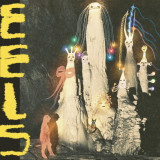
Speckled Dragon Egg Color Vinyl. Being Dead knows how to make an entrance - within the first several seconds of EELS, the duo's new record, the bright, hard-strummed guitar line on "Godzilla Rises" conjures cinematic immediacy, a creature emerging from the depths of the ocean in campy, freaky stop motion, fittingly so. Being Dead's records are mosaics, technicolor incantations, each song its own self-contained little universe. And while the dreamlike EELS probes further into the depths of the duo Being Dead's psyche, it is, most importantly, in the year of our lord 2024, a 16-track record that is genuinely unpredictable from one track to the next: a joyous and unexpected trip helmed by two true-blue freak bitch besties holed up in a lil' house in the heart of Austin, Texas. They decamped to Los Angeles for two weeks to record with GRAMMY-winning producer John Congleton, writing songs for the record until days before they left. The radical shift in process was welcome - a good balance and a challenge, Congleton helping them find new ways to work and helping peel back the layers on the core of their songwriting. Being Dead has grown from a duo to a trio live, including bassist Ricky Motto (who is immortalized finally on record here, particularly in the giggles on "Rock n' Roll Hurts") The resulting EELS is a darker record, tapped more into the devilishness within, but it's also a more raucous, rougher ride sonically. There's heartbreak, excitement, enchantment, dancing - we move through it all at a high-octane pace. Falcon Bitch and Smoofy never want to do the same thing twice on any song, and they don't. From the pummeling garage rock distortion of "Firefighters" to "Dragons II," which appears in its demo form taped on a hand recorder, it's unexpected but intuitive, and, most importantly, singularly Being Dead. Like its animal namesake suggests, the songs on EELS are malleable, the record like slithering through murky waters or strange half dreams, mysterious and beautiful in how it moves, reflective in a wavering sheen. Dipping into each song feels like uncovering a new cavern, plunging into depths unknown but fully open to what will be revealed. On the album artwork, an illustration by the artist Julia Soboleva, there are some weird disparate spectral creatures, a stark glimmer against a cloudy darkness. It's a fitting encapsulation of Being Dead, exuding a welcoming, playful energy even if something foreboding lurks just beyond the pale - more out of frame that's left to uncover, no path unexplored, strange and beautiful in the light.
Green[23,95 €]
‘What makes Sex Swing so powerful is that they transcend the limitations of rock music. Their sound is so full of possibilities, violence, sexuality, sacrifice, even religion. If there was a future to look forward to for heavy guitar music, this is it’ The Quietus The locals call it Sop Ruak – eighty thousand square miles of mountains and mystery and unholy medicine. “It really is an endless seam of activity,” Sex Swing frontman Dan Chandler explains of Golden Triangle – both the title of their new album and the region between Myanmar, Thailand and Laos that inspired it. To know this contradictory corner of the world is to understand fully why the cult-beloved noise-rock artisans turned to it when writing their hotly-anticipated third full-length. The real-life Golden Triangle is a groundswell of both natural wonder and drug production, and who combines beauty and narcotic brutality better than Sex Swing? For a decade now, this
collective of revered UK underground musicians, comprising members of Earth, Mugstar, The Keep and Jaaw, have been pulling audiences into drug- like slipstreams with their alchemy of pummelling rhythms, towering guitars, and unrelenting saxophone through which glimmers of light occasionally pierce through. No wonder their Golden Triangle is an album telling distortion-shrouded tales from one of the most storied, enigmatic places on the planet, with enough invention within to fill eighty thousand miles and more.
Where does this violent, hypnotic aural travelogue take you within the Sop Ruak? The seven tracks that make up The Golden Triangle see the band – completed by bassist Jason Stoll, drummer Stuart Bell, guitarist Jodie Cox, synthesist/guitarist Oli Knowles and saxophonist Colin Webster – adventure first to ‘The Confluence of the Ruak and Mekong Rivers,’ full of shimmering orchestration and feather-light ambience. Then come stops in ‘Myawaddy’, named after a small town embroiled in bloodshed on the border of Myanmar
and Thailand, and ‘Boten, Route 13’ – sparked by stories of a seemingly endless stretch of road from Laos into China. Before long, listeners are plunged into ‘Hpakant’, one of the album’s most invigorating and singular moments, lyrically inspired by a jade mine in Myanmar, where the spoils of forced labour are exchanged for prostitution and methanphetamine. The result is a mesmerising slow-burn of sax, snaking rhythms and sinister spoken word courtesy of the Scottish-born Bruce McClure, who “took the theme and turned it into a sci-fi story of exploitation and vice,” explains the frontman. It’s a track that, like the rest of Golden Triangle, underlines the evolution Sex Swing have undertaken since forming in 2014. From the raw and primitive sounds of the self-titled debut full-length, followed up by the coruscatingType II in 2020. Sex Swing’s third effort retains those early primitive elements and adds layers of structure and complexity. Golden Triangle initial formation was that of programmed beats and bedroom recordings shared electronically in the height of the pandemic. Those ideas were then completed during intensive writing sessions at a secluded farm in Oxfordshire.
Album credits consist of recording by Stanley Gravett at Holy Mountain Studios in Hackney, mixing by Wayne Adams at Bear Bites Horse, mastering from James Plotkin, and the continued aesthetic collaboration with artist Alex Bunn. Golden Triangle bristles with a rawness familiar to fans of the British sonic punishers, but adds new elements indicative of a group never resting on their laurels or sitting in one place. Why would they, after all? There’s an entire world of mountains and mystery and unholy medicine out there to be explored. The Golden Triangle, it seems, is just the beginning.
Black[23,95 €]
‘What makes Sex Swing so powerful is that they transcend the limitations of rock music. Their sound is so full of possibilities, violence, sexuality, sacrifice, even religion. If there was a future to look forward to for heavy guitar music, this is it’ The Quietus The locals call it Sop Ruak – eighty thousand square miles of mountains and mystery and unholy medicine. “It really is an endless seam of activity,” Sex Swing frontman Dan Chandler explains of Golden Triangle – both the title of their new album and the region between Myanmar, Thailand and Laos that inspired it. To know this contradictory corner of the world is to understand fully why the cult-beloved noise-rock artisans turned to it when writing their hotly-anticipated third full-length. The real-life Golden Triangle is a groundswell of both natural wonder and drug production, and who combines beauty and narcotic brutality better than Sex Swing? For a decade now, this
collective of revered UK underground musicians, comprising members of Earth, Mugstar, The Keep and Jaaw, have been pulling audiences into drug- like slipstreams with their alchemy of pummelling rhythms, towering guitars, and unrelenting saxophone through which glimmers of light occasionally pierce through. No wonder their Golden Triangle is an album telling distortion-shrouded tales from one of the most storied, enigmatic places on the planet, with enough invention within to fill eighty thousand miles and more.
Where does this violent, hypnotic aural travelogue take you within the Sop Ruak? The seven tracks that make up The Golden Triangle see the band – completed by bassist Jason Stoll, drummer Stuart Bell, guitarist Jodie Cox, synthesist/guitarist Oli Knowles and saxophonist Colin Webster – adventure first to ‘The Confluence of the Ruak and Mekong Rivers,’ full of shimmering orchestration and feather-light ambience. Then come stops in ‘Myawaddy’, named after a small town embroiled in bloodshed on the border of Myanmar
and Thailand, and ‘Boten, Route 13’ – sparked by stories of a seemingly endless stretch of road from Laos into China. Before long, listeners are plunged into ‘Hpakant’, one of the album’s most invigorating and singular moments, lyrically inspired by a jade mine in Myanmar, where the spoils of forced labour are exchanged for prostitution and methanphetamine. The result is a mesmerising slow-burn of sax, snaking rhythms and sinister spoken word courtesy of the Scottish-born Bruce McClure, who “took the theme and turned it into a sci-fi story of exploitation and vice,” explains the frontman. It’s a track that, like the rest of Golden Triangle, underlines the evolution Sex Swing have undertaken since forming in 2014. From the raw and primitive sounds of the self-titled debut full-length, followed up by the coruscatingType II in 2020. Sex Swing’s third effort retains those early primitive elements and adds layers of structure and complexity. Golden Triangle initial formation was that of programmed beats and bedroom recordings shared electronically in the height of the pandemic. Those ideas were then completed during intensive writing sessions at a secluded farm in Oxfordshire.
Album credits consist of recording by Stanley Gravett at Holy Mountain Studios in Hackney, mixing by Wayne Adams at Bear Bites Horse, mastering from James Plotkin, and the continued aesthetic collaboration with artist Alex Bunn. Golden Triangle bristles with a rawness familiar to fans of the British sonic punishers, but adds new elements indicative of a group never resting on their laurels or sitting in one place. Why would they, after all? There’s an entire world of mountains and mystery and unholy medicine out there to be explored. The Golden Triangle, it seems, is just the beginning.
SPECKLED DRAGON EGG COLOR VINYL[23,49 €]
Black Vinyl[23,95 €]
PURPLE TREE FOG VINYL[23,95 €]
Speckled Dragon Egg Color Vinyl. Being Dead knows how to make an entrance - within the first several seconds of EELS, the duo's new record, the bright, hard-strummed guitar line on "Godzilla Rises" conjures cinematic immediacy, a creature emerging from the depths of the ocean in campy, freaky stop motion, fittingly so. Being Dead's records are mosaics, technicolor incantations, each song its own self-contained little universe. And while the dreamlike EELS probes further into the depths of the duo Being Dead's psyche, it is, most importantly, in the year of our lord 2024, a 16-track record that is genuinely unpredictable from one track to the next: a joyous and unexpected trip helmed by two true-blue freak bitch besties holed up in a lil' house in the heart of Austin, Texas. They decamped to Los Angeles for two weeks to record with GRAMMY-winning producer John Congleton, writing songs for the record until days before they left. The radical shift in process was welcome - a good balance and a challenge, Congleton helping them find new ways to work and helping peel back the layers on the core of their songwriting. Being Dead has grown from a duo to a trio live, including bassist Ricky Motto (who is immortalized finally on record here, particularly in the giggles on "Rock n' Roll Hurts") The resulting EELS is a darker record, tapped more into the devilishness within, but it's also a more raucous, rougher ride sonically. There's heartbreak, excitement, enchantment, dancing - we move through it all at a high-octane pace. Falcon Bitch and Smoofy never want to do the same thing twice on any song, and they don't. From the pummeling garage rock distortion of "Firefighters" to "Dragons II," which appears in its demo form taped on a hand recorder, it's unexpected but intuitive, and, most importantly, singularly Being Dead. Like its animal namesake suggests, the songs on EELS are malleable, the record like slithering through murky waters or strange half dreams, mysterious and beautiful in how it moves, reflective in a wavering sheen. Dipping into each song feels like uncovering a new cavern, plunging into depths unknown but fully open to what will be revealed. On the album artwork, an illustration by the artist Julia Soboleva, there are some weird disparate spectral creatures, a stark glimmer against a cloudy darkness. It's a fitting encapsulation of Being Dead, exuding a welcoming, playful energy even if something foreboding lurks just beyond the pale - more out of frame that's left to uncover, no path unexplored, strange and beautiful in the light.
Ruby Wine Vinyl. Manchester UK's Space Afrika make music of what they term "overlapping moments" - oblique mosaics of dialogue, rhythm, texture, and shadow, half-heard through a bus window on a rainy night. Honest Labour, the group's first full-length since 2020's landmark hybtwibt? (have you been through what i've been through?) mixtape, expands the project's palette with classical strings, shimmering guitar, and visionary vocal cameos, leaning further into their enigmatic fusion of ambient unrest and cosmic downtempo. It's a sound both fogged and fragmented, at the axis of song craft and sound design, born from and for the yearning solitudes of life under lockdown.The album title is tiered, alluding to a legendary patriarch from co-founder Joshua Inyang's Nigerian family tree (who was lovingly called "Honest Labour" for his loyalty and resilience) as well as the nature of self-designated work, such as Space Afrika's music - a "labor of love" in its truest sense. With fellow co-founder Joshua Reid recently relocated to Berlin, the pair began sharing files last fall, piecing together poetic vignettes of looping haze and found sound, inspired by the notion of "records that leave an impression, and help the listener deal with their life." As the isolation of Covid compounded with the worsening winter, the songs skewed increasingly introspective and emotive, reflecting a mood of dissipating futures and the infinite nocturnal unknown.The artists cite two core motivations for Honest Labour: to transcend the sum of their influences, and "to show what we're capable of." Both ambitions are entirely realized. The collection's 19 tracks flow with a synergy and sophistication as rare as they are radical, untethered to the dusty dub-techno templates of Space Afrika's early years. These are interstitial anthems, expressionistic and open-ended, delirious but deliberate, attuned to the drift and dreamstate of the present moment: "Ultimately this is an homage to U.K. energy, and an album about love and loss."
Permanent Parts is the second album released by visual artist Katharina Grosse (synthesizer) and musician Stefan Schneider (synthesizer; So Sner, To Rococo Rot). Grosse and Schneider were joined at Galerie Max Hetzler on 29 April 2023, performing as part of the Spectrum without Traces exhibition, by three artists who all generally work within improvised music – Carina Khorkhordina (trumpet), Tintin Patrone (trombone and electronics), and Billy Roisz (noise generator, piezo and mini cymbal). Permanent Parts is an extraordinary set of recordings that inhabits multiple zones at once: within its thirty-five minutes, we can hear the interactions of non-idiomatic collective music making, and the electronic glimmers of electro-acoustics, while, at the same time, the music remains untethered to genre.
This capacity to work within liminal zones makes perfect sense when thinking about both Grosse’s and Schneider’s prior work, whether the energetic diffusions and spatial explorations of Grosse’s artistic practice, or the slippery texturology of Schneider’s recent work with electronics. Khorkhordina, Patrone and Roisz all find their own ways into this dynamic, too, and Permanent Parts feels like an equal exchange of presence and contribution; there are no hierarchies here. This might explain the music’s curious sense of development, where several elements are allowed to exist alongside each other, not in direct contact but in a mode that’s somewhere between carefree layering and unconscious juxtaposition. The musicians are listening, but not just with their ears – their skin, their bodies are hearing, too.
When talking about Permanent Parts, Schneider is careful to place it within contexts that are specific, to some degree, but which allow for difference to blossom. “Although it was recorded live, it somehow was not meant to be a documentation of a live event in the first place. The five piece line up that appears on the record had met for the first time only a few hours before the concert took place.” While it might take a leap of faith for all parties to walk together, and so willingly, into a place of such freedom, of such risk, there is clear sympathy here between the musicians, and a shared appreciation of the immediacies of the situation.
It also throws some of our preconceptions about this music out of the window. “The record does not feel like a document of a performance as the music was not pre-composed and there was no reference,” Schneider continues. “Perhaps it was not even an improvisation?” For Grosse, her musical relationship with Schneider similarly shakes free from expectation: “My sound does not exist without Stefan’s. It is neither written down nor is it improvised. It is instantaneous.” When thinking about the five-piece exploration on Permanent Parts and asked to expand on what each musician brings to the table, she continues, “We all love the thrill of an unknown encounter and we seem to have a need for building connections through the thicket of our voices.”
There’s a curious phrase on the back cover of the album, before the artists are listed: “Wir sind eine Batterie / We are a battery.” This sums up the spirit of Permanent Parts. Schneider recalls that Grosse said this phrase to the musicians at the start of the performance. Grosse explains further, “The figure of the battery referred to our placement in the space building out a small circle facing one another from where the sound could spill into the impressive volume of the gallery.” The battery as an arrangement of similar devices; but I also think of charge, and the conversion of chemical energy, and of fortification. It’s a poetic metaphor that sums up much of the febrile pleasure of the music contained on these Permanent Parts.
– Jon Dale, Melbourne
Few bands are as primed to capture their ecstatic live energy in masterful sonic detail like Terry Gross. Composed of three renowned engineer/producers (recording artists like Wooden Shjips, Moon Duo, Earthless, Big Business, and more) whose studio doubles as their jam spot and communal gathering place, the trio"s penchant for longform psychedelic escapades is able to be recorded with granular precision. The potency of the fellowship formed by drummer Phil Becker (Lower Forty-Eight, Peace Creeps, Pins of Light), bassist Donny Newenhouse, and guitarist Phil Manley (Trans Am, Oneida, Life Coach) lies in their ability to utilize their prowess as both players and record engineers to translate feeling with immaculate clarity. On Huge Improvement, Terry Gross embody a complex web of emotion with songs as ferocious and precise as they are agile and care-free, delighting in the catharsis of excising tension alongside one"s most trusted peers. Huge Improvement"s tongue-in-cheek title is rightfully earned. Like their debut Soft Opening, the pieces on Huge Improvement began as improvised studio jam sessions without expectations. The trio"s ability to plug in, play and have each experiment thoroughly documented opens up unparalleled avenues for further exploration and honing. The four mammoth slabs that make up Huge Improvement are driving, unrelenting excursions into the unknown. Whether burning white-hot or smoldering in plumes of smoke, the pieces stretch as much inwardly as they do cosmically, embracing every surprising turn. Terry Gross"s Huge Improvement morphs the trio"s search for communal connection and reprieve into a transcendent respite, a burst of focused energy to be enveloped in while facing the senselessness around us with a smile.
The contributions Black women have made to the growth of rock & roll cannot be overstated, from the genre’s beginnings to the present day. Embracing this legacy, world renowned poet jessica Care moore and prolific performer Steffanie Christi’an have joined forces to form We Are Scorpio, an explosive new project blending rock & roll with poetry. A leading voice of her generation, moore has performed on stages across the globe, written acclaimed books and plays, and recorded her poetry with artists like Common, Nas, Jeezy, Karriem Riggins, Jeff Mills, Roy Ayers, Jose James, and more. Her latest foray into music is We Are Scorpio, a unique take on modern rock sparked by chemistry with fellow Detroit native Christi’an and encapsulating an undeniable Black femme punk energy. Joining a long line of Detroit artists who spoke truth with force across genre and gendered borders, the duo is now unveiling its self-titled debut album. With unapologetic vocals and rapid-fire poetics occupying the same space as head-banging guitar riffs, the collection features appearances by talented artists like Talib Kweli, Sada Baby, Divinity Roxx, Niko Is, and Militia Vox. Expansive but intimate, We Are Scorpio delves into parts unknown with fiery purpose.
Ginger Root ist das Projekt von Cameron Lew aus Südkalifornien. Seit seiner ersten Veröffentlichung 2017 vermischt der Multi-Instrumentalist, Produzent, Songwriter und visuelle Künstler handgemachten, aber makellos polierten Synth-Pop, Alt-Disco, Boogie und Soul zu einem Sound, den er selbst als "aggressiven Fahrstuhl-Soul" beschreibt. Durch seine Linse als asiatischer Amerikaner, der mit der Musik der 1970er und 80er Jahre aufgewachsen ist, nimmt eine Musik Gestalt an, die insbesondere den kreativen und kulturellen Dialog zwischen japanischem City Pop und seinen westlichen Gegenstücken von French Pop über Philly Soul bis hin zu McCartney der Ram-Ära hervorhebt. SHINBANGUMI ist seine dritte LP und die erste für sein neues Label Ghostly International. Lew zeigt sich auf SHINBANGUMI gelassener, eigenwilliger und bewusster denn je und bringt genau das zum Vorschein, wonach sich Ginger Root anhören und anfühlen sollte. Die Leadsingle "No Problems" fungiert mit singbaren Basslines, schwungvollen Gitarrenriffs und cleveren Keyboard-Hooks als Eröffnungssequenz und als Brücke zu neuem Terrain. Für Fans von L'Imperatrice, Toro y Moi, Unknown Mortal Orchestra, Thundercat, Crumb, Khruangbin. ENGStep inside the world of Ginger Root. Cameron Lew makes it easy to do so; every considered detail is his own manifestation, written, designed, and executed as an all-encompassing diorama of sound and sight. A multi-instrumentalist, producer, songwriter, and visual artist from Southern California, Lew has crafted his project steadily since 2017, inviting a fervent and growing legion of fans into storylines drawn across mediums: captivating albums with accompanying films and globe-spanning tours. The Ginger Root sound _ handmade yet immaculately polished synth-pop, alt-disco, boogie, and soul _ takes shape through Lew's lens as an Asian-American growing up enamored by 1970s and '80s music, specifically the creative and cultural dialogue between Japanese City Pop and its Western counterparts from French Pop to Philly Soul to Ram-era McCartney. He spins his retro-minded influences and proliferates savvily in the present, synthesizing a songwriter's wit, an editor's eye, and a producer's resource into something singular and modern. SHINBANGUMI, his long-awaited third LP, and Ghostly International debut set for physical release in 2024 with a visual album component, translates roughly to a new season of a show. It finds Lew more poised, idiosyncratic, and intentional than ever in a new chapter of life, unlocking "exactly what Ginger Root should sound and feel like," he says. "In terms of instrumentation and musicality, it's the first time that I felt very confident and comfortable with what everything should be comprised of. On the more personal side, I'm coming out of the last four years of writing, touring, and living as a different person; SHINBANGUMI is a platform to showcase my new self."
Inspired by the cassette packs shared amongst friends on the playgrounds of the 90’s, Tape Pack’s debut release on new imprint, Loom Recordings, aspires to communicate the essence and spirit of golden-era jungle/D&B, updated to incorporate influences from today’s thriving and diverse electronic music community. Too young for the rave in ’95 but buying records and experimenting with production since the early 00’s, the time has finally come for Tape Pack to kick things up a notch and start sharing the output. Classic meets modern – elements from the past, the present and the future, weaving the fabric for LOOM-001, with LOOM-002 and LOOM-003 already in the pipeline.
Loom’s debut release is accompanied by a special event on August 24th, 2024, at The Glove That Fits, London. Artists on the night to include: Datassette, Equinox, Forest Drive West, Kid Drama, L Major and more.
Dark Entries and Honey Soundsystem Records have teamed up once more to release the final volume of gay porn soundtracks by San Francisco-based musician and producer, Patrick Cowley. One of the most revolutionary and influential figures in the canon of disco, Cowley created his own brand of Hi-NRG dance music, The San Francisco Sound.' Born in Buffalo, NY on October 19, 1950, Patrick moved to San Francisco in 1971 to study at the City College of San Francisco. He founded the Electronic Music Lab at the school, where he would make experimental soundtracks by blending various types of music and adapting them to the synthesizer.
By the mid-70's, Patrick's synthesis techniques landed him a job composing and producing songs for disco superstar Sylvester, including hits like You Make Me Feel (Mighty Real)', Dance Disco Heat' and Stars.' This helped Patrick obtain more work as a remixer and producer. His 18-minute long remix of Donna Summer's I Feel Love' and his production work with edgy New Wave band Indoor Life were both of particular note. By 1981, Patrick had released a string of dance 12 singles, like Menergy' and Megatron Man'. He also had founded Megatone Records, the label upon which he released his debut album, Menergy'. Around this time Patrick was hospitalized and diagnosed with an unknown illness: that which would later be called AIDS. Throughout 1982, he recorded two more Hi-NRG hits, Do You Wanna Funk' for Sylvester, and Right On Target' for Paul Parker, as well as a second solo album Mind Warp'. On November 12, 1982, he passed away.
In 1979 Patrick was contacted by John Coletti, owner of famed gay porn company Fox Studio in Los Angeles. Patrick jumped on this offer and sent reels of his college compositions from the 70s to John in LA. Coletti then used a variable speed oscillator to adjust the pitch and speed of Patrick's songs in-sync with the film scenes. The result was the VHS collections Muscle Up' and School Daze' released in 1979 and 1980. Afternooners' is the third collection of Cowley's instrumental songs, recorded in May 1982. These recordings were culled from two 23-minute reels in the Fox Studio vaults. All songs were originally untitled, so we've used the titles from Fox Studio's 8mm film loops. This compilation also includes three bonus tracks found in the archives of fellow Megatone Records recording artist Paul Parker and the attic of teenage friend Lily Bartels. Influenced by Tomita, Wendy Carlos, and Giorgio Moroder, Patrick crafted a singular sound from his collection of synthesizers, percussion, modified guitars, and hand-built equipment. The listener enters a world of forbidden vices, evocative of Patrick's time spent in the bathhouses of San Francisco. The songs on Afternooners' reflect the advances of the equipment available at the onset of the 1980s. Cowley's unadulterated electronic forms are stripped down and dubbed up. Lush electronic percussion, soaring synthesizer riffs and low slung funk grooves comingle on these magnificent soundscapes.
Featuring 70 minutes of music never before released on vinyl. All songs have been remastered by George Horn at Fantasy Studios in Berkeley, CA. The vinyl is housed in a gatefold jacket designed by Berlin-based artist Gwenael Rattke, featuring black and white photos of Patrick in his studio that opens to a full color array of x-rated scenes from the Fox Studio vaults. Included is a fold-out poster featuring a handmade collage using photography and xeroxed graphics of classic gay porn imagery and an essay from Drew Daniel of Matmos. For Patrick's 67th birthday, Dark Entries and Honey Soundsystem Records present a glimpse into the futuristic world of a young genius. These recordings shed a new light on the experimental side of a disco legend who was taken too soon.
Steve Moore returns to the library music fold and it's a total doozy: Cursed Objects is truly sensational prog-synth-wave. Featuring epic electronic explorations with chamber music and symphonic flourishes, it's our favourite thing Steve has ever done. In keeping with the horror heat of the music contained within, this vinyl release is frighteningly limited, with just 500 pressed for the world.
New York-based multi-instrumentalist/producer/film composer Steve Moore is probably best known for his synthesizer and bass guitar work as Zombi, together with Anthony Paterra. But he is also part of Miracle and Titan as well as being a prolific solo artist releasing music as Gianni Rossi, Lovelock and under his own name. Steve’s music has found a home across hallowed labels like Future Times, Mexican Summer, LIES, Static Caravan, Kompakt, Death Waltz, Ghost Box and, of course, Be With Records.
Steve released Cursed Objects for fresh library label Fold. Run by ex-KPM head Paul Sandell, it's a library with values we can all get behind. It's the first production music platform working exclusively with independent labels, publishers and artists to create a truly authentic artist-led sound, at production music rates. Here's what Steve had to say: "I had worked with Paul before, at KPM. After he left, he mentioned that he had started a new library - Fold - and I was very interested in being a part. And I happened to be working on a bunch of music at the time that I thought could fit." So here we are!
The LP opens by letting in "The Uninvited One". Calm and relaxed arpeggiated synths build around sweeping strings and plucked harp to create a mystical and hopeful feel. The title track sees dark synths merge and swell with a piano, string and harp melody that is dark, mysterious and brooding. "Evolutionary Steps" is an electro synthwave track that builds with epic strings and beats, offering an expansive and dreamy approach with a mystical and driving rhythm. Next up, "The Icarus Feather" is daring, pulsing and cinematic synthwave that builds with arpeggiated synths to a hopeful end. "Daily Affirmations" offers calm and meditative ambient synths with plucked harp and strings for a reflective, peaceful, daydreamy feel.
“Mesmer's Bauble” ushers in side two, its dark synth backing builds with plucked harp and strings building with a sense of unknown and dread; it's introspective and heartfelt. "Quiet Springs" is all mystical synths, harps and strings, building to an epic panoramic scope with a hopeful and poignant atmosphere. "Festival Of Samhain" presents a dark and brooding piano melody which builds with synths and strings to create a slow and desolate feel. "The Icarus Feather (Revisited)" is epic building synthwave with arpeggiated synths and strings and a driving rhythm - the beat builds with the strings entering a forceful and marching mood. To close, "Shard Of Medusa" rides a serious and dark piano melody and, in concert with harp and strings, it creates a suspenseful and solemn atmosphere.
Steve recorded Cursed Objects, as always, at his home studio in Albany, NY. For synths, he mostly used his trusty Prophet 6, as well as his Moog Minitaur and lots of Korg Polysix too. But he also utilised a lot of virtual instruments - he doesn't have the budget for a full string section, or a harpist, alas.
The album’s cover was designed by Chris Stevenson. The artwork is a nod to first wave cyberpunk and in particular Neal Stephenson’s Snow Crash and the idea of mind viruses and cursed data. Mastering for this vinyl edition was overseen by Be With regular Simon Francis, and it was cut by the esteemed Cicely Balston at AIR Studios to be pressed in the Netherlands by Record Industry. Far from being cursed, this is another future classic library LP.
- A1: Big Majestic
- A2: Spiritual Sun (Feat. Shabaka Hutchings)
- A3: Sunrisein Central Park
- A4: Alone On Mulholland
- A5: West Coast Sky Forever (Feat. Kronos Quartet)
- B1: Primrose Hill(Feat. Shabaka Hutchings)
- B2: Strawberry Hill Descent (Feat. Nadia Sirota And
- Gabriel Cabezas)
- B3: Sunset In Ueno Park
- B4: Blue Sky | Mirrored Glass (Feat. James
- Mcvinnie)
- B5: Pavilion In Thetrees Pt. 2 (Feat.lisel)
- B6: Mt.lee+ Step Lightly Now (Feat. Riley
- Mulherkar)
Ambient Maximalism in Synths, Strings, Harps, and Horns. A sonic excursion, taking inspiration from public parks across the globe, Big Majestic features Kronos Quartet soaring above desert vistas on West Coast Sky Forever, Shabaka Hutchings' kaleidoscopic shakuhachi and tenor saxophone meditations on Spiritual Sun and Primrose Hill, James McVinnie performing an electrifying synth organ epic on Blue Sky | Mirrored Glass, and the otherworldly voice of Lisel beckoning the listener into the unknown.
American Pulitzer Prize winning composer and sound artist Ellen Reid is set to release ‘Big Majestic,’ an album of music written for her acclaimed GPS-enabled work of public art, Ellen Reid SOUNDWALK, that reimagines urban parks as interactive soundscapes. The album features performances by the Kronos Quartet and Shabaka Hutchings. SOUNDWALK premiered in New York's Central Park, and continues to expand to urban parkland around the world, including Los Angeles' Griffith Park, London's Regent's Park & Primrose Hill, and Tokyo's Ueno Park. The project has already been featured on NPR, the New York Times, the Washington Post, and the LA Times.
Introducing ‘Total Blue’, the Los Angeles-based trio of Nicky Benedek, Alex Talan, and Anthony Calonico. Despite collaborating for over a decade, ‘Total Blue’ represents a new chapter in their artistic journey together as a trio.
Embracing chance, inviting the unknown, and guided by a spirit of sheer play and exploration, ‘Total Blue’ was driven by a desire to ‘touch the beyond’ in pursuit of an elusive vibe the three had been chasing for years.
Alex, Nick, and Anthony envision ‘Total Blue’ as the all-encompassing full picture, a place where the real and the imaginary begin to blur; a destination reached not through escapism but by expanding one's perspective; a widened scope of vision where personality both shines and disintegrates.
Across the album, their mission statement is expertly achieved with subtlety and delicate human touch; painting with a lush palette of digital synths, Akai EVI wind synthesizer, fretless bass, and guitar, the trio masterfully balance texture and color, evoking wide expansive vistas that stretch from Los Angeles right out to the furthest reaches of sky and sea. This is ‘Total Blue’ - a place of time and timelessness where echoes of history and tradition merge with rootless inhuman sonics.
Art and design by Michael Willis.