
нет на складе
Закажите сейчас, и мы закажем товар для вас у нашего поставщика.
Последний логин: 9 мес. назад
11,56 €
Закажите сейчас, и мы закажем товар для вас у нашего поставщика.

Blackwater Label’s Goldenboy sub-label third chapter is an ode to the immensity and vastness of the sea, a journey across deep waters, uncertain ports and endless horizons. "Never Give Up" is dedicated to the memory of Alessio Fantozzi, a pioneer of the waters whose spirit continues to resonate through those who choose to venture beyond the shore. This four-way collaboration is our tribute to him: four artists, four visions, one voyage into the unknown. Loris Ligonzo opens the journey with "Subalpine Nocturne", a Balearic-tinged deep house excursion that invites us to dive into the sonic ocean Blackwater has been navigating for more than a decade, warm, hypnotic and submerged. With "Apparently", T/Error brings us into an unsafe and gloomy harbour. Dark electro and suspended tension create the feeling of a vessel waiting to depart, caught between the certainty of the shore and the call of new waters. Stefano Rocchi contributes "Mushy", acting as the propulsion system of our pirate vessel, the Blackwater Ship. Acid-infused electro drives the journey deeper into the abyss, with no fear for those who trust the... more credits releases September 24, 2026 Written and Performed by V/A Mastered by Stefano Rocchi at Niumen Studio,Rome Produced by Blackwater Label, 2026 Distributed by Triple Vision, Rotterdam Nvmqvam Cede // Vsqve Ad Finem
Есть у нас в наличии и готов к отправке

он должен быть опубликован на 02.10.2026

он должен быть опубликован на 02.10.2026

он должен быть опубликован на 02.10.2026
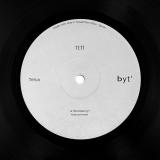
byt’ continues its eclectic journey with the third release in its catalogue. This chapter sees the return of Telva, shifting into a new frequency with a story born between 11.11 and a full Taurus moon back in 2024 in Berlin. The composition recorded in a single take, is articulated through a dreamy, electronic, minimal house, and vocal infusion. Left as romantic and unrestrained as the artist’s reverie, it is preserved in its raw form to protect its intimacy.
“Every record I make is a guide towards a better understanding of all that I can be. 11:11 is a fragment of a special spark I experienced, which peeled back another layer of myself enriched by the lessons along the way, until finally holding it in my hands today. What started as an epiphany on Heideglühen’s dance-floor unfolded into a kiss of destiny, a fleeting delirious love affair, and a quest of passion that hugged my memory, compelling me to revisit my early days. An endeavor of surrender, no matter how unknown, unconventional or uncertain it all may feel. To finally have the courage to let it be messy, raw and true, so that I stand naked once again, while daring to honor the absence of order as part of the magic and mystery of life.” - Telva
он должен быть опубликован на 02.10.2026
Underpinned by spoken folktales stretching from Indonesia to Poland, a new collaborative EP from Warszawa/Berlin-based Jerzy Mączyński and London-based Flora Yin-Wong arrives via Accidental Meetings. Demons rising from the wind, unknown beings lurking in the forest — the record conjures a landscape built from heady layers of saxophone and the tormented strings of zither, harp and kemence.
Recorded across two intense studio sessions, the EP also features idiosyncratic contributions from London-based guest vocalists and musicians Aga Ujma and Laila Sakini.
Flora Yin-Wong is a London-born experimental sound artist and writer of Chinese and Malaysian heritage, known for weaving field recordings and traditional instruments. Her album Holy Palm (Modern Love) and book Liturgy (PAN) cemented her as a singular voice in experimental music today.
Jerzy Mączyński is a Polish saxophonist, producer and composer whose jazz training feeds into genre-melting work spanning kosmische, prog, industrial techno and minimalism. One of his collaborations being a record of free jazz and rhythmic cubism with Chicago's Hieroglyphic Being.
Есть у нас в наличии и готов к отправке

Meet Matas Petrikas, a music producer, DJ, and book author with a passion for electronic music. Born in Lithuania during the time when it was still a part of the Soviet Union, Matas began experimenting with electronic sounds during his teenage years using self-built instruments and recording equipment. In 1991, Matas took a trip to Berlin that would change his life forever. There, he encountered the early years of techno culture, which led him to co-found EXEM, one of the first house and techno bands in the former Soviet space. With EXEM, Matas was one of the pioneers of electronic dance music in Lithuania, and by the end of the decade, they had charted numerous hits. They performed live shows ranging from intimate clubs to massive arenas, sewing the seeds of the local electronic music scene. Since then he relocated to Berlin and has forged a musical solo career focused on live-sets, experimentation, and authoring the book 'The Joy of Electronic Music'. The Unknown is Matas’ first release on his newly formed imprint Dangė Records, focused on supporting electronic music from Lithuania and the Baltics. The 6 track EP forges his love for texture heavy hypnotic techno with industrial and warehouse leaning low end and percussion. Although mainly an EP rooted in driving a groove, the use of earworm worthy basslines, rave breaky drums, and squelchy lead synths is where Matas’ long career foray into many genres of electronic music shines through. Dangė Records releases electronic music from Lithuania and the Baltics—sounds that emerge from underwater, carried by artists who inherited the weight of transformation.
он должен быть опубликован на 09.10.2026

Товар уже находится на пути к нам и, как ожидается, будет доставлен из 09.10.2026.

Lost Soul Super Rarity “Here I Am Baby” by Lady Jane reissued by Athens of the North
Rare 1980 Detroit funk-soul LP finally surfaces after 45 years, revealing a powerful story of survival and artistic resilience
Edinburgh based label Athens of the North is pleased to announce the reissue of Here I Am Baby, the only studio album by soul and funk vocalist Lady Jane (Jane Brice), originally recorded at Studio A, in Dearborn Heights and privately released in 1980.
Lady Jane recorded these sessions during a turbulent period in Detroit in the late 1970s, working with respected engineer Eric Morgeson and a studio band on material largely written by her then-husband. The album remained virtually unknown for decades, with copies destroyed in a flood and masters held by her ex-husband. A chance discovery by Friends of Sound Records founder David Haffner in 2022 set the reissue in motion. Remarkably, before his death, Jane’s ex-husband returned the original master tapes to her—yielding not only the complete multitracks for Here I Am Baby, but an entire album’s worth of unreleased material, also coming soon on AOTN.
Here I Am Baby showcases Jane’s extraordinary voice across a compelling blend of soul, funk, and disco, from the opening ballad through heavy funk excursions like “Never Lived In The Ghetto” and “Space Flight.” The album’s final track, “She’s A Star” - the only song Janewrote herself - carries profound personal significance. Recorded without her husband’s knowledge, the song directly addresses her survival of childhood sexual abuse and stands as a moving testament to resilience and self-belief.
Now an ordained minister, Jane Brice has spent decades away from the spotlight. But her voice—at once forceful, delicate, and vulnerable—deserves to be heard. Newly mastered from the recovered tapes, Here I Am Baby and the forthcoming Miss Disco present not merely a rare funk-soul artifact, but a powerful document of a woman’s courage in reclaiming her own story.
он должен быть опубликован на 09.10.2026

Товар уже находится на пути к нам и, как ожидается, будет доставлен из 09.10.2026.

Есть у нас в наличии и готов к отправке

он должен быть опубликован на 15.10.2026

Есть у нас в наличии и готов к отправке

The latest transmission from Shadow Pressings comes courtesy of an unknown artist, with identities, backstories and social media profiles left at the door without a calling card. Five cuts of shadowy, hardware-focussed house music - no lengthy bios, no distractions, just some killer club grooves to move to.
он должен быть опубликован на 16.10.2026

он должен быть опубликован на 16.10.2026

он должен быть опубликован на 16.10.2026
The mysterious Ceiling Chess label launches with a double header 12” single.
Weird sample-based garage laced with rumbling bass & chopped up loops designed for the rave.
This artist has set tongues wagging with people guessing which London based producer could be behind these enigmatic cuts.
он должен быть опубликован на 16.10.2026

Есть у нас в наличии и готов к отправке

Есть у нас в наличии и готов к отправке

• STRICTLY LIMITED, HAND-NUMBERED COLLECTOR’S BOX — ONLY 350 COPIES
• EXCLUSIVE COLORED BOX WITH REFINED SPOT LACQUER FINISH
• 180G VINYL – EACH RECORD IN AN INDIVIDUAL PRINTED SLEEVE
• INCLUDES OFFICIAL BM BAG, POSTER, AND STICKER — EXCLUSIVE TO THE 20 YEARS BM EDITION
• CELEBRATING 20 YEARS OF BM — 20 SELECTED TRACKS
• AVAILABLE EXCLUSIVELY ON VINYL
20 Years of BM — Anniversary Vinyl Box Set
For two decades, Bondage-Music has stood for timeless underground house music, consistently shaping its own path through deep grooves, warm textures, and uncompromising dancefloor aesthetics. Founded with a clear artistic vision and an enduring passion for vinyl culture, the label has grown into an internationally respected platform for forward-thinking electronic music while always staying true to its roots.
To celebrate its 20-year anniversary, Bondage-Music proudly presents a strictly limited collector’s edition that captures the spirit, sound, and evolution of the label across two remarkable decades.
20 Years of BM brings together 20 exclusive tracks by artists who have played an essential role in the label’s journey, alongside close friends and longtime companions of the BM universe. Carefully curated across five heavyweight vinyl records, the compilation reflects the musical identity that has defined Bondage-Music since day one: deep, soulful, dub-infused, and emotionally driven house music designed for both intimate listening and late-night dancefloors.
The anniversary box features exclusive contributions from artists such as Roger Gerressen, Sascha Dive, Mihai Popoviciu, Steve Bug, NTFO, Markus Homm, Tuccillo, Politics Of Dancing, Rhadow, Andre Kronert, and many more — representing different generations and shades of the Bondage-Music sound.
Pressed on heavyweight 180g vinyl, each record is housed in an individual printed sleeve and presented inside a specially designed colored collector’s box with refined spot lacquer finish. The visual identity of the anniversary edition was created by Pete Bombart — BM’s longtime Head of Artwork, close friend, and an integral part of the label since its early days. His unmistakable artistic language has become deeply connected to the Bondage-Music universe over the years, building a loyal following that extends far beyond the music itself.
Strictly limited to only 350 hand-numbered copies worldwide, the release also includes an exclusive BM bag, poster, and sticker set created specifically for this anniversary edition. More than a compilation, 20 Years of BM is a reflection of the label’s history, community, and enduring dedication to underground electronic music culture. 20 tracks for 20 years — available exclusively on vinyl.
Twenty years later, the journey continues — driven by passion, friendship, and a shared love for timeless electronic music.
Tracklist
VINYL 1 (URSUS)
A1 - ROGER GERRESSEN - PATTERNED SHARDS
A2 - SASCHA DIVE - DUB CHRONICLES #10
B1 - RHADOW – RIPPLES
B2 - LOLA PALMER - SLOW DOWN
VINYL 2 (ARIES)
A1 - ALEXANDER MATCHAK – JOURNEY
A2 - ANDRE KRONERT - BLUE DRIFT
B1 - MIHAI POPOVICIU - TIME GOES BY
B2 - PORNBUGS & FRINK - SAVE OUR SOULS
VINYL 3 (MURIS)
A1 - MARKUS HOMM - MISSING PIECES
A2 - DILBY & PORNBUGS – DECADES
B1 - LOLU MENAYED – FLUX
B2 - CRISTINA LAZIC FEAT. LIKA - WORLDS UNKNOWN
VINYL 4 (LEO)
A1 - STEVE KELLEY & PORNBUGS - CANNING TOWN
A2 - DUST YARD – SHADOWS
B1 - POLITICS OF DANCING – PARTY
B2 - NTFO – BORUGA
VINYL 5 (AQUILAE)
A1 - STEVE BUG & PORNBUGS – SHARED ORBIT
A2 - TUCCILLO – FANTASIA
B1 - STEFAN BRAATZ FEAT. VALENCE – MEMORIES
B2 - EL MUNDO & TAL GROENMAN - MORNING LIGHT
он должен быть опубликован на 23.10.2026
он должен быть опубликован на 23.10.2026

Molecular Recordings – Structure Series 3
The framework expands.
Structure Series 3 marks the next instalment in Molecular Recordings' ongoing vinyl series, bringing together a selection of artists connected by a common language: deep, functional, uncompromising techno.
Forged between machine pressure, hypnotic movement, and warehouse energy, the release continues the label's tradition of spotlighting both respected figures and emerging producers without distinction. The focus remains where it has always belonged — on the music itself.
Across four cuts, Structure Series 3 moves through shifting textures and intensities, balancing raw groove, atmospheric depth, and precise rhythmic architecture. Built for sound systems rather than algorithms, these tracks are designed to reveal their full weight in the physical space of the dancefloor.
Three decades after its foundation, Molecular Recordings continues to operate beyond trends and short-lived cycles, remaining committed to authentic underground techno and the artists shaping its future.
Structure Series 3 is another transmission from the Molecular network: Built from experience, driven by instinct. Structured for the underground
Есть у нас в наличии и готов к отправке

Cold, Bold & Together (CBT) CBT was founded in Bellingham, Washington in 1971 by percussionist Tony Gable and musicians Solomon Harris, Keith Hooks and twin brothers TC & Jamar Jenkins. It soon became evident that Bellingham was not a particularly welcoming environment for R&B music, so they moved to Seattle to try their luck and plumb the rich supply of venues, which they successfully did until disbanding in 1978. They spent their early Seattle years playing a combination of covers and originals in clubs, later becoming the "go to" opening act for various nationally known artists, such as Ohio Players, Kool and the Gang and Earth, Wind & Fire. While they were paying their club circuit and opening act dues, they squeezed in recording sessions whenever they could and released their own material, which was well-received and got strong regional airplay. However, because of the feudal nature of the music business at the time, they just couldn't break out, and like a lot of Northwest bands with great potential, they inevitably broke up and went their separate ways. Upon disbanding, they left behind a collection of original recordings at Seattle's legendary Kaye-Smith studios.
Unfortunately for CBT, the studio passed through several owners and at some unknown point in time, one of them did the unforgivable and destroyed the storied studio inventory of two-inch tapes and quarter-inch masters. Unknown to the band, a copy of their masters was smuggled out by their producer who added them to his legacy collection of cloned quarter-inch masters. After several years and many moves, he became concerned about the tendency for magnetic tape to deteriorate over time.
He sent the tapes to a Seattle lab to be restored and digitized, with the hope that perhaps, some day, they might be made available for the listening pleasure of R&B fans. The hoped-for day has finally arrived. Russell Paine and Super Disco Edits has pressed two of the Kaye-Smith CBT tracks: "Go For It", a jazz-influenced instrumental, featuring Kenny G, and "Unity", sung by the group en masse with Tony Gable singing lead. The musicians on these tracks are: Tony Gable, leader, vocals and percussion Harry Alexander, drums Kenny Gorelick (now world-renowned "Kenny G"), sax, flute and horn arrangements Chris Ishi, trumpet Michael Young, Trombone Jamar Jenkins guitar, vocals TC Jenkins bass, vocals 1 Philip Woo, keyboards Footnotes: CBT gave legendary saxophonist Kenny G his start in the music business. Kenny was still in high school when he was recruited to play sax and write horn arrangements. Kenny co-wrote, arranged and played sax and flute on the instrumental "Go For It." He rips a smoking tenor sax solo in the middle, which showcases his already masterful technique and solidifies his R&B bona fides. He went on to have a spectacular career recording for Clive Davis and Arista Records. Before his untimely passing in 2016, Tony Gable went on to found contemporary Jazz group, "Tony Gable and 206" (206 being Seattle's then only area code). With songwriting, performance and production help from Kenny G.
Есть у нас в наличии и готов к отправке

With MYSTERIUM COSMOGRAPHICUM, the ALIEN CODE series opens a new transmission within the Cosmic Tribe universe — a speculative exploration of ancient futurism, extraterrestrial civilizations, sci-fi architectures and hidden technologies through electro-oriented sound research.
Across six tracks, the compilation moves through atmospheric electro, cosmic electronics, galactic basslines and contemporary machine-driven structures, combining cinematic tension with underground functionality.
MYSTERIUM COSMOGRAPHICUM unfolds as an episodic interstellar narrative — where each track operates like a different scene, transmission or passage within the wider ALIEN CODE universe.
For this transmission, Cosmic Tribe brings together an international selection of artists exploring contemporary electro and futurist electronic sound, featuring Raakel Bloody Raakel, Lups Digga, Aztronouth & Machinefunk, EC13, Lloyd Stellar and NOAMM.
Visually and conceptually, ALIEN CODE continues Cosmic Tribe’s investigation into lost and unknown civilizations, symbolic technologies and non-human futurist aesthetics — where ancient structures and ultra-advanced systems coexist beyond historical time.
он должен быть опубликован на 26.10.2026

Shape of the Unknown’ is kind of a double LP that fully embraces the idea of exploration. It is CHLOÉ’s most expansive and immersive work to date. ‘Shape of the Unknown’ is CHLOÉ’s fourth proper studio album. Its predecessor, ‘Endless Revisions’, was released in 2017. Nine years have passed. Nine years during which CHLOÉ has continued digging for music, DJing at internationally renowned clubs and festivals including Rex Club, Robert Johnson, Panorama Bar, Nuits Sonores, Glastonbury and many more, releasing EPs and remixes, while also allowing herself the time to explore entirely new creative paths.
The challenge is to capture the unknown, make it her own, endlessly reshape its textures, and ultimately preserve its mystery.
The first single ‘Drifter’, released back in June, already offered a striking glimpse of the sonic territories the album would venture into, driven by its hypnotically contoured basslines. The album's two other singles offer different windows into her world. 'Shapeshifter' captures CHLOÉ at her most hypnotic, balancing stripped-back techno and melodic house through deep rolling grooves, expansive bass chords and subtle rhythmic shifts that constantly reshape the listener's perception without ever disrupting the flow. Later, 'Repeating The Obvious' takes a more leftfield route, pairing staggered rhythms with retro-inspired harmonics and an understated indie dance pulse that feels simultaneously familiar and unpredictable.
CHLOÉ has ventured into live performance through new formats, notably alongside percussionist Vassilena Serafimova; immersed herself in film scoring with soundtracks for Paris la Blanche, Arthur Rambo, The Mountain, Blanquita, Guru and Unsubmissives; and developed compelling collaborations, from High Season, her project with Ben Shemie of Canadian band Suuns (which resulted in the album The Call), to her own organic, experimental audiovisual performances under the name Slo/Mo AV.
Throughout Shape of the Unknown, CHLOÉ blurs the boundaries between deep house, hypnotic techno, electronica and cinematic sound design with remarkable fluidity. The album unfolds as a continuous narrative rather than a sequence of tracks, moving effortlessly between beatless ambient passages, rolling analogue grooves and emotionally charged club music. Organic percussion, sweeping bass movements, melancholic harmonies and richly textured synthesisers create a body of work that constantly evolves, where no section feels static and every transition reveals another layer of depth. There is an unmistakable warmth running through the record, with grainy analogue textures and spacious production giving even its most driving moments an intimate, almost tactile quality.
The album’s title is no coincidence. It evokes a form that has yet to be named, something language itself struggles to grasp. CHLOÉ approaches it through an organic creative process. Each piece must first be performed in the studio, almost as if it were being played live. The album will be followed by a series of live performances and DJ sets, including a show at the Olympia on March 18, 2027.
She is joined by a handful of steadfast collaborators. Jazz trumpeter David Enhco appears on two tracks, ‘Undertow’ and ‘Inner Bass’. But above all, there are the voices: Ben Shemie lends his unmistakable presence to the radiant ‘More Than Just a Feeling’. Olivia Merilahti, singer, songwriter and one half of The Dø, appears on the otherworldly ‘TWYR’. Working with Olivia’s already hypnotic voice, CHLOÉ has approached it like a sculptor, enhancing its strangeness and dreamlike quality.
And finally, impossible to miss is the instantly recognizable voice of Kittin. A longtime accomplice, she lends her distinctive phrasing to CHLOÉ’s music here for the very first time. The strongest collaborations are often those that take their time, arriving only when the moment is right. Same kind, same bass, same vibe, same pride.
The result is an enigmatic, nocturnal record, drifting between introspective listening and dancefloor functionality, revealing an artist who remains far more interested in atmosphere, movement and emotional storytelling than conventional club structures. It is an album that invites us to dream more deeply and to dance again, both within ourselves and out in the open.
он должен быть опубликован на 30.10.2026

он должен быть опубликован на 30.10.2026

More old skool mash-up business from the Pillz Cru.
Есть у нас в наличии и готов к отправке
Ramjac Corporation, aka Paul Chivers, emerged from the UK's late-'80s rave underground, performing live at parties like Sunrise, Energy, Back to the Future, Fun-da-Mental and Synergy. Building tracks with an Atari computer and an E-MU 12-bit sampler, turning severe technical limitations into raw, elastic club music, 88-92: It is What it Was gathers music born in bedrooms then tested in front of crowds at warehouse raves, while the culture was still inventing itself without boundaries, completelyfree.
Ramjac was the original artist on Irdial Discs, following label founder Akin Fernandez's Aqua Regia, and introduced Lee Purkis' In Sync and Neuropolitique to the label, shaping the singular catalogue of that extraordinary imprint alongside Luke Slater's Morganistic, Thee J Johanz and Anthony Manning.
That legacy is now revisited by Musique Pour La Danse, with the release of a limited edition vinyl and digital edition featuring extended liner notes by Nick Halkes of XL Recordings, Positiva and Kicks Like A Mule fame, who witnessed the early Ramjac period first-hand. The release is illustrated by Grant Fulton, who created the visual identity for The Shamen's Synergy events and Orbital albums.
This album presents music written exclusively between 1988-92 and forms the foundation of Ramjac Corporation's ongoing live performances. Restored from the original floppy discs, the recordings preserve the uniquerelationship between early digital technology, sampling culture and live improvisation that defines the Ramjac approach.
Mixed for release for the first time by Trevor Lancaster-Smith, whose 90s engineering work encompassed Leftfield, Faithless and Roni Size, the album brings these compositions into sharp focus while preserving the character of the original instruments and performances. Not just a historical document, 88-92: It is What it Was is a living body of work: music created then, realised now, and continuing to surprise and evolve.
он должен быть опубликован на 06.11.2026

он должен быть опубликован на 06.11.2026
он должен быть опубликован на 06.11.2026

Есть у нас в наличии и готов к отправке

Есть у нас в наличии и готов к отправке

он должен быть опубликован на 20.11.2026
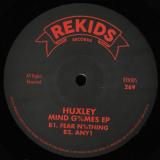
Huxley debuts on Rekids with the ‘MIND G%MES’ EP.
UK DJ, producer, and Dumb Safari label head Huxley joins Radio Slave’s Rekids for the first time with the ‘MIND G%MES’ EP, dropping 25th July 2025. The first track, ‘M%ND’, kicks off with woozy and alluring pads swirling round a cuddly but kicking Deep House groove. Soulful vocals and delicate, cosmic melodies rise out of the mix to bring it to a close in style. 'CLUB SH%T' ups the ante with zippy synths injecting some texture to slamming drums that straddle the House and Techno divide, while wispy stabs and warm daubs of sound dance around the cowbells to make this an evaluated late-night tool.
'FEAR N%THING' is a new school cut, with fi ltered loops, sugary chords, and pent-up energy all surging through the dance fl oor. Last but not least is 'ANY1', a sleazy House pumper featuring moody spoken word, a big, rubbery bassline, and slinky, Garage-infl uenced percussion.
Active in the underground music scene for two decades, former Rinse resident and sometime Aus, Shall Not Fade and Unknown To The Unknown artist has had one hell of a career. From huge breakthrough tracks like ‘Let it Go’ on Hypercolour and ‘Box Clever’ on 20:20 Vision to his 2014 ‘Blurred’ LP on Aus, he’s seen universal critical acclaim as well as massive support from DJs and dancefloors globally. In recent years, his Dumb Safari label, the online community R Trybe (co-founded by Ramin Rezaie/BAKKIS) and collaborations with Steve Bug are just a handful of his projects, while his ‘MIND G%MES’ EP for Rekids is already feeding the fi re with support from Jen Cardini, Cromby, I.Jordan, Jennifer Loveless and big room dons, Michael Bibi and Solomun.
Есть у нас в наличии и готов к отправке

Black Vinyl[11,35 €]
Do You Want Me Baby sees Cloud 9 deliver a timeless garage house cut from New York legend Victor Simonelli, returning on fresh 12” vinyl.
Built around uplifting piano lines, soulful vocal hooks and groove-driven rhythms, the track captures the feel-good energy of classic US garage house and remains a staple for DJs across house and garage sets.
Featuring a full suite of mixes including Club Mix, Deep Dub, Bonus Beats and Instrumental, the release offers strong versatility for DJs looking for both peak-time energy and stripped-back club tools.
With a sound rooted firmly in the New York house tradition, this release sits comfortably alongside artists such as Masters At Work, Todd Terry and Kenny Dope, making it a natural fit for stores supporting classic US house and garage.
Back on fresh 12" vinyl, this iconic track continues to resonate with both long-time collectors and a new generation of DJs.
A reliable and highly playable catalogue piece for stores supporting classic house and garage.
Есть у нас в наличии и готов к отправке

он должен быть опубликован на 27.11.2026

With a history of finding its place in DJ Harvey tracklists during Pikes' Mercury Rising, the Orchestra Veneta mystery continues in full throttle, with more slow chug wellness for the ear and floor. On the A-side a hypnotic gypsy/flamenco guitar and vocal sample gets re-vamped for early morning long haul endurance. Followed by a re-mix by long time visitor of the Island and historical piece of the cosmic/balearic connection -- Roberto Lodola -- giving it a more refined "Cafe Del Mar" touch. B-side explores the work of an Italian super star from a time before emails existed, slow bliss at just under 110 BPM, setting the stage for bigger things to happen on a tasteful dancefloor.
Есть у нас в наличии и готов к отправке

FIG thief is an Amsterdam-based artist from Greece. This album refers to the healing process of opening up the self to diverse encounters. This diversity represents the transgression of the material and immaterial boundaries. Peonies are the healing flowers. Planting the peonies led this creation to bloom. It is a trip-hop album with pure hip-hop elements. It portrays the playfulness of making music and accepting transformations . Slam poetry, bars, and travelling melodies with punchy breaks. Art doesn't belong to the artist. It is a co-creation.
Есть у нас в наличии и готов к отправке

Phantom return with their third release after 001 and 002 sold out on pre order alone. The same format applies to 003. 4 underground tracks by unknown artists, vinyl only, no repress, no digital, hand stamped, limited to 150 copies. Each vinyl has a completely unique mix of colours and marbling.
Есть у нас в наличии и готов к отправке
