The music industry, once revered as a realm of artistic expression and creativity, has gradually transformed into a breeding ground for commercial nonsense. The rampant commercialization of music has resulted in an environment where genuine talent often takes a backseat to profit-driven motives. It’s high time we unmask and challenge the prevailing commercial bullshit that plagues the music scene today.
In the midst of all this commercial nonsense, it’s essential to recognize that there is a thriving underground and independent music scene where authenticity and creativity still flourish. Listeners can play a vital role in reshaping the music industry by supporting independent artists, seeking out diverse sounds, and rejecting the homogenized offerings of major labels.
To combat the commercial bullshit in the music scene, we must prioritize artistry over profit, diversity over uniformity, and creativity over conformity. Only by championing these values can we hope to revive the music industry as a bastion of authentic expression and genuine talent, free from the shackles of commercial exploitation.
Suche:unknown artist s
Step into the unknown as Dawn Razor launches his mind-bending new EP, “From another Galaxy”, on the UK label DEXT Recordings. Blending Electro, Breakbeat, and Techno influences, the EP explores a sonic landscape that's truly out of this world. The release features 4 original tracks alongside a cosmic remix by the renowned Techno artist Shed, sending listeners into uncharted territory with its otherworldly atmospheres and intense energy. We hope you enjoy the release!
Limited edition Red Vinyl Repress of the massive ‘Les Dance’
The original artist has been rather popular over the years, a hero to many, known for floating in tin cans, sporting screwed up eyes and a screwed down haircut, a man who has fallen towards his home planet and questioned life on others.
Needless to say JCG has taken the finest elements of the track and reworked them to bring joy to any serious dancefloor, moonlit or otherwise. Funky tribal percussion, dramatic synths and echoes add depth and modernity to the sound and vision of the original and of course that all-important instantly recognisable bass stab is stronger than ever. Flip for a stripped up, not down, dub and the result is a superb record that will be played far more than just for one day.
Dutch musicians Han Litz & Olivier Schreuder found each other again, after their initial collaboration in a John Coltrane tribute with the Kindred Spirits Ensemble, in their wish to create spiritual animistic music inspired by nature. Together with Thai-Dutch musician and visual artist Angkanang Pimwankum they start making audiovisual improvisations in which they are lead by fieldrecordings made by Schreuder, and their intuition.
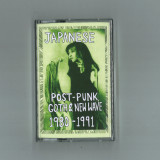
- A1: 胎児* - Radioactive Ash
- A2: Non Band - Duncan Dancin
- A3: Mannequin Neurose - #¼&¢
- A4: Antena - Drug Patient
- A5: Unknown Artist - Unknown Song
- A6: Coma - Coda
- A7: Sadie Sads - Pair Dog
- A8: G-Schmitt - Future Daze
- A9: C·c·mekka = 爬虫類の脳* - アルゴソの空
- B1: Asylum - 自虐者
- B2: Bardo Thödol - Silver Stug
- B3: Unknown Artist - Unknown Song
- B4: いんど猫* - 水の中
- B5: Mensu - Lura
- B6: Phaidia - 戦略
- B7: The Lautrec - Dark Crystal
- B8: Unknown Artist - Unknown Song
PT I[16,77 €]
DINTE presents a cassette-only two-part Japanese post-punk, goth & new wave mixtape, the first in a tranche of regionally-focused mixes produced in partnership with Philadelphia's punk archivists World Gone Mad.
Only Music Matters keep it real once more with another superb EP from an unknown artist featuring loads of untitled tracks. And those tracks all operate in the world of minimal and tech house with fresh ideas and forward-thinking sound designs. 'AAA001A' is a dark one with paranoid vocals looped over churning beats and steely metallic hits. 'BBB001B' is more smooth and free-flowing with a dubby undercurrent and bumpy pads over a deft rhythm. 'BBB002B' adds a third and final different look - a more warped and elastic rhythm with some brighter melodic touches that will help shift the floor up a gear.
Ultimo Tango (Milan) & Glossy Mistakes (Madrid) are thrilled to announce the release of "Tribal Organic: Deep Dive into European Percussions 79-90", a compilation of otherworldly percussion-driven tracks, digging deep into this unknown realm of a past era.
Compiled by Luca Fiore and Glossy Mario, the album takes listeners on a rhythmic journey through the diverse sounds of Europe from 1979 to 1990. This collaboration between two like-minded labels highlights forgotten recordings from across Europe, including works by artists from France, Spain, Germany, Italy, Austria, the Netherlands...
Opening with the ethereal “Rainforest” by British female duo Ova, this collection weaves together nine tracks from artists who were deeply influenced by global percussion traditions. With hints of jazz, new age, gamelan, and West African rhythms, these tracks feature instruments like congas, tablas, and shekeres, and reflect a shared fascination with the organic beat of the drum.
From the industrial-meets-African grooves of Jean-Michel Bertrand’s “Engines”, to the hypnotic accordion and tribal chants of Cuco Pérez’s “Calabó Bambú”, the compilation offers a cross-cultural listening experience that is both meditative and invigorating. Despite creating these works in isolation during the last years of the Cold War, each artist was inspired by a borderless world of sound. The compilation pays homage to these nomadic musicians who respected the traditions they drew from, while contributing their own experimental takes on percussion-led music.
In Tribal Organic, Glossy Mario and Luca Fiore have unearthed a treasure trove of rhythm-driven tracks that blur the lines between nations, genres, and cultures. This compilation offers more than just music; it’s a listening experience that is both spiritual and grounded—bold, exploratory, and deeply rooted in the beat of the Earth
The Invisible Road: Original Recordings, 1985–1990 compiles an unheard, previously unreleased body of recordings by Sussan Deyhim and Richard Horowitz, dissidents from diametric backgrounds who met during the heady days of Downtown New York in the 1980s. This collection reveals the creative and life partners’ radical shared vision of avant-garde pop in all of its boundary pushing freedom, combining Deyhim’s singular approach to vocalization, Horowitz’s invention of new musical languages, and touchstones of traditional music from around the world, creating a new music that ultimately retains a voice entirely its own. Despite their difference in backgrounds and respective journeys, at the time of their meeting in the early 1980s in New York City, Sussan Deyhim and Richard Horowitz were both products of the search for freedom and understanding (and resultant awakenings) that swept the globe and helped culturally define the late 1960s and 70s. Deyhim, born and raised in Tehran, spent her teens dancing with Iran’s Pars National Ballet company, performing weekly on Iranian national television, and travelling her home country studying with master folk musicians and dancers, before relocating to Belgium and joining Maurice Béjart’s prestigious Béjart Ballet of the 20th Century. Horowitz, born and raised in Buffalo, New York, had spent much of the decade before abroad, first departing for Paris under the shadows of the Vietnam War, where he studied piano, Eastern philosophy, and became entrenched the city’s free jazz scene, playing with the likes of Steve Lacy, Anthony Braxton, and Alan Silva, before embarking south to Morocco where his friendship with Paul Bowles helped cultivate a deep passion for the country’s musical traditions and a shift in his musical practice.
The pair met by chance sometime in 1981 at Noise New York, a small studio on West 34th Street founded by the musician and recording engineer, Frank Eaton, as a utopian creative laboratory that beckoned artists and bands like Arthur Russell, Christian Marclay, Liquid Liquid and Butthole Surfers into its orbit. Both artists had recently relocated to the city, Horowitz having recently released his debut album, Oblique Sequences (Solo Nai Improvisations), on the legendary Paris based imprint Shandar, and fallen in with members of New York avant-garde like La Monte Young, Jon Hassell, David Byrne, and Brian Eno, and Deyhim having begun to more actively incorporate singing into her practice, notably recording a vocal score for choreography she was doing at La MaMa Experimental Theatre.
Initially bonding over a cassette tape of field recordings made by Paul Bowles that had been given to mutual friend and writer Brian Cullman (seeking answers for Ornette Coleman’s question “what is the sound of sound”), their earliest collaboration was documented on Horowitz’s 1981 album, Eros In Arabia, with Deyhim contributing vocals to the track “Queen Of Saba.” Over the coming years, their deep connection would routinely gravitate them into the studio, culminating in the body of recordings that would appear on their 1986 album for Crammed Discs, Desert Equations: Azax Attra. Unknown to nearly all but the artists, laying in wait over the decades on numerous multi-track and stereo reels, DAT tapes, and reference cassettes, were a vast array of recordings made by Deyhim and Horowitz bookending Desert Equations. The 13 pieces represented on The Invisible Road: Original Recordings, 1985–1990 were recorded largely between Noise New York and Daylight Studio in Brussels, during a period that Deyhim describes the partnership between herself and Horowitz’s as seeking a music “free of any specific cultural reference, with a personal musical signature,” blossoming into a body of sonority that embraced the energy of contemporary boundary pushing pop and the avant garde, filtered through their mutual love and study of various musical traditions from across the globe and deep engagement with the ideas and tactics of experimental music.
Undeniably rooted in Horowitz’s study of the North Africa ney and the music of the Berber and Gnawa cultures during his time in Morocco, Deyhim’s deep engagement with the folk traditions of Iran, and the couple’s immersion in the interconnected Downtown underground music scenes, each piece on The Invisible Road offers its own vision creative and cultural hybridity. Deyhim sings in both English and Farsi, as well as a composite tongue that she developed by drawing upon numerous indigenous vocal techniques from around the world, intuitively responding to Horowitz’s simultaneous sound syntax forming and combining a wide range synthetic and acoustic instrumentation, and experimental tape techniques, within a visionary series of free-standing expressions.
Lili Holland-Fricke and Sean Rogan’s debut album “dear alien” is a constellation of radiant improvised impulses, imagined in lucent fragments of cello, guitar and voice. Spacious, tender and glistening with rich electronic distortion, the record melds a spectrum of processed and natural sound as the artists invite listeners into their dreamlike world of synergetic introspections.
Cultivated through a shared spirit of resourcefulness and play, “dear alien” emerges as an organic meeting place in the compositional output of British-German experimental cellist Lili Holland-Fricke and Manchester-born guitarist and producer Sean Rogan. Having studied their respective instruments at the Royal Northern College of Music, both artists have flourished in eclectic solo and collaborative projects, creating intricate and intimate spheres of sound with a deep appreciation for songwriting and improvisation.
Holland-Fricke’s transition from the classical world to writing her own material, and later vastly expanding her palette with electronics, first converged with Rogan’s distinctive flair for production in 2022 on her EP “birdsong for breakfast” and single ‘draw on the walls’. Now, the duo present an album envisioned through true ‘50/50’ collaboration during the summer of 2023, written across two intensive weeks of improvising and experimenting at Rogan’s Greenwich home studio. A convergence of the artists’ sounds and influences, the music was fostered by the idea of making an album with ‘no plan’ and their shared recent discovery of Arthur Russell, to whom the final track is dedicated.
“dear alien” assembles eight compositions that emerged naturally as the duo created sketches with cello and pedals, guitar, tape loops and poetic vocal musings, forming songs that explore themes of waiting, circling back around, and glitchy communication. Moments of drifting through pillowy layers of sound contrast with saturated visions of electronic modification, where the record’s glowing instrumental contours are pushed to the extremes.
The plaintive shades of ‘half blue’ and meandering deliberations of ‘slow thing’ are teased by the friction of static signals and a sense of ever-mutating sonic mass – a sensibility most acutely realised in ‘dawning’, where cello-vocoder eruptions grow in magnitude, the absence of sound between them burdened with something sinister and unspoken. As the artists expand on this piece, ‘It’s the sound equivalent of squeezing your eyes shut to shield against the brightness of something you don’t want to see, only to find that each time you open them again the world is not softening but getting more relentlessly overwhelming, to the point of being totally blinding.’
Three tracks with lyrics – ‘at first’, ‘dear alien’ and ‘seem asleep’ – refract the album’s wistful and melancholic colours into poetic imagery and metaphors, ushering in reflections on relationship tensions and someone close feeling unknown, with hints towards wider unsettled feelings about climate change. In the spirit of lyrical improv, ‘seem asleep’ compiles lone lines from Holland-Fricke’s journals into a cut-and-paste collage around hopeful patience or futile lingering – either way conjuring a softness that welcomes the hazy ambience of ‘for a. r.’, the final composition which soundscapes the summer days spent making the album. As the artists describe of this track, ‘The music kind of leads somewhere, but then kind of leads nowhere, and just meanders around where it is, content to just be walking in a circle back to where it started.’
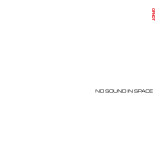
Blake Lee has always been fascinated by the unknown, and space, in its isolating, mysterious vastness, embodies this theme immaculately. The open void, captured so memorably by Stanley Kubrick in '2001: A Space Odyssey', is Blake's far-reaching canvas on 'No Sound In Space', a cinematic meditation on the cosmos that's painted in nuanced, emotionally sincere colors. The Los Angeles-based composer has been contemplating his full-length debut since 2021, using his guitar as a sonic paintbrush rather than find himself snared in its traditional aesthetic constraints. Transforming its characteristics with effects and subtle processes, he layers sustained tones and intimate improvisations, creating richly visual polychromatic utopias teeming with unknown life.
Since 2011, Blake has been most known for being the guitarist and a music director for Lana Del Rey, notching up three songwriting credits on her acclaimed ‘Ultraviolence’ full length. He sees his solo work is a form of escapism, a place where he can experiment and find comfort and catharsis outside of expectations and formal structure. The album was written instinctively, and Blake made sure he didn't force anything, letting go and getting out of his own way, listening intently as sounds and textures materialized organically. "I didn't want to ruin it by being a perfectionist," he laughs. And his collaboration with Kenyan sound artist KMRU, who runs the OFNOT label and contributes to two of the tracks on the album, occurred similarly organically.
Blake was moved to reach out to KMRU when he caught a performance of 'Natur' at Los Angeles' Zebulon in 2022, leading to a prolonged back-and-forth. They didn't meet in person until earlier this year, by which time they'd become firm friends, continuously sharing music and conversation. KMRU had lent a valuable ear to Blake, who sent early playlists of 'NSIS' that, over the months, slowly evolved into the finished album. It's the first release on OFNOT that's not by KMRU himself; the label emerged last year with the release of KMRU's own 'Dissolution Grip', and Blake's debut immediately expands its sonic universe. Alongside the playlists, Blake also provided KMRU with the tracks' raw stems, which KMRU began to edit and expand in his Berlin studio. 'Miura' and 'Waiting' are the result of this process, two sublime abstractions that augment Blake's dreamlike, euphoric tones with KMRU's pebbly distortions and booming low-end rumbles. And this same playful sense of freeness seeps into Blake's other compositions.
On the misty 'In A Cloud', he surrounds cascading string tones with soft-focus pads that swell until they're like crashing waves, and on the two 'Echoplexx' pieces, he uses delay and reverb to smudge his sounds until they're viscous residue, the harmonies obscured by whooshes of white noise and distant chimes. The mood is quieted somewhat on 'Moving Air', as Blake's swirling tones form half-heard lullabies, coalescing into a dense, melancholy crescendo, and he fills out the sound with reverberant airport recordings on 'Pan Am', letting pitchy My Bloody Valentine-esque drones warble beneath the transitory chatter. Each track melts into the next, forming a billowing, cryptic narrative that leaves more questions than answers. Blake is constantly searching, and fills his unoccupied space with warmth, perception and sensitivity.
Blake Lee has always been fascinated by the unknown, and space, in its isolating, mysterious vastness, embodies this theme immaculately. The open void, captured so memorably by Stanley Kubrick in '2001: A Space Odyssey', is Blake's far-reaching canvas on 'No Sound In Space', a cinematic meditation on the cosmos that's painted in nuanced, emotionally sincere colors. The Los Angeles-based composer has been contemplating his full-length debut since 2021, using his guitar as a sonic paintbrush rather than find himself snared in its traditional aesthetic constraints. Transforming its characteristics with effects and subtle processes, he layers sustained tones and intimate improvisations, creating richly visual polychromatic utopias teeming with unknown life.
Since 2011, Blake has been most known for being the guitarist and a music director for Lana Del Rey, notching up three songwriting credits on her acclaimed ‘Ultraviolence’ full length. He sees his solo work is a form of escapism, a place where he can experiment and find comfort and catharsis outside of expectations and formal structure. The album was written instinctively, and Blake made sure he didn't force anything, letting go and getting out of his own way, listening intently as sounds and textures materialized organically. "I didn't want to ruin it by being a perfectionist," he laughs. And his collaboration with Kenyan sound artist KMRU, who runs the OFNOT label and contributes to two of the tracks on the album, occurred similarly organically.
Blake was moved to reach out to KMRU when he caught a performance of 'Natur' at Los Angeles' Zebulon in 2022, leading to a prolonged back-and-forth. They didn't meet in person until earlier this year, by which time they'd become firm friends, continuously sharing music and conversation. KMRU had lent a valuable ear to Blake, who sent early playlists of 'NSIS' that, over the months, slowly evolved into the finished album. It's the first release on OFNOT that's not by KMRU himself; the label emerged last year with the release of KMRU's own 'Dissolution Grip', and Blake's debut immediately expands its sonic universe. Alongside the playlists, Blake also provided KMRU with the tracks' raw stems, which KMRU began to edit and expand in his Berlin studio. 'Miura' and 'Waiting' are the result of this process, two sublime abstractions that augment Blake's dreamlike, euphoric tones with KMRU's pebbly distortions and booming low-end rumbles. And this same playful sense of freeness seeps into Blake's other compositions.
On the misty 'In A Cloud', he surrounds cascading string tones with soft-focus pads that swell until they're like crashing waves, and on the two 'Echoplexx' pieces, he uses delay and reverb to smudge his sounds until they're viscous residue, the harmonies obscured by whooshes of white noise and distant chimes. The mood is quieted somewhat on 'Moving Air', as Blake's swirling tones form half-heard lullabies, coalescing into a dense, melancholy crescendo, and he fills out the sound with reverberant airport recordings on 'Pan Am', letting pitchy My Bloody Valentine-esque drones warble beneath the transitory chatter. Each track melts into the next, forming a billowing, cryptic narrative that leaves more questions than answers. Blake is constantly searching, and fills his unoccupied space with warmth, perception and sensitivity.
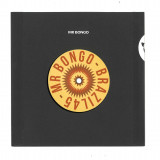
Repress!
You know it's going to be a heavy record when DJ / collector Mr Thing asks you to keep a look out for a copy on your next digging trip to Brazil. Add on top of that, being sampled by Madlib on the track 'Curls’ on his Madvillain album!
Taken from Waldir Calmon's 'Waldir Calmon E Seus Multisons' album on Copacabana (1970), from looking at this unassuming record cover featuring a middle-aged man sporting an impressive pair of glasses you wouldn't expect it to become the fabric to one of the songs from the iconic 'Madvillain’ album. But… like many things in life, you shouldn’t judge a book by its cover. 'Airport Love Theme’, like its name suggests, falls into full-on lounge territory. It’s feel-good music made to be the soundtrack for a utopian world that never really was. Yet behind the silky-smooth groove is an addictive earworm waiting to be heard.
'Afro Son' taken from the same album, pushes things in a different direction towards a sound that is more firmly rooted in the Brazilian tradition. This quirky 60's-breakbeat-funk groove is reminiscent of French artist Jean Jacques Perrey's 'E.V.A.', also from 1970, in its melody and backbeat, where the Moog synthesizer of Perrey is replaced with a more orchestrated sound by Calmon. This track is magical, cinematic and breakbeat-laden with a hidden unknown exoticism.
Waldir Calmon had an active career in music working from the '50s right up until his passing in 1982. His career started early, forming his first ensemble at the age of fourteen, originally working in bands in nightclubs and writing jingles. He progressed in the early '50s to a long-running career working in television. In addition to his television work, he had success with his recording vocation, mixing in the same musical circles as greats such as Tom Jobi, João Gilberto and Doris Monteiro.
• Next installment in BRAZIL 45 Series.
• Sampled by Madlib on the track ‘Curls’ from his ‘Madvillain’ album.
• Quirky, cinematic, breakbeat-laden exoticism.
The eighth and latest slate of refined retro-futuristic synth-pop by Liz Wendelbo and Sean McBride aka Xeno & Oaklander is named after and inspired by "the study of what not to do, a negative image of a positive, the other side, the other:" Via Negativa (in the doorway light). Recorded in the fall of 2023 at their modernist Connecticut home fashioned into a two-story synthesizer laboratory and mixing studio, the album is uniquely visionary in spirit yet precision in execution, a contrast central to the duo's enduring chemistry. Embryonic piano sketches were translated to nuanced modular systems, which McBride weighted with "harmonic padding," tuned percussion, and a spectral transfer device capable of "rendering spasms of rhythmic overtonal filigree." Despite the technological complexity of their craft, emotively the songs require no deciphering - these are technicolor widescreen anthems of the cybernetic age. The eponymous opening track sets the pace, soaring sleekly over glittering synths and call-and-response vocals about arias, shattered light, and faces in stereo. From there the record expands and contracts, cycling through a gallery of moods and masks, animated by the band's fascination with drama, "the idea of personae," and theatrical characters. Track by track, a murky, tragic backstory reveals itself: forlorn figures navigating a treacherous mercury mine, alternately poisoned by fumes or buried in collapsing caverns. The tension between Teutonic, utopian synthetic pop and lyrical narratives of ghosts in silos, ruined mills, and the traumas of mineral excavation creates a compelling friction, alternately futurist and obsolete, elevated and subterranean. Wendelbo describes the music's polarities perfectly: "The heavy machinic din of extraction in contrast with the enchantment of the mined precious gems and metals." From bilingual odes to bloodstones ("O Vermillion") to cosmic chrome dance floor classics ("Lost & There" "The present tense can never feel real / So many pasts conspire in the burning sun") to strutting EBM sensualities ("Actor's Foil"), Xeno & Oaklander re-prove themselves masters of the axis of technology and poetry, snaking cables and synesthesia, mining melodies and myths across 15 years of focused artistry. Theirs is a muse still gilded and gleaming, burnished red and silver, attuned to "the unobservable, the unfamiliar, that which you don't see directly."
The eighth and latest slate of refined retro-futuristic synth-pop by Liz Wendelbo and Sean McBride aka Xeno & Oaklander is named after and inspired by "the study of what not to do, a negative image of a positive, the other side, the other:" 'Via Negativa (in the doorway light)'. Recorded in the fall of 2023 at their modernist Connecticut home fashioned into a two-story synthesizer laboratory and mixing studio, the album is uniquely visionary in spirit yet precision in execution, a contrast central to the duo’s enduring chemistry. Embryonic piano sketches were translated to nuanced modular systems, which McBride weighted with "harmonic padding," tuned percussion, and a spectral transfer device capable of "rendering spasms of rhythmic overtonal filigree." Despite the technological complexity of their craft, emotively the songs require no deciphering – these are technicolor widescreen anthems of the cybernetic age.
The eponymous opening track sets the pace, soaring sleekly over glittering synths and call-and-response vocals about arias, shattered light, and faces in stereo. From there the record expands and contracts, cycling through a gallery of moods and masks, animated by the band’s fascination with drama, "the idea of personae," and theatrical characters. Track by track, a murky, tragic backstory reveals itself: forlorn figures navigating a treacherous mercury mine, alternately poisoned by fumes or buried in collapsing caverns. The tension between Teutonic, utopian synthetic pop and lyrical narratives of ghosts in silos, ruined mills, and the traumas of mineral excavation creates a compelling friction, alternately futurist and obsolete, elevated and subterranean. Wendelbo describes the music’s polarities perfectly: "The heavy machinic din of extraction in contrast with the enchantment of the mined precious gems and metals."
From bilingual odes to bloodstones ("O Vermillion") to cosmic chrome dance floor classics ("Lost & There" "The present tense can never feel real / So many pasts conspire in the burning sun") to strutting EBM sensualities ("Actor's Foil"), Xeno & Oaklander re-prove themselves masters of the axis of technology and poetry, snaking cables and synesthesia, mining melodies and myths across 15 years of focused artistry. Theirs is a muse still gilded and gleaming, burnished red and silver, attuned to "the unobservable, the unfamiliar, that which you don’t see directly."
The eighth and latest slate of refined retro-futuristic synth-pop by Liz Wendelbo and Sean McBride aka Xeno & Oaklander is named after and inspired by "the study of what not to do, a negative image of a positive, the other side, the other:" 'Via Negativa (in the doorway light)'. Recorded in the fall of 2023 at their modernist Connecticut home fashioned into a two-story synthesizer laboratory and mixing studio, the album is uniquely visionary in spirit yet precision in execution, a contrast central to the duo’s enduring chemistry. Embryonic piano sketches were translated to nuanced modular systems, which McBride weighted with "harmonic padding," tuned percussion, and a spectral transfer device capable of "rendering spasms of rhythmic overtonal filigree." Despite the technological complexity of their craft, emotively the songs require no deciphering – these are technicolor widescreen anthems of the cybernetic age.
The eponymous opening track sets the pace, soaring sleekly over glittering synths and call-and-response vocals about arias, shattered light, and faces in stereo. From there the record expands and contracts, cycling through a gallery of moods and masks, animated by the band’s fascination with drama, "the idea of personae," and theatrical characters. Track by track, a murky, tragic backstory reveals itself: forlorn figures navigating a treacherous mercury mine, alternately poisoned by fumes or buried in collapsing caverns. The tension between Teutonic, utopian synthetic pop and lyrical narratives of ghosts in silos, ruined mills, and the traumas of mineral excavation creates a compelling friction, alternately futurist and obsolete, elevated and subterranean. Wendelbo describes the music’s polarities perfectly: "The heavy machinic din of extraction in contrast with the enchantment of the mined precious gems and metals."
From bilingual odes to bloodstones ("O Vermillion") to cosmic chrome dance floor classics ("Lost & There" "The present tense can never feel real / So many pasts conspire in the burning sun") to strutting EBM sensualities ("Actor's Foil"), Xeno & Oaklander re-prove themselves masters of the axis of technology and poetry, snaking cables and synesthesia, mining melodies and myths across 15 years of focused artistry. Theirs is a muse still gilded and gleaming, burnished red and silver, attuned to "the unobservable, the unfamiliar, that which you don’t see directly."
- A1: Refrigerator Mothers - Yaya Suitor
- A2: Sikhara - Zenjouki Temple
- A3: Catherine Danger - Le Carburant
- A4: Thar Mapsal Program - Khubilgan
- A5: Microloop - Rapture In Malaysia
- B1: Tzii - Our Impact On Other Egos
- B2: Officium - Where Flesh Circulates
- B3: Nur - Lost In The Desert Of My Mind
- B4: Contagious Orgasm - Demolition Costs
- B5: Dissonant - Dimana Batas
- C1: Catastrophic Mermaids On Parade - New Drunk School Of Dying Love With Manners
- C2: Cham - The 4Th Day After The 23
- C3: Venimeuses - Soupirail
- C4: Indra Menus - Murkaning Dunyo
- C5: Excess Of Fat - Ain’t No Way To Leave No More
- C6: Jealousy Party - Vuota
- C7: Moineau Ecarlate - Rush Me No Badness
- D1: Rinus Van Alebeek - Let’s Make War
- D2: Ss Mylitta - Night On Earth
- D3: Âme De Boue - Green Moon Over Cintra Street
- D4: Ripit - Kraut Founding
- D5: The Radar Threat - Conflict Heroes
- D6: Solar Skeletons - We Won’t Kiss
Night On Earth records
is an independent structure/label created 20 years ago which deals with
the invisible and the deviant,
the void and the love,
the parallax and the unknown …
we release vinyls and tapes
we organise events
we are you and us
we are nothing and everything
we are oblivion and memory
we are your egotrip’s nightmare
we are your deviancy catharsis
meet us through this double LP which is one cartography of the night on earth vortex across 3 continents and several generations of music freaks and braincrackers
Some Artists missing there (there are too much : RINUS VAN ALEBEEK, SS MYLITTA, SOLAR SKELETONS, THE RADAR THREAT, ÂME DE BOUE, and.. RIPIT !
Transparent Blue Vinyl. After years of preparation, Marcus Drake emerges from the basement networks of the resistance underground to claim the first save point along his quest ahead. Welcome to Save Point 1, a universe where popular forms of the past collide at warp speed with Marcus's mutant inspirations to produce sounds and genres hitherto unknown. Save Point 1 is a visionary and singular Debut work of Avant Rock & Pop Alchemy, blown apart and reassembled under the laws of Quantum Musical Mechanics. Written, Produced & Performed by Marcus Drake, the album eludes classification, but sounds like a sci-fi fusion of musical DNA from Nine Inch Nails, Prefab Sprout, Nobuo Uematsu (the Final Fantasy video game composer), Animal Collective, Prince, Mr. Bungle, Liars, The Mars Volta, and Lil Ugly Mane. The album marks the first release under Drake's own name, and the latest since his 2017 release as Anthony Fremont's Garden Solutions_his idiosyncratic side-project with Water From Your Eyes' Nate Amos, Options' Seth Engel, and NNAMDI. He has also since scored for film and video, including the Adult Swim short Thoron the Conqueror. Save Point 1 isn't just a new beginning, but a reintroduction to Marcus Drake the artist and composer. Drake experimented with new techniques and approaches for many years while recording Save Point 1, a process that transformed his sound, voice, and artistic identity. The resulting oeuvre is giddy and dreamy, an Olympic-height diving board from which to descend through indie rock and videogame soundtracks, thrilling math-rock riffs that turn experimental, and synths that glow in rainbow hues. Just turn to the glitchpop of "Heaven's in the Rot" or the slow-motion acoustic glitter that is "Dragon It Out" to hear it in motion. And note the two-part "Haunted" suite that funnels his unpredictable experimentation into darker, weirder directions.
DJ Support from Danny Howard, Annie Mac, Mistajam, Pete Tong, Charlie Hedges, Kraak & Smaak, Maxinne, Todd Terry, Alex Preston, Full Intention, GW Harrison, DJ Rae, Rudimental, Alaia & Gallo, Illyus & Barrientos, Johan S, David Penn, Sam Divine, Riva Starr, Claptone, Nice7, Dario D’Attis, Mousse T, S-Man, Huxley, KC Lights, Friend Within, Dombresky, Gorgon City, Chris Lake, Format:B, Pirupa, TCTS, Alan Fitzpatrick, Low Steppa, Mat.Joe, Raumakustik, Eskuche
The next of Toolroom’s 4 track vinyl sampler series kicks off with a bang(er!). Welcoming CHANEY back onto the label with possible his finest release to date in the shape of ‘I Choose You’. On Toolroom alone he has amassed over 40m streams across leading streaming stores in just 3 years and can add massive imprints like Defected, Insomniac and Perfect Havoc to his list of musical successes. Everything in this record is 100% original and written by CHANEY himself from the self-played bass line, lush rhodes chords and distinctive, poignant vocals.
Next up is Gene Farris who has been a mainstay on Toolroom in recent years and is a regular artist at our label events all over the World. ‘In My Heart’ lands as an exciting collab with the Basura Boyz, a duo also hailing from Gene’s hometown of Chicago and the chemistry between the 3 of them is evident from the first beat! A super cool, stripped back vocal tech house track that sits in that sweet spot of club and specialist radio.
Kicking off the B-side is Deeper Purpose who returns to Toolroom alongside Jalja & Lazy Joe, after his debut club weapon ‘Stutter’ dropped on the label last year. He has had success across all the scene’s leading imprints over the past 12 months including Fisher’s Catch n Release, Experts Only and Repopulate Mars and this record is an anthem in the making! Jalja is on vocal duties, the vocalist that shot to fame after her huge ‘Hanging Tree’ record alongside Michael Bibi. She adds her trademark ethereal vibe to the record and delivers a typically killer hook - This is a real EAR WORM!!
Wrapping things up on Sampler 14 is a very exciting collaboration from 2 of the scene’s brightest shining new stars; Tony Romera and Crusy. Having been die-hard Toolroom fans for many years, this record came about during a conversation about old Toolroom records, and how they collectively wanted to emulate that slightly progressive tech house but bring it right up to date. And they have certainly done that! A real peak-time dance floor moment here with insane production and a unique, intense build up that is already causing maximum mayhem!
Countless radio plays on Radio 1 from Danny Howard, Sarah Storie, Pete Tong
Other notable radio plays – Kiss FM, Toolroom Radio, Sirius XM, Data Transmission Radio, Radio 1 Dance Anthems, Radio 1 Party Anthems, Rinse FM, Select Radio, Tomorrowland Radio
- A1: Libre Comme L'art
- A2: Idiocratie
- A3: Blc
- A4: Avec Des Mots (Ft. Sinik)
- A5: Epilepsie
- A6: Enfant Bulle
- A7: On Naît Seul, On Meurt Seul
- B1: Héritage (Ft. Deadi Et Cenza)
- B2: Déconnexion
- B3: Inarrêtable (Ft. Sakage)
- B4: Feuille Froissée
- B5: Coûte Que Coûte (Ft. Hidan)
- B6: Les Minots Dorment - Remix
- B7: Arc En Ciel (Ft. Greenfinch)
After working within various collectives, rapper Davodka is celebrating his ten-year solo career with the album "Heritage." With a myriad of concerts in France and Europe, 6 solo albums, and features with the entire French independent rap scene (Demi Portion, Melan, Dooz Kawa, 3ème Œil, Swift Guad...), Davodka is known for his incisive words and the speed of his flow, making him one of the leading lyricists.
This new album is the heritage of the past ten years, where the artist takes a step back and captures the universe in which he has evolved, paying homage to it through music. The rapper's lyrics have never been more personal. He addresses rarely discussed topics in rap, such as his depression in the track "Arc en ciel," his relationship with his autistic child in "Enfant bulle," and his awareness of the difficulty in having completely selfless relationships as an artist in "On naît seul, on meurt seul."
"Heritage" attests to Davodka's undeniable place in conscious rap, notably with the track "Avec des mots," where he shares the mic with Sinik, an emblematic artist of the golden age of French rap. Although Sinik, a French artist with countless certifications, had announced the end of his career two years earlier, he makes an exception for Davodka and records a powerful track in homage to all those who come from the bottom.
Davodka, true to himself and his audience, primarily raps over boom bap and trap beats; however, he ventures into unknown territories, notably in "On naît seul, on meurt seul," where he adopts a ragga flow, and "Feuille froissée," with its auto-tuned chorus. He also takes the time to pay homage to the beginning of his career, when he was part of the MSD collective, by reprising a verse written at the time in the track "Les minots dorment – Remix."
Join him on October 25, 2024, to discover "Heritage," Davodka's 7th album. He will be touring throughout France, Switzerland, and Belgium, and in Paris at the Cabaret Sauvage on December 5, 2024, for the release party.