
out of Stock
Order now and we will order the item for you at our supplier.
Last In: 3 years ago
9,45 €
Order now and we will order the item for you at our supplier.

STAUB comes back on wax for a third episode. Following the no name policy from the parties which started 5 years ago in ://about blank, it is time again for unknown artist to shine. This new EP sees the shy producer appearing on 4 tracks of pristine techno. A1 is an atmospheric trip while A2 is more brutal, on the B side it is going weirder and darker. We think Unknown Artist tries to craft interesting techno cuts and that he loves variety.
That it is the idea behind STAUB since its beginnings, it does not matter whether you are a newcomer or Lady Gaga, what matters is the quality of the music. This is what was again aimed with this third record.
Order now and we will order the item for you at our supplier.

Early 80s. Christiane F and Tron meet over a brutalist landscape. Clock is ticking. Electronic pioneers bang up post punks. Dirty hits. Take more. Time is running out. Northern European sub-cultural appropriation to destroy the dance. Still, it sounds good. And it looks nice. Nice sleeve art. Move along. Move along.
Order now and we will order the item for you at our supplier.

Vinyl Only
The new label from Eastern Europe delivers music with soul. Jerelo means 'the source'
Order now and we will order the item for you at our supplier.

Rotterdam based Rasta Vibez present their latest 10'' project featuring the artist who shall remain unknown. Rastafari Army / Rich Man Dub once again contains that signature sound full of positive vibrations appreciated by a growing army of fans around the globe. Essential 100%. Be sure to get involved!
Order now and we will order the item for you at our supplier.

Order now and we will order the item for you at our supplier.

Order now and we will order the item for you at our supplier.

Order now and we will order the item for you at our supplier.

Order now and we will order the item for you at our supplier.

the artists will be named after 1 month - just follow the qr code with your mobile! btw. this artist is very famous :)
Order now and we will order the item for you at our supplier.

The label shows also on secord part the artist one month after release date online - just follow the QR code!
Order now and we will order the item for you at our supplier.

Order now and we will order the item for you at our supplier.

Order now and we will order the item for you at our supplier.

Order now and we will order the item for you at our supplier.

Order now and we will order the item for you at our supplier.

Order now and we will order the item for you at our supplier.

Order now and we will order the item for you at our supplier.

Order now and we will order the item for you at our supplier.

Order now and we will order the item for you at our supplier.

The Acido family in full effect: leftfield, lo-fi Acid, ace Ambient trips, Disco vibes & what not.
Order now and we will order the item for you at our supplier.

On this third release, Deviant Disco keeps on digging up lesser known gems of various origins and delivers a hot batch of four brand new edits. The French label sticks to its peculiar aesthetics and welcomes you once again to an enthralling musical trip — starting with Tchamy Patterson's groovy & percussive afrobeat only to spiral into Barnes' and Ygalove's hypnotic The Mongol Raid slow-mo trance edit, and steering from La Decadanse's tropical and sensual rework of Yves Simon vintage hit Amazoniaque all the way down to Eric Vincent's obscure 80s French erotica.
Order now and we will order the item for you at our supplier.

After a successfull first record Underground Town is back for their 2nd release just in time for the kick-off of their 4th Season of events in the top of the Swiss Alps.
Mysterious Artist delivers a serious bomb for the first track of this record. A track that makes you travel in space with groove and a fine shower of synths. Lost.act makes his first appearance in the label with a powerful minimalistic and deep trip.
Label head Giorgio Maulini comes back with some break beats & crazy synths changing the dynamic and giving this record a clever complexity with various styles. Last but not least another delicious piece by Cesar Martinez full of groove and swinging hats.
Stay tuned because the next delivery in on the way!
Order now and we will order the item for you at our supplier.

Order now and we will order the item for you at our supplier.

Banoffee Pies Black Label Series 02.1 lands exploring more deep minimal bumpers for the floor. BPBL02.1 offers another Unknown sample heavy edit, an insert from Bristol local and label friend Crump, and tracks from their newest label affiliates, Jase and Pablo Marco.Groovy business from the Banoffee camp. Heat!
Order now and we will order the item for you at our supplier.

Order now and we will order the item for you at our supplier.

Two *limited edition* 160-gram classic black vinyl LPs (pressed by Smashed Plastic in Chicago) inside a heavyweight reverse-board single-pocket jacket with poly-lined inner-sleeves. Vinyl Only. No digital, no represses.
Order now and we will order the item for you at our supplier.

Order now and we will order the item for you at our supplier.

As one of the most enigmatic figures of the 1970's Italian soundtrack and library music network Emma De Angelis and her short recording career provides thirsty fans of speedball psychedelic rock and drum heavy instrumental funk with a tight discography rivalling many of the long-standing bastions of the otherwise male-orientated business. * Strictly limited to 1000 copies.*
.
Born in Rocca di Papa, near Rome, into a flourishing musical environment Emma was the younger sister of future award-winning composers Guido And Maurizio De Angelis, a duo, who under names like Oliver Onions and Dream Bags, would write chart-topping lyrical theme tunes for a wide range of Italian crime, Giallo and Spaghetti Western films featured alongside full scores by Ennio Morricone and the Magnetic System composers (Bixio Frizzi Tempera).
With encouragement from her brothers, Emma, who would also write music under the pseudonym of Juniper, would record a tight clutch of solo-penned material and seldom credited studio contributions to Guido And Maurizio's film commissions, such as the score for Giuliano Carnimeo's Simone e Matteo: Un gioco da ragazzi (aka Convoy Buddies). While simultaneously pursuing a career as an illustrator and set designer the De Angelis family contacts would lead Emma to the offices of Romano Di Bari, whose up-and-coming Flirt label was finding success providing custom built mood music for use in TV and film. Alongside important composers like Alessandro Alessandroni, Gerardo Iacoucci and A. R. Luciani, the young Emma Di Angelis would record a small number of tracks for a compilation called Underground Mood (credited in the small print to E De Angelis - not to be confused with Italian singer Edoardo De Angelis). It is from this rare LP that the record you are now holding is compiled. Within the Flirt family of labels Emma De Angelis would also share schedules with other important female composers such as Daniela Casa and Giulia Kema' De Mutiis - both of whom have appeared on dedicated Finders Keepers releases.
The tracks on this record provide us with a rare glimpse into Emma De Angelis' short musical career before she became a full-time visual artist. With an unknown personnel or studio date it is easy to speculate a potential family jam in Piero Umiliani's Sound Workshop studio in 1972. One only has to take a listen to Guido And Maurizio's instrumental theme Gangster Story from Enzo G. Castellari's 1973 thriller High Crime (which later appeared on Tarantino's Death Proof soundtrack) or the trippy title theme to Paolo Poeti's kinky 1976 drama Inhibition to spot the family resemblance
Order now and we will order the item for you at our supplier.

Meet Matas Petrikas, a music producer, DJ, and book author with a passion for electronic music. Born in Lithuania during the time when it was still a part of the Soviet Union, Matas began experimenting with electronic sounds during his teenage years using self-built instruments and recording equipment. In 1991, Matas took a trip to Berlin that would change his life forever. There, he encountered the early years of techno culture, which led him to co-found EXEM, one of the first house and techno bands in the former Soviet space. With EXEM, Matas was one of the pioneers of electronic dance music in Lithuania, and by the end of the decade, they had charted numerous hits. They performed live shows ranging from intimate clubs to massive arenas, sewing the seeds of the local electronic music scene. Since then he relocated to Berlin and has forged a musical solo career focused on live-sets, experimentation, and authoring the book 'The Joy of Electronic Music'. The Unknown is Matas’ first release on his newly formed imprint Dangė Records, focused on supporting electronic music from Lithuania and the Baltics. The 6 track EP forges his love for texture heavy hypnotic techno with industrial and warehouse leaning low end and percussion. Although mainly an EP rooted in driving a groove, the use of earworm worthy basslines, rave breaky drums, and squelchy lead synths is where Matas’ long career foray into many genres of electronic music shines through. Dangė Records releases electronic music from Lithuania and the Baltics—sounds that emerge from underwater, carried by artists who inherited the weight of transformation.
expected to be published on 09.10.2026

expected to be published on 09.10.2026
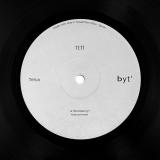
byt’ continues its eclectic journey with the third release in its catalogue. This chapter sees the return of Telva, shifting into a new frequency with a story born between 11.11 and a full Taurus moon back in 2024 in Berlin. The composition recorded in a single take, is articulated through a dreamy, electronic, minimal house, and vocal infusion. Left as romantic and unrestrained as the artist’s reverie, it is preserved in its raw form to protect its intimacy.
“Every record I make is a guide towards a better understanding of all that I can be. 11:11 is a fragment of a special spark I experienced, which peeled back another layer of myself enriched by the lessons along the way, until finally holding it in my hands today. What started as an epiphany on Heideglühen’s dance-floor unfolded into a kiss of destiny, a fleeting delirious love affair, and a quest of passion that hugged my memory, compelling me to revisit my early days. An endeavor of surrender, no matter how unknown, unconventional or uncertain it all may feel. To finally have the courage to let it be messy, raw and true, so that I stand naked once again, while daring to honor the absence of order as part of the magic and mystery of life.” - Telva
On Stock and ready to ship

A mysterious artist pays tribute to Scandinavian dark synth pop pioneers, featuring reimagined versions of two cult classics.
Blending contemporary production techniques with the timeless atmosphere of the original recordings, the record offers a fresh perspective on these beloved tracks while preserving their distinctive vintage character.
Bridging past and present, celebrating the legacy of the genre's pioneers for both longtime fans and new listeners..
The item is already on it's way to us and is expected to be shipped from 14.10.2026.

The latest transmission from Shadow Pressings comes courtesy of an unknown artist, with identities, backstories and social media profiles left at the door without a calling card. Five cuts of shadowy, hardware-focussed house music - no lengthy bios, no distractions, just some killer club grooves to move to.
expected to be published on 16.10.2026

expected to be published on 16.10.2026

The track titles on Post Dub Cities – the new album by Adriano Zanni, photographer, sound artist, and field recordist – evoke the aftermath, that moment when a place continues to exist and live on, but no longer serves anyone. The human element has vanished, whether it happened overnight or through a slow abandonment that lasted for years. The perspective shifts: buildings, homes and palaces reveal a dimension of reality all their own, in which even the ruins give shape to this landscape that endures, transforming into pure presence.
This, after all, is our fate. The fate of us human beings, of our civilisation, of every civilisation: to pass away, to be forgotten, to erect monuments whose significance no one will remember once we are gone.
The opening track Crisopoli transforms the sonic dimension of a city into an echo chamber: a dark, urban dub built from delays and resonances, holding the imprint of what is no longer there — like a bassline that keeps vibrating even after its source has gone silent. What we see is not the presence, but its reverb.
Available from September 11, second excerpt Warosha gives us a minimalist, enveloping, solemn beat, like the symbols on a map that no one can read anymore. Warosha was the district of luxury hotels overlooking the sea in the city of Famagusta. After the island of Cyprus was invaded by the Turkish army, the entire area, emptied of its inhabitants, who had fled south, was fenced off and surrounded by barbed wire. No one has been allowed to enter it since 1974. Now, on these unspoilt beaches, sea turtles have found the perfect place to breed.
Fordlândia, on the other hand, is the symbol of Henry Ford’s failed dream of conquest. An industrial settlement built deep within the Amazon rainforest, several hours’ boat journey from the nearest towns, to gain access to natural rubber for the tyres of his mass-produced cars in Michigan. An extremely costly project, it quickly became a ruinous pipe dream: a town that has been uninhabited for almost a century and has since been reclaimed by nature.
For a long time now, Adriano Zanni has been exploring, through music and photography, the landscape that unfolds before our eyes, as attentive yet silent observers. As if we were absent, a civilisation that has long since vanished: human presence has dissolved, preparing to fade into oblivion. The precise depiction of places through field recordings, and the black-and-white imagery, give rise to apparitions, hallucinations, and memories. The less present we are, the more we seek meaning. We resist abandonment and the indifference of time.
In the ten tracks (plus three bonus tracks) of Post Dub Cities the echoes and reverberations of dub grant us access to an unknown future, as yet untold – in which we are nothing more than a vague memory. The deep sound guides us through a landscape that is familiar yet unknown, unrecognisable. The cold, distant, industrial rhythm resonates within us as if we were the last, all too aware, inhabitant of a now-deserted village.
Every place – be it an abandoned mining settlement on an island in Svalbard, or a ghost town in Pennsylvania evacuated following an underground fire that has been burning for sixty years at a depth of one hundred metres – leaves questions unanswered, shrouds itself in mystery, and makes us wonder, ceaselessly: what happened here?
In the end, we realise that we don’t really care that much about knowing the details of the disappearance. We can guess them, we’ve seen it happen a thousand times before. Just like in the photos accompanying the album, portraits of ghostly, deserted cities: Belgrade, like Venice, Dublin, Sarajevo, Lisbon, Kraków, Sofia, Naples, Hanoi, Lampedusa, Tehran. Unexpectedly, pleasantly emptied of people, and of their obsessions, struggles, illusions.
Then, suddenly, the crowd returns. Busy, feverish, hardworking. The record ends, the spell is broken. We feel a sense of longing for a future that has not yet come to pass, for a place we were only able to observe because we were not there.
expected to be published on 16.10.2026

The mysterious Ceiling Chess label launches with a double header 12” single.
Weird sample-based garage laced with rumbling bass & chopped up loops designed for the rave.
This artist has set tongues wagging with people guessing which London based producer could be behind these enigmatic cuts.
expected to be published on 16.10.2026

Repress!
Dan Kye is the mysteriously evoked moniker from multi-instrumentalist, producer, and vocal sensation Jordan Rakei. The New Zealand-born artist - who now resides in London - presents his first long-player from Dan Kye, ‘Small Moments’, on Bradley Zero’s Rhythm Section INTL. An ode to the dancefloor, the musical project was born out of Jordan’s lockdown experience, created from the comfort of his own home. Recorded with just a laptop, extra live instruments and guest musicians, ‘Small Moments’ seamlessly transcends across electronica, jazz and funk, with each genre being effortlessly fused with Jordan’s melancholy vocals. Allowing himself to push the boundaries, Jordan’s Dan Kye moniker draws on the energetic and uplifting elements of house and techno and perfectly mixes it with the sultry vocals and emotion that come with the live elements we know and love from Jordan Rakei. The record offers listeners a journey through more floor-heavy tracks such as ‘Mogeri’ and ‘Raro’ to more groove infused offerings such as ‘Rainbow Road’ (which is named after one of the maps in Mario Kart and inspired by the energy of Prince’s iconic live concert at The Aladdin in Las Vegas), whilst tracks, like ‘Sober’, take on a more lyrical and anthemic feel.
Jordan Rakei: “Rhythm Section INTL was my entry point into dancefloor orientated music, and it was Bradley who asked me whether I could head in that direction so he could play my music out in the clubs. Dan Kye has still got melodies, but the main focus is to keep it high energy.”
After meeting Bradley Zero online whilst living in Australia, Jordan eventually moved to London in 2014. The same day he landed, he went straight to a Rhythm Section party to meet Bradley, and it was here that he first got a taste for house music. He enjoyed Rhythm Section INTL’s ability to draw on both live and electronic talent; and thus, after Bradley asked him for some productions for the parties, the idea for Dan Kye was born. ‘Small Moments’ is a musical masterpiece that can be enjoyed as much on the dancefloor as it can in the comfort of your own home and is a perfect step into Jordan’s landscape and idealism of dance orientated music.
Bradley Zero - “In around 2014 the proprietor of the famous Northside Records in Melbourne handed me a self released 12” from a new, unknown artist based in Brisbane. It was Jordan Rakei - Franklin’s Room. I’d been home almost a year before I actually got round to listening to it and I remember that moment like it was yesterday. I lay down on the sofa, put the record on and was transported! The Dan Kye project is a testament to the experimental and independent ethos Jordan lives by and is a product of an artist reaching full stride but not afraid to still try something new. This ‘Small Moments’ LP was conceived in a record store, born in a club on Rye Lane and is now flying the nest, throwing caution to the wind and making a bold statement.”
expected to be published on 19.10.2026

Blackwater Label’s Goldenboy sub-label third chapter is an ode to the immensity and vastness of the sea, a journey across deep waters, uncertain ports and endless horizons. "Never Give Up" is dedicated to the memory of Alessio Fantozzi, a pioneer of the waters whose spirit continues to resonate through those who choose to venture beyond the shore. This four-way collaboration is our tribute to him: four artists, four visions, one voyage into the unknown. Loris Ligonzo opens the journey with "Subalpine Nocturne", a Balearic-tinged deep house excursion that invites us to dive into the sonic ocean Blackwater has been navigating for more than a decade, warm, hypnotic and submerged. With "Apparently", T/Error brings us into an unsafe and gloomy harbour. Dark electro and suspended tension create the feeling of a vessel waiting to depart, caught between the certainty of the shore and the call of new waters. Stefano Rocchi contributes "Mushy", acting as the propulsion system of our pirate vessel, the Blackwater Ship. Acid-infused electro drives the journey deeper into the abyss, with no fear for those who trust the... more credits releases September 24, 2026 Written and Performed by V/A Mastered by Stefano Rocchi at Niumen Studio,Rome Produced by Blackwater Label, 2026 Distributed by Triple Vision, Rotterdam Nvmqvam Cede // Vsqve Ad Finem
On Stock and ready to ship
Underpinned by spoken folktales stretching from Indonesia to Poland, a new collaborative EP from Warszawa/Berlin-based Jerzy Mączyński and London-based Flora Yin-Wong arrives via Accidental Meetings. Demons rising from the wind, unknown beings lurking in the forest — the record conjures a landscape built from heady layers of saxophone and the tormented strings of zither, harp and kemence.
Recorded across two intense studio sessions, the EP also features idiosyncratic contributions from London-based guest vocalists and musicians Aga Ujma and Laila Sakini.
Flora Yin-Wong is a London-born experimental sound artist and writer of Chinese and Malaysian heritage, known for weaving field recordings and traditional instruments. Her album Holy Palm (Modern Love) and book Liturgy (PAN) cemented her as a singular voice in experimental music today.
Jerzy Mączyński is a Polish saxophonist, producer and composer whose jazz training feeds into genre-melting work spanning kosmische, prog, industrial techno and minimalism. One of his collaborations being a record of free jazz and rhythmic cubism with Chicago's Hieroglyphic Being.
On Stock and ready to ship

Some recordings herald the future in ways that are impossible to see in real time. Teodros Makonnen With His Organ (ቴዎድሮስ መኮንን ከኦርጋኑ ጋር), by the artist Teodros Makonnen, also known as Teddy Mak, is one of those. Today, electronic sounds, synthesizers, and digital production are taken for granted in Ethiopian music, but in the early 1980s, they were novelties that polarized opinion. Even to this day, the story of Teodros Makonnen’s legacy has never been properly told. He played a decisive role in defining the sound of the digital era of Ethiopian music that emerged in the 1980s and beyond, both as a keyboard player and as a producer, songwriter, performer, and sound designer.
Ethiopian music was at a crossroads in the early 1980s. Much like music in the rest of the world, technology and automation heralded either a quantum leap in musical development or the annihilation of musicianship, depending on who you’d ask. The changes were incremental nonetheless, but with the benefit of hindsight one can clearly see that the changes meant different things in different contexts. Drum machines and electric organs came to replace many hotel bands because, all of a sudden, one musician could control drums, melody, and accompaniment. Teodros was one of the first musicians in Ethiopia to explore the possibilities this opened up.
Teodros’ father, Captain Makonnen Beri, was a chief pilot at Ethiopian Airlines and a music enthusiast at that. This would prove important to his development, as Makonnen brought back a piano from Germany, which would lead to the first steps in Teodros’ long musical career. Captain Makonnen’s work as Head of Flight Operations and as a pilot exposed him to the wider world that was far from commonplace for most Ethiopians. In a house where music captivated the whole family, the piano gave Teodros’ talent an outlet. Not only was a piano at home rare in Ethiopian households, his father also brought an Indian teacher to their home to teach Teodros and his brother, Captain Samuel Makonnen, music theory (solfeggio or ear training) and piano. Teodros and his youngest brother, the late great Dereje, a member of both the legendary Ibex Band and the Ethiopian reggae group Dallol, took up music from that point onward, with Teodros beginning to develop his proficiency at the age of eight. His father encouraged him to practice tirelessly at home, and Teodros later received musical schooling at the German School in Addis Ababa.
His obvious talent led to studies and formal education at the Yared School of Music, followed by continued studies in American jazz at Northern Virginia Community College in Virginia. Teodros cut his teeth professionally in his mid-teens, not only as a keyboardist, but also as an arranger for the Wabi Shebelle and Dahlak bands in the 1970s. He mastered electronic sequencing early, rising to prominence through the midnight recording sessions held during the military curfew. The pressures imposed by the curfew required precise and disciplined recordings, and Teodros delivered just that. This, in turn, led to collaborations with iconic artists such as Mulatu Astatke, Aster Aweke, Menelik Wossenachew, Tilahun Gessesse, Mahmoud Ahmed, and Alemayehu Eshete.
In those days, he sat in as a keyboardist with the Dahlak Band when Dawit Yifru took a hiatus to study in Russia, and also with the Ethiostar Band. He secured a residency at the Wabi Shebelle Hotel with the Shebele Band, together with Zelalem Tadese (drums), later succeeded by Elias Bekele, Mulugeta Hailu (bass), Teferi ‘Bibisha’ Mengesha (guitar), Kumelachew G/Selassie (trumpet), and Teshome Deneke (saxophone). A friendly competition developed between the bands associated with the Ras Hotel (the Ibex Band), Ghion Hotel (the Dahlak Band), and Wabi Shebelle Hotel (the Shebele Band). The music scene at Wabi Shebelle saw teenagers commanding the spotlight in an industry otherwise dominated by musicians of an older generation.
At the Wabi Shebelle Hotel, Teodros met a diplomat from Saudi Arabia and later visited him at his home in Addis Ababa, a meeting that had unexpected musical consequences. The man owned a Yamaha double-deck keyboard. That evening, they recorded Teodros Makonnen With His Organ (ቴዎድሮስ መኮንን ከኦርጋኑ ጋር) in one take. This recording, a cornerstone in the early digital sound of Ethiopian music, came about almost by chance, simply because Teodros got the opportunity. Traditional Ethiopian songs were cast in a wholly electronic style.
Once freed from backing duties, Teodros’ keyboards could explore dreamlike soundscapes that took Ethiopian music in new directions. Even though the cassette contained well-known Ethiopian songs, they were given highly original arrangements, performed on an electric organ with drum machine backing and rhythm patterns that left the listener with suggestive, lingering sounds. “Libesh Kabashen” (also known as “Anchi Bale Game”) and “Odu Gol Golesa” wrap you in the very stuff that dreams are made of.
Originally released on cassette only, this recording exudes a mystique that surpasses even some of the most obscure Ethiopian recordings of the day. It remained more or less unknown outside of Ethiopia until now. Some of the tracks, like “Addis Fikir,” are permeated with an almost naive buoyancy, free-floating sounds that lost contact with the ground the moment they were conceived. Others, like “Meche New Hageren Yemayew” and “Lelitu Alnega Alegn,” carry a moodier, quirkier timbre, with pulsating rhythms in the background. Yet even the darker pieces contain an unmistakable wave, something essentially Ethiopian. If most recordings of Teodros’s contemporaries at the time were teeming with atmosphere, his songs seem instead at home in the stratosphere, almost ethereal. Some of the music here could be filed under “lullabies,” were it not for the recurring, almost brooding feeling that engulfs the listener on the aforementioned tracks. You could easily be forgiven for drifting into a blissful haze as the music washes over you.
Up to the advent of electronic music production, Ethiopia was totally dominated by big bands on the one hand, and small groups on the other. The former were tied to large institutions such as the military, the latter emerged from the entertainment industry, in hotel bars and nightclubs. These groups were commercially driven, and bands ultimately had to foster a mercenary approach to employment, albeit not to the passion for music. In the light of this, Teodros’ musical legacy can be seen in two ways. On the one hand, he is a key player in Ethiopian music from the 1970s onwards, leaving an indelible mark through hundreds of compositions and arrangements, including soundtracks for numerous documentary films and advertisements for different companies. On the other hand, the way he and others employed electronics brought Ethiopian music onto a fork in the road.
The replacement of traditional instruments with electronic equipment was seen as impending doom by some. Others, like Teodros, saw new avenues for performance, production, and creativity. Just as later producers like Abegasu Shiota of Admas, Teodros was a trailblazer who opened paths that it took Ethiopian music as a whole more than a decade to rush into. The hotel scene had already been pushed toward electronic music by financial necessity and cost-cutting. Today’s revived global interest in Ethiopian music from the seventies and eighties, alongside a broader resurgence, has changed the reasons for using digital means of music production. They have become tools for musical dreaming. This is where the dreaming began.
On Stock and ready to ship