Ever since jazz took its bop and free turn, each generation solved this eternal equation: how do you reconcile serious music and simple pleasure? On each of these occasions opinion was divided between orthodoxy and hedonism.
Trained in the theoretical rigours of classical music and jazz, experts on their instruments, and brought up on hip-hop culture, techno and house club scenes, Matthieu Llodra and Arthur Donnot - composers of KUMA – go against the conventional rules because they like to challenge their musical boundaries.
"Honey & Groat" is just like a bear (KUMA in Japanese, emblem of the band): behind the sweetness and apparent placidity, plenty of power. The resulting urban groove is reminiscent of 70's soul jazz with a contemporary sound: where instrumental talent meets pop simplicity.
Suche:urban culture
On his fourth solo album, much as in Oh! (2020), the French composer, pianist and vocalist follows his ongoing exploration of the crossroads between poetry and songs, piano and synth, old-time verses and contemporary sounds. Inspired by the rhythms, effects and speech patterns of urban music, he also delivers, with a warm and moving voice, the texts of three poetesses from the past.
Since 2013, Ezéchiel Pailhès has been crafting a unique French synth pop. On his first three albums, he switched between songs inspired by poetry, instrumental ballads and electronica with hummed
choruses. This latest record is a collection of eleven new songs, two of which he wrote: "Opaline" and "Ni toi, ni moi" (neither you nor me). The others are adaptations of poems written in the 16th, 18th and
19th centuries by French poetesses Louise Labé (1524-1566), Marceline Desbordes-Valmore (1786- 1859) and Renée Vivien (1877-1909).
Poetesses from the past...
From classical music to songs, poetry adaptation is an old French tradition. "My universe has always embraced the musicality of this literary genre," the artist recalls. He actually started this project in 2017 with poems and sonnets by William Shakespeare, Pablo Neruda, Victor Hugo and above all Marceline Desbordes-Valmore, who can be heard again on songs such as "Dors-tu?" (Are you sleeping?),
"Élégie" or "L'attente" (The wait). A figure of romanticism, the author left her mark on the early 19th century through the quality of her texts and her formal inventions, particularly praised by Balzac, and
apparently a decisive influence on Verlaine and Baudelaire. "Marceline's poetry is very musical," says Ezéchiel admiringly. "Her use of rhythm and repetition sounds great and takes on a new perspective when set to music. In fact, she wrote some of her texts with singing in mind.”
“Ces longs secrets dont l'amour nous accuse, Viens-tu les rompre en songe à mes genoux ? Dors-tu, ma vie ! ou rêves-tu de moi ?”
“These long secrets for which love accuses us, Do you come to my knees to break them in a dream?
Are you sleeping, my life! or do you dream of me” (“Dors-tu ?”, after “Les pleurs” (the tears), 1833)
Besides her, we find the more famous, and rebellious, Renée Vivien, whose texts inspired three songs, "Regard en arrière" (Looking backwards), "Mélopée" (Melopoeia) and "La fille de la nuit" (The
night girl). Sometimes nicknamed "Sapho 1900", this figure of lesbian culture and, more broadly, of female genius, combined in her work the themes of desire, dreams, melancholy and the relationship with nature.
“Ta forme est un éclair
Ton sourire est l’instant Tu fuis, lorsque l’appel
T’implore, ô mon Désir !”
"Your shape is a spark of lightning
Your smile, the very moment
You flee, when the calling
Begs you, O my Desire!"
(After “Parle-moi, de ta voix pareille à l’eau courante” (Speak to me, with a voice like flowing waters) and “Ta forme est un éclair” (Your shape is a spark of lightning), Renée Vivien, 1901)
Lastly, with "Tant que mes yeux" (As long as my eyes), Ezéchiel was inspired by a 1555 poem by Renaissance poet Louise Labé, whose main topic explored female love, physical and spiritual desire,
and the torments and pains they generate.
" At the start of the project ", Ezéchiel continues, " I was interested in many poets, men and women, past and present, before my selection was narrowed down to these three female authors. Their works,
often written in difficult or secret conditions, express a raging romanticism, a passionate soul, fuelled by desperate and tormented love. I found it interesting, as a man coming from another world and time, to face this otherness, to trade viewpoints. Obviously, I could loudly claim that the album was the result of a concept, that it reflects today's world, and that it allows me to explore the notion of gender,
giving visibility to the work of a few women, while at the same time pairing these ancient texts with a more modern and rhythmic music, and obviously, there is some truth in that. But more than anything, I
wanted to serve the text itself, to express the emotion and connection I felt with these works.”
Today's rhythms and prosody...
Ezéchiel Pailhès combines texts from French literature with electronic music, its effects and rhythms, as well as a form of scansion that echoes rap, R&B or the current fusion between hip hop and pop,
which is part of our musical background and that of younger generations. "I wanted to cross-reference texts from the beginning of the century with this type of music. I wanted to use today’s techniques to tell the tale of different daily lives and experiences.
The album is thus marked by contemporary electronic orchestrations, in which he drops his favourite instrument, the piano, and his digital collage technique to use more extensive synth melodies, enhanced by drum machines, bringing a gentle and bright vibe to the romantic texts. Lastly, we can hear slight digital tones of Auto-Tune, which Ezéchiel uses sparingly and inventively.
Beyond its sophistication, the term "melopoeia" means a "sung declamation", a "recitative song", sometimes interpreted in a monotonous way. On this album, it could also refer to a sense of phrasing, which does not come from rap, but rather from jazz, Ezéchiel's first love. " In the past, I tried to hide my jazz culture, but it naturally came back on this new album, as can be heard, for instance, in Regard en arrière.” With its verses anchored in our literary memory, the following track "Mélopée", perfectly illustrates the album's vision. It manages to transcend eras, mixing past romanticism with a modern
prosody, fuelled by the nonchalance of hip hop and the warm chords of jazz.
“Qu’un hasard guide enfin mon désespoir tranquille
Vers l’eau d’une oasis ou les berges d’une île,
Où je puisse dormir, mon voyage accompli,
Dans la sécurité profonde de l’oubli”
"May chance guide my quiet sorrow, at last
To the water of an oasis, the shores of an island,
Where I may sleep, having traveled my way,
In the safe depths of oblivion".
(After “Sillages” (Trails), René Vivien, 1908)
Ltd Black & White LP
Today sees Belgian-Caribbean provocateur Charlotte Adigéry and her long-term musical partner, Bolis Pupul announce their debut album Topical Dancer, due for release on March 4 2022 via Soulwax’s iconic label DEEWEE.
Cultural appropriation. Misogyny and racism. Social media vanity. Post-colonialism and political correctness. These are not talking points that you’d ordinarily hear on the dancefloor but Charlotte Adigéry and Bolis Pupul are ripping up the rulebook with their debut album Topical Dancer. The Ghent-based duo, who broke out with their 2019 Zandoli EP, are rare storytellers in electronic music: they take the temperature of the time and funnel them into their playful synth concoctions – never didactic and always with a knowing wink.
Their debut studio record – which cements them as a duo under both their names for the first time and is co-written and co-produced by Soulwax – is both a triumph of kaleidoscopic electro-pop and “a snapshot of how we think about pop culture in the 2020s.” It captures Charlotte and Bolis’s essence as musical collaborators and the conversations they’ve had over the past two years on tour, as well as their perspectives as Belgians with an immigrant background, Charlotte with Guadeloupean and French-Martinique ancestry and Bolis being of Chinese descent.
Beyond the album’s thematic heft, Topical Dancer reflects Charlotte and Bolis’s idiosyncratic sound: it’s thoughtful but it bangs. Their take on familiar genres is always off-kilter; songs sound undone or a little wonky; but these are nocturnal heaters to make the club throb. “We like to fuck things up a bit,” laughs Bolis. “We cringe when we feel like we're making something that already exists, so we're always looking for things to combine to make it sound not like a pop song, not like an R&B song, not a techno song. We’re always putting different worlds together. Charlotte and I get bored when things get too predictable.”
Topical Dancer is fizzing with ideas – there’s certainly no filler among its 13 tracks. But above all, perhaps, it has a restlessness, a desire not to be boxed in and to escape others’ narrow perceptions of who they are. It’s summarised by the refrain of their new single, ‘Blenda’: “Don’t sound like what I look like / Don’t look like what I sound like.” “One thing that always comes up,” says Bolis, “is that people perceive me as the producer, and Charlotte as just a singer. Or that being a Black artist means you should be making ‘urban’ music. Those kinds of boxes don’t feel good to us.”
‘Blenda’ in particular references how “I am a product of colonialism,” says Charlotte, “and I feel guilty for taking up space in a white country.” The song was inspired in part by Reni Eddo-Lodge’s book Why I’m Not Longer Talking To White People About Race. “It talks about the colonial past and post-colonial present in the UK,” Charlotte continues, “but that isn’t merely a British or American problem, Belgium is part of that as well.” She says that her home country is likewise “oblivious to a big part of its history” which “results in general ignorance and a lack of understanding and empathy towards Belgian inhabitants of immigrant descent.”
On Topical Dancer, it’s less about finger pointing or being dogmatic about all the things they speak about. It’s about emancipation through humour. “I don’t want to feel this heaviness on me,” says Charlotte. “These aren’t my crosses to bear. Topical Dancer is my way of freeing myself of these issues. And of having fun.”
Today sees Belgian-Caribbean provocateur Charlotte Adigéry and her long-term musical partner, Bolis Pupul announce their debut album Topical Dancer, due for release on March 4 2022 via Soulwax’s iconic label DEEWEE.
Cultural appropriation. Misogyny and racism. Social media vanity. Post-colonialism and political correctness. These are not talking points that you’d ordinarily hear on the dancefloor but Charlotte Adigéry and Bolis Pupul are ripping up the rulebook with their debut album Topical Dancer. The Ghent-based duo, who broke out with their 2019 Zandoli EP, are rare storytellers in electronic music: they take the temperature of the time and funnel them into their playful synth concoctions – never didactic and always with a knowing wink.
Their debut studio record – which cements them as a duo under both their names for the first time and is co-written and co-produced by Soulwax – is both a triumph of kaleidoscopic electro-pop and “a snapshot of how we think about pop culture in the 2020s.” It captures Charlotte and Bolis’s essence as musical collaborators and the conversations they’ve had over the past two years on tour, as well as their perspectives as Belgians with an immigrant background, Charlotte with Guadeloupean and French-Martinique ancestry and Bolis being of Chinese descent.
Beyond the album’s thematic heft, Topical Dancer reflects Charlotte and Bolis’s idiosyncratic sound: it’s thoughtful but it bangs. Their take on familiar genres is always off-kilter; songs sound undone or a little wonky; but these are nocturnal heaters to make the club throb. “We like to fuck things up a bit,” laughs Bolis. “We cringe when we feel like we're making something that already exists, so we're always looking for things to combine to make it sound not like a pop song, not like an R&B song, not a techno song. We’re always putting different worlds together. Charlotte and I get bored when things get too predictable.”
Topical Dancer is fizzing with ideas – there’s certainly no filler among its 13 tracks. But above all, perhaps, it has a restlessness, a desire not to be boxed in and to escape others’ narrow perceptions of who they are. It’s summarised by the refrain of their new single, ‘Blenda’: “Don’t sound like what I look like / Don’t look like what I sound like.” “One thing that always comes up,” says Bolis, “is that people perceive me as the producer, and Charlotte as just a singer. Or that being a Black artist means you should be making ‘urban’ music. Those kinds of boxes don’t feel good to us.”
‘Blenda’ in particular references how “I am a product of colonialism,” says Charlotte, “and I feel guilty for taking up space in a white country.” The song was inspired in part by Reni Eddo-Lodge’s book Why I’m Not Longer Talking To White People About Race. “It talks about the colonial past and post-colonial present in the UK,” Charlotte continues, “but that isn’t merely a British or American problem, Belgium is part of that as well.” She says that her home country is likewise “oblivious to a big part of its history” which “results in general ignorance and a lack of understanding and empathy towards Belgian inhabitants of immigrant descent.”
On Topical Dancer, it’s less about finger pointing or being dogmatic about all the things they speak about. It’s about emancipation through humour. “I don’t want to feel this heaviness on me,” says Charlotte. “These aren’t my crosses to bear. Topical Dancer is my way of freeing myself of these issues. And of having fun.”
- A1: Sagittarius A (Right Ascension) 05 15
- A2: Pleasure Discipline 05 57
- A3: Ertrinken 05 38
- B1: Growth Cycle (Featuring Robert Owens) 05 52
- B2: Zahlensender 08 04
- B3: The Approach 03 27
- C1: Nylon Mood 06 26
- C2: Alphabet City 05 43
- C3: Don't Ask, Don't Tell 06 10
- D1: No Entiendes 06 56
- D2: Kurzstrecke 06 43
- D3: Golden Dawn (Featuring Stefanie Parnow) 07 14
- E1: Interdimensional Interferenc 05 58
- E2: Distant Paradise 08 05
- F1: Be (Featuring Robert Owens) 04 50
- F2: Vampir 06 29
- G1: Downtown | 161 11 38
H- side is etched
The American cable-television industry exploded in the 1980s, pushing broadcasts of diverse programming and emissions of low-laying cultures into homes. Community stations piggybacked on the digital developments of the time, extending their existence through telephony and broadcast a iliates. For those growing up in this time, in locations such as New York City, the localized communications beamed into their homes exposed them to an impressionable array of disparate sounds and visions.
Move into the 1990s and New York was filled to the brim of emergent cultures drawing from this ebullition of communication. From Rammellzee’s shapeshifting to the late Judy Russell and Frank and Karen Mendez’s Nu Groove imprint fusing reggae, poetry and house, nascent ideas emanated from the city walls, from within stores such as Sonic Groove store and on VHS releases such as Stakker’s The Evil Acid Baron Show, a legendary technicolor psychedelic trip along the wildest frontiers of acid house. As scenes expanded and identities developed, such individuals weather the events of the visceral now, expressing themselves right into an unpredictable future.
Function’s long career has seen him uncover a vast range of sonic identities, a mainstay through house, techno and industrial with collaborations with the likes of Regis, Damon Wild alongside his highly influential Infrastructure imprint. With influences deeply tied to pop art, rave and gay scenes, and early memories of block-parties emitting Kraftwerk and Strafe, he found himself seeking out the undercover illegal nights of the 90s on a quest of sexual unearthing, mixing the ever-yearning escapology mission of disco with the influential DJ sets of Jeff Mills.
For his new album Existenz, he marks a clear step away from the corporeal techno of his recent releases. Pivoting around themes of religion, sexuality, trauma and healing, it is a work expansive and celebratory, a clear liberation from a deeply internalized past. Formed from a collection of recordings made in a period from late 2016 to mid 2019, Existenz takes the form of a creative outburst in reaction to a number of traumas - recent, childhood and throughout Function’s life. Life partner Stefanie Parnow assisted the production process in its entirety, providing inspiration, spiritual healing and featuring vocal contributions.
Cosmic synths soar and swoop in ‘Pleasure Discipline’ through towering stacks of rhythm that stutter and creak to a halt before rebooting, a firm robotic response to human intervention. ‘Zahlensender’ reflects a spatial tetris of urban life, as digitalization set within an XYZ matrix confronts the sprawling city. Constant arpeggiated meditations echo synaptic transmissions, e ecting a dissolution of boundaries. ’The Approach’ recalls the unification of the self, a state of delirium non-subjective and smooth, as all connections and functions give way to simple intensities of feeling, crossing the threshold into spirituality. ’Golden Dawn’, featuring Stefanie Parnow, marks a further elevation of dubbed-out euphoria, as once more positive rays emerge. His ode to the effortless short-trip urban navigation 'Kurzstrecke' finds Function in motion, upfront and bold, snapshots of conversation and flickers of light. 'Ertrinken' finds metallic bass jabs swamping snipped synthetic voices, with hidden stores of emotion set as a nod to the history of vocoders as a tool for encrypted military communication. House icon Robert Owens features on 'Growth Cycle' and 'Be', entrenching a celebratory atmosphere over Function's clubwise leanings. Closing track 'Downtown 161' reflects the unmistakeable filtered and squashed interjections of television, and sampled dance vocals - a sound for the curious, dreamers and dancers.
With Existenz, Function reveals an essential body of work, spread over 4LP - thought experiments on the role of identity and spirituality after a lifetime of upheaval and trauma. Leading up until the release date, Function will undertake an album promo tour with select dates - A/V shows at Berlin Atonal and Rural festival in Japan, and three dates as part of his Bassiani residency.
Does returning to a place have a sound? Can the ear have a memory? And what if places which we return to are just empty shells? Choreographed rooms which we need to play, fill from scratch each time with fragments from the past and present, layer upon layer, familiar and still somehow always new and differently assembled. Paula Schopf’s Espacios en Soledad are acoustic walks around present day Santiago de Chile, the city where she was born - which she always left, had to leave and to which she always returns - but more than anything also through her own memories which resonate throughout the public places, squares, streets though still in their own way remain strange.
„Every immigrant in the world has a piece like this - a kind of missing link, something which is incomplete. And every time one returns to the home country you are looking for it. For me it was a matter of sound.“ (Paula 2019).
In the mid 70s leaving Santiago was a flight of exile as a child with her family. Leaving in 1990 was an autonomous decision to head for Europe, Berlin, where the wall fell, where the heavens opened up all at once and electronic music became a kind of new home to so many. Paula Schopf belonged there. For her the Ocean Club at Tresor club was a central place where friends and mentors like Gudrun Gut and Thomas Fehlmann made it possible for her to get really into it. Dancing, being and feeling your body, forgetting oneself in the bass and beats, who one is and where one’s from, to becoming the DJ Chica Paula. Chile was very far away during this time, Latin America was more just a code, a musical and habitual cliche to be cautious of. This was especially true for the culture of the Chilean exile, the pathos of the “Canto Nuevo”, the sound and ideologically charged instruments of the „música andina“, for example the Zampoña, Quena or Charango. Techno was the greatest thinkable alternative to this even if or perhaps because so many kids exiled from Chile became key figures in the German and European scene: Ricardo Villalobos, Dandy Jack, Cristian Vogel, Matias Aguayo and many more.
How does returning to a place sound? Does the ear have its own memory? The field recordings which were recorded in Santiago de Chile in 2016 and form the central sonic material for Espacios en Soledad represent the paradox for Schopf’s return to her home country after emigrating: the inevitable drifting apart of her own lived time from that of her former home. Already the Venezuelan and Colombian hawkers are unmistakable signs of the deep change in Chilean society which has happened in recent years due to immigration. Which is in contrast to the old lady who sits on the floor in a pedestrian zone and without break sings the same three songs by Violeta Parra and then keeps falling asleep while doing so. The fragile presence of her voice is joined with a repertoire which is almost mythologically timeless in Chile in a particularly moving way.
By layering, ordering and conjoining such found sounds from modern day Santiago this piece become about the urban sound of Chile’s present. But more than anything by doing this Paula Schopf becomes an arranger of her own sonic memory or sound-triggered memories of returning to this city. Just as techno and Berlin helped her for such a long time to get away from too strong of an identification as a Chilean in exil, now with Espacios en Soledad she has found a way to bring these two seemingly disparate lives and remembered worlds together.
Matthias Pasdzierny
Aufgang is back with its 3rd album, “Broad Ways”, slated for release in November 2021
With this 3rd album, the franco-lebanese duo perpetuates its winning alchemy by drawing on the psychic and collective traumas of recent History at the crossroads between European and Middle Eastern cultures.
What more was there to prove for the Aufgang duo since their re-invention of US techno a few years ago through the means of organic instruments like piano + drums, and releases on Infiné & BlueNote/Decca ?
Maybe that they would from now on independently take onto themselves, the full conception and distribution of their body of work, supported by a collective of visual-arts creators, dancers, and emerging talent-incubators (Bi:Pole/Believe/ BigWax/Alter-K)...
“Broad Ways” could be translated as «in many ways» in the sense that there are many ways of seeing the world, and that everything is not binary and that on the contrary, our lives are shaped by the each other’s own paradigms...
In this clever mix of experimental techno, lyrical prowess and melodies in the Arab tradition, can one imagine a future that would solve the world’s current contradictions in a boiling magma so complex of which Edgar Morin would be proud... Following this unique trademark, this art of mixing influences and cultures, along the New York, Paris, Lebanon and now Sydney axis... how far will they go?
According to Pitchfork, AUFGANG “blends piano, drums and electronic music with virtuosity, with one foot in the club and the other in the conservatory.”
Rami KHALIFÉ, composer and pianist, transcends the classical heritage of his years studying at the Juilliard School in NYC and the Middle Eastern origins of his masterful family: his father Marcel KHALIFÉ is a major composer and musician in the Arab world.
The drummer and producer Aymeric WESTRICH has an instinctive DIY approach and infuses his music with his knowledge of urban and electronic cultures, developed with Kery James, Cassius, Phoenix and more recently Lomepal.
Taking their inspiration from multiple artistic movements and currents, from the Disco of the mythical Larry Levan to the poetry of Oum Kalthoum, these two free electrons have created their sound between Paris, Beirut and New York, in reaction to the frenetic energy of big cities, as if in an effort to prevent this energy from corroding their freedom. It’s a unique experience born from the sublime diversity of these two masterful approaches.
Fractal City, the latest Cubenx album is a collection of terrestrial jams and arachnean ambient ballads that are particularly apt for urban listening. If its predecessors cracked the musical codes in force and shone by the versatility of their references, this new opus offers its listener an intense and symbolic sound environment.
The raw material of Fractal City was first conceived as a series of sound patches, designed to run in parallel with Canadian digital artist Maotik's installation. Broadcasted in real-time by generative patches reacting to various external and non-human data, those musical excerpts have been rendered in hundreds of nuances and extended over infinite durations. This unusual approach confers to the recording of the finished album's outstanding immersive strength.
Recorded live on a single track over a short period of a few weeks, the nine compositions of Fractal City capture the obsessions of its author for postmodern urban landscapes, and the revelation of new perspectives on the city of Paris.
The opening piece `Ssarg´ seems to hide the figure of the Mexican ambient producer Jorge Reyes. Cubenx built a cocoon of energetic layers, a new home of the mystical kind harmoniously integrated in a flourishing rainforest ecosystem.
`Transect ´refers to the urban development model of the same name, which is based on a division of the city into autonomous "fractal" zones. It also echoes the concept of "metro polarities" which considers the city as a mosaic of social groups. "By cycling in the evening with a friend, we could get away from the city centre to the suburbs of Paris. The contrasts are striking. You move from chic districts to bedroom communities, from industrial zones to improvised caravan camps. But there is a kind of energy in this heterogeneity that pushes you to always pedal further."
A few miles away, it would look like Art and urbanism have tried to level the cultural and social discrepancies of the outskirts of Paris. "Architectural sites like the Arcades of Bofill are splendid. There are completely extravagant projects, which seem to emerge from nowhere."
These buildings with ambitious aesthetics off the beaten tourist track, deteriorate over time and often remain far from the expectations of the local population. A feeling of nostalgic beauty is particularly perceptible on the slowest and most introspective ballads of the album as 'Urban Decay', 'Hagel' or 'Axe Majeur'. The producer leaves nonetheless no room for melancholic emptiness. "Every time, I have the impression that urban culture is taking its rights back and that young people appropriate the places in one way or another."
Just like `Transect', ` Quantified' and `Fractal City' present themselves as mirrors of a daily urban life in constant motion. All three are empowered by an overheated factory, which dispatches hypnotic beats and burst of analogue compressors with a clinical precision and direct them straight away to the reptilian areas of their listener's brains.
The sequencing leaves however space and time to take breath and makes way for aerial sonic excursions of spiritual and enlightened nature. On `Human Dilemma', Cubenx shows some concerns to opening the Pandora's box of transhumanist theories. While a long cosmic wave gives the listener a feeling of perfect fullness, a dizzying guitar distortion cast doubts on long term outlooks. `Smash Other' on the other way alternates gentle dissonances over an ocean of white noise and concludes the album on ethereal note.
With ´Fractal City", Cubenx eludes his irreconcilable love for shoegaze pop song and techno to concentrate exclusively on the production of mutant experimental materials. The result is an uncanny musical object, rich in image and sensation. Cubenx give us a guiding framework, enthralling enough to engage the listener to a tour of town. But he leaves it to the sole listeners to design their own projection of the city.
Innerhalb der letzten Jahre hat ein ganzer Pit an schlagkräftigen Bands, wie exemplarisch Whitechapel,
die Flamme des progressiven, modernen metal neu entfacht: die Leerstelle aus roher Brutalität und einem
gewissen Maß an urbaner Attitude blieb jedoch bisher unbesetzt. Die britische Kombo VEXED aus Hertfordshire sind eine der wohl spannendsten Neuentdeckungen und präsentieren auf ihrem lang erwarteten
Debüt Culling Culture eine Mischung aus aggressivem Groove und brodelnder Atmosphäre.
VEXED Front-Dame Megan Targett verbindet stechend-scharfe, tiefe Growls, cleane Vocals und rapnuancierte Texte (siehe ”Fake” und ”Weaponize”) mit schlagfertiger Leichtigkeit und wird von den technisch versierten Bandmitgliedern Willem Mason-Geraghty (Schlagzeug), Jay Bacon (Gitarre) und Al Harper
(Bass) unterstützt.
Starke Riffs à la Genre-Größen wie Meshuggah, Periphery und Vildhjarta, kombiniert mit stratosphärischen
Soli und Leads beweisen, dass VEXED die größten Open-Air-Bühnen ebenso souverän beherrschen, wie
klassische Hardcore-Shows.
Mit sehr persönlichen Erfahrungen gespickt, ist Culling Culture eine Hommage an Hass, Verrat und Wut,
während es gleichzeitig die postmoderne Gesellschaft mit auffallend ehrlichem Songwriting und schwerem
Groove reflektiert. Hass kann entweder zerstören oder echte Stärke verleihen, und auf diesem 11-Tracks
starken Album beweisen VEXED das Letztere.
Hailing from Medellin, Colombia, Killabeatmaker is a Global Bass DJ / Producer, audio engineer, singer and songwriter; a multi-faceted artist you'll be hearing a lot about in the near future. Drawing his inspiration from his Afro-Colombian and Indigenous roots, Killabeatmaker efficiently mixes traditional sounds and rhythms with urban beats and raw club music. His EP "Matiela Suto" is an homage to the diversity of Colombia's people and cultures, packed with progressive house buildups, Nigerian club music influences and enchanting female voices.
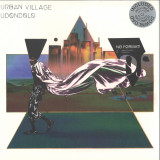
Signed to Parisian label N F rmat! (home to Oumou Sangar , Blick Bassy & M lissa Laveaux), Soweto-based 4 piece band Urban Village present their debut album, ‘Udondolo’.
Marrying the day-to-day experiences of black South Africans with ebullient elements from traditional Zulu music, Urban Village is the alias of four experimental musicians all born & raised in the township of Soweto at the tail end of apartheid.
Urban Village release music under a name which specifically references the blend of cultures, music & rites which were assimilated into the now 1 million strong population of Soweto, when black South Africans from multiple provinces were brought to the area during the establishment of apartheid, under strict segregation from Johannesburg’s white suburbs.
Born for the most part in the last years of apartheid, whilst growing up the band plunged happily into house and dance music that turned the page of a heavy past. Guitarist Lerato came across older Zulu musicians and their style of maskandi playing. Lerato has since mixed styles from homelands and rural areas, sharpened in club jam sessions (where he went on to meet Tubatsi and form Urban Village) during which spoken word, hip-hop and jazz rub shoulders freely.
‘Udondolo’ - partially recorded at legendary Downtown Studios in the heart of Johannesburg and at Figure of 8 studios in the leafy suburbs of Randburg, - is a journey through all the colours of Soweto. This is where it draws its consistency, strength & identity. That of Soweto itself - a dormitory town designed to
monitor those who were sent there, it has become a laboratory of music where the hopes of an entire people resonate, even today.
The latest signing to Parisian label No Format! (home to Oumou Sangaré, Blick Bassy and Mélissa Laveaux), Soweto-based 4 piece band Urban Village will release their debut album "Udondolo". Marrying the day-to-day experiences of black South Africans with ebullient elements from traditional Zulu music, Urban Village is the alias of four experimental musicians all born & raised in the township of Soweto at the tail end of apartheid; Urban Village release music under a name which specifically references the blend of cultures, music & rites which were assimilated into the now 1 million strong population of Soweto, when black South Africans from multiple provinces were brought to the area during the establishment of apartheid, under strict segregation from Johannesburg's white suburbs. Born for the most part in the last years of apartheid, whilst growing up the band plunged happily into house and dance music that turned the page of a heavy past. Guitarist Lerato came across older Zulu musicians and their style of maskandi playing. Lerato has since mixed styles from homelands and rural areas, sharpened in club jam sessions (where he went on to meet Tubatsi and form Urban Village) during which spoken word, hip-hop and jazz rub shoulders freely. "Udondolo" - partially recorded at legendary Downtown Studios in the heart of Johannesburg and at Figure of 8 studios in the leafy suburbs of Randburg - is a journey through all the colours of Soweto. This is where it draws its consistency, strength & identity. That of Soweto itself - a dormitory town designed to monitor those who were sent there, it has become a laboratory of music where the hopes of an entire people resonate, even today.
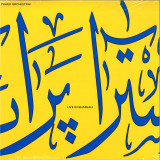
3 x LP - Live in Sharjah Box Set + Booklet. designed by Lorenzo Mason Studio.
If you’ve ever travelled to Egypt and wandered through its crowded streets, you probably ended up buying a cassette or a CDR of popular synth based music heard in most cabs, cabarets, or alleys around town: the almighty Shaabi.Raed Yassin and Paed Conca based their project PRAED on research between Shaabi and Mouled (traditional trance music from Egypt) and the hypnotic structures of both these genres. Repetitive beats, loud Mizmar and loads of energy, with a strong influence from psychedelic rock, free jazz and electronica.
During the years in which the duo produced 4 albums and performed on an endless number of stages around the globe, PRAED started working on anambitious expansive project: an orchestra that could transpose this study of rural and popular culture into an immense, iconic work. In autumn 2018, supported by the Sharjah Art Foundation, PRAED Orchestra! premiered “Live in Sharjah”, interpreting new material merged with some of the band’s iconic pieces. The composition process started with the choice of musicians: the line-up consisted of some of the most innovative artists coming from a wide spectrum of musical practices. Each musician was chosen for a defined role, and the common denominator was their capacity to interpret written material, and their ability to improvise effortlessly. Each role was clearly set to work in unison with the rest of the group, while simultaneously sustaining a centrality in the choir. Solo parts masterfully drawn over the structure as a fil rouge connecting every piece of the entire concert; massive and powerful orchestral sections leading to a breathtaking trance-like state of mind; all of this material ultimately coalescing into an Egyptian Operette that narrates the sorrow, love, and deeply rooted culture of this urban music called Shaabi.
Paed Conca: Clarinet, Electric Bass, Electronics
Raed Yassin: Synthesizers, Vocals, Electronics
Alan Bishop: Alto Saxophone, Vocals
Nadah El Shazly: Vocals, keyboard, Electronics
Christine Kazarian: Electric Harp
Hans Koch: Bass Clarinet, Soprano Sax
Martin Kuchen: Tenor Saxophone, Baritone Sax
Maurice Louca: Keyboard, Organ
Radwan Ghazi Moumneh: Buzuk, Vocals, Modular Synthesizer
Sam Shalabi: Electric Guitar, Oud
Ute Wassermann: Vocals, Mouth Harp, Whistles
Khaled Yassine: Drums, Percussion, Darbuka
Michael Zerang: Drums, Percussion
Recorded live at Calligraphy Square on November 3rd, 2018 in Sharjah, UAE by: Sudish Suman & Shuaib Ahmad Poonthala
Edited by: Rabih Beaini at Morphine Studio, Berlin, Germany
Mixed by: Radwan Ghazi Moumneh at Hotel2Tango Studio, Montreal, Canada. Mastered by: Harris Newman at Grey Market Studio, Montreal, Canada.
Artwork by Lorenzo Mason Studio.
Project manager : Simsara Music
“Don´t go out there, you might get shot” was the warning from Donna Maya relatives when she visited Detroit two years ago. That makes her even more curious to explore the city. Disturbed by, as well as fascinated from the dystopian state of Detroit she recorded many places that made (industrial) history, including the Ford factory, the world’s tallest, now abandoned central station and the once magnificent Michigan Theater, that was brutally converted into a parking garage. Donna Maya transformed the sound recordings into artificial sound sculptures combined with electronic beats. Every track is dedicated to one of those places and makes it musically alive. With her theremin Donna Maya guides the listener deeply inside. The result of Donna Mayas 6 weeksstay in Detroit is her album “Lost Spaces -> Detroit". “Lost Spaces ? Detroit” is about how to handle crises, how individuals get along with it and the relationship of society to its culture. Donna Maya understands Detroit as a perfect example for what capitalism does when people give up cultural values. With “Lost Spaces ? Detroit” Donna Maya draws a musical picture of how she experienced Detroit that shows that not only a city got lost, but a living space for everyone: Pure urban experimental electronics with theremin.
- A1: East Man & Streema - Know Like Dat
- A2: East Man & Mic Ty - Everybody Knows
- A3: East Man & Fernando Kep - Ouroboros
- A4: East Man & Lyrical Strally - Ten Ton Riddim
- A5: East Man & Ny Ny - Boys
- A6: East Man & Whack Eye - Who Am I?
- B1: East Man & Eklipse - East Man Theme (Reprise)
- B2: East Man & Darkos Strife - Wow How?
- B3: Ease Up
- B4: Look & Listen (Part 2)
- B5: Machine Gun
- B6: Hi Tek Theme
'Prole Art Threat' is producer Anthoney Hart's second LP for Planet Mu under his East Man alias, after 2018's well received debut 'Red White & Zero'. It brings together a set of MCs from all over London, Darkos and Eklipse from East London and Lyrical Strally from near Feltham who were on the first album, Ny Ny and Mic Ty also from East London, Streema and 'Vision Crew' member Whack Eye from Lewisham plus Fernando Kep, an MC from the burgeoning Brazil grime scene. They work across a cohesive set of tight riddims forged from thoughtful amalgams of grime, dancehall and drum & bass. The album takes its name from a Fall song/mission statement of the same title, the band being self-consciously working class and led by a brilliant autodidact in Mark E Smith. East Man relates that the title is to be taken as “a reflection of working-class creativity and how the establishment marginalise us and (perhaps on a subconscious level) see us as a threat.” Les Back, author of 'The Art of Listening' and 'Out of Whiteness: Color, Politics and Culture (with Vron Ware)' contributes liner notes to the record: East Man understands the force and the democracy of the mic. Listening to Prole Art Threat is like being at a dance. As the mic is passed between each of the MCs, a different tale is ‘elevated... off the map’ as Ny Ny puts it. We hear instalmentsfrom Forest Gate, Lee, Lewisham and Manor Park as these ‘lyrical gaffers’ and ’top boys and girls’ tell tough stories of life under the scrutiny of the ‘Feds’ in a brutal and divided city. The bars and rhymes document what it means to live here; from the double standards applied to the sexuality of young girls and boys to the corrosive violence of everyday life. All this is dissected without compromise. This is not just aLondon story though, the inclusion of Fernando Kep from the burgeoning Grime scene in Brazil is evidence of the outernational reach of the music. The tracks on East Man’s album explode the wilful ignorance of those who see ‘the working class’ in contemporary London as code for whiteness. This is the sound of a proletarian urban multiculture, made from Caribbean and African influences, sound system culture, pirate radio and the inexorable rhythms of Grime, Drum & Bass, Techno and Dancehall. It is the stirring of the "white" & "black" working classes who are living together and coming together on their own terms in sound. ‘Making music because you love it... what the fuck else could you do?’ as East Man says. The tracks and voices you are holding in your hands are, as a result urgent, vital, as hard nails and twice as sharp.
‘Reality Tunnels’ is a concept that was originally introduced by Robert Anton Wilson in his 1983 book ‘Prometheus Rising’. In essence, the concept of a reality tunnel relates to an idea on how we create our own perspective – the subjective filter that we each apply to the world around us; the things we perceive and what our consciousness deems worthy of attention, IE what we see and hear is entirely relative to what we do not.
At points angular and uncompromising with levels in the red, frequencies pushed out and EQ curves stretched into strange new shapes, Pinch mixes both low and hi fi on this boldly distinct sonic statement. It sees him flexing years of production skills – but unconventionally so – knowing well that safe predictability and rounded polish don’t get the most interesting results.
Dark trip hop Bristolia segues into blistering jungle on album opener ‘Entangled Particles’, before planet-hopping onto the spiky insidious grimestep of ‘All Man Got’, featuring the rugged rasp of OG warhorse Trim.
Beginning a triptych of future techno, ‘Accelerated Culture’ offers the album’s most relatively straightforward moment, albeit one of scorching, anthemic dancefloor heat. Delving deeper into the vortex is the synapse sparking wobbler ‘Returnity’, before ‘Finding Space’ reaches to the cosmos’ far-flung, glowing outlands.
Back to an urban reality is ‘Party’, where a subtly menacing sense of dread is ignited by Killa P’s incremental flow, which ramps-up and pairs-back the intensity in unexpected ways. Still moving freely between different realities, ‘Back To Beyond’ is beautiful gloaming ambience, executed with equal fine-tuned grace as the genre’s masters.
Jamaican vocalist Inezi lends sweet tones to the slow burning, roots-meets-modern-bass spiritual ‘Change Is A Must’, and on ‘Non-Terrestrial Forms’ an atmospheric, misty steppers intro segues stealthily into fiercely dystopian, amen-fuelled jungle tekno; marking one of several surprise attacks on the album, where a subtle-slight-of hand shoots the intensity level dynamically up.Closing as it begins, the album is bookended by a piece that recalls the dark, intricate soundscapes of Massive Attack’s ‘Mezzanine’ and Tricky’s ‘Maxinquaye’ – found here in ‘The Last One’s scorched, smoky rocker.
Hit the vinyl double pack for an exclusive and quite unique sounding 120bpm glitchy techno roller featuring man like Trim once again and live cello recordings.
‘Reality Tunnels’ is a concept that was originally introduced by Robert Anton Wilson in his 1983 book ‘Prometheus Rising’. In essence, the concept of a reality tunnel relates to an idea on how we create our own perspective – the subjective filter that we each apply to the world around us; the things we perceive and what our consciousness deems worthy of attention, IE what we see and hear is entirely relative to what we do not.
At points angular and uncompromising with levels in the red, frequencies pushed out and EQ curves stretched into strange new shapes, Pinch mixes both low and hi fi on this boldly distinct sonic statement. It sees him flexing years of production skills – but unconventionally so – knowing well that safe predictability and rounded polish don’t get the most interesting results.
Dark trip hop Bristolia segues into blistering jungle on album opener ‘Entangled Particles’, before planet-hopping onto the spiky insidious grimestep of ‘All Man Got’, featuring the rugged rasp of OG warhorse Trim.
Beginning a triptych of future techno, ‘Accelerated Culture’ offers the album’s most relatively straightforward moment, albeit one of scorching, anthemic dancefloor heat. Delving deeper into the vortex is the synapse sparking wobbler ‘Returnity’, before ‘Finding Space’ reaches to the cosmos’ far-flung, glowing outlands.
Back to an urban reality is ‘Party’, where a subtly menacing sense of dread is ignited by Killa P’s incremental flow, which ramps-up and pairs-back the intensity in unexpected ways. Still moving freely between different realities, ‘Back To Beyond’ is beautiful gloaming ambience, executed with equal fine-tuned grace as the genre’s masters.
Jamaican vocalist Inezi lends sweet tones to the slow burning, roots-meets-modern-bass spiritual ‘Change Is A Must’, and on ‘Non-Terrestrial Forms’ an atmospheric, misty steppers intro segues stealthily into fiercely dystopian, amen-fuelled jungle tekno; marking one of several surprise attacks on the album, where a subtle-slight-of hand shoots the intensity level dynamically up.Closing as it begins, the album is bookended by a piece that recalls the dark, intricate soundscapes of Massive Attack’s ‘Mezzanine’ and Tricky’s ‘Maxinquaye’ – found here in ‘The Last One’s scorched, smoky rocker.
Hit the vinyl double pack for an exclusive and quite unique sounding 120bpm glitchy techno roller featuring man like Trim once again and live cello recordings.
With a hybrid jazz based on African grooves, Ethio-oriental melodies and psychedelic dub this Belgian five-piece creates an atmosphere where ancient and modern sounds fuse into a powerful, hypnotic and groovy sensation.
Receiving critical acclaim for their second album 'Artifacts' (2017), the Belgian quintet are pleased to announce the release of their much-anticipated third album entitled 'Future Flora', released 12th April via Sdban Ultra on vinyl / cd / digital.
Piloted by saxophonist/flutist/composer Nathan Daems (Ragini Trio, Dijf Sanders, Echoes of Zoo), the input of notorious musicians, drummer Simon Segers (MDC III, De Beren Gieren, Stadt), cornet player Jon Birdsong (dEUS, Beck, Calexico), keyboardist Wouter Haest (Voodoo Boogie) and bassist Filip Vandebril (Lady Linn, The Valerie Solanas) leads to the specific universe that only Black Flower is able to create.
Where debut album 'Abyssinia Afterlife' (2014) and 'Artifacts' (2017) bathed in an atmosphere of psychedelics, mythical figures, ancient sounds and modern cultures, new album 'Future Flora' refers to the power of plants and their importance for the future.
"'Future Flora' is a metaphor for the importance of feeding and watering powerful and revolutionary ideas and initiatives that can save our world. You can compare it with plants that fight between the paving stones of the city for their future. These "urban warriors" need water to survive and grow. Their future and ours depends entirely on how we look at the plant world", says Daems.
Black Flower's musical cross-pollination of sounds and rhythms remain on 'Future Flora', but there is still room for a more Western touch with Romanian and Maloya (Réunion) influences. Daems developed his own arrangements where Western, Oriental and Ethiopian scales and chords are fused together to create a real mix of traditional instrumentation and modern electrical vibrations.
The strong underlying groove is omnipresent, but the room for psychedelics, folklore and experimentation grows. Songs like new single 'Hora de Aksum' combine modern western rhythms with doses of Balkan eccentricities while 'Future Flora' takes you on a psyche-delicious 21th century Ethio-dub-jazz trip with echoes of Mulatu Astatke and Fela Kuti.
"The general feeling that dominates is that of strength and perseverance. The feeling that we have to fight for our future and that we have to do it now! The whole album is interspersed with this atmosphere and sounds swirling, haunting and ecstatic. For those who once saw Black Flower live at work, this energy will be extremely recognizable", he adds.
“Lugar Alto presents their very first release: the incredibly rare and absolutely stunning “Homenagem”, by Leonardo V. Boccia. This is a forgotten gem from the eighties that examines traditional Brazilian themes such as choro, northeastern folk, and capoeira with touches of eighties electronics and new age.
Leonardo Boccia is a musician, multi-instrumentalist, composer, researcher and university professor of Culture and Society at the Federal University of Bahia, whose interests include sound studies, manipulation of sound media, audiosphere and aesthetics, musical theatre, audio culture and neuromusic.
Born in Italy, this respected academic studied music in Berlin, moved to Rio de Janeiro and established himself in Salvador where he was invited to research the northeastern music of Bahia. There he created the experimental group Macchina Naturale, an eclectic combo that performed regularly during his stay. In November 1980, Boccia participated in the first Instrumental Music Festival of Bahia as a soloist where he performed works of his own.
But it was in 1983 that Professor Boccia composed, directed and produced the LP Homenagem. With photos by renowned photographer and artist Mario Cravo Neto for the front and back cover of the booklet, the album presents new and original compositions for instrumental ensembles, such as: Choro Fantasia – for guitar and berimbau -, Canção para Iracema, Homenagem and Lenda do Sertão. The LP was originally released on January 3rd, 1984, with a live performance in the main hall of the Castro Alves Theatre under the title Tribute to Brazilian Music, with the participation of vocalist Sueli Sodré, who contributes to the album, instrumentalists Zeno Millet and Onias Camardelli, accompanied by choreography and visuals.
Much of Homenagem examines the genre of Brazilian music known as Choro, or Chorinho, a genre which appeared in Rio de Janeiro in the 19th century. Choro is regarded as the first typically Brazilian urban music and, over the years, it has come to be considered one of the most prestigious genres of national popular music. Stylistically, it originates from Lundu, a percussion-based rhythm of African inspiration but also influenced by European genres. The instrumental composition of choro was based on the trinca flute, guitar and cavaquinho. Over time, other wind and string instruments were incorporated.
Here, in Homenagem, Professor Boccia deliberately mixes the old and the new, the traditional and the innovative; the album is the environment of Chorinho reconsidered and recontextualized, and its melodies and harmonies still capable of surprises. Just listen to “Terra e Povo” – it has an almost proto-acid-house quality to it, while the synth washes on “Mãe Natureza” with the ethereal vocal stylings of Sueli Sodré ushering in the progressive quality of the album.
Too long out of print, new label Lugar Alto now offers you the chance to reappraise this fascinating reissue of yet another forgotten chapter in Brazilian music.”