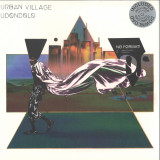
Signed to Parisian label N F rmat! (home to Oumou Sangar , Blick Bassy & M lissa Laveaux), Soweto-based 4 piece band Urban Village present their debut album, ‘Udondolo’.
Marrying the day-to-day experiences of black South Africans with ebullient elements from traditional Zulu music, Urban Village is the alias of four experimental musicians all born & raised in the township of Soweto at the tail end of apartheid.
Urban Village release music under a name which specifically references the blend of cultures, music & rites which were assimilated into the now 1 million strong population of Soweto, when black South Africans from multiple provinces were brought to the area during the establishment of apartheid, under strict segregation from Johannesburg’s white suburbs.
Born for the most part in the last years of apartheid, whilst growing up the band plunged happily into house and dance music that turned the page of a heavy past. Guitarist Lerato came across older Zulu musicians and their style of maskandi playing. Lerato has since mixed styles from homelands and rural areas, sharpened in club jam sessions (where he went on to meet Tubatsi and form Urban Village) during which spoken word, hip-hop and jazz rub shoulders freely.
‘Udondolo’ - partially recorded at legendary Downtown Studios in the heart of Johannesburg and at Figure of 8 studios in the leafy suburbs of Randburg, - is a journey through all the colours of Soweto. This is where it draws its consistency, strength & identity. That of Soweto itself - a dormitory town designed to
monitor those who were sent there, it has become a laboratory of music where the hopes of an entire people resonate, even today.
Поиск:urban village
Все
- 1
The latest signing to Parisian label No Format! (home to Oumou Sangaré, Blick Bassy and Mélissa Laveaux), Soweto-based 4 piece band Urban Village will release their debut album "Udondolo". Marrying the day-to-day experiences of black South Africans with ebullient elements from traditional Zulu music, Urban Village is the alias of four experimental musicians all born & raised in the township of Soweto at the tail end of apartheid; Urban Village release music under a name which specifically references the blend of cultures, music & rites which were assimilated into the now 1 million strong population of Soweto, when black South Africans from multiple provinces were brought to the area during the establishment of apartheid, under strict segregation from Johannesburg's white suburbs. Born for the most part in the last years of apartheid, whilst growing up the band plunged happily into house and dance music that turned the page of a heavy past. Guitarist Lerato came across older Zulu musicians and their style of maskandi playing. Lerato has since mixed styles from homelands and rural areas, sharpened in club jam sessions (where he went on to meet Tubatsi and form Urban Village) during which spoken word, hip-hop and jazz rub shoulders freely. "Udondolo" - partially recorded at legendary Downtown Studios in the heart of Johannesburg and at Figure of 8 studios in the leafy suburbs of Randburg - is a journey through all the colours of Soweto. This is where it draws its consistency, strength & identity. That of Soweto itself - a dormitory town designed to monitor those who were sent there, it has become a laboratory of music where the hopes of an entire people resonate, even today.
2025 marks the return of Cologne-based electronic outfit Urban Homes with their first new music in over eight years, following an unintentional hiatus driven by side projects, relocations, the pandemic, and the unpredictability of »life.« After over eight years, the duo is back with their first new material: a fresh batch of purely instrumental downtempo and dub-influenced tracks, marked by a somber and atmospheric vibe that distinctly separates this new material from their previous work. Inspired by themes of extraterrestrial life and the paranormal, the four new tracks compiled on the »U.F.O.« EP release were crafted during recording sessions split between Cologne and Berlin before languishing for years on neglected hard drives, finally »ripening« into their current form.
Formed in 2008, Urban Homes initially emerged as a post-punk group, debuting live in 2009. Their first release—a four-track demo tape recorded in late 2010—already hinted at an evolving sound that would soon embrace a more experimental and electronic direction. By 2011, the band swapped their live drums for a drum machine, a shift that would profoundly shape their sound in the years to follow. Over the years, Urban Homes has explored a broad sonic landscape, merging electronic production, rhythm-driven compositions, and experimental song structures. Drawing influences from early house, balearic, disco, dub, avant-garde electronica, and pop, their music continues to defy easy categorization.
In March 2013, the duo released their debut album »Centres«, earning the Pop NRW Prize for Best Newcomers that same year. Their 2016 follow-up, »Jams«, was met with critical acclaim. A love letter to dance music's roots, Jams fused pop sensibilities with open-ended experimentation, built from years of MIDI-driven jam sessions that were painstakingly edited and reconstructed. Both released by Altin Village & Mine, »Jams« was also licensed by the Japanese label Fennely / Moorworks for an exclusive CD edition in 2017. Over the years, Urban Homes supported their releases with numerous tours and festival appearances across Germany and a memorable tour of Japan in 2017.
Spanish producer Larsson delivers a deep and hypnotic 4-tracker for Fuxbau Records, marking his vinyl debut on the label. Written in the rural village where Larsson grew up, the EP carries a sense of groundedness and clarity. Created in his parents' home, surrounded by nature and far from urban distraction, the tracks reflect a setting where ideas unfold organically. The result is a tightly cut selection of groovy, rolling techno - stripped back, hypnotic, and full of tension. That contrast between calm surroundings and high-impact club energy runs through all four tracks: stripped-back yet detailed, functional yet full of soul.
Quiet Village collaborate with Vanessa Daou on 'Naked Hunger’ Legendary New York artist and The Daou front-woman Vanessa Daou lends vocals to Matt 'Radio Slave' Edwards and Joel Martin's second release on the ‘The Quiet Village’ imprint.
Matt ‘Radio Slave' Edwards and Joel Martin's critically acclaimed Quiet Village project follow-up, 2024's 'Reunion' with the Vanessa Daou collaboration, 'Naked Hunger' on September 5th, '25. 'Naked Hunger', which comes in 'Vocal Mix' and 'Spoken Word Mix' versions, sees Quiet Village employ their hypnotic sensibilities to one of house music's most tantalising vocal talents in Daou, resulting in a mid-tempo house cut that completely envelops.
While the vocal mix of 'Naked Hunger' leans into the interplay between Vanessa Daou's cosseting song voice and spoken vocals, with the rest of the track embracing a subtly dubby ethereal musicality, Quiet Village ramp up the instrumentation on the' Spoken Vocal' version with bass guitar and piano flourishes accompanying her sultry poetic delivery.
'Naked Hunger', Daou's first collaboration with Quiet Village, marks her first release since 2019's 'Little Black Dress'. Throughout her illustrious career, the acclaimed three-time #1 Billboard Dance Chart topper has collaborated with Danny Tenaglia, David Morales, Mood II Swing, Ralphi Rosario, Terry Farley (Farley & Heller), Charles Webster, Horse Meat Disco's Severino Panzetta, Hifi Sean, and Eli Escobar.
Friends since meeting at Goldie's legendary MetalHeadz sessions at London's Blue Note in the '90s, Quiet Village, aka Matt Edwards and Joel Martin, began releasing their brand of dubbed-out, balearic-and-beyond tracks in 2005 via NYC's Whatever We Want Records. The duo's 2008 'Silent Movie' LP was a critical smash hit that resulted in remix commissions for the likes of Bryan Ferry, The Gorillas, Leftfi eld, Francois K, Massive Attack and many more. After a few years in the wilderness, unable to use their nom de plume due to contractual restrictions, the pair launched The Quiet Village label in 2024 with 'Reunion', a stunning 6/8-time urban jazz odyssey, a favourite of the likes of Luke Una, Gilles Peterson and Ryan Elliott.
La Ruka is a prominent artist from Colombia's Pacific Coast. She blends hip-hop, salsa, Afro-Colombian roots and urban Latin genres in her music even though she is now based in Barcelona. Her live shows are always high on energy and tunes of hers like 'No Quiero Marido' and 'Todo Es Plata' are some of many standouts from the last 20 years. Her lyrics often focus on Afro-descendent women and life in Buenaventura and this new EP is another injection of Latin rhythms direct to your soul. Each one is sun kissed and percussive with irresistible production from the likes of JMoney, Village cuts and Lanzapro.
Kolida Babo is the collaboration between two Greek woodwind musicians from separate regions - Socratis Votskos is from Pella, and Harris P. is from Athens. Their self-titled debut album was recorded in improvised live-take sessions beginning on the night of the “Kolida Babo” folk rituals of music and dance in northern Greece in winter 2013. They explore the ancient music of Armenia and the folk traditions of northern Greece’s Epirus and Thrace regions alongside abstract electronics and free jazz.
Their debut album was released by MIC Records (London) in 2019 to rave reviews. Other notable releases include the Jazzman Records jazz45 series and the soundtrack for the documentary ''Gospel of Michiel'' and "Loxy". Their music was supported by BBC 6Music, BBC Radio 3 - Late Junction, NTS, Soho Radio, WorldWide Fm as well as the Greek National Radio. Last but not least, they have performed in various places around Greece and Europe including festivals like CTM, Archipelago Festival and Vinterjazz Festival.
In their second full-length album Spirits of Mauronoros set to be released in 27/09/2024 by Veego Records, Kolida Babo revisit an old forgotten place in northern Epirus Greece, near the Greek-Albanian borders.
A spiritual music journey dedicated to the old village of Mauronoros (Black Mountain) and its people. This village is one of the many villages in Greece that is totally abandoned as a result of the economic crises and cultural changes that Greece faced in the last century. This profound depopulation of the area left behind ruins that echo its past trials and tribulations. However the traditional sounds of the village keep reappearing in urban centers like ghosts that haunt everyday life. This sonic dialogue between "modern" and "traditional", between "the peaceful countryside" and " turbulent urban centers" sometimes looks irrelevant and outdated but is of great consequence. It transports the listener in an unspecified time and place devoid of any cultural and geopolitical connotations and thus leaves them wondering for a freer and more authentic way of life.
(comes with a poster) The Klein blue horizon, gliding seagulls, a ferry purring between two languid islands, dotted with ultra-white villages and ancient ruins... These idyllic visions run through Glika, the ultimate musical project of Les Cyclades. An exciting electronic odyssey from West to East, from Belgian effervescence to Greek mysticism.
In 2020, confined to the neighborhoods of Yser and Mystère in Brussels, Alex and Ludo dream of Greek islands, of scorching sun on their skin, of salty baths, chilled ouzo and braised octopus. But everywhere, time stands still. Must one necessarily move to travel? To levitate? In the absence of Elsewhere, the Franco-Canadian duo will compose the imaginary soundtrack to their escape.
Glika (which means "sweet" in Greek) perfectly synthesizes the musical influences of Les Cyclades: a cosmic saxophone inherited from Alex’s dub and free jazz past, an architect-pastry chef-botanist from Normandy, and Ludo’s "Balearic" tracks, a musician-performer-wine lover who frequented his first raves in 1995 in Houston, Texas.
From a hedonistic encounter on a friendly terrace in the 19th arrondissement of Paris to their chosen exile in Brussels, these hypersensitive jacks-of-all-trades first danced and mixed records. Before creating their own phantasmagorical sonic territories, where cinema and poetry meet more or less human voices, brass instruments, synthesizers and analogue drum machines.
A searing fragment of Greek filmmaker Theo Angelopoulos's "Eternity and a Day" preludes Glika. Then, on Yser Mystère - the names of the two stations on tram 51 that physically linked Alex and Ludo's psyches during the lockdown - Alex's astral sax balances out the industrial mechanics of a locomotive, against a backdrop of urban soundscapes.
And then a rising bpm dominates Alocasia, with its deep and sensual light foot. So sunny. From one track to another, there are interludes influenced by Xenakis, Vangelis and Jean-Michel Jarre. Seminal heroes of the Cyclades... But soon, the duo unleash hostilities at the helm of Epigone, their meta-techno anthem. "I know", "You know", echoes Alex.
Laughs of friends, "mouth noises," and "bizarre rhythms" still dominate Parc Fou, while DRAM eyes the minimalist techno of Detroit. So dear to Ludo's heart... And what about PAME, that post-modern Greek epic.Or Glossa, a timeless track that finishes with a fascinating - because diffracted - elegance, this multi-sensory journey through Les Cyclades. Let's close our eyes. Silencio! Hay Banda!
By Eléonore Colin, journalist (and friend!!)
- A1: Mamehy - Je Mitsiko Ro Mokotse (“Those Who Talk Dirty Behind Your Back Tire Themselves Out For Nothing”)
- A2: Drick - Sinjake Panambola (“Dance Of The Rich”)
- A3: Befila - Eka Ndao (“Let's Go”)
- A4: Behaja - Marolinta (Name Of A Village On The South-Western Tip Of Madagascar)
- B1: Mahafaly Mihisa - Fanoigna (“Heated Debate“
- B2: Meny & Ando - Ka Tseriky Iha (“Don't Be Surprised”)
- B3: Rebona - Zana-Konko
- B4: Mirasoa & Mahapoteke - Bleu Bleu (“Blue Blue“)
Wild ecstatic vocals, distorted electric guitars, rocket bass, and the amphetamine beat! // Unlike anything else, this is THE high life music you've always wanted // Ceremonial music played with abandon and extreme intent, honoring the living and dead alike // Recorded on location in SW Madagascar by Maxime Bobo // “Tsapiky music from Southwest Madagascar features wild ecstatic vocals, distorted electric guitars, rocket bass, and the amphetamine beat! Unlike anything else, this is THE high life music you've always wanted - ceremonial music played with abandon and extreme intent, honoring the living and dead alike. In Toliara and its surrounding region, funerals, weddings, circumcisions and other rites of passage have been celebrated for decades in ceremonies called mandriampototse. During these celebrations – which last between three and seven days – cigarettes, beer and toaky gasy (artisanal rum) are passed around while electric orchestras play on the same dirt floor as the dancing crowds and zebus. The music, tsapiky, defies any classification. This compilation showcases the diversity of contemporary tsapiky music. Locally and even nationally renowned bands played their own songs on makeshift instruments, blaring through patched-up amps and horn speakers hung in tamarind trees, projecting the music kilometers away. Lead guitarists and female lead singers are the central figures of tsapiky. Driven as much by their creative impulses as by the need to stand out in a competitive market, the artists distinguish themselves stylistically through their lyrics, rhythms or guitar riffs. They must also master a wide repertoire of current tsapiky hits, which the families that attend inevitably request before parading in front of the orchestra with their offerings. This work, a constant push and pull between distinction and imitation, is nourished by fertile exchanges between various groups: acoustic and electric, rural and urban, coastal or inland. What results during these ceremonies is a music of astonishing intensity and creativity, played by artists carving out their own path, indifferent to the standards of any other music industry: Malagasy, African or global. Recorded live on location by Maxime Bobo, this vinyl LP includes a 4-page full-color insert with detailed liner notes plus photos of the musicians and surroundings.”
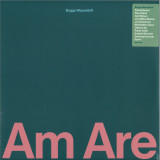
Bugge Wesseltoft has long been a shaper of his own jazz idioms, through his diverse solo albums, his group projects such as New Conception of Jazz, OKWorld! and RYMDEN, and collaborations with artists such as Sidsel Endresen, Henning Kraggerud or Henrik Schwarz.
"Am Are" features special constellations of superb musicians that spans both generations and styles, and is an exploration of sonic textures, dynamic contrasts of mood and style, and ranges from sparse arrangements through to complex layers of dubs and loops and improvisational interplay.
The album begins with Bugge alone on "How?" with layers of undulating atmospheric synth, brought into focus by Bugge's piano at the forefront, creating a minimalist miniature that is both emotive and serene. For "Villrein" Bugge is joined by Elias Tafjord on drums, beginning with a santur-like synth figure, floating over ominous formant sci-fi bass synths bubbling and pulsing, and overlaid by phrenetic piano that only stops to lock into the santur figure before relaunching on its own journeys, all underpinned by Elias Tafjord's expressive drumming. "Is Anyone Listening?" demonstrate's Bugge's songcraft, layering muted percussive piano behind Rohey's distinctive and beautiful vocals punctuated by Martin Myhre Olsen's tenor saxophone, creating a soulful mood tinged with desperation.
"BAG" presents the first classic piano trio of the album - Bugge on piano and synths, Arild Andersen on bass, and Gard Nilssen on drums - announcing itself with an insistent riff, chattering drums, breaking into a progressive rock-style passage of bass and piano in unison. "Reel", the second track from this trio, is a mellow soundscape that evolves to become hazy urban downbeat jazz.
The second piano trio of Bugge (Rhodes and Korg MS20 synth), Sveinung Hovensjø (Electric Bass), and Jon Christensen (Drums and Bells) offers a completely different perspective. The first track "Render" features Bugge's Zawinul-esque Rhodes and monosynth leads, Sveinung's fuzz bass in something of a leading role, all carried with chattering gusto by Jon Christensen's dynamic drumming that brings texture and space as well as rhythm to the piece. "Vender" begins as an atmospheric piece, with reed organ-like synth washes, and octave-processed bass with a somewhat sitar-like tone, meandering until the track breaks down into drums and bass weaving around an insistent drum machine loop, dripping with synth pads and monosynth lead.
"JazzBasill" introduces the third piano trio - featuring Bugge (Piano), Jens Mikkel Madsen (Acoustic Bass) and Øyunn (Drums) - and offers a classic piano trio style with urban sophistication, that is lyrical, and interspersed with staccato cadences, giving a feeling of broken swing, slightly staggered yet driving forwards. The title track "AM ARE" is late night jazz, with baroque whispers, and distinctly melodic.
The final track, "Think Ahead" features the non-standard trio of Bugge (Piano/Organ), Oddrun Lilja (Guitar) and Sanskriti Shrestha (Tablas/Harp). Beginning with a minimalist piano figure, table, and sustained guitar, the track breaks down to a noise surge and ambient windscape, with guitar birds and abstract grinding, before returning to minimalist melodicism.
The shifting personnel across the album, as well as the three different studios in which it was recorded - Village Recording in Copenhagen, Rainbow Studios in Oslo, and his own Buggesroom Studio - creates a feeling of dynamic change and musical variety that is unified by Bugge's piano and keyboards. His playing moves between foreground, where he allows the music to elevate him, and background, where he move gently like a beneficent presence, tending to the demands of the spirit of the musical moments he has captured. It is an album powered by restless exploration and shaped by distinctive musical personalities; it is a journey through different moods, illuminated and brought into focus by Bugge's measured approach and guiding hand.
Quiet Village announces new label, The Quiet Village, and new single, ‘Reunion'. Matt 'Radio Slave' Edwards and Joel Martin's critically acclaimed project's first official single under the Quiet Village name in seventeen years!
Beginning life as a 'heady 6/8-time urban jazz odyssey, 'Reunion is a stunning piece of modern, Hi-Tech Jazz that draws influences from Pat Metheny, Timeline, Innerzone Orchestra, and Clyde Stubbelfield's drumming.
While previous Quiet Village material was hewn from a myriad of samples extracted from Edwards' and Martin's notorious digging, 'Reunion' and its follow-ups are drawn from a tight-knit crew of session musicians, including the likes of Jon Hester and Thomas Gandey, adding further depth and feel to the QV sound. Already a firm favourite with Gilles Peterson and Luke Una, the latter of which leaked a clip of the release via his inimitable Instagram presence and called it 'something so fucking beautiful. Tony Allen, Sun Ra meets Carl Craig, Underground Resistance, house, tech, funk, everything rolled into one'.
'Reunion’ is the first single on The Quiet Village, Quiet Village's new imprint. Despite continually producing new music and a slew of remixes, most recently for Running Back and Isle of Jura, the long-term friends and collaborators have been unable to release under their Quiet Village moniker since their LP 'Silent Movie' in 2008. While a few releases under QV and their sometime DJ aliases of Maxxi (Edwards) and Zeus (Martin) have emerged, 'Reunion' is the beginning of a new and re-energised Quiet Village that will see more original material and remixes, DJ and live touring that began in Japan in May and curated compilations of treasures, old and new, in the coming months and years.
Forest Law's debut album, "Zero," is a vibrant journey blending Balearic funk with urban Tropicalia, showcasing his adept guitar playing, old-school sampling, and UK- styled beats alongside his mellow yet sombre vocals. Recorded across eclectic locations from Icelandic fish net factories to a garden shed in Romford, this innovative release marks a new chapter for the multi-instrumentalist producer.
Released in collaboration with the UK home for jazz and electronic sounds, Total Refreshment Centre, Zero is Forest Law’s first release since his debut EP on Brownswood Recordings four years ago, marking a new and exciting chapter for the up-and-coming talent.
Crafted over seven years, "Zero" is deeply influenced by Law's experiences, from immersive stays in Porto where he delved into Portuguese music to an artist residency in a remote Icelandic fishing village. The album was finished, and recorded in his garden shed in Romford, East London. It’s a beautiful juxtaposition about a boy from Essex, who fell in love with international music, discovered the world, and then produced a musical treatise about his adventures from his shed.
HJirok is a mythical figure, conceived as a fictional character by Iranian-born Kurdish singer and artist Hani Mojahedy. Together with versatile music producer And Toma of Mouse On Mars, she combined a variety of sounds collected during their joint travels to Iraqi Kurdistan and elsewhere with heavily processed recordings of Sufi drum rhythms and setar melodies. The result is a driving, dubbed-out, and deeply intricate soundscape that perfectly sets the stage for Mojahedy's extended, unconventional vocal techniques and polyglot lyrics. Both informed by tradition and rigorously forward-looking, »Hjirok« (with a lowercase J) is at once a profoundly personal album and a universal utopian promise. As a ghost from the past, HJirok draws on Mojtahedy's memories to mould a new future out of them.
The foundation for »Hjirok« was laid in the city of Erbil in the Kurdish part of Iraq. During one of their stays in the region, Mojahedy and Toma recorded the three percussionists Hadi Alizadeh, Jawad Salkhordeh and Serdar Saydan as well as setar player Ali Choolaei from Motahedy's backing band while they were playingthe rhythms and notes that she had grown up with in the house of her grandfather in the Iranian city of Sanandaj. Her memories of that place revolve around hypnotic Sufi music, dervishes in deep trance, and ecstatic singing. Much like this music seemed to open a portal to other dimensions, the inhabitants of the house lived in a sort of alternative reality: It provided them with a hideaway from political circumstances. Following the Iranian revolution in 1979, a Kurdish rebellion ensued but was met with the utmost brutality by the new regime, which resulted in the death of thousands.
It is no coincidence that the music on »Hirok« would draw on rhythmic patterns that were passed on from one generation to the next for hundreds of years. »The project is rooted in the figures of the Sufi dervishes and thus a culture that precedes today's political, social, cultural, and religious systems,« explains Mohtahedy. »The Sufi sound travelled around the entire world. I like to think of it as a dialogue between peoples-one based on the rhythms of the drums and the sound of their voices.« Toma adds that by electronically transforming the recordings and enriching them with field recordings from both rural and urban spaces, they were able to use the stories told by the drums and the setar to create an entirely new narrative.
The story told by these eight pieces is hence a deeply personal, but also inherently political one. Moitahedy herself left Iran in 2004 and relocated to Berlin in 2010. Having continued to use her art as a platform to tirelessly advocate for the rights of the Kurdish people and women under oppressive regimes, she has not been allowed to return to her country of origin ever since. »Hani is singing for equality and there are people who are afraid of that-her femininity, her strength.« Toma says. Much like earlier Hirok sound installations addressed human-made climate change and other systemic ills, also »Hjirok« can hardly be disconnected from far-reaching struggles for liberation and equality.
This is also true on a thematic and even linguistic level. »The lyrics are about a promise,« Mojahedy says, citing Kurdish writer Ebdulla Pesêw as an inspiration. »At their core, these are about that day on which violence and fear become a thing of the past; what they tell you is ot not give up, to keep hoping,« she adds. The promise embedded in them is an emancipatory one. These contents are mirrored on a linguistic level: The lyrics were written in both Kurdish and Farsi, blurring the lines between the two languages and thus, Kurdish and Persian cultures.
Mojahedy, or rather HJirok, conveys these philosophical themes with elegance. Herversatile vocal performance is only loosely basedo n established styles. »Of course everything started with traditional rhythms, but we kept pushing things further and further, so Idid the same with my voice,« Mojahedy explains. »There were no boundaries.« The same can be said of the field recordings that she and Toma used. Whether it's conversations between members of the Pesmerge, the Kurdish armed forces, having a chat in meadow full of bunnies or the humming and buzzing of metropolises like Tehran: »Hirok« paints a sonic picture that is quite literally autopian one; that of a non-place in which different soundscapes, cultures and ways of life coexist peacefully.
What the album conjures up from Mojahedy's memory is not only a very specific place during a unique time in history as experienced by a single person. It is also ametaphorical home open to anyone who wishes to enter - promise of a better, more egalitarian future for everyone. Hence, HJirok will bring it on tour, presenting the material as an audio-visual live show that makes use of the photo and video material that Mojahedy and Toma have collected during their travels through Kurdistan.ja
- 1: Specht0' 55
- 2: Sonne' 10
- 3: Skulptur2' 12
- 4: Immenweide2' 06
- 5: Glaswände1' 03
- 6: Weidplan2' 07
- 7: An Der Mühlenau2' 46
- 8: Zement2' 12
- 9: Am Morgen2' 30
- 10: Pflugacker1' 34
- 11: Plattenladen1' 45
- 12: Sark1' 25
- 13: Wildacker2' 21
- 14: Magnolien2' 22
- 15: Zentimeter2' 02
- 16: Feldmark2' 25
- 17: An Der Kollau2' 18
- 18: Am Abend0' 56
Perifaerye is a multi-part work of art comprising of 18 soundscapes, 36 digital drawings and 24 writings. Perifaerye is at once a record release, a book, a website; in the autumn of 2023 a series of playlists were published on billboards, linking the online soundscapes to the real-life physical realm. This publication is an artistic hybrid: a vinyl record / book combining sound, image and text.
The 18 audio works condense the sounds of the urban periphery into a sonic cartography. In Hamburg-Eidelstedt, people live in smaller detached houses and in larger apartment blocks. New housing estates have been developed recently in direct neighbourhood to the motorway, and currently in the district centre; a district where post-war housing estates and architectural remnants from a village past co-exist. Even meadows and fields, surrounded by the noise of motorways and other traffic, aeroplanes (the airport is close by) and railways (passenger and und freight trains, long distance, regional and local services). This collection of soundscapes – each a short composition on its own – presents a sonic portrait of a contemporary urban area.
In spring 2023, Jorn Ebner recorded the urban spaces of the Hamburg district of Eidelstedt. For each audio piece there is an image. The artist’s writings reflect and accompany the creative process.
For this book and record, Sebastian Kokus and Thomas Korf created a very haptic design. Each part of the whole can be experienced as a single piece: the A2-sized poster is part of the outer sleeve; the booklet presents image and text (German only); the record is visible through the holes in the inner and outer sleeves and forms part of the cover.
Marathon is not just a band, it's a top-level sport. The Amsterdam-based trio is bursting with energy, and it explodes out of them on stage, captivating audiences everywhere they go. With four Paradiso
shows under their belt, a packed Popronde, Welcome to the Village, Grauzone and many more, Marathon has quickly amassed an impressive live reputation, culminating in a top-10 spot at
Noorderslag. Both KINK and 3voor12 recognize the band as one of the talents of 2023.
V2 Benelux has signed Marathon for their debut EP, set to be released in May 2023. This is a major milestone for the band and a testament to their skills. Marathon's music is a passionate response to the crisis-ridden twenty-first century, channelling the energy of punk and the dissonance of shoegaze and post-punk to give voice to urban anxiety. Lennart's dynamic drumming, Kay's aggressive vocal delivery, and Nina's skillful six-string bass work create an explosive mix that is both raw and polished. Live, Marathon is a force to be reckoned with, with keyboardist Sofie and guitarist Victor bringing even more depth to their layered songs. Together, they create a high-energy defense against the doom and gloom of the modern world, making the uncomfortable bearable. Marathon is a band that demands attention, and their growing fan base is a testament to their undeniable talent.
Long out-of-print release available digitally for the first time. Extensive notes by a local writer in English and French. Previously unpublished family photos. Urbanized traditional music at a dance-floor-friendly tempo. The very definition of an "Awesome Tape From Africa". Roger Bekono made a deep mark in the contemporary history of Cameroonian music through the four-on-the-floor, ribald intensity of bikutsi. The Ewondo-language dance-pop style that forms an undulating tapestry of interlocking triplet rhythmic interplay came to international prominence in the European "world music" scene as the 90s began. But the relentless sound of bikutsi developed in Yaoundé at the hands of Bekono and many others, as it developed from a village-based singing style performed mostly by women into a cosmopolitan music force that rivaled the popularity of established musics like Congolese rhumba, merengue and makossa. With his unique—some say suave—voice, Bekono contributed much over a period of more than 10 years as part of the evolution of this traditional rhythm-turned-urban dance movement. Bekono worked with legendary producer Mystic Jim, who had built a prolific home studio along with a crack team of musicians. They joined as part of the production of his self-titled album, which became known locally as "Jolie Poupée," the name of the album's lead single and most popular song. For "Jolie Poupée" Mystic Jim programmed the kick or bass drum, adding effects to have a heavier bass. Overall the album represented a new level of finesse and professionalism for his second release. In the middle of 1989, Jolie Poupée was released by the label Inter Diffusion System and aggressively hit the radio, discos and national television. The music video for the title track was on loop on TV. It felt like everyone was talking about it, even artists in adjacent music scenes like makossa. The album came out on vinyl and cassette and remains Bekono's best-selling recording to this day. With Jolie Poupée Bekono finally made an impact outside Cameroon as the record captured listeners in some Central African countries like Equatorial Guinea, Gabon, Republic of Congo and Sao Tome & Principe. In these countries, we find the Fang or Mfan people (also known as Ekang), Bantu-speaking ethnic groups that are also found in Cameroon. This umbrella language group includes the language in which bikutsi is mainly sung. Most of Bekono's songs are in French, Ewondo (of which Beti is a dialect) and Pidgin. The four songs on Jolie Poupée are all considered bikutsi classics. On September 15, 2016, Bekono died of a long illness at the age of 62. In the wake of his passing the media published a wave of tributes, thanking him for what he did for Cameroonian music. He was an admired musician, songwriter and guitarist, and some of his old colleagues and some of the new generation of performers showered Bekono with vibrant tributes via social media, many of which noting something to the effect of: "The artist dies but his works remain."
- Introduction By David Kapralik / My Name Is Barbra
- Much More
- Napoleon
- I Hate Music
- Right As The Rain
- Cry Me A River
- Value
- Lover, Come Back To Me
- Band Introductions
- Soon It's Gonna Rain
- Come To The Supermarket (In Old Peking)
- When The Sun Comes Out
- Happy Days Are Here Again
- Keepin' Out Of Mischief Now
- A Sleepin' Bee
- I Had Myself A True Love
- Bewitched, Bothered And Bewildered
- Who's Afraid Of The Big Bad Wolf?
- I'll Tell The Man In The Street
- A Taste Of Honey
- Never Will I Marry
- Nobody's Heart Belongs To Me
- My Honey's Lovin' Arms
- I Stayed Too Long At The Fair
Every Aspect of the Production Personally Supervised by Barbra Streisand
Mixed by Jochem van der Saag from the Original Analogue Session Tapes & Mastered in 24 bit/96 kHz by Paul Blakemore
Lacquer Pressing Master Created by Bernie Grundman
Pressed at RTI
Tip-On Gatefold Jacket
Deluxe 12-Page Booklet Featuring Barbra's Recollections, the Recording's History & Production, and Performance Photos
The Premiere New York City Nightclub Event of 1962! The Most Anticipated Live Album of 2022!
In the fall of 1960, New York City wasn't the same urban mecca it is today. Neither was eighteen-year old Barbra Streisand, who emerged on the Greenwich Village club scene at a small, cozy venue on West 8th Street called the Bon Soir, where she received rave reviews and wooed the crowd with her incredible performances. Within two years Streisand, whose magnificent interpretations of both standards and quirky, obscure cabaret tunes was a nationwide sensation, was knocking audiences dead with her nightly performance as Miss Marmelstein in David Merrick's I Can Get It For You Wholesale on Broadway.
Sixty years, multiple Grammy, Emmy, Oscar, Tony and Golden Globe awards and nearly two hundred million record sales later, Barbra has for the first time authorized the release of a major portion of her Bon Soir performances, as captured in 1962 by Columbia Records. IMPEX Records - in conjunction with Sony Music Entertainment - is proud to present the audiophile 180-gram vinyl LP and SACD editions of the most sought-after recordings in Barbra's legendary career: Live at the Bon Soir: Greenwich Village, NY - November 1962. This gorgeous album features twenty-four brilliant performances personally selected by Barbra Streisand from the original Bon Soir master tapes and expertly mixed and mastered by Paul Blakemore and Jochem van der Saag, under the supervision of producers Barbra Streisand, Martin Erlichman and Jay Landers.
IMPEX RECORDS has created two versions of this noteworthy release: a two-LP vinyl edition and a 24 bit / 96 kHz SACD. To achieve the best fidelity possible, engineer Paul Blakemore transferred the original three-track session tapes to high-resolution 96/24-bit digital files, which were then mixed by Jochem van der Saag. For mastering, Blakemore used an all-analog signal-processing chain in order to maintain the warmth of the original analogue recordings. To master the vinyl LP edition, IMPEX engaged Bernie Grundman, who has mastered many of Barbra's albums over the last sixty years, to create the lacquer pressing master.
Rich with the club's atmosphere, these historic, essential recordings present a warm, charming portrait of a truly important moment in New York City history and American pop culture. Several years removed from Manhattan's flourishing jazz nightclub scene, tiny clubs such as the Bon Soir began popping up, and served as both a forum and launching pad for some of the finest vocalists and musicians the east coast had to offer.
Because of Barbra's success there, Columbia Records A&R rep David Kapralik decided that the first album from his newly-signed artist would emanate from a setting in which she had become most comfortable: the small stage at the Bon Soir. Producer Mike Berniker and recording engineers Roy Halee and Adjutor "Pappy" Theroux set up the mics and recorders, and for three nights harnessed the electrifying show that Barbra had crafted.
"The recordings we did at the Bon Soir were so authentically 'Barbra.' I produced her first three albums at Columbia, and while they were wonderful accomplishments, I thought that what she did each night at the Bon Soir transcended anything we ever did in the studio." - Mike Berniker
Columbia ultimately decided to bring Barbra into the studio to record her first album, and except for the inclusion of several tracks on compilations through the years, the Bon Soir tapes laid dormant in the vault. Now, through this extraordinary release, everyone can at last enjoy the early sound and style of an icon in-the-making: the same brilliant artist whose performances at the Bon Soir were lauded by everyone from actress Helen Hayes to lyricists Alan and Marilyn Bergman. We invite you to join us for an evening at the fabled Bon Soir. Take a seat, order a drink and revel in the magic that is Barbra. You will not be disappointed!
This 3-track sampler 12” is being released to tie in with the Network Remixes 2 x 12 Double Album. The Fathers Of Sound and Urban Sound Gallery remixes are included on the album, whilst Ashley Beedle’s rework is exclusive to this 12”. All 3 tracks are classics from the Network catalogue.
The Fathers Of Sound remix sees the Italian progressive house dons reinventing the Surreal gem written and sung by Ann Saunderson. It is massively in-demand.
Ann is co-writer of Day By Day. Andrew Pearce was an inexperienced but incredibly talented 18 years old gospel singer who was plucked from the streets of Wolverhampton and taken to Detroit where he was given The Reese Project template by Ann and Kevin Saunderson. Chez Damier and Ron Trent were then drafted in and conjured up a magical Urban Sound Gallery remix. It is truly a masterpiece.
Inner City’s revival of Donny Hathaway & Roberta Flack’s Soul anthem “Back Together Again” started its life as a fairly faithful slant on the original. That was the plan until Ashley Beedle got his hands on the tapes and created a homage to Walter Gibbons, Larry Levan. The Loft and all things vintage New York true disco.
Highly anticipated sophomore release from saxophonist and composer Sisonke Xonti, winner of South Africa's 2020 Standard Bank Young Artist Award for Jazz. At the centre of the album, Xonti's four-part "Migration Suite" is his boldest work to date, exploring rural and urban identity and the perilous spiritual journey from homeland to the global village. Produced by Xonti and pianist Yonela Mnana and featuring photography by Mandisa Buthelezi, the album appears on As-Shams/The Sun as part of a roster of new artist releases on the cusp of the iconic South African jazz label's 50th anniversary.
Pyramids. Jagged Teeth Pushing Through Immaculate Skies. The Ever-changing Light. The Expansive Sense Of Freedom. The Wide Open Spaces. The Textured Landscape Seen From Above. Mountains. Watchful And Immobile For Thousands Of Years, Weathering Seasons, Transcending Change.
It's December 2016. I've Left The London Madness To Hit The Reset Button And Compose New Music In A Tiny Village In The Swiss Alps. I'm Over 10,000 Feet High, It's Minus 15 Degrees And The Snow Is Scintillating Under A Rich Blue Sky. I Turn Around And Suddenly This Gigantic Pyramid-shaped Peak Is Towering Over Me, Staring Me In The Face. Mind Blown. Senses Overwhelmed. Perspective. Lightbulb Moment. I Have My Album Concept.
I Wanted To Put Into Sound My Cathartic Experiences Of The Mountains. Every Track Title Was Chosen Before Composing. The Title Would Be A Catalyst For Visual Memories, Narrative And Overall Vibes. I Continued Developing The Tracks On Occasional Trips To Switzerland, But Mainly Back In The Gritty Habitat Of London's Hackney Wick. The Urban-nature Contrast Had An Impact On The Music Too.
I Use A Lot Of Found Sound, Stuff I Have Collected Over The Years, And A Lot Of Resampled Guitar Sounds And Textures. I Love Imperfections In Sound. Detuned Synths. Distortions And Glitches. Rhythmic Flutters And Percussive Frenzy. 'manual' Cut-ups. I Love Moving To House And Disco And Getting Lost In The More Melodic Side Of Techno. I Love Polyrhythms And Melodic Counterpoints. I Love The Energy And Rawness Of A Live Rock Band. I Channel All This To Create My Own Sonic Palette.
Artwork By Jimmy Turrell, Graphic Artist And Video Director Who Combines A Love Of Handmade Collage, Drawing, Screen Printing And Painting Alongside Digital Techniques. He Has Worked For Universal Music, Nike, Lexus, Levis, Mtv, The New Yorker, Intro, Capitol Records, The New York Times, Green Peace, Beck, The Prodigy/xl Recordings, Channel 4, The Guardian, Gq, The Times, La Times, Newsweek, Getty Images, Adidas, Sony Music, New York Magazine, Wired, Glastonbury Festival, And Vanity Fair Amongst Others.
The Debut Album 'pyramids' Comes Out Worldwide On Limited Double, Green Vinyl (including Download Code).
New, furiously exhilarating Tsapiky music from the south-west of Madagascar, beside the Mozambique Channel. A rough, electric, rural take on the classic Congolese, Kenyan and Mozambican urban dancefloor styles of the 60s and 70s — hyper-fast interplay between pumping bass and clattering drums, overlaid with cranked-up high-life guitar — nourished with the musical traditions of local villages, especially in the singing and other passages of acoustic respite. Ace.
- 1