Repress!
The neo-soul movement of the late 1990s, which fused classic soul sounds with contemporary elements, heralded the arrival of some of the greatest R&B recordings of the decade. Albums like Lauryn Hill's The Miseducation Of Lauryn Hill, D'Angelo's Brown Sugar, and Maxwell's Urban Hang Suite were all born of this trend, while artists such as Mos Def, The Roots, and Common whole-heartedly embraced the sound, creating some of their most timeless material in the process.
These are some of neo-soul's great successes, but a slew of underground acts were what set the initial blueprint for their more pop-friendly acquaintances to follow. Acts such as R&B duo Groove Theory. The New York pair, consisting of singer/songwriter Amel Larrieux, and producer Bryce Wilson, (A veteran of the legendary 80's electronic group Mantronix) helped set the tone for neo-soul via their lone studio release, the self-titled Groove Theory.
The nearly hour-long record features 14 tracks of Wilson's smooth soul arrangements and atmospherics merged with golden era boom-bap beats, and Larrieux's siren-quality vocals, inspired equally by a combination of Native Tongues, peak Marvin Gaye, Joan Armatrading, Soul II Soul, as well as elements of breakbeat, jazz fusion, and even trip hop. It's a definitive, but often overlooked classic of the 1990s, which helped expand contemporary R&B's sound, render Billboard hits out the tracks "Tell Me", "Keep Tryin'", and "Baby Luv", and even found the time for a Todd Rundgren cover.
On the cusp of Groove Theory's 25th anniversary, Get On Down is proud to bring you this vinyl reissue of an underrated 90s gem. The original record has never been re-released on wax since it's 1995 debut, but is now presented here with fully remastered audio, and bundled in a full-color insert sleeve with complete lyrics and liner notes.
Suche:urban electro
French saxophonist Musina Ebobissé unveils ARMAUN, his third release under the Blendreed name. ARMAUN – Ambient Resistance Music Against Urban Noise – takes a stand against the interference of invasive irritants with sublime slow motion music. Its four pieces evoke an ecstatic peace, allowing both artist and listener to breathe deeply. As the compositions unfold, each exhalation resonates at the frequency of the human mind in repose.
Layers of treated and reverberant saxophone fuse into a hypnagogic whole, as elongated melodies interact with their own fragmented and transformed echoes. In a semi dream state, existence is experienced at a languid pace, as each phrase decays into a haze of crosscurrents.
If ARMAUN recalls the fourth world music of Jon Hassell and Eno, it equally finds oblique kinship with André 3000's "New Blue Sun". Likewise, it shares essential DNA with vaporwave and the tape-loop experiments of Terry Riley. Conceived as a confluence of acoustic and electronic elements, Blendreed explores the intersection of jazz, ambient, post-rock and experimental music.
This is work of exquisite beauty with a direct function. It provides an antidote to the bombardment of our senses. After unhooking your mind from temporal entanglements, ARMAUN will absorb your soul.
Four years after releasing their debut record, Indus are back in 2024 with Negra, their second album. This record explores the essence of the night through dance, seduction and mystery, while paying homage to Colombian amphibious cultures and the land as that place that has seen us moving and that we always return to. With these ten songs Barranquilla producer Oscar Alford, along with Andres Mercado and a select group of collaborators, builds a bridge between the sounds and histories of the Pacific and the Caribbean, bringing together territories like a river running through them and connecting them. Oscar says that on this record "there's this confluence of various cultural universes, on the one hand there's the traditional music of the coast and river areas, there are various maestros who collaborated on the record and they brought that, also there's electronica which is a universal language, and even hip hop and more urban genres like dembow." The record kicks off with "Deja," a ritual of initiation, a galactic, synthetic entrance into a place of plenty, a journey to the ethereal and the night. It's followed, like light and guide, by the song "Alfa Indi," with Gamero singer Nelda Piña, a release of electronic sounds evoking creation in all its senses. The night is an excuse for and a generator of desire, seduction and flirting in "Candela tu Trá," in collaboration with Tomás Llerena, grandson of the legendary Petrona Martínez. The earth is evident in tracks like "Canción del muerto," homage to the marimba maestro Gualajo, with his brother Pacho Torres and Bogotá rapper N. Hardem, a song that could be a farewell ritual and tribute to the land as the place to which we always return, one that holds the history of those who walked that land and left their mark on it. We hear this in "Corre Cimarrón" with Ka Oddun, portraying the journeys of fleeing enslaved ancestors as they tried to survive until they reached the palenque, a place of freedom. Negra explores the mysticism of the night and the cosmos within the Colombian musical tradition. A dialog between root rhythms, voices and synths with bases oscillating between techno-champeta, afro-tech and future-dembow. With this record Indus comes across as one of the most versatile acts on the Latin American scene, especially in the way they reinterpret ancestral music and resignify its sound.
Mike Paradinas, veteran producer and Planet Mu label owner has written a new album called ‘Grush' and it's full of weird bangers that reclaim the 'dance' part of the woeful term IDM. A back-to-first-principles record, inspired in part by the group of artists IDM was coined for; melodic dance music that didn't come out of urban scenes, but interpreted them from a distance. The tracks on ‘Grush’ are all road-tested live favorites developed with feedback from Mike's touring partner and visuals guy Mora (Jan Moravec). It's a detailed and energetic journey which replicates the flow of a live gig. A lot of the tracks have been made in hotel rooms in response to shows, ‘Imperial Crescent’ is named after a Japanese Hotel, as is ‘Belvedere’ in Prague, while some tracks such as ‘Hyper Daddy’ were created specifically to play live. Drums are confidently at the fore here and the album feels like it traces Mike's musical history and interests neatly around his sweetly nostalgic melodies, with atmospheres and structures which twist and turn with a charming softness which contrasts with the tension in the drums. Take ‘Hyper Daddy’s’ spiralling notes and twinkling piano which remind one of early Black Dog or Omni Trio rushing alongside splashy jungle drums, or the aquatic acid footwork of the title track with its drums softly bubbling and kicking. Elsewhere there's territory which harks back to his Tusken Raiders pseudonym, like the heads down Drexciyan funk of ‘Windsor Safari Park,’ which transforms from moody electro into a sunny hardcore track midway.
Tangential Music is pleased to present the new album from veteran Spanish DJ and producer, Dj Toner (aka Antonio Herrera). Alongside his co-writer/arranger Daniel Molina and with guests that include the legendary Blue Note Records innovator Erik Truffaz and Grammy winning flautist and saxophonist Jorge Pardo, he has created a 10 track collection of slow-burning instrumentals that straddle the worlds of hip hop, jazz and electronica.
With a personal, precision tooled approach to his craft, the Andalusian has offered up an album of finely modelled downbeat moods.
At first glance, ‘Out Side’ is made up of recognisably superior hip hop instrumentals but if you listen carefully, and with patience, one can hear a craftsman at work. A wooden box is just a box until you look closer. The hidden joints, the perfect lining up of the grain, the years of artisanal graft and laser-focussed attention to detail that go into making something that has nothing present, that doesn’t deserve to be there. This is how Dj Toner operates.
The two singles that preempt the album’s release reveal different sides of his craft. ‘Camina’ struts with tough intentions. Soundtrack-y in an exploitation police drama manner, the get-out-of-my-way drum break and tension-filled chords suggest the bad cop, Erik Truffaz’s piercing lyrical trumpet lines, the good. The Afro-jazz horns led second release ‘Surprise’ is an altogether more playful, sunbaked affair. Sensual and slow-burning, there’s still an edge but it’s too hot to quarrel.
Dj Toner’s minimalist attitude to creation is shared with his co-composer Molina - an individual’s contribution may be cut to the bone, leaving just its aura or tone. The echo of a piano, a single blast of tuneful wind from a flute, a perfectly positioned drum hit.
Since the Wu-Tang Clan’s RZA began applying his beatmaking prowess to movie soundtracks, the hip hop instrumental has been acknowledged as something to listen to, as much as being used as a DJ tool or backing for an MC. Dj Toner’s instrumentals can, therefore, be seen as soundtracks. Soundtracks to his life and craft, vignettes of his environment in both the urban sprawl and the wider and slower spaces of “el campo”.
The sweet-tempered jazz-blues of ‘La Rimosa’ is a gentle welcome to the album. A simple, laid back groove with the most romantic of piano hooks that one could imagine Common dropping rhymes on. You’re kept on your toes with the odd purposeful moment of discordant interruption but the tender heart of the composition is never far away.
‘O’Beat’ hints at John Coltrane with the sparse but full-sounding upright bass before a head-snap break leads into a curious piano groove, a vintage organ swirls into a psychedelic fractal, whilst the bluesy female vocal snippets add the spice, that zing in the Granadan gazpacho.
The flamenco guitar driven ‘Flama’ is an excellent example of intricate sample placement and musicality. Old school (school yard) scratch interludes, sweet piano hooks, a minimalist but knife sharp flute contribution from Jorge Pardo, and the crunchiest of drums taking us for an intriguing walk round the corner.
We’ve mentioned them before but it’s on ‘Sweetband’ that we can feel that Wu-Tang dread hanging off its shoulders. A brooding orchestral number with powerful horns and a cavernous piano hit. The title of the piece is in stark contrast to the dark shadows of the tune.
Erik Truffaz returns in fine form on the super lethargic jazz-funk-hop of ‘The Day’. His instantly identifiable muted trumpet sound paints dazzling colours over the more earthy tones of the filtered down keys as a rubbery upright bass keeps the forward momentum. Dj Toner’s ‘Blessed Are The Weird People’ album, was rated in Jazz Magazine as one of the 20 jazz albums of 2021, so he isn’t some dilettante when it comes to playing with the complex hues of jazz but he does like to strip it to its bare essentials.
‘Fanega’ sees a gorgeous flute contribution from Jorge Pardo. An eerie boom-bap groove with sprinkles of electronic pulses and washed out chords is the canvas on which the award-winning multi-instrumentalist evokes the heat shimmer of the savannah.
‘Esperanza’ translates as ‘hope’ in English and this lovely slow, swinging jazzy groove really does provoke feelings of positivity and belief. Sublime vibraphone and another stunning trumpet offering from Erik Truffaz, take us on a journey of warm days and possibilities, the shuffling drums and sweet chord patterns are nicely finished off by a tranquil horn chorus towards its unhurried end.
‘Under Beat’ ends on a beefy boom-bap groove with a liquid funk bassline, elegant synth strings and old school scratching. Again, there’s that undisputable soundtrack edge, action and motion, the smell of the city.
There you have it, 10 tracks that go beyond the surface, deep into the dedicated craft of Dj Toner. Decades of experience and collaboration purified and refined into beat-heavy emotions, listen closely or crank it up, it’s down to you!
Forest Law's debut album, "Zero," is a vibrant journey blending Balearic funk with urban Tropicalia, showcasing his adept guitar playing, old-school sampling, and UK- styled beats alongside his mellow yet sombre vocals. Recorded across eclectic locations from Icelandic fish net factories to a garden shed in Romford, this innovative release marks a new chapter for the multi-instrumentalist producer.
Released in collaboration with the UK home for jazz and electronic sounds, Total Refreshment Centre, Zero is Forest Law’s first release since his debut EP on Brownswood Recordings four years ago, marking a new and exciting chapter for the up-and-coming talent.
Crafted over seven years, "Zero" is deeply influenced by Law's experiences, from immersive stays in Porto where he delved into Portuguese music to an artist residency in a remote Icelandic fishing village. The album was finished, and recorded in his garden shed in Romford, East London. It’s a beautiful juxtaposition about a boy from Essex, who fell in love with international music, discovered the world, and then produced a musical treatise about his adventures from his shed.
DJ Support: Gilles Peterson, Sean Johnston, Jaye Ward, Max Essa and Francois K
Limited to 300 copies
Having been long-time admirers of one another from afar, Hell Yeah and Michele Mininni finally come together for Pop Archetypes. It is a multifaceted debut album that collides broken beats, worldly rhythms, jazz, eastern melodies, live drums and much more into one thrilling 15-track opus that arrives on May 31st.
Italian artist Mininni has always had a leftfield take on electronic music and imbued it with rhythms, melodies and instruments from around the globe. He has released it on cult labels like R&S, Optimo Trax, Internasjonal and Curle Recordings but has saved his magnificent debut album for Hell Yeah. It is much more than a collection of sounds he has already explored and instead finds him heading off into all new territory without losing his signature sense of inventive and beguiling rhythm and melody. It is a multicultural journey that takes in heterogeneous styles and diverse influences but distills them all into one cohesive album with its own unique storyline.
Says Mininni of the record, 'I wanted each track to be like pieces of a unique, multifaceted picture, like walking through train cars or progressing through the levels of a video game, all filtered through my own vision and concentrated into 36 minutes. I wanted a pop album rooted in the extraordinary richness of popular music and projected into the future, a continuum where pieces communicate with each other and are received by the ears in symbiotic balance.'
Despite that concept, the album is a spontaneous listen full of surprises, left turns and original ideas that all hold together in thrilling fashion. It kicks off with the tumbling jazz drums and swirling synths of 'Spinning Around Cotton Candy', takes in mellifluous melodic layers and broken beats on 'Golden Room' and 'Slipped Air' casts you adrift amongst gorgeous piano keys and refracted vocals on the suspensory 'Vertigo'. There are jungle interludes with Eastern string melodies like 'Bangkok Tempo', lavish fusions of organic and synthetic sounds on 'Kundalini' and more charming Far Eastern rhythms on 'Muting Cat'. 'Congoflash' brings electrifying cosmic rays to busy hand drum patterns, 'The Magic Of Synesthesia' combines dark amen breaks and bright and uplifting flutes while 'Carousel Of Tears' douses you in watery melodies and celestial pads that awaken the soul.
Pop Archetypes is an adventurous work packed with meticulous and infinite details but all with an overarching narrative that makes it far more than the sum of its parts.
- A1: Samba 00 04:58
- A2: Panorama 00 04:39
- A3: Golfo Mistico 00 04:34
- A4: Open Sky With Tears Of Blue 00 04:56
- A5: Contemporary Lullaby 00 03:05
- A6: Requiem 00 02:55
- B1: Whispers 00 04:19
- B2: Modular Clouds In Rome 00 03:21
- B3: Piano Bells 00 03:30
- B4: Space Call From Mars 00 03:01
- B5: Tuning The Orchestra With Tears Of Blue 00 03:22
With Lucifer, Kompakt presents an album of rare beauty from two masters of modern music. A family affair, it’s a collaboration between the Italian father-and-son duo of Luciano Michelini and Lorenzo Dada, whose combined histories bring to Lucifer a depth of experience alongside clarity of vision and a finely tuned, neatly developed combined compositional voice. A lovely, beguiling suite of music that combines the electronic and the acoustic, the urban and the pastoral, its gorgeous night-eye vision and tender melancholy sits neatly within the Kompakt universe, while offering the curious listener some rich new perspectives.
There is already plenty to know both artists by. Lorenzo Dada creates across multiple fields – a techno producer and DJ who has already worked with the likes of Jay Haze, Fete, Leo Benassi, and Der, he’s released a small clutch of stylish, smartly designed EPs, and a solo album, Second Life (2018). His complementary background in classical music and composition informs his ensemble project, Tears Of Blue (who appear on Lucifer), where Dada paints with neo-classical tones for a quartet of violin, viola, cello and grand piano, supplemented by electronics for live performance.
Luciano Michelini’s history is yet richer. He may be best known, to many, for his piece “Frolic”, the theme to Larry David’s Curb Your Enthusiasm series; it was also sampled by Snoop Dogg for 2022’s “Crip Ya Enthusiasm”. But there’s much more to Michelini’s story. A successful soundtrack composer, Michelini both studied and taught at the Conservatoro di Santa Cecilia, and worked for RCA from the sixties to the eighties; his soundtracks from this period are gorgeous examples of the form, particularly his work for Il Decamerone Nero (1972), L’Isola Degli Uomini Pesce (1979), and the devastatingly gorgeous Dimensione Donna (1977).
In the eighties, Michelini and his wife Anna Gutling founded the Electronic Music Division studio and academy in Rome, which is where the majority of Lucifer was recorded. Dada reflects on the experience: “We never worked together before, so it was all new for both of us,” with Michelini adding, “I truly love this experience with my son. He’s a talented pianist and composer. I am not very familiar with electronic music nowadays, but we did it fluently.” There’s certainly a familial energy at play through Lucifer, and you can hear how Dada and Michelini, through exploration and experiment, find a shared language, balancing Dada’s tendency toward minimalism, and Michelini’s composerly voice.
Lucifer flows as a suite that interweaves electronic music with acoustic instruments: the lonely sigh of saxophone; Michelini’s lush, verdant piano; the weeping strings of Tears Of Blue (recorded at the studio of Michelini’s friend, the late Maestro, Ennio Morricone). These multiple voices are located within the electronic sighs and swarms from Dada’s kit; there are moments of propulsion, and passages of lambent drift, where the album revels in its tonal sweetness. If it flows so effortlessly, that’s because Lucifer was designed that way, as a suite or a sonata of sorts.
And the title? Dada reflects, “Lucifer was an angel who decided not to be one anymore. The miracle of life is that we can decide what we want to be, even if we are born as angels or vice versa.” This feels somehow apposite: there’s certainly something of the transformative, and the transportive, in Lucifer, a unique family collaboration of rare poetry and sensitivity, where two generations meet in the modern crucible that is the electronic music studio.
- Future Legend
- Diamond Dogs
- Sweet Thing
- Candidate
- Sweet Thing (Reprise)
- Rebel Rebel
- Rock ’N’ Roll With Me
- We Are The Dead
- 1984:
- Big Brother
- Chant Of The Ever Circling Skeletal Family
Picture Disc[35,25 €]
On 24th May, 2024, the exact day of its Golden Jubilee, Diamond Dogs will be issued as a limited edition 50th anniversary half-speed mastered LP. The first single from the album, ‘Rebel Rebel’, reached number 5 in the UK and the album would also reach similar heights on both sides of the Atlantic reaching number 1 in the UK and number 5 in the USA.
This new pressing of Diamond Dogs was cut on a customised late Neumann VMS80 lathe with fully recapped electronics from 192kHz restored masters of the original master tapes, with no additional processing on transfer. The half-speed was cut by John Webber at AIR Studios
The writing of the album was influenced by Bowie not being able to secure the rights for a theatrical production of George Orwell’s 1984 and the work of William S. Burroughs, whom Bowie had interviewed for Rolling Stone in November 1973. The songs on the album created an urban apocalyptic scenario with Bowie appearing on the cover as a controversial half-man, half-dog hybrid painted by the Belgian artist Guy Peellaert from photos by the world-renowned photographer Terry O’Neill. Since its release, tracks from Diamond Dogs have been covered by artists such as Beck, Tina Turner, Duran Duran, Def Leppard, Joan As Police Woman, Dead Or Alive and The Struts.
YOUTH return with the debut album from Hazina Francia aka Tadleeh, chaining reticulated, sidewinding rhythms under gloaming scapes and pealing solo guitar licks.
Last spotted marshalling a mix for the now-defunct FACT series, Tadleeh’s previous productions landed on Haunter and more recently Nkisi’s label, Initiation, spanning reverberant downbeats and possessed cloud rap, a sound she further develops on this impressive full length debut. The 10 parts of ‘Lone’ sketch out a brooding worldview that takes the album format as an ideal canvas to fully portray her style of urbane ennui and gloom, bittersweet and depressive, but with a levity afforded by spatialised architecture.
With a clear sense of sorrow and a pull toward electronic music’s no-person’s-lands, she adapts animist techniques to tell a story “about loneliness and hidden places” in an attempt to work thru existential questions; “Am I still who I was before? Do I have the same energy and ambitions? Is this all still really me?” The results resonate with the sort of imaginative nostalgia navigated by fellow South European artists such as Christos Chondropoulos and Heith, and share a hauntological quality with Flora Yin-Wong’s works as much as Aïsha Devi’s summoning of ancient energies.
The wraithlike tumult of her intro gives way to reverberant dark ambient on ‘Blue (feat CTM)’, and spirit-gnawing, surprised tribalism in ‘Seekers’, whilst she pushes into screwed club murk on ‘Roads’ and the hot coal trampler ‘Barefoot’, before unleashing her darkest energies in the bombast of ‘Equality’, and channelling Loren Connors’ electric guitar nocturnes in ‘Homesick’, staking out grumbling downbeats shades away from Heith & Kareem Lotfy’s Ghost Lemurs in ‘Victim, perpetrator.’
Having been dormant for over three years, New York label Satamile returns to continue spreading the gospel of proper electro music with a six-track EP from The Ghost That Walks. Drexciya enthusiasts will be all over this record; the rubbery melody of "The Angriest Angel" recalls the Detroit duo at their most playful but with a simmering undercurrent of tension that is very much the producer's own signature style. Similarly great are the searing analogue synth buzz of "Seven Deadly Sons", the tribal 303 stomp of "Urban Jungle" and the 808 rattle and Belgian rave tones of "Resident Evil". Those who were lost without the label's presence should rest easy - Angry Angels is easily among their extensive catalogue's best releases.
repress !
Following acclaimed singles from Powell, Blood Music, Shit & Shine and Prostitutes, the next release from Diagonal is a landmark. It marks both the London label's first full-length album release, and the return of abrasive and furiously funky hip-hop deconstructionists Death Comet Crew, one of the most quietly influential underground acts to emerge from the creative melting pot of 1980s New York.
Ghost Among The Crew documents the group's return to studio operations for the first time since the 80s, as well as their first ever full-length studio album. It's a remarkable trip: a consolidation of their early feral disassemblies of hip-hop and electro, but also broader in scope, chewing up and spitting out fragments of soul, jazz fusion, punk and industrial music.
Death Comet Crew were founded in New York City in 1983 by Stuart Argabright, a founder member of post-punk/industrial mavericks Ike Yard and the mind behind Dominatrix and later Black Rain. Their sound, then as now, was a singular proposition: urban in mood, exploratory, often compellingly danceable, yet confrontational. It emerged from the interweaving talents of the group's varied members: guitarist Michael Diekmann (of Ike Yard), bassist Shinichi Shimokawa (later of Black Rain) and Nick Taylor aka DJ High Priest, frequently joined by the late, great hip hop artist and graffiti writer Rammellzee. Having recorded two studio EPs - 1985's At The Marble Bar (featuring Rammellzee) and its follow-up Mystic Eyes - the group disbanded barely a year after forming. They left behind a reputation for their incendiary live performances, several recordings from which were gathered on crucial 2004 compilation This Is Riphop.
The musical climate that first birthed Death Comet Crew was one of fertile cross-pollination of styles. In the late 1970s and early 1980s, the seeds of modern day urban musics - hip hop, punk and post-punk, no wave - were taking root in the streets of recession-struck New York City. Argabright recalls dancing at the downtown Mudd Club around 1980 to a bold mixture of styles, with DJs cutting from synth-pop and post-punk to funk, soul and early hip-hop: Bowie and James Brown next to Run DMC, Ultravox and Gary Numan. Indeed, the names of his New York contemporaries operating around the same time - the likes of Liquid Liquid, Run DMC, Afrika Bambaataa, Arthur Russell, ESG, Swans, Sonic Youth, Bill Laswell and more - have since been inscribed in modern music history.
With previous projects Dominatrix and Ike Yard having recently become inactive, in 1984 Argabright formed Death Comet Crew as a means of exploring new sonic avenues. He'd been experimenting with tape, recording and procesing the sounds of his surrounding environment and dialogue from films and TV. Joined by Shimokawa, Diekmann and Taylor, and using drum machines, turntables, spidery guitar and bass, the group assembled a scrambled collage of rhythms and sampled voices. Their live performances were, in Argabright's words, "aurally violent, sharp-edged, downright lacerating", hacking gleefully away at hip hop and electro's rhythmic frameworks. Rammellzee joined the group to vocal 1985 debut EP At The Marble Bar; his MC turn on highlight 'Exterior Street' is all the more remarkable for having been entirely freestyled in the studio. When Death Comet Crew reformed in 2003 for a string of live shows, he continued as an active member of the group, touring and working with them during the recording of Ghost Among The Crew, until he sadly passed away in 2010.
After reforming, Death Comet Crew began writing and recording new material. Now, following on from their just-released Galacticoast 12" through Citinite, Ghost Among The Crew - its title a homage to Rammellzee - hones the group's abrasive early experimentations while tripping into bold and astrally minded new territory. Alongside the core quartet of Argabright, Diekmann, Shimokawa and Taylor are new voices, including Rapscallion (a friend of Rammellzee's), Jessica 6/Hercules & Love Affair singer Nomi Ruiz, and Carolyn 'Honeychild' Coleman. Its eight tracks are steeped in the impulsive spirit of electric Miles and the deep space romances of Sun Ra, and possessed of an enigmatic yet undeniable pop edge. But equally they're pricked with urban paranoia and dread, traits that have long been hallmarks of Argabright's musical projects.
'Me Czar Of The Magyars' opens the album in a twist of tension like the turning of a ratchet. Its taut electroid shudder is paired with machine gunned cymbal hits and a voice telling of "wormwood and opium dens" - the sound of being teleported from everyday city streets into the astral plane, where every sensory input is heightened and the promise of danger or pleasure lurks unseen around every corner. Later, Coleman's lyrics pay tribute to Rammellzee on the sci-fi funk of 'Deep Space Woman'. 'Let The Clubs Ring' melts lounge bar organs and frazzled guitar into freakishly unstable shapes, while 'Drag Racing' matches its title, rocketing along frantically atop clattering drums. 'Moons On Titan's Seas' is halfway interlude pause for rest, like an exotic cocktail in a bar orbiting some as-yet-undiscovered new world. These varied strands are somehow all summarised in album closer 'Ignition Spark', which sets Ruiz's vocals alongside Taylor's and Argabright's. The zone the trio inhabit in this final track exists in perpetual push-pull between contemplation, memory, intrigue and violence, a decisive opening of a new chapter in Death Comet Crew's history.
As with all Diagonal releases, the initial vinyl pressing will be packaged in unique, specially designed artwork.
Afro-Cuban star Daymé Arocena has announced her new album 'Al-Kemi' which will be released on February 23 via Brownswood Recordings. It is her first album since 'Sonocardiogram' in 2019.
Dayme's new single "American Boy" accompanies her album announcement. No other song on the album embodies Arocena’s artistic liberation like “American Boy” - an exhilarating, futuristic slice of progressive pop. “I wrote it ten years ago, but thought it was too much of a pop song,” Dayme reflects. “In an indirect way, the music industry had shown me that I wasn’t welcome in that world. There isn’t a Black woman like me who enjoys the kind of success usually reserved for Rosalía or KAROL G. The image of music genres like salsa or bachata has been painfully distorted throughout the years. You are supposed to clone and fuse yourself in order to conceal your Black or indigenous side. They told me I didn’t fit in that world, but I’m going to prove them wrong.”
When Daymé decided to switch gears and record her fourth studio album in Puerto Rico with the iconic producer Eduardo Cabra (Calle 13), she never imagined that she would end up moving there.
“From the moment I stepped foot on the island, I realized that I never wanted to leave,” says the 31 year-old Cuban singer/songwriter with a hearty laugh. “At the time, I had spent three years away from Cuba, living in Canada with my husband. I called and asked him to come over to Puerto Rico, and to please bring all my stuff. It wasn’t a conscious decision on my part. It was simply love at first sight.”
Relying on instinct and intuition is how Daymé has managed her career since she burst on the international scene with 'Nueva Era,' her prodigious debut album, in 2015. Now, she has fully reinvented her sound with 'Al-Kemi,' a revolutionary – and transformative – fusion of neo soul singing, Afro-Caribbean beats and slick new millennium pop.
The album is titled 'Al-Kemi' with the Yoruba word for alchemy. "It means the cosmovision of transformation," she explains. "It is mixing all the elements to achieve an unbeatable result, full of shine and light, like gold springing from the skin."
From the cosmopolitan smoothness of lead single “Suave y Pegao” – an effortless fusion of jazz, bossa nova and urbano stylings with reggaeton star Rafa Pabön on guest vocals – to the smoldering neo-soul of “A Fuego Lento,” with Dominican singer Vicente García, Daymé’s latest album relies on sacred formats of the past but rearranges them in a conscious quest to redraw the very definition of what Latin pop is supposed to sound like.
“It was definitely a team effort,” she reflects from her new home in San Juan. “Flexibility may well be my biggest virtue. I’m always open to every possible suggestion when it comes to making things better. My piano player, Jorge Luis "Yoyi" Lagarza, and I worked on the demos with the rest of my band. Then with Eduardo Cabra’s direction, we enlisted musicians from all over the Caribbean – Cuba, Puerto Rico, the Dominican Republic. Everybody added their energy and coloring.”
It was Daymé’s piano player who originally suggested she contact Eduardo Cabra known for combining commercial aptitude with a refined sense of craftsmanship. Not only did Cabra accept the singer’s offer, but he also invited her to stay at his home during the four months when they recorded 'Al-Kemi' in his Puerto Rico studio.
“I had no idea that he was familiar with my music,” she enthuses. “Eduardo has been in the industry for a long time, and he comes from a world that is more global and commercial than mine. He was the ideal candidate for this project, but I initially didn’t know if he would understand the social, psychological and personal complexities of the message that I wanted to express.”
“Daymé is one of the most talented musicians that I’ve ever worked with,” says Cabra. “Working together was a joy, because she knew exactly the kind of fusion that she was going for: a cross between her Afro-Cuban roots – which clearly are strong on this album – with the more contemporary vein of analogue synths, samples and a bit of electronica. We wanted both worlds to communicate, to be both respectful and disrespectful to the ancestral colors. I feel comfortable with both, and even Calle 13 walked the two paths. This is also the album where Daymé opened up to the Caribbean at large. Her understanding of harmony and her performance skills are out of this world.”
Born in Havana in 1992, Daymé grew up immersed in Afro-Cuban folk, but also listening to cassette tapes of Sade Adu, her father’s favorite singer. She was identified as a prodigious
talent at only 8 years old and soon started studying music. After studying at the prestigious Amadeo Roldán conservatory, she became co-founder and band member of the Cuban-Canadian jazz collective Maqueque in 2017. With the collective, she launched several international tours and earned a GRAMMY nomination.
“In Cuba, the emphasis on technique is exacerbated,” Daymé explains. "At the same time, opportunities are scarce on the island. A career in music provides a potential for escape, which is why the competitiveness is off the charts.”
- 01: What Seed Quests For A Coralline Mud Slump
- 02: Where The Body&Apos;S Distant Arrivals
- 03: Bake Airwaves Into Symbols?
- 04: Like Aurochs Who Fraternized With Syntax Of The Riverbed
- 05: We Stop Short, Frothy, Outdoing The Grass
- 06: Rake A Song-Gush From The Outcrop
- 07: Or The Noun Of Naïve Particles
- 08: Leeching Off The Glow-Work Of Organ Rooms
- 09: We Go Candied In The Marrow
- 10: Grow Dream-Bark, A Tree
Music is a form of world building. I love to develop sonic characters and set them into fictional ecosystems with unique textures, acoustics and atmospheres. Each song forms a different landscape, through which a vocal character guides us and tries to tell us its stories." — Ludwig Berger
Ludwig Berger's 'fictional' debut album "Garden Ediacara" unfolds as a musical eco-fiction, guiding listeners through a speculative ecosystem with synthesized vocals. Infused with storytelling techniques from sci-fi and fantasy, the album intertwines melodic songwriting with electroacoustic sound design. Inspired by hydrofeminism and eco-fiction novels, such as "A Door Into Ocean" by Joan Slonczewski, the album delves into the geological period of Ediacara around 600 million years ago — an era so remote it resonates as a glimpse into a possible future. The Ediacaran period was characterised by a peaceful and thriving ecosystem inhabited by soft-bodied creatures without eyes and bones, which were completely wiped out through the appearance of a new species. "Garden of Ediacara" alludes to this period, celebrating both the pleasures of biodiversity as well as mourning its inevitable loss. The narrative unfolds as an exploration of growth and interconnection in the shadow of a coming extinction. The track titles, written by Daisy Lafarge, reveal themselves as a cohesive poem and contribute to the album's narrative.
Informed by his practice of field recording that focusses on intimate encounters with plants, animals and geological phenomena, as well as his studies in electroacoustic composition, Berger expands his palette for his debut in 'fictional' music. The album prominently features a post-human, non-binary death metal voice synthesizer, physical modeling instruments, and microscopic field recordings of plants, insects, as well as aquatic and geological life. With impressionistic strokes, Ludwig Berger crafts vibrant worlds using glassy timbres and more-than-human voices, guiding listeners through emotionally ambiguous terrain, seamlessly oscillating between moments of intimacy and irritation, melancholy and playfulness.
Ludwig Berger is a landscape sound artist, educator and musician. In his compositions, installations and performances, he enables intimate and playful sonic encounters with plants, animals, buildings and geological entities. He is founder and curator of the label Vertical Music, which releases field recordings and experimental music. Berger holds degrees in electroacoustic composition, as well as musicology, art history and literature. As a sound researcher and teacher at the Institute for Landscape Architecture at ETH Zurich from 2015-2022, he studied the sonic dimension of Japanese gardens, alpine glaciers and urban landscapes, which among other things led to the release of the acclaimed album trilogy 'Melting Landscapes', 'Dammed Landscapes' and 'Buried Landscapes'.
DJ 3000 Drops "Work In Progress" from the Album "Mezë" – An Ode to Detroit's Unique Sound
DJ 3000, the trailblazing figure in electronic music, unveils "Work In Progress," an electrifying track extracted from his latest album "Mezë." This song is a testament to the essence of Detroit's music scene, where the bassline reigns supreme, and less is indeed more.
"'Work In Progress' is all about that bassline," explains DJ 3000. "I wanted to capture the raw energy and infectious groove that defines Detroit's sound. The combination of a captivating bassline with a catchy vocal creates an irresistible vibe that's impossible to resist."
As the track evolved during production, DJ 3000 felt compelled to introduce stabs, adding an extra layer of Detroit funk that elevates the song to new heights. This infusion of elements reflects his deep-rooted love for Carhartt and Carhartt WIP, paying homage to both fashion and music in a seamless blend of urban culture and sonic innovation.
Joining DJ 3000 on the EP are two Detroit icons, Jon Dixon and DJ Godfather, each offering their unique take on "Work In Progress" through exhilarating remixes. Jon Dixon infuses soulful melodies and driving beats, while DJ Godfather injects his signature energy, resulting in remixes that push the boundaries of sonic exploration.
In addition to "Work In Progress," the EP features an exclusive unreleased tune titled "Kazani,” showcasing DJ 3000's commitment to delivering fresh and innovative sounds to his audience.
"Work In Progress" is not just a track; it's a celebration of Detroit's rich musical heritage and DJ 3000's dedication to pushing the boundaries of electronic music.
Jim Ottewill’s exploration of UK club culture and the urban landscapes that have housed it returns in a newly remixed form. This extended version features a new chapter exploring hidden histories and untold stories within Birmingham’s nocturnal scene to provide more insights into the past, present and future of electronic music culture.
Is this the future sound of black American jazz - an inclusive yet rhythmically complex groove based music that owes as a much to black urban culture - predominantly hip hop and trap music rhythms - as it does to jazz improv techniques and rhythms? It's certainly interesting that similar elements swim through the music of Robert Glasper and Kamasi Washington, who along with Scott are currently big box office, pulling-in substantial new audiences for their music. Ruler Rebel is the first album of a trilogy celebrating 100 years of recorded jazz, and will be followed by Diaspora and Emancipation Procrastination later. At the heart of this music are polyrhythmic grooves that might come from jazz, New Orleans black Indian music, trap, Malian rhythm Kassa Soro and the interplay between an SPD drum machine and live drumming. Largely featuring Scott's trumpet, the record introduces his articulate and frequently eloquent voice as the narrator of Ruler Rebel, much like the Persian Princess Scheherazade narrating her tales of the mysterious east to Sultan Shahriar over one thousand and one nights. A key track is `Encryption', a summation of Scott's direction of travel on the album. Here the running rhythm is derived from the New Orleansian Afro-Indian culture married with Malian Kassa Soro. This is in turn is layered with SPD-SX electronic drum machine and sampling machine played by Joe Dyson and Cory Fonsville that introduce rhythmic elements from trap and hip hop. Sounds complex? Well it is, but it works. Other highlights include `New Orleansian Love Song' and `New Orleansian Love Song II' and a celebration of Afro-Indian culture on `The Coronation of K. Atunde Adjuah'.
Black[24,79 €]
Is this the future sound of black American jazz - an inclusive yet rhythmically complex groove based music that owes as a much to black urban culture - predominantly hip hop and trap music rhythms - as it does to jazz improv techniques and rhythms? It's certainly interesting that similar elements swim through the music of Robert Glasper and Kamasi Washington, who along with Scott are currently big box office, pulling-in substantial new audiences for their music. Ruler Rebel is the first album of a trilogy celebrating 100 years of recorded jazz, and will be followed by Diaspora and Emancipation Procrastination later. At the heart of this music are polyrhythmic grooves that might come from jazz, New Orleans black Indian music, trap, Malian rhythm Kassa Soro and the interplay between an SPD drum machine and live drumming. Largely featuring Scott's trumpet, the record introduces his articulate and frequently eloquent voice as the narrator of Ruler Rebel, much like the Persian Princess Scheherazade narrating her tales of the mysterious east to Sultan Shahriar over one thousand and one nights. A key track is `Encryption', a summation of Scott's direction of travel on the album. Here the running rhythm is derived from the New Orleansian Afro-Indian culture married with Malian Kassa Soro. This is in turn is layered with SPD-SX electronic drum machine and sampling machine played by Joe Dyson and Cory Fonsville that introduce rhythmic elements from trap and hip hop. Sounds complex? Well it is, but it works. Other highlights include `New Orleansian Love Song' and `New Orleansian Love Song II' and a celebration of Afro-Indian culture on `The Coronation of K. Atunde Adjuah'.
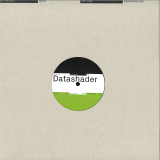
Datashader emerges from the shadows with a striking breaks- and bass-heavy debut release that challenges the fabric of our digital existence. Replete with a Dopplereffekt remix, it nods to the legacy of revered anonymous acts such as Scopex, Drexciya and Underground Resistance, pushing the boundaries of both electronic music exploration and its conceptual underpinnings. As a critique of the erosion of genuine human connection in the digital age, Datashader delivers a barrage of billowing subs, infectious electro, recontextualized jungle, and techno, serving as a poignant counterbalance to current dance floor-centric norms. It’s a contemporary anti-soundtrack that offers a haunting mirror to the societal costs of technological convenience.
In a world engulfed by the digital realm, where social media platforms thrive and dominate every aspect of our lives, the enigmatic project known as Datashader was founded to reflect on the pervasive erosion of authentic human connection through various virtual realities. Artistically, Datashader seeks to critique the impact of technology on human identity and relationships, breaking with an archetype of digital conformity and expressing a profound disillusionment with the superficiality of online interactions through music. Genuine human connection and art cannot be quantified by likes, comments, or followers but rather thrives in the visceral realm of shared sonic experience and human emotion. This idea is at the core idea of Datashader, whose artistic expression ranges from avant-garde composition and electronic experimentations to art, installation, film and more.
Expressed within the varied contexts of diverse artistic mediums, Datashader explores the concept of “technological gentrification”, which describes the gradual displacement of human interaction by technology. Just as gentrification alters the urban landscape, driving out communities and cultures, digital gentrification transforms the social landscape, replacing genuine connection with curated online personas.
Musically, Datashader’s practice confronts this dystopian reality, highlighting the alarming consequence of people becoming mere nodes in a network, reduced to a collection of data points. This is manifested sonically by a blistering assault of breaks, recontextualized IDM, abstract electronics and otherworldly synthscapes, conceived as the aesthetic counterbalance to much of contemporary electronic music’s dancefloor focus.
Datashader dives deep into genres and influences which stand for a form of sonic resistance: A contemporary anti- soundtrack – a sonic mirror of the price we pay for convenience and instant gratification. A self-image in constant flux. No false technological idols.
After a successful tour following the release of "Alors quoi!" on Bongo Joe records, accompanied by a drummer/percussionist change, the prospect of what comes next naturally arose. Elements surfaced, including a desire for more low frequencies, a fascination with the marimba/vibraphone, and a liberating indifference to the difference between recorded and live performances. To evolve, the team collaborated with outsider Kwake Bass, known for collaborations with Kae Tempest, Tirzah, Mica Levi, and others. Despite aesthetic differences from Meril Wubslin's previous albums, this divergence was seen as key—an enriching risk that resulted in a unique blend of influences. The acoustic core of Meril Wubslin now embraces electronic elements, revealing a more powerful and urban dimension. While maintaining a commitment to French lyrics, the themes explore the concrete yet remain grounded in the intimate and the sensitive, avoiding overly clear and univocal messages.
After several EP’s and collaborations with artists - such as Elderbrook, Hayden James and Novaa – the producer and singer releases his solo debut album "Aniimals" on April 5th.
With great attention to detail, Moglii creates his very own genre „organic electronic“, defined by a modern mix of warm beats, analogue synthesizers and soulful vocals. Each track explores the relationship between intelligent life forms and humans, such as "Fungii," "iinsects," or "Roots“, aiming to draw attention to the incredible organic diversity on this planet.
„Aniimals“ represents biodiversity in each track named after a wonderful and inspiring creature, that Moglii relates to. This DIY-release campaign includes a limited bio-vinyl pressing and a sustainable merch edition.
Why biodiversity? The extinction of many species (often undiscovered) is perhaps the most underestimated problem of our time. There is a lot of public debate about CO2 budgets, but according to experts, the basis of our survival as humanity could also depend significantly on the preservation of genetic diversity in our limited planetary garden. Due to destruction of nature, the loss of species will continue to worsen unless there is a cultural rethink.
Moglii proves his appreciation for animals of any kind and fascination for other intelligent life forms in a very impressive musical way with his debut album, aiming to create an emotional bridge between our urban lifestyle and the animals that inhabit this planet with us.
Mesmerizing and exuberant Argentinian La Yegros, probably the most magnetic artist on the South American continent, is back with a new album!
The undisputed Queen of "Nu Cumbia" has not rested on her laurels. Surrounded by the same accomplices who have supported her for the last ten years, but eager to renew herself, she has set about recording her fourth album, which stands out from her discography. Although her personal folklore is still rooted in South American folklore, La Yegros is now absorbing contemporary, global music, while tackling intimate, often melancholy and even painful subjects, which she overcomes with the same resilience that drives her in concert. Nothing stands in the way of this Argentinian whirlwind, all the more fascinating for the fact that personal considerations are now surfacing beneath the veneer of the party atmosphere she sets alight.
La Yegros returned to the stage in 2022 to celebrate the 10th anniversary of Viene de Mí, her single hit from the self-titled album, released in 2012 in Argentina and then worldwide in 2013, which catapulted her to international fame. We then discovered a singer who had grown up in the traditions of her country. Her parents come from Misiones, a province bordering Brazil and Paraguay, where balls are filled with the sounds of chamamé (a mix of polka and Guaraní music), Carnavalito (Andean folklore) and Colombian Cumbia. But she herself is a native of Buenos Aires, whose nights are enlivened by the bass of Dancehall and electronic music.
These influences have merged in two further successful albums, Magnetismo (2016) and Suelta (2019), followed by high voltage tours during which La Yegros has been able to display her generous nature, inexhaustible energy, exuberant personality and infectious enthusiasm.
To record her new album entitled 'HAZ', La Yegros has put her faith in the same team that has worked with her since Viene de Mí. On one hand, producer Gaby Kerpel (also known as King Coya), a pioneer of synthetic experimentation applied to traditional music, who has remained her faithful accomplice for over twenty years. On the other hand, composer Daniel Martín, who knows how to come up with melodies to dream about and hymns to sing along to. Inseparable and complementary, the trio continues to concoct this mesmerizing mixture where acoustic instruments meet samples and the rolling of machines. But the new productions don't rely on a tried and tested formula. Generally co-produced between France and Argentina, they break away from over-defined genres. La Yegros knits together new rhythms and incorporates sounds that are unheard of in her country, derived from the latest urban trends, as well as echoes of reggae and funk. As for the lyrics, signed alternately by the trio, they are embodied by La Yegros whose charismatic voice questions a period of her life tossed by waves of love and lovelessness, joy and sorrow, euphoria and anguish, indulgence and resentment.
The album is open to a wealth of musical styles. You'll hear funk guitar and Andean flutes, melancholy accordion and rolling drums, Tuareg blues enhanced by brass, house and electro Cumbia loops, and the bassoons of a chamber orchestra. The folklore 2.0 of La Yegros, nourished by its colorful inspiration, at times tender or exalted, has been imagined as a hymn to love and the contradictory feelings that come with it. As always, it has also been conceived with the stage in mind. Hatching in a storm of overturned emotions, the album is all the more explosive for the strength of the live show that accompanies it. In addition to the usual line-up of guitar, accordion and percussion, a musician handles synthesizers and machines to boost the electronic turboshaft. In any case, you can count on the singer to assert her increasingly clear-cut character with each new project. And, above all, she won't give up. L.a Yegros is back and her batteries are fully charged.
- Antena Magne?Tica Captando Campos Electromagneticos I
- Antena Magne?Tica Captando Campos Electromagne?Ticos Ii
- Micro?Fono De Contacto Captando Vibracio?N Del Puente Llacole?N
- Micro?Fono De Contacto Captando La Interaccio?N Entre El Viento Y Un A?Rbol
- Micro?Fono De Contacto En Elementos Vibrantes
- Micro?Fonos De Contacto Captando Granizos
- Micro?Fonos De Contacto En Autobu?S
- Hidro?Fono Bajo El Fondo Del Mar
- Vibraciones De Materiales Geofon Ii
- Vibraciones De Materiales Geofon I
- Vibraciones De Materiales Geofon Iii
- En La Direccio?N Del Viento
- Ronroneo De Selai
- Rai?L
- Efectos Sonoros En La Naturaleza
Valentina Villarroel is a sound artist and phonographer who explores the intricate dynamics within various Southern ecosystems. Her work revolves around the profound potential of acoustic ecology, particularly in the face of encroaching real estate development on natural spaces. She also delves into the consequences of sound pollution on numerous species, contributing to their decline or disappearance. In recent years, her focus has extended to urban soundscapes and significant sonic events, such as the October 18th protest in Chile. With a solid background in bioacoustics applied to both human and animal well-being, Valentina assumes the role of co-director at AOIR Sound Laboratory. There, she spearheads an interdisciplinary initiative that centers sound as its core element. This includes the creation of the sonic cartography portal aoir.cl, as well as the development of handmade electronic devices like the Bowerbankii and the creation of various experimental microphones.
HJirok is a mythical figure, conceived as a fictional character by Iranian-born Kurdish singer and artist Hani Mojahedy. Together with versatile music producer And Toma of Mouse On Mars, she combined a variety of sounds collected during their joint travels to Iraqi Kurdistan and elsewhere with heavily processed recordings of Sufi drum rhythms and setar melodies. The result is a driving, dubbed-out, and deeply intricate soundscape that perfectly sets the stage for Mojahedy's extended, unconventional vocal techniques and polyglot lyrics. Both informed by tradition and rigorously forward-looking, »Hjirok« (with a lowercase J) is at once a profoundly personal album and a universal utopian promise. As a ghost from the past, HJirok draws on Mojtahedy's memories to mould a new future out of them.
The foundation for »Hjirok« was laid in the city of Erbil in the Kurdish part of Iraq. During one of their stays in the region, Mojahedy and Toma recorded the three percussionists Hadi Alizadeh, Jawad Salkhordeh and Serdar Saydan as well as setar player Ali Choolaei from Motahedy's backing band while they were playingthe rhythms and notes that she had grown up with in the house of her grandfather in the Iranian city of Sanandaj. Her memories of that place revolve around hypnotic Sufi music, dervishes in deep trance, and ecstatic singing. Much like this music seemed to open a portal to other dimensions, the inhabitants of the house lived in a sort of alternative reality: It provided them with a hideaway from political circumstances. Following the Iranian revolution in 1979, a Kurdish rebellion ensued but was met with the utmost brutality by the new regime, which resulted in the death of thousands.
It is no coincidence that the music on »Hirok« would draw on rhythmic patterns that were passed on from one generation to the next for hundreds of years. »The project is rooted in the figures of the Sufi dervishes and thus a culture that precedes today's political, social, cultural, and religious systems,« explains Mohtahedy. »The Sufi sound travelled around the entire world. I like to think of it as a dialogue between peoples-one based on the rhythms of the drums and the sound of their voices.« Toma adds that by electronically transforming the recordings and enriching them with field recordings from both rural and urban spaces, they were able to use the stories told by the drums and the setar to create an entirely new narrative.
The story told by these eight pieces is hence a deeply personal, but also inherently political one. Moitahedy herself left Iran in 2004 and relocated to Berlin in 2010. Having continued to use her art as a platform to tirelessly advocate for the rights of the Kurdish people and women under oppressive regimes, she has not been allowed to return to her country of origin ever since. »Hani is singing for equality and there are people who are afraid of that-her femininity, her strength.« Toma says. Much like earlier Hirok sound installations addressed human-made climate change and other systemic ills, also »Hjirok« can hardly be disconnected from far-reaching struggles for liberation and equality.
This is also true on a thematic and even linguistic level. »The lyrics are about a promise,« Mojahedy says, citing Kurdish writer Ebdulla Pesêw as an inspiration. »At their core, these are about that day on which violence and fear become a thing of the past; what they tell you is ot not give up, to keep hoping,« she adds. The promise embedded in them is an emancipatory one. These contents are mirrored on a linguistic level: The lyrics were written in both Kurdish and Farsi, blurring the lines between the two languages and thus, Kurdish and Persian cultures.
Mojahedy, or rather HJirok, conveys these philosophical themes with elegance. Herversatile vocal performance is only loosely basedo n established styles. »Of course everything started with traditional rhythms, but we kept pushing things further and further, so Idid the same with my voice,« Mojahedy explains. »There were no boundaries.« The same can be said of the field recordings that she and Toma used. Whether it's conversations between members of the Pesmerge, the Kurdish armed forces, having a chat in meadow full of bunnies or the humming and buzzing of metropolises like Tehran: »Hirok« paints a sonic picture that is quite literally autopian one; that of a non-place in which different soundscapes, cultures and ways of life coexist peacefully.
What the album conjures up from Mojahedy's memory is not only a very specific place during a unique time in history as experienced by a single person. It is also ametaphorical home open to anyone who wishes to enter - promise of a better, more egalitarian future for everyone. Hence, HJirok will bring it on tour, presenting the material as an audio-visual live show that makes use of the photo and video material that Mojahedy and Toma have collected during their travels through Kurdistan.ja
Swart Waling Koolhaas is the new album by jazz pianist Joost Swart, drummer Bjorn Waling and producer Jesse Koolhaas. The music is the result of a two-day session where improvisations were recorded and several well-known guest musicians from the Dutch Jazz scene were invited, like Reinier Baas, Joris Roelofs and Jeroen Vierdag. The recorded improvisations on grand piano, drums, and other instruments, combined with the sounds from Jesse Koolhaas’ vintage synthesizer collection fuses into a type of music you can’t really put your finger on. Straight forward jazz, or electronic music. It is both and neither.
“I like to work with a variety of instruments and set ups,” says Mark Van Hoen, sometimes known as Locust or Autocreation but here working under his own name on the excellent Plan For A Miracle, his first physical release of solo music since 2018’s Invisible Threads. ”Sometimes it’s literally in my studio, with all the hardware electronics available. Sometimes the laptop, using software instruments. Some of the tracks on this record were recorded in the desert (Joshua Tree) using a 4-track tape machine and small modular synthesiser set up. Each track was recorded in different location using different instruments, which accounts for the distinction between each piece. It’s also about my own reaction to my environment, and what’s going on in my life at the time.”
The Croydon-born Van Hoen started musical life in the early 1990s, signing for R&S records in 1993 but developing his own, myriad and distinctive style across a range of releases on Touch, Editions Mego and other labels, using a battery of instruments, including analogue synthesizers and taking a number of different approaches to recording, rather than ploughing a single sonic furrow. He has worked on a number of collaborations, including with Nick Holton and Neil Halstead of Slowdive, under the moniker of Black Hearted Brother - their Stars Are Our Home was released in 2013. “I have known Neil Halstead since 1992,” says Van Hoen. “He shared a house with me for a couple of years, and the music I was making and listening to along with clubs I was attending had an influence particularly on Pygmalion, the final Slowdive album on Creation.”
Each track on Plan For A Miracle does indeed sound like a world unto itself, a mini-environment, a weather condition, an ecosystem created for the moment. It’s a collection of tracks recorded over the past few years, released on Bandcamp - despite his apparent absence, Van Hoen works constantly. Opener “Climates”, in its exquisite limpidity, feels like a homage to Brian Eno, one of his most formative influences in his teen years, commencing with Music For Films, which he bought in 1979. “This Is For Them”, feels like a ghostlike throwback to early drum & bass or electronica, reminiscent of his own, earliest outings. “There have been a number of requests from labels to make some more music like my very early releases on R&S,” says Van Hoen. “This is part of ‘letting go’ and realising that there’s nothing less creative about going back to those styles again.”
“Pencil Of Spheres” is something else again, a magnificent, imaginary glass structure, shimmering, refracting, without visible means of suspension, a thing of impossible beauty. “Electric Lights” evokes an abandoned fairground, its lights still pulsating, its music lingering. “The Underpass”, meanwhile, insofar as it reminds of anything at all, is faintly reminiscent of Cluster or Neu’s! West German ambience, the urban mundane rendered magical, the sodium lights, the whitewashed walls. The reverberant, faintly oriental chimes of “Insight” transport us yet again, burgeoning and intensifying.
The landscapes, the skyscapes rendered on Plan For A Miracle feel unpopulated as a rule - but when he does introduce vocal elements, Van Hoen has a history of doing so to spectacular effect - think of “Real Love” from 1998’s Playing With Time, the seductive intonation of its title recurring throughout like a series of massive holograms, echoing, stuttering, breaking up, surging. Here, there are just the faintest of vocals, barely distinct, disquieting. “There’s been a bit of a game changer in recent times,” explains Van Hoen. “AI software that enables you to extract vocals and instrument parts from virtually any recording. That means sampling individual parts from existing sources is no longer limited to the original mix exposing certain parts soloed. The vocal parts I use are from multiple sources and often pitch shifted altered rhythmically and melodically.“ There’s further vocal chatter on “I Really Do”, proceeding at a faster pace as if giving chase, or being pursued - distant, enigmatic. “The Music”, meanwhile, its beat tolling, lost in its own fog of static, features a curious intonation, like the ghost of a lost Walker Brother.
Sadly, the album’s title is in reference to a personal tragedy on Van Hoen’s part - the loss of his wife. Titles such as “I Won’t Give Up”, which faintly reminds of another Eno masterpiece, Another Green World, in its nautical hurly-bury, or the pastoral strains of “Mrs Who”, heavily clouded with sadness, seem to allude to this. “In fact the record was recorded entirely before she passed away,” says Van Hoen, “most of it before she even became very ill. The title was given to the album when it started to look like she wasn’t going to make it beyond a few months. It was something Osho said - “plan for a miracle” - so it was a statement of hope. Unfortunately it was not to be.” Although the album is non-thematic, non-specific in its atmospheres, sound paintings, elegant structures it most certainly stands as a magnificent monument to Osho’s memory.
-David Stubbs.
Kepler is free” represent the brand new Athenian Urban Jazz scene in full. You may say that they actually started the whole scene with their debut album "Teegarden" by Veego Records, an instant sold out! Voted by local music portals as one of the best albums of 2020 and probably one of the best debuts ever when it comes to the Greek jazz game. “Kepler Is Free” jazz rock ensemble makes expansive music that straddles the line between '70s soul-jazz, alternative hip-hop, and experimental electronica.
The name of the band is inspired by a retired space telescope launched by NASA to discover Earth-size planets orbiting other stars. Named after astronomer Johannes Kepler. Founded in November of 2018 by Sokratis Tsentoglou (drums) who gathered George Migdanis (electric guitar), Nikiforos Nugent (keys), Spyros Zardas (trumpet) and Vasilis Alexopoulos (bass guitar), they all came together from different musical backgrounds in order to create original and groundbreaking material.
Commuting over their shared love of jazz and hip-hop, they composed their debut album, “Kepler”, with five tracks that highlighted their love for the music of GoGo Penguin, Badbadnotgood and Alfa Mist.
The fact that all the members were young and had not played in other Jazz bands before was something that shook the Greek Jazz community. ''Second Light'' was recorded in difficult conditions and was delayed quite a while until it was finished due to the pandemic.
The band played a handful of sold out shows in Athens over the last few months proving with their performance and the attendance that the band created a crossover from Jazz to pop audience. "Juno" track was a smash hit on legendary "En Lefko'' Radio station over the last two years. Worth to mention that just a month before the release of their second album Kepler is Free collaborated with LEX, one of the most famous rappers in Greece with the "Spike Lee" track.
Trystero comprises Scottish/Luxembourgish producer Thomas Lea Clarke (aka MR TC) and Low Bat, otherwise known as one half of the formidable duo Jean-Luc. Their debut album, Sfumare e Vedere, was conceived over three days aboard Urban Boat, a 1960s barge transformed into an arts and performance space. Moored along the river just outside of Paris, the duo embarked on a joint residency, discovering their complementary creative energies and a mutual passion for all things strange and psychedelic.
As frontman, Low Bat is a fire-powered poet, his unparalleled stage presence resonating through Trystero's music. The French native and fluent German speaker has a natural flair for languages. For this project, he sings in a combination of Italian and English about love, loss, and class struggle, constructing surreal wordplay about pelicans and puttanesca. Meanwhile, Clarke's drone-lead electronic accompaniment takes its cues from sizzling acid, 1990s snap rhythms, post-punk, krautrock and shoegaze. Firmly rooted in these tripped-out genres, Trystero journeys to entirely new cosmic dimensions.
Northern Minimalism 3, the latest album from Mat Handley performing as Pulselovers, is a deeply personal “love letter to South Yorkshire, or at least to Doncaster and Sheffield”, not just the urban environment but the region’s post-punk and electronic-pop legacies.
Inspired by the concept of spreading a project over multiple formats taken from Virgin Prunes’ ‘A New Form of Beauty’, this is the first full album in Pulselovers’ on-going ‘Northern Minimalism’ series following a 7” and 10” release on other labels over the past few years.
Taking a different approach than the rurally-inspired ‘Cotswold Stone’ album, ‘Northern Minimalism 3’ delivers a sprawling, genre-hopping release that is less focused on melody but explores suburban drones and industrial rhythms.
“The term “Northern Minimalism” was coined by Simon Berkovitz of Sensory Leakage, who released my “Live at Doncaster College” tape in 2020,” adds Handley.
“I loved the description and wanted to use it to pay tribute to the early electronic and post-punk sounds I was listening to in the first two or three years of the 1980s, particularly The Human League (mk1), Cabaret Voltaire, John McGeoch (Magazine) and Eric Random.”
Following the success of their first release, Amanita Gems is back with another four track sizzler featuring the ever-growing, Ukrainian talent - Victor.B!
Roll your sleeves and grab your kicks ‘cause this one is directly inspired by urban grooves and back alley bass-lines with a guarantee to pack a punch and deliver high caliber hip movements on the dance floor.
Victor.B is an emerging name from the Ukrainian electronic music scene. His prominence grew locally by dispensing a range of styles that were seamlessly stitched into a gnarly live set - showcasing his vivid taste and ability to possess the room during performances.
Don’t hold back on grabbing your copy!
LP reissue of Collective Calls, the first duo LP from Evan Parker and percussionist Paul Lytton. Mythically alluded to as ‘An Improvised Urban Psychodrama In Eight Parts”, Collective Calls utilises electronics, pre-records and homemade instruments to wryly in/act self investigation. Having just recorded the cliff jumping Music Improvisation Company with Derek Bailey, Christine Jeffrey, Hugh Davies and Jamie Muir, Parker was at the point where he was thinking, ‘what’s the next thing?’ On Collective Calls, only the 5th release to appear on the newly minted Incus label, percussionist Paul Lytton arrives with an arsenal of sound making sources to push Parker into ever new territory. Recorded in the loft of The Standard Essenco Co on Southwark Street by Bob Woolford (Topography of the Lungs, AMM The Crypt), Collective Calls has more in common with noise or music concrete than with jazz; sitting comfortably alongside Italian messrs Gruppo di Improvvisazione Nuova Consonanza or the husband-wife duo of Anima Sound. According to Martin Davidson, it was a Folkways record that Lytton was obsessed with around the time of this release - Sounds of the Junkyard - its track titles like “Steel Saw Cutting Channel Iron in Two Places” working to give you a good idea of the atmosphere of Collective Calls. Paul Lytton had encountered the use of electronics in music in 1968 when he was invited to play drums on the recording of An Electric Storm by White Noise (along with David Vorhaus, Delia Derbyshire and Brian Hodgson). He had seen Hugh Davies using contact mics in the Music Improvisation Company, and soon set about assembling a Dexion frame akin to drummer John Stevens’, except that his own was armed with several single-coil electric guitar pickups, long wires and strings with connected foot-pedals to modulate pitch. Influenced as much by Stockhausen, Cage and David Tudor as he was by Max Roach and Milford Graves, Lytton’s percussion is abstract, expressionist and at times totally mutant. Sometimes rolling extremely fast, then screeching almost backwards over feedback, Lytton gives Parker room to play some of his weirdest work. Parker is listed as performing both saxophones, but also his own home made assemblages, including one dubbed the ‘Dopplerphone’ - a length of soft rubber tubing (activated by a saxophone mouthpiece and manipulated to alter the rate of airflow) attached to a longer length of clear plastic tubing (whirled around the head whilst being played) ending in a plastic funnel. Thickening the brew even more, Parker would also add a cassette recorder, on which he would play back collected sounds and previous recordings of the duo. Imagining the set up in a 70s loft, it’s an assemblage more akin to what today's free ears might see at a Sholto Dobie show, spread out on the floor of the Hundred Years Gallery, the shadow of Penultimate Press lurking in the corner. It’s a testament to Parker’s shape shifting sound - the ever present link to birdsong being at its most warped here - terrifically free and unfussy, wild and loose from any of the dogma that might come in later Brit-prov years
Fixed Abode labelhead Rainy Miller met Space Afrika through regular nights he runs at Salford’s The White Hotel, a hub for leftfield electronic music. What started out as an idea for a collaborative EP between Rainy and Space Afrika turned into a longer form project, with features from Mica Levi, Coby Sey, Richie Culver, Voice Actor and Iceboy Violet, amongst others. ‘A Grisaille Wedding’ is an immersive experience that fills the space these artists have come to dwell in during their creative journeys. It not only pushes the boundaries of music but also bridges regional dialects within the conversation of contemporary electronic music. Rainy Miller: “‘A Grisaille Wedding’ is a project based in the personification of the semi-fictitious world that Space Afrika have come to build over the years. Using musique concrete and British soundscapes, I wanted to fuse the sonic with both noise and the contemporary.” Space Afrika: “The record’s title figuratively describes the marriage of two similarly motivated perspectives, each affected by a common backdrop and familiar ground tread amongst the scrimmage of urban sprawl, sombre, a boisterous landscape and clouds of uncertainty.” Rainy Miller’s 2022 solo album was included in 6 Music’s Albums Of The Year and Crack Magazine’s Best Albums Of 2022. Following the LP release, Rainy Miller and Space Afrika will be announcing joint UK and EU live shows taking place at the start of 2024. For fans of Actress, Dean Blunt, Lee Gamble, Loraine James
Forged in a warehouse in Liverpool's Baltic Triangle, Beatowls emerge in 2023 as a genre-defying trio. Darcie Chazen, Tom Roberts and Carl Cook, possess distinct talents, fusing elements of electro, folk, and psychedelia into captivating, dark atmospheric grooves.
The city’s urban-industrial mood inspires their sound, weaving evocative and cinematic tones into their upcoming debut album Marma.
For Fans Of : Dean Blunt and Inga Copeland,The XX, Portishead , Nancy & Lee
Badalamenti/Lynch, Broadcast, Warp Records.
Above all, Beatowls embody a journey. Their story starts from a shared passion, extends into this collection of songs and sounds, and hints at a future filled with creative exploration.
From a dream in a Liverpool warehouse to a national platform, Beatowls stand on the cusp of an era promising audio adventures steeped in originality, emotive tales, and sonic diversity.
Error Subcutaneo was born under the sweltering sun of Santo Domingo, Dominican Republic, but their project portrays the colder, more urban side of life in the Caribbean, where cacophonous violence and Cold War monoliths collide with dreams of a better tomorrow The duo take elements of hip- hop, modular electronics, island syncretism, and bebop to twist and distort contemporary narratives on music composition, representing the greater movement of Latin American resistance directly from its epicentre Temporada Ciclonica is a recollection of alibis from a quenched island imaginarium. Palm trees dance in sync with the gales, an omen of the upcoming hurricane season. Pictographic technologies seek refuge in time's embrace, as eerie scents of petrichor and blood fill the corridors beneath the temple steps.
The cyclone's ravaging beauty and destruction bring rain, fertility and life to the land, an allusion to the cyclical nature of creation. Masters of musical past ride the storm's eye, a semiotic double- entendre on the spinning nature of the vinyl medium. A pupil glimmers from the dark, a kid rubs its belly in the womb. Press: Truth and Lies - review "a challenging but exhilarating journey through the minds of two young artists who's deep knowledge of local and international music places no harness on their creativity. Raw and instant, these boys look at the world as it is and let its contradictions flow into their creations. 9/10" Received airplay on BBC Radio 6 Music (Gilles Peterson), BBC Radio 3 (The Late Junction - Wolf Eyes' Mixtape) + The Lot Radio NYC - Marco Wibel - Darker Than Wax
Didattica is the first album from Zetas, a female rap duo coming straight out of the city of Salerno, on the south west coast ofItaly. Entirely produced by beatmaker, rapper and DJ/producer Tonico 70, a true veteran of Southern Italian hip-hop,the full-lengthdebut isreleased on DJ's Choice, a partner label of Four Flies Records.
Born between the 90s and 2000s, rappers Annarella and Miriade were exposed to the world of underground hip-hop from an early age, jamming and freestyling. Rather than going for the sounds of trap and auto-tune that are so popular in their age group, however, they immediately embraced the spirit of old school rap, withitsboom bap vibes. As suggested by the album's title itself (which translates as 'teaching' or 'learning') they view of rap as a school – that is, as an art form where constant training is key if you want to stay true to your values and identity.
With the help of producer Tonico 70, Zetas have created a record that is fresh and contemporary, while paying tribute to the past.They rap about everyday urban life in the exuberant dialect and slang of their native city, delivering raw rhymes with a tightand very expressiveflow, while Tonico70 uses a classic sampling approach but also incorporates real instruments into his beats–Antonio D'Apolito's guitar, Peppe Maiellano's keyboards, Giuseppe Desiderio's bass and Giuseppe Limpido's drums.
The result is an excitingcombination of funk, soul, dub, R'N'B, reggae, and even electronic influences,one where deep bass and syncopated rhythms blend wonderfully with the melody, urgency and authenticity of dialect rhymes.
Black Truffle is pleased to announce Tender Membranes, the label’s first release from Swedish-Finnish sound artist and electro-acoustic composer Marja Ahti. Active for a decade in the Finnish underground music scene, in recent years Ahti has developed a distinctive approach to patiently unfolding electro-acoustic constructions, documented on a string of solo releases and collaborative projects with Judith Hamann and her husband Niko-Matti Ahti. Working with concrete and instrumental sounds, field recordings, and electronics, Ahti favours neither disjunctive collage nor monolithic consistency; rather, her work is composed of organically unfolding sequences of details and textures, which, as she says, ‘can stretch out or cut fast as long as they have a sense of inner stillness’, a sense that she connects to moments of heightened attention in everyday life. Tender Membranes consists of four lengthy pieces, partly inspired by the image of the senses and mind as membranes allowing for the passage between inner and outer spaces, sensation and its causes, creating a world. Ahti’s unhurried pacing encourages this sense of listening as an opening or surrender to sound, which can often create the impression that the listener is moving through a space zooming in on details. The opening Shrine (Aether) exemplifies this aspect of Ahti’s approach: a bell clears the air with a single long tone, followed by the ambience of outdoor spaces, crackling electronics, an archival recording of a horsefly on a windowpane. Dozens of these moments, varying in length, density, and intensity, move past the listener’s attention, momentarily brought into focus then slipping away. Like those of the masters of the French musique concrète tradition, Ahti’s sounds are not often recognisable, though they might suggest proximity or distance, open environments or closed spaces, the urban or rural, day or night. In Ahti’s work, we do not encounter spectacular metamorphoses à la Parmegiani but rather a state of ambiguity where the listener is often unsure what is organic and what is inorganic, where the careful productions of the synthesizer might end and sounds discovered in the environment begin. What Ahti calls her ‘poetic way of experiencing and organising the familiar and the unfamiliar’ is sustained throughout Tender Membranes, but each piece has its own character. On Dust / Light, human presence is more overt, as what appear to be whispers, singing, and distant speech thread between high frequencies, untraceable drips and pops, and metallic shimmers. In all this there is a melody that you can sing and to which you may dance makes more prominent use of musical instruments, gaining a sombre beauty from half-buried piano chords and organ tones. On the closing Oh Fragrant Witness, a delicate cloud of subtly bending pitches is repeatedly disrupted by a resounding, almost ominous mass of low tones, at once a strange detour from much of what has gone before and an almost classical finale. Arriving in a sleeve reproducing contemporary Finnish photographer Sini Pelkki’s fragmented visions of the everyday, Tender Membranes is a balm to reawaken tired ears.
The last time Canadian underground techno tastemaker Rennie Foster had a record on a French label it was the historic F-Communications. Back then Rennie’s penchant for bringing warehouse nostalgia together with hi-tech futurism was a consistent theme and in 2023 this fusion based musical concept is realized further toward the future through a new EP release, Cryptic Layers on Parisian imprint Skylax Records.
The record opens with Let It Go, a simple title for a complex and dreamy piece of lo-fi rave house featuring clattering breaks, ear worm vocals and a drastic bassline driving the whole custom vehicle. Then the similarly, simply titled Just Do It explodes into action with an inspired mix of Detroit inspired dub techno chords, fierce amen breaks and a hip-house energy akin to both current urban style and authentic musical roots. These tracks sound like they could have been released at any time during the past decades but still sound current, or even futuristic. Apparent is craft, design and an understanding of dance music from the perspective of obsession, experience and passion.
The remixes come from absolute legends in the world of techno, representing Rennie’s other home-base territories, the techno cities Detroit and Tokyo. Japanese electronic music icon Ken Ishii provides a storming acid remix of Just Do It with liquid 303 bass, anxious and trip vocal snips, and punchy drums that will sound absolutely ace in a club. Detroit third wave pioneer Sean Deason closes out the record with a crisp dose of hi-tech funk that is sure to be a DJ weapon with it’s hypnotic energy and timeless production style.
The digital only portion of Cryptic Layers begins with a second version from Ken Ishii, this time sans vocals leaving the acid stripped down and bare. Two more original tracks by Rennie Foster are also on offer. Sadlands is an organ laden deep house, synth-wave, contrasting piece of melancholic dream dance while I Say Peace signs off the project in a layered classic house style with early rave stabs and grooving after-hours appeal.
The first vinyl release from American artist Sydney Spann, Sending Up A Spiral Of well encapsulates Spann’s body of work thus far. On their music, which reacts to themes of family systems and care work, Sydney writes, “people who have done care work —nannies, sex workers, therapists, nurses— may possess their own musical knowledge, developed over time through particular modes of voicing practiced to achieve a desired outcome in their labor. Attending intimately to these ways of voicing and listening and bringing them into a sound practice could be a way to legitimize a less recognized kind of musical knowledge.”
Sending Up A Spiral Of explores this unarticulated expression through sound and song. The titular piece traces Spann within some quixotic woodland, as if beginning inside of some urban fairy-story. Self-soothing singing quivers under dragging branches, peeling cement and other tactile grit. The work drops into a new proximity half-way through as electronic contours overtake the environment. Sine-tones smolder in a pulsating choreography, perhaps reminiscent of Richard Maxfield’s “Night Music” played at half-speed.
The second section of the record depicts a series of five smaller portraits, expressed (or disguised) as lullabies. An oceanic humming permeates them. “Possession” and “Purposeful Evening” are the most song-like lullabies, with their verse-chorus repetition and melodic simplicity. Innocuous words “baby” and “honey” are encoded with deeper, often painful connotations. Sydney’s voice and vision for this album is ambitious, cloaked in the strains and contradictions of what love means in the nuclear family.
A 16-page artist pamphlet of rubbings, photographs and sheet music accompanies the LP, along with a digital PDF of Spann’s thesis “Sending Up A Spiral Of: A Musical Epistemology Made Through Care Work.”
- A1: Manifest
- A2: Everything Was Set On Fire
- A3: Doba Extazy
- A4: Plague Remedy
- A5: Zmrzli
- A6: Odovzdat
- A7: Dialogicke Vyvolavania
- A8: Goddess Disappears In The Sky
- A9: Puhpowee
- A10: Artemisia
- A11: It Felt Like I Was Supposed To Follow It
- A12: Septat
- A13: Otvorit Zilu
- A14: Doba Odriekania
- A15: Devat Mien
- A16: Ked Si Pan, Zaplat Dzban
- A17: Pohar Viny
- A18: Crash It To Dust
- A19: The Catharsis Of Human Sorrow
- A20: Death Comes When You Stop Counting On It
- A21: A Goddess Comes From Within The Earth
- A22: Chytat Sa
- A23: 13Th Month
In 2020, electronic musician Nina Pixel was offered a track on a compilation album of songs from the Liptov region. What started as a rearrangement of a single folk song eventually grew in scope and size, eventually becoming a series of releases. Titled Ancestral Archaeology, the series counts two self-released EPs, an audiovisual show in co-operation with Adrián Kriška, and now, after two years, a double LP published by Weltschmerzen. In this definitive form of an album, Ancestral Archaeology reveals itself as a musical reimagination of traditional historical Slovak culture at large.
Nina Pixel averts the perils of lapsing into inauthentic fakelore by building her music with, rather than on, the ethnographic riches of Slovakia. With the eagerness of a genuine archeological prospector, Ancestral Archaeology invokes the always present but seldom perceived linchpins of folklore culture: the desperate clinging to the memory of pre-Christian paganism and witchcraft, songs with narratives of beautiful innate wyrdness that is utterly unfit for mass culture, and superstition as the most serious longing for the balance between sense and irrationality.
If we acknowledge the truism of folklore as the shared way of expression in rural society, the techno music on Ancestral Archeology proposes that, in the urban society of ours, this role is served by raves. The argument isn't as much declared as it's implied // in music and in the spoken-word lyrics that are rife with historical and contemporary sources. An 18th-century recipe by the writer and priest Juraj Fándly proposes snorting the grounded flowers of the medicinal weed Valerian as a way of curing bad vision. "It is a proven remedy!" we are repeatedly assured, and it's not hard imagining Fándly and his parishioners, strung out on Valerian, moving almost involuntarily to the rhythms of their era just as we can move to Ancestral Archeology.
Nina Pixel is a Slovak music artist based in Berlin. Lyrics are inspired by Slovak folklore traditions, songs and shared beliefs.
Manifestation tools: cello, overtone flute koncovka, fujara, gong, metal bowls, sheep bell, field recordings of Slovak forests, Andreas's tom and various drum machines.