SIHR: sonic manifesto by a post-anything quartet feat. multi-instrumentalists from the Mediterranean inland Sea. New folklore for a devastated planet, including Frédéric D. Oberland (Oiseaux-Tempête), Grégory Dargent (H), Tony Elieh (Karkhana) & Wassim Halal (Polyphème).
After a few concerts/screenings improvised as a duo in Cairo and Beirut, as well as for the Rencontres d’Arles, the Lille photography center and the Belgian magazine Halogénure, Dargent and Oberland have teamed up with mavericks Elieh and Halal for a puzzling cross-border manifesto. The first sonic moves of this eclectic quartet, made in a bunker studio somewhere between Paris and Berlin, urgently took the form of a quest, that of a neo-folklore for troubled times, a music seeping with many kinds of atavism and experimenting in all directions. A fertile no-man’s-land where trance and contem- plation, jazz and electronica, acoustics and electricity would merge in a stimulating mystical magma.
From the possible emergence of a Babelian language to the shared desire to rediscover music as a ceremonial act, this encounter took place over three days of improvised sound bacchanalia, the phases of which were all recorded by Benoit Bel (Zombie Zombie, Thurston Moore Group, Oi- seaux-Tempête). A hallucinated and generous testimony, SIHR is a synergy of many different worlds and many different possibilities, the sonic vision of a present conjugated in a hybrid tense and exalted by too many tangos danced on the glowing ashes of our days.
Multi-instrumentalist & photographer, Frédéric D. Oberland has been leading the Oiseaux-Tempête collective for over ten years, lying somewhere between avant-rock and free jazz, repetitive music and electronics. Founding member of the bands FOUDRE! and Le Réveil des Tropiques, he’s also perfor- ming solo and composing soundtracks for cinema and installation art. Since 2018, Oberland co-cu- rates the NAHAL Recordings imprint alongside producer Mondkopf.
Electric guitarist, oud player, composer and photographer, Grégory Dargent cultivates his musical schizophrenia and identity through improvised music, trance music, jazz, hijacked maqam, repeti- tive music, pop, electro-acoustic installations and French chanson. From L’Hijâz’Car to Babx, from Berber singer Houria Aïchi to Rachid Taha, from Trio H to Sirventés enragés, from music for images to contemporary choreography, from the most acoustic of ouds to the most nuclear of guitars, he conducts, accompanies, composes, deciphers, questions, delves, makes mistakes, bounces back, ar- ranges, orchestrates and tirelessly shares his creative passions.
Tony Elieh is one of the pioneers of experimental music in Lebanon. A founding member of the first post-rock group of post-war Lebanon, The Scrambled Eggs, he has since developed his unique elec- tric bass skills in various groups and styles of music including collaborating with in groups such as Karkhana, Calamita and Wormholes Electric. Relocated in Berlin in recent years, he has performed a solo set of heavily processed bass generated sounds.
Is Wassim Halal only a darbuka player? Maybe !? But what about his music, compositions, ideas. You can find him with Polyphème playing and co-composing popular-contemporary music with Gamelan Puspawarna, or next to the french bagpiper Erwan Keravec, with the Bey.Ler.Bey trio (w/ Laurent Clouet & Florian Demonsant) working on an improvised-balkan-already-improvised-music, with per- formers and drawers Benjamin Efrati and Diego Verastegui, with Gregory Dargent and Anil Eraslan in H, creating a new pedal generating »Random taksim«, composing his own »Poème Symphonique pour 100 youyou« or composing pieces for ensembles.
Cerca:urgent
Chelsea Wolfe has always been a conduit for a powerful energy, and while she has demonstrated a capacity to channel that somber beauty into a variety of forms, her gift as a songwriter is never more apparent than when she strips her songs down to a few key components. As a result, her solemn majesty and ominous elegance are more potent than ever on Birth of Violence.
There is a core element to Chelsea Wolfe’s music—a kind of urgent spin on America’s desolation blues—that’s existed throughout the entirety of her career. At the center, there has always been Wolfe’s woeful longing and beguiling gravity, though the framework for compositions has continuously evolved based on whatever resources were available. Her austere beginnings were gradually bolstered by electronics and filled out with full-band arrangements. The music became increasingly dense and more centered around live performances. Her latest album, Birth of Violence, is a return to the reclusive nature of her earlier recordings
“I’ve been in a state of constant motion for the past eight years or so; touring, moving, playing new stages, exploring new places and meeting new people—an incredible time of learning and growing as a musician and performer,” Wolfe says of the era leading up to Birth of Violence. “But after awhile, I was beginning to lose a part of myself. I needed to take some time away from the road to get my head straight, to learn to take better care of myself, and to write and record as much as I can while I have ‘Mercury in my hands,’ as a wise friend put it.“ Birth of Violence is the result of this step out of the limelight. The songs stem from humble beginnings—little more than Wolfe’s voice and her Taylor acoustic guitar. Her longtime musical collaborator Ben Chisholm recorded the songs on a makeshift studio and helped fill them out with his modern production treatments and the occasional auxiliary flourish from ongoing contributors Jess Gowrie (drums) and Ezra Buchla (viola).
The album opens with “The Mother Road,” a harrowing ode to Route 66 that immediately addresses Wolfe’s metaphoric white line fever. It explains the nature of the record—the impact of countless miles and perpetual exhaustion—and the desire to find the road back home, back to one’s roots. Songs like “Deranged for Rock & Roll” and “Highway” offers parallel examinations on the trials and tribulations of her journeys while the ghostly “When Anger Turns to Honey” serves as a rebuttal to self-appointed judges.
While the record touches upon tradition, it also exists in the present, addressing modern tragedies such as school shootings in the minor-key lullaby “Little Grave” and the poisoning of the planet on the dark wind-swept ballad “Erde.” But the record is at its most poignant when Wolfe withdraws into her own world of enigmatic and elusive autobiography. Much like Alan Ginsberg’s hallucinatory long-form poem Howl, the tracks “Dirt Universe” and “Birth of Violence” weave together specific references from her past into an esoteric overview of the state of mankind. Though the lyrical minutiae remain secret, the overall power of the language and delivery is bound to haunt the listener with both its grace and tension.
“These songs came to me in a whirlwind and I knew I needed to record them soon, and also really needed a break from the road,” Wolfe says. “I’ve spent the past few years looking for the feeling of home; looking for places that felt like home. The result of that humble approach yields Wolfe’s most devastating work to date.
European Headline tour confirming now for 2020. UK/EU Publicity handled by Lauren Barley at Rarely Unable. Immense support from Press, including coverage with NPR, Pitchfork, FADER, Vice, Revolver, Decibel, Under The Radar.
Kee Avil's music is both adventurous and intimate, intellectually challenging and emotionally resonant. The Montréal guitarist and producer's 2022 debut LP Crease garnered plaudits from outlets like The Wire, The Quietus, Mojo and Foxy Digitalis, picking up a Canadian Juno Award nomination and Bandcamp Album Of The Day and Albums Of The Year along the way. Its intricate construction, unnerving atmospheres, and knife-edge take on avant-pop prompted comparisons to early PJ Harvey, This Heat, and Gazelle Twin. A remix EP with work by claire rousay, Ami Dang, Cecile Believe, and Pelada brought collaborative perspectives to four Crease tracks, offering new pathways within those songs. With Spine, Kee Avil strips back her heavily textured compositions, opening up a much rawer sound. She calls it folk—and while traditionalists might scoff, this is urgent music that reflects the precarity of modern life, as well as the jarring mixture of electronic and real-world interactions that have become the fabric of our day-to-day experiences. There's a hypnotic post-punk somnambulance to it all, using the repetition and fracturing of melodic phrases interwoven with delicate electronics to create curious and persistent hooks. While not a concept album, themes of time's passage, remembrance, and decay crop up across multiple tracks. Each track intentionally only has four elements—guitar, electronics, and two other instruments, with Kee's voice and guitar pushed to the front. Within this minimalist framework, the juxtaposition of beauty and discomfort that is key to the Kee Avil sound stands out in skin-prickling relief. "We're shaped by many versions of ourselves," says Avil. "I was looking back at these versions of myself and what could have been, what didn't end up being and what did end up being, and going back like that through time. Seeing the future, the past." Spine was written in Kee Avil's home studio after a lapse in writing while touring Crease and working on other projects. She is a well-known and respected member of the Montréal experimental scene, and formerly ran Concrete Sound Studio with Zach Scholes, who continues to work with her as a producer on Spine. Compared to the three years that went into making her debut, Spine emerged in a matter of months—a process that may also be a factor in its intensity and sharpness: "This record was much harder, like it was really discovering everything from scratch." In her desire to not simply replicate or extend the sound of Crease, she felt she had to rip up the rule book, write in a different way, and pare back songs against her usual instincts. Sometimes, when we work against our ingrained habits, we get to the core of who we really are. Spine is an exercise in that process. Without over-intellectualizing or being didactic, it hits immediately and emotionally, especially if you are a person who has spent much time in the process of self-examination. Kee's voice hisses, whispers, and chants; her guitar bends and rings; electronics skitter and crackle; violin creaks like a door in the wind. There is something so evocative about the atmospheres she creates that it's easy to overlay one's own feelings onto her work, but to do that wholly would be to overlook one of the most important things about Spine: Kee Avil's clear and thoughtful vision. This isn't just the next step forward in her artistic trajectory; it's a stunner of a record that stands on its own, a bracing and thrilling listen that has much to reveal about the contradictions inherent in being human. — jj skolnik.
One of the most important progenitors of the Louisville scene, a soulful take on an urgent garage punk sound, Babylon Dance Band released very little during their incarnation. These two tracks ‘Someday’ and ‘Rubbertown’ made up their second single, released well after they broke up in late 1981.
An album of originally unreleased Sun Ra, over 50 years after it was recorded, back in print on lightning yellow vinyl! Sun Ra is still trying to get our attention 50 years after dispatching this transmission. Humanity's path since then makes his message even more urgent today. Years after Herman Poole "LeSony'r Ra" Blount "left the planet" he's still trying to reach us, to wake us up and to change our destiny. Sun Ra and the Arkestra weren't a traditional studio band, and every star in the vast galaxy of their discography reflects this. The origins of these records can be hard to pinpoint at times, but when it comes to Thunder Of The Gods, it's a bit easier. "Calling Planet Earth - We'll Wait For You" was discovered on tapes from Ra's, Universe In Blue, believed to be recorded in '71. The raucous title track and "Moonshots Across the Sky" are unearthed from the '66 Strange Strings sessions. Modern Harmonic has once again paired Ra's sonic art with the visual art of "The Father of Modern Space Art," Chesley Bonestell, whose 1952 work "Formation of the Earth's Continents" spralls across the front and back covers
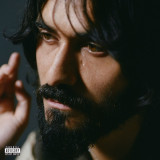
If the Chateau Marmont could sing. This would be it. Loren Kramar's voice vibrates with the shameless hum of a room after a celebrity exits Ecstatic aspiration. Doubt. Proximity. Desire. The album "Glovemaker" is about the skins we craft to be seen by the world, and Loren reminds us that we are all in drag. All exposed. No matter what gloves we slip on. "I'm a slut for all my dreams", Loren Kramar sings with Patti Smith brashness, "I'm a whore for them, I've got more of them". Loren's lyrics move like tinsel, shimmering bravely, then just as quickly, curling, fragile under the spotlight. Loren has always been obsessed with fame. Not with famous people, but with the electricity that perverts attention - the crushing desire to be truly seen. And all of Loren, and this obsession, is in this album. He grew up in the Valley, forced to hide his Barbies from his father, so the closet was a gorgeous Spanish ranch house on a gilded cul-de-sac crawling with celebrities. Naturally this gay boy wanted to be a child star so his mother secretly shuttled him to tap and jazz and figure skating lessons. "I've got hands and feet to put in the concrete", Loren croons, in "Hollywood Blvd", a song which clangs with brawny bravado. But "Gay Angels" reminds us that Loren's infatuation with stardom is inextricably linked with his queerness and his own desire to live outside of fear. To be famous is to be out. To be known. To be himself. "Glovemaker has become a kind of code for art making itself. A glove as a covering or mask that follows the contours of the life beneath it. As a song and a symbol, this is an album about studying and tracing a life - and then sharing what's there," Loren says. And his desire to share truth feels urgent. To listen to Loren is to understand there is no choice; the songs must tear through the air right now. This very second. "I see myself tearing and splitting and becoming a trampoline", he belts in "No Man," breaking our hearts right alongside his. Part poet, part theatrical diva, Loren loops together the tragedy of breathing on this planet, because like Eartha Kitt or Cat Stevens, Loren is at his core - an incredible story teller. This whole album is a shrine, a mantle atop a blazing fire of life, spread with the memorabilia of Loren; all of the pain and lust dazzling on unabashed view. This is a songwriter's album. Loren's lyrics are all his, and you feel it with every bright, Maraschino-cherry-like word that falls from his lips. "Like a lover, You scream and I shatter, I hit like a hammer" Loren sings. And we get to feel what Loren feels We live in his brain, riding his genre bending emotions, on a wave of modern pop. And the songs lift, they are anthems of belief, "Hollywood Blvd", "I'm a Slut", "Euphemism", "Gay Angels", are all odes to triumphing over the corroding powers of fear and doubt. And on this ride, Loren's voice is the guard rail, ever eager to stretch and transform, belting, talk-singing, multiplying, keeping us safe. "Glovemaker" slaps and soars. The album is an ecstatic overture to love and loneliness, to dreams and promises, to everything Los Angeles dangles. Buckle up. Loren knows how to craft space, how to move us through darkened bars, strobing arenas, beige carpeted bungalows and yellow lit highways. "How do you like LA?" Loren asks. I hope you love it.
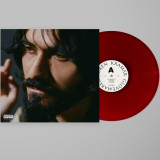
Red Vinyl
If the Chateau Marmont could sing. This would be it. Loren Kramar's voice vibrates with the shameless hum of a room after a celebrity exits Ecstatic aspiration. Doubt. Proximity. Desire. The album "Glovemaker" is about the skins we craft to be seen by the world, and Loren reminds us that we are all in drag. All exposed. No matter what gloves we slip on. "I'm a slut for all my dreams", Loren Kramar sings with Patti Smith brashness, "I'm a whore for them, I've got more of them". Loren's lyrics move like tinsel, shimmering bravely, then just as quickly, curling, fragile under the spotlight. Loren has always been obsessed with fame. Not with famous people, but with the electricity that perverts attention - the crushing desire to be truly seen. And all of Loren, and this obsession, is in this album. He grew up in the Valley, forced to hide his Barbies from his father, so the closet was a gorgeous Spanish ranch house on a gilded cul-de-sac crawling with celebrities. Naturally this gay boy wanted to be a child star so his mother secretly shuttled him to tap and jazz and figure skating lessons. "I've got hands and feet to put in the concrete", Loren croons, in "Hollywood Blvd", a song which clangs with brawny bravado. But "Gay Angels" reminds us that Loren's infatuation with stardom is inextricably linked with his queerness and his own desire to live outside of fear. To be famous is to be out. To be known. To be himself. "Glovemaker has become a kind of code for art making itself. A glove as a covering or mask that follows the contours of the life beneath it. As a song and a symbol, this is an album about studying and tracing a life - and then sharing what's there," Loren says. And his desire to share truth feels urgent. To listen to Loren is to understand there is no choice; the songs must tear through the air right now. This very second. "I see myself tearing and splitting and becoming a trampoline", he belts in "No Man," breaking our hearts right alongside his. Part poet, part theatrical diva, Loren loops together the tragedy of breathing on this planet, because like Eartha Kitt or Cat Stevens, Loren is at his core - an incredible story teller. This whole album is a shrine, a mantle atop a blazing fire of life, spread with the memorabilia of Loren; all of the pain and lust dazzling on unabashed view. This is a songwriter's album. Loren's lyrics are all his, and you feel it with every bright, Maraschino-cherry-like word that falls from his lips. "Like a lover, You scream and I shatter, I hit like a hammer" Loren sings. And we get to feel what Loren feels We live in his brain, riding his genre bending emotions, on a wave of modern pop. And the songs lift, they are anthems of belief, "Hollywood Blvd", "I'm a Slut", "Euphemism", "Gay Angels", are all odes to triumphing over the corroding powers of fear and doubt. And on this ride, Loren's voice is the guard rail, ever eager to stretch and transform, belting, talk-singing, multiplying, keeping us safe. "Glovemaker" slaps and soars. The album is an ecstatic overture to love and loneliness, to dreams and promises, to everything Los Angeles dangles. Buckle up. Loren knows how to craft space, how to move us through darkened bars, strobing arenas, beige carpeted bungalows and yellow lit highways. "How do you like LA?" Loren asks. I hope you love it.
On their eponymous debut, Super American Eagle deliver manna for heavy rock fans craving ergine detours into noise, psych and sludgy dank, herbal grooves. A union delivered via chance, Brent DeBoer of The Dandy Warhols, Dave Mudie from the Courtney Barnett band and Bob Harrow of Immigrant Union, played an impromptu Immigrant Union NYC show as a three-piece. That night the chemistry was undeniable and so Super American Eagle soon took flight. Known for the individual talents they bring to other’s bands, the trio take control of the destination, reveling in the creative liberty that beats at the heart of the project. From a lightening moment of musical connection Super American Eagle have built a thrilling, fuzz-filtered debut of urgent and essential psych and super heavy rock vibes.
Earth, Our Planet?”: A call for environmental awareness. This time, Pedro Vian - the founder of Modern Obscure Music - presents his fourth solo album (following his 2020 release, "Ibillorca"). Due for release in spring 2024, "Earth, Our Planet?" promises to immerse us in a moving odyssey, crossing the boundaries of musical genres to provoke an urgent meditation on the protection of our planet. On this occasion Vian has composed the album influenced by the myth of the eternal return, the compositions are long and repetitive, generating states of pure trance.
Pedro Vian, singular for his fusion of genres and styles, ventures into even more complex territories in "Earth, Our Planet?". From the first listen, it is evident that this work treads the line of convention and breaks the boundaries of electronic and experimental music with artistic dexterity. The album weaves together texture, hypnotic rhythms and melody. Each track reveals his distinctive ability to create immersive landscapes, guiding the listener into deep emotional introspection. This is not just music; it is a transformative experience.
The beauty of this album lies not only in the musical vision. The album features high-calibre collaborations that add layers of creativity and elegance. Trumpeter Pierre Bastien, whose early productions left an indelible mark on Aphex Twin's Reflex label, infuses "A Day in Rotterdam" with a unique emotional resonance. Violinist, Asia, renowned for her avant-garde approach and ability to conjure unique landscapes, elevates the album's opening tracks "Urobóros" and "Les Tambours Subterraniens". Their skill and sensitivity intertwine perfectly with Vian's artistic vision. In addition, Italian producer Daniele Mana, with whom Pedro Vian collaborated closely on his previous album "Cascades", known for his experimental approach and talent for creating extraterrestrial atmospheres also contributes to "Les Tambours Subterraniens". His artistic perspective adds more complexity and texture to the piece, pushing the boundaries of contemporary electronic music. There is also a collaboration with Raül Refree, an artist with whom Vian worked with last year, presenting “Font De la Vera Pau”, an album that The Guardian defined as "a wonderful piece of electroacoustic music, a captivating mix of strings and analogue synth drones which sometimes flirts with Alice Coltrane-ish spiritual jazz". With "Earth, Our Planet?", Pedro Vian not only offers up some of his best work to date, but it is also a call to reflect on our relationship with the natural world. As a part of a planet where environmental awareness is more crucial than ever, he urges us to protect and preserve our world as an extension of ourselves. This extensive work is a statement, Vian addresses the notion that too often we prioritise immediate needs over the well-being of the planet. It highlights the fact that we often consider the Earth as a possession when, in reality, we are but a part of it.
French producer Panthera steps up to Melodize with a pair of Italo inspired cuts that come remixed by the legendary Lauer and Endrik Schroeder.
Panthera prefers to remain secretive about his identity, but his music has plenty of people talking. It has come out on labels such as Bordello A Parigi, Polaris and Correspondant so far and contains a distinct, synth-heavy, euphoric sound.
This is evident from the beginning with ‘Hustle’, a colourful and cosmic cut with rich melodies, occasional vocal touches and shimmering arps. They bring sugary rushes of joy to the mid-tempo nu-disco drums and will douse dance floors in subtle euphoria. Remixing this one is the underground stalwart Lauer, who always brings his retro style to his disco and house on labels such as Permanent Vacation and Running Back. His version is faster and more direct, though still packed with starry melodies and subtle synth motifs that bring it to life.
Panthera’s ‘Western Union’ then brings more raw percussion and slapping drums but again takes flight through the cosmos on sleek synth lines with hints of 80s nostalgia. It’s a track that is always on the rise and full of bright, irresistible melodic suspense. Remixer Endrik Schroeder also hails from France and is a fast-rising talent with credits on the taste-making Bordello A Parigi, Ritmo Fatale, and Roam Recordings. He flips the original into a more propulsive and urgent nu-disco weapon with crashing drums and synth loops spiralling around the track as extra melodies fall like stardust to light up the groove.
There is real quality as well as plenty of feel-good energy to these four shiny, synth-heavy tracks.
Alice Russell is universally acclaimed as one of the best modern soul voices of our time, while her raw talent and charisma commands attention and affection. The much-loved British soulstress returns with the most personal album of her career. 'I Am' is vulnerable and bold while addressing how we must all work on ourselves to heal – so that we can love and connect with those and the world around us more honestly and with depth.
Life, loss and grief have been a central part of this period and a new approach to creating music: “Two little ones have joined me, and one has left - my dad passed away the summer after ‘To Dust’ was released. The day after my Dad’s funeral, I found out I was pregnant with my first little one.” Alice continues: “The grief journey has cracked me open and created a more urgent need to be focused and try to go deeper with how I communicate creatively and who I AM today, and I welcome it with open arms”.
Written and produced alongside long-time collaborator TM Juke, 'I Am' is the first offering of new music from the iconic singer in over a decade and marks a new era in the remarkable career of the down-to-earth vocal powerhouse. This summer, Alice graced the main stage of Gilles Peterson’s We Out Here, supported Nile Rogers and performed as part of a tribute to Aretha Franklin across France, marking her return to the stage, where she belongs.
Alice Russell is universally acclaimed as one of the best modern soul voices of our time, while her raw talent and charisma commands attention and affection. The much-loved British soulstress returns with the most personal album of her career. 'I Am' is vulnerable and bold while addressing how we must all work on ourselves to heal – so that we can love and connect with those and the world around us more honestly and with depth.
Life, loss and grief have been a central part of this period and a new approach to creating music: “Two little ones have joined me, and one has left - my dad passed away the summer after ‘To Dust’ was released. The day after my Dad’s funeral, I found out I was pregnant with my first little one.” Alice continues: “The grief journey has cracked me open and created a more urgent need to be focused and try to go deeper with how I communicate creatively and who I AM today, and I welcome it with open arms”.
Written and produced alongside long-time collaborator TM Juke, 'I Am' is the first offering of new music from the iconic singer in over a decade and marks a new era in the remarkable career of the down-to-earth vocal powerhouse. This summer, Alice graced the main stage of Gilles Peterson’s We Out Here, supported Nile Rogers and performed as part of a tribute to Aretha Franklin across France, marking her return to the stage, where she belongs.
Transparent Yellow w/ Black Splatter Vinyl. Since founding Swedish synthpop duo KITE in 2008, singer Nicklas Stenemo and keyboardist Christian Hutchinson Berg's brooding fusion of cinematic electronics and anthemic pop has steadily elevated into a spectacle of passion, atmosphere, and communion. Their debut double-A vinyl single for Dais Records, Don't take the light away / Remember me captures KITE at their most urgent, thrilling and apocalyptic."Don't take the light away" is a song about "the war between energies," with singer Stenemo's wounded croon leading a rising tide of stabbing strings, pulsing percussion, and looming bass orchestrated by keyboardist Hutchinson Berg, surging to a mass-chanted chorus both desperate and triumphant ("dance, let them dance into me / people versus people can't see / hands should be holding hands"). "Remember me" was written following the band's 2017 US tour, capturing the intense feelings of burnout and exhaustion. "Remember me, Won't you remember me, Promise you'll remember me."Words only tell half of the story; smoke spills across the stage, and the melodies become a battle cry. Our worst fears eventually boil over, turning into hope and resilience. Like the best of KITE's music, "Don't take the light away" and "Remember me" fuse theater and catharsis into anthems of universal yearning, born of "the struggle to keep a flickering candle lit in a very dark space."
RECORDED LIVE AT MAISON DE LA RADIO, STUDIO 105 PARIS ON MARCH 2ND 1993.
FEATURING EXCLUSIVE LIVE VERSIONS OF TRACKS FROM ACROSS THE BAND’S CAREER UP TO THAT POINT. A CLASSIC, FAN-FAVOURITE SESSION, REMASTERED FROM THE ORIGINAL TAPES.
ON COLOURED VINYL! NEVER BEFORE RELEASED!
Recorded in Paris – nine urgent Dinosaur Jr classics performed at arguably the band’s 90s peak as a live outfit. Produced in conjunction with the band and INA, France. A companion piece to 2022’s best-selling ‘Seventytwohundredseconds’ MTV EP
Yuko Kureyama returns to TAL with the album Heart Fresh, her first ever full length release under her Kopy moniker. All tracks for the album were recorded in Tokyo in June 2023 at the famous live house Ochiai Soup. For the recordings of the ten tracks, Ochiai Soup was swiftly converted into a recording studio as the intimate atmosphere of the club and its perfect room acoustics gave Kopy the chance to record her music like in a live situation.
Amazingly Kopy‘s instrumentation on Heart Fresh consists only of a Jomox x Base 09 rhythm machine and an Elektron Digitakt mini sampler. In the hands of Kopy this fairly basic and common gear creates an unmistakeably intuitive and original approach to drum programming, which is recognizably her very own.
Due to extensive live playing in the past two years, Kopy has garnered a lot of admiration for her consistently unpredictable and fearless club performances and has easily become one of the most exciting and inventive live acts from the ever vibrating electronic music scene in Japan.
However, Heart Fresh seems even more focused, urgent and ambitious than its predecessors, the Paredo EP (TAL12 including a remix by Lena Willikens), the Eternal EP (TAL 24 featuring a remix by Elena Colombi) and the split album Super Mild (TAL15). Nothing on Heart Fresh is subdued. The entire production is resonating with its peculiar frequencies, it is wonderfully evocative, open hearted, full of life and intelligence.
The album opens with Night Sarkas with quirky snare rolls played against slashing, nervy chunks of melody. Samples of organ and chimes evoke an rollercoaster spinning out of tune and synch. Hole Hole is a beat driven and melody free short story for bass drum, snare and hi hat with constantly changing bpm‘s. Tir Tone marks the arrival of annunciatory rhythm patterns and a lovely sprinkling of distorted synths. The album's final track Moonlight Pool is the perfect closer for an album of taut, free wheeling figurations of meter and tone, a nod to classical ambient music as well as to contemporary more experimental digressions.
However, the album’s most startling and unexpected moments come when Kopy follows her futuristic inclinations and matches them with dissonant excoriations that shuttle the mind into a completely different place where all kinds of different activities seem to follow their own individual compasses. Imagine to walk down the noisy streets in Tokyo and you hear all kinds of different sounds infiltrating your ears independently from different sources and directions. In that sense Heart Fresh is the most appropriate soundtrack we can imagine for the contemporary era.
Genesis Owusu returns with the highly anticipated sophomore album, STRUGGLER, out on 18 August 2023. On the back of the critically acclaimed debut album, Smiling with No Teeth, that put Genesis Owusu on the global map, a new chapter begins on May 18 with the lead single Leaving the Light. A fervent anthem about survival and perseverance, Leaving the Light, sets an urgent tone for the new album. STRUGGLER explores the chaos and absurdity of life, and our ability to endure. Where Smiling With No Teeth was all about the battle (against depression and racism), STRUGGLER is about how to get through the struggle.
The album was inspired by Owusu witnessing a close friend hitting the bring and coming through the other side. The experience, alongside reading Beckett's Waiting for Godot and Kafka's Metamorphosis, found Owusu questioning life and finding beauty in the struggle. The standard LP is featured on classic black vinyl.
Further is the brand new label from DJ Bone, who has started it in place of Subject Detroit which after 25 years he recently decided to put to sleep. This second EP lands on the same day as the first but is a new four-track solo outing from the now Amsterdam-based techno innovator himself. 'My Replicant Self' has synths slashing across the face of a sleek techno rhythm with sombre chords draped over the top. 'The Divine Call' ups the ante with spoken word menace and 'My Tribe' then layers up percussion and surging synth warmth. 'Remembering The Future' is a brilliantly quick and urgent track with slapping hits and bouncing drum funk.
Miles Davis' A Tribute to Jack Johnson is the best jazz-rock record ever made. Equally inspired by the leader's desire to assemble the "greatest rock and roll band you have ever heard,” his adoration of Johnson, and Black Power politics, Davis created a hard-hitting set that surges with excitement, intensity, majesty, and power. Bridging the electric fusion he'd pursued on earlier efforts with a funkier, dirtier rhythmic approach, Davis zeroes in on concepts of spontaneity, freedom, and identity seldom achieved in the studio — and just as infrequently accepted by the mainstream.
Sourced from the original analog master tapes, pressed on MoFi SuperVinyl, and housed in a Stoughton jacket, Mobile Fidelity's 180g LP reissue brings it all to fore with startling realism. Benefitting from SuperVinyl’s nearly inaudible noise floor, superb groove definition, and clean, ultra-quiet surfaces, this 180g LP showcases everything — from the bold tonality of the headliner's white-hot trumpet solos to the decay of crashing cymbals, carry of wiry guitar notes, and echoes of the studio — in reference fashion.
Bristling with exuberance, Davis' high-register passages explode with authority and commanding presence. Around him, a barrage of urgent backbeats, knifing riffs, and supple bass lines emerge amidst black backgrounds. One of the most prominent differences long-time fans will notice is how much more aggressive, immediate, and vibrant the music sounds, with those aspects central to the composer's original desires.
Utilizing wah-wah and distortion, the go-to instrumentalist of the performances— guitarist John McLaughlin — attacks with a nasty edge, slashing style, and vicious streak that allows A Tribute to Jack Johnson< cross the until-then-impenetrable divide between rock and jazz. Davis puts both feet in the former camp and erases any gap. The stories of the record’s creation are nearly as legendary as the sounds within: Two sessions, multiple jams, different sets of musicians (several uncredited), and near-miraculous production perfectionism that made it all appear cohesive.
The least-well-known masterpiece of Davis' career, the 1971 record — seamlessly assembled and spliced together by producer Teo Macero — was a victim of limited record-label promotion. Audiences also didn’t immediately know what to make of its original cover art — faithfully replicated here. In addition, the powers that be at Columbia Records were directing the public’s attention to Miles at Fillmore, a completely different kind of album guided by two keyboardists. A Tribute to Jack Johnson practically lives in a different universe, one from the future. To many listeners who did manage to hear it — among them critic/musician Robert Quine, Stooges leader Iggy Pop, and renowned critic Robert Christgau — it surpassed everything that came before.
Indeed, Davis treated it as a personal manifesto: An opportunity to salute the Black championship boxer admired for his threatening image to the establishment and impeccable taste in clothes, cars, women and music. Davis explains in the liner notes his affinity for Johnson — a stance mirrored by the defiant music, which hits with a prize fighter's force and reflects the graceful elegance with which a pugilist navigates the ring — and closes the album with a Johnson quote read by Brock Peters.
Inspired not only by Johnson but by Jimi Hendrix and Sly Stone, Davis changed his approach and his band. He surrounds himself with a cadre of musicians in their 20s and, in the case of bassist Michael Henderson, a 19-year-old fresh from touring with Stevie Wonder. Henderson gives Davis what he requested: boogie-based grooves that don’t lose shape or direction. Soprano saxophonist Steve Grossman, drummer Billy Cobham, and organist Herbie Hancock adhere to a similar aesthetic that prizes brazenness, innovation, and energy.
In that vein, during a portion of “Yesternow,” Davis segues into a separate performance (which became known in its entirety as “Willie Nelson”) played by guitarists McLaughlin and Sonny Sharrock, bass clarinetist Bernie Maupin, keyboardist Chick Corea, bassist Dave Holland, and drummer Jack DeJohnette. Dig it!
Talking with jazz scholar Bill Milkowski — who himself noted how McLaughlin’s unrestrained style, decibel-forward volumes, and rapid-fire power chords engendered himself to the rock crowd at the same time that his harmonics and syncopation still definitely made him a jazz player — guitarist Henry Kaiser summed up part of the appeal of A Tribute to Jack Johnson as well as anyone, saying: “It’s a jazz record that way way more open than other jazz records at the time, but still not free jazz. McLaughlin’s rhythm guitar playing on ‘Right Off’ — the use of different chords in a rock shuffle than what anybody had used before — was revolutionary.”
And to think that’s just one aspect of a record that contains multitudes. “Never let them forget it.” Indeed.
"Something happened on No. The early EPs from Baltimore’s Tomato Flower were pretty, dreamy psychedelia. Warm to the touch, like looking up at the trees on a cloudless day. On No, the four-piece’s debut album, those trees, that cloudless sky, have become haunted, thorny, stormy. It takes Tomato Flower from buttoned-up, almost technically formalist psych pop to something more urgent, raw, emotionally immediate. No is messier, more expansive, and through all of its chaos, the band’s most rigorous artistic statement to date.
No is the band’s first effort made entirely in person, the first thing tracked in a studio instead of in a bedroom. It is a highly collaborative record written and recorded by everyone, partially made live. It is very much the byproduct of a band that has done some serious touring, following a coast-to-coast tour with Animal Collective in the summer of 2022.
Lead single “Destroyer,” has Jamison Murphy practically screaming over angular guitars, oscillating in a sonic space somewhere between the prettiness of Broadcast and the sludge of Jesus Lizard. It also presents an early entry point to one of No’s major conceptual underpinnings: that of the breakup between Murphy and fellow co-lead vocalist and guitarist Austyn Wohlers, which occurred during the composition of the album.
It wouldn’t be fair to just call No a break up album. It’s far more complicated with that. No is a record about negation: I will not do this, you cannot tell me what to do, we are not living in a utopia, don’t be delusional. No embraces a kind of brutal realism, a confrontation of life that only happens when you wizen up a little bit. All of it is a brutal delight, a departure from the past, a nod to a startling present."
Standard black vinyl is limited to 500 copies. Digipack CD. It’s two years since CONNECTIVITY (2021) smashed into the top 40 and debuted at #1 in the UK download chart, propelling the fiercely independent voice of GRACE PETRIE from critics’ choice to the main stages of major festivals across The UK and Ireland, Australia and Canada. For a seasoned road dog who spent almost 15 years clocking up tours with the likes of Billy Bragg, Frank Turner and Hannah Gadsby, the COVID lockdowns were like a cage for Petrie and when restrictions lifted, she hit the road harder than ever, armed with her most searing and successful record to date, and determined to make up for lost time. Sell-out headline tours across the UK, Australia, Canada and New Zealand followed, with audiences from Melbourne to Toronto mesmerised by the ferocity of her socially urgent lyricism and the barnstorming power of her live show. But travelling the globe hasn’t diminished her laser focus on the political issues plaguing the UK, with two more Prime Ministers, endless blunders and evermore division seen since she last swapped microphone for pen and paper. Now the songwriter is back - stronger, older and a whole lot angrier than ever before. As right wing ideologues trade in suspicion and cynicism, tearing communities apart against a backdrop of crumbling public services, the ordinary folk of Britain continue to suffer the consequences of corruption and individualism. From within this maelstrom of despair comes BUILD SOMETHING BETTER - the new, uncontainable album from Grace Petrie. Recorded raw and unflinchingly with folk-punk legend Frank Turner in the producer’s seat, BUILD SOMETHING BETTER is a return to blistering protest form for Britain’s most relevant political songwriter, a decade after being hailed as “a powerful new voice”, (The Guardian) and “a millennial’s Billy Bragg” (Huffington Post). In a world that seems to make less sense than ever, these are songs made to both holler along to from the crowd barrier and to tear up with on a lonely late night train. A record for everyone whose broken heart beats for, and whose boots stomp in time with, the hope a brighter tomorrow. “An effervescent charm-bomb of a performer” - The New Yorker. Headline Tour: 21st Feb Belfast - Oh Yeah Centre 22nd Dublin - Whelan’s, 24th Manchester - Academy 2, 28th Kendal - Brewery Arts 29th Edinburgh – Summerhall 1st March Gateshead – Glasshouse 6th Birmingham - Glee Club 7th Leeds - Brudenell Social Club 8th Nottingham - Rescue Rooms 9th Liverpool – Philharmonic 13th Oxford - The Bullingdon 14th London - Islington Assembly Hall 15th Brighton - Concorde 2 16th Norwich - Norwich Arts Centre 20th Cambridge - The Junction 21st Portsmouth - Wedgewood Rooms 22nd Exeter – Phoenix 23rd Bristol - Trinity Centre