For the first time, Len Faki decides to dish out a full foursome of his Deepspace-mixes, sharing one of the most profound entries into the series yet. Originally released within the last couple of years. The atmospheric and dubbed-out ’Biker Scene’ is one of riding blissfully under a sky illuminated by the milky way, followed by a streamlined update on the soaring metallic shuffle that is ’Depth Charge’, its tribal undertones prowling in the underbrush. The flip tucks NYC‘s Craft‘s wild synth work into a tight corset, channeling its lively energy even more effectively for the floor. Closing out with A Sacred Geometry, the Berlin/Rome-connection‘s finely plucked synths glide above elated pads and a skittering rhythm.
Поиск:v effect
Все
- A1: Get Funky 1933 (Feat The Color Grey, Pomrad)
- A2: Oh Baby 1939
- A3: Royale With G's 2013 With Gramatik
- A4: Roller Disco 1980 (Feat Hi Levelz)
- A5: Overview Effect 1972 With Møme (Feat M I.l.k.)
- A6: Kanagawa Waves 1831 With Fakear, Balkan Bump
- B1: Payeng's Ark 1979
- B2: Cloud Nine 2000 (Feat The Color Grey)
- B3: Time Machine 1985
- B4: Electric City 2015
- B5: Keep Moving Up 1978
- B6: Paris Jazz Club 1920 (Feat Anomalie)
For The Geek and VRV, everything is a matter of time. Since they first met six years ago, the two beatmakers have been broadcasting their music to the four corners of the world, and their collaboration is as strong as ever after the years. Vanguards of the French instrumental hip-hop scene, they’re coming out today with their first album, Time Machine, a synthesis of the sounds and the ideas they’ve been working on from the very beginning of their careers. A trip back through time, as its name suggests, demonstrating the range of sound possibilities that they created in previous projects and on their international tours.
The release of their hit “It’s Because” in 2013 launched them on the scene as French producers who managed to break into the United States, with sampling as their musical base. Closer to home, the Coachella, Osheaga, and Solidays music festivals were won over by the pair’s complementarity, which made the success of their BTOS beat tapes and their EPs, Electric City and Origami.
But since everything is a matter of time, it was sometimes necessary to just let things go, take a break and think things over before coming back even stronger. A year and a half ago, The Geek and VRV started to slow things down, in order to take a step back and concentrate on this new album. With one overriding idea: to explore different eras and time periods, and transpose them into our modernity. Each track is associated with a pivotal year in music. With “Paris Jazz Club 1920”, the first single on the album, we're plunged into the cozy atmosphere of the cabarets, featuring the virtuoso Montreal pianist Anomalie. A meeting made possible thanks to the famous beatmaker Gramatik, who was a fundamental inspiration for their music, and who is also present on the album, as well as the flagship producers Fakear and Møme.
On Time Machine, The Geek and VRV have turned on their time machine to bring us to the year of James Brown’s birth, and find the unstoppable groove of “Get Funky 1933”. Always with hip hop in sight. The explosion of disco inspired them to record “Roller Disco Party 1980”, and the film Back to the Future was behind “Time Machine 1985”. The mixing of different time periods means that the styles, genres and atmospheres are channeled to perfection. The Geek and VRV have been preparing for this trip for five years now. With Time Machine, the time has come for them to begin their exploration, and to take us along for the ride.
'Active Imagination' is a result of the bringing together of musicians for a day in the studio, with minimal rehearsal, to collectively experiment and improvise in the moment - in contrast to the more composed and structured recordings of the Paradox Ensemble album 'Awakening' from January 2019. All musicians contributed their distinctive individual voices, creating a united force of spiritual, freeform jazz. Each composition is based on a different mode, all with their own distinctive flavour: "So Long Chef" nod's to Coltrane with its chords jumping by major thirds, before a more static middle section,offering a chance for Walters and Jeff Guntren (tenor sax) to explore the Lydian mode."Ahimsa" is a meditative reflection and group improvisation, based around a simple theme in the mixolydian mode, resulting in a spiritual journey steered by Rebecca Nash's hypnotic piano solo. "Gordian Knot" was conceived as a vehicle for Ed Cawthorne (aka Tenderlonious) to cut loose on soprano sax in the phrygian mode, which he achieves with devastating effect, backed up by Nim Sadot's infectious bass hook and complimented by an equally striking trumpet solo from the band leader. Finally, "Dansoman Last Stop" uses the dorian mode to channel the spirit of a bustling travel interchange in southern Accra, Ghana, conceived further by another exquisite trumpet solo from Walters.
Joe Lucas creates music under a few monikers most often as Causa and notably has appeared on Tusk Wax, Boogie Box and Birdie.
The Causa sound elegantly touches on deep house grooves and melodic techno but with contemporary style and is an obvious choice for the Verdant family. The Locks EP is released as Sixtyone leaning towards Detroit flavours with intricate percussion layered with warm soulful keys.
Previous releases have attracted high profile remixes from Kuniyuki, Luv Jam and Young Marco and that trend continues. On the flip of The Locks Stojche provides a burly, peak time reshape of Zelo upping the Detroit vibes. Hiver's reshape of the delicate Tregnanton original adds a firm kick, swinging bassline and heady 303 sparkle with dazzling effectiveness.
Since relocating from Amsterdam to Bergen on the Netherlands’ north west coast, Tom Trago has gone back to basics. Every day he jams out tracks in his home studio using a small selection of electronic instruments, drum computers and effects units, a process that allows him to quickly capture ideas, emotions and the intense moments he experiences while making music.
It’s these diverse and sometimes surprising musical moments that will be showcased on Trago’s new DIY record label, Jong Nederland. The imprint is named after the building where he now lives and works, an historic and storied place that has been home to artists of all descriptions since the 1960s. Each vinyl release will feature tracks made by Trago using his improvised, straight-to-tape technique, packaged in handcrafted sleeves illustrated by internationally renowned Dutch artist – and fellow Bergen resident – Pieter Bijwaard.
The Jong Nederland story begins with two tracks of undulating, slowly shifting dancefloor voodoo rich in crunchy drum machine hits, lilting electronic melodies and instinctive dancefloor warmth. On the A-side you’ll find “Whisper”, a hypnotic but fluid affair where hushed melodies tumble down over off-kilter polyrhythmic machine drums, spaced out effects and bubbly, ever-changing analogue electronics.
B-side “Belltower” sees Trago up the tempo a little and bounce us towards the farthest reaches of the galaxy. Utilizing a rubbery rhythm track full of sturdy but supple kick-drums and hissing cymbals, Trago layers up fizzing synthesizer lines, poignant minor key chords, wiggling acid-style motifs and starburst electronics to fire the synapses and stir the senses. Like its’ A-side companion, “Belltower” gently twists and turns throughout, reflecting the real time, hands-on changes made by its creator during the spontaneous sessions that led to its creation.
Chicago-based contemporary electronic musician Steve Hauschildt has composed panoramas of synthesized sound for over a decade. First within his former band, Emeralds, an American touchstone of 2000s home-recorded psychedelic noise music, and later across a steady and critically-acclaimed stream of solo releases spanning ambient techno, arpeggiated electronica and post-kosmische styles utilizing synthesizers, computers, and digital processing. In 2018, he extended a collection of rich, visceral tracks titled Dissolvi, his first release on Ghostly International and his most collaborative work to date. Just a year later, Hauschildt returns with Nonlin, an album that's freer, leaner, and looser, both structurally and conceptually; less linear compared to its predecessor, but still captivating. Developed and recorded in several studios during and around the edges of tour - Chicago, Los Angeles, New York, Tbilisi, and Brussels - this material emulates an alienating encounter with a smattering of places, a replicant of culture shock, a solitary and stark experience with uncanny environments, melody and dissonance as oblique locales. Nonlin finds Hauschildt evolving his palette of tools, integrating modular and granular synthesis. The improvisatory and generative nature of modular systems, when paired with his signature grid-oriented and hand-played techniques, guides these compositions slightly out of line to hypnotic effect. Opener "Cloudloss" permeates the mix with an unsettling smog, which reappears and all but engulfs "A Planet Left Behind." On cuts like "Attractor B" and "Subtractive Skies," pockets of air rest between sequenced pulses, whose crumpling and flattening folds build into a restrained rapture of crisp frequencies and milky reverb-swallowed coruscations. The album's title track and centerpiece logs on to a foreign network, a fractured percussion signal that modulates and stutters into static amidst curious melodic sparkling in the hazy bandwidth. "Reverse Culture Music" casts an elegant and brooding stream of strings, pizzicato and churning bow from Chicago cellist Lia Kohl, against chiming minimalist synth frameworks. A surprising pattern emerges in the taciturn systems at work. Hauschildt continues to expand his already horizon-wide repertoire, here exploring the effects of corrupting coordinates; a flight subject to the collapsable abilities of time in remote spaces, a smearing of the axis to elegiac ends.
Dick Verdult, a.k.a Dick el Demasiado is the Philip K. Dick of multi-disciplinary art, the Moby Dick of “cumbia lunática”, and the Charles Dickens of literature and experimental cinema. He first fell in love with cumbia when he heard his nursemaid singing the classic “La pollera colorá”. From this moment on, he adopted the genre and reinvented it, in a perpetual degeneration called Cumbia Lunática, twisting up the elements of traditional cumbia, the “cumbia of the mucamas”, to create an anarchotropical vertebral rhythm, one which supports every moving part.
Celulitis Illuminati is the powerful debut of the anarchotropical gentleman knight of the abstract, Dick el Demasiado, eight dangerous tracks recorded for the first time on vinyl, songs that, upon listening, will liposuck all that grotesque accumulation of adipose tissue out of buttocks and brain. They interweave an amalgam of South American folklore and the cables of electronic music, the plugged-in Ranqueles indians, as in “Asi Que Los Que Sí” (“So That Those Who Yes”) on Side A, surrealist and lugubrious beats, poetry made song and “the dead man’s drool is good for painting watercolors”, as he sings in “Búho Sin Un Ratón” (“Owl With No Mouse”).Euphony that will abduct you away to a viscous street party with “Son Cosas De Hoy” (“They’re Things For Today”) and to an eclectic and excessive dimension with “pero bien bweno” (“but very proper”).
Side B is pure dynamite: “Mecha flan” (“Pudding Fuse”), “Sábado cultural” (“Cultural Saturday”) and “En la jeta” (“In the face”) represent the perfect blend of Lucho Argain (La Sonora Dinamita) and Muslimgauze (Bryn Jones). On top of this, the album includes an as-yet unheard gem, “Llama Mi Abogado” (“Call My Lawyer”), produced by Dick himself and Manuel Schaller, the telepathic mage of the Theremin. When the Dutchman stepped off the boat and onto the block, as well as offering us the TV set, the sculpture of a deranged English woman who devours islands like they were sandwiches, the synthesizer, the sound effect, the African drum, the maraca, the indigenous whistle, he obtained for us the song and the stanza, he provided us with the language and the poetry, the truthful, the epic of the ugly. Cellulite for mortals, cumbia lunática for the enlightened ones! Alfredo Padilla (Trans. Komurki)
Austrian hardware-only liveact Anml Mthr presents his 4th release on Florian Meindl's FLASH Recordings imprint and counts to the core artists of the label.
Heavily influenced by the Vienna and Berlin Techno scene of the 90s he was a regular visitor to Tresor Club as well as a shining raver at Gazometer Vienna.
His productions under different monikers in the genre underground dubstep and hardcore can be traced back until the late 90s, but with Anml Mthr he found a home to combine his rough subbass with driving and chellanging acid lines and synth sequences.
His unique hardware setup consists of a huge modular synthesizer as well as classic boxes like the 303 of course, but also modern boutique synthesizers and effect boxes which he performs all in one take to record his tracks.
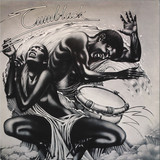
A truly special reissue of a fantastic and incredibly rare Afro-disco 12” from 1978, Tumblack - 'Caraiba/Invocation'. Originally released on the seminal French disco label Barclay, you'd be hard pressed to even find an original copy in the UK, let alone for a reasonable price, so it's high time an officially licensed, remastered reissue came around.
Taking the A side of this EP Stefano Ritteri provides a “Spaziale Version” of 'Caraiba' that seamlessly blends elements of African, Afrobeat, Funk and Disco styles, with segments that continually morph and evolve into new tracks. Irresistibly funky and percussive drumming patterns and melodies hypnotise the listener, with only the occasional outbreak of African chanting breaking up the grooves.
The B-side contains the original version of “Invocation” that is effectively one long drum track broken down into 7 segments that never drop a beat alongside the original version of 'Caraiba' in all it's glory. As EP's go, this really does take the listener on a journey to Africa, via 1978 New York, and is a true one of a kind. And for all those sample-spotters out there, there's no end of complex drum patterns and basslines to dive into.
Rockets Audio starts the saga with 4 finest minimal house trackers by Matheiu, Denis Kaznacheev and the master trio Wareika. A rocket (from Italian rocchetto "bobbin" is a missile, spacecraft, aircraft or other vehicle that obtains thrust from a rocket engine. Rocket engine exhaust is formed entirely from propellant carried within the rocket before use. Rocket engines work by action and reaction and push rockets forward simply by expelling their exhaust in the opposite direction at high speed, and can therefore work in the vacuum of space.
In fact, rockets work more efficiently in space than in an atmosphere. Multistage rockets are capable of attaining escape velocity from Earth and therefore can achieve unlimited maximum altitude. Compared with airbreathing engines, rockets are lightweight and powerful and capable of generating large accelerations. To control their flight,
rockets rely on momentum, airfoils, auxiliary reaction engines, gimballed thrust, momentum wheels, deflection of the exhaust stream, propellant flow, spin, and/or gravity.
Rockets for military and recreational uses date back to at least 13th century China. Significant scientific, interplanetary and industrial use did not occur until the 20th century, when rocketry was the enabling technology for the Space Age, including setting foot on the Earth's moon. Rockets are now used for fireworks, weaponry, ejection seats, launch vehicles for artificial satellites, human spaceflight, and space exploration.
SOUND rockets are the most common type of high power rocket, typically creating a high speed pitch by the wave of rythm with an oxilator. The stored delay can be a simple pressurized detune or a single filter delay that disassociates in the presence of a curve (EQ + FILTER ), two hats that spontaneously react on contact (RANDOMIZER), two snares that must be ignited to react, a solid combination of effects with oxidizer (solid GROOVE), or solid fuel with liquid oxidizer (hybrid FILTER BAND DELAY). Chemical rockets store a large amount of energy in an easily released form, and can be very dangerous. However, careful design, testing, construction and use minimizes risks.
iven Jones’ rather slack approach to track titles (both being consistent with and sometimes even just supplying them), it’s a bit of a relief to realize that two tracks with the same name are indeed related. In the case of “Arab Jerusalem”, which makes up nearly half of the newly-released Lalique Gadaffi Handgrenade, that kinship is immediately apparent even though both tracks are clearly their own experiences.
Released as the first track on the Minaret-Spearker picture disc 7” in 1996, “Arab Jeruzalem” (spelling also sometimes being fairly slack) is 5:42 of effectively shifting dark ambience, wordless female vocals drifting over the hand percussion, chimes, and static of the track, with eventual conversational loops discussing... something underneath. The end of that version is especially striking for the way the woman’s wordless singing starts being sampled in such a way that it overlays the whole track (and, slightly, itself). The almost 24-minute “Arab Jerusalem” here might be called the Deer Hunter version of the same story, building with great patience and many more abstract detours towards what now seems like simultaneously an excerpt and, now, a climax. As with many of Jones’ more ambient tracks, the great length just lets it cast its spell more thoroughly and entrancingly.
The other three tracks, meanwhile, suggest some of Jones’ other work but never evoke them as directly as “Arab Jerusalem”. “Jordan River” is nearly as long (a second shy of 20 minutes) but strips out the vocal elements in its predecessor, focusing instead on a more active percussive workout (analogue and digital both) and a river of hiss running down the center of the track. The title track of Lalique Gadaffi Handgrenade might bring to mind the title of “Lalique Gadaffi Jar” from Libya Tour Guide (last reissued by Staalplaat in 2015), but if they’re sonically related Jones must have practically melted the other track to get this one. And the closing “Desert Gulag” (like the title track, a much more manageable length than the first two epic tracks here) bears a slight resemblance to “Negev Gulag” from 1996’s Fatah Guerrilla, here what was a piercing, repetitive drone is softened and looped over more of Jones’ percussion. The result is a well-rounded release that shows off many aspects of Jones’ sound as Muslimgauze, while existing (like many of these DAT tapes do) in conversation with much of his previously released work.
At the start of the year, Rocafort Records treated us to it's first roots reggae outing in the form of 'The Circle of Confusion' featuring the legendary Studio #1 vocalist 'Cornel Campbell'. ... Warm, feel-good, socially conscious, intergalactic dub.
We hoped for more, and finally it's here! Although slightly more digital in production, "Yesterday was History" cannot be claim to differ enormously from its predecessor. But hey, why mess with the formular when the results are pure and damn-near perfect ... ?
'The Circle of Confusion' are a Swiss production duo: Seb.K (Shakedown productions) and Phil'eas (Black Diamond Sound).
Recorded at Addis records in Geneva on the day of Mandela's passing, this track is another slice of dubby humanity-driven peace and love that buoyantly skips along aided by the sweetest scatting voice in reggae, (not showing any signs of it's 73 years), and all the appropriate studio space-age sound effects, harmonics and vintage keys. Modern roots reggae at its best, where the dub version is as banging and cosmic as the A Side.
They Say: “Documentary and industrial underlays for current themes of modern life”.
We say: Mind-blowing, percussion-heavy, Afro-tinged, cosmic-disco library bomb.
This is the one. An absolutely outstanding record from 1983 and definitely one of the hardest to find on the collectable German library label, Coloursound. The Now Generation (Percussive Underscores) is comfortably one of the very best library records full stop.
The record comes galloping out the gate with a pair of rapid synthy-eurodisco bombs - the title-track and “Panama” - before slowing down to a woozy pace on “Inorganic Matter”. “African Nightclub” sounds like it reads, and is a particular favourite of Prins Thomas. Indeed, it was used to great effect on his seminal Cosmo Galactic Prism mix for Eskimo back in 2007. It’s followed by the dark, druggy, slow motion industrial groove of “Grease Plant” before “Southerly” lifts the tempo to close out side A with its Latin funk strut of bells and melancholic keys.
For us, though, it’s all about the opener to side B: “Mechanical Heart”. Seven minutes of building, mid-tempo disco-funk joy, deceptively explosive, club-ready gear for body and soul. The back cover dryly describes the track as “Guitar and percussion, light industrial underlay”. Hmmm. How about, “after finally emerging from a particularly heavy week jamming in a sunless, lawless German warehouse, Chic warily press record on a wayward, illicit instrumental for basement gatherings”. Just wait for those drums at the 3 minute mark…
The beatless ambience and menacing stabs of the proto-electro “Chemical Threat” follows, before the open drums and incredible fills of the metronomic “Steady Going” and fantastically monotonous funk breaks of “Nepal Trek” round out this sensational set.
This is a library masterpiece in no uncertain terms, full of synth funk, afro beats, exotica, leftfield madness, dance floor dynamite and all-around greatness.
As with our KPM and Themes re-issues, the audio for The Now Generation comes from the original analogue tapes and has been remastered for vinyl by Be With regular Simon Francis. Richard Robinson has brought the original Coloursound sleeve back to life in all its metalic silver glory.
Following on from his beautiful release on Claremont 56 in 2018 - Alterleo aka Denis Leonovich, takes a different approach for this new e.p on the Kinfolk imprint and produces a storming world infused 4-tracker.
'Cabriodelic' is a mid-tempo march that utilises sublime keys, sci-fi ethics and military style drums to incredible effect. 'On The Way' keeps the drums heavy but ventures into a deeper sub tropical technoid-esque landscape.
'Tour De L'Afrique' is exactly that, a jaunty vibe that buzzes and rolls through an unknown afro-centric land.'In Sands' finishes off the package nicely with an acidic heavy Moroccan spiced percussive roller.
Essential music for the truly tropical dance floors of the world.
Following on from the summer hit ‘Sound System Girl’ and the next chapter ‘Jah Love’, we complete the 2019 trilogy with the highly-charged ‘Jumping Sound’ … a stepping jump-up anthem livicated to the power of Reggae & Dub & Sound Systems .. enjoy !!
Sandra Cross needs no introduction, she is a true legend whose career begun at the age of 14 with a no.1 hit in the UK Reggae charts. Since then she has gone on to be one of THE defining female voices of British Reggae. Sandra’s award winning career has seen her hook up with the likes of Mad Professor and Sly & Robbie for a near endless round of hit singles & albums.
Vibronics, the future sound of dub, have been vibrating the world with bass since 1996. Their music is at the forefront of the UK Dub scene, proven by over 60 releases on their own legendary SCOOPS label as well as a host of albums, singles and remixes for a myriad of other labels such as Jarring Effects, Dubhead and Jah Tubbys. In the studio they have worked with Michael Prophet, Iration Steppas, Macka B, Aba Shanti, Brain Damage, High Tone, Big Youth, Gaudi and an almost endless list of dub & reggae luminaries.
ALTA’s debut release, 'Reasons' is the product of many long nights making music together in a back room at Hannah and Julius’ Brunswick home. It was self-recorded over 10 months, from January 2018 to November 2018, using midnight sessions, tape delay effects and a literal room full of wall to wall synths to carve out a world all their very own. "It's a collection of songs written together in our home studio - No cowriters or anything, just us two experimenting making the music,” says the band.
The album was later mixed by Seekae’s George Nicholas in Sydney and mastered by Grammy-winning engineer Chris Gehringer at Sterling Sound (Rihanna, Janelle Monae, Chvrches).
Thematically, the album’s title alludes to the sense of complacency that often sets in when people start making excuses for themselves.
“It’s this internal thing,” Julius explains, ‘always coming up with reasons why things did or didn’t happen, or reasons why someone else did something. Often it’s self-preservation but it’s also bullshit.”
‘Push’ follows on from previous singles ‘Figured Out’, ‘Back On It’ and ‘Twisted’, which have just under 2 million streams on Spotify since their release and are receiving global attention, with spins on BBC Radio 1 and praise from the likes of The Line of Best Fit and CLASH.
At streaming, ALTA have seen huge support locally and internationally, with their 2019 releases featuring in Spotify’s New Music Fridays, Indie Arrivals, The Local List, Just Chill, Front Left, New Dance Beats and The Office Stereo, plus Best Of The Week on Apple Music.
Melbourne fans will witness ALTA performing tracks from Reasons for the first time ever at Northcote Social Club on Saturday 5 October. Tickets are on sale now via Northcote Social Club’s website.
Reasons is an intricate and emotional body of work that will see ALTA step out from Melbourne’s underground scene, and into the international limelight. Pre-order your copy today.
Figure‘s newest addition to its catalog is Nocow‘s Ualldie EP, a vivid adventure following his trilogy Vozduh/Voda/Zemlya on the main label.
Nocow’s synths stand out once again, churning out melancholic grooves over five pieces, which showcase his abilty to mesh the psychedelic and the heavy, resulting in tracks both bittersweet and punishing.
It‘s a distinct Russianness, a yearning frozen within, which Nocow‘s cloud techno transports effectively using stereo panning, finely layered percussion and wide strings to paint his imaginative landscape.
Derek Neal is a Turin based producer born in Vermont (USA). He started his DJ'in career as an undergraduate student at his college radio station and since then he's been cultivating his interest in house and techno music. Fostered by his brother's own producer career, who goes by the name of Motions and is 1/3 of the Montreal collective 00:AM, Derek pushed further his own interest in production to the point of proposing a set of tracks to Funnuvojere Records. Probably struck by the simplicity and effectiveness of Derek's sound, the Berlin label agreed on releasing Reason Machine, Derek's debut EP.? A comforting sound distinguishes this record, it is gentle and deep at the same time. If A1 - Sky City feels like diving in calm water, A2 - Jet Fuel could soundtrack a romantic date. On the flip B1 - October has a cinematic personality, envisioning a urban landscape, while B2 - Stereosense expresses a special dynamicity of sound.? Don't get tricked by my rather emotional introduction though, Neal knows about beats and you'll hear. From breakbeat to funk, Chicago house to dub this EP is all-round a delightful expression of contemporary club music.
Greg Hates Car Culture was Venetian Snares' first ever vinyl release. Long out of print, it came out in 1999, as the third release on Minneapolis label History Of The Future. Aaron Funk's hallmarks were there from the start. His absurdist sense of humour, the razor sharp edits and his use of odd time-signatures. There is a rawness here, not often captured on later records, where you can imagine Aaron playing live in front of a room full of young breakcore fanatics. Indeed most of the tracks here were recorded live, tweaking his effects and EQ on the fly, to DAT from his Amiga. The album opens with "Personal Discourse", recorded in 1997, which samples Aaron calling into a Dominatrix live on community cable TV, while "Fuck A Stranger In The Ass" samples from the film The Big Lebowski. The track "Aqap" has a different sound to the others having been recorded later, in 1998, on Aaron's first PC.
We have also added three hitherto unreleased 1997 tracks to this reissue. Two of them "Eating America.." and "Punk Kids" appeared on Venetian Snares rare self-released 1998 cassette Spells and the long sought after "Milk" was only passed around by his friends.
Greg Hates Car Culture lets you hear the raw energy of a musician at the birth of his sound.


![The Circle of Confusion - Yesterday Was History/Yesterday Was History (TCOC Yesterdub Mix) [feat. Cornel Campbell]](https://www.deejay.de/images/l/4/4/943844.jpg)