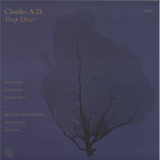
The sea has long been central to Japanese culture, symbolizing both sustenance and spiritual depth. Charles A.D.'s Deep Diver draws inspiration from this, channeling the ancient traditions of diving and fishing into his music. Historically, the sea has influenced everything from Shinto rituals to the livelihoods of coastal communities. In Deep Diver, this reverence flows through aquatic soundscapes, where rhythmic waves of 90s house and Detroit techno meet Japanese minimal production techniques, New Age and Pacific Jazz. Like the tides, the album ebbs and flows, creating a serene yet dynamic homage to the timeless connection between Japan and the sea.
The opening track 'Deep Diver' plunges into the depths, its abstract sound design capturing the sensation of deep-sea propulsion. Rhythmic bubbles pulse gently alongside slow-moving chords, creating an otherworldly atmosphere. The textures are lush yet restrained, setting a tranquil stage that pulls the listener into a submerged world. 'Underwater Ruins' builds on this aquatic theme, introducing rhythmic layers and bass-heavy notes reminiscent of mid-90s Japanese ambient techno. The smooth, melodic flow nods to pioneers like Mr.YT and Susumu Yokota, while subtly incorporating the Detroit techno influence through soulful, deep basslines.
The track feels like a fusion of ambient and techno, balancing serene tones with a rolling groove, emblematic of Japanese techno soul. As the album progresses into 'Bubble Ring', it becomes clear that Charles A.D. is a master of minimalism. The production is timeless, leaning
on analog techniques where echo-drenched chords and carefully layered soundscapes take on an addictive, hypnotic quality. The simplicity of the composition is deceptive, as each element carries weight, drawing the listener deeper into the rhythm and space between the notes.
'Merperson' is where organic rhythms truly come into play. Charles A.D. gently evolves the patterns, allowing each percussive hit to flow naturally into the next. Soothing melodies emerge from within the track’s structure, eventually reaching an emotional peak without ever feeling forced. The organic nature of the arrangement creates an effortless progression that feels deeply connected to the natural movement of water.Starting the second half with 'Deep Exploration', the theme of underwater excursions becomes even more pronounced. Light, steady drumming anchors the track, allowing the melodic layers
to develop gradually. It unfolds with a calm, measured pace, before ending softly, almost as if the sounds are drifting off into the oceanic depths. 'Diffuse Reflection' stands out as the most dub house-influenced on the album, with rolling rhythms and hypnotic elements reminiscent of Maurizio's deep, pulsing sound. Yet here, the production feels submerged, with aquatic effects swirling around the rhythmic core, blending dub house with a fluid, oceanic touch. 'Traitors' delves even deeper into dub-inspired territory. Deep, resonant bass hits combine with wooden drums, while static-like sounds evoke the image of a radio tuning through static to find clarity.
Chords shimmer briefly before fading back into the liquid depths, evoking the ebb and flow of the tide. The final track on Deep Diver 'Levitation', is a fitting conclusion, as the rhythms merge and overlap like waves gently lapping the shore. The minimalistic arrangement allows each element to blend effortlessly into the next, creating a sense of unity and closure. The sounds move with the gentle grace of water, ending the album in a way that feels both complete and
open-ended, like the infinite motion of the sea.
Search:v effect
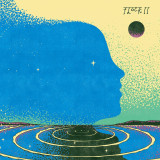
UK supergroup Flock return with their anticipated sophomore album "Flock II". Comprising an exceptional line-up featuring Bex Burch (fresh from her debut solo album on International Anthem), Sarathy Korwar, Tamar Osborn (Collocutor, Dele Sosimi, Unknown To Known), Danalogue (The Comet Is Coming / Soccer96) and Al MacSween (Kefaya), the new recordings showcase Flock"s ability to push the boundaries of the composition process and craft unique tracks based on their collective spirit.
First time vinyl reissue of Univers Zero's legendary Crawling Wind, originally released in 1981 on the Japanese 'Chaos International Series' label, with the original cover artwork has been beautifully redesigned by Thierry Moreau.
Toujours Plus à l'Est, as the title suggests, is heavily influenced by the traditional music of Eastern Europe, particularly Bulgaria., and paying tribute to the iconic catchphrase of Professor Calculus (Tournesol), the character from the Belgian comic series Tintin. Before The Heat, played live a few times, is an ambient composition by Andy Kirk, who is part of the EP's lineup alongside Daniel Denis, Guy Segers, Alan Ward, and Dirk Descheemaeker. Central Belgium in the Dark is a live improvisation from a period when Univers Zéro dedicated part of their concerts to complete improvisation. What makes this recording unique is that one of Andy Kirk's effects pedals picked up and emitted the sound of a mysterious radio signal, seemingly coming from "nowhere," especially noticeable at the end of the piece. The title of this improv is a nod to contemporary composer Charles Ives' work Central Park in the Dark. Central Belgium refers to the concert venue where the piece was recorded (Haine-St-Pierre).
Univers Zero represents one of the longest-living bands in Belgium. It was established in 1974. Drummer Daniel Denis had the brilliant idea to gather together a team of professionals sharing the same taste for music. The band has adopted an instrumental progressive style. Over the last couple of decades, the band has also implemented a series of influences from chamber music - most commonly, chamber music from the 20th century. Even if the line-up changes a lot over the years, the overall sound of UZ remained fairly consistent.
Marbled[15,76 €]
2017 album now available at a cheaper price. Limited colour vinyl 12” (Marled colour) DL card included is for indie stores only. Standard LP + DL. CD digipack. Under license from Lakeshore Records. A Fire Records release. Back in 2006, Richard Linklater’s film adaptation of Philip K Dick’s sci-fi novel A Scanner Darkly was greeted with suspicion. No one had done justice to the “master” (Bladerunner, Minority Report, Total Recall, The Adjustment Bureau had or have all met with mixed reviews). And, movies attempting to conjure up the effects of drugs were met with derision from the stoned cognoscenti. How could a story of dependence on Substance D (“Death” for short) be created with multi-million dollar stars in the frame anyway? Linklater had a plan; He’d use rotoscoping (an effect that falls somewhere between Kiki Picasso’s sketches brought to life and Disney on ‘ludes). The celebrities would be shrouded in mystery, in fact Keanu Reeves’ skin suit would make him almost invisible at times, a mumbling wreck swaying centre stage. A waste of talent? A waste of money? To complete the experience, a left field musical score was needed to ensure that everything wasn’t as it seemed. The phone books are full of creative composers but Graham Reynolds And His Golden Arm Trio jumped off the page. The band name is from a Frank Sinatra film where he plays a drug-addled muso. Perfect. Graham Reynolds works in extremes, he’s collaborated with DJ Spooky, the Austin Symphony Orchestra and with live film collage creator Luke Savisky. More importantly his Golden Arm Trio are never three and never the same people twice. For the movie he created short sound bytes – a surf-like instrumental, a country-tinged breather, the sound of stuttering insects crawling through your hair. The resultant soundscape is itchy and scratchy, full of mood swings and musical metaphors, an ever changing and unpredictable set of highs littered with reflective undertones and occasional soft, almost super numb realities. THE SOUNDTRACK: “Strands of post-rock, electronica, jazz, and vintage rock are woven and recombined throughout the album for unusual juxtapositions.” All Musi // “A tactile, emotional resonance often missing in contemporary scoring.” Soundtrack.ne // The music in isolation is bold and uncompromising, shifting as it moves through genres and sounds. THE COMPOSER : Graham Reynolds works in extremes; Short take moments of sound – whether it be a surf-like instrumental, a country-tinged breather or the sound of stuttering insects crawling through your hair – are all in his tick box. The resultant soundscape is itchy and scratchy, full of mood swings and musical metaphors, an ever changing and unpredictable set of highs littered with reflective undertones and occasional soft, almost super numb realities.
Black[15,76 €]
Back in 2006, Richard Linklater’s film adaptation of Philip K Dick’s sci-fi novel A Scanner Darkly was greeted with suspicion. No one had done justice to the “master” (Bladerunner, Minority Report, Total Recall, The Adjustment Bureau had or have all met with mixed reviews). And, movies attempting to conjure up the effects of drugs were met with derision from the stoned cognoscenti. How could a story of dependence on Substance D (“Death” for short) be created with multi-million dollar stars in the frame anyway? Linklater had a plan; He’d use rotoscoping (an effect that falls somewhere between Kiki Picasso’s sketches brought to life and Disney on ‘ludes). The celebrities would be shrouded in mystery, in fact Keanu Reeves’ skin suit would make him almost invisible at times, a mumbling wreck swaying centre stage. A waste of talent? A waste of money? To complete the experience, a left field musical score was needed to ensure that everything wasn’t as it seemed. The phone books are full of creative composers but Graham Reynolds And His Golden Arm Trio jumped off the page. The band name is from a Frank Sinatra film where he plays a drug-addled muso. Perfect. Graham Reynolds works in extremes, he’s collaborated with DJ Spooky, the Austin Symphony Orchestra and with live film collage creator Luke Savisky. More importantly his Golden Arm Trio are never three and never the same people twice. For the movie he created short sound bytes – a surf-like instrumental, a country-tinged breather, the sound of stuttering insects crawling through your hair. The resultant soundscape is itchy and scratchy, full of mood swings and musical metaphors, an ever changing and unpredictable set of highs littered with reflective undertones and occasional soft, almost super numb realities. THE SOUNDTRACK: “Strands of post-rock, electronica, jazz, and vintage rock are woven and recombined throughout the album for unusual juxtapositions.” All Musi // “A tactile, emotional resonance often missing in contemporary scoring.” Soundtrack.ne // The music in isolation is bold and uncompromising, shifting as it moves through genres and sounds. THE COMPOSER : Graham Reynolds works in extremes; Short take moments of sound – whether it be a surf-like instrumental, a country-tinged breather or the sound of stuttering insects crawling through your hair – are all in his tick box. The resultant soundscape is itchy and scratchy, full of mood swings and musical metaphors, an ever changing and unpredictable set of highs littered with reflective undertones and occasional soft, almost super numb realities.
Why the Eye is an experimental masked quartet from Brussels that propels bodies into trance during its live performances. All instruments are DIY and played in real time, without loops or sequencers. Fans of The Residents, Société Étrange, Autechre, Boards Of Canada, The Meridian Brothers and Fulu Miziki could easily relate to their sound. Describing their music as "Prehistoric Techno", Why The Eye are set to release their new album ‘Inspirex’ on the 4th of October via Exag Records. Opening with the fidgety JNSP, the vindictive summons La Machine is a brash, abstract experience with a deep yearning to set us free from everyday political confinement while the raw Où cours-je explodes into a wild rage of disorder and mayhem. At the heart of each track are the DIY instruments band member DjP (Jean Paul Domb) has assembled over the years, some of them directly inspired by the African sanzas. With names such as ‘radiocaphone’ and ‘castabignettes’, the instruments are cleverly connected to different effects pedals and are the heartbeat of Why The Eye. Elsewhere, the album title track reveals a snappy rhythmic quality with skittish sounds while Prairies and Animal are tribal-like in delivery with a deep-lying punk ethosele
Opaque Mango Colored Vinyl. RIYL: Black Milk, Kendrick Lamar, Kamasi Washington, Mos Def, Blood Orange, Milo, Pharcyde, Blackalicious, Anderson Paak. Richmond, Virginia-based artist McKinley Dixon has always used his music as a tool for healing, exploring, and unpacking the Black experience in order to create stories for others like him. For My Mama And Anyone Who Look Like Her, Dixon's debut album on Spacebomb, is the culmination of a journey where heartbreak and introspection challenged him to adapt new ways of communicating physically and mentally, as well as across time and space. The language accessibility aspect of this project draws right back to communication and connecting," Dixon explains. "I think about the messaging, and how this can be a way for another Black person, someone who looks like me, to listen to this and process the past. Everything I've learned about communication for this album culminates with this bigger question about time. Is time linear when you're still healing and processing? Westerners look at time travel as something to conquer or control - it's a colonizer mindset. That's ignoring how time travel can be done through stories and non-verbal communication, and doesn't acknowledge how close indigenous people are to the land and the connections groups have because they've existed somewhere for so long. Storytelling is time travel, it's taking the listener to that place. Quick time travel. Magic." Never relying solely on beats, Dixon taps into a hybrid of jazz and rap, pulling in an array of piercing strings, soulful horns, percussion, and angelic vocalists throughout the album-plus features by Micah James, Lord Jah-Monte Ogbon, Pink Siifu, and more. Jazz instrumentals add a level of uncertainty, with the sounds and shifts evoking a lot of emotion and vulnerability. It's an energy he describes as "Pre-Kendrick Lamar To Pimp A Butterfly," the era when rap adopted more live instrumentation. The best way to sum up this album is: I was sad, I was mad, and now I'm alive," Dixon explains. "These things I talk about on the record have had harmful and brilliant effects on my timeline, and have forced me to be cognizant of the fact that living is complex. Rap has allowed me the language to communicate, and be someone who can communicate with people from all over. Knowing how far I've come, I think people will find trust in the message I'm sending."
Lyrics written by Ontto, except “Voitelu” written by Ontto & Evill
Produced by Oranssi Pazuzu
Recorded by Julius Mauranen and Niko Lehdontie
Additional recording by Juho Vanhanen and Tom Brooke
Sounds captured at E-studio, Astral Studio, Cellar of Deposition and Inner Oscillations between November 2021 and December 2023.
Mixed by Julius Mauranen at Studio Kekkonen
Premix engineering by Niko Lehdontie
Mastered by Svante Forsbäck at Chartmakers
Album artwork and layout by Jenna Haapaharju
Management by Erin Lynch, FlyingFox AB
Thank you: Mikko Männistö, Tom Brooke, Erin Lynch, Jens Prueter, Jyri Riikonen, Timo “Moit” Alatalo
Evill - grand piano, vocals, effects
Ikon - guitar, sampler, synthesizers
Jun-His - the voice, guitar
Korjak - drums
Ontto - bass guitar, synthesizers
“Nigh/T\mare’s” debut album on kontralamakina begins with an intense emotional journey through desolate landscapes of a distant world and rhythms that break everything that appears in its path. Industrial/experimental techno of the highest sphere. Titled ‘The oblivion of time’, this set of 5 original tracks + 1 remix by the legendary canadian duo techno “Orphx”
2024 Repress
All in that stark contrast between ethereal spaciousness and steely, martial rhythms out the industrial spectrum, 'Far Field' takes us on a voyage across the board, from breaks-heavy machine stunts to washed-out tapestries, via EBM-laced detours and junglistic maneuvers. Investigating the nexus zone between dance functionality and limitless escapology, it extrapolates both artists' blends to further immersive, hypnotic effect. Taking over the A side, .VRIL gets the ball rolling with 'Lost Together', which sets the tone on a low-slung, nostalgia-drenched note; combining the syncopated swagger of downtempo techno with ambient-oid stasis and static-filled opacity. Like watching an all-metal sun sinking past the blazing skyline. Revving up the engines, 'Fnord' feat. RAeYN conjures up a way more muscular arsenal of big-room-ready wares, from aggro snare salvos to anthemic synth kinetics, through that replicant-hunting kinda vibe. One to have the Saturn rings go hula hoop, with all woofers and brains in the vicinity melting in XTC. Shutting the A side off, 'We Believe' returns to a lighter, more vaporous mindset but sure implements that signature heavy swing of .VRIL, flush with textured kicks and FX-soaked arps. True monster prog swell. Flip it over and there's HVL dishing out a textbook example of his vortical electronic furls with the title-track, 'Far Field' - an oneiric drift that slowly rises from its heavy-lidded slumber, ascending towards bleepin' n bloopin' experimental effervescence as bars fly by. A number bound to hack your body and mind into two distinct facets, and while one dances its way frantically across the ever buzzing space/time continuum, the other shall reach a state of healing calm and transcending ubiquity. Smoothly shuttling us off to the upper layers of the ionosphere, 'Lancet Mxi' clenches it on a trippy note, taxiing us midway zero-G UK bass territories and eerie ambient abstraction. HVL's total, widescreen vision at its most unhindered, all set at expanding your mind to yet uncharted horizons of sound and closing the gap between two distant, estranged galaxies. A fractured headspace to both dance and dream to. *Dressed in a fine piece of artwork courtesy of Daniel M. Diaz, 'RYCL021' comes pressed on 180g audiophile black vinyl for optimal playing and listening experience.
"Mike + The Mechanics best-selling, Grammy-nominated sophomore album ‘Living Years’ is set to be reissued on colour vinyl for National Albums Day 2024. The original album, which charted at number 2 in the UK album chart, went on to achieve Gold certification in the UK. The seminal 1988 album features the Ivor Novello® Award-winning global hit single ‘The Living Years, ’ plus tracks 'Nobody Knows,' 'Seeing Is Believing' and 'Nobody’s Perfect.' It will be pressed on a limited edition black / grey marble effect, 180gram colour vinyl. Released for NAD ahead of Mike + The Mechanics 2025 UK tour ‘Looking Back – Living The Years.
Time to welcome another newcomer to Freerange with a brilliant debut that has already been gaining a lot of interest from early spins. Stefano Ritteri should be a familiar name to many, having dropped several well- received releases on key labels such as Pets, Rockets & Ponies and Get Physical as well as his own monthly Rinse France radio show. A producer in the old school sense, he has the ability and desire to flip from deep, emotive and down tempo jams to the most impactful, high energy floor fillers, all with a deft touch and unique and experimental spin. The Italian producer, now relocated to London, has a studio chock full of vintage synths and hardware outboard which keep him inspired and ensure his output sounds fresher and fatter than most, as can be heard on this excellent two-tracker entitled A Different Happiness EP The title track is a spaced out, percussion-heavy jam which takes a minimal approach but wins hearts and minds with an ear-worm of a melody that gets gets you hooked in from the start. Snippets of spoken word add to the intense atmosphere making this one of those sure-fire, perennial tracks which can work in a variety of sets and still guaranteed to make an impact and stand out in the crowd. Flip over for Pocket Melody, another simple yet effective and inventive track which sees Stefano letting loose on his synths and coming up with some warped Zawinul-inspired vibes in the process. The playful melody snakes around in an improvised way whilst the dubby drums and classic analogue machine beats ensure everyone stays locked into it's hypnotic groove. Definitely a producer to watch for us and we're sure Stefano is on track to continue making some amazing music. We hope you love this as much as we do!
“A huge thing for this record was to make it feel as close to our live show as possible,” says Tom Sharkett of W.H. Lung’s latest album. “We didn’t want it to sound live but we wanted to capture the excitement of the live performances.”
This is something that has become paramount to the group in recent years as they have undeniably blossomed into one of the most joyous and arresting live bands in the country. “The reason I’m in a band is to play live music,” says singer Joe Evans. “For me, music is live music. That’s what it’s for, to be played with people.”
The five-piece band, also featuring Chris Mulligan, Hannah Peace, and Alex Mercer-Main, decided to try something new on their third album after two incredibly successful collaborations with previous producer Matt Peel. In order to capture the energy, spirit and dynamism of their live shows, they relocated to Sheffield to work with Ross Orton (MIA, Arctic Monkeys, Working Men’s Club) who was able to harness this side of the band to remarkable effect. “Ross is the Sheffield Steve Albini,” says Evans. “He’s the king of not overthinking it and trusting the process of the art of recording songs. He was always there to stop us fucking around with cerebral stuff and get it down.” Sharkett echoes this too: “He was the exact producer we needed without us even realising. His productions and mixes are bombastic, lively and in your face and that’s exactly what we wanted.”
However, while this album is rooted in a sense of capturing a moment and a sparky liveness, that’s not to say it’s a raw or ragged record. It is still a meticulously composed, delicately layered and pristinely produced piece of work that, in true W.H. Lung style, runs the gauntlet from dance to pop to indie while still capturing that distinctly unique quality that is unquestionably their own. “It was a really big thing for me to realise what made us sound like us on this record,” says Sharkett. “I think the album sounds a lot more confident and self assured because of it. Some songs sound just so much like Lung and I’m really proud of that. I’m not sure we’ve done that as consistently across the other records.”
While the band have drilled deeper into finding their own singular identity, it’s not a record resting on its laurels. It’s a significant leap forward, expanding on their solid foundations while also breaking new ground. “The big difference with this record is its directness in every sense,” says Sharkett. “The songwriting is more upfront. Previously we’d focused a lot on vibe and production as opposed to just writing songs. The overall mission here was to revert to a classic songwriting structure and for the production to come afterwards.” And so what you have on this record are deeply considered and well-crafted songs, then recorded with blistering intensity in the moment, and then given a touch of experimentation afterwards. Then throw in Orton’s contributions to the band and it’s proven to be a real winning formula. “He brought a real dose of magic to the songs we’d written,” says Sharkett. “And brought an extra bit of wonk and quirkiness each time.”
The band’s ability to write more traditional and conventional songs is clearly a skill they’ve taken to with ease, at times there’s an almost Springsteen-like quality – but if he'd ever had an ecstasy period – to tracks such as ‘Thinner Wine’ and ‘Bloom and Fade’. While ‘How to Walk’ was constructed with one thing only in mind: that it would absolutely slay on stage. “I can’t wait to play this live,” says Evans. “We wanted a song to represent our live set, a new big one, and this is it.” Once again it leans towards the anthemic, with its driving, propulsive charge complete with incandescent synths and vocal melodies so irresistible you can already hear them being sung in unison by a crowd.
It’s an incredibly difficult feat to pull off a record that is more rooted in traditional songcraft while also capturing the power of a live performance, as well as pushing sonics into experimental new directions while working with a brand new collaborator. But here the band has managed to do just that. And the album’s closing song ‘I Will Set Fire To The House’ is a perfect example of such a thing. It’s a song that feels immaculately constructed but also very much alive and of the moment as its radiating synths engulf from the off, and Evans’ vocal is silky but powerful and in perfect symbiosis with Peace’s. It’s a song that captures the endless joys of music playing long into the night. “It may be a bit of a bloody bombastic way to end an album saying ‘and we’ll dance into the sunrise’,” says Evans. “But fuck it.”
MORE PRESS ON ‘VANITIES’ (MELO131)
"Vanities artily refines an exhilarating brand of up-front electro-dance" MOJO ⅘
'Idiosyncratic yet euphoric electronic pop on triumphant second LP' 9/10 Uncut
''One of the most effective alternative pop albums of the year'' 4/5 Record Collector
'Dance music for the modern age' - The Times (4*)
The Well is the second album by the duo So Sner, composed of Susanna Gartmayer (bass clarinet) and Stefan Schneider (electronics). Recorded over nearly two years in various studios and spaces, the album reflects So Sner's extensive touring across Europe. The final mixing took place in Vienna at the studio of Martin Siewert, who served as both co-producer and mastering engineer. Known for his meticulous attention to sonic detail, Siewert brings his unique techniques and distinctive sound enhancements to the album, resulting in a work that is both stylistically cohesive and daringly uncompromising.
So Sner’s critically acclaimed debut album REIME (TAL26, 2021) was celebrated for its innovative fusion of bass clarinet and electronic sounds in unexpected and surprising ways. With The Well, the duo explores both fluid and dissonant sonic landscapes, embracing different structural and sonic challenges. The result is a quieter, more introspective set of compositions than many might have anticipated. The album is a statement of two confident collaborators crafting complex, spatial musical moments in their own distinct manner.
The music on The Well generates a multiplicity of effects that transcend conventional oppositions such as hand-played versus programmed, composition versus improvisation, or analog versus digital. The album suggests a re-articulation of these categories, allowing the ten tracks to gradually blend one musical idea into another, and one musician into another, in a circular and complementary fashion. The polymetric permutations and exploratory reed components create a soundscape where all elements coexist harmoniously, without compromising or diminishing each other’s presence.
With its sparse sound architecture, The Well invites listeners into a space of effective emptiness, offering room for the mind and body to explore—a sonic island where one can develop sensuality through patient movement.
For So Sner, live performance is a passion of the mind, and since they began working together in 2020, their music has taken them to many different places. The live experience has deeply influenced the recorded music on this album, with the interplay between live performance and studio work informing their creative process. The Well captures the genuine act of exploring new territories, serving as a storage place for the time and space shared by the duo, re-filtering their experiences of performing and traveling together.
The Well is a lucidly playful and ambitious album by two contemporary musicians who are continually learning to create and respond to the subtle and significant changes in their music, maintaining momentum throughout the entire work.
In addition to her work with So Sner, Susanna Gartmayer has recently collaborated with artists such as Joe McPhee and Maria Portugal, and remains a member of her long-running band, the Vegetable Orchestra. Stefan Schneider, founder of the label TAL, has recently performed with Garth Erasmus from Cape Town and fine art luminary Katharina Grosse.
Remastered reissue of the second landmark EP for Plus 8 Records by Speedy J. Again expanding on the emerging sounds of Techno Speedy J took it further into euphoric, minimal lofi and bleepy territory with ''Rise'', ''Tresor'' and ''De-orbit''. All while effectively stripping it down to the bare bones rocking only a 909 and a vocal sample on ''Something For Your Mind''. This release and in particular ''Something For Your Mind'' was there at the forefront of techno as we know it these days with a harder, raw and no-nonsense approach and all its variations such as Gabber that grew out of that in Rotterdam the following year.
Ricky Razu is one of Belgium's new breeds of rising house producers who come from a vast background of jazz, boogie, hip-hop and disco and through the amalgamation of these various styles, he is quickly making a name for himself.
Ricky's swing is quite unique, he has been putting his own twist and interpretation on the regular house track by joining the dots between yesterday’s golden era classics and today’s club bangers. As one of Houseum's mainstays, he has also built up a solid presence behind the decks, becoming a regular player in the Belgian and international house scene. During the past years, Ricky’s prolific output has also allowed his sounds to propagate all over the globe, which culminated in a worldwide repertoire of gigs from Europe to the US, South America and Asia. The man has also garnered support from the likes of Jeremy Underground, Bellaire and Subjoi, to name a few, and with his new projects in the pipeline, the future is looking bright for him.
Get transported to a parallel dimension with the title track of Ricky Razu’s new EP ‘Cosmic Waves’. This spacey yet club-oriented track blends floaty arpeggios with a dark rumbling bass. But what truly sets "Cosmic Waves" apart is its sharp and distinct lead melody, guaranteed to linger in your head long after the first listen. In Ricky’s known style, the arrangement sounds complete yet never over-loaded, resulting in a track that is effective and easy to love.
Rubblebucket’s new album explores one particular year from the band’s past known as the Year Of The Banana. Frontwoman Kalmia Traver has a personal practice of naming each year since 2011. However, in 2015 (Year Of The Banana) Kalmia’s romantic relationship with Rubblebucket co-founder Alex Toth fell apart, and that year was spent peeling off psychological layers in search of the sweetness that would allow the friendship, and the band, to continue. “People get obsessed with the albums that were never finished because the band couldn’t stay together,” Kalmia says. “But Year Of The Banana is the album that did get finished.” So Rubblebucket is celebrating 15 years as a band with a record about the year it almost ended. Rubblebucket is still a through-and-through art rock dance band, virtuosic experimental musicians with a pop sensibility along the lines of Talking Heads, Prince, or Kate Bush. But there’s nothing retro about Rubblebucket’s sound; they’re mixing electronics with real instruments, especially horn sections (Alex plays trumpet, Kalmia sax) and they feel at home in the same universe as Caroline Polachek, SZA, or Chappell Roan. Listening to Year Of The Banana, it’s impossible to overlook how joyful it is, how full of hope. The album speaks to the power of transforming and adapting relationships in a time when the world needs it most. The album has a transforming effect, inspiring us to face ourselves and radically keep loving each other, assuring us that the unpredictable process has potential to feel as free and sweet as peeling a banana on the dance floor.
One of London’s most loved underground parties, Tangent, celebrates its 10th birthday this year with a new compilation on Mr Bongo. Its residents, John Gómez and Nick the Record, have curated a selection of prized, rare and dancefloor-ready tracks that have soundtracked the past decade of their parties. Alongside remastered reissues of these original cuts, the CD version of the compilation also houses three incredible edits from Nick, John and Dan Tyler of the Idjut Boys. These were too good not to press onto vinyl, so we’ve given them the standalone 12" they deserve.
Contextualising their edits Nick states, “Tangent was not only the place for us to play the music we love the most, it also became the testing ground for our edits. It was really helpful being able to see the effect each of these had on a dancefloor before the records were released and many of them also became firm Tangent classics.”
Up first, Nick is joined by Dan Tyler (Idjut Boys), who he runs the edit label Record Mission with, for a furiously feel-good re-edit of Leo Basel’s ‘Quelle Drôle De Vie’. Basing their edit on the 1987 ‘Special Remix’, it does what any great re-work does, dropping the sections from the original that don’t quite hit the mark, whilst focussing on the gold in amongst it all. The result is a slice of peak-time, French boogie joy, that will warm even the coldest hearts.
John then joins Dan at the dials for a cosmic revamp of Love Isaacs 'Surprise Surprise'. A serving of ‘80s electro-funk, dripping in swagger with a highlife tinge. John and Dan extended the grooves for maximum dancefloor power, space echoing it into the stratosphere at all the juiciest points.
Lastly, Nick takes on Rick Asikpo and Afro Fusion 'Let's Get High' from the super sought-after 1980 album, Got To Be Me. Celestial, gospel-infused soul from Nigeria, Nick homes in on the energetic last 2 minutes of the original as the building block of his 12-minute edit. A completely reworked, feverishly paced creation, Nick switches the sections around, saving the slow, soulful segment for a brilliant cosmic breakdown before the track erupts back into its full flow. Synthesised, jazz-funk elation from start to finish!
After the Spanish escapade 'Teatro Lucido' and the sweet journey 'Paris Hawai', the group created by Marlon Magnée and Sacha Got continues their world tour with 'Rock Machine,' their first album entirely written in English. Composed over the past few years during various tours around the world, this new LP has been strongly inspired by the succession of dates in the USA, Canada, South America, Australia, and the encounters that ensued. The band returns to its New Wave and Synthwave roots from their acclaimed first LP 'Psycho Tropical Berlin' (Machine), which they mix with an Anglo-Saxon rock sound from the 80s/90s (Rock). This album is an ode to rock'n'roll, its effectiveness, and timelessness, but also an ode to love and despair. La Femme continues to develop with Rock Machine a universe beyond trends with their own sound and aesthetics. In addition to rock and synthwave sounds (of which 'Clover Paradise' is the perfect example), there's still electro (Sweet Babe), surf music (Ciao Paris), disco with a UK punk twist (My Generation), and even elements of western. The list is long but always unique and coherent



