'Good Time' is the debut album from Austin, TX noise-pop band DAIISTAR, due out September 8th via Fuzz Club. Creating a narcotic blend of noise and melody, the band takes their inspiration from the neo-psychedelic era of the 80s and 90s and pull it into the future with modulating synthesisers, heavy guitars, bouncing bass lines, and spiralling hooks. 'Good Time' was produced by The Black Angels' Alex Maas and engineered by James Petralli of White Denim. Made up of Alex Capistran (guitar/vocals), Nick Cornetti (drums), Misti Hamrick (bass) and Derek Strahan (keys), DAIISTAR formed in the spring of 2020, just weeks before the pandemic started. "To us, these songs were a glimmer of light", Capistran says: "Starting a band at the peak of the pandemic to some might seem ill-timed, but to us it was a way to escape for a moment. There was something to look forward to and we kept our heads in the future. These songs guided us through some dark times and hopefully they can do the same for you. GOOD TIME is here." Pressing info for LP: 180g neon orange vinyl, printed inner-sleeve, download card included
Suche:v heads
Secretsundaze marks a new chapter in the institution’s storied history with the foundation of imprint 9FINITY. Stemming from founder James Priestley’s daughter Ludo’s toddler-speak of ‘9FINITY’ to define something massive or huge, the label aims to run with this descriptor through no-nonsense, discerning dance records from artists at the vanguard of modern club music.
The label makes a statement with its maiden release, a V/A compiled with the considered curation synonymous with the Secretsundaze name.
9FINITY001 brings together the talents of Eoin DJ, DJ Life, Luca Attanasio, Coffintexts and E-Talking across 5 tracks and digital bonus that act as a distillation of the label’s sonic vision.
The EP kicks off with Eoin DJ’s ‘Red Rubber Roses’ (Rhythm Dub). A deep, yet driving affair that melds a subtle break with an organ bass line. Think Junior Vasquez meets Radiant Love and you’re getting close. Joining Eoin DJ on the A-side is Naarm production wizard DJ Life with ‘Aberration’. A true headspinner, Life pulls out all the stops on this one, brooding D n’ B style low end, his trademark psychedelic flourishes and a mid-track pace change for good measure. A statement of intent for the imprint on its opening stanza.
The flip opens with exciting newcomer Luca Attanasio’s ‘I Like You Mind’. Straight up intelligent modern house music to kick start the B-side with moody keys and sensual vocal samples juxtaposing a rising bassline that emphasizes groove. Next is Coffintexts’ percussive ‘Make U Sweat’. Doing exactly what is says on the tin, a bold club track with a heavy Latinx vibe that implores the listener to move. Last but certainly not least, E-Talking closes out an impressive opening outing for 9FINITY with the balearic tinged, progressive ‘Party’.
The EP also has an exclusive, Bandcamp only digital bonus with Coffintexts providing a dub wise, 140 version of ‘Make U Sweat’.
Mike Paradinas, veteran producer and Planet Mu label owner has written a new album called 'Grush' and it's full of weird bangers that reclaim the 'dance' part of the woeful term IDM. A back-to-first-principles record, inspired in part by the group of artists IDM was coined for; melodic dance music that didn't come out of urban scenes, but interpreted them from a distance. The tracks on 'Grush' are all road-tested live favorites developed with feedback from Mike's touring partner and visuals guy Mora (Jan Moravec). It's a detailed and energetic journey which replicates the flow of a live gig. A lot of the tracks have been made in hotel rooms in response to shows, 'Imperial Crescent' is named after a Japanese Hotel, as is 'Belvedere' in Prague, while some tracks such as 'Hyper Daddy' were created specifically to play live. Drums are confidently at the fore here and the album feels like it traces Mike's musical history and interests neatly around his sweetly nostalgic melodies, with atmospheres and structures which twist and turn with a charming softness which contrasts with the tension in the drums. Take 'Hyper Daddy's' spiralling notes and twinkling piano which remind one of early Black Dog or Omni Trio rushing alongside splashy jungle drums, or the aquatic acid footwork of the title track with its drums softly bubbling and kicking. Elsewhere there's territory which harks back to his Tusken Raiders pseudonym, like the heads down Drexciyan funk of 'Windsor Safari Park,' which transforms from moody electro into a sunny hardcore track midway. The album is interspersed with Reticulum A, B and C at the start middle and end of the album which suggest a theme which carries across the music in an effortless and joyful way. 'Grush' is a strong album that works both for listening and DJing and a great snapshot of where Mike Paradinas musical head is at in 2024.Tracklist Vinyl A: 1/Reticulum A 2/Hyper Daddy 3/Fogou B: 1/Magic Pony Ride (Pt.4) 2/Imperial Crescent 3/Reticulum B 4/Grush C: 1/Belvedere 2/Raver 3/Windsor Safari Park 4/Hastings D: 1/Manscape 2/Metaphonk 3/Reticulum C
- 1: The Three ‘O’ Clock - Jet Fighter
- 2: The Rain Parade - Don’t Feel Bad
- 3: True West - Lucifer Sam
- 4: Bangles - Going Down To Liverpool
- 5: Thin White Rope - Down In The Desert
- 6: Game Theory - 24
- 7: The Dream Syndicate - Definitely Clean
- 8: The Long Ryders - Too Close To The Light
- 9: Green On Red - Illustrated Crawling
- 10: 28Th Day - Pages Turn
- 11: The Dream Syndicate - That’s What You Always Say
- 12: The Pandoras - In And Out Of My Life (In A Day)
- 13: The Long Ryders - Ivory Tower
- 14: The Three ‘O’ Clock - With A Cantaloupe Girlfriend
- 15: Bangles - All About You
- 16: The Rain Parade - Talking In My Sleep
- 17: The Three ‘O’ Clock - Her Heads Revolving
- 18: True West - Shot You Down
- 19: Wednesday Week - If Only
- 20: Thin White Rope - Exploring The Axis
- 21: The Rain Parade - Mystic Green
- 22: Green On Red - Lost World
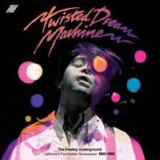
Futurismo proudly present a celebration of the Paisley Underground scene with TWISTED DREAM MACHINE The Paisley Underground / California’s Psychedelic Renaissance: 1982-1986, the next volume in their Altered Vision compilation series.
This collection draws from the neo psychedelic movement that took hold in California during the early to mid 80’s, one that melded the psychedelia, country, garage rock, avant-garde and pop of the 60’s with the DIY ethos of the then burgeoning punk scene, a hypnotic amalgamation of sound that came in staunch contrast to the blown out sonic excesses of the time.
Twisted Dream Machine takes you on a trip from the city to the desert, as the kaleidoscope of noise drifts from the The Dream Syndicate’s Velvet Underground inspired take on Crazy Horse and The Three O’Clock’s chiming baroque powerpop, to Rain Parade’s dreamy Beatlesesque melodies and the Bangles hook-laden Love inspired pop. Also featured are the wondrous sounds of Green On Red, The Long Ryder’s, Game Theory, True West, Thin White Rope and others highly worth your attention. If you are not familiar with some of the bands here, you will surely question how that is possible. The Paisley Underground, if anything, encapsulated a certain musical mindset, an outlook where the past and the future would collide in the moment. This thread would bond the bands, yet each honed it’s own sound in a twisted incarnation of the seeds planted two decades earlier. Whilst the ‘scene’ did remain contained, its influence did in fact spread throughout mainstream culture as the Bangles stuck a chord into the heart of MTV, whilst Prince took inspiration from the movement in his own songwriting and the naming of Paisley Park, as well as signing The Three O’Clock to his label and writing one of the Bangles biggest hits.
As you listen to the tracks on Twisted Dream Machine you will be reminded that there is still music left to discover and inspire, this compilation is aimed to hopefully delight longtime fans, as well as ignite a passion for those new to the bands. The Paisley Underground was the sound of neo psychedelic rock, it was subterranean pop...in
the classic sense, it was alternative rock before the term existed, a distillation of the fundamentals present at the dawn of rock ‘n’ roll, with a twist. The bands of the Paisley Underground may have been writing out of their own time, but as you listen to them in today’s context these songs should be heard as landmarks, rather than throwbacks. After all, nothing this good should stay underground. This 2xLP comes on limited edition coloured vinyl, it is housed in a gloss laminated outer sleeve with colour inner sleeves and contains a large fold-out poster with unseen photos and liner notes by Lisa Fancher of Frontier. Also available on CD with Gloss laminated Sleeve and Fold Out Poster.
Jade Hairpins waste no time fulfilling their second album's titular demand. From its harmony-drenched opening note to its baroque-anthemic conclusion, Get Me the Good Stuff is positively loaded with musical ideas, an absurdist buffet of sound and aesthetic that comes with one hell of a floorshow as the Hairpins stack those ideas higher and higher, almost daring them to crash to the floor. Instead, those elements - punksploitation, power pop, baggy, funk, and Italo disco are just some touchstones - are not only held aloft, they defy gravity and convention. These pyrotechnics are, in true Jade Hairpins fashion, something of a sleight of hand. While the music swaggers and gallops, Get Me the Good Stuff grapples with anxiety and self-doubt, obfuscating pain and alienation with sparkling wit and some straight-up ravers. Get Me the Good Stuff opens with one of those, "Let It Be Me," in which Jonah Falco shouts lyrics about being alone with one's shortcomings against guitars, synths, and harmonized vocals that are on the verge of closing in. The song is just over 90 seconds long, hitting with the gnarled-barb ferocity of punk and the gleeful insanity of theatrical art rock. It is, in other words, overwhelming. Or it would be if Jade Hairpins - Jonah Falco and Mike Haliechuk - weren't remarkably nimble in their ability to bring unity to sounds by placing them in competition against each other. When those sounds are adjacent, like the glam and disco that saturate "Drifting Superstition," the thrill of those universes colliding in the heat of an absolutely filthy clavichord line turns its lyrics, about the habit of solving personal problems by ignoring them, into a winner's anthem on the order of Bowie or Hot Chocolate. Get Me the Good Stuff arcs towards unequivocal joy as Falco, Jade Hairpins' primary lyricist, breaks these cycles and attempts to run away with his dreams. The arc is roughly analogous to how the album came to fruition. Four years removed from Harmony Avenue, an album of material that proved too strong to be contained within the narrative universe of Fucked Up's Dose Your Dreams, Jade Hairpins have gelled as a live act - with Tamsin M. Leach and Jack Goldstein centering them on stage - and planted their flag in the UK punk scene in which Falco has embedded himself. Working out new material live, Falco noticed that crowds were digging into his unfinished lyrics, and the album tightened around the anxieties of being in the spotlight, of being worthy of attention. At times, those songs are eager to please, like the album's title track in which a winking self-deprecation rubs up against the self-congratulatory bombast of Freddie Mercury, Falco simultaneously turning heads as a shooting star and a burning car. Elsewhere, as in "Better Here Than in Love," Jade Hairpins pitch themselves towards creating gorgeous soundscapes that exist nowhere else, channeling postpunk through the glimmering haze of '80s Japanese electronic music. Theatrical and personal, absurd and true-to-life, playful and serious, Get Me the Good Stuff is album of tremendous personal and artistic growth that signposts towards dozens of potential futures to come. It's not only worth the attention, it continuously rewards it.
Jade Hairpins waste no time fulfilling their second album's titular demand. From its harmony-drenched opening note to its baroque-anthemic conclusion, Get Me the Good Stuff is positively loaded with musical ideas, an absurdist buffet of sound and aesthetic that comes with one hell of a floorshow as the Hairpins stack those ideas higher and higher, almost daring them to crash to the floor. Instead, those elements_punksploitation, power pop, baggy, funk, and Italo disco are just some touchstones_are not only held aloft, they defy gravity and convention. These pyrotechnics are, in true Jade Hairpins fashion, something of a sleight of hand. While the music swaggers and gallops, Get Me the Good Stuff grapples with anxiety and self-doubt, obfuscating pain and alienation with sparkling wit and some straight-up ravers. Get Me the Good Stuff opens with one of those, "Let It Be Me," in which Jonah Falco shouts lyrics about being alone with one's shortcomings against guitars, synths, and harmonized vocals that are on the verge of closing in. The song is just over 90 seconds long, hitting with the gnarled-barb ferocity of punk and the gleeful insanity of theatrical art rock. It is, in other words, overwhelming. Or it would be if Jade Hairpins_Jonah Falco and Mike Haliechuk_weren't remarkably nimble in their ability to bring unity to sounds by placing them in competition against each other. When those sounds are adjacent, like the glam and disco that saturate "Drifting Superstition," the thrill of those universes colliding in the heat of an absolutely filthy clavichord line turns its lyrics, about the habit of solving personal problems by ignoring them, into a winner's anthem on the order of Bowie or Hot Chocolate. Get Me the Good Stuff arcs towards unequivocal joy as Falco, Jade Hairpins' primary lyricist, breaks these cycles and attempts to run away with his dreams. The arc is roughly analogous to how the album came to fruition. Four years removed from Harmony Avenue, an album of material that proved too strong to be contained within the narrative universe of Fucked Up's Dose Your Dreams, Jade Hairpins have gelled as a live act_with Tamsin M. Leach and Jack Goldstein centering them on stage_and planted their flag in the UK punk scene in which Falco has embedded himself. Working out new material live, Falco noticed that crowds were digging into his unfinished lyrics, and the album tightened around the anxieties of being in the spotlight, of being worthy of attention. At times, those songs are eager to please, like the album's title track in which a winking self-deprecation rubs up against the self-congratulatory bombast of Freddie Mercury, Falco simultaneously turning heads as a shooting star and a burning car. Elsewhere, as in "Better Here Than in Love," Jade Hairpins pitch themselves towards creating gorgeous soundscapes that exist nowhere else, channeling postpunk through the glimmering haze of '80s Japanese electronic music. Theatrical and personal, absurd and true-to-life, playful and serious, Get Me the Good Stuff is album of tremendous personal and artistic growth that signposts towards dozens of potential futures to come. It's not only worth the attention, it continuously rewards it.
The Heads’ Simon Price returns to his kandodo project with 'theendisinpsych'; "primitive pieces of psychedelic tuneage+years of wasted time=43 minutes of headphone bliss." It's the follow up to the 2019 collaboration with Wayne Maskell and Hugo Morgan, Kandodo 3 – K3, but this time back in solo-mode. He is now relocated in Northumbria, and has recorded the album himself in his home studio, drawing on his wide collection of music/instruments and the rural environment for inspiration. The new album fizzes and crackles with a verve that will activate the “turn on, tune in, drop out” sense in all listeners… Simon explained the album in a focused/out of focus track by track way… is this Price’s paean to his obsession with Bowie? chamba7 - octave mandolin through fuzz, tambo beat, in praise of Bowie compilations. chamba is malawian weed theendisinpsych - bought a reel to reel tape off ebay in 2005, ('Bowie radio interview tape, USA, 1970, 3 minutes?') then bought a machine to play it on in 2015. Heard the words and laid them onto a fuzzy break bed. Thought it all too relevant to today, prophetic David from his 'hippy' days (not a prophet or a stone age man) fuzzy oceans - played on 1 string spamjo, bouncing echo over 70's drum machine, 'we've fucked the oceans' freefalling - rolling cello and hissing cymbals with vocoder dreams comes with african/stationtostation artwork stylings for the sleeve..pre-apocalypse blues (and pinks), the world isn't going a good way a sumptuous 4 course sonic supper, tuck in.
US-Band Foxing überschreitet gerne Grenzen und vermischt Indie-Rock mit Emo- und Elektronik-Elementen. Auf ihrem fünften, selbstbetitelten Studioalbum geht sie einen Schritt weiter und liefert schwerfälligen Experimentalismus mit Hardcore-Momenten und einer neuen inhaltlichen Tiefe ab, die man so vorher noch nie gehört hat. "Foxing" balanciert Hoffnung und Nihilismus, Pastorales und Tumultartiges aus. Ob die Tracks zwischen viszeralem Rocklärm und intimen Schlafzimmerkassettenexperimenten oszillieren oder am Rande des Zusammenbruchs kreuzen, die dramatische Dynamik, die Foxings Musik seit langem durchdringt, hat sich noch nie so extrem angefühlt. Die LP wurde vollständig von der Band selbst produziert und von Gitarrist Eric Hudson gemischt.
DJ Support: Craig Smith (Yoruba Affil), Hot Toddy, Timo Garcia / Nolan, Severino - Horse Meat Disco, Bill Brewster, Groove Assassin, Lars Behrenroth, Emma Ryalls, Dj Pope, Ian Friday, DJ Moni, Mathieu Schreyer, Henri Kohn, Jonny Alexander, Sebastian Davidson, Jason Pulaski, Hippie Torrales, Robert, Superfly FM, Makossa, and DJ Harri
Riot records return with the next installment of their Balearic Headspace compilation here we have a sampler featuring some of the biggest tracks.
Rain and experimental music have had an interesting connection for decades. Under the umbrella of American film music promotion, Hanns Eisler was already looking for "Vierzehn Arten, den Regen zu beschreiben” (fourteen ways to describe the rain) in 1941. A good 20 years later, The Cascades interpreted the periodicity of rain as a rhythm of mourning. For the Beatles ("If the rain falls, they run and hide their heads"), the precipitation inspired the band to use backward running tapes. However, it seems that there has always been a lot of rainfall in popular music. In the early seventies, David Toop and Paul Burwell even had a band project with the great name Rain In The Face...
That was a long time ago and today, rain, which in the age of climate catastrophe mainly occurs as heavy rain or an enervating endless loop, has lost a great deal of its inspiring quality. Perhaps as a reminder of the musical quality of rain, but knowing full well that it can only be enjoyed in theory, Razen call their new album "Rain Without Rain". In the music of the Brussels collective led by the two multi-instrumentalists Brecht Ameel and Kim Delcour, it certainly pours down on the roofs. In fact, the album opens with the sound of pouring rain before we hear the sequence of an oscillator played through a guitar amp on the first track „Lazy, Lazy Eye“.
The album is the captivating result of an one-night mobile studio field recording in an abandoned pedestrian tunnel in the centre of Düsseldorf, and it is finding beauty with brutal(ist) means: recorder, oscillator, guitar amp and reverberation, two musicians and four microphones, early electronics versus Early Music. “Suicide meet Hildegard von Bingen”, as Stefan Schneider, who recorded the session, admits. “Ghostly occurrences”, he adds.
Brecht Ameel states: “We do put a lot of weight and care on acoustics. On some of our recordings, the room acts as another band member, or as the main ‘mixing board’. Most of the albums we have recorded so far are not mixed in the traditional sense: they are simply „captured”, and we let the room decide what is left on the tapes. The studio recordings, then, give us the possibility of bringing other elements to the fore; precision of interplay, or tiny variations in breathing.”
The group Razen exists since 2010 and has since released numerous records on labels such as KRAAK, Marionette and Hands In The Dark. "Rain Without Rain" is their debut on the Düsseldorf label TAL. If there has been an increased international interest in experimental music from Belgium in recent years, this is not least due to musician collectives such as Razen. In terms of its electro-folkloristic intensity and instrumentation, Razen's music is quite unique worldwide. What does Razen actually mean? “We took the word from a poem by Paul Van Ostaijen, not specifically because of its meaning but because of the way it looked on paper”, Ameel explains. “But the meaning goes in the direction of ‘thundering / raging / speeding’ … although we prefer playing with a strong notion of restraint, building our world from (and with) silence.”
Olaf Karnik, Köln 2024
Futurismo präsentiert das nie erschienene Album der New Wave-Band Strange Party, einer stylischen Truppe exzentrischer Künstler, die 1980 in New Yorker Clubs eine neue Art von Performance-Art-Pop-Extravaganz erschufen. Von der Presse als 'beste Partyband in New York' gefeiert, gehörten Mitglieder auch zur Liveband von Downtown-Legende Klaus Nomi (hier mit einem Gastfeature). Strange Partys Spektrum aus Jazz, Funk, Disco, Latin und Punk wurde als Dada-Disco beschrieben und hatte einen immensen Einfluss auf andere Musiker (z.B. Talking Heads), ihre Faszination beruhte auf der Leftfield-Ästhetik ihrer visuellen Themen. "Sleepwalking Through Life", benannt nach der gleichnamigen 7"-Single, ihrem einzigen offiziellen Release, ist eine Momentaufnahme einer Zeit in New York, als Kunst, Musik, Mode und Clubleben eine integrative Einheit bildeten.
'Good Time' is the debut album from Austin, TX noise-pop band DAIISTAR, due out September 8th via Fuzz Club. Creating a narcotic blend of noise and melody, the band takes their inspiration from the neo-psychedelic era of the 80s and 90s and pull it into the future with modulating synthesisers, heavy guitars, bouncing bass lines, and spiralling hooks. 'Good Time' was produced by The Black Angels' Alex Maas and engineered by James Petralli of White Denim. Made up of Alex Capistran (guitar/vocals), Nick Cornetti (drums), Misti Hamrick (bass) and Derek Strahan (keys), DAIISTAR formed in the spring of 2020, just weeks before the pandemic started. "To us, these songs were a glimmer of light", Capistran says: "Starting a band at the peak of the pandemic to some might seem ill-timed, but to us it was a way to escape for a moment. There was something to look forward to and we kept our heads in the future. These songs guided us through some dark times and hopefully they can do the same for you. GOOD TIME is here." Pressing info for LP: 180g neon orange vinyl, printed inner-sleeve, download card included
Belarusian post-punk / synth pop group Molchat Doma have always exuded the kind of brutalist aesthetic of the architecture that adorns their album art. It's cold, gray, imposing, industrial and yet there are human hearts beating within those foundations. In the wake of their breakthrough success in 2020, the trio endured a polarity of experiences, from the nadir of an uprooted life and forced relocation away from their native Minsk to the apex of headlining massive shows across the world. It was in this headspace that the band settled into their new home of Los Angeles to finish writing their fourth album Belaya Polosa, a testament to change in difficult times, a love letter to the digital pulse of the `90s, and a technicolor reinvention of the band's somber dancefloor anthems. From the opening synth swell and drum machine throb of "Ty Zhe Ne Znaesh' Kto Ya," to the goth / post-punk austerity of "Son", to the swirling electronic textures mixed with reverb-drenched guitar flourishes, expansive space, and yearning vocals of title track "Belaya Polosa" - that suggests Depeche Mode at their most reflective or The Cure at their most downtrodden - to the sultry and seductive "Chernye Cvety"_ a track reminiscent of Duran Duran's early `90s output in its fusion of dreamy guitars and authoritative mechanized beats _ and the interwoven layers of instrumentation, soaring chorus, and melodic sophistication of "Ya Tak Ustal", it's clear that Molchat Doma are operating on another level. Molchat Doma gained following with earlier albums that sound like third-generation bootlegs of banned recordings from the Eastern Bloc made after a few key entries in the Factory Records catalog were smuggled in from the West. Belaya Polosa propels them into a new direction while retaining their cold minimalist delivery they're known for. The basement grime and dirty tape-head sound of their previous work are now making space for digital luster and shimmering production values. And while Molchat Doma's broadened aural spectrum adds a synesthetic power to Belaya Polosa, the mood remains rooted in stark and unflinching self-reflection. Molchat Doma retain the duality of being both cold and feverish in their delivery while pushing their music into expanded territories through an armory of new textures. The trio continue to harness the sound of harrowing beauty thriving under harsh realities.
Repress of Still House Plants’ second LP FAST EDIT on frosted clear vinyl with microtene inners. Cultivated over the course of 2019, the album switches the combativeness of previous releases for bare intimacy. FAST EDIT is a palette of qualities and curdled headspaces. Now living far apart and coming together only for intense periods of shows and touring, the band have come to rely on an archive of mp3s (quick recall overtakes stable long-term memory). Written on mobile phones, dictaphones, and laptops, FAST EDIT cuts rehearsals and schemas with tight, raucous tracks. This is most tenderly at play on ‘Shy Song’ – a cut'n’chase piece, in which all sounds are ghosts of another. ‘PredikateD’ is a phone on the ground: the voice is air, the guitar and drums meld with the plywood and sand-bag structure, the seams exposed.
The true test of originality for any musician comes when you hear an instrument being played and you instantly know who’s playing it. For electric guitarists, certainly Hendrix qualifies; Page and Clapton, too. Maybe Eddie Van Halen before the legion of imitators. You probably have your own list, but to us, standing toe-to-toe (or pick-to-pick) with those legends is Television guitarist and solo artist Tom Verlaine. His self-taught, jazz-influenced style, largely devoid of effects, and vibrato tone (oh, that tone!) makes any Verlaine solo unmistakably a Verlaine solo. That he was quite an accomplished, idiosyncratic songwriter is just a bonus. Real Gone Music is very, very proud to announce that we have arranged with the Verlaine estate to release Tom’s last three solo albums on LP; Songs and Other Things was the last record he released, in the same year (2006) as the all-instrumental Around. As the title indicates, this was indeed a return to lyrics and vocals, the first record with “songs” since 1990’s The Wonder (although the first track, “A Parade in Littleton”—one of the “Other Things”—is a low-key, funky instrumental that would have been home on a late Talking Heads album). The time off clearly allowed Verlaine to build up a strong cache of compositions, with “Nice Actress” and “The Earth Is in the Sky” among the highlights. The record also marks a welcome return of Verlaine’s enigmatic lyrics, which as always prompt head scratching while somehow making intuitive sense. But in the end, it’s the amazing guitar work—ably supported by Fred Smith of Television fame and Jay Dee Daugherty of The Patti Smith Group among others—that elevates Songs and Other Things to essential status, worthy of its exalted position as the final release of Tom Verlaine’s career. Bassist and original engineer Patrick Derivaz has mastered the album for its vinyl debut; Verlaine’s long-time partner Jutta Koether contributes notes. Teal vinyl pressing!
- Lovefingers
- Headshot
- Execution
- Rocket Usa
- Flashback
- Refugees
- Lost
- Aftermath
- Twilight Zone
- Address
- Camp
- Body Pit
- Breakers Roar
- Moving Out
- Dream Baby Dream
Original Score for A24's CIVIL WAR by Ben Salisbury and Geoff Barrow. Featuring selected needle drops from the film, including original songs by Suicide, Silver Apples and Sturgill Simpson. Pressed on neon green vinyl.
2024 Repress
Alleviated Records presents the first-time vinyl reissue of Larry Heard's mid-90's gem ''Sceneries Not Songs, Volume 1''. The album stems from a time when the tempo slowed down and Heard reached a perfect synthesis of jazz influences, deep electronic ambiance and the house sound he was known for. The result is a brilliant album that should cater to both house and R&B heads alike. Now for the first time released as a 2x12''
Mindgames' commitment to capturing the essence of golden era Jungle while infusing it with updated production techniques perfectly complements ASC's approach. On these two EP’s, ASC bridges the expansive soundscapes of his Spatial releases and the raw dynamism of his 2020 jungle trilogy for Samurai Music.
From the heads down launchpad of Shadow Of The Beast, to the deep stepping glide of Phaaze, and onto the epic scapes of Cells Interlinked, ASC writes a sonic manifesto of his mastery of deep jungle. Snowblind is a reverent nod to Photek’s fascination with space jazz, while Flux is a floating groove that snakes itself around one of the most infectious b lines you will hear anywhere.
Seven timeless entries in the Jungle story book that embody the spirit of the 90s while reshaping it’s framework into entrancing new forms.