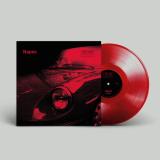
Venus Flux is a new four-track EP by Lord Of The Isles on Amsterdam’s Far Blue label. The record opens with Mushroom Talk, a beatless ambient piece built from slow-moving analog tones, inspired by the honesty of altered states. Two live-improvised dub techno tracks, Betuladub and Pedaldub, form the core of the EP, shaped by intuition and in-the-moment connection rather than fixed arrangements. The closing track, Venus Flux, is an electro piece that feels reflective and unresolved.
Buscar:v i p connection
7 Inch Vinyl in Picture Sleeve
Two cross-cultural jazz treasures from the late ‘50s, reissued together for the first time. Lonnie Sattin’s deep, percussive takes on Duke Ellington’s “Caravan” and the Middle Eastern melodies of “Uska Dara” prefigure the global jazz movement by decades. Remastered and pressed on 45rpm vinyl, this PANORAMA release highlights the spirit of exploration and connection that the label is famous for and Record Store Day celebrates — a stunning bridge between swing, world rhythm, and jazz adventure. Remastered and Redesigned labels and sleeve, First time on 45.
Deeply rooted in Japanese culture, Tanoshii Crew returns with an extraordinary new musical connection from Yamato, released through Tanoshii Records. In the summer of ’24, the label made its debut with the City Pop 1994 EP by Rukatama — marking Tama-chan’s very first vinyl release outside Japan. Now, the Italian collective presents something truly distinctive: a carefully curated vinyl compilation celebrating a wide spectrum of musical styles, designed to delight devoted record collectors and adventurous listeners alike — perfectly embodied by the Japanese word Tanoshikatta (“it was fun” / “a joyful experience”).
- 1: Going Out
- 2: Confession
- 3: Drip Drop
- 4: Under The Covers
- 5: Nighttime
- 6: On The Ward
- 7: Blue Skies
- 8: I Go Back
- 9: Off The Beaten Track
- 10: Alone With You
- 11: Gave You Up
- 12: Staying In
‘Confession' is an album of quiet upheaval. An album about closeness that arrives late and unexpectedly. About stability rubbing up against desire. About the way friendship can suddenly tilt into something charged — and how that charge unsettles everything around it. Where earlier work often observed from a distance, Confession turns inward. The voice is closer, warmer, less shielded. “This wasn’t the album I intended to make,” says Carla dal Forno. “I originally wanted something veiled and abstract, but I realised I couldn’t hide behind abstraction — the songs only worked when I leaned into emotional truth.”
This is dal Forno’s fourth LP, written and recorded over several years in a small country town, in a studio housed inside a partially abandoned hospital. Long corridors, humming lights, emptied rooms — a place built for care and waiting, now quiet enough for thoughts to echo. That stillness shapes the record: intimate, watchful, unadorned. “I live in a small country town that offers a stillness my life didn’t previously have,” she explains. “In that quiet, feelings I might’ve ignored in a busy city grew loud.” Dal Forno sings plainly and conversationally, with an emotional precision that sharpens the everyday into something quietly unsettling.
The album moves through paired states: going out and staying in, wanting and withholding, devotion and distraction. Domestic calm set against private unrest. A long-held relationship offers safety and routine, while a newer connection opens emotional fault lines — longing, jealousy, fantasy, self-exposure. “At the heart of the album is a friendship that became emotionally charged in an unexpected way,” dal Forno says. “That shift brought daydreaming, jealousy, tenderness, confusion, self-awareness — and eventually acceptance.”
The drama here is internal, incremental, lived. Musically, Confession feels lighter on its feet than its subject matter suggests. Melodic basslines anchor the songs while guitars, harmonies, and gently off-kilter rhythms move around them. There’s a looseness, even a playfulness — “like the sensation of tension lifting once you finally admit something to yourself,” as dal Forno puts it. The album traces a subtle arc: attraction blooming where it shouldn’t; obsession quietly taking hold; fantasy overtaking reality; clarity arriving slowly, sometimes painfully. Visually and emotionally, Confession returns to modest spaces: backyards, beds, night streets, overgrown paths. “The record exists in that contrast,” dal Forno reflects. “Peaceful surroundings, unsettled interior.”
Like all of dal Forno’s work, Confession resists clean conclusions. It doesn’t moralise desire or romanticise restraint. Instead, it lingers in the in-between — where love is stable but not total, where yearning teaches as much as it hurts, where solitude becomes a form of care. Plain-spoken but emotionally complex. Rooted and restless. Held together by bass, breath, routine, weather. An album about admitting what you feel —and living with what that admission changes.
- 1: Six Figurines
- 2: Assassination Tapes
- 3: How To Disinfect A Live Grenade
- 4: Chemo Crystal Ball
- 5: Saltwater Tantrums
- 6: Night Terrors
- 7: Recognition
- 8: Diagnosis
- 9: Crayola Circles Of Creativity
- 10: Anger
- 11: Chinese Sunrise
- 12: Kwaidan Snowstorm
- 13: Leon Ichaso
- 14: Willow Trees
- 15: The Destitute Stashspot
TAPE[17,23 €]
Backwoodz Studioz is excited to announce the release of Crayola Circles, a collaboration between rapper Fatboi Sharif and producer Child Actor. While both artists have long standing connections to Backwoodz, this album marks their first collaboration of any kind and breaks new artistic ground for all parties.
Sharif’s previous album, Decay, released on Backwoodz in 2023, was a haunting experimental rap masterpiece, an acid trip in a mental hospital. On Crayola Circles Sharif trades menacing psychedelia for a simmering stew of blacklight expressionism, his verses slipping effortlessly through the swells and tides of Child Actor’s masterful production. No matter how uneasy the waves grow, Sharif is at ease, a truth teller whispering anti-riddles in your ear. This album feels like a new chamber for Child Actor, as well. The producer has been on an impressive run since dropping CINE- a collaboration with rapper Cavalier- on Backwoodz in late 2024. Child Actor has shown up in the liner notes of everyone from Navy Blue (The Sword & The Soaring) to Earl Sweatshirt (Live, Laugh, Love) to ELUCID (Revelator) to Open Mike Eagle (Neighborhood Gods Unlimited), to Ghais Guevara (A Quest to Self-Mythologize), amongst others. On Crayola Circles Child Actor’s production is dynamic, shifting and sliding into new phases and movements in an instant. The beats are full and knotty, leaning into jazz and folk, while remaining tethered to the tender minimalism that is his signature. It’s a difficult balance for any producer, and here it is executed perfectly, placing us in a world of wood and brass, cowhide and undersea piano. On any other record, this soundscape would steal the show — and it very nearly does — but Sharif’s command never wavers, ever in control; a lucid dreamer in an induced coma.
There are no guests, no skits, and no interludes. There might not even be songs, instead Crayola Circles seems akin to a great river; singular, traversing forest and jungle, mountain and valley, running from mouth to endless sea.
Backwoodz Studioz is excited to announce the release of Crayola Circles, a collaboration between rapper Fatboi Sharif and producer Child Actor. While both artists have long standing connections to Backwoodz, this album marks their first collaboration of any kind and breaks new artistic ground for all parties.
Sharif’s previous album, Decay, released on Backwoodz in 2023, was a haunting experimental rap masterpiece, an acid trip in a mental hospital. On Crayola Circles Sharif trades menacing psychedelia for a simmering stew of blacklight expressionism, his verses slipping effortlessly through the swells and tides of Child Actor’s masterful production. No matter how uneasy the waves grow, Sharif is at ease, a truth teller whispering anti-riddles in your ear. This album feels like a new chamber for Child Actor, as well. The producer has been on an impressive run since dropping CINE- a collaboration with rapper Cavalier- on Backwoodz in late 2024. Child Actor has shown up in the liner notes of everyone from Navy Blue (The Sword & The Soaring) to Earl Sweatshirt (Live, Laugh, Love) to ELUCID (Revelator) to Open Mike Eagle (Neighborhood Gods Unlimited), to Ghais Guevara (A Quest to Self-Mythologize), amongst others. On Crayola Circles Child Actor’s production is dynamic, shifting and sliding into new phases and movements in an instant. The beats are full and knotty, leaning into jazz and folk, while remaining tethered to the tender minimalism that is his signature. It’s a difficult balance for any producer, and here it is executed perfectly, placing us in a world of wood and brass, cowhide and undersea piano. On any other record, this soundscape would steal the show — and it very nearly does — but Sharif’s command never wavers, ever in control; a lucid dreamer in an induced coma.
There are no guests, no skits, and no interludes. There might not even be songs, instead Crayola Circles seems akin to a great river; singular, traversing forest and jungle, mountain and valley, running from mouth to endless sea.
- A1: Me Pega
- A2: Tem Carnaval
- A3: Sexy Doce
- B1: Coeur
- B2: Então Tá Bem
- B3: Para Ser Feliz
- B4: Tô Nem Aí
Fresh from releasing projects on Method 808 and Future Classic, landing a huge collaboration with Chloé Caillet, and delivering an official remix for Fatboy Slim, PPJ are entering a new chapter in full force. Their expansive take on global street sounds, ranging from neoperreo to Miami bass, gets a cool re-coating.
Led by the magnetic vocalist Páula, with production from Povoa (individually supported by Four Tet, Ben UFO, and Barry Can't Swim, with recent releases on Live From Earth), the duo operates in maximalist mode: playful, sensual, and slightly unhinged.PPJ’s new era, JOKER, embraces a figure that appears everywhere from card decks to carnival culture as a symbol that mirrors their own DNA: funny, eerie, seductive, unpredictable. The EP leans further into club territory, but rather than polishing their edges, PPJ amplify them.
At the emotional core of the record sits “Coeur,” co-produced with Chloé Caillet. It begins with an MPB-tinged foundation flirting with bossa nova. It’s unmistakably Brazilian, bathed in sunset hues before being sped up and twisted into a dance-floor-ready electronic form. The groove shimmers with tension: warm percussion, elastic basslines, and Páula’s voice hovering between intimacy and tease. It feels like a remix of itself, romantic, but slightly untrustworthy.
If “Coeur” glows, “To Nem Ai” is a slow burner. A very deep and downtempo house cut, it unfolds slowly, almost luxuriously, guided by sensual vocals that feel whispered directly into the ear of the listener. A hypnotizing piano sample that feels like a late-night confession. It’s the kind of record that transforms a dancefloor into something tactile.
Elsewhere, “Me Pega” is a high-energy reinterpretation of the tech-house sounds from Santa Catarina, one of southern Brazil’s most feverish party states, twisted and accelerated for ferocious impact. Drawing direct inspiration from Sarro, a raw and vibrant Brazilian street dance, the track captures physical intensity in its purest form: sweat, bass pressure, collective release.
Its counterpart, “Tem Carnaval” channels Páula’s vivid storytelling into a thunderous ode to Rio’s carnival spirit, euphoric, chaotic, cinematic landed just in time for this year’s celebrations.
On “Sexy Doce,” rugged electroclash melodies collide with unexpected references. “It was inspired by Budots, which is dance music from the streets in the Philippines,” Povoa explains. “Then we mixed it with Páula’s Brazilian vocals. Baile funk is similarly from the streets, so there is a connection.” The result is raw yet futuristic, a cross-continental flirtation that feels both underground and explosive.
With this new EP, PPJ make music like they’re tuning into a dozen pirate frequencies at once. Pirate radio from Rio to Berlin to Manila intercepting fragments of street culture, sensuality, and chaos, and stitching them into something deliriously cohesive.
JOKER doesn’t just nod to club culture. It challenges it, twists expectation and leaves a lasting impression.
- 1: Requiem For Johan
- 2: In Distance Pavilion
- 3: You Get So Far Away
- 4: Breath Inside Your Breath
- 5: Through Nameless Air
- 6: Without Which Nothing
- 7: Traces Disappear
- 8: Like A Sadness We Get Used To
- 9: Nevertheless
- 10: Watching You Collapse
- 11: All Flesh Is Grass
Nevertheless, the latest album from Hammock, exists in a state of awakening. Across 11 ambient guitar string, and piano works, ethereal light crests and contrasts with darkness, giving shape to physical forms and feelings. Amidst sorrow and grief, melodic motifs and refrains echo from the past to reanimate dreams and faded memories. As Nevertheless asks questions of permanence and purpose, beauty takes shape in the intangible_the traceless connections that gave, and give, meaning. "Nevertheless has been one of those words that has outlasted my upbringing," says Hammock's Marc Byrd. "Being from the deep South, I most often heard it said or read at funeral services. It's meant to imply a type of sacred pause . . . a space of in between. Between the grief of being broken by the world and the impossibility of moving into a future that feels more like empty space and less like solid ground. This album is for a friend who lost a daughter and a son to addiction within a couple of years of each other. Requiem for Johan sets up the context for what is to follow throughout the rest of the album. . . a passage through the aftermath of devastation. Unfortunately, and fortunately, these seasons of loss are what we all share in common. Nevertheless . . . we limp on."
Death Is Not The End collaborate with Uzbek label Maqom Soul to deliver an LP counterpart to last year's mixtape of the same title, compiling specially picked & fully licensed individual belters from the ex-soviet studios of Central Asian republics between 1978 and 1989 - incl. Uzbek, Tajik, Kurdish & Uyghur artists pulling traditional folk motifs together with pop & rock and psych elements.
"These recordings do not form a smooth or coherent history. They feel more like a sequence of discoveries made at different moments and in different circumstances. Songs and instrumental pieces that once lived inside specific contexts radio broadcasts, philharmonic programs, touring routes now sit side by side, revealing hidden connections as well as clear fractures between them.
Nasiba Abdullaeva appears here as a voice from the end of an era. Trained within a conservatory system, she worked inside the format of the Soviet pop song while filling it with melodic logic that did not come from Moscow or Leningrad. Her voice is soft and sustained, shaped by Eastern melisma, and it never functions as decoration. Even in tightly structured songs there is a sense of resistance, an effort to preserve a musical language rooted in Uzbek tradition rather than fully adapted to an all Union standard.
The ensemble Sintez, later renamed Navo, represents a different path. Beginning as a student rock group, the band was gradually absorbed into the official VIA system with all its limitations and compromises. Yet it was precisely within those boundaries that Sintez and Navo developed a recognizable sound. Electric guitars and jazz rock harmonies do not overpower the folk material but remain in tension with it. Their recordings feel like negotiations between what the musicians wanted to play and what they were allowed to perform.
The Tajik ensemble Gulshan reflects an institutional approach carried to a high professional level. Formed under television and radio structures, the group treated folk material almost as a written score. Carefully constructed arrangements, close attention to orchestration, and restrained use of pop techniques define their sound. There is less spontaneity here, but a strong sense of discipline and structure, where national melody becomes part of a carefully controlled sonic framework.
Koma Wetan occupies a very different space. Formed in the 1970s, this Kurdish rock group approached poetry and folklore as tools of cultural assertion. Their psychedelic rock never feels like a stylistic borrowing. Instead it functions as a contemporary vessel for language and themes that might otherwise have remained unheard. Even today these recordings sound fragile and stubborn at the same time.
The Uyghur ensemble Yashlik, closely connected to a musical drama theatre, operated somewhere between stage performance and popular music. Their songs are built on folk melodies but shaped for wide audiences. What emerges is a constant attempt to preserve the recognizability of Uyghur musical identity without freezing it in a folkloric frame. Yashlik's music exists in a state of balance between representation and development.
Digging Central Asia does not attempt to establish hierarchies or offer a single wayof listening. Names and dates matter less than the sound itself. Tape noise, abrupt transitions, and unexpected timbres remain part of the material rather than flaws to be corrected. This music existed at the crossroads of multiple routes geographic, cultural, and ideological. Heard today in a new context, it no longer feels peripheral. Instead it stands as a reminder that the history of popular music is far more fragmented, layered, and polyphonic than it is usually allowed to be."
SUNANDBASS Recordings proudly presents its next release, welcoming rising artist Napes with a brand new single: Hit The Corner / Clamber. This release marks the exciting introduction of a new artist joining the SUNANDBASS Recordings roster, signalling a bright future for both the label and its evolving sound. With previous releases on Shall Not Fade and Alix Perez’s 1985 Music, Napes is a promising name within the modern jungle scene. This release is a clear statement of his pushing boundaries combining grime influences and old school jungle, giving us his fresh sounds and melody-led drum and bass music, reaching new horizons while staying rooted in foundations. On the A-side, Hit The Corner showcases acid-tinged synths that meet a UK grime edge, driven by energetic beats and rolling breaks. In 6:20, Napes lets us travel through all the facets of a SUNANDBASS Recordings journey, with his ever-changing arrangement that evolves from heavy, club-focused energy into a euphoric jungle-inspired middle section, before concluding with driving arpeggiated synths. On the B-side, Clamber offers a deep, darker contrast. Between the atmospheric strings set intro which is dropping into a heavy, bass-driven groove, easily imagined shaking the dancefloor during an Ambra Night indoor session. The track reveals a more introspective side of Napes, blending refined sound selection with classic, weighty basslines built for the dancefloor. We’re honoured to welcome Napes to the SUNANDBASS Recordings family, an artist whose sound reflects our love for all corners of the genre while paying homage to the music that brings us together in Sardinia year after year. SUNANDBASS Recordings continues to push the boundaries of drum & bass, fostering connection through music that transcends borders, unites listeners, and celebrates rhythm, movement, and culture.
Akio Nagase joins Especial with an EP of global acid tracks. Centred around his heritage, Osaka based Nagase infuses his sounds with a mixture of dub and ethno-dance, wrapped in 303 infused mid-tempo 4/4 grooves.
Making music for over 20 years, as well as running his Makedub parties, Nagase has released for Sound Channel, Darker Than Wax and cult Japanese digital label Chillmountain. It is here, on the latter, that the connection was made and his tracks unearthed.
Rearranged, re-edited and remixed especially for vinyl, Jurassic Shanghai Acid starts, fusing sound effects, dialogue and samples atop squelching acid beats. Following is Mongol 303, as Khoomii throat singing and acid vibrations loop and flow across the Altai Mountains down to Steppe Plains - Madrugada Eterna.
Okinawa Yunta crosses the South China Sea to home, perfectly mixing unique folk song from Taketomi Island reconstructed with Nagase's gentle, wiggling acid accompaniment. The incessant repetitive groove an Acid mantra, flowing through consciousness to move mind and body.
The bpm's rise for the close. Saigon Acid mixes tradition and Acid House for fun, a 3AM basement jam where Dan Nhi meets 808 and Nagase presents his ethno-acid love in.
Fresh atmospheric DnB release from Neuralfold & Sawteeth of Jungle Fatigue Kru. A1. Neuralfold - Artificial A2. Sawteeth - Traffic Jam B1. Neuralfold - Neural Shouts: Pizza Hotline, Jungle Fatigue Kru(special shoutout to Damolii), More Breaks, Visla FM, Tribal Connection JP, Tim Reaper, Planet Turbo, Mindspray, Sambo Records, Kniteforce Records, Dive Records & Clique Records
From the subterranean grooves of deep techno to the cosmic pulse of electro and IDM, Deep Space Protocol sees Japanese legend DJ Compufunk navigate a vast sonic universe with precision and feeling. A veteran of Osaka’s celebrated Compufunk Records scene — where he’s sold and spun cuts for nearly three decades — Compufunk seamlessly weaves together influences that span Detroit-infused machine rhythms, hypnotic electro textures, and the thoughtful intricacies of left-field IDM.
Pressed as a limited vinyl release, Deep Space Protocol feels like both a nod to classic techno lineage and a forward-thinking exploration of sound — perfect for listeners who cherish the raw pulse of the dancefloor as much as the cerebral depths of an immersive listening session. With roots that include releases on Detroit’s Motech and connections to Underground Resistance figures, this is an album that bridges cultures and decades while leaving plenty of room for the future.
- 1: Pass Between Houses
- 2: Theatre For Change
- 3: Real Home
- 4: Treat Me A Stranger
- 5: Utopia Of Bog
- 6: Void Attentive
- 7: My Love, Let's Take The Stage Tonight
- 8: The Kiss
- 9: He Had Always Led
Cathartic avant-rock, literate DIY folk & experimental composition exploring displacement, love, climate change, belonging & the places we call home - RIYL Jim O’Rourke, Richard Youngs, This Heat, Richard Dawson, Flying Nun. ‘Real Home’ is the new album by the Manchester-born, London-based artist Kiran Leonard. His sixth album proper (not including innumerable tour-only CD-Rs and short-run cassettes), since his precocious debut in 2013, ‘Real Home’ finds Leonard invigorated by inspiration and experience, making passionate, literate, and mercurial music that explores displacement, love, memory, climate change, connections to home and more. Encompassing songs recorded after moving to South London, ‘Real Home’ reflects on ideas of belonging and domesticity through folkloric, stream-of-consciousness songwriting. Across nine tracks, Leonard traces lived impressions of the household and the city, expressing sentiments of dislocation, alienation and stasis, but contentment too. Infusing the avant-rock effervescence, terraced dynamics and visionary lyricism of his music with what he defines as a greater sense of openness, Leonard is as versatile, fervent and imaginative as ever on ‘Real Home’, yet his music is somehow more intimate, affecting, and acutely expressive. Shaped by dual considerations of simplicity and formalism, ‘Real Home’ is by turns beautiful, allusive, and ruminative, an album on which Leonard considers what his songs have resembled in the past and what they mean now. In recent years, Leonard has crafted eloquent chamber music inspired by the likes of James Joyce and Clarice Lispector (‘Derevaun Seraun’), responded to contemporary politics and communication breakdown in the digital age (‘Western Culture’), and compiled solo works and ensemble recordings for a longform ode to Jonas Mekas and to one of Leonard’s enduring themes; home (‘Trespass On Foot’). On ‘Real Home’, Leonard reiterates this abiding thematic focus yet ascends to new, different heights, in music of cathartic delicacy and dissonance where all the myriad dimensions of his work to date seem to crystallize. There are sinuous songs about struggle and defying the pace of city life through drift and diversion (‘Pass Between Houses’), stirring songs of intense feeling and crescendo, described as a form of speculative detective fiction (‘Theatre for Change’). There are touching solo piano ballads (the title track), symbolic contentions with carbon capture and climate change (‘Utopia of Bog’), modes of experimental minimalism (‘Void Attentive’), and other profuse feats of compositional range, embroidered with wild tendrils of narrative and lyrical depth. A record to pore over, and get lost in. Exemplifying the vast aesthetic scope of Leonard’s music, lead single ‘My Love, Let’s Take The Stage Tonight’ is inspired by country lodestar Hank Williams, Russian poetry and a late period love poem by William Carlos Williams. Yet for Leonard, the song signals a sense of accessible materiality, and is the product of a more linear approach to writing songs: “My imitation of the great Hank Williams, in spirit if not in substance…This is one of the best efforts on Real Home at a song-as-object. Looking at it now I realise I was trying to write a song that made itself known as a song to the listener, and I wonder whether that’s crucial if you want a song to transcend its context. And that this is either accomplished through a total openness – by being inviting, by laying the tricks of the song out plain to see, as Williams and his many ghostwriters did so well – or by adopting a knowing aloofness, positioning oneself against the listener but letting it be known that that’s what it’s doing. In this song I try both, but mostly the former: as in, I wanted to write a song where every line follows on from the next.” Imbuing the endlessly elaborate and inventive qualities of his music with a newfound streak of candid, clear-cut melodicism, Leonard has reached a special place in his artistry, on a record that feels familial, and expresses closeness. Assembled with affiliates including Lauren Auder, Otto Willberg, Jasper Llewellyn (caroline), Tom Hardwick-Allan (Shovel Dance Collective), Magda McLean (caroline, The Umlauts), Alex Mckenzie (caroline, Shovel Dance Collective), Isabelle Thorn (Dear Laika) & more, the recording process had a significant influence on the subject matter of ‘Real Home’, in sessions defined by close-knit camaraderie and artistic eccentricity: “The theme of the home obviously recurs throughout the record; the album was mostly recorded in domestic spaces with friends, and the name of the album is Real Home. I like the qualifier ‘real’, like you’re getting past the cloak of the word and towards the thing-itself…also nearly all the percussion in this record was recorded on items from my dad’s shed (jam jars, sandpaper, blocks of wood, etc). Real home record!” ‘Real Home’, like anything by Kiran Leonard, is a record of dazzling multiplicity. Yet it’s a companionable prospect with a central premise; a collection of songs where listeners old and new can find a home. An album led by a scene; of Leonard standing at the threshold, ready to welcome you inside. “Exceptional songs that linger” - The Guardian // “An autodidact of amazing talent & energy” – Pitchfork // “A ridiculous amount of talent…confrontational, celebratory, provocative or perverse – he manages all of these emotions & more” - The Quietus /
- 1: Outside Or The Eastside
- 2: Don't Take Advantage Of Me
- 3: Kiss You All Over
- 4: Downtown At Midnight
- 5: Grand Avenue
- 6: Too Broke To Spend The Night
- 7: Just Like I Treat You
- 8: Don't Bother Me
- 9: Do I Move You
- 10: Close To You
- 11: The Blues Lover
A personal record for Mike shaped by memory, places, and renewal. Walking the streets of his birthplace, St. Louis, Zito reconnects with the sounds, stories, and hard lessons that forged his signature blend of soul-driven blues and fearless storytelling. Thirteen years after Gone to Texas, this album feels like a defining moment, marking a new chapter for Mike, his family, and a life reclaimed in the city that started it all. The songs paint vivid snapshots of city life and personal reckoning, from late- night regret and self-awareness to raw portraits of neighbourhood survival and street-level truth. Tracks like "Downtown at Midnight" and "Grand Avenue" capture the grit, temptation, and consequences of the past with unflinching honesty, grounding the album in lived experience and emotional weight . Zito's writing is direct and cinematic, pairing tough reflection with compassion and hard-earned wisdom.
At its heart, Outside Or The Eastside is a celebration of second chances, an album dedicated to better days, family, friendship, love, and joy found in everyday moments. Life's unpredictable paths open doors you never expect, and for Mike Zito, this record embraces that truth with warmth, humour, and swagger. It's a record about choosing connection over chaos and moving forward with gratitude, purpose, and the volume turned up
- 01: Paimpol
- 02: Marché
- 03: Le Port
- 04: À La Maison
- 05: La Vie Lente
- 06: Bandes
- 07: Adieu
A century-old grand piano, a secluded house surrounded by the greenery of Brittany, no internet connection, and a reel-to-reel recorder.L'Écho de Bretagne, the new EP by Niklas Paschburg, set for release from fall 2025 via Nettwerk Music Group, is a solo piano record as essential as it is intense. An album made of silences, space, slowness. A music that doesn't chase impact, but truth.
the album release is march 26th - 2026.
If his previous work, Mexican Alps (2025), marked the first time the German composer and producer created an ambient-electronic album without his instrument of choice, the piano, L'Écho de Bretagne emerges as a direct response to that absence. "It was exactly the lack of piano that brought about the need for this new record, which instead puts that instrument, so vital to me, at the very center, stripping everything else away," Niklas explains.
Born in 1994, Paschburg has shaped over the years a musical path deeply connected to travel, nature, and introspection. From his debutTuur Mang Welten(2016) toOceanic(2018),Svalbard(2020),Panta Rhei(2023), and the aforementionedMexican Alps— alongside soundtracks, remixes, and collaborations with artists like RY X, Hania Rani, Ásgeir, and Bryan Senti — his sound bridges neoclassical, electronic, ambient, and pop-driven composition.
WithL'Écho de Bretagne, the Hamburg-born, Berlin-based musician continues his exploration by seeking solitude in nature, much like he did onSvalbard, but this time with an even more radical choice: disconnecting completely from the internet, and switching off both computer and smartphone for a while, in order to fully immerse himself in his new music. "I rented an old cottage in Paimpol, Brittany, where I knew there was a grand piano," he recounts. "When I got there, I discovered that not only was the piano more than a hundred years old, but it was also of an unknown brand, never restored, and quite difficult to play. But that gave it a unique character, and I didn't give up. Sure, it was an instrument left to its own fate, I couldn't play anything too fast. But how fascinating was that? I'm convinced that setting limits, instead of giving yourself total freedom when composing, can become an extraordinary source of inspiration."
As for the decision to temporarily detach from a life that demands we stay constantly connected, Niklas describes it as both a creative and human experiment. "I had my laptop and phone with me, just in case, but I kept them turned off. That choice made me wantL'Écho de Bretagneto be a fully analog work, even in how it was recorded." A way of clearing the mind. "I don't think I've ever been as calm as I was during those days in Paimpol. Even though I was working on a very specific project and didn't have much time, that period was more relaxing than any vacation."
Not that it was free of hiccups. "I'd borrowed a reel-to-reel recorder small enough to travel with me, but after recording a session on the piano, I realized it wasn't working properly, the sound was distorted, full of crackles. I got worried, because I wasn't near any big city where I could find a technician. Luckily, I figured out the problem was the old tape reels I had brought along. That was the only time I had to go online, to order new ones. But it was just for a moment. I shut everything off again right after." At that point, Niklas was waiting for the new tapes to arrive. He found out, completely by chance, from a local UPS courier that they had been delivered to a nearby village. "Since my phone was off, I couldn't track the shipment. So one day I asked this delivery guy, who didn't know anything about it. But from that point on, we'd see each other daily and talk… That's what being disconnected also means: reconnecting with people around you, even strangers. It was thanks to that courier that I found out where the tapes had ended up. And he even helped me get them back, writing directions for me on a scrap of paper."
But there's another element that makes this new EP unique.L'Écho de Bretagnewas recorded entirely live; its tracks are all improvised, complete with their imperfections. This approach leads to a sound that is pure, profoundly organic, and deeply authentic, intentionally preserved to give the listener the feeling of a live performance happening in their own living room. The touch of fingers on the keys, the breath of the wood, the tension of the vibrating string, all become part of the music. There is no construction, only expression. "Even now, when I listen back to it, I feel that moment I gave myself to step away from everything: from reality, from words, from noise." The result is a collection of suspended melodies and atmospheres, reflecting a state of the soul. A refuge from the rush of time. A pause from the world.
- I Call My Baby Pussycat
- Put Love In Your Life
- Little Ole Country Boy
- Moonshine Heather
- Oh Lord, Whylord / Prayer
- My Automobile
- Nothing Before Me But Thang
- Funky Woman
- Livin' The Life
- The Silent Boatman
Demon Records are proud to present Osmium Deluxe - the first recordings credited to the funk-rock ensemble Parliament-Funkadelic.
Since its re-release in 1990, Osmium has been distributed numerous times by various labels in America, Europe and Japan under alternate titles – including Rhenium and First Thangs. A number of these reissues have featured material that was not included on the original album, such as unreleased tracks and singles that were taken from the same time.
This in-demand, black-vinyl version of the Record Store Day 2024 sell-out compiles together everything from that period 2 LPs and includes; the full Osmium album, the single sides that never made the album, unreleased tracks, demos and jams – all of which made their debut vinyl appearance as one package in 2024.
Many of these recordings are still as far-out as they sounded when first released. However, the tracks here represent the genesis of what would become P-Funk and the entity that would give the world ground-breaking albums Maggot Brain (1971), Mothership Connection (1975), and One Nation Under a Groove (1978). An essential addition to anyone’s collection.
The process of making this mini-album “anaiis & Grupo Cosmo” was truly life-altering for me. It changed my approach to making music and really brought me back to the roots of what creation is about. I went to Salvador for a month-long artist residency in February 2020 and during that time, I not only fell in love with Brasil’s culture and music, but I also wrote “Toda Cor” with the wonderful Luedji Luna. A few years later, I reached out Biel who’d co-produced “Estrela Acesa” with Sessa to see if they’d be interested in re-developing “Toda Cor” with me. They were enthusiastic and we fully reproduced the record in December, remotely. The connection between us all was electric and it felt like there was a collective enthusiasm for creating more together so I flew out to Brasil in April 2023 to continue this exploration. The beauty behind this record really lies in the experience of making it. We all stayed together in Biel’s house in Ilhabela for a week with Cabral, who co-produced the record with us and plays bass. We would go to the beach, eat communally, share stories, be around the kids, but then spend most of the days creating and jamming together. Each day we would record our songs live to tape, not a computer in the room. By the end of the week we had this album. It was refreshing to make music in this way. The music and approach really held us in that moment and gave us a chance to create freely, in a big moment of transition in our lives in a way that truly embraces imperfection, spontaneity, just very human.
There’s no direct English translation for the word “hiraeth”. In the Welsh language, it describes a form of longing for an intangible something, somewhere or someone that no longer exists. Sofie Birch and Antonina Nowacka draw on the concept to guide their second collaborative album, a suite of vulnerable, open-hearted improvisations and reflections that attempt to grasp an image of the past that’s chimeric, dissolving almost as soon as it materializes. The duo’s process follows the same distant beacon; unlike Languoria, their critically acclaimed debut, Hiraeth is, at heart, an acoustic record, informed by in-person improvisations with voices and string instruments that gesture to an era before computers, AI and DAWs. It’s just as lush, but Hiraeth is warmer and more muted than its predecessor.
Nowacka and Birch conceived the album in the wake of a slew of collaborative live concerts, spurred on by serendipitous improvisations and an interest in paring down their setup. Unsound arranged a retreat in Sokołowsko, an idyllic village nestled in the verdant hills of Southern Poland, close to the Czech border. Sokołowsko surrounds a large ruined sanatorium that’s rumored to have inspired Thomas Mann’s 1924 novel The Magic Mountain, and has long been a magnet for artists. The two took the opportunity to rethink their approach completely, arriving with just a guitar, a zither and a portable Nagra reel-to-reel machine. Recording directly to tape, they sketched out ideas with just their voices and instruments, reflecting their surroundings without being distracted or mediated by modern technology.
“We wanted to get away from screens as much as possible,” says Birch, “to bring to the world something vulnerable and honest. Without advance preparation, every day we went out into the open air, finding places to sit, during sunset or the midday sun. We discovered new tunings on our instruments, picked up a melody, and started the machine, playing over
and over till we got a take.” In the autumn, they met again in a Copenhagen studio, sparingly and carefully layering old synths and organs to add more depth without muddying the mix.
Both Nowacka and Birch sing throughout, their voices threading the acoustic instruments and tangling with each other, almost becoming one. But it’s the environment of Sokołowsko, “the birds and the light, even the wind playing against the harps,” that’s woven into the music’s lining. Affected by time spent meditating and in nature, as well as the fact that Birch was pregnant whilst recording, the album feels alive and remarkably present. Even the sound quality of the tape machine gives Hiraeth a tactile, organic quality, as Nowacka puts it, “like being in a warm bath.”
They still have the raw recordings from Sokołowsko on old reels, physical souvenirs of their time spent making music in a “habitat for intuitive songs, a little ecosystem, alive and spirited.” The outmoded gear and remote setting helped the duo disengage from the modern world for a few moments and imagine an existence that’s been lost to time and nominal progress. With digital technology receding into the background, Nowacka and Birch had space to make “intuitive connections with frequencies and people,” as Birch explains. Hiraeth is a testament not to nostalgia, but to the power of kinship.
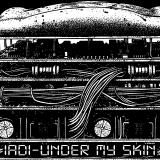
Between flesh and silicon. “Under My Skin” (2026) is the first album by IADI, released by Neo Life. A record like few
others, highly conceptual, cover art included. Its essence lies in the folds of the increasingly ambiguous relationship
between man and machine, where the former designs the latter and, perhaps without fully realizing it, is gradually
destined to adapt and be reprogrammed by it. Each track of “Under My Skin” is, in fact, a sort of interface, connector, or
any other imaginative point of contact between two creative phases, amid emotional impulses and binary calculations.
The sonic architecture oscillates between analog warmth and algorithmic coldness, constructing landscapes in which
pulsating synthesizers and mechanical rhythms seem to question each other. There's no linear narrative, but rather a
progressive immersion in a zone of near-friction, where the comfort of technology coexists with more than a faint
musical uneasiness, like a background noise that never ceases to remind you who's truly in charge. In “Under My Skin”,
the machine is neither an enemy nor a simple instrument: it's a real presence, intimate, even tactile, amplifying desires,
fears, and dreams of dawns beyond the digital realm. Intelligent dance music. Less noise, more sensations. Electronic,
but profoundly human.
The final result, then, is a music project that speaks to the present, yet sounds like an X-ray of the future, capturing that
fragile moment when humanity and technology stop observing each other from afar and begin to merge, track after
track. It's no coincidence that IADI's album opens with “Impulse”, an immediate expression of an electrical impulse, for
both humans and machines, which is also the language of the nervous system, as fast as it is vital—pure energy and
rhythm, a track as intense as it is irregular. And after this introduction, it's the turn of the equally erratic “Axon”, whose
title describes the neuron that transmits the signal over distance, telling the listener to sit back and relax for a new
journey through the notes toward the more melodic “Cortex”. The cerebral cortex, the ultimate seat of thought and
memory, becomes the source from which the musical flow of the first part of the work is drawn.
Then, suddenly, an automatic, or instinctive, response to the constant succession of impulses: “Reflex”, or zerotemperature techno, with a fragmented pace, featuring vocal samples, breaks, and restarts. In the producer's
imagination, the subsequent, and conversely placid, “Neuron” represents the emotional core of the second part of the
work, providing a kind of respite from the seething vibrations. While the neuron is the basic unit of the nervous system,
the synapse is the functional connection point between one neuron and another effector cell, essential for the
transmission of nerve impulses and communication in the nervous system, enabling functions such as learning and
movement. Likewise, a track like “Synapse” once again illuminates the path traced by IADI. The more experimental and
streamlined “Static” instead suggests true ordered chaos. “Dreamstate” is the conclusion suspended in the void, relating
to that dreamlike state between waking and sleeping, where consciousness fades toward infinity and visions begin. Pure
fading into the subconscious. Eternal return to where it all began. Dancing is a form of consciousness. Every beat is a
question. IADI, however, holds all the answers you need.