Red light therapy, Fiona Zanetti’s debut ep is a body and mind driven sonic collection of memories: music from and for the club, the nervous system, the physical and the mental. Built on no nonsense grooves, haunted bass pressure, rolling percussion, breakbeats, and hypnotic vocals.
The record delivers functional dance floor tools with emotional depth. From the addictive affirmations and sultry bassline of trust the process to the sensorial, ambient slowdown of skin deep, the EP traverses house, techno, breakbeat, downtempo, and experimental club.
Engineered for heads down sets, late night hedonism, and those suspended moments when you plunge inward on a crowded dance floor, it balances inner and outer listening, unifying depth with playfulness and introspection with fun.
Поиск:v light
Все
On his fourth solo album, and debut work for Nick Klein's Psychic Liberation imprint, Henrik Munkeby Nørstebø presents »Faint Light Blackens«, a negotiation between the atomized instrumentation of the solo trombone is pushed towards a full range wall of sound over the concise sprawl of seven distinct acts on two sides of a vinyl record.
The seven acts that make up the album were developed specifically for recording within Emanuel Vigeland’s »Tomba Emmanuelle«. The fresco within the mausoleum anchors themes of existential weight, ripe with weighted imagery of love, birth, and death. The solemn space is a cavernous acoustic terrain wherein reverberant reverie makes it almost impossible to speak aloud, let alone sing through horn and electronics. This chamber's expanse is baked into the compositional directions employed on »Faint Light Blackens«.
Experientially, the record was produced in a long form performance gesture, with no overdubs. While edited to fit the record format, no additional post production coloring took place. Here Nørstebø shines as an instrumentalist, wherein the symbiosis of the site specific architecture and his sound sources are synced. At once musing and brooding, the gamut of emotive sonic landscapes is at play for a fully dynamic listening experience. The territory in Nørstebø’s vocabulary through interplay with the mausoleum is not vaulted , unlike Vigeland’s urn’ed ashes. On »Faint Light Blackens«, the spirit takes bound beyond the cavern and reanimates the listeners stereo alters for a holistic listening experience of perfectly challenging electroacoustic endeavors.
Henrik Munkeby Nørstebø – acoustic & amplified trombone, monotron, feedback, sound files.
Recorded by Espen Reinertsen October 10. and 11. 2023 in Tomba Emmanuelle, Oslo Norway.
Cover Photos and mix by Henrik Munkeby Nørstebø
Mastered by Helge Sten (Deathprod) at Audio Virus Lab
- A1: Intuition, Nimbus (5:34)
- A2: Alignment, Orbits (7:46)
- B1: Impatience, Magma (11:15)
- B2: Persistence, Buds (8:27)
Caterina Barbieri & Bendik Giske's At Source resounds music as wellspring, that which is essential and unknowable, and yet utterly primary. It finds two acclaimed composer-musicians building a world together in self-contained collaboration between analogue synthesis and an extended approach to the saxophone that conjures its own universe of sound. It is at once intimate and cosmic, drawing on the challenges and possibilities of their artistic exchange, tearing down technique to access all the expansive possibilities of their sonic meeting point.
At Source is a document of the world of sound to be conjured when two artists strive for something together, discovering the expansions and limitations of performance by bodies and machines. It is not an exercise in assimilation, but in productive exchange and creative confrontation. It does not draw on outside energies or influences, but grapples with what there is to find in their respective playing. "It also reflects how natural the collaboration was," says Barbieri, "a meeting at the source which was spontaneous, graceful and natural".
Barbieri and Giske first met and were enthralled by one another's performances at Kunsthaus Glarus in 2019, a meeting that spurred conversations on the power of transitions as a compositional force. Giske later contributed a rework of Fantas for Fantas Variations (Editions Mego, 2021), an ambitious undertaking to rescore Barbieri’s work for his saxophone and voice, a challenge Giske had started undertaking two years prior as an ongoing practice of transcription. “The request came as a proof of aligned ideas”, says Giske.
Their new collaborative project then started during an artistic residency in Milan’s ICA in 2021, by invitation of swiss artist and curator Jan Vorisek, as the world was emerging from lockdown. This meeting, and the preceding closure of sites for cultural exchange, made their work together 'feel like springtime' says Barbieri. Giske, who was on the brink of releasing his sophomore album, Cracks, then joined Barbieri's light-years tour, which functioned as an inaugural incarnation of her newborn label and platform through a series of multi-artist curated shows with appearances of Lyra Pramuk, Nkisi, MFO, among other artists.
Through the tour, they continued to develop material live, and this release, laid down in the studio, is true to that ever-evolving process of creation, where live feedback stays essential to the vitality of this collaborative effort. The tracks are each named with two evocative words that contain the two poles of their sound. Theirs is both abstract and cosmic, in the synth as machine undermined by Barbieri's naturalistic playing, and in Giske's continuous exploration of the symbiosis between his instrument, voice, and body. These binaries, of body and machine, posed various challenges, notably in how the stepped patterns Barbieri uses were near-impossible to translate for Giske's body to perform, and other times where mathematical resolutions were needed to sync their playing. Explains Giske: "It forced me to go to the core of what I am and what I have to offer”. Barbieri says that it "explores the liminality between the machine and the human, and the vulnerability in this process".
At Source is testament to two divergent practices finding a whole cosmos in which to convene; music is crystalised and made utterly enveloping through the focused and critical work of two musicians working at their peak. The versions here are, temptingly, "just one of many versions" of this abundant source material Giske explains. Like the best collaborations, At Source is more than the sum of its parts – bringing more to the feast than the simple combination of two musicians, promising versions upon versions of the exquisite material captured here.
- 1: Opening
- 2: Reflections
- 3: Likeness & Shadow
- 4: Some Rain Must Fall
- 5: Echo
- 6: Breath
- 7: Fragments
- 8: In An Instant
- 9: Where Light Settles
With her third album, composer and bandleader Jasmine Myra has stepped confidently into the next stage of her unique musical explorations. Where Light Settles is a cohesive artistic statement from a distinctive and confident voice in UK music, and a significant evolution from the critically acclaimed Horizons (2022) and Rising (2024). Nine beautiful and powerfully grounded compositions express an accumulation of the artist"s ruminations on life, growth, and progression, powered by her vision of duality. "It"s those bittersweet moments which are heart-breaking but so important. Looking forward and trying to make sense of life," she says. "Pain is unavoidable, and you"ll have hardship no matter what, but you don"t grow or learn about yourself or the world around you without it. The duality is the growth and coming out the other side. I had the concept from the start."
Following the success of his debut EP 'Departure', J Michael Harris returns with a dynamic neo-jazz album that marks his evolution as an artist. Bringing together legendary musicians from London, Los Angeles, and Atlanta, the album embodies elements of jazz, dance and electronica while drawing inspiration from luminaries such as Robert Glasper, J Dilla, Aphex Twin, Sampha, and Herbie Hancock.
All music written by J Michael Harris (saxophone, piano, fender rhodes, synths, EWI, clarinet, flute)
featuring
Freddy Sheed (drums, percussion, programming/ Lewis Capaldi, The Japanese House, The 1975)
Jimmy Haslip (bass/ Yellowjackets, Allan Holdsworth, Jeff Lorber Fusion)
Mo Pleasure (piano, hammond b3/ Earth Wind and Fire,
Michael Jackson, Ray Charles)
Karlos Edwards (percussion/ Nitin Sawney, Spice Girls, Mark Ronson)
Henry Collins (trumpet/ Amy Winehouse, Tom Jones, Van Morrison)
Mixed and Mastered by Guy Massey (The Divine Comedy, Kylie, The Beatles)
Peter Frampton ist Mitglied der Rock & Roll Hall of Fame, ein Gitarrenvirtuose und Hit-Songwriter. Nach
einer Abschiedstournee im Jahr 2019 schien für ihn zunächst der Moment gekommen zu sein, sich zurückzuziehen. Doch bald wurde ihm klar, dass er weitermachen will. Mit 75 Jahren und genau 50 Jahre
nach seinem Nummer-1-Album Frampton Comes Alive! veröffentlicht er nun sein erstes neues Album mit
eigenen Rocksongs seit 16 Jahren. Das Album schrieb er gemeinsam mit seinem Sohn Julian. Produziert
wurde das Album neben Peter Frampton selbst, auch von seinem Sohn und Chuck Ainlay.
Die zehn Songs sind eine Reise durch die Magie des Rock ’n’ Roll. Und das mit hochkarätigen Gästen wie
H.E.R., Benmont Tench, Sheryl Crow, Bill Evans, Tom Morello und Graham Nash.
Are You Alien's first vinyl missive, a compilation style affair showcasing the work of four label affiliated artists, is genuinely packed to the rafters with cuts designed to be played loud on "deep dancefloors and late-night transmissions". HearThuG kicks things off with 'Relax', a post-punk/dark disco inspired slab of early morning hedonism inspired by DFX's 'Relax Your Body' (which itself borrowed heavily from the KLF's 'What Time Is Love'), before Light Blue File charges towards darkened warehouses on the tactile tech-house/stab-happy rave fusion of 'Guante El En Mic'. Over on side B, Briki opts for squelchy acid bass, trippy vocal snippets and spacey sounds on 'Droppin The Pressure', before Ahmet Mecnun adds spoken word vocals and French Touch flourishes to a deep tech-house groove.
Melchior Productions Ltd. returns to his own My King Is Light imprint with a brand-new 12″—this time alongside Romanian-Russian pianist-producer Mischa Blanos, one third of the acclaimed Amorf trio, Jupiter Tracks pt. 1 is a beautiful record, deep and emotional, as if beamed in from another world—yes, Jupiter.
Across “Push,” “First Eva,” and “Spirit Of 23,” the pair interlace meticulous programming and crystalline sound design into an ever-shifting strain of minimal house. Dispensing with overt drama, the EP zooms in on nuance: textures flicker between digital shimmer and tactile grit, while Melchior’s trademark restraint leaves ample space for Blanos’s melodic Midas touch to radiate quietly.
An album of improvised music was recorded in Belgrade, in the courtyard of one of the musicians’ homes. There were no prior agreements, prepared compositions, or preplanned ideas. The album came into being in real time, right there on the spot.
Ulya Volkova (pleurereme) - cellist/multi-instrumentalist, composer/sound designer, producer and music enthusiast with over a two decade of experience in cultural community. After studying for 15 years at the Gnessin School (Academy) of Music she began writing music for big films, documentaries, TV series, audio books, plays and exhibitions, soundtracks for games and sound design for interfaces, and music production for artists all over the world.
Evgenii Piankov - Keyboardist, producer, composer, sound designer, arranger, and multi-instrumentalist. Throughout his career, he has worked in various roles with different popular artists.
Aleksei Siubaev (Mark Borzer) - Musician, ( from True Flavas Band, and Great Rvivers ) producer and DJ operating at the intersection of funk, soul, avant-jazz, post-rock and experimental music. Alongside the collaborative projects, he develops a solo practice focused on hybrid forms and textural experimentation.
7 Inch Vinyl in Label Generic Sleeve
A powerful two-sider from the incomparable Rhetta Hughes, whose rich vocal work includes singing backing vocals on Roberta Flack’s “Feel Like Makin’ Love.” Her version of “Light My Fire” — a rare, fiery soul cover of The Doors classic — brings raw emotion, driving rhythm, and Hughes’ unmistakable vocal authority to the forefront. Paired with the deep, dramatic “You’re Doing It With Her,” this beautifully remastered reissue returns two tracks from her album "Re-Light My Fire" and brings them to 7-inch for the first time. An essential RSD 2026 pick that highlights a remarkable voice too often overlooked and celebrates the soulful reinterpretation of a rock classic. Remastered, Redesigned Artwork.
Leuchtende Pop-Hymnen aus der diorama-Dunkelkammer. a substitute for light kreist um das Motiv des Lichts - als Verheißung, Orientierung und Täuschung. Es flackert in Monitoren, spiegelt sich in Oberflächen und lässt Erinnerungen im Schatten verschwimmen. Zwischen ausrangierter Liebe und digitaler Erstarrung suchen die Songs nach einem echten Funken - geboren aus Bewusstsein, nicht aus Strom. Auf ihrem elften Studioalbum zeigen diorama, dass weniger mehr sein kann: klare Arrangements, prägnante Melodien und Vocals mit ordentlich Punch. Zwischen clubtauglicher Wucht, hypnotischen Balladen und schwebender Melancholie entsteht ein Sound, der sofort zündet - und lange nachhallt. Trost in der Dunkelheit. Ein Ersatz für Licht.
Desert planet house from inner spaces - the mountain people‘s premiere full EP outside their own imprint. Featuring sand shattering subbasses alongside vintage stabs, wobbling chords and otherworldly chanting. Something you will not dig up easily from your discogs collection and which will further enchant the children of the light.
Play or face the Gom Jabbar.
- A1: Traffic Light
- B1: Bust Up
Building on the momentum of their acclaimed debut The Return Of - championed by FIP Radio - featured in their May Selection, Craig Charles BBC Radio 6 and Reggae Vibes magazine - The Flying Hats return with a 7” featuring Traffic Light, the first taste of their upcoming LP Ups. Expanding their signature blend of flying cymbal reggae, irresistible hammond organ and analogue funk, the track captures the band’s evolving sound. The 7” is completed by Bust Up, the band’s explosive NOLA-inspired funk cut from the debut album.
Light Touches Records is devoted to shed new lights on hot rarities, unknown grooves as well as forgotten classics.
While the older numbers are much sought after on Discogs, Light Touches pushes further and invites Irish underground heroes Frawl and Blackout (respectively founder and one of the resident djs of the connaisseur Backwards parties in Limerick) for the new release on the highly revered Light Touches Records.
On A side, “Fortune Teller” is a masterpiece of a lost disco tune with infectious funky bassline, while “Foxee” goes deeper into a brass driven relentless grooves with psychedelic melodies. On the flipside, “Me, Me, Me” is a 10 minutes journey, with a strong moody and deeper vibe.
All tracks have been carefully edited without overdubs, in order to bring the spirit of classic disco manipulators to today’s dancefloors!
12” limited to 300 copies (no digital).
- A1: My Life Is Real
- A2: Git Ready
- A3: N Y. State Of Mind Pt. 3
- B1: Welcome To The Underground
- B2: Madman
- B3: Pause Tapes
- B4: Writers
- C1: Sons (Young Kings)
- C2: It's Time
- C3: Nasty Esco Nasir
- C4: My Story Your Story Feat Az
- D1: Bouquet (To The Ladies)
- D2: Junkie
- D3: Shine Together
- D4: 3Rd Childhood
GRAMMY-prämierte Rap-Ikone Nas und DJ Premier – zwei der einflussreichsten und angesehensten Persönlichkeiten der Hip-Hop-Geschichte – veröffentlichten ihr mit Spannung erwartetes Kollaborationsalbum „Light-Years“ am 12. Dezember digital über Mass Appeal Nach den limitierten Day Ones Editionen gibt es nun die regulären Editionen mit Artwork, ab 20. Februar 2026.
Nach jahrzehntelanger Vorfreude ist „Light-Years“ die Wiedergeburt einer 30-jährigen Zusammenarbeit. Die Partnerschaft von Nas und DJ Premier ist tief in der DNA des Hip-Hop verwurzelt. Ihre Geschichte begann 1994 mit „Illmatic“, das Hits wie „N.Y. State Of Mind“, „Memory Lane“ und „Represent“ hervorbrachte. „Illmatic“ etablierte Nas als Ausnahmetalent und festigte Premiers damals aufstrebende Karriere. Ihre musikalische Chemie vertiefte sich im Laufe des folgenden Jahrzehnts durch Klassiker wie „I Gave You Power“, „2nd Childhood“, „Nas Is Like“ und „N.Y. State Of Mind Pt. II“.
Angeführt von Mass Appeals bahnbrechender Reihe „Legend Has It…“, die einige der wichtigsten und einflussreichsten Hip-Hop-Künstler aller Zeiten feiert und ins Rampenlicht rückt, präsentierte die Reihe ein ganzes Jahr lang historische Veröffentlichungen von Kultur prägenden Künstlern wie Slick Rick, Raekwon, Ghostface Killah, Mobb Deep, Big L und De La Soul. Mit „Light-Years“ liefern Nas und DJ Premier den krönenden Abschluss dieser legendären Reihe, in der ihre unbestreitbare Synergie nach wie vor einzigartig ist.
2006 zierten Nas und DJ Premier das Cover des Scratch Magazine und kündigten ein gemeinsames Projekt an, das die Begeisterung der Fans erneut entfachte und die zwei Jahrzehnte währende Vorfreude beflügelte. Letztes Jahr taten sich Nas und Premier zusammen, um das 30-jährige Jubiläum von „Illmatic“ mit der Veröffentlichung des neuen Tracks „Define My Name“ zu feiern, mit dem sie erstmals ihr wegweisendes Kollaborationsalbum ankündigten.
„Light-Years“ ist ein wahrer Beweis für den Einfluss beider Künstler, ihr Vermächtnis und die Zeitlosigkeit ihrer gemeinsamen Musik.
In spring 2025, Abul Mogard and Rafael Anton Irisarri created the source material for their second album, Where Light Pauses in the Silence of the Sun, during a three-day residency at Morphine Raum in Berlin. Functioning as both recording studio and performance venue, the space has no stage, with the audience gathered around the performers. Working within an open framework, the duo reshaped the music each evening while recording the performances live to multitrack. Rotary speakers, modular synthesizers and bowed guitar formed the core of their sonic language, captured through a 1970s mixing console and microphones placed around the room.
Back in Mogard’s studio in Rome, the material was further crafted as motifs were stretched, fragments isolated, and tempos dissolved. Irisarri recorded additional guitar textures and treatments in New York, while passages recorded by Martina Bertoni and Andrea Burelli in Berlin reinforced the harmonic centres and brought breath, refinement and a new sensibility to their compositions. The process continued as Mogard’s layering and subtraction reassembled everyone’s parts into the final arrangement.
The album opens with “In the Eastern Wild,” building from a sparse outline into a monumental formation of low-frequency weight, its internal motion shaped by the rotating Leslie speaker. “Over the Domes” widens into a broader acoustic field, where sustained modular tones meet waves of softly plucked guitar. The music then turns inward with “A Blue Descent,” centred on Bertoni’s cello, whose growling timbre introduces a melancholic depth.
At the album’s centre, “In a Quiet Radiance” unfolds around a slow guitar ostinato, its luminous stillness opening into a more expansive and reflective state. Across its ten-minute span, Burelli’s violin lines and Bertoni’s lower cello phrases gradually surface, weaving through the harmonic field. Mogard brings Burelli’s processed voice to the fore, its emotive, operatic presence becoming one of the record’s pivotal moments. “Of Blessed Ages” suspends the sonic flow, shifting between parallel major and minor chords as lingering, slowly decaying melodies shape the music’s internal drift. The closing “Among Shadows” settles into a darker resonance as layered textures recede.
Mogard and Irisarri’s shared language balances restraint and maximalism. UK magazine Crack describes the music as “a tidal wave held in suspension,” while Dutch newspaper de Volkskrant writes, “What a colossal sound, and how this music strikes at the emotions.” Reflecting on the residency sessions, Irisarri recalls: “At moments I genuinely couldn’t tell if a sound was coming from me or from Abul. It stopped feeling like two people making decisions and began to feel like we were inside a system moving on its own."
Marja de Sanctis’ cover artwork revisits the vessel sculpture from the duo’s first album, Impossibly Distant, Impossibly Close. There it appeared as raw, unfired clay. Here it has been fired in the kiln and finished with a glaze. Light gathers on its polished surface and spills into the surrounding space. As she explains, “I wanted to convey the idea of continuity within the duo, and the vessel became a kind of container for that idea. However, their music felt different this time, and with the collaboration of Martina and Andrea, I felt it should have a sleeker, softer, more glamorous look, very distant from the first raw appearance.” The transformation of the vessel from raw clay to fired form suggests a passage from immediacy toward permanence, mirroring the music’s gradual expansion.
In spring 2025, Abul Mogard and Rafael Anton Irisarri created the source material for their second album, Where Light Pauses in the Silence of the Sun, during a three-day residency at Morphine Raum in Berlin. Functioning as both recording studio and performance venue, the space has no stage, with the audience gathered around the performers. Working within an open framework, the duo reshaped the music each evening while recording the performances live to multitrack. Rotary speakers, modular synthesizers and bowed guitar formed the core of their sonic language, captured through a 1970s mixing console and microphones placed around the room.
Back in Mogard’s studio in Rome, the material was further crafted as motifs were stretched, fragments isolated, and tempos dissolved. Irisarri recorded additional guitar textures and treatments in New York, while passages recorded by Martina Bertoni and Andrea Burelli in Berlin reinforced the harmonic centres and brought breath, refinement and a new sensibility to their compositions. The process continued as Mogard’s layering and subtraction reassembled everyone’s parts into the final arrangement.
The album opens with “In the Eastern Wild,” building from a sparse outline into a monumental formation of low-frequency weight, its internal motion shaped by the rotating Leslie speaker. “Over the Domes” widens into a broader acoustic field, where sustained modular tones meet waves of softly plucked guitar. The music then turns inward with “A Blue Descent,” centred on Bertoni’s cello, whose growling timbre introduces a melancholic depth.
At the album’s centre, “In a Quiet Radiance” unfolds around a slow guitar ostinato, its luminous stillness opening into a more expansive and reflective state. Across its ten-minute span, Burelli’s violin lines and Bertoni’s lower cello phrases gradually surface, weaving through the harmonic field. Mogard brings Burelli’s processed voice to the fore, its emotive, operatic presence becoming one of the record’s pivotal moments. “Of Blessed Ages” suspends the sonic flow, shifting between parallel major and minor chords as lingering, slowly decaying melodies shape the music’s internal drift. The closing “Among Shadows” settles into a darker resonance as layered textures recede.
Mogard and Irisarri’s shared language balances restraint and maximalism. UK magazine Crack describes the music as “a tidal wave held in suspension,” while Dutch newspaper de Volkskrant writes, “What a colossal sound, and how this music strikes at the emotions.” Reflecting on the residency sessions, Irisarri recalls: “At moments I genuinely couldn’t tell if a sound was coming from me or from Abul. It stopped feeling like two people making decisions and began to feel like we were inside a system moving on its own."
Marja de Sanctis’ cover artwork revisits the vessel sculpture from the duo’s first album, Impossibly Distant, Impossibly Close. There it appeared as raw, unfired clay. Here it has been fired in the kiln and finished with a glaze. Light gathers on its polished surface and spills into the surrounding space. As she explains, “I wanted to convey the idea of continuity within the duo, and the vessel became a kind of container for that idea. However, their music felt different this time, and with the collaboration of Martina and Andrea, I felt it should have a sleeker, softer, more glamorous look, very distant from the first raw appearance.” The transformation of the vessel from raw clay to fired form suggests a passage from immediacy toward permanence, mirroring the music’s gradual expansion.
In spring 2025, Abul Mogard and Rafael Anton Irisarri created the source material for their second album, Where Light Pauses in the Silence of the Sun, during a three-day residency at Morphine Raum in Berlin. Functioning as both recording studio and performance venue, the space has no stage, with the audience gathered around the performers. Working within an open framework, the duo reshaped the music each evening while recording the performances live to multitrack. Rotary speakers, modular synthesizers and bowed guitar formed the core of their sonic language, captured through a 1970s mixing console and microphones placed around the room.
Back in Mogard’s studio in Rome, the material was further crafted as motifs were stretched, fragments isolated, and tempos dissolved. Irisarri recorded additional guitar textures and treatments in New York, while passages recorded by Martina Bertoni and Andrea Burelli in Berlin reinforced the harmonic centres and brought breath, refinement and a new sensibility to their compositions. The process continued as Mogard’s layering and subtraction reassembled everyone’s parts into the final arrangement.
The album opens with “In the Eastern Wild,” building from a sparse outline into a monumental formation of low-frequency weight, its internal motion shaped by the rotating Leslie speaker. “Over the Domes” widens into a broader acoustic field, where sustained modular tones meet waves of softly plucked guitar. The music then turns inward with “A Blue Descent,” centred on Bertoni’s cello, whose growling timbre introduces a melancholic depth.
At the album’s centre, “In a Quiet Radiance” unfolds around a slow guitar ostinato, its luminous stillness opening into a more expansive and reflective state. Across its ten-minute span, Burelli’s violin lines and Bertoni’s lower cello phrases gradually surface, weaving through the harmonic field. Mogard brings Burelli’s processed voice to the fore, its emotive, operatic presence becoming one of the record’s pivotal moments. “Of Blessed Ages” suspends the sonic flow, shifting between parallel major and minor chords as lingering, slowly decaying melodies shape the music’s internal drift. The closing “Among Shadows” settles into a darker resonance as layered textures recede.
Mogard and Irisarri’s shared language balances restraint and maximalism. UK magazine Crack describes the music as “a tidal wave held in suspension,” while Dutch newspaper de Volkskrant writes, “What a colossal sound, and how this music strikes at the emotions.” Reflecting on the residency sessions, Irisarri recalls: “At moments I genuinely couldn’t tell if a sound was coming from me or from Abul. It stopped feeling like two people making decisions and began to feel like we were inside a system moving on its own."
Marja de Sanctis’ cover artwork revisits the vessel sculpture from the duo’s first album, Impossibly Distant, Impossibly Close. There it appeared as raw, unfired clay. Here it has been fired in the kiln and finished with a glaze. Light gathers on its polished surface and spills into the surrounding space. As she explains, “I wanted to convey the idea of continuity within the duo, and the vessel became a kind of container for that idea. However, their music felt different this time, and with the collaboration of Martina and Andrea, I felt it should have a sleeker, softer, more glamorous look, very distant from the first raw appearance.” The transformation of the vessel from raw clay to fired form suggests a passage from immediacy toward permanence, mirroring the music’s gradual expansion.
- Raga Bhairavi
- Raga Lalit
- Raga Bhupali
- Raga Todi
- Raga Madhuvanti
- Raga Meghmalhar
- Raga Yaman
- Raga Kalavati
- Raga Malkauns
- Raga Bairagi
Color Vinyl[54,58 €]
Light in the Attic präsentiert die lang erwartete Neuauflage von ,Synthesizing: Ten Ragas to a Disco Beat", dem revolutionären Album von 1982 vom Komponisten und Musiker Charanjit Singh. Er hat klassische indische Ragas mit den damals modernsten Roland-Synthesizern und Drumcomputern kombiniert und so ein elektronisches Meisterwerk geschaffen, das seiner Zeit weit voraus war. Bei den Live-Aufnahmen in den HMV-Studios in Mumbai verband Singh die Vergangenheit mit der Zukunft - er mischte die alte indische Tradition der Ragas (ein melodisches Gerüst, ähnlich einer Tonleiter, aus dem Musiker improvisieren oder komponieren können) mit pulsierenden elektronischen Dance-Beats. Das Album wurde ohne großes Aufsehen veröffentlicht, geriet in Vergessenheit und Singh zog sich aus dem Musikgeschäft zurück, um sich auf private Konzerte zu konzentrieren, aber damit fängt die Geschichte erst richtig an...
"Black & 'Pearlescent Transcendent Future'"-farbiges Vinyl. Light in the Attic präsentiert die lang erwartete Neuauflage von ,Synthesizing: Ten Ragas to a Disco Beat", dem revolutionären Album von 1982 vom Komponisten und Musiker Charanjit Singh. Er hat klassische indische Ragas mit den damals modernsten Roland-Synthesizern und Drumcomputern kombiniert und so ein elektronisches Meisterwerk geschaffen, das seiner Zeit weit voraus war. Bei den Live-Aufnahmen in den HMV-Studios in Mumbai verband Singh die Vergangenheit mit der Zukunft - er mischte die alte indische Tradition der Ragas (ein melodisches Gerüst, ähnlich einer Tonleiter, aus dem Musiker improvisieren oder komponieren können) mit pulsierenden elektronischen Dance-Beats. Das Album wurde ohne großes Aufsehen veröffentlicht, geriet in Vergessenheit und Singh zog sich aus dem Musikgeschäft zurück, um sich auf private Konzerte zu konzentrieren, aber damit fängt die Geschichte erst richtig an...
Onyx Marble Vinyl[30,04 €]
Spiritual Obliteration Marble Vinyl[30,04 €]
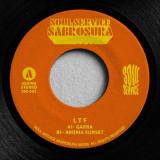
Intriguing Siberian B-Boy roots informed Anton LTF's first solo album last year and its mix of funk, hip-hop and early turntablism influences really worked. He's back now with a tidy two-tracker on Soul Service Sabrosura that leans into Latin funk. It's raw, direct and charged up tackle for once again getting under the skin of b-boys and girls thanks to the killer breaks. 'Garra' is lit up with shuffling percussive keys and rhythms and big brass horns, while 'Aroma Sunset' is more pared back and loose. There's a celebratory vibe that's smoother and more languorous, with sunny flutes leading the way and irresistible Latin charm in the ways the keys dance.
With "Let There Be Light", Sina XX delivers a fiercely contemporary techno album rooted in heritage, futurism, and pure club energy. From the opening collaboration with Hebi Snake - merging Caribbean bele rhythms with razor-sharp sound design - to the cinematic closing moment of "I Can See Through Clouds" and its emotional depth, this record is engineered for both body and mind.
There are echoes of Detroit's activist ethos, early Berlin minimalism, and the global tribal lineage that has always driven dance culture forward. Designed for selectors who appreciate detail, tension, and grooves that evolve with purpose.
Second vinyl release on our label, this time presenting what we consider a timeless piece. Light Blue File delivers three cuts steeped in jungle flavour, heat and red lights. Intensity and minimalism. intricate elements and details that fuel the tension and trance on the dancefloor.
Paperbark is the ambient project of Jon Mulville, who has been shaping rhythmic and textural soundscapes since 2016. His music is rooted in memory, as a way to process emotional fragments. Guided by time spent in nature and created in response to a culture that often feels lacking empathy, his work aims to create space for reflection.
He has released eight albums, primarily on Seil Records, as well as Constellation Tatsu. 'Light Behind Me' marks his first CD release and only his second appearance on vinyl.
The catalog of Discomagic’s sublabel Sensation Records is a true treasure chest of surprises. Rare gems sought after by collectors, whose prices on the secondary market often exceed €100, €200, and sometimes even €500. Once again, Vintage Pleasure Boutique reaches into this vault of highly coveted obscurities. This time, the focus is on SNS 8017.
It is one of the cult productions by Raffaele Fiume, revered, cherished and long admired mainly thanks to the distinctive vocal presence of Giusy Ravizza. Upon its original release in 1984, the record did not achieve major commercial success. However, with the resurgence of Italo disco, the rise of the internet, discussion forums, collector communities, online marketplaces and web radio stations, places where fans and collectors gathered to rediscover forgotten tracks, “Light” gradually emerged as a highly desirable, much-loved and increasingly hard-to-find title.
Once again, Vintage Pleasure Boutique steps in to meet the expectations of all those who wish to own a vinyl copy of Giusy Ravizza – “Light.” This is not the original Italian pressing with the SIAE stamp on the label, but it sounds absolutely excellent.
- A1: My Life Is Real (4 21)
- A2: Git Ready (4 21)
- A3: Ny State Of Mind (Part 3) (4 21)
- A4: Welcome To The Underground (4 21)
- A5: Madman (4 21)
- A6: Pause Tapes (4 21)
- A7: Writers (4 21)
- A8: Sons (Young Kings) (4 21)
- B1: It's Time (5 14)
- B2: Nasty Esco Nasir (5 14)
- B3: My Story Your Story (Feat Az) (5 14)
- B4: Bouquet (To The Ladies) (5 14)
- B5: Junkie (5 14)
- B6: Shine Together (5 14)
- B7: 3Rd Childhood (5 14)
After over a decade away from making music, Greek-born musician and composer Giannis Gogos is back. It was the turmoil of the pandemic that allowed him to reconnect with making music after years working in photography and now he's combining analogue and digital sound with intricate melodies and plenty of keyboards, glockenspiel, kalimba and guitars. This latest album is enhanced by oodles of delay and reverb effects and makes for an ethereal journey inspired by Henry Corbin's Man of Light in Iranian Sufism. It explores light as a symbol of divine presence through serene, introspective soundscapes.
French producer stuckinwaveforms makes his casa voyager debut with a cohesive album that threads together a fresh take across multiple genres. Each track is crafted with precision, bridging heavy-beat energy and deep listening moments. Tested and approved!
From out of the dark, sparks of feedback birdsong signal a return to the singular sonic environments of Rafael Toral"s sound-world. A year after Spectral Evolution, his acclaimed album of electric guitar conceptions, comes the companion work Traveling Light. Sharpening his focus around a set of jazz standards, his move from abstract form to solid song elicits glints from beyond time and space, crafting a unique listening lens for deep listeners. In the early years of his practice, Toral used the guitar as a generator to create discreet texture and droning tones. Later, he abandoned the guitar entirely, focusing on self-made electronics to render his music with a post-free jazz perspective. For the music of Spectral Evolution and Traveling Light, Toral has combined his methodologies: radically expanding the space within their harmonies with his self-made machines, while engaging directly with his instrument and the chords of the material. In addition to Toral"s proxy orchestra of guitars, sine wave, feedback and bass guitar, Traveling Light features the sounds of clarinetist José Bruno Parrinha, tenor saxophonist Rodrigo Amado, flügelhorn player Yaw Tembe, flautist Clara Saleiro, who each guest on one song. In every contour of Traveling Light"s path - arrangement, improvisation and production - the spring of the old pours through the new in an unstoppable flow. The result is a listening experience of these standards that remains "in the tradition", even as the elongated harmonies seem to alter time such that, as Toral notes, "the chords become events on their own."
Musuq Nuna presents its second vinyl release.
Amid electric pulses and suspended atmospheres, this record unfolds a journey where shadow meets light.
Droove traces three paths of precise, nocturnal energy, where techno breathes with a synthetic soul and time seems to bend upon itself.
On the reverse side, Alquimic, together with the ethereal voice of Brunella, opens a luminous rift, a chant that drifts between light and mystery, between reason and ecstasy.
Each groove of Light in the Darkness holds a small ceremony: the alchemy of sound transforming darkness into a gleam, rhythm into a spell.
Long time pals Motem (CA) and Coco Bryce (NL) team up once again as Light Club. Previously released on cassette tape in 2013, Apropos is now finally available on wax, backed with a brand new Skweee roller, O Superman.