We, at UDG have further fined-tuned already a great design concept of our flight case into one specially for the most discerning DJ/producer. Constructed from aluminum thus providing an extremely stable structure with lighter weight compared to traditional flight cases. The inner sides are protected with pick & pluck foam that consists of two separate layers, each allowing user to create individualized adapted compartments. The pick & pluck foam allow you to pluck out any desired shape you require for various-sized DJ-controllers and providing the additional option of creating another slot underneath the controller for laptop or cable storage. This pick & pluck foam creating an easy, do-it-yourself customized system of case interiors.
The UDG Ultimate Pick Foam Flight Cases are designed to keep your gear protected from accidental damage when you transport it to and from gigs. They’re compact and lightweight yet tough enough to keep your gear safe.
EAN 8718969212694
Color Black
Weight 4,55 kg / 10.01 lbs
Outer Dimensions (W x H x D) 49 x 42.3 x 21 cm | 19.3 x 16.6 x 8.3 inch
Inner Dimensions (W x H x D) 48 x 41.3 x 20 cm | 18.9 x 16.2 x 7.9 inch
Material Aluminum
Protection Corrosion resistant aluminium profiles with strong rounded corners
Fully-lined with high density foam protective padding & foam on lid
Two side strong butterfly lock & solid metal hinges
Rubber feet at the bottom for support in standing
Extra's Lighter weight than traditional flight cases
Black Diamond finishing surface
Ergonomic & sturdy carry handle
Pick & pluck foam with two separate layers
Replacement pick & pluck foam is available to purchase
Rear cable access hole with cover
Fits Technics SL-1200MK7, SL-1200MK6, SL-1200 MK5, SL-1200 MK4, SL-1200 MK3, SL-1200 MK2, SL-1200GR, SL-1200GAE,
Denon VL12 Prime,
Pioneer PLX-1000, PLX-500
Reloop RP-8000 MK2, RP-8000 Straight, RP-8000, Reloop RP-1000M, RP-1000 MK2, RP-2000 MK2, RP-2000 USB MK2, RP-4000 MK2, RP-7000, RP-7000 MK2, RP-7000 MK2 GLD, RP-7000 MK2 Silver,
Audio Technica LP120-USB, LP120XUSB, LP1240-USBXP, LP1240-USB, LP140XP, LP3, LP5, LP7, LPW40WN,
Stanton STR8-150 M2, ST-150 M2, T.52, T.55 USB, T.62 M2, T.92 M2 USB,
Mixars STA, LTA,
Vestax PDX-3000, PDX-3000Mix, PDX-3000MKII,
or similar size turntable
Buscar:v light
- A1: Montego Bay - Everything (Paradise Mix) 04 59
- A2: Atelier - Got To Live Together (Club Mix) 06 06
- A3: Golem - Music Sensations 04 56
- B1: The True Underground Sound Of Rome Feat. Stefano Di Carlo - Gladiators 05 26
- B2: Eagle Parade - I Believe 04 26
- C1: Dj Le Roi - Bocachica (Detroit Version) 05 28
- C2: Green Baize - Synthetic Rhythm 01 41
- C3: M.c.j. Feat. Sima - Sexitivity (Deep Mix) 05 30
- D1: Kwanzaa Posse Feat. Funk Master Sweat - Wicked Funk (Afro Ambient Mix) 06 31
- D2: Progetto Tribale - The Bird Of Paradise 06 29
- D3: Mbg - The Quite 06 59
Vol 1[28,99 €]
Googling “paradise house”, the first results to pop up are an endless list of European b&b’s with whitewashed lime façades, all of them promising “…an unmatched travel experience a few steps from the sea”. Next, a little further down, are the institutional websites of a few select semi-luxury retirement homes (no photos shown, but lots of stock images of smiling nurses with reassuring looks). To find the “paradise house” we’re after, we have to scroll even further down. Much further down.
It feels like yesterday, and at the same time it seems like a million years ago. The Eighties had just ended, and it was still unclear what to expect from the Nineties. Mobile phones that were not the size of a briefcase and did not cost as much as a car? A frightening economic crisis? The guitar-rock revival?! Certainly, the best place to observe that moment of transition was the dancefloor. Truly epochal transformations were happening there. From America, within a short distance one from the other, two revolutionary new musical styles had arrived: the first one sounded a bit like an “on a budget” version of the best Seventies disco-music – Philly sound made with a set of piano-bar keyboards! – the other was even more sparse, futuristic and extraterrestrial. It was a music with a quite distinct “physical” component, which at the same time, to be fully grasped, seemed to call for the knotty theories of certain French post-modern philosophers: Gilles Deleuze, Félix Guattari, Paul Virilio... Both those genres – we would learn shortly after – were born in the black communities of Chicago and Detroit, although listening to those vinyl 12” (often wrapped in generic white covers, and with little indication in the label) you could not easily guess whether behind them there was a black boy from somewhere in the Usa, or a girl from Berlin, or a pale kid from a Cornish coastal town.
Quickly, similar sounds began to show up from all corners of Europe. A thousand variations of the same intuition: leaner, less lean, happier, slightly less intoxicated, more broken, slower, faster, much faster... Boom! From the dancefloors – the London ones at least, whose chronicles we eagerly read every month in the pages of The Face and i-D – came tales of a new generation of clubbers who had completely stopped “dressing up” to go dancing; of hot tempered hooligans bursting into tears and hugging everyone under the strobe lights as the notes of Strings of Life rose up through the fumes of dry ice (certain “smiling” pills were also involved, sure). At this point, however, we must move on to Switzerland.
In Switzerland, in the quiet and diligent town of Lugano, between the 1980s and 1990s there was a club called “Morandi”. Its hot night was on Wednesdays, when the audience also came from Milan, Como, Varese and Zurich. Legend goes that, one night, none less than Prince and Sheila E were spotted hiding among the sofas, on a day-off of the Italian dates of the Nude Tour… The Wednesday resident and superstar was an Italian dj with an exotic name: Don Carlos. The soundtrack he devised was a mixture of Chicago, Detroit, the most progressive R&B and certain forgotten classics of old disco music: practically, what the Paradise Garage in New York might have sounded like had it not closed in 1987. In between, Don Carlos also managed to squeeze in some tracks he had worked on in his studio on Lago Maggiore. One in particular: a track that was rather slow compared to the BPM in fashion at the time, but which was a perfect bridge between house and R&B. The title was Alone: Don Carlos would explain years later that it had to be intended both in the English meaning of “by itself” and like the Italian word meaning “halo”. That wasn’t the only double entendre about the song, anyway. Its own very deep nature was, indeed, double. On the one hand, Alone was built around an angelic keyboard pattern and a romantic piano riff that took you straight to heaven; on the other, it showcased enough electronic squelches (plus a sax part that sounded like it had been dissolved by acid rain) to pigeonhole the tune into the “junk modernity” section, aka the hallmark of all the most innovative sounds of the time: music that sounded like it was hand-crafted from the scraps of glittering overground pop.
No one knows who was the first to call it “paradise house”, nor when it happened. Alternative definitions on the same topic one happened to hear included “ambient house”, “dream house”, “Mediterranean progressive”… but of course none were as good (and alluring) as “paradise house”. What is certain is that such inclination for sounds that were in equal measure angelic and neurotic, romantic and unaffective, quickly became the trademark of the second generation of Italian house. Music that seemed shyly equidistant from all the rhythmic and electronic revolutions that had happened up to that moment (“Music perfectly adept at going nowhere slowly” as noted by English journalist Craig McLean in a legendary field report for Blah Blah Blah magazine). Music that to a inattentive ear might have sounded as anonymous as a snapshot of a random group of passers-by at 10AM in the centre of any major city, but perfectly described the (slow) awakening in the real world after the universal love binge of the so-called Second Summer of Love.
For a brief but unforgettable season, in Italy “paradise house” was the official soundtrack of interminable weekends spent inside the car, darting from one club to another, cutting the peninsula from North to centre, from East to West coast in pursuit of the latest after-hours disco, trading kilometres per hour with beats per minute: practically, a new New Year’s Eve every Friday and Saturday night. This too was no small transformation, as well as a shock for an adult Italy that was encountering for the first time – thanks to its sons and daughters – the wild side of industrial modernity. The clubbers of the so-called “fuoriorario” scene were the balls gone mad in the pinball machine most feared by newspapers, magazines and TV pundits. What they did each and every weekend, apart from going crazy to the sound of the current white labels, was linking distant geographical points and non-places (thank you Marc Augé!) – old dance halls, farmhouses and business centres – transformed for one night into house music heaven. As Marco D’Eramo wrote in his 1995 essay on Chicago, Il maiale e il grattacielo: “Four-wheeled capitalism distorts our age-old image of the city, it allows the suburbs to be connected to each other, whereas before they were connected only by the centre (…) It makes possible a metropolitan area without a metropolis, without a city centre, without downtown. The periphery is no longer a periphery of any centre, but is self-centred”.
“Paradise house” perfectly understood all of this and turned it into a sort of cyber-blues that didn’t even need words, and unexpectedly brought back a drop of melancholic (post?)-humanity within a world that by then – as we would wholly realise in the decades to come – was fully inhuman and heartless. A world where we were all alone, and surrounded by a sinister yellowish halo, like a neon at the end of its life cycle. But, for one night at least, happy."

** club fire from DJ Python
“i was put on this earth”, his first solo music since 2022, and debut on XL
Recordings.
On “i was put on this earth”, DJ Python - aka Brian Piñeyro - gently forays into uncharted territory as a singer, producer,
and collaborator; an evolution all the more impressive in light of his groundbreaking musical projects to date like Mas
Amble, Angel, and Club Sentimientos Vol 2. While splitting his time between New York and London, Python has teamed
up with a diverse set of collaborators including South London rapper Jawnino, Honduran-born powerhouse Isabella
Lovestory, unclassifiable songwriter Organ Tapes, and NYC mainstay Physical Therapy. Across the five-track EP,
Python shares bold solo songs alongside these intriguing collaborations. The project retains the captivating melodies,
atmospheric textures, and rhythmic innovation that defined Python's earlier recordings while building on and shaping these
signature elements into ambitious and addictive new songs.
The first look at the EP comes in the form of “Besos Robados”. Isabella Lovestory lends an insouciant yet insistent vocal
to this sublime downtempo lovers' reggaeton track that's been a fan-favourite since appearing on Python's epic BBC
Radio 1’s Essential Mix.
On ‘i was put on this earth’, DJ Python says “to whom it may concern…
its too beautiful to embrace change and to challenge urself to find something meaningful in it... i love my friends and
love is deep :') i want them to know that always... but sometimes i get busy and overwhelmed n im not the best at
saying how i feel always... just want to sit around and talk and feel understood together w someone who you like or u
find interesting.. thats the best :) and if the day is nice or if the day is not nice but ur inside and its cozy.. thats too
wicked. and ur making a soup and eating it together... just with the stuff in the kitchen.. dont even go out to get
ingredients.. no need to follow a recipe.. cause ur grandma taught u to cook w the "sazon" (cooking by tasting w as u
go on adding diff ingredients and spices.. no recipes. .. u can only really cook if u can freestyle in the kitchen she said)..
and then u think about how ur grandma taught u that.. and your w someone in the kitchen making something together..
and then u taste it and it warms u up and ur like damn this is fire.. thats what this and i think maybe what "its all"
about... thank u for taking time to read this and i hope you enjoy the album…
kiss u…
Brian”
Laurin Rinder & W. Michael Lewis's Seven Deadly Sins is a hugely influential, synth-powered, atmospheric space-disco masterpiece. It's arguably the best American Disco LP ever made. It's certainly one of the most important albums in the history of dance music. And, like its innovative producers, it's absolute genius.
During the mid to late seventies the production team of Laurin Rinder and W. Michael Lewis helped to define the Disco sound that was coming out of Los Angeles with studio projects such as El Coco, Saint Tropez, Le Pamplemousse (with vocals from The Jones Girls), In Search Of Orchestra and many others.
Like all of their work, Seven Deadly Sins comprises beautifully arranged and incredibly well produced deep disco that is revered by aficionados. A seven track, largely instrumental concept album covering each of the sins, it was recorded for AVI in 1977. It's a brilliantly conceived, groove-fuelled album that layers moogy keys and druggy synths over club-ready rhythms. The idea that this record is celebrating rather than condemning the sins is said to be another factor that made the record a big one in the underground clubs.
Opening sin “Lust” is an intense, swelling, seven minute blockbuster synth journey. An ethereal Loft/Garage classic, it's a sprawling, brooding slice of epic dancefloor dynamite that remains a firm favourite of discerning disco heads like Harvey. So ahead of its time, it still sounds ridiculously fresh today, drifting through a multitude of melodies over a smooth, lightly percussive mid-tempo beat. A slow-mo sexy killer.
Up next, the sprightly-manic “Sloth” is nothing like its title. A driving, swaggering instrumental incorporating the same Euro-disco elements as our Daft Parisian friends did a few decades on, it's certainly not for the faint-hearted.
A clear highlight, the cosmic, throbbing proto-techno of “Gluttony” gets things firmly back on track. Pure industrial vibes with dark synth bass punctuated by uplifting melodic sequences that brilliantly utilise guitar and horns, is this the sound of Wax! Trax being born? You won't be able to get enough of this.
Opening up the B-Side, “Pride” is a breezy slice of classic late seventies jazz/funk with deft Hammond and clavinet grooves and expansive horn sections. It's absolutely fantastic. The wicked leftfield vocal cut “Envy” provides more disco pump with squelchy acid synth flourishes, funky guitar and neck-snapping percussive breaks.
The dark proto-techno/house cut “Anger” is a fully on top tour de force of drums. With heavy African percussion throughout and a short Afrobeat section towards the end, it was sampled by Carl Craig and Laurent Garnier for their Tres Demented project and was also a massive Ron Hardy / Music Box favourite. The album is rounded out by the hard-grooving “Covetousness”, another driving jazz-funk workout par excellence with liberal use of the syndrum.
As Laurin Rinder recalled in an interview with Dream Chimney, the duo essentially lived in the studio: “we really had cots, beds and the whole thing, we were just pumpin’ them out. 7 days a week, 3 different projects at the same time. I played drums on everything but had to play a little differently. I had to ask the engineer ‘What’s the name of this group?‘”.
Evidently, their prolific output was the result of a crazy cocaine-fuelled production schedule: “The amount of coke we did, to do all this, you can’t even imagine. $300 a day. I had to have plastic inserts in my nose so I could do more.” Looking at the frankly terrifying cover, you'd have never known!
Be With is beyond delighted to present the first ever legit vinyl reissue of Seven Deadly Sins, carefully remastered by Be With's engineer Simon Francisco to ensure it sounds better than ever. Cicely Balston's expert skills have made sure nothing is lost in the cut whilst the records have been pressed to the highest possible standard at Record Industry in Holland. The unforgettable cover artwork has been reproduced here at Be With - dare you stare back at it for too long?
- A1: Mohs - Baïne
- A2: Allez Kiki Fermentation - Service 3000H
- A3: Louis Fontaine - Come Dire .. (Feat. Melissa Lesnie)
- A4: Opek - Bajes
- A5: Bombataz - My Face On Your Tv
- B1: Divorce From New York - Flutes Echoes (Feat Arturo Garcia Martin)
- B2: Kau - Sting Like A Bee
- B3: Ncy Milky Band - High Speed Clouds (Instrumental)
- B4: Namas - Ops
- B5: The Natural Yogurt Band - Balloons
After a highly acclaimed first volume featuring pioneers of the new Euro-Jazz movement such as ECHT!, Lander & Adriaan, Triorität, Ishkero, La Récré amongst others, we are proud to present the second volume of Groove Dingueries, our compilation series aiming to shine a light on the new hybrid and constantly evolving sound of jazz and groove. This time, we’ve expanded research further into western Europe with new bands and solo acts such as Divorce From New York, Louis Fontaine, Bombataz, Namas, Opek and many others. This selection of outsider grooves infused with rock, soul, electronica, hip-hop, dub, library and world music will please any groove head looking for something fresh and new.
Unspecified Enemies, the project led by Louis Digital (Numbers, Counterattack, Arcola) present their debut album Romance in the Age of Adaptive Feedback.
Written and produced by Louis Digital, the album incorporates fragments of music data generated by long-time collaborator CiM (Ann Aimee, Delsin). Describing the title track, Louis Digital states:
“It’s the microelectronic sound of a city playing strange light games with itself, evoking bitcrushed desires and floating images, an urban phantasy stored on the broken circuits of an Ensoniq ASR-10.”
The origins of Romance in the Age of Adaptive Feedback trace back to 2006, when Louis Digital launched Diamond Sea, a series of events at London’s ICA that introduced the Unspecified Enemies project and a label called City of Quartz. The vision was to merge the hi-tech electronic textures of contemporary R&B with the sampling and sequencing techniques of pioneers like Anthony Shakir and Soundhack. However, the music was lost in time, and City of Quartz never released a single record.
Yet, the story took an unexpected turn. At one of these events, Spencer from Numbers received a CD containing early recordings. Years later, Numbers encouraged Louis Digital to reconstruct the lost music for an album. The result is a work resurrected from the past and reimagined for the future—retrieved in fragments from a broken Iomega Jazz SCSI Drive.
Expanding on the album’s themes, Louis Digital reflects:
“By the late ’90s the cinematic image of Los Angeles and the sound of Detroit techno had crystallised a new style of living in time and space. In 1997 Mike Davis — the political activist, urbanist, writer and historian of Los Angeles — suggested that it all had “something to do with a microelectronic aesthetic of very transient and decaying states”. It was a romantic vision — one where the city’s glass surfaces reflected a musical desire for futurity not yet dominated by data-driven corporate life. These were strange days to live through. This album evokes the embers of this fibre-optic moment, when urban revolution in an age of digital reification still felt possible.”
The album features full sleeve artwork and a poster designed by Ben Drury. In support of the release, an NTS show titled Romance and Reification will explore the cinematic and electronic music influences behind the album.
- A1: Yves Deruyter - The Rebel (40 Years Yves Deruyter Rework)
- A2: F.u.s.e. Vs Lfo - Loop
- B1: Two Pieces - Magic Bells (Final Mix)
- B2: Channel X - Rave The Rhythm
- B3: Master Techno - My Noise
- C1: Circuit Breaker - Overkill
- C2: Dj Misjah - Karin's Paradox
- D1: Technicida - Purgatorio
- D2: Meng Syndicate - Sonar System
- D3: Epilepsia - Epilepsia
- E1: Insider - Destiny
- E2: Symphony Of Love - Quantum Leap
- F1: Ramin Feat. 2 Stripes - Brainticket
- F2: Peyote - Alcatraz
- G1: A.paul - Juice
- G2: The Effect - Green Angel (Angel Mix)
- H1: Cybersonik - Technarchy
- H2: Dna - La Serenissima
- H3: Tronikhouse - The Savage & Beyond (Savage Reese Mix)
- I1: Yves Deruyter - Back To Earth (40 Years Yves Deruyter Rework)
- I2: Dream Concept - Shy Kid (In Rhythm Mix)
- I3: All In One - Mama's Kick
- J1: F.u.s.e. - Substance Abuse
- J2: Dj Bountyhunter - The Bountyhunter
- L2: The Wavecatcher - Flight Dh2126
- M1: Yves Deruyter - Feel Free (40 Years Yves Deruyter Rework)
- M2: Methadon - Synthetic Fruits
- N1: Edge Of Motion - Set Up 707
- N2: Reese & Santonio - Rock To The Beat
- N3: Mechanical Soul Saloon - Punos
- O1: Plastikman - Panikattack
- O2: Reese - Funky Funk Funk
- P1: The Prodigy - Charly (Alley Cat Mix)
- P2: Phantasia - Inner Light
- P3: Second Chance - In Paradise
- Q1: Final Exposure - Vortex
- Q2: Quazar - Dragonfighters
- R1: Ecstasy Club - Jesus Loves The Acid
- R2: Quadrophonia - Quadrophonia
- S1: Illuminatae - Tremora Del Terra
- S2: Josh Wink - Higher State Of Consciousness (Tweekin Acid Funk Mix)
- T1: Phuture - Rise From Your Grave (Wild Pitch Mix)
- T2: Black Scorpion Aka Steve Rachmad - Empyrion
- J3: Cybersonik - Backlash
- K1: Robert Armani - Circus Bells (Full Length Original Mix)
- K2: Photon Inc. Feat. Paula Brion - Generate Power (Wild Pitch Mix)
- L1: L.s.g. - Netherworld (Dj Randy's Smoke Free Remix)
Celebrating 40th anniversary of Yves Deruyter's musical career with this 10 x 12" Vinyl Box Set. Including tracks from F.U.S.E. vs LFO, Tronikhouse, Robert Armani, L.S.G., Edge Of Motion, Plastikman, The Prodigy, Ecstasy Club, and the master himselfYves Deruyter.
Yves Deruyter - 40 Years at the Pinnacle of the Night
Forty years. A rollercoaster of a musical career, meandering through five decades, leaving timeless marks on the collective dancefloor memory. Yves Deruyter is the exception that proves the rule. An icon behind the decks, celebrated far beyond national borders for his legendary sets, impeccable musical choices, and the anthems released under his name. The result of collective effort, where Yves, with his vision and unique touch, consistently left his mark-transforming good tracks into inescapable bombs that still resonate through time.
If you've spent forty years living to the pulse of music, the night is in your DNA. Yves Deruyter, a DJ to the core-the real deal. The man who bent the night to his will, dragging weekend vibes into the workweek like a warrior, a true master behind the turntables who made his people dance. His beats: the oxygen that generations lived on.
Yves sharpened his musical weapons in the early '90s within the iconic afterparty scene of Barocci and The Globe-places that became sanctuaries in Belgium's endless night. Here, die-hard dancefloor warriors, cutting-edge music lovers, and night owls from the four corners of the globe gathered. They willingly followed Yves' masterful mixing and his razor-sharp set construction. Clubs with a more conventional timeframe were the next step, with the iconic Cherrymoon as his home base for years-alongside endless guest DJ spots and global gigs. From there, the underground pulsed through Yves' hands and crates, reaching ever-larger crowds-without ever compromising for commercial or crossover sounds. Yves stayed true to his choices, lifting his audience to euphoric heights like a craftsman, armed with his hits, hidden gems, and freshly unearthed nuggets.
From the pounding energy of Rave City to the flippy, epic flashes of Calling Earth-tracks that not only captured the spirit of the times but conquered dancefloors worldwide. This isn't just music; it's a time capsule-a connection between generations and a reminder of the energy from a golden era.
With musical partners like Roel Butzen, Frederico Santini, M.I.K.E. Push, and more recently, Insider, Yves forged a sound that etched its place into rave and dance history. From The Rebel to The House of House, parts of Yves' musical taste have become immortal pillars of dance music heritage. In the early rave days, he topped Belgium's DJ rankings year after year, elevating every club he played to the highest echelons of popularity. The same held true for the records where his name appeared like a badge of honor.
From The Globe to the globe itself-it seemed almost written in the stars. Yves, thestar DJ, became one of the instigators of the electronic music storm that put Belgium on the global map-a storm that never subsided. Festivals like Love Parade, Mayday, I Love Techno, Nature One, and Tomorrowland saw Yves as a trusted force, effortlessly commanding crowds and turning dancefloors inside out. Forty years later, that storm still ignites partygoers, vibrates through dancefloors, and keeps entire generations moving.
Even today, Yves still holds a steady residency with Yves Deruyter and Friends at Club Moustache, where his concept always sells out. Here, both fresh talent and seasoned DJs deliver a killer blend of modern electronic dance music and timeless classics, creating an atmosphere that hooks the crowd every single time.
Because partying doesn't need an excuse. But forty years? That deserves the spotlight-not as a mere milestone, but as a showcase of timelessness. Music mutates, reinvents itself for new generations, yet retains the same impact as that very first time. Yves proves that forty is just a number, and relevance isn't about trends-it's about vision, energy, and an unmistakable touch. His sets? Indestructible. His sound? A heartbeat echoing through time.
And Yves? He doesn't live in the past. Today, Yves distills those four decades into a compilation capturing the essence of his career. Belgian beats, interpreted and refined into a sound that powered raves around the world. Ten vinyls featuring not just a fiercely curated selection that contextualizes the magic of his early days, but also new versions of three unbeatable anthems-potent hits designed to turn dancefloors upside down in wonder, without losing a shred of their soul. Yves remains a beacon in the night, a searchlight for that one perfect beat-always relevant, always chasing that magical moment.
Yves Deruyter-a name spoken in the same breath as the greats of the scene. A ten-vinyl compilation is more than a celebration; it's a well-earned trophy. As unique, indestructible, and uncompromising as the man himself.
Mita Gami & EREZ join forces for collaboration ‘Where’s My Voice?’ Uniting the rich sounds of Tel Aviv and NYC via Los Angeles, Mita Gami and EREZ combine again for their latest collaboration, ‘Where’s My Voice?’. Marking their first collaborative appearance on Damian Lazarus’ esteemed Crosstown Rebels, the single follows their previous work together on Borders Of Light while welcoming EREZ to the label for the first time.
A mainstay within Tel Aviv’s thriving scene, Mita Gami returns to Crosstown Rebels following his acclaimed remix of Parallelle & Nicolas Masseyeff’s ‘Renegade’ alongside Adam Ten. With prior releases on labels such as Diynamic, REALM and his own Maccabi House imprint, he continues to showcase his artistry while pushing boundaries. Meanwhile, EREZ, an artist known for seamlessly blending her mesmerising vocals and intricate production, makes her label debut after recent standout material on Get Physical Music and Discotexas.
‘Where’s My Voice?’ is a driving composition that pairs EREZ’s intoxicating vocals with hypnotic rhythms. A journey through tension and release, the track builds a captivating and trippy atmosphere that showcases the duo’s ability to craft evocative trips for the late hours. On the flip, Brussels-based DJ/producer and Sanctuary Music founder Samer Soltan adds his own take and steers the original into deeper territory, guided by commanding stabs, brooding melodies and intricate textures.
Mita Gami’s artistic vision extends far beyond the studio, curating ‘Sunrise Kingdom’ at Midburn Festival and performing on global stages such as The Brooklyn Mirage, Lightning in a Bottle Festival, and Hï Ibiza. Similarly, EREZ’s dynamic live performances—effortlessly transitioning between instruments—have earned her spots at Coachella, Outside Lands, and The Brooklyn Mirage. With ‘Where’s My Voice?’, the pair explore sound, emotion, and rhythm, adding to their places as innovating talents in the electronic music sphere.
Produced by Grammy Nominated producer Leon Michels (El Michels Affair, Clairo). Big Crown Records is proud to present Derya Yıldırım & Grup Şimşek’s latest album Yarın Yoksa. The show stopping intensity of Derya backed by the psychedelic soul of Grup Şimşek with production by Leon Michels has yielded a stand out record that challenges genre with a broad appeal and a powerful message. They refer to themselves as “outernational” over international as they say it suggests a sound that’s more inclusive or “beyond borders.” Derya, who sings and plays the bağlama, is German born to Turkish parents. Drummer Helen Wells is Berlin-based by way of South Africa while keyboard player Graham Mushnik and guitar/bass player Antonin Voyant are both French. The collective influences they bring to Anatolian music make for a completely unique and fresh sound that both pushes the genre forward and champions its rich heritage. Yarın Yoksa which translates to If There Is No Tomorrow delves into deeply personal pain and collective resistance with a central thread of loss, longing, and hope for change running throughout. The lyrics are poetic and rely heavily on symbolic language, metaphors, and storytelling while the music shifts track to track making each tune stand out on its own but work together perfectly as an album. “Cool Hand”, the first single released on Big Crown in September of 2024, is a beautiful juxtaposition of intensity and light-heartedness over a thoroughly infectious groove. The message is poetic and complicated, repeatedly declaring “I love you, I’m crazy about you” but ultimately finding a sense of peace through accepting a broken heart. “Direne Direne” is a protest song that embodies the struggle and tireless pursuit of justice encouraging people to resist oppression. Derya’s lyrics soar over the psych-soul musical backdrop as her story of personal struggle transforms to a universal call for resilience and strength. The slow and weighty vibe of “Yakamoz” lets onto the meaning of the lyrics even to those who don’t understand Turkish. It is a deeply moving song that captures the profound emotions connected to displacement and loss without knowing if you will ever return. The steady groove of the band, along with the anguished vocals paint a vivid picture of the devastation experienced by the protagonist who ultimately realizes that her roots are within her and anywhere she goes is her home. Nine of the tunes on the album are original compositions but they also take on three Anatollian folk songs with their own inimitable approach. The acapella introduction of “Misket”, a folk song from Ankara/Türkiye, will stop you in your tracks. The tune deals with death and how the living cope and continue a relationship with those who have passed away. Another traditional tune from Sivas that they put their signature sound to is “Hop Bico”, a tune about a playful character named Bico who is a symbol of vitality and spirit. The synth intro grabs your ear from the first note and the earworm chorus encouraging Bico to lead the group in celebration and embrace life through dance has the same effect on everyone who hears it. The band has taken a big step forward that you can hear on this record. Derya’s passion and authenticity is front and centre and the music is too moving to deny. Yarın Yoksa is sure to captivate the hearts and minds of all those who hear it, and just wait till you hear them play it live… Upcoming Tour Dates (+More To Be Added): 18th March The Deaf Institute, Manchester / 19th The Jam Jar, Bristol / 20th Scala, London / 21st Norwich Arts Centre.
Mr Bongo proudly presents an official reissue of an iconic, exploratory album by Indian maestro of the sitar, Ananda Shankar, aptly titled 'Ananda Shankar And His Music'.
Released on His Master's Voice in 1976, the album is a sublime collage of sitar-funk, traditional Indian classical music and psychedelic grooves, from the Indian sitarist, composer and musician. Nephew to India’s legendary sitar virtuoso Ravi Shankar, Ananda’s musical family and upbringing led to a deep respect and love of the wealth of music that emanated from his birthplace. His travels to the west coast of America in the late ‘60s though, saw Shankar immersed in the full swing of psychedelic rock. The collision of these two musical worlds with a whole range of other Eastern and Western influences on 'Ananda Shankar And His Music', is a truly entrancing combination.
First big in the UK in the mid-‘90s jazz/rare groove club scene, when it was unearthed by adventurous DJs and crate diggers, the sensational Indian-funk tracks 'Streets Of Calcutta' and 'Dancing Drums' became firm dancefloor favourites. The mixture of drum-heavy funk with Indian music and psychedelia is the perfect melting pot. Flavourful and balanced, it still feels fresh and exciting 40 years on.
Like a fine wine, this album keeps getting better with age and once-overlooked tracks are now seen in a new light. Aside from the main 'club' cuts that many have praised and loved, 'The River' is a part blissed-out, Balearic gem, part cosmic wild west soundtrack, that would provide the perfect complement to any sunset session. Elsewhere, 'Dawn' is a spiritual and meditative journey into Indian classical music, with ‘Cyrus’ floating you away to heavenly heights. On a different tip, 'Back Home' fuses styles and themes via an organ and Moog-infused, tripped-out excursion, whilst 'Renunciation' hits with a psych-rock sentiment to its sitar-soaked grooves.
A beautiful time capsule of Eastern culture meets Western influence, where experimentation and intrigue produced a fusion of sounds that still sound as vibrant and alluring as they have ever been.
QUEENDOM is an album that marks a new era for the project while staying true to the essence of Minuit Machine. Produced under the SYNTH RELIGION label, this opus immerses us in Amandine's introspective realm, oscillating between darkness and light, between doubt and self-conquest. While retaining the emotional DNA of previous productions, QUEENDOM stands out with a more pop-oriented touch, featuring tracks where Amandine sings in French for the first time.
The first single, "HOLD ME," is a powerful pop anthem addressed to the queer community, celebrating the freedom to be oneself and breaking free from societal and patriarchal norms. This track is a true empowerment statement, with striking electro beats supporting a strong message of emancipation and pride.
"Créatures," a collaboration between RAUMM and Minuit Machine, is a modern fairy tale—a timeless love story that could take place in any era. This salvific love, rarely seen today, embodies a poignant depth and beauty.
Continuing the journey, "Cent Fois"—a French-written track—takes us into a techno-pop universe with nostalgic yet hopeful undertones. This song perfectly reflects Minuit Machine's evolution toward a more radiant approach while staying faithful to its dark heritage.
"Party People," on the other hand, is a return to roots with dark wave/italo sounds. This hypnotic and haunting track questions identity in an increasingly robotic society, where individuals are forced to conform to imposed norms. This exploration of the individual versus the collective lies at the core of Minuit Machine's DNA.
"Mes Souvenirs," created in collaboration with Rebeka Warrior, dives intimately into the memories of Amandine and Rebeka. Together, they reveal fragments of their past—precious and vibrant memories that resonate through powerful and melancholic electro sounds.
Finally, the eponymous track "Queendom" invites us to plunge into the depths of Amandine's world—a universe that is both tormented and icy, yet resilient. Supported by a slow and captivating rhythm, this track is designed to grip and haunt the listener, like an incantation.
QUEENDOM is a bold and hybrid work where each track reflects a pursuit of sincerity and artistic reinvention while maintaining the ability to express emotions through rhythms that are both danceable and introspective. The album showcases Minuit Machine's artistic maturity, establishing itself as a must-listen in the darkwave and electronic pop scene.
Amandine entrusted the artistic direction of this album to Manon Dupeyrat, a brilliant young artist who crafted a bespoke universe perfectly aligned with the produced tracks. The album cover, both intimate and anachronistic, invites listeners into Amandine's private world through her bedroom, revealing what she wishes to share.
Canadian go-slow master Eddie C is back with more of his sumptuous and sensuous grooves on the magnificent Funkyjaws Music. This new 12" kicks off with the emotionally intense and gospel-laced vocal sounds of 'Jesus Calling' with a passionate pastor lighting up the airways. 'Show Me The Way' is a more paired down sound this time with a raw soul edge and nice dusty drums, then 'Superior Disco' brings some lavish string stabs and funky basslines to some killer instrumental grooves. 'Loud Minority' closes out with some lovely jazzy organ work over more low-slung and dusty disco beats.
Clear Memory welcomes En Direct back. After their appearance on CLEAR001 they released two EP's on our sister label Lunatic. With 'The Illusion Of Control', En Direct release their first album. A long player diving deep into the realms of the human mind and its abyss. Exploring insecurities, uproar and mania with Industrial studies and EBM, rounding it off with bittersweet Minimal Wave and Electro for the sleepless Edition of 200, comes with Info-Sheet.
New Theo Parrish? Yes please. The Sound Signature boss remains in a class of one and continually finds new ground to explore in the studio, often taking a freeform jazz mindset to roughed-up house and techno that blends the mechanical with the soulful in otherworldly, hypotonic fashion. 'Orange Barrel Action (Yellow Flashing Light mix)' is very much in that mould with lumpy drums detuned and off-grid keys and hissing hi-hats all coalescing into something seductive and subversive. 'Pianamonn' is a deep house foundation topped with weird and wonky keys in inimitable Parrish style.
This year marks the 75th anniversary of the release of John Lee Hooker's 'Boogie Chillen'. Recorded in Detroit in September 1948 by Bernard Besman - who had his own Sensation label - it was licensed to Modern Records in Los Angeles and released on 3rd November. The flip side was 'Sally May'.
To say that the single caught fire is an understatement. It is believed that 'Boogie Chillen'' shifted in the region of a million copies in 1949 placing Hooker on the map as a blues guitarist and singer of the first rank - where he stayed until his death in 2001.
The original was, of course, released as a 78rpm single. In 2020 we issued 'Boogie Chillen' with 'Boogie Chillen' #2 on the flip as a limited edition of 500 copies that played at 78rpm.
We now present 'Boogie Chillen'' and 'Boogie Chillen' #2' as a limited edition 7" single that plays at 45rpm. Despite being 75 years old, this classic recording still sounds so fresh and rhythmically propulsive it is hard to believe that you are listening to one man and his guitar playing live and stomping his feet in a room. Besman caught lightening as it flashed, just like Sam Philips did some years later with Elvis Presley in Sun Studios.
There are classics. There are stone cold classics. And there is 'Boogie Chillen''.
Next stop... Second reference in the PHASELAB catalog and twenty-third of our PHASE IMPRINT label! What a satisfaction to finally present this project (vinyl and digital) by Aizikovic, the yout from Madrid who is trying to bring an especially fresh, as well as profound, vision to our city. This EP transmits us; altered visions in music, many experiences linked to the dance floor and feelings of light in a dark space. And in case anyone wanted a little more, Comissar Lag aka Lag has prepared a melting remix for us.
Many thanks for the designs to the snowboarder of the strokes @judyisangry, to Mario Castillo for the Master and to Pedro O'Connor for the Mix.
Back on track setting the tone for the new year with the highly anticipated EP "Speed to Burn" by T.E.C. This sonic journey blazes through a spectrum of tempos and moods, delivering five dynamic tracks that navigate effortlessly from floaty downtempo atmospheres to high-octane peak-time bliss. On the A-side, "Angle Grinder" takes center stage as a club-ready anthem with snappy drums and trippy chords, destined to elevate energy levels. Following suit is "Hi Set & Lo Set," a meditative piece that glides through a serene ambient landscape, offering a mixed excursion of airy textures and subtle dynamics.
Flipping to the B-side, "Myriad" goes off with a trippy, pumping jam that’s as captivating as it is infectious. Next up, "7001 On Plastic" kicks in with a fast-forward techy chugger—a proper peak-time weapon designed to ignite the dance floor. Closing out the EP, "Wasp" delivers a phased-out, downtempo voyage that lures listeners into a hypnotic state with its breezy, introspective flow. With "Speed to Burn," T.E.C. delivers a masterclass in versatility, showcasing a rich tapestry of sounds that perfectly encapsulate Serenity Now’s ethos. This EP promises to light up dance floors while offering moments of introspection—an essential addition to any selector's collection
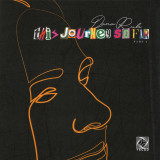
Dana Ruh offers up the aptly titled ‘This Journey So Far’ 2x12’’ project via Yecad here, comprised of eight original cuts.
As a long standing and widely respected figure in the world of underground house and techno through her releases on the likes of Slices Of Life, Ostgut Ton, Cocoon, Cave and of course her own Brouqade, Dana Ruh’s reputation stands tall as one of the finest purveyors of this sound. Amongst her releases, Dana maintains a heavy tour schedule taking her across the globe each year to many hotspots in key cities, here she marks another milestone in her career with a 2x12’’ release, entitled ‘This Journey So Far’, as a musical reflection on all that’s led to this point.
Across eight tracks Dana presents her distinctive style which often straddles the lines between house and techno, opening with the airy, swinging dub aesthetic of ‘Case Of V’, while diving into deeper, murkier realms on ‘Bruv’. The B1 ‘KMA54’ then shifts focus towards choppy breaks, textural tension and hypnotic voices before B2 ‘Babel’ lays down a true dub techno feel across ten minutes of crisp drums, spiralling echoes and expansive reverberations.
Kicking off the C-Side is ‘MF Now’, stripping things back to a shuffled, bumpy rhythm section, resonant synth chimes and billowing textures. ‘Grey With Some Light’ then leans into a more experimental glitch realm via twitchy oscillating percussion, unfurling atmospherics and drifting keys. ‘The Look’ leans back into House territory with raw stabs, sax lines, metallic chimes and vacillating low-end tones before ‘Song For The Lonely’ concludes the project, encapsulating the essence of deep house with ethereal pad swells, circling stab sequences, low-slung drums and cossetting subs.