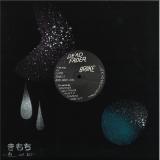
The label suggests these sounds are something akin to if Tim Hecker met Hudson Mohawke "in a 16-bit video arcade," and we're not going to disagree. Dead Fader is now based in Berlin, but his sound remains out of this world with vapourware trails, glossy synth textures and skeletal rhythms all drenched in trippy colours and low-key melancholy. Ambient, minimal and suspensory synthscapes all drift by with far-sighted reverie encouraged before more weighty rhythms like 'Clowning' and 'fade Out' driving things with extra momentum.
Suche:vàli
Both multi-instrumentalists and seasoned producers, J and Peter took an all-hands-on-deck approach to these original collaborative tracks. The sonic seeds of "Underappreciated" and "Facile" were planted by Peter, JKriv cooked up the demo of "Over Suffa", and all three were completed together in J’s Brooklyn production studio. With live-recorded guitar, bass, analog synths, and drums/percussion by and a cohort of Brooklyn accomplices, the Facile EP marries live elements with modern club-ready production.
The punchy horns and no-nonsense vocals on "Underappreciated" come via Peter’s long-standing stage and studio connection with Ibibio Sound Machine, Favorite Recordings staple singer Olivya delivers the soulful EP title track performance, and Samy Love’s insistent vocal on "Over Suffa" is a pleading message to end the war and suffering in his native Cameroon.
With a remix of "Underappreciated" by French producer extraordinaire Yuksek, songs in both English and French, and influences ranging from boogie funk, 80s R&B, and classic Zouk, the Facile EP is a varied and dazzling collection of music for both listeners and DJs alike.
- A1: B-Side – Always On My Mind
- A2: Nuncc – Streetlights
- A3: Yawuh & Faer – Movie
- A4: Koralle – Silent Nuit
- A5: Angry Apple – Eight
- A6: Flo Badabum – One Way
- A7: Phil Tyler – Kool Summer
- A8: Ylluw – Jasmine Tea
- A9: Tides. – Suna
- A10: 77Th Man – Illusionist
- B1: Dualizm – Lyre, Lyre
- B2: Jaybee Vibes – Groovee Moodee
- B3: Eu93Ne – Green Eyes
- B4: Half Blue, Hotpotatoes – Great Reef
- B5: Mugensoul, The Summer Knows – Black Smoke Jazz
- B6: Natty Dub & Chicco Allotta – Rebound
- B7: Luc Le Luc, Birdchords – Empty Streets
- B8: Kristoffer Eikrem – Soft Look
- B9: Jazzyhan – Starless Night
- B10: Gabb. – Late Night
Jazzprint is a curated compilation by Italian label and collec tive Beat’s Tailors featuring 20 instrumental tracks by 23 producers from around the world, connected by a shared approach to jazz-influenced beatmaking.
Blending jazz elements with hip hop, chillhop and instrumental beats, the record offers a smooth and cohesive listening experience across both sides, showcasing a wide range of moods and contemporary production styles.
- 01: Carrying You (Castle In The Sky)
- 02: A Town With An Ocean View (Kiki's Delivery Service)
- 03: Nausicaä Of The Valley Of The Wind (Nausicaä Of The Valley Of The Wind)
- 04: Nausicaä Requiem (Nausicaä Of The Valley Of The Wind)
- 05: Legend Of The Wind (Nausicaä Of The Valley Of The Wind)
- 06: The Path Of Wind (My Neighbor Totoro)
- 07: My Neighbor Totoro (My Neighbor Totoro)
- 08: The Legend Of Ashitaka (The Princess Mononoke)
- 09: The Princess Mononoke (The Princess Mononoke)
- 10: One Summer's Day (Spirited Away)
- 11: County Road (Whisper Of The Heart)
- 12: The Promise Of The World: The Merry-Go-Round Of Life (Howl's Moving Castle)
Vanisher, Horizon Scraper is the highly anticipated follow-up to Quadeca’s 2024 critically acclaimed mixtape Scrapyard, which received a coveted score of 9/10 from Anthony Fantano (The Needle Drop) and currently sits as the #28 highest-rated mixtape of all time on RateYourMusic.
Vanisher, Horizon Scraper is a concept album—a modern apocalyptic folklore about a man who sails into the ocean alone in pursuit of freedom and cosmic understanding, subconsciously driven by his own self-destruction.
With a runtime of nearly 70 minutes, the album takes listeners on a transformative sonic journey, blending genres such as world music, ambient, hip hop, bossa nova, folk, rock, and other experimental styles.
- A1: Black Line - Myele
- A2: Mbamina - Nzoumba I-Robots 1975 Unreleased Edit-44100
- A3: Mbamina - Watchiwara
- B1: Oxid - Bright Heron
- B2: Oxid - Oxid Trail
- C1: Stratosferic Band - Nowhere - Reverberated Unreleased Version
- C3: The Boston Garden - Lady Pick-Up
- D1: Mbamina - Nzoumba Unreleased-44100
- D2: Oxid - Oxid Trail Unreleased Extended Version
Daniele Baldelli
"A pleasant surprise to find in this release various atmospheres and sounds that have always been part of my DJing. It even made me rediscover M’Bamina, whom I used to play back in 1974 at the Tabù Club in Cattolica.
There are afro vibes as well, with Black Line – Myele, which is featured on one of my Cosmic tapes, and Nowhere by the Stratosferic Band recalls a track I used to play at the Baia degli Angeli…
Excellent work!"
Voom Voom Music was an independent Italian record label based in Turin, founded and managed by record producer Ivo Lunardi (Turin, December 6, 1940 – December 9, 2010). A pivotal figure in the Piedmont music scene, Lunardi was active both as a DJ and as the owner of several disco clubs.
The label operated for several years in the latter half of the 1970s, releasing mainly productions connected to the Italian dance and pop scene.
Since 2016, the original master tapes from the Voom Voom Music catalog have been owned by Gianluca Pandullo (I-Robots), a close friend of Ivo and Luca Lunardi. Through his labels Opilec Music and Turin Dancefloor Express, Pandullo oversees their preservation and historical enhancement.
The artistic direction of Voom Voom Music was marked by a distinct sonic identity — eclectic yet visionary. The Turin-based label founded by Ivo Lunardi embraced a sound that blended disco, pop, and rock influences, interwoven with African American grooves in a pioneering, international perspective.
Voom Voom Music was among the first Italian labels to introduce this kind of musical language in the country. A prime example is the Italian edition of the debut album by B.T. Express, Do It ('Til You're Satisfied), released in LP, 8-Track Cartridge, cassette, and 7" single formats.
The label’s productions clearly reflected the influence of black and funk music, as evidenced by the references and inspirations running through its catalogue. The track “Lady Pick-Up”, for instance, includes direct nods to “Do It Good” by KC & The Sunshine Band and Manu Dibango’s iconic “Soul Makossa”, revealing a musically refined and contemporary sensibility.
Among the label’s most representative works is Splash (1977) by the Stratosferic Band, a project conceived by Luigi Venegoni — producer, songwriter, and guitarist of Arti e Mestieri. Venegoni’s artistic journey spanned from progressive rock to space and Italo disco. The album artwork was designed by Piero D’Amore (1944 - 2022), a charismatic and multifaceted figure of Turin’s art scene (one of his works was even acquired by the MoMA in New York).
The record includes a disco reinterpretation of Van Morrison’s classic “Gloria”, and “Splashdown”, a track fusing the disco-rock energy of Rockets and Space. In contrast, “Nowhere” revisits the 1975 single by Hokis Pokis, a soul/disco band from Nassau County (New York), transforming it into a vibrant disco-funk number.
Another significant expression of the label’s catalogue is the afro-rock sound of M’Bamina, an Italo-Congolese group whose rhythmic energy and dialogue between African percussion and Western funk evoke the style of international formations such as Osibisa — themselves linked to a rich artistic history in Italy.
On June 5th, Tectonic Recordings will release Beatrice M.’s debut LP, Sinking, on a vinyl triple pack and digital download. The vinyl edition will be split across 3 separate 12” vinyl releases, packed in matching printed disco bags. This is part 1 of 3.
Beatrice M. pushes the needle forward for a sound and scene that nestles among a niche that blends UK dubstep, techno, and the golden era of tech house. The Paris-born artist is in their mid-20s and has been building up a grassroots following and plenty of momentum over the last few years, through their Bait label and its output of sonically resonant artists, alongside numerous remixes and collaborative and solo releases for labels such as Tectonic, Tempa, and Rinse. There are plenty of accolades coming in for Beatrice's work too, with notable DJ mixes for respected heavyweights such as Mixmag as well as featuring in Resident Advisor’s best mixes of 2025.
Beatrice is known for making deep explorations into the history of the scenes that have interested them, tracking and highlighting connections between dubstep, tech house, jungle and beyond across various self-produced, one-off radio shows, often taking a journalistic approach to subjects of true passion. They travel across Europe on a packed-out DJing schedule, avoiding air travel, and doing it mainly by train. Many of the LP's tracks started life as sketches put together on these long journeys, as the sights of different countries rolled past the window.
Having taken inspiration from Tectonic artists such as 2562, the label – a home to music that was originally placed in the dubstep-techno crossover spectrum—feels like the perfect place to host Beatrice M.'s debut album Sinking, beginning a new chapter for this kind of sound.
Opening track ‘Ever’ plunges us into deep waters with a sense of dubwise command. The momentum picks up on ‘Ocean’, where the vocal snippet "everyday life" circles around reverbed stabs and intricate hi-hat moves. ‘Motion’ sets the pace with its jumpy but rolling rhythm, leading straight into the eyes-down, party-time energy of ‘Disco Corner’.
What happens when the mathematical rigor of Johann Sebastian Bach is stripped of its classical facade? With the album SRDNG x LPZG, the duo AMAS, together with double bassist Frithjof-Martin Grabner, delivers a radical answer on May 15th, 2026. The work does not merely translate Bach’s legacy; it consistently reimagines it within the aesthetics of Minimal, Dub-Techno, and Ambient. The creation of this extraordinary abstraction spanned three years and two geographical poles: the raw isolation of Sardinia and the academic precision of Leipzig.
The project found its origin in the seclusion of Pula, at the southernmost tip of Sardinia. There, AMAS extracted and digitally dissected the rhythmic and tonal essence of 14 selected works by Bach. In a temporary local studio, these minimalist sequences fused with field recordings of the surroundings to form a hypnotic framework of electronic structures. Back in Leipzig, this foundation met Frithjof-Martin Grabner. In an intense session held in a hall of the historic HMT Leipzig, spontaneous improvisations emerged that breathe the spirit of Miles Davis’ approach to "Ascenseur pour l’échafaud": free play based on rudimentary sketches, an intuitive reaction to the material—comparable to Davis’ iconic scoring of silent film images. It is a deliberate prioritization of atmosphere over technical perfection. Grabner utilizes the full spectrum of his instrument, creating sounds that, in post-production, often blur the line between analog depth and synthetic texture.
The result is an organic symbiosis: the vastness of Sardinia (SRDNG) meets the intellectual density of Leipzig (LPZG), while the strictness of the Baroque dissolves into the repetitive energy of Minimal Techno. To do justice to this conceptual ambition, the album will be released in an uncompromisingly audiophile edition. Limited to 200 copies worldwide, the double LP is pressed on 180g vinyl and features a front cover with a special 3D effect, continuing the visual tradition of the AMAS series. An album for listeners who understand Bach as a living origin of modern sound art—and for lovers of electronic music seeking a new, organic soul within the repetitive depth of techno.
Kim Rapatti (Mono Junk) is a long-running Finnish electronic music producer and the operator behind DUM Records. In the early 1990s, releasing across multiple aliases was a practical way to keep output organized and to present a broader label roster. Mars 31 Heaven was one of Rapatti's period-specific side names, used to separate a more inward strand of work from the main Mono Junk line.
Mono Junk presents Mars 31 Heaven: Collected Works '93–'95 is the first time these recordings have been compiled onto a single release. The tracks were previously scattered across various compilations, with "Little Elephant" later reappearing on a Mono Junk release. Audio was sourced from the original DAT tapes and remastered by Michael Diekmann. "Osaka House Remix" and "World of Isolation" originally appeared on the B-side of DUM Records' Blue File Compilation (1993). "Violins" and "Abyss" appear on vinyl for the first time after CD-only appearances ("Violins" on Dum Trax, 1995, and "Abyss" on Unitunes and Came From Outer Space I), and the original mix of "Osaka House" is previously unreleased. Housed in full-colour sleeves designed by Ed Cheverton.
Following their 2023 LP Presents, Nathan Nelson's American Cream Band bring the Twin City heat back to Quindi with an album rooted in duality. From the yin and yang party-starting A side and meditative B side to the dual-attack boy-girl vocals, the nature of opposites and equals steer the expansive, artful strain of rock n' roll that spill out of this wholly unique Minnesotan export. For the ever intriguing Quindi, it's a strident step into Spring after the frosty introspection of Roudi Vagou & Läuten der Seele's Taghelle Nacht. While the world burns and injustice prevails, Twin is a celebration of unity and radical expression-all the more urgent against the backdrop of authoritarian overreach and righteous protest that has whipped through Minneapolis in recent times.
Twin continues Nelson's drive at the helm of American Cream Band to draw in a colourful cast of players to feed into his orgiastic sound, meshing the trance-induction of krautrock with the irrepressible funk of the post-punk-new-wave explosion. But principal among the cast of characters and forming a central tenet to the identity of this album is Liz Buhmann, lead vocalist and a formidable, playful foil to Nelson's own Midwestern twang. Around the electric spark between Buhmann and Nelson, a heavy duty ensemble wrangle guitar, bass, sax, a cornucopia of synths and a battery of percussion into all manner of sonic forms.
The double-sided concept manifests throughout Twin. On 'Call Me' Buhmann sings in French to contrast Nelson's English, while the strident strut of the NYC disco groove is offset by an inherent dreaminess that turns the track into a more cosmic kind of dancefloor workout. 'Ethical Vampire' is a spiky cut with a garage rock patina that spirals into a psychedelic, synth-soaked get-down. 'Don't Burn The House Down' is a loose and limber roller that captures Can at their funkiest along with the hypnotic vibe of other such esteemed long format jammers, but American Cream Band boils that energy into a hook-laden art pop sensibility before a gentle, drawn out landing.
Even the more pensive moments on Twin find space for friction. For all its tender, smoky temperament, 'Leda and the Swan' lets the electric piano and guitar fray at the edges and bleed into the red while Mat Heinrich's tumbling drums lurch with pent-up intensity on the one. 'No Funeral Necessary' skirts around the mellow pools of new age but prefers to let liberally doused Tape Echo tweak out Alex Meffert's honeyed sax inflections and Buhmann and Nelson's disparate sermons.
Nelson describes Twin as "an oppositorum coincidentia" - a reference to the mystical Latin concept of the coincidence of opposites that suggests contradictory ideas 'fall together' in a higher reality. Beyond the sound of the album, this idea also manifests in the cover photography by Sho Nikado and the swans on the LP labels by Autumn Garrington. As freewheeling and wide-open as American Cream Band feels, nothing appears by accident. The end result feels like a nourishing whole - rich with substance and nuance, deep enough to be explored and absorbed yet also so brazen and immediate you can't help but feel its surface charms from the first thrusts of 'The Hive Is Pissed' to the last ripples of 'We're Not So Sinister'.
- 1: Lake Walk
- 2: Lazy Daisy
- 3: Ups & Downs
- 4: Silently
- 5: There Was A Nice Sunset
- 6: Somewhere Good
- 7: Slow Island
- 8: Movin’ On
If – in some parallel universe (or perhaps a not-so-distant-future version of the one we’re already sentenced to living in) – the evil overloads of artificial intelligence were actually successful in their attempts to create convincingly enjoyable “original music,” more specifically tasked with wholly encapsulating my own personal tastes by data-chugging some cocktail of – oh, I don’t know – the posters on my wall, the records in my “most listened to” pile, the mixtapes I made for others, intensive physical scans of my auditory cortex, amygdala, hippocampus, heart strings, whatever else they have splayed out on their autopsy table with the intention of generating one all-encompassing “perfect band” based on the fruitful sum of their findings – that band, for me, would be (or would at least sound exactly like) the Tara Clerkin Trio. It is, quite simply, without exception, the music I wish to hear.
Formed in Bristol UK (where none of them are from yet all of whom are deeply engrained) in 2020, the Tara Clerkin Trio – as it somewhat democratically exists today, despite the singular authority implied by its name – consists of the titular Tara Clerkin, her partner Sunny Joe Paradisos, and Sunny’s brother, Patrick Benjamin. I’ll confess, I don’t know what their respective roles are within the operation and there’s only a very small part of me that cares to learn, as one of my favorite qualities in an objective listening experience is the mystery of who is playing what, which sounds are “authentic” versus synthesized, which chunks are performed “live” in a room together versus meticulously Frankenstein’ed from measure to measure, or how exactly the overall sound is so (seemingly) effortlessly achieved. Though, I suspect, if and when I do witness a live performance by this band at any point, my enjoyment of the music will not be lost in my better understanding of it.
With two extraordinary mini-albums – In Spring (2021) and On The Turning Ground (2023) – making a splash on London’s formidable World of Echo label in wake of their self-titled 2020 debut, this upcoming Somewhere Good LP is, in many ways, the band’s most realised work. In running their usual gauntlet of idiosyncratic (*an overused adjective for which here there is regrettably no sufficient alternative) approaches, Clerkin & co. colour in and outside of compositional lines over the course of 40+ celebratory minutes - never wallowing, despite inherently somber subject matters of self-defeat, disease, displacement, restlessness, gentrification - allowing their arrangements and improvisations ample space and time to situate, stretch out, breathe, cross-pollinate, and ultimately take deeper hold on the listener’s imagination – all while somehow sounding more like themselves than ever before.
Of course, there are traceable influences herein, if one felt that such comparisons were necessary to properly examine and enjoy this music (they aren’t)… Being the big dumb American from the small boring town that I am, cornfed on ‘90s alternative radio with the enchantingly exotic sounds of Maxinquaye and Mezzanine emanating from my chunky tube television, I can’t help but to make a blatantly obvious reference to a “Bristol sound”, ie the whole trip-hop trip, the pastoral crooning over the suggestive urban grime of cracked electro/piano treatments, the digitally-yet-primitively reconstructed James Bond soundtrack string-beats, etc.. But the Tara Clerkin Trio is so infinitely much more than that. There are elements of avant-pop, modern classical, kraut-folk, audio verité, dare I say indie rock (and not of the beer guzzling, masturbatory fuzz-flex variety but perhaps more like a Trish Keenan-fronted Faust, Adrian Sherwood at the mixing desk of If You’re Feeling Sinister, or – in expanding on our alternate reality – a world in which High Llamas cut a full-length for Warp Records with Andrew Weatherall on coffee duty).
The hazy, unmappable skyline-mirage of droning harmonium, upright bass, peculiarly accentuated wind instruments, acoustic guitar, hushed yet literally mighty keys combine to hypnotizing effect. The band may make underlying nods to jazz, sure, but it’s not appropriation, it’s that they have the actual chops to build it out. Beneath the janky samples and oddball percussive embellishment lies actually great drumming. Beyond the manipulated vocal witchery and woefully reflective plain-spoke moments are Tara’s subtly inspired melodies, sung with what might honestly be the glue to the whole crazy equation. A calming consistency throughout the otherwise unpredictably dynamic, boldly intuitive, uniquely British exploration of this (their own) universe in song. – Ryan Davis (Chicago, February 2026)
- A1: Emanuel Satie - Activate
- B1: Awen, Denis Horvat, Floyd Lavine - Love Is Like Music
- B2: Dana Ruh, Gabriele Carasco - Liquid Sunshine
- C1: Roman Flügel - Secret Service
- D1: Daniel Stefanik - Here Comes The Afterglow
- D2: Marcel Dettmann - Magnet
- E1: Petar Dundov - Alpha Prime
- F1: Secret Cinema - Moo Da Boo
- F2: Pig & Dan, Funk D Void - Overdose
- G1: Fango - Corsa Di Notte
- H1: Krystal Klear - New Gen Tech Tool
- H2: Matthias Schildger - Hypersphere
- I1: Ricardo Tobar - Union
- J1: Gregor Tresher, André Galluzzi - Strahlung
- J2: Audion - Chides
Vol.1[89,03 €]
- 1: The Hook
- 2: No Driver
- 3: Roses
- 4: If You Change
- 5: Wondering
- 6: Angel Number
- 7: Soft Cover
- 8: Heaven Is Waiting
- 9: Actor
- 10: Hourglass
Ein Album mit dem Titel ,Roses" würde sich mit romantischen Gesten befassen. In den zehn Titeln, aus denen sich das siebte und neueste Widowspeak-Album zusammensetzt, werden intime Räume und Phasen der Liebe durch eine nostalgische, mit Vaseline überzogene Linse eingefangen. Kerzen brennen in rotem Glas, während sich Liebende in einer Lederbank näherkommen. Porträts von Prominenten blicken wie Engel in einem Restaurant herab. An anderer Stelle sind Nelken in ein schwarzes Buch gepresst, und Tänzer ziehen sich gegenseitig an sich. Widowspeak ist eine Band, die große Emotionen thematisiert, ohne sich selbst allzu ernst zu nehmen. Die Süße, ja sogar Albernheit einer ausgedehnten Verliebtheitsphase, die so alles verzehrend wird wie ein kitschiger Taschenbuchroman. Autos und ihre Fahrer dienen als Mittel, um über gegenseitige Abhängigkeit zu sprechen. Wenn Musik gleichzeitig naturalistisch und noir, gesättigt und üppig sein kann, dann ist das Widowspeak. Sie sind eine Band, die es versteht, eine Szene zu inszenieren. Diese Songs nutzen intime Momente, um über tiefere Herzschmerzen zu sprechen: die der modernen Existenz innewohnende Unruhe, das Herumwarten darauf, dass etwas geschieht. Oder das Gefühl, im Widerspruch dazu zu stehen, eine Rolle im eigenen Leben zu spielen. ,Roses" mag das romantischste Widowspeak-Album sein, aber es ist auch das zutiefst realistischste: Die Bühne wird nicht mit dramatischen Ouvertüren bereitet, sondern vor dem Hintergrund der Kleinigkeiten und Wiederholungen alltäglicher Handlungen. Kleine Beobachtungen vor, während und nach der Arbeit: das Ritual, Kunden Wasser einzuschenken, sich an seinem freien Tag eine Erkältung einzufangen. Davon zu träumen, im Lotto zu gewinnen, oder vielleicht zu erkennen, dass man bereits gewonnen hat. Hier ist Liebe ein Mittel, um darüber zu sprechen, was uns antreibt, und Widowspeak suggerieren, dass sie der eigentliche Sinn sein kann. Das Licht, das die dunklen Ecken eines Tages, eines Lebens erhellt. Ein Grund, weiterzumachen, trotz des Schmerzes, den es verursachen kann. Widowspeak sind eine der produktivsten und fleißigsten Bands der Szene, die knapp unter der Oberfläche brodeln. Molly Hamilton und Robert Earl Thomas bilden den Kern der Gruppe und sind ihre Songwriter; sie haben ihren Sound über sechzehn Jahre hinweg und mit einem beeindruckend konsistenten Werk verfeinert. Als eine von vielen Bands, die in der fruchtbaren New Yorker Musikszene entstanden sind, begannen sie damit, ihre Ausrüstung zwischen mittlerweile geschlossenen Veranstaltungsorten und ihrem Proberaum im Monster Island Basement hin- und herzuschleppen. Widowspeak ist heute ein Ehepaar, das in der eigenen ,Nebensaison" Tagesjobs ausübt. Robert ist Tischler, Molly Kellnerin. ,Roses" ist Widowspeak in Bestform und schöpft aus zeitlosen Einflüssen. Die Magie der Band liegt nach wie vor im Zusammenspiel zwischen Molly und Robert in ihren beiden Hauptrollen: ihrer trägen, facettenreichen Stimme und seinem instinktiven Gitarrenspiel. Im Kern ist ihre Musik etwas Besonderes, weil sie echt ist: vor allem für die Menschen, die sie machen. Zerbrechlich und vergänglich, und doch lohnend, wie die Liebe selbst.
On June 5th, Tectonic Recordings will release Beatrice M.’s debut LP, Sinking, on a vinyl triple pack and digital download. The vinyl edition will be split across 3 separate 12” vinyl releases, packed in matching printed disco bags. This is part 2 of 3.
Beatrice M. pushes the needle forward for a sound and scene that nestles among a niche that blends UK dubstep, techno, and the golden era of tech house. The Paris-born artist is in their mid-20s and has been building up a grassroots following and plenty of momentum over the last few years, through their Bait label and its output of sonically resonant artists, alongside numerous remixes and collaborative and solo releases for labels such as Tectonic, Tempa, and Rinse. There are plenty of accolades coming in for Beatrice's work too, with notable DJ mixes for respected heavyweights such as Mixmag as well as featuring in Resident Advisor’s best mixes of 2025.
Beatrice is known for making deep explorations into the history of the scenes that have interested them, tracking and highlighting connections between dubstep, tech house, jungle and beyond across various self-produced, one-off radio shows, often taking a journalistic approach to subjects of true passion. They travel across Europe on a packed-out DJing schedule, avoiding air travel, and doing it mainly by train. Many of the LP's tracks started life as sketches put together on these long journeys, as the sights of different countries rolled past the window.
Having taken inspiration from Tectonic artists such as 2562, the label – a home to music that was originally placed in the dubstep-techno crossover spectrum—feels like the perfect place to host Beatrice M.'s debut album Sinking, beginning a new chapter for this kind of sound.
Given Beatrice M.’s reputation as a prolific collaborator, the LP naturally features a few heavy-hitting joint efforts. Bristol-based Sir Hiss features on the subby, 140bpm techno thumper ‘Juice’, while the LP title track, ‘Sinking’, brings forward Beatrice M.’s fresh take on influences from Tectonic’s past in a bass-driven 4/4 number that demands physical movement. ‘Dear Dubstep’ allows a moment to reflect, placing us in a spacious aqua-cave where atmospheric sounds are punctuated by wumping sub-bass, before we surface with ‘Help’ to catch our breath in the melancholy of the moment.
On June 5th, Tectonic Recordings will release Beatrice M.’s debut LP, Sinking, on a vinyl triple pack and digital download. The vinyl edition will be split across 3 separate 12” vinyl releases, packed in matching printed disco bags. This is part 2 of 3.
Beatrice M. pushes the needle forward for a sound and scene that nestles among a niche that blends UK dubstep, techno, and the golden era of tech house. The Paris-born artist is in their mid-20s and has been building up a grassroots following and plenty of momentum over the last few years, through their Bait label and its output of sonically resonant artists, alongside numerous remixes and collaborative and solo releases for labels such as Tectonic, Tempa, and Rinse. There are plenty of accolades coming in for Beatrice's work too, with notable DJ mixes for respected heavyweights such as Mixmag as well as featuring in Resident Advisor’s best mixes of 2025.
Beatrice is known for making deep explorations into the history of the scenes that have interested them, tracking and highlighting connections between dubstep, tech house, jungle and beyond across various self-produced, one-off radio shows, often taking a journalistic approach to subjects of true passion. They travel across Europe on a packed-out DJing schedule, avoiding air travel, and doing it mainly by train. Many of the LP's tracks started life as sketches put together on these long journeys, as the sights of different countries rolled past the window.
Having taken inspiration from Tectonic artists such as 2562, the label – a home to music that was originally placed in the dubstep-techno crossover spectrum—feels like the perfect place to host Beatrice M.'s debut album Sinking, beginning a new chapter for this kind of sound.
The album's lead single and sole vocal track, ‘In Touch’, showcases Beatrice M.’s split UK-France upbringing. The track unites French MC Kaba and UK MC Jinnal for a bass-driven anthem that seamlessly trades French and English lyrics. Next up is a vinyl exclusive track: the ‘Remedy Mix’ VIP of ‘Poison’, a rolling, bass-driven tech house/techno crossover version of a track originally released on the Tectonic Sound collection from last year.
‘Here’ sees Beatrice M. collaborating with Jay Carder to create a soulful broken-beat flavoured track as ‘Years’ rounds off the journey with contemplative melancholy, providing a deep and dubby closer.
Ltd Edition 10"
Budapest based concept label Blue Sun welcomes formerly independent local afrobeat-jazz ensemble to its catalogue with a nuanced 4 tracker EP. The release not only marks the beginning of the collaboration, but a definite new musical direction in the band’s life.
Written in a one week jam session retreat in the Hungarian countryside, and recorded at one of the highest peaks of Hungary after a year of global touring, The Garden becomes an amalgamation of the band's personal and artistic experiences. The material conveys a more jazzier approach, with complex harmonies, and an almost cinematic, dreamlike atmosphere, somewhat distancing from (but not completely forgetting) the previously emphasized, dance-oriented Afro- and Latino roots. Song for Ramon serves as the EP’s emotional climax inspired by the passing of a close friend and local underground chef pioneer.
Formed in 2019 in Budapest, Hakumba is a staple of the Hungarian festival circuit, with a growing international presence (SXSW London, SHIP, PIN Music Showcase). They’ve recently finished a tour in Australia this January.
The groove-driven ensemble blends afrobeat, jazz, and various strands of world music into a sound that is both rhythmically powerful and harmonically adventurous. With an eleven-piece lineup featuring an expansive horn section, multiple vocalists, percussion, and keys, the band moves effortlessly between dancefloor energy and more intricate, jazz-influenced musical ideas.
Like the band’s previous album, the EP was again recorded, mixed, and mastered by András Weil, the producer behind The Qualitons, the only hungarian band ever performed Live at KEXP. This continuity preserves Hakumba’s recognizable sonic identity while giving space for new colors and more complex musical ideas to emerge.
Written & performed by:
Soma Számel – drums
Endre Szép – bass
Imre Hegedűs – guitar
Zalán Bendegúz Huff – guitar, vocals
Csongor Mari – keys
Noel Nagy – percussion, vocals
Dorka Foster – flute, vocals
Kristóf Szabó – alto sax
Alpár Sikó – tenor sax
Gáspár Simon – trumpet
András Téglásy – baritone sax
Produced, recorded, mixed and mastered by Andras Weil
Artwork by Eszter Lukács
Graphic design by Péter Tóth
Manufactured by AD Records
Distributed by Rush Hour
Recorded at Galyatető, Hungary
Released under the Blue Sun
- A1: Dysania
- A2: Mend
- A3: Lusting
- A4: Pinned
- B1: Severed Cord
- B2: Hazel Vacancy
- B3: Precarious
After six years of purgatorial sway, Joel Shanahan’s Auscultation project returns with a fourth full-length of dazzling, convex electronics: IV. His signature production touches have only heightened in the interim: iridescent synths; dexterous bass; slinky networks of pads and percussion; regal, rolling fog. Icy bangers of isolation and beauty crafted over long Pacific Northwest winters of endless rain.
The album evolved fitfully, polished and shelved between bursts of inspiration and malaise. This push and pull gives the music a manic, mirror ball, mood-swing movement, tilting between reverie and regret and sweaty abandon. Seven songs of memory and mirrors, haunted by shadows of the past but dreaming of futures still liquid, and unions yet to come
- 1: Already Dreaming
- 2: Wanting On Air
- 3: Listen To Music And Cry
- 4: My Zhe Zhe
- 5: Take The Form
- 6: When
- 7: Hack It Up
- 8: Lacan In The Family
- 9: Having A Moment
- 10: From The Font Of You
- 11: To Nothing’s Reward
- 12: Now We Cringe At The Thought
- 13: Dismissal Mosaics
"aethermead", das neue und 20. Studioalbum von Of Montreal, lässt die Sounds der frühen Jahre wieder aufleben, während es gleichzeitig die künstlerischen Grenzen ihres unverkennbaren Indie-Pop/Rock-Stils erweitert. Frontmann & Songwriter Kevin Barnes, bekannt für seinen einzigartig-produktiven Output und großartigen Kollaborationen mit Künstlern wie Solange, Janelle Monáe und Jon Brion, nahm die LP mit Toningenieur Drew Vandenberg (Faye Webster, Toro y Moi) in seinem neuen Heimatort Brooklyn auf. Die Grundspuren wurden live mit Barnes’ langjähriger Live-Band auf einer 16-Spur-Bandmaschine eingespielt. Das Ergebnis schimmert mit Indie-Pop-Elementen ihres 2004er Albums "Satanic Panic In The Attic" sowie der rohen, energiegeladenen Live-Atmosphäre von "Lousy With Sylvianbriar" (2013). Wunderschön-melodische Akkordfolgen wechseln sich mit Rock'n'Roll-Krachern ab, auf eingängige Hymnen folgen surreal-experimentelle Klangwelten. Mit einer neuen Tour am Horizont (erstmal durch Nordamerika) feiern Of Montreal weiterhin ihr Vermächtnis und gehen gleichzeitig mutig in die Zukunft.
Bolka is known as the man with the cap. His cap has lived through a lot: his glitchy and microtonal experiments, studies at Institute of Sonology in The Hague or through countless performative works. A few years ago, Bolka’s cap fell apart. By that time he was already a fixture on the slovak experimental scene, but only releasing his debut album, “smutné stropy.” He started wearing new caps from then: somehow reminiscent of the old one, but much more varied — same as “smutné stropy,” bubbling with motifs, charming humour and pop sensitivity layered over detailed soundscapes popping with surprises.
On schwarzkopf, Bolka returns wishing for a thick black hair. With his charming love songs, that are positioned somewhere between a tightly run freak folk orchestra, deconstructed ballads and colorful ecstatic melancholy, he creates an album that thrives on juxtapositions that are completely unique, yet strangely familiar. Bolka’s songwriting is at once tender and irreverent — lovestruck whispering suddenly tripping over absurdist jokes and surreal images that fizz like soda. His songs move in that strange space between vulnerability and mischief, where intimate confessions collide with radical playfulness and the poetic rubs shoulders with the delightfully ridiculous.
On schwarzkopf, Bolka expands his world with a wide circle of collaborators and an even richer sonic palette. The album is meticulously detailed yet carefree: delicate moments sit next to sudden explosions, drifting from gentle pop to bursts of noise. Toward the end, the album even slips into a footwork-infused remix by Kodiki, passes through Julek ploski’s signature neon-baroque string perspective, and briefly wanders into Lénok’s cinematic sonic world. Bolka sings that he wants to dissolve into a healing ointment, to be ground in a mortar with calendula — and he invites us into this musical spa with him: a place that stings a little but ultimately soothes, a gorgeous soundscape that is both painful and joyful at the same time.