Dutch-born, Belgian-based artist Chantal Acda has been releasing her music and touring internationally since 2006. Her impressive and eclectic catalog includes numerous band projects, collaborations, and solo albums. The 2024 album Silently Held, recorded with The Atlantic Drifters, is nominated in 2025 for an Edison Award in the Netherlands. Her upcoming album, The Whale, will be released on September 19, 2025, followed by an extensive European tour. The album was produced by Chris Eckman (The Walkabouts) and recorded with her live band, which she has been performing with for over a decade. The songs were co-written with band members Eric Thielemans, Alan Gevaert, Gaëtan Vandewoude, and Niels Van Heertum.
The sound of The Whale is rougher and more rock-oriented than her previous projects, but her signature introspection and vulnerability remain at the core of the music. Singles “Heads” and “Make It Work” have received airplay in Belgium, the Netherlands, the UK, and Germany.
In the past, Chantal has recorded and performed with artists such as Bill Frisell, Nils Frahm, and members of Low, Múm, and Efterklang. Currently, she is also a member of the bands Distance, Light & Sky (with Chris Eckman of The Walkabouts and Eric Thielemans) and Isbells.
Suche:väth
Ostinato as resistance: Rafael Anton Irisarri’s landmark work reimagined. Marking the tenth anniversary of the American composer’s critically acclaimed album 'A Fragile Geography', this new edition arrives renewed, both sonically and visually.
First released in 2015 (Room40) during a period of personal upheaval and creative reinvention, it endures as a testament to resilience, transformation, and the connection we hold with the places that shape us.
Written in the aftermath of a devastating theft, A Fragile Geography was born out of loss. Just days before a cross-country move to New York, Irisarri’s entire Seattle-based studio was wiped out. Instruments. Recordings. Archives. Gone without a trace. He arrived on the East Coast to an empty room and the daunting task of starting over.
“This album wasn’t just a record; it was a lifeline,” Irisarri reflects. “It became a way to process the emotional chaos that followed: uprooting, instability, and ultimately, the slow, intuitive rebuilding of a life.”
Composed and recorded in the rural woods of the Hudson Valley, the album took shape in seclusion, surrounded by nature, and through a process guided by improvisation. Embracing limitations, Irisarri wove textural layers of field recordings with half-remembered melodies from his Seattle years, piecing them together like fragments of memory. Tracks like “Displacement,” “Hiatus,” and “Persistence” juxtaposed haunting stillness with restless momentum, mapping an inner terrain of grief, catharsis, and rebirth.
Among its defining sounds is “Empire Systems,” a monumental centerpiece built around a simple four-chord progression, organ textures, and guitar drones. Gradually, the track expands into layers of immersive loops and thick, enveloping distortion that wash over the listener like a rolling wave. Often cited as the album’s most majestic passage, it captures Irisarri at his most sonically ambitious. With a harmonically saturated structure crafted from restraint and repetition, it remains one of his most recognizable compositions: an exercise in the art of maximal minimalism.
From the outset, “Reprisal” received praise from BBC’s Mary Anne Hobbs, who championed the track on her radio show. Her support played a key role in introducing Irisarri’s work to wider audiences and solidifying his place within the lineage of electronic, drone, and experimental sound artists. A slow-burning elegy, the piece emerges from a haze of distortion and sub-bass, with dense, unrelenting drones carrying a sense of mounting tension. Just as it seems to collapse under its own weight, flickers of guitar emerge like distant light through fog. It’s a meditation on dissonance, resolve, and the elusive possibility of release.
The closing track, “Secretly Wishing for Rain,” is steeped in saudade: a longing for Seattle’s dour grey skies, lush green landscapes, and desaturated sunsets. Through it, Irisarri mourns a vanished chapter of life bound to the city, a time documented in scattered mementos and cherished collections, now permanently gone. A reflection on what could never be recovered: an era lost to time. Julia Kent’s looped cello motifs added a melancholic warmth to the track, marking the first collaboration between the two artists and sparking a musical dialogue that would keep growing in the years that followed.
More than a career highlight, A Fragile Geography has laid the foundation for Black Knoll studio, which Irisarri rebuilt from the ground up. The studio has since grown into a creative hub for countless projects, with Irisarri engineering records for iconic music figures like Terry Riley, Ryuichi Sakamoto, William Basinski, MONO, Devendra Banhart, Grouper, Emeralds, Steve Hauschildt, Julianna Barwick, and many others. Carried by its lasting influence, the album has quietly captured the ear of a younger generation, its sound and emotional arc finding new listeners in unexpected corners.
The album’s new visual language was reimagined in collaboration with Mexico City–based designer Daniel Castrejón. Irisarri captured ghostly images at Gaztelugatxeko Doniene, a historic coastal site in Bermeo, Euskal Herria. Castrejón then treated the photographs with distressed textures and spectral overlays. The final artwork channels the rugged, elemental forces that shaped both the music and Irisarri’s aesthetic, renewing his ties to ancestral ground inspired by the Basque homeland of his bloodline.
Mastered by Stephan Mathieu with exceptional attention to detail, this anniversary edition uncovers every nuance in the sound design, enhancing clarity and presence. With each listen, new elements emerge, inviting discovery and reconnection.
“I don’t experience this album as a document of grief anymore,” says Irisarri. “I hear adaptation and I'm reminded that when everything falls apart, something meaningful, maybe even beautiful, can emerge.”
In 2022, Meral Polat released her debut album "Ez Ki Me" as a singer under the name Meral Polat Trio. "Ez Ki Me" roughly translates to "Who am I?". The album was a search by the singer for her Alevi Kurdish roots. In her lyrics, Meral incorporated many poems from her late father, Adi Ihsan Polat. The album received positive reviews and was nominated for a Music Award by Songlines.
On her new album MEYDAN, Meral primarily showcases her own voice, that of a woman exercising her right to live on her own terms, free from the oppressive interference of patriarchy. The album celebrates female strength, inspired by the philosophy of "JIN, JIYAN, AZADI" (WOMAN, LIFE, FREEDOM), a phrase originating from Kurdish-led women's movements. JIN, JIYAN, AZADI symbolise resistance to oppression and the fight for women's rights.
Musically, MEYDAN takes it a step further than the debut album. Meral welcomes drummer Jens Bouttery to the band, along with many inspiring guest musicians. The track "Cenek" features a determined choir of 26 women of various ages and cultural backgrounds. In "Çiya Icaro", Meral shares a duet with Bolivian artist Ibbelise Guarda Ferraguti.
On MEYDAN, Meral and her band continue their exploration of Anatolian and Mesopotamian music, particularly the Turkish psychedelic rock revolution of the 1970s and the ancient Kurdish Dengbej traditions. The band travelled to Istanbul to record with Murat Ertel from Baba Zula and trumpet player Can Omer Uygan. In addition to Anatolian music styles, influences from Mali Blues and Nigerian Afrobeat are embraced. Another notable guest is Senegalese musician Mola Sylla, who lent his voice and improvisational talent to the track "Govend".
While the drums, keyboards or guitar, and Polat's voice still form the core of the album, each track also contains its own collage of synthesisers, vocal harmonies, percussion, organ, piano, distorted guitars, and guest musicians. All tracks were mixed by the exceptional Belgian mixing engineer Pieterjan Coppejans, who added depth to their sound. All of this results in a particularly rich and uplifting album with a message.
We celebrate our 10th anniversary with the 3rd and brand new deluxe version of the 'Family Matters' series. No anniversary release would be complete without a signature track from Innershades. He has been a cornerstone of the label since day one. Betonkust embodies our Dutch-Belgian connection in many ways and with Breezeway Cafe he delivers yet another melodic gem. Brussels Based dj and producer DC Salas is the new kid on the 9300 block. He delivers a New Beat infused banger that nails our labels distinctive sound: raw, melodic, and steeped in what Legowelt once called 'Flemish greyness'. To top it all off, there's a timeless piano-driven masterpiece by After Club, a heartfelt tribute to the legendary Belgian nightclub Carat. Limited to 300 copies!
Studio Batsumi Returns with Ya Hu Ra — A Deep Listening Journey Through Analog Soundscapes.
London-based label Studio Batsumi returns with its second release, Ya Hu Ra, a four-track EP. Blending analog warmth with organic textures, the record includes four raw cuts that moves from broken beats and hypnotic melodic house on the A-side to downtempo, tribal rhythms and ambient soundscapes on the B-side.
Written and recorded between London and Paris from 2020 to 2025 by Federico Bigonzetti and Maxime Obadia, the project also features Cameron Cullen and DJ Himitsu (Enharmonics) on Kirtan (A2). The EP blends field recordings from Thailand, Vietnam, and Cambodia, crafting a sound that feels both intimate and vast.
The concept behind Ya Hu Ra was developed by label cofounder Marta Paccagnella, a study in sound archetypes where each track represents a different symbolic state: initiation, movement, trance, return. Whether on the dancefloor or in a living room, this release offers a rich and immersive listening experience, balancing club instincts with introspective detail.
King Street Sounds return for the fifth sampler in the series. This release showcases four releases from six house music aficionados such as Mood II Swing, DJ Romain, Jon Cutler, Studio Apartment, Quentin Harris and Pal Joey under his Loop Trick guise.
The EP opens with New York duo Mood II Swing’s “Driving Me Crazy” originally released in 1995 and still sounds as good now, 30 years later. Up next is DJ Romain & Jon Cutler with De Ja Vu (Mr.V Roots Main Mix) featuring Jeannie Hopper delivering a mesmerizing vocal. This one’s built for those dim lit rooms.
Kicking things off on the B side is “Beat Freak” (The Shelter Dub) by Loop Trick (otherwise known as Pal Joey). An already outstanding record got a distinguished touch up from New York house legends Blaze.
Drawing this wonderful EP to a close is Studio Apartment featuring Terrance Downs with “We Are Lonely” (Quentin Harris Vocal Mix). The NYC legend adds his deft touch to the Japanese duo’s soulful offering.
Once more King Street Sounds have delivered a powerful EP that any respected collectors & DJ need in their collection.
- The Voice Of Water
- Lake Of Sphinxes
With »Roto«, Derek Piotr revisits the aqueous terrain first explored in his 2016 album »Drono«, where the paradox of water’s stillness and perpetual motion was refracted into looping voices and glitching textures. Conceived as a »spiritual successor« and recorded in 2019, the album has lain dormant for six years before surfacing on Discreet Archive. That stretch of silence seems to have deepened its charge – the sound feels unearthed rather than made, like a whirlpool biding its time in obscurity until now.
Unlike »Drono«’s mosaic of shorter pieces, »Roto« unfurls as two expansive half-hour tracks, allowing Piotr to probe repetition with greater intensity. Vowels accumulate until they shimmer with alien sentience, drones grow dense and psychoacoustic, and the smallest digital artifacts flicker like neural sparks. The result is a work that denies familiarity; recurrence here only breeds strangeness, unspooling into a procession of hidden pulses and altered voices that resist prediction, drawing the listener deeper into a submerged, otherworldly space.
Derek Piotr is a folklorist, researcher and performer whose work focuses primarily on the human voice. His work covers practices including fieldwork, vocal performance, preservation and autoethnography; and is primarily concerned with tenderness, fragility, beauty and brutality. He has collaborated with artists including Scott Solter, Nathan Salsburg and Thomas Brinkmann across various disciplines.
He is lead archivist and creative director of the Fieldwork Archive.
- A1: Episode One – Originally Broadcast 11Th February 1967
- A2: Episode Two - Originally Broadcast 18Th February 1967
- B1: Episode Three - Originally Broadcast 25Th February 1967
- B2: Episode Four - Originally Broadcast 4Th March 1967
“There are some corners of the universe which have bred the most terrible things…They must be fought.” Demon Records presents, for the first time on 2LP vinyl, the complete full-cast soundtrack of this ‘lost’ classic BBC TV adventure, with linking narration by Frazer Hines. The Second Doctor (Patrick Troughton) is thrown into his first rematch with the Cybermen in the year 2070. Humans have colonized the Moon, and the Cybermen have identified their base as a strategic vantage point from which to invade Earth!
Can the Doctor and his companions Polly (Anneke Wills), Ben (Michael Craze) and Jamie (Frazer Hines) stop them? First broadcast in 1967, this exciting adventure was written by Kit Pedler and directed by Morris Barry, with a guest cast including Patrick Barr, Andrew Maranne, Michael Wolf and John Rolfe. Whilst only two of the four episodes are known to survive on film, thankfully all four are available as sound recordings, complete with the BBC Radiophonic Workshop’s familiar Doctor Who theme music. With a superb cover illustration depicting the Cybermen on the Moon, these two translucent ‘Blue Moon’ discs are housed in beautifully designed inner sleeves with vintage TV guide-style listings for each episode.
Sababa 5 returns with another essential 45 for Batov Records" Middle Eastern Groove series. This time, they team up with two very different artists on two distinct tracks built from the same hypnotic groove: soulful Turkish alt-pop sensation Canay Dogan and reed flute specialist Itzhak Ventura.
- 1: Blackmail David Ruffin
- 2: Crime In The Street David Ruffin
- 3: Look Out Your Window Frank Wilson
- 4: Just To Keep You Satisfied The Originals
- 5: I Pray You Still Love Me Jimmy Ruffin
- 6: I Hate Myself For Loving You The
- 7: If I Can´t Love You Then I Can´t Love Me Eddie
- 8: When The Lights Come Down On Love Dennis
- 9: You Are The Way You Are Leon Ware
- 10: Don´t You Wanna Come Leon Ware
Satisfaction comes in many forms. When the magical word Motown is uttered, most people are hard-wired to The Four Tops, the Temptations and The Supremes. But to reduce Motown to the effervescent sixties is only part of the label’s remarkable legacy.
By the 1970s, a different sound was gathering. America was on the verge of a nervous breakdown. The Vietnam War had been a disaster, urban street crime was epidemic and the nation’s college campuses were alive with political resistance. The joyful hope that had inspired “Baby Love” now felt anachronistic and out of time.
The music industry was changing too. The vinyl pop single on 45rpm which had been the staple of Motown’s success was being challenged by concept albums. This was the era of Edwin Starr’s anti-war album War and Peace (1970), The Temptations mind-bending Psychedelic Shack (1970) and Marvin Gaye’s state-of-the-nation classic What’s Going On (1971).
By the early 1970s Motown had a stable of male vocalists that was arguably the best in the world, among them former lead singers from The Temptations - David Ruffin, Dennis Edwards and Eddie Kendricks. Alongside them singer-producers like Leon Ware and Frank Wilson were asserting their presence.
David Ruffin’s “Crime in the Street” captured the epidemic of violence in Detroit allowing his exquisite voice to quietly rage against gun crime. Recorded a few years before his underground classic “Rode by the Place”, both sound more modern today than when they were recorded.
If there is a common thread here, it’s the mid-tempo shifting soul soon to be christened as “quiet storm” including groups on the margins of Motown such as The Originals and The Fantastic Four led by the impassioned “Sweet” James Epps.
Just to keep you satisfied, immerse yourself in the overlooked creativity of Detroit’s male voices in the early 1970s.
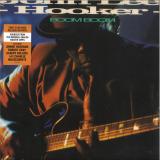
- A1: Boom Boom (Feat. Jimmie Vaughan)
- A2: I'm Bad Like Jesse James
- A3: Same Old Blues Again (Feat. Robert Cray)
- A4: Sugar Mama
- A5: Trick Bag (Shoppin' For My Tombstone)
- B1: Boogie At Russian Hill (Feat. Albert Collins)
- B2: Hittin' The Bottle Again
- B3: Bottle Up And Go
- B4: Thought I Heard (Feat. Charlie Musselwhite)
- B5: I Ain't Gonna Suffer No More
- B6: Dimples (Bonus Track)
- B7: Ain’t No Love In This House (Bonus Track)
Nach seinem Comeback mit „The Healer“ (1989) begab sich John Lee Hooker zu Russian Hill Recording in San Francisco und The Record Plant in Sausalito, um einige seiner bekanntesten Songs neu zu
interpretieren, darunter „Boom Boom“, das diesem Album seinen Titel gibt. Eine Starbesetzung zeitgenössischer Bluesgrößen nahm an den Sessions teil, darunter Charlie Musselwhite, Jimmie Vaughan, Robert
Cray und Albert Collins.
When João released “Quem é Quem” in 1973, he had already been in the music industry for over 20 years, gaining national and international recognition. Nevertheless, the album marked the beginning of a new phase in his career: the surprising multi-instrumentalist included lyrics in his songs for the first time. It is one of his most important albums, which now returns to shelves on 180-gram vinyl as part of the “Classics on Vinyl” collection from Polysom.
The album was produced by Milton Miranda and Marcos Valle, with arrangements by João Donato, Maestro Gaya, Lan Guest, Laércio de Freitas, and Dory Caymmi. It features 12 tracks, the vast majority of which are authored by him, with collaborators such as Geraldo Carneiro, Lysias Ênio, Paulo Cesar Pinheiro, Caetano Veloso, and João Carlos Pádua. The only exception is the song “Cala Boca Menino” by Dorival Caymmi.
Georgette Sayegh & Melhem Barakat – Belghi Kull Mawaidi & Instrumental:
Finally, hopping across from Egypt to Lebanon for this infectious number, Georgette Sayegh delivers what some consider her magnum opus in a captivating duet together with Melhem Barakat, and on the flipside a stripped-down instrumental version that’s equally catchy.
Georgette Sayegh is a legendary Lebanese singer and actress known for her tender and dulcet voice that echoed the grace and beauty of the inimitable Fairuz yet carried its own unique warmth. Her passion for collecting vinyl at an early age formed her eclectic musical palette, and she eventually caught the eyes of the Rahbani brothers and played the lead role in a monthly play written by Fairuz’s son, Ziad. Georgette’s household classic "Yay Yay Ya Nassini” shot her to stardom across the Arab world in the 1970’s, and till this day carries the exact same nostalgia of a Lebanese summertime anthem – flirtatious, jolly, and unfettered. In Belghi Kull Mawaidi (I cancel all my appointments), Sayegh’s voice entwines with compatriot and fellow household staple, Melhem Barakat in an emotional display of longing and depth - her voice delicate yet powerful, effortlessly blending with Barakat's commanding baritone.
The instrumental version on the flipside (surprisingly a stereo mix) reveals a highly catchy arrangement that is lush and emotive, driven by strings that glide smoothly through the melody, while brass instruments add a touch of drama. The rhythm section, punctuated by a steady percussion, anchors the track, allowing the interplay of instruments to build a sense of urgency and longing, accurately reflecting the struggles and emotional resilience that defined Sayegh’s own life.
This reissue, remastered with painstaking care, brings both versions of Belghi Kull Mawaidi back to life, making it an essential addition to any avid listener, DJ or collector’s shelf. It captures the timeless beauty of two of Lebanon's most cherished musical icons, their voices and instruments merging to create a track that resonates through the ages.
Muhammad Al-Najjar
London, April 2025
credits
Audio restoration and vinyl mastering: Colin Young
Lacquer cut: Timmion cutting lab
Sleeve and label artwork: Grotezk Studio
Under License of Voix de L'Orient
Maggid Tewfik – Mazzika Nicab Parts 1 & 2:
Released in 1973, Mazzika Nicab by Egyptian film director and iconic figure Maggid Tewfik is a trippy instrumental journey into the experimental realms of baladi music. Known for his prolific career as a director and DOP in over 30 Coptic films, Tewfik’s composition, split in two parts, presents a moody yet undeniably cheeky tune that is unlike anything found in Egyptian music over the ages.
The track is a hypnotic blend of Eastern rhythms and Latin grooves, featuring an early drum machine that guides the track through its jubilant and stormy atmosphere. This mechanical beat is paired with funky garage sounds, creating a psychedelic fusion that evokes images of an epic cinematic score, where belly dance meets the raw energy of late-60s experimental rock. Belly-dance sci-fi perhaps..?
Muhammad Al-Najjar
London, April 2025
credits
Audio restoration and vinyl mastering: Colin Young
Lacquer cut: Timmion cutting lab
Sleeve and label artwork: Grotezk Studio
Under License of Sono Cairo
Leila Gamal’s ‘Abaleeh Abalingi’
At the height of Pan-Arabism, when the United Arab Republic fused Egypt and Syria in a fleeting but bold experiment, a new wave of popular music was emerging—vibrant, infectious, and universally danceable. Among its lesser-known stars was actress Leila Gamal, whose voice—delicate yet rich with longing—embodied the golden era of Egyptian cinema. Born in Alexandria to Syrian roots, Gamal’s vocals were a magnetic blend of sweetness and passion, with a timeless allure that echoed the silver-screen sweethearts of her time.
Abaleeh Abalingi pulses with the hypnotic drive of funky organ riffs, reminiscent of the blind visionary Ammar El Sheriyi, creating a sound both cinematic and undeniably catchy. The delicate lyrics by Khairi Fouad place the track firmly in the lineage of the Middle East’s most iconic pop divas, from Angham to Nawal El-Zoughbi who he subsequently wrote for. This reissue, lovingly remastered, brings this long-lost gem back to life, where it belongs—spinning on turntables, teasing dance floors, and transporting listeners to Egypt in the late sixties.
Adel Osman’s “Oriental Eyes”
Oriental Eyes captures the essence of the 60s Egyptian Franco-Arab movement, blending Western (often jazz) influences with Arabic melodies to mesh mystique with sensuality. Osman’s commanding yet delicate vocals deliver the bilingual lyrics with captivating sincerity, his voice effortlessly gliding over the swells of the arrangement. The trumpet, possibly connecting him to Zaki Osman of Salah Ragab’s legendary Cairo Jazz Band, adds a layer of flair, enriching the track’s Tarantino-esque eclecticism. Now remastered, ‘Oriental Eyes’ is not only a nostalgic gem but a timeless reminder of the boundary-defying spirit that defined the 1960s musical landscape.
Given the ongoing war efforts against Israel, this record wasn’t pressed by Sono Cairo till much later in 1975 once Egypt had recaptured the Sinai and restored national pride. Sono Cairo (Sawt el-Qahira) was the first Arab-owned and by far the largest record label in the Middle East, amassing an unmatched catalogue of music. With exclusive rights over much of Umm Kulthum’s works, Sono Cairo played a crucial role in disseminating the sounds of Arab Nationalism and projecting Egypt’s soft power across the region.
Muhammad Al-Najjar
London, April 2025
credits
Audio restoration and vinyl mastering: Colin Young
Lacquer cut: Timmion cutting lab
Sleeve and label artwork: Grotezk Studio
Under License of Sono Cairo
Book[37,40 €]
In the final month of 2024, Meitei arrived in Beppu, a city long steeped in vapor, myth, and mineral memory. Invited to create onsen ambient music commemorating Beppu’s 100th anniversary, he immersed himself in the city’s geothermal psychogeography, where sound rises from the ground and time clings to mist.
Known for his Lost Japan (Shitsu-nihon) works, which channel forgotten eras into flickering auditory relics, Meitei took residence in the warehouse of Yamada Bessou, a century-old inn perched by the bay. Over two weeks, he listened intently to steam, to stone, to the atmosphere itself. The resulting work, Sen’nyū, traces the inner spirit of onsen culture. Like water finding its path, the music emerged with quiet inevitability, shaped by Meitei’s synesthetic sensibility and deep attunement to place.
Equipped with a microphone, he wandered Beppu’s sacred sites: Takegawara Onsen, Bouzu Jigoku, Hebin-yu, and the private baths of Yamada Bessou. There, he captured the breath of the springs, bubbling mud, hissing vents, wind against bamboo, and the murmurs of daily visitors. These field recordings became the sonic bedrock of Sen’nyū, an act of deep listening that attempts to render even the rising mist and shifting heat into sound.
Unfolding as a single, continuous piece, Sen’nyū drifts like fog through sulfur and stone. It traverses the veiled madness of Bouzu Jigoku, the spectral resonance of Yamada Bessou’s inner bath, and the hushed voices of Takegawara Onsen. It is a gesture of quiet reverence, for water’s patience, the land’s memory, and the hands that have bathed here for generations.
Where Meitei’s earlier works conveyed his personal impression of a fading Japan, Sen’nyū is grounded in tactile presence, music not imagined but encountered. Here, his practice moves closer to the spirit of kankyō ongaku, environmental music born from place, shaped by it, and inseparable from it.
As part of the project, Meitei conceived a two-day public sound installation inside Takegawara Onsen, culminating in a live performance. Bathers soaked in mineral-rich waters while submerged in sound, an embodied ritual of place, body, and listening.
Sen’nyū marks Meitei’s first full-length work centered entirely on onsen and opens a new chapter of his Lost Japan project under the expanded title 失日本百景 (One Hundred Lost Views of Japan), a series exploring extant sites of longing still quietly breathing within contemporary life. The album will be accompanied by Meitei’s first photo book, a visual document of his time in Beppu. A new layer is added to the world he has, until now, built only through sound.
Sen’nyū continues Meitei’s devotion to Japan as subject, while opening new terrain: both ritual and remembrance, an immersion into the mineral soul of Beppu.
Müne isn’t just a label—it’s a sonic language carved somewhere between the imagined and the real. Born from the fusion of the Japanese words 夢 (yume, “dream”) and 音 (oto, “sound”), Müne exists as a liminal space where emotion, memory, and sound design blur into something that feels. Less about genre, more about atmosphere. Less formula, more intuition.
The debut release capture that vision into four tracks shaped by hardware grit, dusty grooves, and moods that shift between tension and warmth.
A-side
Jose Daguerre sets the tone with Barbaria, a hypnotic loop-based workout with gritty low-end, dry drums, and a subtly evolving structure. It’s meditative, but with weight. Electro Reunión leans into stripped-down electro mechanics—tight sequencing, foggy FX, and a lingering sense of space. With Patricio Felip collab on the keyboard, both tracks feel tactile, intentional, and refreshingly unpolished.
B-side
Dani Labb brings Resfr0m, a broken-beat track that feels like it’s breathing—loose and raw, wrapped in textures that drift between dreamy and distorted. Finally, Veloz y Raptor by Juan Proeliis & Cohema closes this first release with a bouncy, dark cut full of kinetic energy, tape color, and playful detail.
MÜNE 001 is a declaration of intent: warm, human, and left-of-center. Built for deep listening and late-night systems.