2024 Repress
There isn’t many who would disagree with the underlying sentiment that electronic music makes us feel something extraordinary. Much in the same way, the possibilities for creative discourse and cosmic interactivity are accessible to anyone with an open mind. It’s in this place where these possibilities materialise, and it’s in this space where SYNCROPHONE 39 operates within.
You see, you won’t find cleverly constructed adjectives or nonsensical descriptors for the music presented here. It doesn’t need them. The music speaks for itself, much in the same way the artists do. Stojche has been carving out timeless techno for two decades now, working tirelessly without fanfare to enrich a scene that sits close to his heart. Whether that be through releases on his own imprint TANGIBLE ASSETS or the ever expanding a.r.t.less, his trademark sound signature is synonymous with the soul of Detroit. You may be hard pressed to find anyone else who’s been as consistent with this sound over the years as he has. On the other hand, Gerard Hanson aka Convextion has been doing exactly that without fault his entire career. So the combination of these two artists on this release makes perfect sense.
Syncro39 is a celebration of core values in music. Of devotion to a singular obsession crafted over the course of decades devoid of trends or cheap influences, social or otherwise. It’s that unwillingness to compromise and to put everything on the line in the pursuit of the dreaming process that makes this a special release.
One thing is for certain. Those who are inspired by Stojche’s signature original and the timeless journey of Convextion’s remix,
will carry themselves through the smoke and haze into the sunlight as it takes some time for the rush to subside. That’s probably an apt abstract for this release thus far. For the most part though, the narrative for Stojche has only just begun.
Cerca:val e
Hooj present Warehouse Tools EP with a spread of tempos, but keeping the energy levels up across the 4 tracks.
Fast rising Brighton bod Jamie Unknown takes Farayen & Liam Parkin's Where Do We Go ‘, and strips it all back into a big floor bassline banger.
Young South Wales / Valleys producer Dan Newman makes his debut with 'Moving' with it's rolling piano's, spacey pads and fat housey rhythms treading the line between Italo scream up and Dream-House journey. Early doors, or first light starting to appear through the cracks in the grimey Warehouse windows, we're here for it..
On the flip we have Dutch duo Dean & Di After’s ‘Wicked Dreams’ keeps it steady paced, subtly bouncy with a crafted, Italo '90 old school feel.
Rounding off the EP we have the South West’s premier MDMA Marxist, Shade Guevara goes mid tempo maximalist piano slammer on 'Ted or Dead'.
pdqb is a strange entity that claims to live in a sonic vessel and that only communicates via specifically organized sounds. Little to nothing is known about its wetware yet. However, just in time for Christmas, Synaptic Cliffs hereby reveals its first proof of existence with an übergroovy and supernatural Giallo Disco track that could easily be the brainchild of Claudio Simonetti and John Carpenter. The second track will bring you back to technoid earth again. But the journey isn't over then, because now no other than every producer's favorite producer Danny Wolfers takes over and chips in 2 outlandish electro-eargasm Legowelt remixes on the flip-side, just to ensure even more quality time under the tree. Happy holidays, Ho ho ho!
Part 2 of ‘La Decima’ Compilation to celebrate the 10 years of Refuge kicks off with Melbourne kings, Ben Silver & Boogs long standing residents at Revolver. They collaborate on a driving house number taking inspiration from Detroit & Chicago. Next up, Jason Hodges & Joey Coco’s jam, Valentino feat vocals by Emerson Alexander. The B side kicks off Elijah Something offers up a groovy drum weapon with Skippy Disco Track. B2 features Ritmiq, remixing Historia with a rolling acid dub tool that is built for those late night sets. Get familiar, familia.
Age Of Paranoia, the latest chapter in the band's lineage, was recorded by Igor Wouters at ARC Studios in Amsterdam, and includes several special guest guitar solos by J. Mascis (Dinosaur Jr., Witch) and Bubba Dupree (Void, Soundgarden, Dave Grohl's Probot, Brant Bjork).
Age Of Paranoia offers sixteen volatile tracks, packed into a succinct, white-knuckled twenty-eight minutes. The album surges with rapid-fire punk angst, replete with ripping rock leads and raised-fist, group-chanting anthems.
To complete the recording, the cover artwork is created by Marald (Baroness, Kylesa, High On Fire). See cover artwork, track listing and live dates below.
'One of the best and most important hardcore bands today" - PROFANE EXISTENCE
''Excellent and addictive, gathering the best of punk and metal: one part hardcore punk, another Motörhead'' - METAL ADVISOR
'the supreme thrash band in all of current rock 'n' roll'' - MAXIMUM ROCKNROLL
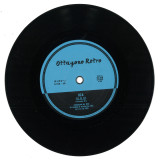
Claudio Mate introduces from the Italian headquarters a new label from the Ottagono family. Influenced by his sister Vala, which she introduced Claudio in the early 90s, in club music and club culture. Ottagono Retro is a new fashion retro vintage outlet record label, inspired by Vala’s fashion, vintage clothing, and handmade accessories shop called Ottagono Retrò. You can visit the physical store on the first floor of Ottagono’s historic place in Nocera, close to the beauties of Naples, Sorrento, Pompei, Salerno, and the Amalfi Coast in southern Italy .
Hansol Oh is a South Korean singer, songwriter, and multi-instrumental electronic musician, currently living between South Korea and Germany, proudly representing Gyeonggi (State) Province as its promotional ambassador. She first captured the spotlight as the Korean representative in the 2017 MTV Aloft Star competition, marking the beginning of her journey as an electronic musician and also becoming a Korean Ableton testimonial under the name Uza. In the last few years, during the COVID-19 era, she earned international attention as one of the most interesting indie solo K- wave artists. She is renowned for its robust philosophy and a distinctive, hard- hitting sound rooted in synthesizers with a retro analogue feeling. More recently, she introduced to the music world her new figure as Tova Oh.
A side: S.O.S club extended, for the fans of k-wave music since the COVID-19 has been a true sensational song. Club extended mix is exclusive for this vinyl release, keeping the original sounds which are a crossover mixture between 80s new wave, electro-pop, techno, house music, playing like a club anthem from deep to dark rooms to Balearic dance floors.
B side: Suitable Kimchi mix sounds like music coming from Netflix, Stranger Things show as the perfect soundtrack for any late-night party. It strikes the perfect harmony between EBM, new wave, electro, and techno, converging with disco soul music. The outcome is a cosmic journey reminiscent of the ’80s, both fiery and flavourful like Kimchi !!!
Si piensas en sonido de Valencia y en los 90 fácilmente te vendrán estos dos temas a la mente. Dos clasicazos indispensables en cualquier fiesta noventera compilados en un solo vinilo. Edición limitada.
This is a repress of a highly collectable record that was originally released on A Guy Called Gerald’s Juicebox label in 1993. Over the years it increased in value, making it a holy grail within the hardcore rave/early jungle collector’s market.
But luckily Vinyl Fanatiks were already working with the producers on another repress – to be precise the SDR & Subsonic release of ‘Ideology/Abstrax’ which came out last year on the label. Both records were recorded by the same producers in the same year, under two different artist names.
Digital Pressure was an alias they created for Gerald, whilst the bulk of their output came out on their own label Shoebox.
A limited repress of 350 units on 180g heavyweight vinyl. Mastered by Dapz at Compound Audio and cut onto vinyl by the legend Beau Thomas at Ten Eight Seven, who is very knowledgeable about this sound as he was in the early 90’s groups The Genesis Project/Intense.
Watch Dis Space as this will sell out!
The third chapter in CLIKNO's MAT (Music / Art / Text) EDITIONS series features four extended deep Minimal Techno tracks by Dr.Nojoke, titled wrongwrongrightright.
This release is accompanied by Dana Widawski's SelfMade 1-4, a series of four fayence-style plates created using traditional techniques to convey unconventional, socio-critical themes, and a text, solo moral judgement, by Marianne Klausen—a manual for a performance on moral judgment that explores the meanings and values of concepts like good, bad, wrong, and right—fusing auditory and visual art with writing into a unified experience.
At the core of Dr.Nojoke's wrongwrongrightright lies a deep, hypnotic quality, woven through layers of rhythm, melody, and noise, creating a transcendental pulse for the dancefloor. Notone on the A-side takes a more straightforward, acidic approach, while Cornips on the flipside is a deep minimal groover with a funky interplay of sounds. The second record dives even deeper with two more obscure tracks, Volasuri and Jilimuz, appealing to fans of Voices From The Lake and similar artists.
CLIKNO … art for dancing
Late-night jams in their new studio sees Jazzbois return to their beat-tape roots on Still Blunted
Having established themselves as one of the leading live bands in Europe grooving in improvised jazz motifs and hip-hop beats, Budapest trio Jazzbois return with their fourth LP Still Blunted that sees them touch base with their beat-tape roots.
Now situated in the heart of Buda at their new studio above a club, the Hungarian trio of Bencze Molnár (Rhodes/synth), Viktor Sági (bass) and Tamás Czirják (drums) take a more considered approach to Still Blunted and offer a snapshot into the jams, sessions, and shows they have played over the past year. The new album comes after performing at the legendary Montreux Jazz Festival this summer and will be followed by a European tour in October.
Inspired by contemporaries Domi and JD Beck, Kiefer, Nala Sinephro, and the sounds of Radio Juicy, Jazzbois have been more critical of their track selection for the sequel to their Goes Blunt albums. They’ve ripped up their playbook of producing records in a matter of days and took their time to approach the record through reworking their favourite tracks recorded over the past year.
“We’re trying to keep the same formula but there was a lot of thought gone into the process of making an improvised jam sound like a song. It has to be good in the moment, and we chose the ones we felt were expressive and resonated the most with us musically. We focus on our feelings in the moment and have trust in our own taste and music visions.”
The trio’s new studio has offered them the space and time to get the best out of their creativity. “This new spot is a Jazzbois headquarters. It’s above this club, sometimes there's a DJ playing outside on the street – everyday there's something on and lots of people coming and going. We hang out for the whole day and just record anything or edit.”
Jazzbois are a part of the rich, underground jam scene in Budapest, and those improvised-led sessions have fed into Still Blunted. One of their late-night jams turned after-parties produced sketches for tracks they selected for the album.
“It was the end of a wild night celebrating getting the album done. We’re having a jam and we looked around while we were recording and there was twenty people smoking and drinking around us – half of them we didn't even know who they are. It turned into an open after-party where people were coming to ours from the club. It was very spontaneous and unexpectedly, we made five or six new songs we ended up using for the album.”
The ethos of those unplanned, open jams is something they carry through into their live shows, as they never rehearse so their music can develop freely. Their trusted fourth ‘live’ member DomBeats joins them on Still Blunted adding saxophone to some of the psychedelic-tinged beats, such as on singles Shangri La and Chrome. After recently digging back into 70s and 80s jazz, discovering more hip-hop sampled tracks, and absorbing the breaks and high-energy of footwork and juke, these influences come through strong across Still Blunted.
The footwork sound is replicated in the shuffling, busy drums of Shangri La, with the echoing guitar twang reminiscent of a sample you may hear on an MF Doom beat. “Shangri La was a catalyst for the new album. It reflects on our trip to America and SXSW. We played at this venue Shangri La. The Texan air and sun are in that track.”
Chrome takes on a much more furious style of playing that allows for the drums to cascade and flow along with the pulsating, chromatic bass line, with the synths and saxophone spiralling into an engrossing frenzy. The liquidy keys and synths glides over the bass on Flute Thang, creating a 70s jazz-funk vibe that stands out from the rest of the album.
With hundreds of thousands of monthly listeners across Spotify and Apple Music, they have become a playlist staple that has earned them millions of streams since their debut release Jazzbois Goes Blunt in 2019. As more live dates are booked for the Hungarian trio, Jazzbois continue to transform the traditional jazz trio sound into deep, groove-led beats on Still Blunted.
From Sweden with Italo to Dresden with love. Stockholm's DJ City drops his first release on Dresden's Uncanny Valley with the COSMICOMICS EP, a 100% fun record for all the senses, deeply inspired by Italo Calvino's iconic short story collection.
The stories have inspired DJ City to a record that aesthetically draws from 80s Italo Disco and 70s science fiction films. In the book, each story is based on a scientific fact about the world and the cosmos whilst using fiction to ask how we understand it. Where Calvino's stories are comical and absurd, DJ City surrenders to the sublime and romantic and moves further into the metaphysical world that Calvino created to come up with three energetic and melodic tracks bursting heavily with fantasy and drama. Deeply rooted in dance music's history, they shine with Hi-NRG-vibes, strict dancefloor commitment and little easter eggs like that Drexciya-reference in COSMICOMICS.
The cover of the record is a painting from 2020 by Swedish artist Jens Faenge called THE INN. The picture seems to have been broken up into several dimensions, and abstract details make it difficult for the viewer to know exactly what and when the scene is taking place. When shown in Shanghai, the painting was censored by government agents and had to be taken down. A testament to the power of the image. Perhaps it shows our main character, perhaps it shows us the author or the artist. Depending on who listens, who reads and who looks, a multitude of universes open.
180G BLACK VINYL
Since Outlaws in 2020, Ludivine Issambourg's flute has not cooled down. How could it have, when with that album of Hubert Laws covers, it had reached incandescence? Still panting, burning despite the lid of its case left wide open, it awaited the opportunity to continue the adventures that Master Laws himself had praised.
A continuation? Above The Laws isn't quite that.
Although his name still appears, Hubert L. is no longer the sole guide in exploring the vast galaxies of jazz-funk. Through covers but especially as an enhancer of her own compositions, Ludivine has invoked the spirit and intangible presence of Jeremy Steig, Ronald Sneijder, and Bobby Humphrey—the legends of the flute.
Guided by an unescapable groove, with a musical dial set to the late 70s and early 80s, Ludivine has enlisted the help of a brass section this time, a true propulsion engine for funk that can also shift to a soulful breath if the moment calls for it. Supporting the keyboards, there's a Moog laying down its rich layers or twisting tones.
The flutes are used like levers to stabilize the flight or, conversely, to make it soar even faster through the measures. The alto version, which Ludivine had previously used sparingly, adds the necessary velvety note when it’s time to embark on smoother destinations. Speeding up the tempo to make passengers rise from their seats as if danger were imminent; calming the atmosphere to put them in a reassuring cocoon where they can let their thoughts and spirits wander, the improvisations find their place in the compositions observed from the porthole. Detached from gravity, yet still very much in tune with the vibe of cities marked as hot spots on the current jazz scene radar, it's the scent of these streets that permeates some tracks of Above The Laws.
Directed from the control tower by Eric Legnini, Chassol, Alex Finkin, and Michaël Lecoq, Above The Laws benefits from a few stops along the way where precious connections are established. Nils Landgren and his trombone in the colors of the Swedish flag, Laurent De Wilde for a chase between flute and Fender Rhodes, Céline Bonacina’s saxophone for an Afrobeat detour.
But it's at the edge of a journey where organic intensity has continued to assert itself without losing power that Ludivine connected with Brian Jackson for a cover of "Angel Dust," a track from the era when he and his partner Gil Scott-Heron were creating soul masterpieces. One of them featured a flutist by the name of Hubert Laws.
The starting point of Ludivine's latest jazz-funk explorations also becomes the endpoint. Elevated by the ten tracks of Above The Laws, Ludivine Issambourg closes a loop where she has placed her flute and its flourishes in an undeniably leading role. Opening the doors to ambitious orchestrations, unexplored horizons, she weaves into her compositions the experiences, places, and encounters that have shaped her.
Since its founding back in 2014, Blume has carved a unique place in cultural landscape, issuing free-standing works, spanning the historical and contemporary, that represent singular gestures of creativity within the field of experimental sound. Joining their broad efforts in building networks of context and understanding that already includes the works by Werner Durand, Sarah Hennies, Bruce Nauman, John Butcher, Jocy de Oliveira, Mary Jane Leach, Valentina Magaletti, Alvin Curran, Julius Eastman, Alvin Lucier, and others, Blume return with the first ever vinyl release to attend to James Tenney’s legendary “Postal Pieces”, Marking the first ever appearance of five of the suite’s works - “Maximusic, for Max Neuhaus” (1965), “Having Never Written a Note for Percussion, for John Bergamo” (1971), “FFor Percussion Perhaps, or... Night, for Harold Budd” (1971), “Cellogram, for Joel Krosnick” (1971), and “Beast, for Buell Neidlinger” (1971) - on vinyl, drawing upon recordings made in 2003, by the Amsterdam based ensemble, The Barton Workshop, under the direction of James Fulkerson. Among the most important and highly regarded efforts in Tenney’s canon of compositions, as well as within the history of 20th Century music, these five pieces represent a crucial bridge between Fluxus-oriented conceptualism, minimalism, and the microtonal complexities that would emerge in their wakes. Issued in a highly limited vinyl edition of 300 copies, it includes exact replicas of the original postcard graphic scores, and features newly commissioned liner notes by Bradford Bailey, Blume’s brand new edition takes great steps to centring Tenney at the eye the storm during some of experimental music’s most important years.
A student of composition under Carl Ruggles, John Cage, Harry Partch, and Edgard Varèse - remaining close to all of them, and later performing in both Cage and Partch’s ensembles - as well as acoustics, information theory, and tape music composition under Lejaren Hiller, James Tenney carved a wide path within the contexts of experimental and avant-garde music during the second half of the 20th Century. Not only was he a tangible bridge between the generations of composer’s who laid much of the groundwork and the later movements of Fluxus, Minimalism, and the broader practices of experimental music, but Tenney is credited as having contributed one of the earliest applications of gestalt theory and cognitive science to music in 1961, before helping to pioneer the field of computer music at Bell Labs, during the following years.
Over the course of his career, Tenney produced music of such complexity and sophistication - paying little mind to the seductions of taste or dominant tropes of its own moment - that his work and legacy have largely remained under-recognised by the broader publics that have attended to most of his peers. Perhaps more pertinently, the body of work he produced can be perceived as too varied and complex to fit neatly within standard creative histories or critical frameworks, comprising harmonically complex works for acoustic instrumentation, musique concrète, the groundbreaking 1961 “plunderphonic” composition, “Collage No.1 (Blue Suede) (for tape)” - sampling and manipulating a recording of Elvis Presley - as well as algorithmic and computer synthesized music. Even here, within this single decade, a clear image of Tenney’s endeavours remains elusive. In addition to penning important theoretical texts, he collaborated and / or played with Max Neuhaus, La Monte Young, Steve Reich, Philip Glass, Michael Snow, Terry Riley, and numerous others; was an active member of Fluxus; starred in and composed music for Stan Brackage’s films; regularly worked with the Judson Dance Theater; co-founded and played in the ensemble, Tone Roads, with Malcolm Goldstein and Philip Corner; was a vocal advocate of the works of Conlon Nancarrow and Charles Ives, playing a significant part in the revival of both of their legacies; and regularly collaborated as a composer, musician, and actor with his then-partner, the artist Carolee Schneemann, notably co-starring in her film, “Fuses” (1965) and her legendary 1964 performance, “Meat Joy”, as well as creating sound collages for her films “Viet Flakes” (1965) and “Snows” (1970). Curiously, for a relatively absent figure in the historical and critical narratives, Tenney seems to have been the thread that bound multiple generations and disciplines of avant-garde practice in New York during this period.
Tenney was deeply invested in the quality and perception of sound. By 1970, this led him back to composing exclusively for acoustic instrumentation (though sometimes processed with tape delay) - in most cases utilising non-well tempered tuning systems to explore harmonic perception - a practice that he would remain steadfast to for the remainder of his life. This development roughly corresponded with his relocation to California, at the outset of the 1970s, following an invitation to teach at the newly founded music department at California Institute of the Arts (CalArts) in Valencia. Finding himself in regular contact with the harpist Susan Allen and the artist Allison Knowles, as well as at a great distance from many of his friends, in 1971 he completed (with the assistance of Knowles and Marie McRoy) “The Postal Pieces”, a project he had begun in 1965.
A suite of eleven compositions, “The Postal Pieces”, stands among Tenney’s well known and celebrated compositions, and illuminates the dualities embraced by the composer, notably his use of sound to develop consciousness in and of others, and his willingness to draw on elements and observations of everyday life; citing his strong dislike of writing letters as being the primary inspiration for their inception. In lieu, he conceived to send his friends - John Bergamo, Allison Knowles, Pauline Oliveros, La Monte Young, Harold Budd, Philip Corner, Joel Krosnick, Buell Neidlinger, Susan Allen, Max Neuhaus, and Malcolm Goldstein - short scores on the back of postcards. The suite is composed around three themes: Tenney’s concept of swell form (utilizing repetition and progressing through a structurally symmetrical arch), intonation, and the desire to produce “meditative perceptual states”.
A hugely important addition to Blume’s ever expanding efforts in context building and networks of creative practice, James Tenney’s “Post Pieces” is issued in a highly limited vinyl edition of 300 copies, which includes a exact replicas of the original postcard graphic scores, and features newly commissioned liner notes by Bradford Bailey.
We are very happy to present our first vinyl release named The Sinergy between light and darkness.
We believe that when 2 forces as powerful as light and darkness merge, they create an omnipotent unit, giving birth to amazing creations, works of art like this release.
For this release, 4 tracks have been carefully selected that create a balance and synergy between light and darkness.
On side A we have Alquimic, curator of this project, with his track Reloaded, and Artesano Titer, a great Uruguayan artist who made us vibrate in the first edition of Cosmic Dance with his live set around the mountains of the Sacred Valley, and where he played for the first time this gem called Shake it.
Vibrant synthetic sequences, enveloping rhythms and bass lines and cozy melodies are manifested on this side.
On the other hand, on the B side we have Samuel Jabba, a great Colombian artist with countless incredible releases and a unique style with his track Schizoid, and Nicolás Longo, a great emerging Uruguayan artist who we had the pleasure of meeting and experiencing his music in the city of Cusco, with his track Secuencias en Capital.
On this side, dark and enveloping melodies, retro-futuristic atmospheres, vibrant rhythms and a lot of mystery are evident.
- A1: Black Detroit Intro
- A2: The Dark Streets
- A3: Funeral Biz / Welcome To Detroit (Interlude)
- A4: From Home To Work, And Back (Reprise)
- A5: Mon Amie De`troit (7&Quot; Version)
- B1: Running The Motor (Reprise)
- B2: The Motor Is Running
- B3: There`s No More Soul (Feat Diggs Duke)
- B4: Rain Into The Nite (Outro)
- B5: Floating
First Word Records is very proud to bring you the 10th anniversary edition of Tall Black Guy's debut LP '8 Miles to Moenart'!
It includes two brand new jazz interpretations ('From Home To Work, And Back' and 'Running The Motor'), recorded with a live band, as well as a new intro cut ('Black Detroit'), and an alternative mix of the single 'Mon Amie De'troit', previously only available on 7" vinyl.
The original vinyl LP release was a one-time limited edition pressing; this being the first time this project has been available on wax since then, and also includes entirely new artwork and photography.
From humble origins in Detroit, raised on a healthy diet of Motown, jazz and hip hop, Terrel Wallace (aka Tall Black Guy) has become a standard bearer for the hip hop beats scene. Through a steady stream of soulful productions filled with incredibly clever sample flips and deft production chops, he has won fans across the world, including Gilles Peterson, Benji B, Don Letts, Lefto, Tom Ravenscroft, Lord Finesse, Huey Morgan, Anthony Valadez and countless others, along with sessions for Boiler Room and more.
'8 Miles To Moenart' literally brought Tall Black Guy full circle, and proceeds to do so once again. Detroit was where he started making music, and it's to his hometown he took inspiration for this debut album. Taking in low-slung hip hop, downtempo house and jazz-tinged street soul, it's a record of rare focus. It encapsulated the musical heritage of Detroit, through the looking glass of Tall Black Guy's own signature sound.
Follow up releases included his sophomore First Word album 'Let's Take A Trip' (which also featured the likes of Masego, Daniel Crawford, Miles Bonny and Moonchild), and records on Ubiquity, Bastard Jazz and Street Corner Music, to name a few, along with a steady slew of limited self-released edits amd productions, most recently with his #7DayVaults series.
He's worked with a number of formidable artists worldwide, including recent extensive work with Zo! (Little Brother), Ozay Moore, Deborah Bond and Dee Jackson (80's Babies), as well as collaborations with 14KT and First Word label-mate Allysha Joy, to name just a few. He is also an integral player for DJ Jazzy Jeff's infamous PLAYlist Retreat sessions, along with more First Word family, Kaidi Tatham and Eric Lau, as well as artists like James Poyser, Ali Shaheed Muhammad and Questlove, and he was a core contributor to First Word's 'Nothing Leaves The House' series, along with Eric, Mr Thing and kidkanevil.
Tall Black Guy has firmly established himself to be one of the most influential producers working today.
Terrel says "I made the bulk of this album back in Detroit around 2012/2013, before I relocated to the UK. I've been back living and working in the States for a while now, and it's great to look back on this project. But while it's nice to reminisce, it's important to look forwards, so I wanted to include something new here to represent my progression as an artist, so there's some new versions included, that I created with the help of some jazz musician friends of mine."
'8 Miles to Moenart' (10th Anniversary Edition) will be released on digital & vinyl on October 18th 2024.
c 03: Funeral Biz / Welcome to Detroit (Interlude) feat. Malice & Mario Sweet
e 05: Mon Amie De`troit (7" Version) feat. Ozay Moore
Despite their early success, The Valentinos’ story was, like many other groups, a ‘what might have been’ story. But there could not have been a more hardworking group. Every night, Friendly Womack Sr. taught his boys all the gospel songs he knew before he kicked them out of the house because they wanted to switch to secular singing.
“Bobby, you’re singing too church!” shouted Sam Cooke across the recording desk at the United Recording Studios in L.A. to Bobby and his brothers…
Still torn here between gospel and secular singing, Friendly “June” Womack told me about both these two lost tracks from the group: “Between you and I, we were looking hard to get another ‘Looking For A Love’. We were desperate for that, as that was such a big seller for us”.
Ultimately these sides failed to be released, yet they were both great tracks. Wouldn’t it be great though if, this time around, Soul4Real Records were able to hang out the ‘sold out’ banner that all the Womack brothers really deserved?
in the middle of it we instantiate false aralia: a series of recordings growing in all directions, cataloging the work of a group of north american collaborators centered around the studio practices of izaak schlossman (of aught, s transporter, loveshadow etc.) and facilitated by brian foote (of peak oil, kranky, etc.). with this outlet we hope to provide useful tools for dance and avenues for intentional listening.
the first release, ‘zero key’, explores valences of an idea as it slips, as would a thought or a cloud, into something else entirely across its four tracks of recursive microhouse rhythms and hallucinated dub spatializations. foregrounding its most melodic state, its most percussive, and two points between, the versions cut an indeterminate and continuous process into discrete objects that invite repurposing, layering, and other nonlinear methods of evaluation. played through, it may be interpreted as an emerging, or a coming-to-light, as a soft vocal figure develops a tougher rhythmic architecture that eventually occludes its prior form entirely. each of zero key’s facets spurs a parallel investigation into its internal logic of patterning and form.