Debut full length album on the Valley of Search label by Mexican born, New York-based vibraphonist, marimbist, improviser and composer Patricia Brennan. The twelve original instrumentals that make up the album were composed and performed solo by Brennan on vibraphone and marimba. Employing unusual performance techniques and occasional electronics, many of the compositions were borne from improvisations created live in the studio at the time of recording. At times exploring silence and space, stillness and patience the album investigates new sonic territories with an endless sense of curiosity. "This album is a personal statement not only as a vibraphonist but also as an improviser and composer," says Brennan. "From bowing and bending pitch, to the use of extended effects via guitar pedals, this album reflects my vision for the vibraphone and the potential of all the possible ways it can be played. I wanted to not only incorporate all those techniques in the compositions but also wanted them to become part of my general improvisatory language." Patricia has performed with many renown musicians including singer and composer Meredith Monk and Theo Bleckmann, saxophonists Jon Irabagon and Scott Robinson, trumpeter Ambrose Akinmusire, drummer Marcus Gilmore, guitarist Mary Halvorson and many others. She has performed in venues such as Newport Jazz Festival, SF JAZZ, and Carnegie Hall, as well as international venues such as Wiener Konzerthaus in Vienna, Austria, Alte Oper in Frankfurt, Germany, Palacio de Bellas Artes in Mexico City and Teatro Colón in Buenos Aires, Argentina.
Cerca:val ex
"Emotional Rescue continues its 10th anniversary by again presenting Jorge Reyes’ collaborative album with Antonio Zepeda – a masterpiece and therefore, worthy of the time and effort to share.
From cult artist to becoming an essential musical discovery, Jorge Reyes is an example that no one discovered or owns the music beyond the writer and creator.
Growing up in Mexico’s 2nd City, he spent much of his life dedicated to travelling and learning music traditions and instruments. While at University to study Flute, he was involved in several influential bands of the era before going on to travel the world to further his learning, before returning to found the seminal Chac Mool group.
By the early 80s he went solo, exploring an increasing interest in the use of Prehispanic instruments mixed with electronics. In the opening songs, I-Cana and A La Izquiedra Del Colibri, the interplay between flute, guitar and vocals with TR-700, Poly 800 and DX7, all fuse his vision perfectly.
The additional contribution of Antonio Zepeda’s percussion creates a timeless mystique to the album, taking you on a journey deep in the mind of one of Mexico’s most important experimental artists.
Passing away at just 56, Jorge Reyes work was cut short, however he has left over a dozen albums to be explored. While critics increasingly question the valedictory of reissues, the premise on whether something should be heard is if it’s good. Therefore, let A La Izquierda Del Colibri be heard."
Clear Vinyl
"October Language" is the debut album by New Orleans based duo Belong, comprised of Turk Dietrich and Mike Jones.
Since it's release in early 2006, Belongs debut masterpiece has accumulated a dedicated cult following, with comparisons to the work of Tim Hecker and Gas, with some claims that it plays like My Bloody Valentine's "Loveless" sans the songs. While these comparisons are useful for filing this album into a particular bin in the record shop, time has proven that "October Language" is a unique album which remains unmatched by its contemporaries.
Despite the warm and welcome accolades of the albums arrival, there was no vinyl pressing until 2009, of which a limited one-time pressing vanished immediately. Spectrum Spools is pleased to present a pristine vinyl cut to go with reimagined album art for the definitive edition of this legendary classic.
Physical copies include a download card with extra tracks from the impossibly rare Tour EP from the same era. These tracks are exclusive to the vinyl purchase and are not available through digital outlets.
"October Language" is the debut album by New Orleans based duo Belong, comprised of Turk Dietrich and Mike Jones.
Since it's release in early 2006, Belongs debut masterpiece has accumulated a dedicated cult following, with comparisons to the work of Tim Hecker and Gas, with some claims that it plays like My Bloody Valentine's "Loveless" sans the songs. While these comparisons are useful for filing this album into a particular bin in the record shop, time has proven that "October Language" is a unique album which remains unmatched by its contemporaries.
Despite the warm and welcome accolades of the albums arrival, there was no vinyl pressing until 2009, of which a limited one-time pressing vanished immediately. Spectrum Spools is pleased to present a pristine vinyl cut to go with reimagined album art for the definitive edition of this legendary classic.
Physical copies include a download card with extra tracks from the impossibly rare Tour EP from the same era. These tracks are exclusive to the vinyl purchase and are not available through digital outlets.
12" LP (300) 'Nostalgia Por Mesozoica' is an exploration of "experimental exotica" consisted of synthesized tropical attributes — an artificial landscape isolated behind the glass frame.Reminiscent of recording techniques and sonorities ubiquitous in the 60’s and 70’s, it could conceivably have been intended as a soundtrack for the Mesozoic Era exhibition at your favorite Natural History museum.
- A1: Eine Symphonie Des Grauens
- A2: The Jet Set Junta
- A3: Love Zombies
- A4: Silicon Carne
- A5: The Ruling Class
- A6: Viva Death Row
- A7: The Man With The Black Moustache
- B1: He’s Frank (Slight Return)
- B2: Fun For All Of The Family
- B3: Lester Leaps In, Ici Les Enfants
- B4: Fat Run, Alphaville
- B5: Avanti (Ten Don’ts For Honeymooners) Love Goes Down The Drain
- B7: Noise (Eine Kleine Symphonie)
Includes 2 bonus tracks.
Originally released in 1983 this hugely rewarding record acted as a round up of the group’s career to date and was of immeasurable value to fans. It’s aged well, too.
Comprising of A and B sides from their Rough Trade released singles plus extracts from sessions for Radio 1, Capital Radio and EMI Records, this LP contains unique versions of such classic tracks as “The Jet Set Junta” and “He’s Frank (Slight Return)”.
Oddities, and jocular moments run through the album, including John Peel introducing “Fat Fun” and thinking aloud that those Monochrome boys might be having a pop at him. The fact that it includes a wish list of the band’s best songs to this point in their career is another reason to recommend it.
Previously they may have made a handful of slightly-off-target albums, but this 1983 compilation is a front-to-back joy, fast, restless and perfectly sequenced. It plays like a cohesive album.
Includes 2 bonus tracks from the February 1979 Peel Session ‘Love Goes Down The Drain’ & ‘Noise (Eine Kleine Symphonie)’.
- 1: The Moomins (Occarina Theme)
- 2: Raft Journey The Cave
- 3: Climbing The Lonely Mountain
- 4: The Moomin Hornpipe (Part One)
- 5: Woodland Band (Parade)
- 6: The Observatory (Unabridged)
- 7: Locusts
- 8: The Moomin Hornpipe (Part Two)
- 9: Indigenous Woodland Band
- 10: The Tornado
- 11: The Moomins End Titles (Occarina Theme)
From deep in the heart of Moomin Valley, frozen in time for many
midwinters passed, comes a genuine treasure chest of never
heard Moomin melodies and instrumental comet songs composed
for the continued animated adventures of our Fuzzy-Felt freak folk
friends who disappeared from UK TV pastures in the mid-1980s.
From the top of the Hobgoblin’s Hat and the bottom of Snufkin’s
satchel, original Moomins composer Graeme Miller (‘The Carrier
Frequency’) kindly shares this patchwork selection of spellbinding
sound poems and percussive peons made using the very same
selection of ocarinas, kalimbas, miniature squeak boxes, Waspy
synths, cornflake box shakers and a seemingly endless array of
talent and lo-fi home studio trickery.
Regarded as one of the most enigmatic, beguiling and haunting
imported children’s programmes to ever grace UK TV screens,
‘The Moomins’ was one of the first-ever commissions by Anne
Wood (‘The Teletubbies’) who ingeniously replaced the original
Polish/Austrian/Finnish soundtrack with homemade music
experiments by unknown post-punk theatre students Graeme
Miller and Steve Shill (aka The Commies From Mars) who, after
the screening of two unforgettable series in 1983 and 1985, were
left in eager anticipation of rescoring further Moomin adventures
with new melodies, arrangements and sound designs, which then
lingered in the ether waiting until the Groke awoke and
Snorkmaiden sang once more.
With future felt adventures screened exclusively in Poland and
Germany for many years (often as feature films) these unheard
recordings are the only genuine musical sequel to the bizarre UK
version of ‘The Moomins’ and stand as important inclusions in
Graeme Miller’s own portfolio of theatrical theme music and sound
installations as part of The Impact Theatre Cooperative, including
collaborations with artists and writers such as Russell Hoban.
Witnessed in fragmented form during a short run of incredible rare
live screenings at The Barbican Theatre and various film festivals,
this record marks the first time this music has been heard in its
original full-length form, free from sound effects, dialogue and
whimpers of euphoric joy and nostalgia from those who have
continued to crave the company of our Moomintrolls and their
mysterious music over the last five decades.
D'Cruze, the legendary DnB producer synonymous with some of Suburban Base's biggest tracks such as 'Lonely' and 'Watch Out' now sees some of his unreleased productions finally getting a much sought-after release.
The Hidden Trax EP's theme comes from concept that the D'Cruze limited US only edition album contained tracks that were only discovered if you allowed that album to play on beyond what was supposed to be the last song, after a gap of silence no track ID and not listed on the track titles. This is where you’d find 'Bittersweet' pt 2 as a hidden track on the CD. This was Bittersweet’s only ever appearance having never been released in the UK and never released on vinyl or digitally worldwide.
The lush rolling workout of ‘Hardstep' is probably our most requested track that has never had a vinyl release having only briefly appeared on the very limited CD only ‘Subbase Sampler’, demand for a vinyl pressing of this has been called for since 1996.
Another beautiful hidden gem 'Sublime State' from 1995 wouldn’t be known to our UK audience as it’s an exclusive tune to the US only CD release that has never seen a UK or vinyl release.
Rounded off with the incredibly beautiful 'Meus Precious Filius', an unheard unreleased D’Cruze track that was considered a 'lost DAT' until recently surfaced. We are now able to bring this to the world as an epic slice of fresh music from D’Cruze.
The EP is presented on blue and black splattered vinyl making every single piece uniquely different. Original custom sleeve artwork is provided by Suburban Base legendary artist Dave Nodz in his iconic graffiti influenced style.
These are already high demand tracks all brought together for a fantastic value 4 track EP, so grab yourself a piece of future history now whilst we have these available for a limited time.
"Don’t be afraid, old son, it’s only me,
though not as I’ve appeared before,
on the battlements of your signature,
or margin of a book you can’t throw out"
~ Michael Donaghy
Whytwo is a young, enigmatic artist from Scotland, UK. A talented multi-instrumentalist and performer with an extraordinarily broad range.
First coming to Blu Mar Ten's attention after entering their 2017 remix competition, Whytwo created a wildly different take on their track 'Titans', bending it into a skittering, menacing groove while somehow maintaining a playful edge.
Fast-forward a little and we've now arrived at Whytwo's debut LP, 'Ghost', an exhilarating and elasticated take on Drum & Bass that exists in the hinterland between elation, melancholy and longing.
Mirroring Whytwo's music, the album's title, 'Ghost', is richly layered word, meaning, in different places and at different times; a memory of something or someone; to disappear without communication; to move quietly and quickly; to secretly do work for another; and, of course, a being caught between worlds.
From the old English, 'Gast', meaning 'breath' or 'spirit', the word eventually transformed into 'Ghost' coming to describe "a slight suggestion, mere shadow or semblance". All of these definitions relate, in some way, to the album now before us.
In conversations with Whytwo, he describes how his Jazz musician Grandfather was the person responsible for first giving him music-making software, and whose clarinet features on some of the album tracks. At the same time that 'Ghost' was being created, Whytwo was looking after a young child and some of the drums on 'Ghost' are recordings of the child hitting things. Whytwo describes the feeling of existing between these two extreme states, young & old, naive & experienced, primitive & advanced, and taking the role of a medium 'caught between worlds' whose task was to stitch together this generational fabric.
The result is nothing less than spectacular. Despite having its roots in Drum & Bass, the rules and conventions of the style are ruthlessly disobeyed resulting in glittering cascades of melody, harmony and rhythm that somehow burst with both sadness and joy, hope & loss, memory and anticipation. The music swoops and dips, briefly casting shadows before blasting them away with sunlight, evoking memories both personal and collective. This is 'Lost Soul Music' that manages to speak to all of us.
Despite being deceptively listenable, Whytwo insists this is not relaxing background music. Listeners should fully engage with the music beyond its attractive surface and absorb it at the same deep human level where it was created. 'Ghost's production levels are astoundingly high but focussing on those would be a mistake. They only serve to carry the spiritual content of the music across to the audience and unlock the valves of feeling. The beauty here is not the machine, but the ghost in the machine.
- A1: I Don’t Care Feat Mary Jane’s Soundgarden (Extended Version)
- A2: When A Groove Is In Control Feat Hubert Tubbs (Extended Version)
- B1: I Don’t Care Feat Mary Jane’s Soundgarden (Pulsinger & Irl Dub)
- B2: When A Groove Is In Control Feat Hubert Tubbs (Space Echo Remix)
- B3: I Don’t Care Feat Mary Jane’s Soundgarden (Pulsinger & Irl Instrumental Dub)
The austrian musician and Live-Act / DJ Lukas Poellauer has been establishing a distinct production style with recent releases and remixes on Luv Shack Records, Fine Coincidence, Fortunea Records and Schönbrunner Perlen, melting classic house with airy, catchy melodies and mature songwriting.
“I Don’t Care” is the name of his first single for an upcoming release on Luv Shack Records and features the austrian funk Band Mary Jane´s Soundgarden and the piano player Valentin Zopp. The vastly featured musical talent of the Band makes the track oscillate between tight, club ready production and earthy, live-jazz café vibes, with the hazy voice of singer Tanja Peinsipp at its core.
For his second track Lukas Poellauer teams up with legendary singer Hubert Tubbs of "Tower of Power" fame. Tubb´s remarkable vocal timbre perfectly contrasts the light footed instrumental, as he sings about "When A Groove Is In Control". The actual groove itself is reduced and rather laid back, but Lukas Poellauer manages to bring in both dramatic and quirky overtones with a plethora of mallet, brass and string melodies.
On the flip, Patrick Pulsinger & Sam Irl deliver a fabulous dub rendition of “I Don’t Care” with a mad wobble bassline and classic reggae stabs, sitting comfortably between Grace Jones’ electronic tango and the hazy studio wizardry of dub emperor Lee Perry.
Luv Shack´s very own Space Echo put their spin on “When A Groove Is In Control”, opting for a cold and eerie vibe with the help of digital bell pads and a tight, stripped down four to the floor groove.
Rounding off the package, we have the Pulsinger & Irl Dub Instrumental which really makes the fantastic arrangement and mix shine even more.
Vinyl now gone back to June. RIYL: Slowdive, DIIV, Electric Youth, The Cure, My Bloody Valentine. Solo project of Los Angeles based Matthew Doty (ex-Saxon Shore). For Matthew Doty, Deserta has always been about exploring a sonic universe that allows him to express a kaleidoscope of emotions, without having to say much at all. Through a patchwork of reverb-tinged textures – drone guitars, lingering synths and driving percussion – the Los Angeles-based singer/songwriter and multi-instrumentalist weaves together stories of care, frustration and catharsis that ultimately stretch to a gentle resolve. On new album Every Moment, Everything You Need, Doty chronicles the kind of year we all fear, full of uncertainty, tension and sustained pressure, and transforms it into a celebration of perseverance. It’s an essential reminder that we have the power to shape the stories we tell. The pandemic meant that Doty had to give up his studio and downsize a lot of his gear and instead, carve out a space in his two-bedroom apartment to craft the next chapter of Deserta. Sharing the space with his wife and son, Doty and his partner are also essential healthcare workers, which meant the couple would often have to tag-team childcare, along with 13-hour shifts in PPE and people constantly calling with questions about the ever changing guidelines and protocols. Once the blueprint for Every Moment, Everything You Need was set, Doty reached out to a number of collaborators to stitch together his vision for the sonic landscape. James McAlister (Sufjan Stevens, The National, Taylor Swift) came onboard to perform and record drums, while Caroline Lufkin (Mice Parade) wrote and performed vocals on the ethereal “Where Did You Go.” Elsewhere, the LP was mixed by Dave Fridmann (Tame Impala, Mogwai, Interpol), with Beach House and Slowdive producer Chris Coady engineering and co-producing, making this the first time Fridmann and Coady had worked together on a project. While the vocals are more prominent than Deserta’s previous albums, it’s their amalgamation with the instrumental aspects that secures Every Moment, Everything You Need as Deserta’s most confident and assured release to date. An affecting emotional candor teamed with persistent riffs and tenacious rhythms sees Doty unafraid to dive deeper; an unrestrained approach that ushers in a lustrous purging of agitation and anxiety. Showcasing those dark, exhaustive thoughts through crucial swells and looped, electronic soundscapes, it’s an LP that’s infinitely layered, with something new to discover with each and every enchanting listen.
- A1: All The Earth
- A2: Finding The Pattern
- A3: Liquid Light
- A4: The Sleep Of Death
- A5: For Ever
- A6: The Mourning Tree
- A7: Disappearing
- B1: All Of My Birds
- B2: A Choice
- B3: The Seventh Whistler
- B4: An Early Harvest
- B5: The Fragmenting
- B6: A Beautiful Morning
- B7: Carry Me Back To Her Arms
- C1: A Storm Over Yaughton
- C2: Little White Lie
- C3: Aurora
- C4: Clouds And Starlight
- C5: The Pattern Calls Out
- C6: The Manifestation
- D1: These Silent Numbers
- D2: Primary Conduit
- D3: I Hope You Find Peace
- D4: Slipping Away
- D5: Infinite Zero
- D6: The End Of All Things
- D7: I Am Not Afraid
- D8: The Light We Cast
The groundbreaking 2015 PlayStation® 4 game Everybody’s Gone to the Rapture tells the story of the inhabitants of a remote English valley who are caught up in world-shattering events beyond their control or understanding. Made by The Chinese Room - the studio responsible for the hauntingly beautiful Dear Esther - this tale of how people respond in the face of grave adversity is a non-linear, open-world experience that pushes innovative interactive storytelling to the next level. This story begins with the end of the world. The game has already won GameSpot’s Best of E3 and was nominated for Best in Show and Best PS4 game by IGN.
The soundtrack features the music by Jessica Curry, who is also joint Studio Head of the developer The Chinese Room. The music was recorded at the famedAIR Studios in London and features solo vocal performances by renowned Welsh soprano Elin Manahan Thomas, ethereal choir, and a tragically beautiful orchestral accompaniment. With her compelling soundtrack, Curry took home the BAFTA Games Award for Best Music.
Everybody’s Gone To The Rapture is available as a 2LP limited edition of 500 individually numbered copies on translucent red coloured vinyl and includes a
4-page booklet.
Having initially met more than a decade ago at a local community radio station, sometimes doing guest slots on each other’s live, improvised noise shows, Cormac Culkeen and Dave Grenon knew they had a mutual interest in working with sonic textures. They listened to each other’s bands for a handful of years, and in 2017, “made good on a threat” that they’d been making for quite a long time: to start a band. At Cormac’s gentle but clear urging—declaring that they’d gone ahead and booked a space in which to record a video—the two wrote their first song, “Sebaldus,” an ambitious 12-minute trip, which also serves as the fireworks finale to their self-titled debut album. With surges of pathos that smooth out into something more soothing in turn, Cormac goes: “The hunter, you’ve seen him / The archer, his arrows are strong / And hunger, you’ve known her / I know the winter is long.” The track is as much about enduring a Canadian winter as it is about the eponymous 8th century hermit, shot through with sublimated desire. As Cormac put it, Joyful Joyful’s songs are “a little bit outside of time.” But while the lyrics beg close, oblique reading unto themselves, there’s also a distinct sense that they’re only one of many more ways that the duo shapes sound. Cormac, whose voice is like a sea with irregular tides, lights up about an idea in traditional sean-nós Irish music that songs already exist and are out there; it’s up to the singer to become the conduit. This belief in music as something to be channelled, and something more than sound, resonates with the singer’s fundamentalist religious past. To paraphrase: lots of group singing, harmonies, no instrumentation, totally unmediated, no priest, congregational—not choral, not a performance, not about talent, the spirit moves through people. “Of course that informs how I think about singing,” Cormac says. So, when they were exiled from the church because of their queerness, they took the music with them, dislocating it from its dogmatic bounds but not from its transcendent potential. This record might be thought of, then, as a kind of queering of sacred, devotional traditions—or at the very least, a space where all of these things can be held at once. Perhaps perceivable by some as contradictions, these intersecting influences create the conditions for an incredibly singular sound. Dave is steady and exploratory in his handling of this multiplicity, arranging sounds as they’re revealed, corralling them, coaxing them into form. “Because Dave is there,” Cormac says, “I get to sing three times higher, and three times lower, and faster, and backwards, and all of these sounds! That are there. They’re all there.” When asked about early musical memories, Cormac recalled an immediate fascination with harmony: from demanding that the first person they ever heard singing it explain what they were doing, to always (still, to this day) singing in harmony with their twin sister around the house, to being part of a children’s choir that sang soprano in Handel’s Messiah—not realizing until they entered the room with all the other ranges that their learned melody was but one part of the whole. Just as tellingly, Dave reflects on his early attraction to “abstraction and becoming abstract,” describing childhood afternoons messing with microphone and speaker feedback loops, producing long, enduring sounds with almost undetectable variations. In a way unique to the coalescing of these two listeners, notions of harmony are central to their output. Dave samples field recordings, old keyboards and synths, and vocal drones, running the live singing through four or five parallel effects chains, sampling and treating everything again in the moment. “Another way to put it is that Cormac’s voice comes into the board and then comes back out shifted, delayed, and shattered; Cormac and I hear it, live with it, and respond,” Dave says. This work is contingent not only on a deep intuition (neither of them read sheet music) of polyphony and due proportion (something St Thomas Aquinas famously listed as an attribute of beauty) but also on their connection to each other and ability to read subtle cues. Dave says they’d hold each other’s hands while performing if it was more convenient to do so, riffing on something else Cormac mentioned about traditional Irish singing: that someone would always hold the singer’s hand, for fear that without a tether to the ground they might find themselves utterly lost, unsure how to return. Joyful Joyful doesn’t shy away from offering such experiences of departure; they’re willing to unsettle their audiences because they themselves are unsettled. Their shared penchant for spooky, heavy music, and self-described “omnivorous” listening practices equip them with an array of sonic concepts that support this effort; Diamanda Galás, The Rankin Family, Pan Sonic, Pauline Oliveros, Keith Fullerton Whitman, Yma Sumac, and Catholic hymnody were just a few that came up. Observing their audience gives them insight about the effect of each song—something they considered while arranging the album. Its arc is marked by soft, sometimes sudden oscillations between cacophony and euphony, day and night (listen for insects), and from sexual, visceral entanglements to more ephemeral, celestial ones. Front to back, it arouses expansion, unraveling. Of lightning, Vicki Kirby writes: “quite curious initiation rites precede these electrical encounters. An intriguing communication, a sort of stuttering chatter between the ground and the sky, appears to anticipate the actual stroke.” By all accounts, something similar seems to happen at Joyful Joyful shows, between those on the stage and those off it, between what’s earthly and what’s beyond. “A lightning bolt is not a straightforward resolution of the buildup of a charge difference between the earth and a cloud … there is, as it were, some kind of nonlocal communication effected between the two,” writes Karen Barad, extrapolating on Kirby’s thought. Cormac acknowledges that while they and Dave play a role in this mysterious charge that comes about, they’re not solely responsible. However ineffable it may be, it’s undoubtedly a form of communion—and a sensuously shocking one at that
Bobby Oroza puts his desire for the profound on wax with his sophomore album Get On The Otherside. Musically, he has updated the formula we were introduced to on the first record. But lyrically, songs are bravely rooted in the more complicated, ubiquitous inner tangles of life like self-examination and coming to terms with the vastness of the human experience. With Coronavirus bringing the world to a halt, Bobby-a father and husband-had to do something. No tours to play or studio time to fill, Bobby found himself back in the construction yard, doing blue-collar work to provide for his family. "I was super grateful for the work-a lot of my colleagues didn't have an option like that," Bobby admits. More than a few personal hardships forced him to acknowledge and work through some brutal truths. And what came of it? Well, for one, this new record Get On The Otherside which pretty well describes what Bobby's been through: He had to demolish his ego, his old ways of thinking, and his tried approaches to anchor into a refreshed perspective with new understandings. As Bobby tells it, "I had to do some real self-searching, come to terms with what was wrong, and how much of it I was responsible for." So how does this translate to the new album? Moments of clarity as to where the real value in life lies on "I Got Love," encouraging numbers like the title track "The Otherside", and declarations of self actualization on "My Place, My Time." Even the more straightforward love songs are outside the box lyrically like "Sweet Agony" and "Loving Body." If you have never had the pleasure of catching one of Bobby's live shows you may have no idea that he is a maverick on the guitar. He lets us in on a little of that on "Passing Things" with a solo that possesses the same restrained and space that his lyrics do. As we'd expect, the songwriting still has that raw, direct edge to it. But an evolution has taken place. There are new points of view on familiar territory which in Bobby's words "For me to love, I needed to take a bigger view of love. One with less ego and more empathy" really hold true. The result is a record with Bobby's new found humility on full display and a message of encouragement to anyone who is struggling and can't see a way out. It still may be hard to nail down and define Bobby and his sound. He's no one thing more than the other. But what he's showing us now, on Get On The Otherside, is that we can also label him a soulful, philosophical optimist. Someone who can say a lot with a little, and who wants us all to know that it's us that has to do the hard lifting to truly live a life in love-both with the world and with yourself.
HIGHLIGHTS! Acting as an artistic ambassador for Cuba, the Orquesta Revé made several tours abroad, traveling to Peru in 1971. This extremely scarce LP was recorded for MAG in Lima and comprises mostly Cuban songs -like the outstanding Vicente Rojas' original 'Mi Son Combinado'- and also a rare cover of Jorge Ben's 'Domingas'. Quite an invisible record even for hardcore collectors, and almost impossible to find in any condition, "De Habana a Lima" is now reissued for the first time. More: In 1956, the percussionist and composer from Guantanamo, Elio Revé, founded the orchestra popularly known as La Revé, which in the space of a few years became the Cuban music group par excellence for foreign audiences. Elio, dubbed the father of changüí for his seminal work on this genre, is also considered one of the forerunners of salsa music and his orchestra included musicians of the stature of vocalist Ibrahim Ferrer; pianists Chucho Valdés, César Pedroso and Juan Carlos Alfonso; and bass guitarist Juan Formell, who left the group in 1969 to form Los Van Van. Acting as an artistic ambassador for Cuba, the Orquesta Revé made several tours abroad in the seventies, traveling to countries such as Spain, Belgium and the People's Republic of Angola, and these journeys are well documented on the internet. However, little is known about their trip to Peru in 1971_ The local record label MAG quickly signed the Cuban groups that arrived in the Peruvian capital and that the head of the label, Manuel Guerrero, agreed to record. The La Revé LP was followed by a Los Compadres album the following year. "De Habana a Lima..." comprises a dozen songs labeled changüis, mostly written by Cuban composers, the exception being the closing track: 'Domingas', an original song by Brazilian artist Jorge Ben. In contrast, the album opens with the distinctly Cuban song 'Guajira guantanamera'.
2022 Repress
Apichatpong Weerasethakul is recognised as one of the most original voices in contemporary cinema today. His seven feature films, short films and installations have won him widespread international recognition and numerous awards, including the Cannes Palme d'Or in 2010 with Uncle Boonmee Who Can Recall His Past Lives.
This compilation album 'Metaphors' contains 14 soundworks carefully selected from his past cinema and other visual works since 2003, which includes Uncle Boonmee Who Can Recall His Past Lives, Syndromes and a Century, Fever Room and more.
Apichatpong has regularly worked with the same sound designers since 2003 and has always given importance to the personality of on-location sounds giving his films a sense of continuity. In post-production, he's fascinated by the manipulation of these 'live' sounds in order to express 'reality'. This reality doesn't necessary represent the actual sound of the places, but more a representation of the world in layered memories. Similar to the way he treats images, Apichatpong sometimes calls attention to the physicality and the fragility of the audio (and its apparatus) and to the process of audio manipulation itself. In his cinema, Apichatpong prefers natural sound sources over music. Nevertheless, he often boldly incorporates popular songs that were persistent during the shooting. He doesn't shy away from using tunes that relate to his own personal memories. In this sense, Apichatpong values the spirit of authenticity much more than rigid manipulation of audio and weaves a complex and dreamlike soundscape in his cinematic repertoire.
Born in Bangkok, Apichatpong grew up in Khon Kaen in north-eastern Thailand. He began making films and video shorts in 1994 and completed his first feature in 2000. He has also mounted exhibitions and installations in many countries since 1998 and is now recognised as a major international visual artist. His art prizes include the Sharjah Biennial Prize (2013) and the prestigious Prince Claus Award (2016), the Netherlands. Lyrical and often fascinatingly mysterious, his film works are non-linear, dealing with memory and in subtle ways invoking personal politics and social issues.
Out of the primordial chaos of pandemic and two years since their last full-length outing SUPERSAN, those sassy purveyors of World Dance of the highest calibre return with a bang. Duo's 3rd studio album soon to be released by Boom Selectah Records promises to turn heads and perk ears of the aficionados of Afro House but also has a potential to spill out from the niche and conquer the hearts of wider audiences.The album titled 'Little Dakar' is' the labour of love of two long time collaborators from Greece, Kostas and Valantis. This time their quest for musical purity and honesty is enriched and enhanced by stirring alliances. Scattered inside the audio-tapestry of this exotic wax flower you will find the vocals from 'the voice of Senegal' Jefree, and enchanting strumming from the fret of George Koltsiou. While rich traditions of Senegali music are particularly evident (and reflected in the album title), 'Little Dakar' goes far and beyond the sounds of a steamy Dakar Disco dancefloor. Finely tuned ear is in for a treat and could easily travel the distances between Senegal, Angola, Ghana, Uganda and Mali to name but a few. But you don't have to be an expert to fall in love with this album. The multidimensional colours of African musical heritage are easily accessible to a novice too as the references to better known House and Funk traditions could be heard loud and clear throughout the record.
Was tun, wenn man Desert Rock und Doom aus der Wüste mag, die Umgebung aber alles andere als besonders trocken ist? BESVÄRJELSEN haben auf beeindruckende Weise eine Antwort in den dunklen Wäldern ihrer schwedischen Heimat Dalarna gefunden. Aufgewachsen am Schnittpunkt altnordischer und finnischer Kulturen im hohen Norden, umgeben von Runen und alten Göttern, Schamanen und Geistern, hat das fesselnde Quintett seinen Namen aus dem schwedischen Wort für "Beschwörung" abgeleitet. Außerdem lassen sich die Nordschweden nur zu gern von lokalen Überlieferungen, der Mystik und den dunklen, alten Musiktraditionen ihrer Heimat inspirieren. Doch BESVÄRJELSEN sind alles andere als eine weitere "Pagan Folk"-Band, die sich nach einer Zeit zurücksehnt, die niemals war. Mit wehmütigen Melodien und gleichzeitig mächtiger Riff-Power macht ihr zweites Album "Atlas" einen großen Schritt auf dem Pfad, den BESVÄRJELSEN von Anfang an eingeschlagen haben. Die Gitarristen und Sänger Andreas Baier und Staffan Stensland Vinrot haben die Band im Jahr 2014 mit der klaren Vision gegründet, den Geist und die Traditionen der weiten Wälder Dalarnas, einer Region, die sonst eher für ihre bemalten Holzpferde bekannt ist, in zeitgenössische Heavy-Musik zu transformieren. Als die Sängerin Lea Amling Alazam mit ihrer Leidenschaft für Punk- und Stoner-Rock, die im örtlichen Skatepark im zarten Alter von 13 Jahren begann, zur Besetzung stieß, reduzierten Andreas und Staffan ihren Gesang gerne auf eine Nebenrolle. Die Entscheidung fiel leicht, da Leas unverwechselbare Stimme die Intimität und das Charisma von Sängerinnen wie NINA SIMONE oder AMY WINEHOUSE heraufbeschwört. BESVÄRJELSEN veröffentlichten im Jahr 2015 ihre Debüt-EP "Villfarelser" und kurz darauf folge die "Exil" EP (2016). Das Debütalbum "Vallmo" der Schweden detonierte im Jahr 2018 in Stockholm und schaffte es bis in den staatlichen Rundfunk, kam aber auch anderen Orts hervorragend an. Das Album verband krachende Riffs und stürmische Drums mit ausgefeilten Melodien und nachdenklichen Themen. Mit ihrer Mini-Album "Frost" wollten BESVÄRJELSEN im Jahr 2019 die Bühnen in ganz Europa erobern, bevor auch die Schweden in den nächsten zwei Jahren eine Zwangspause einlegen mussten. Obwohl die Band gezwungen war, getrennt zu komponieren, nutzte BESVÄRJELSEN die freie Zeit, um eine Fülle von Ideen zu sammeln. Diese teilten die Musiker über die Meilen und Monate ihrer relativen Einsamkeit hinweg miteinander, bis sie schließlich im Jahr 2021 die Aufnahmen zu "Atlas" mit dem Produzenten Karl Daniel Lidén begannen. Mit melancholischen Harmonien, die aus dem Skizzenbuch von ALICE IN CHAINS stammen könnten und einer Heaviness, die Windhand zur Ehre gereichen würde, haben BESVÄRJELSEN einen massiven musikalischen Monolithen aus dem lokalen Granit gemeißelt und dann in den magischen Wäldern ihrer Heimat aufgestellt, um dessen Kraftlinien über die gesamte vom Titanen "Atlas" geschulterte Erdkugel zu schicken.
Following a 15-year hiatus from publishing, Neapolitan techno's founding imprint - Conform Records - made an emphatic resurgence in 2020 to resume its intrinsic role in the progression of electronic music, ensuring that the genres' virtuous roots and formative values remained instilled within its future. Having re-released its entire back-catalogue in digital format from its original DAT distribution in the 90s, label head Gaetano Parisio now shifts his focus to the modern audience, with contemporary records that serve to marry these two golden eras of dance music.
Showcasing his immense theoretical knowledge and authenticity, earned through decades of experience in the industry, Parisio's latest project - his 6 part "Fragments 2930" EP - honours the meditative euphoria of Conform's early releases. Militant and driving in their effect, each cut presents its own melodious theme; running parallel to the strong percussive undercurrent of high impact techno that can be heard across the extended player. "Fragments 2930" was initially conceived as a single sound block and later fragmented into these 6 single units. As represented in its title, "Fragments 2930" also includes the catalogue numbers 29 and 30, with the double vinyl characteristic of a 2-release miniseries.
Available to purchase on vinyl from May 27th and across digital platforms on June 10th, Gaetano's latest release is further proof that the label's discography now only grows to hold more future classics.
- A1: Dobie Gray - Out On The Floor (02:54)
- A2: The Show Stoppers - Ain't Nothin' But A House Party (02:39)
- A3: Richard Temple - That Beatin' Rhythm' (02:16)
- A4: Billy Butler & The Enchanters - The Right Track (02:30)
- A5: The Valentines - Breakaway (02:31)
- A6: The M.v.p.'s -Turnin' My Heartbeat Up (02:17)
- A7: Melba Moore - Magic Touch (02:25)
- A8: The Seven Souls - I Still Love You (02:23)
- B1: James Barnett - Keep On Talking (02:34)
- B2: The Olympics - Baby Do The Philly Dog (02:20)
- B3: The Hesitations - I'm Not Built That Way (02:42)
- B4: Eddie Parker - I'm Gone (02:46)
- B5: Mary Love - Lay This Burden Down (02:38)
- B6: Maxine Brown - It's Torture (02:33)
- B7: Kim Weston - Helpless (02:53)
- B8: Chairmen Of The Board - Give Me Just A Little More Time (02:42)
- B9: Earl Van Dyke & The Motown Brass - 6 By 6 (02:19)
- C1: Ann Sexton - You've Been Gone Too Long (02:16)
- C2: Eloise Laws - Love Factory (03:25)
- C3: Barbara Lynn - Movin’ On A Groove (03:17)
- C4: Tommie Young - Hit And Run Lover (02:34)
- C5: The Montclairs - Hung Up On Your Love (03:22)
- C6: Four Below Zero - My Baby's Got Esp (03:32)
- C7: Freda Payne - Band Of Gold (02:55)
- D2: The Chandlers - Your Love Makes Me Lonely (02:25)
- D3: The Monitors - Crying In The Night (03:05)
- D4: Tommy Good - Baby I Miss You (02:58)
- D5: Chuck Jackson - Hand It Over (02:22)
- D6: Frances Nero - Keep On Lovin' Me (02:25)
- D7: Edwin Starr - Headline News (02:33)
- D8: Jimmy Radcliffe - Long After Tonight Is All Over (02:30)
- C8: Just Brothers - Sliced Tomatoes (02:20)
- D1: Al Wilson - The Snake (03:30)
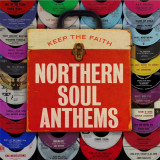
Demon Music is proud to bring together a selection of popular and exciting classic Northern Soul Anthems on a new 2LP thirty-three track collection. These are the original recordings by some familiar names and one or two that may have passed you by.
As the Sixties came to a close and the initial success of labels like Atlantic and Motown began to wane, there remained a dedicated fanbase of Soul devotees who would rather be out on the floor than wearing flowers in their hair. They continued to seek out new and previously overlooked releases, many on small labels that had never enjoyed chart success, making surprise hits of a few in the process.
Northern Soul could easily have passed into music history as a fad, something on the fringes of mainstream popular music; instead its popularity has remained and even grown. It is no longer the preserve of venues in the north of England (who had always attracted coachloads of devotees from across the nation), with Soul clubs opening in Europe, Asia, Australia and even - in perhaps the ultimate example of "coals to Newcastle" – America
Every few years Northern Soul enjoys a resurgence in popularity and welcomes a new generation of younger fans, keepers of the faith. This collection is for those with a passing interest and fans both old and
new - music fashions may change but the quality, the infectious excitement and the urge to get up and dance has endured in these fantastic records.