Spirits Having Fun records are ones made from and for shows and spaces—arrangements rooted in a deeply collaborative process, that come to life through intuitive and locked-in live improvisation. Following their 2019 debut Auto-Portrait, Two finds the New York and Chicago based four-piece continuing to challenge ideas of what a rock band can be, pulling apart their musical experiences and reimagining them as kinetic compositions, equally studied but palpably organic.
Two is constructed around gut feelings and strong grooves, elastic rhythms and playful pacing. Its twelve songs expand, contract, and make sharp turns between melodies under singer-guitarist Katie McShane’s meditative lyrics. “Broken Cloud,” which was also released last year on a compilation in support of Chicago Community Jail Support, offers a glimpse into her reflections on the natural world: "A city grew out of the ground / to a mountain it's only a blur."
True to its name, the internal logic of the band is also just a lot of fun, built on trust and deep-rooted musical relationships. Before there was Spirits Having Fun, McShane, bassist Jesse Heasly, guitarist-vocalist Andrew Clinkman, and drummer Phil Sudderberg had performed together in various arrangements over the years. McShane, Heasly and Clinkman met in a specific corner of the Boston underground in 2013, a time when a scene had coalesced around students from local music conservatories frequently collaborating with punk bands and noise artists, exchanging ideas and warping musical worldviews. Heasly and Clinkman played together in Cowboy Band, making mutant, free jazz-inspired takes on old country tunes. When Clinkman moved to Chicago, Heasly and McShane played in experimental groups like EKP and Listening Woman; in Chicago, Clinkman met Sudderberg playing in projects like jazz scene fixture Ken Vandermark’s high-powered band Marker.
Spirits first came together as an attempt at a long-distance collaboration among friends in 2016, driven by the simple feeling of missing each other; they’d meet up for marathon weekends here and there to practice, playing small loops through dive bars and art spaces around the Midwest—just enough for McShane and Heasly to afford plane tickets back home. Being split between Chicago and New York forced the project into a deliberate pace. “We tried to take it slow and let it be what it was,” said McShane. That sense of patience unexpectedly prepared them for March of 2020, when their planned tours and the release of Two were indefinitely delayed.
Two was mostly recorded in the summer of 2019 with the help of omnipresent Chicago engineer Dave Vettraino and DPCD’s Alec Watson, whose contributions on organ, synths, and piano are laced throughout the record. The album reflects a synthesis of solitary and communal songwriting processes—each song drawing on fragments written by individuals, which McShane threaded together and shaped through her distinct compositional lens, making the songs whole before returning to them to the band to mature collectively. When composing, McShane writes first on the keyboard before adapting parts for guitars played by herself and Clinkman. Their dueling approaches to guitar are complementary: McShane, being a newer guitarist, brings a freshness to the project (“I'm just discovering the whole time,” she says) while Clinkman has been playing since childhood.
“There's a lot more collaboration on this record,” says Clinkman, “in terms of all of us letting stuff bloom a little bit more.” The record’s first single, “Hold The Phone” is a good example of this process—it started with a playful intro riff from Clinkman, a melody and bridge added by McShane, a wobbly outro groove added by Heasly, which Sudderberg brought to life. Another single, the dynamic “See a Sky,” written primarily by Heasly, underscores the rhythm section chemistry at play across the record, the song ebbing and flowing around Heasly and Sudderberg’s eclectic percussive palettes.
“Entropy Transfer Partners” is the only song on the record with lyrics by Clinkman, and the album’s most politically direct—a call for solidarity in the face of systemic failures, an acknowledgment of the shared material devastation caused by our country’s ongoing healthcare and housing crises: “These are not things we're experiencing individually. We struggle through them collectively. And we could actually declare, all of us, that it doesn't have to be this way, and fight and organize to ameliorate some of those conditions.” (“We won't work to create the shit you monetize, to run our lives,” they sing.)
From front to back, Two is an absorbing listen simply for its impressive range. But as the members explain themselves, the complexity of the record is about more than its intricate riffs, or how often they count out an odd time signature, but how they reject the notion of boxing the songs in, letting the melodies take on lives of their own. “Making music that feels alive is important to us,” says Clinkman. “Music feels most powerful to me when it deepens our sensation of feeling alive and connected to other humans. It’s so easy to feel worn down and isolated; that your life’s value is fixed to your productivity at your job, or the things that you have or don’t have. Making music that feels joyful and fun seems like one effective antidote to that feeling.”
Поиск:val ex
Все
- 1: Quiver (Extended) (3:59)
- 2: Ace Degenerate (1:5)
- 3: Strike First (1:07)
- 4: Cobra Guy (Extended) (2:32)
- 5: Slither (1:4)
- 6: The Internet (1:25)
- 7: You're The Champ (1:34)
- 8: Johnny's Story (2:29)
- 9: Web Md (1:10)
- 10: A Badass Name For A Dojo (Extended) (3:30)
- 11: Awake The Snake (2:07)
- 12: Worthy Opponent (2:)
- 13: Furious Hawk / Dark Hawk (2:14)
- 14: The All-Valley Tournament (3:34)
- 15: Snake In The Grass (2:05)
- 16: Stone Vs. Diaz (1:41)
- 17: The Cobra Effect (2:34)
- 18: Snap (1:46)
- 19: I'm A Sensei (1:58)
- 20: It Belongs To Me (3:)
- 21: Miyagi-Do Fix-Up (2:15)
- 22: Miyagi Memories (1:35)
- 23: The Wheel Technique (1:54)
- 24: Like A Dance (3:12)
- 25: Miyagi-Do (1:53)
- 26: Balance (1:03)
- 27: Kan-Geiko (1:04)
- 28: Mall Fight (1:39)
- 29: The Wrong Path (1:58)
- 30: Medal Of Honor (1:24)
- 31: Into The Snake Pit (2:26)
- 32: Miyagi's Tomb (2:43)
- 33: Miyagi Metal (2:16)
- 34: Return To Okinawa (3:20)
- 35: Live Or Die, Man (1:41)
- 36: Crane Technique (3:02)
- 37: Secrets Of Miyagi-Do (2:56)
- 38: Two-Time Champion (1:32)
- 39: Chop Shop (2:02)
- 40: The Right Path (3:00)
- 41: Sam And Robby (Extended) (4:26)
- 42: Final Match (1:48)
- 43: The Cobra And The Mongoose (1:19)
- 44: Time Out (1:35)
- 45: No Mercy (1:14)
- 46: New Champion (1:37)
- 47: I'm Coming For You, Bitch (1:38)
- 48: Hallway Hellscape (3:36)
- 49: Scale The School (0:50)
- 50: Hawk's Prey (1:28)
- 51: Rematch (2:08)
- 52: Fallen Soldier (2:38)
- 53: Carol Of The Cobras (2:17)
- 54: Dojo From Hell (1:50)
- 55: Must Not Lose To Fear (1:45)
- 56: Call Of The Cobra (2:12)
- 57: Duel Of The Snakes (Mega-Edit) (9:58)
- 58: Challenger (3:09)
Mondo and Madison Gate are proud to present the premiere vinyl release of Leo Birenberg and Zach Robinson's incredible score to the Netflix streaming phenomenon COBRA KAI. This 3-disc vinyl set features music from the first 3 seasons of the hit series, curated by the composers into themed collections.
This exclusive retail version comes pressed on red, white, and blue marble discs. Also featuring all new artwork from the incredible Matt Ryan Tobin and liner notes from composers Leo Birenberg, Zach Robinson, star Ralph Macchio, and showrunners Josh Heald, Jon Hurwitz, and Hayden Schlossberg.
Music from the first 3 seasons of the series curated into three collections of music:
Disc 1: COBRA KAI - a curated mix of music scoring the most badass dojo in the Vallely
Disc 2: MIYAGI-DO - curated selections from the music scoring Laruso Family, and its ties to the Miyagi legacy.
Disc 3: FINAL FIGHTS - the music from all three of the explosive season finale episodes.
All of the music has been hand selected, and in many cases expanded from their original form for the most definitive Cobra Kai listening experience available.
The edition that marks the start of the brand-new Comets Coming could not be more suitable: it is that Rodrigo Brandão, like his grandfather Herman Poole Blount, dust of stars that the world knows as Sun Ra, may have his feet on the Earth, but he has definitely a sidereal head.
Brandão arrived recently to Portugal, but already left a strong mark in the most adventurous Lisbon scene, having performed several concerts in which his language has been wrapped in the exploratory sounds of musicians such as Rodrigo Amado, João Valinho, and Hernâni Faustino. The agitator, poet and spoken word artist, brought a vast experience that over the years saw him collaborate with artists as distinct as the members of Metá Metá or Prince Paul (that one!) on BROOKZILL!.
This work, however, came in his luggage, across the ocean, on the rediscovery trip that brought him from Brazil to Lisbon. OUTROS ESPAÇO was recorded in São Paulo in late 2019 with a luxury crew: Tulipa Ruiz and Juçara Marçal added to the microphone, Thiago França played flute and alto & tenor saxophones, Guilherme Granado dealt with the synthesizers and effects, Marcos Gerez measured the overall pulse with his electric bass, Thomas Rohrer played soprano and 'rabeca' (fiddle), and Paulo Santos dealt with the percussion. In addition to the base band, OUTROS ESPAÇO also features some members of Sun Ra Arkestra's current incarnation. Respectively: Danny Thompson (RIP) on baritone and bongo, Elson Nascimento on 'surdo' (tom drum), Knoel Scott on tenor and soprano, with the giant Marshall Allen in a prominent role leading the collective towards the unknown, while playing the alto sax and synthesizer.
In OUTROS ESPAÇO, Brandão reaches for words from different origins, from contrasting times and cultures, all with magnetic resonance imaging: what is not from his furrow comes to him from Candomblé (“Quando Os Orixás Desfilam Sobre A Cracolândia”), from his readings of Sun Ra (“Eu Sou 1 Instrumento” is an adaptation of the poem I Am An Instrument), or from the school's playgrounds (“Jamais Nos Esqueceremos”). And in these words there are teeth and nails ingrained in injustice (“Quantos Coltrane...?, “Todo o Dia Tem +”) and kaleidoscopic delusions that result from the speed of light (“Sol da Meia Noite”).
The crew that travels through these OUTROS ESPAÇO (PT for "Other Spaces") has freedom as the main fuel, jazz as a measure of their reach, and all swings in the world as maps, so they can lose themselves at the end of the cosmos. There is urgency and reflection, craziness and precision, surprise and well-known ancestral raw material, that makes us vibrate inwardly with the same trembling as the comets that are coming.
The visionary and veteran Scotty Hard was responsible for making everything sound like the music of the spheres, dealing with the mixing from his INGUASONIC SOUND studio in Brooklyn, NY.
And lastly, in January, Rob Mazurek, another frequent ally of Brandão, another notorious space traveler, offered a poem that frames this project. Among other things, he writes:
Make this place sing
Make this place thunder
Make this place shake
It couldn't be in any other way.
(Deluxe Edition) (translucent tri-coloured vinyl LP + MP3 download code in spot-varnished sleeve)
LP comes in gold foil lamination jacket housing printed record sleeve with 1x translucent gold, black & white insomnia effect vinyl, marketing sticker and free digital download card. The Sharecropper's Daughter Bonus Vinyl contains six new tracks serving as a companion piece to Sa-Roc's already acclaimed Rhymesayers debut, The Sharecropper's Daughter, released in October of 2020. These new songs further showcase Sa-Roc's sharp skills as a lyricist, and her gift for captivating melodies and engaging content, featuring production from Sol Messiah and Evidence, as well as a guest verse from MF DOOM. The lead single for the bonus vinyl, "Wild Seeds" is a lyrical testament to the beauty, mysticism, and wisdom of the elders and ancestors who've guided and bolstered generations of Black women through history's assault and neglect of them. With a title inspired by the sci-fi novel Wild Seed by visionary author Octavia Butler, the song serves as a celebration of women such as Queen Nanny, Harriet Tubman, Sojourner Truth and many others, whose legacies inform future generations of their propensity to bloom under the harshest of conditions. "Just like wild seeds, we remain unfettered and unbroken, adding beauty and immeasurable value to a world that chooses not to acknowledge us," Sa-Roc states, "but our very existence is the only acknowledgement we require." Throughout the songs of The Sharecropper's Daughter Bonus Vinyl, Sa-Roc maintains a concise blend of thought provoking commentary and razor sharp lyricism. On the opening track, "Options", she delivers a raw and searing testimony of the dedicated yet, all too often, underappreciated artist, reminding us to give our flowers to the living while we're still able. "The Great Escape" examines humankind's tendency to try to mask the unsavory elements of our past we're either unwilling or unable to confront head on. Echoing both sentimentality and sorrow, "Reconstruction of the Heart" recalls some of Roc's childhood memories and muses on the many ways in which our earliest experiences can scar, strengthen, and shape the very core of who we'll become. The Sharecropper's Daughter Bonus Vinyl chapter fittingly comes to a close with "The Rebirth", which remarks on the plight of the vulnerable artist and the quest for balance between creative transparency and overexposure. Here, Sa-Roc labors through her discomfort and commits to being brutally honest about the experiences that have informed her expression and made her a better artist. Featured guest, the late MF DOOM continues this line of thinking, offering his own unique observations, "Quick as a quitter will fold, some of what glitters is gold. Same story is old, getting left in the blistering cold. Broken souls get remold with little arbitration. Fortune favors the bold as does incarceration." This bonus vinyl pulls no punches in showcasing Sa-Roc's continual growth as an artist who, as NPR recently put it, "is a modern day griot whose aura radiates calm in a world of chaos."
In the fleeting moments between the state of being awake and reaching the doors of dreamworld lies a borderland whence comes the mood music of ancient stories told – the celestial unison of three creative souls known as AURI.
Originally born in 2011 from the special connection of Johanna Kurkela, Tuomas Holopainen and Troy Donockley, AURI was first introduced to the world as late as 2018. Now complemented by the dynamic percussive talents of Kai Hahto, the threesome carves fantastical worlds entirely their own.
Comprised by Tuomas’ keys and infinite imagination, Troy’s arsenal of flutes, other folk instruments and magical touch, and Kurkela’s youthful and tender voice full of childlike wonder – fragile and gossamer, yet powerful and moving beyond words – the flow of AURI’s celestial, uplifting mood music captures from the first notes and does not let go.
To its key members AURI is a creative outlet unconfined by the preconceptions caused by their other bands and their respective audiences. Leaning to Celtic folk and cinematic pop yet not shackled by any specific genre, AURI isn’t the kind of music that can be described by words alone. No, an equal effort of the enchanted three, AURI runs a lane of completely their own. Unburdened by anyone’s expectations but their own. This is the sort of music that taps directly into emotions.
Embrace the atmospheric auditory imagery of fantastical valleys of other fairytale dimensions and soon gone fireside bards. Dwell for just a moment in treasuries of dreamlands and ponderings that see mundane things turning into otherworldly miracles.Feel welcomed to embark on endless adventures on long roads untrodden and ships never sailed.
As if frozen in time, you’ll be captivated by heart-burstingly elating fare-thee-wells for those dearly departed.
Hear the soft words that empower those feeling inadequate and reassurance to others fearing death.AURI’s are the keys to a dimension of awe no one else sees. Only theirs to offer are the mystical, soundscapes and ethereal vocals.
Theirs to hold are the magical powers that can melt the steeliest of hearts and make grown men cry. AURI invites the listener along for journeys no other band can provide.
Come, my love – now it‘s calm enough to go.
Fresh one on Music With Soul - a channel for hot 7"s that always fly out here. TIP!
"Two and a half frenetic minutes that sound like Aphex Twin and The Incredible Bongo Band dancing Capoeira in the early hours of an illegal rave, somewhere in the deep amazon forest. After the success of his first solo 45, Alex Figueira comes back to the aesthetics of the early Fumaça Preta, with an utterly bonkers 45 that can only be described as an “in-your-face acid macumba techno breakbeat funk freakout”.
The flip side contains a haunting Psychedelic ballad, with the sweet vocals of Maddie Ruthless, from NY’s leading Lovers Reggae sensation, The Far East. Equally trippy and beautiful, the soothing sounds of the Wurlitzer piano and the electric sitar will be bouncing in your head for hours after first listen. The kind of song that finds collectors dropping eye-popping sums, decades after the original release. Guarantee your retirement now by getting a few copies! The song “Maracas” is the main theme of the movie “Maracas, tambourines and other hellish things” directed by fellow record nerds Matteo Fava and Dave Potsma. They managed to convince Figueira to play the main character, and later on, to do the complete music score. The movie tells the story of a struggling underground musician / part time record store clerk, whose music career is basically going nowhere until an improbable encounter gives his life a dramatic turn. They asked Figueira to give them something with “a fresh tropicalized take on Blacksploitation”. One might argue, after listening to the insanity carved on the grooves of this piece of vinyl, that he certainly did deliver.
The characteristic mix of synthesizers and heavy percussion used by Figueira in almost all his projects, gains here a somewhat freer dimension, embracing the chaos openly, without ever neglecting the groove, nor the ancestry axis. Values that are at the core of the label. Even while laying down all the instruments himself, Figueira has managed to capture the same out of control tropical psychedelic spirit of his former band, Fumaça Preta. Fans of the group’s outfit will certainly be rejoiced by this new release.
The flip carries “Grasping & Wishing”, an evocative Psych ballad that retains the same tripped-out flair of the A side, while slowing down the tempo considerably with a decidedly african 6/8 beat. Sung by New Orleans’ own “Rocksteady Queen”, Maddie Ruthless, stepping out of her classic Reggae background, to grace the track with her beautiful voice, permeating the issues of belonging, doubt and introspective reflection portrayed in the lyrics, with a thin layer of exquisite fragility that will comfort your ears.
The production includes a significant number of sound effects, ranging from different types of percussion performed with liquids to bamboo flutes of different sizes and several layers of multiprocessed electric Sitar tracks. Listen carefully and you will discover new sonic nounces every time you put the record on."
"Ry Cooder" - Ry Cooder (voc, g, mand, b); Van Dyke Parks (p); Bobby Bruce (v); Chris Ethridge Roy Estrada, Max Bennett (b); John Barbata, Richie Hayward (dr); Milt Holland (dr, perc); Gloria Jones (backing voc)
By the time he was aged 22, Ry Cooder was already a veteran of the music business and in great demand as a studio musician and sideman. Shortly after signing a contract with Warner Music in 1969, he released his first album under his own name, placing his confidence in the musical talent he had developed since being a child and on the rare value of his favourite instrument, the steel guitar.
The present LP that carries his name is a fascinating blend of blues, folk, rock ’n’ roll and pop – a unique mixture, which combines superb songs, virtuosic playing and somewhat bizarre yet imaginative arrangements. For material, Cooder, the son of folklorist parents, dug out ten gems coming from over six decades, right back to the 1920s – by legends such as Woody Guthrie, Blind Blake, Sleepy John Estes and Leadbelly, as well as a more up-to-date Randy Newman composition. As magnificent as his choice might be, it is the exuberant charm of his own instrumental composition "Available Space" that almost steals the show here. Expansive and unbiased, Cooder plays an ironic game made up of wordless irregular phrases, which promise the listener something new and ultimately circle in an infinite loop.
Cooder’s need to prove himself, moderated by his veneration for the past, helps to create a completely original work that will prove rewarding for the adventurous listener.
This Speakers Corner LP was remastered using pure analogue components only, from the master tapes through to the cutting head. More information under pure-analogue
All royalties and mechanical rights have been paid.
Recording: 1970 at various studios by Bob Kovacs, Doug Botnick, Rudy Hill and Jim Lowe
Production: Lenny Waronker and Van Dyke Parks
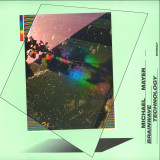
Michael Mayer’s latest EP, Brainwave Technology, comes at you purposeful, stealthy and sly. It’s a glorious left turn for the redoubtable producer, one that sees his typically lean and lithe productions buffed to a metallic, futurist sheen. There’s a gleam in the eyes of tracks like “Brainwave Technology” and “Alpha” that speaks of serious fun, of the intersection of the pleasure zone and the frontal lobe.
“Brainwave Technology” itself is informed by Mayer’s deep dive into the thorny terrain of artificial intelligence, transhumanism and posthumanism. Inspired by reading German philosopher Richard David Precht, Mayer found himself heading down the “proverbial rabbit hole,” as he describes it, “watching hours of YouTube material by self-proclaimed prophets of these ‘inevitable’ changes to come.” Never one to be taken in by the egotist’s dance, Mayer’s cynicism about the whole endeavour is tempered, a little, by the deeper questions that these figures gesture towards: “Is it really an evolutionary step that man and machine become one? Or is it rather a marketing plot by Silicon Valley billionaires?”
On “Brainwave Technology”, Mayer plays the charlatans at their own game, turning their logic against them by exposing the fruitiness of their ‘visions’. “I chose irony as my sword with which I chopped off some quotes from some of those batshit crazy prophets and self-promoters,” he explains of the drooling psychobabble he drops in the track’s lacuna. There’s a sense of humour here – how could you not laugh at these hungover egotists? – but there’s levity too, a sense that Mayer’s using sound to expose the contradictions and double-speak at the heart of these half-formed ideas. It’s a Burroughsian tactic, to slice into the heart of the voice to see what hidden truths surface.
It was Burroughs, too, who once said that “when you cut into the past, the future leaks out”; Brainwave Technology cuts into the logic of the futurologist to leak out the messiness of modern reality. On “Alpha” and “Gamma”, Mayer seems to conjure up the stark, ominous music that’d soundtrack a science fiction reinterpretation – or preinterpretation – of our modern malaise, all funereal wreaths of electronic noise and clatterboxing beats. As the EP resolves with “Device For The Young At Heart”, Mayer’s questions are piling up: “Do we want to become immortal and live on as a download? Do we really give up on Earth and put all our effort into colonising Mars?” There are no answers, of course, but plenty of imaginings-to-be. Brainwave Technology soundtracks both dystopian and utopian possibilities of what could come next.
“One of the vital pieces in the jigsaw puzzle of ’90s British rock music.” Pat Gilbert, Mojo magazine While his own name has yet to grace an album front cover, for more than a twenty years Gem Archer has been a key contributor to some of the UK’s highest profile guitar bands, beginning with Oasis in 2000, Beady Eye in 2009 and the touring version of Noel Gallagher’s High Flying Birds since 2015.
Before all that there was Heavy Stereo, caught up in the mid ‘90s music maelstrom where their only album ‘Déjà Voodoo’ took its place alongside Paul Weller’s ‘Stanley Road’, The Charlatans’ ‘Telling Stories’, Super Furry Animals’ ‘Fuzzy Logic’, Supergrass’s ‘I Should Coco’, The Boo Radley’s ‘Giant Steps’, Ride’s ‘Carnival Of Light’ – and, of course, ‘Definitely Maybe’ and ‘(What’s The Story) Morning Glory?’ by Oasis. It is easy to understand why any album could get overlooked in such exalted company. ‘Déjà Voodoo’ and the four singles – ‘Sleep Freak’, ‘Smiler’, ‘Chinese Burn’ and ‘Mouse In A Hole’ – all display Gem’s deeply held affection for old-school rock’n’roll values. In 1994/95, the outside world came into sync with his fondness for The Jam, Sly Stone, Hendrix, The Beatles, the Stones, The Small Faces, Motown, Stax, glam rock, punk rock and all other points on the compass of rock’n’roll cool, which coalesced into what became known as Britpop. And while those influences are in ‘Déjà Voodoo’ for all to hear, the album is far from derivative; this is a collection of well-constructed pop songs that still retain their swagger and zest.
Unavailable since it was first released on Creation Records in 1996, this new 25th anniversary 180g clear vinyl edition is a faithful recreation of the original 12-track LP.
Bram Weijters' Crazy Men is a thrilling take on Belgian jazz-rock and fusion from the 1970s.Consisting of musicians from a wide array of contemporary jazz bands including Lucid Lucia (ex BRZZVLL), Dans Dans, STUFF. and Cargo Mas, the ensemble is led by Antwerp based piano and keyboard player, Bram Weijters.
Born in Naples, educated in New York and now residing in Paris, drummer Francesco Ciniglio combines spotless drumming facility with substantial compositional flair, and has the capacity to move, reflect and express through his music. An in-demand sideman, Ciniglio has collaborated with Wynton Marsalis, Shai Maestro, Aaron Parks, Dayna Stephens, Seamus Blake and Tony Tixier. Following his debut solo solo release ('Wood', with Parks and Joe Sanders), Ciniglio returns as leader for his Whirlwind debut, 'The Locomotive Suite', a set of compositions for sextet that combine a personal metaphor of resilience with snapshots of his formative familial influences. Barcelona-based Raynald Colom (trumpet), fellow Paris emigrée Matt Chalk (alto) and Matteo Pastorino (bass clarinet) take the frontline duties, with Frenchman Alexis Valet on vibraphone and rising star Felix Moseholm on double bass.
Thyrfing emerged from the ever-growing underground scene in Sweden
back in 1995.
After seven full-length albums and numerous live performances all over the
world, the band have gained a strong following over the years and an exquisite
standing within the metal scene.
They are considered one of the top bands within the so-called Viking/pagan
metal genre - but on the other hand, Thyrfing are so much more with their truly
outstanding and self-contained musical offering.
The name of the band is taken from the sword “Tyrfing” in Norse mythology - a
cursed blade that appears in several tales and myths. Ever since the start, the
mythology has played a huge part in the scenery and imagery of the band’s
music and lyrics, something which is still intact today.
‘Vanagandr’ (an alternate name for the wolf creature known by the more familiar Fenrir) is a celebration of the tales and stories of Scandinavia - the track
‘Undergangens lankar’ is a conceptual piece focusing on Vanagandr/Fenrir and
a track that carries the spirit and hallmarks that make Thyrfing so unique.
‘Dop dem i eld’ is both the opening song on the album and the first video, one
of two produced for the band by Patric Ullaeus (Dimmu Borgir, Europe, Arch
Enemy). A powerful, heavy, and aggressive track packed with groove and melody. Elsewhere ‘Tr ldomsord’ is regarded as possibly the band’s most intense
song to date, whereas ‘Jordaf rd’ closes the album in epic fashion - a mournful
and moody longing for the end to come. The perfect way to end the album!
Co-recorded and co-produced by Jakob Herrmann (In Flames, Machine Head,
Evergrey) in Top Floor Studios, Gothenburg, with the renowned Jacob Hansen
(Volbeat, U.D.O., Katatonia) looking after the mix and mastering, all of which
ensures at ‘Vanagandr’ sounds massive!
The art concept was executed perfectly by Niklas Sundin of Cabin Fever Media
(ex-Dark Tranquillity) who reconnects with the band once again (he also did
the “Vansinnesvisor” album back in 2002.)
‘Vanagandr’ is the first release via the band’s new record label, Despotz Records. Who recently also signed over the rights to the band’s first four albums
Thyrfing (1998), Valdr Galga (1999), Urkraft (2000), Vansinnesvisor (2002) and
have announced exclusive physical re-issues are in the making.
“... a successful voyage into an oaken woods where death metal, traditional
thrash, and Scandinavian folk commingle harmoniously” // John Serba, Allmusic
“This album gives you an epic feel, and that’s the big strength of Thyrfing,
their music can do something like that to you.” // folk-metal.nl
Thyrfing emerged from the ever-growing underground scene in Sweden
back in 1995.
After seven full-length albums and numerous live performances all over the
world, the band have gained a strong following over the years and an exquisite
standing within the metal scene.
They are considered one of the top bands within the so-called Viking/pagan
metal genre - but on the other hand, Thyrfing are so much more with their truly
outstanding and self-contained musical offering.
The name of the band is taken from the sword “Tyrfing” in Norse mythology - a
cursed blade that appears in several tales and myths. Ever since the start, the
mythology has played a huge part in the scenery and imagery of the band’s
music and lyrics, something which is still intact today.
‘Vanagandr’ (an alternate name for the wolf creature known by the more familiar Fenrir) is a celebration of the tales and stories of Scandinavia - the track
‘Undergangens lankar’ is a conceptual piece focusing on Vanagandr/Fenrir and
a track that carries the spirit and hallmarks that make Thyrfing so unique.
‘Dop dem i eld’ is both the opening song on the album and the first video, one
of two produced for the band by Patric Ullaeus (Dimmu Borgir, Europe, Arch
Enemy). A powerful, heavy, and aggressive track packed with groove and melody. Elsewhere ‘Tr ldomsord’ is regarded as possibly the band’s most intense
song to date, whereas ‘Jordaf rd’ closes the album in epic fashion - a mournful
and moody longing for the end to come. The perfect way to end the album!
Co-recorded and co-produced by Jakob Herrmann (In Flames, Machine Head,
Evergrey) in Top Floor Studios, Gothenburg, with the renowned Jacob Hansen
(Volbeat, U.D.O., Katatonia) looking after the mix and mastering, all of which
ensures at ‘Vanagandr’ sounds massive!
The art concept was executed perfectly by Niklas Sundin of Cabin Fever Media
(ex-Dark Tranquillity) who reconnects with the band once again (he also did
the “Vansinnesvisor” album back in 2002.)
‘Vanagandr’ is the first release via the band’s new record label, Despotz Records. Who recently also signed over the rights to the band’s first four albums
Thyrfing (1998), Valdr Galga (1999), Urkraft (2000), Vansinnesvisor (2002) and
have announced exclusive physical re-issues are in the making.
“... a successful voyage into an oaken woods where death metal, traditional
thrash, and Scandinavian folk commingle harmoniously” // John Serba, Allmusic
“This album gives you an epic feel, and that’s the big strength of Thyrfing,
their music can do something like that to you.” // folk-metal.nl
This is the first official re-release on vinyl under licensed courtesy of BMG Rights Management,UK, remastered from an original master copy out of the vaults of BMG, originally released in 1972 on Bronze Records.
Co-founder of Colosseum in 1968 with Jon Hiseman, he knew from his Jazz Club years as drummer for Georgie Fame, Dick ran through this group's hectic recording and touring schedule for over 3 years until November 1971, when it disbanded.
In his late 30s at that time, on top of his musical shape, he moved on to start recording on his first solo project, with material left over from Colosseum days (written by D. H.-S., Clem Clempson and Jon Hisemann) and new material jointly composed with well-known lyricist Pete Brown. He recruited the help of Colosseum mates, Hiseman, keyboardist Dave Greenslade and vocalist/bass player Mark Clarke, plus the brilliant ex-Elton John group Caleb Quaye (Hookfoot) on guitars and Rob Tait (ARC, Battered Ornaments) on drums; old pal G. Bond is featured providing remarkable moog work on 'Pirate's Dream', funky organ on 'Moses In The Bullrushourses' and sharing piano duties with Gordon Beck (G.B. Trio, Nucleus) on 'What The Morning Was After'; Paul Williams (Juicy Lucy) gets the lion share of vocal duties, and Chris Farlowe and Chris Spedding (Nucleus, Battered Ornaments) have respectively a sole vocal and a guitar spot on 'Pirate's Dream'.
The album track by track:
Side one starts with 'Future Song', the track that really rises above the other tracks here. The guitar, vocals (by Mark Carke) and sax are great on this one. Killer sax 2 minutes during an excellent instrumental interlude. H.-S. sounds slightly eastern-influenced on his outstanding sax lines. Such an uplifting track with it's repetitive riff and hard, driving sound! Next is 'Crabs', starting off in a mellow way with Greenslade's piano and reserved vocals as the sax joins in followed by guitar and drums as it builds. Irresistable! Great vocals by Paul Williams. One could easily imagine both tracks on a Colosseum album. 'Moses In The Bullrushourses' is uptempo, owing just as much to jazz, blues and hard rock. Great groove! Lots of organ here to send shivers down your spine and perfect guitar playing. 'What The Morning Was After' opens with some sax excursions as the drums help out. Acoustic guitar by Quaye and powerful vocals by Paul Williams take over as the piano joins in. Our second favourite tune on here after the opener. A folky song really until it picks up half-way through.
Side 2 opens with the 11 minutes 'Pirate's Dream', with Farlowe on vocals and Spedding's initial rock blues riff, but soon evolving to a complex multi parted composition in the best spirit of Valentyne Suite, driven by Hiseman multi faceted drumming. D. H.-S. twin saxes soar on a calmer mid section with Spedding doubling the licks and the bass grumbling relentlessly behind; it slowly gains speed with moog, sax and vocalizations duelling and answering each others with dazzling, demanding and inspired phrasings on top a thundering rhythm section; after the lyrics resume it evolves into a majestic, grandiose finale. A bluesy clean guitar lick opens 'Same Old Thing', a swinging, calm heavily modulated twisted blues, with a punchy rhythm section, a soulful Williams on vocal, Quaye delivering an inspired sparkling solo and D. H.-S.'s sensitive fat sax enhanced with some double tracking on the solo part. A great ending to a great album.
Album comes with the reproduction of original gatefold cover sleeve, additional cover-sized insert with band story, lyrics and photos. A highlight! Highly recommended!
This summer, multidisciplinary producer, designer and 3D artist Raynor de Groot serves up Future Static, his debut full-length on Atomnation as Coloray. More than simply a collection of music, the record will be presented in an all-new virtual space where each track is a portal to a different world.
Dutchman de Groot has proven himself as an accomplished conceptual artist who draws together many different creative fields. He has released everything from lush synth-pop to deep techno, and has real songwriting ability. 2019's 'Can't Stop' in collaboration with Eagles & Butterflies proved that as it crossed over multiple scenes and became one of the year's standout tracks thanks to support from heavy hitters as diverse as Hunee and Four Tet. Âme & Dixon have also regularly supported Coloray's music and asked him to release 'Gazing Eyes' on their Innervisions label.
Two years after his Real Life Cinema EP on Atomnation, Future Static finds de Groot open a new chapter that explores a more conceptual sound. The album "translates the concept of man and computer creating a new reality where logic and emotion seems to be at odds with one another." Its 12 tracks have club-ready grooves, but also exquisite synth designs that are edgy and uptempo. They will be translated to a live show and interactive music experience in VR, on your phone and desktop. In the show, online visitors will be able to get lost inside the mind of an AI and watch and interact with a Coloray performance.
Presented with an artfully designed gatefold sleeve, Future Static is a groundbreaking project from Coloray that pushes creative boundaries while offering an immersive listening experience.
Kilbourne, a Brooklyn-based producer and DJ with a prolific output in the harder, faster and more extreme underbelly of electronic music, is gearing up to share her latest work, an offering that doubles as her debut on Los Angeles-based imprint Evar Records. Out on July 23, SEISMIC explores the idea of "becoming," showcasing the value of speed, identity and transcendental bliss through an experimental lens entirely Kilbourne's own.
The four-track collection features a hard-earned collaboration with the legendary DJ Producer, whose work has been instrumental to both Kilbourne's approach and the hardcore scene at large, and a joint track with Buzzi, a fellow Brooklyn-based producer who shares her dedication to experimenting in the faster, harder techno realm. On SEISMIC, Kilbourne balances the dramatic beauty and brutality of hardcore, bringing gentler melodies into her production style as not an aberration, but rather a necessary aspect of heavy music.
Black vinyl w/ standard sleeve. Juju is the brainchild of Sicilian multi-instrumentalist Gioele Valenti (Lay Llamas, Herself) and this Fuzz Club Session LP finds Valenti and band (Vincenzo Schillaci, Simone Sfameli) storming through four tracks at I Candelai in Palermo, Italy. The resulting session is released as a series of videos and pressed on vinyl. Due for release August 13th on London-based label Fuzz Club, the session comprises two tracks from their 2017 second album 'Our Mother Was A Plant' ('In A Ghetto' and 'And Play A Game') and two from 2019's 'Maps and Territory' LP ('Master and Servants' and 'Motherfucker Core'). Juju's worldly, genre-bending experimentalism fuses psychedelia, new wave and krautrock with touches of afrobeat, funk and zamrock and it's in a live setting, such as that captured here, where that captivating blending of sounds is at its most spellbinding and hypnotic. Juju's Fuzz Club Session (the latest in a series which has previously included the likes of A Place to Bury Strangers, Night Beats, Holy Wave, The Entrance Band and more) makes all too clear why the band have been praised as one that "resets the coordinates and makes the past seem startling new again" (The Quietus).
Paper Birch is a collaborative experimental noise rock duo formed by Fergus Lawrie (Urusei Yatsura) and Dee Sada (NEUMES / An Experiment On A Bird In The Air Pump) in May 2020. United by mutual feelings of despair, fragility and hope, they passed ideas and sounds between London and Glasgow whilst the UK was in lockdown. The resulting 9-track debut LP morninghairwater is set to be released on vinyl, CD and digital. A melting pot of genres, morninghairwater twists and turns through moments of 60’s inspired
indie-pop, fuzzed out angular shoegaze and glitchy electronic soundscapes with astonishing ease. This album draws not only on the influence of both Lawrie and Sada’s individual back catalogues but which at times echoes with everything from Heavenly to Joy Division. The album also marks the beginnings of a collaborative relationship with renowned visual artist, Thomas James who has created thrilling films for Ghostpoet, Paloma Faith and most recently, The English National Ballet. Whilst morninghairwater may be a product of the universally challenging time in which it was recorded, the duo has already started work on their second album and Paper Birch looks set to be an enduring fixture of the UK experimental scene. Press and radio coverage for Paper Birch “an intoxicating squall of noise pop” - God Is In The TV “Sada’s signature softly cooed atmospheric translucent vocals prove a congruous fit with Lawrie’s
deeper, more grunge-y despondency; sounding at times like Psycho Candy-era Jesus And Mary Chain in harmonious matrimony with Mazzy Star, or, the Pop Group hooks up with MBV” - Monolith Cocktail “mixing in disparate elements from classic 60s pop to glitchy electronica to transportative effect” – Joyzine “with a strong baseline and a sea of roaring guitar, a bit like The Pastels vs My Bloody Valentine (nothing wrong with that!)” - Is This Music “The texture is suggestive, the atmosphere hypnotic and the climate oppressive” - Sun Burns Out “A true jewel of modern and underground psychedelic pop” - Acute Pop
What is experience, but a husk, made up of moments in time, formed by myths, habits and rituals, molded by the country we call home. Who are we, but spectres facing the ambiguity of the coming day, while navigating the winding roads of our past.
What is left, but to make sense of it all through the gaze of a lover, discover passion through the kindship of music, embrace life, through the ancient fibers of the land.
For number 89 in the Brazil45 series, we present a no-nonsense Brazilian funk / samba rock double-sider courtesy of the mighty Golden Boys and Silvio C sar. The Golden Boys were a quartet formed in 1958 by the Correa brothers; Renato, Roberto, Ronaldo, and their cousin Valdir Anuncia o. They enjoyed a stellar recording career, from the 50s through to the 90s, with members of the group still involved in music to this day. For this selection we headed to their self-titled 1975 album released on Odeon and cherry-picked one of the group’s funkiest moments, ‘Segura Na Cintura Dela (O Gavi o)’. By now performing as a trio, they enlisted Paulo Deb tio of Lemos E Deb tio 8206;fame as executive producer and, on the controls, producer Milton Miranda. Miranda was a silent figure behind so many of the much-loved classic Odeon / EMI releases of the 60s and 70s. ‘Beco Sem Sa da’ is another Odeon release, and another classic produced by Milton Miranda. Taken from Silvio C sar’s self-titled 1971 album, here the prolific singer and composer delivers a swinging samba rock / groove. With fantastic arrangements by Geraldo Vespar, this addictive swing was reconstructed in the 2000s when Drumagick sampled it for their track ‘Sambarock’. So here we have two slices of Brazilian dancefloor pressure just waiting to take centre stage again.
- Next installment in BRAZIL45 Series.
- Brazilian funk and samba rock double-sider.
- Both tracks produced by Milton Miranda.