Ostinato as resistance: Rafael Anton Irisarri’s landmark work reimagined. Marking the tenth anniversary of the American composer’s critically acclaimed album 'A Fragile Geography', this new edition arrives renewed, both sonically and visually.
First released in 2015 (Room40) during a period of personal upheaval and creative reinvention, it endures as a testament to resilience, transformation, and the connection we hold with the places that shape us.
Written in the aftermath of a devastating theft, A Fragile Geography was born out of loss. Just days before a cross-country move to New York, Irisarri’s entire Seattle-based studio was wiped out. Instruments. Recordings. Archives. Gone without a trace. He arrived on the East Coast to an empty room and the daunting task of starting over.
“This album wasn’t just a record; it was a lifeline,” Irisarri reflects. “It became a way to process the emotional chaos that followed: uprooting, instability, and ultimately, the slow, intuitive rebuilding of a life.”
Composed and recorded in the rural woods of the Hudson Valley, the album took shape in seclusion, surrounded by nature, and through a process guided by improvisation. Embracing limitations, Irisarri wove textural layers of field recordings with half-remembered melodies from his Seattle years, piecing them together like fragments of memory. Tracks like “Displacement,” “Hiatus,” and “Persistence” juxtaposed haunting stillness with restless momentum, mapping an inner terrain of grief, catharsis, and rebirth.
Among its defining sounds is “Empire Systems,” a monumental centerpiece built around a simple four-chord progression, organ textures, and guitar drones. Gradually, the track expands into layers of immersive loops and thick, enveloping distortion that wash over the listener like a rolling wave. Often cited as the album’s most majestic passage, it captures Irisarri at his most sonically ambitious. With a harmonically saturated structure crafted from restraint and repetition, it remains one of his most recognizable compositions: an exercise in the art of maximal minimalism.
From the outset, “Reprisal” received praise from BBC’s Mary Anne Hobbs, who championed the track on her radio show. Her support played a key role in introducing Irisarri’s work to wider audiences and solidifying his place within the lineage of electronic, drone, and experimental sound artists. A slow-burning elegy, the piece emerges from a haze of distortion and sub-bass, with dense, unrelenting drones carrying a sense of mounting tension. Just as it seems to collapse under its own weight, flickers of guitar emerge like distant light through fog. It’s a meditation on dissonance, resolve, and the elusive possibility of release.
The closing track, “Secretly Wishing for Rain,” is steeped in saudade: a longing for Seattle’s dour grey skies, lush green landscapes, and desaturated sunsets. Through it, Irisarri mourns a vanished chapter of life bound to the city, a time documented in scattered mementos and cherished collections, now permanently gone. A reflection on what could never be recovered: an era lost to time. Julia Kent’s looped cello motifs added a melancholic warmth to the track, marking the first collaboration between the two artists and sparking a musical dialogue that would keep growing in the years that followed.
More than a career highlight, A Fragile Geography has laid the foundation for Black Knoll studio, which Irisarri rebuilt from the ground up. The studio has since grown into a creative hub for countless projects, with Irisarri engineering records for iconic music figures like Terry Riley, Ryuichi Sakamoto, William Basinski, MONO, Devendra Banhart, Grouper, Emeralds, Steve Hauschildt, Julianna Barwick, and many others. Carried by its lasting influence, the album has quietly captured the ear of a younger generation, its sound and emotional arc finding new listeners in unexpected corners.
The album’s new visual language was reimagined in collaboration with Mexico City–based designer Daniel Castrejón. Irisarri captured ghostly images at Gaztelugatxeko Doniene, a historic coastal site in Bermeo, Euskal Herria. Castrejón then treated the photographs with distressed textures and spectral overlays. The final artwork channels the rugged, elemental forces that shaped both the music and Irisarri’s aesthetic, renewing his ties to ancestral ground inspired by the Basque homeland of his bloodline.
Mastered by Stephan Mathieu with exceptional attention to detail, this anniversary edition uncovers every nuance in the sound design, enhancing clarity and presence. With each listen, new elements emerge, inviting discovery and reconnection.
“I don’t experience this album as a document of grief anymore,” says Irisarri. “I hear adaptation and I'm reminded that when everything falls apart, something meaningful, maybe even beautiful, can emerge.”
quête:valley b
Ostinato as resistance: Rafael Anton Irisarri’s landmark work reimagined. Marking the tenth anniversary of the American composer’s critically acclaimed album 'A Fragile Geography', this new edition arrives renewed, both sonically and visually.
First released in 2015 (Room40) during a period of personal upheaval and creative reinvention, it endures as a testament to resilience, transformation, and the connection we hold with the places that shape us.
Written in the aftermath of a devastating theft, A Fragile Geography was born out of loss. Just days before a cross-country move to New York, Irisarri’s entire Seattle-based studio was wiped out. Instruments. Recordings. Archives. Gone without a trace. He arrived on the East Coast to an empty room and the daunting task of starting over.
“This album wasn’t just a record; it was a lifeline,” Irisarri reflects. “It became a way to process the emotional chaos that followed: uprooting, instability, and ultimately, the slow, intuitive rebuilding of a life.”
Composed and recorded in the rural woods of the Hudson Valley, the album took shape in seclusion, surrounded by nature, and through a process guided by improvisation. Embracing limitations, Irisarri wove textural layers of field recordings with half-remembered melodies from his Seattle years, piecing them together like fragments of memory. Tracks like “Displacement,” “Hiatus,” and “Persistence” juxtaposed haunting stillness with restless momentum, mapping an inner terrain of grief, catharsis, and rebirth.
Among its defining sounds is “Empire Systems,” a monumental centerpiece built around a simple four-chord progression, organ textures, and guitar drones. Gradually, the track expands into layers of immersive loops and thick, enveloping distortion that wash over the listener like a rolling wave. Often cited as the album’s most majestic passage, it captures Irisarri at his most sonically ambitious. With a harmonically saturated structure crafted from restraint and repetition, it remains one of his most recognizable compositions: an exercise in the art of maximal minimalism.
From the outset, “Reprisal” received praise from BBC’s Mary Anne Hobbs, who championed the track on her radio show. Her support played a key role in introducing Irisarri’s work to wider audiences and solidifying his place within the lineage of electronic, drone, and experimental sound artists. A slow-burning elegy, the piece emerges from a haze of distortion and sub-bass, with dense, unrelenting drones carrying a sense of mounting tension. Just as it seems to collapse under its own weight, flickers of guitar emerge like distant light through fog. It’s a meditation on dissonance, resolve, and the elusive possibility of release.
The closing track, “Secretly Wishing for Rain,” is steeped in saudade: a longing for Seattle’s dour grey skies, lush green landscapes, and desaturated sunsets. Through it, Irisarri mourns a vanished chapter of life bound to the city, a time documented in scattered mementos and cherished collections, now permanently gone. A reflection on what could never be recovered: an era lost to time. Julia Kent’s looped cello motifs added a melancholic warmth to the track, marking the first collaboration between the two artists and sparking a musical dialogue that would keep growing in the years that followed.
More than a career highlight, A Fragile Geography has laid the foundation for Black Knoll studio, which Irisarri rebuilt from the ground up. The studio has since grown into a creative hub for countless projects, with Irisarri engineering records for iconic music figures like Terry Riley, Ryuichi Sakamoto, William Basinski, MONO, Devendra Banhart, Grouper, Emeralds, Steve Hauschildt, Julianna Barwick, and many others. Carried by its lasting influence, the album has quietly captured the ear of a younger generation, its sound and emotional arc finding new listeners in unexpected corners.
The album’s new visual language was reimagined in collaboration with Mexico City–based designer Daniel Castrejón. Irisarri captured ghostly images at Gaztelugatxeko Doniene, a historic coastal site in Bermeo, Euskal Herria. Castrejón then treated the photographs with distressed textures and spectral overlays. The final artwork channels the rugged, elemental forces that shaped both the music and Irisarri’s aesthetic, renewing his ties to ancestral ground inspired by the Basque homeland of his bloodline.
Mastered by Stephan Mathieu with exceptional attention to detail, this anniversary edition uncovers every nuance in the sound design, enhancing clarity and presence. With each listen, new elements emerge, inviting discovery and reconnection.
“I don’t experience this album as a document of grief anymore,” says Irisarri. “I hear adaptation and I'm reminded that when everything falls apart, something meaningful, maybe even beautiful, can emerge.”
- Dimension Shifter
- Invaders On My Back
- Anxiety Reducer
- Radio Source Sagittarius
- Mutant
- No Warning
- Evolution Machine
- Triplanetary
- The Last Question
2025er Pressung in 5 Spoke Cornetto - Black and Transparent Vinyl! Die südkalifornischen Hardrock Veteranen von FU MANCHU veröffentlichen ihre neues Album ,Gigantoid" auf At The Dojo, dem eigenen Label der Band. Nach fast 25 Jahren Bandgeschichte und nach der Split 7" mit ihren Freunden von MOAB im letzten Jahr sowie ,Signs Of Infinite Power" von 2009 kehren die Mannen um Scott Hill mit ihrem ersten Album seit sage und schreibe fast fünf Jahren zurück. Aufgenommen mit Andrew Giacumakis, dem Sänger/Gitarrist der oben genannten MOAB, in seinem Studio im kalifornischen Simi Valley, ist das Album primitiver, roher und zerfuzzter als seine Vorgänger. ,Wir haben für dieses Album 17 Songs geschrieben und haben daraus final neun Songs destilliert", erklärt Hill. "Wir wollten ursprünglich etwas später dieses Jahr einen Teil 2 rauszubringen, haben dann aber angefangen, mit diesen Songs für unser 25. Bandjubiläum im Jahr 2015 zu planen."
Born in Antwerp in 1939, Ferre became a true icon in the sixties, adored by youngsters and hippies and hated by the establishment. His successful debut album in 1966, which featured the hits “Ring Ring, I’ve Got to Sing,” “Crucified Jesus,” and “Drunken Sailor,” brought him an international breakthrough with concerts in Paris, London, and Hamburg, leading to a contract with the famous French Barclay label. The next three albums did not equal the initial commercial success — a pressure the music business was happy to put on his shoulders. Still, these three albums, reissued in their original packaging and artwork on vinyl for the very first time, are loaded with hidden gems, combining folk, blues, and psychedelics in Ferre’s original songs.
Grignard sadly succumbed to throat cancer in 1982 at the early age of 43.
A1 FORWARD
Was inspired by the revolution of the year of 1988 also referred to as the 2nd summer of love. Revolutions great and small are happening all around us all the time, and they take place in the minds of individuals.
A2 CHARANJIT DRIVE
Describes the revolution i 've got in mind, angelic bass-string harmonic notes flying left and right, Indian-vocals, sudden sped-up dancehall baselines and breaks. Imagine a hippie a homeboy and a funky dread, hugging and dancing and telling their mates how much they love each other in a nice green field while this plays.
B1 HONDA WANDERER
A man in a blue honda civic is traveling through a misty world at a high velocity. Seeking that which is just hiding behind the next bend. I made this after a beautiful misty, raining/sunshine rainbow ride on the autobahn. I had just picked up a cheap mutron bi-phase which was sitting beside me in the passenger seat. It was amazing.
B2 MISTY VALLEY
It's time to get a little bit serious, this one feels like the place where i made all of this music, the village of Ruigoord, covered in a thick winter fog. The remnants of a possible previous reincarnation of myself as an 80s new-beat producer are haunting this music.
all music & artwork by Mozes Meijer, mastering: Wouter Brandenburg, cut: Dubplates & Mastering a&r: Arne Cinema Royale Visser.
"Astral Americana hymns hovering somewhere between the dirt and the stars" Pitchfork
"Mood music for moments of solitude, best experienced without distraction" The Times
"Overwhelmingly effective and ravishingly beautiful" The Wire
American Dust is an ode to the beauty of the American Southwest, where vast desert landscapes hold stories both stark and tender. Eve Adams’ characteristic folk noir weaves a vivid tapestry of love, sacrifice and quiet revelation, conjuring images of dust storms, stray dogs and far off trains.
The high desert of California is a vast and confounding place. Equally inspiring as it is punishing, it’s a landscape that carries magic in its deep dark nights, holding stories both tender and stark in the coarse layer of dust that settles upon everything. It’s long been a source of inspiration for musicians, writers, and painters, each of them adding to the same current, carried forward over time, through hope and hardship and the passing years.
Somewhere out there in that broad and boundless landscape, Eve Adams has been living her own desert life, quietly writing the follow-up to 2021’s Metal Bird LP. Where that album sang of liminal space, the dream-like turbulence of Hollywood’s golden age, American Dust is far more rooted in traditional storytelling; a eulogy for the American Dream channeled through that sweeping part of the country that holds such power and mystery. Slipping into different and varied costumes throughout its ten songs, it finds Eve not just observing the people around her but stepping into their shoes and peeling back the layers of their quiet lives.
Adams writes from within. A few years ago she moved out there, to “the middle of nowhere”, finding a slowness that didn’t exist in the city, and she knows only too well about the mystical nature of the land and those who live within it. Weaving together themes of grit and romance, American Dust holds its focus on the bittersweet poetry of lives lived in solitude, most notably the women who sustain life at the center of it all. “There’s something very radical about domestic life,” Adams says of this thread. “So many women live their entire lives behind closed doors, completely in the shadows. Within those lives is such sacrifice, devotion, and love. I wanted to honor that: the poetry in the mundane, the longing in the repetition. The way love survives boredom and dust and time.”
Eve is joined on American Dust by Canadian musician Bryce Cloghesy, aka Military Genius of Crack Cloud, who plays throughout and also helped produce the album. Musically bold and vivid, it’s an ambitious and detailed stride forward from what’s come before, the scope of the LP’s narrative reflected in the radiant sweep of the playing. On top of gentle piano and guitar, gorgeous strings drift through the album, lending the songs a woozy sense of romanticism; a collaboration with Gamaliel Traynor (Cello) and Caroline’s Oliver Hamilton (Violin).
For all the drama that’s coiled around these songs, it’s the recurring notion of love and hope fighting against everything that holds true throughout American Dust. Musically it’s lush and vibrant, intimate and cinematic side by side, and always bursting with warmth. But it’s what it holds in its weary bones that elevates it to something truly special, something more than just a collection of songs penned in the heart of the desert. The characters it speaks of, and from, feel shadowed but wholly real, like they’re bursting to share their stories that have remained hidden for years and years and they allow Eve Adams to grow as a songwriter right in front of our eyes.
“The same swirling dust that clung to the covered wagons of my ancestors as they crossed the Great American Desert is the same dust my great-great-grandmother swept off her porch during the Dust Bowl of 1936 in Oklahoma, is the same dust that blows in through the cracks in my windows here in the desert, carrying stories from a time long gone,” Eve says, reflecting on the personal narrative that runs through her new album.
“It’s not just dust—it’s American Dust, the kind that settles into the bones of a family and never leaves. I think about that dust as a symbol of the passage of time. I hope this album will be part of that same current, carrying forward for the next generations of my family to find. I’ve been lucky enough to have journals and poetry from my ancestors that documents their lives during times of pure hope and pure hardship. I’d like to think of this album as a contribution to that family history.”
Soundtrack work suits Thomas Dolby, who here turns in a variety of musical settings for a
computer animation video that include everything from moody electronic instrumentals and dance tracks to a ‘30s pop pastiche complete with horn section. Five of the nine tracks have vocals, two of which are contributed by Dr. Fiorella Terenzi. Dolby himself sings, raps. The Gate to the Mind’s Eye demonstrates Dolby’s continuing inventiveness.
Not quite as quirky as the Wireless album, not as moody as Flat Earth, not as wacky as Aliens Ate My Buick, but it has Dolby written all over it.
The Gate To The Mind’s Eye is for the first time available on vinyl as a limited edition of 750 individually numbered copies on silver coloured vinyl and contains an insert.
- 1: Twisted Teen
- 2: Marionette
- 3: Something’ I Haven’t Told Ya
- 4: When The Wire Get Cut
- 5: Tic Tac Toe
- 6: The Valley Spirit Never Dies
- 7: Sister Heat
- 8: Rando
- 9: Sea Of Love
- 10: Waiting For The Whip
- 11: Cool Former Friend
Erstmals auf Vinyl: Das selbstbetitelte Twisted Teens-Debütalbum aus 2024, auf Jazz Life Recordings, dem Label der Blood Red Shoes.
"Die in New Orleans ansässige Punkband Twisted Teens lässt auf ihrer chaotischen, energiegeladenen und unglaublich kreativen neuen Platte Genrekonventionen außer Acht, taucht thematisch in überraschendes Terrain ein und macht sich so den Status einer der originellsten Bands in der zeitgenössischen DIY-Punkszene." - Atwood Magazine
- Under Your Lens
- Values
- Scars
- Watching Over You
- Under The Hill
- Take It All Away
- All Dolled Up
- She's A Teacher
- I'll Drink Your Blood
- Spider Bites
Acid Tongue is an American garage band heavily influenced by classic soul, punk & psychedelic rock. Formed in a damp Seattle basement in 2015, the band immediately hit the road, extensively touring the US & Europe and refining their unique brand of rock & roll. The brainchild of singer/songwriter Guy Keltner, the band also includes numerous touring & studio musicians scattered between Paris, New York, London, Mexico City, & Los Angeles, with a rotating roster that seems to grow larger by the day. In 2015, Acid Tongue established their own label, Freakout Records, and in 2017 the band released their debut album, aptly titled BABIES. The album is a soulful, stoney, heartfelt approach to modern psychedelia. Their 2020 sophomore album, BULLIES, expanded upon the themes of their debut, cementing the band as the Pacific Northwest's most unique garage-rock proprietors. For their third studio album, ARBORETUM, the band recruited veterans from the psychedelic rock scene during production, resulting in first-rate collaborations with artists such as Death Valley Girls, Naked Giants and Canadian singer Calvin Love. Acid Tongue's fourth full-length, ACID ON THE DANCEFLOOR, showcases their now signature sound and a back-to-basics approach to rock music. Incorporating elements of glam, R&B and post-punk, the album is a loud, funky and chaotic acid trip that redefines "the Seattle sound". Acid Tongue's latest album, SCARS, is the band's most personal release to date. The record is moody, atmospheric and overflowing with the psychedelia and punk rock characteristics that have defined the band's sound over the past decade.
Old Juniper is a new album from The Down Hill Strugglers, their first in seven years and first to feature all original songs and tunes.
"These guys are a first rate string band! Walker, Jackson and Eli have absorbed the old tradition, and the songs and tunes they wrote for this album are outstanding."
- Tony Garnier
(Bob Dylan, Asleep at the Wheel)
"From the first track “I’m Gettin’ Ready to Go” to the last “Let the Rich Go Bust", this is a wonderful collection of original songs and tunes by The Down Hill Strugglers (Walker Shepard, Jackson Lynch and Eli Smith).
Based in NYC they have been playing and recording together for 15+ years—this is their first in seven years and it’s a doozy. Old and new, evocative, current—all original. And I, as one who’s always had one foot in “old weird America” and the other in new weird America, love this recording.
The Down Hill Strugglers have, as Nathan Salsburg put it in his notes, 'an exquisite sensitivity to the seam where collective tradition and individual artistry meet….' I couldn’t agree more."
- Alice Gerrard
"If it’s possible to be at the forefront of something old, The Down Hill Strugglers are right there with this new recording! Imaginative arrangements of interesting tunes played with soul, all while reaching back to the best of the old mountain sounds."
- Bruce Molsky
"Throughout the record, the musical texture of Old Juniper shifts and blooms. Eli, Jackson, and Walker exchange roles freely— the banjo, fiddle, and guitar change hands almost every track. No matter their instrument, the three fall into place with the tune their guide. As these dynamics build and transform, a sound raw and beautifully sincere appears.
This album of new old-time tunes and songs will surely be a welcome addition to the well loved canon of American traditional music."
- Nora Brown
"How wonderful is it that The Down Hill Strugglers are releasing a new album? I’ve been a fan of theirs from the beginning and will happily spend time with anything they put out!
I see The Down Hill Strugglers as the primary successors of the great and longstanding tradition of urban interpreter-performers of American vernacular string band music - They pick up where the NLCR left off, with Cohen’s considerable creative guidance ever in their hearts and minds. “Old Juniper” is a testament to the vibrancy of this legacy."
- Jake Xerxes Fussell
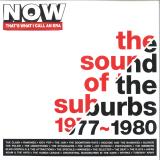
- A1: London Calling
- A2: Blitzkrieg Bop
- A3: Lust For Life
- A4: Going Underground
- A5: Teenage Kicks
- A6: Boys Don't Cry
- A7: Love Will Tear Us Apart
- A8: Making Plans For Nigel
- A9: Rat Trap
- B1: Hanging On The Telephone
- B2: Hong Kong Garden
- B3: Top Of The Pops
- B4: Ca Plane Pour Moi
- B5: Banana Splits
- B6: Cool For Cats
- B7: Into The Valley
- B8: Shot By Both Sides
- B9: Death Disco
- C1: The Sound Of The Suburbs
- C2: No More Heroes
- C3: Babylon's Burning
- C4: Cherry Bomb
- C5: Another Girl, Another Planet
- C6: (I Don't Want To Go To) Chelsea
- C9: Because The Night
- D1: Brass In Pocket
- D2: Roxanne
- D3: Geno
- D4: Time For Action
- D5: Airport
- D6: Echo Beach
- D7: Over You
- D8: Is She Really Going Out With Him?
- E1: Gangsters
- E2: The Prince
- E3: On My Radio
- E4: Mirror In The Bathroom
- E5: Food For Thought
- E6: Life In Tokyo
- E7: The Number One Song In Heaven
- E8: Rock Lobster
- F1: Dog Eat Dog
- F2: C30 C60 C90 Go
- F3: Money
- F4: Nightclubbing
- F5: Are Friends Electric?
- F6: Underpass
- F7: Messages
- F8: Video Killed The Radio Star
- C7: Roadrunner (Once)
- C8: 2-4-6-8 Motorway
After 30 years of playing music professionally, Willie Watson is releasing his debut album. A founding member of Old Crow Medicine Show, and a staple on the folk and americana circuit - Willie is no stranger to the stage and to audiences. But this is his first album of original music, aptly self titled, and a bold and confident statement in both song mastery and sonics. This record is about beating the devil. Willie didn't make any specific pact with him, but he had been tangled up with him his whole life. This album is about finding himself free of that devil, and learning to love himself again. It is about no longer leaning on old sounds and old folk singers and the music they made, and instead about learning to express himself freely and without limits. The result is a masterpiece. Co Produced with Gabe Witcher (Punch Brothers) and Kenneth Pattingale (Milk Carton Kids), and co written with Morgan Nagler (Phoebe Bridgers, Haim, Gillian Welch and Dave Rawlings)
PARADE is an 8-piece group, predominantly from Brighton and now based in London. Its members - who are all involved in their own capacities in music, art, fashion, design and more - have been making music since they met at college in Brighton, flipping records and making beats in founding member Jago’s attic room. Since then the sound has evolved to incorporate live instrumentation alongside electronic elements. Though always collaborating in each other’s orbits, PARADE was fully formed when all members gravitated towards South-East London, scattering around in musically less mythologised areas across Nunhead, Forest Hill, Camberwell and Norwood.
Lightning Hit The Trees is the band's debut mixtape, and was entirely written, produced, engineered, and mixed in just two weeks. It was recorded in a shipping container in Forest Hill on basic, often broken, equipment with ideas often formed in the moment. As demonstrated by these two first singles, the mixtape pulls together a body of music that incorporates a wide range of ideas from a group of inventive, inspired new artists and comes together in a remarkably clear and unified vision. The mixtape is guided by uncanny valleys, cinematic tones, “hyper-real” mixing techniques, and by a light with no shadow. Influences include: Wim Wenders, Juergen Teller, Velvet Underground, Radio Dept., Scott Walker, Magliano, Soft Machine, This Heat, Pixies, John Cassavetes, Domenico Gnoli, Dadaists, Judy Garland, Cindy Lee, Arca, Bette Davis, Sun Ra.
- Louis Philippe - Anthony Bay
- Louis Philippe - Like Nobody Do
- Louis Philippe - Guess I'm Dumb
- Louis Philippe - Touch Of Evil
- Louis Philippe - If You're Missing Someone
- Anthony Adverse - Now Listen
- Anthony Adverse - Ulysses And The Siren
- The King Of Luxembourg - A Picture Of Dorian Gray
- The King Of Luxembourg - The Rubens Room
- The King Of Luxembourg - Smash Hit Wonder
- Would-Be-Goods - The Camera Loves Me
- Would-Be-Goods - Velasquez & I
- Would-Be-Goods - Cecil Beaton's Scrapbook
- Marden Hill - Curtain
- Marden Hill - Oh Constance
- Marden Hill - The Execution Of Emperor Maximillian
- Bad Dream Fancy Dress - Choirboys Gas
- Bad Dream Fancy Dress - Where Have All The Schoolboys G
- Bad Dream Fancy Dress - Lemon Tarts
- The Monochrome Set - Jet Set Junta (Single Version)
- Always - Thames Valley Leather Club
- Always - Park Row
- Momus - John The Baptist Jones
- Momus - Paper Wraps Rock
- Simon Fisher Turner - Umber Wastes
Black Vinyl[30,04 €]
Limitiertes weißes Vinyl Eine exklusive Compilation des legendären britischen Indie-Labels él, das in den 1980er Jahren mit stilvollem Pop, kunstvollem Design und internationalem Einfluss begeisterte. Mit Künstlern wie Momus, Louis Philippe und The King of Luxembourg bietet The Rubens Room eine elegante Reise durch Kammerpop, Chanson und Filmscores - fernab vom Mainstream. Begleitend zum Buch Bright Young Things erscheint dieses Sammlerstück auf weißem Vinyl - ein Muss für Liebhaber anspruchsvoller Popkultur.
- Erwin's Orchard, Part 1
- Beatrice
- Radio Interlude 1
- Your Neighborhood
- Radio Interlude 2
- Get Creative! Or Get Radicalized!
- Sleep Talking
- Radio Interlude 3
- Apple Tv
- Erwin's Orchard, Part 2
- Die! Die! Die!
- Satan's Little Hell Song
- Cruel, All The Way Down
- Johnny Harris
- Radio Interlude 4
- The Right Thing
Schweiengötter nehmen menschliche Gestalt an und veröffentlichen ,Debütalbum"? Wenn man in einer Kleinstadt aufwächst, muss man entweder seine Freizeit kreativ gestalten oder man radikalisiert sich im Internet. Über dem San Fernando Valley von Los Angeles erhebt sich der süße, schwüle Sound von The Toxhards. Mit halb Psych, halb Prog, halb Rocktheater und halb Indie (das sind vier Hälften) hauchen The Toxhards dem längst obsoleten Genre des ROCK 'n' Roll neues Leben ein. Von ,existenziellen Doom-Bops" bis zu mitreißenden Hymnen über Schweinegötter, bieten The Toxhards einen genreübergreifenden, elektrischen und exzentrischen neuen alternativen Sound. Ihre Musik wird bereits auf TikTok Reels millionenfach angeklickt, ihre unterhaltsamen Bits und Sketche millionenfach geschaut (135k Follower auf TikTok, 75k Follower auf Instagram und 13k auf YouTube). Im Laufe der zwölf Tracks plus vier Zwischenspielen folgt ,Your Neighborhood" dem Protagonisten Adam und seiner Unzufriedenheit mit dem Leben - er hat Freundin verloren, ihm fehlt der Mut, seinen Ambitionen zu folgen - und er beginnt, die schlimmste Version seiner selbst zu werden, die er nur sein kann: ein unsicheres, reaktionäres Individuum, das Trost darin findet, sich in dunklen Online-Ecken über ,andere" zu beschweren. Ursprünglich aus dem Midwestern, nun in der smoggefüllten Höllenlandschaft des San Fernando Valley von Los Angeles lebend, ist die Band auch für ihre unterhaltsamen und mitreißenden Live-Auftritte bekannt, bei denen sie aufblasbare Schweinekostüme tragen, T-Shirts verschenken, unveröffentlichte Songs präsentieren, Kaffeepausen einlegen, Instrumente tauschen und gelegentlich einer ausgedehnten Jam (oder zwei oder drei oder...) fröhnen. Mit jeder neuen Veröffentlichung und bei jeder Show beweisen sie, dass sie die Zukunft von was auch immer sind. The Toxhards haben uns viel zu erzählen und zu bieten. 2023 bei Hopeless Records unterschrieben und direkt ihre erste Single "(The) Coffee Song / October" veröffentlicht.2024 gab's die limitierte und aktuell ausverkaufte Vinyl-Compilation ihrer bisherigen Songs und Singles zwischen 2022 und 2024. Obwohl es sich um eine Zusammenstellung handelt, betrachtet die Band es als ihr "eigentliches Debütalbum", aber nun ist "Your Neighborhood" dran! Für Fans von Ween, Car Seat Headrest, White Reaper, Pigeons Playing Ping Pong, symphonischen Weezer, Indie-Prog, Alterntive Pomp, Psychpunk....
LTD Repress !
LIZZ is back on PlayedBy with Chapter II, a compilation of new and unreleased artifacts and other treasures from his dense catalog. Diverse and expansive, it captures his versatile musicianship and ever-evolving production style.
Broadly speaking, there are two types of tracks produced by LIZZ: on one hand rallying for the right to party, and on the other, nostalgic odysseys, sometimes lustful and sometimes wistful. Chapter II has a bit of everything. Thirteen tracks of club heat varied narrative that is worth listening to carefully.
Opener "Seamless" and its steady snare keep spirits high while the spacey keys provide a trippy, out-there vibe. On the flipside, "Clasic Dewan" uses elements we've heard before - warm pads, a percussive organ, and a looped vocal sample - but still makes for a great dancefloor track. Both tracks are a throwback to LIZZ's tried and true Terrafirma.
"Cynelmoon" unravels a labyrinthine universe twisting in and out of misty existence, with its snake-like rattles winding through a maze of synth bleeps.
Refreshing and zippy, "Dip Si M" stands out as a gritty reinterpretation of a great space and sounds like the most fun he's ever had on record. On the other hand, "Chemical Chords" is ethereal, meditative, with a hushed musicality that is almost stoic.
LIZZ takes the listener on a journey of vertiginous peaks and deep valleys as he leads "Round Around" into spiraling locked down looped club music.
Listening to "Nothing with Nothing" feels like a video-game on its own. It’s a bundle of joy and energy, peaking with a crescendo of color.
On "69" the energy builds with such careful, gradual restraint that even the most active listener might wonder how they ever got to this point. Chopped up shards of melody and vocals combine to create a kaleidoscopic funhouse with a strong Perlon-esque flavour.
"Roaki" is the dreamy track with an irresistible groove, where LIZZ combines smooth synth pads with dubby and distorted electronic drums that add a sense of cyberpunk feel, reconfirming's Playedby's fanaticism for this project.
A bubbling, percussive roller marks the beginning of "Jazzohub" and skyrockets from there. The track hits with an inviting vocal that dissolves into a fluid swirl of layered hand drums.
"No More High" is a a real banger. This one bounces hard with a bass-heavy beat and a military snare, leaving you no choice but to tip-toe with its groove all night long.
Chasing an ever-vivid muse,"Electronic World" hits with its drumming rhythms, labyrinth of synth bleeps and bold vocals reminiscent of tunneling club nights.
Closing track "I Am Cross" brings an unusual kind of dark atmosphere to the fore: it's cavernous and enveloping, almost as if the rhythm was an afterthought.
Chapter II is every bit as ambitious as its predecessor. Across thirteen tracks, LIZZ approaches the dancefloor forms of his earlier work with a fresh and voluptuous groovy attitude. Somehow, individually, we must reclaim our own experience.\5
Way back when, Upgrade & Afterlife was the umpteenth release from the individual and collective forces of David Grubbs (known then for Bastro, The Red Krayola, Codeine, Squirrel Bait) and Jim O"Rourke (known for O"Rourke), whose further history has since numbered at least another umpteen or so essential listens. What is it though, wrapped up in delectable sonic amber here, that defines this Upgrade? To be sure, we hear these young men dashing through the joys of youth-their actual young youth-as well as a version captured in memory and relived with a performative touch. Time remembered as tones, with gravity gained via perceptions. The stuff of memory and sentiment as selective and potentially deceptive in their nature. Who needed "em? As part of its time-traveling function, Upgrade & Afterlife is a return to roots, but not always necessarily Gastr"s. They were more than happy to stand on branches up above other folks in order to see any next thing worth leaping for. In addition to the elder-statesman Conrad, Gastr del Sol drew upon a memorable spectrum of players for the sounds of Upgrade & Afterlife, including Anthony Burr, Steve Braack, Gene Coleman, Mats Gustafsson, Terri Kapsalis, John McEntire, Günter Müller, Jerry Ruthrauff, Ralf Wehowsky and Sue Wolf. When issued, this combination of players, parts and play - packaged in an impressively broad tip-on Stoughton gatefold sleeve emblazoned with Roman Signer"s instantly iconic "Wasserstiefel" image - became the fastest-moving Gastr del Sol record to date. A delightful result, to our way of thinking, of the band"s ability to push at the far boundaries of their music while consolidating upon pleasure points within sounds and songs. Gastr used these polarities to compulsively draw the listener intimately close with sudden injections of g-force and an uncanny interpolation of space.
The first and most independent of all independent producers, Joe Meek needs little introduction. He was the first to chart in both the UK and the USA with an independently produced song -which was actually recorded in his home’s kitchen- when The Tornados' Telstar took the world in 1962. Meek was, of course, one of the most in vogue producers of the first half of the 1960s, providing the soundtrack to the evolution of UK Rock’n'Roll to Swinging London, scoring hits with actors like John Leyton (Johnny Remember Me), showmen like Screaming Lord Sutch and bands like The Outlaws and The Tornados. He also produced a wide stream of R&B and freakbeat 45s that are nowadays hardly sought after by the collectors with the biggest bank accounts.
Joe Meek experimented with all kinds of recording techniques in his home studio, his tricks and gimmicks won his productions chart placement and critical and public acclaim, but none of his projects was so advanced and way out as the avantgarde experimentation showed in his I Hear a New World electronic symphony from 1960. Aided by The Blue Men formed by Rod Freeman (group leader, guitar, vocals), Ken Harvey (tenor sax, vocals), Roger Fiola (Hawaiian Guitar), Chris White (guitar), Doug Collins (bass), Dave Golding (drums) -also known as Rodd-Ken and The Cavaliers- who provided a tight base to his electronically produced sounds, Meek came up with what he envisioned as the soundtrack of the future, the sounds he envisioned were to be heard in outer space. It was too way out for its time, certainly. To the point that of all the opus, only four tracks saw the light of day on a 7" EP released on Triumph, Meeks very own label. It wouldn’t be until 1991 that the whole recordings from the I Hear a New World sessions would see the light of day on a CD issued by the RPM label.
Wah Wah offers a new reissue of this now classic early electronics masterpiece, housed in a beautiful front-laminated back-flapped sleeve and offered as a limited 400 copies only black vinyl version and an ultra-limited 100 copies only transparent purple vinyl. Get yours before they fly!
RIYL : Delia Derbyshire and The BBC Radiophonic Workshop, Louis and Bebe Barron’s soundtrack to Forbidden Planet, Raymond Scott, Tom Dissevelt & Kid Baltan, Morton Subotnick…