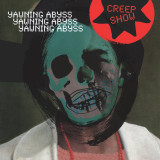
In the five years since Creep Show’s acclaimed Mr Dynamite album was released it’s fair to say that we’ve all been through a fair bit. Sitting here, in 2023, things don’t seem to be getting any better. There’s the cost of living crisis and political meltdowns; we're in deep water with global warming and to top it all there’s a war on our doorstep.
Back in 2018 everything seemed less complicated. Sure, there was stuff to get riled about, but we knew nothing about what was to come. Mr Dynamite was a fairground ride into the dark corners of a world that was on the brink of being blitzed in a blender. It was a record teetering on the edge. Five years down the line you’d expect the follow-up, Yawning Abyss, would double-down and bring the white-knuckled, teeth-gritted fury of the last five years to the boil. And yet….
A quick recap? No problem. Wrangler + John Grant = Creep Show. And Creep Show? “A band of musical misfits who have found a voice or two”, says Wrangler’s Ben “Benge” Edwards, whose Bond villain studio on the edge of a moorland is Creep Show Grand Central as well as home to an analogue synth arsenal that could sink ships.
Wrangler have known each other for a while. Tunng’s electronics wizard Phil Winter and Cabaret Voltaire’s trailblazing, pioneering frontman Stephen Mallinder go way back, while Phil and Benge crossed paths in the 21st century when they seemed to be increasingly in the same venues at the same times. Meanwhile, Mal had been living in Australia since the mid-90s and when, in 2007, he returned to the UK his old pal Phil suggested he meet Benge and the three of them immediately began working together.
Wrangler collectively bumped into Grant at their soundcheck for Sheffield’s Sensoria Festival in 2014 where they were playing with Carter Tutti. A friendship blossomed and when they were invited to perform together for Rough Trade’s 40th anniversary show at London’s Barbican in 2016, well, they jumped at the chance... and Creep Show was born.
Let’s talk about the new album... What is the ‘Yawning Abyss’? You might well ask. According to Mal, it’s “a cosmic event horizon that I can see from my attic window when stand on a chair”. Yeah. Thanks.
“On this album”, offers Benge, feet firmly on the floor, “Wrangler wrangled some vintage synths, mostly Roland, Moog, and the ‘Crystal Machine’ - then John Grant joined in the fun at Memetune Studios where lots of musical experiments were carried out. Then Mal and John ran off to Iceland with the master tapes and recorded a load of madcap vocals. Back at Memetune, me and Phil were left to try and make sense of it all. Which wasn’t hard because what they did in Iceland was totally magnificent.”
Which kind of brings us back to where we began. You’d imagine ‘Yawning Abyss’ would be blowing steam out of its furious ears. Mr Dynamite but kicking a wasps nest. Repeatedly. And yet…
Opener ‘The Bellows’ comes on like a modular ‘Radio Ga Ga’, the singalong ‘Moneyback’ (“You want your money back? / I didn’t think so”) sounds like Godley & Creme’s ‘Snack Attack’ meets Prince Charles And The City Beat Band (“Pennies, pounds, dollar bills, signed agreements, death wills”). ‘Yahtzee!’ is an unhinged electro breakdance party in four minutes and nine seconds.
Where Mr Dynamite was menace, a mélange of mangled voices, with Grant and Mallinder being heavily treated, pitched up or down, rendering their contributions largely indistinguishable, Yawning Abyss takes a more direct approach. You hesitate to say feelgood, but there’s a skip in the step here for sure.
The title track plays John Grant’s vocal straight. Completely. It’s good, so very good. Like ‘Axel F’ covered by Vangelis. The delicious shimmering synths of ‘Bungalow’ also plays those Grant pipes with a straight bat. ‘Matinee’ delves into darker, very funky territory. With Mal upfront it comes on like ‘The Crackdown’. Choice lyric: “You are starting to breakdown / And it’s so fun for me to see / You should have thought of that / You should have come prepared / You can see what’s happening and you look a little scared”.
So, you know, not all feelgood. But it does feel good. It’s probably best to draw your own conclusions... This is Creep Show after all.
Cerca:van she
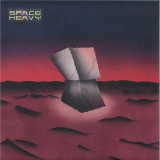
Nachdem seine intime Underplay-Show-Tour „SHHH“ im März binnen Sekunden ausverkauft war, kündigt Archy Marshall sein mittlerweile viertes Studioalbum „Space Heavy“ als King Krule an. Erscheinen wird es am 9. Juni bei XL Recordings. Zehn Jahre nach der Veröffentlichung seines umjubelten Debütalbums „6 Feet Beneath the Moon“ zeigen die 15 neuen Songs den britischen Songwriter auf der Höhe seines Schaffens.
Entstanden ist das Album zwischen 2020 und 2022, als Archy Marshall sowohl London als auch Liverpool seine Heimat nannte und viel Zeit auf den Reisen von einem zum anderen Ort verbrachte. Während diesen Trips entstand seine Faszination für „the space between“, wie er es nennt: die Orte, die von Träumen voller Liebe verfolgt werden, während sich Archy in seinen Texten mit persönlichen Verlusten befasst. Nachdem die Texte fertig waren, entstand die Musik gemeinsam mit dem Produzenten Dilip Harris sowie seiner langjährigen Band, bestehend aus Ignacio Salvadores (Saxophone), George Bass (Schlagzeug), James Wilson (Bass) und Jack Towell (Gitarre).
In den 15 Songs von „Space Heavy“ verbinden sich viele Elemente seiner bisherigen Karriere mit dem klanglichen Kosmos, der ihm das Attribut als eine der Stimmen seiner Generation einbrachte. Die dichten Lyrics seines Debüts, die Verschiebung seines Sounds bei „The OOZ“ (2017), die Ursprünglichkeit von „Man Alive!“ und die rohe Verletzlichkeit, die er auf „You Heat Me Up, You Cool Me Down“ zeigte, fließen in den Sound seines neuen Albums ein.
Mit der Albumankündigung erscheint die erste Single „Seaforth“ mitsamt Video, bei dem seine regelmäßige Kollaborateurin und Visual Artist Jocelyn Anquetil Regie geführt hat.
* In Katta's music, ancient and modern worlds come together, the sacred meets the profane, and technological chasms are crossed: you might hear her play on some of the world's most treasured pipe organs in churches and cathedrals, or on her state-of-the-art, custom-built electric touring organ - and whether the ambience is provided by the dreamy acoustics of vaulted sacred spaces, or electronic soundscapes weaving in and out of her organ lines, the spirit of her music is unmistakable: ethereal, experimental, arresting.
* Katta first came to international prominence as a classical organist and harpsichordist, performing with orchestras such as Anima Eterna (with Jos van Immerseel), Zurich Chamber Orchestra (with Sir Roger Norrington), the Royal Flemish Philharmonic, and the Prague Symphony Orchestra - but it was when she started writing and performing her own music that her artistic identity truly asserted itself. 2016's 'Veni Sancte Spiritus' album was the first to showcase her compositions – other-worldly, spiritual works featuring distinctive vocals and tinkling, percussive bells: by turns lyrical and jarring, they seemed to come from a distant and mysterious past, and yet to belong entirely to the present. Katta’s original vocal/instrumental project Vox Organi won a prize at 2018 Classic Prague Awards.
* Katta also finds inspiration in collaborating with other artists, from British violinist Daniel Hope to American organ sensation Cameron Carpenter. This year she performed at Olavsfest in Norway, taking the stage right after a set from Björk. Her new album 'Vox Organi' will be released soon on Berlin label Emika Records, and Katta has been performing material from the album on her recent tour of the same name.
Jimmy LaValle’s The Album Leaf has spun from solo outlet to full band and back in its nearly 25 years. His acclaimed catalog spans releases for labels such as Sub Pop, City Slang, Relapse, and others. He also composes music for film and television, scoring over 20 projects (narrative features, documentaries, and TV series) since 2009. The cinematic sensibilities of The Album Leaf were present from the beginning. His 1999 debut introduced the start of a signature sound: melodic and meditative electro-organic soundscapes constructed with guitar, percussion, Rhodes, and field recordings.
His seventh full-length LP, and first since 2016, arrives in 2023 via Vancouver’s Nettwerk Records. FUTURE FALLING finds LaValle working with an array of musicians, shaping slightly darker, more spacious, and synth-driven songs with contributions from Bat For Lashes, Kimbra, and many others.
The music registers a shade darker and more synth-driven than most moments in his acclaimed catalog, a bridge between shadowy, cerebral terrain and dreamy precision pop, where softly percussive frameworks meet shimmering sound design and emotive instrumentation.
LaValle sees the construction of FUTURE FALLING as less conventional than past work. Contributions were done remotely with a “throw everything at it” mindset, making LaValle the arranger of layers from all over: drums, synths, horns, violins, voice, and more. LaValle created a pastiche of these layers and elements; in some cases even moving vocal takes to new tracks entirely. Without the in-the-room dynamics, he had more time to experiment, adding and subtracting ad infinitum.
The album opens on “PROLOGUE,” an evocative, slow-building instrumental that rides a pattern into a symphonic sea of static. Keys and horns glide atop the rhythmic pulse of “DUST COLLECTS,” setting the contemplative scene for “AFTERGLOW,” the record’s most pop-minded performance. Here Kimbra, the Grammy-winning New Zealand singer-songwriter, renders a striking recollection of past love as percussive elements shimmer and swirl.
A plaintive piano line moves throughout “Cycles 19.9” encircled by light ambient washes, both a valley between two peaks and a powerful composition in its own right. “Future Falling” follows; with origins tracing back to 2015, the track embodies the full sonic journey LaValle has taken. All the hallmarks of The Album Leaf — melodic builds, vivid sprawl, tonal shape-shifting — assemble to a blissful finish.
For the next stretch, “Cycles” begins with a uneasy Rhodes loop that builds and erupts into a wall of texture paving its way into “Give In,” where LaValle models a movement that begins subtle and measured before curving up with skyward, percussive bursts (“Stride”) and settling back down to the album’s back-half centerpiece, “Near” featuring the acclaimed English artist Natasha Khan aka Bat For Lashes. “Do you feel me near?” she sings into a mist of widescreen synths and soothing, distant drum beats as if searching through the dark.
A cult icon on the international film scene, Japanese actress Meiko Kaji, born in Tokyo, has been put into the spotlight internationally by Quentin Tarantino when he heavily based his Kill Bill film on the 1973 revenge genre film 'Lady Snowblood,' one of Kaji's most famous films. By the time she appeared in it, she had already made almost fifty feature films (she began her career in 1965) among which the cult 'Stray Cat Rock' and 'Female Prisoner Scorpion' film series and she was one of the most famous exploitation actresses in Japan doubling as a sex symbol. This gave the studios the idea of getting her to start a singing career and release music closely associated with the films she starred in often singing the theme songs. Thus she began releasing records at the dawn of the 70s, recording several 7" singles and five albums for Teichiku which have become sought-after and almost as cult as her films.
Drawing on her film roles, the music on these albums were an uber-cool mix of kayokyoku (Japanese Pop), traditional Enka Music, Acid Folk and Funky beats arranged by the best producers of the time in a cinematic way that could sound like Ennio Morricone or Jean-Claude Vannier. that explosive cocktail is featured in full blow on the first album from the Meiko Kaji reissue program, 'Hajiki Uta' released by Teichiku in 1973.
The album featured two film songs, namely 'Urami Bushi' used for the film series "Female Prisoner Scorpion" and 'Onna No Jumon' featured in the film 'Female Prisoner Scorpion - Jailhouse 41,' which have been composed by Shunsuke Kikuchi who also composed the score for these films. At first Kaji was unsure of her singing talents as told to Hashim Bharoocha in an interview but she quickly rose to the challenge: "I told Shunsuke Kikuchi that I couldn’t imagine myself singing the songs. He said I could ignore the melody that he wrote, and just sing it the way I wanted to. That really lifted the pressure off my shoulders, and I decided to sing the song as the character in the film. The director was also happy with that idea.”
The rest of the album follows the same pattern with atmospheric songs such as "Onna Hagure Uta" or "Onna Somuki Uta" displaying Meiko's sombre singing over a superb slow-burning groove, which precedes the funkier "Hitori Kaze" featuring a wah wah guitar, a breakbeat-like rhythm section and slick string arrangement, shaping the unique Meiko Kaji signature sound.
Wewantsounds is delighted to reissue "Hajiki Uta" and the rest of Meiko Kaji superb early 70s albums for the first time in fifty years in their glorious original Japanese artwork, with remastered audio, cementing further the actress' reputation as a true international pop culture icon.
Hania Rani announces "On Giacometti" a tender meditation on the life and art of Alberto Giacometti and family. "On Giacometti" is a collection of beautiful recordings inspired by the renowned artist and family and features some of Rani's most profoundly delicate compositions to date. Invited by film director Susanna Fanzun, to score her forthcoming documentary on the legendary artist Alberto Giacometti, Hania Rani took herself to the Swiss mountains to compose in blissful isolation. As Rani explains eloquently below the compositions are based on improvised melodies, simple harmonies and structures and inspired by the silence of the mountains as Rani returns to her main instrument, the piano. The results are beguilingly reminiscent of her beloved debut album Esja, but with subtle extra layers of synthesiser, and on two tracks cello from friend and long-running collaborator Dobrawa Czocher.
'On Giacometti' is presented as a limited edition LP with bespoke packaging featuring Les Naturals - Chocolat (Gmund) sustainable recycled paperboard made from 100 % recovered paper with Foil Artwork by Łukasz Pałczyński. Plus Double sided printed insert and download code inside.
Hania Rani "On Giacometti":
‘When I was asked to compose a soundtrack for a movie about the family of Giacometti I didn't think twice.
Alberto Giacometti, a Swiss artist, who worked mainly as painter and sculptor has been one of my favourite artists for a long time. His individual style, aesthetics and the character of his creative process is still fascinating to me on many levels, so being able to dive even deeper into his universe, getting to know not only him but also his family was an opportunity that I couldn't miss. Little did I know how far this "yes" will take me - not only mentally and on a creative level but also physically. Thanks to the director of the documentary - Susanna Fanzun and by a stroke of luck and a couple of extra questions I decided to move for a couple of months to the Swiss mountains, not far away from the place where Giacometti was born and where the place he called home was, although he didn't live there. Susanna showed me a place close to her hometown where I could rent a studio and work on the soundtrack but also for my other projects. It was the middle of a winter, the area was full of ice and snow, just like only it can happen still in the mountains. The residency house was located in a valley surrounded by high mountains and the sun in the winter season was not coming up for too long during the day. I remember she told me about it and added "that not everyone is feeling well there, but I hope you will". I did.
Being almost separated from reality, the city and its entertainments, people rushing and everything that usually takes my attention I could fully concentrate on the music and soundtrack, spending most of the day with my own thoughts and having enough space to experiment and be free in a creative process. This soundtrack would probably be a very different thing if composed in a place that I am usually living in. I took this a chance to explore something new about myself as a composer and human being, taking the opposite direction that I would usually choose for myself.
The album "On Giacometti" includes the excerpts from the soundtrack, the most representative tracks and those which became a strong voice itself. Based a lot on improvised melodies, simple harmonies, structures and silence it reminds me of my debut album "Esja" which was partly composed and recorded in another chilly place - Iceland. All these components, both mental and physical, guided me back to my main instrument - piano, which I tried to redefine again with a language of the space that I was working in. The space is usually the key element that gives me the answer about the arrangement or character of the project. Space seems to be the first to appear and music is the invisible power which is changing its angels.’ Living surrounded by mountains makes you change the perspective and understanding of scale as Alberto Giacometti once famously wrote in a letter: It gives an impression that things that are actually far away, like mountains, are close and the other ones that are not so far away, like people, seem small, watched from a distance. You feel like touching the mountain top with your finger could be as easy as touching the tip of your nose. The snow additionally protects the whole area from the noise, each sound lands softly on the ground accompanied by echoes of immeasurable space. Each scratch or whisper is becoming an autonomic entity, opening the gate to the world of ghosts and lost spirits. It's easy to think that time stands still there, while nothing is moving and changing at the first sight. But the ubiquitous ice and snow reveal the passage of time, transforming frozen paysage into the wild stream of water - each day, hour and second. Melting and vanishing, clearing the space from white powder and noise consuming surface. Invisible process for a one night traveller, becomes painfully real for longer time settlers. Time flows with each new wave of sound coming through the river, reminding us that we are part of the cycle, which endlessly repeats itself.
Gatefold Green Vinyl Double LP with design by Dian Vandermeulen, the popular Canadian visual artist
(limited edition cassette version will be released by Not Not Fun).
Between December 2018 and 2019, Stefana Fratila embarked on a series of research trips across North America (including to NASA Jet Propulsion Laboratory and NASA Goddard Space Centre), meeting with astronomers and scientists in order to address a complex question: “If each planet in our solar system were a different room, what would each room sound like?”
Her ongoing creative research culminated in Sononaut, eight open-source VST plug-ins created for digital audio workstations (DAWs) that emulate the atmospheric conditions of the planets in our solar system (made in collaboration with artist and coder Jen Kutler, using calculations by NASA astronomer and planetary scientist Dr. Conor Nixon).
Her forthcoming album I want to leave this Earth behind is the sonic extension of her creative research.
In her own words: “The album is conceptual, in that it centres on outer space exploration and my understanding of 'Crip futurity'. My vision is for the album to engage listeners in an exercise of imagining the sounds of interplanetary atmospheres– conditions which are inherently unlivable, unbreathable, converting all human body-minds into disabled-bodied-ness. Since I identify as Crip, or disabled, this idea deeply resonates with me. I am the first artist (a disabled producer/musician, no less) to have worked with NASA researchers on a sonic imagining of the solar system’s atmospheres that incorporates real scientific data. If we are all 'disabled' in (or by) outer space, my music is concerned with propelling all listeners into space, leaving Earth behind them, through my music.”
The solar system’s planetary bodies are inherently prohibitive even in regards to Earth’s most ‘able-bodied’ subjects. Her project seizes upon a form of radical agency and science-fictive ambition, placing all human subjects within new worlds, into the interplanetary bodies of our solar system, through her own sonic imaginings.
The album will be released by Toronto-based label Halocline Trance (Casey MQ, myst milano, ACT!).
During a 2019 residency at CMMAS (Centro Mexicano para la Música y las Artes Sonoras) in Morelia, Mexico, Fratila began writing the album on an octophonic sound system (8 planets = 8 speakers).
Afterwards, from her home studio in Toronto, she recorded additional synthesizer parts, finalized arrangements, and incorporated Sononaut (her 8 solar system VST plug-ins) into the album’s production. The album was recorded, written, and produced by Fratila. She worked with mixing engineer Jeremy Greenspan (Jessy Lanza, Caribou, Junior Boys), as well as mixing engineer Lisa Conway and mastering engineer Sage Kim.
Underlining each track is a five-minute soundscape representing the weather on that planet, based on Fratila’s research at NASA. The weather patterns are interwoven with layers of synths and time-stretched samples.
There are very few disabled femme electronic artists gaining exposure in Canada today.
First-ever reissue of the 1988 album. Gatefold LP includes new and restored artwork and a chapbook, featuring forty-eight pages of lyrics, essays, photographs, and Gordon's extraordinary drawings for each song. The Choctaw, Assiniboine, and Texan poet, journalist, visual artist, American Indian Movement activist, and musician Roxy Gordon (First Coyote Boy) (1945-2000) was above all a storyteller, known primarily as a writer of inimitable style and unvarnished candor, whose wide-ranging work encompassed poetry, short fiction, essays, memoirs, journalism, and criticism. Over the course of his career he recorded six albums, wrote six books, and published hundreds of shorter texts in outlets ranging from Rolling Stone and The Village Voice to the Coleman Chronicle and Democrat-Voice, in addition to founding and operating, with his wife Judy Gordon, Wowapi Press and the underground country music journal Picking Up the Tempo. Along the way he cultivated close friendships with fellow Texan songwriters such as Lubbockites Terry Allen, Butch Hancock, and Tommy X. Hancock, as well as Ray Wylie Hubbard, Billy Joe Shaver, and, most famously, Townes Van Zandt, whom he called his brother. Although his work covered a vast array of topics exploring strata personal, local, global, and cosmic alike, Gordon's primary subject as a writer, musician, and visual artist was always American Indian culture, specifically the ways it collided and coexisted with European American culture in the South and West-and within the context of his own life and braided identity. The ten songs on Crazy Horse Never Died, his first officially released and distributed album, were recorded in Dallas in 1988. "Songs" is perhaps an imprecise taxonomy for what Roxy captured on this and his other albums, all of which remain out of print or were released in instantly obscure limited editions of homebrew cassettes and CD-R's. (Paradise of Bachelors plans to reissue remastered, expanded editions of his catalog; Crazy Horse is the first.) He only occasionally attempted to sing, and his musical recordings are primarily corollaries of, and vehicles for, his poems. His sharp West Texan drawl, tinged by formative years of reservation living in Montana and unmistakable once you hear it-high, lonesome, flat, and cold-blooded as a bare rusty blade-instead patiently unfurls in skewed sheets of anecdotal verse and discursive narrative rants. Although Gordon's music at times incorporated powwow style drumming, fiddling, or unaccompanied ballad singing, the majority of it hews to an idiosyncratic spoken word style, accompanied by atmospheric, sometimes synth-damaged country-rock that skirts ambient textures and postpunk deconstructions. His songs are essentially recitations over backing tracks of finger picked guitars, rubbery washtub bass, and buzzing, oscillating keyboards. On the stark yellow and red jacket of Crazy Horse, which he designed himself, Gordon describes these recordings as innately ambivalent in terms of form, content, and identity: These are poems and/or songs about the American West, white and Indian. My life has been Indian and/or white. Maybe there's not a lot of difference-maybe. I guess that's mostly according to which white person or which Indian you're talking about. That's probably what this album's about. Crazy Horse Never Died comprises songs that span the personal and political arcs of his writing practice and the poles of his native and white ancestries.
Today sees Belgian-Caribbean provocateur Charlotte Adigéry and her long-term musical partner, Bolis Pupul announce their debut album Topical Dancer, due for release on March 4 2022 via Soulwax’s iconic label DEEWEE.
Cultural appropriation. Misogyny and racism. Social media vanity. Post-colonialism and political correctness. These are not talking points that you’d ordinarily hear on the dancefloor but Charlotte Adigéry and Bolis Pupul are ripping up the rulebook with their debut album Topical Dancer. The Ghent-based duo, who broke out with their 2019 Zandoli EP, are rare storytellers in electronic music: they take the temperature of the time and funnel them into their playful synth concoctions – never didactic and always with a knowing wink.
Their debut studio record – which cements them as a duo under both their names for the first time and is co-written and co-produced by Soulwax – is both a triumph of kaleidoscopic electro-pop and “a snapshot of how we think about pop culture in the 2020s.” It captures Charlotte and Bolis’s essence as musical collaborators and the conversations they’ve had over the past two years on tour, as well as their perspectives as Belgians with an immigrant background, Charlotte with Guadeloupean and French-Martinique ancestry and Bolis being of Chinese descent.
Beyond the album’s thematic heft, Topical Dancer reflects Charlotte and Bolis’s idiosyncratic sound: it’s thoughtful but it bangs. Their take on familiar genres is always off-kilter; songs sound undone or a little wonky; but these are nocturnal heaters to make the club throb. “We like to fuck things up a bit,” laughs Bolis. “We cringe when we feel like we're making something that already exists, so we're always looking for things to combine to make it sound not like a pop song, not like an R&B song, not a techno song. We’re always putting different worlds together. Charlotte and I get bored when things get too predictable.”
Topical Dancer is fizzing with ideas – there’s certainly no filler among its 13 tracks. But above all, perhaps, it has a restlessness, a desire not to be boxed in and to escape others’ narrow perceptions of who they are. It’s summarised by the refrain of their new single, ‘Blenda’: “Don’t sound like what I look like / Don’t look like what I sound like.” “One thing that always comes up,” says Bolis, “is that people perceive me as the producer, and Charlotte as just a singer. Or that being a Black artist means you should be making ‘urban’ music. Those kinds of boxes don’t feel good to us.”
‘Blenda’ in particular references how “I am a product of colonialism,” says Charlotte, “and I feel guilty for taking up space in a white country.” The song was inspired in part by Reni Eddo-Lodge’s book Why I’m Not Longer Talking To White People About Race. “It talks about the colonial past and post-colonial present in the UK,” Charlotte continues, “but that isn’t merely a British or American problem, Belgium is part of that as well.” She says that her home country is likewise “oblivious to a big part of its history” which “results in general ignorance and a lack of understanding and empathy towards Belgian inhabitants of immigrant descent.”
On Topical Dancer, it’s less about finger pointing or being dogmatic about all the things they speak about. It’s about emancipation through humour. “I don’t want to feel this heaviness on me,” says Charlotte. “These aren’t my crosses to bear. Topical Dancer is my way of freeing myself of these issues. And of having fun.”
- Introduction By David Kapralik / My Name Is Barbra
- Much More
- Napoleon
- I Hate Music
- Right As The Rain
- Cry Me A River
- Value
- Lover, Come Back To Me
- Band Introductions
- Soon It's Gonna Rain
- Come To The Supermarket (In Old Peking)
- When The Sun Comes Out
- Happy Days Are Here Again
- Keepin' Out Of Mischief Now
- A Sleepin' Bee
- I Had Myself A True Love
- Bewitched, Bothered And Bewildered
- Who's Afraid Of The Big Bad Wolf?
- I'll Tell The Man In The Street
- A Taste Of Honey
- Never Will I Marry
- Nobody's Heart Belongs To Me
- My Honey's Lovin' Arms
- I Stayed Too Long At The Fair
Every Aspect of the Production Personally Supervised by Barbra Streisand
Mixed by Jochem van der Saag from the Original Analogue Session Tapes & Mastered in 24 bit/96 kHz by Paul Blakemore
Lacquer Pressing Master Created by Bernie Grundman
Pressed at RTI
Tip-On Gatefold Jacket
Deluxe 12-Page Booklet Featuring Barbra's Recollections, the Recording's History & Production, and Performance Photos
The Premiere New York City Nightclub Event of 1962! The Most Anticipated Live Album of 2022!
In the fall of 1960, New York City wasn't the same urban mecca it is today. Neither was eighteen-year old Barbra Streisand, who emerged on the Greenwich Village club scene at a small, cozy venue on West 8th Street called the Bon Soir, where she received rave reviews and wooed the crowd with her incredible performances. Within two years Streisand, whose magnificent interpretations of both standards and quirky, obscure cabaret tunes was a nationwide sensation, was knocking audiences dead with her nightly performance as Miss Marmelstein in David Merrick's I Can Get It For You Wholesale on Broadway.
Sixty years, multiple Grammy, Emmy, Oscar, Tony and Golden Globe awards and nearly two hundred million record sales later, Barbra has for the first time authorized the release of a major portion of her Bon Soir performances, as captured in 1962 by Columbia Records. IMPEX Records - in conjunction with Sony Music Entertainment - is proud to present the audiophile 180-gram vinyl LP and SACD editions of the most sought-after recordings in Barbra's legendary career: Live at the Bon Soir: Greenwich Village, NY - November 1962. This gorgeous album features twenty-four brilliant performances personally selected by Barbra Streisand from the original Bon Soir master tapes and expertly mixed and mastered by Paul Blakemore and Jochem van der Saag, under the supervision of producers Barbra Streisand, Martin Erlichman and Jay Landers.
IMPEX RECORDS has created two versions of this noteworthy release: a two-LP vinyl edition and a 24 bit / 96 kHz SACD. To achieve the best fidelity possible, engineer Paul Blakemore transferred the original three-track session tapes to high-resolution 96/24-bit digital files, which were then mixed by Jochem van der Saag. For mastering, Blakemore used an all-analog signal-processing chain in order to maintain the warmth of the original analogue recordings. To master the vinyl LP edition, IMPEX engaged Bernie Grundman, who has mastered many of Barbra's albums over the last sixty years, to create the lacquer pressing master.
Rich with the club's atmosphere, these historic, essential recordings present a warm, charming portrait of a truly important moment in New York City history and American pop culture. Several years removed from Manhattan's flourishing jazz nightclub scene, tiny clubs such as the Bon Soir began popping up, and served as both a forum and launching pad for some of the finest vocalists and musicians the east coast had to offer.
Because of Barbra's success there, Columbia Records A&R rep David Kapralik decided that the first album from his newly-signed artist would emanate from a setting in which she had become most comfortable: the small stage at the Bon Soir. Producer Mike Berniker and recording engineers Roy Halee and Adjutor "Pappy" Theroux set up the mics and recorders, and for three nights harnessed the electrifying show that Barbra had crafted.
"The recordings we did at the Bon Soir were so authentically 'Barbra.' I produced her first three albums at Columbia, and while they were wonderful accomplishments, I thought that what she did each night at the Bon Soir transcended anything we ever did in the studio." - Mike Berniker
Columbia ultimately decided to bring Barbra into the studio to record her first album, and except for the inclusion of several tracks on compilations through the years, the Bon Soir tapes laid dormant in the vault. Now, through this extraordinary release, everyone can at last enjoy the early sound and style of an icon in-the-making: the same brilliant artist whose performances at the Bon Soir were lauded by everyone from actress Helen Hayes to lyricists Alan and Marilyn Bergman. We invite you to join us for an evening at the fabled Bon Soir. Take a seat, order a drink and revel in the magic that is Barbra. You will not be disappointed!
- A1: Sonic Youth - Teen Age Riot
- A2: Bikini Kill - Rebel Girl
- A3: Mudhoney - Touch Me I'm Sick
- A4: Hüsker Dü - Don't Want To Know If You Are Lonely
- A5: Sleater-Kinney - I Wanna Be Your Joey Ramone
- A6: Dinosaur Jr. - Feel The Pain
- B1: Sugar - A Good Idea
- B2: R.e.m. - The One I Love
- B3: Soundgarden - Black Hole Sun
- B4: The Flaming Lips - She Don't Use Jelly
- B5: The Replacements – Swingin Party
- C1: Screaming Trees - Nearly Lost You
- C2: Pixies - Debaser
- C3: Belly - Feed The Tree
- C4: Babes In Toyland - Bruise Violet
- C5: Melvins - Honey Bucket
- C6: Meat Puppets – Backwater
- D1: Pavement - Summer Babe (Winter Version)
- D2: The Amps - Pacer
- D3: Camper Van Beethoven - Take The Skinheads Bowling
- D4: Throwing Muses - Not Too Soon
- D5: Buffalo Tom - Taillights Fade
- D6: Temple Of The Dog - Hunger Strike
Demon Records presents a new collection of 23 classic alternative anthems, brought
together on vinyl for the first time, exploring a golden era for American guitar music
Across the two 140g vinyl, highlights include tracks such as - Sonic Youth ‘Teen Age Riot’, R.E.M. ‘The One I Love’, Soundgarden ‘Black Hole Sun’, Pixies ‘Debaser’, The Flaming Lips ‘She Don’t Use Jelly’, and many more huge tracks.
Pressed on two 140g vinyl, housed in printed inner sleeves.
An essential collection for any alternative music fan!
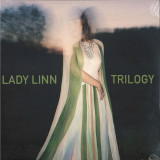
It is no longer a secret that Lady Linn has a very rich and unique voice with a versatility that is second to none, ensuring that she is right at home in a myriad of styles.
She proved exactly that in her new 'trilogy', a series of three E.P.'s - 'I'm Fine', 'Sea of Trees' & 'Nocturne'- each one telling its own unique story, and now bundled on the album 'Trilogy'.
The common thread throughout the album is her affinity with jazz, soul and dance, but also lyrically, various themes return: the tenderness within family life, melancholy, nature, and the magic of the dance floor.
There is also a clear evolution with the arrangements going from a sober, stripped-down quasi-electronic sound of the JX-03 on 'I'm fine' (with contributions from Gustaph, Gregory Frateur and producer Frederik Segers) to dreamy and warm analog synths by producer Joris Caluwaerts on 'Sea of Trees', to an organic, energetic sixties sound on 'Nocturne' with starring role for her partner and bass player Filip Vandebril and partners in crime: The Magnificent Seven, arranger Frederik Heirman and producer Jan Chantrain.
In addition to a selection of the three EPs, 'Trilogy' also includes the extra song 'Hurricane', one of Linn's personal favorites, recorded at Daft Studios with The Magnificent Seven:
'I had just watched a documentary on Laurel Canyon (on the topic of Los Angeles - the epicentre of the 'counter culture' or better 'hippie culture' - in the late 60's and early 70's and the habitat of The Mamas and the Papas, Frank Zappa, Jim Morrison, etc.) which fed my fascination for the 60's that I already had thanks to my parents. The way in which music was created and recorded in that era is a dream for every musician, me included. With the surplus in time due to the lack of gigs during the pandemic the time was right to follow my dream and record in the Daft Studios with my own band. I felt a bit like Carol King behind my piano, but I was also inspired by Joni Mitchell.'
A quote from the lyrics of 'Hurricane': 'I wanna feel the wind like the birds outside/Dive like a seagull, enter the water from flight/Into the deep I slide'.
'A very personal song about losing yourself and the longing for freedom. I composed this one specifically with 60's songs in mind, with loads of modulations and pretty complex chords.'
Lady Linn wrote a versatile trilogy, inspired by a diverse set of influences that had her digging in music history in a very original and contemporary way. She also made her mark on the sound of the productions. On both 'I'm Fine' and 'Nocturne' she was co-producer.
Repress!
Using an old door, 17 strings, chopsticks and combining them with phasers, echo units and amplification, the new device was to become his signature sound, mixing Irish folk influences with Asian and North African sounds in a mesmerising and soulful new way that brought him to the attention of the leading improvisers of his day - Alice Coltrane, Ravi Shankar, Don Cherry and more.
A logical follow up to AllChival's recent reissue of Stano's debut LP, Michael O'Shea's self titled LP was originally released on Wire's Dome Imprint in 1982.
The background to the album is as interesting and inspiring as the artist who created it - born in Northern Ireland but raised in the Republic, O'Shea was keen to travel and escape the troubles of his home.
Wandering throughout Europe and the Middle East, O'Shea found himself living and working as a relief aid in Bangladesh in the mid Seventies where he learned to play sitar while recovering from a bout of hepatitis. A later period spent busking in France accompanied on zelochord by Algerian musician Kris Hosylan Harp led to O'Shea's idea of combining both instruments as a homebuilt instrument - Mo Chara (Irish for "My Friend").
He later described the process on the back of the LP himself saying:
"Having sold my sitar in Germany and being desperate for money to travel to Turkey, I conceived of the idea of combining both sitar and zelochord. The first Mo Cara was born, taken from the middle of a door, which was rescued from a skip in Munchen"
A combination of dulcimer, zelochord and sitar, O Shea would play it with a pair of chopsticks, striking the strings softly using Irish folk rhythms mixed with the rich, nostalgic sounds of of the many Asian artists he'd encountered on his travels.
It was a pan cultural sound standing at an unusual crossroads of folk, traditional, rock, progressive, jazz, electronic and post-punk worlds without hesitation.
Perfecting the instrument on the streets, there were further spells spent busking in the underground stations and cafes of London's West End and Covent Garden during the heady days of the 1970s when they were full of eccentric street entertainers, jazz improvisers and musical pioneers.
His work with Rick Wakeman never saw the light of day but O'Shea's contact with the world of post-punk London ensured his name would live on.
Introduced to Wire's Bruce Gilbert and Graham Lewis via cartoonist Tom Johnston, O'Shea eventually acquiesced to an open invite to record at their studio. Turning up unannounced in the summer of 1981 the LP was recorded in a day in the legendary Blackwing Studios and released on Dome the year after.
The first side features the fifteen minute masterpiece "No Journeys End" with the B side featuring more input from Wire in processing the Mo Chara sound.
Lewis himself said years later of the forgotten masterpiece: 'I always said it was the best job we ever did.'
After an aborted LP with The The's Matt Johnson the following year, O'Shea quietly disappeared from the formal recording world and his brief but unique contribution to the music world came to a sad end in 1991 when O'Shea was struck by a post van and died a few days later in hospital in London.
This repress on All City's AllChival imprint has been remastered and reissued with the approval of both Dome and his surviving siblings.
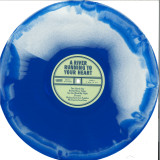
Eric D. Johnson rarely lingers at one location too long. As a kid growing up in the Midwest, Johnson's family moved around a lot, but it wasn't until he became a touring musician years later that motion became a central part of his identity. That transient lifestyle stoked an enduring reverence for the world he watched pass by through a van window. A sense of place is a unifying theme he's revisited with Fruit Bats throughout its many lives. From the project's origins in the late '90s as a vehicle for Johnson's lo-fi tinkering to the more sonically ambitious work of recent years, Fruit Bats has often showcased love songs where people and locations meld into one. It's a loose song structure that navigates what he calls "the geography of the heart." "The songs exist in a world that you can sort of travel from one to another," says Johnson. "There are roads and rivers between these songs." Those pathways extend straight through the newest Fruit Bats album, aptly titled A River Running to Your Heart . Self-produced by Johnson_a first for Fruit Bats_with Jeremy Harris at Panoramic House just north of San Francisco, it's Fruit Bats' tenth full-length release and one that finds the project in the middle of a creative resurgence. After two decades of making music, hard-earned emotional maturity has seeped into Johnson's songs, resulting in a more complex sound that's connected with audiences like no other previous version of Fruit Bats. A River Running to Your Heart represents the fullest realization of that creative vision to date. It's a sonically diverse effort that largely explores the importance of what it means to be home, both physically and spiritually. And while that might seem like a peculiar focus for an artist who's constantly in motion, for Fruit Bats, home can take many forms_from the obvious to the obscure. Lead single "Rushin' River Valley" is a self-propelled love song written about Johnson's wife that clings to the borrowed imagery of the place where she grew up in northern California. Then, there's the gentle and unfussy acoustic ballad "We Used to Live Here," which looks back to a time of youthful promise and cheap rent. But the wistful "It All Comes Back" is perhaps the most stunning and surprising track on the album, Johnson's production skills on full display. Built upon intricate layers of synths, keyboards, and guitars, it's a pitch-perfect blend of tone and lyricism that taps into our shared apprehensions and hopes for a post-pandemic life. "We lost some time / But we can make it back / Let's take it easy on ourselves, okay?" sings a world-weary but ultimately reassuring Johnson in the song's opening lines. It's the kind of performance that makes you hope Fruit Bats stays in this one place, at least for a little while longer.
BLUE & BONE VINYL
Eric D. Johnson rarely lingers at one location too long. As a kid growing up in the Midwest, Johnson's family moved around a lot, but it wasn't until he became a touring musician years later that motion became a central part of his identity. That transient lifestyle stoked an enduring reverence for the world he watched pass by through a van window. A sense of place is a unifying theme he's revisited with Fruit Bats throughout its many lives. From the project's origins in the late '90s as a vehicle for Johnson's lo-fi tinkering to the more sonically ambitious work of recent years, Fruit Bats has often showcased love songs where people and locations meld into one. It's a loose song structure that navigates what he calls "the geography of the heart." "The songs exist in a world that you can sort of travel from one to another," says Johnson. "There are roads and rivers between these songs." Those pathways extend straight through the newest Fruit Bats album, aptly titled A River Running to Your Heart . Self-produced by Johnson_a first for Fruit Bats_with Jeremy Harris at Panoramic House just north of San Francisco, it's Fruit Bats' tenth full-length release and one that finds the project in the middle of a creative resurgence. After two decades of making music, hard-earned emotional maturity has seeped into Johnson's songs, resulting in a more complex sound that's connected with audiences like no other previous version of Fruit Bats. A River Running to Your Heart represents the fullest realization of that creative vision to date. It's a sonically diverse effort that largely explores the importance of what it means to be home, both physically and spiritually. And while that might seem like a peculiar focus for an artist who's constantly in motion, for Fruit Bats, home can take many forms_from the obvious to the obscure. Lead single "Rushin' River Valley" is a self-propelled love song written about Johnson's wife that clings to the borrowed imagery of the place where she grew up in northern California. Then, there's the gentle and unfussy acoustic ballad "We Used to Live Here," which looks back to a time of youthful promise and cheap rent. But the wistful "It All Comes Back" is perhaps the most stunning and surprising track on the album, Johnson's production skills on full display. Built upon intricate layers of synths, keyboards, and guitars, it's a pitch-perfect blend of tone and lyricism that taps into our shared apprehensions and hopes for a post-pandemic life. "We lost some time / But we can make it back / Let's take it easy on ourselves, okay?" sings a world-weary but ultimately reassuring Johnson in the song's opening lines. It's the kind of performance that makes you hope Fruit Bats stays in this one place, at least for a little while longer.
On Labyrinth, Heather Woods Broderick serves as our reflective host, subverting expectations of conventional songcraft with impressionistic language and quietly relentless explorations of the human experience that's at once light and dark, more circular and less linear. "Many of us yearn for stillness and peace, as an escape from the movement all around us," she explains when asked about the themes of the album. "Yet movement is perpetual, happening all the time on some level. It's as wild as the wind, yet eternally predictable in its inevitability. It is linear in part, but infinite in its circuitry. Our lives just punctuate it." Broderick began crafting Labyrinth in March 2020, when most forms of move- ment were brought to a screeching halt. The Maine-born, Los Angeles-based songwriter _ who, in addition to her work as a solo musician, built a life playing and touring with acts such as Sharon Van Etten, Beth Orton, Damien Jurado, and Efterklang _ was suddenly forced off the road for the first time in her career. She used this disruption as an opportunity to pare down her creation process and construct the scaffolding for Labyrinth in her apartment. Employing only the most crucial tools at her disposal, Broderick found herself opening different artistic doors as she focused on sharpening her recording skills, capturing the majority of the album on her own before finishing the remainder with co-producer D. James Goodwin. For all of Broderick's sage lyricism and vocal authority, Labyrinth never provides the listener with any easy answers. If the image of the labyrinth represents the enormity of modern life and the difficulty of navigating it, Heather Woods Broder- ick provides a guide to its endless kinetic wonders _ of being present, aware, and connected despite its disconnects. She describes the texture of its walls, its indifferent rhythms, and the inherent poeticism of feeling lost amid the dead-ends and unexpected turns. At this point in our history, perhaps that's all we need to keep moving.
Grey Vinyl
On Labyrinth, Heather Woods Broderick serves as our reflective host, subverting expectations of conventional songcraft with impressionistic language and quietly relentless explorations of the human experience that's at once light and dark, more circular and less linear. "Many of us yearn for stillness and peace, as an escape from the movement all around us," she explains when asked about the themes of the album. "Yet movement is perpetual, happening all the time on some level. It's as wild as the wind, yet eternally predictable in its inevitability. It is linear in part, but infinite in its circuitry. Our lives just punctuate it." Broderick began crafting Labyrinth in March 2020, when most forms of move- ment were brought to a screeching halt. The Maine-born, Los Angeles-based songwriter _ who, in addition to her work as a solo musician, built a life playing and touring with acts such as Sharon Van Etten, Beth Orton, Damien Jurado, and Efterklang _ was suddenly forced off the road for the first time in her career. She used this disruption as an opportunity to pare down her creation process and construct the scaffolding for Labyrinth in her apartment. Employing only the most crucial tools at her disposal, Broderick found herself opening different artistic doors as she focused on sharpening her recording skills, capturing the majority of the album on her own before finishing the remainder with co-producer D. James Goodwin. For all of Broderick's sage lyricism and vocal authority, Labyrinth never provides the listener with any easy answers. If the image of the labyrinth represents the enormity of modern life and the difficulty of navigating it, Heather Woods Broder- ick provides a guide to its endless kinetic wonders _ of being present, aware, and connected despite its disconnects. She describes the texture of its walls, its indifferent rhythms, and the inherent poeticism of feeling lost amid the dead-ends and unexpected turns. At this point in our history, perhaps that's all we need to keep moving.
Heels & Souls Recordings’ fifth reissue sees them reach across the Atlantic to Vancouver, pressing up Pilgrims Of The Mind’s 'What’s Your Shrine?' for the first time ever on vinyl, 25 years since its CD-only release on Map Music. A departure from the label’s previous releases, the LP is a beautiful smorgasbord of styles - progressive house, downtempo, ambient, tech house and trance all nestle together, a wiggling journey of sonic delight from the mind of Stéphane Novak.
Turn the dial back to ‘97 and Vancouver's underground had a distinctive buzz to its rumblings, an amalgamation of scenes and styles gave rise to a cohort of producers that were unconstrained by genre, offering up a heady mix of sounds to expand the mind. ‘Welcome To Lotus Land’ the key 1996 compilation on Robert Shea’s seminal Map Music, championed much of this output including two cuts from POTM. Stéphane then released his first and only full-length album, ‘What’s Your Shrine?’ on the same label the following year.
Picking out choice moments from an album as considered and complete as this is tough. Those horizontally inclined will be drawn to the ambient dwellings of ‘Sandcastle’ & ‘Following the Sofuto Kuriimo’, tracks like ‘Nothing Can Pull Us Apart’ and ‘L’Amour? Encore?!’ are perfectly suited to warming up limbs on the dancefloor, ‘My Baby Likes Rum’ and ‘Loosejaw’ prime for one in full swing. Yet to pick individual tracks misses the stunning sum of its parts that this 70+ minute cruise is, surely one of the finest albums from the American West Coast during its halcyon days of the ‘90s.
Digging deep in his vaults, Stéphane managed to uncover the original unmastered DATs that have been given a fresh mastering by Justin Drake at the Bakehouse Studios. This beautiful, double-disc gatefold comes complete with liner notes from Ciel, words from Stéphane himself, plus never-before-seen photography - the complete package this music always deserved.
Beyond ecstatic to finally offer a glimpse into the world of voertuig. Working on music for several years, purely for themselves in sheds and studios tucked away in the outskirts of the hague, Tonal Oceans presents an album by the four piece act containing music embodying the true spirit of the city.
W&P by Offer van Kesteren, Gianni Tjon Tam Pau, Tijmen van Wageningen, Laurens ten Berge.
Artwork by Soft Turbo
Drawing by Ilan Havinga
- A1: The Leaders - Wait A Minute
- A2: Archie Shepp - Song For Mozambique
- A3: Oliver Lake Quartet - Tap Dancer
- A4: Karl Berger And Friends - Guitar Vibes
- B1: Sun Ra Arkestra - Mayan Temples
- B2: Muhal Richard Abrams Octet – Laja
- B3: Andrew Cyrille & Maono - Metamusicians’ Stomp
- C1: The John Carter Octet - Ode To The Flower Maiden
- C2: Diedre Murray, Fred Hopkins - Zebra Walk
- C3: Joseph Jarman, Don Moye Feat Johnny Dyani - Mama Marimba
- D1: Sun Ra Arkestra - Love On A Far Away Planet
- D2: The Don Pullen Quartet - The Sixth Sense
- D3: World Saxophone Quartet
Woke rhythms and high-spirited grooves from the vaults of two seminal Italian jazz labels, between the 70s and 80s. Intensely curated by Khalab.
Hyperituals is a philological investigation that deeply delves into the possibilities of sound, rhythm, remix, and endless sampling. Inspiring listening, interpretation, and reinterpretation.
This volume is dedicated to the catalogue of the Italian Black Saint. Thanks to a constant, cutting-edge, and meticulous commitment, Black Saint & Soul Note established themself as two of the most important imprints for international jazz. They always placed the artists, their visions, and their music at the centre, giving them total freedom of creative expression. By combining jazz tradition with the political vanguard sentiment of the time, the two labels were able to press and produce more than five hundred records, many of which are by some of the brightest names in creative jazz or the ‘avant-garde’ of the era.
Curated by Khalab, the selection - focused on rhythms, grooves, and Afrocentric traditions - blends moments in which the rhythmic aspect is powerfully explicit, with others in which the kinetic aspect dialogues on different levels with African American cultural contexts.